
We spent a week in Brazil as part of our South American adventure, starting in the buzzing beachside capital of Rio de Janeiro, before continuing to visit the spectacular Foz do Iguaçu waterfall. Below is our itinerary including attractions, accommodation and dining options.

Brazil 1 Week Itinerary
| Day 1 | Flight to Rio de Janeiro Accommodation – Rio Design Copacabana Hotel |
| Day 2 | Copacabana Copacabana Beach Copacabana Fort Ipanema Beach Drinks at Garota de Ipanema Dinner at Bar Bico |
| Day 3 | Rio de Janeiro Christ the Redeemer Rio de Janeiro Botanical Garden |
| Day 4 | Rio de Janeiro Bonde Streetcar Arcos de Lapa Viaduct Metropolitan Cathedral Escadaria Selarón National Historical Museum Museum of Art Boulevard Olímpico |
| Day 5 | Rio de Janeiro Sugarloaf Mountain |
| Day 6 | Foz do Iguaçu Flight to Foz do Iguaçu Accommodation – Bogari Hotel Avenida Brasil Itaipu Dam Dinner at City Bier Petiscaria |
| Day 7 | Foz do Iguaçu Parque Nacional do Iguaçu Marco das Três Fronteiras |
Brazil Day 1
Flight to Rio de Janeiro
I have a heavy cold. I can think of better ways to spend the day, like tucked up in bed with a mansize box of tissues. Instead, two flights, first to Spain for our connection for the 7 hour flight to Rio. But at least everything is punctual.

Accommodation – Rio Design Hotel
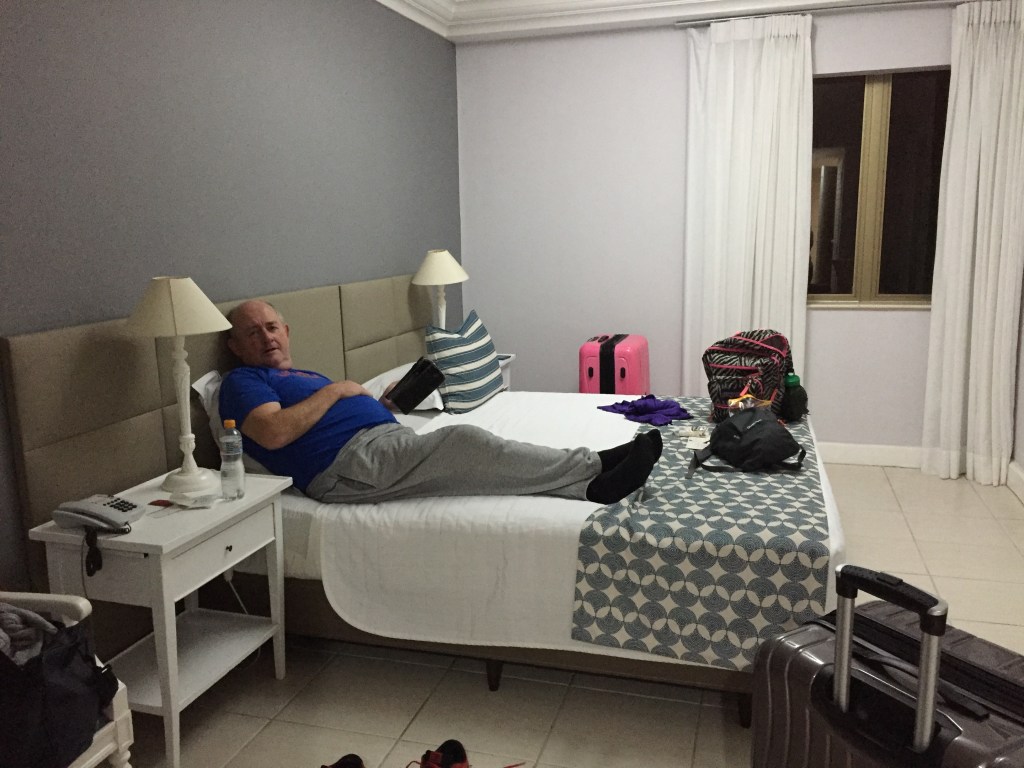
Finally, after a long day of travelling, we arrive in Brazil, negotiate the enormous airport and take a taxi to our hotel; Rio Design Copacabana Hotel, which is very pleasant with a large room, comfortable bed and good air conditioning. Equally cooling are the complementary welcome cocktails!
Brazil Day 2 – Copacabana
We get up and go for breakfast. We deal with yesterday’s dietary deficiencies by consuming a mountain of fruit – mainly mango – the sweetest, juiciest mango I have ever tasted. I also have some sausage and eggs, although there’s a slight delay in proceedings while a women attempts to light her cigarette on the heat source under the breakfast buffet.
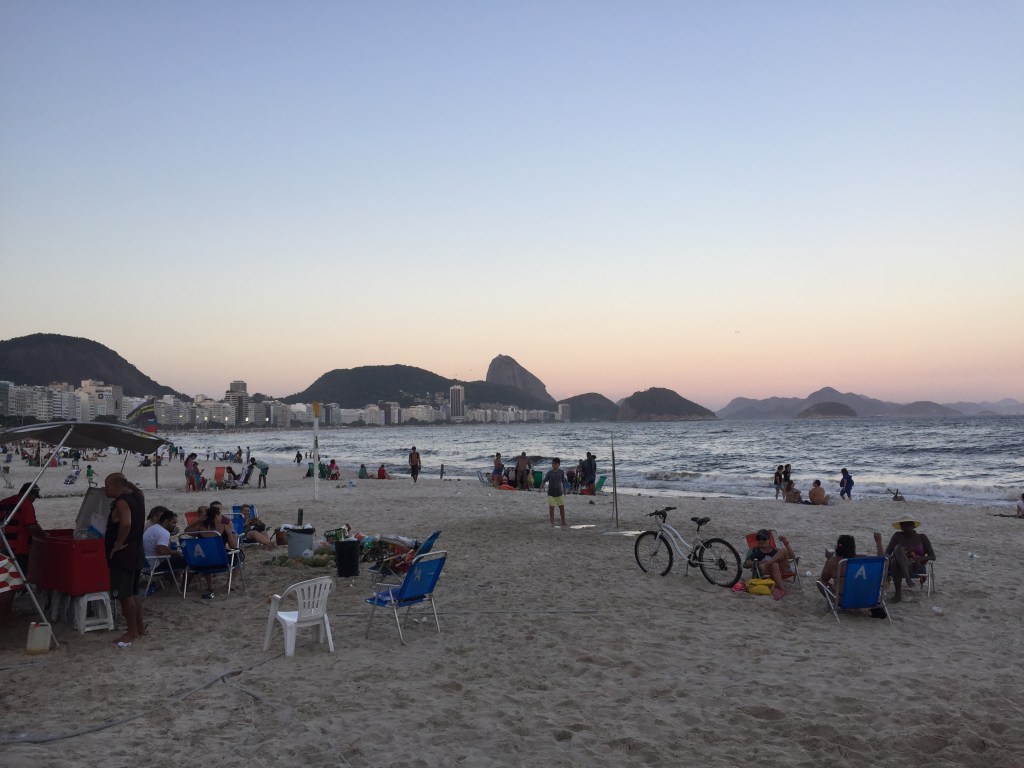
Copacabana Beach
Then we set forth along Copacabana Beach. It’s 8.30 am and the prom is already heaving with walkers, runners and cyclists out for their morning constitutional. It’s like an exotic Bournemouth; we have the Overcliff, they have Sugarloaf mountain.
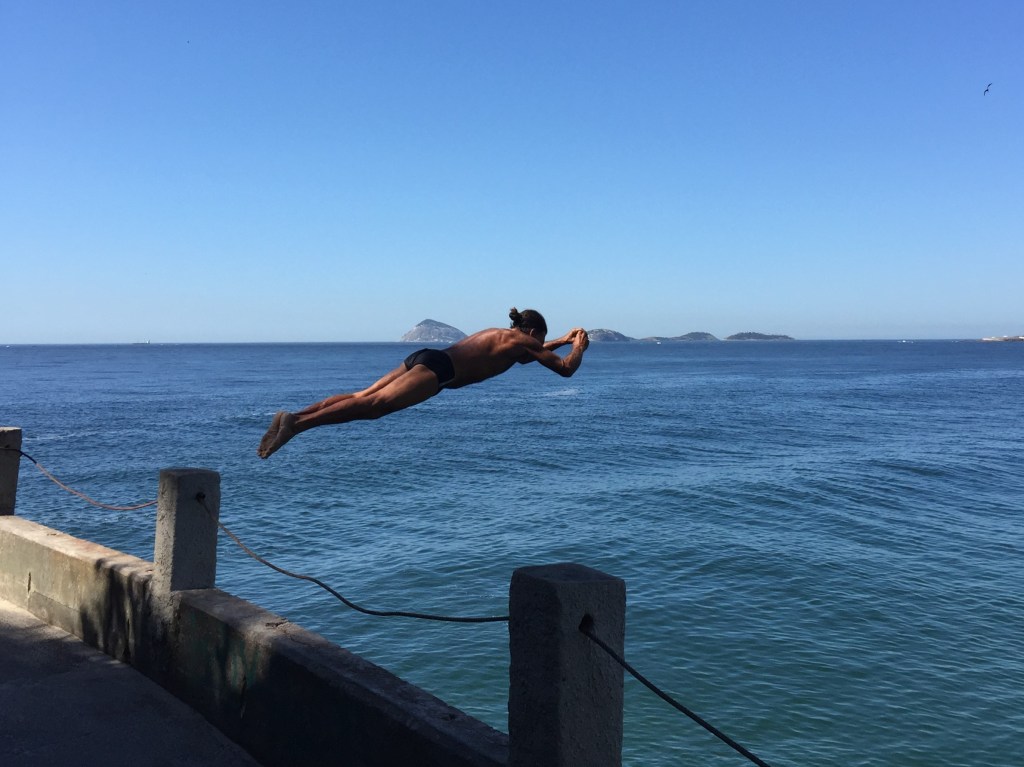
We walk the full 4 km length of the beach, and back again. By the time we reach the end it is 36 degrees and we’re rather warm and sweaty.
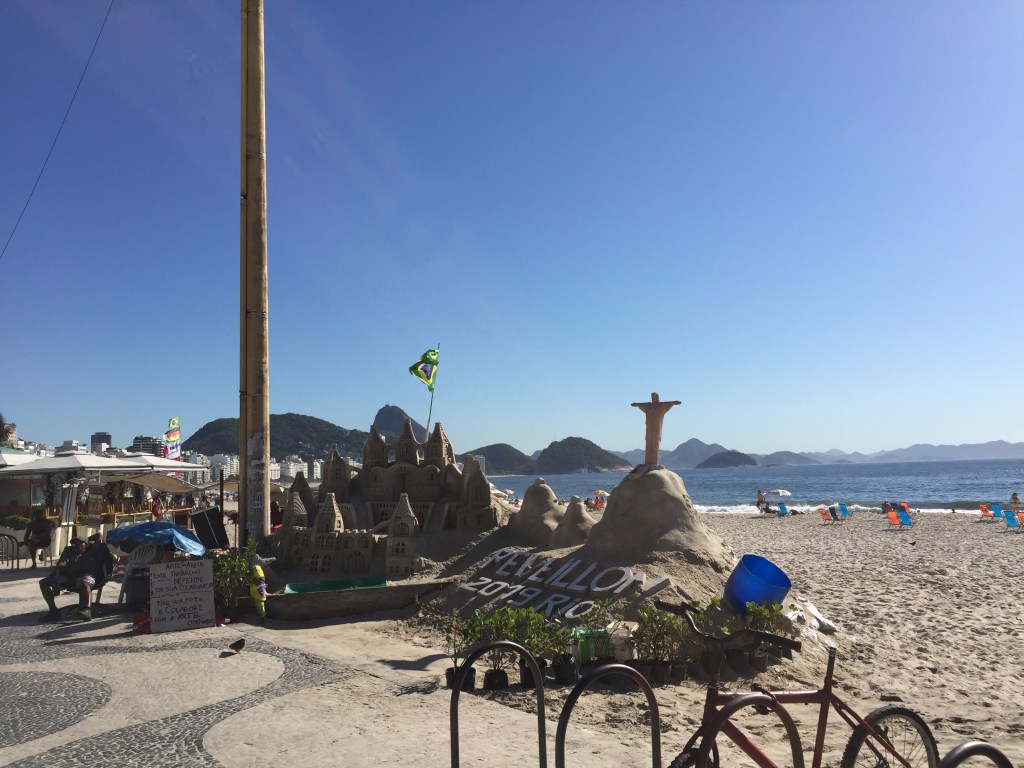
We decide to cool off with a swim. The problem being that having walked the length of the bay, we have spotted the sewage pipes spewing crap into the ocean. So I have a dilemma; do I want to swim on one of the world’s most iconic beaches knowing that I would literally be paddling in my own poo? Not that it really makes a difference whose poo I would be paddling in.
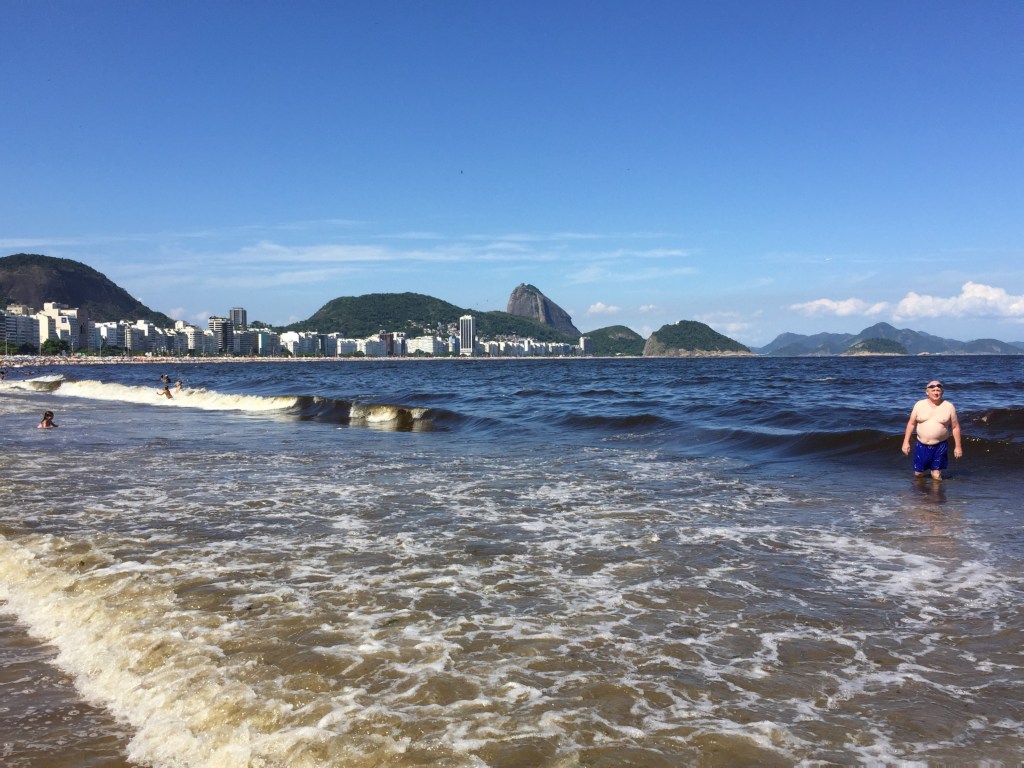
We find a few square inches to lay out our towel, and the old man sets forth into the water. It is a rather sinister shade of brown and has all sorts of rubbish floating in it – more brown flag than blue flag. I decide to make do with a paddle. Meanwhile, the old man emerges with a look of horror on his face, muttering about taking showers and precautionary Imodium!
Copacabana Fort
After a pit stop at one of the many beach bar, we round off our morning with a visit to Copacabana Fort, perched on a peninsula with a stunning view across Copacabana Beach to Sugarloaf Mountain.
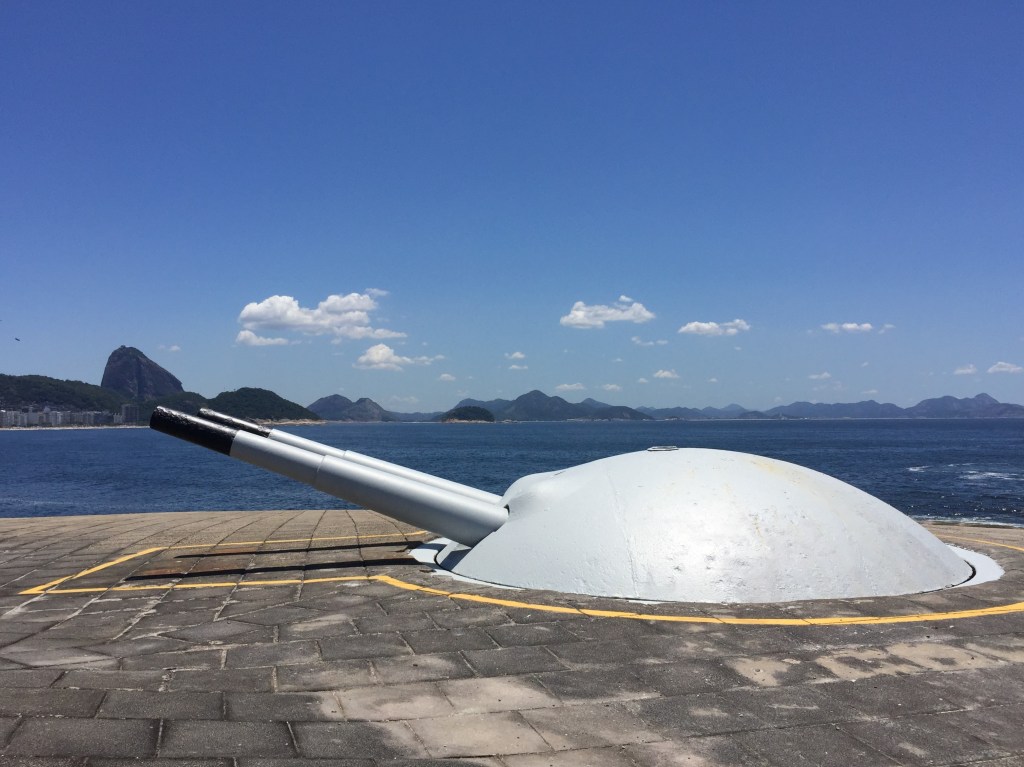
The fort also houses an Army Museum. It’s probably quite interesting (I’m not sure, it’s all in Portuguese) but it definitely has great air conditioning.

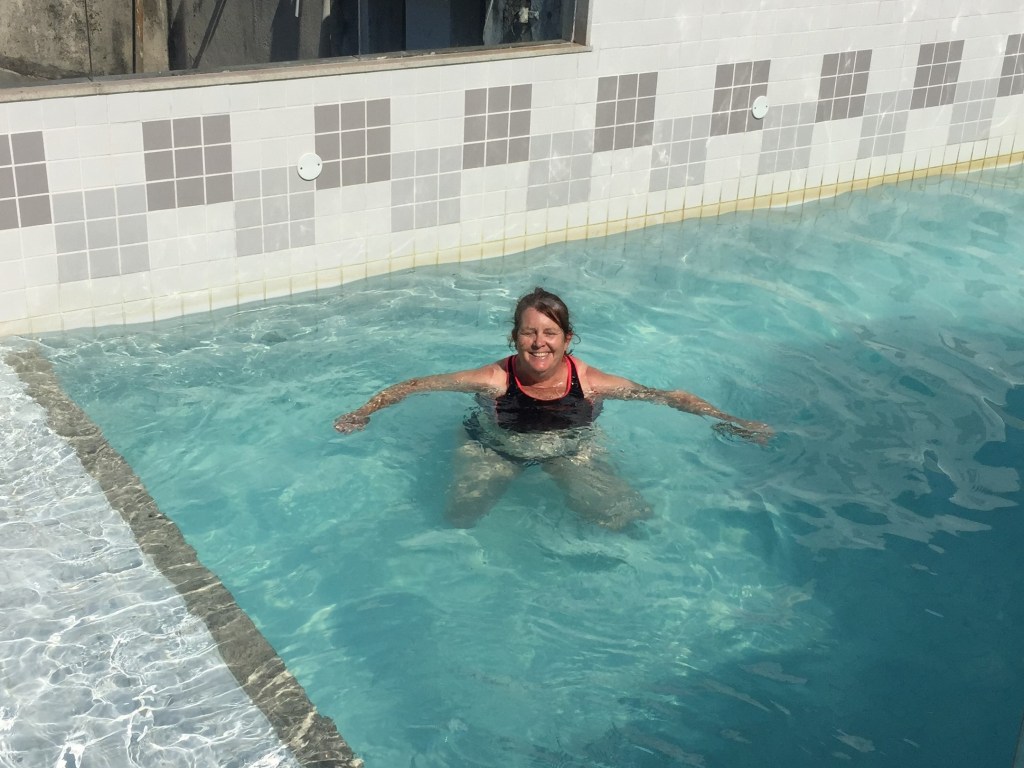
Suitably cooled, we head back to the hotel, stopping at a supermarket to purchase copious amounts of liquids, then head back to the hotel for a cool down and a siesta. Apart from its location; just 100 metres from Copacabana Beach, Rio Design Copacabana Hotel has the added bonus of a rooftop pool. Perfect for cooling down after a hot day’s sightseeing and with a great view across the bay too.

Ipanema Beach
In the evening, once the temperature has dropped to an almost manageable 32 degrees, we set off for to Ipanema Beach. It’s super mega busy. It looks like photos I’ve seen of Benidorm in the 70s when the British discovered the package holiday.
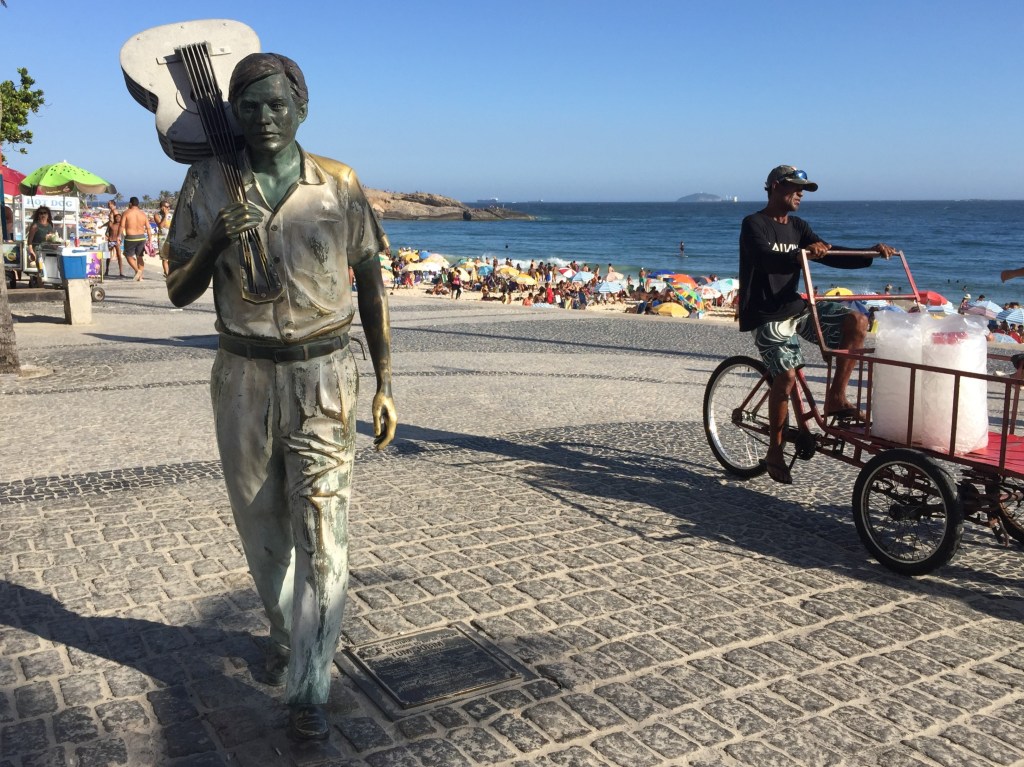
Drinks at Garota de Ipanema
We walk along the prom for a while, then can’t resist heading for the the tourist trap of Garota de Ipanema; the bar where the song ‘The Girl from Ipanema’ was written. We had a beer (or two), then went in search of dinner somewhere considerably cheaper and less touristy.

Dinner at Bar Bico
Bar Bico is a small café/bar. If you like your travels to be an epic culinary adventure, then it’s probably not the place for you. However, if a cheap, laid back eatery with ice cold beer does it for you, then Bar Bico ticks the boxes. We order a pizza and some chips to share. The amount of food that is produced is akin to an episode of Man v Food. The portions are enormous and the layer of cheese is as thick as the pizza base.

Then it’s back to the hotel for an early night and cheese sweats. After today’s gentle introduction to Rio, tomorrow we go hardcore tourist and head for Christ the Redeemer.
Brazil Day 3 – Rio de Janeiro
Today we’re going to see Christ the Redeemer. One of the Seven Wonders of the Modern World, perched high above the city It is the school summer holidays. I suspect we won’t be alone…
Christ the Redeemer
The ascent is made by Funicular Railway – the Trem do Corcovado. You need to purchase tickets in advance for a specified time. Turn up late and you lose your slot. So we leave ample time for the bus journey to the station. We find the bus stop, the bus is on time and we get off at the correct place; the result being we arrive an hour before our train. It’s very busy, but very efficiently organised – which is kind of good, because I like order and kind of bad, because there’s no chance of getting an earlier train.
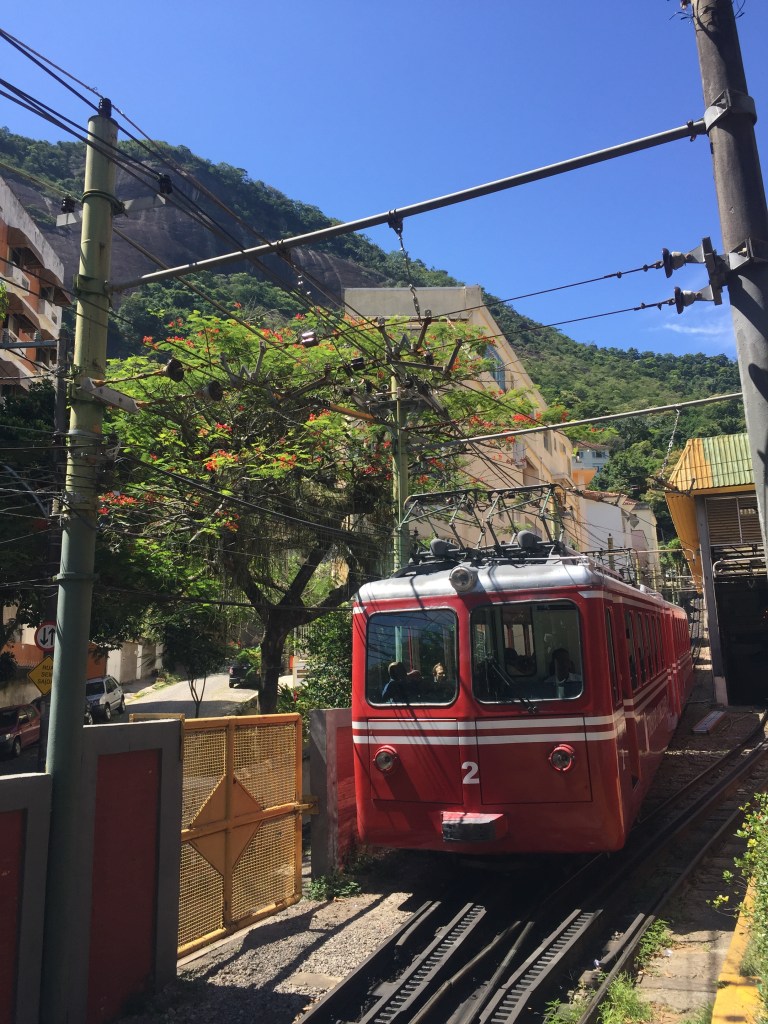
Eventually, it’s our turn to board and we set off, or rather up. The train ride takes 20 minutes and ascends 700 metres. At the top, there’s a further climb of 200 steps (or an elevator/escalator combo if you prefer). And there he is. Christ the Redeemer – 38 metres tall, looking down on Rio from the top of his mountain.
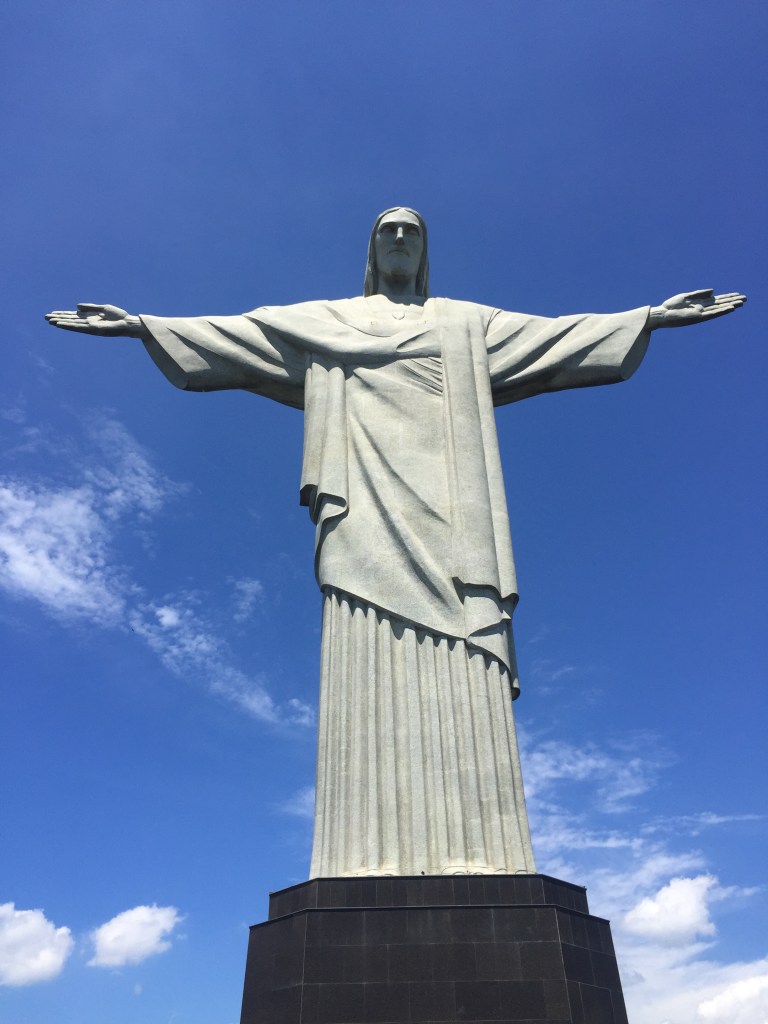
There’s not much to do; just admire/photograph the statue and admire/photograph the stunning view across Rio and beyond, together with hundreds of other tourists. So it’s a kind of spectacular anticlimax.

Rio de Janeiro Botanical Garden
My guide book says that you can take a trail through the park back down into Rio, but it’s closed. So we descend by train and take a bus to the Rio de Janeiro Botanical Garden.
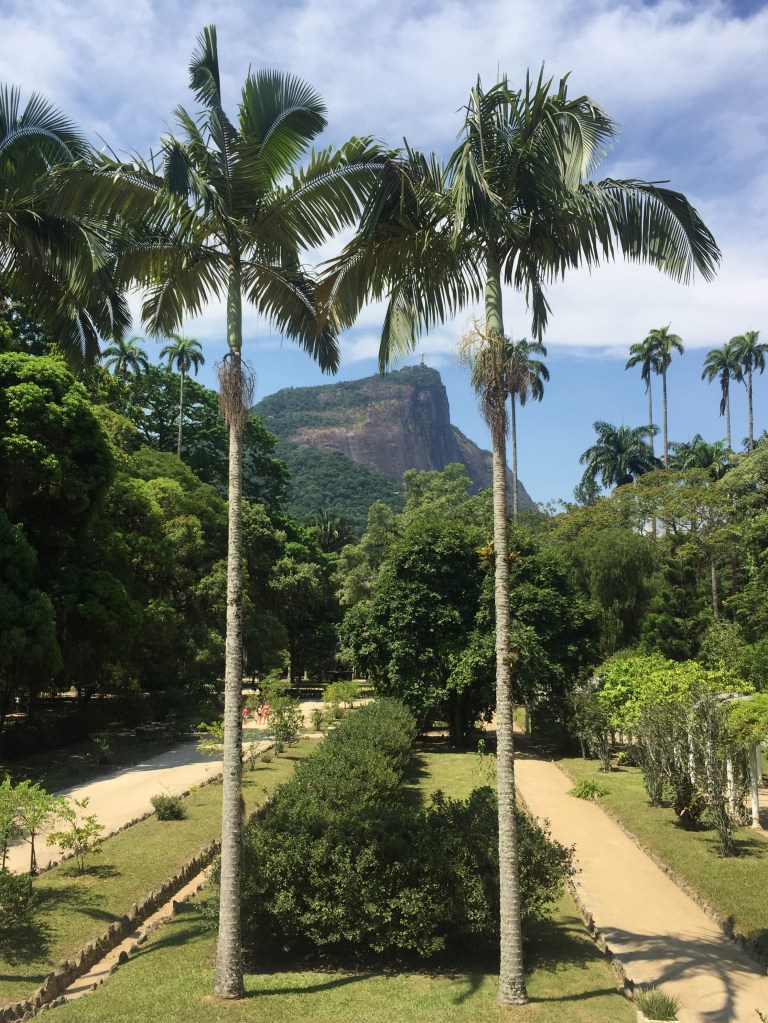
The Gardens are beautiful. It’s hard to imagine that you’re in a city amidst the palm trees and lily ponds. There is a spectacular array of plants, waterfalls, lakes and fountains, all watched over by Christ the Redeemer. My favourite bit, however is the cactus garden.
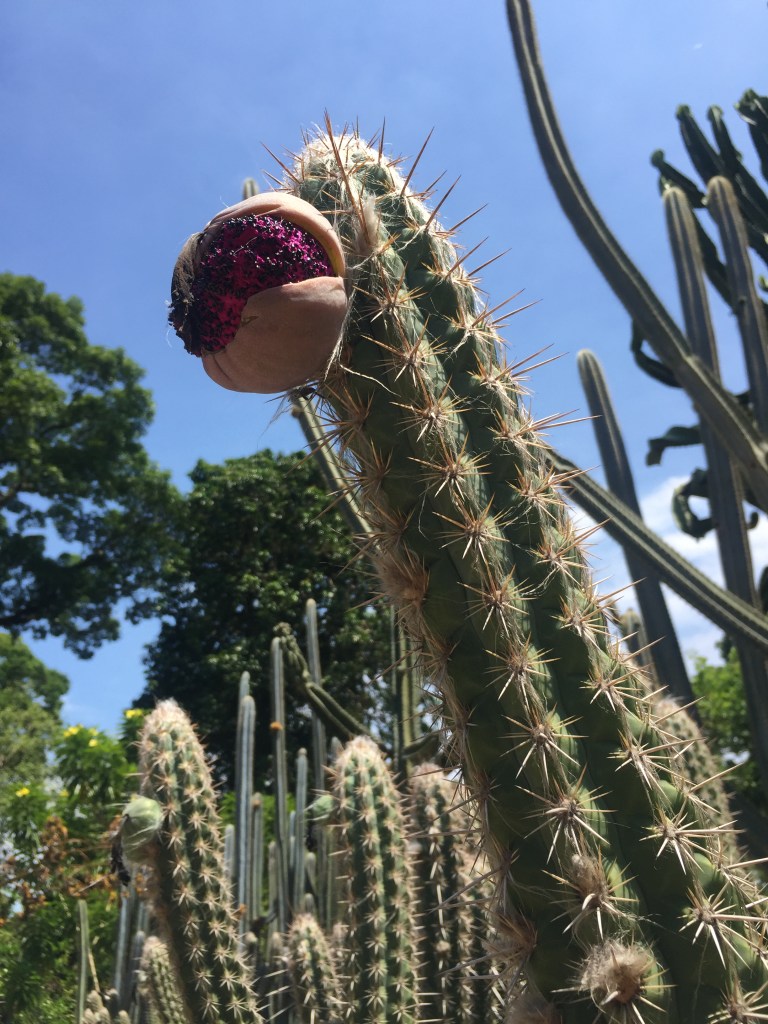
A gardener sees us admiring the amazing cacti and invites us to try some. He cuts the top off an ancient Brazilian cactus and he and the old man proceed to eat it.

Beautiful though the gardens are, the temperature has reached 36 degrees. We manage two hours, but that is my limit so we set off to catch a bus back to the hotel. The bus route is circular; you can catch it either clockwise or anti-clockwise. We have a difference of opinion over which direction is correct. I’m right (obviously), but while we’re arguing, the bus sails past without us.

We reach our hotel, stopping briefly to purchase the obligatory supplies of drinks and snacks. After dinner, it’s time for a cool down in the rooftop pool.
Brazil Day 4 – Rio de Janeiro
Today we are going sightseeing in Rio. So, on a sunny summer Saturday, we set off by Metro from Copacabana Beach to the city centre. Not surprisingly, we are travelling in the opposite direction to almost everyone else. We buy Metro tickets, which are quite decorative and thus a good item for my scrapbook. However, at the turnstile, we insert the ticket and it isn’t returned. I look so disappointed that on the following journey, the old man buys 3 tickets, so I have one to keep.
Bonde Streetcar
First stop is the Bonde, the old streetcar which clambers across the Arcos de Lapa viaduct and up the hillside along cobbled lanes decorated with murals.

We’re taking the Bonde just for the sake of it, so buy a return ticket, worrying that we’ll look a bit sad when we stay on at the final destination. In fact, when we reach the last station, there is little sign of movement. Passengers simply flick their seat backs over so they are facing forward for the return journey and we set off back down the hillside.

Arcos de Lapa Viaduct
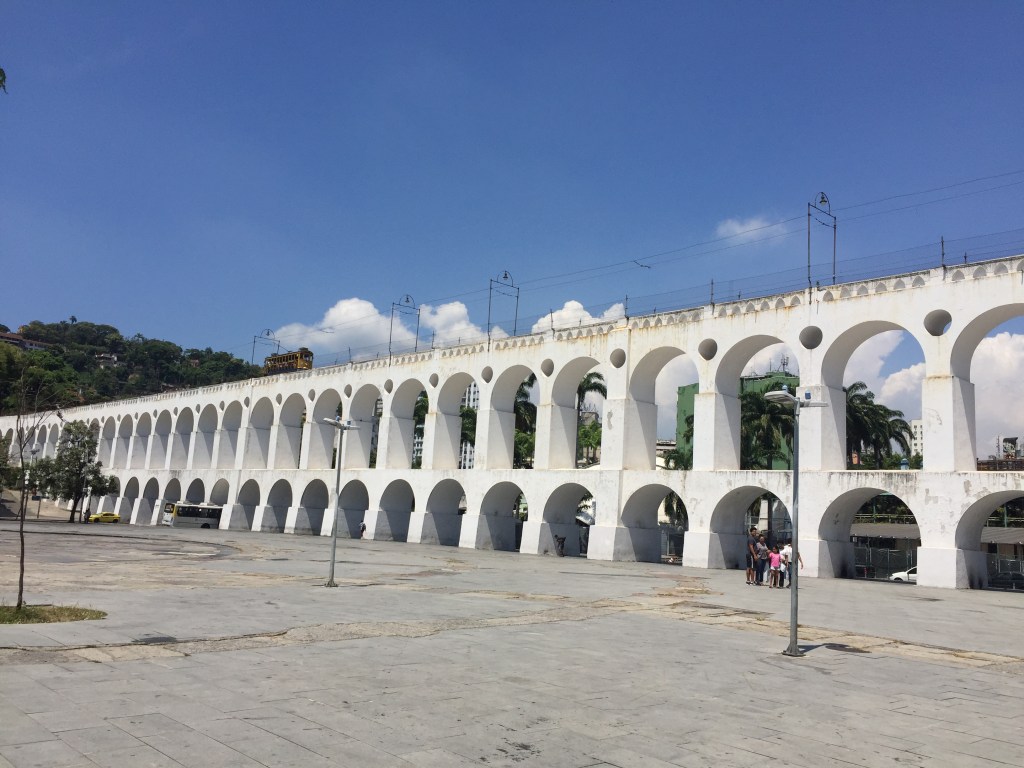
We walk back to the base of the 18th Century Roman style Arcos de Lapa Viaduct, which consists of 42 arches, to photograph a tram passing over it. And for the obligatory selfie with the ‘Love Rio’ sign.
Metropolitan Cathedral
Next stop is the Metropolitan Cathedral; from the outside it’s a rather ugly concrete cone.

Inside, however it’s rather beautiful with four entrances, each facing a floor to ceiling stained glass tableau.

Escadaria Selarón
We move on to the Escadaria Selarón; a flight of 215 steps, each decorated with brightly coloured tiles. I’ve seen pictures and it looks quite spectacular; of course in reality, it’s swarming with so many tourists you can hardly see the steps.
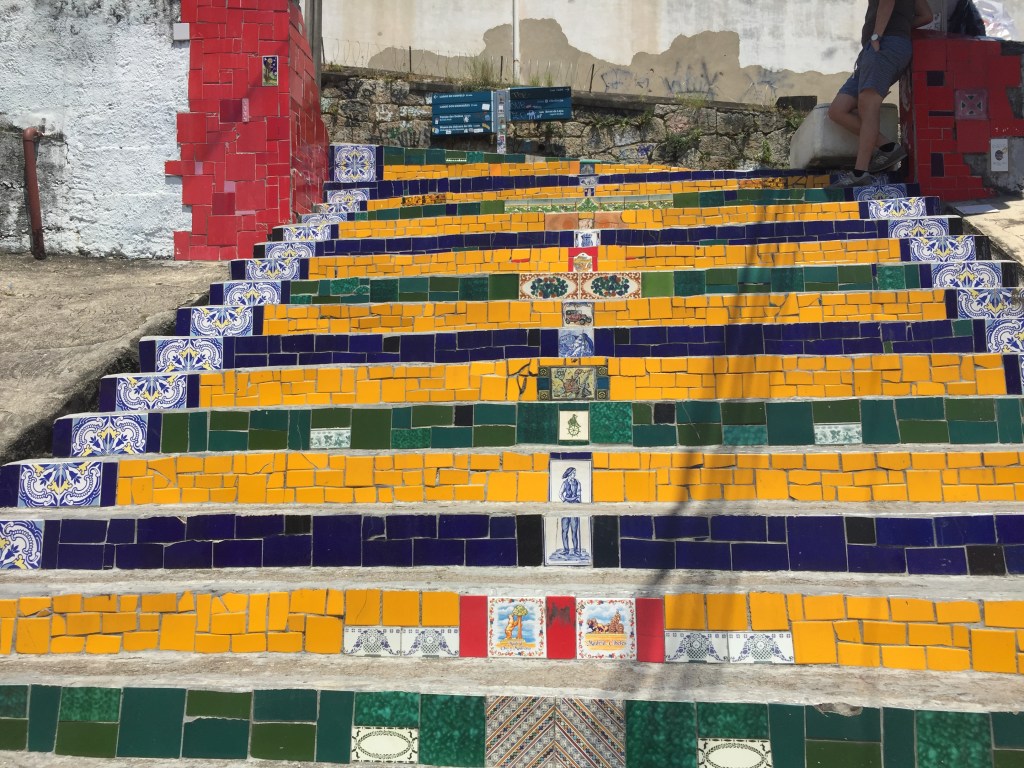
Luckily, most of these tourists seem averse to actually climbing too many steps. Thus, as we ascend, numbers dwindle and at the top, there’s just me, the old man and a water vendor who’s charging 50% more than those at the bottom. We don’t care; we’ve just climbed 210 steps in 36 degree heat. I would have given him my first born for a bottle of water!
National Historical Museum
Next, we visit the National Historical Museum, which charts the history of the Brazilian people from the first known settlers 25,000 years ago, through colonisation, slavery and independence to the present day.
Note: The National Historical Museum is temporarily closed for renovations. It is expected to reopen in October 2025.
Rio Art Museum
We walk along the waterfront to Rio Art Museum, which is somewhat of an anticlimax. The main exhibition is based on Samba; its place in the history, culture and politics of Brazil. But the captions are only in Portuguese, so we have no idea what it says.

Boulevard Olímpico
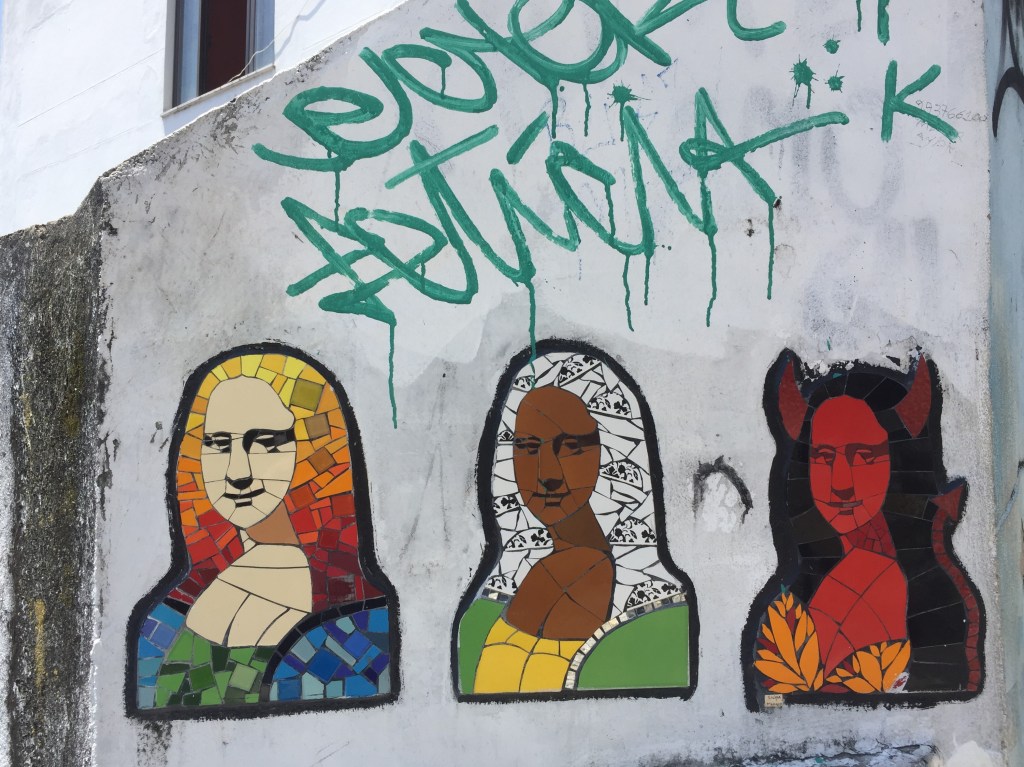
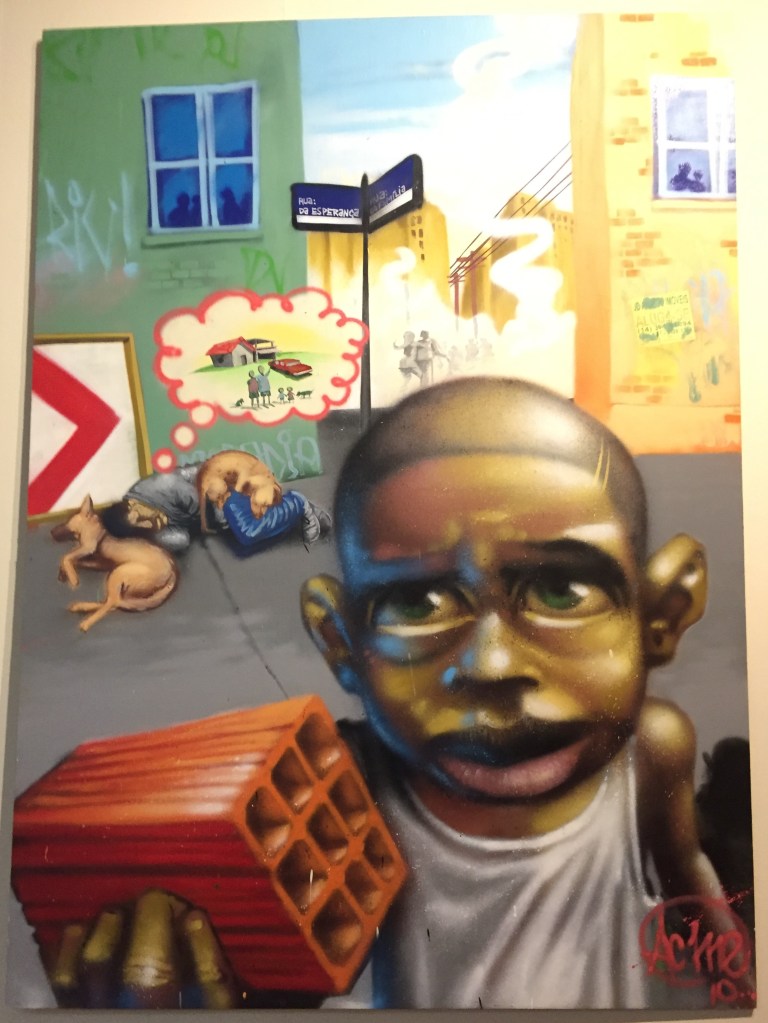
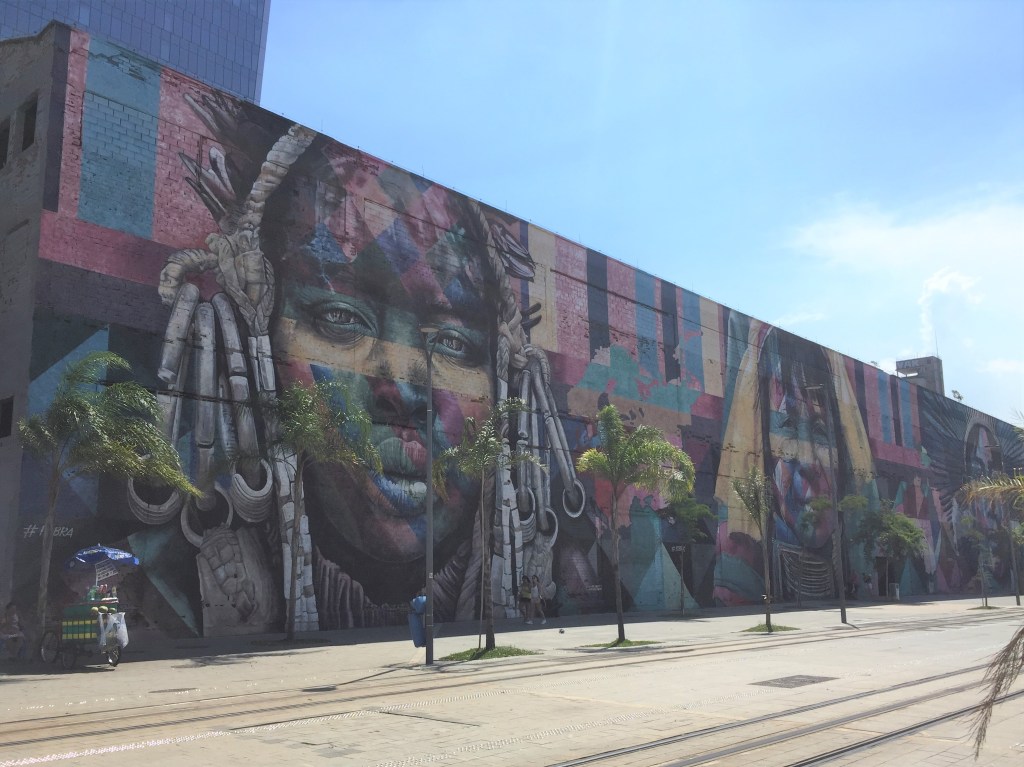
We round our city sightseeing extravaganza off with a wander along the Boulevard Olímpico. This once derelict area near the port, was transformed for the 2016 Olympics. It is lined with street art. The most spectacular is the Mural das Etnias – inspired by the five Olympic Rings, the artist, Eduardo Kobra, created five faces to represent the continents. It is enormous and mesmerising.
Brazil Day 5 – Rio de Janeiro
It has come to my attention that I don’t apply sunblock right up to my clothes. I have woken this morning with 3 pink rings around my neck and shoulders outlining yesterday’s vest. So this morning, I am wearing a T shirt. I feel hideously overdressed in a city where the preferred attire is a bikini which barely covers your nipples.
Sugarloaf Mountain
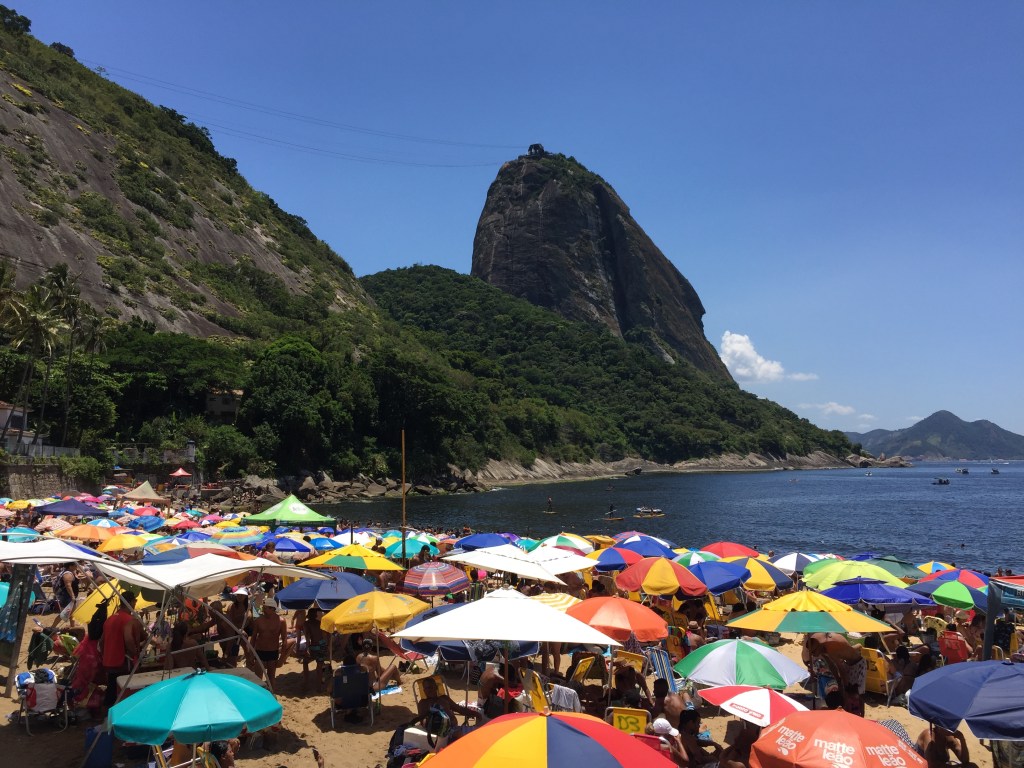
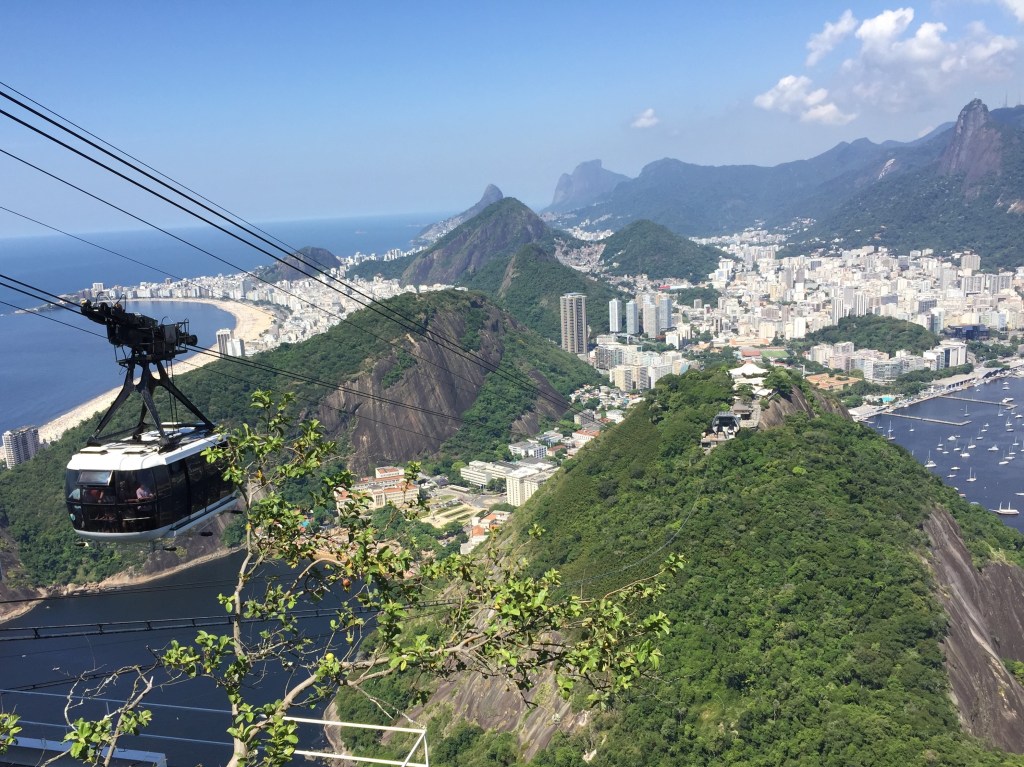
It’s our last day in Rio, so we’re going to one of the city’s top attractions; Sugarloaf Mountain. We’ve left it till last because frankly, I am not a fan of cable cars. It’s not natural to hang in mid air in a glass box on a bit of wire. And Sugarloaf Mountain requires some serious mid air hanging. First, you must take a cable car up the neighbouring Morro da Urca. Then you take a second cable car to Sugarloaf. Basically, you travel a kilometre in a glass box on a wire which hangs between two mountains. They’re not really mountains; to use the correct geographical term, they’re granite monoliths. It has to be said that these cable cars traversing thee monoliths is a spectacular sight, which can be seen across Rio. But it’s still against the laws of nature…
We set off for the bus stop, but there is some confusion as the bus Google Maps says we should take doesn’t appear to exist. We wait 20 minutes before giving up and getting on a random bus and hoping it gets us near our destination. This non-scientific approach leaves us with a mile to walk, which we consider a marginal success.
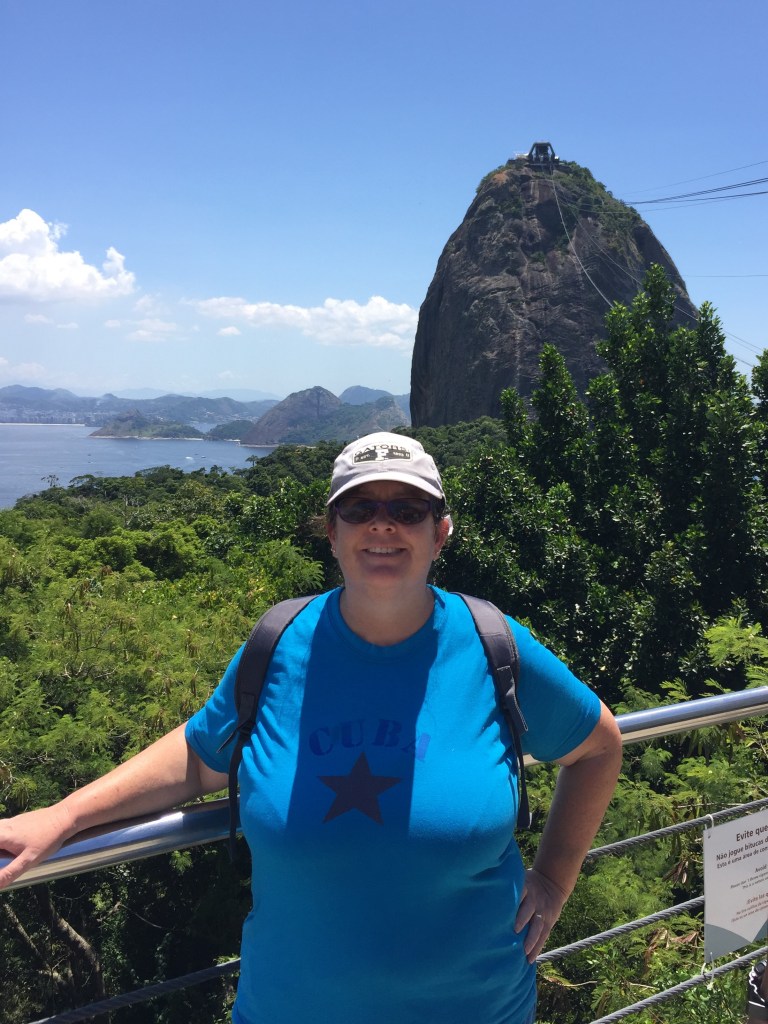
Tickets for the cable car aren’t cheap; (I reckon it costs around £10 a minute) we hand over our hard earned cash and boarded the first cable car to Murro da Orca. The summit is quite small; just big enough for two cable car stations and a gift shop.

We take the second cable car to Sugarloaf, which is slightly larger (a gift shop and a restaurant and, rather bizarrely, as we’re up a mountain, a beach bar).

We circumnavigate the monolith to enjoy the views, take photos and generally reach a point where we feel like we’ve had £60 worth of entertainment. At the rear is an area of rain forest populated by very tame marmosets.

Then we descend again and, just as we’re discussing how to reach the hotel, the non-existent bus appears round the corner. We’re not at a bus stop, so we just smile and wave at the bus driver, who takes pity and picks us up.
Brazil Day 6 – Foz do Iguaçu
Today, we are heading for the waterfalls at Iguazú (Iguaçu in Portuguese), on the border between Brazil and Argentina. These amazing falls are one of the ‘Natural Seven Wonders of the World‘ and were at the very top of our South American bucket list. We chose to spend 3 nights in Foz do Iguaçu, a city on the Brazilian side of the falls, crossing to the Argentinian side of the falls for a day trip.
We are up at 5 am this morning to fly 750 miles south-west to Foz do Iguaçu on the border between Brazil, Argentina and Paraguay. We have booked and prepaid for our taxi, which sounds like a recipe for disaster. However, 15 minutes ahead of schedule and before we’ve even had chance to worry about what to do if it doesn’t arrive, we get a call to say the driver is in reception.
One advantage of being up so early is that we see the sunrise over Rio en route to the airport. It really is something; the city and its monoliths silhouetted by the bright pink sky, with an illuminated Christ the Redeemer looking on. With the exception of its sewage arrangements, we have enjoyed our time in Rio.
I had thought the two hour flight to Foz do Iguaçu was a means of getting from A to B, but it turns out to be quite special. After observing the sunrise over Rio, we fly over the meandering Iguazú River and are treated to a spectacular bird’s eye view of the waterfalls.

Accommodation – Bogari Hotel
We are picked up by a shuttle bus laid on by the Bogari Hotel, which is convenient. The hotel is situated right in the centre of town in Avenida Brasil, which is equally convenient. It’s rather compact, but as we aren’t planning to spend much time in the hotel, this doesn’t matter. It offers free breakfast and wifi, which we took full of advantage of, plus a gym, pool and Jacuzzi, which we didn’t have time to use.
Avenida Brasil
We started with a wander round town to get our bearings, walking along the main drag of Avenida Brasil, which is lined with shops and restaurants. There are plenty of options to pick up souvenirs here, this isn’t one of them!

Itaipu Dam
We spend the afternoon visiting Itaipu Dam, or Itaipu Binacional to give it its official name. The world’s second biggest dam spans the Paraná River between Brazil and Paraguay. It provides approximately 15% of the energy consumed in Brazil and 86% of the energy consumed in Paraguay. The dam is 5 miles north of the city. We catch the bus to Itaipu Binacional. Buses No 101/102 run from the Urban Bus Terminal (TTU) and stop close to the entrance by the control post.

There are a range of tour options. We chose the Panoramic Tour, which consists a bus ride around the complex and across the top of the dam, stopping at various points for photo ops, whilst being told plenty of interesting facts, like how the reservoir holds enough water for everyone on the planet to have 4,000 litres each. Other options include the Special Tour, which includes a visit inside the power plant, bike tours, illuminated tours and tours of the Biological Refuge.

The tour bus stops at various points around the complex, giving you a short amount of time to see, take photos, shop etc. As there is only 30 minutes between buses, if you want to stay longer at a particular stop, you can just catch the next tour bus instead.

Dinner at City Bier
We catch the bus back into town and go in search of dinner. We choose City Bier Petiscaria. We thought the items on the menu were individual portions, so ordered one each. The old man selected filet mignon and basically gets given an entire cow with condiments. I ordered the chorizo and am served a sausage the size of a small country. When we look around, most people have ordered one dish between two or even four people.

On our return to the hotel, it starts to rain. A lot. I know we’re in the rainforest, so rain should really be expected, but the suddenness and severity of the outbursts takes me by surprise. It certainly doesn’t help that I’m wearing a £1.80 Primark T shirt, which is apparently see-through when wet. We just about manage to waddle back to the hotel before sinking into a meat coma.
Brazil Day 7
Iguazú Falls are on the border between Brazil and Argentina. The complex consists of 257 individual waterfalls spanning over 1.7 miles. On each side, the waterfalls are situated within a National Park. Today, we are visiting the Brazilian side and the Parque Nacional do Iguaçu.
Parque Nacional do Iguaçu
The entrance to the Park is 10 miles south east of town. There are regular buses (No 120) from the Urban Bus Terminal (TTU), which travel via the airport and stop close to the entrance to the park. The bus is very crowded and we have to stand for most of the 40 minute journey. Also, there is no air conditioning so, by the the time we disembark, we have worked up quite a sweat!

Upon reaching the Park, you must first queue to purchase a ticket. Then, you must queue to catch a shuttle bus (walking is not an option). We join the queue right in the middle of Elsa Zimmermann’s tour group. Elsa does not take kindly to this logistical development and rather aggressively rearranges the queue with us no longer in it. It takes us around an hour to reach the front of the queue. Once the charming Elsa and her group are on their bus, we board the next bus for the 10 mile drive to the waterfall.

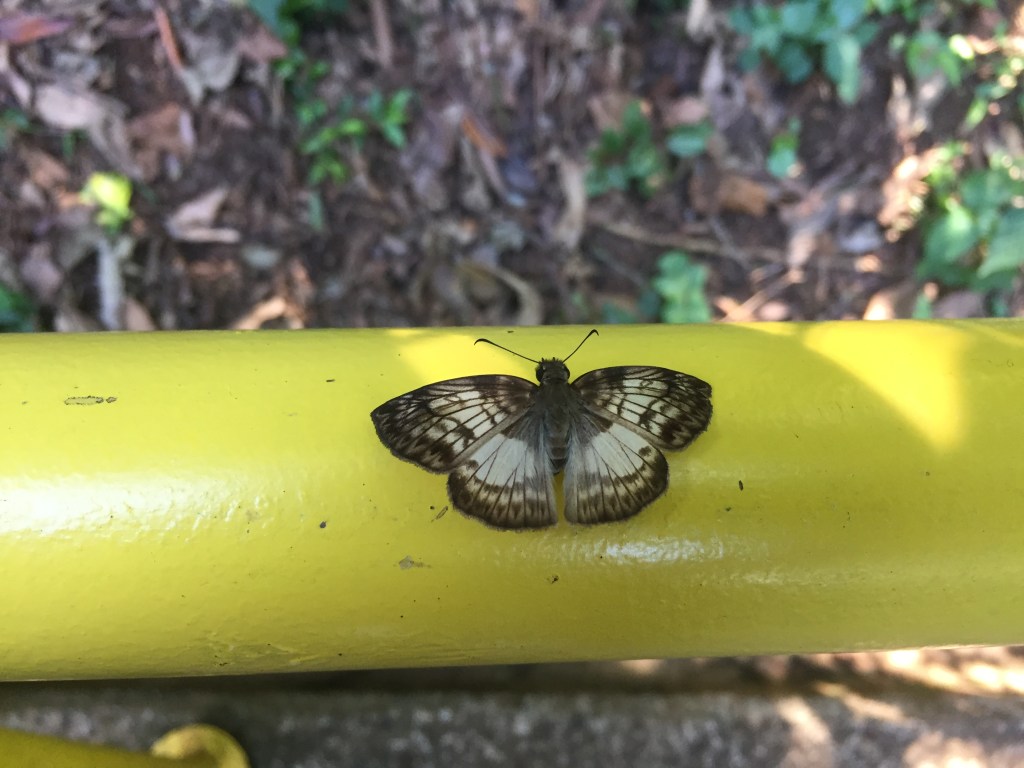
It’s basically a road through the rain forest surrounding by butterflies – hundreds and hundreds of butterflies.
There are several bus stops along the route. We disembark at The Path of the Falls stop and follow the mile long Waterfall Trail along the river ending at a walkway which overhangs the waterfall. It’s bit like Niagara on steroids; huge and loud and creating clouds of mist where a rainbow floats.

The walkway over the river is a spectacular sight – the highlight of our trip so far! First, a slight dilemma; the walkway extends right into the mist and in order to purchase park tickets, we needed our passports. To ensure our passports don’t turn to papier-mâché, we negotiate the walkway scrum one at a time, while the other stays somewhere dry with aforementioned passports.

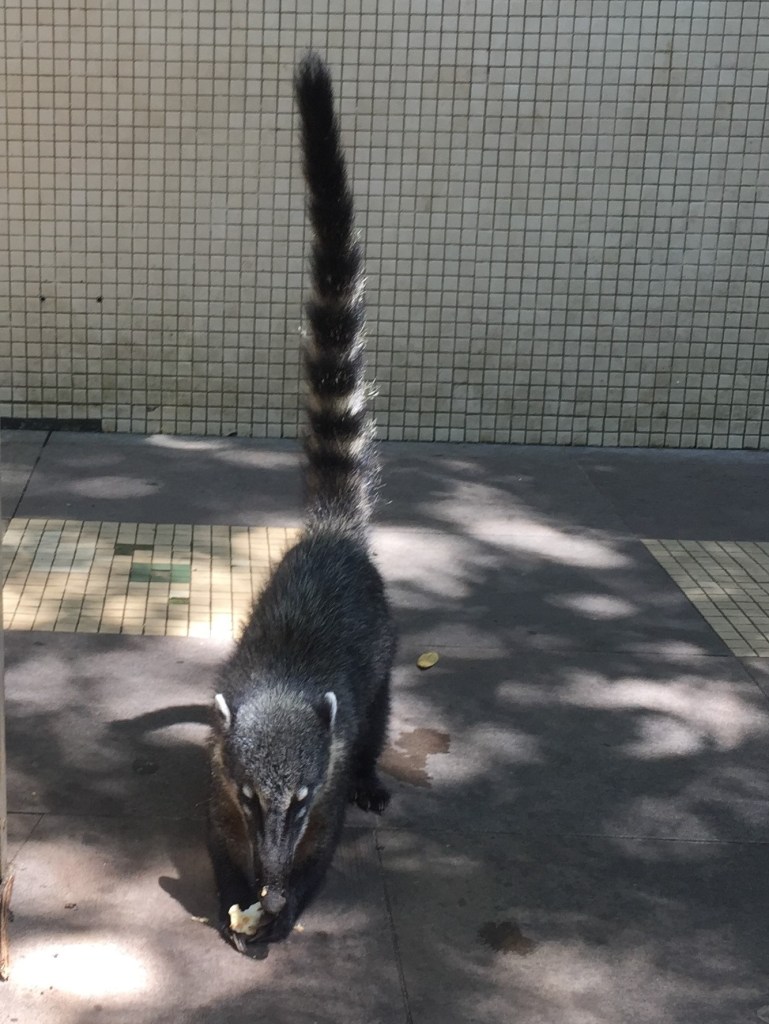
We stop for lunch at the café, where lizards and coatis are competing for scraps, before returning to our hotel for a siesta before our last Brazilian outing.
Marco das Três Fronteiras
In the evening, after a thunderstorm so violent it makes the hotel shudder, we go to Marco das Três Fronteiras (Landmark of the Three Borders); a theme park at the point where Brazil, Argentina and Paraguay meet.

I convince the old man to skip the hotel’s organised tour at £20 a head in favour of taking the bus which costs £1 each way. It’s a lot further than we’d expected and we are on the bus long after all the other passengers disembark. I begin to wonder if we’ve been kidnapped by a rogue bus driver, but finally we arrive at our destination.

The park is awesomely tacky. We wander round the various three-border themed installations; flags, murals, obelisks, signs. After dark, there’s a sound and light show. In the interim, you can enjoy the tacky attractions, purchase souvenirs and have a drink or dinner at a table overlooking the rivers with Paraguay and Argentina in the background. We decide we’ve had our fill of tack and go in search of the bus back to town and the end of our Brazilian adventure. Tomorrow we head for Argentina…

- Trip taken: January 2019
- Updated: February 2025
I hope you found the above information useful. For guides to more destinations in the 50+ countries we have visited, check out my full list of Independent Travel Itineraries here.
 Jane's Midlife Journey
Leave a comment