

We spent 3 days exploring the Moroccan city of Marrakech. We chose to stay at a traditional Riad in the heart of the Medina – the ancient fortified city, which is now a UNESCO World Heritage Site. Most of our time was spent discovering the sights of the Medina, with the exception of the morning of Day 3, when we took a taxi to the spectacular Jardin Majorelle. We found that staying in the Medina was convenient for sightseeing, as we could return to the cool of the Riad after time spent in the dusty heat of the city. Then venture forth later for further exploration and for dinner. Here is my pick of the to 10 things to do on a visit to Marrakech.
How to get to Marrakech
We flew to Marrakech from London. Marrakech Menara Airport is located 4 miles south west of the city. The L19 bus runs in a loop from the airport to the Medina, the new town and back to the airport. The fare is 30 dirham. If you catch the bus back to the airport from the Medina, bear in mind that it is not going straight there and takes somewhat longer than the outward journey. There are other local buses which stop on the road near the airport entrance and cost just 4 dirham.

We arrived late at night, so opted to take a taxi, which was organised by our accommodation.If you are staying in the mainly pedestrian Medina, you are unlikely to be able to get close to your accommodation by car. Our accommodation sent someone to meet our taxi. Finding your way through the labyrinthine alleyways of the Medina can be difficult, so I would recommend this, especially if you’re arriving after dark.
Getting around Marrakech
Most of our time was spent discovering the sights of the ancient Medina on foot, with the exception of the morning of Day 3, when we visited the spectacular Jardin Majorelle. In the Medina, walking is pretty much the only option. To get into the new town, we opted to take a taxi. There are also plenty of buses running between the Medina and the new town. The fare is 4 dirham.
Where to stay in Marrakech
We opted to stay in a Riad; a traditional Moroccan house built round a courtyard or garden. This is convenient for exploring the Medina. However, if you want all mod cons and facilities like a pool or bar, then staying in a modern hotel in the new town may be more appropriate.
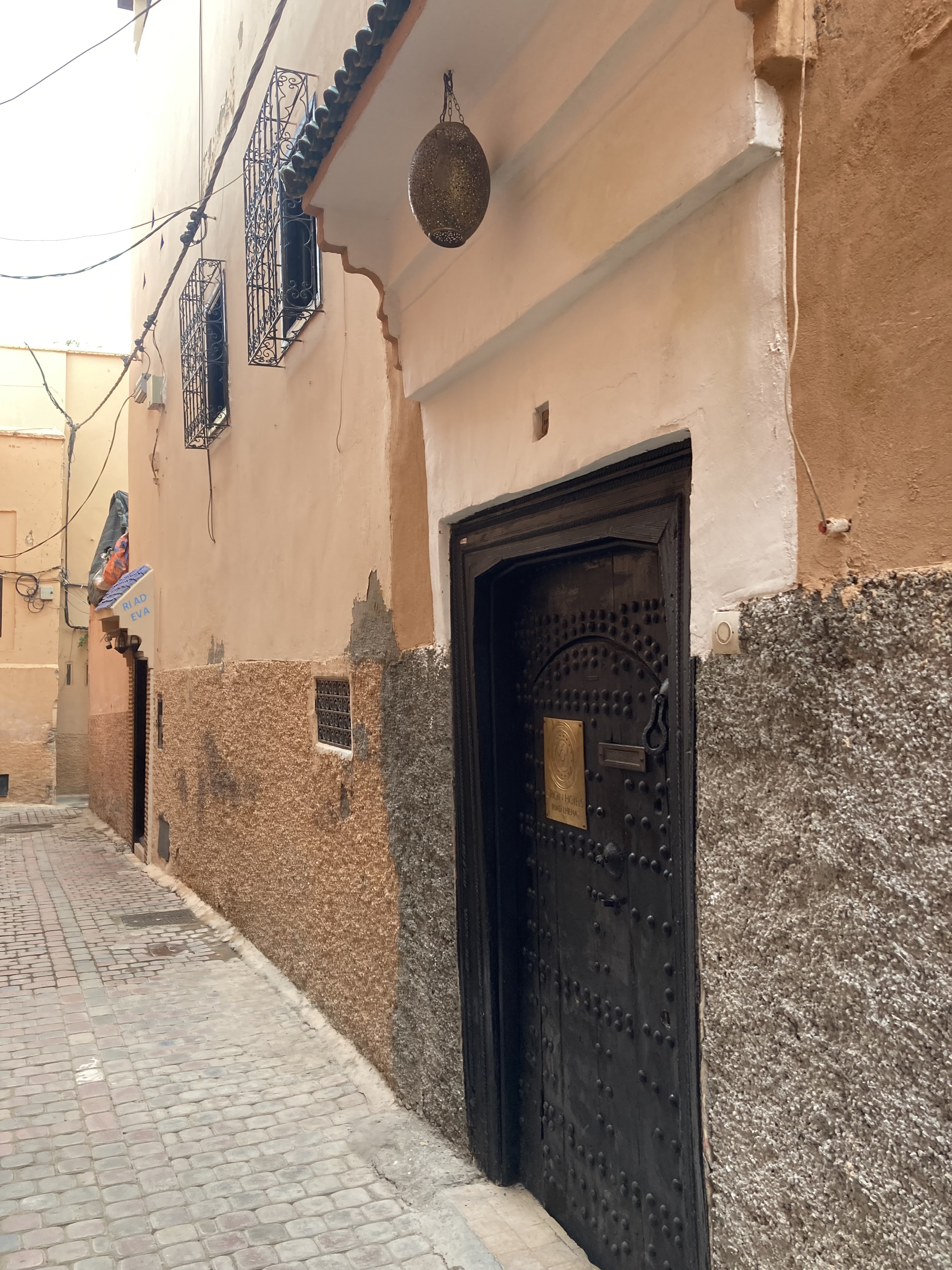
We stayed at Origin Hotels Riad Lhena, which is decorated in a traditional Moroccan style.

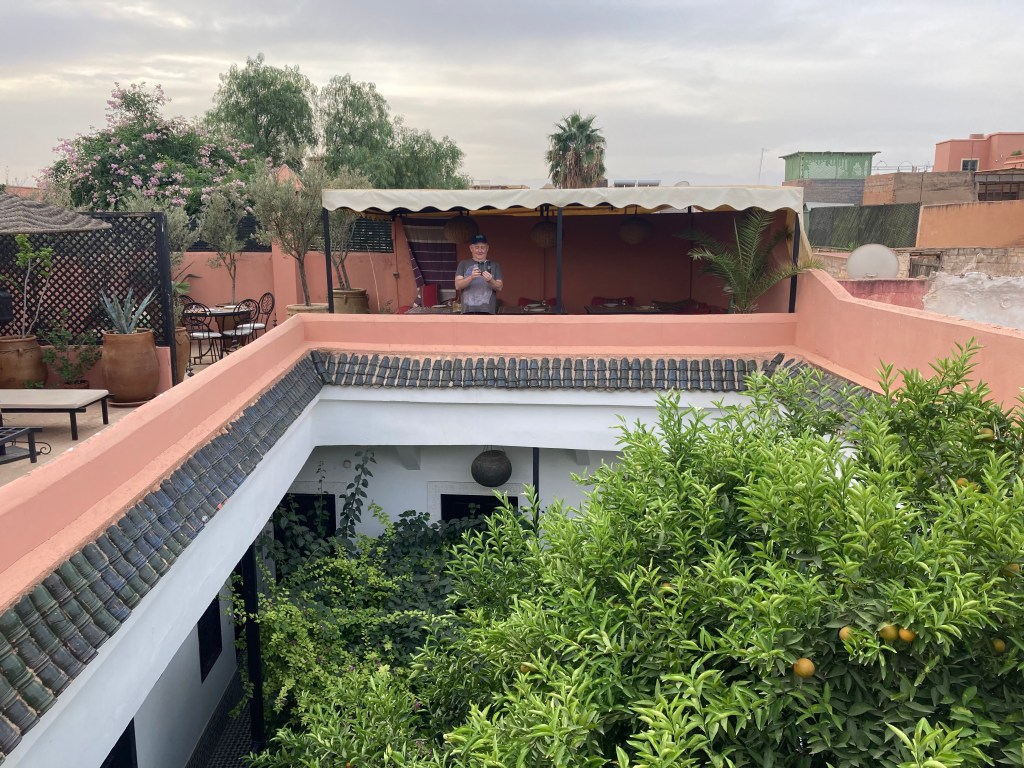
It has a courtyard and a roof garden with plunge pool (you may have to ask for it to be filled).
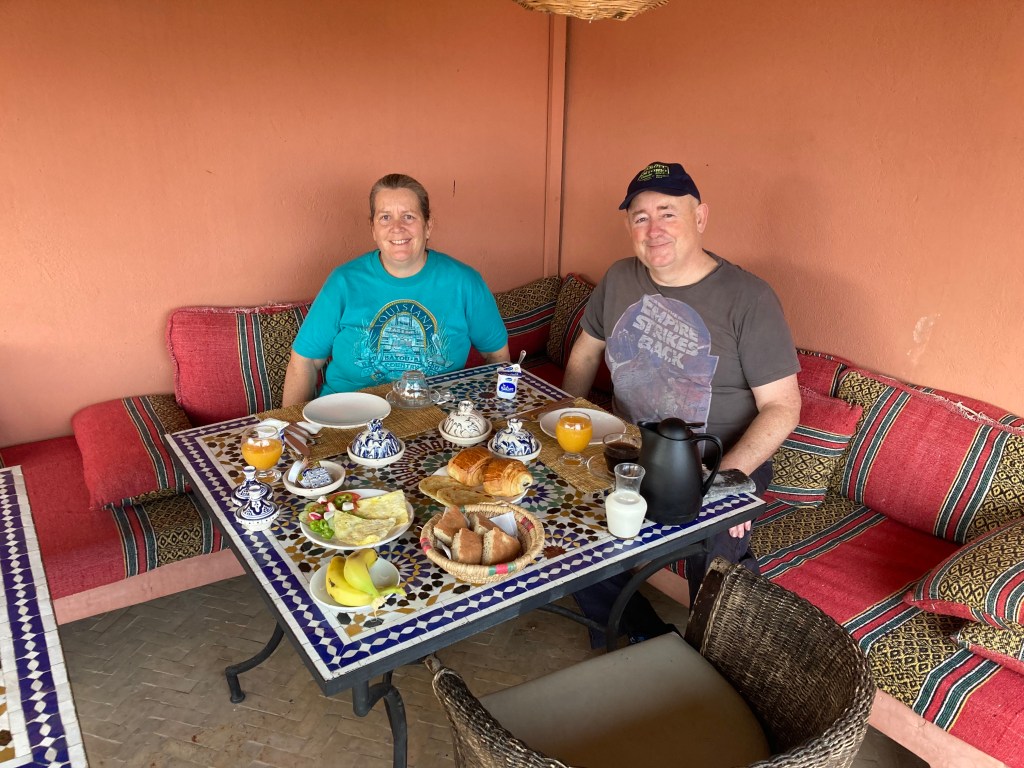
Breakfast is included and is substantial; breads with cheese, jam and honey, fruit, yoghurt, an omelette and some very freshly squeezed orange juice.
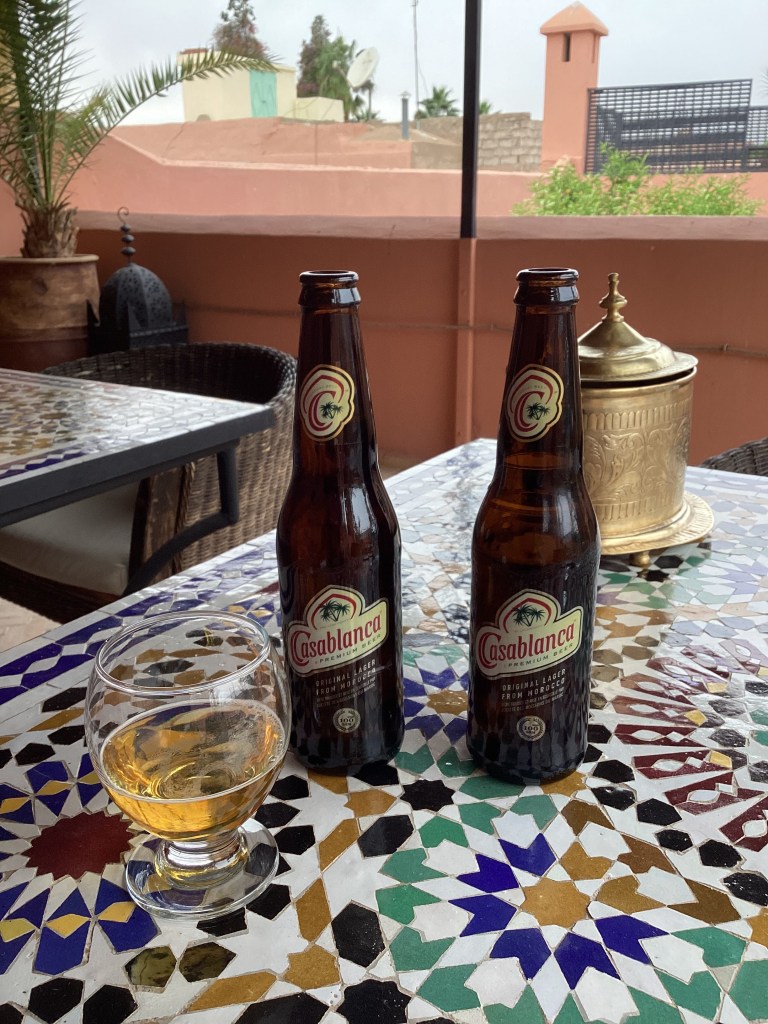
They even serve beer, if you ask for it.
Marrakech: Top 10 Things to do
| 1 | Immerse yourself in the sights and sounds of the Djemaa El Fna |
| 2 | See the impressive Koutoubia Mosque |
| 3 | Stroll round Koutoubia Gardens |
| 4 | Visit the ornate Saadian Tombs |
| 5 | Visit the ancient Badi Palace |
| 6 | Admire the buildings and courtyards of the Bahia Palace |
| 7 | Tour the spectacular Jardin Majorelle |
| 8 | Marvel at the Medersa Ben Youssef |
| 9 | Learn more about the city at Marrakech Museum |
| 10 | Go shopping at the Souk |
No 1 – Immerse yourself in the sights and sounds of the Djemaa El Fna
The main square, the Djemaa el Fna, dates back to the 11th Century and you should probably visit it both by night and by day to enjoy all it has to offer.
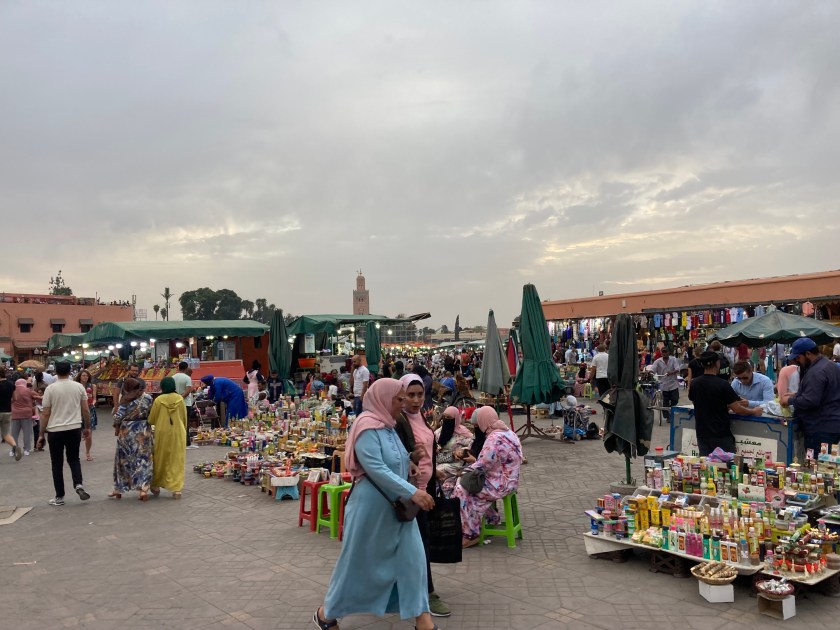
By Night
At night, the square is alive with music and dancing and vendors of food, drink and pretty much anything else you can think of.
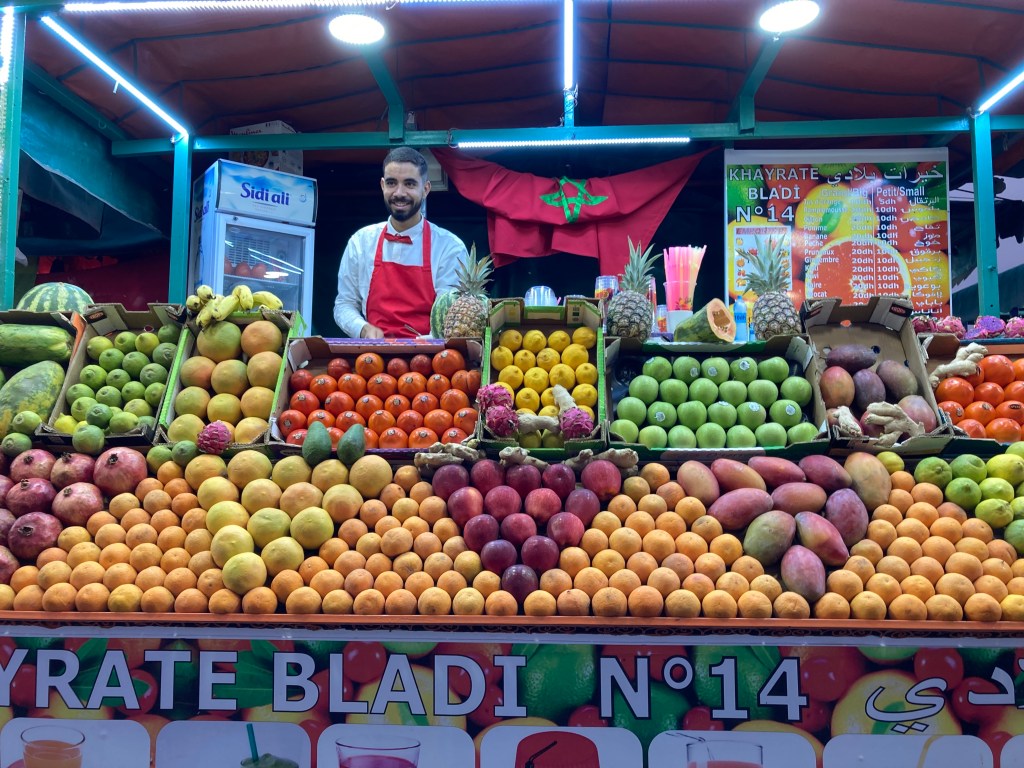
By Day
By day, it’s somewhat less frenetic. Some stalls are open but many aren’t yet. It’s thinned out enough to be able to see the snake charmers and monkey owners, which I didn’t really want to see.
I ordered some really tasty freshly squeezed pomegranate juice from one of the many juice stalls and we wandered round, trying to give the snake charmers a wide berth.

No 2 – See the impressive Koutoubia Mosque
At the far end of the square is the Koutoubia Mosque. This 12th Century mosque is in fact the second to be built on the site. The first was of a similar construction, but did not facing Mecca. Oops!

The tall minaret topped by a spire of brass balls can be seen across much of the city. Non Muslims are not allowed to enter. So, we took a walk around the perimeter, then crossed into the gardens opposite.

No 3 – Stroll round Koutoubia Gardens
The palm lined Koutoubia Gardens with their fountains and flower beds and the ancient mosque in the background make for a pleasant place to spend some time and a great photo op.

No 4 – Visit the ornate Saadian Tombs
The Saadian Tombs are a 16th Century Sultan’s tomb complex. The entrance can be a bit tricky to find, but you’re likely to spot tour buses pulling up at the side of the road and can then follow a tour group. The complex consists of a garden filled with tombs of women and court staff and a row of buildings containing the more splendid tombs of the men.

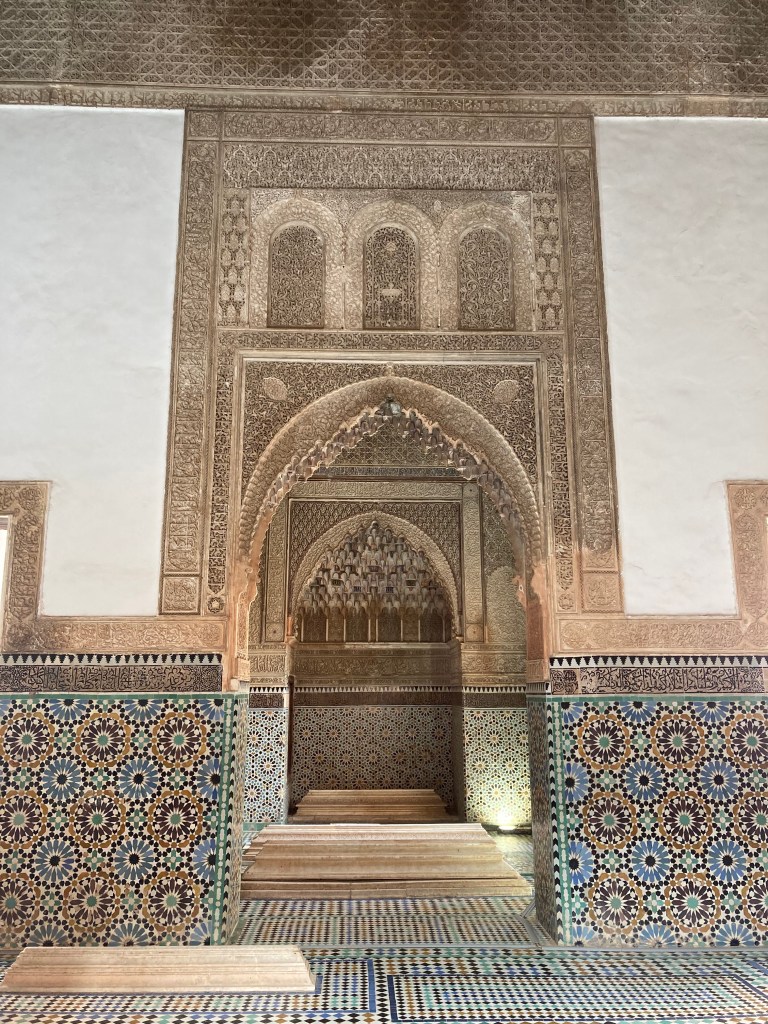
Chamber of Three Niches and Prayer Room
The first building you come to is the the Chamber of Three Niches. These tomb rooms with a prayer niche to indicate the direction of Mecca are all intricately decorated.
Chamber of the 12 Pillars
Next, is the even more intricately decorated Chamber of the Twelve Pillars. The chamber, with its multi couloured tiles, plaster inlaid with gold and 12 marble pillars is the final resting place of Sultan Al Mansour.

There was quite a queue to see the Chamber. It took us 20 minutes to get our chance to see (and of course photograph) the chamber. While we were waiting, I overheard tour guides telling their clients that it wasn’t worth the wait. Either I have a different opinion to the tour guides or they were deliberately misleading their clients to avoid standing around for half an hour.
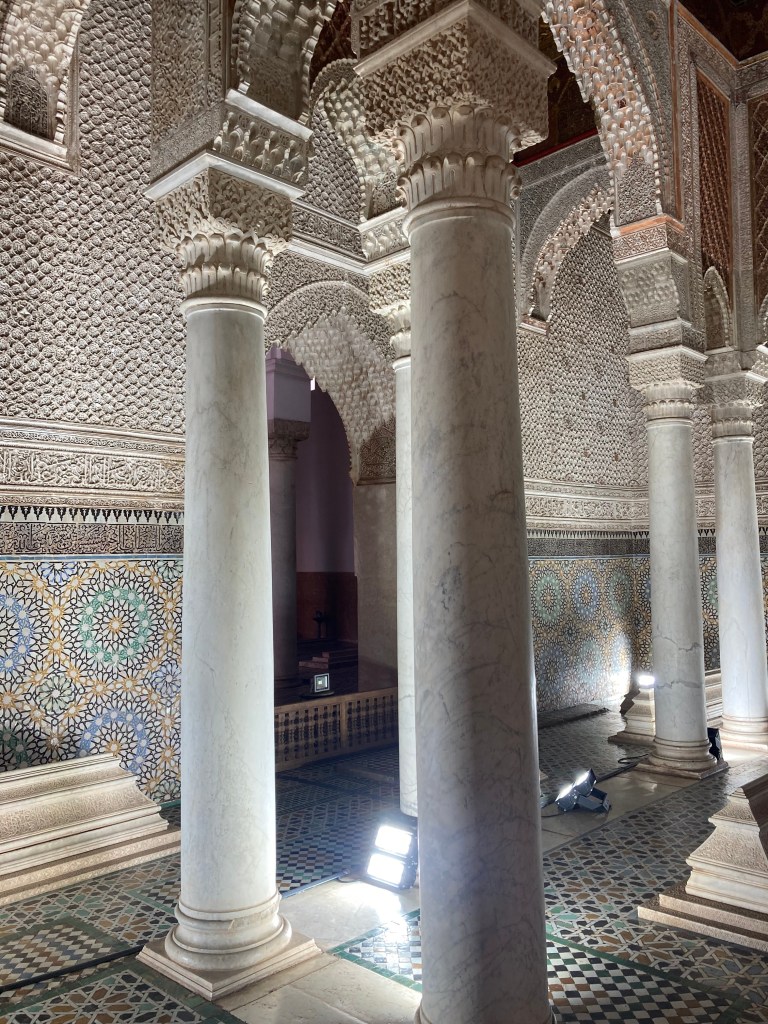
The tombs are open daily from 9 am until 5 pm (10 am until 4 pm during Ramadan). Entry for foreigners costs 100 dirham.
No 5 – Visit the ancient Badi Palace
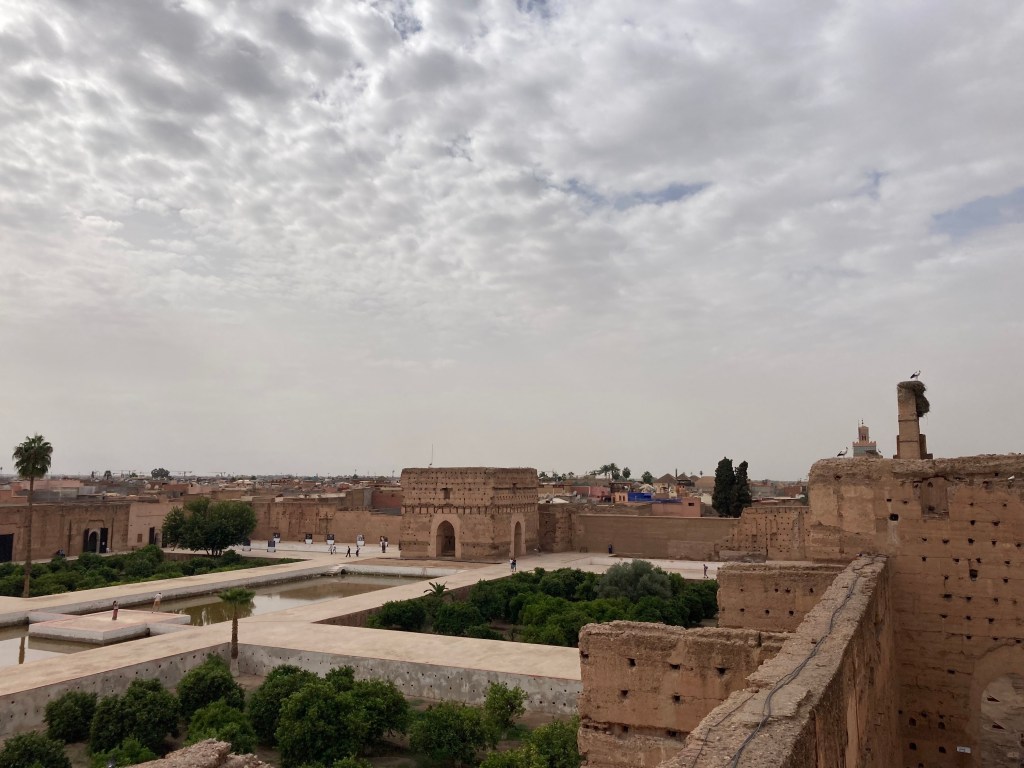
The 16th Century Badi Palace ruins promise glimpses of storks and excellent views from the ramparts. Again, it can be tricky to find. Follow the ramparts and you’ll discover the entrance eventually.
Subterranean Chambers
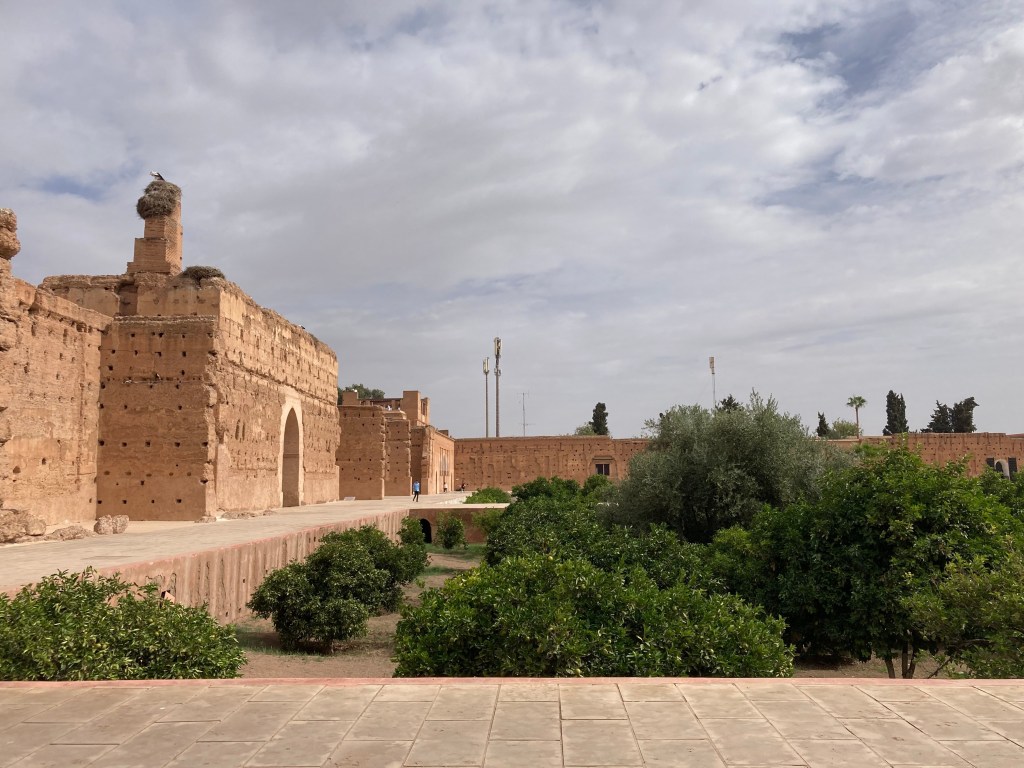
Upon entry to the palace, you find yourself in a small courtyard lined with subterranean chambers. These contain some displays of photographs of the Kasbah and conditions for the slaves and prisoners who used to live in the chambers. There are, indeed storks watching on from the ruined walls.

Courtyard
On through a gate into in a large Courtyard consisting of sunken gardens and reflecting pools. The pools were empty when we visited , but you could get a feel for how grand the palace must once have been.
Room housing the Katoubia Minbar
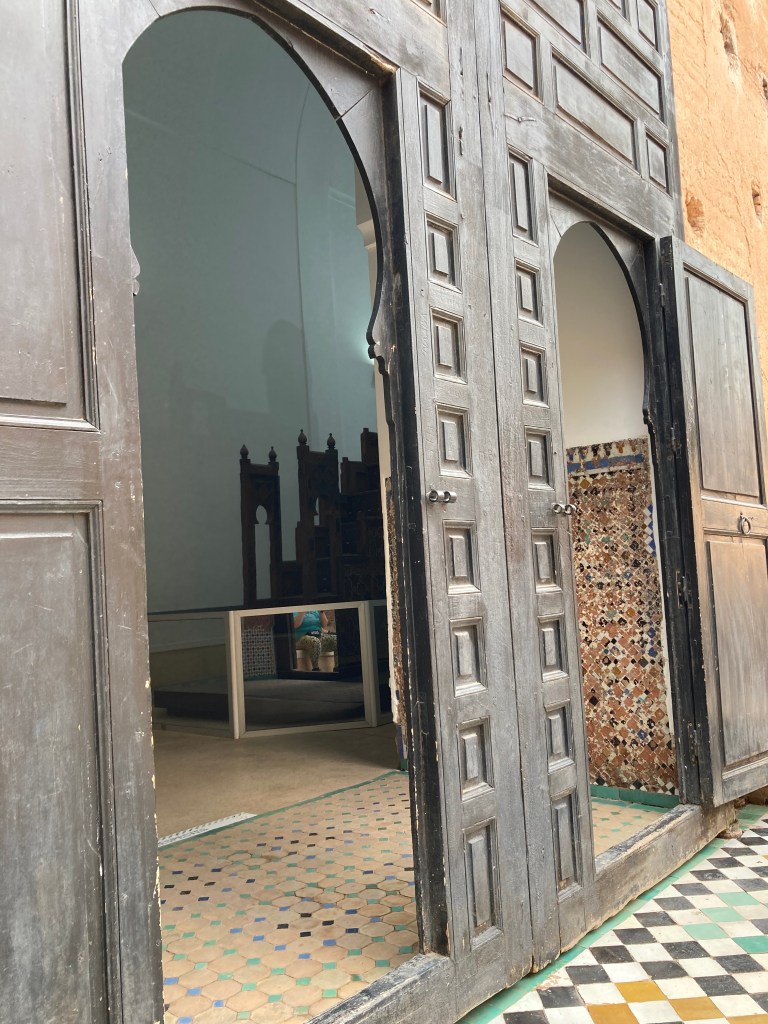
One room houses the 12th Century Katoubia Minbar, which is decorated with gold and silver calligraphy. Apparently, the reason it ended up here is related to the whole Mosque not facing Mecca saga.
The Badi Palace is open daily from 9 am until 5 pm (10 am until 4 pm during Ramadan). Entry for foreigners costs 100 dirham.
No 6 – Admire the buildings and courtyards of the Bahia Palace
The Bahia Palace is an ornate 19th Century Palace. The palace consists of a series of buildings and courtyards. When we visited, it was so crowded that we could hardly move.

Petit Riad
In the Petit Riad, white plasterwork is inscribed with verses from the Quran. To be honest, it was so crowded that it was hard to see much at all.

Grand Riad
The Grand Riad, which is built round a courtyard of fountains and foliage, was conceived by a former slave who became the Sultan’s top aide. I’m sure he’d be impressed at how many people are currently milling around his grand courtyard taking photos of other people taking photos.
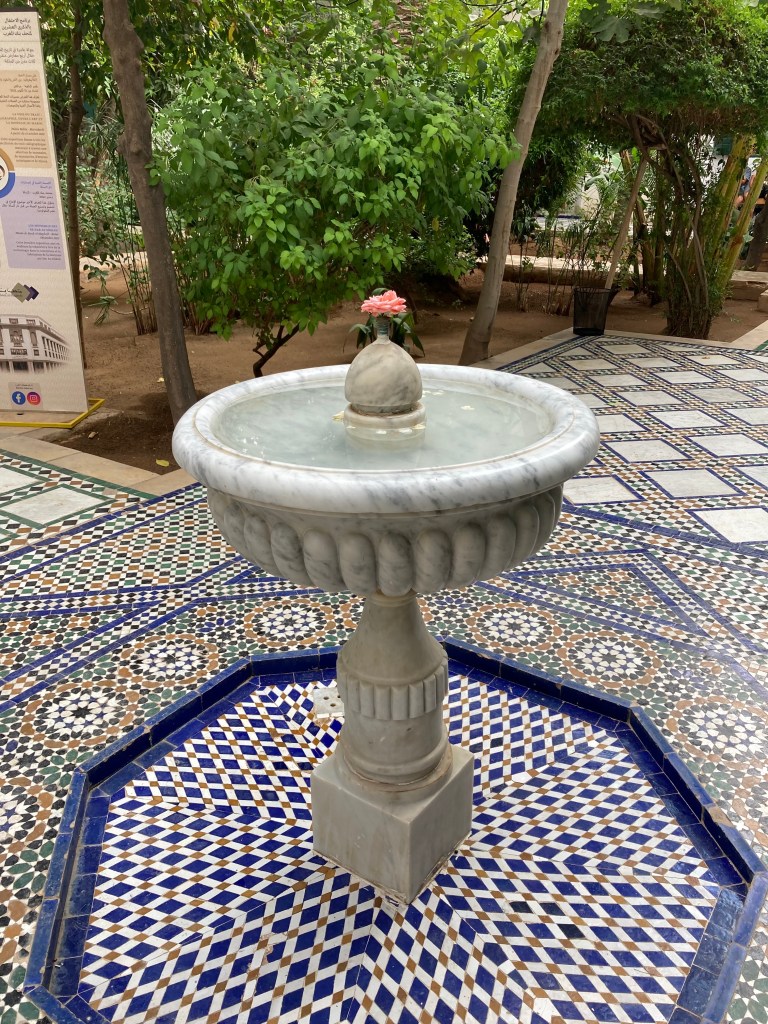
Cour d’Honneur
Supposed to be the pièce de résistance, the 1500 square metre, marble floored former harem of the Cour D’Honneur was being refurbished when we visited. So it was so somewhat of an anti-climax as only one end of the courtyard was accessible, the rest was a building site.

The Bahia Palace is open daily from 8 am until 5 pm. Entry costs 70 dirham.
No 7 – Tour the spectacular Jardin Majorelle
The spectacular Jardin Majorelle is the most visited attraction in Morocco.

The exotic former garden of French artist Jacques Majorelle was created in the 1920s, but fell into ruin after his death, until it was purchased by fashion designer Yves Saint Laurent and his partner, who had it restored to its former glory.

We purchased time specific tickets online in advance. This means that you can skip one of the two queues. We selected an early time slot in the hope that it would be less crowded.

It was a good decision on both counts. We arrived at 9 am, didn’t actually have to wait at all and the number of other people inside was tolerable, although it steadily grew throughout our visit.
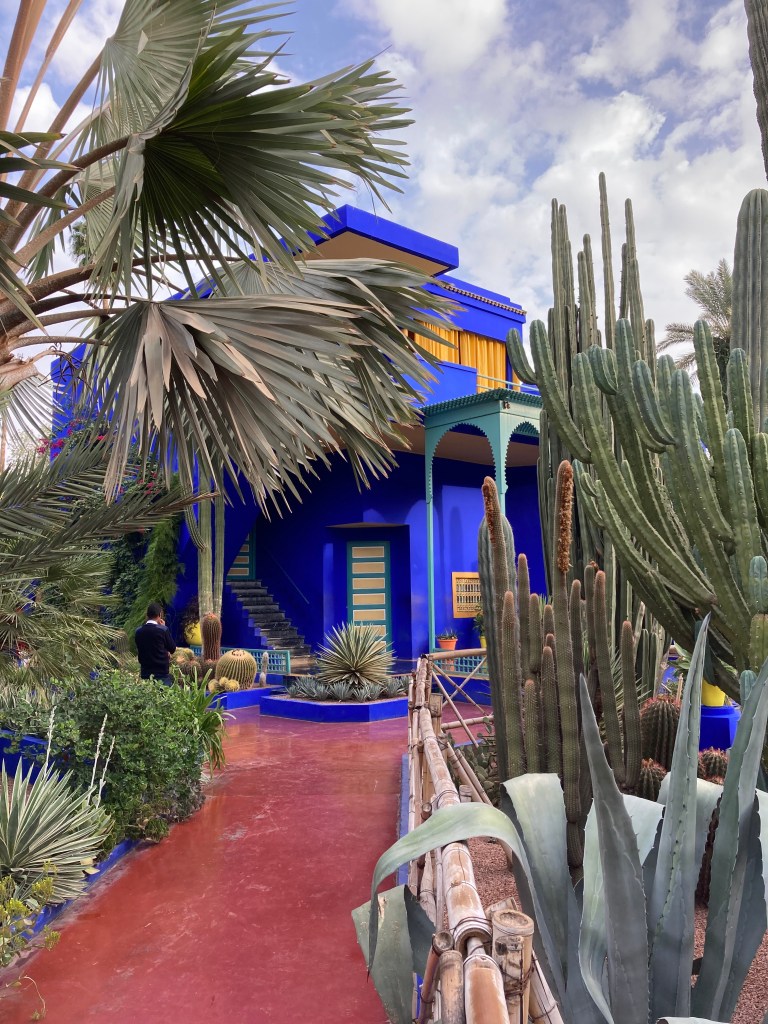
Wander round the garden, which is full of hundreds of species of cacti and exotic plants interspersed with pergolas and water features. In the centre is Majorelle’s studio, painted an electric ‘Majorelle blue‘.

Pierre Bergé Museum of Berber Arts
Majorelle’s psychedelic blue studio is now the Pierre Bergé Museum of Berber Arts. Set up by and named after Yves Saint Laurent’s partner, the museum was founded to preserve elements of the Berber culture.

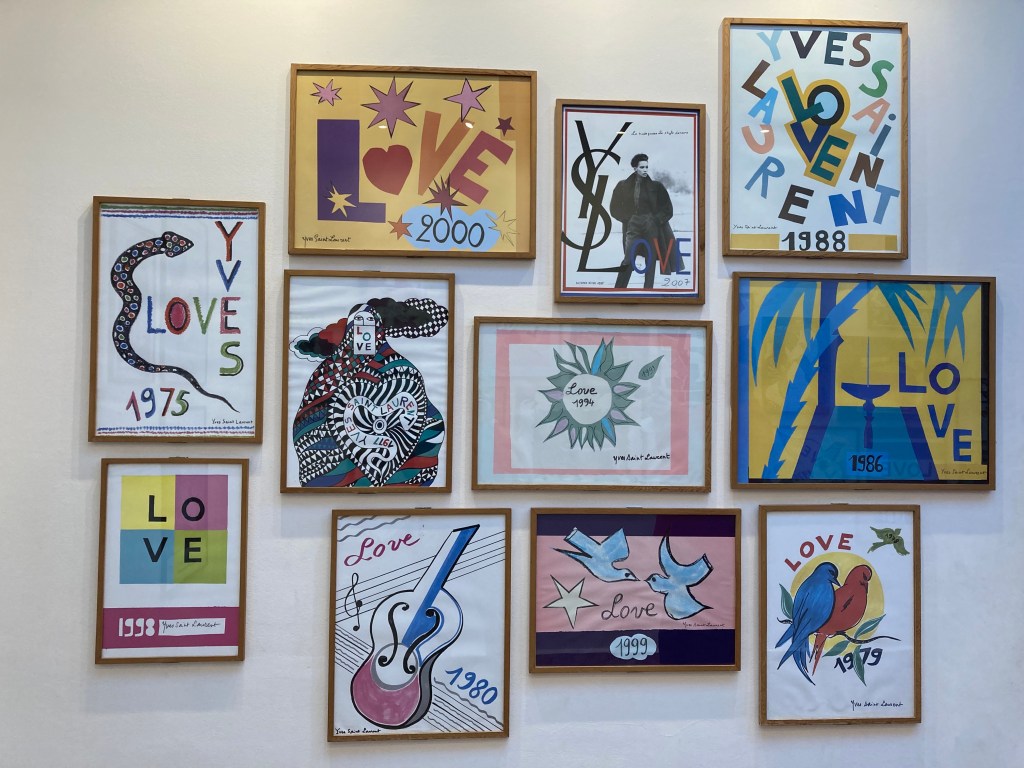
To reach it, you walk past a series of artwork by Yves Saint Laurent; ‘The Four Seasons’ and his ‘Love’ collection, which he produced annually going back to 1970.
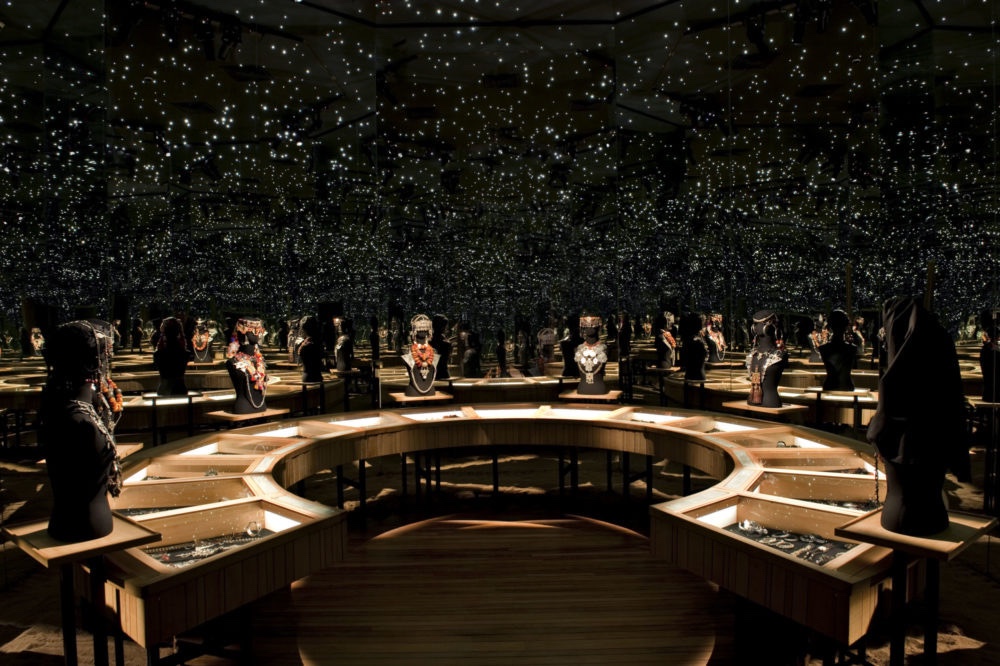
Inside the museum are photographs, clothes and many other items. however, the pride of place is a jewellery display in an octagonal (maybe more sides) room lined with mirrors with a ceiling full of many mini lights. It’s like entering an infinite universe of jewellery. Photography is prohibited in the museum, so here is a picture I found on the internet.
Note: Adjoining the garden is the Yves Saint Laurent Museum, which contains some of the famous fashion designer’s sketches and designs. If you want to visit the museum, avoid Wednesday and purchase a combined ticket. But if you just want to just visit the garden, Wednesday is the least busy day due to the museum being shut.
- The Jardin Majorelle is open daily from 8 am until 6.30 pm.
- The Pierre Bergé Museum of Berber Arts is open daily from 8.30 am until 6 pm.
- The Yves Saint Laurent Museum is open daily except Wednesdays from 10 am until 6.30 pm.
- Entry to the Jardin Majorelle costs 170 dirham.
- Entry to the Jardin Majorelle and Berber Museum costs 230 dirham.
- A combined ticket including the museum costs 330 dirham.
No 8 – Marvel at the Medersa Ben Youssef
Back in the Medina is the recently refurbished, beautifully ornate 14th Century Medersa Ben Youssef. As non Muslims are not allowed to enter the mosques of Marrakech, this decommissioned school is a rare opportunity for un infidels to see the ornate interior of a religious building.

Like many buildings in Marrakech, it is build around a central courtyard with a pool in the middle.

You can climb to the small rooms on the second floor for a bird’s eye view of the ornate courtyard.

The Medersa is open daily from 9 am until 7 pm (6 pm during Ramadan). Entry for foreigners costs 50 dirham.
N0 9 – Learn more about the city at Marrakech Museum
Marrakech Museum consists of exhibits inside a former palace with a courtyard decorated with tiles and stained glass.
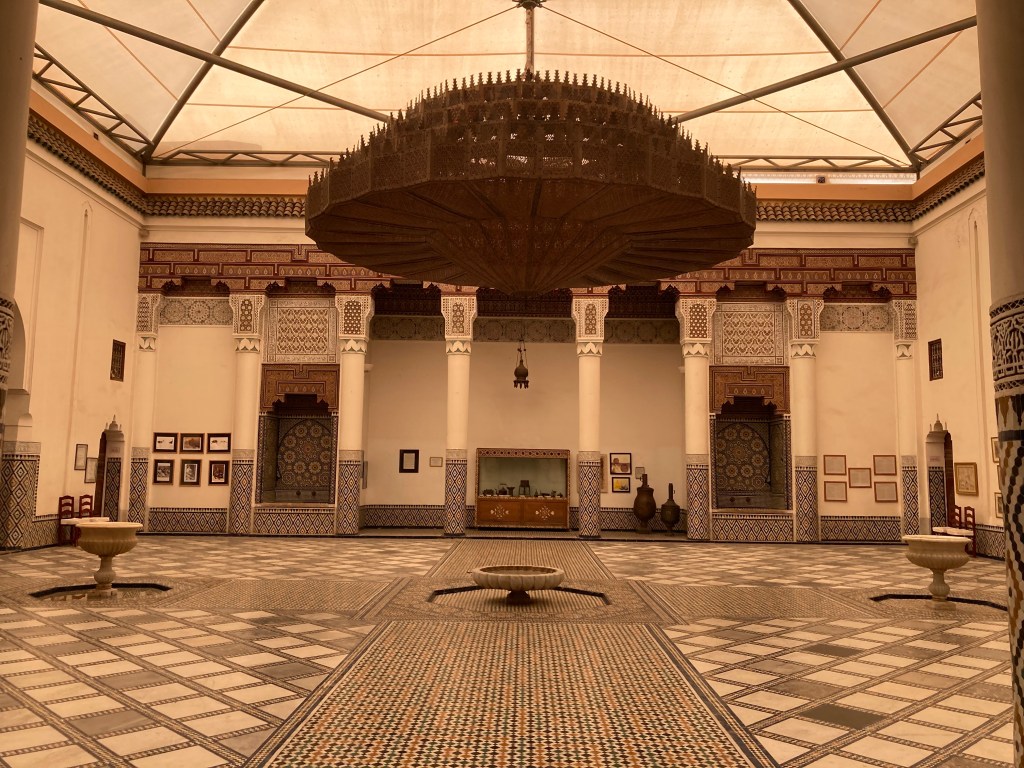
The building outclasses the exhibits, but it’s still worth a visit.

There is also plenty of local art work.

The museum is open daily from 9.30 am until 6 pm. Entry costs 70 dirham.
No 10 – Go Shopping at the Souk
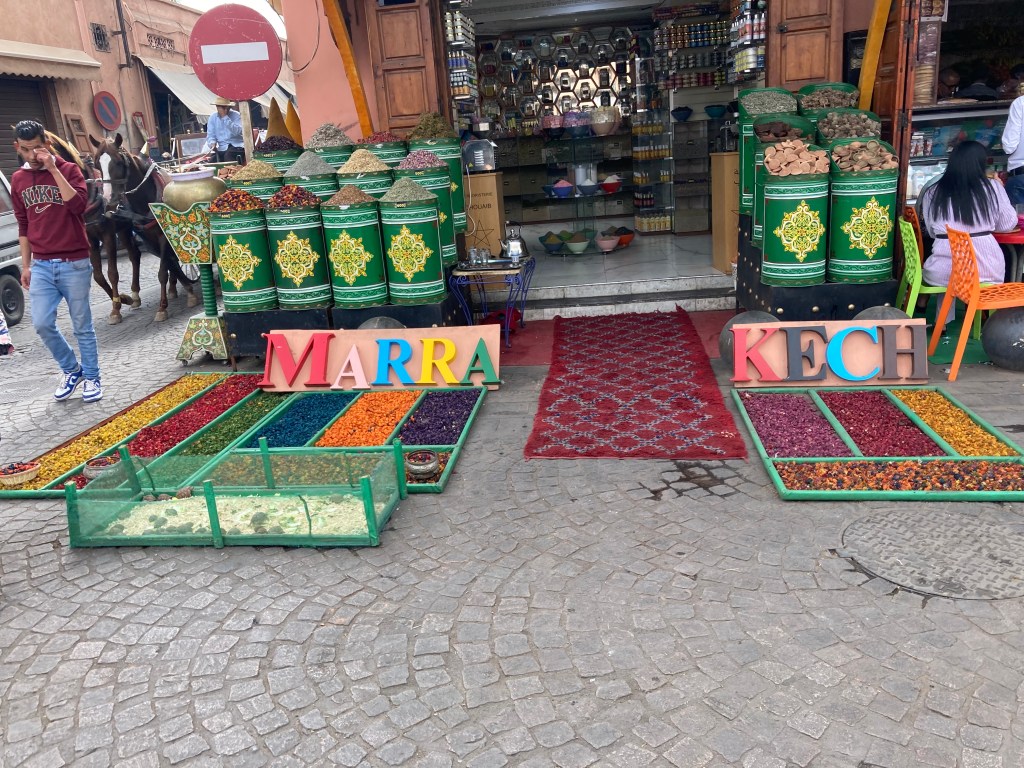
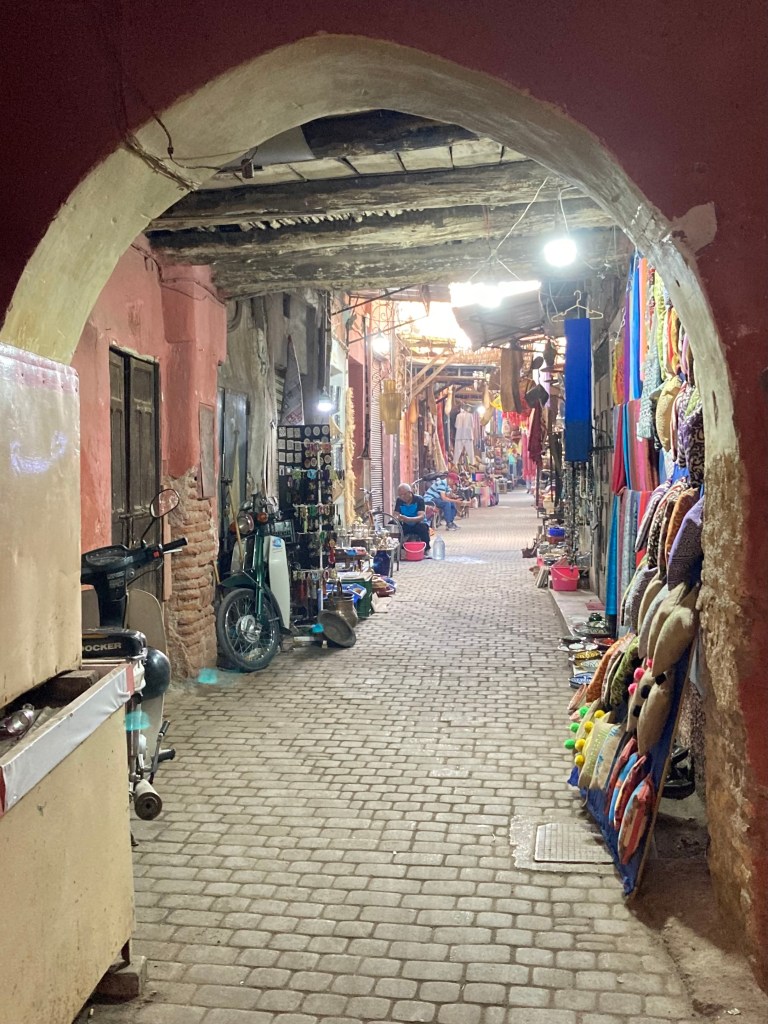
A visit the Morocco would not be complete without spending some time at the local Souk. In this labrynth of shops, you can purchase pretty much anything you can imagine. We stick to a fridge magnet and a cuddly camel.

Whether you want to purchase souvenirs or just browse, there is merchandise a plenty in the Souk.
- Trip taken: November 2022
- Updated: August 2025
I hope you found the above information useful. For more top picks from other destinations in the 50+ countries we have visited, check out my full Top 10 Things To Do list here.
 Jane's Midlife Journey
Leave a comment