
We based ourselves in Tokyo for the first five days of our three week tour of Japan. We spent three days exploring the city itself, followed by two day trips; to Nikko and Hakone. Below is my itinerary for a three day visit to Tokyo. Note: We were lucky enough to visit during a sumo tournament. If we hadn’t gone to that, we would have wound up Day 3 with a visit to TeamLab Planets instead.
How to get to Tokyo
There are two main airports serving Tokyo; Narita and Haneda. We arrived at the major international airport of Narita. Narita Airport is quite a long way from Tokyo – almost 50 miles from the city centre. The best way to get into Tokyo depends on which part of the city you are staying at. There is a train; the Narita Express, which can get you to Shibuya in around 1.5 hours and costs Y3250 (around £15.60). As we were staying in Shinjuku, we opted to take the Limousine Bus, which takes a little longer and costs Y3600 (around £17.30), but was more convenient for our hotel.
Note: If you have a Japan Rail Pass, this covers the Narita Express, but you need to weigh up whether you want to activate your pass straight away or not.
Getting Around Tokyo
Tokyo is vast. Sightseeing will require some use of the city’s extensive public transport system. There are a number of pre-pay cards, which can be used on Tokyo’s public transport (as well as in vending machines etc), such as Pasmo and Suica. You purchase a card for Y500 from a ticket machine outside a station and can then charge it as and when needed. Depending on how long you are planning to stay and how many journeys you are planning to take, a multi day pass might be a better option.
Although we purchased a JR Pass for some of our trip, we didn’t activate it until our three days of sightseeing in Tokyo were complete. For these days, we paid for individual journeys as this worked out cheaper.
Where to stay in Tokyo
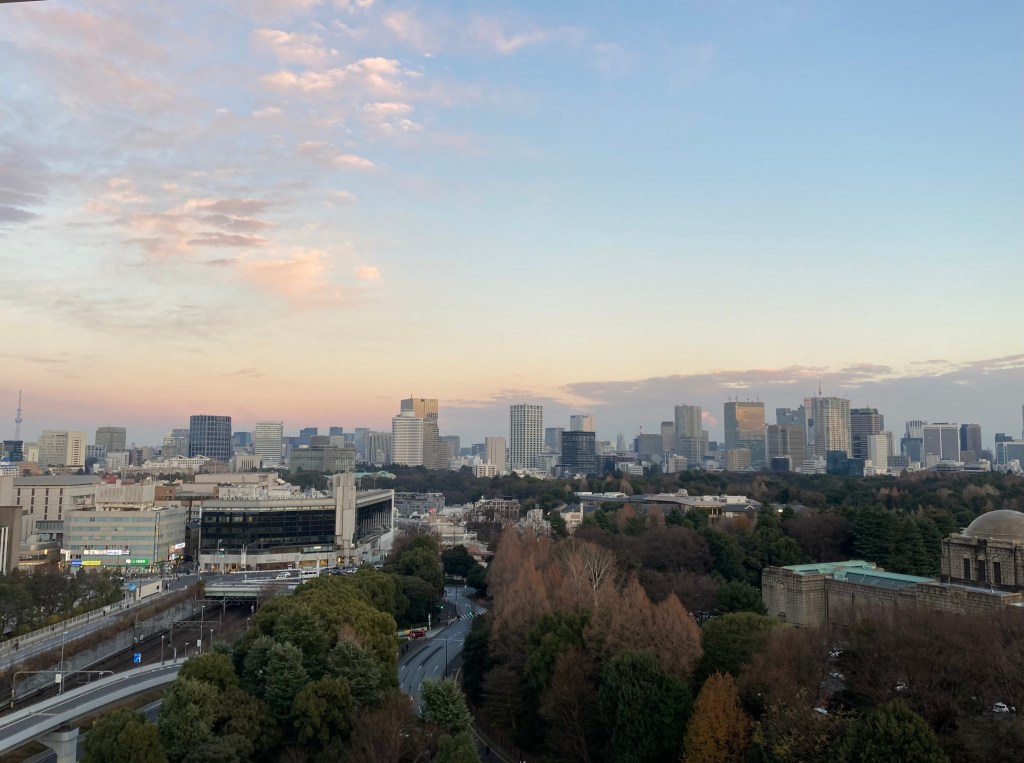
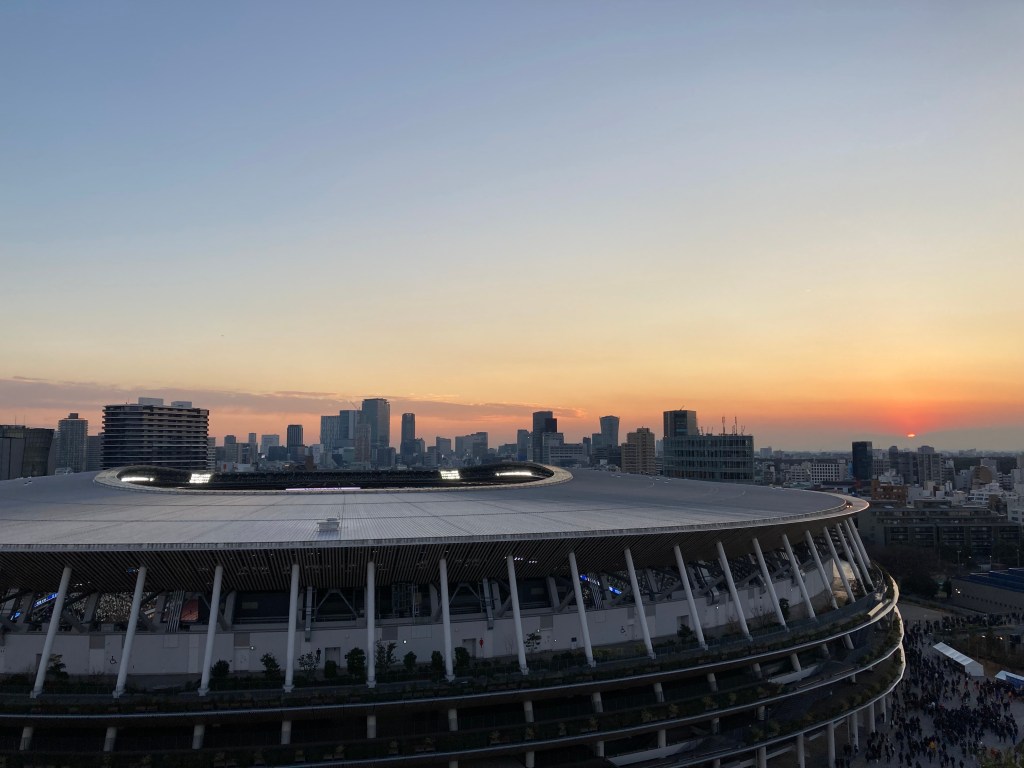
We stayed at the excellent Mitsui Garden Hotel Jingugaien Tokyo Premier. This is located just outside the more touristy areas, so was more reasonably priced. The hotel is new (built for the Olympics) and very clean and comfortable. It overlooks the Olympic Park and is very closed to both a Metro Station (Kokuritsu-Kyogijo) and a JR Train Station (Sendagaya), so extremely conveniently located for public transport.
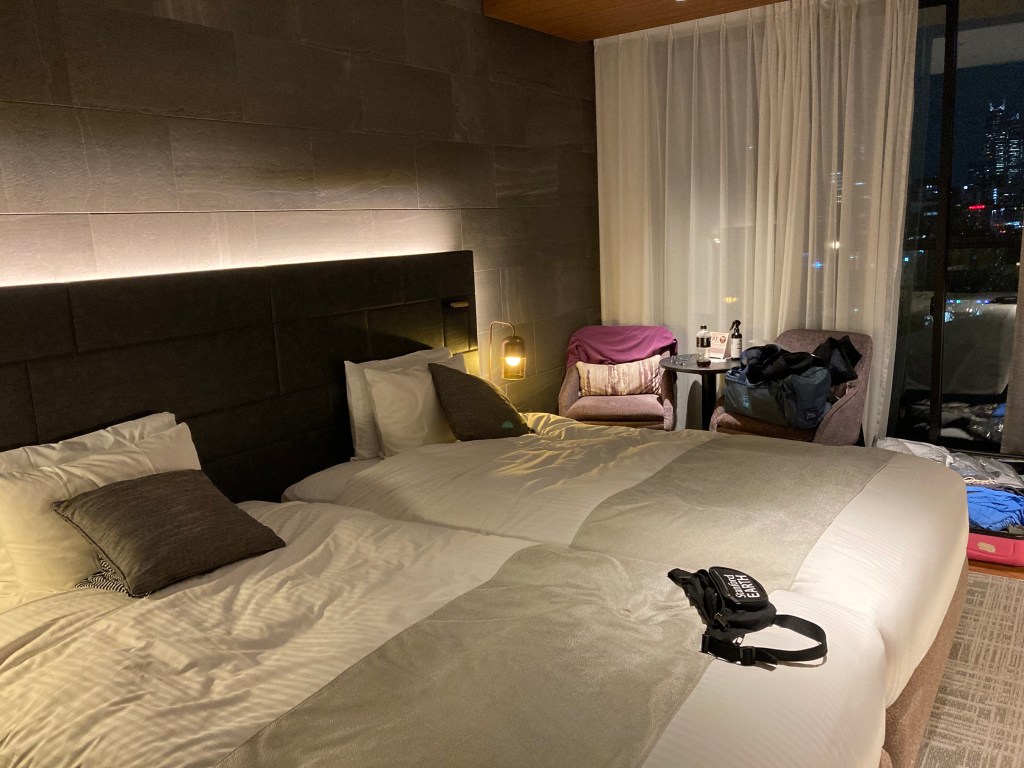
The hotel facilities include a large public bath and a nice roof terrace with views across the Olympic Park and the city beyond.
Tokyo in 3 Days Itinerary
| Day 1 | Imperial Palace Tokyo Station Dinner on Ramen Street Public Bath |
| Day 2 | Hachiko Statue Shibuya Crossing Coffee at Starbucks Coffee Shibuya Scramble Square Mag8 Viewing Area Shibuya Stream Meiji Jingu Shinjuku Shinjuko Gyoen Dinner at Hidakaya |
| Day 3 | Ueno Koen Tokyo National Museum National Museum of Western Art Ryogoku Kokugikan Dinner at Hidakaya |
Tokyo Day 1
We actually start our first day in Tokyo by heading to the suburbs to do a parkrun. If you enjoy a Saturday morning run/walk, check out my run Hikarigaokakoen Parkrun blog.
Imperial Palace
After a shower and breakfast, we take the train to the enormous Tokyo Station in order to visit one of the city’s most famous sights; The Imperial Palace. Japanese stations are enormous – like underground towns, so it’s useful to note which exit you need beforehand as it’s not always readily apparent when you reach the station.

We learn this the hard way and after a couple of failed attempts, finally set off in the right direction, walking through the suburb of Marunouchi to the Imperial Palace. I had assumed that an Imperial Palace would be easy to locate, but the site is far larger than I’d imagined and we walk and walk until we finally locate the entry to the palace.
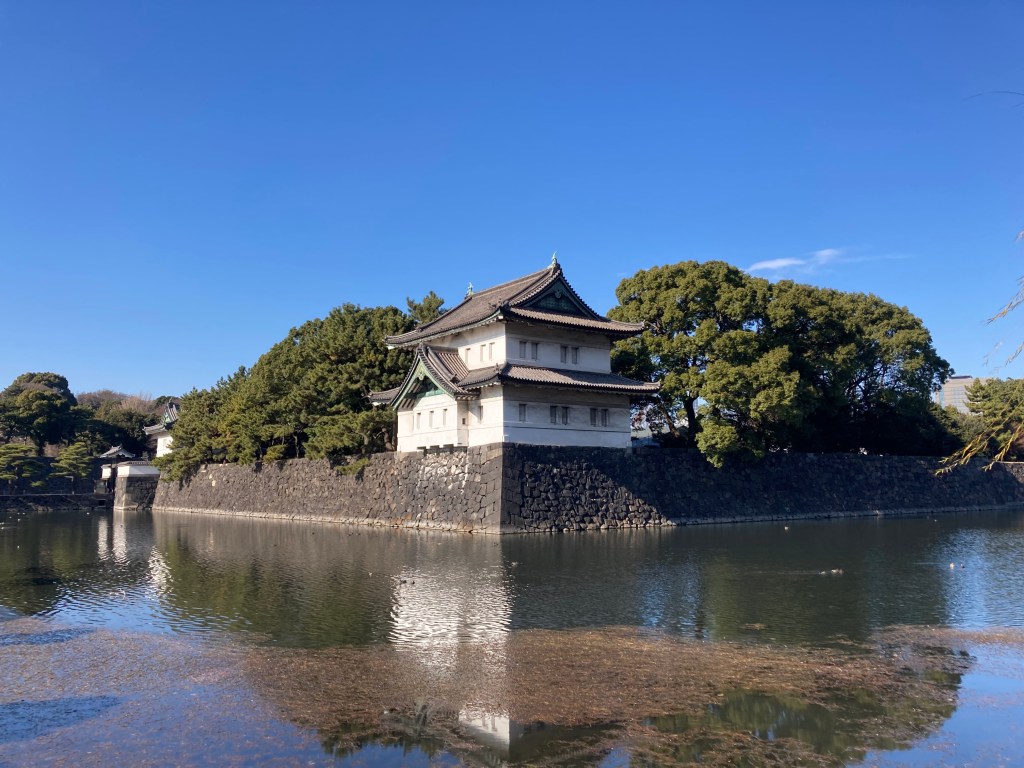
My guide book recommends heading for the huge, gravel lined Kokyo-Gaien Plaza for views of the Niju-bashi (Iron Bridge) and Megane-bashi (Stone Bridge) which link to the Fushimi-yagura (Watchtower). In reality, the area is heavily guarded and you can’t get particularly close to or see very much of the aforementioned attractions.

Imperial Palace Guided Tour
You can only access the palace grounds on a Guided Tour. These free tours usually take place between Tuesday and Saturday at 10 am and 1.30 pm. There are 200 places available on a first-come-first-served basis. So, we queue for the afternoon tour to find that we are a few places too far back in the queue and therefore cannot participate.
Note: Since our visit, it is now possible to register for a place in advance online. Details can be found here. You will need you passport to join the palace tour.
Imperial Palace East Garden
Instead, we walk on to the Imperial Palace East Garden. This is also free to enter, although there is a quota system. Luckily, this time we don’t have to queue. Again, this is significantly larger than I’d imagined. I was expecting a traditional Japanese style garden. But it consists mainly of enormous lawns of rather parched grass.

There are some more traditional areas of bamboo and a lake full of koi carp.

The gardens are usually open daily except Mondays and Fridays from 9 am until at least 4 pm (later in summer).
Tokyo Station
We walk back to the 100 year old Tokyo Station, stopping to admire its red brick façade. The plan is to go inside, locate Ramen Street, have dinner, then catch a train back to our hotel.

Tokyo Station is massive. It’s probably bigger than my home town. A bit like an iceberg, only a fraction is visible above the surface. Underground, a huge labyrinth of shopping and dining streets go on and on, selling all manner of goods.

Dinner on Ramen Street
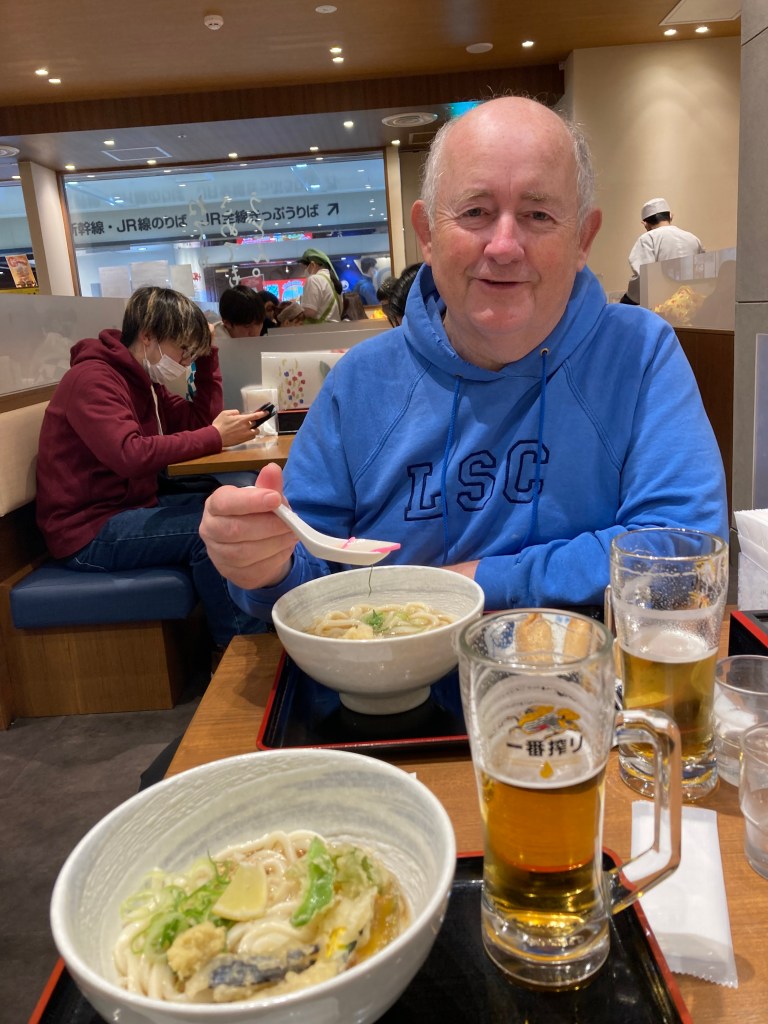
After some considerable time, we eventually find Ramen Street, select a restaurant and, with the help of the plastic replicas outside the restaurants, choose our meals. I opt for Udon Noodles with Tempura vegetables.

Apparently, the way to eat noodles involves chopsticks in one hand and a spoon/ladle in the other. I’m not very good with chopsticks, so attempt to go spoon only, but the noodles are slippery little buggers and lunch is a slow and laborious affair. Much of it ends up on my jumper.
Public Bath
After dinner, we return to the hotel. Like many Japanese hotels, it has a Public Bath – an essential experience for a visit to Japan. I’m not sure quite what this entails, but I don my swimming costume and off I go. It’s basically what it says – a big bath. It’s very hot; rather like being in an oversize Jacuzzi which hasn’t been turned on.
Apparently, you don’t wear clothes in a public bath. Who knew? Not me, obviously. I come waltzing in in my swimming costume and everyone else is naked, leaving me feeling extremely overdressed. I’m not sure how to react; immediately whip my tits out or just get in the water demurely and not draw attention to myself? I opt for the latter, but feel rather out of place surrounded by exposed fannies when mine’s all covered up. I don’t stay long before beating a retreat.
Japan is an enormous city and on our first day, including parkrun, we have covered 12 miles on foot. So, it’s time for an early night before another sightseeing onslaught tomorrow.
Tokyo Day 2
Today, we have another busy day planned, focusing on the suburbs of Shibuya and Shinjuku. After a breakfast of convenience store sushi, we start by catching a train to Shibuya Station. This is another mega station, which covers an area approximately the size of Wales.
Hachiko Statue
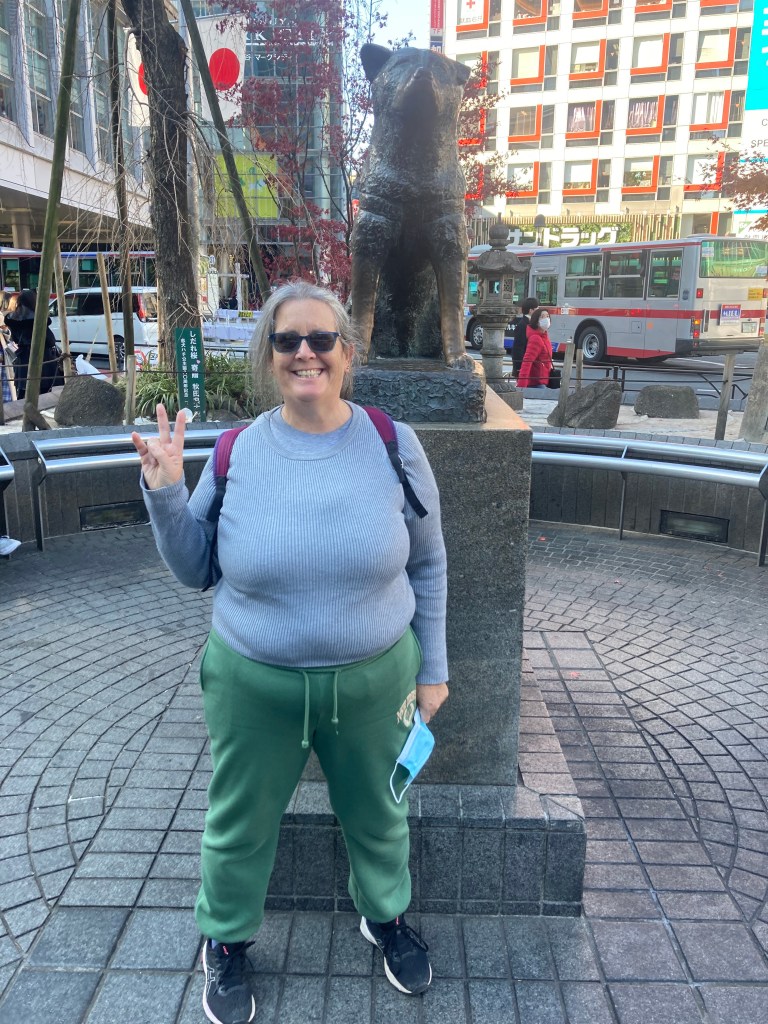
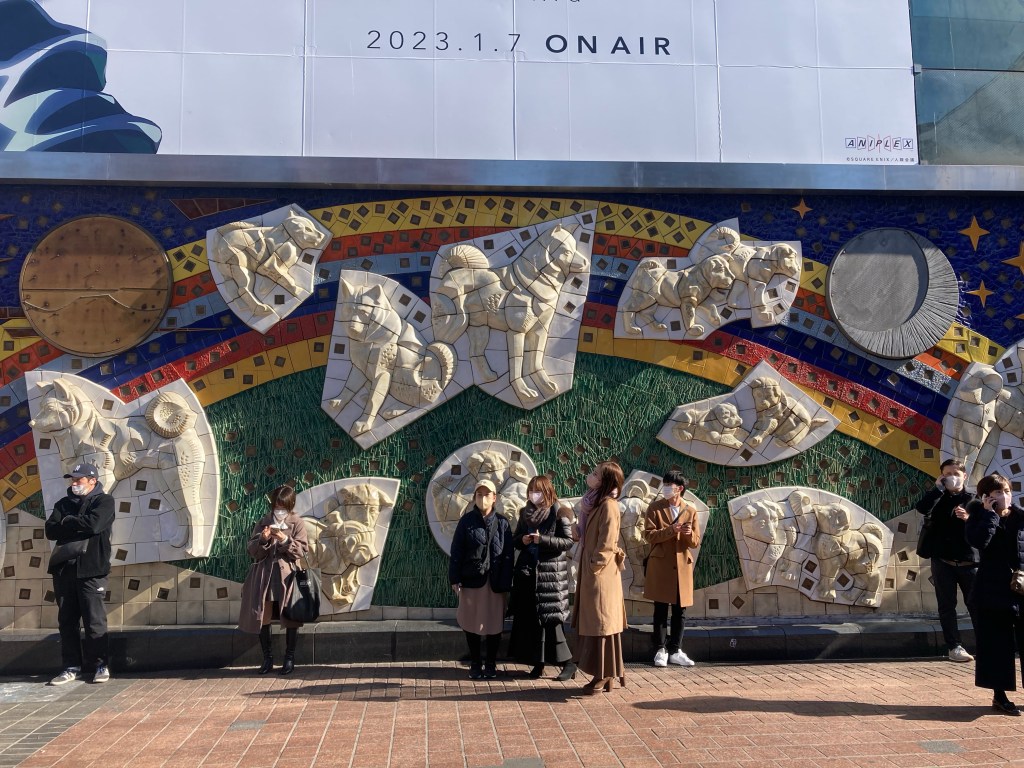
We set off in search of the famous intersection of Shibuya Crossing. Outside the station, a large queue has formed to have photos taken with a dog statue. Never ones to miss out on an opportunity to queue, we wait in line for a picture. The statue is of a dog called Hachiko, who waited every day outside the station for his owner to come home from work. When his owner died at work and did not return, the dog continued to wait for him outside the station for a further 9 years.
There’s also a colourful mural opposite the statue further celebrating this mega loyal pet.
Shibuya Crossing
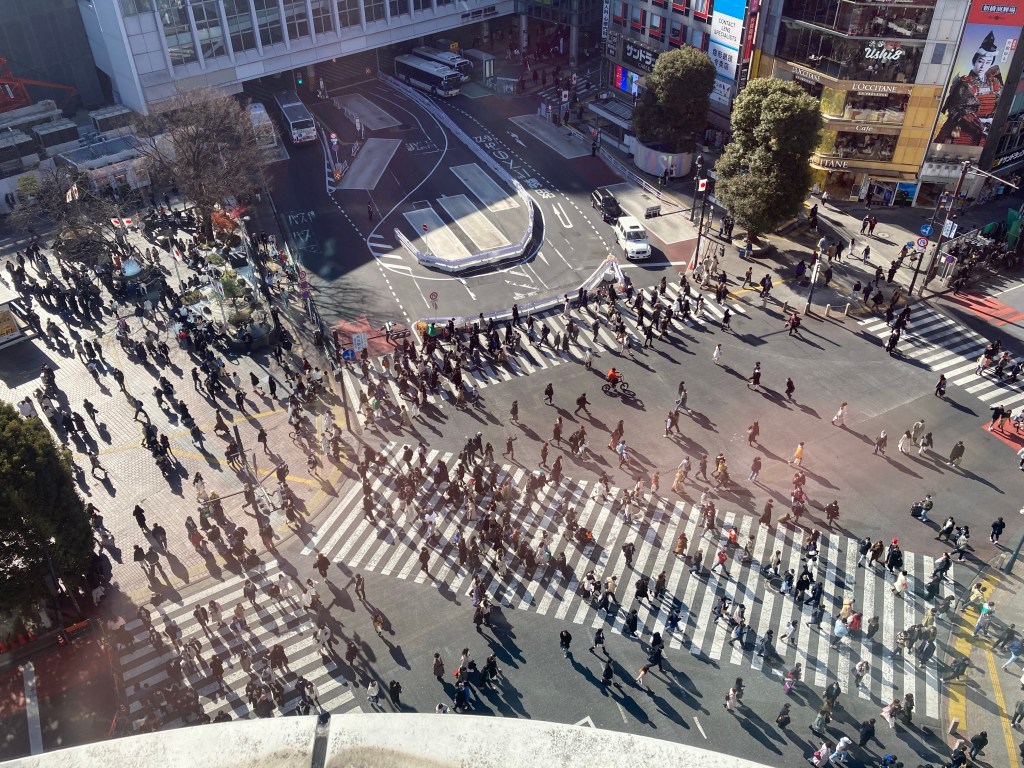
Billed as the ‘busiest intersection in Japan, possibly the world‘, Shibuya Crossing is a set of five pedestrian crossings, where the lights all go green simultaneously, setting in motion a sea of people in all directions – an iconic Tokyo sight.

Coffee at Starbucks Coffee Shibuya Scramble Square
We cross the famous intersection to reach Starbucks Coffee Shibuya Scramble Square, which has a second floor seating area overlooking the crossing. Here, you can sit and watch the comings and goings on the crossing below.

Mag8 Viewing Area
Another vantage point for crossing watching is from the top of the Magnet by Shibuya 109 Department Store. On the 8th floor,there is a small roof top café, Mag8, with views over Shibuya Crossing. Entry costs Y1800 (around £8.60) which includes a drink.

We fork out the required money to get a bird’s eye view of the crossing.
Shibuya Stream
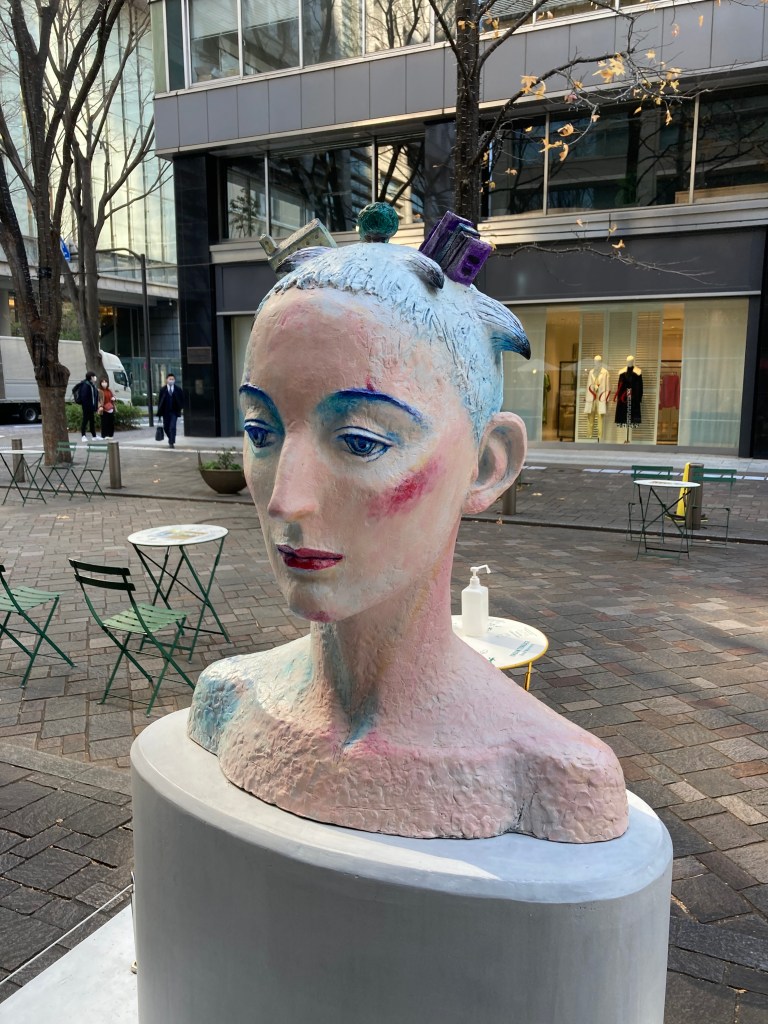
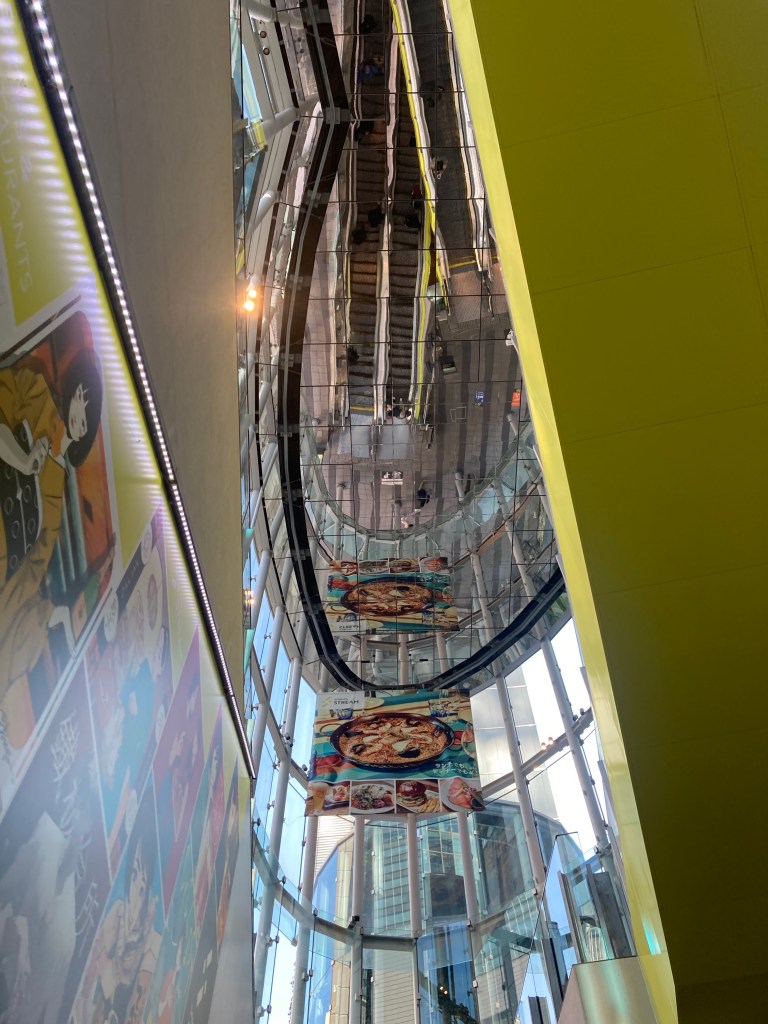
We fight our way back through the station maze to find, on our second attempt (we’re getting better at this) the exit to Shibuya Stream. This regenerated area along a small stream has several bridges and some statues.
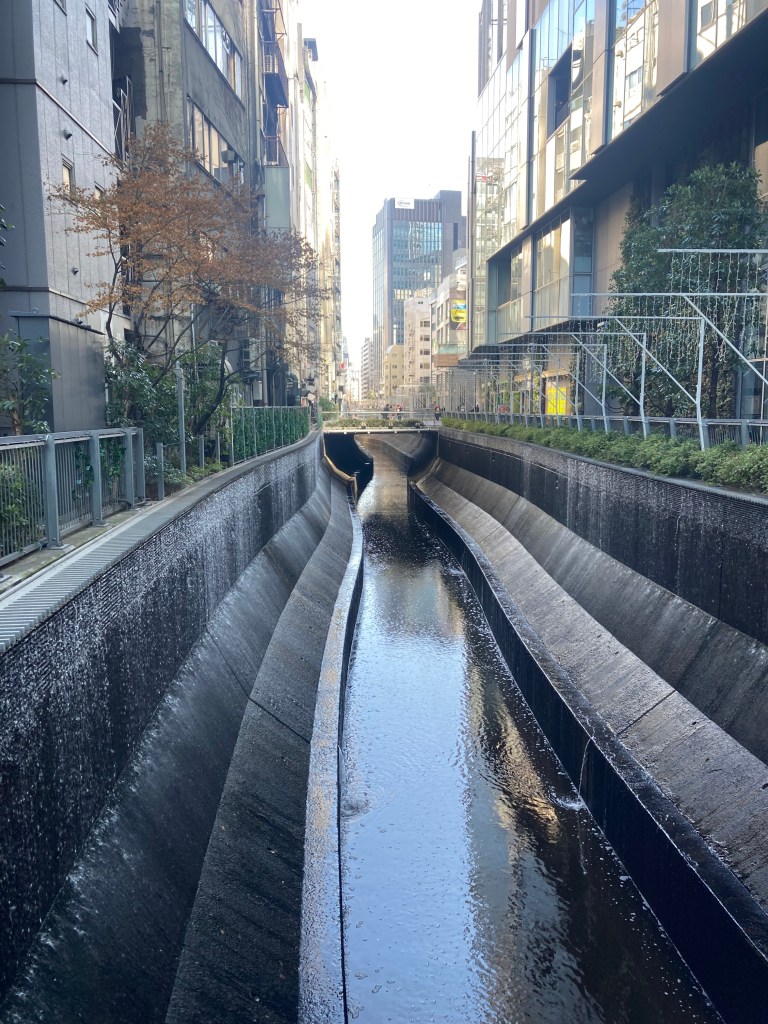
It’s not that exciting, but I’m glad I came for the Instaworthy Tokyo lips. From here, we head back to station for the next destination on today’s itinerary.

Meiji Jingu
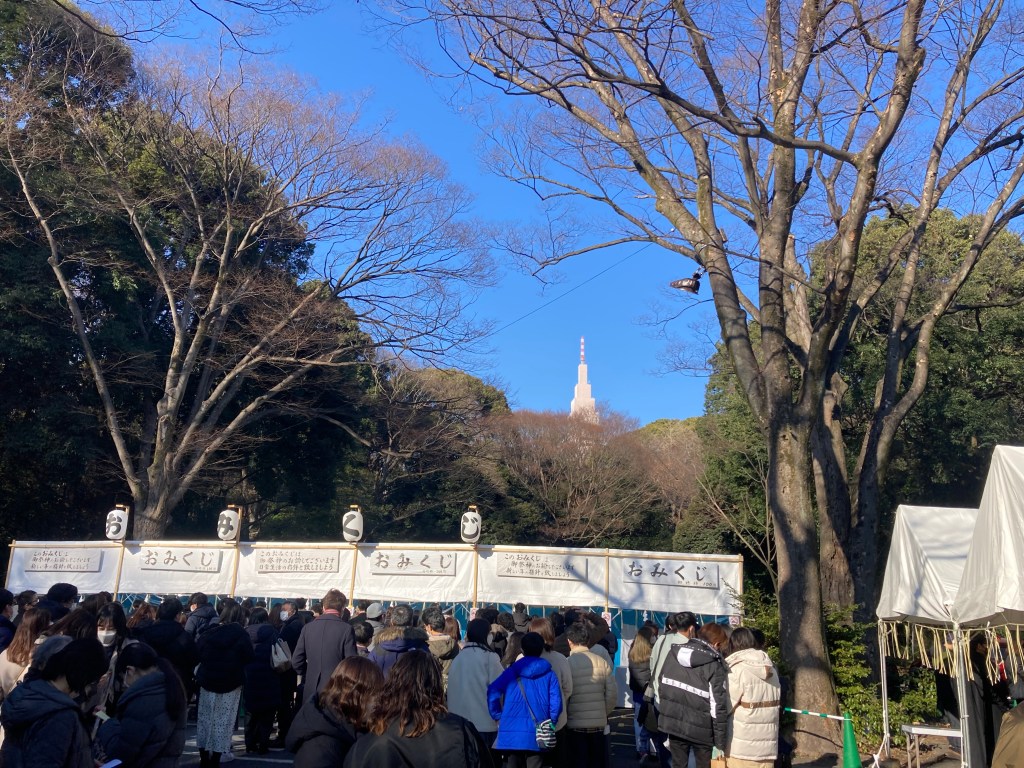
One stop on the Yamanote Line brings us to Harajuku Station, close to the entrance of Meiji-Jingu; a Shinto Shrine build of cypress and copper. It’s really busy, and we exit the station in a throng of people, all walking towards the shrine.

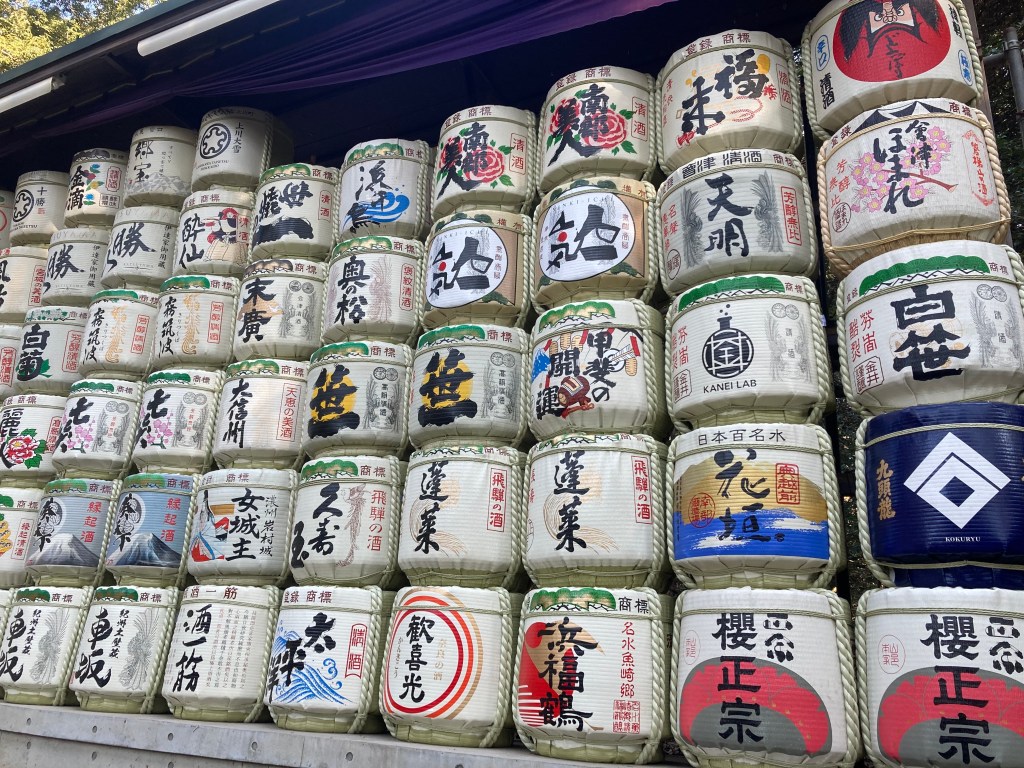
The path is lined with displays of donations of sake donated to the monks.
We pass through several gates to reach the shrine. Here, a large queue forms, so we join it and wait in line, unsure what for. When people reach the front, they throw money into a box and clap.

Round the corner are lots more queues, so being a lemming, I join one. Here, you can pay upwards of ¥1000 for a good luck amulet, with prices rising according to what sort of luck you’re after. I can’t really back out, so am now the owner of a small but expensive bit of cloth which will allegedly bring good fortune. At ¥1000 a piece it’s certainly bringing someone good fortune!
Shinjuku
We walk the mile from the shrine into the suburb of Shinjuku. (There is a direct train, but we opted to walk to see some more of the city).
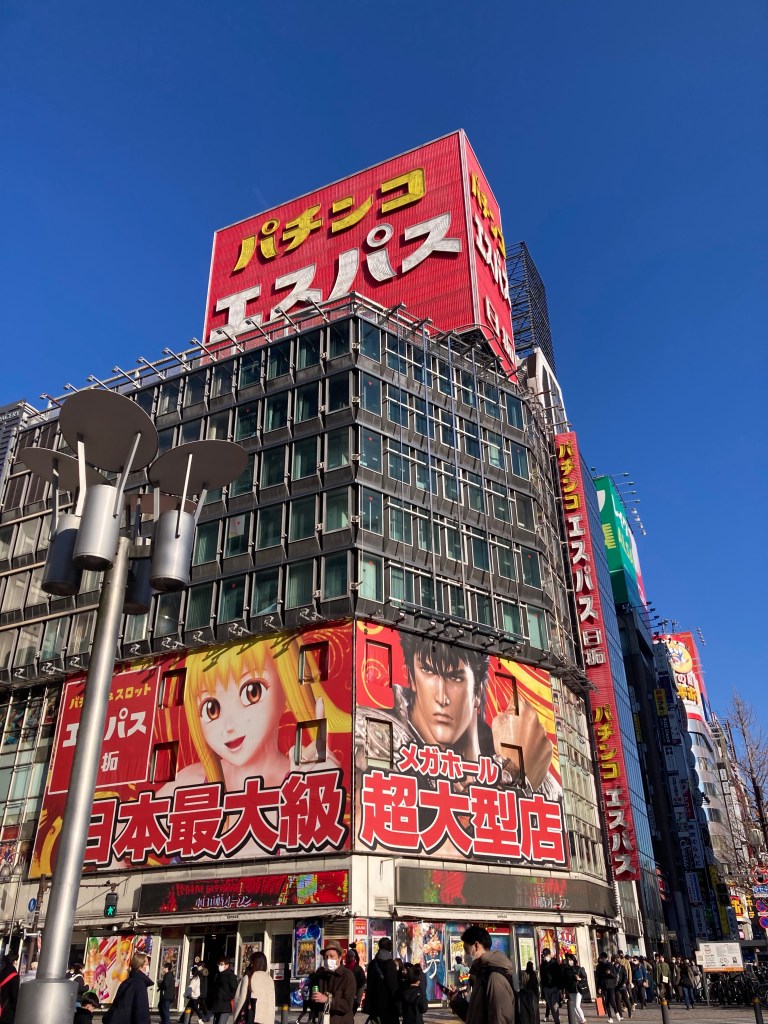
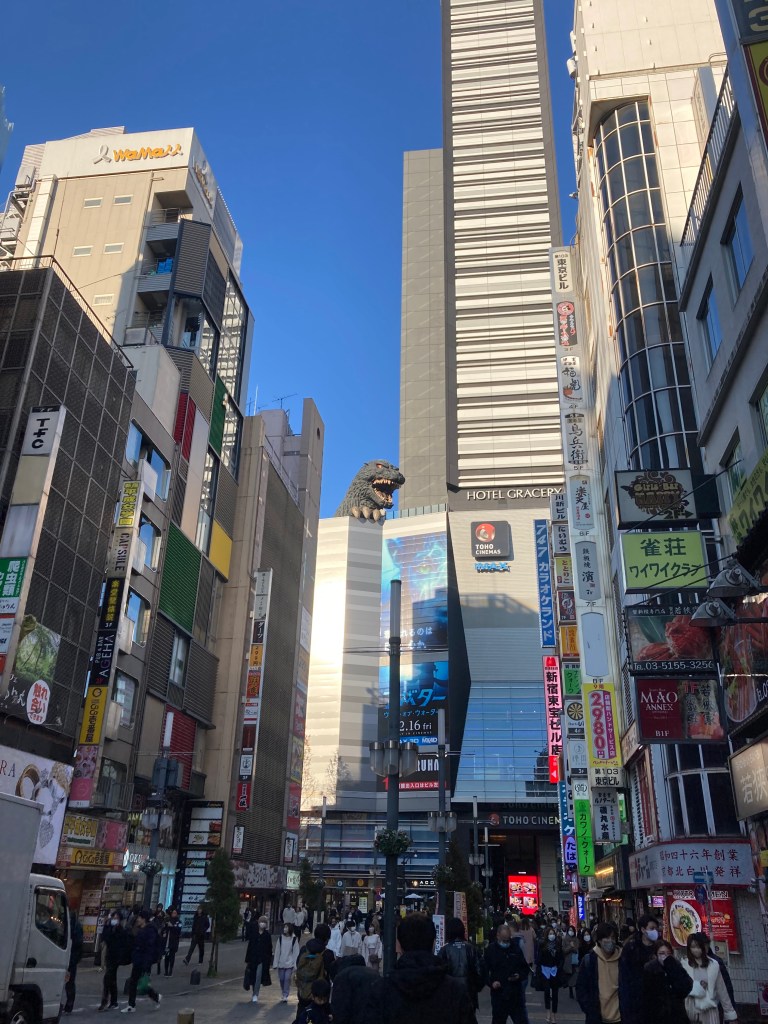
This bustling suburb is lined with shops and restaurants, neon lights and billboards; from huge skyscrapers to the thinnest building I’ve ever seen.

All is watched over by Godzilla, who is peering over the cinema roof.
After a quick drink and sit down in a random bar, we continue to today’s final destination; Shinjuku Goyen.
Shinjuku Gyoen
Shinjuku Gyoen is a park in a former Imperial Garden. We arrive just before the ticket booths close for the evening. January isn’t the best time to visit a Japanese garden, but it’s still a pleasant stroll through the gardens as the sun set over the city.

The garden is divided into zones. My favourite is the traditional Japanese Garden.
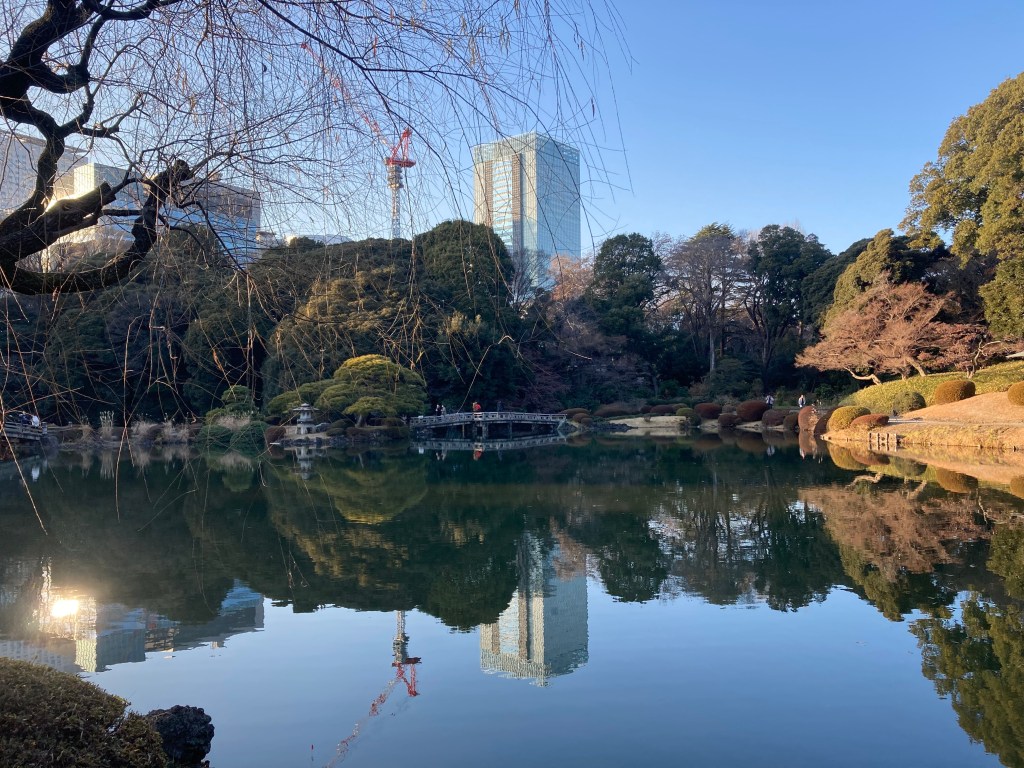
There’s also a pretty lake lined with beautifully fragrant narcissi.
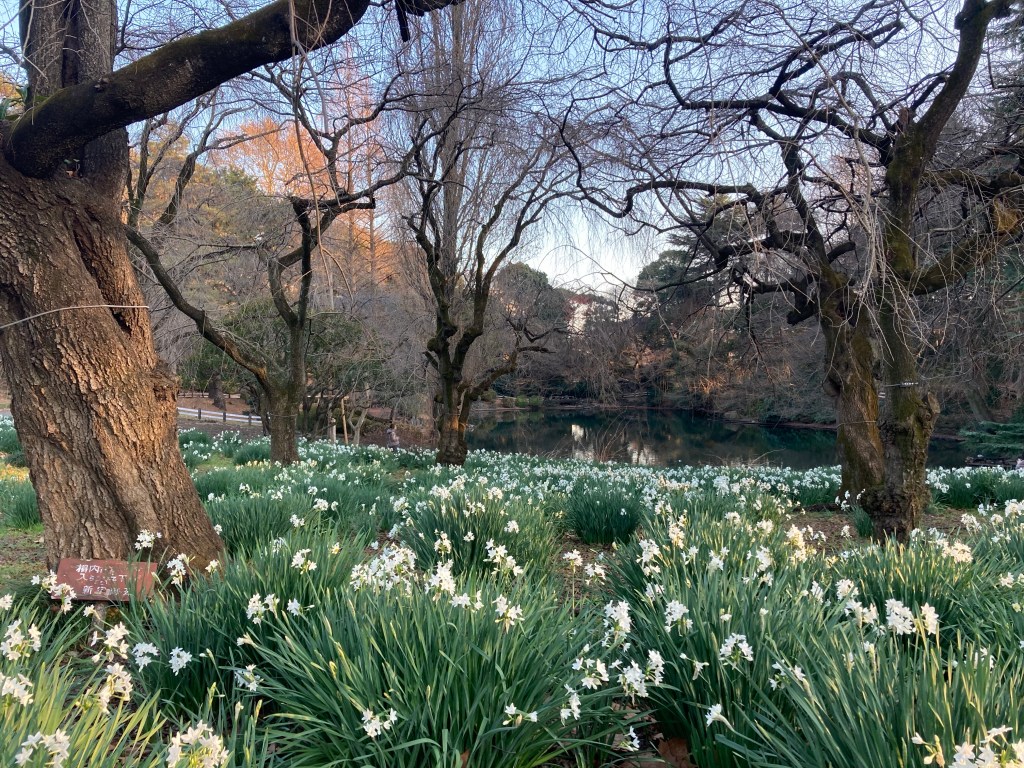
The park is usually open daily except Monday from 9 am until at least 4.30 pm (later in summer). Adult entry costs ¥500 (around £2.40). You can purchase tickets at the gate or online. Note: During the cherry blossom season, there is an advance registration sytem.
Dinner at Hidakaya
We stop for dinner at a small noodle bar opposite the Olympic Park – Hidakaya. It’s very reasonably priced and the portion sizes are enormous. I get the Combo Meal, which consists of Ramen, fried rice and gyoza. After yesterday’s chopsticks fiasco, today I have come prepared with a fork secreted in my handbag. I enjoy the rice and gyoza but am defeated by the noodles, only managing about a quarter of the bowl, and that includes what I spilled down my top!

We return to our hotel for a well earned beer and a rest. It has been another epic day of sightseeing and we have walked a total of 11 miles. At least tomorrow I get to sit down, as we’re going to a sumo tournament.

Tokyo Day 3
It’s our last day of sightseeing in Tokyo. My head says ‘blimey that’s gone quick’ and my feet say ‘thank f*** for that‘ – we’ve already covered the equivalent of a marathon in 2 days.
Ueno Koen
The day starts with a visit to Ueno Koen; a large park which has a lake, a shrine, a pagoda, a zoo and several museums. We take a couple of trains to reach Ueno Station.

We purchase some breakfast and head to a picnic area overlooking the lake. There is a small area of lake which looks how you expect a lake to look i.e. an expanse of water. The remainder has a dense covering of reeds.

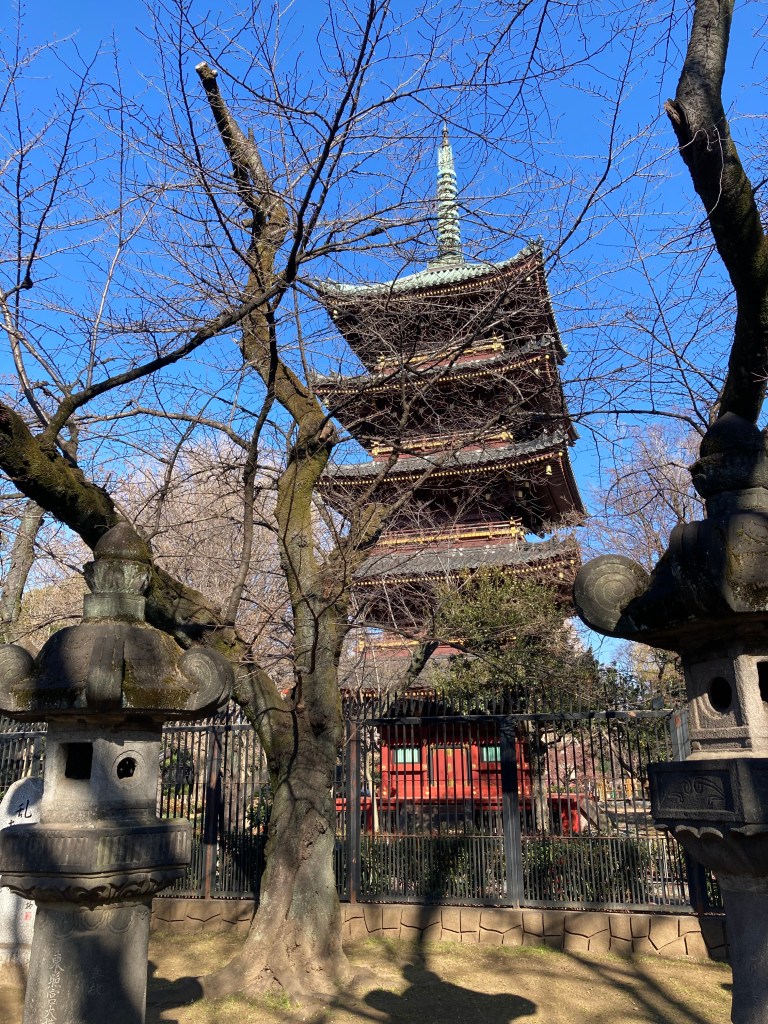
After our picnic, we continue to the shrine, where a man who looks like he’s auditioning for the Joker in Batman is performing some sort of ritual. Adjacent to the shrine is a traditional Japanese five storey pagoda, but we can’t work out how to reach it, it appears to be inside the zoo.
Tokyo National Museum
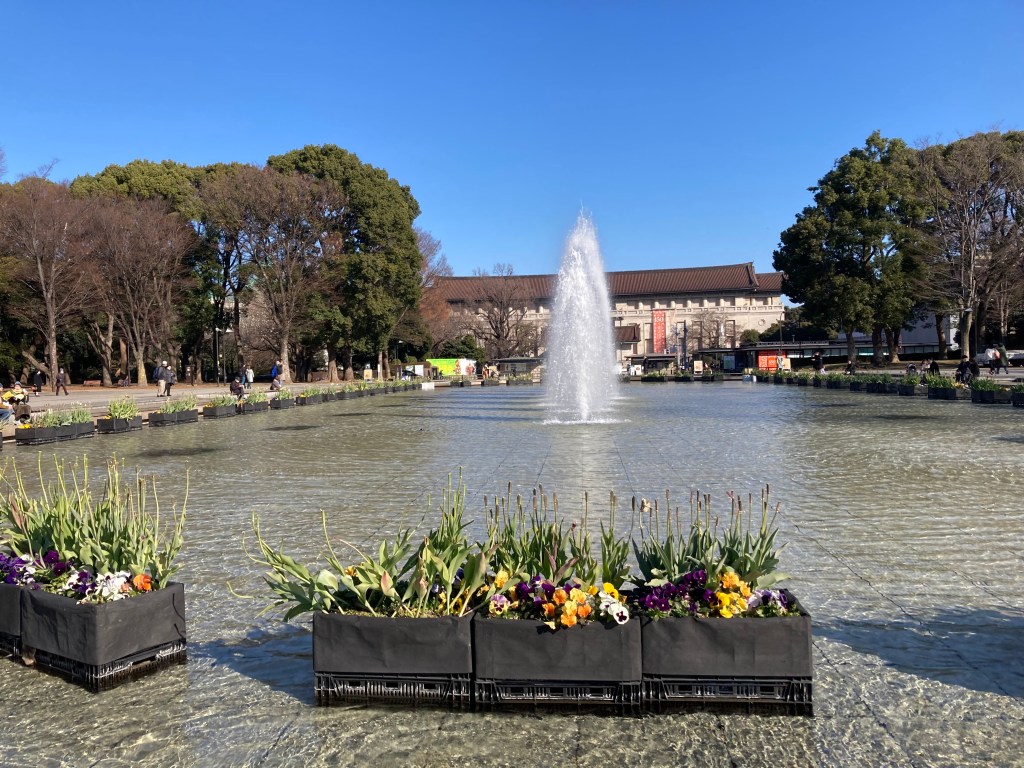
At the edge of the park is the Tokyo National Museum. This contains the world’s largest collection of Japanese art. An entry ticket grants you access to exhibits across several buildings in the huge complex.
Honkan
We start in the Honkan (Japanese Gallery). The first thing I notice about the National Museum is that they have the heating set to ‘furnace’. It’s absolutely baking hot and I immediately have to start undressing. Not all my clothes of course – I haven’t even managed that in a public bath yet!

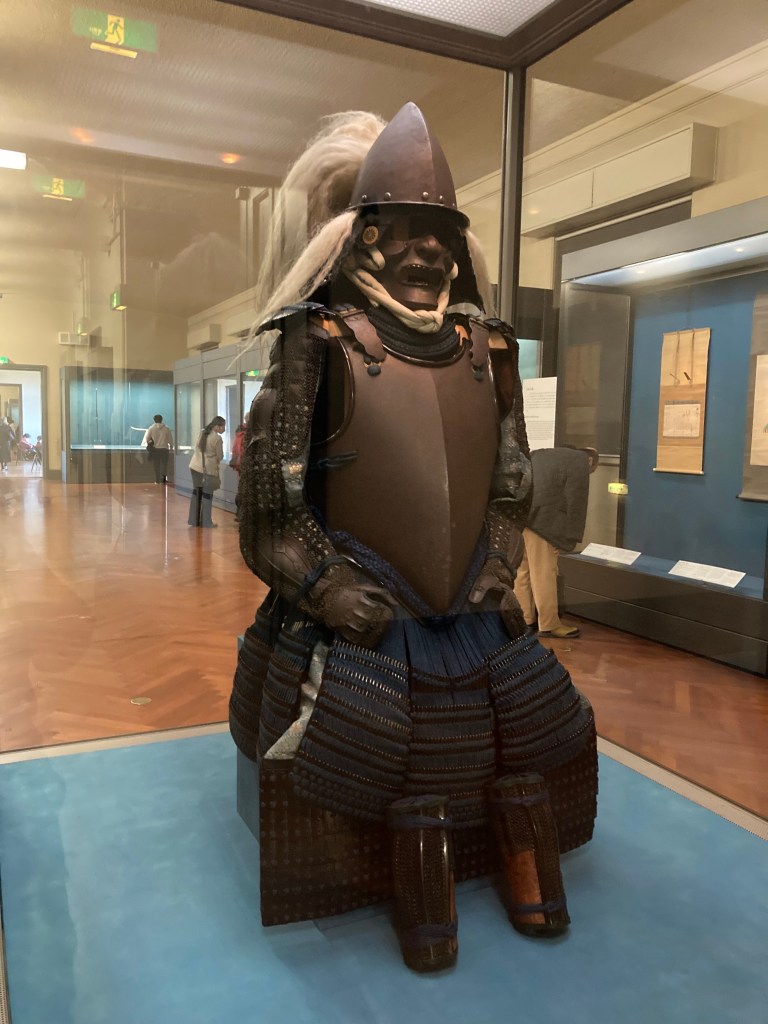
We work our way down from the second floor, through ornate kimonos, fan art, samurai swords and armour.
Gallery of Horyu-Ji Treasures
In an ultra modern building, the Gallery of Horyu-Ji Treasures houses case upon case of Buddhas.

Hyokeikan
This grand Hyokeikan building, commissioned to commemorate the wedding of a prince, houses special exhibitions.

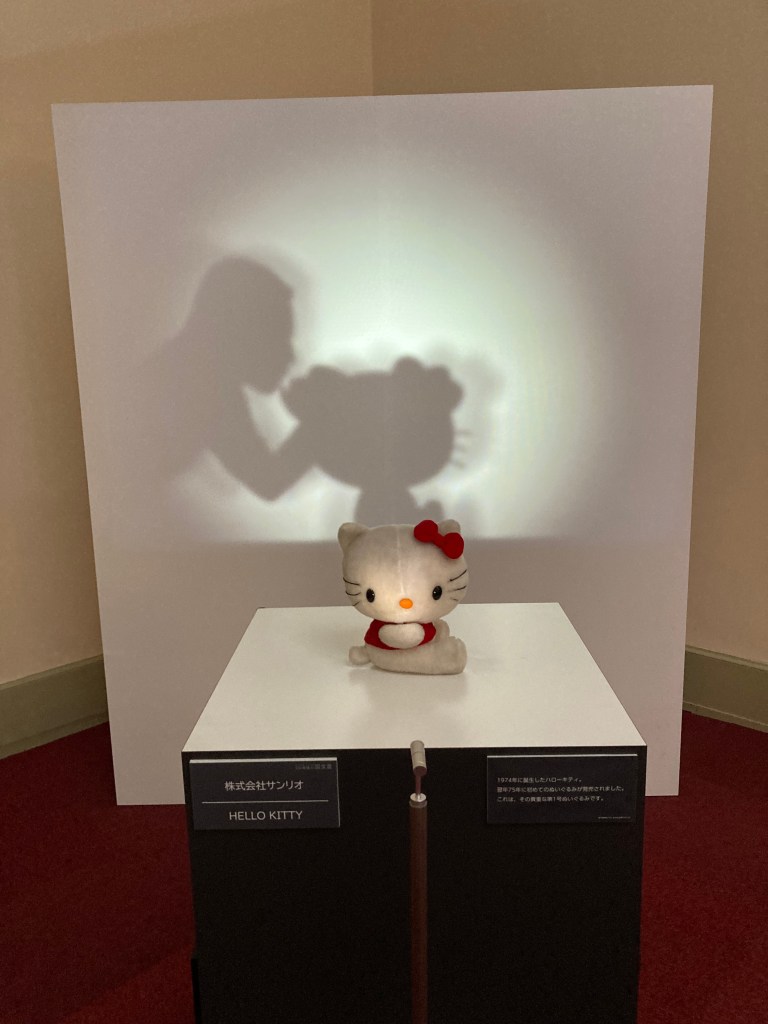
When we visited, the temporary exhibition was entitled ‘Our National Treasures: 150 Years in the Future’ imagines what contemporary items might be displayed in a museum in 150 years‘ time. Although all the old treasures are very interesting, this exhibition is my favourite. From Godzilla to Hello Kitty, keirin bikes to soy sauce.
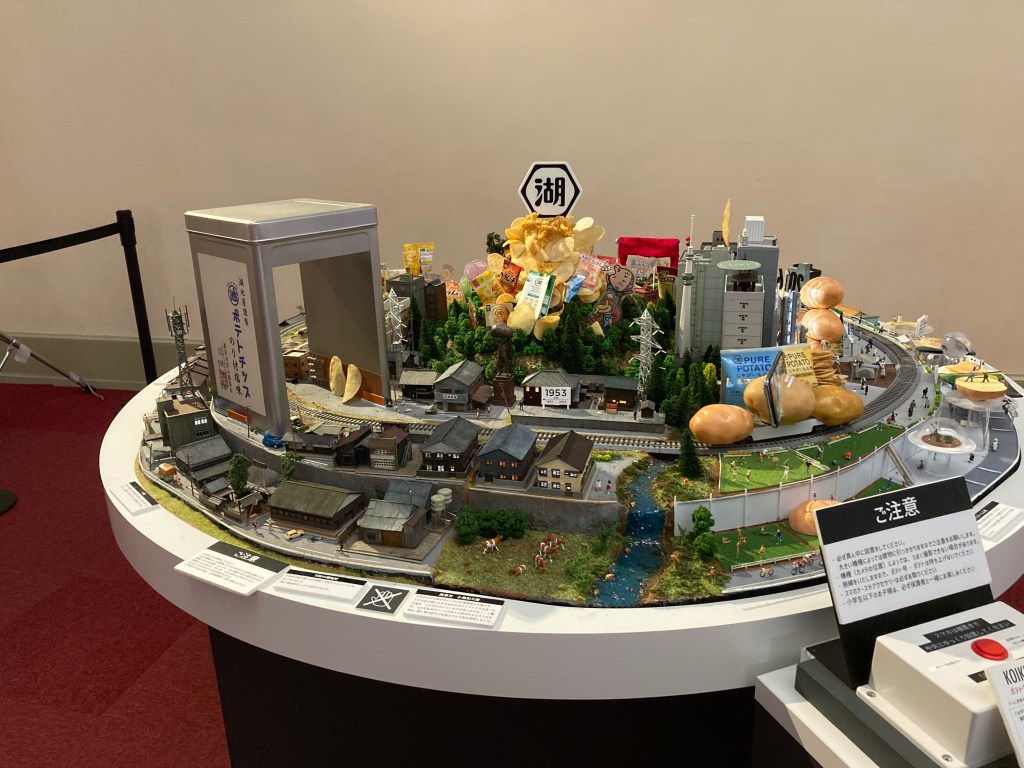
There’s also a rather strange diorama paying homage to potato products.
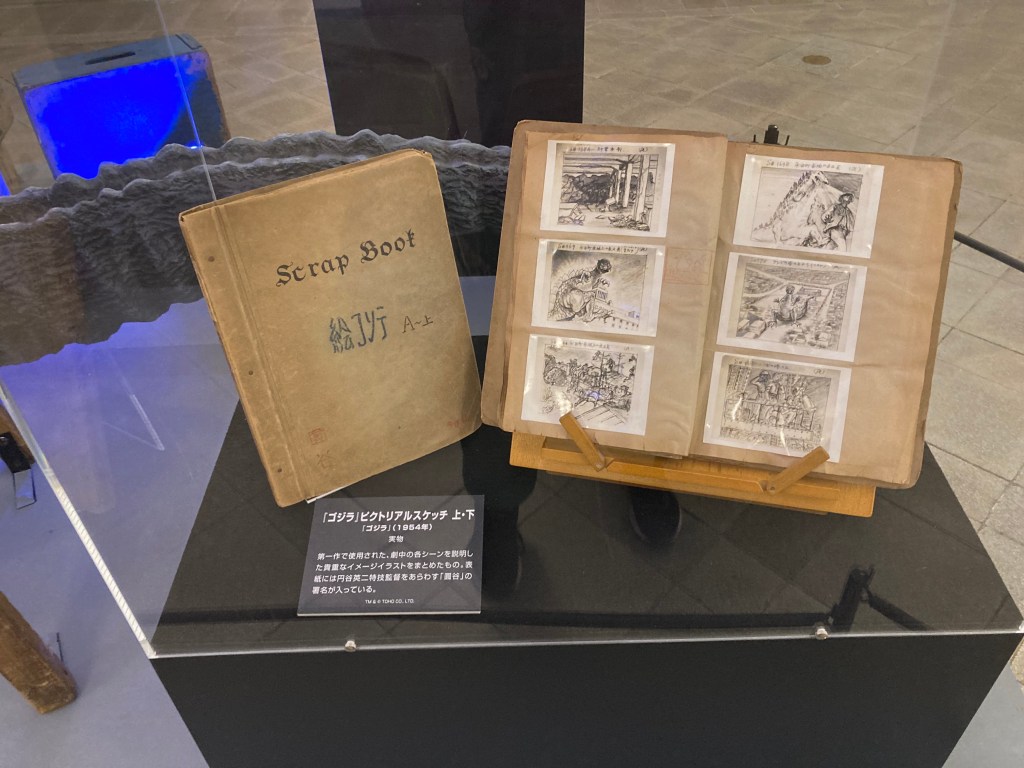
The best exhibit is a scrapbook. I have been scrapbooking since I was ten years old and have a large collection of scrapbooks, which daughter No 2 tells me will become my funeral pyre when I die. So I feel vindicated that scrapbooks apparently belong in museums in the future!
Toyokan
The Toyokan (Gallery of Asian Art) houses exhibits from other countries in the region. We pass through here fairly rapidly as we are running out of time.
The museum is usually open daily except Monday from 9.30 am until 5 pm (later at weekends). Adult entry ¥1000 (around £4.80).
National Museum of Western Art
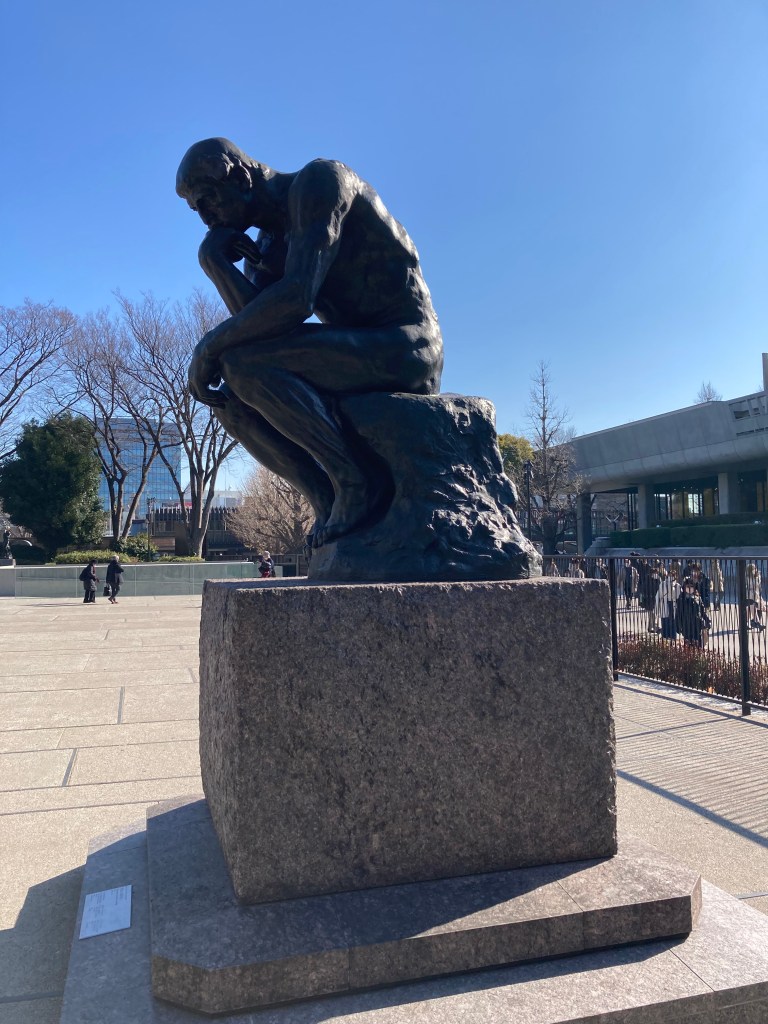
We walk back to the station through the grounds of the National Museum of Western Art. In front of the building, you can see a collection of Rodin sculptures almost identical to that at The Cantor in Palo Alto which we visited two weeks ago. Rodin was obviously a busy chap!
Ryogoku Kokugikan
From Ueno, we catch another couple of trains to Ryogoku Station. Then walk the short distance, through Sumo themed restaurants and shops, to Ryogoku Kokugikan, the 10,000-seater National Sumo Stadium, to watch a sumo tournament. I know very little about sumo. The first thing I didn’t know is that there’s only three tournaments a year in Tokyo, so we are very lucky to be able to obtain tickets for this quintessentially Japanese experience.
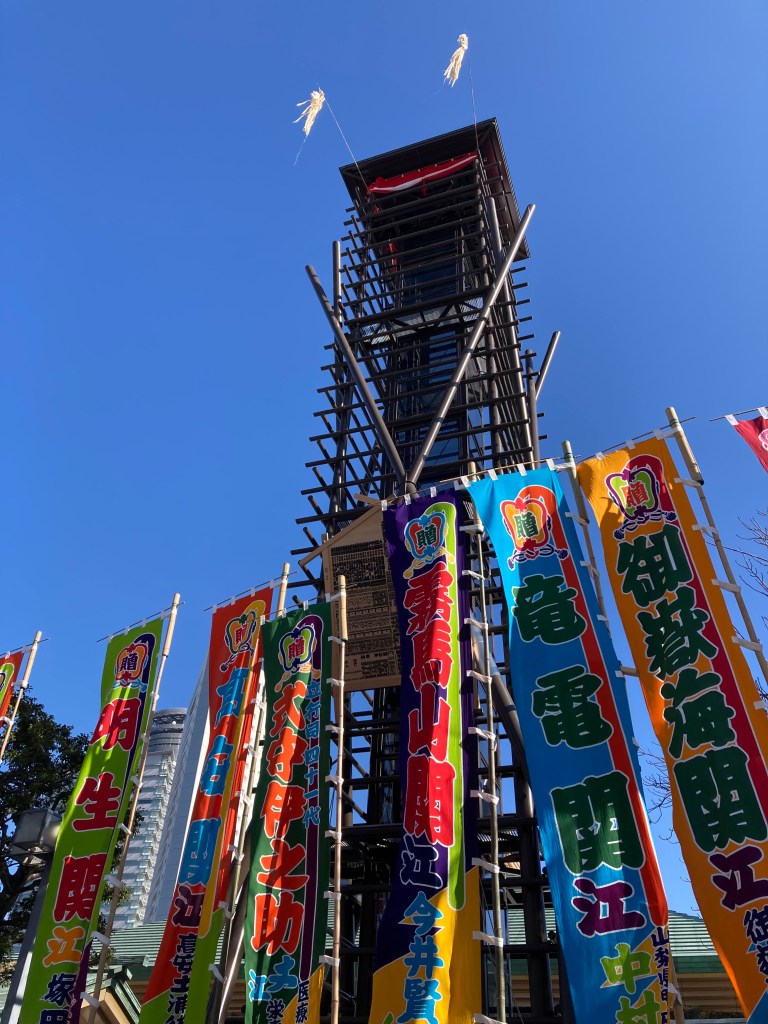
Sumo Tournament
It’ a very long day with bouts running from 8.30 am until 6 pm. Although the big boys (and I mean that literally) don’t fight until after 2 pm.
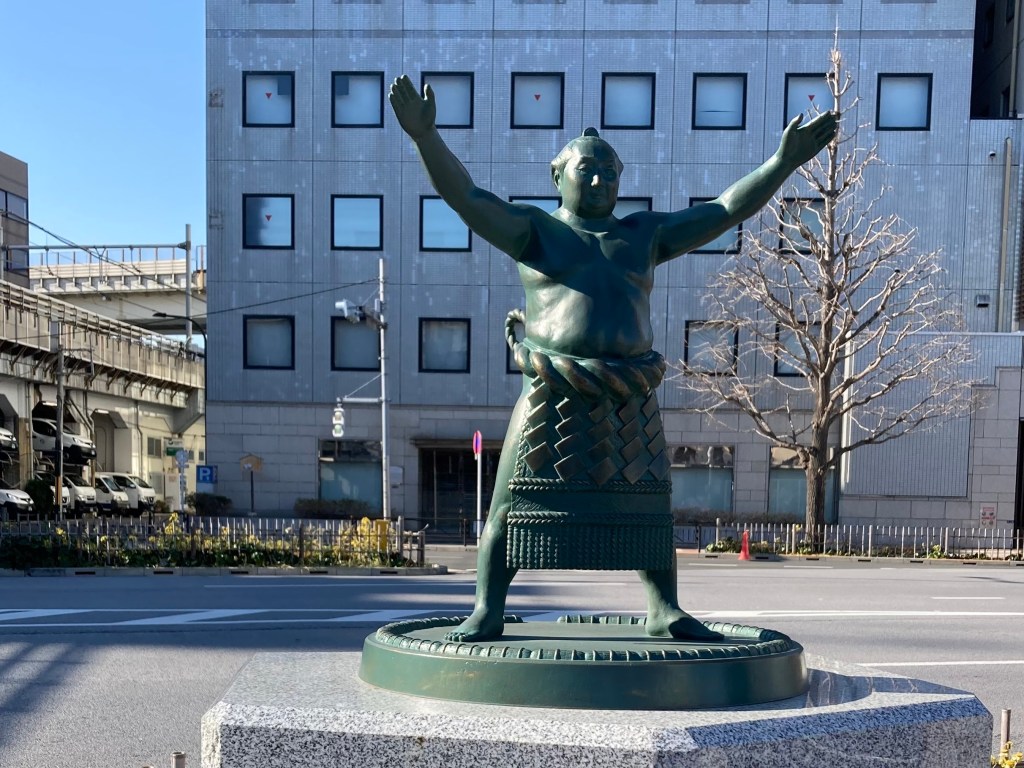
We arrive shortly before 2 pm, which gives us a chance to get the hang of things before the top bouts begin.

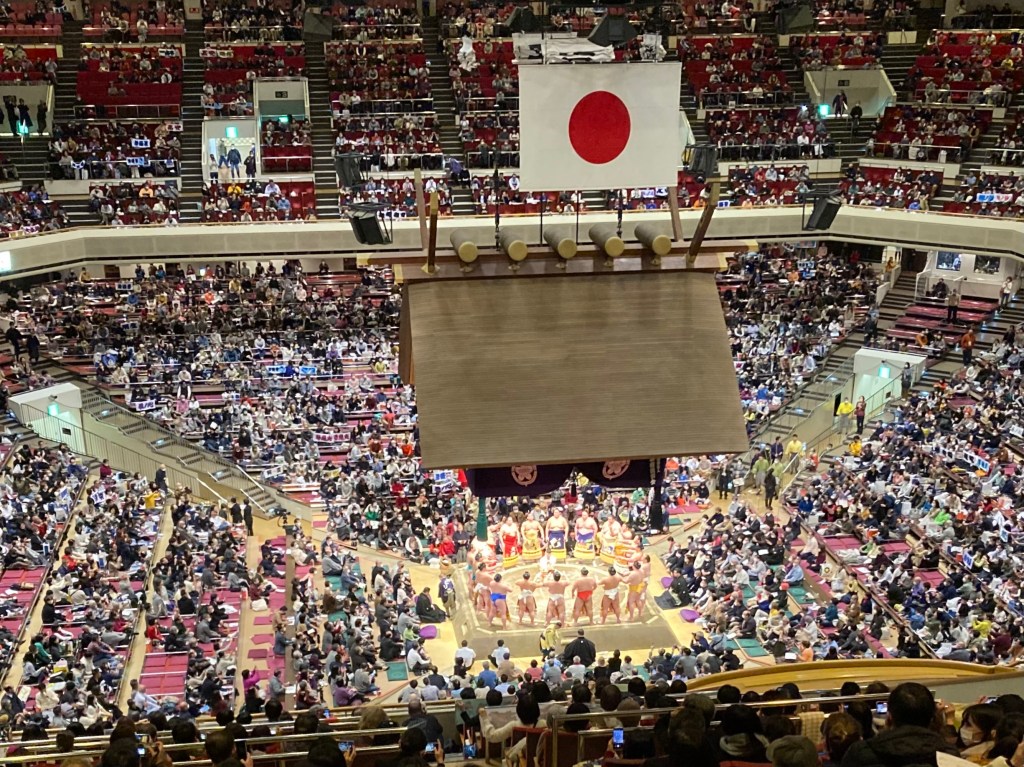
We find our seats (we’re right at the back in the cheapest seats) and settle down to watch the action. A rough guide to sumo; a couple of large men in nappies faff a lot, throw some salt, then attempt to push each other out of a circle. The circle is elevated, so sometimes these huge men fall off the platform onto a judge. I think that about sums it up…

In the gap between fights, I go for a wander around the stadium. Outside are figures of sumo wrestlers carrying women in kimonos, with cut-out faces so you can insert your own face. I ask a man to take my photo. He tells me I have to pretend to kiss the sumo wrestler, so I oblige.
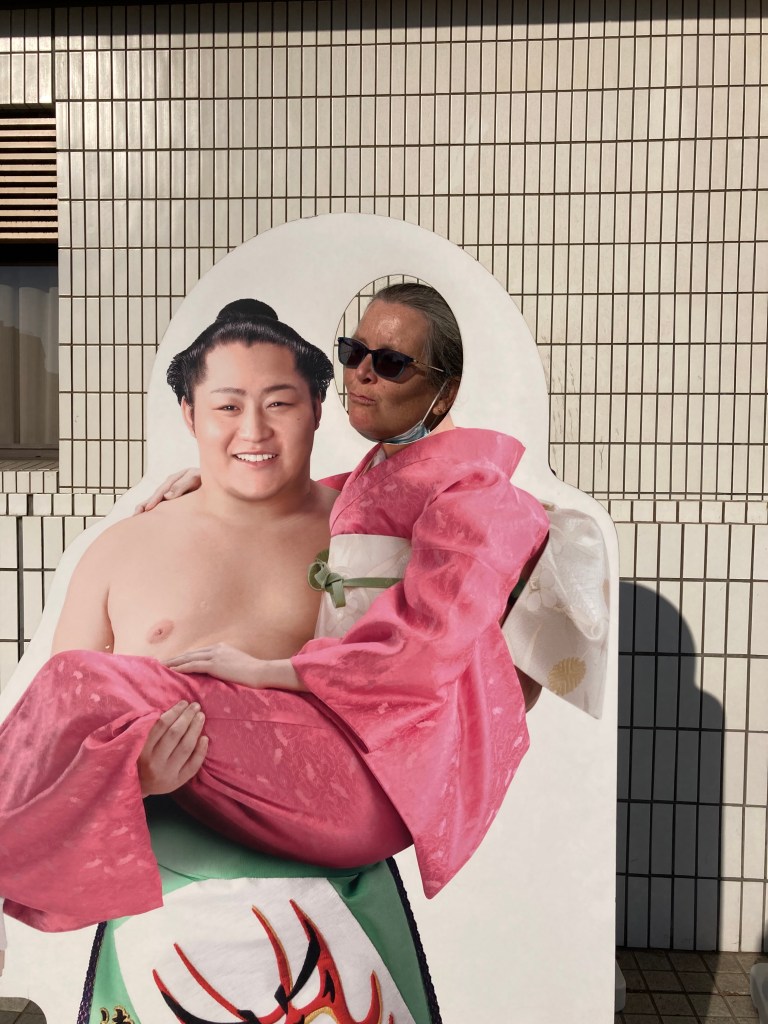
Back in the arena, we watch the intermediate category fights, but by the time the top (senior) group starts, we are all sumoed out. So, we just watch the parade – a spectacle in itself – then depart for our hotel on the other side of town.
Dinner at Hidakaya
We stop for dinner in the same noodle bar we ate in last night; Hidakaya. This time I choose the Rice Combo, which consists of stir fried pork, rice, broth, macaroni cheese, cabbage, pickles and mayonnaise. An interesting combination.

And that completes our three day whistle stop tour of Tokyo. There is so much to do here – we could happily have stayed several more days. Before we managed to obtain sumo tickets, I had planned to spend the final afternoon on a River Cruise and visit to TeamLab Planets, but we were no longer able to fit these in. Nevertheless, we enjoyed our eclectic dip into Tokyo’s many tourist attractions.
- Trip taken: January 2023
- Updated: February 2026
I hope you found the above information useful. For guides to more destinations in the 50+ countries we have visited, check out my full list of Independent Travel Itineraries here.

 Jane's Midlife Journey
Leave a comment