
The scenic town of Nikko is a World Heritage Site consisting of shrines and temples set in a cedar forest. Situated 80 miles north of Tokyo, Nikko is a popular day trip to add onto a Tokyo itinerary. The town has been a centre of Shinto and Buddhist worship for many centuries. In the 17th Century, the Tosho-gu Shrine was constructed. Toshogu is Japan’s most lavishly decorated shrine and houses the mausoleum of Tokugawa Ieyasu, the first Shogun Warlord. Neighbouring Rinnoji contains the mausoleum of his grandson, shogun warlord Tokugawa Iemitsu.
How to get to Nikko
It is possible to get a direct train to Nikko from Tokyo. The Tobu Nikko Line departs from Asakusa Station and costs around Y3000. This is not included in the JR Pass. If you have a JR Pass, you can take the Tohoku Shinkansen (bullet train) from Tokyo Station to Utsunomiya, then change onto the Nikko Line. Without a JR Pass, this will cost upwards of Y5000. Either route should get you there in just under two hours.
Note: There are two stations in Nikko, quite close together; Tobu Nikko Station and Nikko JR Station. When you return, make sure you pick the correct one.
Getting around Nikko
It’s quite a trek from the station to the shrines; over a mile, mainly uphill. Obviously, you could walk to the shrine area. However, exploring the shrines does involve a substantial amount of walking, so we opted for the bus. We purchased a World Heritage Sightseeing Bus ticket. This tourist bus stops at both stations and follows a circular route round the main attractions. A one day pass costs Y600.
Note: Although the bus does stop in the shrine area, if you want to visit the famous Shinkyo Bridge, you need to alight a stop earlier (Stop 7) and then climb the stairs to the shrines (or wait for the next bus).
Where to stay in Nikko
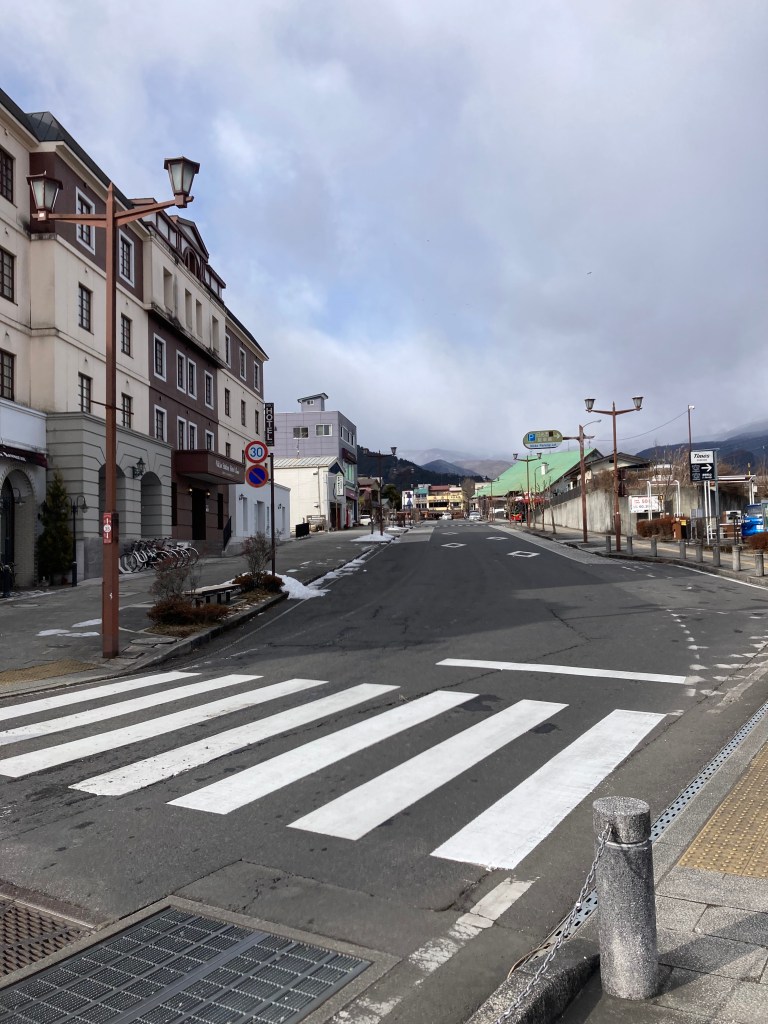
Nikko is a popular day trip from Tokyo, so the majority of visitors don’t stay here. There are some hotels dotted in and around town. However, with most restaurants etc. catering for day trippers, little remains open very late and the place resembles a ghost town by mid afternoon. So we decided against staying here.
Nikko in 1 Day Itinerary
| Day 1 | Train to Nikko Shinkyo Bridge Rinnoji Temple Gojunoto Toshogu Kanmangafuchi Abyss Picnic Lunch Nikko JR Station |
Train to Nikko
Today, I tick another thing off my bucket list with my first journey on a bullet train. After taking a local train to Tokyo Station, we board our shiny Shinkansen to Utsunomiya.

The bullet train is as sleek and fast as you’d expect. After 52 minutes, we have covered 65 miles and it’s time to change to a local train in Utsunomiya, which apparently is big in the world of strawberries. There are tubs of strawberries scattered around the station and even a statue of a strawberry wearing a crown.

We take the Nikko Line train to the town of Nikko, which is around a mile from the shrine area. When we arrive in Nikko, it’s snowing, which is unfortunate as I don’t have a coat. It was so warm in Tokyo yesterday, that I was wandering around in just a T shirt.
Shinkyo Bridge
At th station, we purchase a bus ticket to enormous shrine complex, disembarking at Shinkyo Bridge, a traditional red bridge across a picturesque stream.
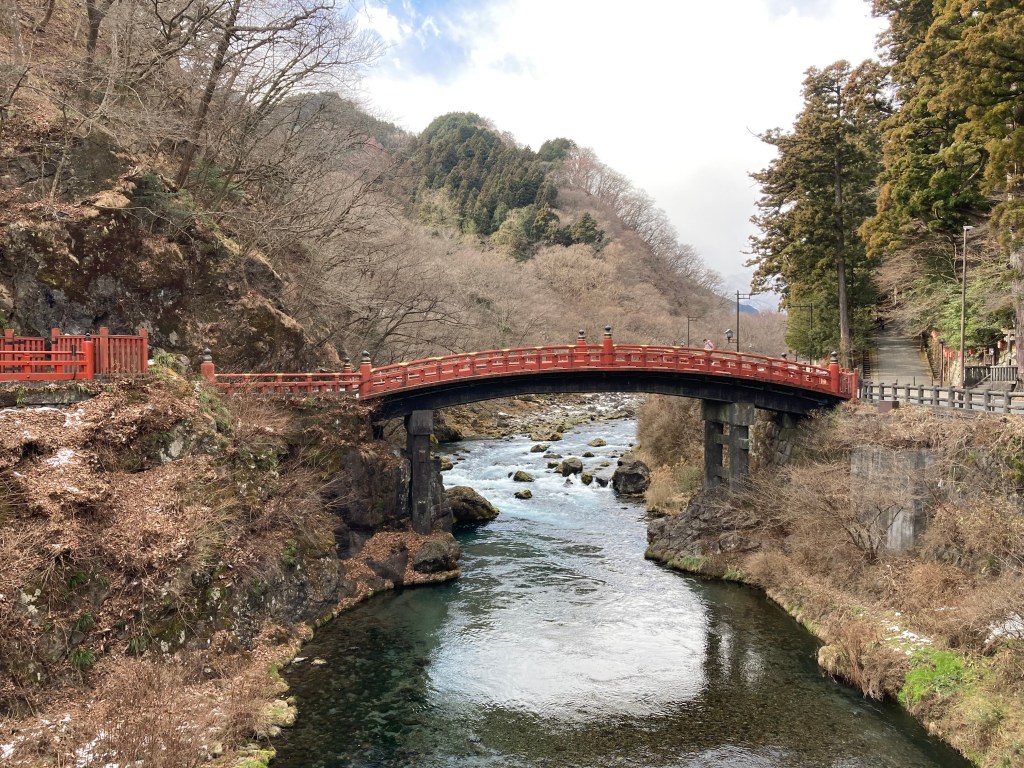
For Y300 you can walk onto (but not cross) the bridge for a photo op. I mean, taking a photo isn’t compulsory, but why else would you pay Y300 to not cross a bridge? We make do with taking a free photo from the road bridge a few metres away. From here, to reach the shrines, you must climb rather a lot of steps.

Rinnoji Temple
First up is the temple of Rinnoji, parts of which date back 1200 years. The grand, vermillion coloured Hall of the Three Buddhas (Sanbutsudo) was built in 1645. Also on the temple complex are the Mausoleum of Tokugawa Iemitsu (Taiyuin), the Treasure Hall (Homotsuden) and the Strolling Garden (Shoyoen).
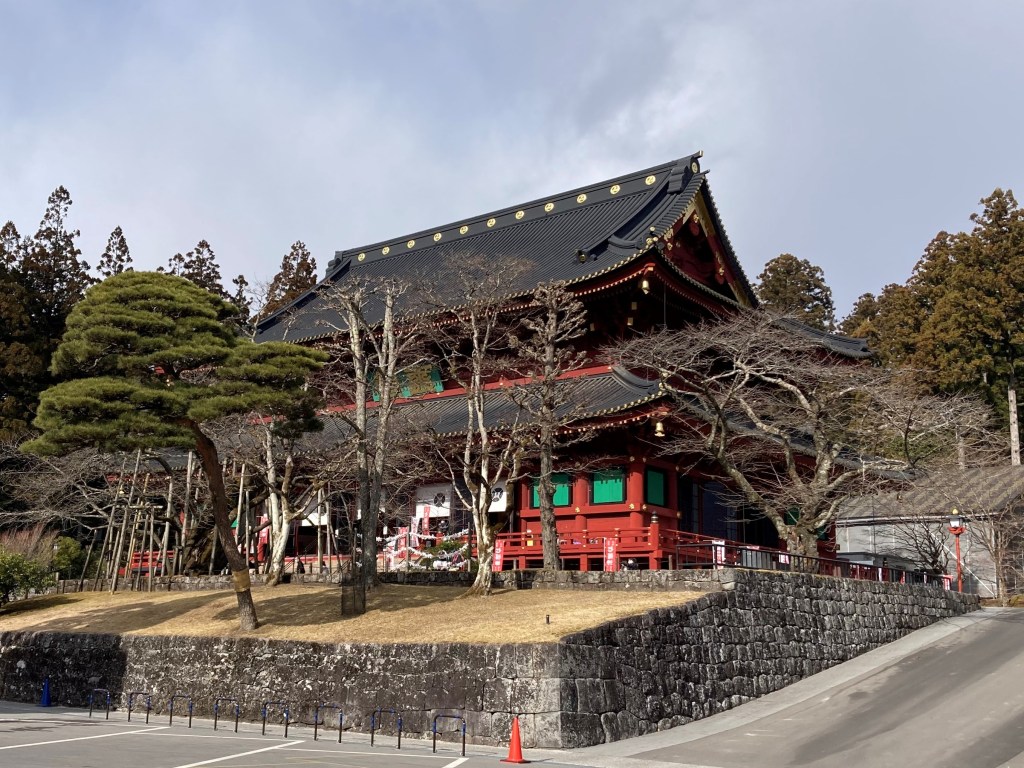
The temple is open daily from 8 am until 5 pm (4pm in winter). Entry to the complex costs Y900. There are separate prices for the Three Buddhas Hall, the Mausoleum and the Treasure Hall/Gardens if you only want to visit part of the complex.
Gojunoto
Just before you reach the main shrine of Toshogu is the five storey pagoda, Gojunoto. The pagoda stands an impressive 32.5 metres tall. It was constructed around a central pillar made from a Japanese cypress tree felled in 594, making it one of the oldest wooden buildings in the world. The pillar runs throughout the tower’s five tiers.
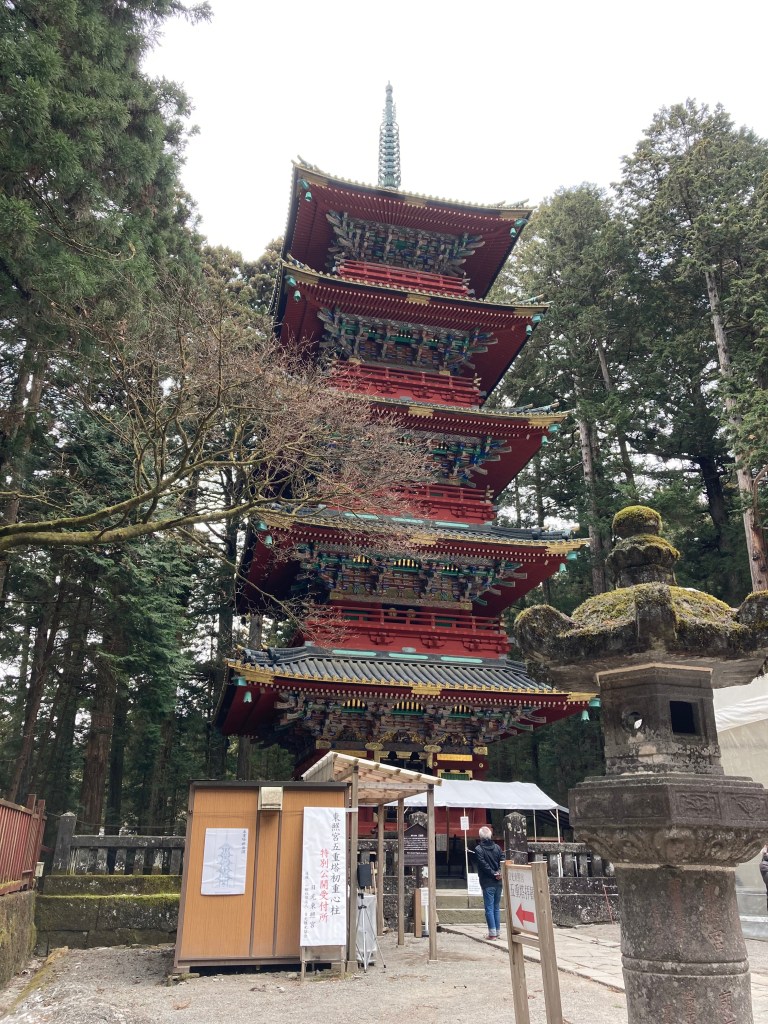
There is an additional Y300 fee to enter the pagoda.
Toshogu
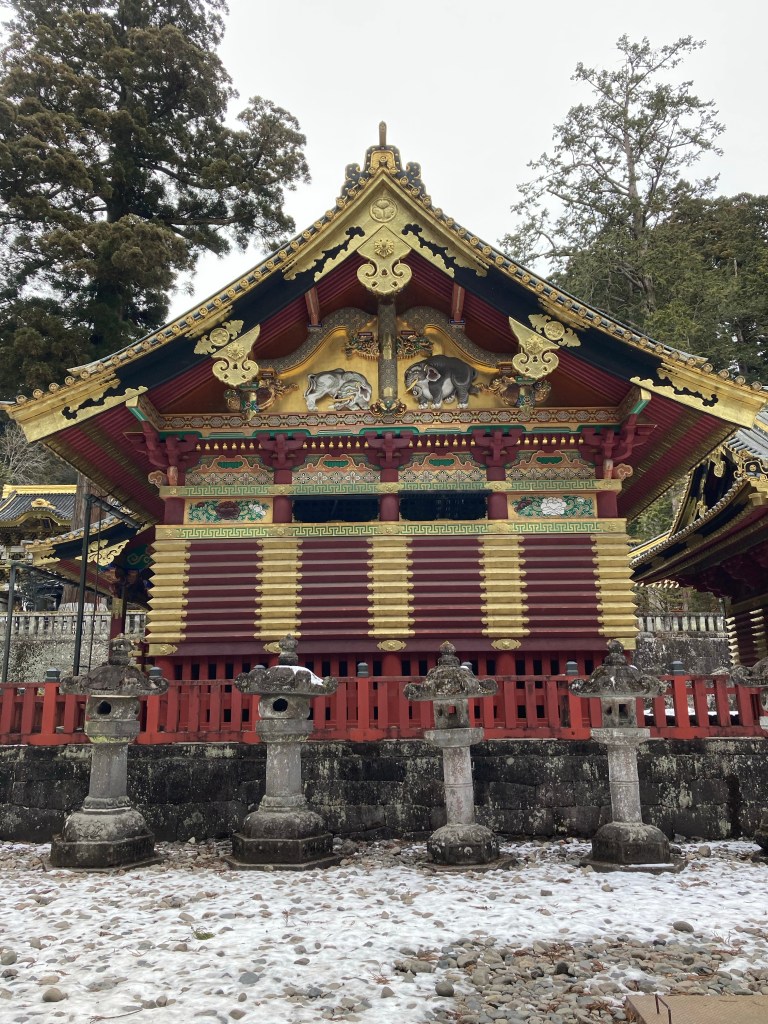
On to Toshogu, which is a substantial complex built around the mausoleum of Tokugawa Ieyasu, the founder of the Tokugawa shogunate, which ruled Japan for over 250 years. The complex consists of several buildings, all very ornate, decorated with intricate carvings and paintings, primarily of animals both, real and imagined and in some cases both. The strange creatures on one of the buildings are believed to be elephants carved by an artist who had never actually seen an elephant. The shrine took 15,000 artisans two years to complete.
Omotemon Gate
The entry to the shrine is via the ornate Omotemon Gate, which is guarded by Deva kings.

Yomeimon Gate
The elaborately decorated Yomeimon Gate has over 500 carved images in white and gold. People worried that the building’s perfection might arouse envy in the gods, thus bringing bad luck. Hence the final supporting pillar was installed upside down, so the building could not be considered perfect.

Shinkyusha
The Sacred Stable Shinkyusha is the only building of unpainted wood. It is lined with relief carvings of monkeys which hear no evil, see no evil, speak no evil in line with Buddhist philosophy.

Sakashitamon
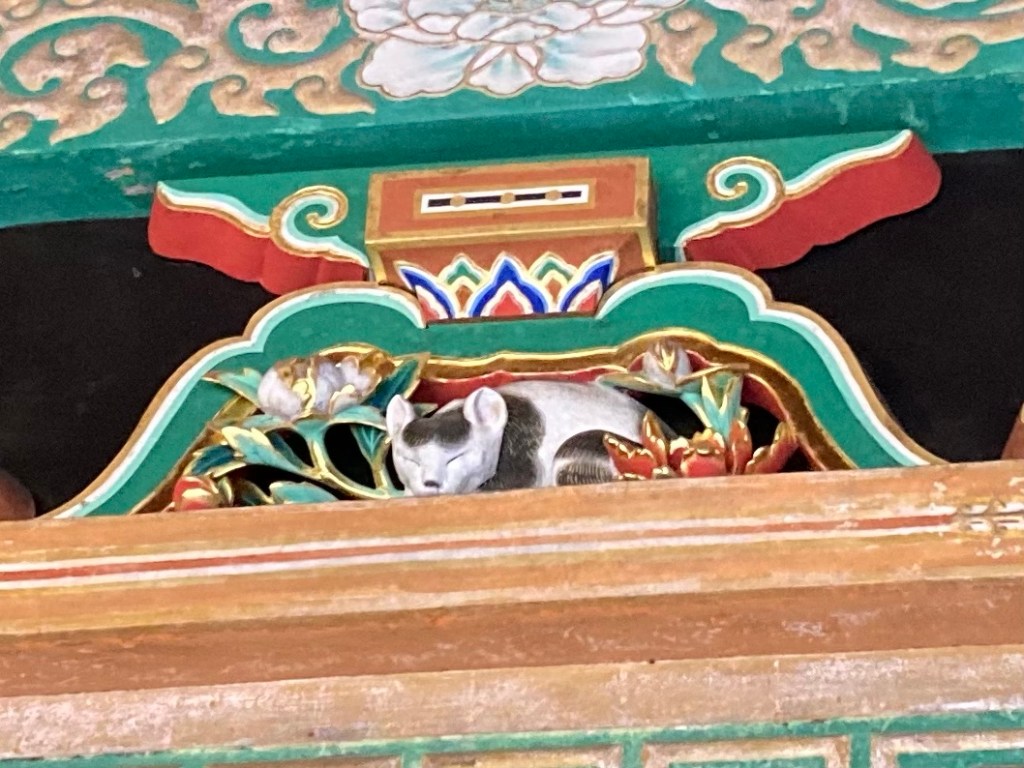
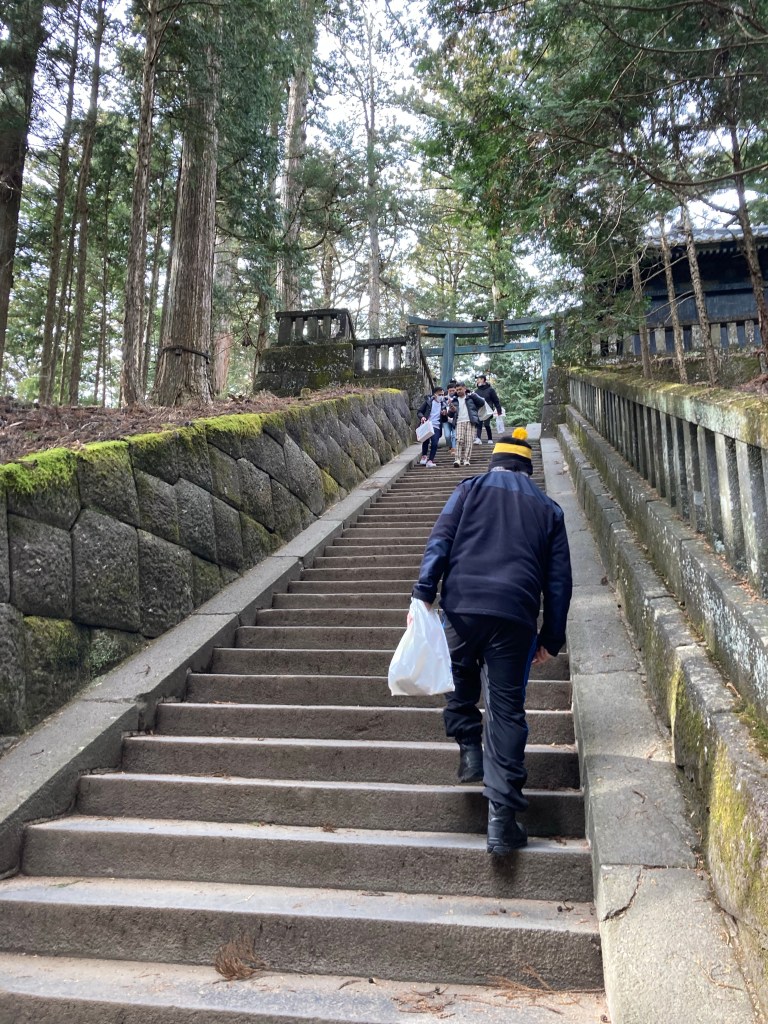
From here you can access, via 207 steep stone steps, the tomb of Ieyasu. Sakashitamon is decorated with a sleeping cat, apparently one of the most famous in Japan.
As if 207 steep stone steps wasn’t ordeal enough, there is no handrail, so nothing to lean on. And when we visited, masks were compulsory. The more I climb, the harder I breathe, the more steamed up my glasses become. Soon I can’t see where I’m going.
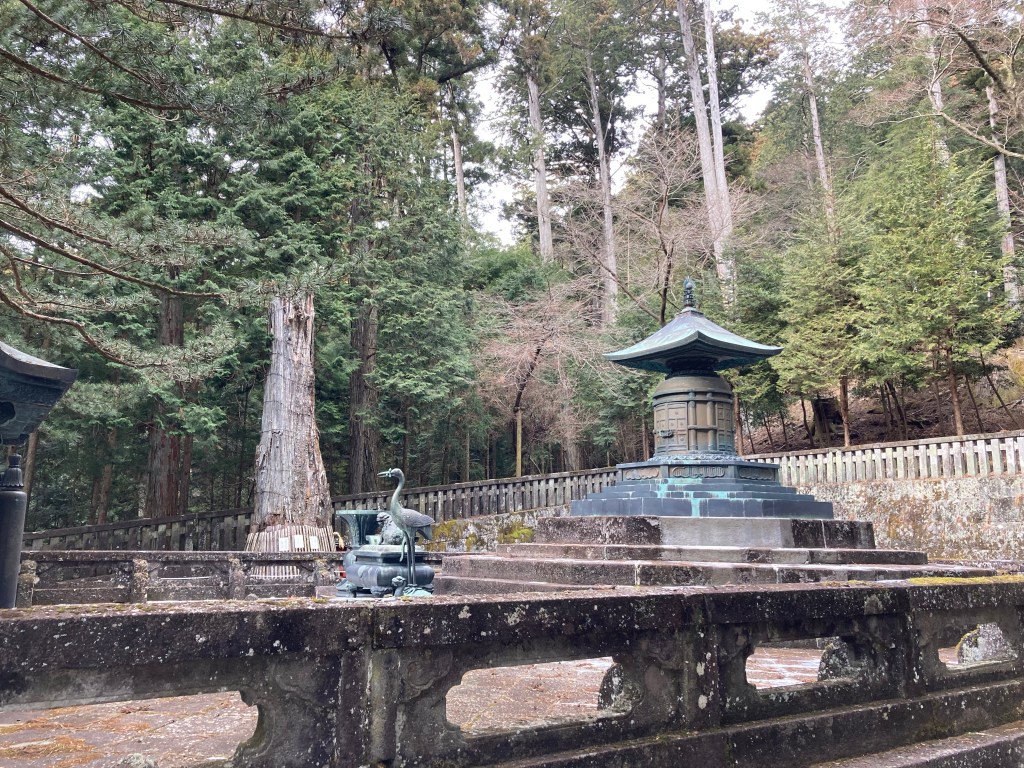
The first thing I see when I reach the top, gasping for breath inside my mask, is a defibrillator! To be honest, there’s not much to see to warrant the ascent. Now I have to descend the 207 steep stone steps with no handrail, whilst not being able to see where I’m going.
Honjido
We finish with a guided visit to Honjido; a hall which has a huge crying dragon (I thought it was a monkey – the old man says it’s obviously a dragon as it has a tail!?) painted on the ceiling. Photography is forbidden. A monk demonstrates something by banging two sticks together. I think it’s supposed to be the dragon roaring. Next…
Toshogu is open daily from 9 am until 5 pm (4 pm in winter). Visiting the complex costs Y1300.
Kanmangafuchi Abyss
Our original plan was to continue with a walk along the river to Kanmangafuchi Abyss, where a collection of 70 stone statues line the Deiya River . But the Toshogu Shrine complex is huge and we decide we’re done for the day. If you have more energy, Kanmangafuchi Abyss is a mile west of Toshogu. It can be reached on foot. You can get slightly closer by catching the bus to Stop 11.
Picnic Lunch
There isn’t much in the way of food provision in the shrine area. We opt to buy sandwiches from a convenience store and have a picnic lunch on a bench in the forest.
Nikko JR Station
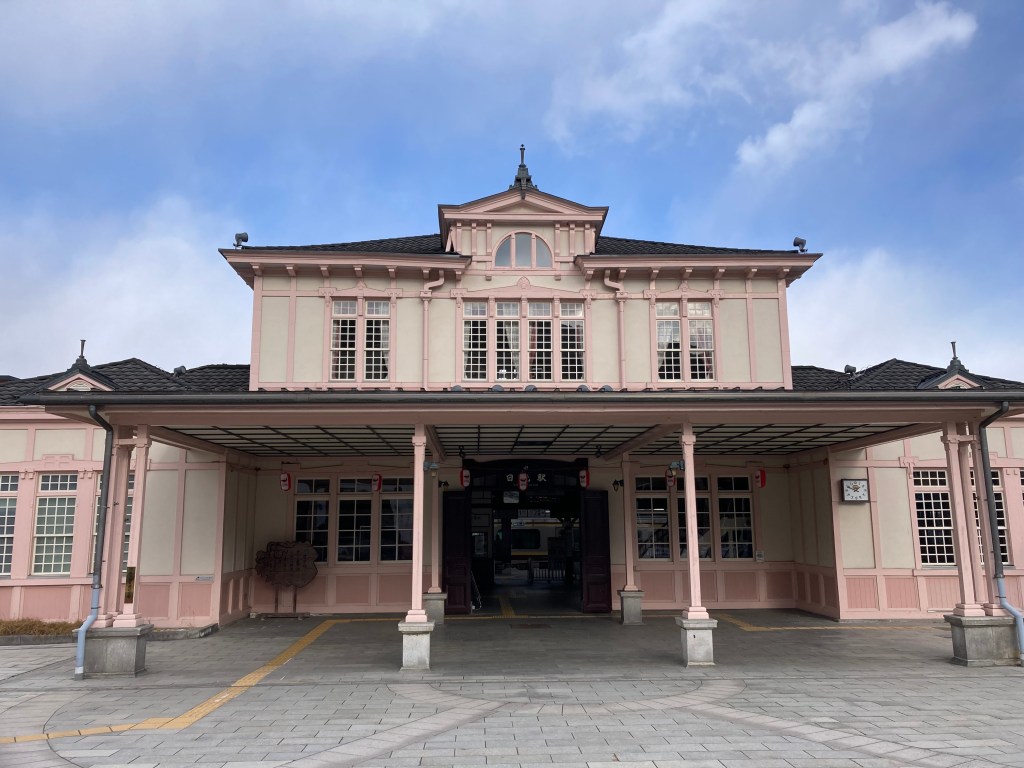
Then we take the bus back to town in order to catch the train to Tokyo, reaching the Nikko JR Station at 1.16. I had thought the trains were at 19 minutes past the hour. However, it turns out they run at 19 minutes past every hour except 1. So, we have 63 minutes to wait in the draughty station. Did I mention I didn’t bring a coat?
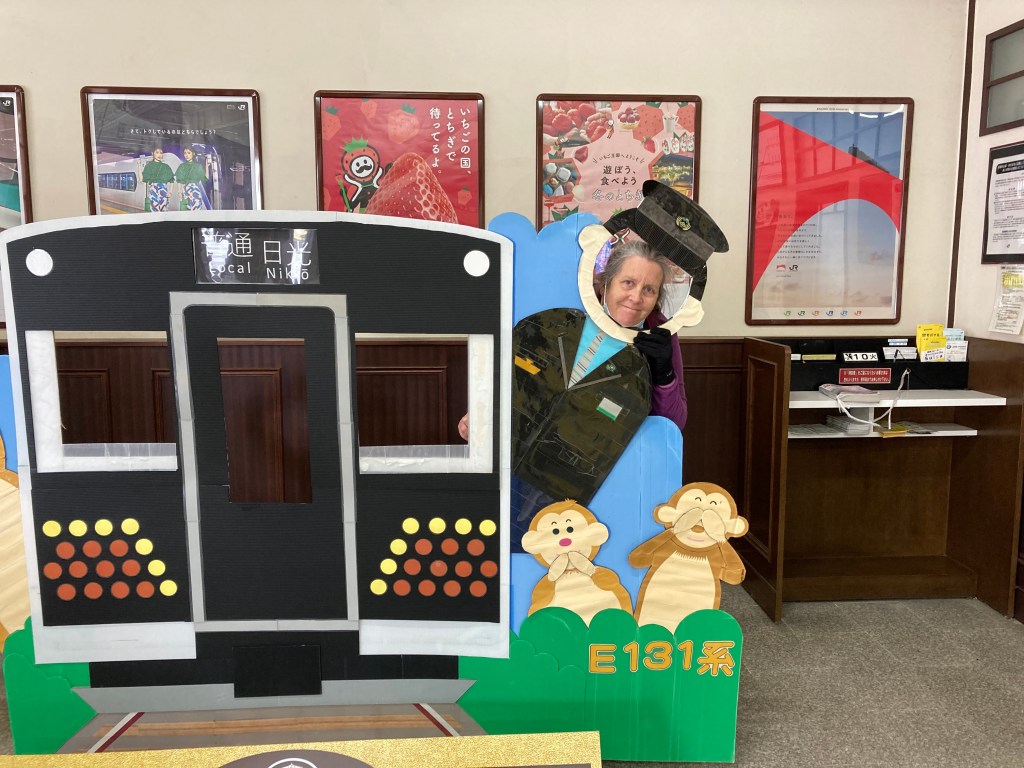
At least, while I’m fending off hypothermia, I can explore the imposing pink station, which was designed by Frank Lloyd Wright.
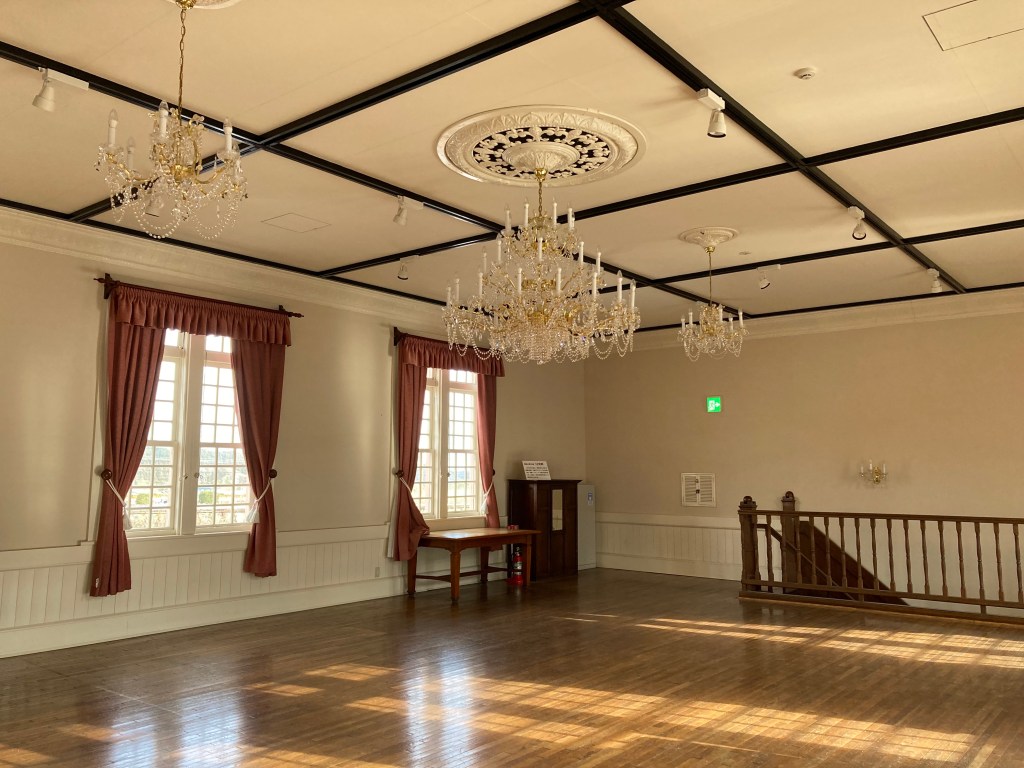
Preserved upstairs, but serving no actual purpose, is the rather grand first class waiting room.
- Trip taken: January 2023
- Updated: March 2026
I hope you found the above information useful. For guides to more destinations in the 50+ countries we have visited, check out my full list of Independent Travel Itineraries here.
 Jane's Midlife Journey
Leave a comment