
Fukuoka is the largest city on Kyushu, Japan’s third biggest island and the closest to mainland Asia. It is joined to the main island of Honshu by a tunnel and a bridge. Fukuoka is made up of two former towns: the castle town of Fukuoka and the merchant town of Hakata. The two towns merged in 1889 as Fukuoka, although the name Hakata is still widely used (for example, if you come by train you arrive at Hakata Station).
How to get to Fukuoka
We travelled to Fukuoka by bullet train and departed by plane. As mentioned above, the station is called Hakata, rather than Fukuoka. Hakata Station is centrally located. There are platforms for bullet trains, regular trains and subway trains. The airport is 3 miles east of the city. You can get between the two by subway. The subway actually only stops at the Domestic Terminal. If you need the International Terminal, you can take the free shuttle bus from outside the Domestic Terminal building. The terminals are either side of the runway, so walking between the two isn’t an option.
Getting around Fukuoka
As we were only in Fukuoka for a short time, I chose attractions which were centrally located and we explored on foot. To travel further afield (i.e. the airport) we used the subway which is run with the sort of efficiency you’d expect in Japan.
Where to stay in Fukuoka
We stayed at the Hotel Wing International Select Hakata Ekimae. It’s centrally located (a short walk to Hakata Station) and the price includes a very good breakfast. The room is small but clean and bright and makes good use of the available space.

Fukuoka in 1 Day Itinerary
| Day 1 | Bullet Train to Fukuoka Hakata Station Accommodation – Hotel Wing International Select Hakata Ekimae Kushida Shrine Kawabata Shopping Arcade Fukuoka Asian Art Museum Canal City Ramen Stadium Dinner at Sanmi 333 Nakasu Island Yatai Stalls |
Attractions
| 1 | Hakata Station |
| 2 | Kushida Shrine |
| 3 | Kawabata Shopping Arcade |
| 4 | Fukuoka Asian Art Museum |
| 5 | Canal City |
| 6 | Ramen Stadium |
| 7 | Nakasu Island Yatai Stalls |
Bullet Train to Fukuoka
Today it’s time to board our last Japanese train. The bullet train can travel at 200 MPH. This means that the entire 170 mile journey from Hiroshima to Fukuoka takes just an hour. It’s not the most scenic journey as you travel between the islands of Honshu and Kyushu through a tunnel.
Hakata Station
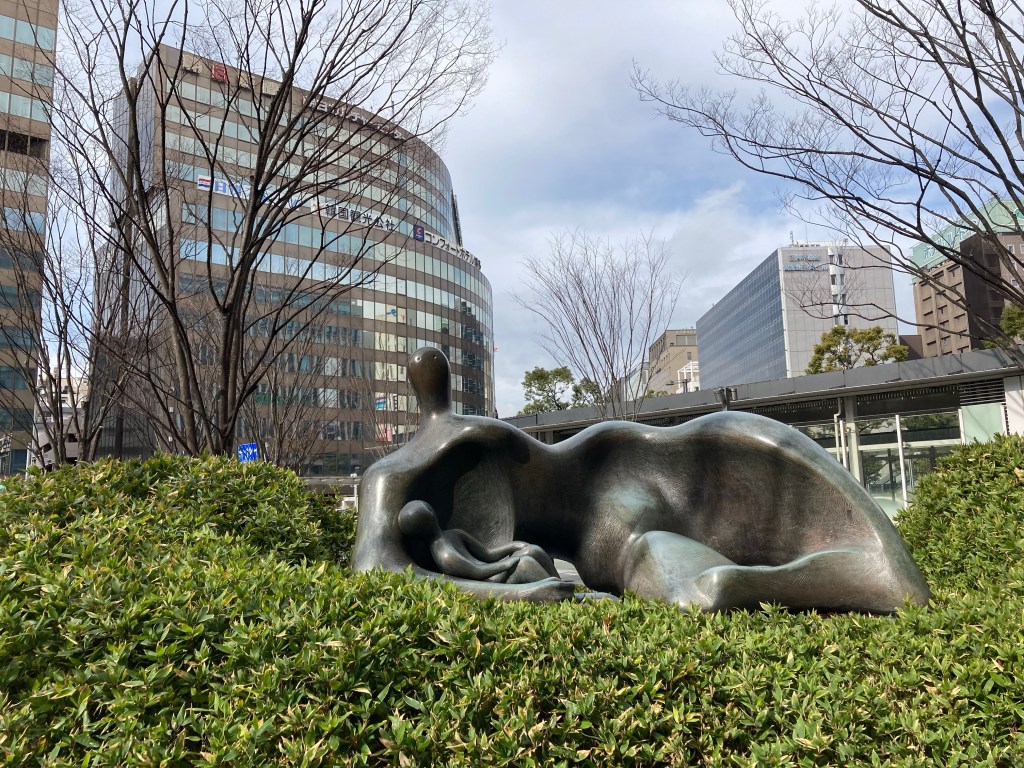
The enormous Hakata Station is a destination in its own right with shops, restaurants, hotels and public art. There’s even a piece of Henry Moore by the exit to make us Brits feel at home.
Accommodation – Hotel Wing International Select Hakata Ekimae
Tonight’s hotel is the Hotel Wing International Select Hakata Ekimae. A bit of a mouthful – I wouldn’t want to work on the switchboard. Do they have switchboards these days? This is one of the cheapest hotels we’ve booked. It’s definitely budget but I actually quite like it. Like most budget Japanese hotels, if you want any toiletries etc, you can collect them from an amenities bar in the foyer. Here, the amenities bar let you choose between a whole range of different shampoo options which keeps me amused while we’re waiting to check in.

Kushida Shrine
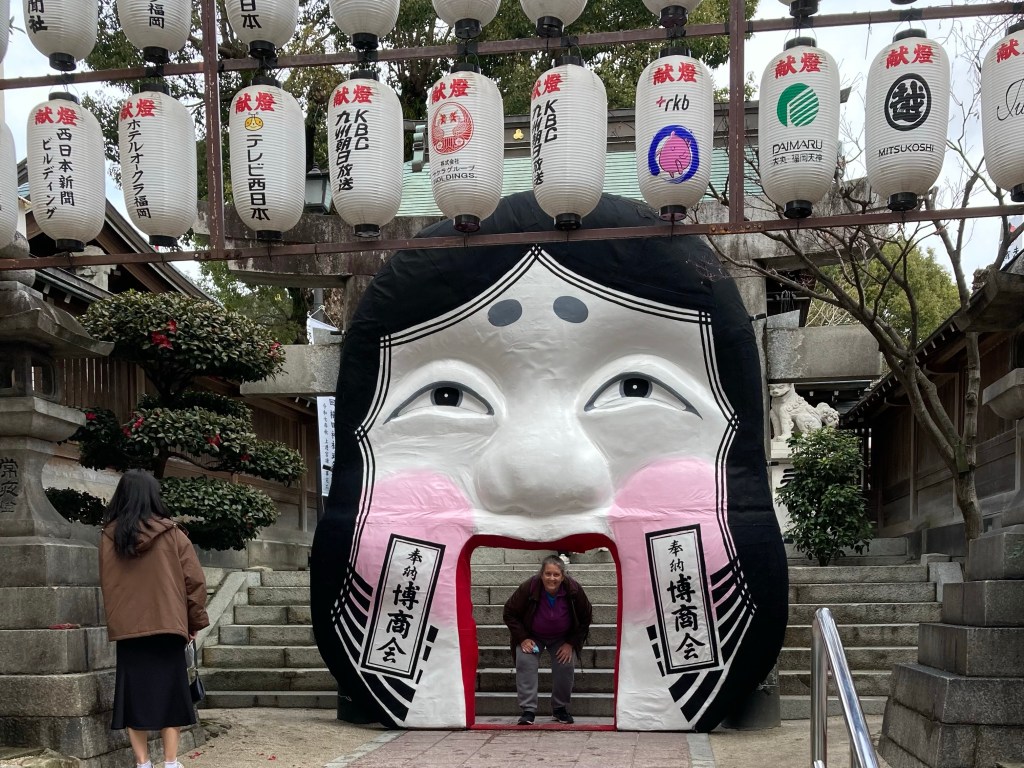
We set off on our whistle stop tour of Fukuoka, making a brief stop at Kushida Shrine. To enter you walk through the mouth of an Otafuku Mask. This mask of a smiling lady is supposed to bring good fortune. Unless you forget to duck when you walk through her, of course, then you just get a headache.
Kawabata Shopping Arcade
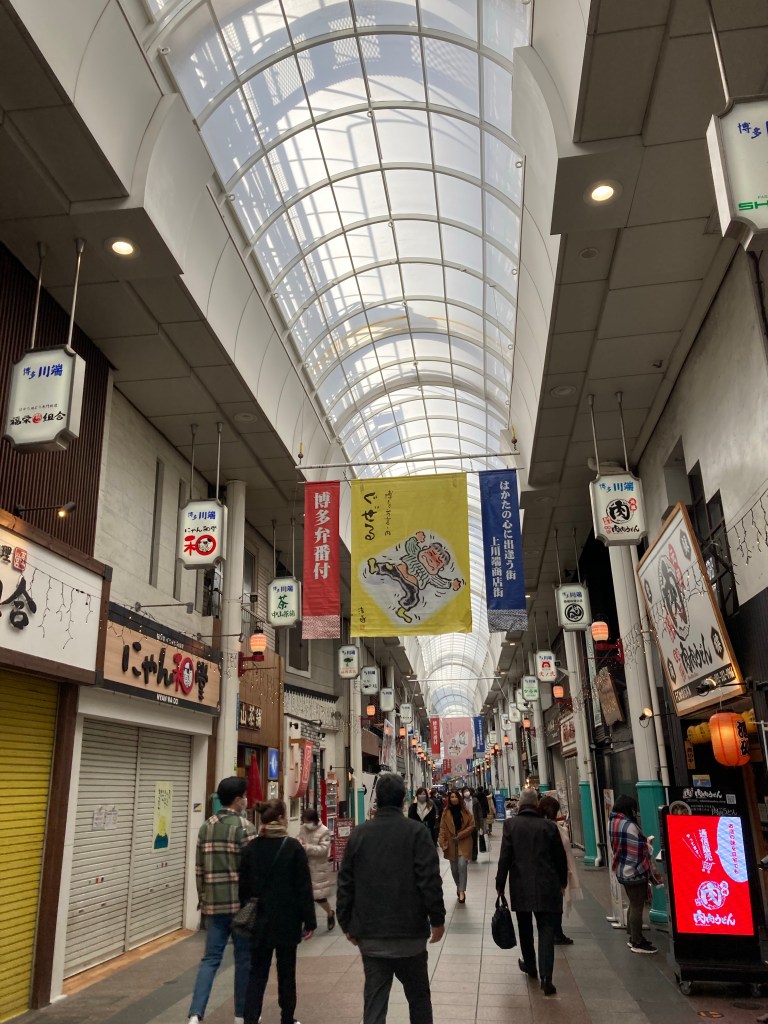
We continue through the Kawataba Shopping Arcade. The 400 metre long arcade boasts 130 stores selling everything from souvenirs to kimonos.
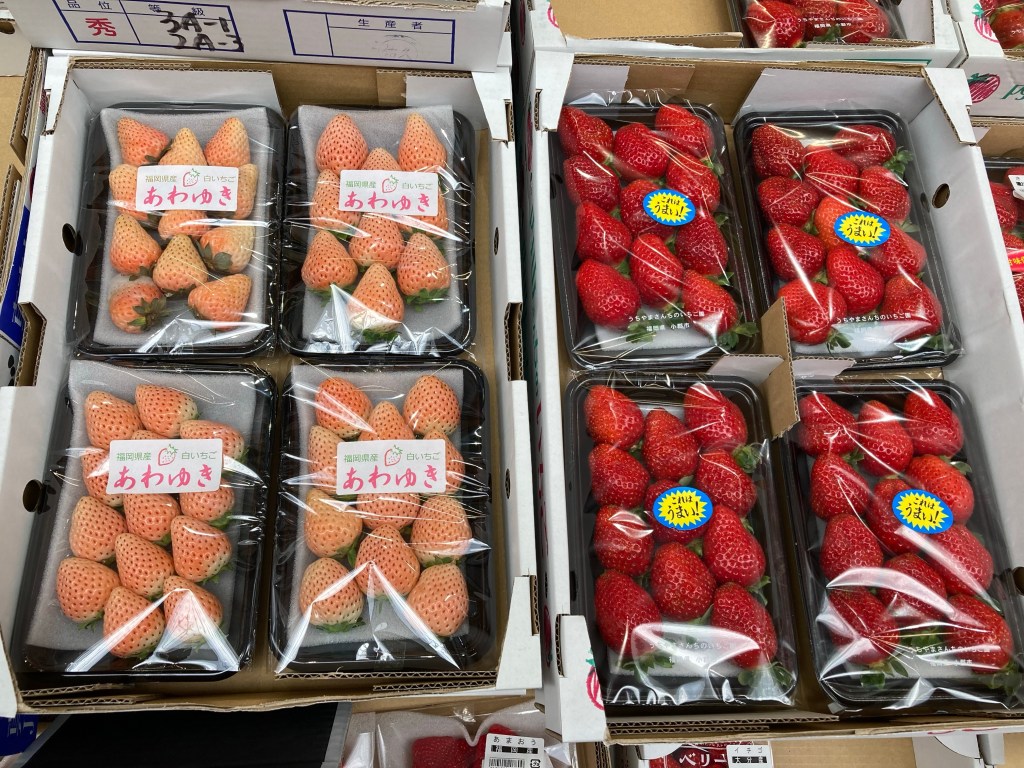
There are also plenty of food stalls selling local delicacies such as noodles, seafood and white strawberries.
Fukuoka Asian Art Museum
We reach our key destination, Fukuoka Asian Art Museum, a museum with renowned Asia Gallery which shows work from artists across Asia.

The gallery is on top of a shopping mall/hotel. In the foyer is a large mural by Chinese digital artist Bu Hua, the remainder of the exhibits are on the 7th and 8th Floors. So once you have admired the mural, you can take the elevator to the main part of the museum.

The focal point of the museum is the Asia Gallery, which costs Y200 to enter. The gallery focuses on Asian modern contemporary art, but the pieces on display are diverse. For example, this sculpture entitled Woman Holding her Breasts by Indians artist Ravinder Reddy. According to the accompanying description, the viewer’s gaze is held by the lady’s big, shiny eyes!

One of my favourites is Series 2 No 3 by Chinese artist Fang Lijun. This group of men with identical faces and expressions demonstrates that they have been deprived of individuality and freedom of expression.
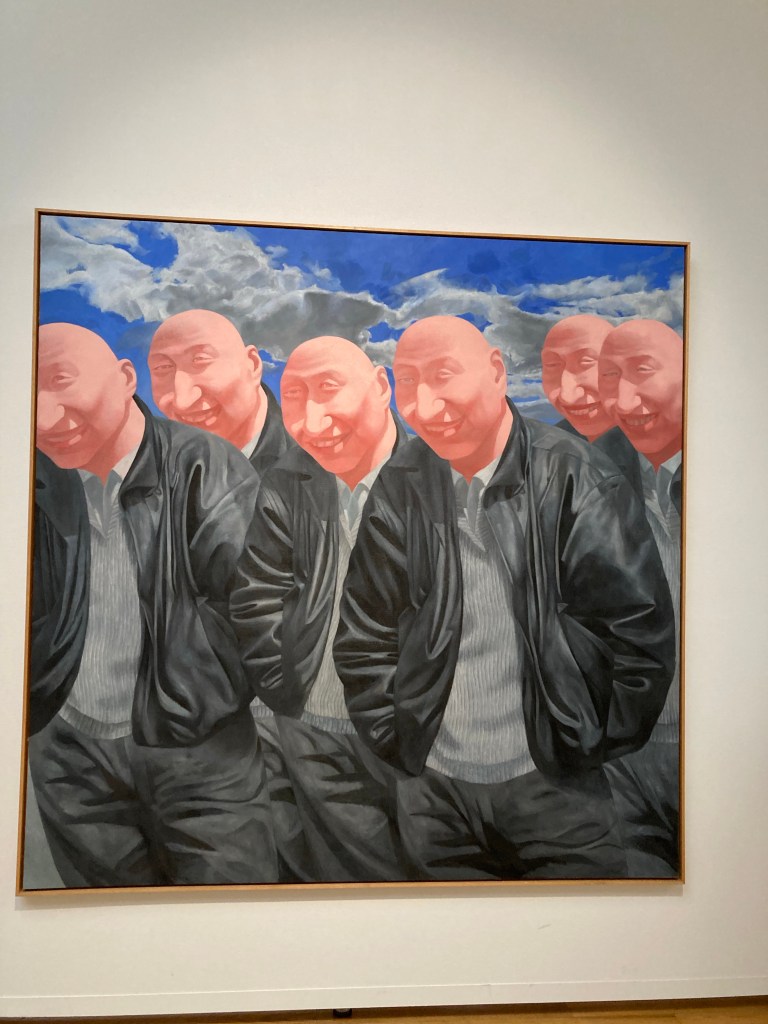
There are extra fees for special exhibitions. These fees vary; when we visited the special exhibition was ‘Who is Banksy’ and cost Y1800.
Canal City
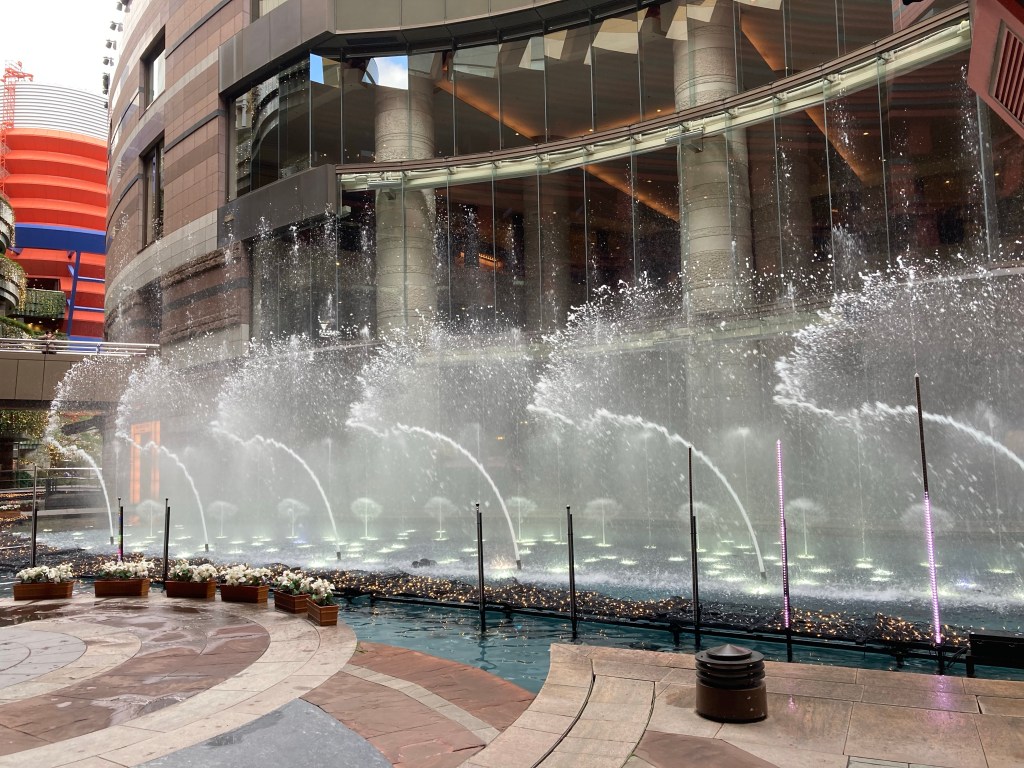
We return to the hotel via Canal City, a labyrinthine shopping and entertainment complex. Its 250 shops, cafes, restaurants (including Ramen Stadium), a theatre, cinemas and hotels are situated either side of a canal.

On the canal there is a fountain based water shows every 30 minutes. After dark, the fountain display is illuminated. In addition, action pictures are projected onto the glass building behind and you can watch transformers fight.
Ramen Stadium
On the Fifth Floor of Canal City is Ramen Stadium. Obviously, this isn’t an actual stadium, but eight ramen shops with noodle dishes from across Japan, all watched over by a stuffed bear.

Dinner at Sanmi 333
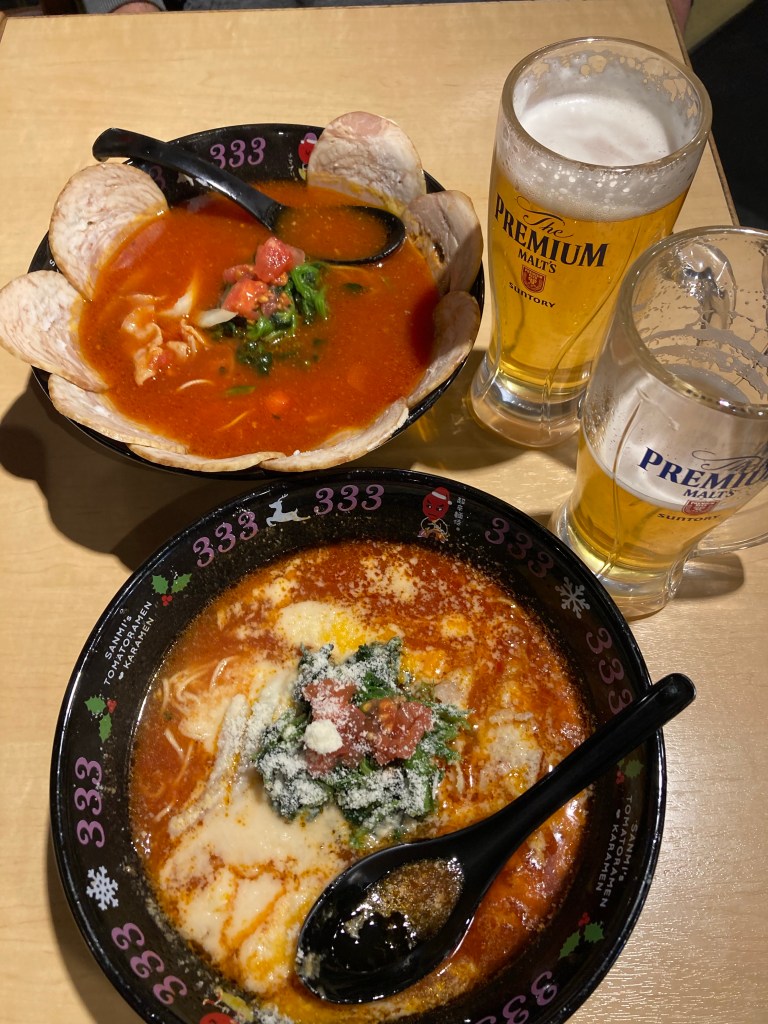
We choose Sanmi 333, which is apparently famous for its tomato ramen. I’m afraid I don’t really get ramen. It’s like you take a nice meal and drown it in salty water – a bit like eating noodles at sea. So I’m hoping Sanmi will win me over.
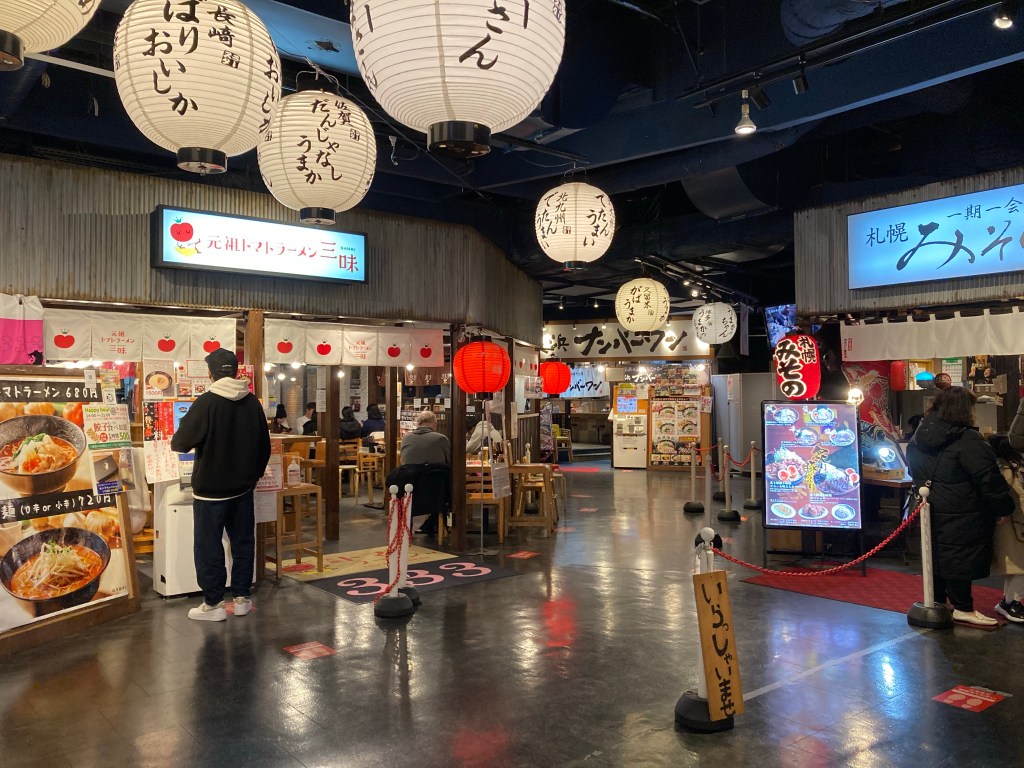
To order, you must put money in a machine and choose an option, then a ticket pops out. If you want more than one thing, you repeat and obtain another ticket. Once you’ve finished, you hand your pile of tickets to the waitress and your order is delivered. I choose ramen with cheese, while the old man opts for ramen with pork. It’s OK – but a bit like eating spaghetti bolognaise at sea.
Nakasu Island Yatai Stalls
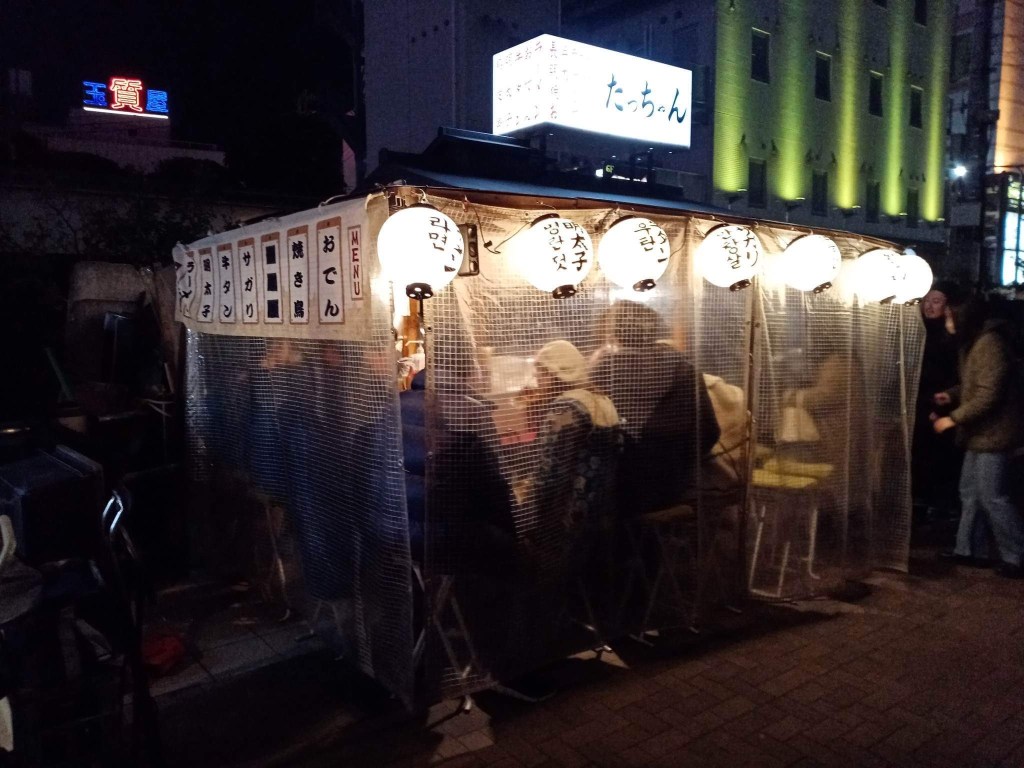
In the evening, time to take a riverside walk. The River Naka splits to form the River Hakata and converges again, forming Nakasu Island. Alongside the river are rows of food stalls called Yatai where you can buy dishes such as yakitori (chicken skewers) and ramen to eat by the waterside. Or if you had ramen already, just enjoy the view.
I hope you found the above information useful. For guides to more destinations in the 50+ countries we have visited, check out my full list of Independent Travel Itineraries here.
- Trip Taken: January 2023
- Updated: June 2023
 Jane's Midlife Journey
Leave a comment