
Dazaifu, the former Capital of Kyushu, is known for its shrine, which is said to bring visitors good luck, and is also home to an excellent museum. Situated just 10 miles south east of Fukuoka, it is a very popular day trip destination.
How to get to Dazaifu
It is possible to get to Dazaifu by train, but it is likely to involve a change of lines at Nishitetsu-Futsukaichi (Y370). As Dazaifu is just 7 miles from Fukuoka airport, the simplest way to travel from Fukuoka is to take the airport bus, which offers a direct service (via the airport, naturally) and costs Y610.
Due to its proximity to the airport, we drove to Dazaifu as part of a Kyushu road trip and stayed overnight, ready to catch our onward flight the following morning.
Getting around Dazaifu
The tourist area is compact and pedestrianised, so best visited on foot. The museum, which is at the top of a hill, is reached from near the shrine by a series of escalators.
Where to stay in Dazaifu
Most people visit Dazaifu on a day trip. We opted to stay over, but it’s not really geared for overnight visitors. With hindsight, I think I would have opted for an airport hotel instead. Accommodation is limited and most restaurants close early, so our only dinner option was a ready meal from a convenience store. We stayed at the Sonic Apartment Hotel, which was conveniently located and offered free parking, but it was cramped and bitterly cold.

Dazaifu in 1 Day Itinerary
| Day 1 | Drive to Dazaifu (Accommodation – Sonic Apartment Hotel) Walk along Tenjinsama-dori Umegae-mochi at Kasanoya Kyushu National Museum Dazaifu Tenmangu Shrine Dinner |
Atttractions
| 1 | Tenjinsama-dori |
| 2 | Kasanoya |
| 3 | Kyushu National Museum |
| 4 | Dazaifu Tenmangu Shrine |
Drive to Dazaifu
Today, we are driving to from Beppu to Dazaifu, a shrine town on the outskirts of Fukuoka. We had planned to stop in the mountain village of Yufuin en route, but with sub zero temperatures after a day of snow, we decide not to risk getting stuck because the expressways are closed and head straight for Dazaifu. It was definitely the right decision. Before we’ve even reached the outskirts of town it’s snowing again and even on the expressway the snow is starting to settle on the outside lane. It’s a scenic, if somewhat nerve wracking drive through the mountains of Kyushu.
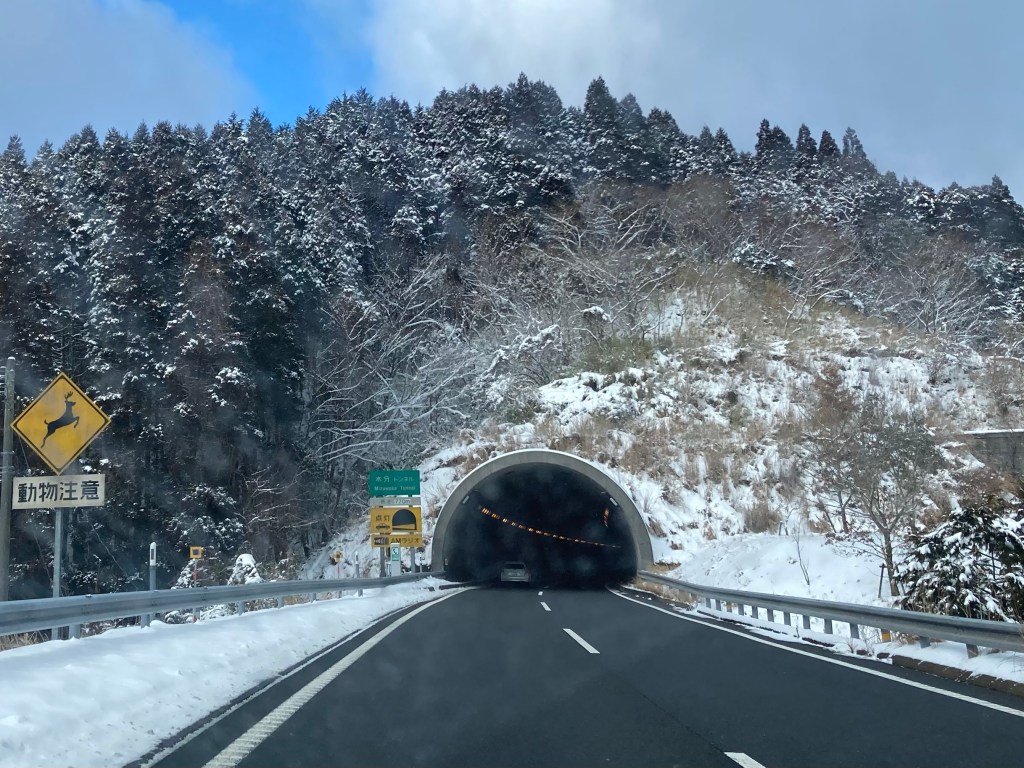
We reach Dazaifu without incident, despite the snow. When we arrive it’s heaving with people. Luckily our apartment has its own parking spot so we head there first.
Sonic Apartment Hotel
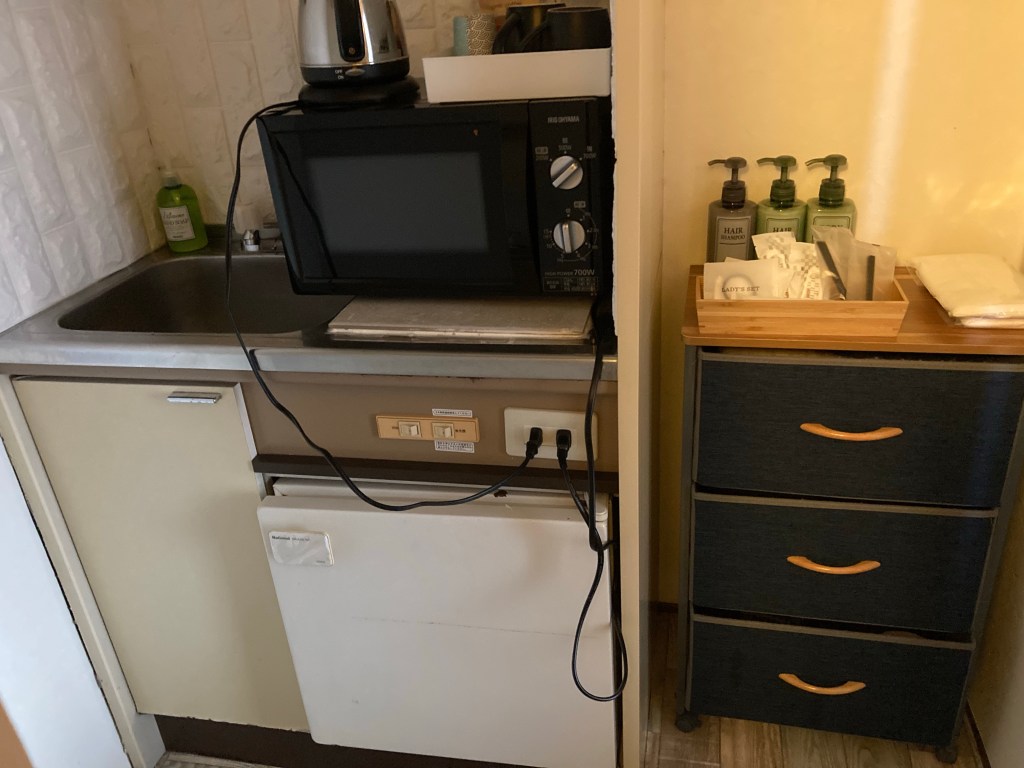
The Sonic Apartment Hotel is quite close to the centre of Dazaifu, just round the corner from the pedestrian area which leads to the shrine. Our apartment has two double beds, a kitchenette and a bathroom crammed into it and is surrounded by an abundance of plastic foliage. It’s above a restaurant, so smells of fried chicken, and it’s very, very cold.
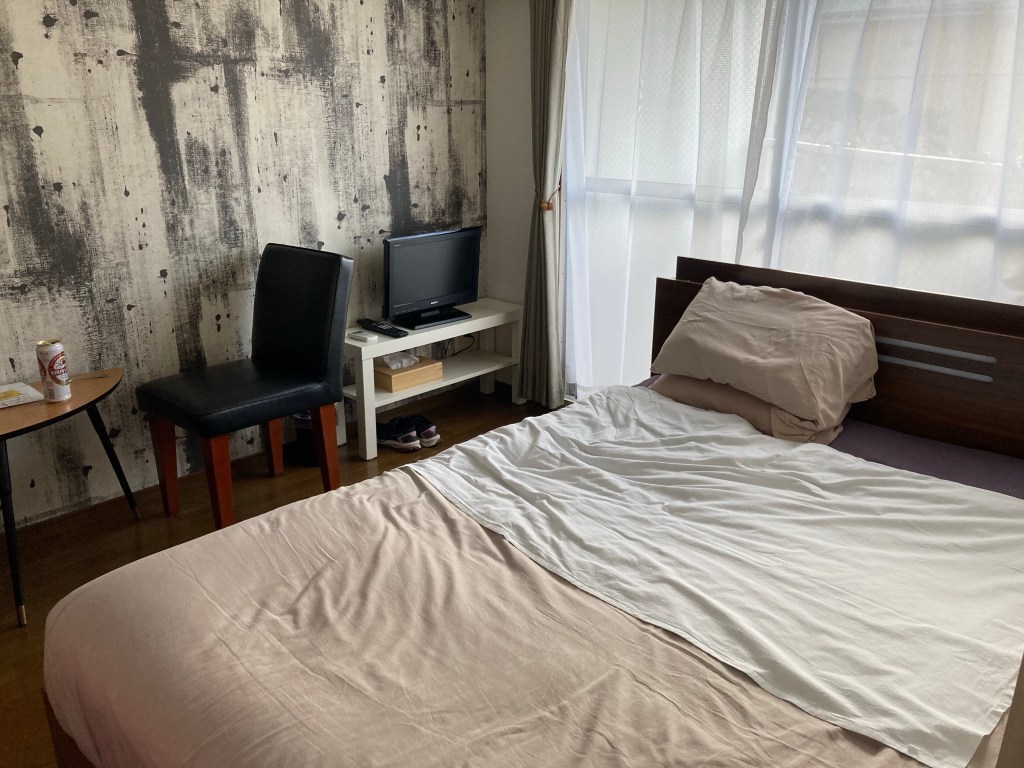
We turn on the heaters in the hope that the apartment will be habitable on our return and set off for a wander.
Tenjinsama-dori
We walk up the busy pedestrian shopping street of Tenjinsama-dori towards the shrine.

Umegae-mochi at Kasanoya
Dazaifu is famed for its pickled plum dumplings, umegae-mochi, sold at various shops along the street. In many shop, you can observe the dumplings being made either by hand or by machine.
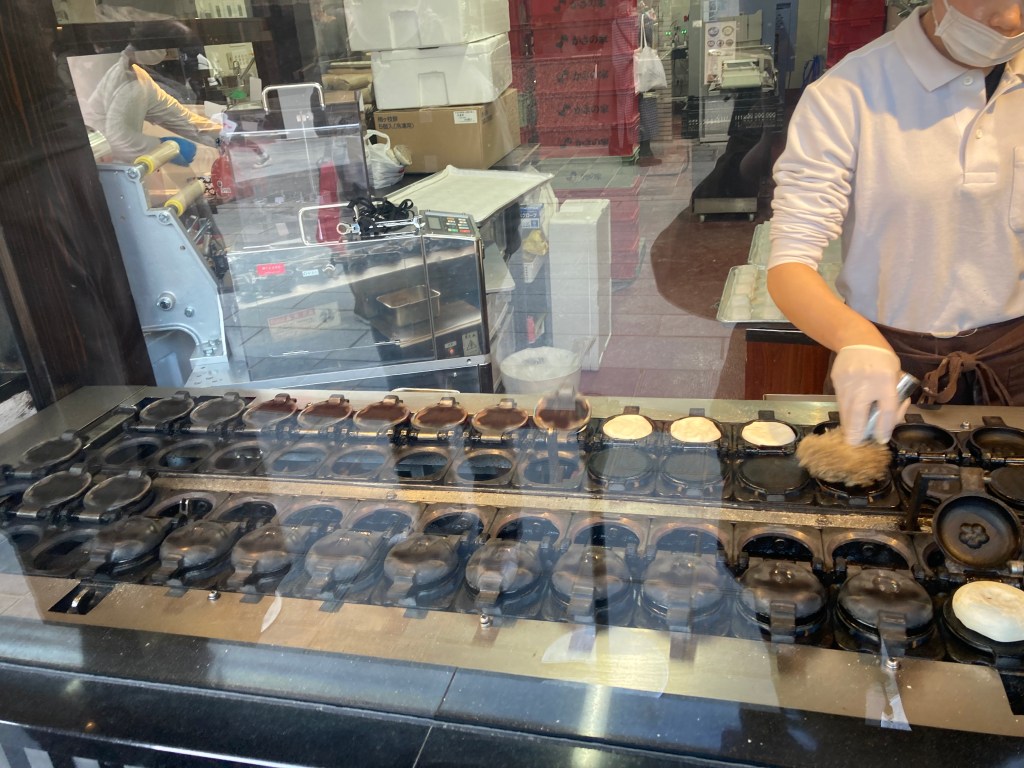
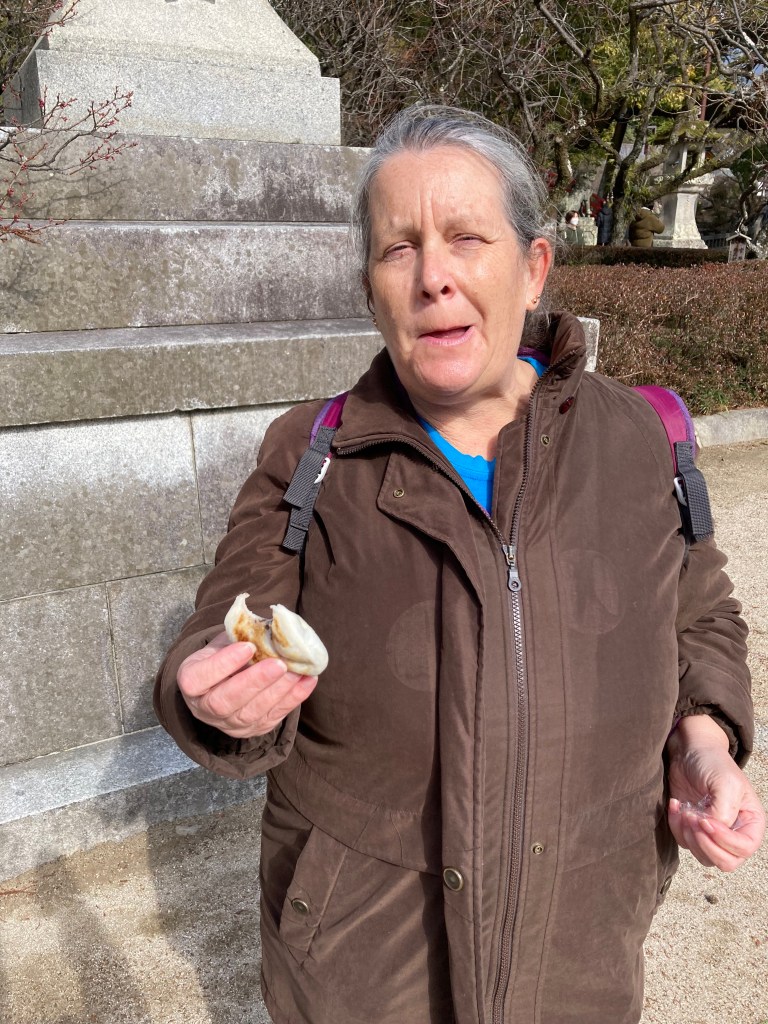
We opt for the shop with the biggest queue, Kasanoya, and purchase a bag of the highly coveted dumplings (five for Y650). They’re like dough balls into which a mixture of bean paste and plum have been stuffed. they’re rather claggy; the mixture gets stuck to the roof of my mouth and the beans keep repeating on me throughout the day – not great when you’re wearing a surgical mask…
Kyushu National Museum
As the shrine is so crowded, we decide to visit Kyushu National Museum first. This enormous building looks like someone dumped a spaceship on the side of a hill.
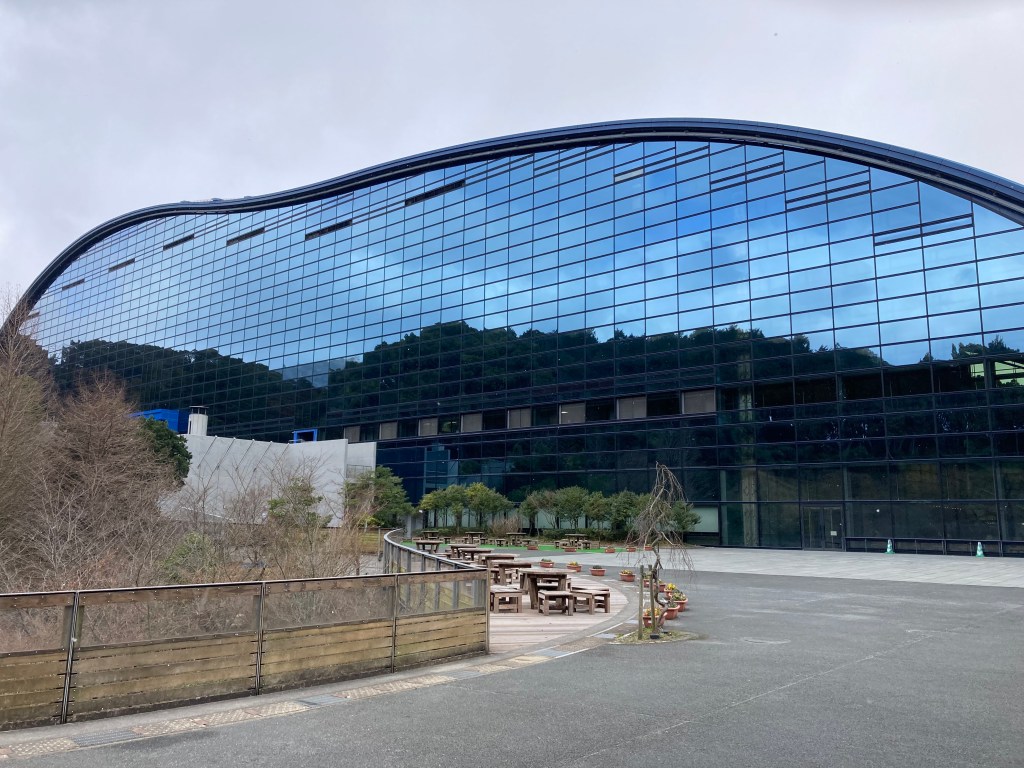
The museum is reached by a series of escalators and moving walkways, which bring you up the hill to the imposing glass and steel building, amidst an impressive light display.

The main exhibition; the Cultural exchange Exhibition, is situated on the 4th floor, accessed by yet more escalators. After such an impressive arrival, the exhibition has a lot to live up to, which it can’t quite manage. The collection contains a range of exhibits from ancient artefacts to satellites from both Kyushu and across Asia.

The museum is open daily except Mondays from 9.30 am until 5 pm. Sometimes it closes at 8 pm on Fridays and Saturdays. Entry costs Y700.
Dazaifu Tenmangu Shrine
We descend back down the hill to Dazaifu Tenmangu Shrine. This large shrine with a pond and legendary plum tree is the burial place of poet and scholar Tenman Tenjin. The shrine is believed to bring good luck, particularly to students taking exams.

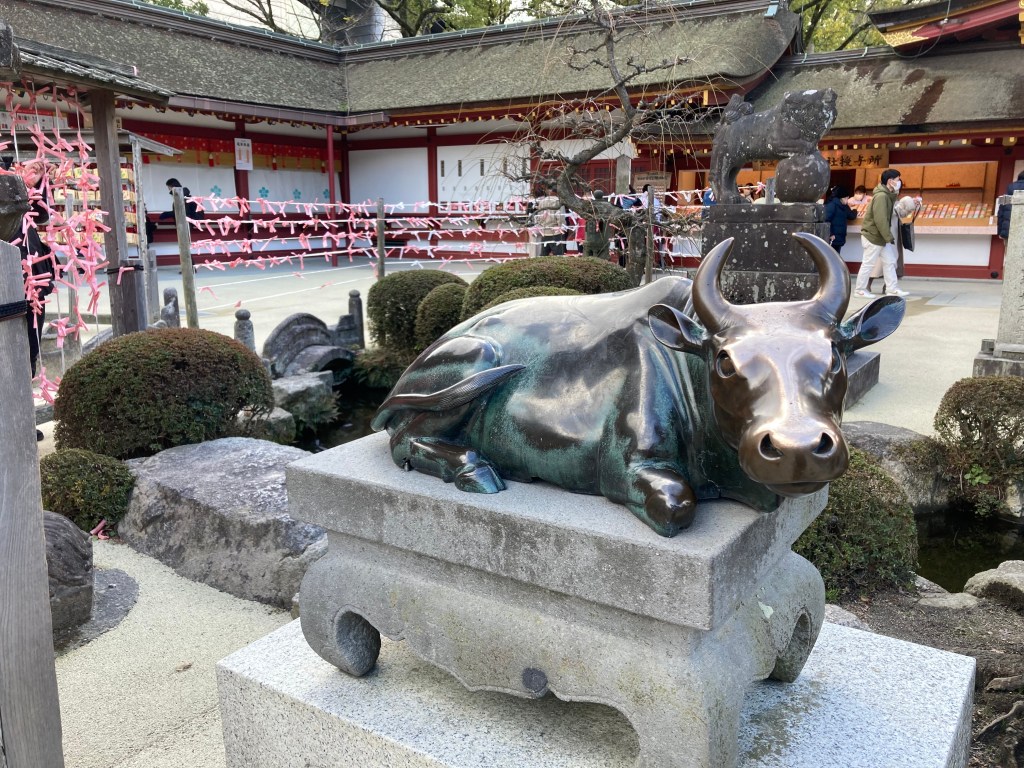
Lucky Bull (Shingyu)
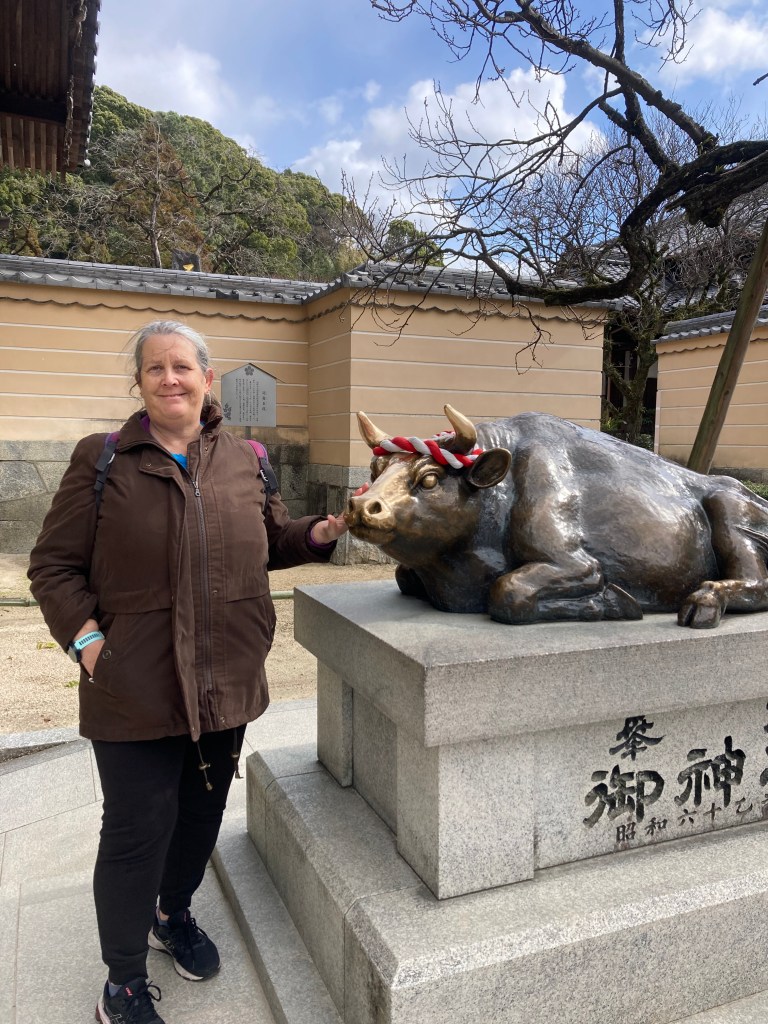
Students come/are brought here from far and wide to wish for examination luck, which can apparently achieved by rubbing the lucky bull. Legend tells that when Tenjin died, the ox pulling the carriage bearing his remains lay down in the road and refused to budge. So he was buried at that spot, which is where the shrine now stands. Since then, numerous people have donated ox statues, or shingyu, as offerings. Today, there are 11 of these statues around the shrine. The largest, cast in bronze, is at the entrance to the shrine grounds. Visitors queue to rub its head in the hope of becoming wiser.
Tai Ko Bridge
After you’ve rubbed the lucky bull’s nose to bring you good fortune, you pass over Tai Ko Bridge towards the main shrine. There are actually three separate bridges, representing the past, present, and future. Two of the bridges are arched, while the middle bridge, representing the present, is flat, so you cannot see what is ahead.

Honden
The ornate Main Hall, or Honden, dates from the 16th Century. It marks the final resting place of Tenjin.
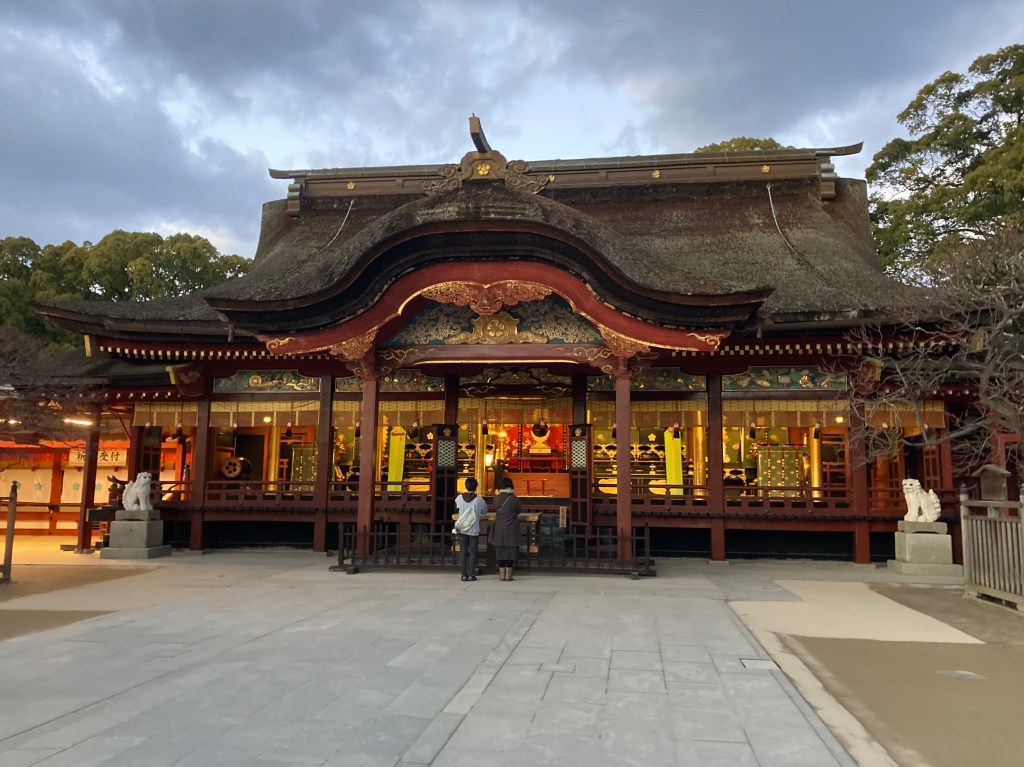
Flying Plum Tree
In front of the Honden stands Tobiume, The Flying Plum Tree, which is said to have flown to Dazaifu from Kyoto, as it could not bear to be parted from Tenjin.

Museums
Towards the back of the shrine are two museums. Dazaifu Tenmangu Museum displays artefacts from Tenjin’s life (entry Y500) and Kanko Historical Museum has dioramas showing events from Tenjin’s life (entry Y200). You can purchase a combined ticket for both these plus the Kyushu National Museum for Y1000.
Dinner
We didn’t visit either of these museums, deciding instead to walk back down the hill in search of somewhere to eat. Everywhere was both very busy and about to close. Dazaifu is primarily a day trip destination. Not many people stay overnight, hence not much stays open late. So it’s another gourmet microwave meal from the convenience store for us. Then an early night ready for our flight to Seoul in the morning.
I hope you found the above information useful. For guides to more destinations in the 50+ countries we have visited, check out my full list of Independent Travel Itineraries here.
- Trip taken: January 2023
- updated: July 2023
 Jane's Midlife Journey
Leave a comment