
We spent 4 days exploring South Korea; 3 days in the capital, Seoul and a day trip to the Demilitarised Zone between North and South Korea. Three days in Seoul gave us enough time to see plenty of the city’s main attractions. There are 5 grand palaces in Seoul, so you could spend a couple of days just touring palaces. We opted to visit just one (Gyeongbokgung) and spent the rest of our time on a range of different activities, from museums to K-Star statues. Note: Very few tourist attractions in Seoul are open on a Monday, so Day 2 of our itinerary was planned to take account of this.
South Korea 4 Day Itinerary
| Day 1 | Flight to Seoul Namdaemun Market Sungnyemun Dinner at Kalguska Alley Accommodation – Hotel Gracery Seoul |
| Day 2 | Seoul City Hall Cheong-gye-cheon Gyeongbokgung National Folk Museum of Korea Seoul Olympic Park K-Star Road |
| Day 3 | DMZ Tour Dinner at Namdaemun Market |
| Day 4 | National Museum of Korea War Memorial of Korea |
South Korea Day 1
Flight to Seoul
We fly into Seoul’s main airport of Incheon, which is some 37 miles from downtown Seoul. Once we have gone the usual airport necessities, we catch a shuttle bus into the city.
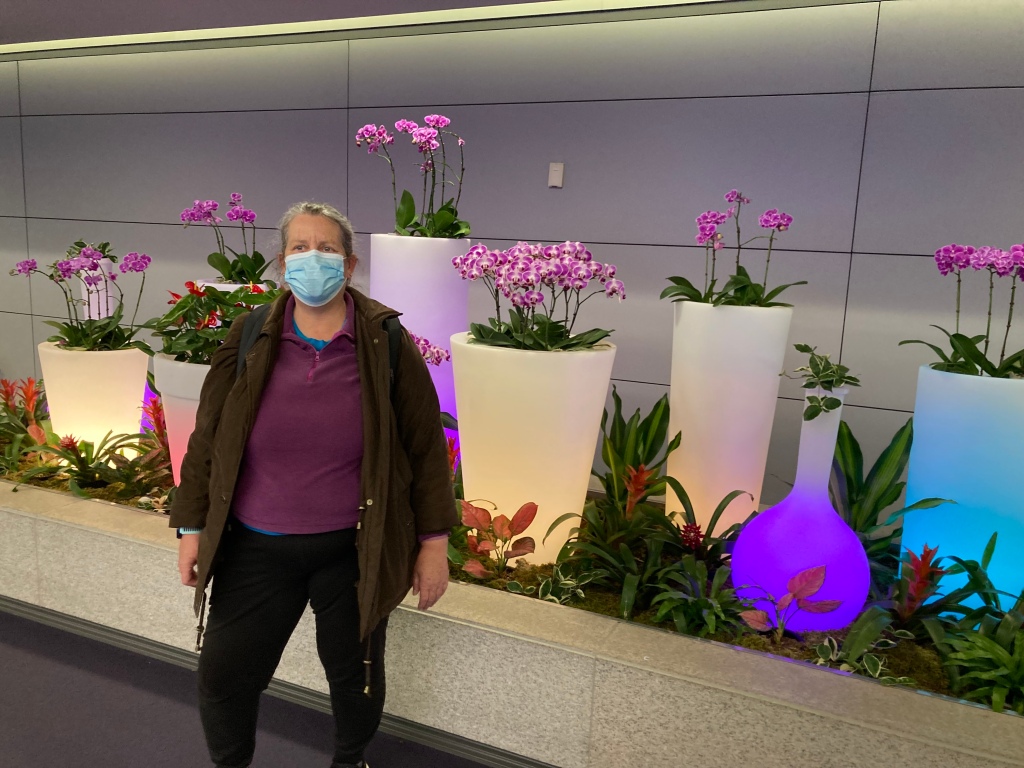
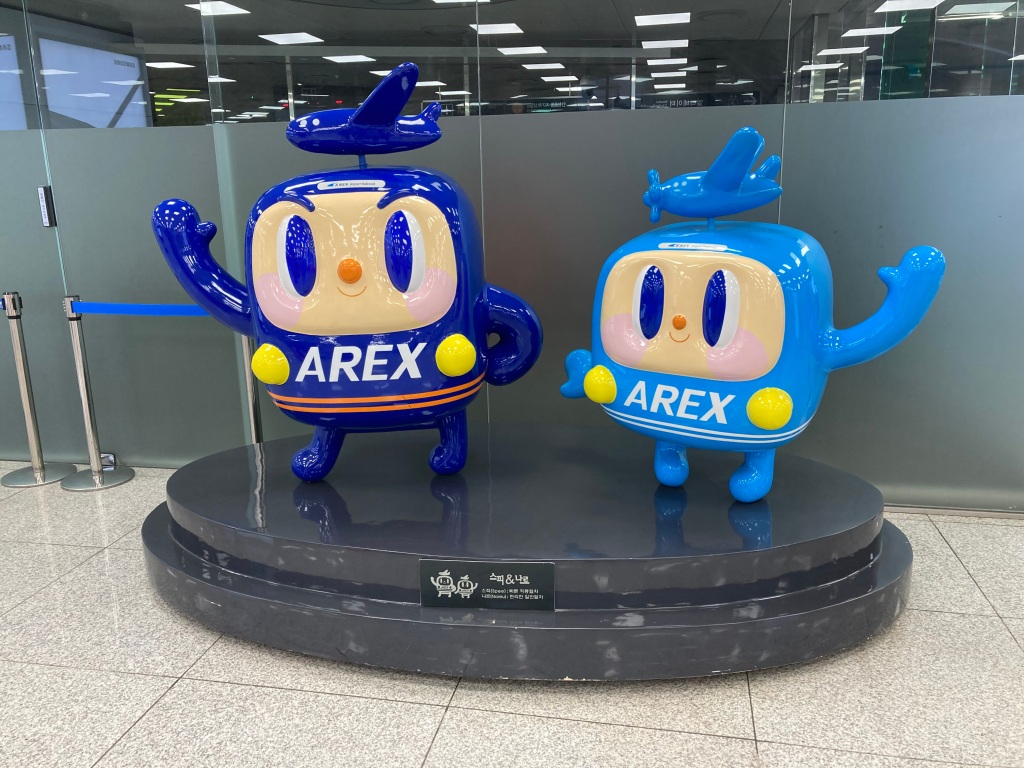
Note: We opted to travel into Seoul by Limousine Bus and back to the airport by Arex Express Train. The train is quicker, cheaper and more regular, but we chose the bus upon arrival because it stopped closer to our hotel.
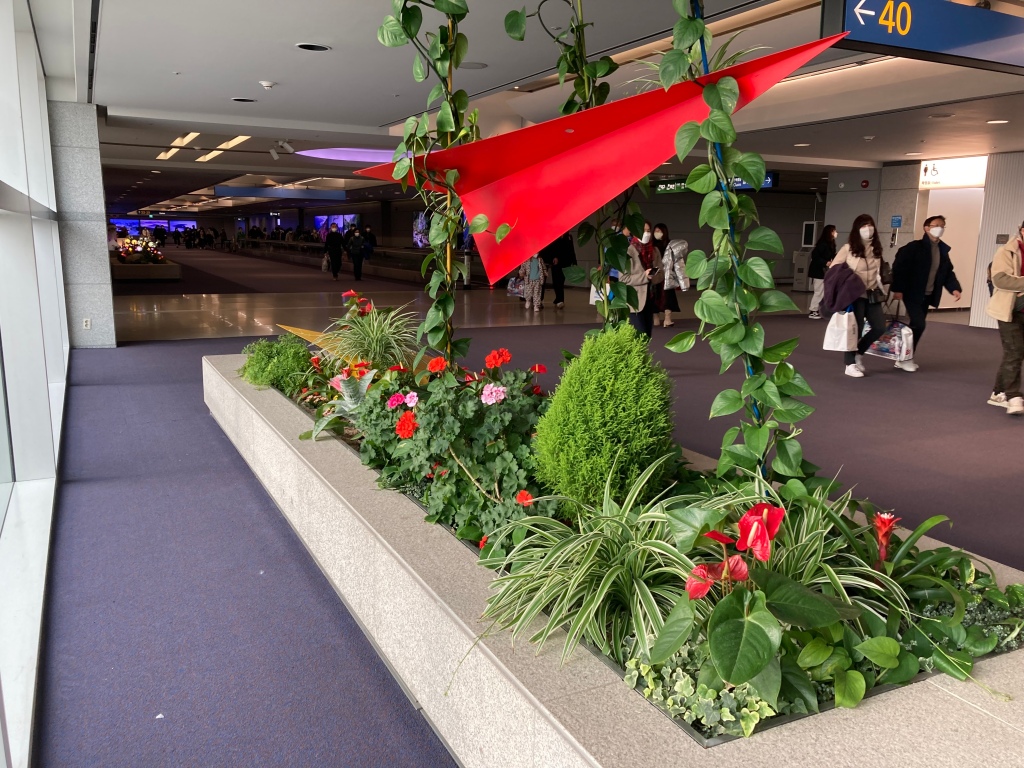
The bus drives into Seoul alongside the Han River, which has frozen over. It’s supposed to drop to minus 10 degrees tonight, so we’re glad to reach our destination before dark. We alight at Namdaemun Market and walk the final few minutes to our hotel.
Namdaemun Market
Namdaemun Market is the largest market in Korea, with 10,000 stalls, with different alleys specialising in different goods. There is a vast variety of goods on offer from food to clothes to household goods to souvenirs.

Sungnyemun
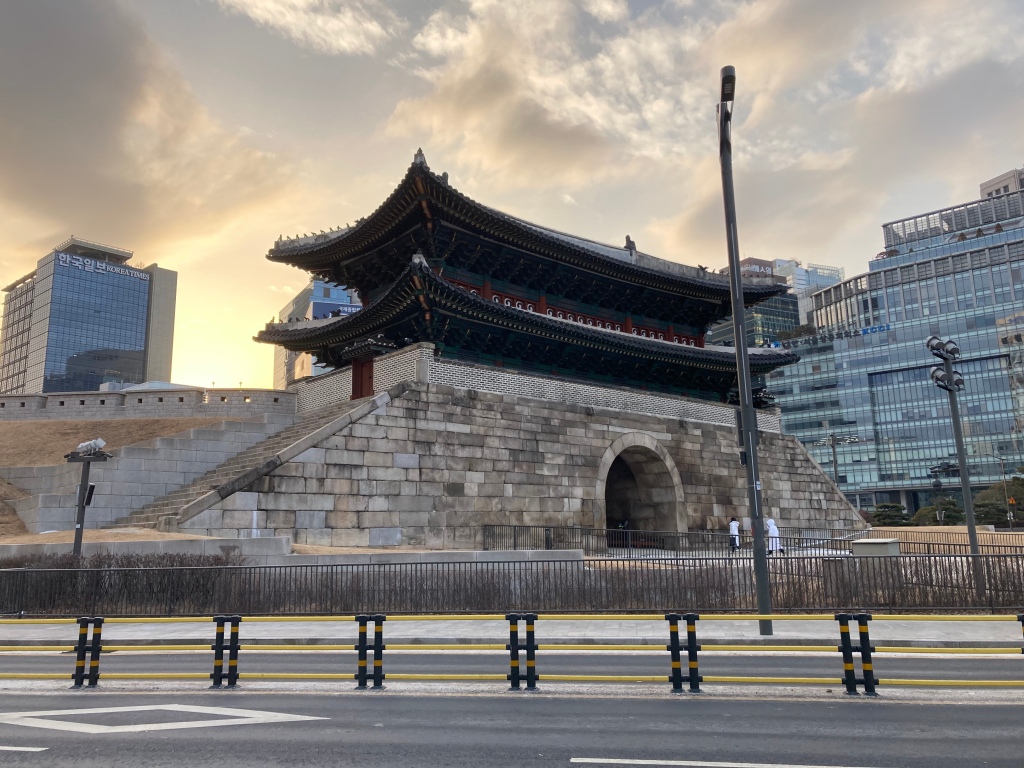
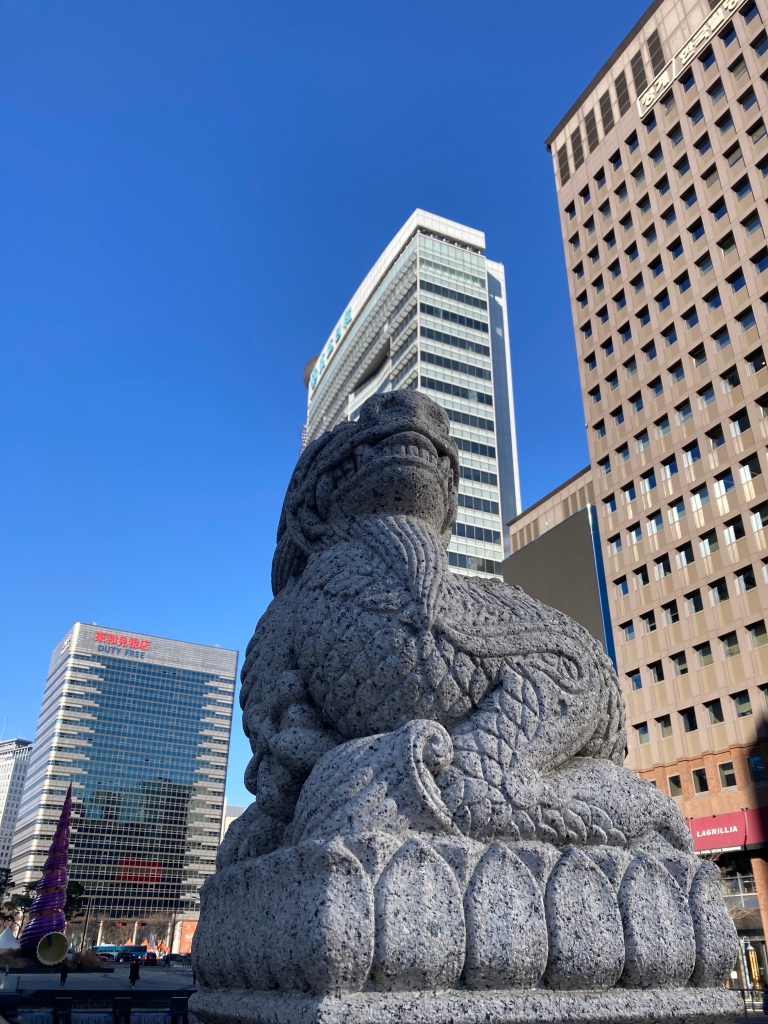
We pass the historic Sungnyemun, one of the capital’s original fortress gates. Once a grand entrance to the city, it now sits on a traffic island looking grand yet rather out of place.
Dinner at Kalguska Alley
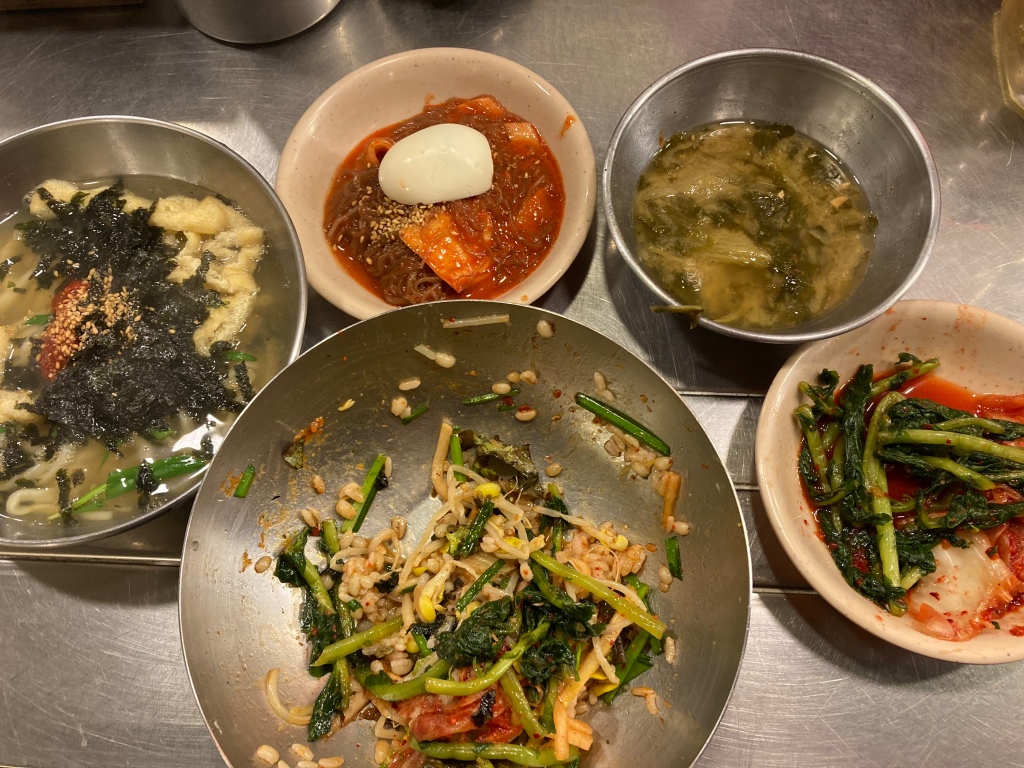
After we are checked in to our hotel, we return to Namdaemun Market to buy dinner. There is a selection of street food available; stalls selling kebabs, pancakes and all sorts of things – pig’s trotters anyone? There’s even an alley (Hairtail Alley) dedicated to fish stew. But we opt for Kalguska Alley.
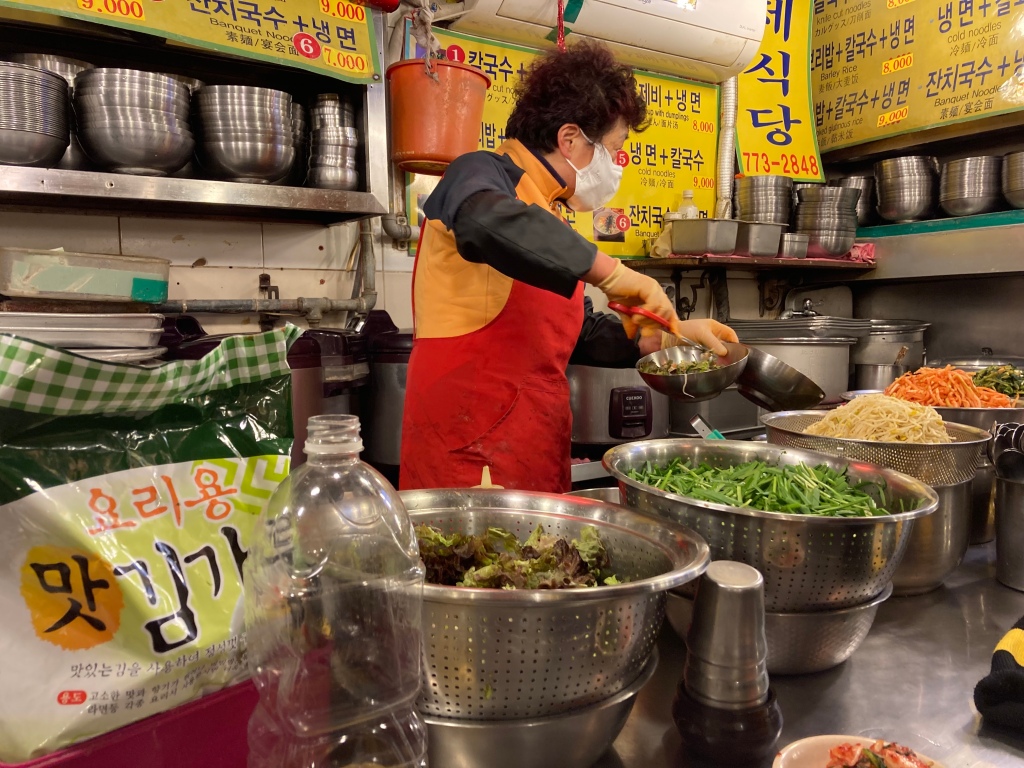
You walk through a plastic curtained door into an alleyway of stalls selling Kalguska; a popular Korean noodle dish. It comes as a set meal with a range of other things. My favourite is the Bibimbap; a spicy mix of rice and vegetables. This veritable (vegetarian) feast sets us back 8,000 won (£4.20) each. The old man is less impressed, he keeps wondering when she’s going to add the meat?
Accommodation – Hotel Gracery Seoul
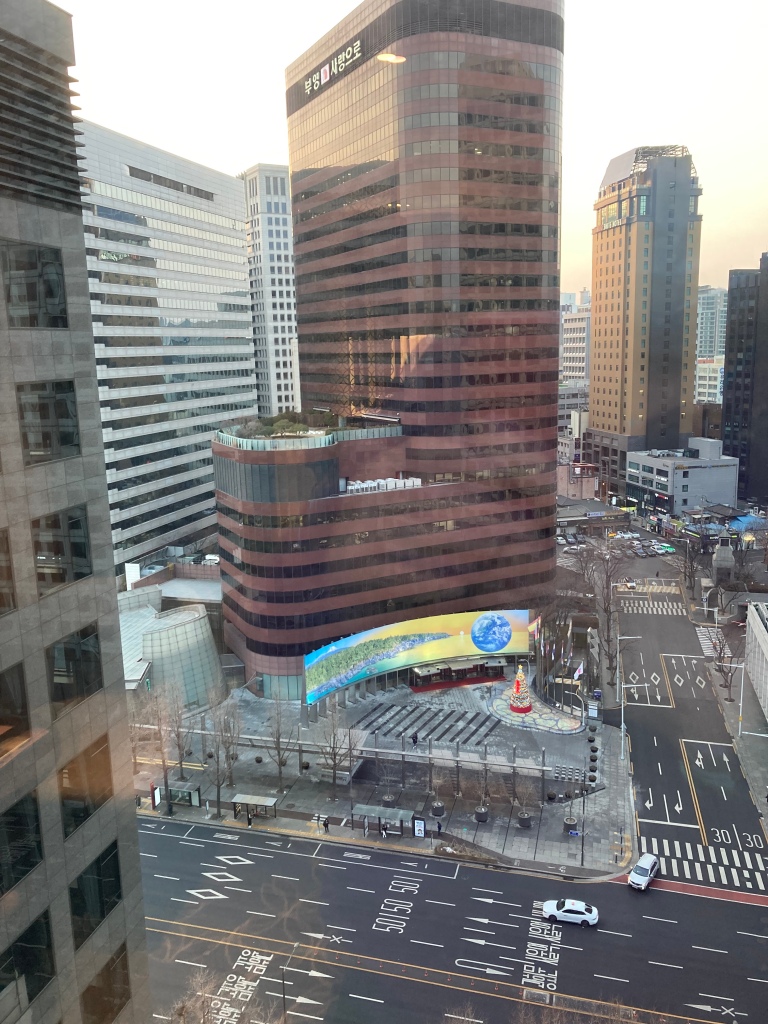
Our accommodation in Seoul is the Hotel Gracery Seoul, which is situated on floors 11 to 20 of a tower block just north of the Namdaemun Market. It’s a fairly new Japanese hotel, so it is clean and modern and very pleasant. The rooms are nice, the view is great and the breakfast is excellent.
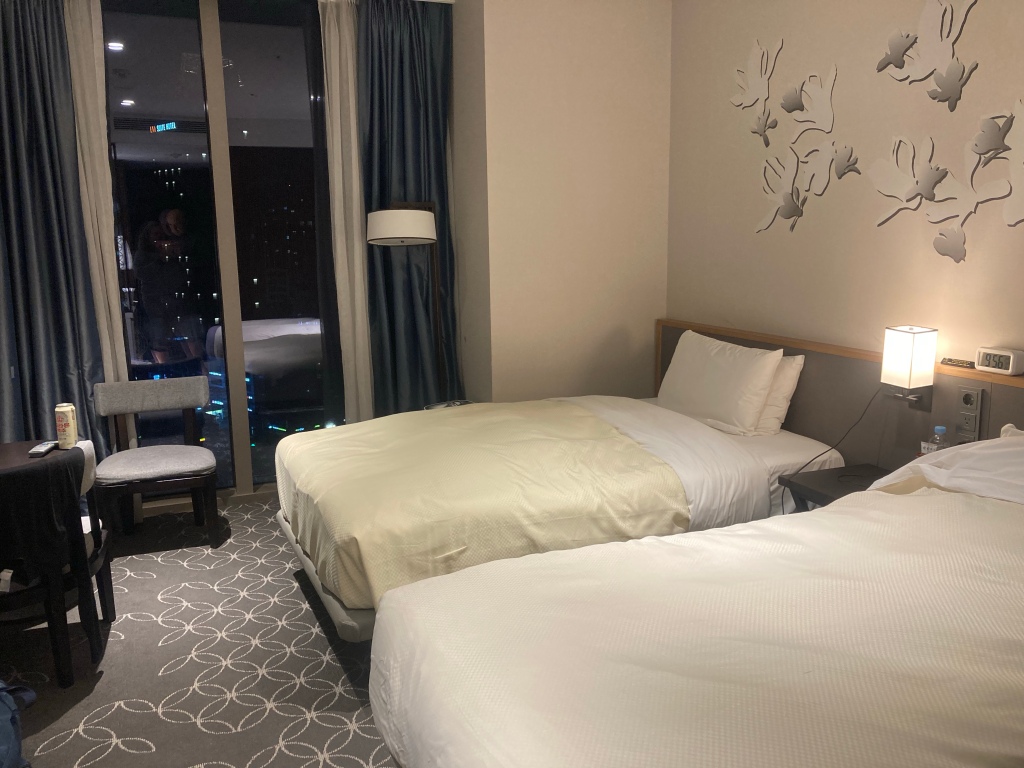
Our room is on the 13th floor, so has a god view, but we can hear the wind howling around us like a gang of banshees on the rampage.
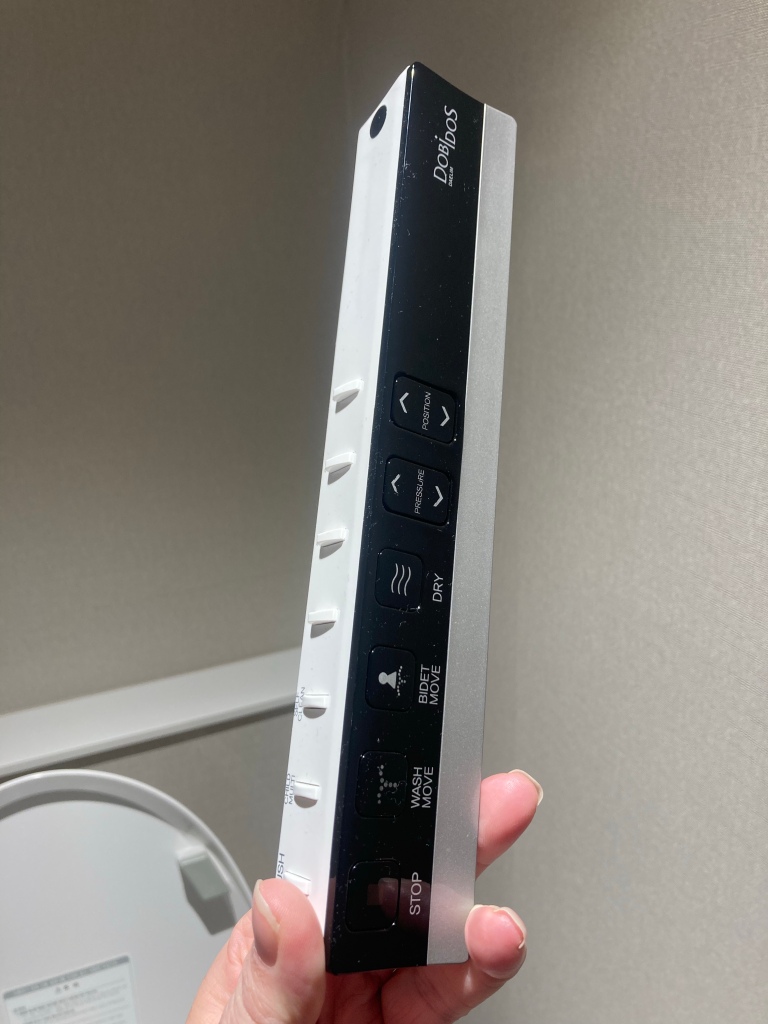
Hotel Gracery toilet report; it has its own remote control!
South Korea Day 2
There’s a special offer on the hotel breakfast buffet if you join their club. It’s not easy – it involves filling in a three page questionnaire. In Korean. But I am determined. The old man holds his phone over mine to translate as I type and we get there in the end. At reception, we produce our newly acquired membership and get breakfast for W13,200 each (£6.90). I feel extra smug as a young American couple behind us announce they have given up and pay full price. I think you can say we got our money’s worth!
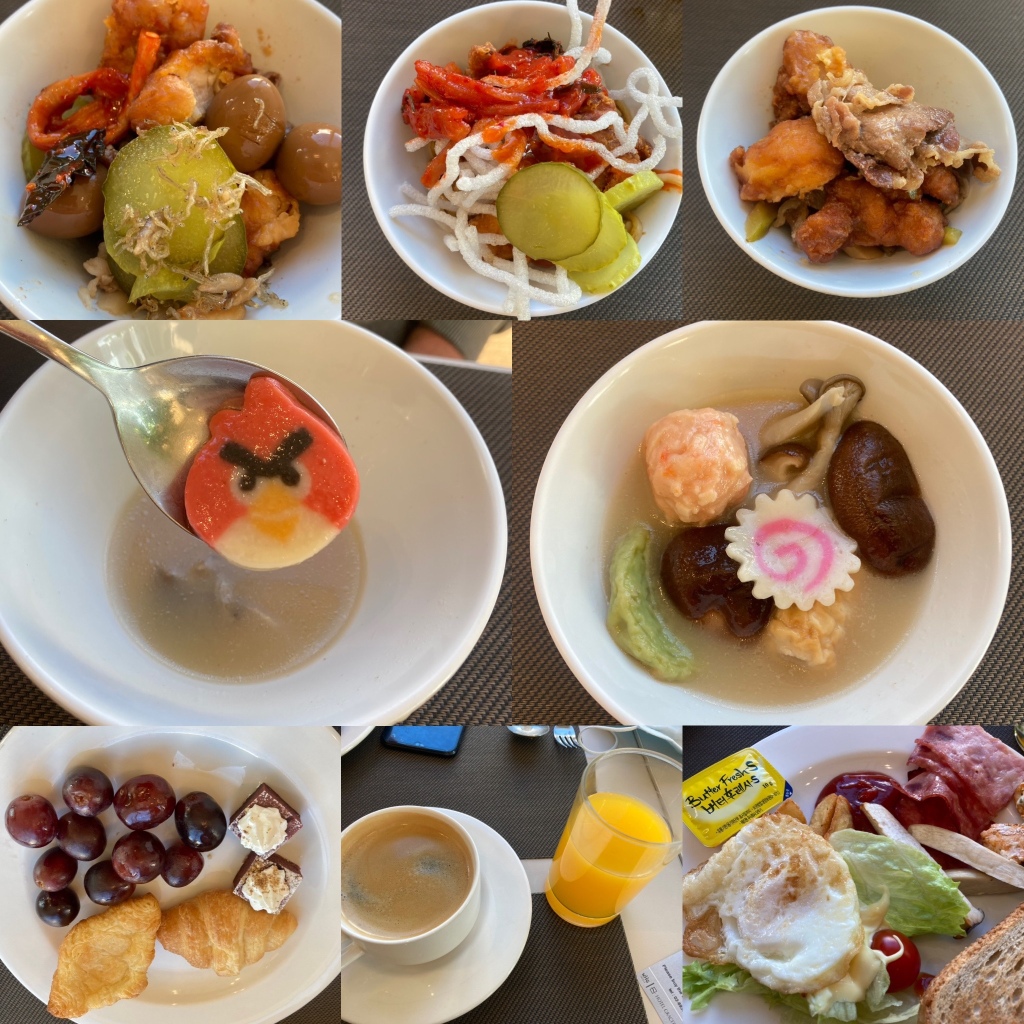
Well fuelled for a day’s sightseeing we set off to see what Seoul has to offer on a Monday (the majority of tourist attractions open Tuesday to Sunday).
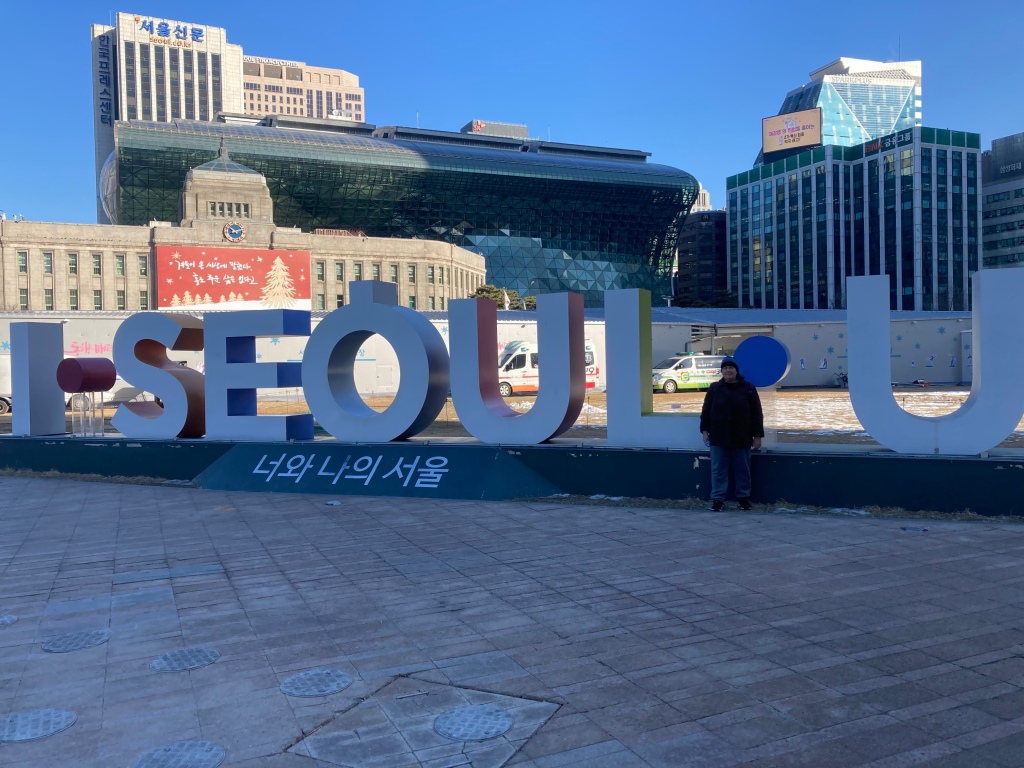
Seoul City Hall
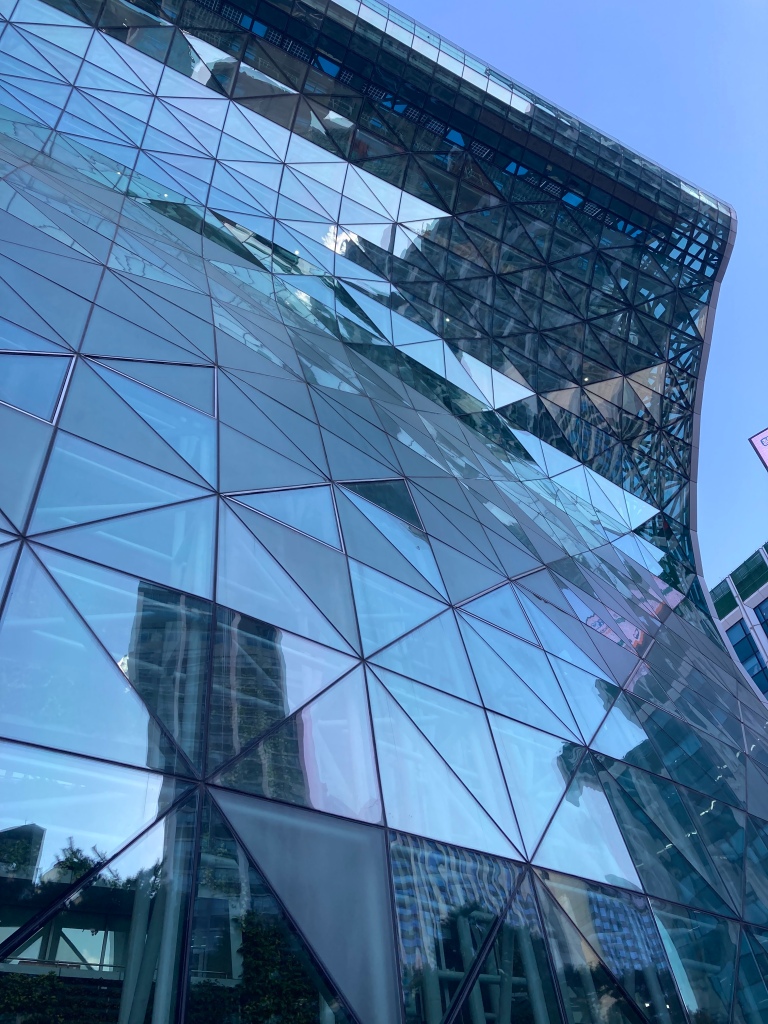
First stop, Seoul City Hall. The glass and steel wave of City Hall crests over the original 1920s building (which is now a library).
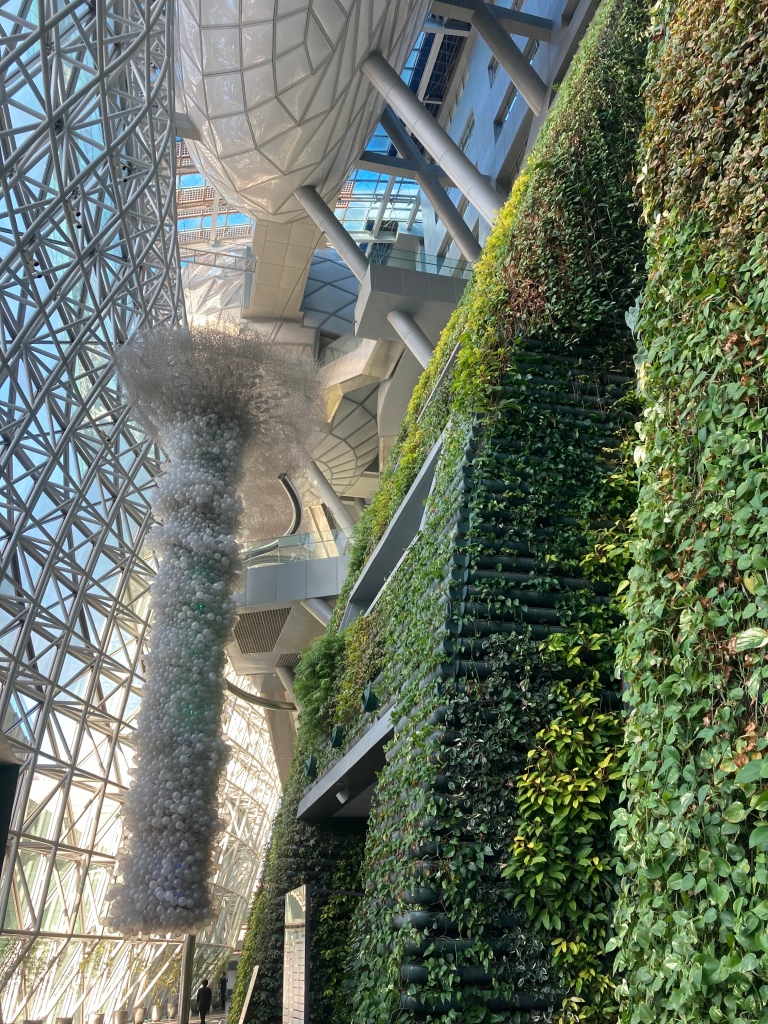
Inside, the Green Wall, a vertical garden scales the building’s interior right up to the 7th floor. Looming down from the roof is ‘Metaseosa Seobeol’, an art installation of white balloons which, and I quote, because I couldn’t come up with this stuff, ‘interprets the capital’s 2000-year turbulent history through a play of light and form to symbolise hope and myth.’ OK, so not a phallic balloon sculpture then…
Cheong-gye-cheon
Just up the road from City Hall is Cheong-gye-cheon, a stream lined with walkways. It boasts 22 bridges and 12 fountains. I can vouch for the bridges, but all the fountains are empty. Presumably to prevent water features becoming ice features?
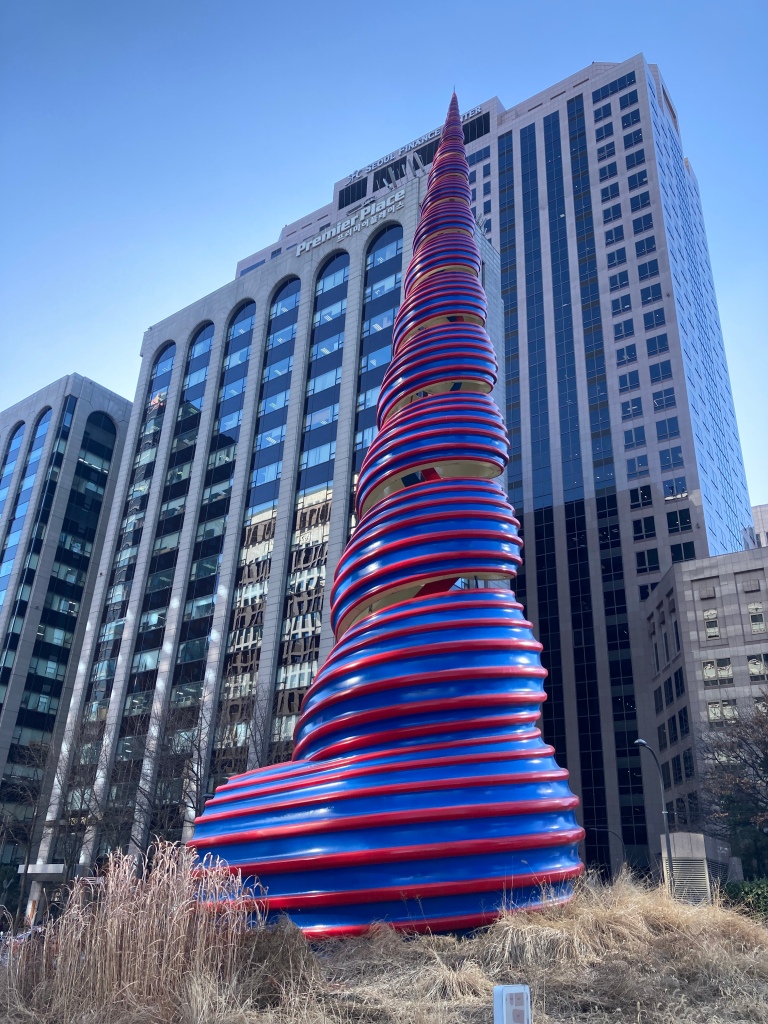
The stream culminates with ‘Spring’; a giant pink and blue shell sculpture.
Gyeongbokgung
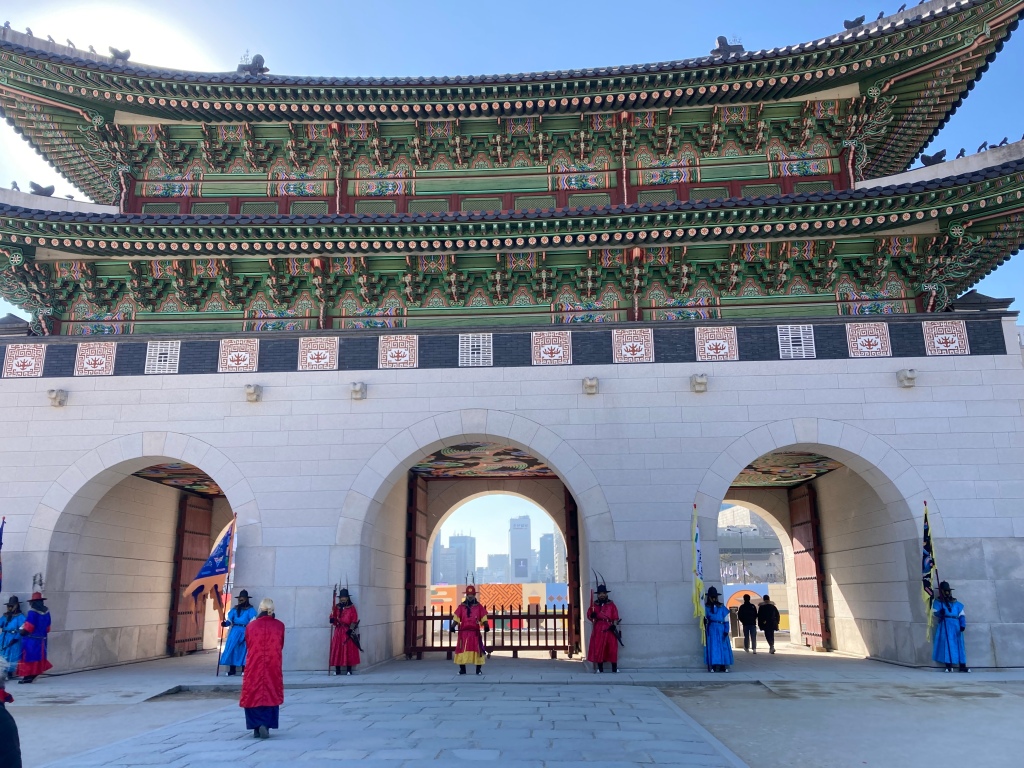
Just past City Hall is Gyeongbokgung; ‘The Palace of Shining Happiness’. This large palace complex has several buildings, courtyards and gardens. Plus a changing of the guard with some impressive costumes on display.

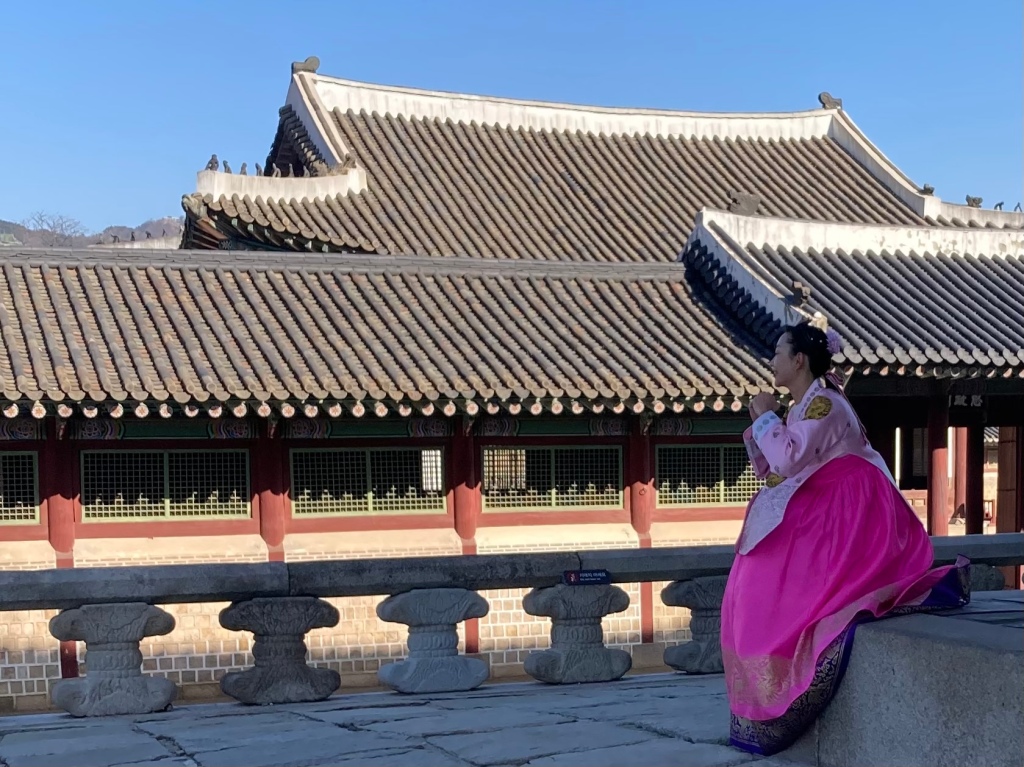
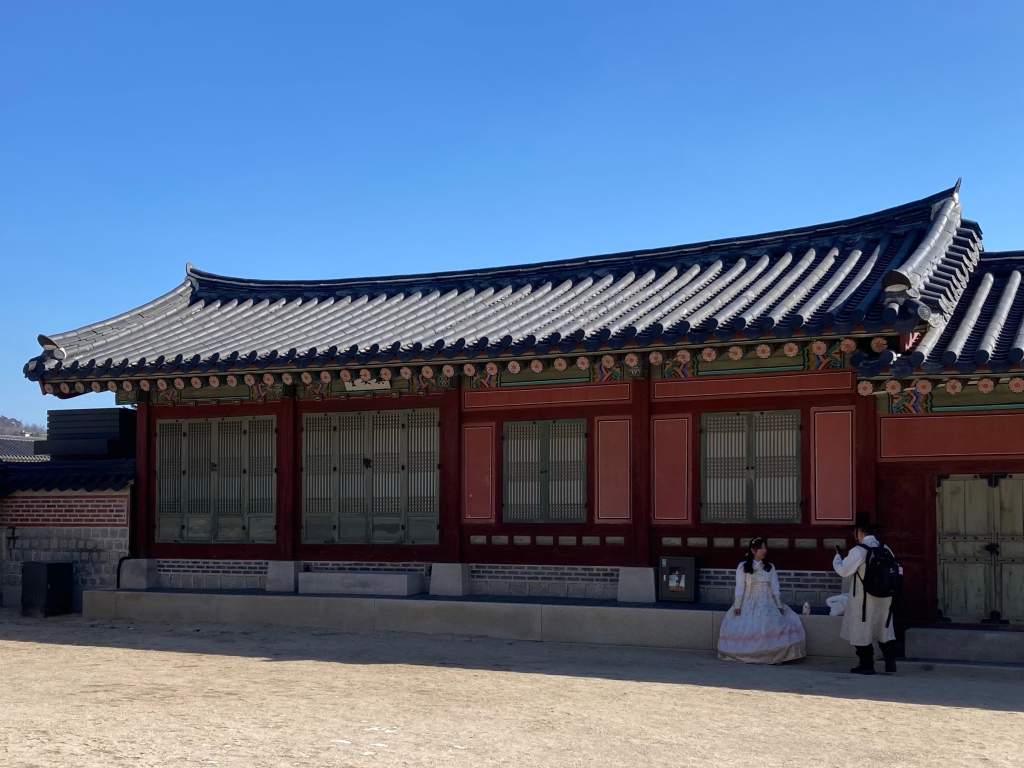
In fact, costumes are extremely popular at Gyongbokgung. Many visitors have come dressed up in traditional costume to take selfies of themselves draped around parts of the palace. I feel distinctly underdressed in my trackie bottoms.
Gwanghwamun
You enter the complex through Gwanghwamun, the main gate, which is flanked by mythical creatures and scary looking men with formidable moustaches.
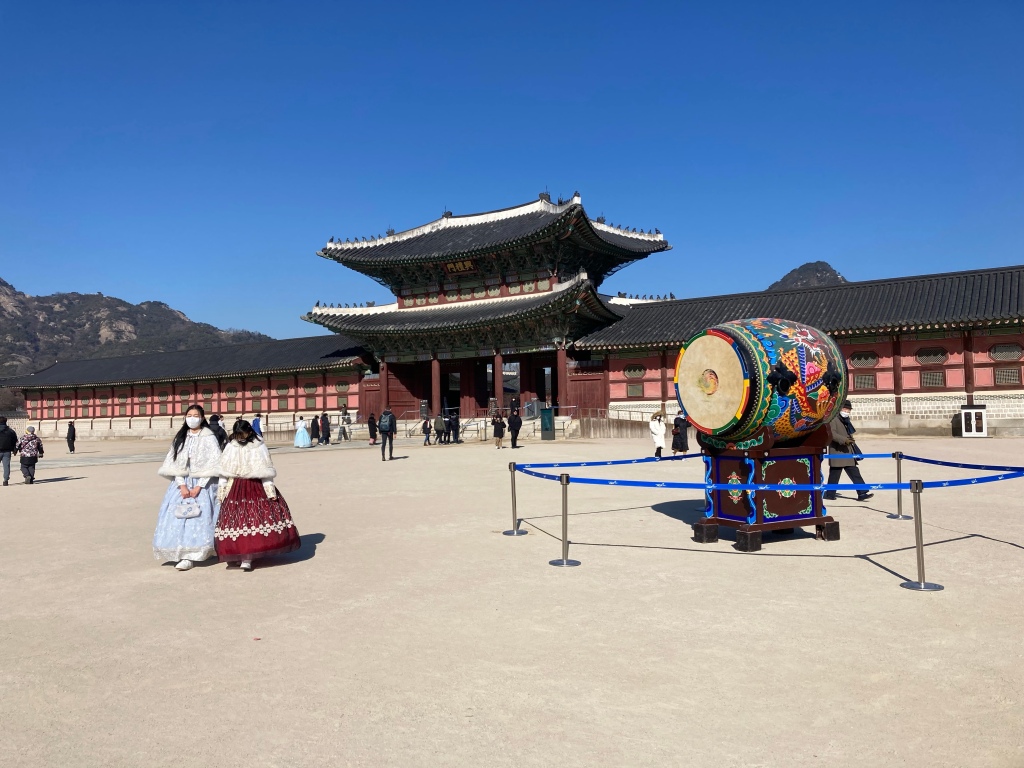
Heungnyemun
Once you have paid the W3000 (around £1.90) entrance fee, you can proceed through the second, equally imposing gate, Heungnyemun.
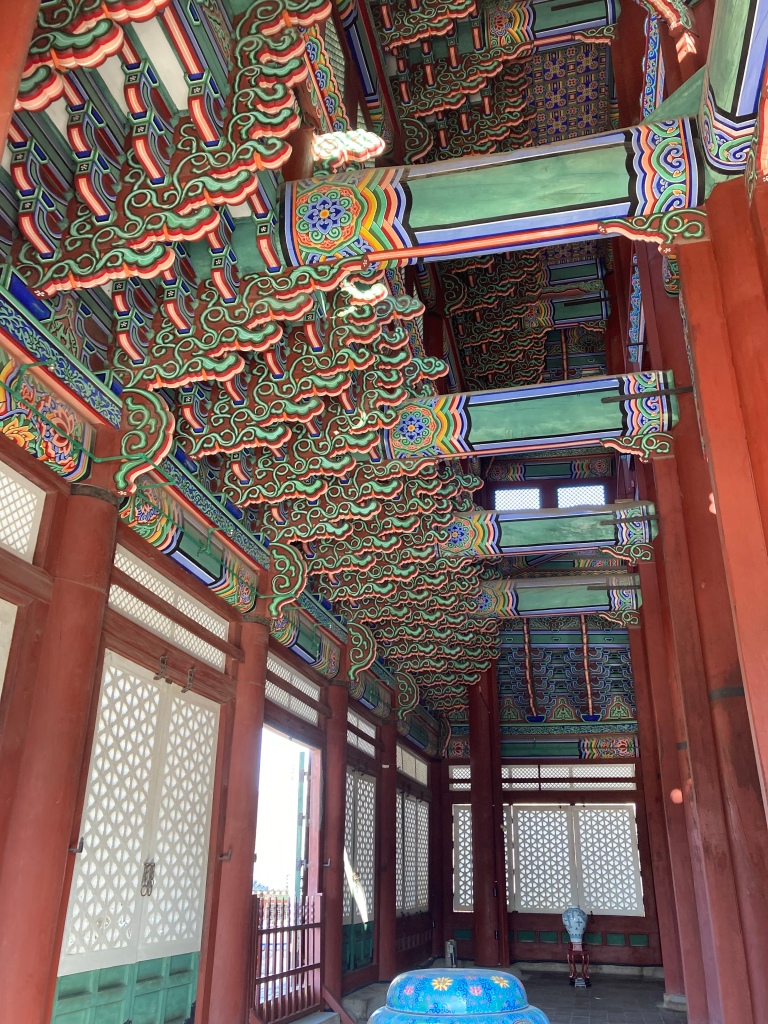
Geunjeongjeon
A walk through a courtyard brings you to the main palace building, Geunjeongjeon. The entrance is cordoned off, but you can peer inside to get an idea of the opulence of the interior.
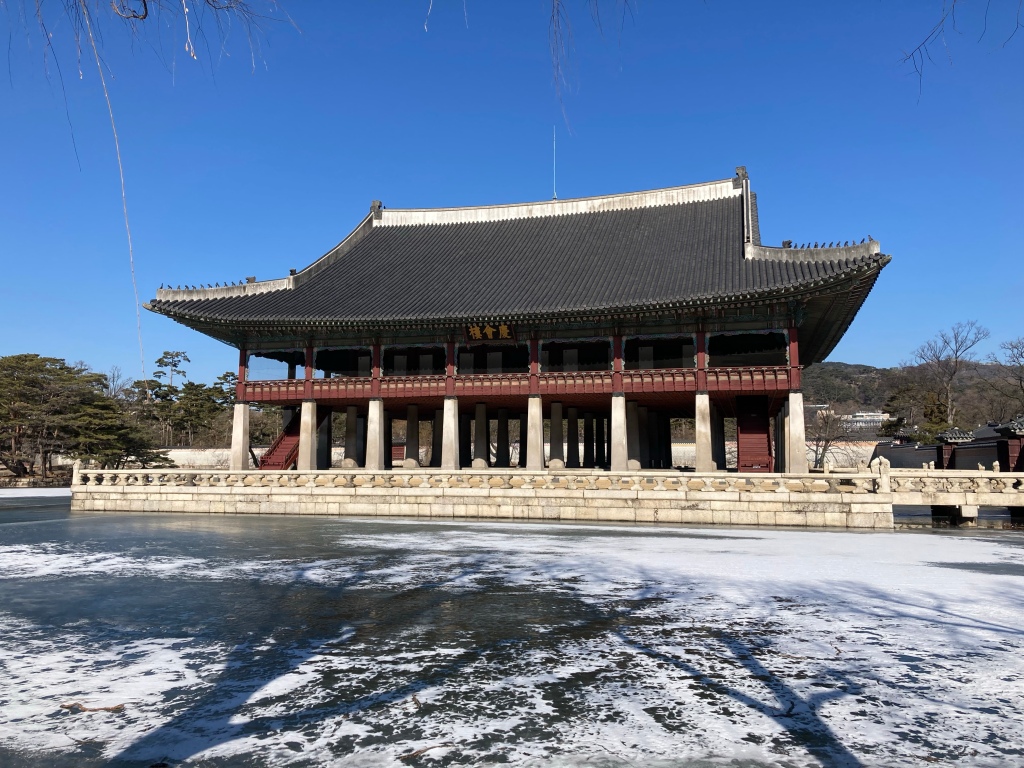
Gyeonghoeru
Past this is Gyeonghoeru, a building on 48 pillars in the middle of a lake (or ice rink).
Gangyeongjeon and Gyotaejeon
The King’s living quarters (Gangyeoungjeon) and the Queen’s chambers (Gyotaejeon) can only be admired from the outside.
Hyangwonjeong
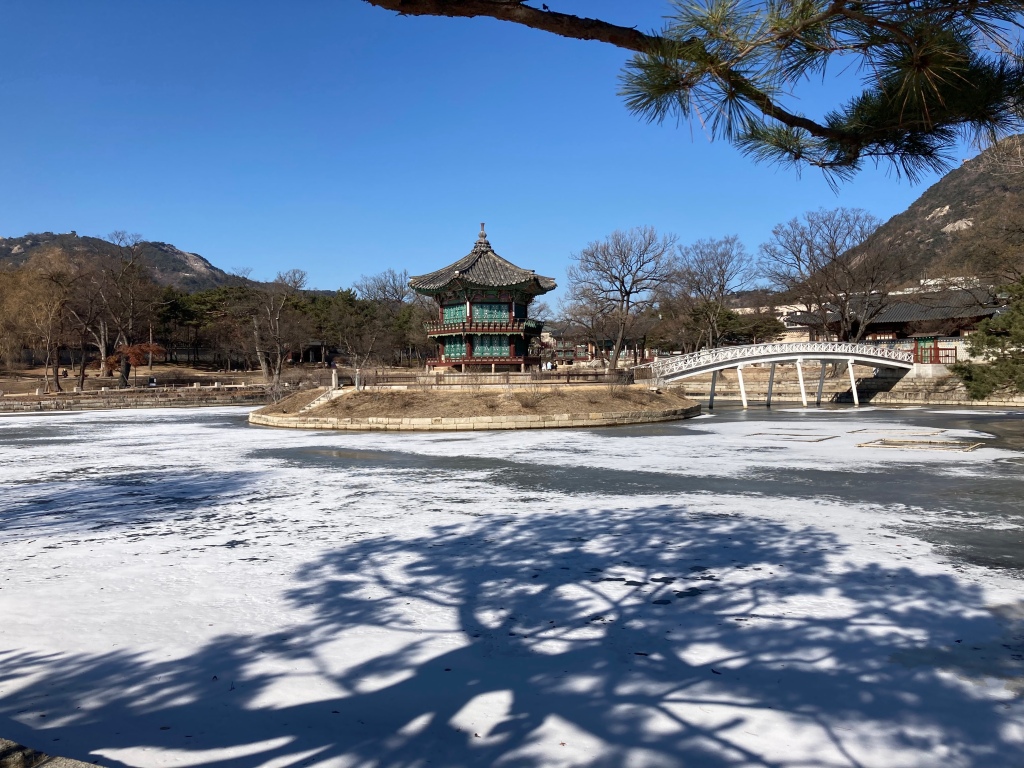
Towards the rear of the palace is Hyangwonjeong, a pavilion on an island.
National Folk Museum of Korea
Adjoining Gyeongbokgung is the National Folk Museum of Korea. Theoretically, entry to this is included with your ticket to the palace. However, when we visited, it was actually only open on Wednesdays and Saturdays, so we had to make do with a wander around the grounds. (Note: It is now open daily).
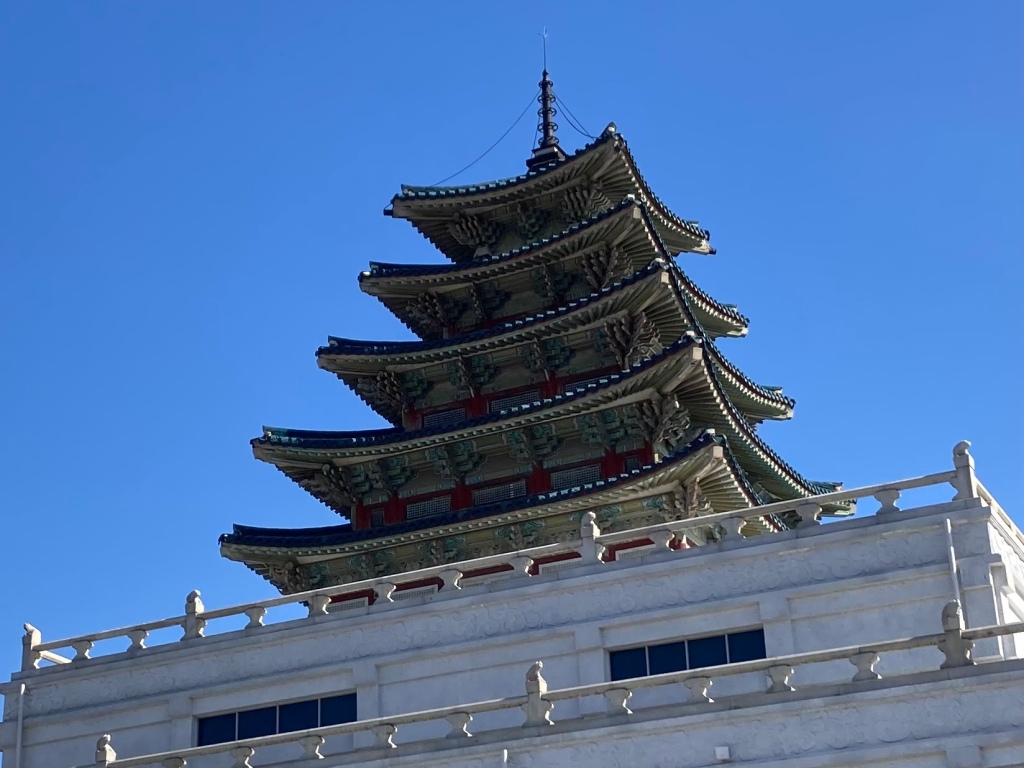
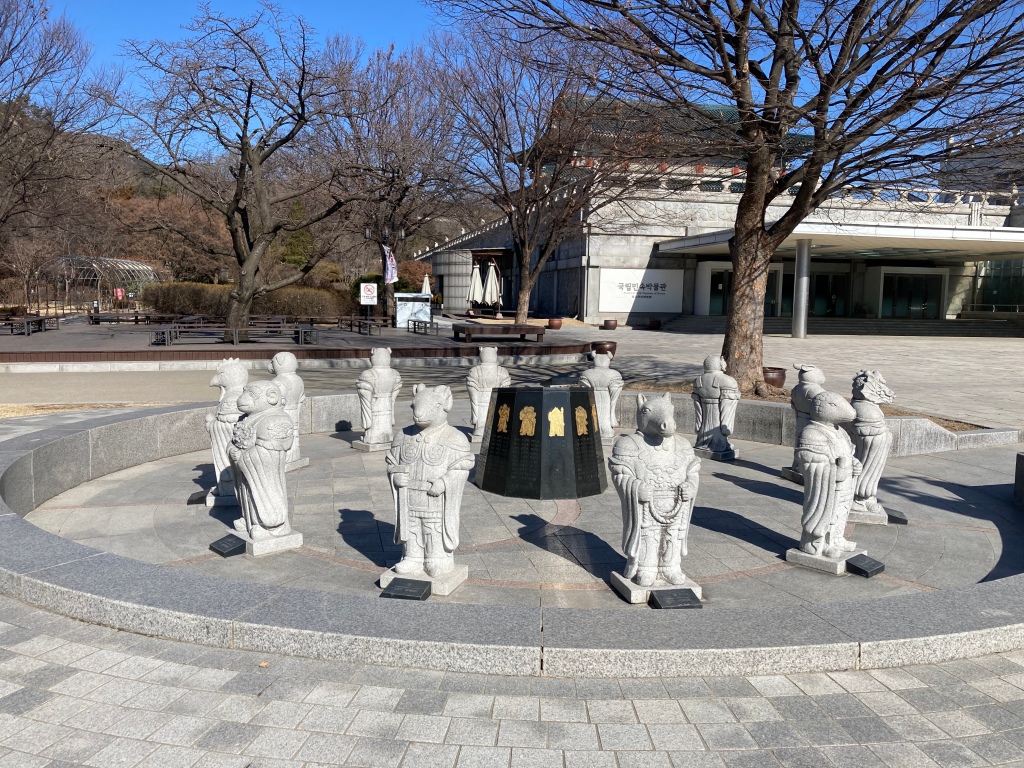
The exhibition covers the history of the Korean people. Even if it’s closed, the grounds are worth a walk through as there are some interesting exhibits.
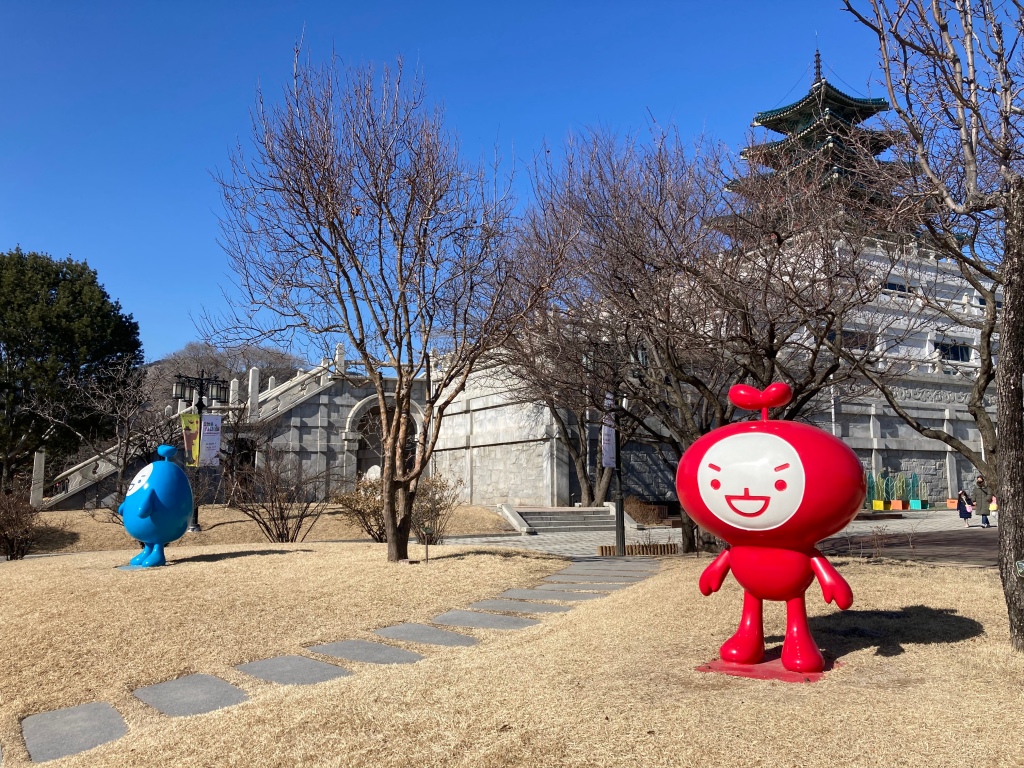
There is also a Children’s Museum flanked by the Korean Equivalent of the Teletubbies.
After a morning of historic buildings, the afternoon is dedicated to far more modern structures. We take the Subway from the nearby station of Gwanghwamun to visit the Olympic Park.
Seoul Olympic Park
Seoul Olympic Park is a large park on the south eastern edge of Seoul, built for the 1988 Olympics. There are several stadiums situated in a park, surrounded by over 200 sculptures. There’s also an art gallery, two museums and the remains of the 3rd Century Mongchon Fortress.
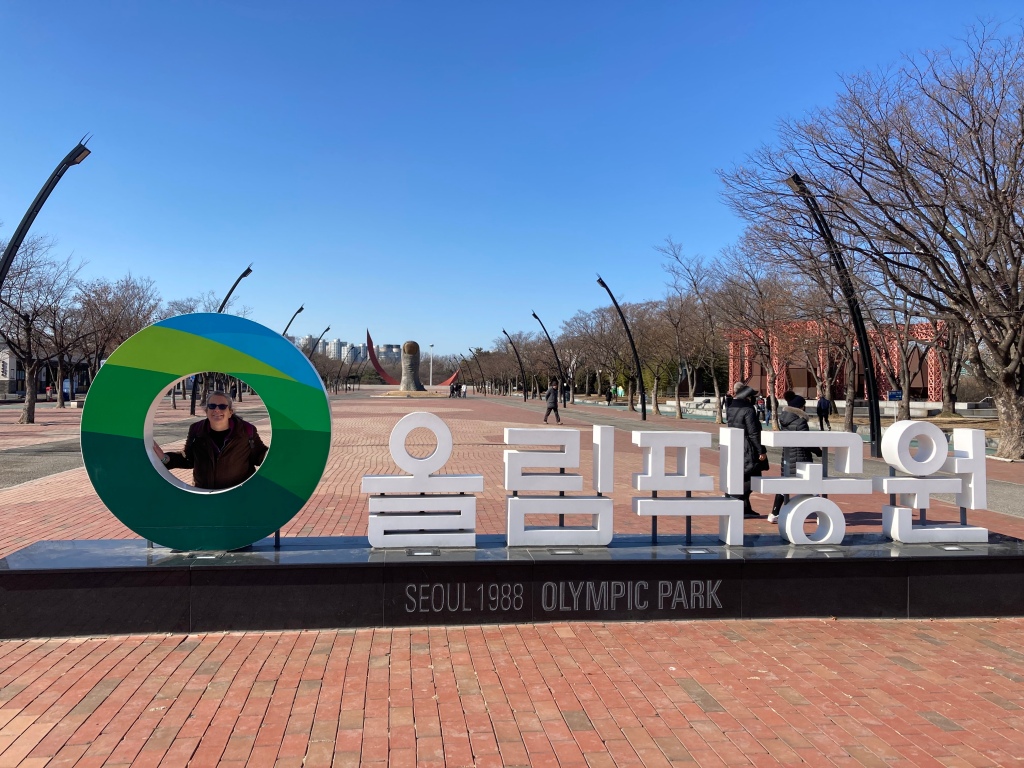
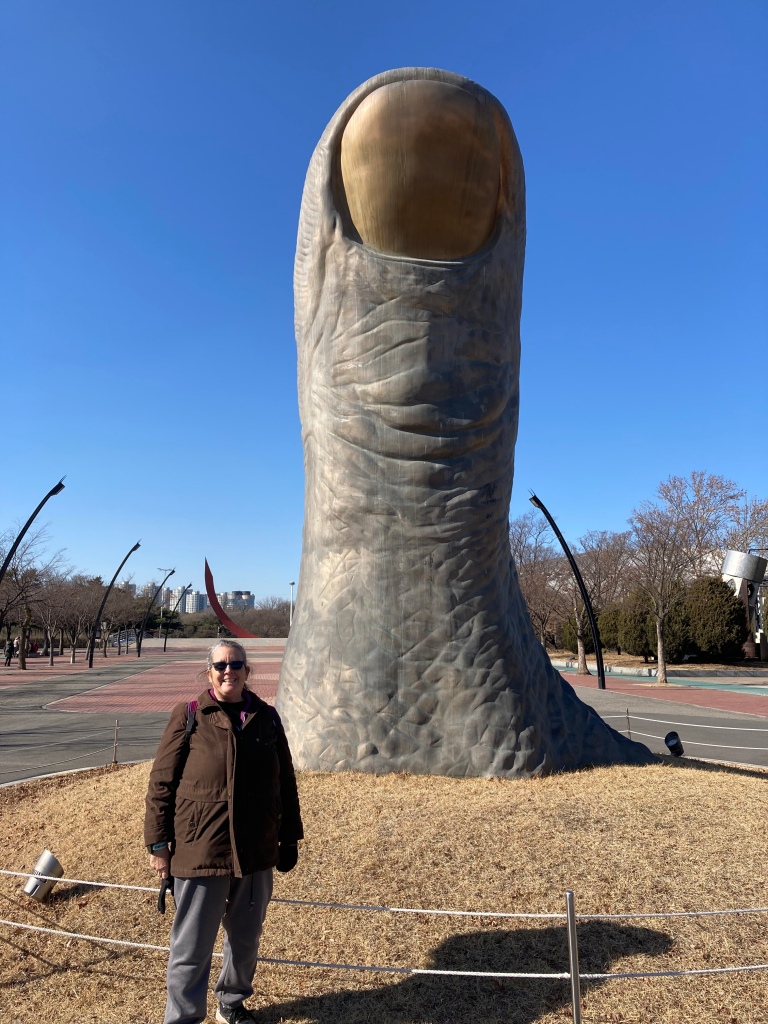
As it’s Monday, the museums are closed, so we walk the length of the park (there are subway stations at both ends) to enjoy the plethora of sculptures. Created by sculptors from around the world, some are better than others. Each piece has an illuminating/baffling interpretation of their work by the artist in question. I’m no art expert, but a lot of it sounds like b****** to me.
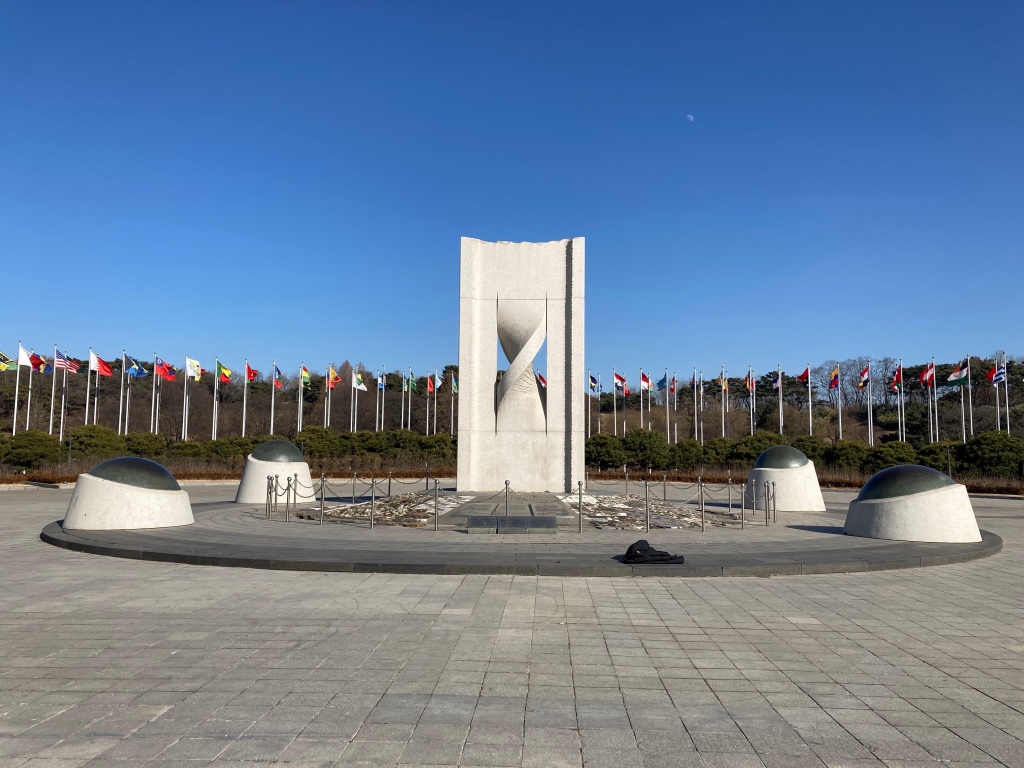
We finish at the Plaza of Peace, where the flags of the Olympic Nations all flutter away in the breeze.
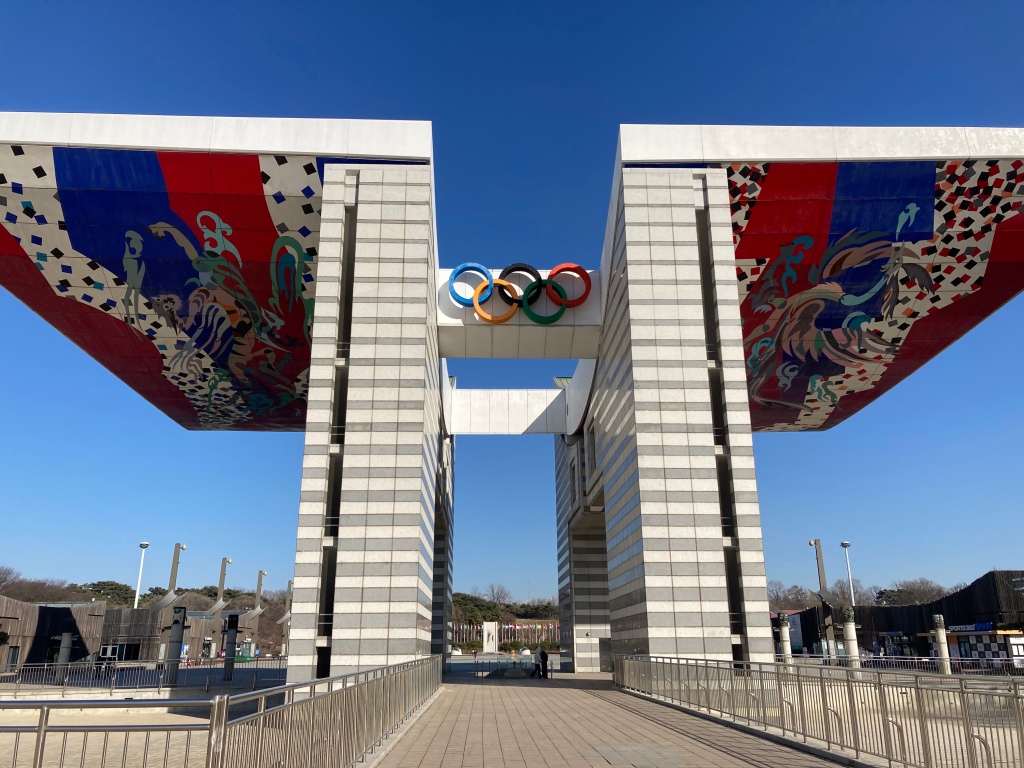
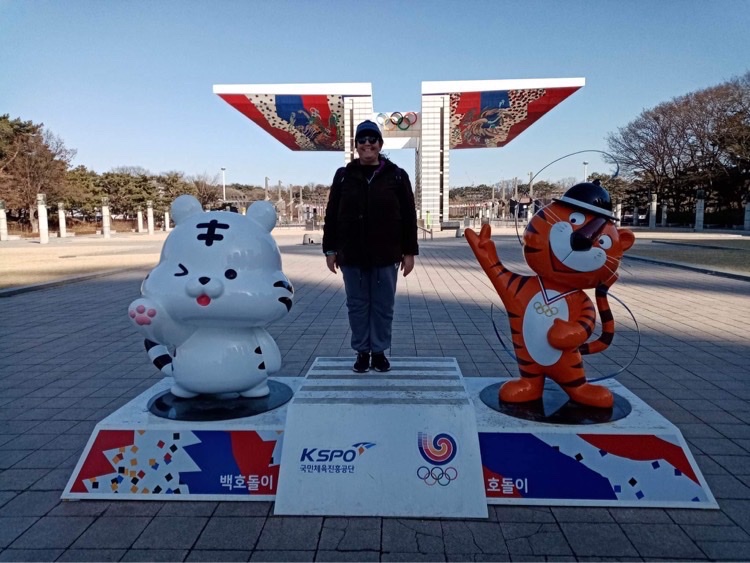
Beyond this is the Peace Gate, a winged arch adorned with a mural and the Olympic Rings.
There’s even an opportunity to mount an Olympic medal rostrum (gold, of course!)
K-Star Road
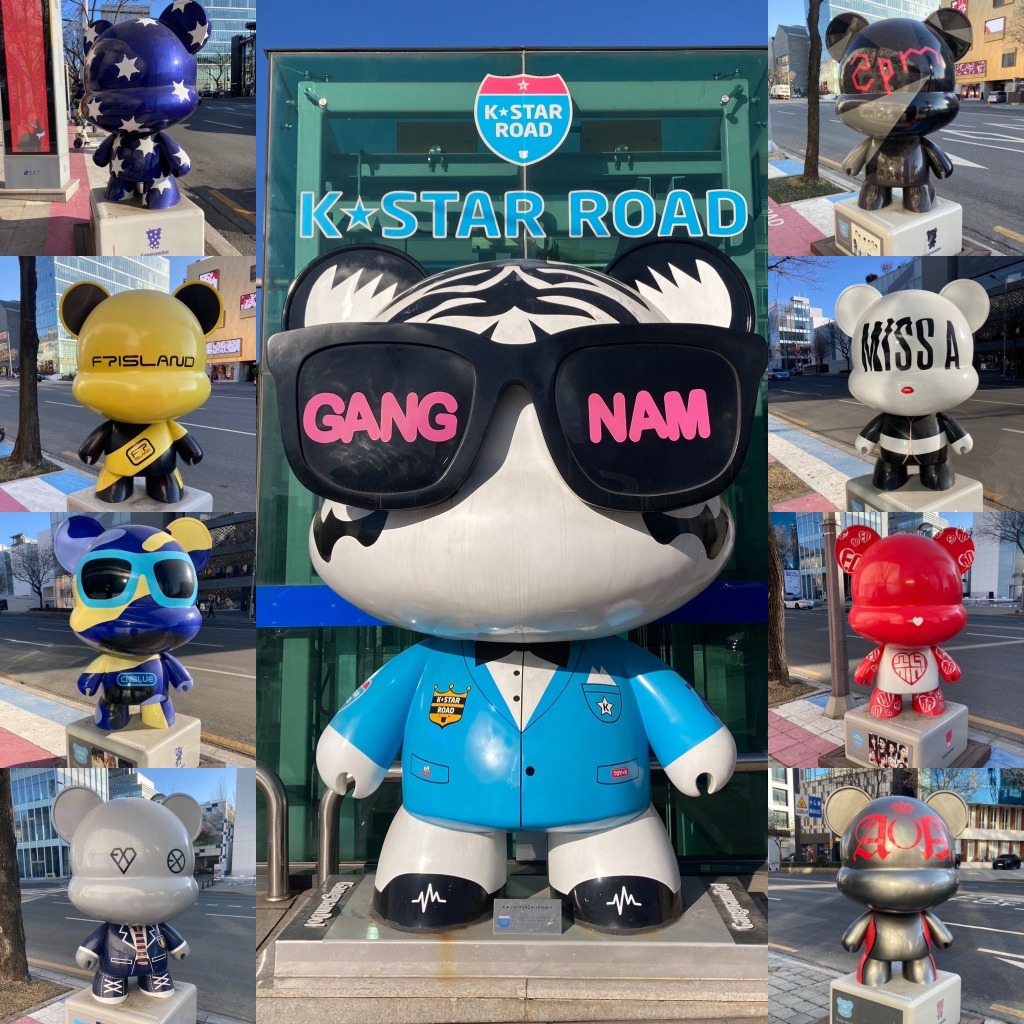
Our final destination of the day is a few miles to the west of the Olympic Park. Alight from the subjway at Apgujeong Rodeo and you find yourself on K-Star Road. For a few hundred metres along Soellung-ro, the pavement is lined with fibreglass bears.
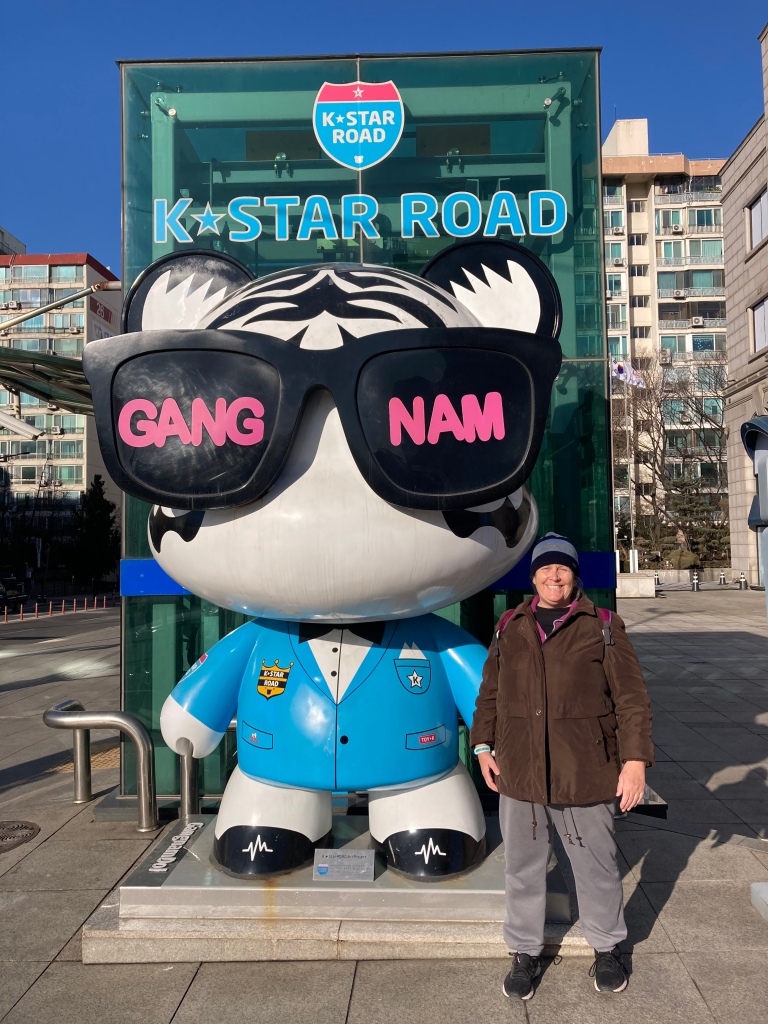
The first is a very large bear sporting Gangnam shades. There are a dozen smaller bears dedicated to various K-Pop artists I’ve never heard of.
And that concludes our first full day in Seoul. Fitting for a visit to an Olympic Stadium, we have walked a half marathon and are shattered, so it’s back to the hotel for an early night before tomorrow’s trip to the DMZ.
South Korea Day 3
DMZ Tour
Today, we are going on a trip to the Demilitarised Zone (DMZ); a 4 km wide buffer zone stretching for 2 km either either side of the border between South and North Korea. It’s an early start, we have to be at City Hall by 7 am. We’ve already timed the walk to the meeting point – it takes 7 minutes. The old man wants to leave at 6.30 am. That’s 23 minutes contingency. I’m not sure what he thinks can go wrong in 7 minutes? Maybe all 4 of the hotel lifts are out of order? Or the pedestrian crossing gets stuck on red forever? Outside it’s minus 5 degrees. There appears to be no contingency for arriving 23 minutes early and catching hypothermia while we wait for the bus!
Thankfully, the bus is punctual and we set off with our very informative guide who tells us lots about the area we are visiting ( which is the the most fortified border in the world) and the history of the conflict.
Imjingak Pavilion
We reach Imjingak Pavilion around 8 am. Here, we must leave our bus and continue on a government shuttle bus, allocated upon arrival of a first-come-first-served basis. These run at intervals throughout the day, starting at 9.20 am. There are already several tour buses in the car park, but our guide leaps into action, sprints to the tour desk and scores us a 9.20 slot.
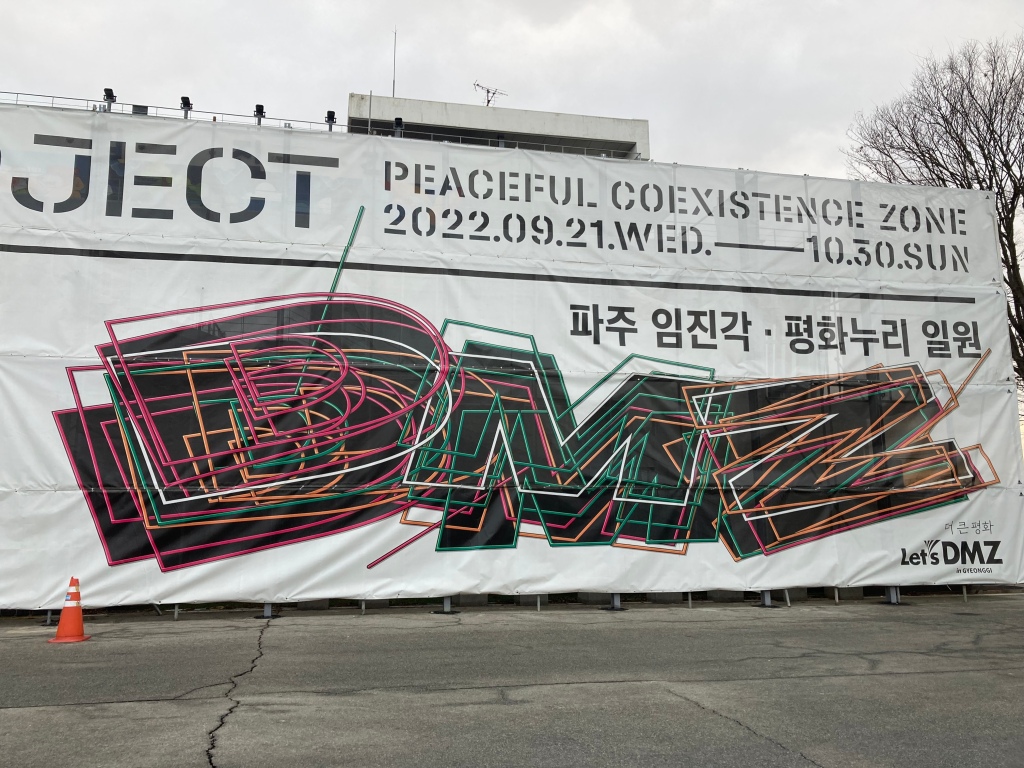
While we wait, we have a short guided tour followed by some free time to obtain breakfast in one of the snack bars. Imjingak Pavilion is kind of weird mix between a motorway service station, a third rate theme park and a government propaganda tool. Inside is a row of cafes, while outside are a range of, for want of a better word, attractions.
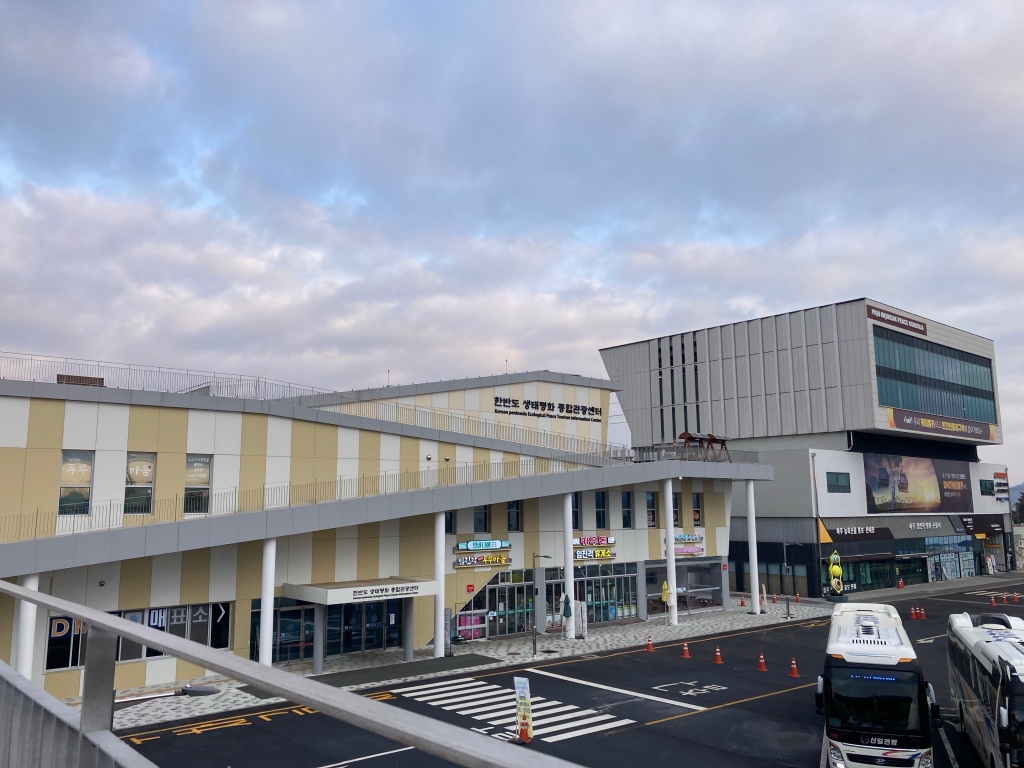
Peace Bell
There is a Peace Bell made “with hopes of peace for humankind and national reunification”. I think that’ll take more than a bell…

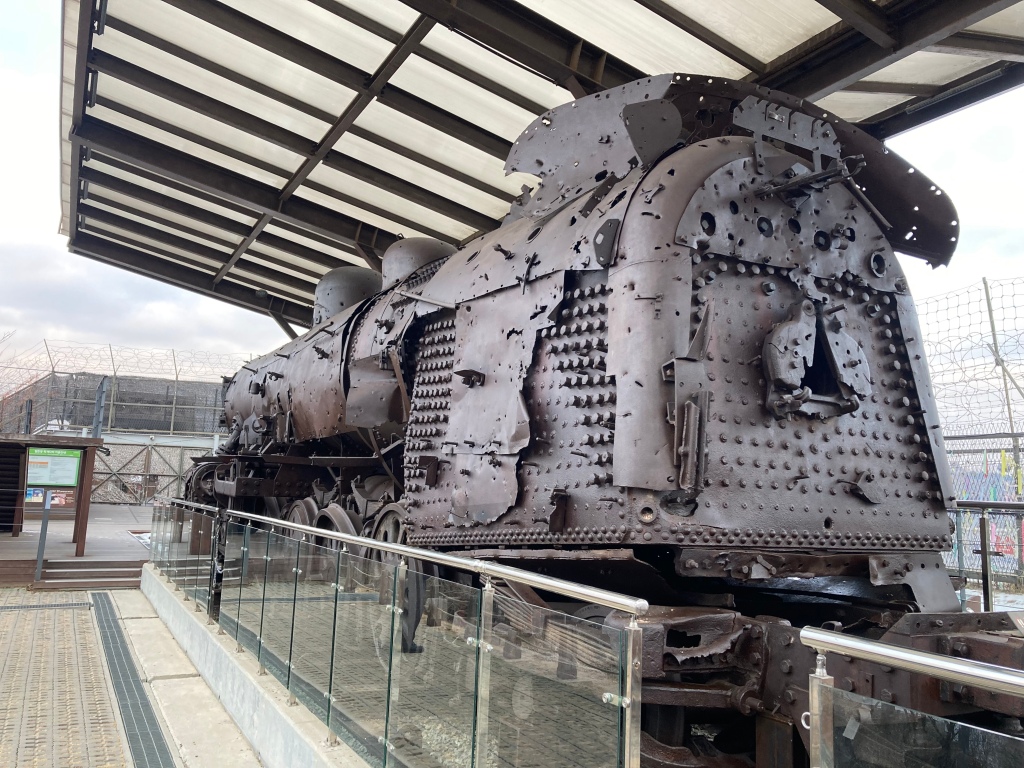
Steam Locomotive
A Steam Locomotive bombed during the Korean War sits on the remains of a railway which used to service trains travelling to/from the north.
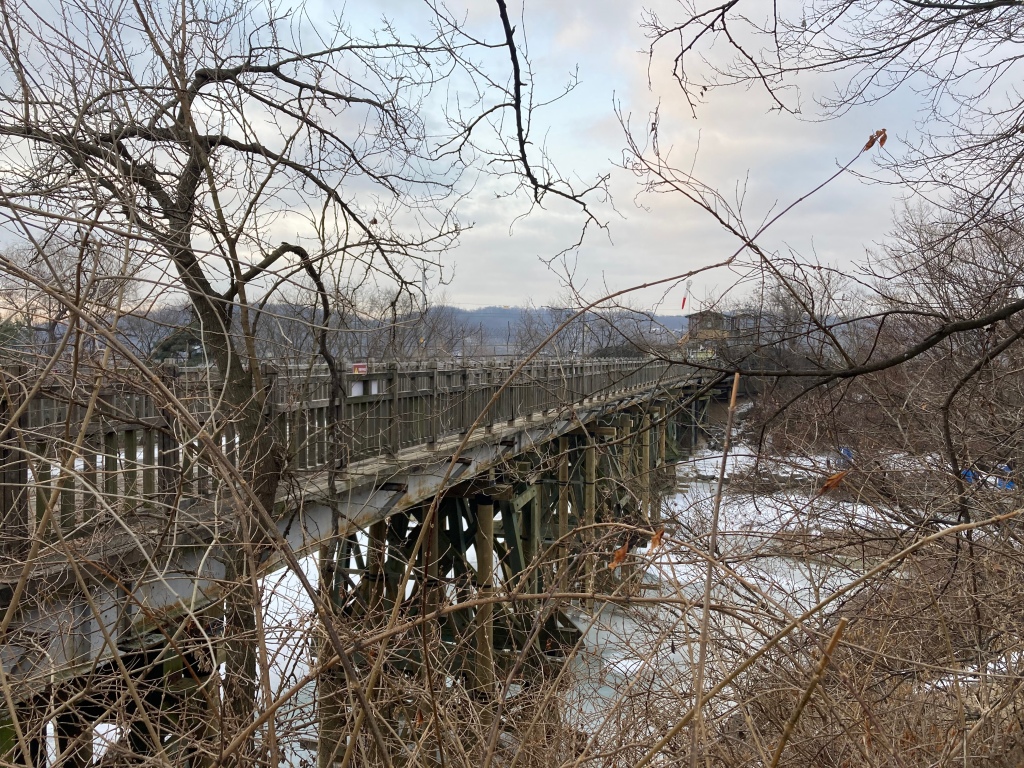
Freedom Bridge
Built in 1953, the Freedom Bridge was used by over 12,000 South Koreans returning home from the North during an exchange of POWs. No mention is made of any North Koreans heading in the opposite direction. In fact, over 70,000 North Koreans were returned during the swap, but via a different bridge; dubbed the Bridge of no Return because each prisoner was given the choice to remain in the south instead of returning to their families in the north.
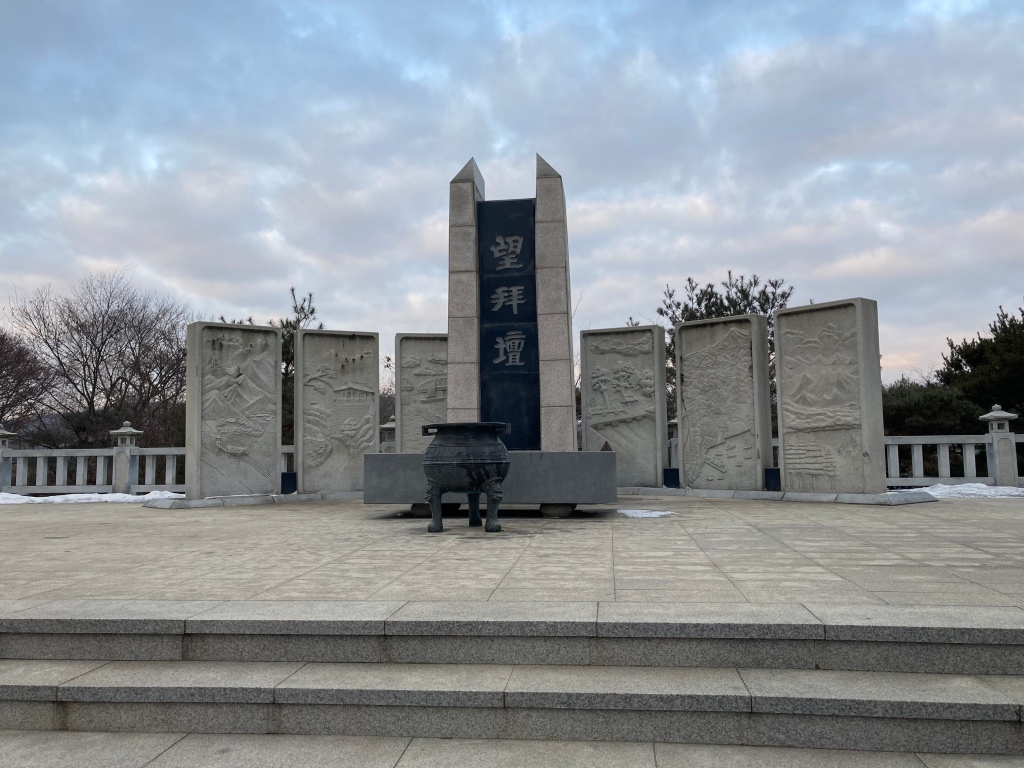
Mangbaedan Altar
The Mangbaedan Altar is built as a place built so that refugees from North Korea can be as close to their homeland as possible when they miss their families.
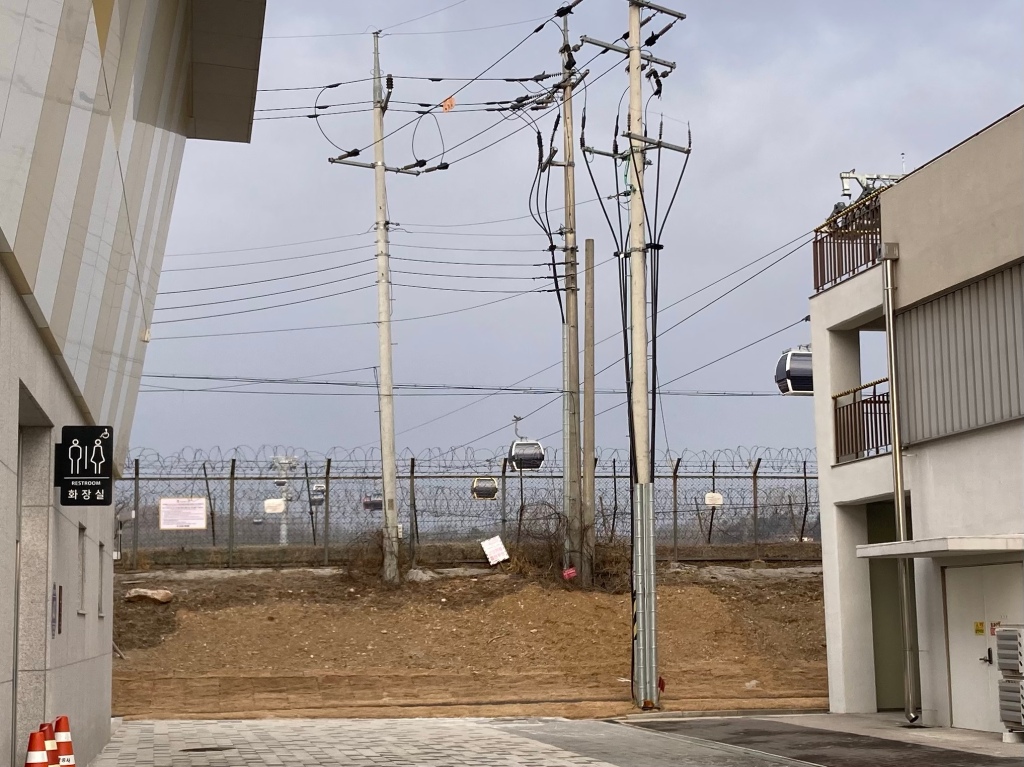
Imjingak Peace Gondola
A cable car, named the Imjingak Peace Gondola, passes across the river over an area too dangerous to cross by other means because the Americans dropped two million land mines across the DMZ.
Pyeonghwa Land
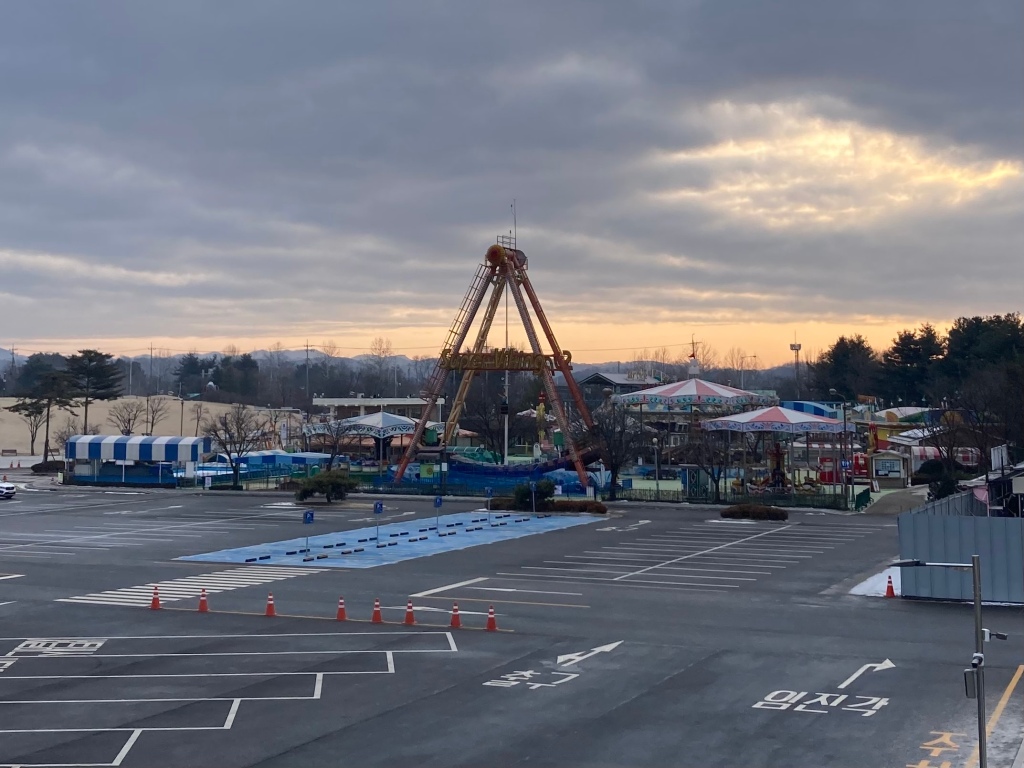
Pyeonghwa Land is a mini fairground in a car park for no discernible reason. It’s not open.
Statue of Peace
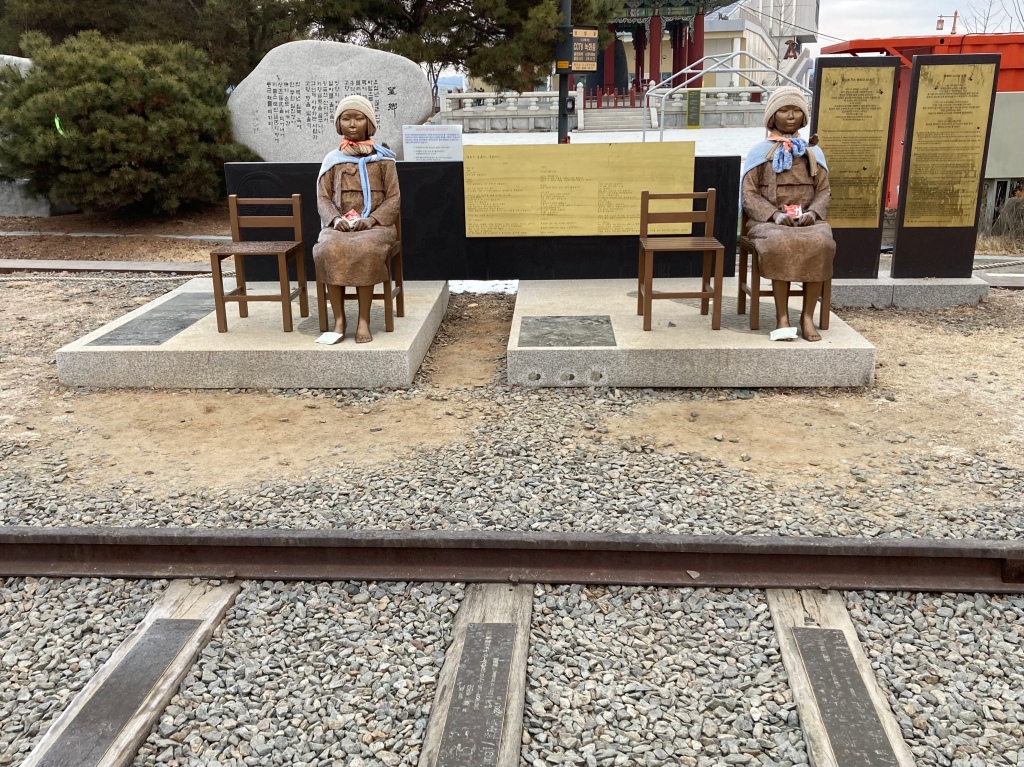
Nothing to do with the Korean War, the Statue of Peace symbolises the abduction and rape of Korean women during the Japanese occupation of Korea.
DMZ Theatre
From here, we drive to Third Infiltration Tunnel, a tunnel allegedly dug under the DMZ by the North Koreans, who planned to continue digging for a further 51 kilometres to launch a surprise attack on Seoul from below.
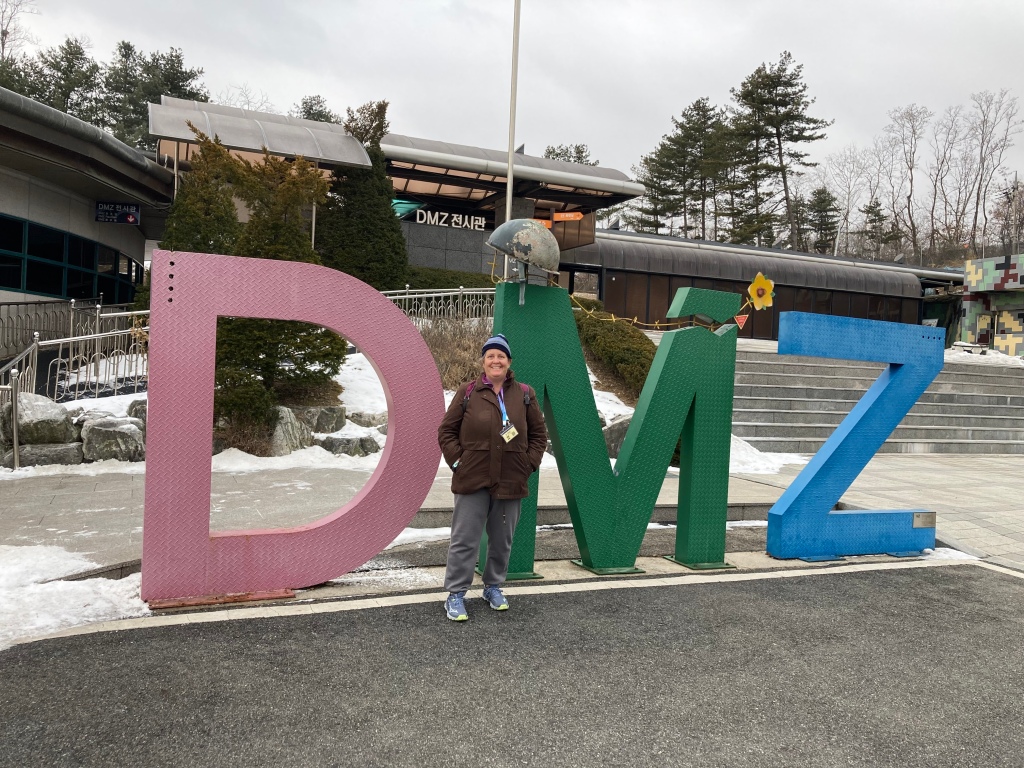
Before entering, we must watch a short propaganda video at the DMZ Theatre. The video provides a South Korean perspective on the Korean War, how the DMZ came about and the current situation. It also gives some background to the infiltration tunnels that North Korea dug under the DMZ.

The Third Infiltration Tunnel
The Third Infiltration Tunnel was discovered in 1978. Upon discovery, the South Koreans then built a tunnel to reach the infiltration tunnel in order to make it accessible to tourists.
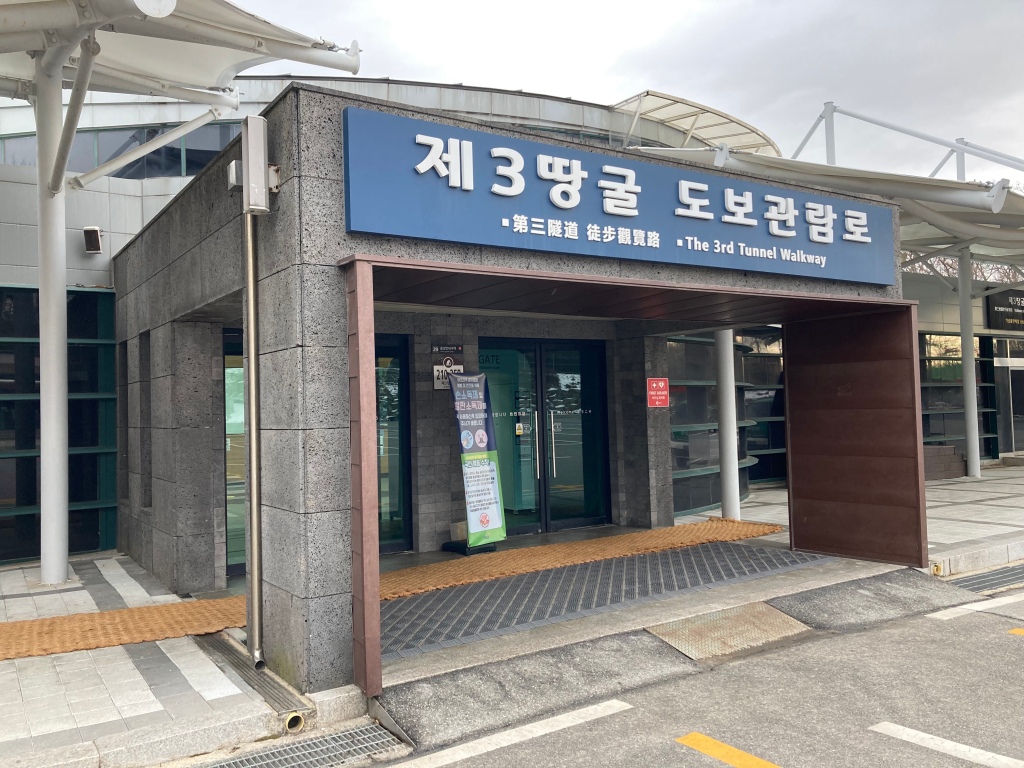
Before entering, you must deposit all your belongings including phones and cameras in a locker and don a hard hat.

The main tunnel, which is 73 metres underground, is reached by a steep access tunnel. I fall behind with an American woman who, after walking around 400 metres down the access tunnel, promptly has an asthma/panic attack and announces that she left her inhaler in her bag.
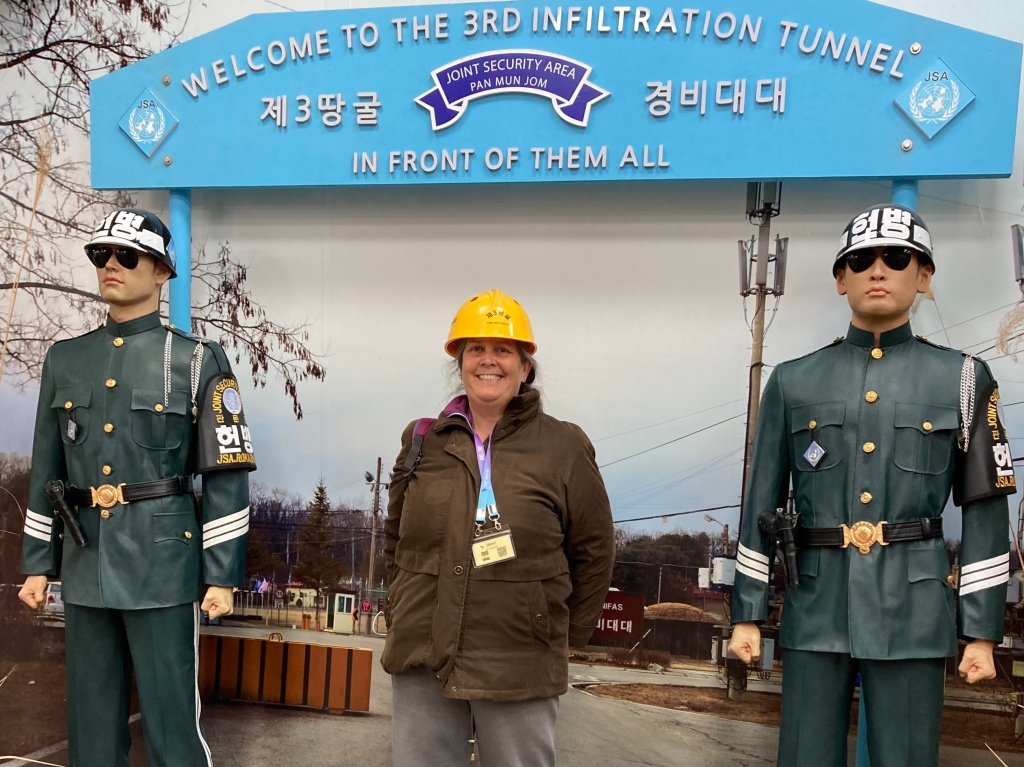
So I stay with her and we resurface without reaching the actual tunnel. Instead, one of the guards takes a photo of me with a hard hat posing with some fake soldiers and I buy some fridge magnets in the gift shop.
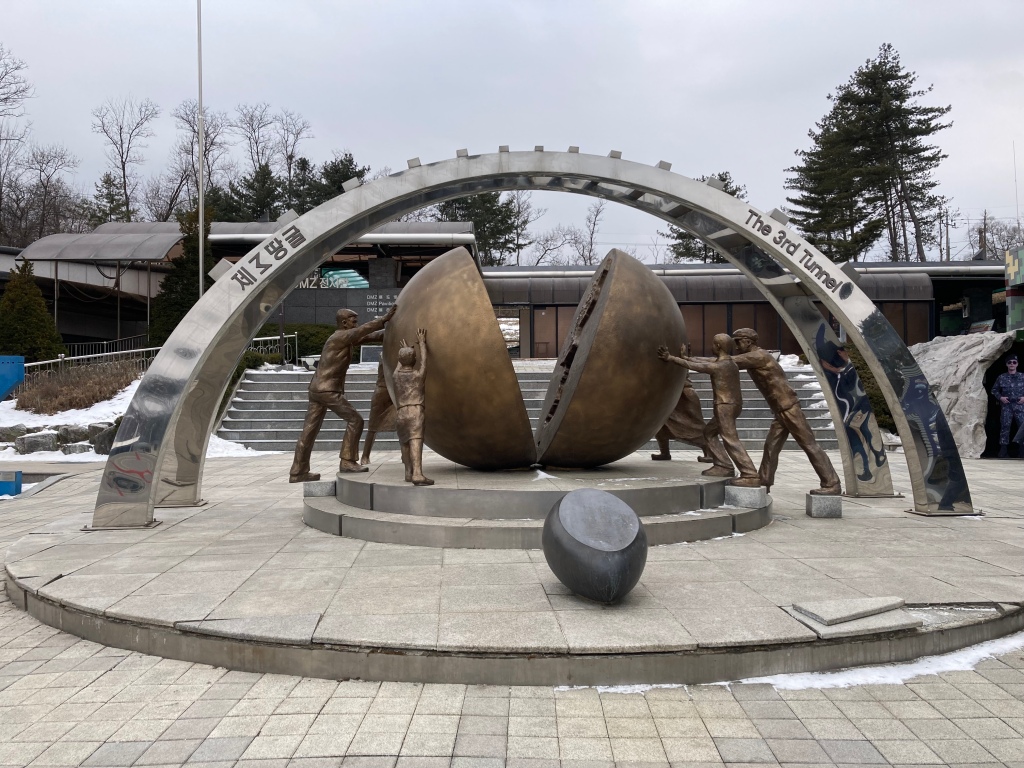
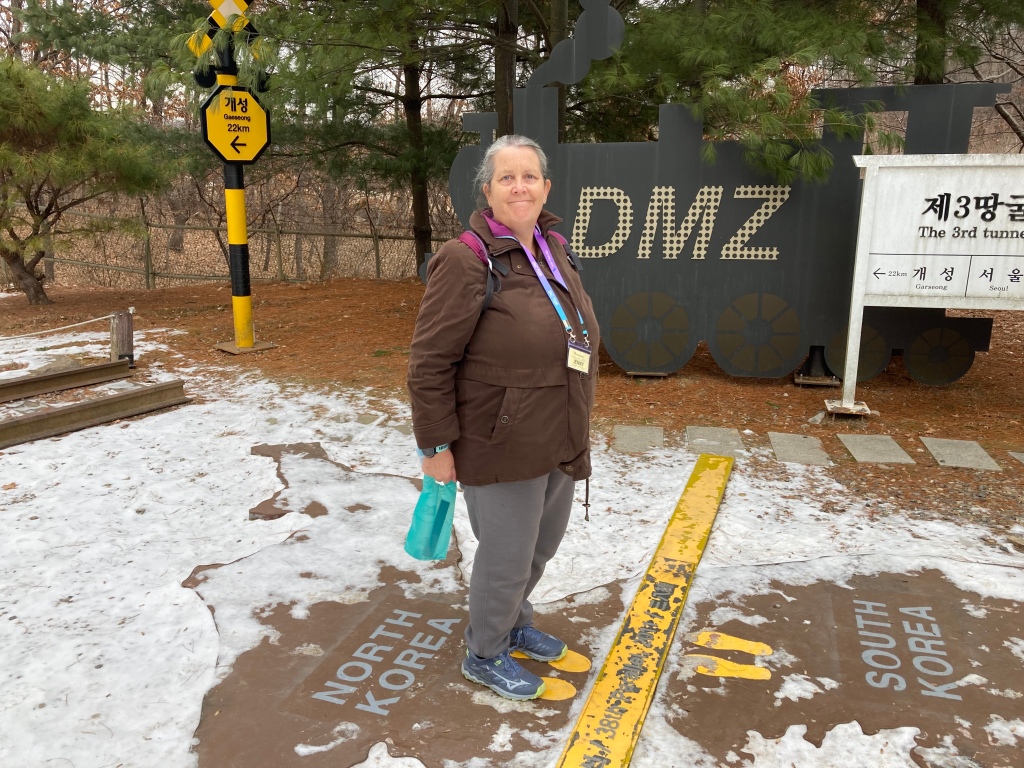
Above ground are more photo ops, which we rush round in order to reach the bus before the predetermined rendezvous time.
Dora Observatory
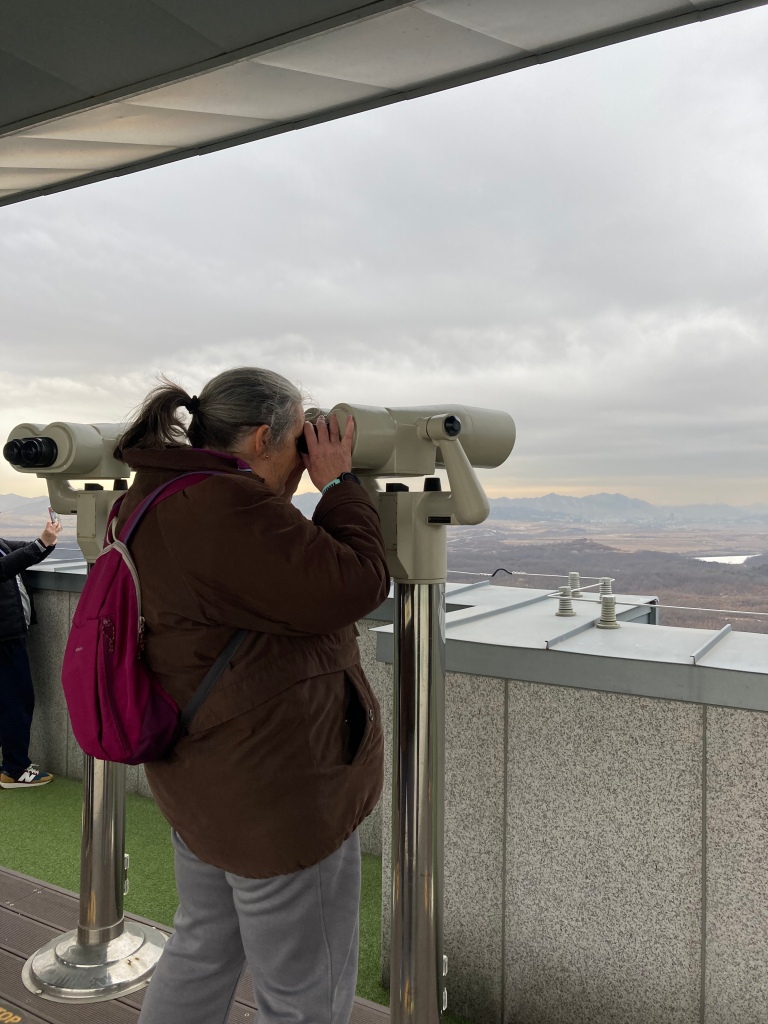
Our next stop is Dora Observatory. Sitting at the top of Dorasan, the Observatory provides an excellent point to look across the border. We take a lift to the third floor, where there is an observation platform lined with binoculars.
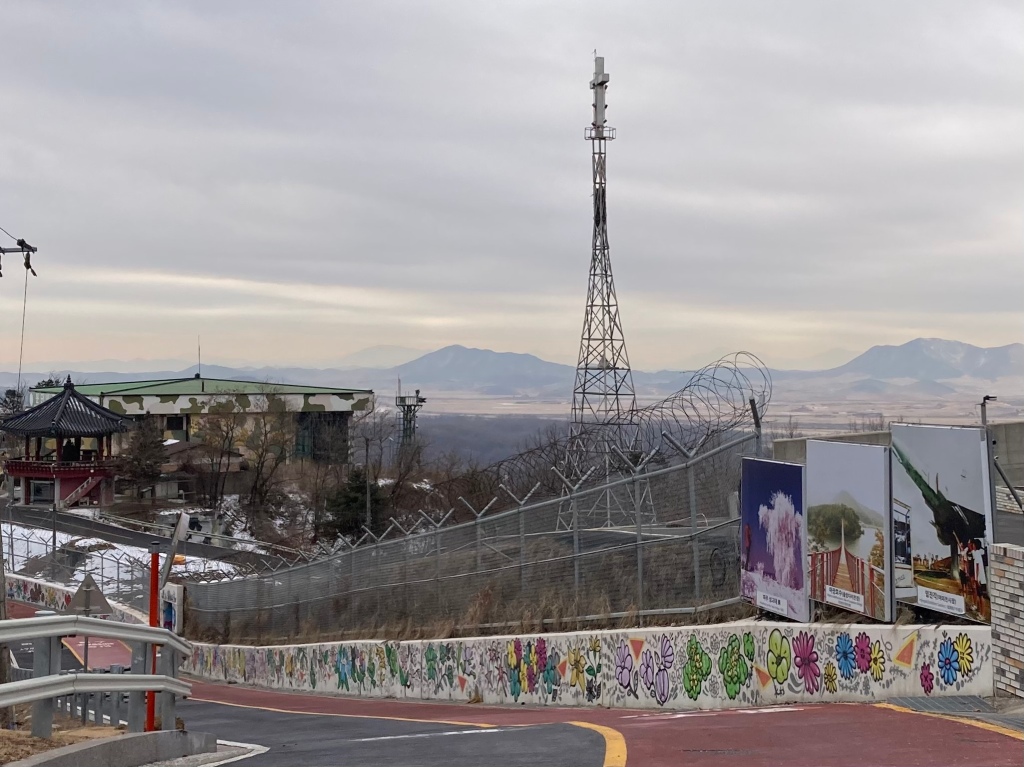
There are fewer binoculars than people and our time here is quite short, so I only get a brief turn on the binoculars before we have to depart once more.
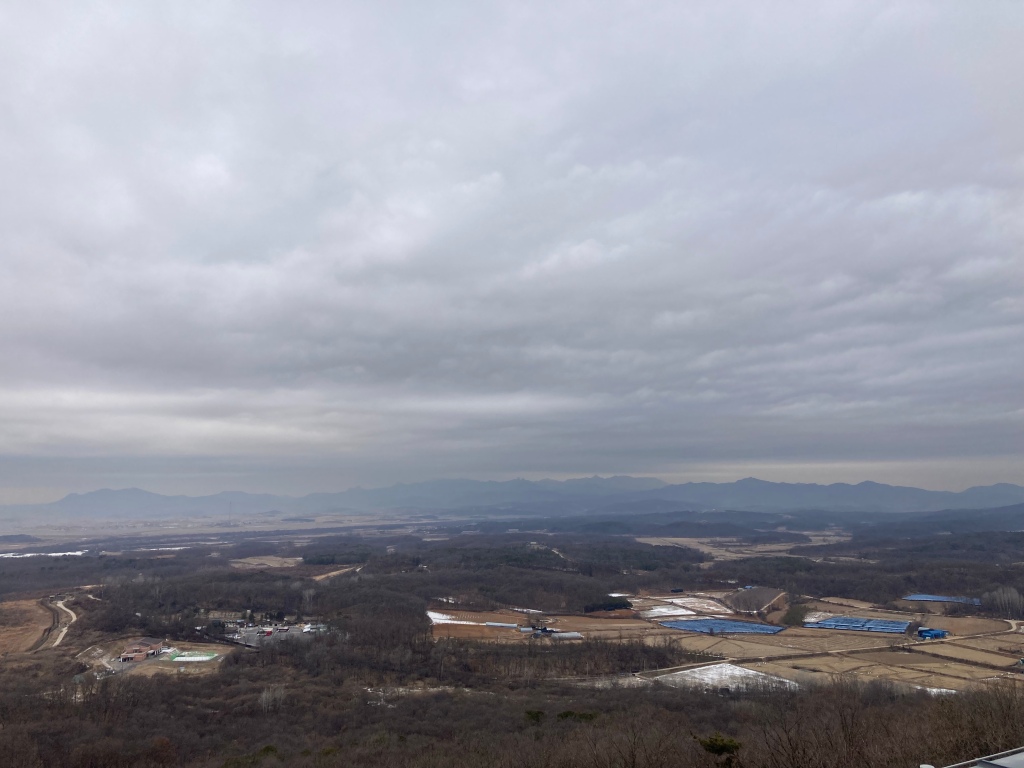
We are told what to look for across the border, but weather conditions aren’t ideal. We can see the North Korean flag flying – at 160 metre high, it’s the 5th largest flagpole in the world. It is situated in the village of Kijong-dong; known as Peace Village to the North Koreans or Propaganda Village in the south, who claim it to be a sham.
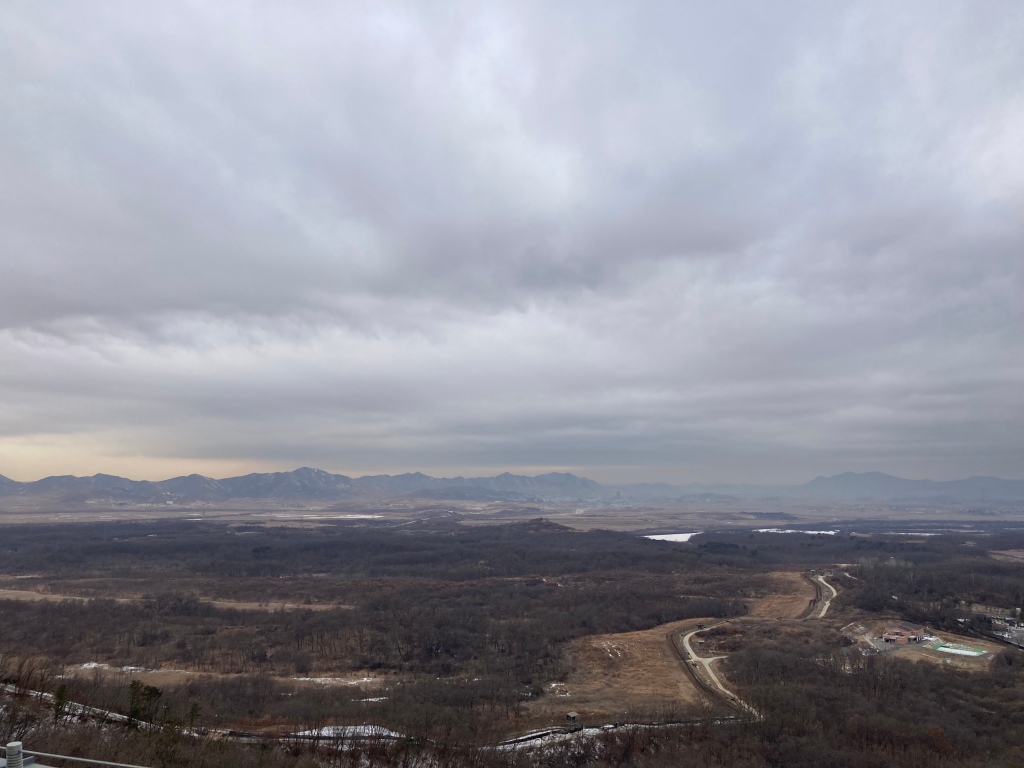
There’s also the abandoned Gaseong Industrial Complex, built for South Korean companies to take advantage of cheap labour, paying the 40,000 North Koreans who worked there salaries of just $75 a month until relations deteriorated and the complex shut.
Unification Village
Our final stop is described as a ‘pass by the Unification Village‘, which pretty much sums it up. We have 15 minutes at the small shop, just enough time for me to purchase a post card.
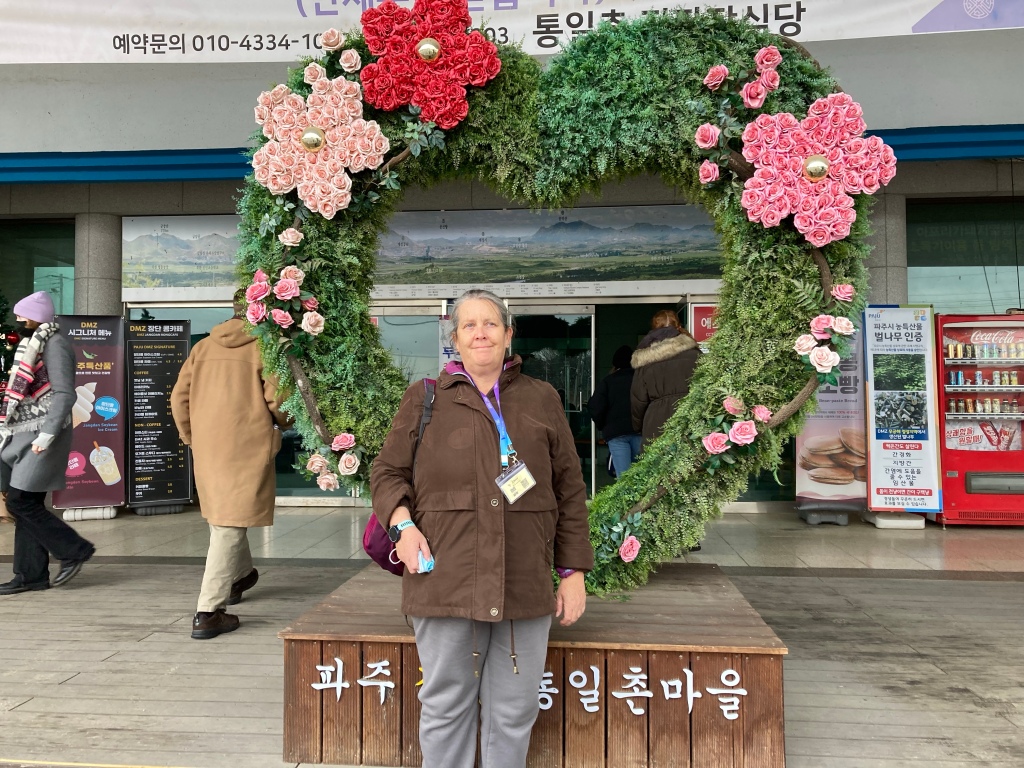
Then we are dropped at the parking lot to rejoin our original bus for our return to Seoul. In total, the tour took 6 hours and cost W80,000 (around £42). I’m not usually a fan of organised tours, as I like to do things at my own pace. But there is currently no alternative if you want to visit the DMZ. When we visited, it wasn’t possible to enter the JSA (Joint Security Area). There is now some very limited (and expensive) tours to the JSA. The pace of our tour pace was frenetic, with only a short time in each place and much of that time was spent listening to propaganda. Listening to propaganda gives me a headache, as I make mental notes of all the things I want to Google when I get home. However, on the whole, I enjoyed my day. It was a unique experience with plenty of cheesy photo ops. What’s not to love?
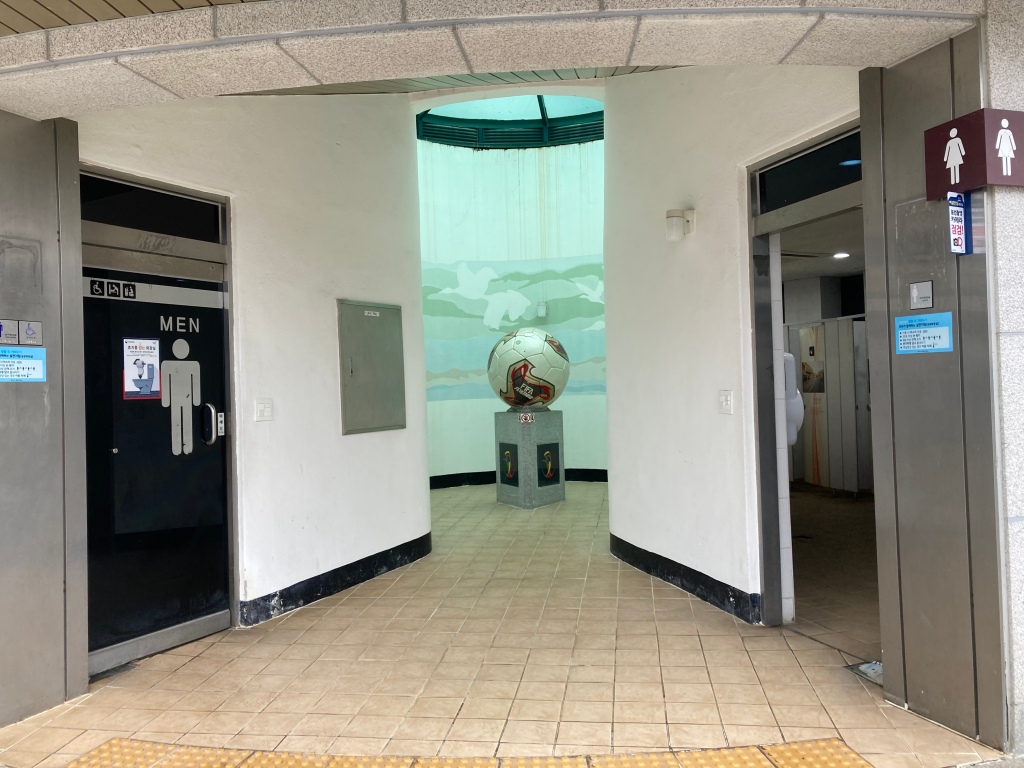
DMZ toilet report; randomly FIFA themed.
Dinner in Namdaemun Market
Once we are dropped off back in Seoul, we go in search of dinner, using the scientifically proved method of choosing somewhere that looks pretty busy.
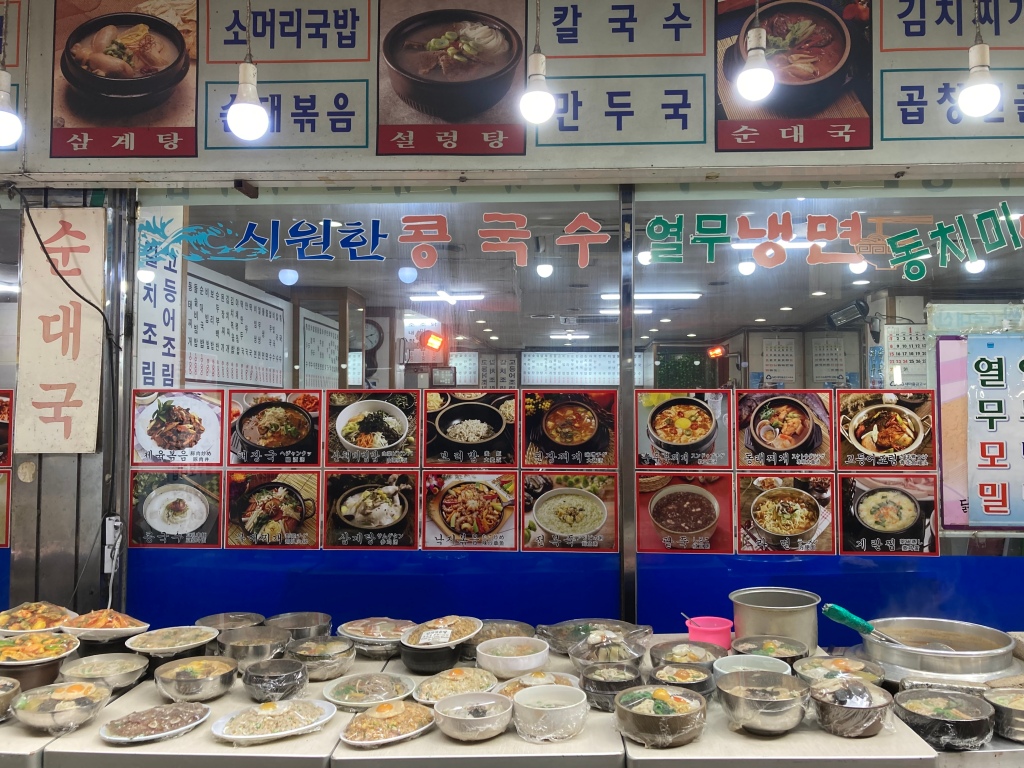
We randomly pick one of the many cafes lining the streets in Namdaemun Market. I order kimchi fried rice, price W8000 (£4.20). The old man’s sausage stew is W20,000 (£10.50). We wonder briefly about the price difference and decide that meat must be expensive in South Korea. The real answer becomes clear when the food arrives.
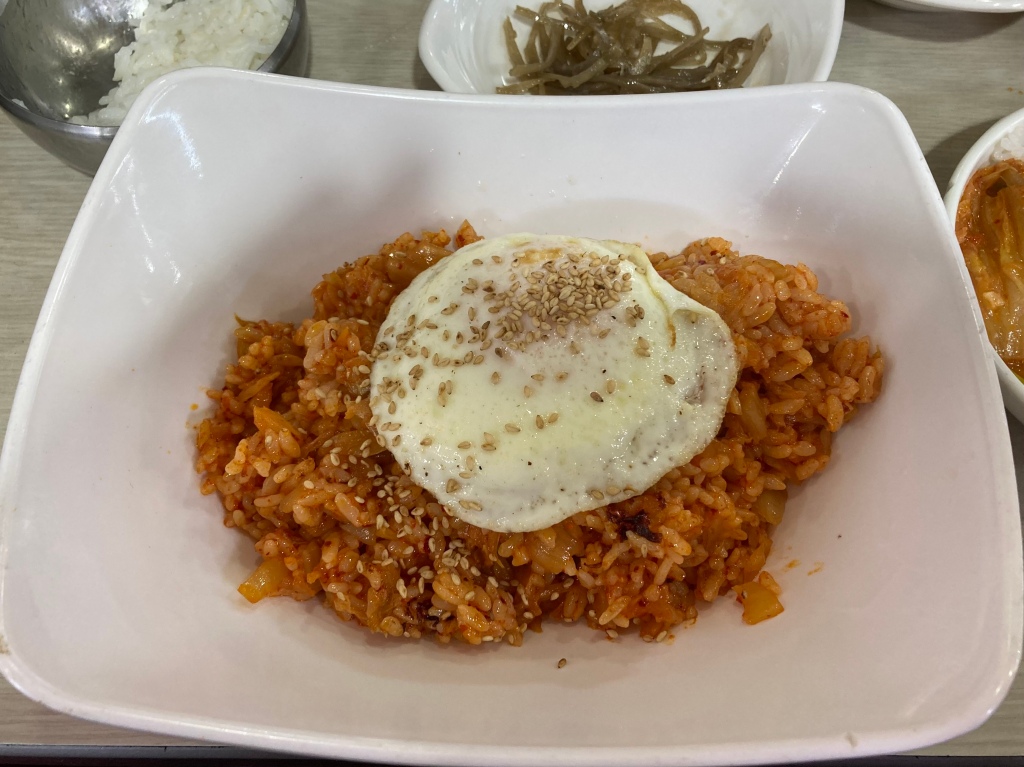
My dish is very tasty and the perfect amount for one person, while the old man has enough food to feed the 5000.

After lunch, we retire to our hotel with some beers. It’s been a long day and tomorrow will be even longer as we head, via a rather circuitous route, for home.
South Korea Day 4
It’s our final day in Seoul. Hotel checkout is at midday, but our flight isn’t until midnight. In the old days, this wouldn’t have been a problem. But now we’re getting on a bit, and with a 31 hour journey ahead of us, we decide to pay for another night, so we can have a little pre-departure nap. This isn’t as beneficial as we’d hoped. As it is a separate reservation, we still have to check out at midday and check in again at 3 pm. No matter, we’d planned a morning of sightseeing anyway. But first, another breakfast buffet master class from the old man.
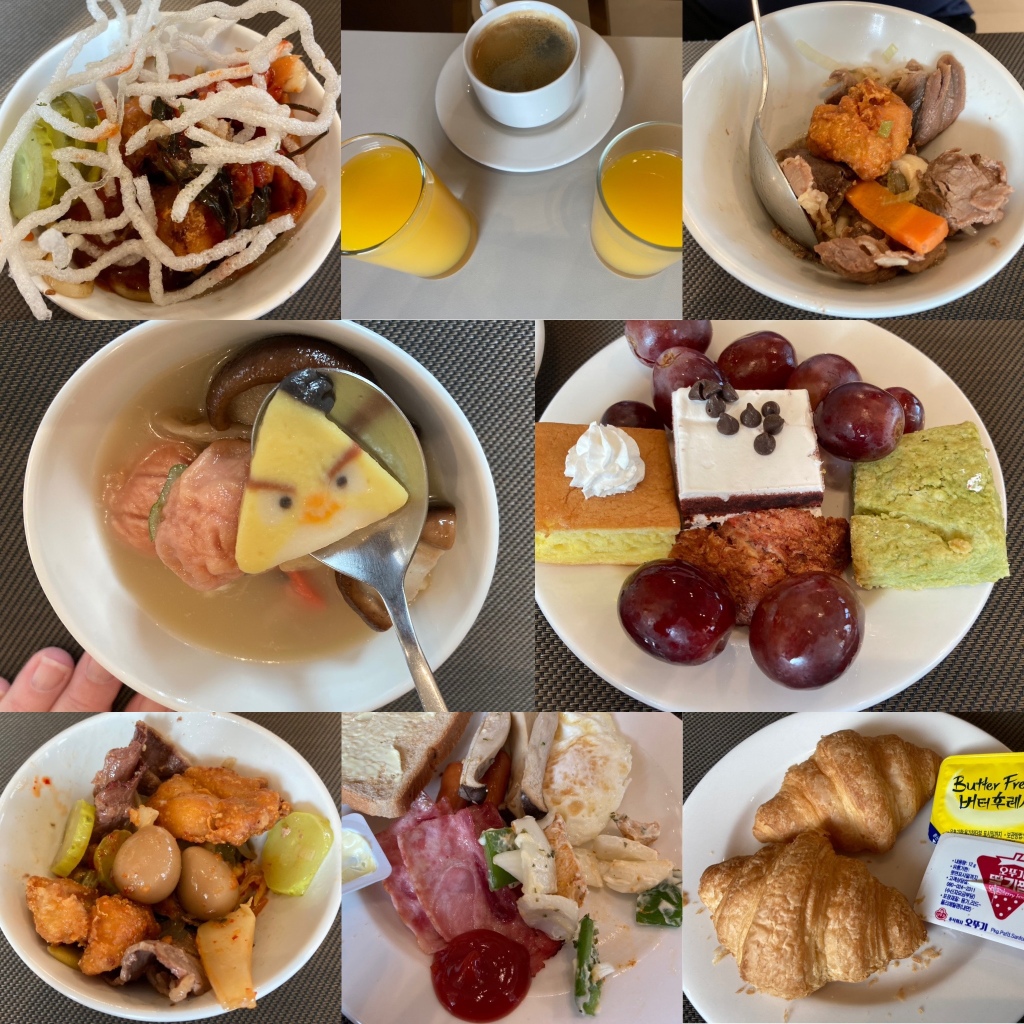
We plan to spend our final day visiting two museums, as they are close together, only two stops apart on the subway. Although conveniently close together, both museums are enormous, so the day still entails a lot of walking.
National Museum of Korea
The National Museum of Korea is an enormous three floor museum telling the history of Korea with items ranging from prehistoric axes to robot tour guides.
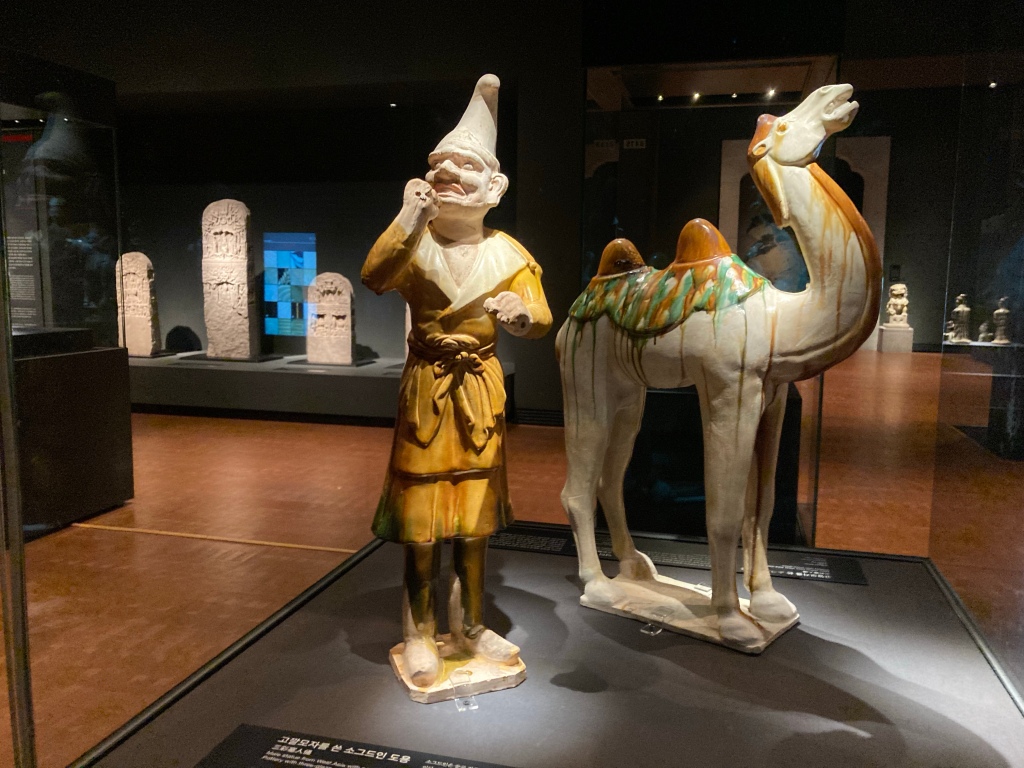
My favourite part, particularly since I wasn’t expecting it (using the woefully out of date Lonely Planet to plan my trip) is the Immersive Digital Gallery.
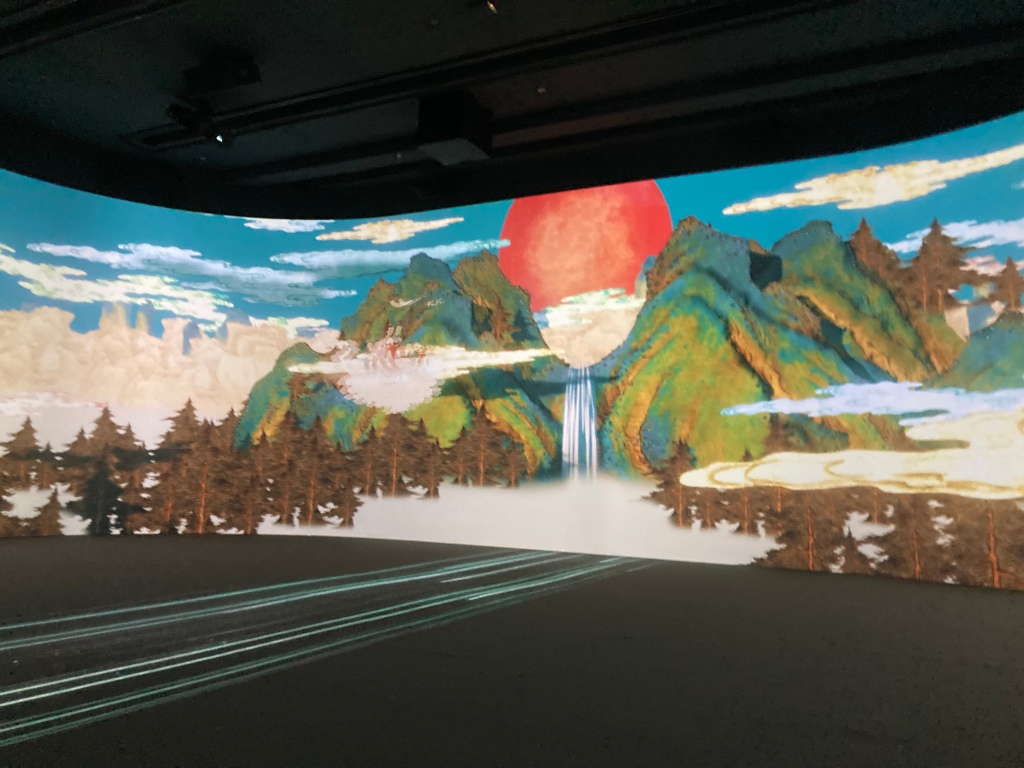
Here, ancient Korean art is fused with modern graphics to create an amazing immersive experience of the painting. It’s my first experience of immersive art and one of the highlights of the entire six week trip.
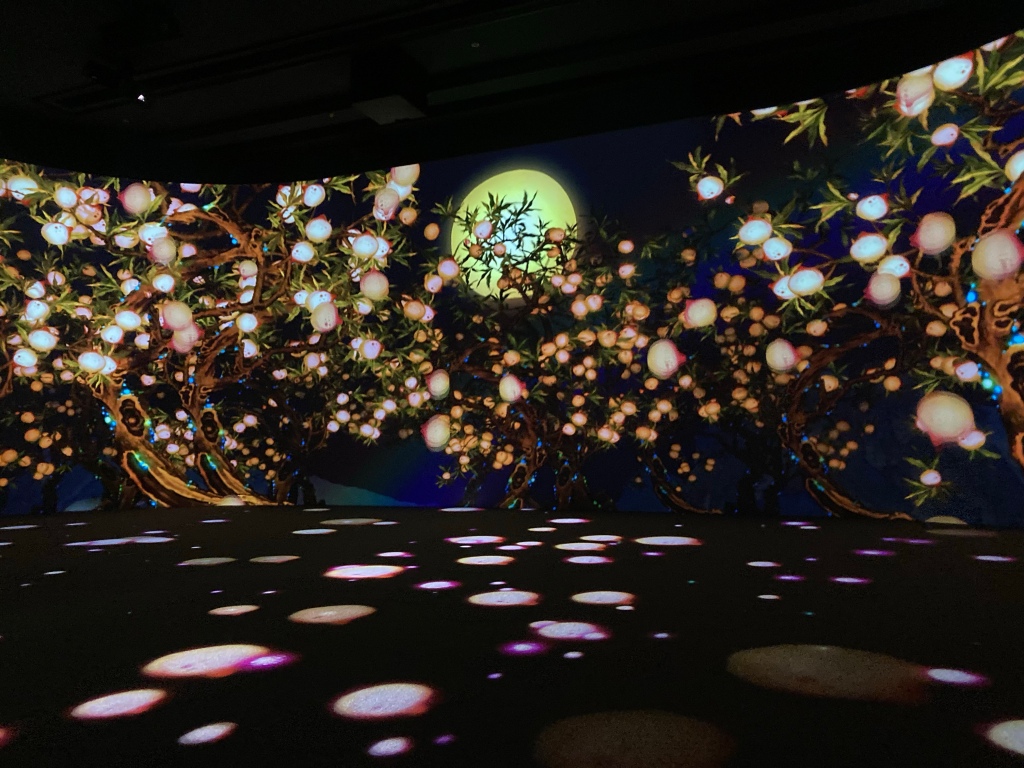
Once I have finally been dragged away from the cinema, we return to the subway for our second destination.

The Museum is open daily from 10 am to 6 pm (9 pm on Wednesday and Saturday). It is free to enter, although there may be a charge for special exhibitions.
War Memorial of Korea
The War Memorial of Korea is another huge three storey museum. As well as being a war memorial, it tells the story of the various conflicts Korea has been involved in during its 5000 year history. Obviously, much of the museum (most of the 2nd and third floors) is dedicated to the Korean War.
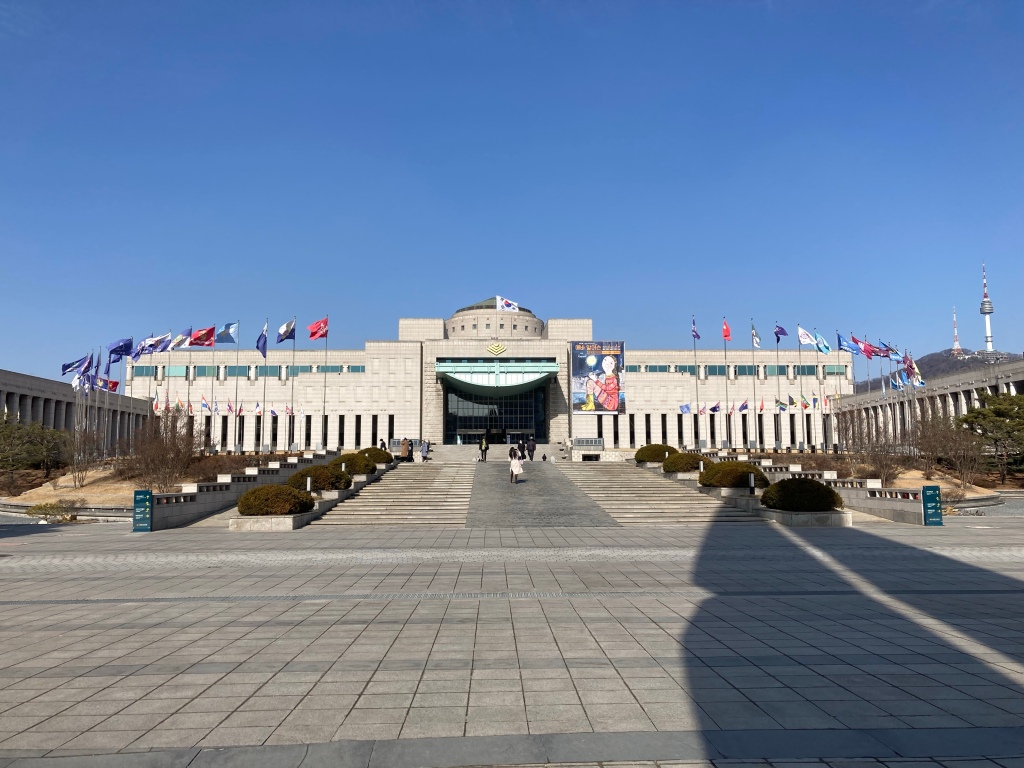
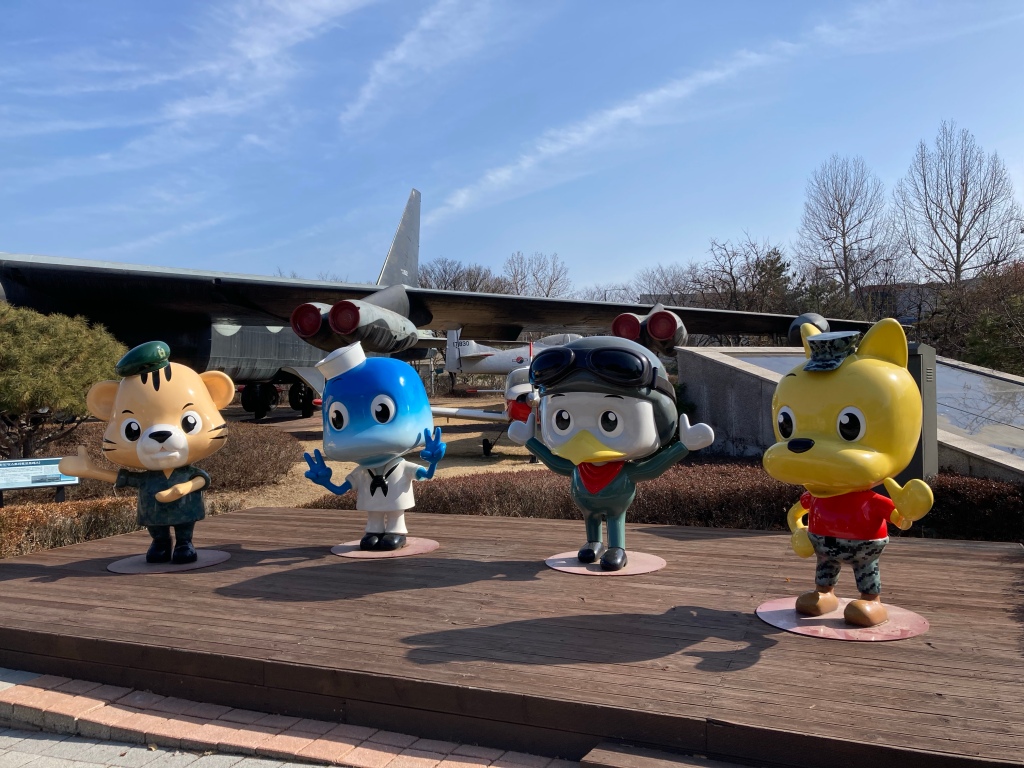
Just reaching the entrance takes forever. The museum is surrounded by a vast array of military vehicles and I’m married to a closet plane spotter.
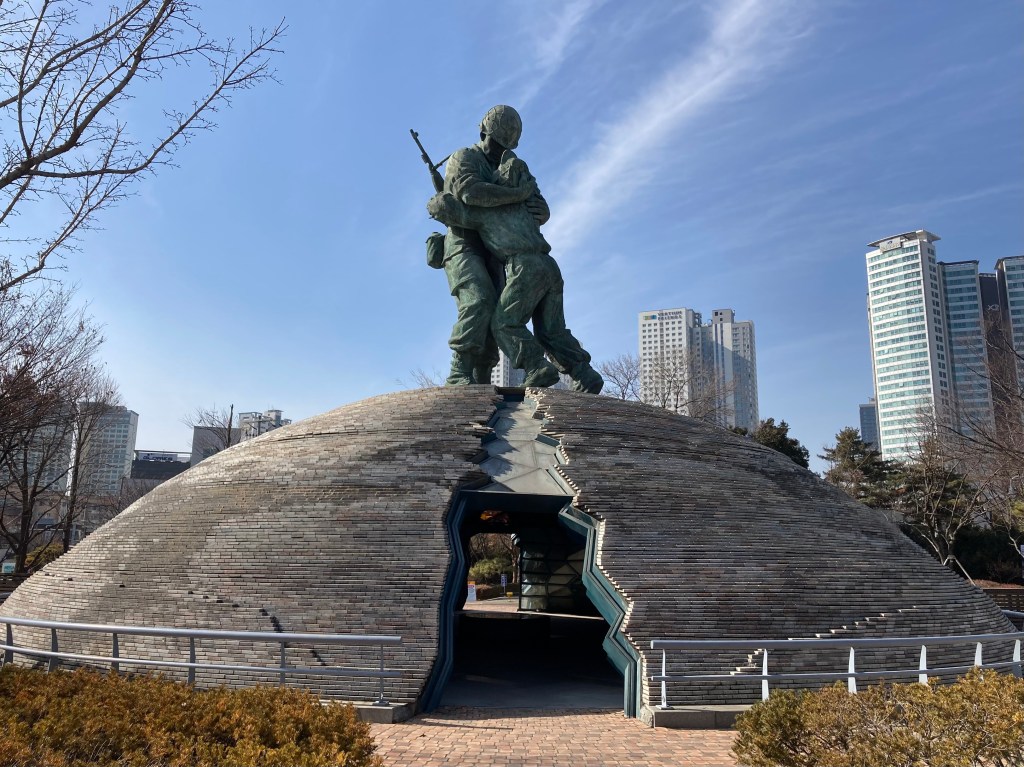
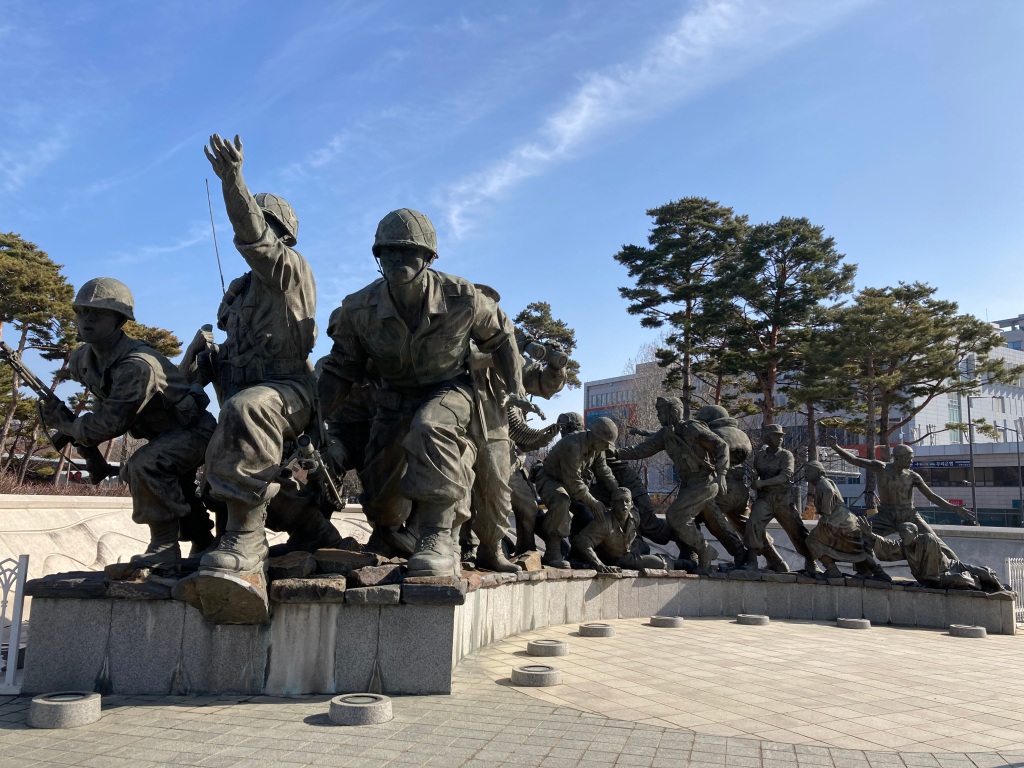
Also in the large grounds are two very poignant statues; the Statue of Brothers shows a North and South Korean soldier embracing on top of a divided dome and the Korean War Monument depicts a collection of patriotic heroes.
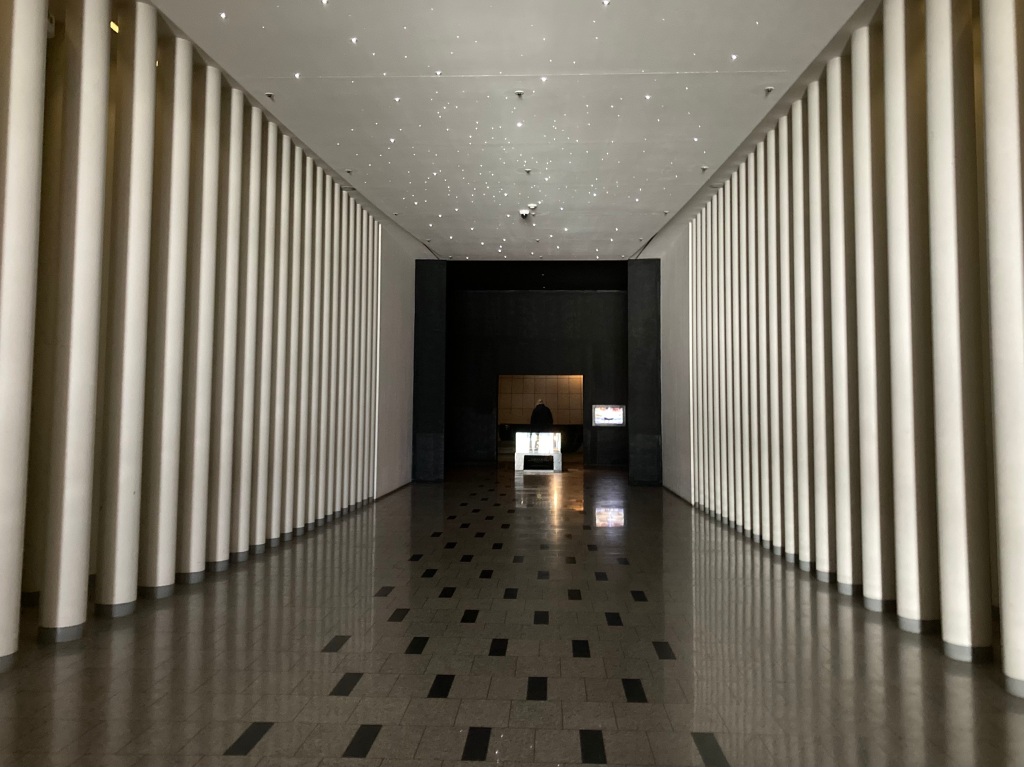
You enter the museum building via the second floor, straight into a Memorial Hall for the victims of war. A star lined corridor leads you to a room with a reflecting pool.
By the time we have covered two floors of this sprawling IKEA of a building, we’re exhausted and decide to call it a day. Some time later (partly because we have forgotten that the exit is on the 2nd floor), we leave the museum and make our way through a large demonstration back to the hotel. Even missing out an entire floor, we have notched up 10 miles of walking today.
We re-check into our hotel for a nap. Not as easy as it sounds as the demonstration has stopped right outside our window for rallying speeches and music. After a couple of hours of R&R, it’s time to start the long journey home. We re-check out and set off for the airport on the very fast and efficient Arex Train. Goodbye Korea, it’s been fun.
- Trip Taken: January 2023
- Update: November 2025
I hope you found the above information useful. For guides to more destinations in the 50+ countries we have visited, check out my full list of Independent Travel Itineraries here.
 Jane's Midlife Journey
Leave a comment