
We spent 3 weeks exploring Argentina. Our itinerary consists of a combination of city based tourism and road trips, and includes National Parks, mountains, lakes, waterfalls and a glacier.
I was a teenager in 1982, when Britain and Argentina went to war over the Falkland Islands (Islas Malvinas) and much of what I knew about the country was clouded by this image of Argentina as some kind of enemy. So I was intrigued and excited to set off our our 3 week Argentinian road trip. This huge land has an abundance of natural beauty. Three weeks covers the basics, but only scratches the surface of what there is to see and do in Argentina. I have travelled a lot, notching up over 80 different countries along the way. Of all the places I’ve been to, Argentina ranks as one of my all time favourite places.
Argentina 3 Week Road Trip Itinerary
| Day 1 | Iguazú National Park La Garganta del Diablo Ciurcuito Superior Circuito Inferior Hito Tres Fronteras |
| Day 2 | Buenos Aires Flight to Buenos Aires Casa Rosada Guided Tour Casa Rosada Museum Accommodation- 474 Buenos Aires Hotel |
| Day 3 | Buenos Aires Catedral Metropolitana Eco Parque Parque 3 de Febrero MALBA Floralis Genérica Museo Nacional de Bellas Artes Cementerio de la Recoleta Dinner at Buller Pub & Brewery |
| Day 4 | Buenos Aires Teatro Colón Obelisco Palacio Barolo Palacio del Congreso Puerto Madero Puente de la Mujer Dinner at Galerías Pacífico |
| Day 5 | Tigre Boat Trip to Tigre Naval Museum Museo de arte Tigre |
| Day 6 | Ushuaia Flight to Ushuaia Accommodation – Apart Hotel Cabo San Diego |
| Day 7 | Ushuaia Tierra Del Fuego National Park Dinner at Alakush Visitor Centre |
| Day 8 | Ushuaia Beagle Channel Boat Trip Les Eclaireurs Lighthouse Isla Martillo Estancia Harberton |
| Day 9 | Ushuaia Museo Maritímo de Ushuaia Civic Plaza Malvinas Memorial Ushuaia Sign Iglesia de la Merced Dinner at Paso Garibaldi |
| Day 10 | El Calafate Flight to El Calafate Accommodation – Hosteria La Estapa Lago Argentino Dinner at La Chacrita de Nimez |
| Day 11 | El Calafate Los Glaciares National Park Perito Moreno Glacier |
| Day 12 | El Chaltén Drive to El Chaltén Accommodation – Aires del Fitz El Chaltén Mirador de los Condores y de las Aguilas |
| Day 13 | El Chaltén Sendero Al Fitz Roy |
| Day 14 | Bariloche Flight to Bariloche Accommodation – Huinid Bustillo Hotel & Spa Centre Civico Lake Nahuel Huapi Cathedral of Our Lady of Nahuel Huapi |
| Day 15 | Bariloche Circuito Chico Cerro Campanario San Eduardo Chapel Lago Escondido Bahia Lopez Dinner at Cervezeria Patagonia |
| Day 16 | San Martín de los Andes Route of the Seven Lakes Accommodation – Hostería La Posta del Cazador Dinner at Cafecito |
| Day 17 | San Martín de los Andes Lanin National Park Chacin Waterfall Lago Lácar |
| Day 18 | Villa la Angostura La Pastera Museo del Che Accommodation – Marinas Alto Manzano Dinner at Ruta 40 Bar & Grill |
| Day 19 | Cordoba Flight to Córdoba Accommodation – Yrigoyen 111 Hotel |
| Day 20 | Córdoba Alta Gracia Clock Tower Jesuit Complex Museo Casa del Che Villa General Belgrano Dinner at Fritz & Franz Los Molinos Reservoir |
| Day 21 | Córdoba Plaza San Martín Córdoba Cathedral Cabildo Museo de la Memoria Manzana Jesuítica Paseo del Buen Pastor Iglesia de Los Capuchinos Dinner at Antares |
| Day 22 | Córdoba Jesús María Museo Jesuitico Museo Superior de Bellas Artes Evita Dinner at El Club de la Milanesa |
Day 1 – Iguazú National Park
Today, we are going to Iguazú National Park on the Argentinian side of the spectacular Iguazú Falls. We had planned to go by bus, but a taxi driver pulled up at the bus stop and offered a group of us a good deal, so we ended up travelling to the park by taxi.

La Garganta del Diablo
We reach the park entrance, queue for tickets, then take the train to the walkway which leads to the waterfall. In all, from our hotel on the Brazilian side of the falls, it has taken almost three hours to reach our ultimate destination; La Garganta del Diablo – the Devil’s Throat.
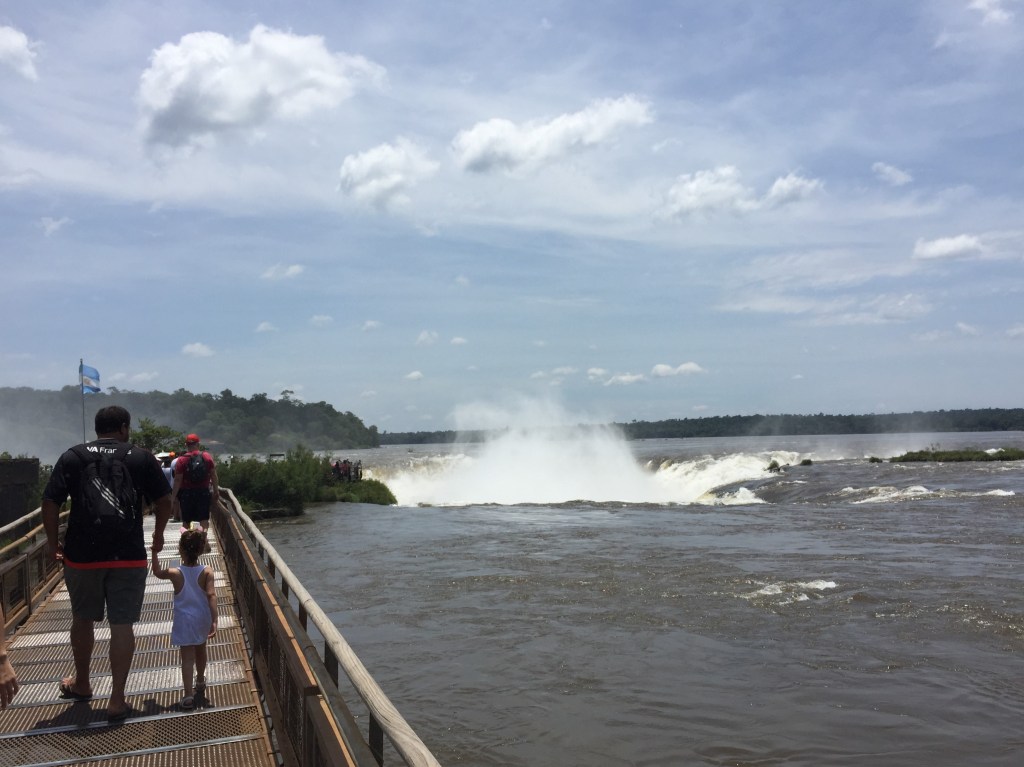
Surrounded by signs warning of crocodiles, we set forth on a rickety walkway over the river to the edge of the waterfall. It’s incredible; the sound and scale of water rushing down the Devil’s Throat is immense.

Circuito Superior
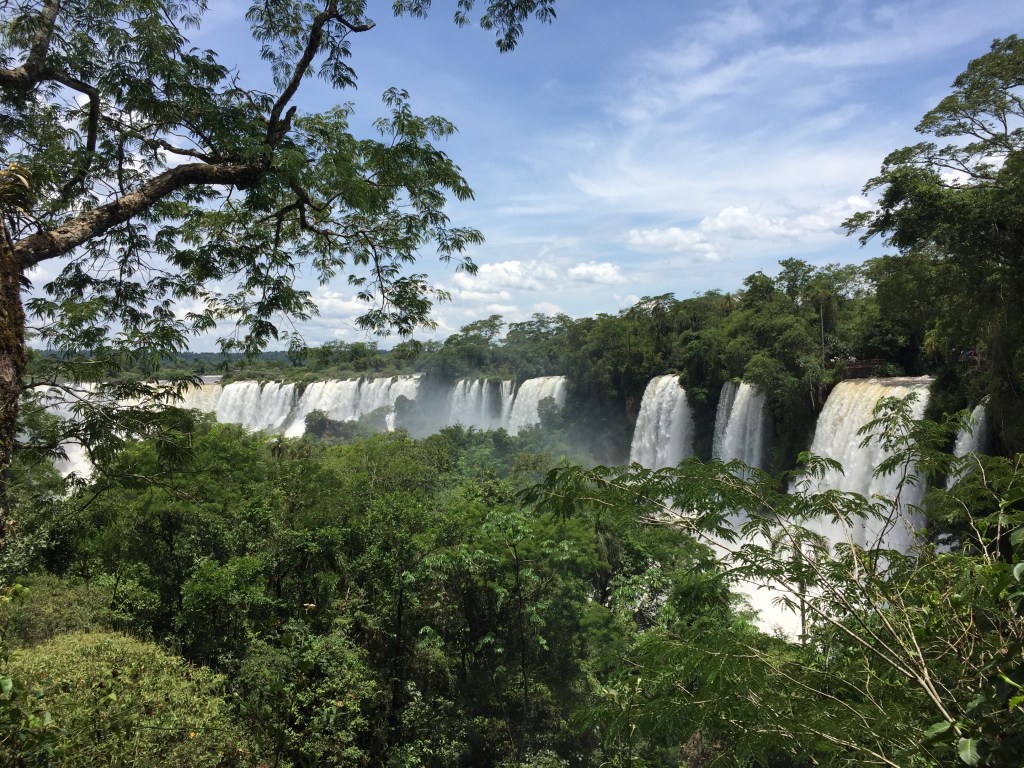
Next, we follow the Circuito Superior, a mile long trail around the top of the falls, for more spectacular views.
Circuito Inferior
The Circuito Inferior is also around a mile long and follows the river, before heading into the jungle. Along the way, we meet a family of monkeys who have mugged a small child for her sandwich.

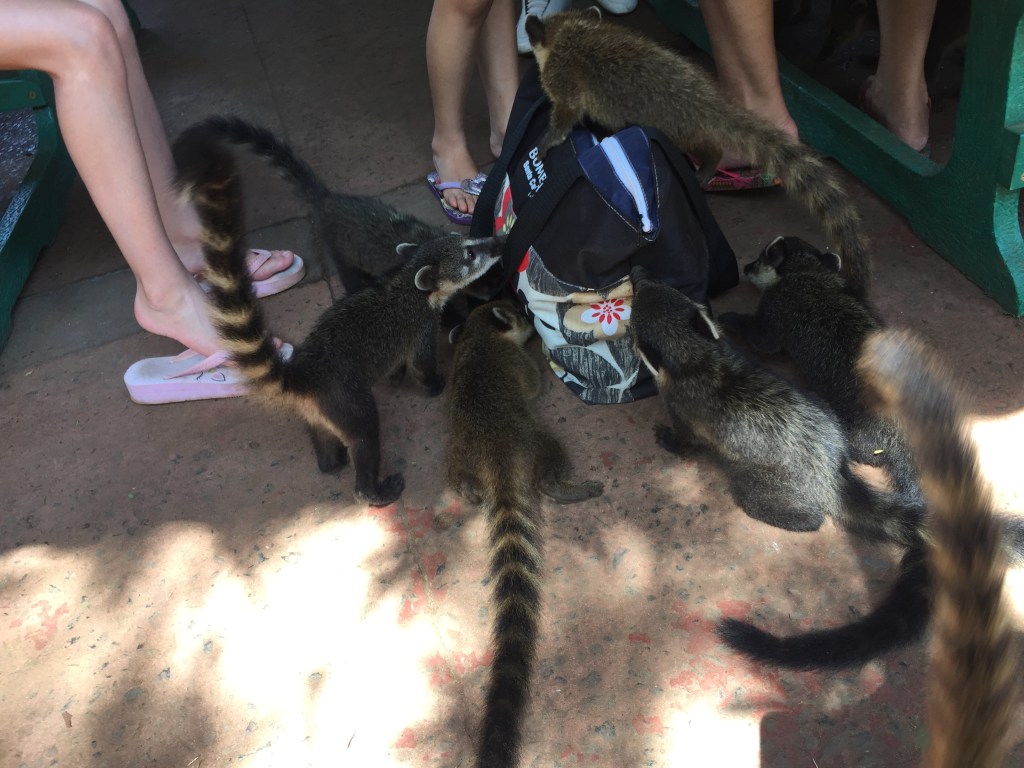
Just time for a drink in the Food Court (an area teaming with baby coatis hoping for spillage from the tables above) before setting off on the return journey to Brazil.
Hito Tres Fronteras
We stop on the way at the Hito Tres Fronteras. This small park at the point where Argentina, Brazil and Paraguay meet has a great view and some painted obelisks for that all important photo op.

Day 2 – Buenos Aires
Flight to Buenos Aires
This morning, we are up at 3 am for our flight to Buenos Aires. In the plane, I have an emergency exit seat. The steward explains that sitting here requires being able to follow crew instructions. He sounds fairly unconvinced that I’m up to the job.

The flight arrives without incident and we are at our hotel in Buenos Aires by 9 am.

Casa Rosada Guided Tour
We startour visit to Buenos Aires with the Casa Rosada Guided Tour. The Casa Rosada is the Argentinian presidency; the place where Madonna sings Don’t cry for me Argentina from the balcony in the movie Evita.

The tour is supposed to take an hour, but the guide seems to love the sound of his own voice and goes on and on. Tours are 15 minutes apart, so they are soon backing up behind us. It doesn’t help that some of the Americans in our group refuse to do stairs and we have to wait while a separate staff member escorts them via the elevator.
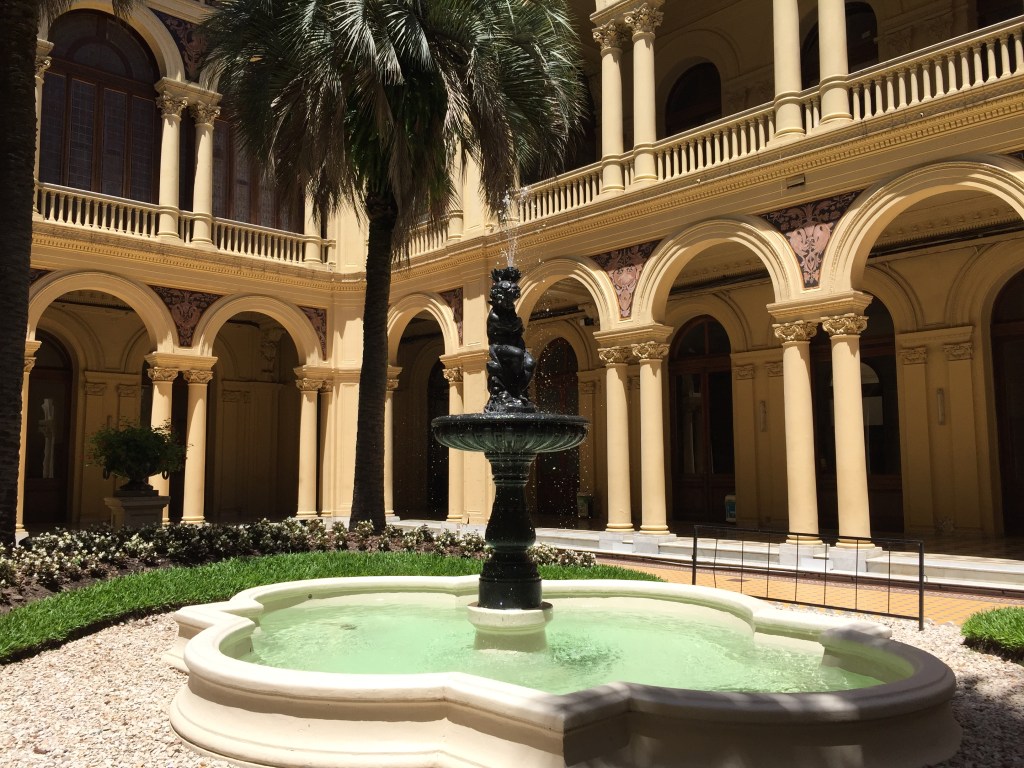
Finally, we reach the bit we’ve been waiting for – the iconic balcony. We patiently wait our turn to go out, but the guard decides our group’s time is up and starts herding us towards the exit. It’s such an anticlimax. Our tour of a few rooms has taken two hours and we have missed the highlight. I make a break for it and manage to grab a balcony photo before being ushered out by an angry security guard.

Casa Rosada Museum
Once the tour finally ends, we head for the Casa Rosada Museum, which is situated behind the Casa. It contains a potted history of Argentina, plus articles relating to the life of the Perons.
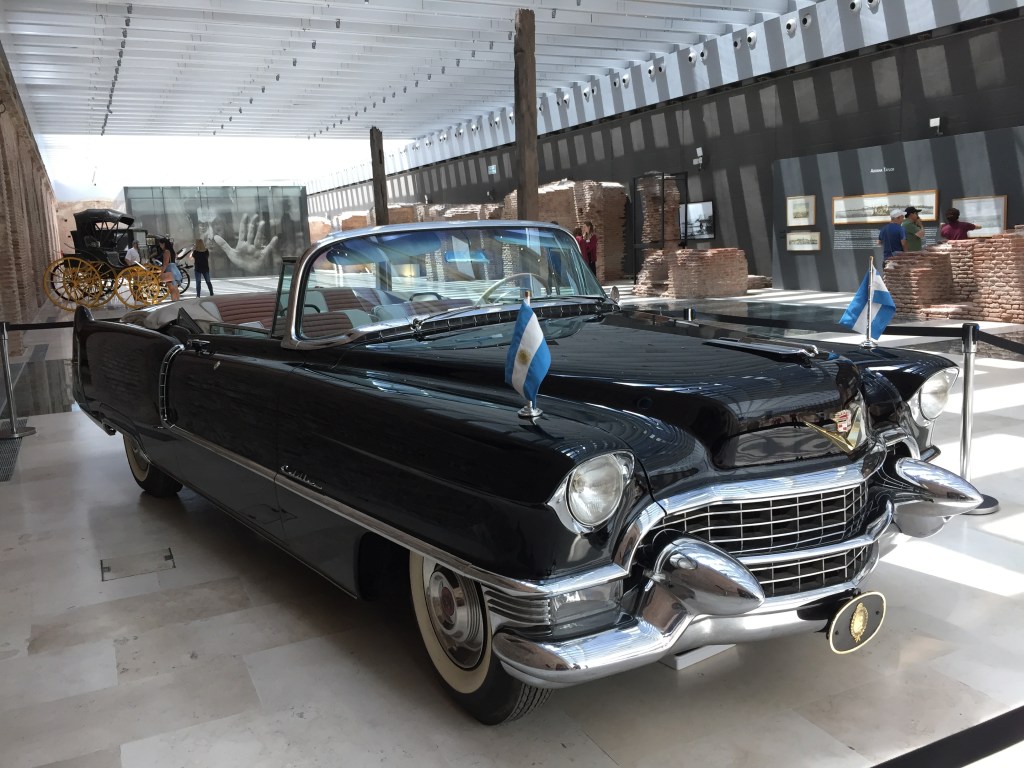
David Alfaro Siqueiros Mural: Plastic Exercise
Also in the museum is a mural by Mexican artist David Alfaro Siqueiros entitled Plastic Exercise (Ejercicio Plástico). Painted in 1933, it is considered a masterpiece of Latin American art.

Accommodation – 474 Buenos Aires Hotel
We head back to our accommodation in Buenos Aires, the very pleasant 474 Buenos Aires Hotel for an early night before a full sightseeing onslaught in the morning. The hotel is situated in the financial district, thus somewhat cheaper than some of the more touristy areas, but still conveniently located. One disadvantage; the area is like a ghost town at weekends and most of the bars and restaurants are closed. Our good sized room is clean and comfortable.

Day 3 – Buenos Aires
Today we have a full day of sightseeing in Buenos Aires.
Catedral Metropolitana
We start with the 19th Century Metropolitan Cathedral, former manor of Pope Francis, who was Archbishop of Buenos Aires prior to becoming the Pope. We miss the entrance first time round, as the exterior looks more like a museum or a bank than a cathedral.


Then we try to get a tube from Catedral Metro Station. It sounds fool-proof, seeing as we’re already at the cathedral. But somehow we manage to overshoot and end up at Peru, which is on a different line. By the time we realise, we’ve already passed through the barrier so have to retrace our steps, buy more tickets and try again.
Eco Parque
Second time lucky, we find the station and catch the tube to Palermo. The resto of the morning is all about parks. First, we walk through the Eco Parque.
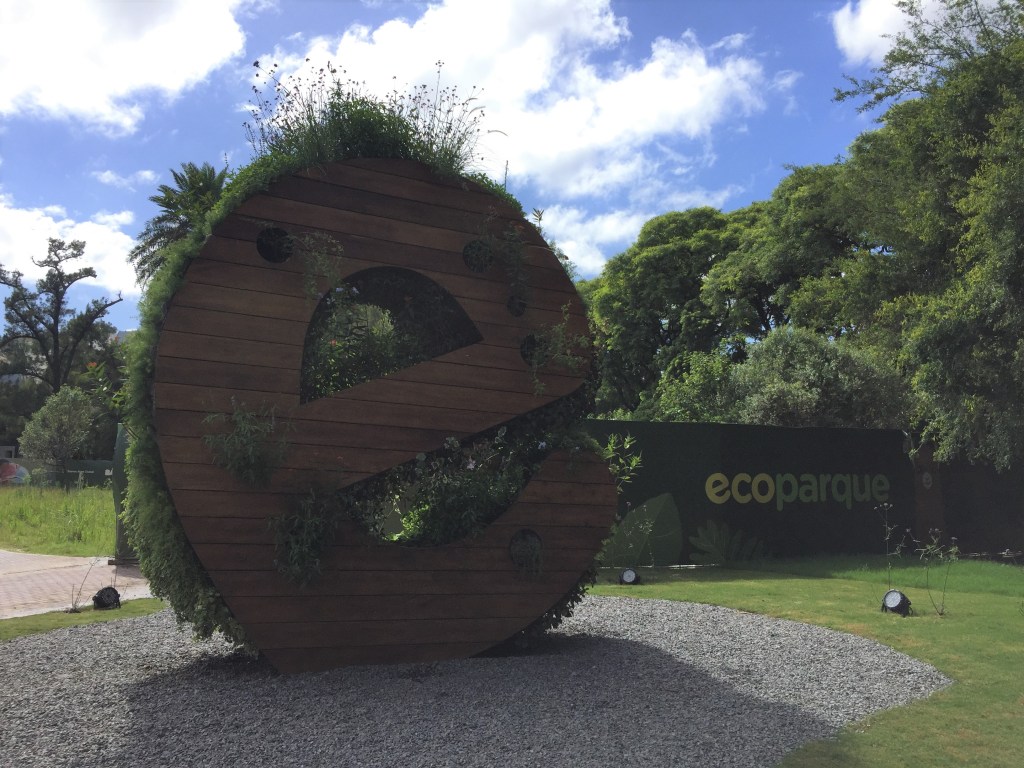
The Eco Parque is on the site of the former zoo. In 2016, the Buenos Aires City Government took the decision to close the zoo and release about 2,500 animals (the majority of the zoo’s population) into the wild. When we visited, you could just see ducks, peacocks and a few maras wandering around by the lakes. But the park is now fully open and offers a range of activities aimed at connecting visitors with nature in a fun and educational way, such as immersive trails and animal observation as well as animatronics and VR tours.
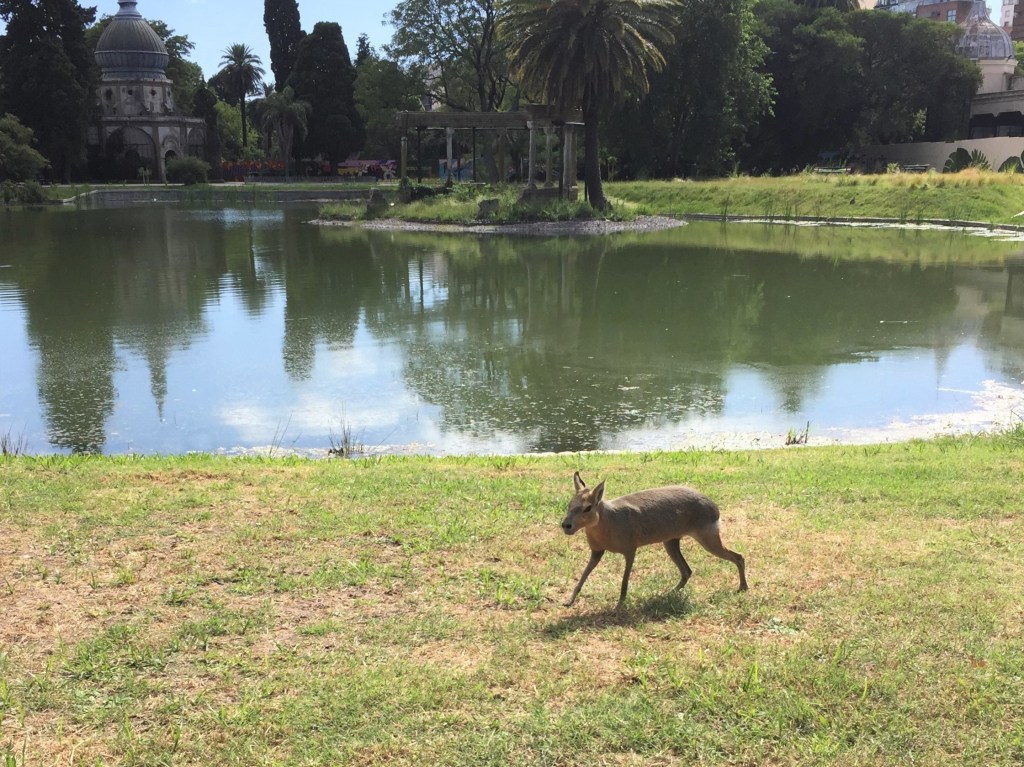
Parque 3 de Febrero
From here, we continue on foot to Parque 3 de Febrero. This huge park is heaving on a Sunday morning; walkers, joggers, cyclists, skaters, yoga, aerobics, weightlifting. It is all going on here, there is even a man playing the bagpipes.
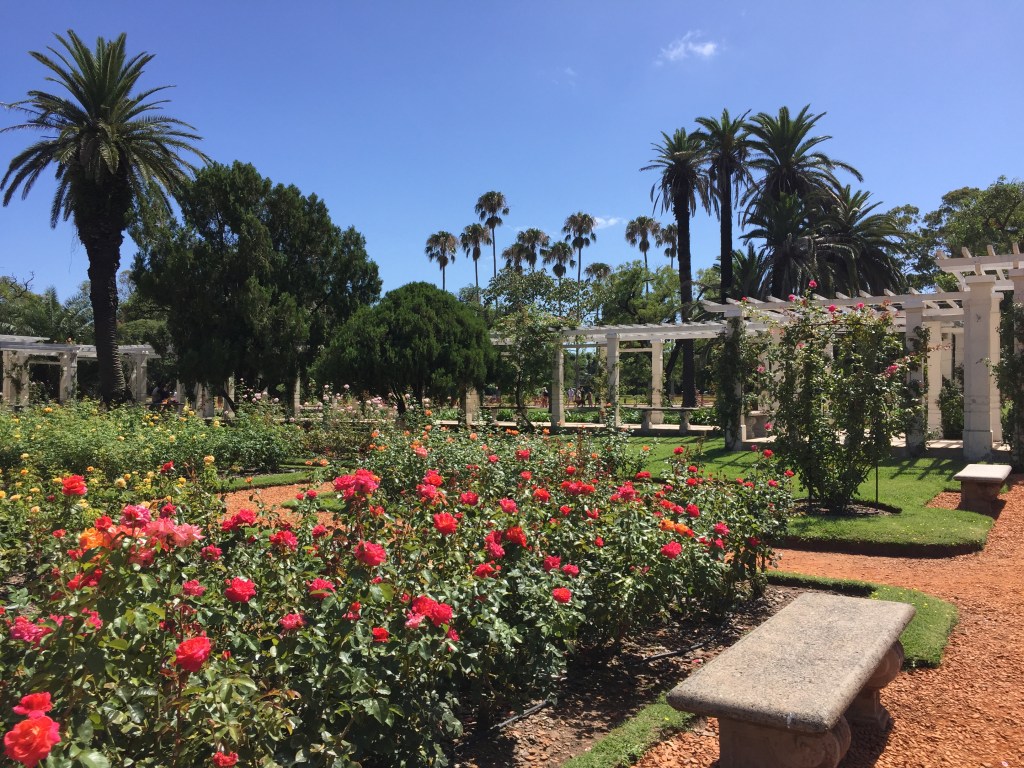
There’s so much to see and do here, but for me the highlights are the Rosedal (Rose Garden) with its 18,000 roses and the Jardín Japonés with its traditional Japanese bridges, koi pond and tea house.

MALBA
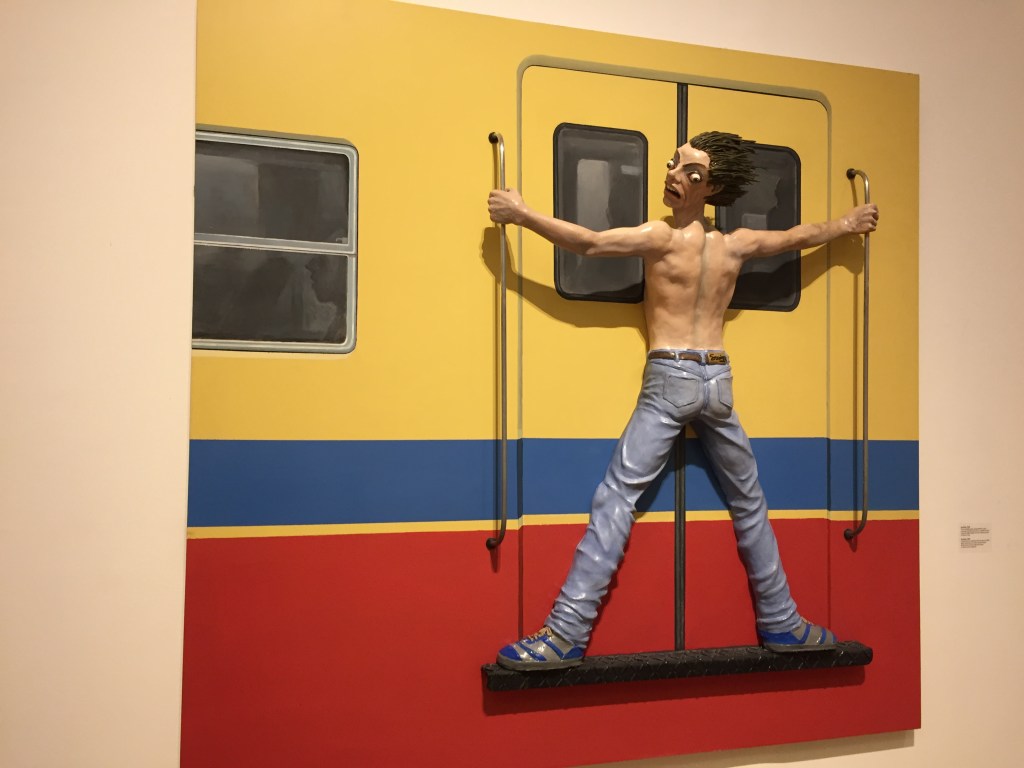
After a morning of gardens, the afternoon was all about art. Next up, we visit the Museum of Latin American Art (MALBA). As the name suggests, it’s a collection of art by Latin American artists. The old man is not a great art lover, but there is some great stuff here. Even he is impressed.
Floralis Genérica
We stop briefly at the Floralis Genérica; a huge aluminium flower sculpture that opens in the sunlight. It sits in a pool of water and reflects the nearby buildings in its silver petals.

Museo Nacional de Bellas Artes
Next, another art gallery, the Museo Nacional de Bellas Artes.. This has some South American and plenty of European art.

Cementerio de la Recoleta
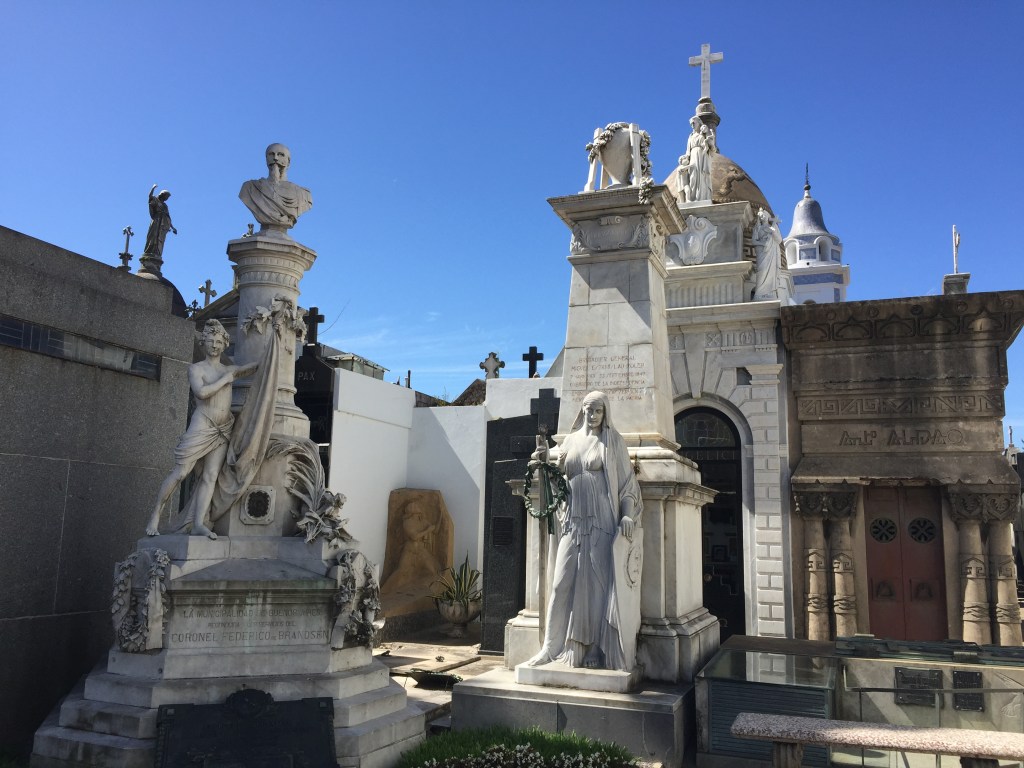
Last stop of the day is the Cementerio de la Recoleta, the cemetery of the rich and famous. It’s like a huge city of the dead. The cemetery only has one entrance. Somehow, we manage to walk round all four sides before locating the gate some 350 degrees from where we started!
Dinner at Buller Pub & Brewery
By the time we have completed our wander round the cemetery, we are tired and hungry. We spot a microbrewery opposite the exit; Buller Pub & Brewery. Unfortunately, we are by the coach drop off point where buses leave their engines running to maintain the a/c at the required temperature for their passengers. So, we drink very good beer and eat our enormous burgers in a cloud of diesel fumes.

Day 4 – Buenos Aires
Today is rather disjointed as it’s Monday and many tourist attractions are closed on Mondays.
Teatro Colón
We start the morning with a wander around Buenos Aires admiring the city’s architecture, such as the Teatro Colón.

Obelisco
We stop to take an obligatory selfie in front of the Obelisk. One of the city’s most iconic monuments, the obelisk stands at 67 metres high in the middle of the Plaza de la República on a traffic island on the Avenida 9 de Julio. It was erected in 1936 and most recently made global news coverage when thousands upon thousands of fans came here to celebrate Argentina’s World Cup victory.

Palacio Barolo
Then, a guided tour of the Palacio Barolo; an Art Deco tower block where each floor represents a different verse of Dante’s Divine Comedy.
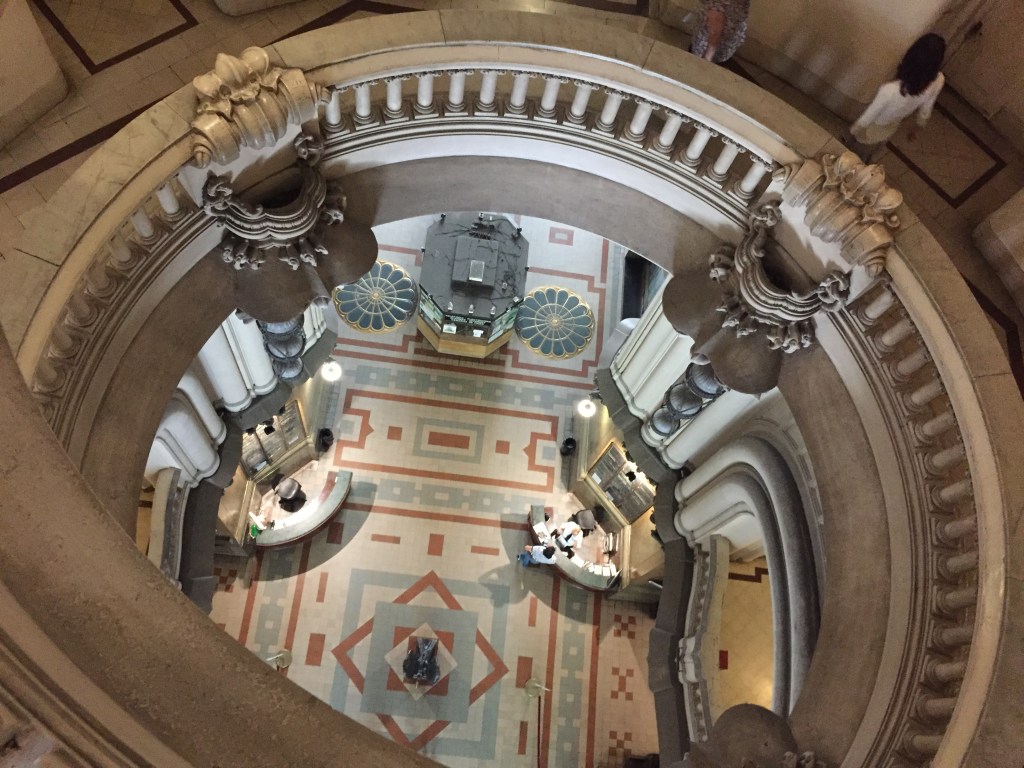
You start in the foyer (hell) then work your way up through purgatory to heaven. Ironically, you can reach purgatory by lift, but the final 8 floors to heaven have to be climbed on foot.
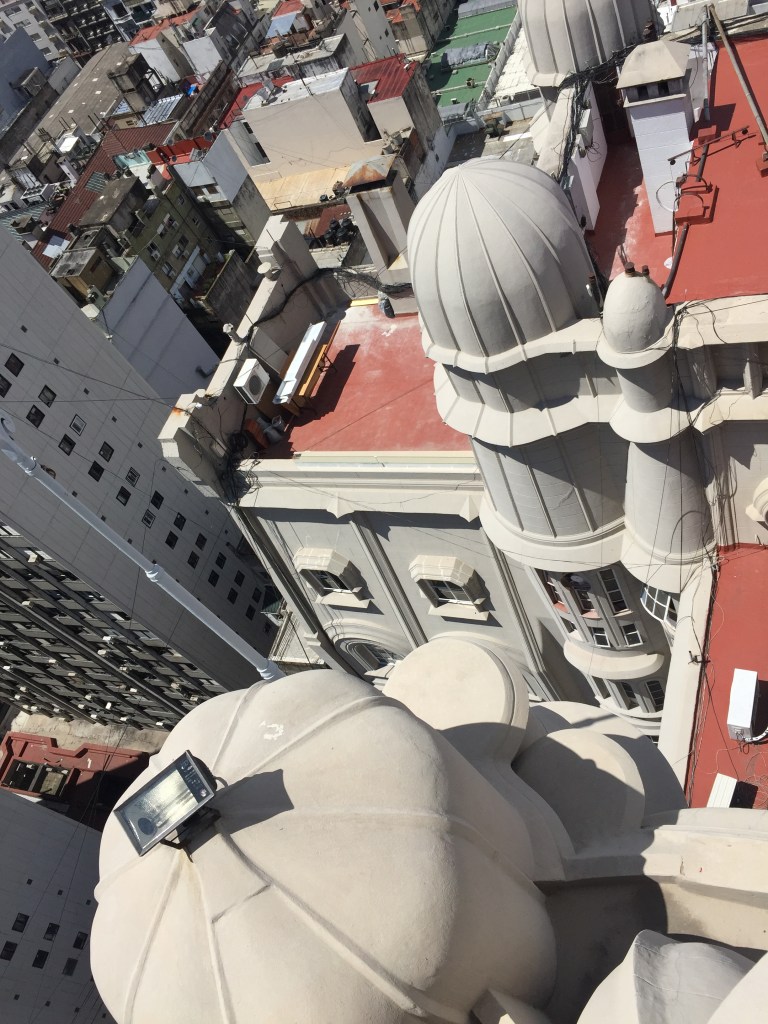
You finish by clambering into the glass domed lighthouse at the top for a stunning, if vertiginous view. The Palacio Barolo is an amazing building with the added bonus of great views across the city to the River Plate.

Palacio del Congreso
Once we have descended from heaven, we walk as far as the Congress Building, which is modelled on the US Capitol and situated in a park surrounded by sculptures and dog poo.

Puerto Madero
Then, we returned to our hotel via the renovated waterfront area of Puerto Madero with its boats, public art and cobbled streets lined with trendy cafes.

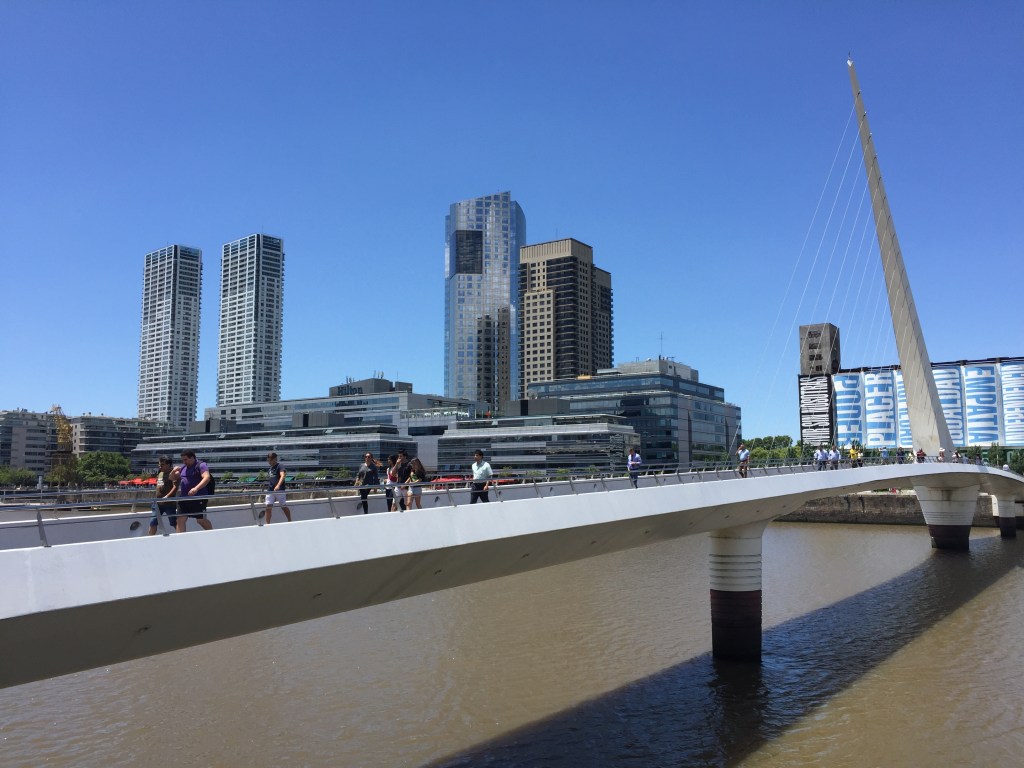
Puente de la Mujer
In the middle of Puerto Madero is the ultra modern Puente de la Mujer swing bridge (which apparently represents a couple dancing the tango).
Dinner at Galerías Pacífico
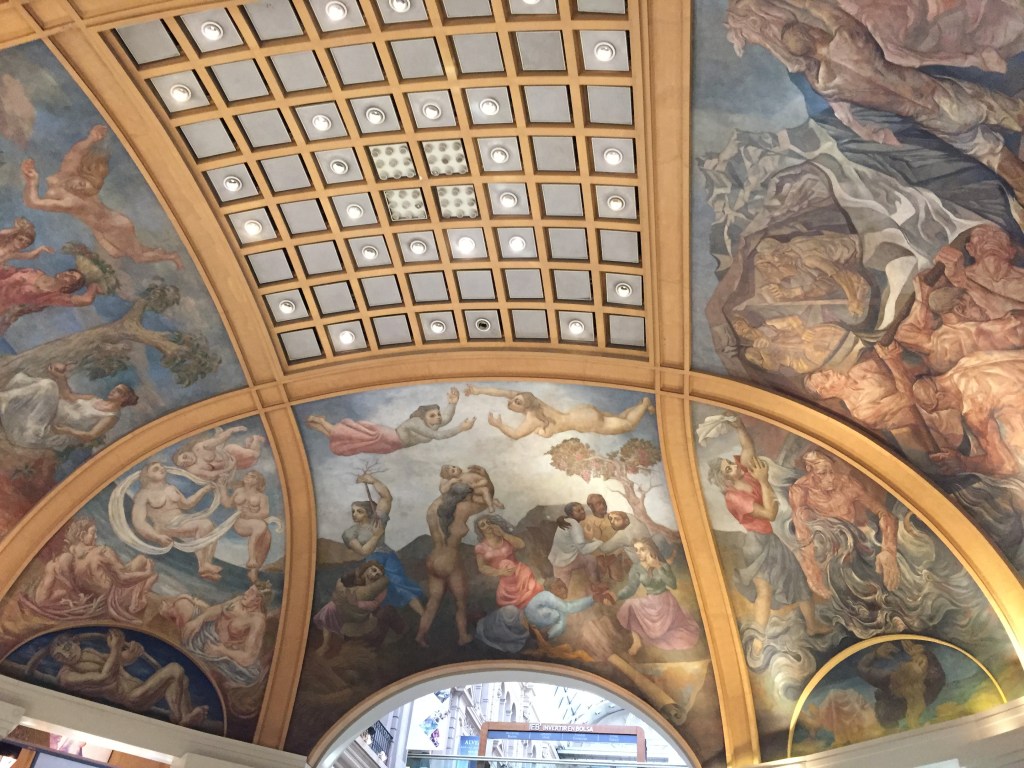
In the evening, we go to Galerías Pacífico; it’s primarily a shopping mall. However, its domed ceiling, completed in 1945, displays the work of five prominent muralists. There is a large food court, so this is the ideal place to round off a day of sightseeing, as you can eat, drink and rest your weary legs.
Day 5 – Tigre
Today, we are going to Tigre, to the north of Buenos Aires. Not so much for the destination, but for the journey. We plan to take a two hour boat trip up the River Plate, then return along the riverside on the Tren de la Costa.
Boat Trip to Tigre
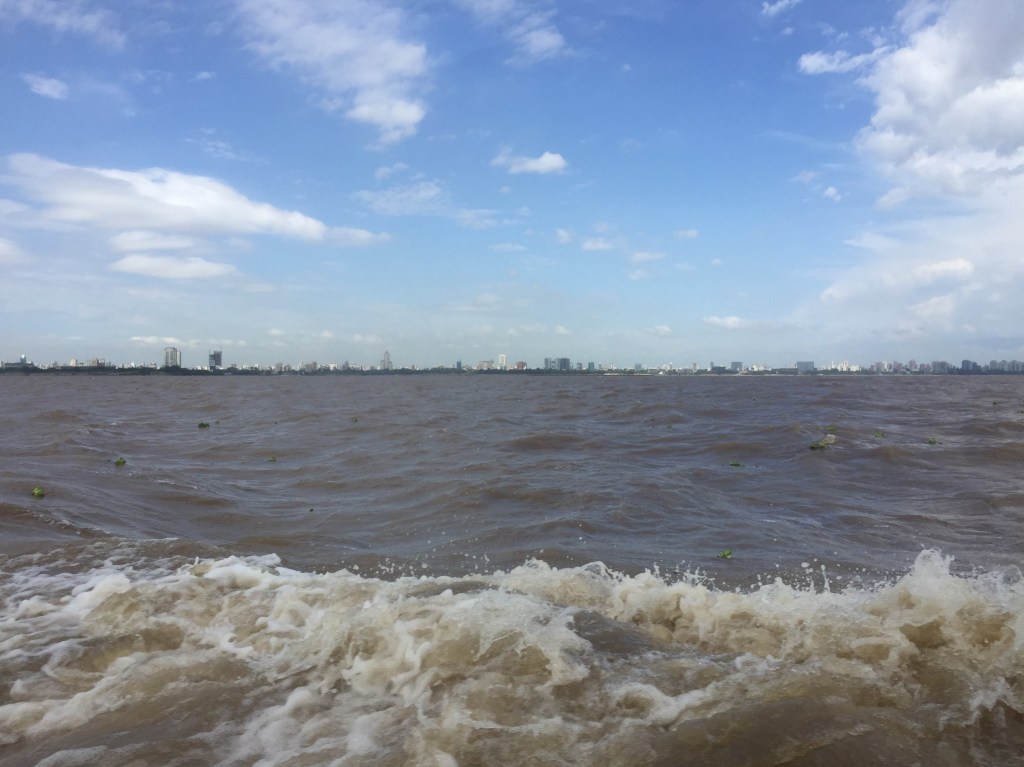
The Boat Trip to Tigre is wonderful. We head up the River Plate, which is so enormous and choppy it’s like being at sea, apart from the water hyacinths bobbing around us.
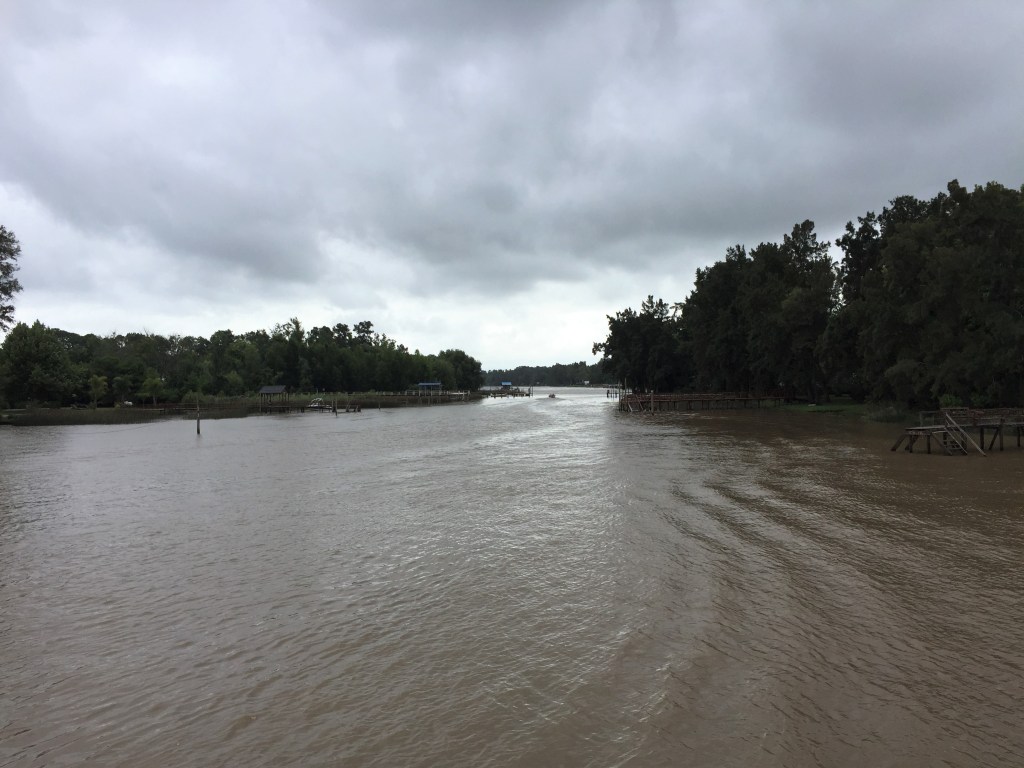
Once in the Tigre Delta, the water calms and we are allowed up on deck. We cruise through a picturesque area of small islands and inlets lined with stilted houses and boats to reach Tigre.
Casa Sarmiento
Amongst the houses we pass is Casa Sarmiento; home to the writer and former President of Argentina, Domingo Sarmiento.

Naval Museum
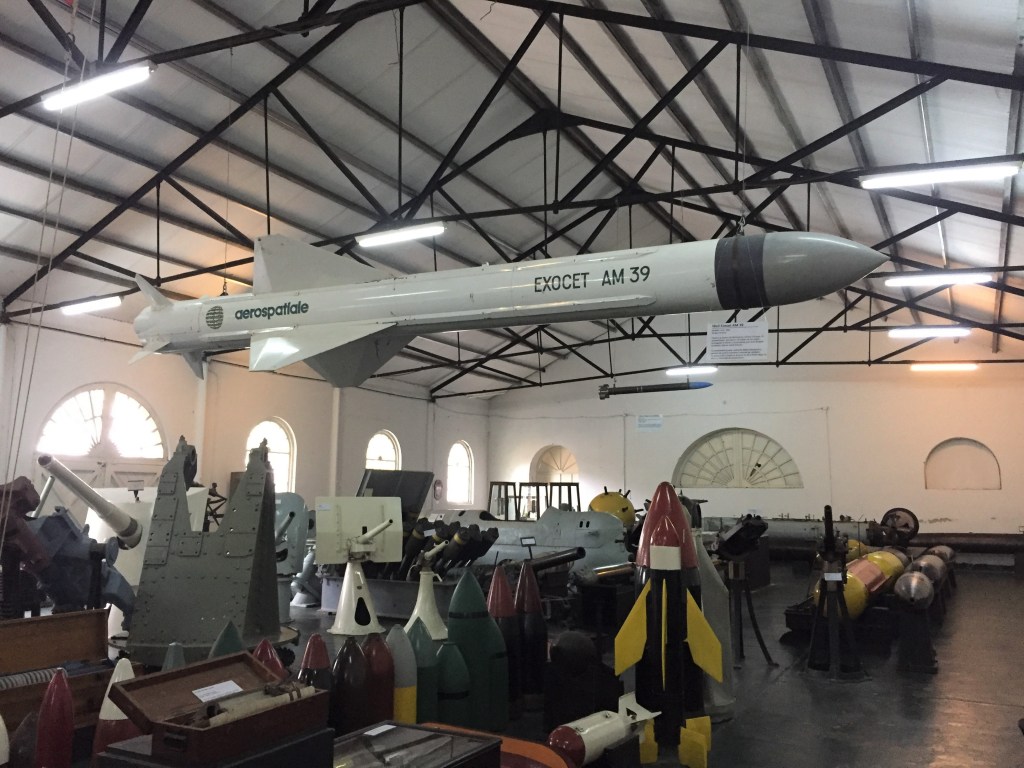
There’s much more to Tigre than I’d anticipated. We wander along the tree lined riverfront to the Naval Museum (Museo Naval de la Nación), which charts the history of the country’s Navy from its inception to the raising of the Argentinian flag over the Falklands in 1982.
Museo de arte Tigre
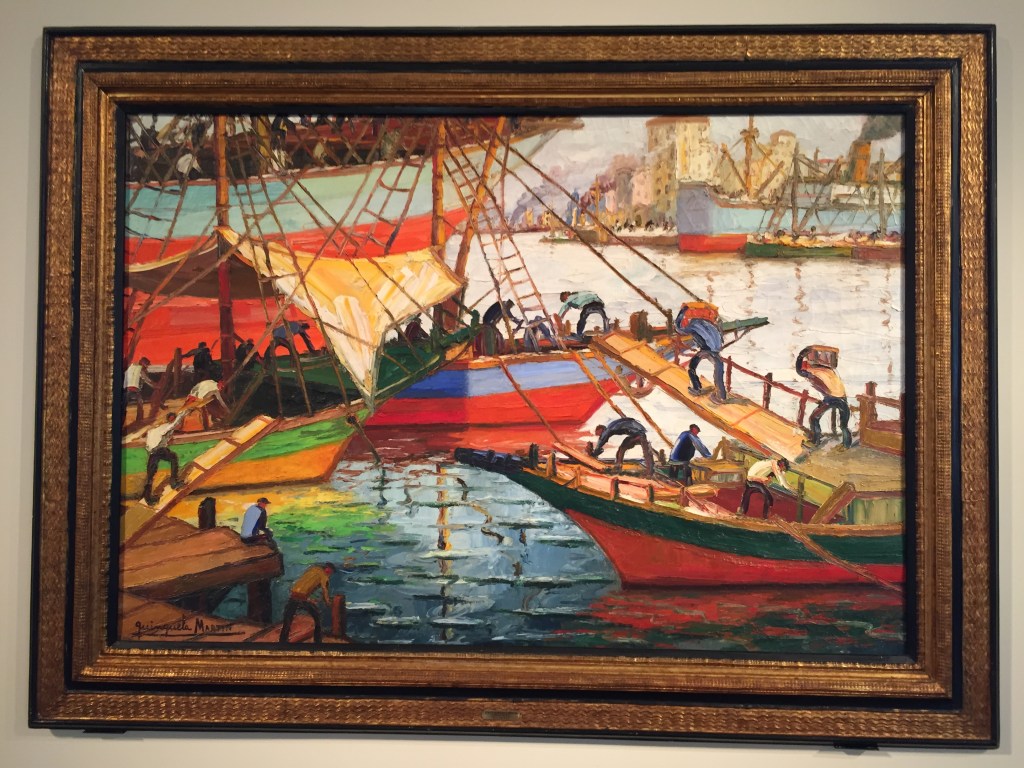
We continue to the Art Museum (Museo de arte Tigre, or MAT for short) where there’s plenty of local art on display in a beautiful building.

My favourites are by Benito Quinquela Martín – they depict workers on the docks of the River Plate a century ago when my great grandfather would have travelled here as a sailor.
We catch the hop on-hop off bus back into town, get some lunch and head to the train station to catch the Tren de la Costa. Who knew? The train doesn’t leave from the train station – it has its own terminus in the fruit market. We consider walking eight blocks to catch the tourist train, lose interest and catch the commuter train back to Buenos Aires.
Day 6 – Ushuaia
Flight to Ushuaia
Today, we fly 1500 miles south to to Ushuaia in Tierra del Fuego. This remote city, which is perched on the southern most tip of the American continent, is nestled between the Andes Mountains and the Atlantic and Pacific Oceans.
The flight is very basic – none of this in-flight entertainment nonsense. Two hours in, some warm coke and a bag of rice cakes materialise. The old man is so bored he determines to count his rice cakes. After two more hours, we begin our descent. All of a sudden, I am no longer bored for three good reasons. Firstly, we have to descend through a huge bank of cloud which causes enormous turbulence. Bouncing through it like a plaything of the gods it terrifying.

Next, come stunning views of the Andes sweeping down to the ocean. Then, it’s time to try to land, in heavy winds, on the tiny strip of land sticking out from the end of the world. Attempt No 1, abort, circle, try again, circle, try again, abort, circle, try again. In all, from first attempt to finally landing – 21 minutes of pure fear. The atmosphere is tense; deathly silence permeated only by the rustle of sick bags and the occasional scream (some of them mine). Once we are gratefully back on solid ground, to the sound of cheers and a well earned round of applause for the pilot, we catch a taxi the short distance into town.

Accommodation – Apart Hotel Cabo San Diego
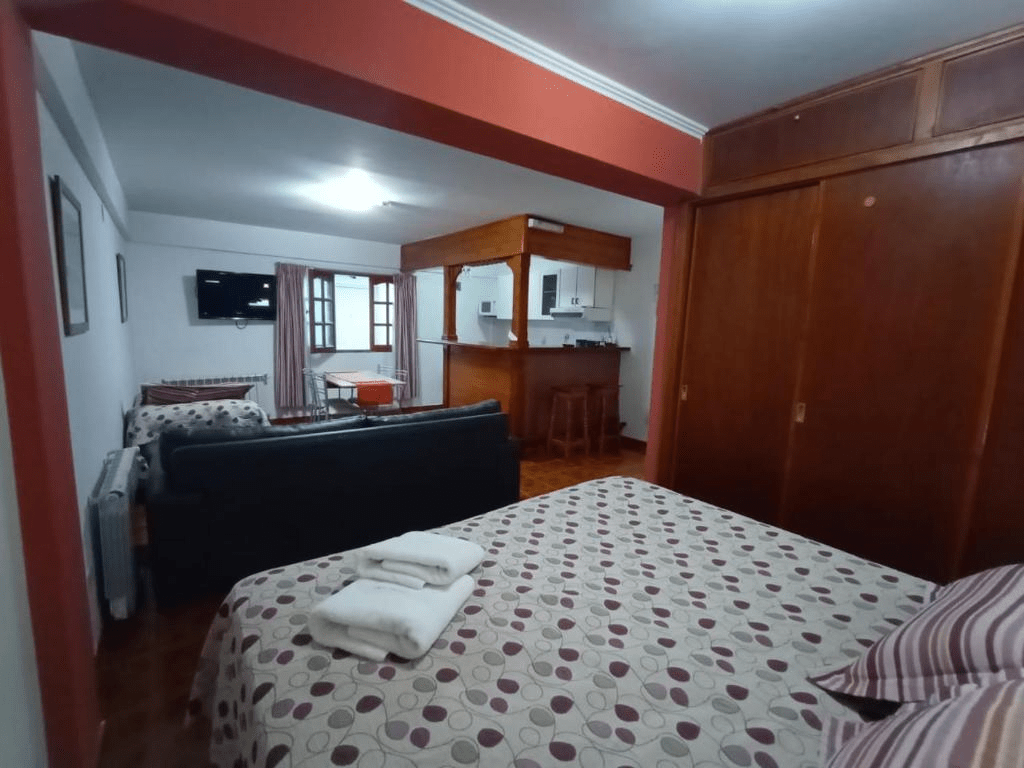
We check into our accommodation; Apart Hotel Cabo San Diego. The room is clean and comfortable and has its own mini kitchen. There is a supermarket just round the corner, which makes the apartment a good choice budget wise, as we don’t have to eat out. Once checked in, we go in search of food and beer – it’s been a very stressful day! And retire to contemplate how the end of the world nearly was the end of the world…
Day 7 – Ushuaia
Ushuaia is a strange, mesmerising place; a town tumbling the hillside between the Andes and the sea. At this time of year, it doesn’t get dark until 10 pm, prior to that is a dusk of eerie yellowish grey, and it’s light again by 5 am.
Tierra del Fuego National Park
Today, we are going slightly further afield to Tierra del Fuego National Park. The park is located around 8 miles west of town. We walk into Ushuaia to the shuttle bus departure point. The price is more than we’d expected, but we cough up and head for the park. After a brief stop to hand over more money for entry fees, we reach the Visitor Centre.
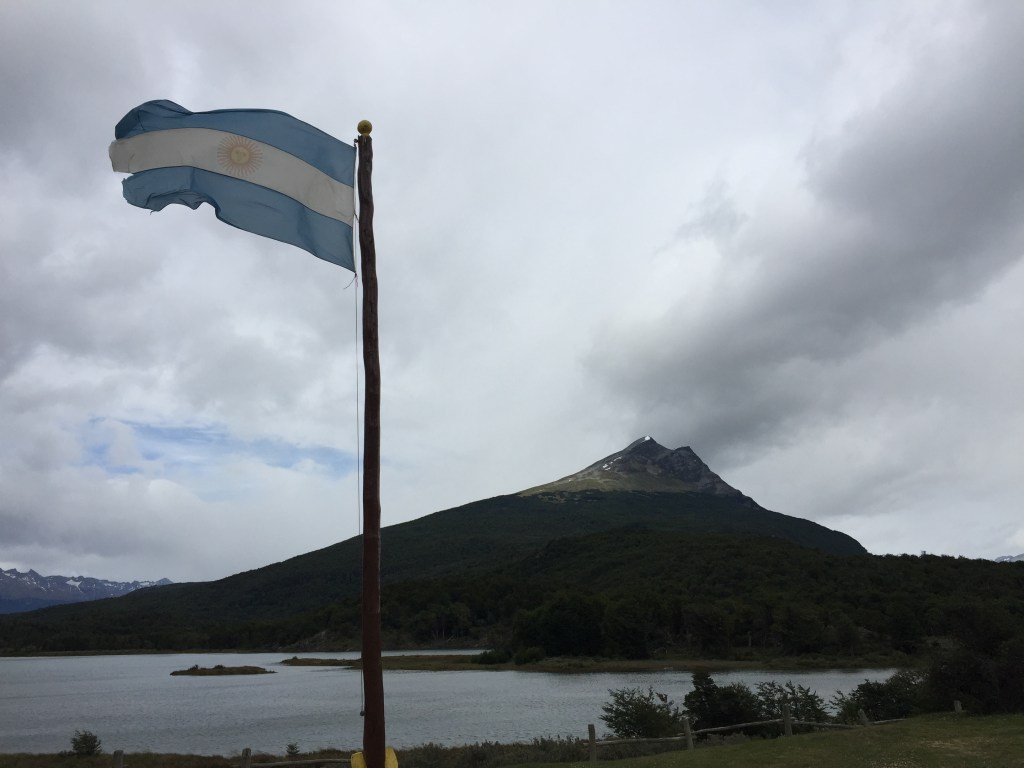
We set forth on a five hour hike. It’s very beautiful; on one side is the Beagle Channel with its abundant bird life, on the other, snow capped mountains. Most of the area is peat bog, so the rivers and lakes are a spooky green-brown colour.

We walk to the Beacon at the End of the World and (once I have pocketed a souvenir rock for my baby geologist – bad mummy!) we head back towards the Visitor Centre.

We return via an area which fell victim to a disastrous attempt to introduce beavers to the park.

Dinner at Alakush Visitor Centre
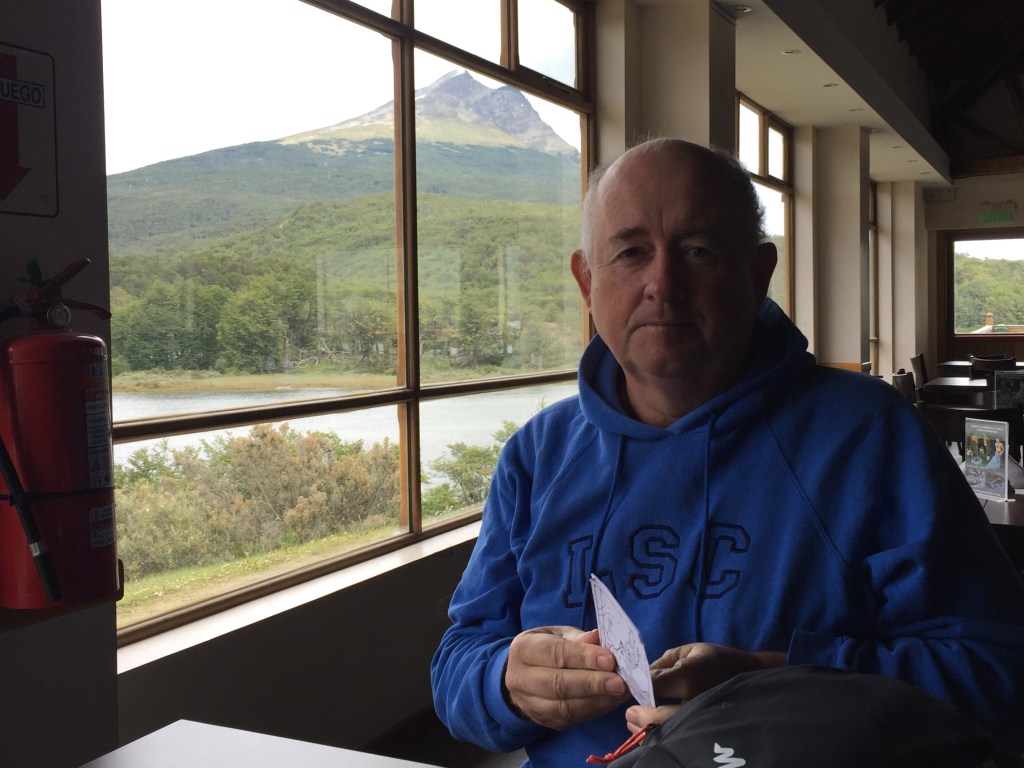
Getting back to Ushuaia is surprisingly complicated. There are dozens of seemingly identical white buses all bearing the logo ‘Linea Regular’. But they are all owned by different companies and our tickets are only valid on one particular bus. It leaves in two hours. So, we while away the time exploring the Visitor Centre and eating empanadas in the café (our bus driver is sitting at the table behind us for the whole of this time). Once the driver is suitably siestaed, we can go back to town. We pile onto the bus, wait a while, then are told to change to a different bus. Finally, we depart in a convoy of similar, yet somehow subtly different white buses.
Day 8 – Ushuaia
Beagle Channel Boat Trip
This morning, we are taking a Beagle Channel Boat Trip. The route conjures up school history lessons about explorers; The Beagle Channel, Cape Horn…

We arrive at the port 20 minutes before the published departure time, which is good because passports are required to embark. The old man rushes back to the apartment to get the passports. The boat eventually departs 40 minutes behind schedule, so the mad dash was totally unnecessary.

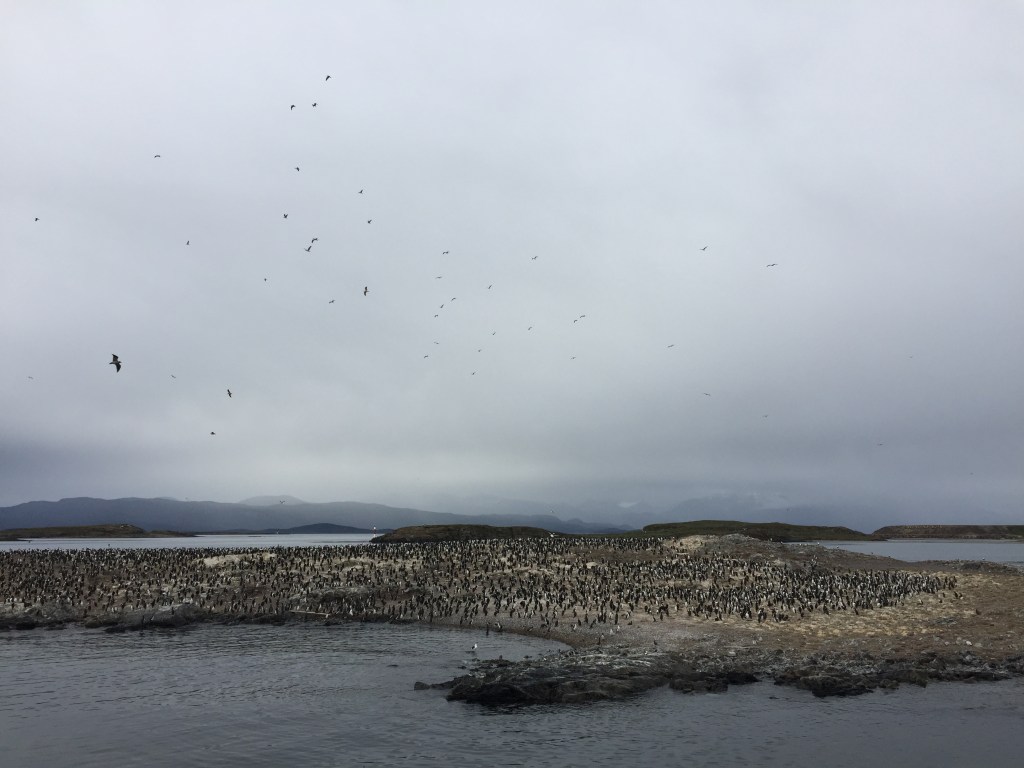
We leave Ushuaia, sailing into the Beagle Channel. The scenery is beautiful and the pilot navigates to line up with an island of black and white imperial cormorants.
Les Eclaireurs Lighthouse
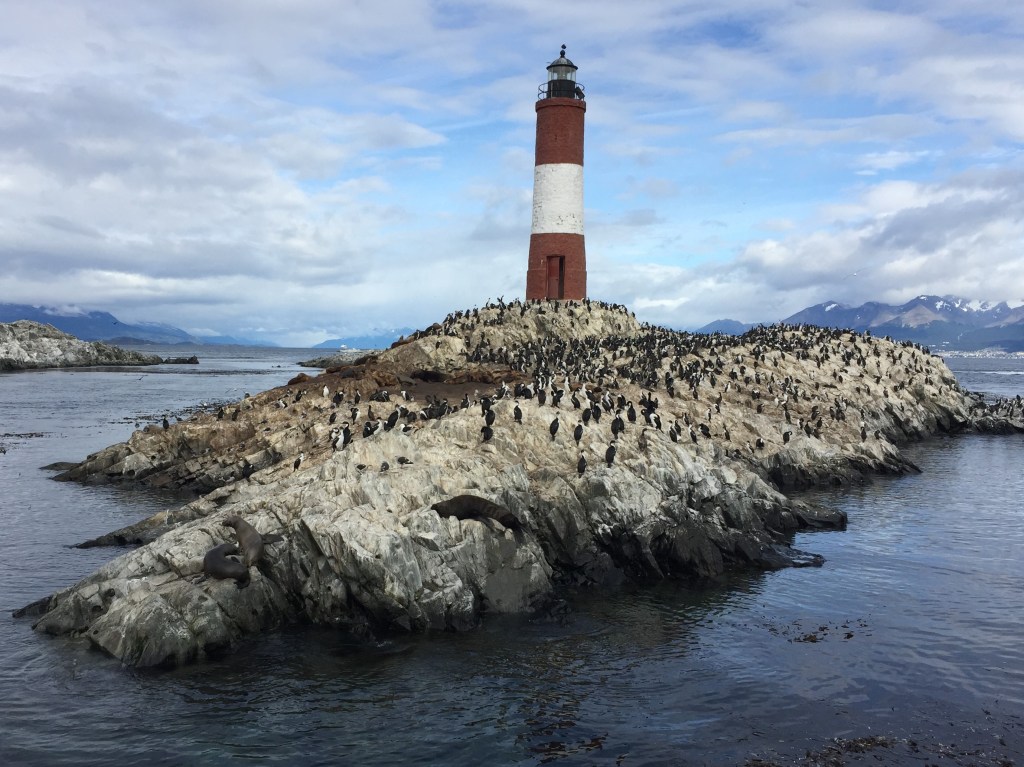
Next, comes Les Eclaireurs Lighthouse which sits on an island inhabited by sea lions. I manoeuvre myself into a position on the bow of the catamaran, just as we hit a rogue wave on the otherwise calm sea. With six hours of the journey left, I am completely soaked and smell faintly of sealion poo. But I get my sea lion photos, to go with my impending pneumonia.
We cruise on in search of penguins. I go to the toilet, but am horrified to find that the toilet is placed over a hole and I have peed into the Beagle Channel.

After the almost excitement of a tiny glimpse of whale, we reach the point where the Atlantic and Pacific Oceans meet, and the main attraction; penguins.
Isla Martillo
Isla Martillo is an island covered in penguins; penguins on the beach, penguins fishing in the sea, penguins everywhere. It’s a wonderful sight.
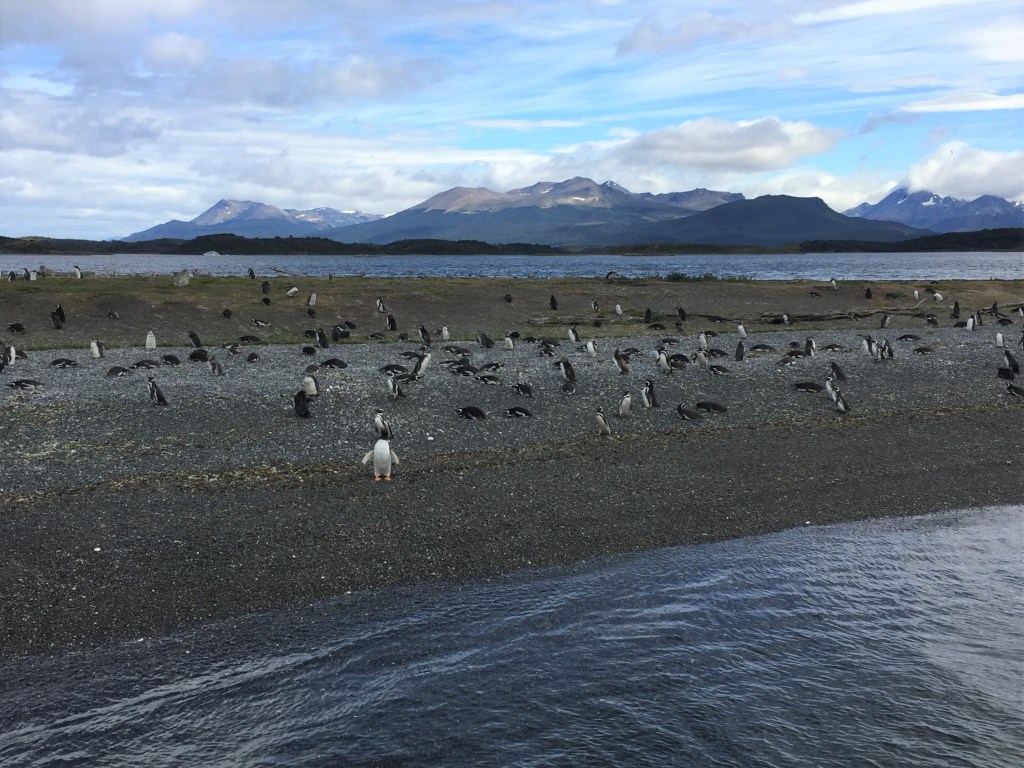
Disembarking on our cruise is not permitted (you have to pay a lot more for that!) but the boat pulls up alongside the island for long enough to satiate everyone’s penguin sighting desires.
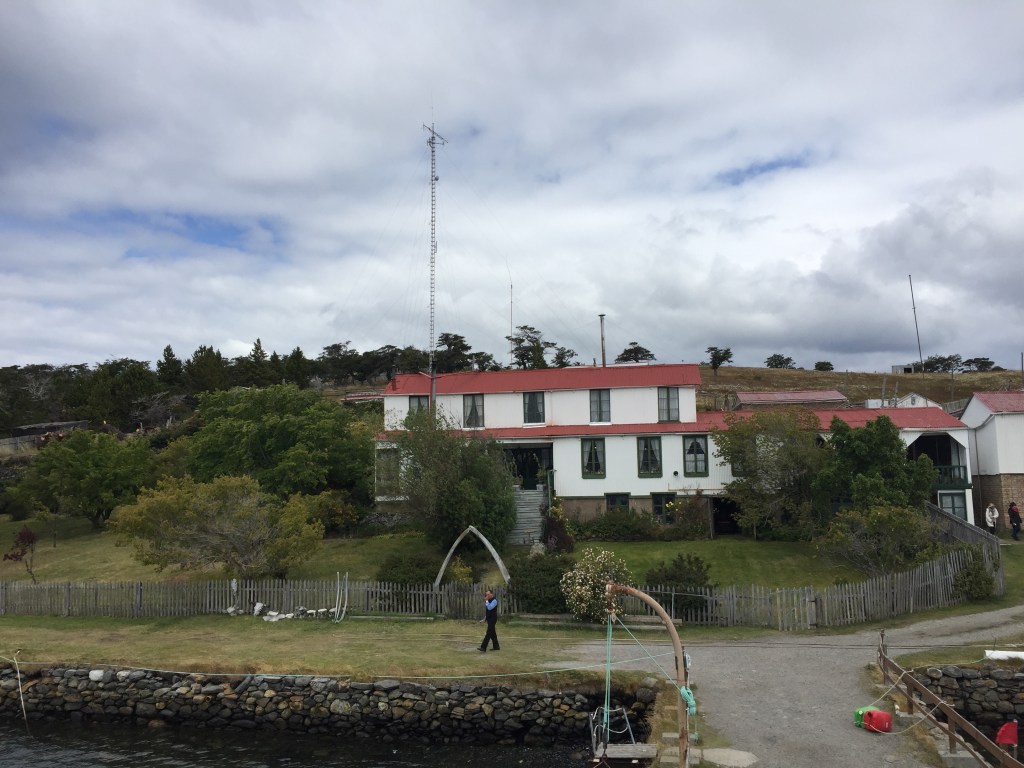
Estancia Harberton
Then we return to Ushuaia, with a detour to drop passengers for an optional stop at Estancia Harberton, Patagonia’s oldest ranch.
Day 9 – Ushuaia
Today, I am taking it easy and spending the day exploring Ushuaia. While the old man goes to climb a glacier, I set off for the museum. A few minutes later, he is behind me. The bus has been cancelled due to lack of interest. He follows for a while, complaining that ‘museums are boring’, then decides to catch a taxi to the glacier and disappears again.

Museo Maritímo de Ushuaia
I start at the Museo Maritímo de Ushuaia, which is is housed in an old prison (the city was originally a penal colony). It is much larger and than I’d expected. In fact, it’s really four museums in one. I emerge three hours and 100 photographs later.

Prison Museum
The prison consisted of several wings. In the Prison Museum, the building has has been left untouched to show the conditions prisoners lived in.
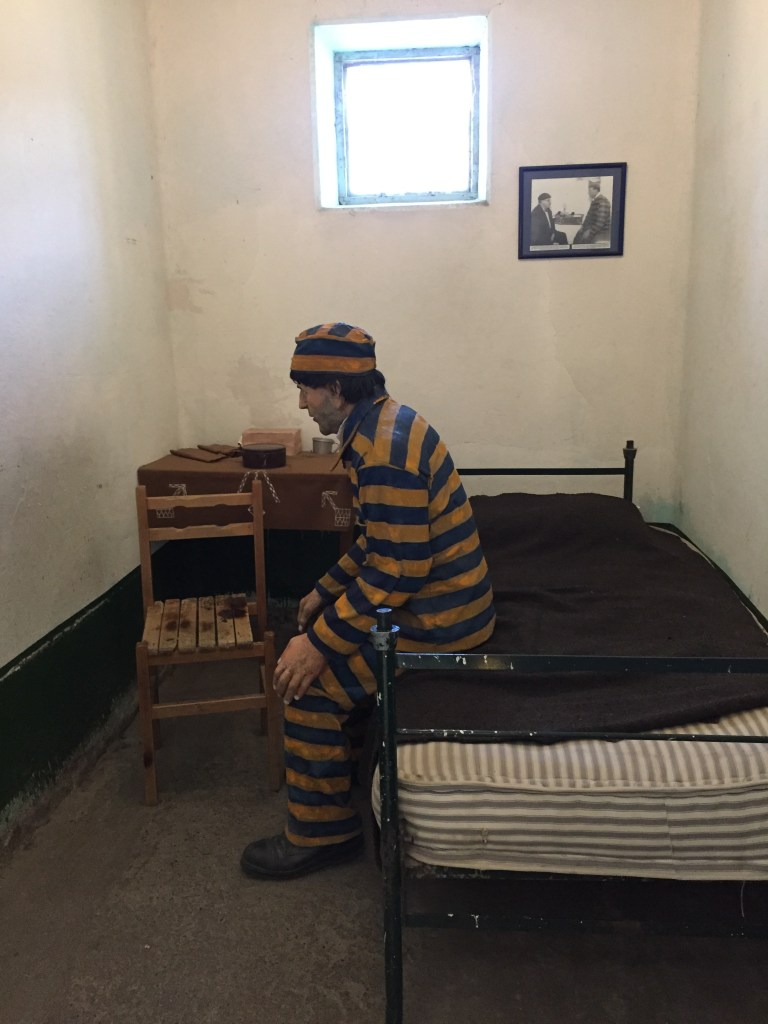
You can learn about the history of the penal colony and some of the prison’s more infamous inmates.
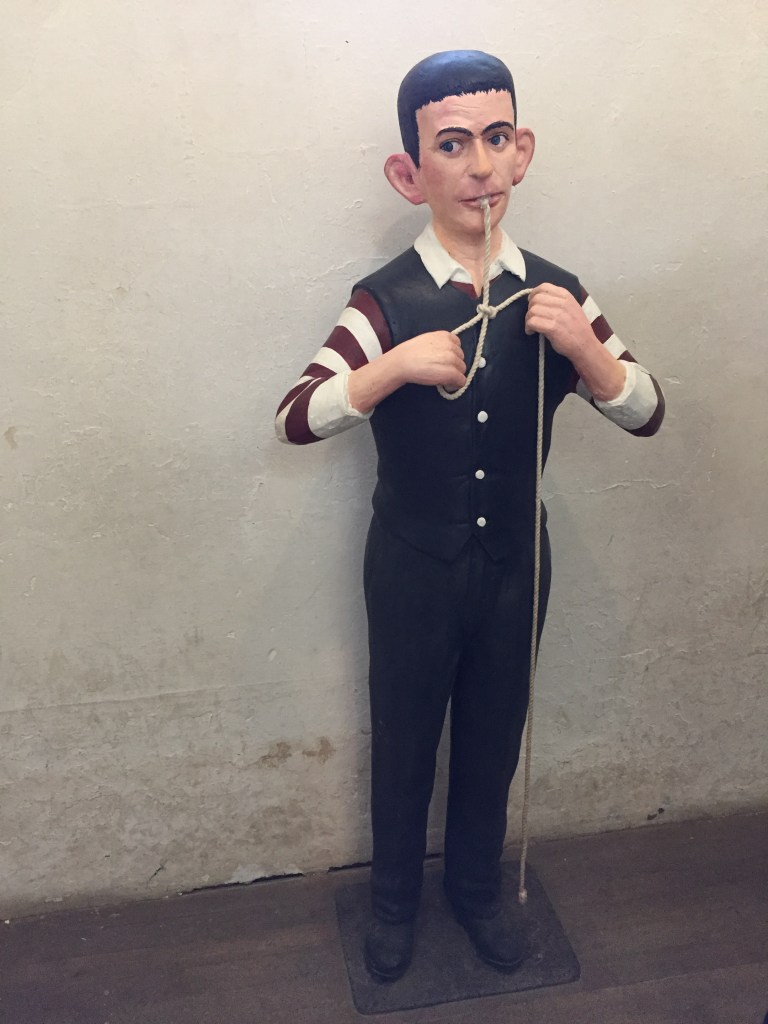
MARINE ART MUSEUM
One wing contains a gallery of Marine Art.

Maritime Museum
The remaining area holds the Maritime Museum, which detail the area’s seafaring history. There’s the tragi-comedy of the chaos wreaked by the first missionaries and a section on piracy starring Sir Francis Drake. Plus plenty of other fascinating Fuegian facts.
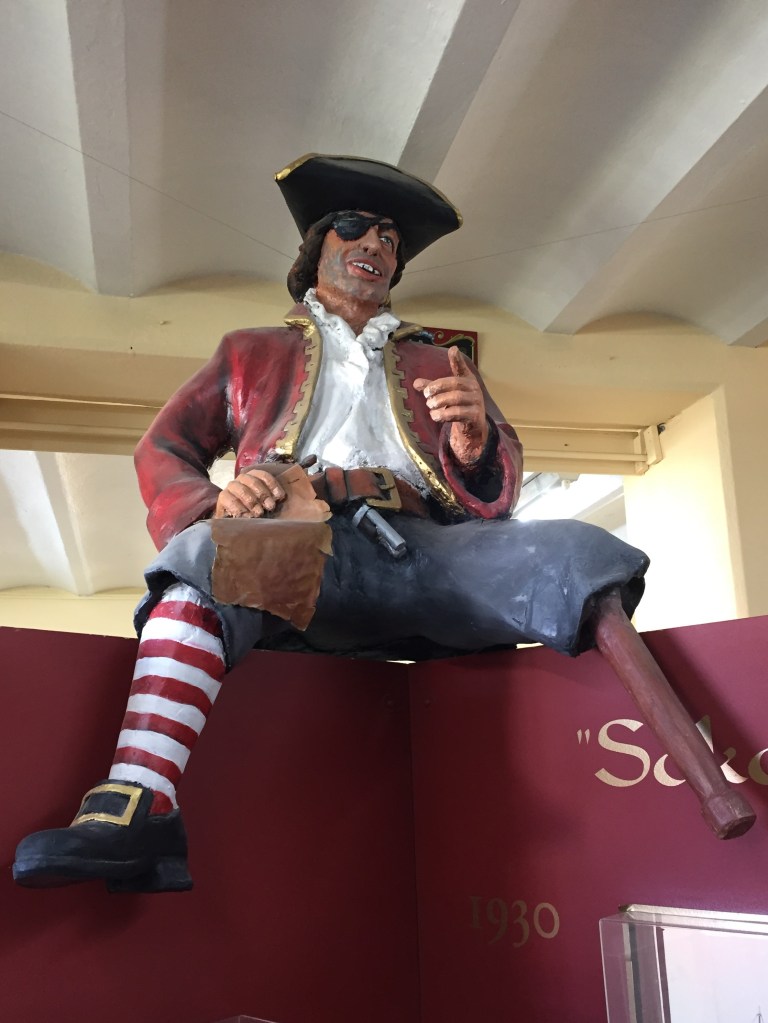
ANTARCTIC MUSEUM
The is a separate section dedicated to Antarctica, including the first successful expedition to the South Pole. Here, you can see some of the equipment used and even some sketches of Norwegian flags discovered in Scott’s notebook.

Civic Plaza
In the afternoon, time for one last wander, along the water front and back through town to take advantage of the many photo opportunities. The Civic Plaza in home to various moments, an End of the World Sign and the Tourist Information Office.

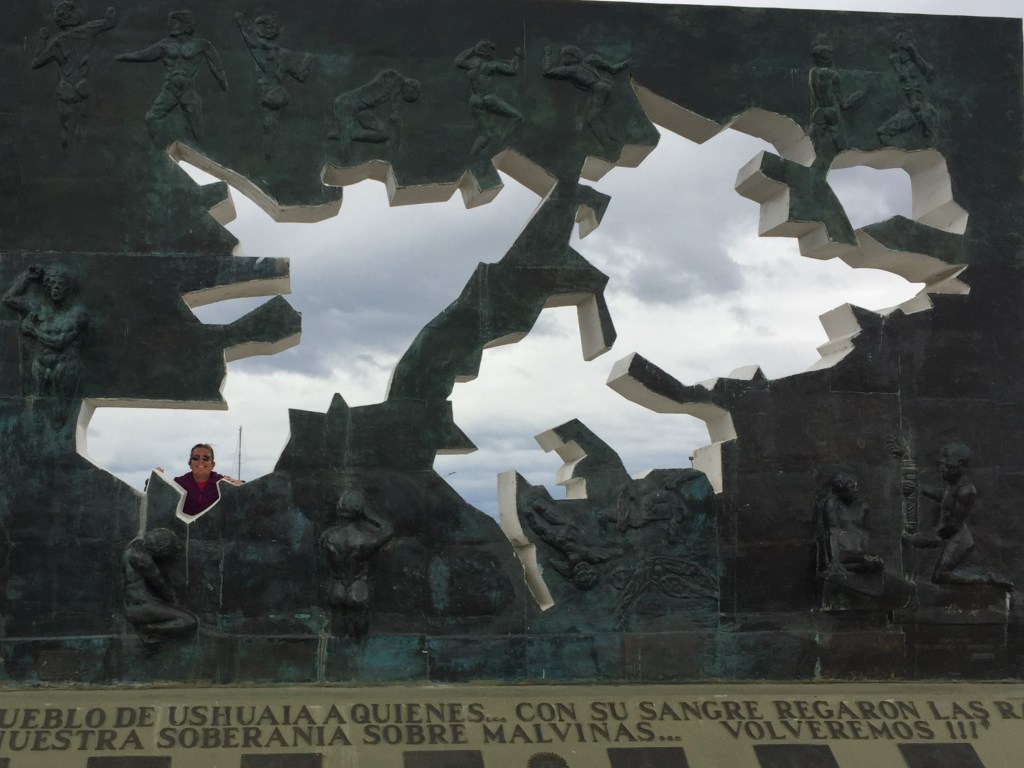
Malvinas Memorial
The Malvinas Memorial consists of a large plaza with a number of monuments to those who lost their life in the conflict. It tells the story of Argentina’s fight with Britain over the tiny Pacific islands, with a population of just 3,700 people, which led to the death of over 900. The greatest loss of life was the sinking of the General Belgrano, which killed 323. Hundreds more men were rescued from the sinking ship and evacuated to Ushuaia.
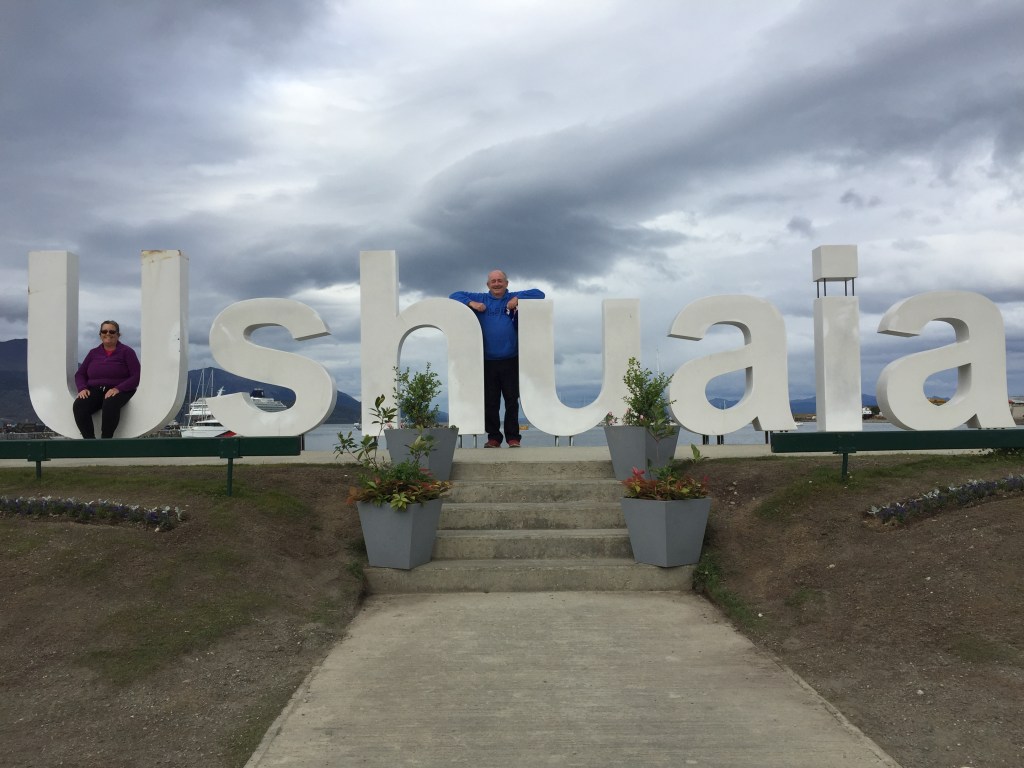
Ushuaia Sign
The Instaworthy Ushuaia Sign stands on the waterfront with stunning views.
Iglesia de la Merced
We walk back into town, via the brightly coloured Iglesia de la Merced, which boasts the title of most southerly Catholic church on the planet. It was built by convicts in the 1940s.

Dinner at Paso Garibaldi
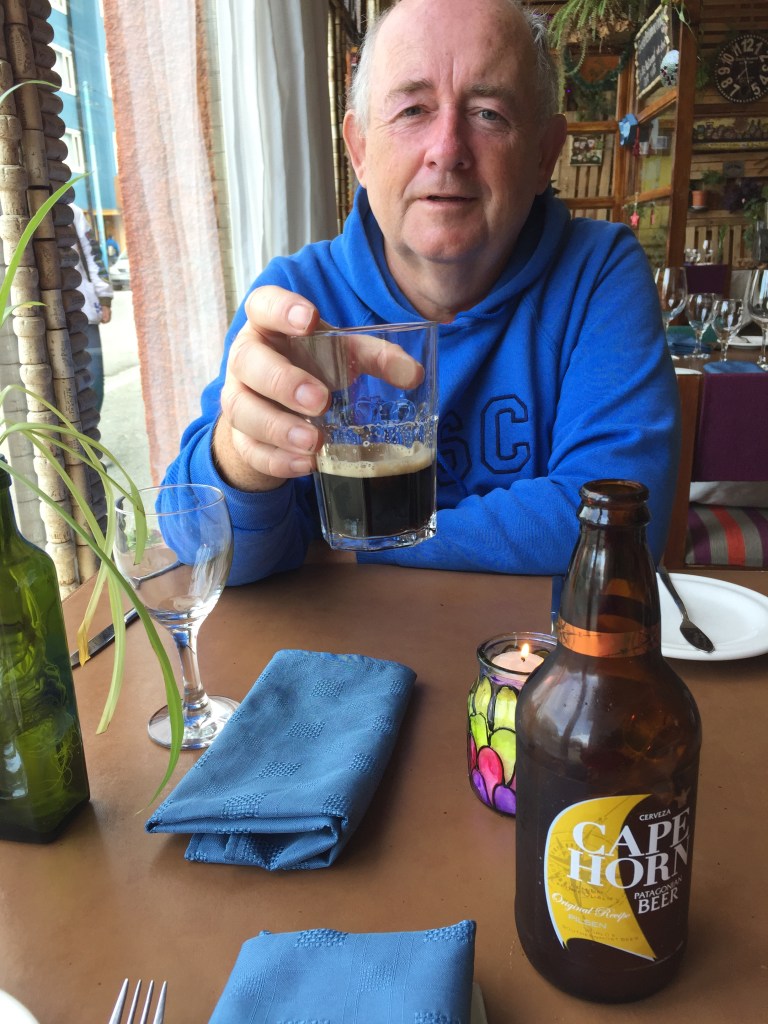
We round the day off with dinner at a very nice restaurant; Paso Garibaldi. For £30 we receive a small but tasty bowl of crab stew plus two chips each and one bread roll between two (plus a bottle of Cape Horn – the world’s southernmost beer). The food is excellent, but as I leave, I can’t help thinking that it’s a good job there’s a packet of biscuits back at the apartment with my name on it!
Our time in the beautiful Tierra del Fuego is over. Biscuits consumed, it’s time to pack. In the morning we fly to El Calafate.
Day 10 – El Calafate
This morning, we fly 350 miles north to El Calafate, a city on the edge of the Lago Argentino. It is the nearest city to the stunning Perito Moreno Glacier, located 50 miles away in Los Glaciares National Park. The next three weeks of our trip are fly-drive and we’re looking forward to the freedom of our own transport.
Flight to El Calafate
We arrive at the airport in plenty of time, which is good because it is now that we learn that Aerolineas Argentinas has a 15 kg luggage limit – not 23 kg as indicated on our booking form. After checking in, we have to wait in a long queue to pay our excess baggage fees. But first, the old man has an argument with the check in clerk, followed by an argument with the excess baggage clerk, rounded off with an argument with the supervisor. Eventually, we board our flight, I’m hoping it’s calmer then our arrival, when I genuinely thought I was going to star in the sequel to Alive!
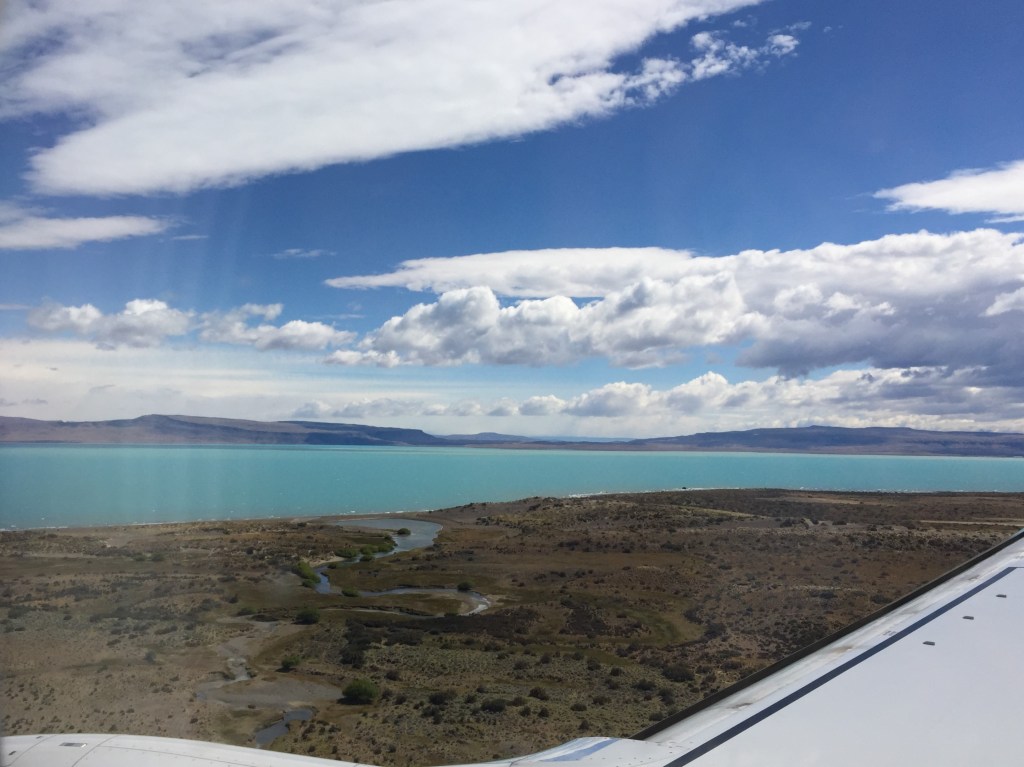
After a thankfully uneventful flight, we land in El Calafate (which startles an armadillo which has wandered onto the runway), collect our car and head for our accommodation.

Accommodation – Hosteria La Estepa
Our accommodation in El Calafate is on the outskirts of town in the wonderful Hosteria La Estapa. The interior of the hotel is immaculate. An added bonus; our room overlooks Lago Argentino, and we can see flamingos feeding on the lake.

Lago Argentino
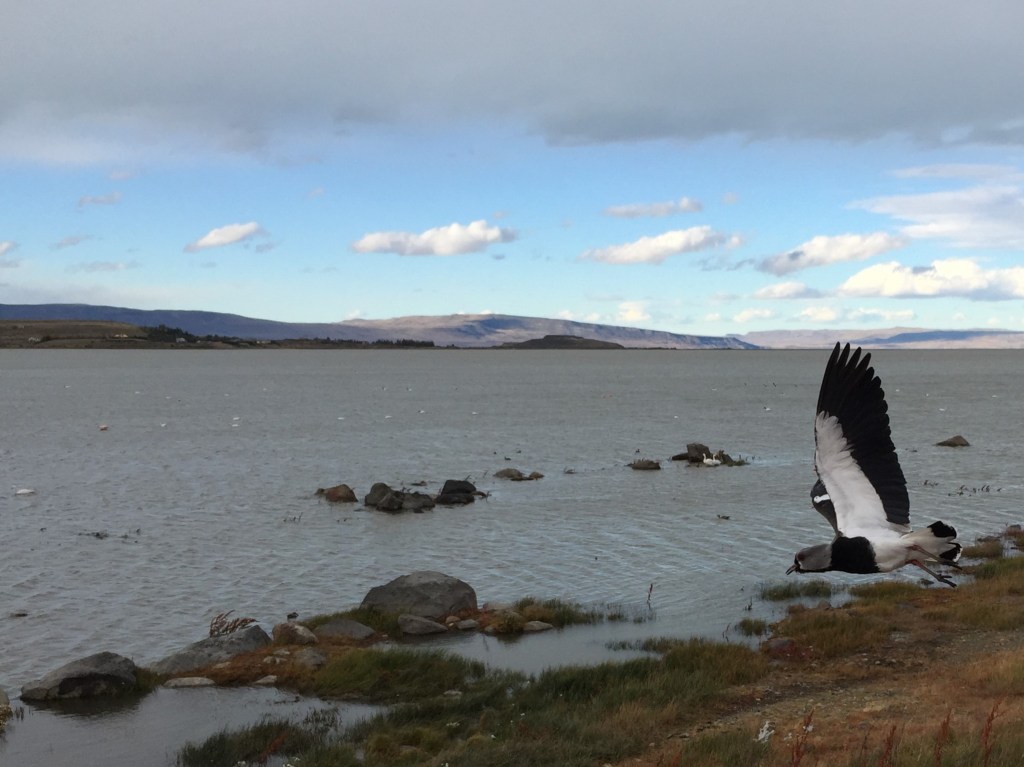
We drive into town for some lunch and a closer look at Lago Argentino, Argentina’s largest freshwater lake. The bird life around the lake is prolific.
Dinner at La Chacrita de Nimez
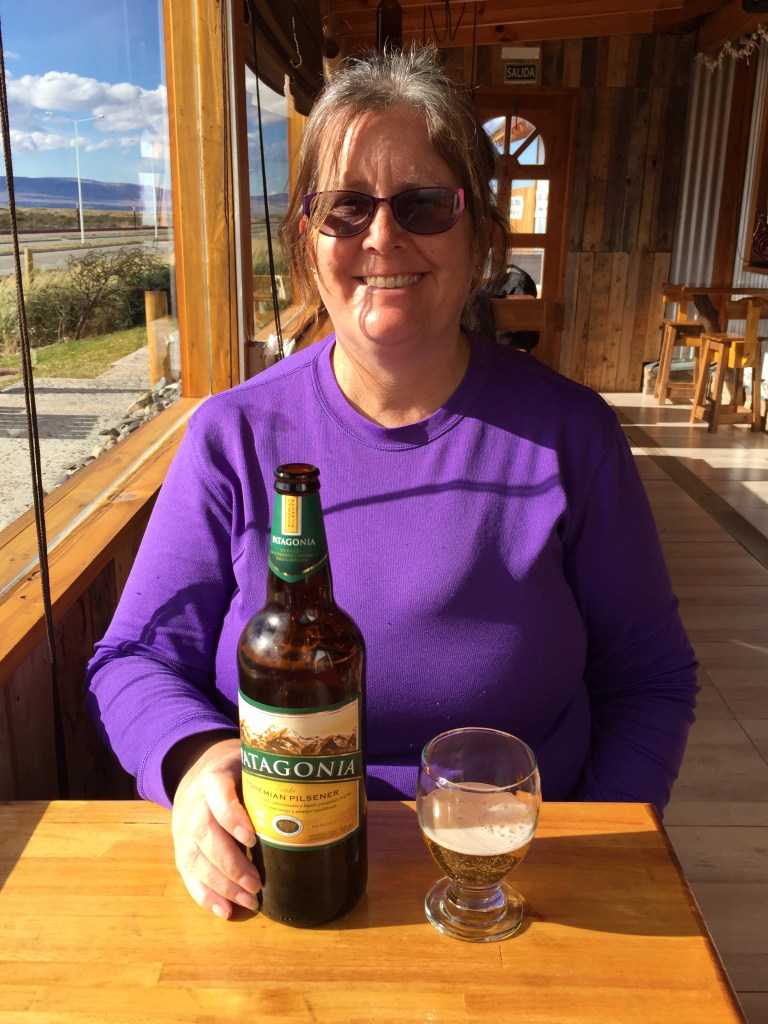
We find a nice restaurant overlooking the lake, La Chacrita de Nimez. Dinner consists of empanadas, chips in garlic butter (because frying potatoes just doesn’t add enough fat) and Patagonia beer. It’s a pleasant but uneventful dinner until a middle aged couple arrive with their teddy bears, seat them at the table and order dinner for four.
Then we retire to our hotel to sit by the window and admire the beautiful view some more.
Day 11 – El Calafate
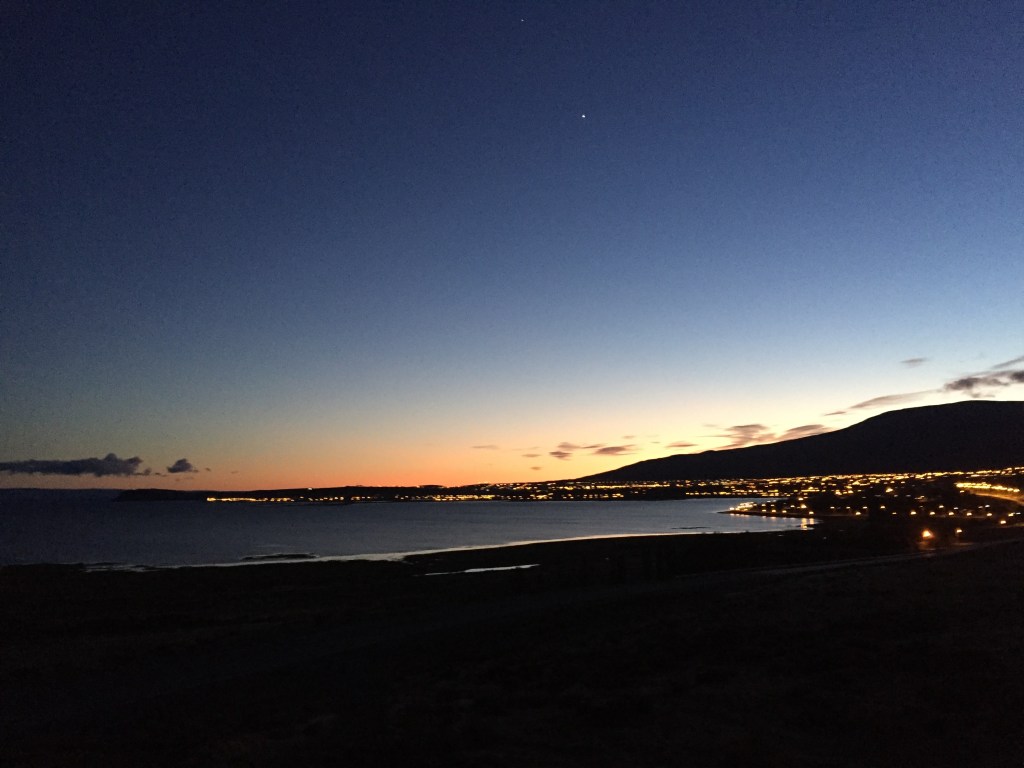
We went to bed with the curtains open to take advantage of the view of the sun setting and rising over the lake. The trouble is that the sun rises so early, it tricks you into getting up too soon. So, at 6.30 am, I get up and go for a run.
After breakfast, we set off for Los Glaciares National Park to see Perito Moreno Glacier. This 35 km long, 4 km wide glacier ends at Lago Argentino, where you can observe it from boardwalks along the shore.

Los Glaciares National Park
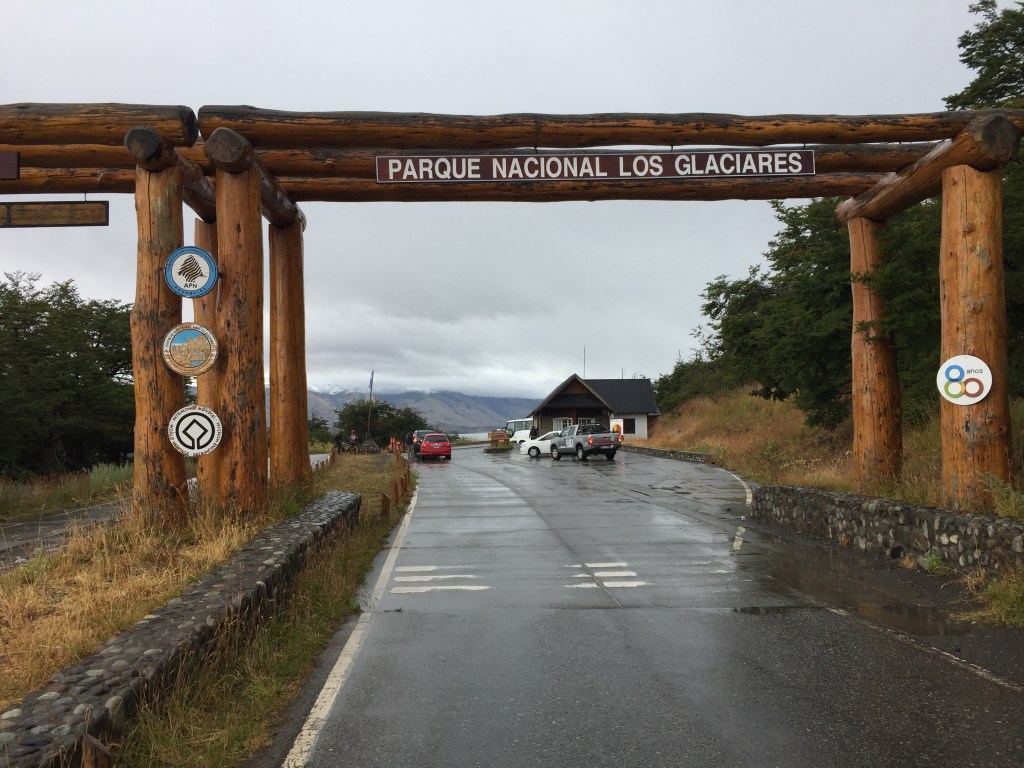
The first part of the drive is stunning, but pretty soon, the cloud descends and it starts to rain. By the time we reach the entrance to Los Glaciares National Park, it’s pouring down. I can certainly see why the Welsh felt such an affinity for Patagonia.
Perito Moreno Glacier
We stop at a viewpoint for our first glimpse of Perito Moreno Glacier, just visible through the cloud. It’s spectacular in a barely-visible sort of way.
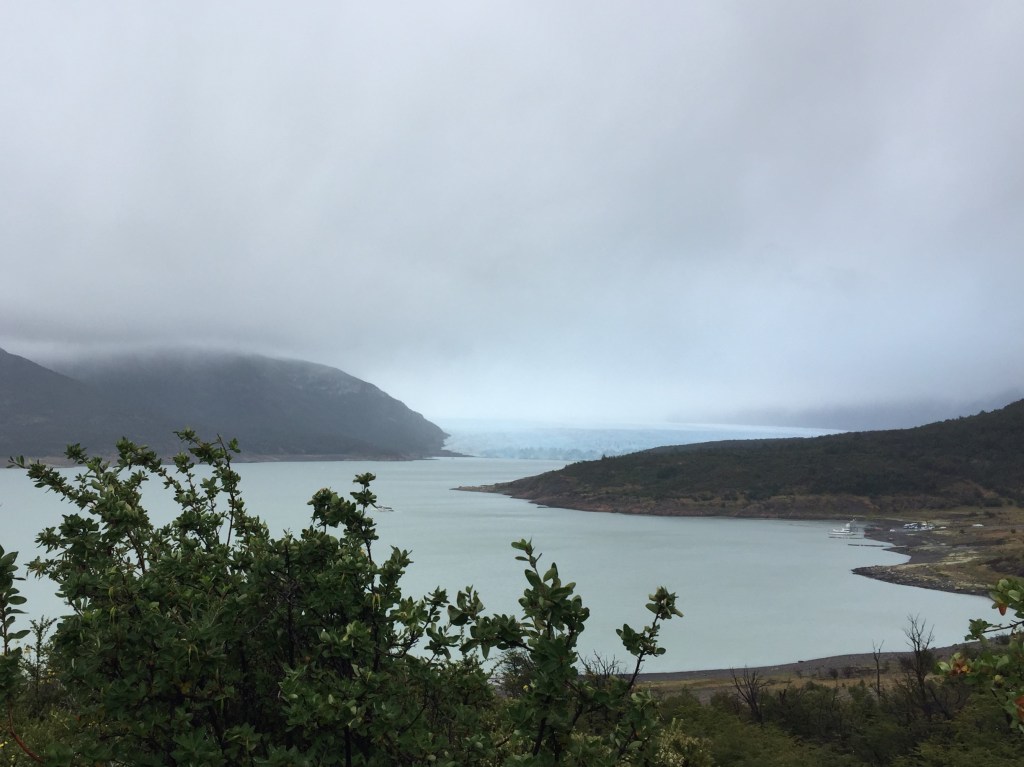
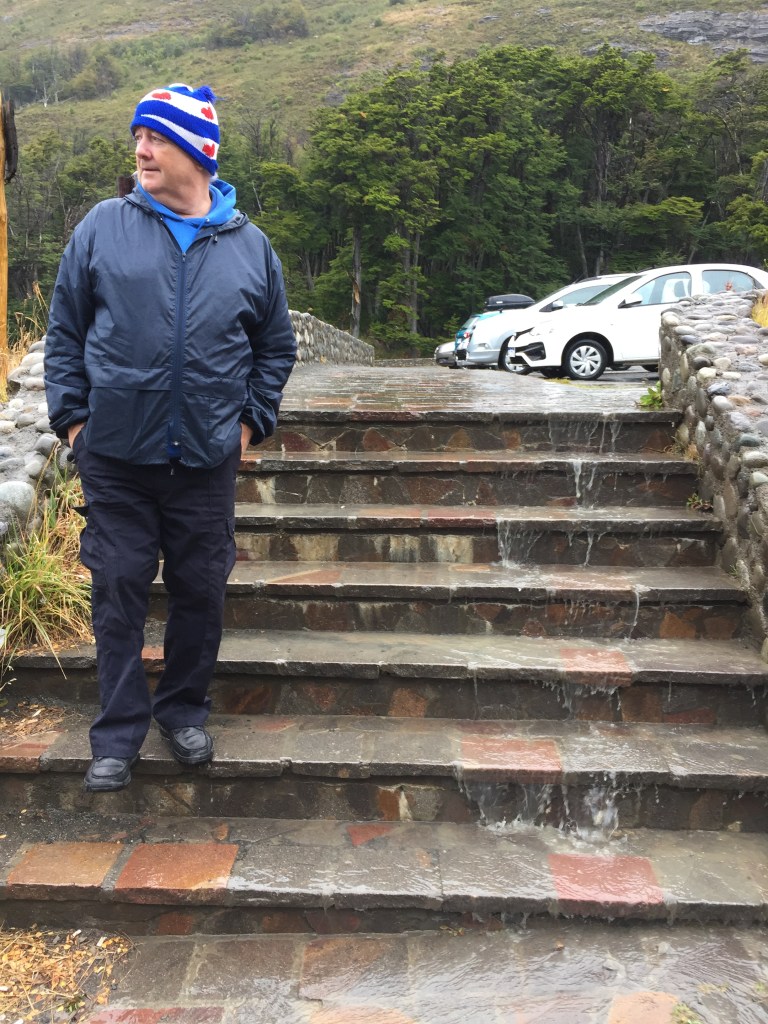
We continue to the main car park at the start of the boardwalks. Nobody moves. After sitting in the car a while waiting out the rain, we accept that it’s not going to stop, don waterproofs and set off. My guide book says there are 4 km of boardwalks. It has omitted to mention the steps. By the time we reach the end, we have climbed over 1100 steps.
Sendero de la Costa
We walk to the glacier along the Sendero de la Costa; a mile long boardwalk approaching the glacier along the lakeside.

It’s an incredible sight – the huge wall of ice coming to an abrupt end. Every now and then, with a huge roar, a chunk breaks off and crashes into the water. One of the benefits of the rain is that the boardwalks are deserted, so no jostling for position for a good viewpoint. Most of the tour groups are sheltering in the gift shop wearing expensive yellow ponchos they’ve just purchased for no apparent reason, as it’s not raining inside.

We follow the series of boardwalks and viewing platforms around the base of the glacier, admiring it from every angle, then I take the shuttle back to car park (the old man insists on walking) and we drive the 45 miles back to our hotel.

Once we exit the park, the rain stops and the sun comes out (of course). We drive back round the lake, stopping for a last time to view the flamingos then then return to the hotel to pack. In the the morning, we move on to El Chaltén.
Day 12 – El Chaltén
Today, we drive 136 miles north along Route 40 to the village of El Chaltén, a mountain village near the bases of Cerro Torre and Cerro Fitz Roy, and a popular base for hiking.
Drive to El Chaltén
It’s a fairly straightforward drive; out of town along the RP11, then north on RN40. The final 50 miles is along RP23, which follows the shore of Lago Viedma for much of the journey.
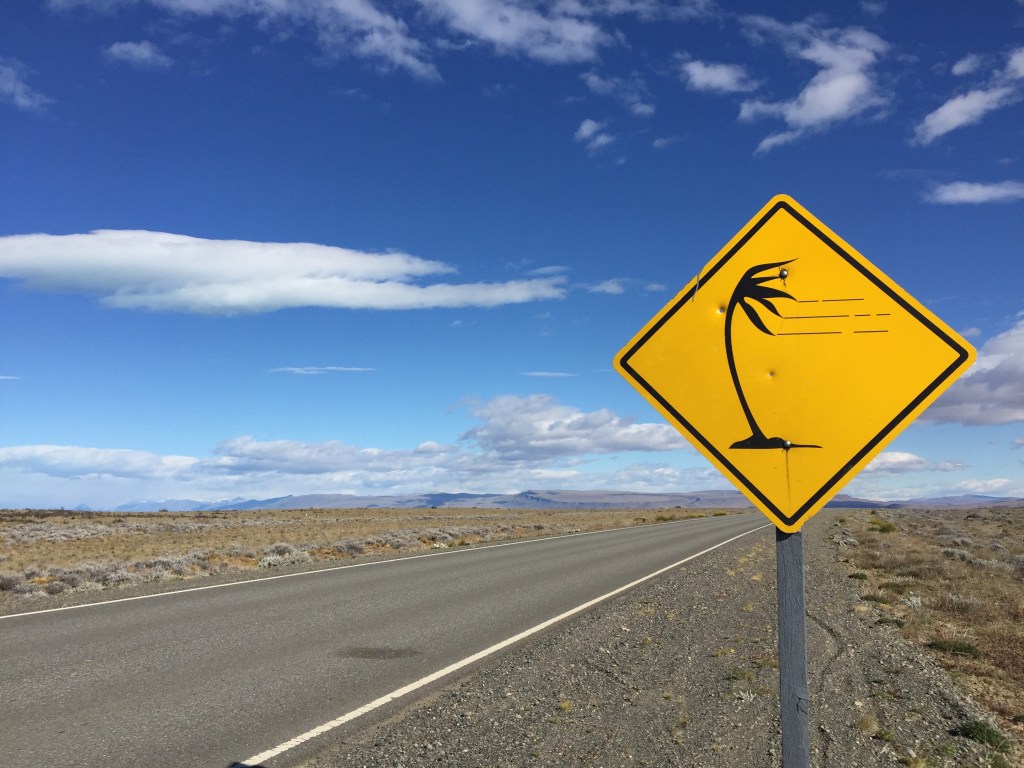
The scenery en route is of snow capped mountains, turquoise lakes, rivers with eagles flying overhead and pampas dotted with guanacos (a type of llama).

We also spot silver foxes, an armadillo and gauchos herding sheep.

Accommodation – Aires del Fitz
We arrive in El Chaltén and check in to our accommodation; a cabin at Aires del Fitz . We have been upgraded to a two storey, six bed cabin, so space won’t be an issue for the next few nights! The cabin is self contained and there’s a supermarket a 5 minute walk away to purchase provisions.
El Chaltén
We take a walk through the quirky little village El Chaltén; a hiking centre within Los Glaciares National Park.

First stop, a visit to the Tourist Information Centre for up-to-date details of hiking routes.

Mirador de los Condores y de las Aguilas
For our first hike, we select the 3.5 mile long hike to Mirador de los Condores y de las Aguilas; a circular route, which supposedly leads to viewpoints where condors and eagles soar above the river canyon.
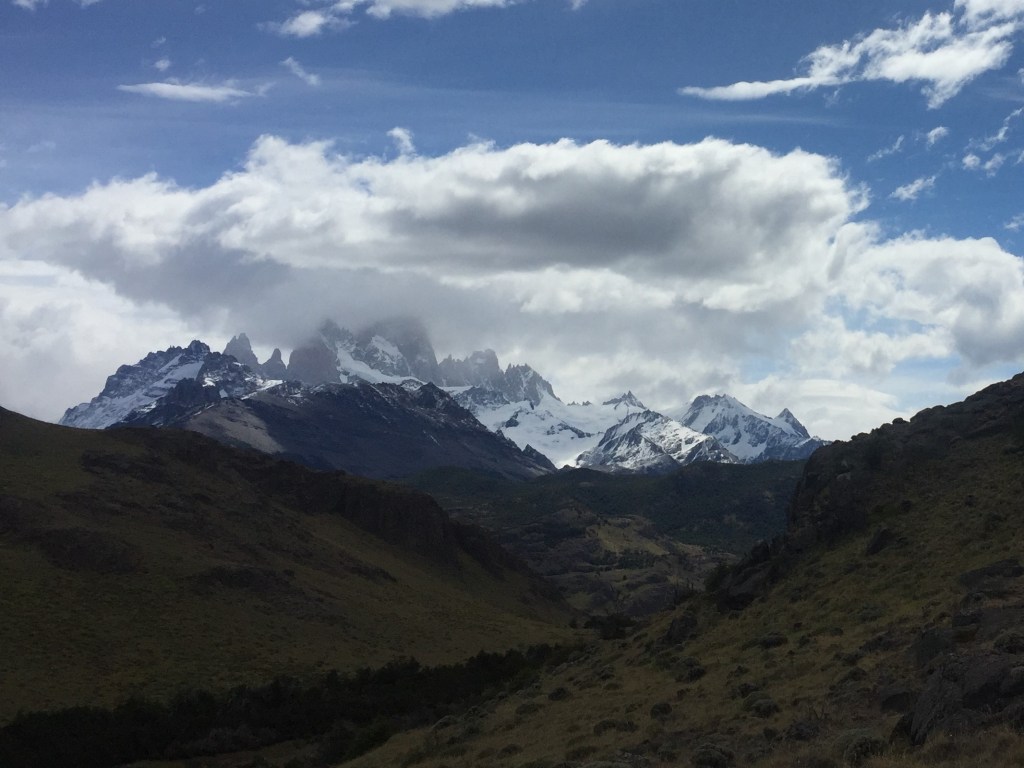
It’s very steep and the wind is fierce. At the summit is a terrific view but no birds of prey.
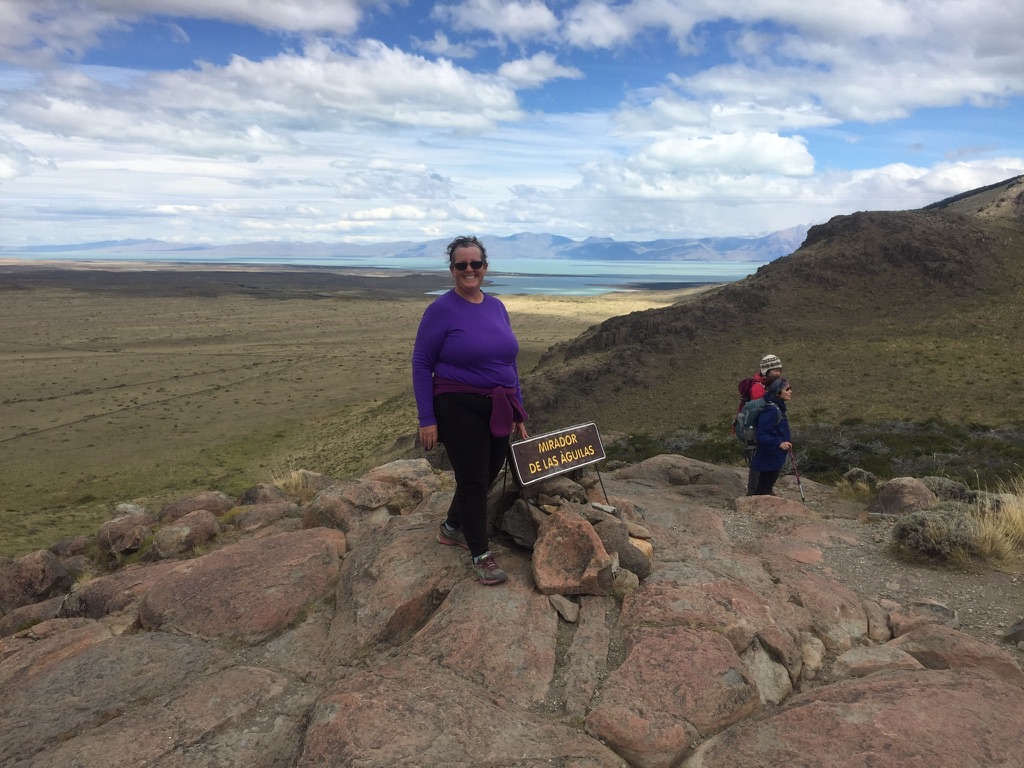
We descend, buy provisions, have dinner and crash, tired from the long drive and the afternoon’s exertions.
Day 13 – El Chaltén
Sendero Al Fitz Roy
Today, we are doing the 6 mile Sendero Al Fitz Roy hike; a trail up a mountain which brings you to to Laguna Capri. After breakfast and the packing of supplies (my latest addiction – Rocklets galletitas – cookies with chocolate chips and mini smarties), we set off along the trail.

You can check your progress with handy markers placed every kilometre.

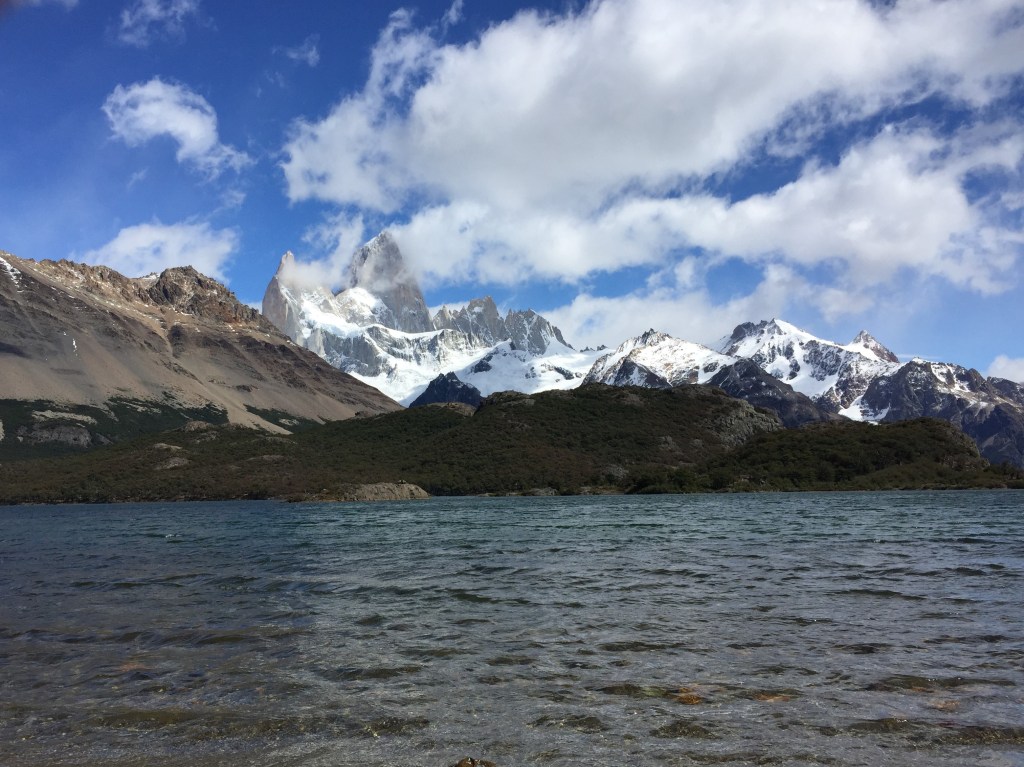
First stop is a viewpoint over the Rio de las Vueltas, where we spot an eagle soaring over the valley.
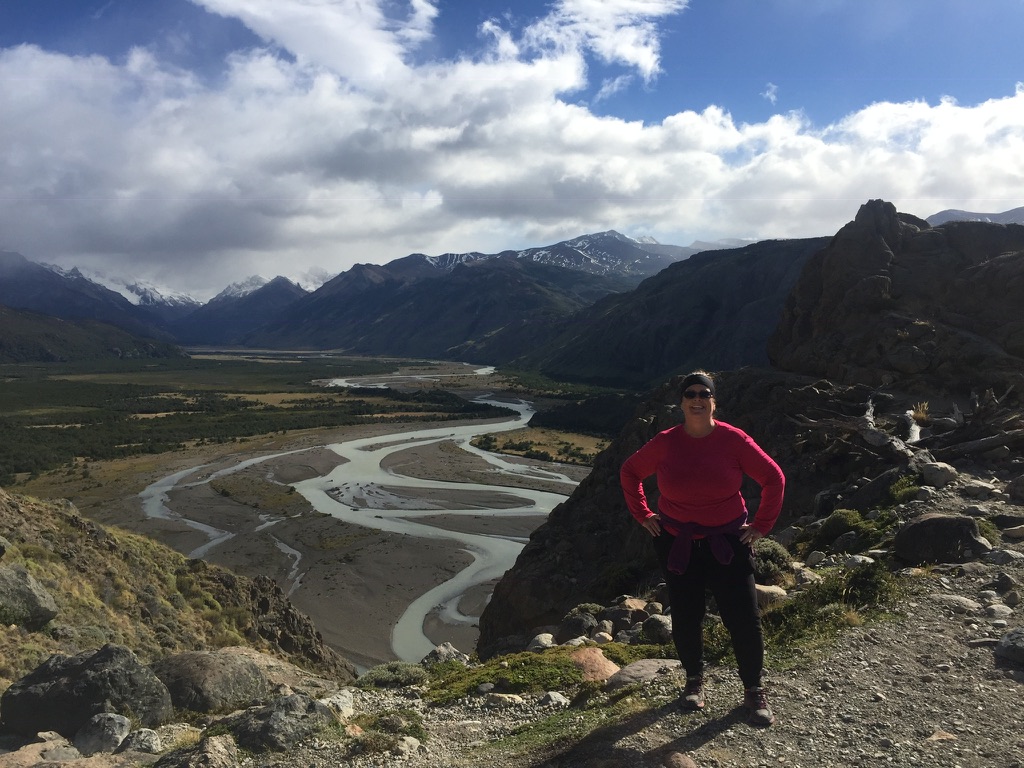
Mirador de Fitz Roy
We continue through the beach forest to Mirador de Fitz Roy, a viewpoint where you can see the spiky peaks of Cerro Fitz Roy sticking up through the clouds.
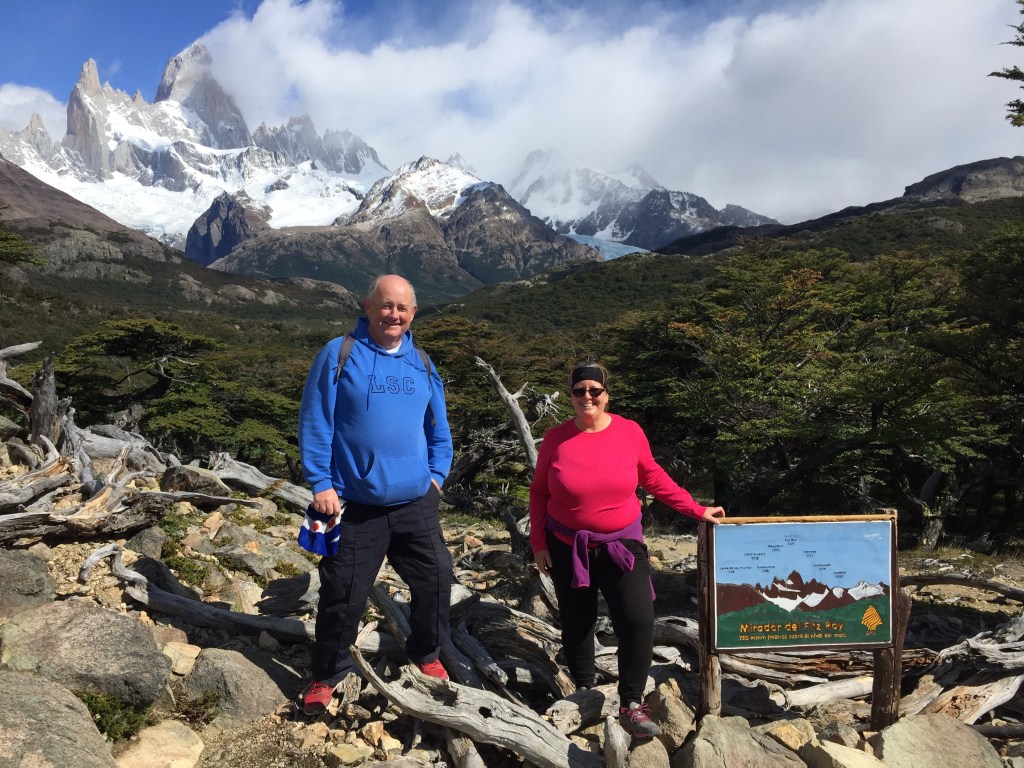
Laguna Capri
Then we continue to pretty little Laguna Capri.
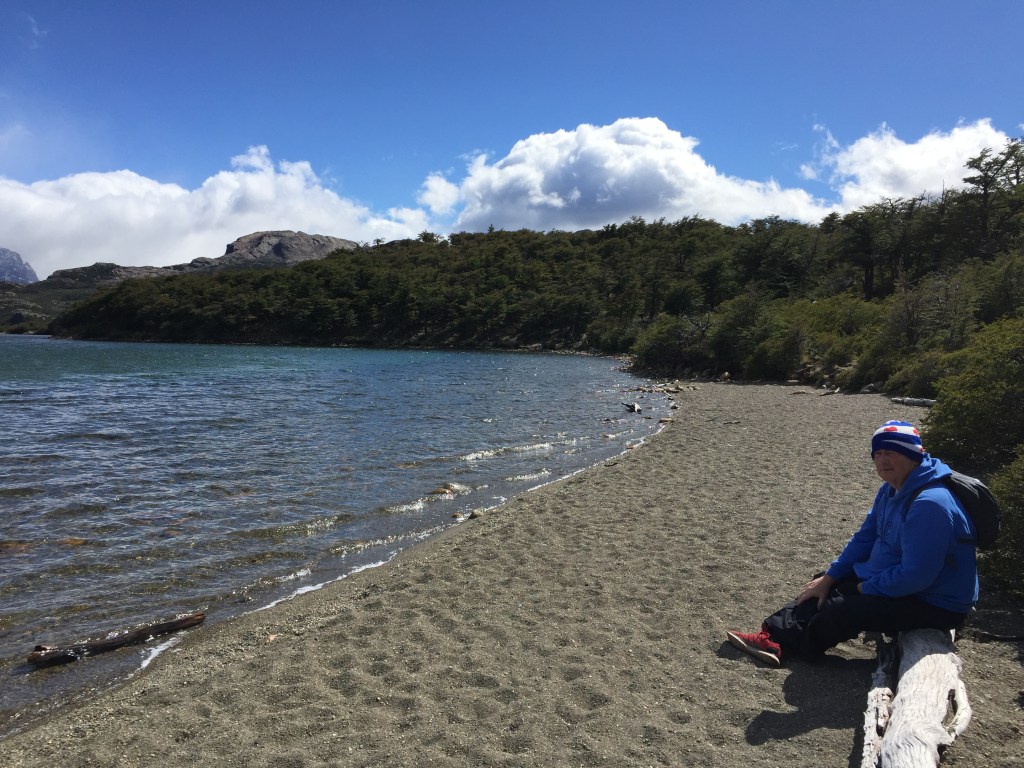
After a brief rest on the lakeside, we set off back downhill. Going back down is easier in some ways, but harder on the knees and because there are now so many people to pass coming up the trail.
On our final evening in El Chaltén, I go in search of souvenirs whilst the old man goes to the supermarket to buy dinner. On the menu; bread and six slices of ham, because that was the highest number he knew in Spanish. It could have been worse – he only learned four, five and six yesterday!
Day 14 – Bariloche
Today, we return to El Calafate for our flight to Bariloche, 700 miles to the north. The city of Bariloche is in the Argentinian Lake District on the shores of Lake Nahuel Huapi. It’s a 125 mile drive to the airport, but Hertz insist the car is returned with a full tank, which adds a further 20 miles to our drive. The distance between things is difficult for a Brit to get used to. It’s also 130 miles between toilets. But that’s another story…
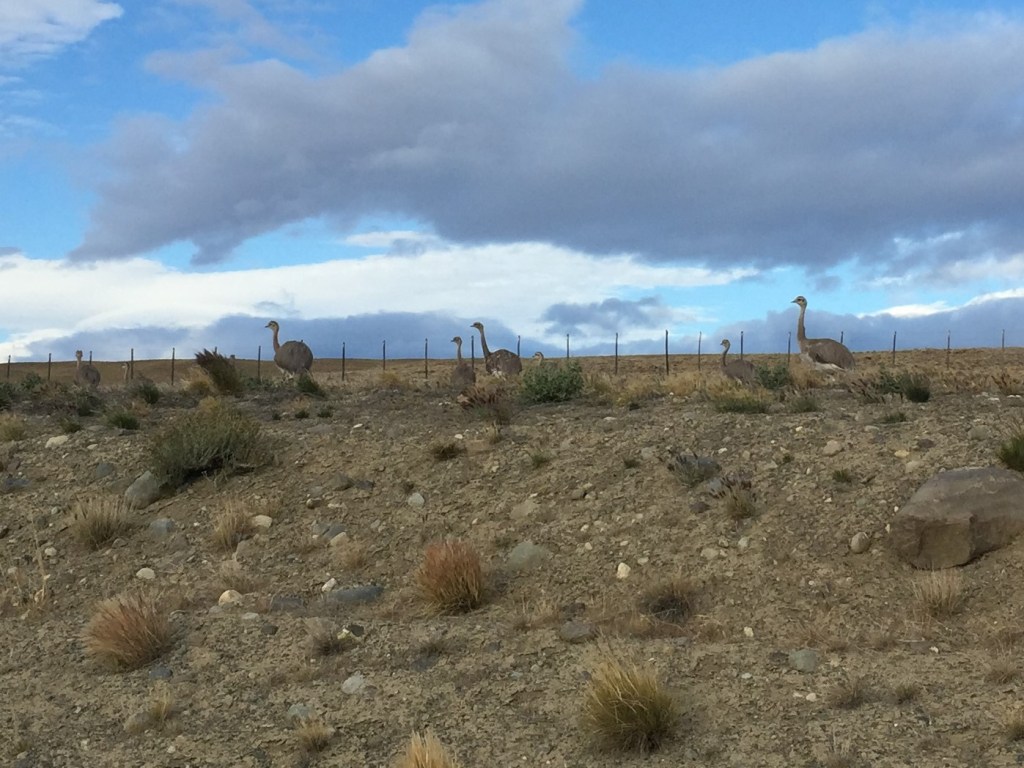
We set off at 7.15 am. It’s a remote road with nothing except a lake one side and pampas on the other. In the first hour, we pass four cars, three guanacos, two rhea and one grey fox.

Flight to Bariloche
We have worked out a way to reduce our excess baggage fines. This involves checking a piece of hand luggage and using a carrier bag for carry on items – the height of sartorial elegance. Sadly, I’ve had to ditch my not insubstantial collection of hotel toiletries. We had to turn 2 x 20 kg into 3 x 15 and have ended up with 17, 14 and 8. She thinks about it for some considerable time but finally concedes there is no more money to be made here today.

We land at Bariloche Airport, pick up another hire car and drive into town.
Accommodation – Huinid Bustillo Hotel & Spa
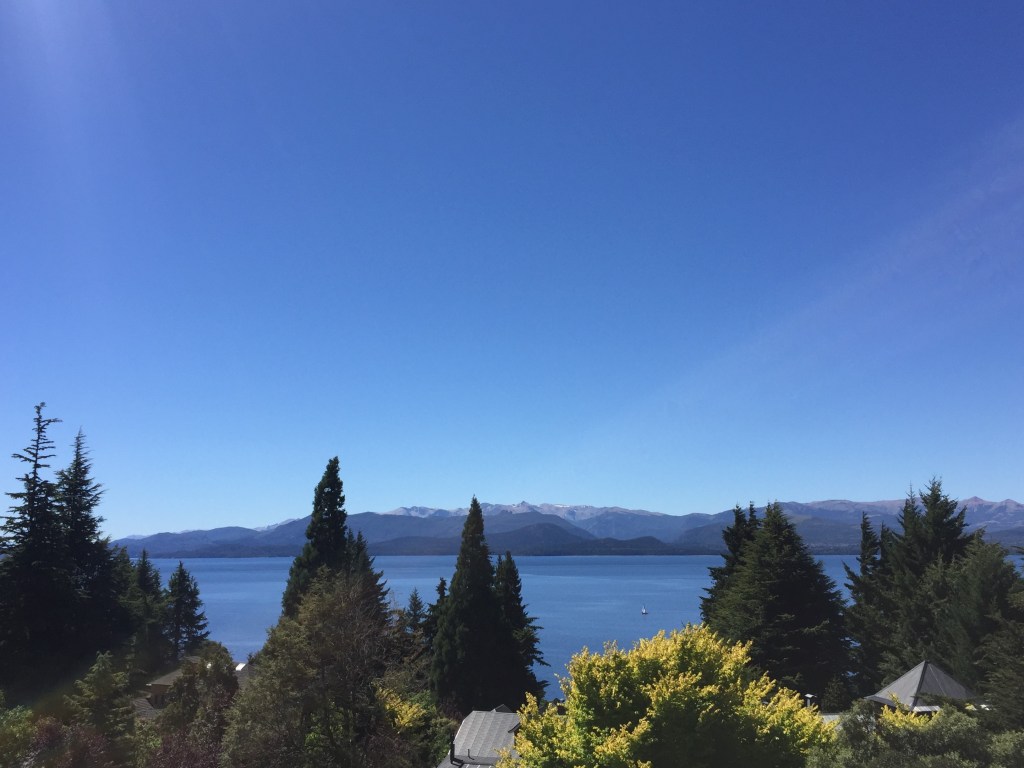
W finally reach our hotel; Huinid Bustillo Hotel & Spa on the outskirts of Bariloche at 4 pm. It’s a beautiful resort style hotel overlooking the sapphire blue lake and the Andes.

Everything about the hotel is nice, but the three best things are; (1) the view, (2) the chips, which come tossed in paprika with paprika and black garlic mayo and (3) the bath. I haven’t had a bath in 24 days, so this is a source of great excitement. And this is no ordinary bath, it’s a Jacuzzi bath. After possibly the world’s longest bath, I emerge having learned an important lesson; one small bottle of conditioner can create an enormous amount of bubbles!
Centro Civico
We round off the day with a wander round Bariloche. Centred round the Centro Civico, which looks like it fell off a Swiss postcard, it’s a pretty town with a plethora of chocolate shops.

Lake Nahuel Huapi
Bariloche is dominated by the stunning Lake Nahuel Huapi, one of the largest lakes in Patagonia.

Cathedral of Our Lady of Nahuel Huapi
Surrounded by gardens and overlooking the lake is the Cathedral of Our Lady of Nahuel Huapi. The imposing Neo-Fothic church dates from 1946 and is built in the shape of a cross.

Day 15 – Bariloche
Circuito Chico
Today we are driving the Circuito Chico; a popular 38 mile scenic lakeside loop.

Cerro Campanario
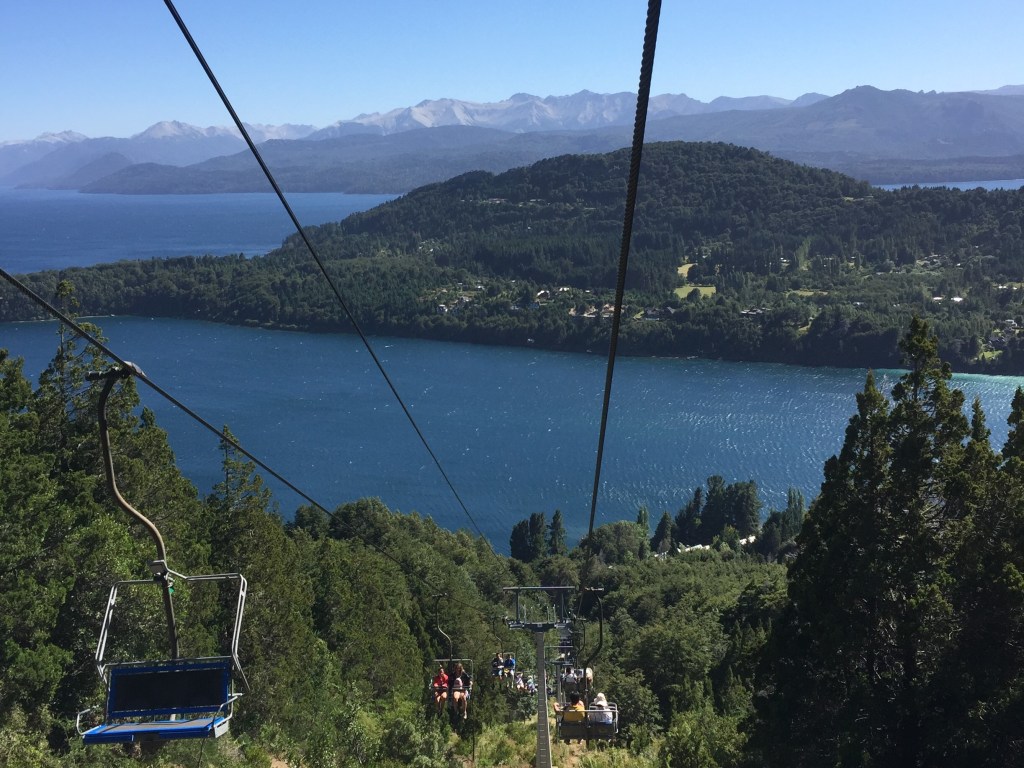
We start by taking a chairlift 1000 metres up Cerro Campanario, where a series of platforms provide 360 degree views of the surrounding mountains and lakes.

We take the chairlift back down. Ten places ahead of us is in the queue is a lady in a wheelchair. The lift is stopped while she is helped into her seat. This means that when she reaches the bottom and the lift is stopped again, we are dangling at the highest point. Being left hanging in a chair on a wire halfway up a mountain is not my idea of a good time. Luckily, we get moving again before I attempt some sort of drastic escape bid.
San Eduardo Chapel
We continue on our drive to pretty little San Eduardo Chapel; made of stone and logs, it perches on a hill overlooking the lake and and the little port of Puerto Panuelo.

Lago Escondido
Next, we park up and follow a series of forest trails which lead us to a boardwalk through gnarly myrtle trees, a beach where Andean condors soar overhead, a Roman style bridge (randomly built in the forest for no particular reason) and the tiny Lago Escondido.

Bahia Lopez
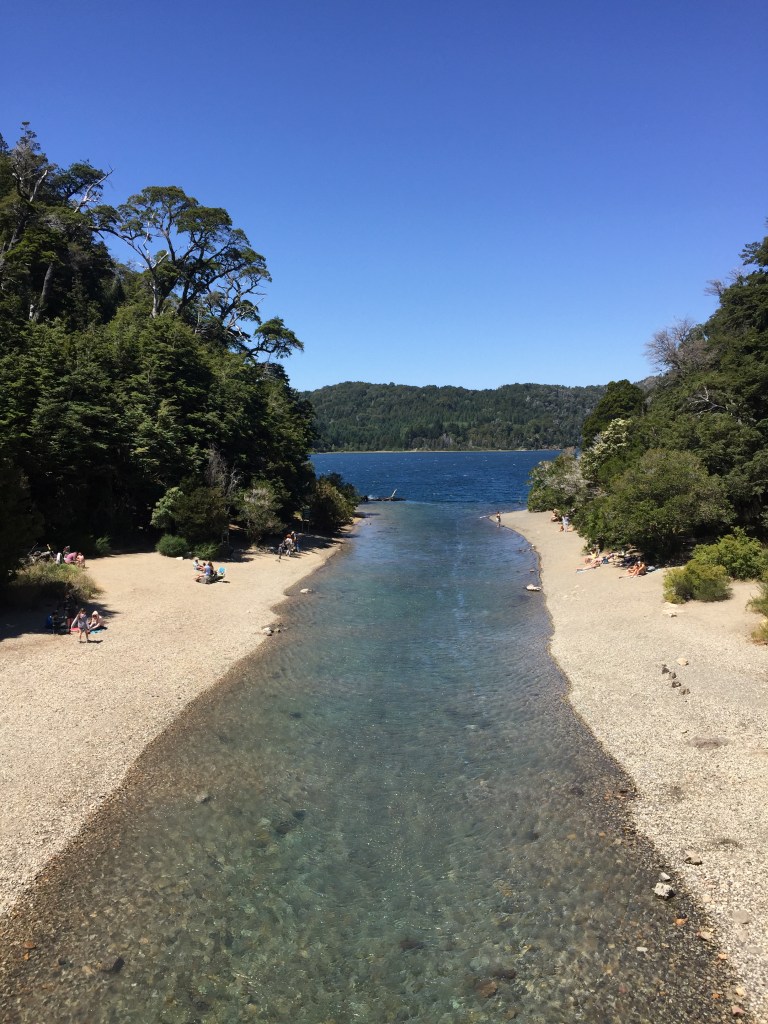
We drive across Bahia Lopez, where a bridge crosses a stream between two lakes.
Dinner at Cervezeria Patagonia
We take a break for drinks and dinner at Cervezeria Patagonia; a brewery with a lakeside beer garden. We have a very good, cool beer on benches overlooking the lake. The cups are pretty cool too, so we steal them and complete the circuit back to the hotel.

Day 16 – San Martín de los Andes
Today, we are driving 120 miles north to San Martín de los Andes along the Camino de los Siete Lagos – the Route of the Seven Lakes; a segment of Route 40 which passes seven lakes. This scenic drive has plenty of viewpoints where you can stop and enjoy the beautiful scenery. We wind our way along the road, stopping to take many photos. We keep meeting the same people every time we stop. By the end, our new best friends are a couple of caravaners from Chile. Note: There are only six lakes listed here as the first is Lago Nahuel Huapi, which we are already familiar with from our time in Bariloche.
Lago Espejo
Lago Espejo, Mirror Lake. So called because on a calm day you can see the stunning scenery reflected in the water.

Lago Correntoso
Lago Correntoso, named due to the strong currents from the Corentoso River, which runs into the lake from Nahuel Huapi Lake. At less than 300 metres long it is one of the shortest rivers in the world.
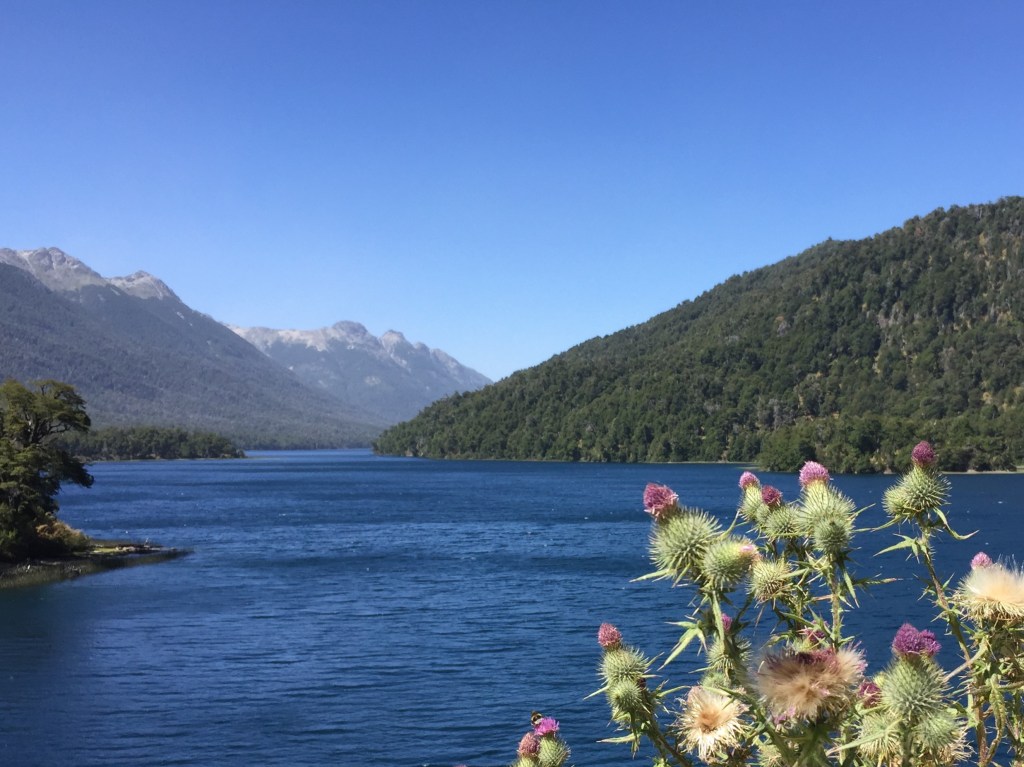
Lago Escondido
Lago Escondido, hidden lake, can just be spotted amidst the trees.
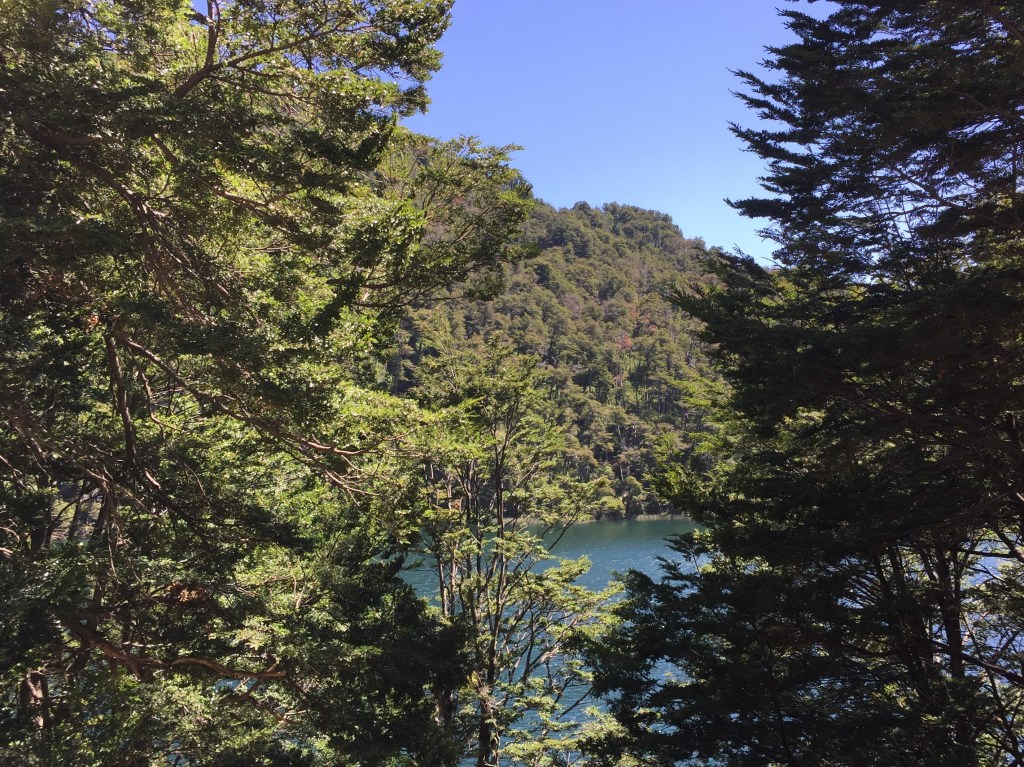
Lago Villarino
Lago Villarino is named after a Spanish explorer responsible for mapping large areas of Patagonia.
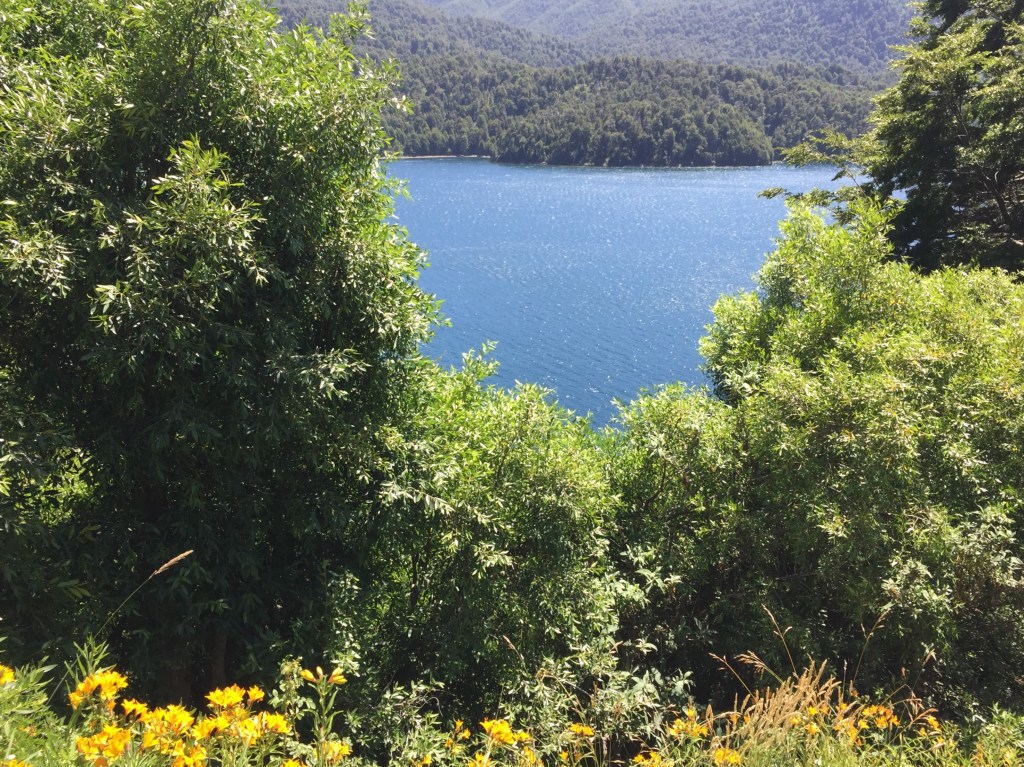
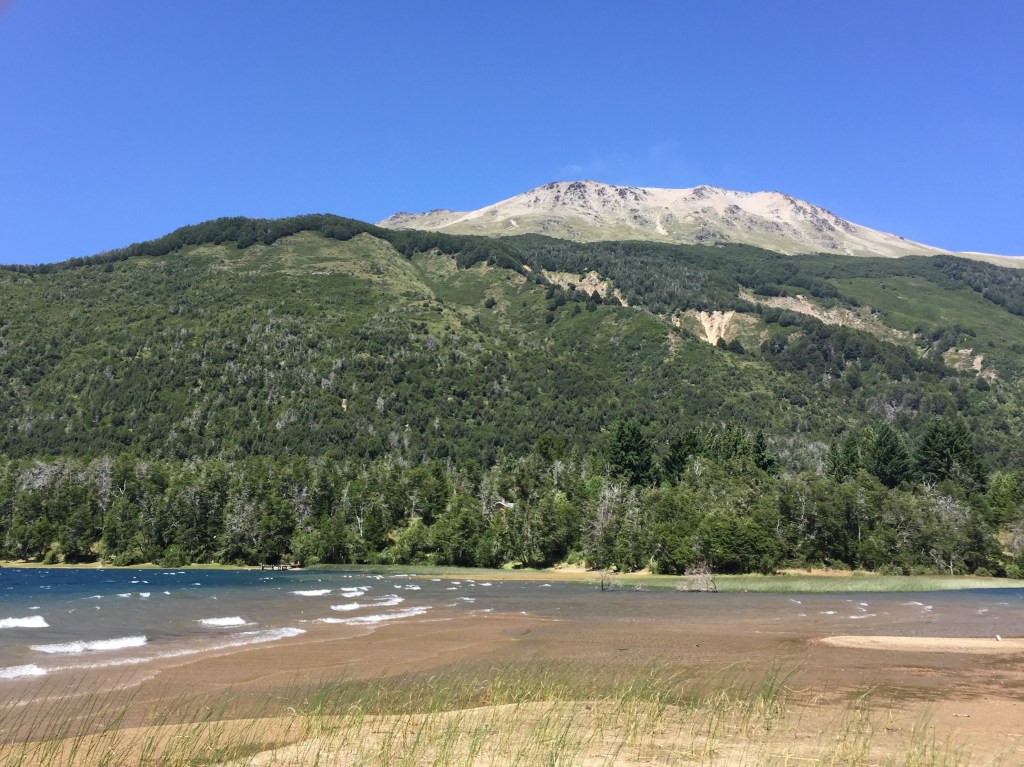
Lago Faulkner
Lago Faulkner, named after an 18th Century missionary, has a nice beach where you can watch birds of prey soar over the forested mountains in the background.
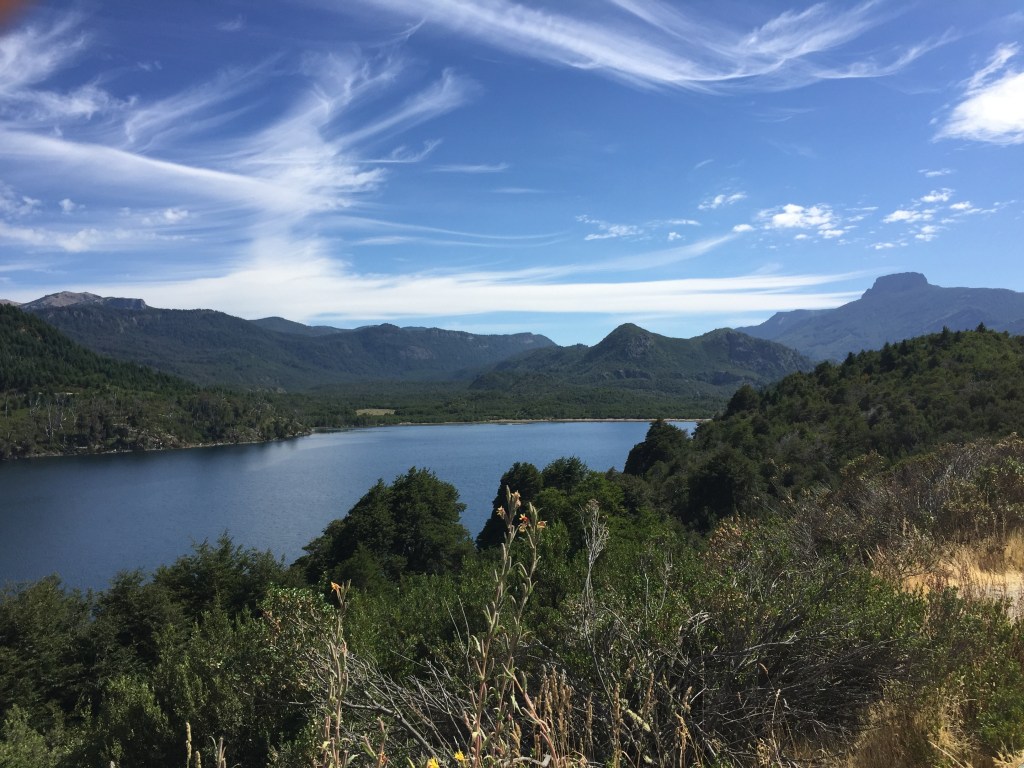
Lago Machonico
And finally, Lago Machonico, named after a species of crab which live here.
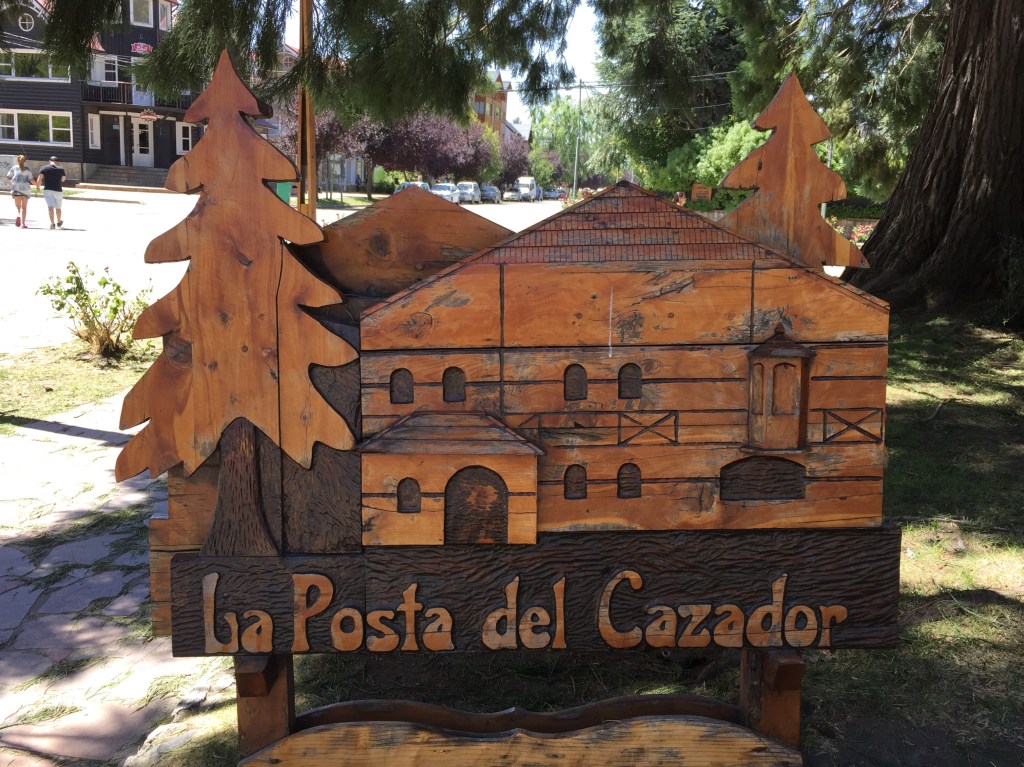
Accommodation – La Posta del Cazador
We reach San Martín de los Andes by mid afternoon and check into our Bavarian style guesthouse; Hostería La Posta del Cazador. It’s very quaint. So quaint that when we arrive, it doesn’t even have power. Cazador is Spanish for hunter and it’s a theme the hotel has very much run with. Some might find it quirky. To me, it feels dark and stuffy and full of dead things (the door handles and light fittings are made of antlers). But it is conveniently located and does a good breakfast.
After I’ve done a pee with the assistance of the torch on my iPhone, we go for a wander in search of food and Wifi.
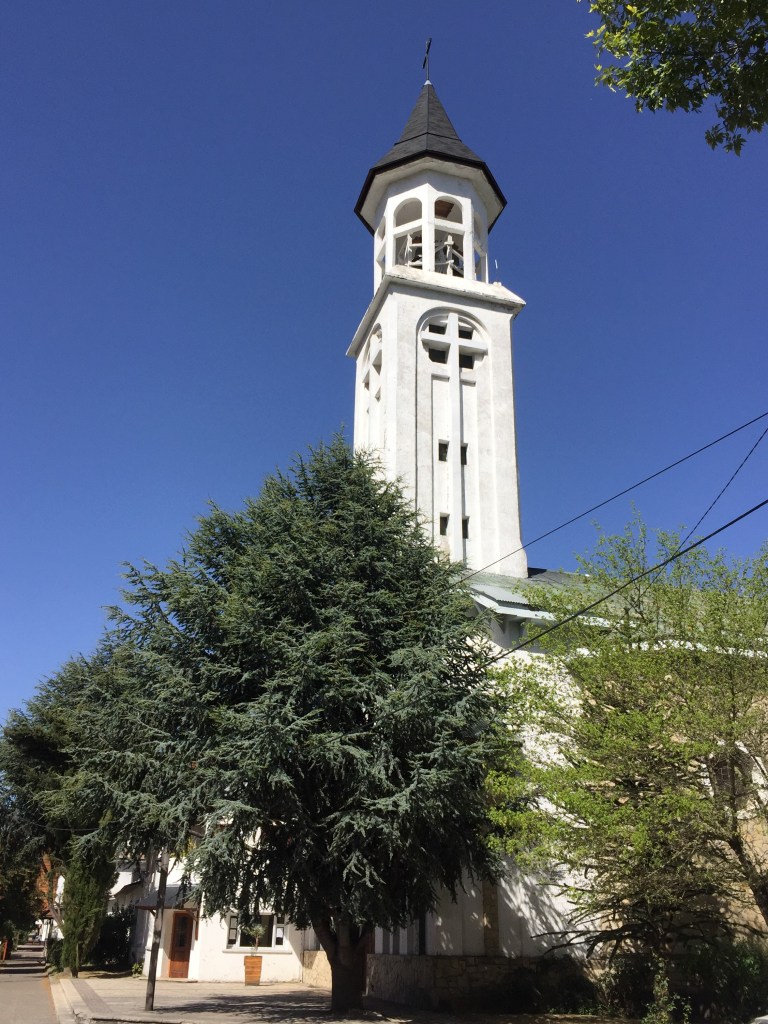
San Martín de los Andes is similarly quaint; a little tourist town on the shores of Lago Lácar. It has a distinctly German feel with officious police wandering around telling people off for minor misdemeanours. I’ve already got into trouble for not wearing a seatbelt (I was, he just couldn’t see it under my boobs).
Plaza Centenario
In the centre of town is the Plaza Centenario with a pretty rose garden.

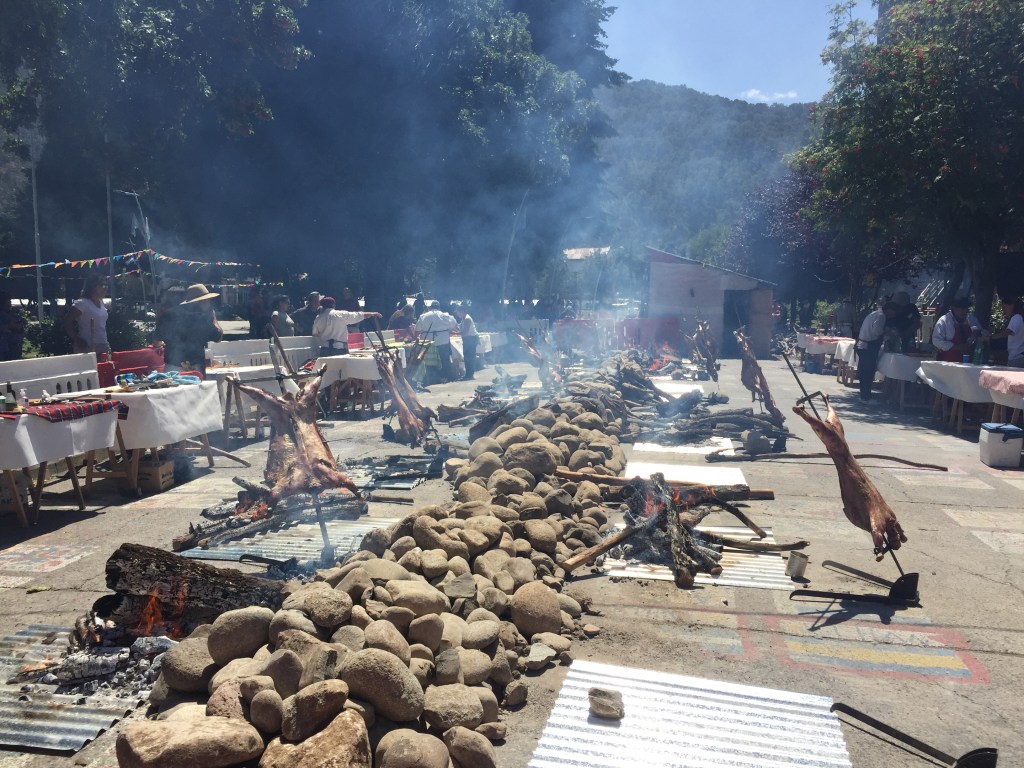
We attempt to visit La Pastera; a museum about Che Guevara, but it’s shut because it’s the town’s birthday. I’m not sure what that means, but it appears to involve a sh**load of barbecuing.
Dinner at Cafecito
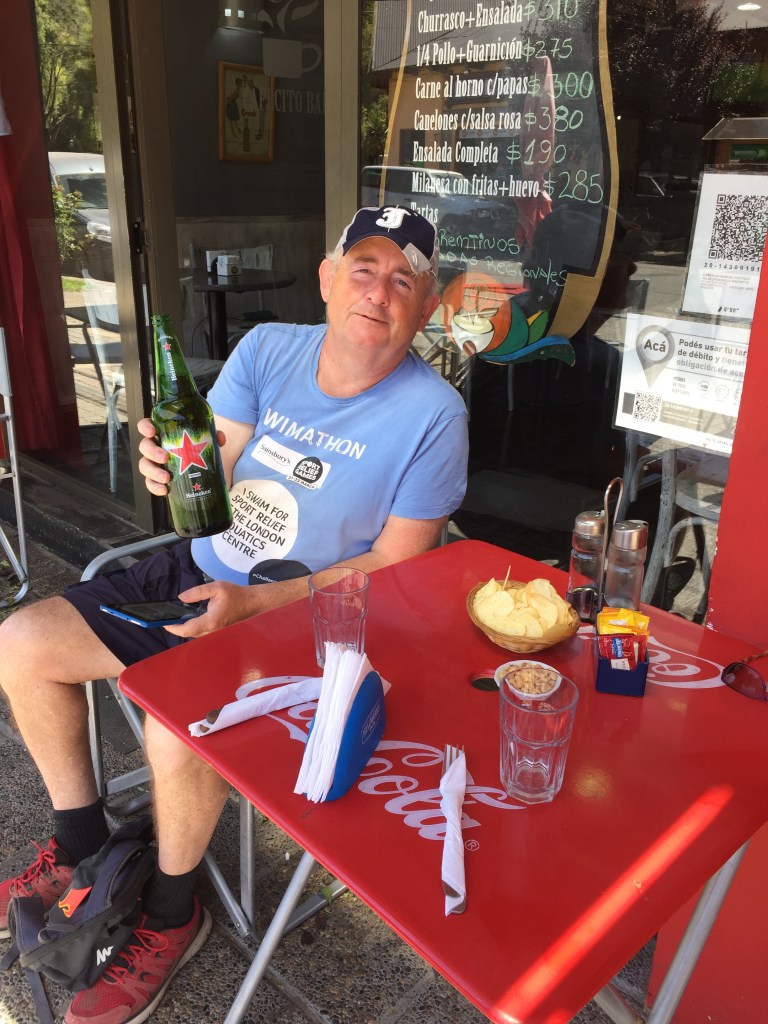
We opt to dine at Cafecito, where we order huge tarts, which come with a choice of three salad ingredients. It takes me ages to decide between tomato and onion – the old man gets very stressed.
Day 17 – San Martín de los Andes
Lanin National Park
I planned to visit Chachin waterfall in Lanin National Park today. It’s only 27 miles away, but 25 of those are off road. The old man is unenthusiastic, but we set off anyway. It’s supposed to take 80 minutes, but our little car struggles so much that we take twice as long. Mo Farah could have run it faster. The old man picks up some hitchhikers en route. They don’t speak English and we quickly exhaust my Spanish, so we pootle along, very slowly, in silence.

At the end of the track are the Chilean border crossing and a ranger station. The ranger tells us that the trail to the waterfall is closed due to fallen trees, but suggests we head there anyway, in case it reopens.

So, we drive even more off road, over a bridge that reminds me of a Top Gear Challenge. Sure enough, just as we reach the car park, a quad bike comes the other way trailing red and white ‘no entry’ tape recently removed from the waterfall entrance.
Chacin Waterfall
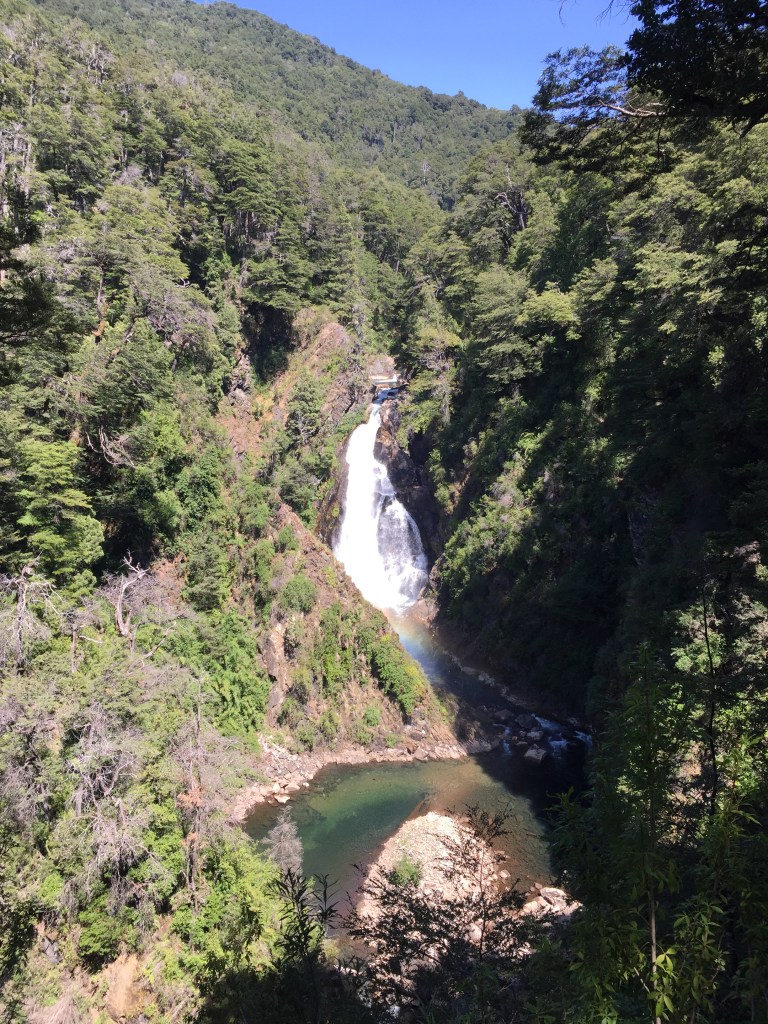
We park up and walk the final mile to Chacin Waterfall. It’s a very nice waterfall, but I’m not covinced it warranted the effort it took to reach it.

There’s a little kiosk at the entrance. I ask the vendor if he has cold drinks and he goes and fishes a couple of bottles of Fanta out of the lake.
Next, another two hour bumpy, dusty drive back to town, this time with Chilean hitchhikers, who give us plenty of tips for our forthcoming trip to Santiago.
Lago Lácar
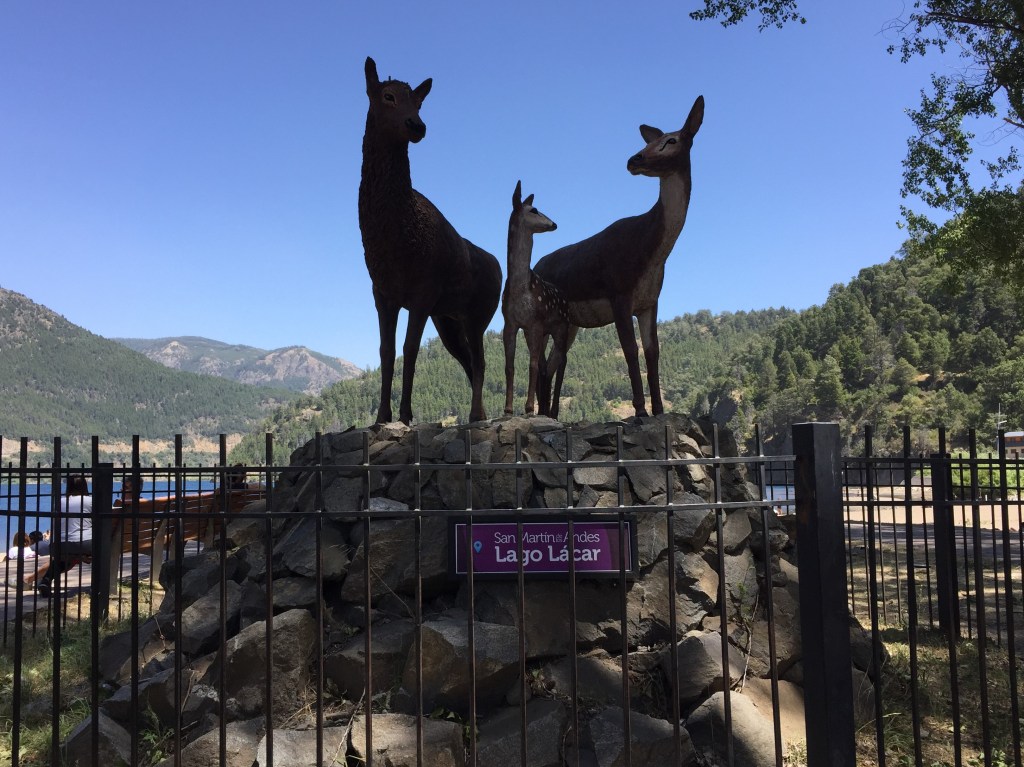
We finish the day with a wander along the shores of Lago Lácar.

Uninhabited for much of its shoreline, the area of this glacial lake which adjoins the town has a popular beach and a park.
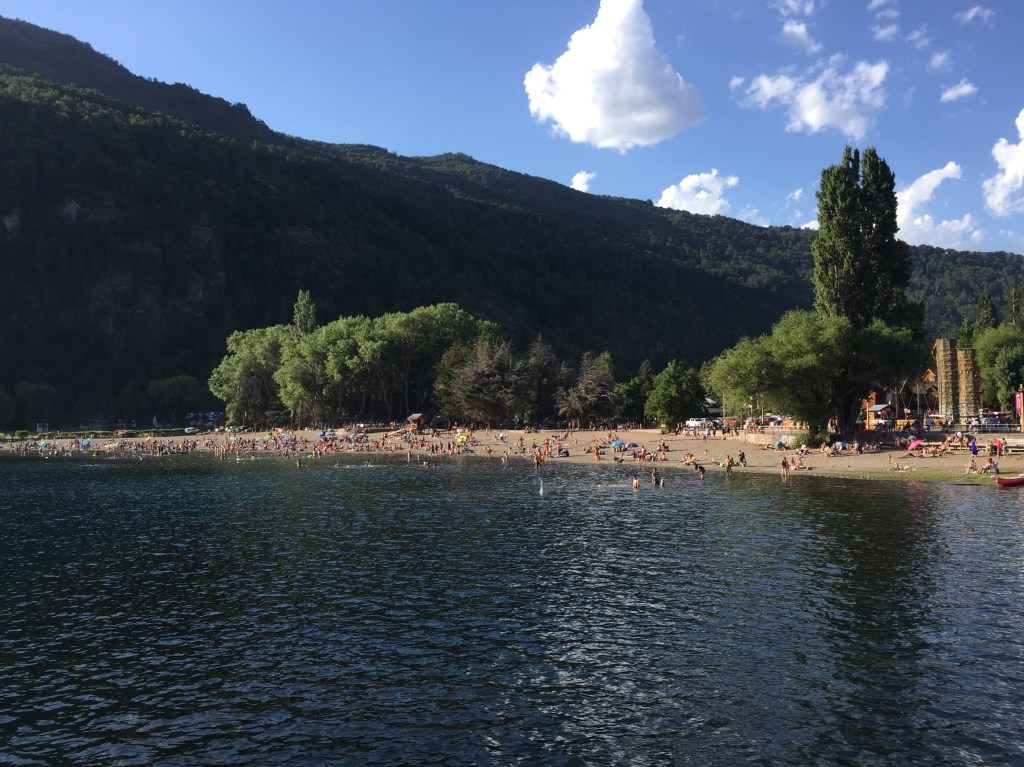
There is the with the obligatory stop for souvenirs. San Martín is awash with souvenir shops, but they sell less conventional items. If you want a hunting knife, the choices are endless. Post cards, less so.
Day 18 – Villa la Angostura
This morning, we are returning down the Route of Seven Lakes to Villa la Angostura.
La Pastera Museo del Che
First, a visit to La Pastera Museo del Che. It’s a tenuous link; Che Guevara spent two nights in this barn in 1952.
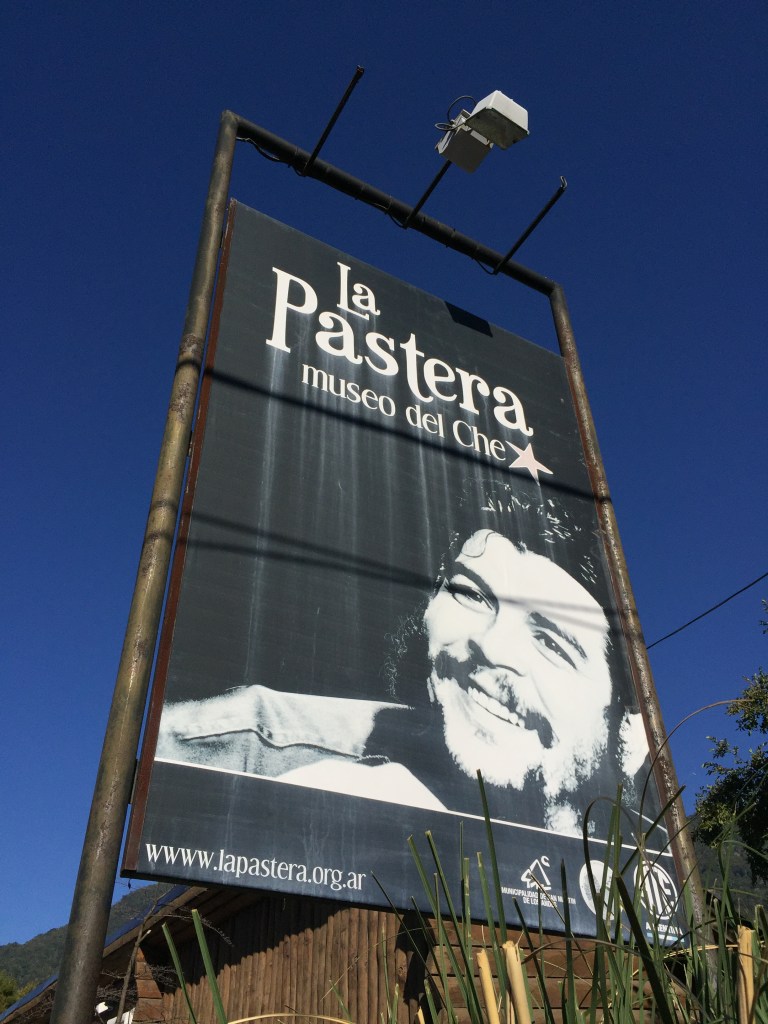
It is, however, an interesting little museum about the famous revolutionary’s life.

Cascada Vulliñanco
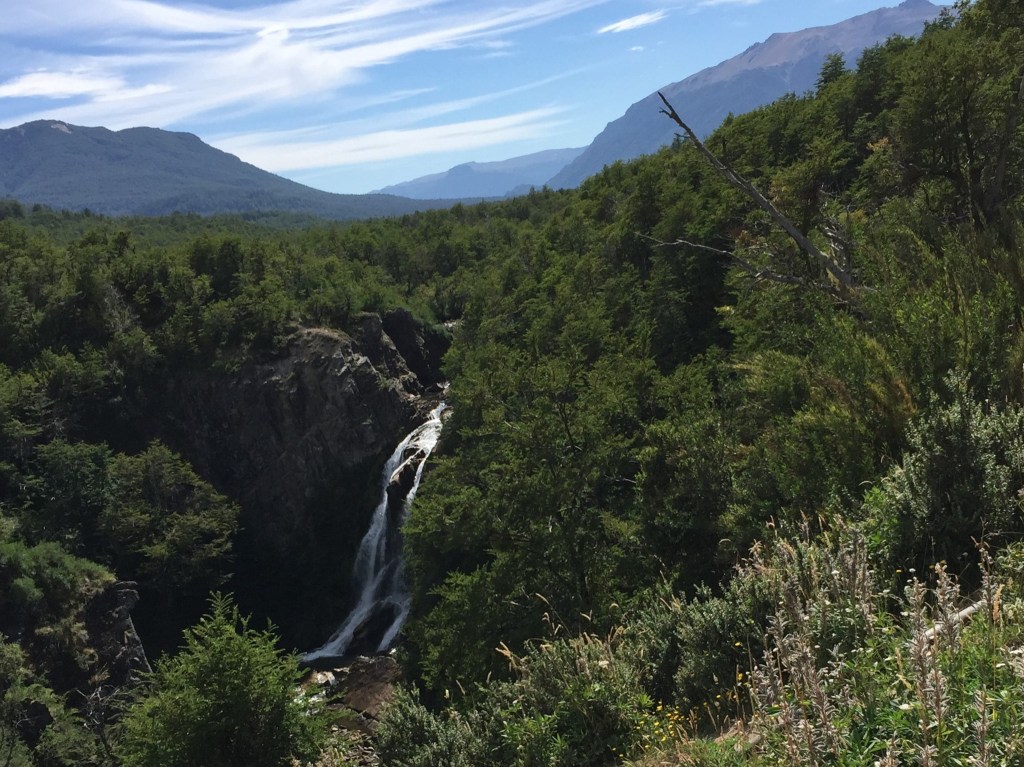
After we’ve learned all about el Che’s two day trip to San Martín, we drive back down the Route of the Seven Lakes, stopping at the remaining viewpoints, including the pretty waterfall Cascada Vulliñanco.
Accommodation – Marinas Alto Manzano
We reach quaint little Villa La Angostura around lunchtime. We check into our hotel; Marinas Alto Manzano. It’s beautiful. We have a huge room overlooking the lake.

The best bit is the bathroom, which has a Jacuzzi, also with a lake view.

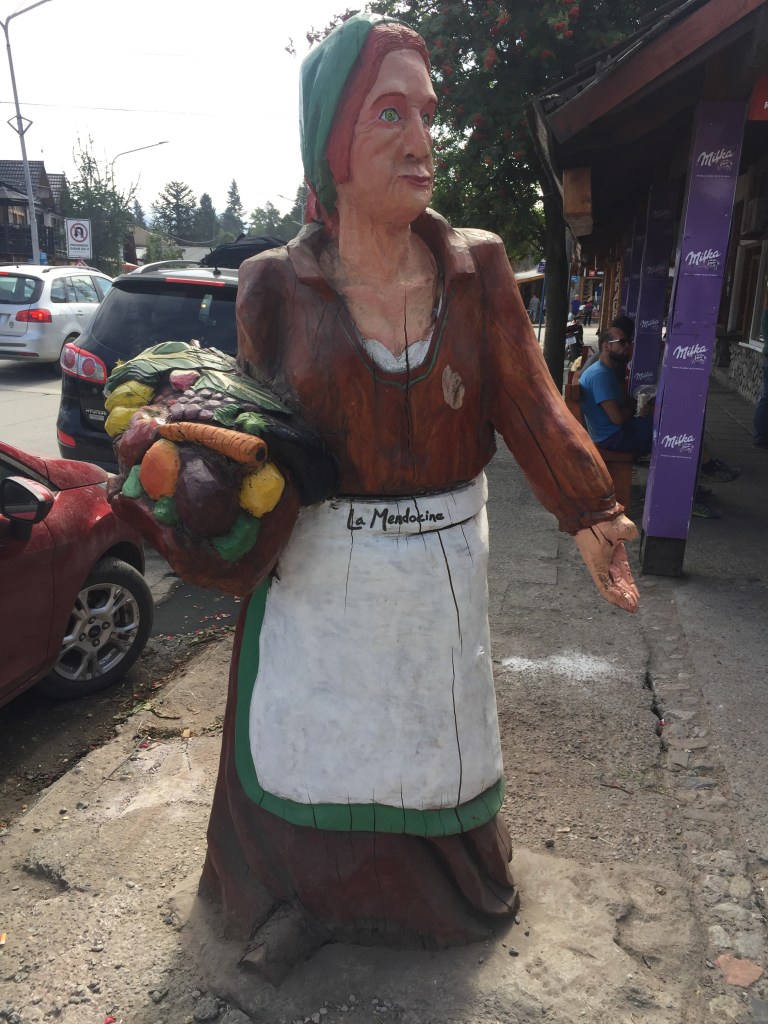
After I’ve finished admiring the view from the bedroom, we had for town and wander along the high street, which is lined with alpine style shops and brightly coloured wooden statues.
Dinner at Ruta 40 Bar & Grill
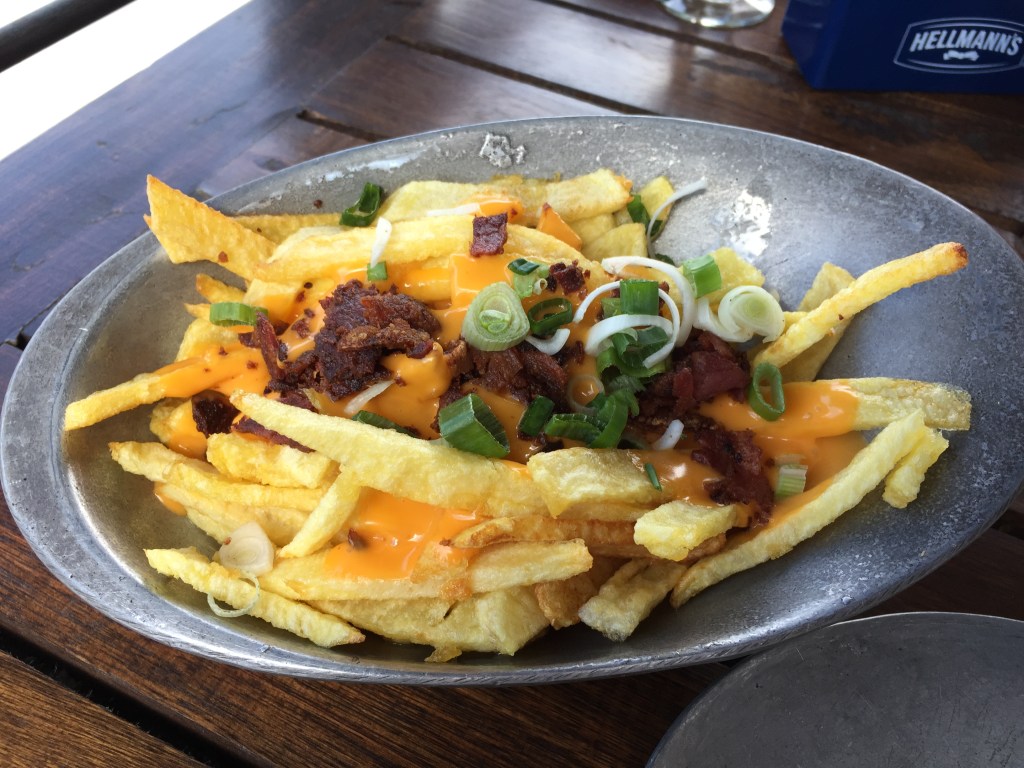
We stop for dinner (empanadas and cheesy chips) at Ruta 40 Bar & Grill; a restaurant with a balcony overlooking the high street, where we can watch the world go by.
We had planned to go to the Myrtle Forest, but it’s a 15 mile hike and dinner takes ages (nothing happens very quickly in Argentina), so instead we buy beer and return to our room to enjoy the lakeside view. I mostly enjoy the view from the Jacuzzi.
Day 19 – Córdoba
Today, we fly 800 miles north-east to Córdoba. First, we eat breakfast on the hotel terrace with another beautiful lake view.

Flight to Córdoba
Then, we’re off to catch our flight to Córdoba. It’s rather a dull day; drive, drop hire car, airport, flight, airport, collect hire car, drive.
Accommodation – Yrigoyen 111 Hotel
Finally, we reach our hotel in Córdoba; Yrigoyen 111 Hotel. It’s a very pleasant hotel with immaculate rooms from which you get a great view across the city.

There’s also a lovely rooftop pool. When we visited, there was an ATP tennis tournament in progress and the hotel (and pool) were heaving with professional tennis players and their hangers on.

Day 20 – Córdoba
Today, we are going on a road trip with an Argentinian friend, Wilma. First, breakfast. It’s very healthy – there’s more fruit on the breakfast buffet than I’ve seen in the whole of the past month. The benefit of sharing a hotel with professional sportsmen.
Alta Gracia
We set off for Alta Gracia, a small town 24 miles south west of Córdoba. It is the home of a 16th Century Jesuit ranch.
Clock Tower
We start by climbing the Clock Tower for a birds eye view of the historic town.

Jesuit Complex
Next, a wander round the buildings of the Jesuit Complex, which now house a museum.

Museo Casa del Che
On the outskirts of town, is the childhood home of Che Guevara, now the Museo Casa del Che.

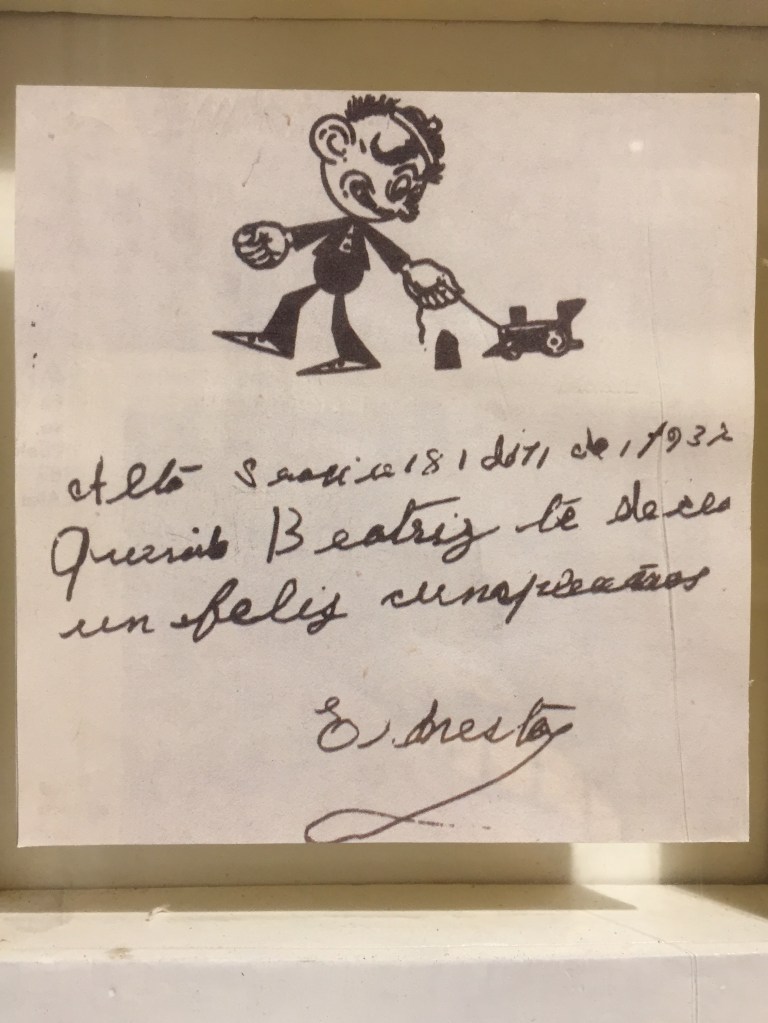
It documents the course of his life with plenty of photographs, original letters and documents. My favourites are letters written by little Ernesto.
You can also see La Poderosa – the motorcycle he rode on his travels round South America in his youth.

Villa General Belgrano
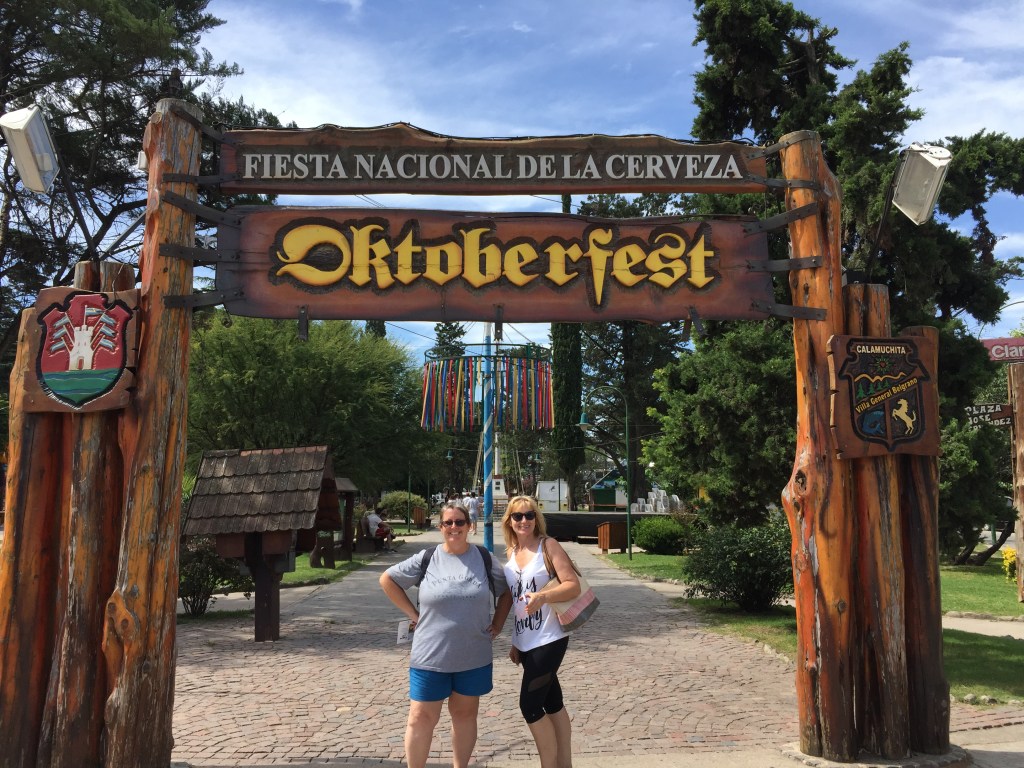
We continue a further 30 miles to Villa General Belgrano. It’s the most German place I’ve ever visited (and I used to live in Germany). It even has its own Oktoberfest site.
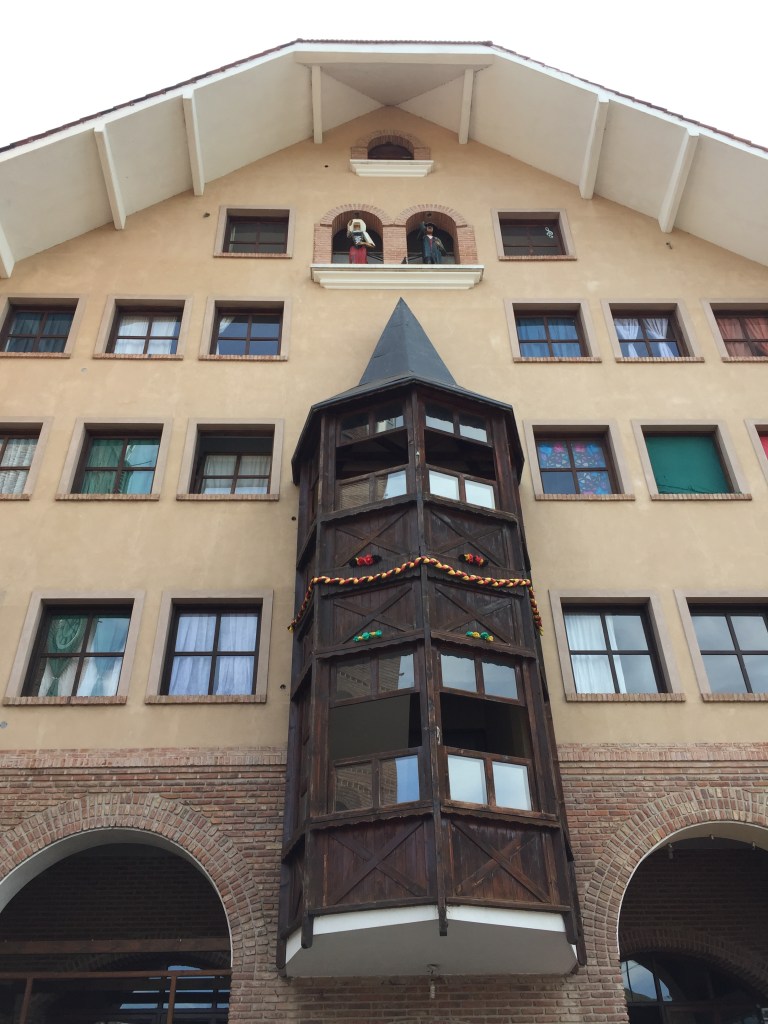
Villa General Belgrano TOwn Hall
The Town Hall looks like an Alpine music box and is flanked by tacky tourist shops selling all manner of German kitsch.
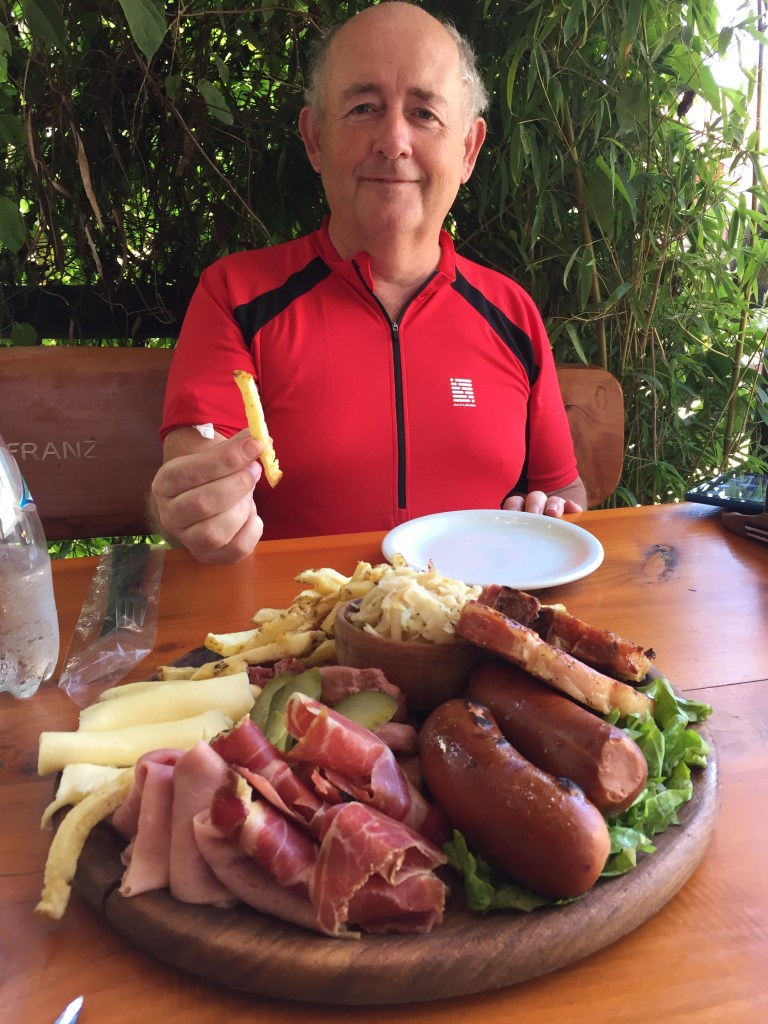
Dinner at Fritz & Franz
For dinner, we go to the very German Fritz & Franz for Knackwurst and Sauerkraut. To be honest, F&F aren’t that hot on food hygiene; the tables are left dirty for ages and each time customers leave, a flock of pigeons descends to pick over the scraps. So, basically we’re eating surrounded by pigeon poo.
Los Molinos Reservoir
We return to Córdoba, stopping at Los Molinos Reservoir to view the dam, where a huge body of water drops 60 metres into the river below in a roaring torrent.

In the evening, we return to the hotel tired and happy after a lovely day. It’s short lived as we realise our credit card has been cloned. Next follows a ridiculously expensive call to Barclaycard, who freeze the card. Without it, we can no longer hire a car in Chile (ironic as it appears the card was cloned by someone from Hertz), so the there will need to be a major overhaul of the next leg of our journey.
Day 21 – Córdoba
Plaza San Martín
Today is spent walking round historic Córdoba, starting in the central Plaza San Martín.

Cathedral of Córdoba
In typical Spanish colonial style, the Cathedral overlooks the Plaza. THe Cathedral of Córdoba dates back to the 16th Century, but was largely rebuilt following a collapse in 1677. Later embellishments include the cupola, Spanish Baroque façade and Neoclassical portico.

Cabildo
The Cabildo, the former Spanish colonial town hall, now houses a museum.

Museo de la Memoria
We visit the chilling Museo de la Memoria, housed in a former D2 intelligence detention centre. The museum is dedicated to those who ‘disappeared’ during the military regime of the 1970s.

Manzana Jesuítica
The Manzana Jesuítica (Jesuit Block) is a collection of 17th and 18th Century Spanish colonial style buildings constructed by Jesuit arrivals, who were allocated one of the 70 blocks of the original city. Buildings include a church, the Jesuit priests’ residence and a university.

Paseo del Buen Pastor
The Paseo del Buen Pastor started its life as a women’s prison in 1906, with a Gothic revival church added two decades later. The building now houses a cultural center, performance space, bars and restaurants. There is also plenty of funky public art to enjoy.

Iglesia de Los Capuchinos
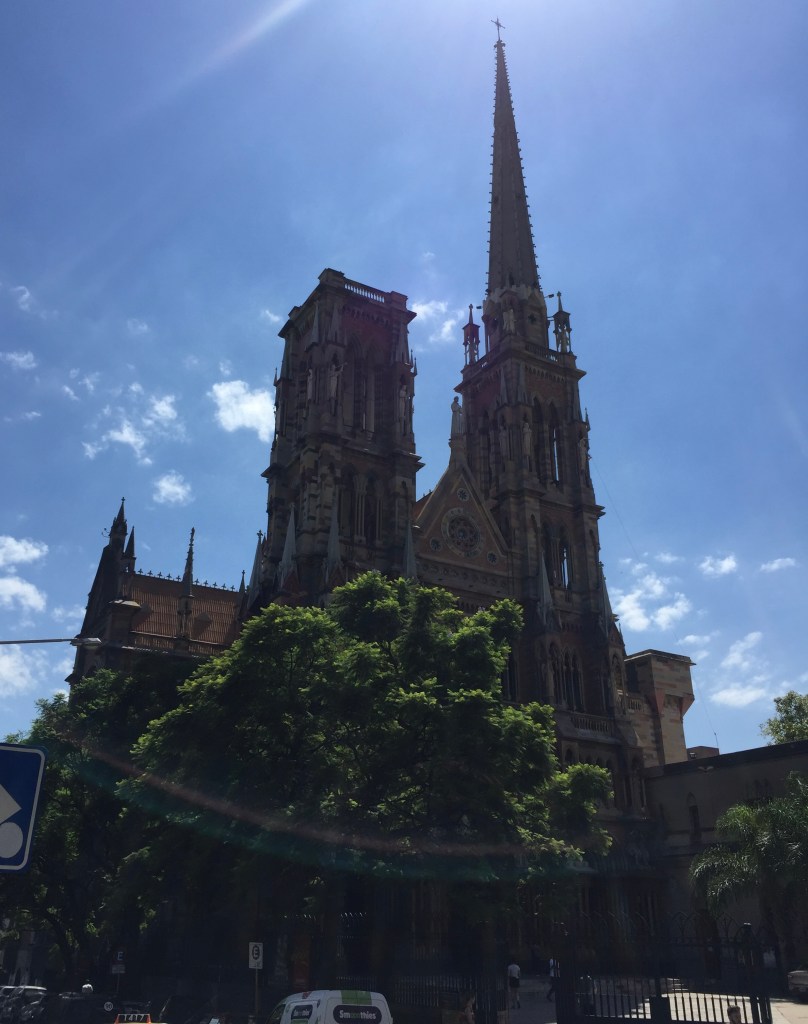
My favourite building in Cordoba is the Iglesia de Los Capuchinos. This fairy talesque Neo-Gothic style church was only completed in 1933. It is notable for its two bell towers; one is truncated, which represents that matter dies and the other pointed 70 metre tall tower represents that the soul ascends.
The columns of different colours and styles represent the different pre-Christian cultures.

Dinner at Antares
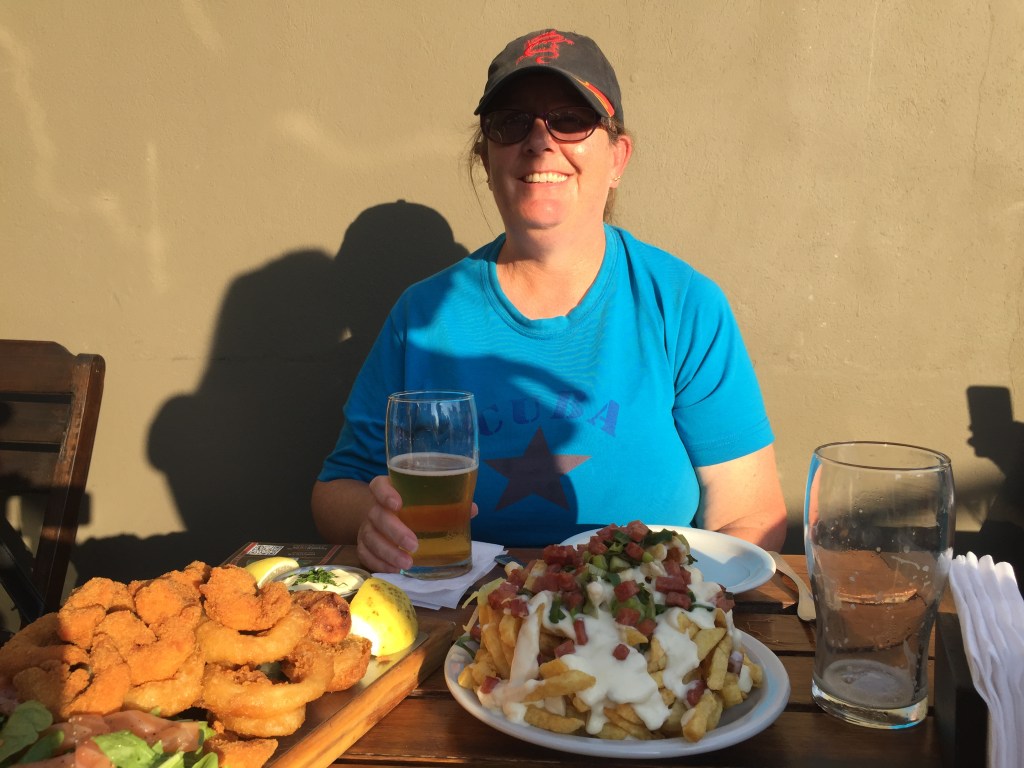
In the evening we go out for dinner at Antares; a microbrewery with seating on a balcony overlooking the city. Dinner is the perfect combination of craft beer and cheesy chips.
Day 22 – Cordoba
Jesús María
This morning we plan to drive to Jesús María, 34 miles north of Córdoba. It’s a risk; since the Fritz y Franz pigeon poo lunch, things have been distinctly loose in the bottom department. But we set off (camera in one pocket, Imodium in the other).
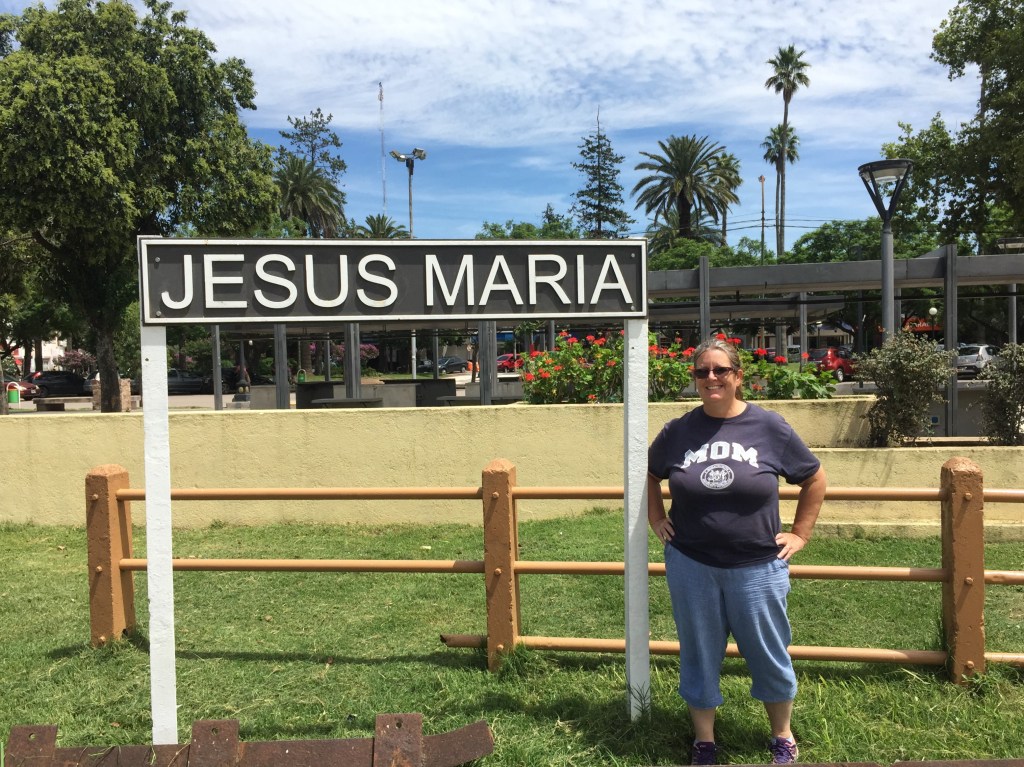
We reach Jesús María without incident and stop briefly in the main plaza. It has a train line running through the middle.

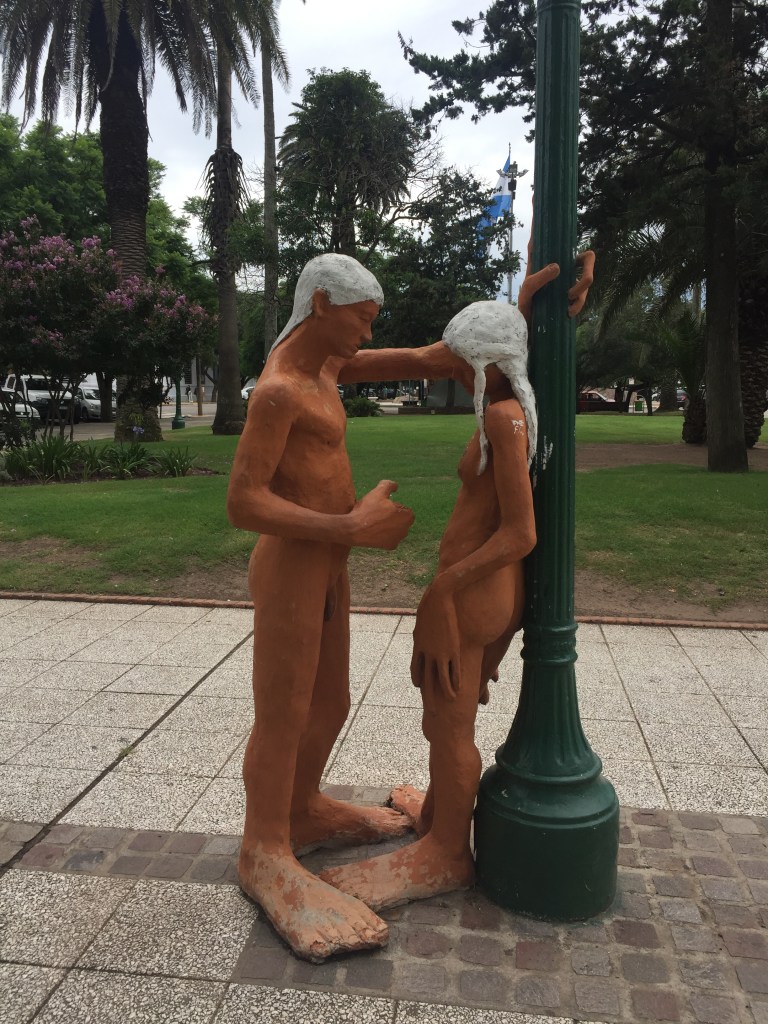
And a strange collection of naked orange statues with enormous feet.
Museo Jesuitico
The main focus of our visit is the Museo Jesuitico, which is housed in a 17th Century Jesuit Estancia by the riverside. It’s a beautiful old building full of interesting religious artifacts.

Museo Superior de Bellas Artes Evita
In the afternoon, we return to Córdoba to visit the Museo Superior de Bellas Artes Evita, which is housed in the Palacio Ferrerya.
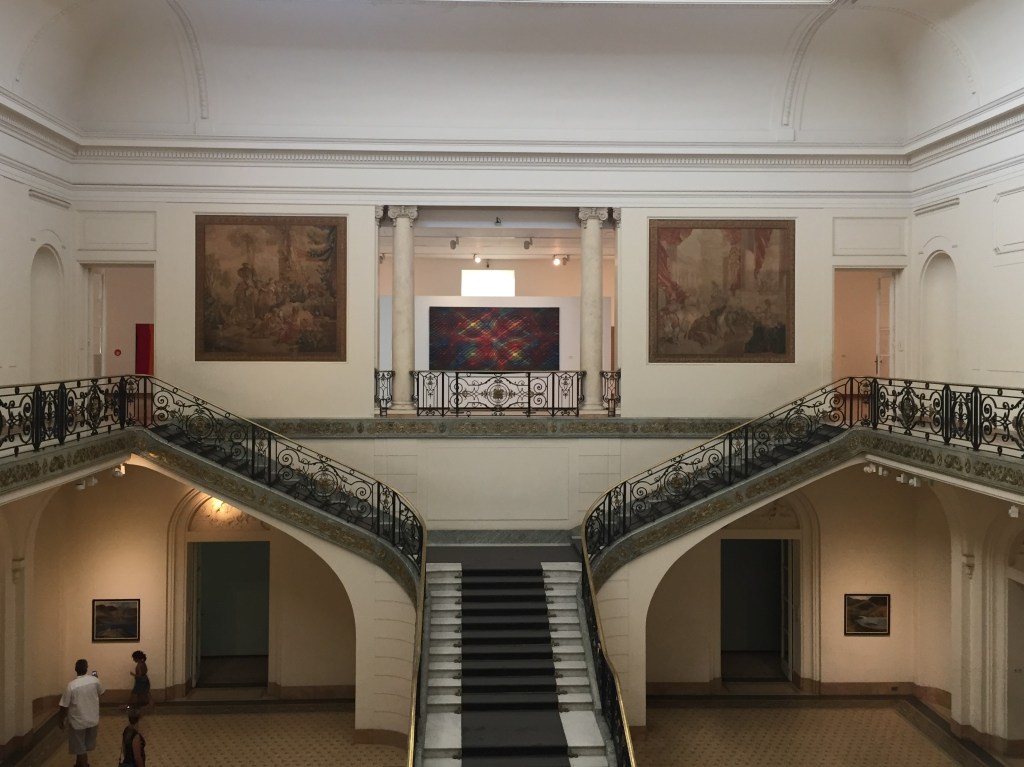
The palace is a beautiful 1914 Beaux-Arts mansion. Despite being somewhat bizarre (a fur lined staircase – what’s that all about?), the building easily outclasses the art it houses.

Dinner at El Club de la Milanesa
We have dinner at El Club de la Milanesa – the tasting plate – basically a collection of posh chicken nuggets.

- Trip take: February 2019
- Updated: January 2025
I hope you found the above information useful. For guides to more destinations in the 50+ countries we have visited, check out my full list of Independent Travel Itineraries here.
 Jane's Midlife Journey
Leave a comment