
The amazing waterfalls at Iguazú (Iguaçu in Portuguese), on the border between Brazil and Argentina, are one of the ‘Natural Seven Wonders of the World‘ and were at the very top of our South American bucket list. We spent 3 nights in Foz do Iguaçu, a city on the Brazilian side of the falls, crossing to the Argentinian side of the falls for a day trip.
You could, obviously, just visit the falls from one side, but I would thoroughly recommend going to both. The waterfalls lie inside national parks in each country. In Brazil, you can get up-close to fully experience the sights and sounds of this huge body of water. Whilst following the trails in Argentina gives you a broader perspective of the sheer scale of the waterfalls.
How to get to Iguazú
We arrived by plane and departed by bus. We flew the 750 miles south-west from Rio to Foz do Iguaçu. An added bonus to flying was the spectacular view of the waterfalls as we approached (try to get a seat on the left had side of the plane). The falls are around 15 miles south east of the town, with the airport roughly midway between the two.
We continued our South American trip by crossing to Paraguay’s Cuidad del Este and catching a bus to Asunción. It’s worth noting that local and international buses don’t depart from the same place.
If you choose to base yourself in Argentina, then Puerto Iguazú is the nearest town, with the falls situated around 10 miles south east of town and the airport just south of that.
Getting around Foz do Iguaçu
We stayed in the city centre with plenty of bars, restaurants and shops within walking distance. To reach the falls and various other attractions, we took buses (the airport bus runs between the town, the airport and the National Park) and taxis. There are plenty of tours available, but we were happy doing our own thing.
Where to stay in Foz do Iguaçu
The choices are to stay near the falls (convenient for the falls, with the advantage of being able to see them before/after the hordes of day trippers descend) or to stay in town (convenient for everything else). We stayed in the centre of town in the Bogari Hotel. It’s clean and comfortable, although the rooms are rather small. It’s very centrally located and offers free wifi and a great breakfast buffet.
Iguazú in 3 Days Itinerary
| Day 1 | Flight to Foz do Iguaçu Accommodation – Bogari Hotel Avenida Brasil Itaipu Dam Dinner at City Bier Petiscaria |
| Day 2 | Parque Nacional do Iguaçu Marco das Três Fronteiras |
| Day 3 | Parque Nacional de Iguazú Hito Tres Fronteras Dinner at Marias & Maria |
Iguazú Day 1
Flight to Foz do Iguaçu
I had thought the two hour flight to Foz do Iguaçu was a means of getting from A to B, but it turned out to be quite special. After observing the sunrise over Rio, we flew over the meandering Iguazú River and were treated to a spectacular bird’s eye view of the waterfalls.

Accommodation – Bogari Hotel
We were picked up by a shuttle bus laid on by the Bogari Hotel, which was convenient. The hotel is situated right in the centre of town in Avenida Brasil, which is equally convenient. It’s rather compact, but as we weren’t planning to spend much time in the hotel, this didn’t matter. It offers free breakfast and wifi, which we took full of advantage of, plus a gym, pool and Jacuzzi, which we didn’t have time to use.
Avenida Brasil
We started with a wander round town to get our bearings, walking along the main drag of Avenida Brasil, which is lined with shops and restaurants. There are plenty of options to pick up souvenirs here, this isn’t one of them!

Itaipu Dam
We spent the afternoon visiting Itaipu Dam, or Itaipu Binacional to give it its official name. The world’s second biggest dam spans the Paraná River between Brazil and Paraguay. It provides approximately 15% of the energy consumed in Brazil and 86% of the energy consumed in Paraguay. The dam is 5 miles north of the city. We caught the bus to Itaipu Binacional. Buses No 101/102 run from the Urban Bus Terminal (TTU) and stop close to the entrance by the control post.

There are a range of tour options. We chose the Panoramic Tour, which consists a bus ride around the complex and across the top of the dam, stopping at various points for photo ops, whilst being told plenty of interesting facts, like how the reservoir holds enough water for everyone on the planet to have 4,000 litres each. Other options include the Special Tour, which includes a visit inside the power plant, bike tours, illuminated tours and tours of the Biological Refuge.

The tour bus stops at various points around the complex, giving you a short amount of time to see, take photos, shop etc. As there is only 30 minutes between buses, if you want to stay longer at a particular stop, you can just catch the next tour bus instead.

Panoramic Tours run daily between 8.30 am and 4 pm and costs R$60 (around £8.30). The Special Tour runs daily and costs R$175 (around £24.20).
Dinner at City Bier Petiscaria
We caught the bus back into town and went in search of dinner. We chose City Bier Petiscaria. We thought the items on the menu were individual portions, so ordered one each. The old man selected filet mignon and basically got an entire cow with condiments. I ordered the chorizo and was served a sausage the size of a small country. When we looked around, most people had ordered one dish between two or even four people. We just about managed to waddle back to the hotel before sinking into a meat coma.

Iguazú Day 2
Iguazú Falls are on the border between Brazil and Argentina. The complex consists of 257 individual waterfalls spanning over 1.7 miles. On each side, the waterfalls are situated within a National Park. We spent our first full day in Foz do Iguaçu visiting the Brazilian side and the Parque Nacional do Iguaçu.
Parque Nacional do Iguaçu
The entrance to the Park is 10 miles south east of town. There are regular buses (No 120) from the Urban Bus Terminal (TTU), which travel via the airport and stop close to the entrance to the park. The bus was very crowded and we had to stand for most of the 40 minute journey. Also, there was no air conditioning so, by the the time we disembarked, we had worked up quite a sweat!

Upon reaching the Park, you must first queue to purchase a ticket. Then, you must queue to catch a shuttle bus (walking is not an option). Reaching the front of the queue took us around an hour.

Once you finally reach the front of the (second) queue, the takes you on the 10 mile drive to the waterfall. It’s basically a road through the rain forest surrounding by butterflies – hundreds and hundreds of butterflies.
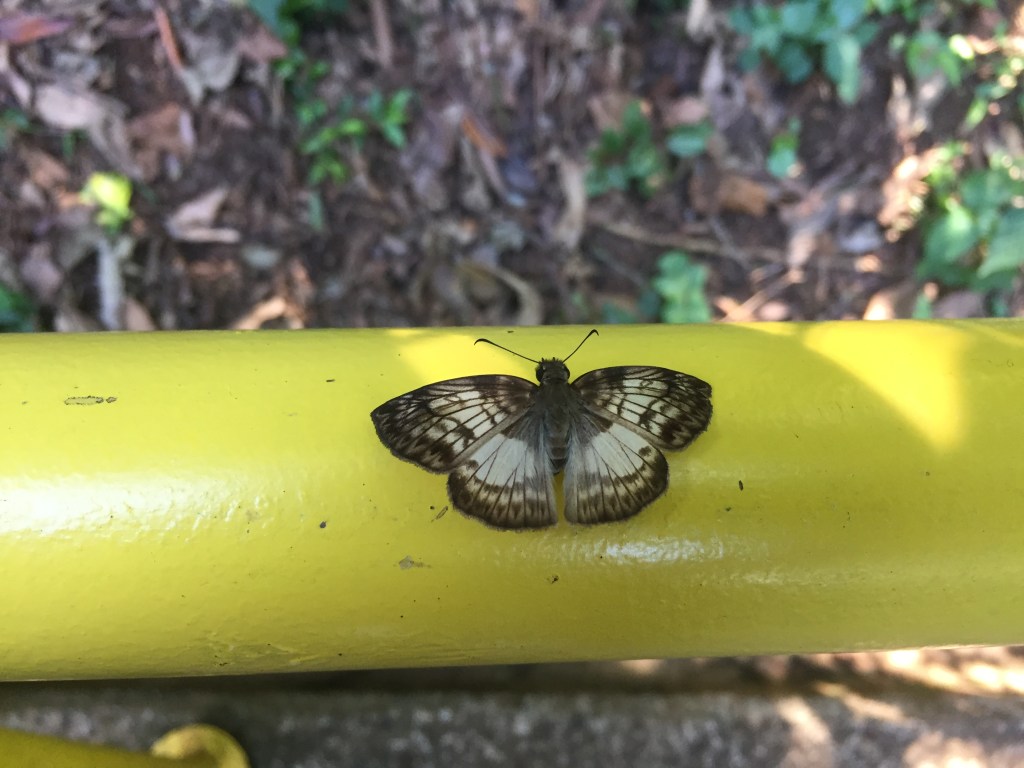
There are several bus stops along the route. We disembarked at The Path of the Falls stop and followed the mile long Waterfall Trail along the river ending at a walkway which overhangs the waterfall. It’s bit like Niagara on steroids; huge and loud and creating clouds of mist where a rainbow floats. If you don’t want to walk, stay on the bus to Porto Canoas Square.

The walkway over the river is a spectacular sight – the highlight of our trip so far! First, a slight dilemma; the walkway extends right into the mist and in order to purchase park tickets, we needed our passports. To ensure our passports didn’t turn to papier-mâché, we negotiated the walkway scrum one at a time, while the other stayed somewhere dry with aforementioned passports. To avoid this palaver, I recommend taking a plastic wallet!

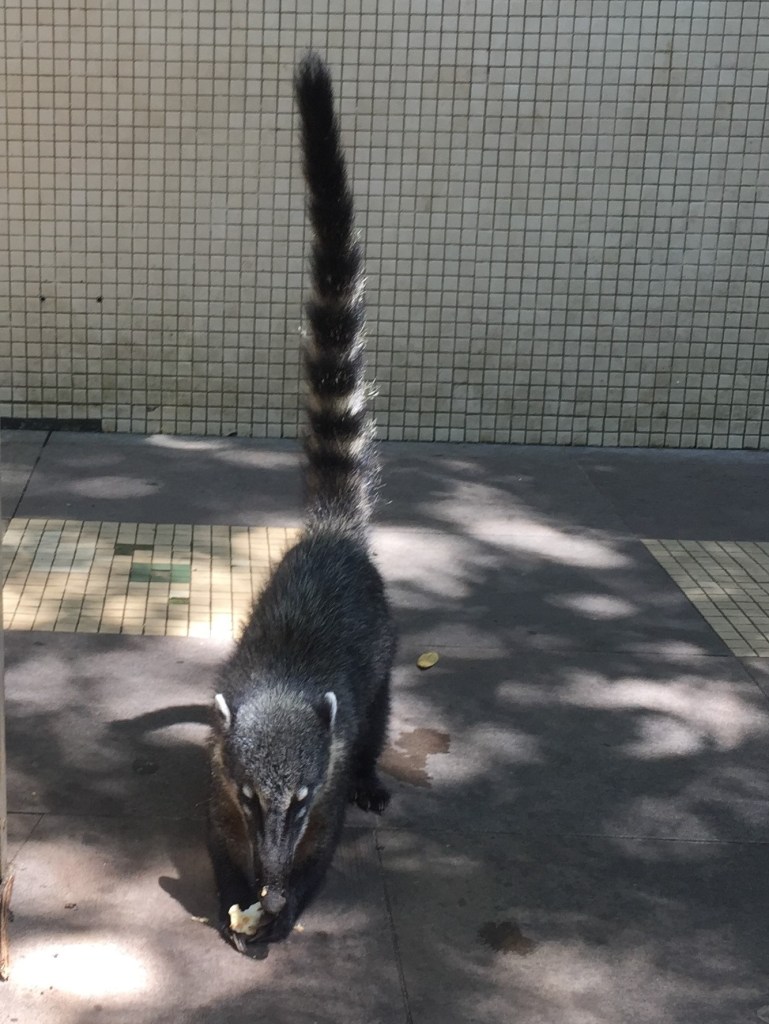
We stopped for lunch at the café, where lizards and coatis compete for scraps and then returned to our hotel for a siesta before our evening outing.
The Park is open daily from 9 am (8.30 at weekends) until 4 pm. Tickets for foreigners cost R$117 (around £16.20).
Marco das Três Fronteiras
In the evening, after a thunderstorm so violent it made the hotel shudder, we went to Marco das Três Fronteiras; a theme park at the point where Brazil, Argentina and Paraguay meet.

I convinced the old man to skip the hotel’s organised tour at £20 a head in favour of taking the bus which costs £1 each way. It’s a rather circuitous route and took a lot longer than expected; we were on the bus long after all the other passengers disembarked. I did begin to wonder if we’d been kidnapped by a rogue bus driver, but finally we arrived at our destination. With hindsight, this is probably one occasion when the tour bus would have been the best option.

The park is awesomely tacky. We wandered round the various three-border themed installations; flags, murals, obelisks, signs. After dark there’s a sound and light show. In the interim, you can enjoy the tacky attractions, purchase souvenirs and have a drink or dinner at a table overlooking the rivers with Paraguay and Argentina in the background.

The park is open daily except Mondays, from 1.30 pm until 9 pm. Tickets cost R$52 (around £7.20).
Iguazú Day 3
Parque Nacional de Iguazú
Today, we are heading for the Parque Nacional de Iguazú on the Argentinian side of the falls. For a local, this trip is fairly simple; a bus to the Argentinian town of Puerto Iguazú, then a second bus to the Park. For a foreigner, it is more complicated, as you have to disembark for immigration twice and the bus doesn’t wait, so it involves taking three consecutive buses on the same route (or two and walking between border posts), then a fourth bus to the park.

Buses depart from the International Bus Stop. We waited for a while, but once a group of six foreigners was assembled, a taxi driver approached and offered to take us as a group direct to the park for the price of the 6×4 bus tickets. And so we set off to Argentina by taxi with two Poles and two Colombians.
La Garganta del Diablo
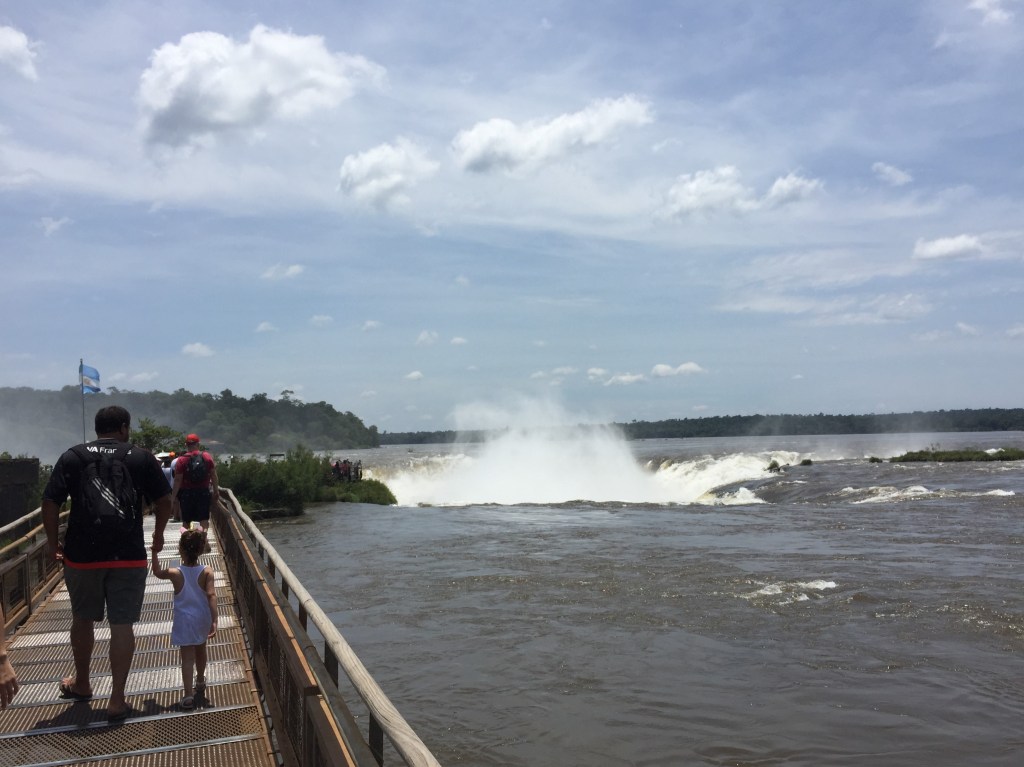
The taxi dropped us at the park entrance, where we had to queue for tickets, then take two separate trains to the waterfall. In total it took almost three hours to reach our ultimate destination; La Garganta del Diablo – the Devil’s Throat, which is the tallest of the falls, measuring 97 metres. Surrounded by signs warning of crocodiles, we set forth on a rickety walkway over the river to the edge of the waterfall. It was incredible; the sound and scale of water rushing down the Devil’s Throat is immense. The walk from Garganta Station to the viewpoint (Paseo Garganta del Diablo) is around 1100 metres each way.

Circuito Superior
After marvelling at the Devil’s Throat, we took the train to Cataratas Station to walk the Circuito Superior (Upper Trail), which follows the rim of the falls past a series of viewpoints. This trail is around 650 metres in length.
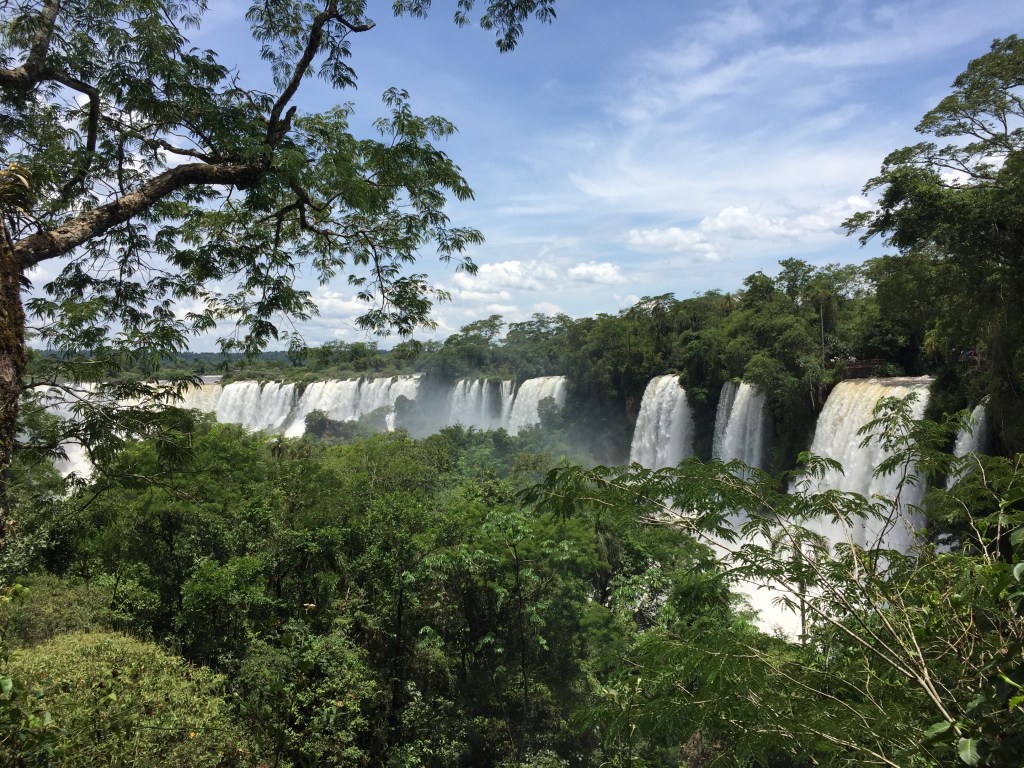
There is also a Circuito Infererior (Lower Trail), which is 1400 km in length, but we didn’t have sufficient time for this. Instead, we returned to the Visitors Centre for a much needed drink and ice cream before meeting our taxi driver to return to Brazil.
The park is open daily between 9 am and 6 pm. Tickets for foreigners cost ARS 45,000 (around £33.60).
Hito Tres Fronteras
On the way back through the city on the Argentinian side of the Falls; Puerto Iguazú, we stopped at a small park; Hito Tres Fronteras for one last photo op. Here, you have a view of the three bordering countries of Argentina, Brazil and Paraguay, with more flags and obelisks but without the tacky theme park.

Dinner at Marias & Maria
The driver dropped us back at our hotel and we went in search of dinner. Buffet restaurants are all the rage here. You choose what you want to eat from the buffet, then they weigh the plate to determine the price. We chose Marias & Maria, where the selection was wide, but the baked goods were particularly tasty. You can just purchase and pay for food by item, but we’d had a long day, so hit the buffet wholeheartedly. No photos – I was too busy filling my face!
- Trip Taken: January 2019
- Updated: February 2025
I hope you found the above information useful. For guides to more destinations in the 50+ countries we have visited, check out my full list of Independent Travel Itineraries here.
 Jane's Midlife Journey
Leave a comment