
We spent 4 days exploring Berlin on our European road trip. Way back in 1988, I spent a semester at university in what was then the German Democratic Republic. I’ve only been back once since unification and it’s rather a weird feeling – how much a place, particularly one with such a turbulent history, has changed.
Berlin is a city shaped by its history. In 1945, the main WW2 Allies defeated and occupied Germany. They divided the bulk of the country into four zones. They did the same with the capital, Berlin, although the city was actually way inside the Soviet zone.
In 1949, the three western zones merged and two separate German states came into being. East Berlin became the capital of East Germany (the DDR), while West Berlin became a part of West Germany (the BRD) some 100 miles away, only accessible by land from West Germany by plane or narrow rail and highway corridors. Meanwhile, Bonn became the new capital city.
In 1961, the infamous Berlin Wall was built, totally dividing the two sides of the city, with just a few checkpoints where it was possible for those with the correct paperwork to pass between the two.
The Berlin Wall fell some 28 years later in 1989, sparking the reunification of the city and the nation. A decade on, Berlin once again became the country’s capital.
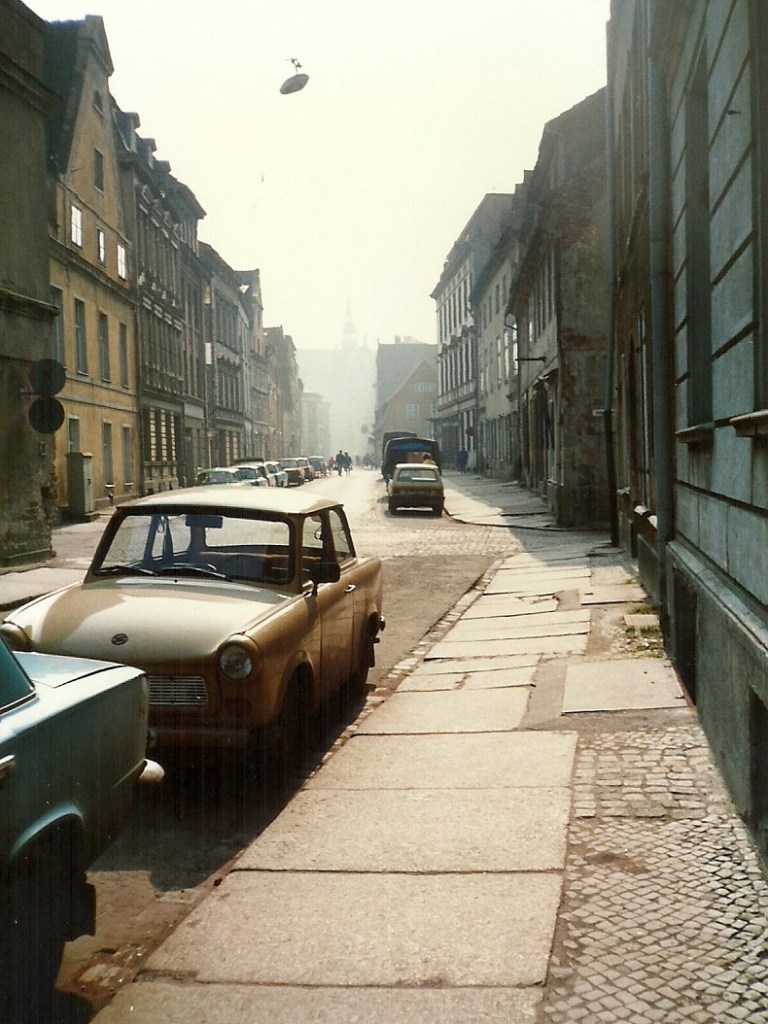
Back in the 80s, I was a regular visitor to what was then East Berlin. It’s strange returning now. Particularly strange is how you can walk along a road which is so familiar, then reach a place you have never visited before because there used to be a wall in the middle.
How to get to Berlin
We flew into Berlin Brandenburg Airport, which is 15 miles south of the city centre. The airport has an S Bahn station, which links it to the city (Line S9). There are other train options, which are faster but less frequent. The price for a one way ticket is €4.40.
Getting around Berlin
We mostly walked, with the occasional subway ride. The city’s main attractions are reasonably close together and there are plenty of parks and interesting things to see along the way. My city tour itinerary covers a total distance of around 6 miles (4 miles if you omit the East Side Gallery, which is close to Warschauer Straße station). The city has an extensive subway (U Bahn) system if walking becomes too much.
Where to Stay in Berlin
Accommodation in Berlin can be expensive, especially if there are events taking place in the city. We opted to stay a little further out where hotels are slightly cheaper. Most recently we stayed at the Erlanger Hof. This is a pleasant hotel close to the old Tempelhof Airport, which is now a large public park. It’s about 3 miles south of the city centre but very close to the Rathaus Neukölln U Bahn station (Line U7).
Previously, we stayed at the Hotel Carolinenhof. Another very pleasant hotel set in pretty gardens. This is situated around 4 miles west of the city centre, close to the Berliner Straße U Bahn station (Lines U7/U9).
Berlin in 4 Days Itinerary
| Day 1 – City Tour | Alexanderplatz Fernsehturm Brandenburg Gate Bundestag Memorial to Murdered Jews Lunch at Ritter Sport’s Bunte Schokowelt Checkpoint Charlie Topography of Terror East Side Gallery Dinner – Currywurst |
| Day 2 – Museum Island | Pergamonmuseum Altes Museum Neues Museum Berlin Cathedral |
| Day 3 – Olympiastadion and Potsdam | Olympiastadion Swimming in the Olympic Pool Potsdam Potsdam Boat Tour |
| Day 4 – Sachsenhausen | Sachsenhausen Concentration Camp |
Berlin Day 1 – City Tour
Alexanderplatz
Today, we are taking a walking tour of some of Berlin’s top attractions. We start by taking the U Bahn to Alexanderplatz. With both a U-Bahn (underground) and S-Bahn (train) station, as well as bus and tram stops, Alexanderplatz is well connected transport wise and the perfect place to start a tour of Berlin.
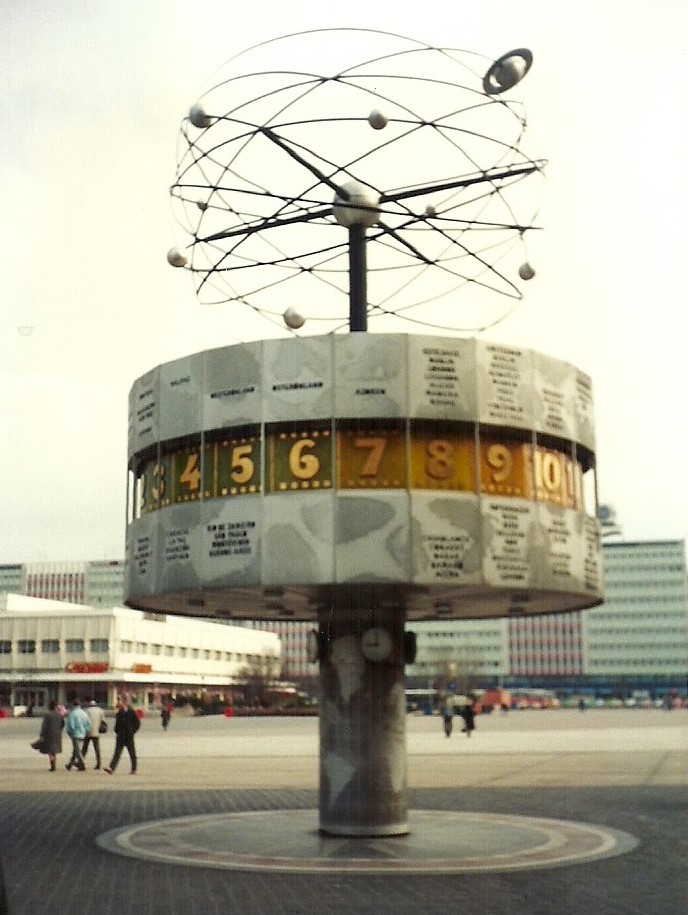
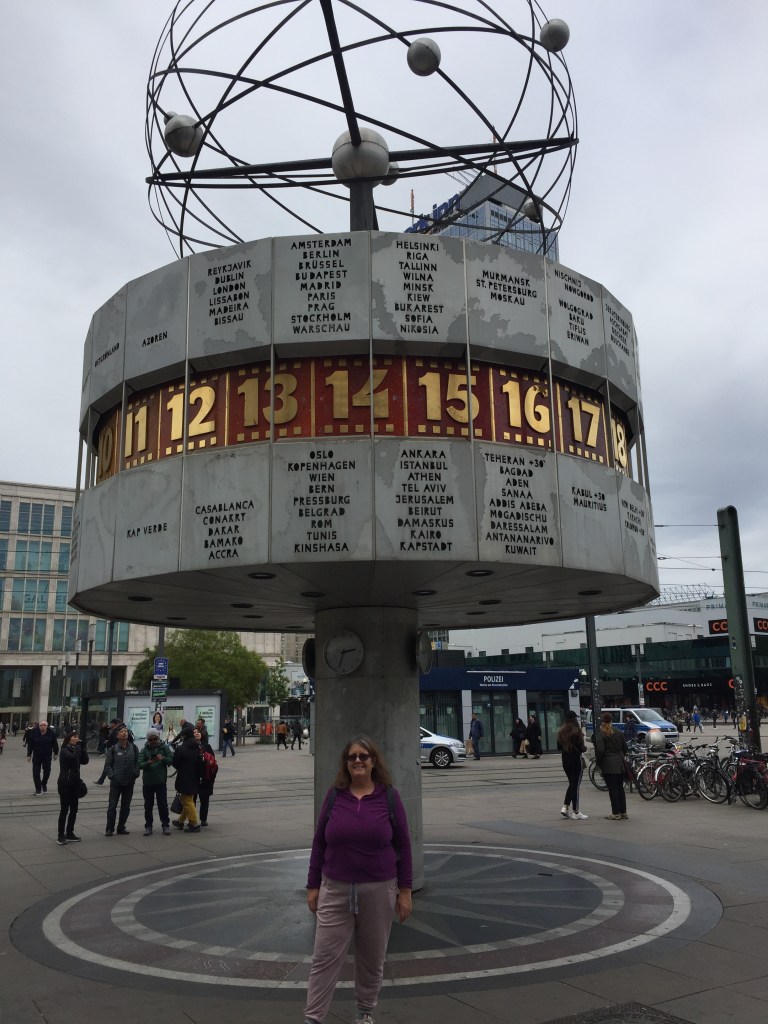
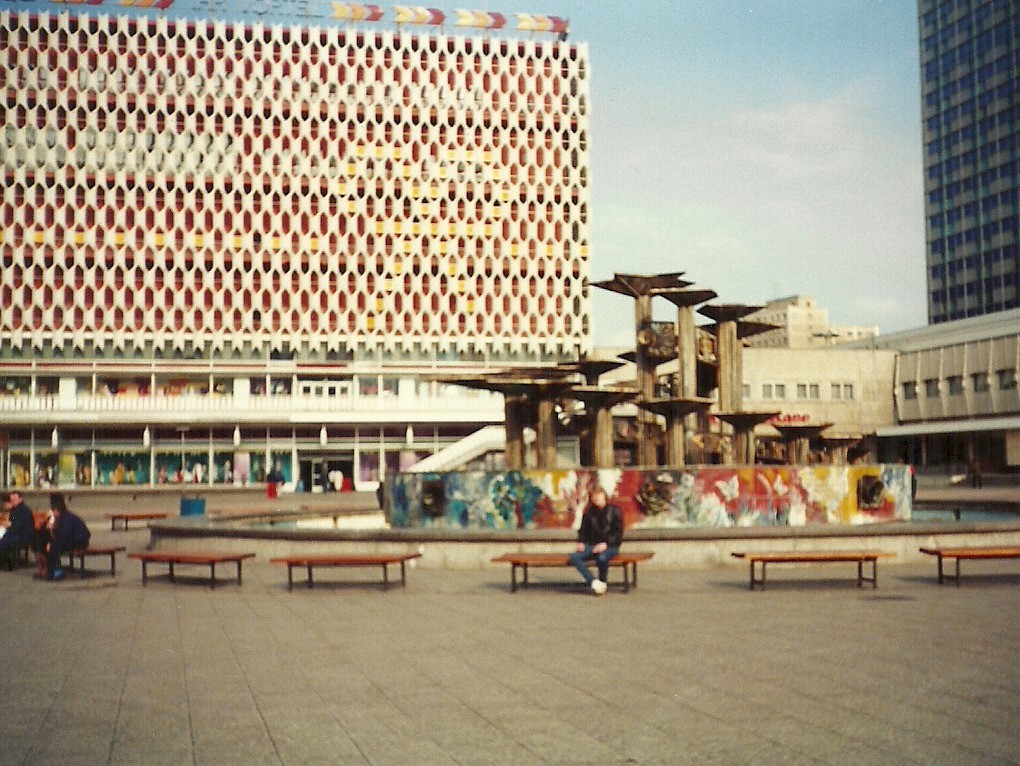
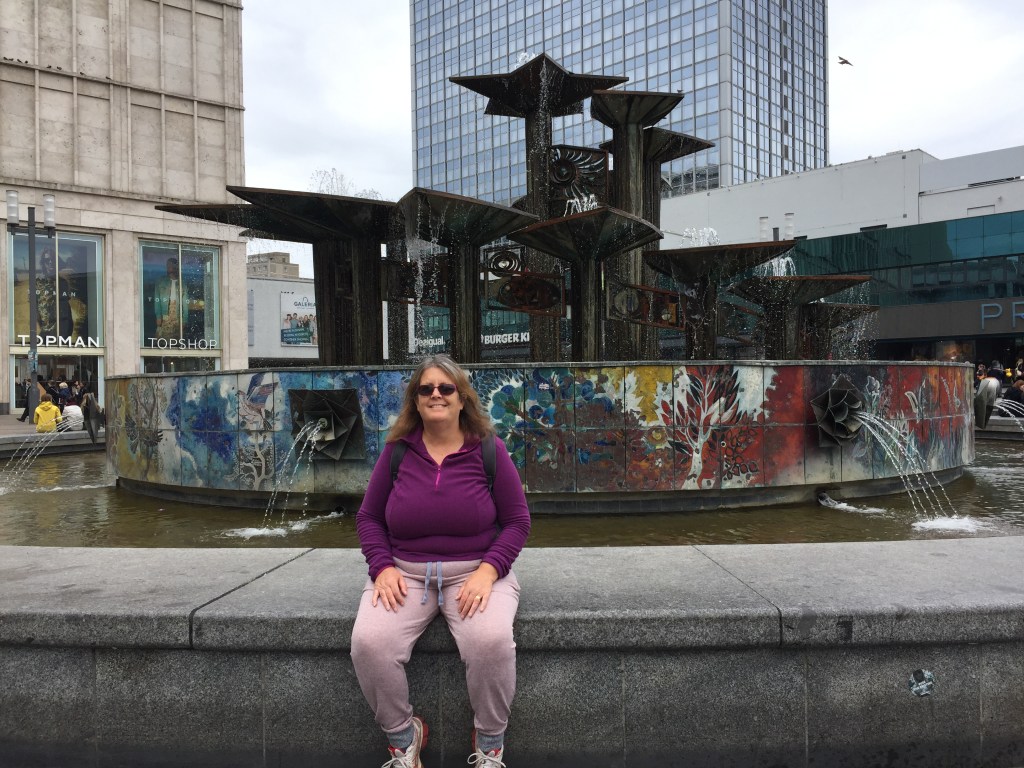
I used to love visiting the Alexanderplatz in the 1980s. It had an epic restaurant; the Alexgrill, which is sadly no more. This square, with its iconic World Time Clock, was once the focal point of East Berlin. It is still one of the most visited spots in the city, although it’s very different now; the fountain is surrounded by winos and the restaurants on offer – McDonalds and Burger King do not offer the best steak and chips ever.
Fernsehturm
Next to the Alexanderplatz is another of my favourite haunts, the Fernsehturm. This 368 metre high TV Tower was constructed in the 1960s by the East German government.

At the top of what is technically Europe’s 4th tallest building, is an observation deck with a 360 degree view of the city and beyond. There is also a revolving restaurant (Sphere) which rotates once in 30 minutes.


The Observation Deck is open from 9 am until 10 pm (11 pm in summer). The price for a basic ticket for the observation deck varies according to the day/time, costing up to a rather lofty €31.50. If you want to visit the restaurant, you’ll have to fork out a similar amount before you even order food and drink.
Brandenburg Gate
Next up, an obligatory photo op at the Brandenburg Gate. This iconic city gate, once situated in a nomansland in a divided city, has now been been restored and sits in a pedestrian area surrounded by hoards of tourists.

Bundestag
The Bundestag is the home of the German Parliament. The original Reichstag building was constructed in the 19th Century and was home to the German parliament until it was destroyed by fire in 1933, shortly after Hitler came to power. Following reunification, the building was reconstructed and the German parliament returned here in 1999. To the rear is a modern glass and steel dome which offers 360 degree views of the city.

You can visit the dome and adjoining roof garden. Entry is free, but you must pre-register online. Slots fill up quickly, so it’s advisable to book well in advance. And don’t forget to take your passport – we booked tickets but weren’t able to use them as we had no ID. It is also possible to book guided tours of the Reichstag building when parliament is not in session.
Memorial to Murdered Jews
On to Berlin’s Holocaust Memorial; The Memorial to Murdered Jews. The memorial consists of a collection of 2711 concrete rectangles of different heights. Apparently these ‘produce an uneasy, confusing atmosphere, and the whole sculpture aims to represent a supposedly ordered system that has lost touch with human reason’.

Lunch at Ritter Sport’s Bunte Schokowelt
Next stop is a lunch break at Ritter Sport’s Colourful World of Chocolate. At this mecca to the famous chocolate brand, not only is there a shop where you can buy Ritter Sport chocolate, there is also a museum of chocolate and a build-your-own chocolate bar workshop. Upstairs is a bistro with a chocolate themed menu. We opted for the chocolate fondue, which was amazing.

Ritter Sport Bunte Schokowelt is open Monday to Saturday from 10 am until 6:30 pm.
Checkpoint Charlie
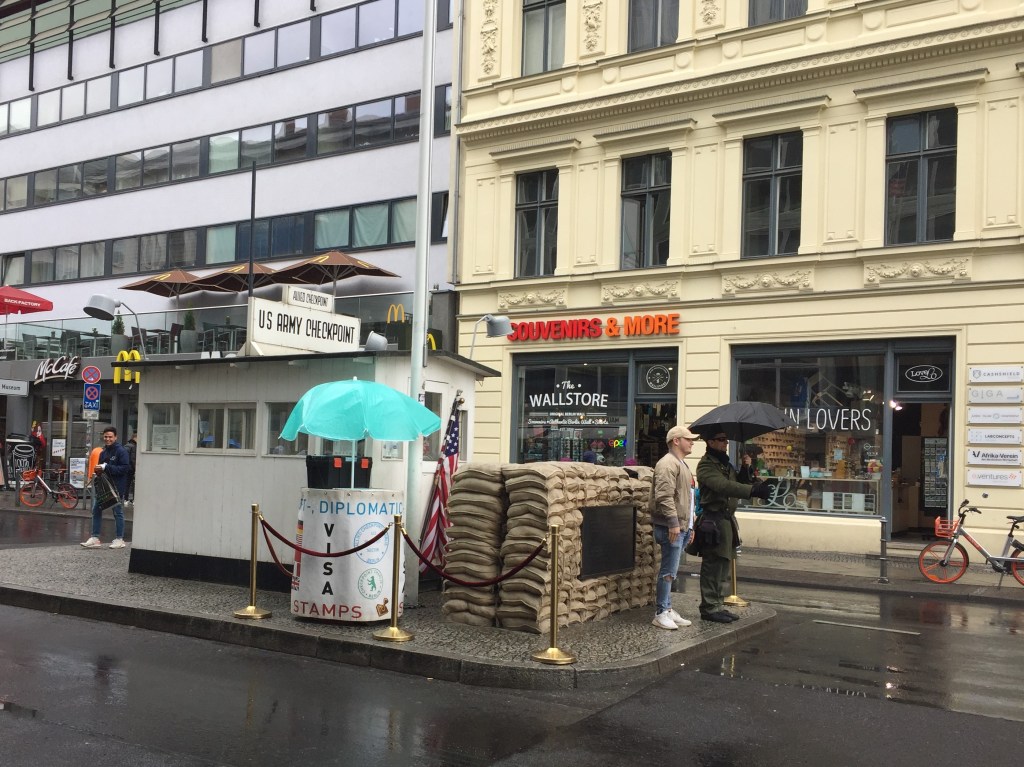
We continue our walk past the ever so tacky Checkpoint Charlie. During the Cold War, this was one of the crossing points between East and West Berlin. Nowadays, you will find a fake military post where you can pay to have your photo taken with fake soldiers. Back in the day, I only crossed here a couple of times, preferring the underground crossing at Friedrichstraße.
Topography of Terror
Close to Checkpoint Charlie is the Topography of Terror. Situated on the spot which was once Gestapo Headquarters, is an exhibition documenting the terror of living under the Nazi regime.
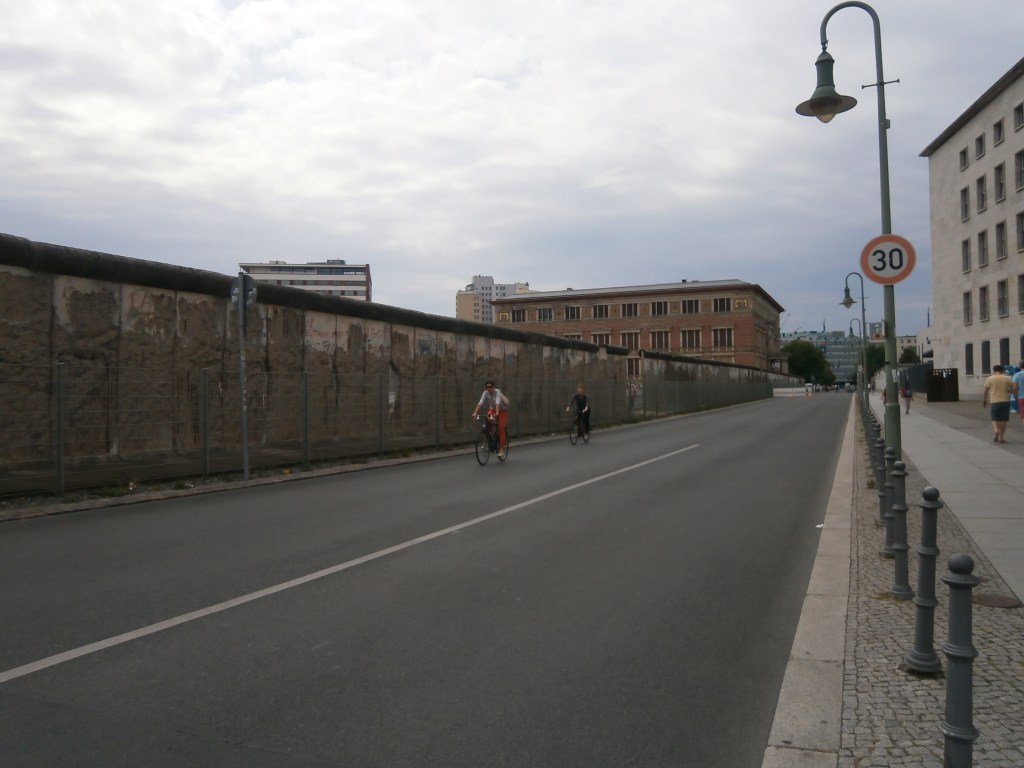
The Topography of Terror is open daily from 10 am until 8 pm. Admission is free.
East Side Gallery
On a stretch of the Berlin Wall which runs along the banks of the River Spree, is the East Side Gallery; a collection of murals painted on a remnant of the Wall. Immediately after the Wall came down, 118 artists from 21 countries began painting on it and the gallery officially opened in 1990. This 1.3 km stretch of murals is officially the longest open air gallery in the world.

Amongst the gallery’s most well known works are Dmitri Vrubel’s Fraternal Kiss featuring a snogging Honecker and Brezhnev and Birgit Kinders’ Trabant breaking through the Wall.

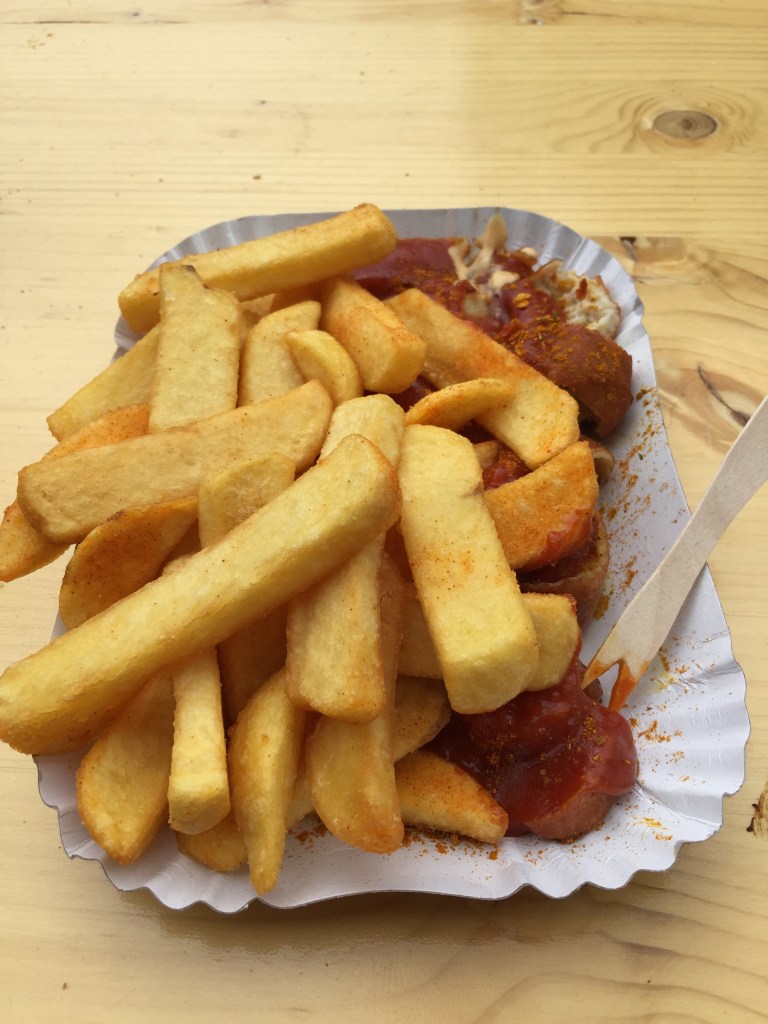
Dinner – Currywurst
You can’t go to Berlin and not have a Currywurst. We bought ours with chips in a little café on the river overlooking the cathedral.
Berlin Day 2 – Museum Island
Museum Island is, as the name suggests, an island with museums on; five, to be precise. You could easily spend a full day here – we did. You can purchase entry to an individual museum or a day pass which covers every thing and costs €24. Note: It’s a popular place – be prepared to queue.
Pergamonmuseum
The Pergamon Museum houses the Antikensammlung including its most famous exhibit the Pergamon Altar; a 113 metre long Greek relic from the 2nd century BC.

Note: The Pergamonmuseum is closed for renovations until 2027. In the meantime, a temporary exhibition; Pergamonmuseum: The Panorama is available. This consists of a 360 degree reconstruction of Pergamon, plus important works from the Pergamon collection. It is open daily except Mondays from 10 am until 6 pm. Entry costs €14 (or included in the day pass).
Altes Museum
The impressive collanaded Altes Museum is home to the Antikensammlung; a collection showcasing items from ancient Greece and Rome.
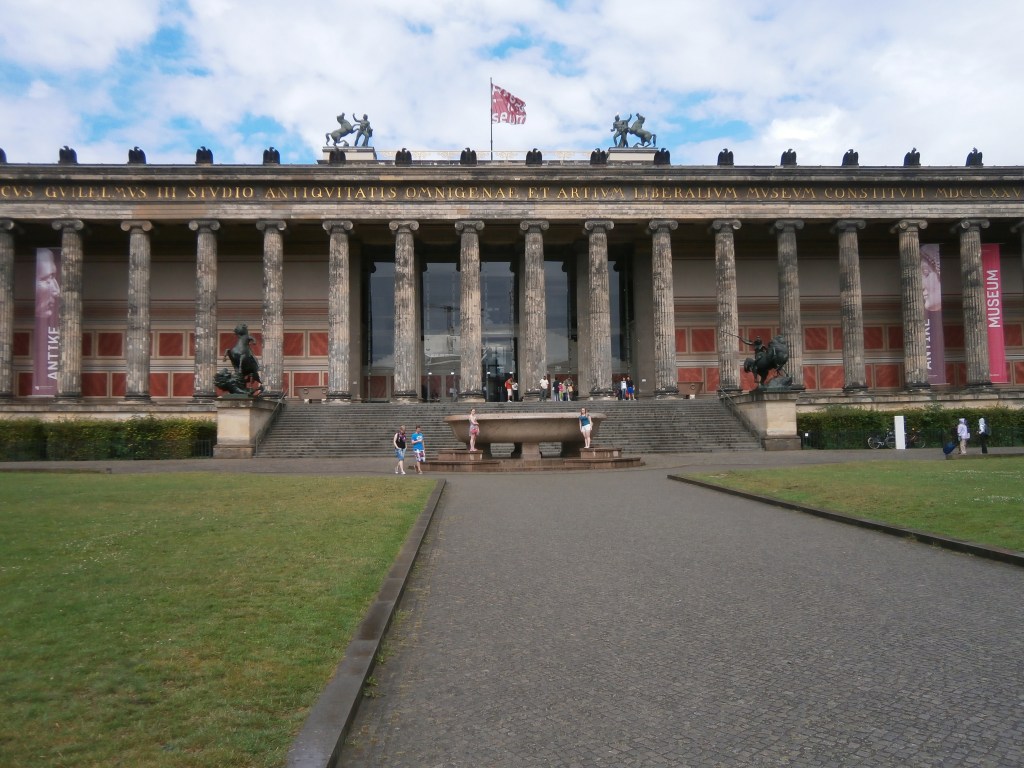
The museum is open daily except Monday from 10 am until 5 pm (6 pm at weekends). Entry costs €14 (or included in the day pass).
Neues Museum
The Neues Museum houses the Egyptian Museum (its most notable exhibit being a bust of Queen Nefertiti) and the Museum of Pre-and Early History (home to the Xantener Knabe; a Roman bronze statue).

The museum is open daily except Monday from 10 am until 6 pm. Entry costs €14 (or included in the day pass).
Other museums, if you have the time and energy, are the Alte Nationalgalerie (art gallery) and the Bode-Museum (sculpture collection and the Museum of Byzantine Art).
Berlin Cathedral
Also on Museum Island is the domed Berlin Cathedral dating from 1905.
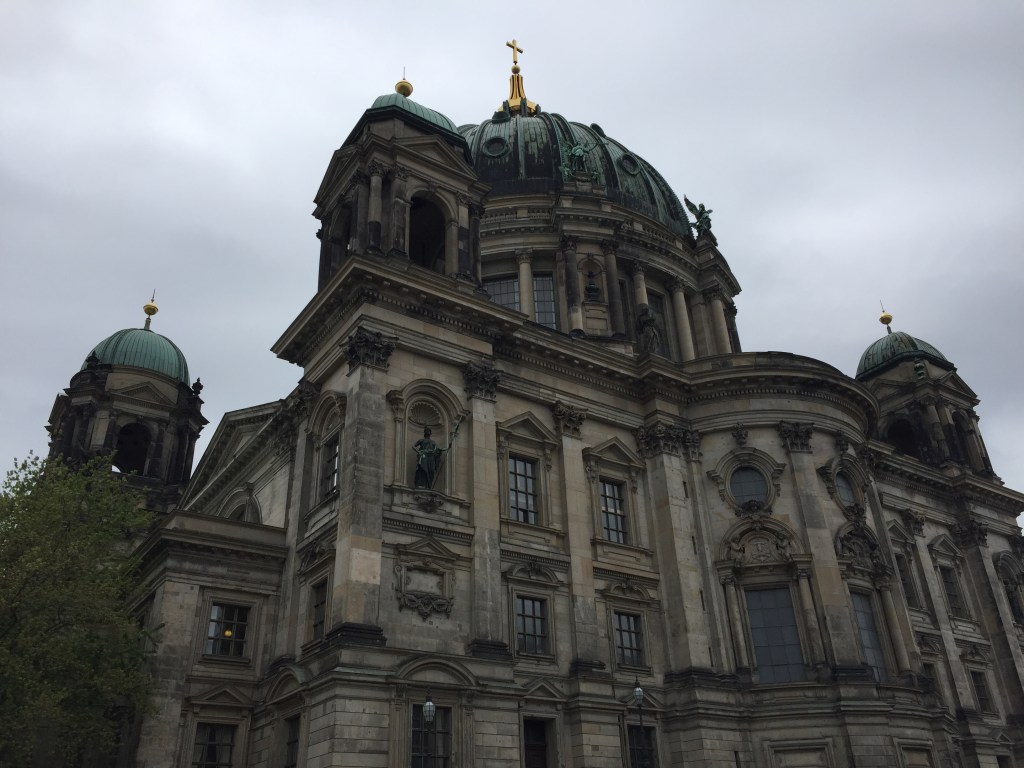
Inside there is plenty of gold, a lavish marble and onyx altar and a 7269 pipe organ.
Berlin Day 3 – Olympiastadion and Potsdam
Olympiastadion
The Olympiastadion has hosted many top sporting events. Most notably the 1936 Olympic Games. Presided over by Hitler, who hoped to use the event to showcase Nazi propaganda and his idea of Aryan racial supremacy. The Games’ most infamous moment came when the decidedly non Aryan Jesse Owens dominated the athletics, becoming the first person to win four gold medals in a single Olympics.

If there is no event in progress, it is possible to tour the stadium and its environs. Tickets cost $11. Guided tours are also available.

Swimming in the Olympic Pool
It’s seen better days, but we couldn’t resist the opportunity to swim in the Olympic Pool.

There’s also a children’s pool with a slide, which we also couldn’t resist.
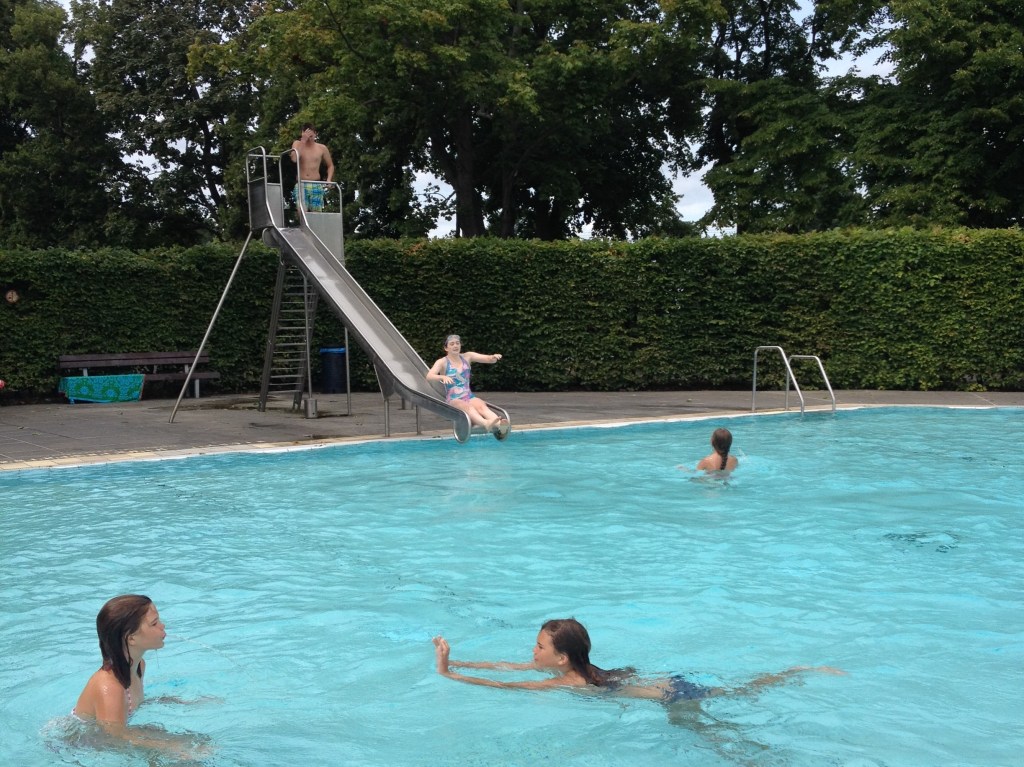
This open air swimming pool is open to the public during the summer (May to September). Tickets cost €6.50.
Potsdam
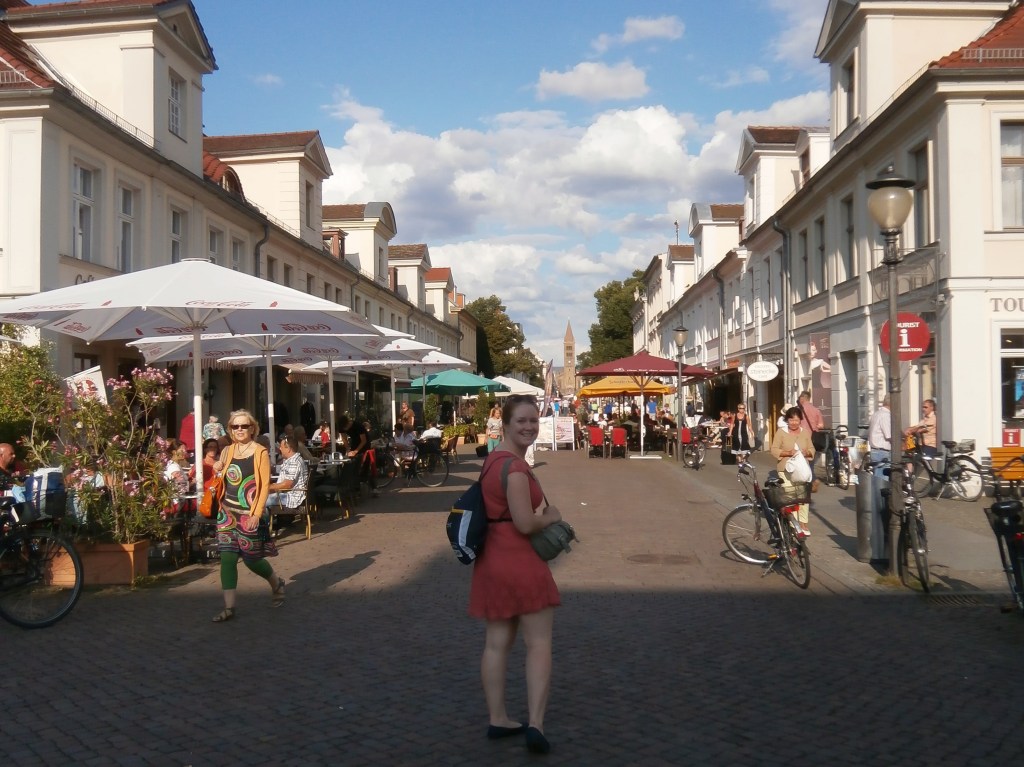
Just 18 miles south west of Berlin, is the city of Potsdam. Once the home of Prussian kings, the city has plenty of palaces and parks and a picturesque old town.
Potsdam Boat Tour
You could easily spend a day or more exploring Potsdam. However, as we were short of time, we opted for a boat tour. The 90 minute Castle Tour sails past some of the city’s top attractions, including Babelsberg Park with its palace, Peacock Island and Cecilienhof Palace. As well as Glienicke Bridge, nicknamed the Bridge of Spies during the Cold War, as it was the location of several exchanges of captured spies. Tickets cost from €23.

Potsdam is an hour drive away along the A115. Alternatively, take the S7 train from Alexanderplatz to Potsdam Central Station.

Berlin Day 4 – Sachsenhausen
20 miles north of Berlin is Sachsenhausen. During WWII, the area became notorious for the nearby site of a Nazi concentration camp with the same name.
Sachsenhausen Concentration Camp
The former Sachsenhausen Concentration Camp is now a memorial and museum. Although Sachsenhausen didn’t see the large scale slaughter practiced in camps further east, conditions here were no less horrific. The camp was used for a range of trials, from medical experiments to practicing the most efficient and effective execution method for use in the death camps.
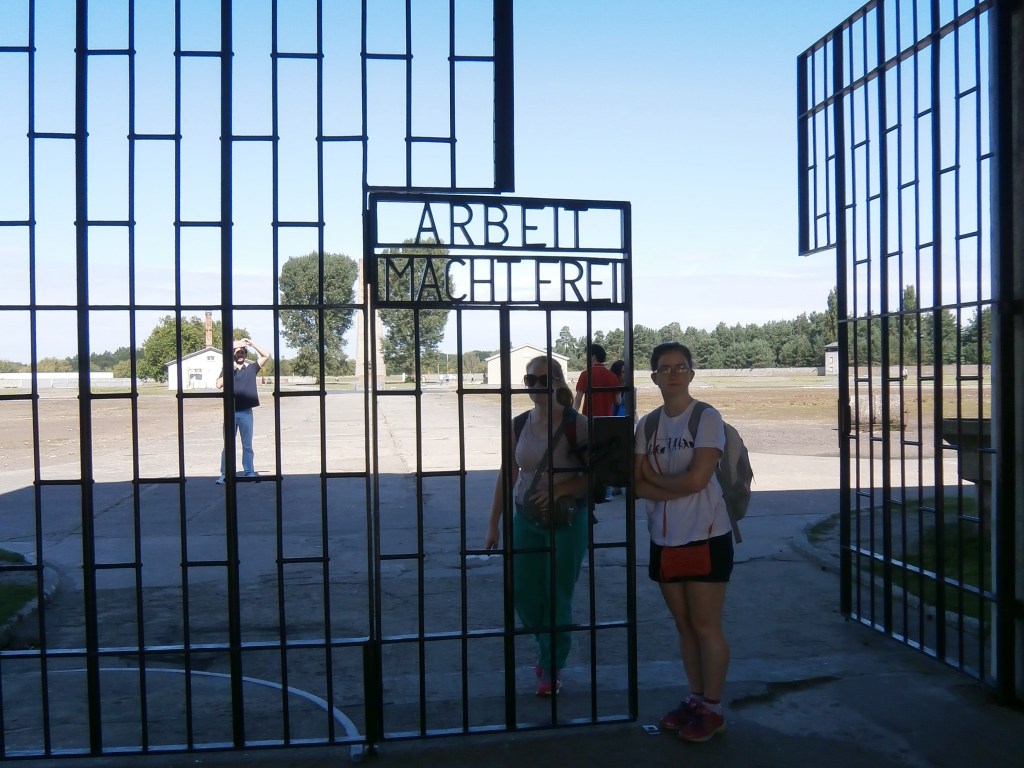
To reach Sachsenhausen from Berlin is a 60 minute drive up the A10. Alternatively, you can take public transport, but this involves a change or two and some walking. We took the RB12 train from Lichtenberg to Sachsenhausen and walked the final mile to the camp.

The museum is open daily from 8.30 am. Entry is free. You can pay €3.50 for an audio guide. Guided tours are also available.
- Trip taken: May 2019
- Updated: June 2025
I hope you found the above information useful. For guides to more destinations in the 50+ countries we have visited, check out my full list of Independent Travel Itineraries here.
 Jane's Midlife Journey
Leave a comment