
We spent 4 days exploring Serbia during our Balkan Road Trip, arriving from Croatia in the north west and continuing to North Macedonia in the south east. Our route took us through Serbia’s three largest cities; Novi Sad, Belgrade and Niš.
Serbia 4 Day Road Trip Itinerary
| Day 1 | Novi Sad Petrovaradin Fortress Petrovaradin Fortress Clock Tower Varadin Bridge Monument to the Victims of the Raid in Novi Sad Danube Park River Danube Accommodation: Garni Boutique Hotel Arta |
| Day 2 | Belgrade Museum of Yugoslavia Tito’s Mausoleum Belgrade Fortress Kalemegdan Park Accommodation – Nobel Design Hotel Knez Mihailova |
| Day 3 | Belgrade St Mark’s Church Nikola Tesla Museum Sveti Sava Cathedral Central Station Museum of Contemporary Art Riverside Walk Dinner at To Je To! |
| Day 4 | Niš King Milan Square Niš Fortress Bali-Bey Mosque Nišville Jazz Museum Red Cross Concentration Camp Tinkers’ Alley Dinner at Kafana Galija Accommodation: Hotel Sole |
| Bubanj Memorial Park |
Serbia Day 1 – Novi Sad
Today, we have a long drive today; 4 hours and 240 miles across the Serbian border to Novi Sad, Serbia’s second biggest city, which lies on the banks of the River Danube.
Most of what I know about Serbia comes from news reports on wars with its neighbours. This image was not helped when, in Ljubljana, a group of Serbs handed us a leaflet saying “Welcome to Serbia,” which seemed like rather an aggressive thing to do in the capital of Slovenia. The same thing happened again in Zagreb, Croatia. In addition, we have Kosovan stamps in our passports and I have read that this can cause issues when trying to enter Serbia.
I start the day with a shower. The shower gel is mint and nettle, so I smell a bit like an enormous throat lozenge. Then we set off for Serbia in a cloud of minty freshness.
Driving across the Balkans is costly; most of the motorways have tolls and then there’s parking fees. By now, every cubbyhole in the car is filled with cash of varying currencies. We stop for petrol and the old man has to accelerate hard to rejoin the motorway. This leaves him wearing the Albanian Leke, which shoot out of their cubbyhole and fly across the car.
The drive to Novi Sad is quite dull; just one long, straight stretch of motorway. Last night’s host has warned us that the most exciting thing we’re likely to encounter is a lorry driver who’s fallen asleep at the wheel!
We reach the border, the final toll is 128 Kuna, which is unfortunate as we only have 100 Kuna left. But the man in the booth agrees to take a combination of Kuna and Euros (taking a decent commission for himself). The border crossing only takes 20 minutes and we pass without problem. Most of the delay is due to an enormous Serbian military convoy.

Once in Serbia, the road deteriorates significantly. We bounce along the final 30 miles into Novi Sad through huge plumes of smoke where farmers are burning stubble in the surrounding fields.
Petrovaradin Fortress
First stop is on the outskirts of Novi Sad, on a rock overlooking the Danube; the formidable Petrovaradin Fortress. Once Europe’s second biggest fortress, construction dates back to the 17th Century.
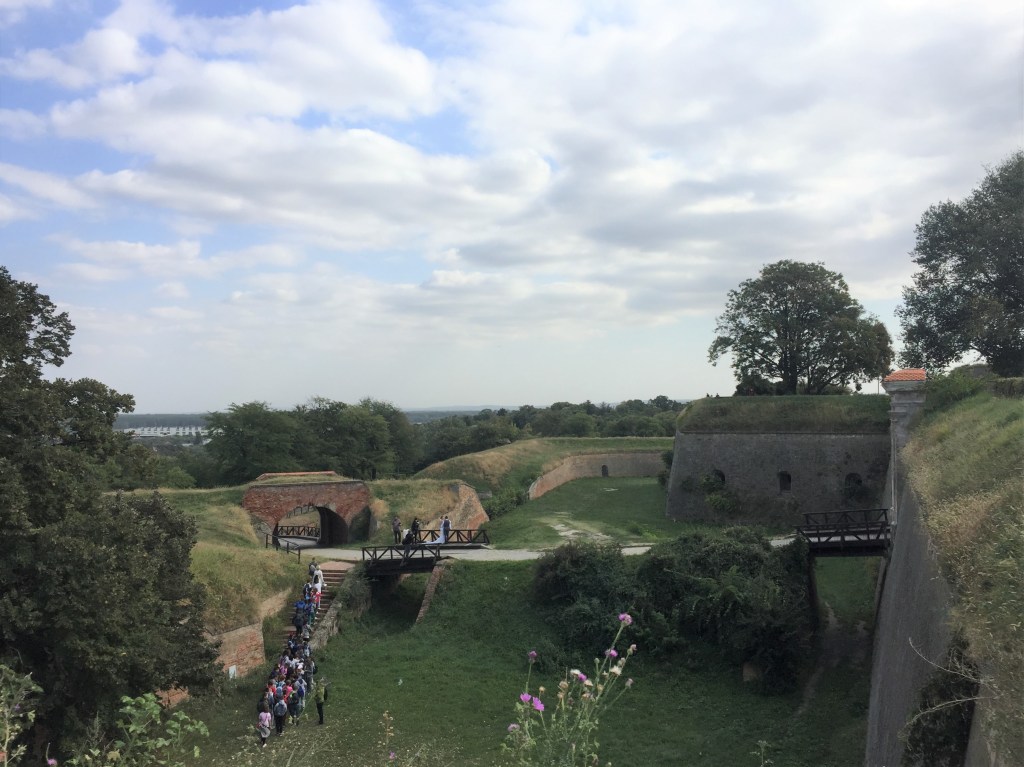
There’s not much fortress left, but a walk round the remains provides great views across the Danube.
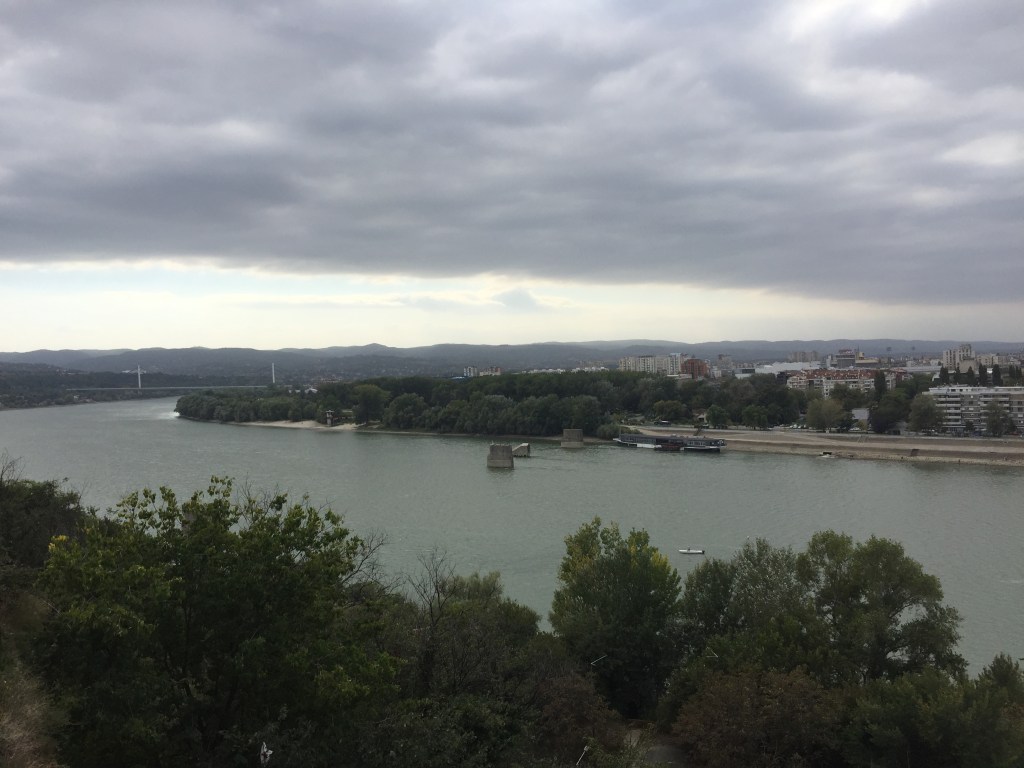
The remains of the fortress houses a Museum which tells its history. You can also visit the Catacombs, which criss cross under the fortress.
Petrovaradin Fortress Clock Tower
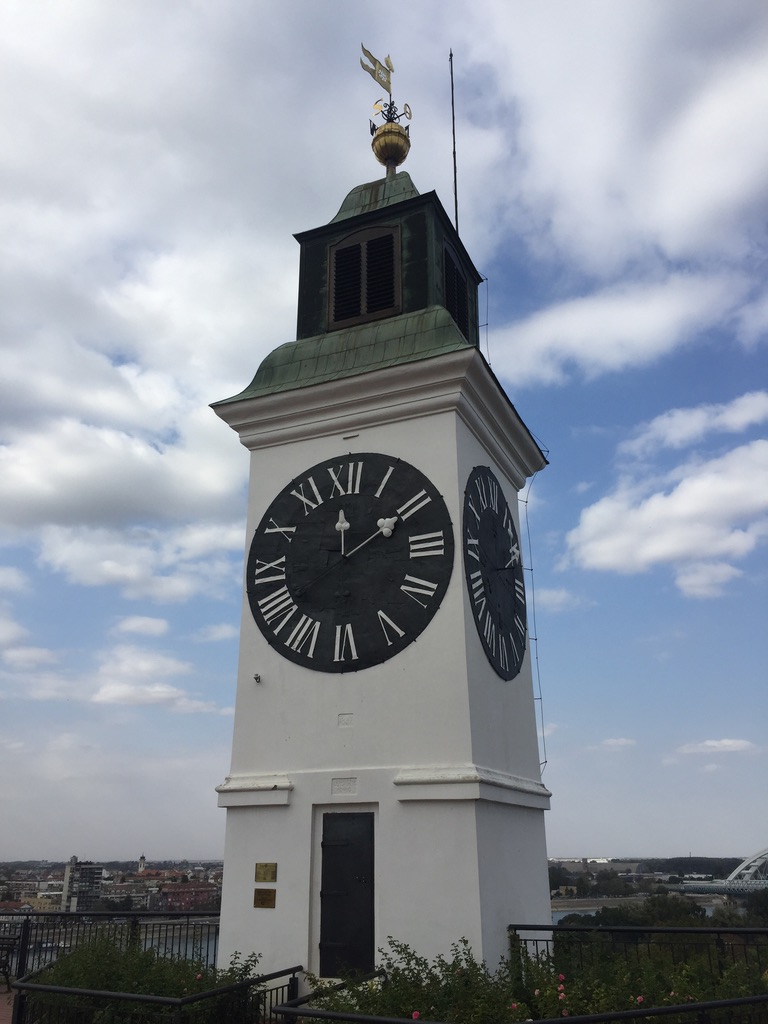
One of the landmarks of Petrovaradin Fortress is the Clock Tower with its reversed clock. The hands are reversed, so that the small hand shows minutes and the big hand shows hours. It was created like this so that fishermen on the Danube could see the time better from a distance.
Varadin Bridge
Linking the fortress to the city is Varadin Bridge. The current bridge dates from 2000, built after the previous bridge was destroyed by NATO bombing. It’s not that exciting to look at, however, it offers a great view of the fortress, the river and the city. The bridge is illuminated at night, hence it is sometimes called the Rainbow Bridge.
Monument to the Victims of the Raid in Novi Sad
We continue the drive into town, which offers an equally spectacular view looking back up to the castle. Here, you can find the Monument to the Victims of the Raid in Novi Sad. The 4 metre tall sculpture, entitled “The Family” was erected in 1971 in memory of almost 4,000 people who were massacred by occupying Hungarian troops in 1942 after the Axis invasion of Yugoslavia. It is the work of sculptor Jovan Soldatović, and incorporates 78 bronze plates which which tell the story of this tragic event and list the names of the victims.

Danube Park
Just round the corner from the monument is Danube Park. This city centre oasis features a lake, paths lined with flower beds and numerous statues.

River Danube
We round the day off with a walk along the River Danube (in theory). The mighty Danube is Europe’s second largest river, spanning 1770 miles from Germany to Ukraine. En route, it passes through 10 countries and 4 capital cities.
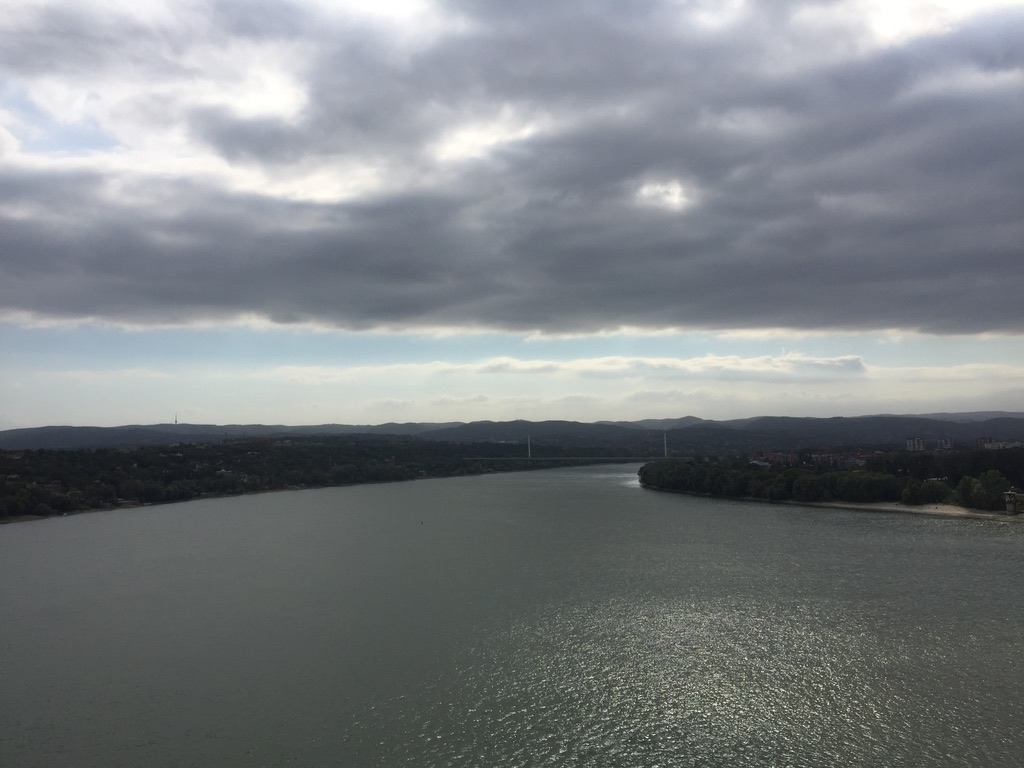
In reality, we get lost and mostly end up sandwiched between a military base and an industrial wasteland inhabited by packs of feral dogs.
Accommodation: Garni Boutique Hotel Arta
Time to check into our hotel; Garni Boutique Hotel Arta. It has mixed reviews, so either the good reviews are fake or some people are just too picky. We have lowered our expectations accordingly, but it’s actually quite pleasant. The bedroom and the bathroom are both enormous.
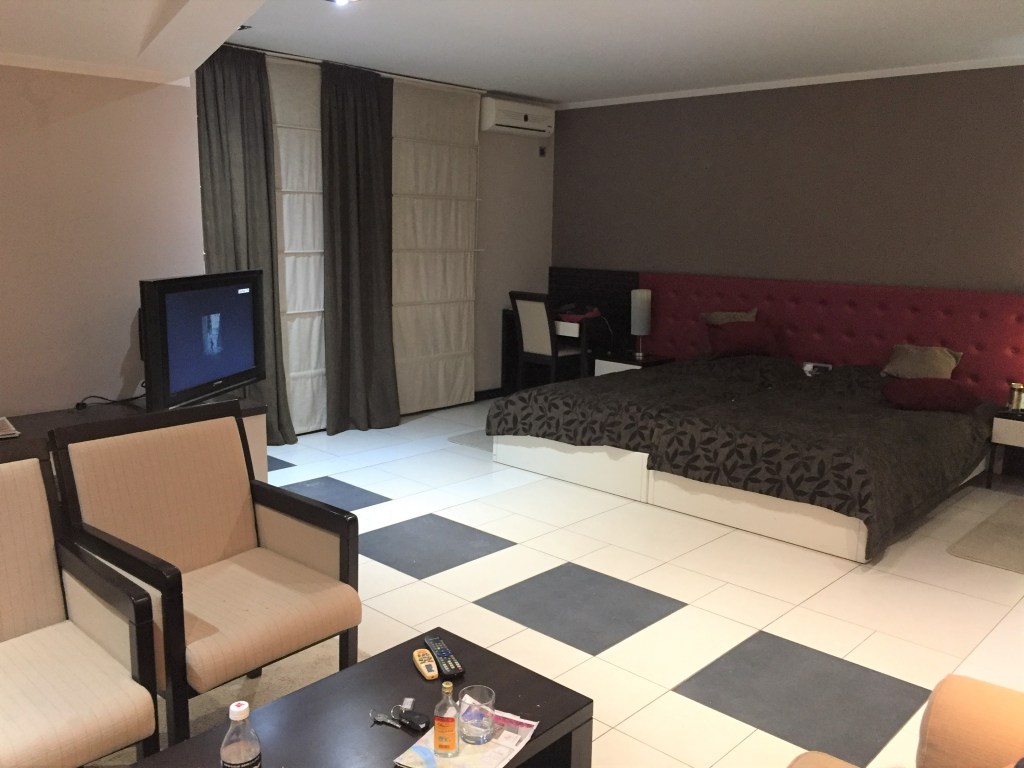
Just dinner to worry about now. We find a supermarket and the old man attempts to get enough money from the ATM for our 4 days in Serbia. He calculates the exchange rate wrong, so we end up with about £20 worth of currency and the machine won’t let him have a second chance. Hence, dinner consists primarily of cherry Jaffa Cakes and cider.
Serbia Day 2 – Belgrade
Today, we are going to the Serbian capital, Belgrade. Things I know about Belgrade; (1) it was the capital of Yugoslavia, (2) Former President Tito is buried here – you can visit his mausoleum at the Museum of Yugoslavia and (3) you can visit Nikola Tesla’s remains in a golden casket in the Tesla Museum.
Note: If you visit Belgrade on a Monday, several attractions, including many museums are closed.
First, breakfast. In Serbia, everyone smokes. All the time. Breakfast is no exception; it’s like being stuck in the 1980s. I half expect Michael J Fox to turn up in a DeLorean. We are offered the hotel’s signature breakfast – the waitress says it’s a bit of everything. She means meat. Lots and lots of meat – sausage, bacon, salami, two types of ham…

Filled to the top with pig products, and smelling of a combination of stale cigarettes and strawberry shower gel, we set off for Belgrade. Thirty miles outside town, we pass a landfill where they are burning the rubbish. The smoke is horrendous. We drive for mile after mile in a thick, stinky smog. Finally the smog lifts as we reach the city.
Museum of Yugoslavia
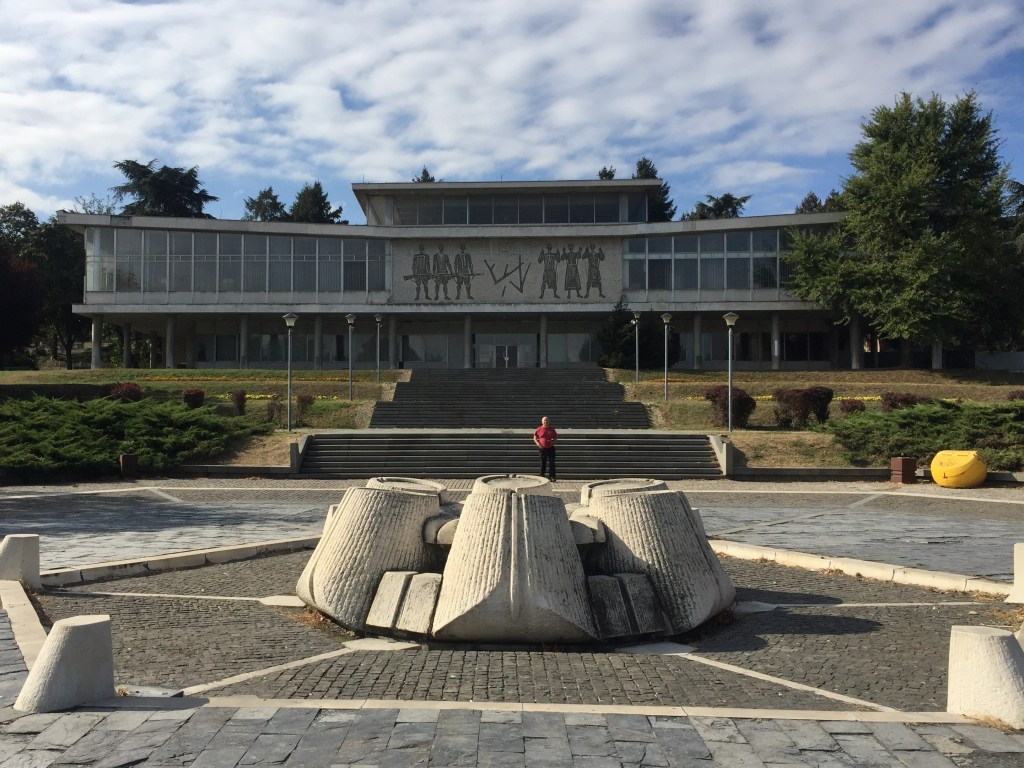
Our first stop is the Museum of Yugoslavia. The museum is actually split across several buildings.
- The main building, the May 25 Museum, houses a collection of over 200,000 artifacts depicting the history of Yugoslavia.
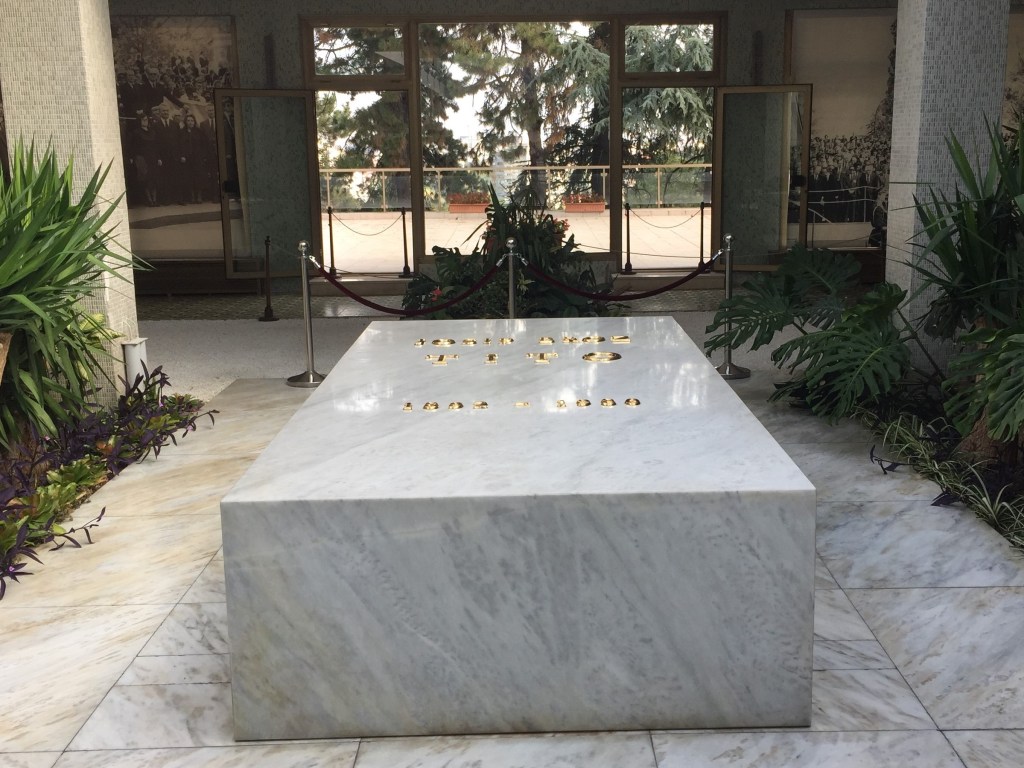
- The House of Flowers houses Tito’s Mausoleum.
- The Old Museum is pretty much a storage area full of random tat gifted to Tito.
It seems very quiet when we arrive. That’s because the main museum is shut. They’re happy, however, to charge the full entrance fee to visit the House of Flowers and Old Museum.
House of Flowers
The House of Flowers contains Tito’s Mausoleum, plus a who’s who guide to his funeral attendees (Prince Phillip sat next to Margaret Thatcher), a model of Tito’s Blue Train, plus batons from his birthday celebration relays.
Old Museum
The Old Museum contains all sorts of stuff in no chronological or any other obvious order; mementos from Tito’s life, gifts given to Tito, more relay batons….

The museum is open daily except Monday from 10 am until 6 pm. Adult entry costs 600 dinar (around £4.40).
From here, we attempt to drive on to our hotel. It’s absolute chaos; we have arrived in the middle of the Belgrade Marathon. A combination of multiple road closures and a hideous one way system mean we are unable to reach our hotel, despite trying for an hour. We get close a couple of times, but just can’t quite manage it.
Belgrade Fortress
We give up and instead go to Belgrade Fortress, which consists of the old Citadel and Kalemegdan Park. The Citadel is an imposing building perched on a hillside overlooking the city and the Danube.
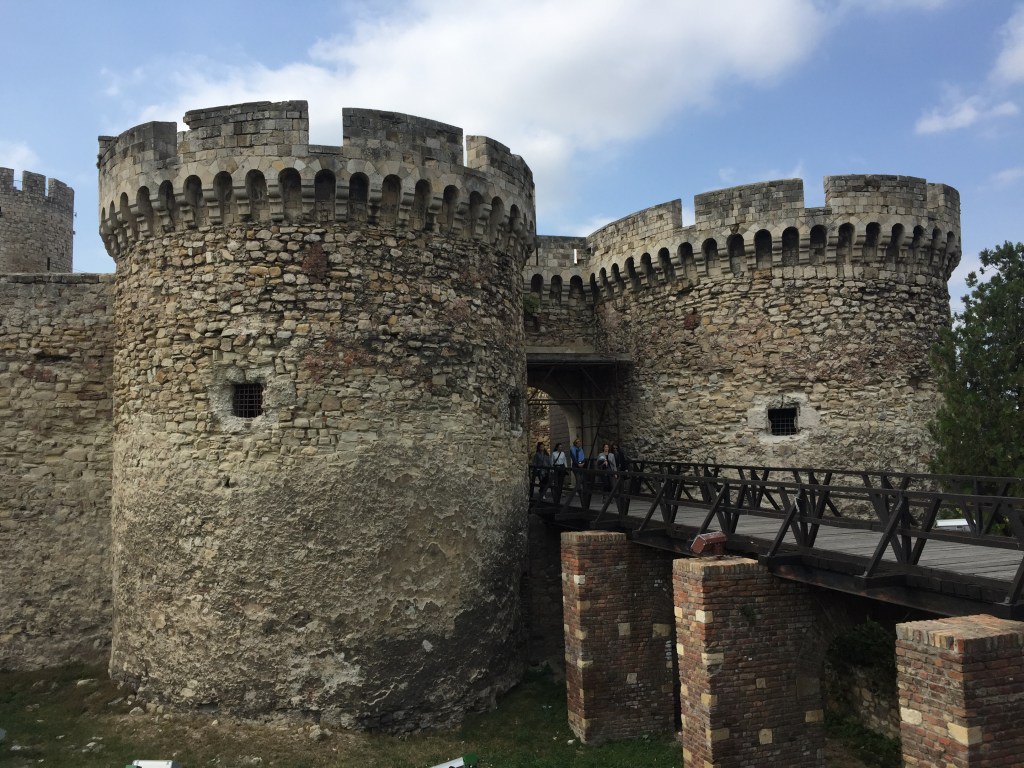
It has an impressive array of weaponry from across the ages.

Kalemegdan Park
Spanning out from the fortress is Kalemegdan Park. It’s a pleasant place for a stroll amidst the gardens and sculptures. My favourite is this striking Monument of Gratitude to France.

Cultural interlude complete, we have another bash at reaching our hotel. After almost another hour on working our way through every permutation of the one way system not blocked by the marathon, we finally reach the hotel. I ask where we can park, and get directed to the garage entrance, which is round the corner, ironically in a road we have driven down 3 times trying to reach the hotel.
Accomodation – Nobel Design Hotel
We stayed at the Life Design Hotel. This boutique hotel is centrally located. I described it at the time as a ’boutique hotel that someone lost interest in half way through construction’. However, it has now had a refurb and reopened as the Nobel Design Hotel.
Knez Mihailova
Extending diagonally from the fortress to Republic Square, Knez Mihailova is a pedestrian shopping street lined with shops, restaurant and bars. There are plenty of places to stop here for dinner – as it was a lovely day, we opted to buy sandwiches from a supermarket and picnic in the park.

Serbia Day 3 – Belgrade
Today, a full day of sightseeing in Belgrade. The itinerary involves quite a lot of walking (around 6 miles). If that’s too much, skip the art museum, which brings it down to 3 miles, or take a tram across the river (No 7 or 9 to Blok 21).
It’s not the most successful start to the day; breakfast is a minefield of a buffet – bowls of nuts, cake with nuts, bread with nuts, pancakes with Nutella, there are nuts in the cereal, nuts in the salad, even nuts randomly strewn over the cheese and ham. Breakfast consists of sausage and eggs.
St Mark’s Church
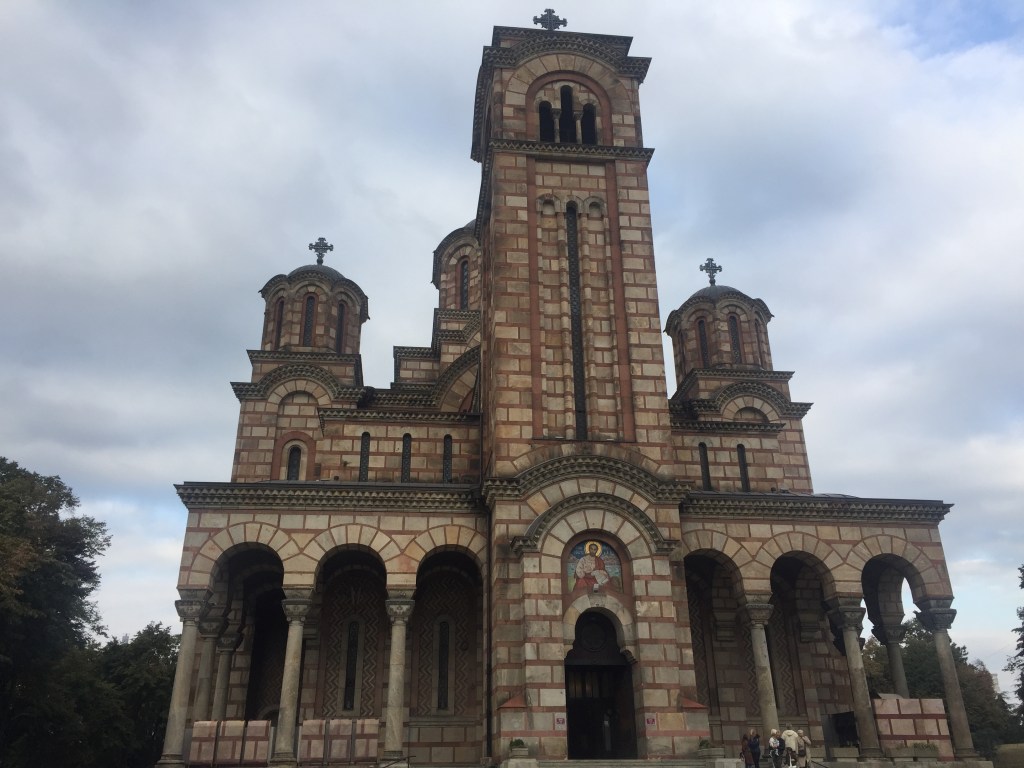
St Mark’s Church is an imposing five domed Orthodox church. The current building was completed in 1940. There is a small Russian church next door, erected by refugees of the October Revolution.
Nikola Tesla Museum
The Nikola Tesla Museum documents the life of the renowned scientist. It was shut when we visited, so we just took a photo of his statue and moved on.

The museum is open daily from 10 am until 8 pm (6 pm on Monday). Entry costs 800 dinar (around £6) including a tour in English. Tours in Serbian are also available (and half the price).
So we head for Sveti Sava Cathedral instead – this enormous edifice is the second biggest Orthodox Church in the world. We arrive to find it’s surrounded by scaffolding and is, in fact, shut for renovations.
Sveti Sava Cathedral
Next, we head for Sveti Sava Cathedral – this enormous edifice is the second biggest Orthodox Church in the world. We arrive to find it’s surrounded by scaffolding and is, in fact, shut for renovations.

After walking right round the building, we finally find an entrance. They have kept the gift shop open, and the Crypt. The crypt is spectacular; the walls and ceilings are covered with gold and brightly coloured paintings.

Main Station
We continue to the former Main Station in an attempt to visit Tito’s infamous Blue Train. This is available for hire, but allegedly open to the public otherwise. We go to the Main Station where tickets are allegedly purchased. It has closed down. We try tourist information – it’s shut. We find another tourist information office. She directs us back to the first office. We say it’s shut. She says it’s news to her. After making some phone enquiries, she explains that there is a new station and the blue train will eventually be housed here. But it’s not ready yet.

The Main Station, built in 1884, is no longer operating. For now, this grandiose building, once frequented by the Orient Express, stands derelict and decaying while politicians argue about its future (plans are to turn it into a museum).
Museum of Contemporary Art
The Museum of Contemporary Art is across the Sava River, housed in a 1960s modernist concrete and glass building, surrounded by a sculpture park.
We are in luck at the Museum of Contemporary Art. Sort of. It has five floors and two are open. When I say two, this includes the ground floor which houses a library (shut) and a café (shut).

The museum spans five floors with a large collection of 20th Century Yugoslav art.

Riverside Walk
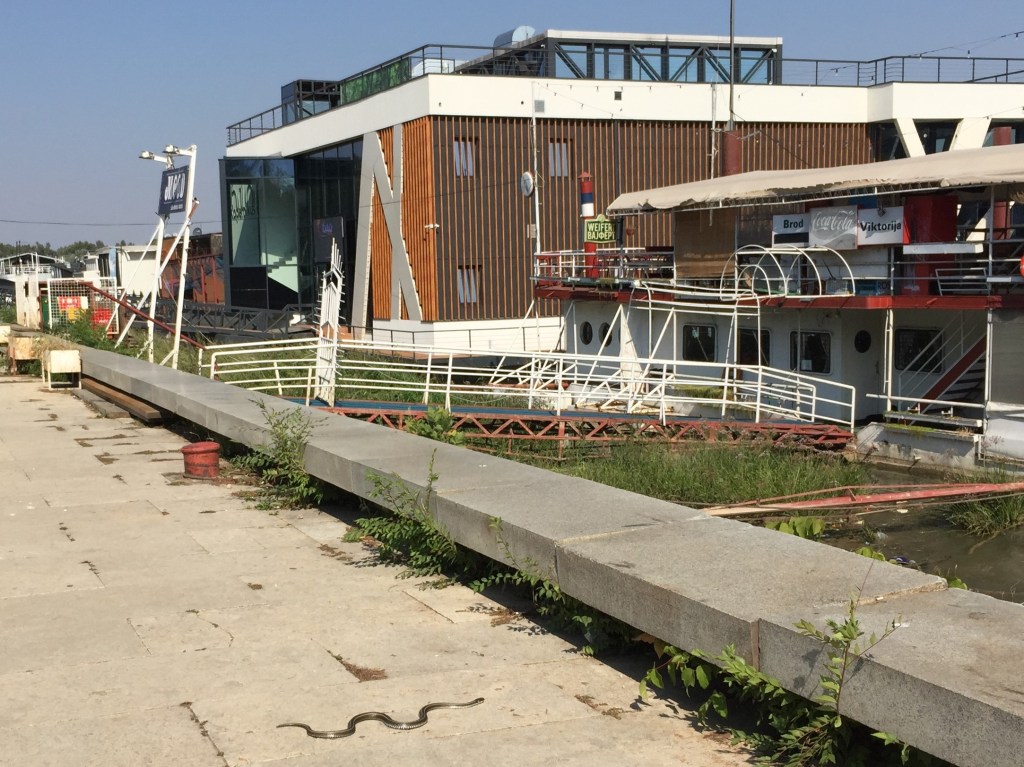
It is a short walk from the museum to a viewpoint where the River Sava and River Danube converge. There’s a submarine moored there and two men with guns enforcing a very strict no photography policy. We walk back along the river, which is lined with floating bars and restaurants, with the occasional snake…
We return across the bridge to the pedestrian centre of town, stopping to watch the sun setting over the Danube.

Dinner at To Je To!
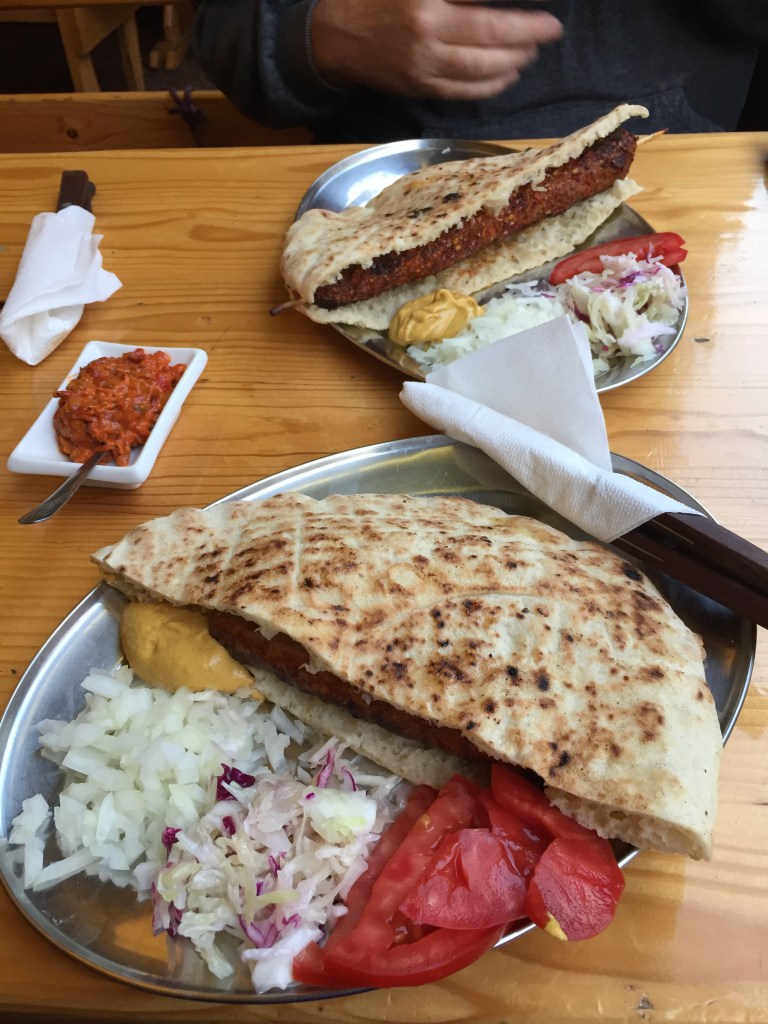
In the evening we walk through the pedestrian centre of town, stopping for a view of the sun setting over the Danube. Then dinner; traditional Serbian Cevapcici – sausages served in a flat bread served with onion, cabbage, sour cream, mustard and chilli sauce from a little diner called To Je To!
On the way home, we stop for supplies in my favourite place in Belgrade (partly because it’s always open); Idea London. It’s a London themed supermarket, complete with red phone box, tube maps and a shelf stacker dressed like a dragoon guard.
Serbia Day 4 – Niš
It’s our last day before dropping the hire car back in Skopje. We are breaking the journey in Niš, which is approximately mid way between Belgrade and Skopje. Niš has 3 very diverse tourist attractions; the 4th century Roman Palace of Constantine the Great, an 18th century Turkish Fortress and a 20th century Nazi Concentration Camp.
It’s pouring with rain and takes almost an hour to fight our way out of Belgrade through the rush hour traffic, despite the old man going native and driving through red lights, in bus lanes, over pedestrian crossings etc. Eventually the rain clears and by the time we reach Niš it’s 20 degrees and sunny.
King Milan Square
We start our visit to Niš in the heart of the old town; King Milan Square with its striking Monument to the Liberators of Niš taking centre stage.

Niš Fortress
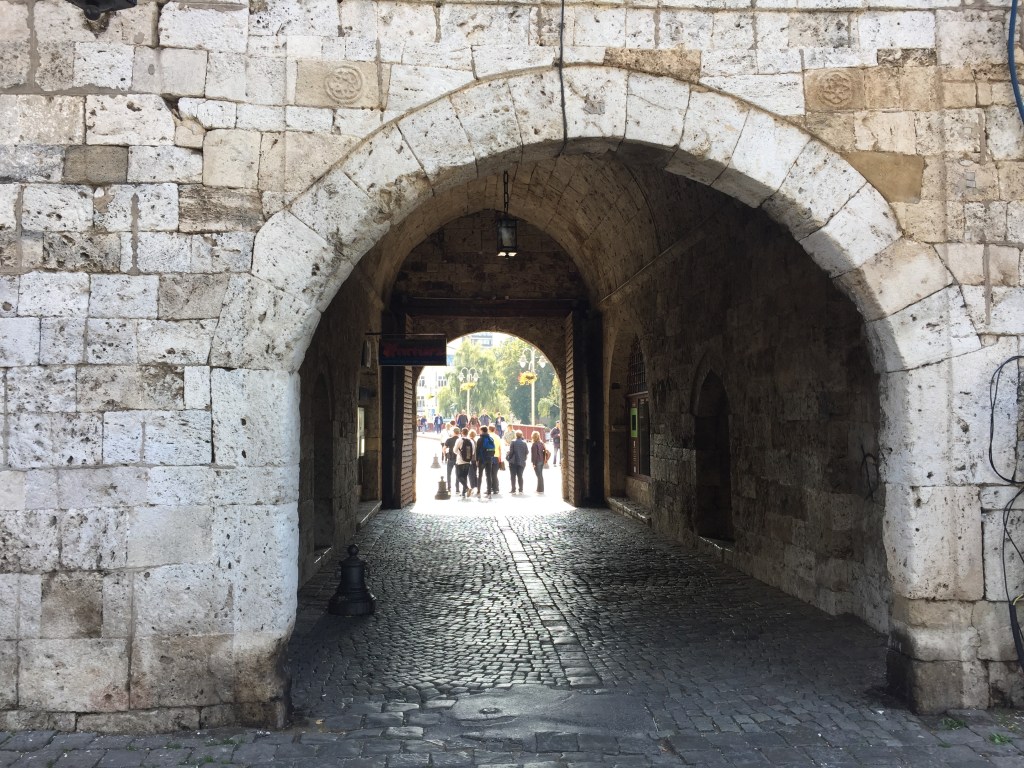
From here, you can cross the river to Niš Fortress. Although the fortress was built by the Turks in the 18th century, there have been forts on this site since Roman times. The grounds now house the City Park; a mixture of the things you’d expect to find in park, but every now and then, the remains of a Roman Bath House or an Ottoman Mosque.
Bali-Bey Mosque
The 6th Century Bali-Bey Mosque can be found inside the Fortress grounds.

Nišville Jazz Museum
On our walk, we stumble upon the Nišville Jazz Museum, which contains quirky mementos of the city’s annual jazz festival.
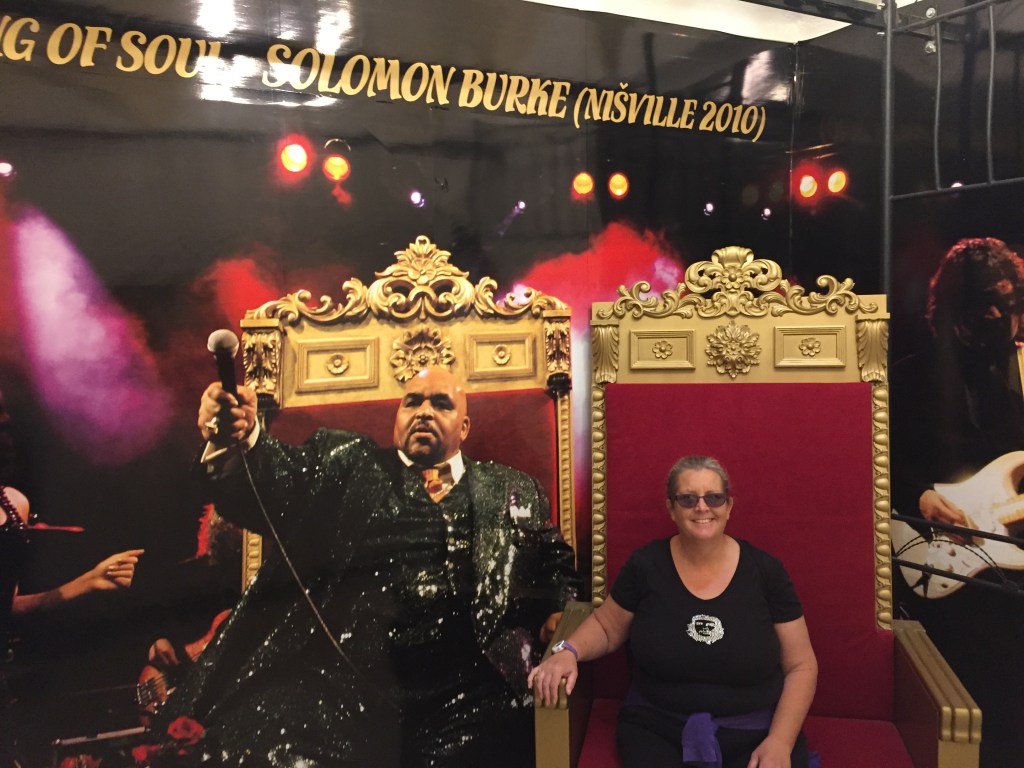
The museum is open daily except Mondays from 10 am until 8 pm. Entry costs €1. There is also a nice little gift shop if you fancy a Nišville souvenir.
Red Cross Concentration Camp
Just north of the Fortress is the Red Cross Concentration Camp. The Niš Camp was like other Nazi Concentration camps in most ways. Two slight differences; firstly it was the only camp where prisoners attempted a mass breakout.

Secondly, the local partisans fought hard against the Nazis, who implement a quota that for every one German killed, one hundred locals would die (with 50 executed for every German injured). Thus, the Camp served as a holding area for victims to fulfil this quota. These men, women and children were then taken to nearby Bubanj Hill and slaughtered in their thousands.

Tinkers’ Alley
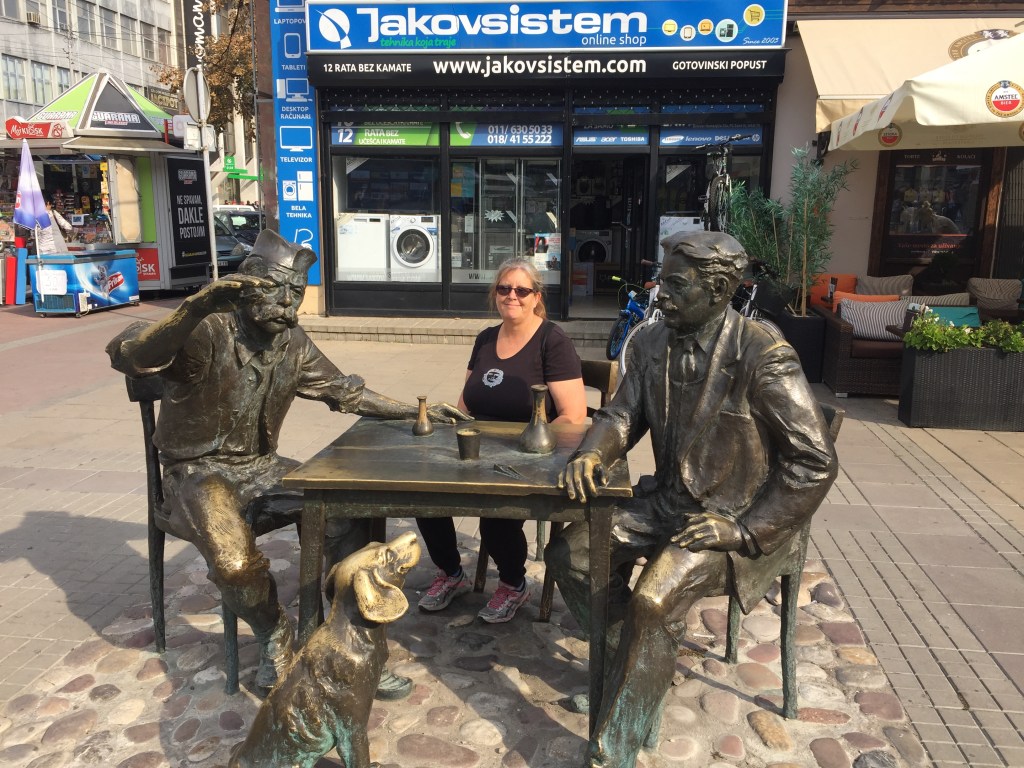
We walk back into town and city’s main pedestrian boulevard, Obrenovićeva. This runs south from the fortress, to an area known as Tinkers’ Alley, which is lined with shops and restaurants with the occasional quirky sculpture.
Dinner at Kafana Galija
We complete our afternoon in Niš with our last Serbian meal – peppers stuffed with cheese, and of course, sausage at Kafana Galija.

Accommodation: Hotel Sole
Tonight’s accommodation is at Hotel Sole. It’s clean and modern and conveniently located, just a 10 minute walk from the main square.
Bubanj Memorial Park
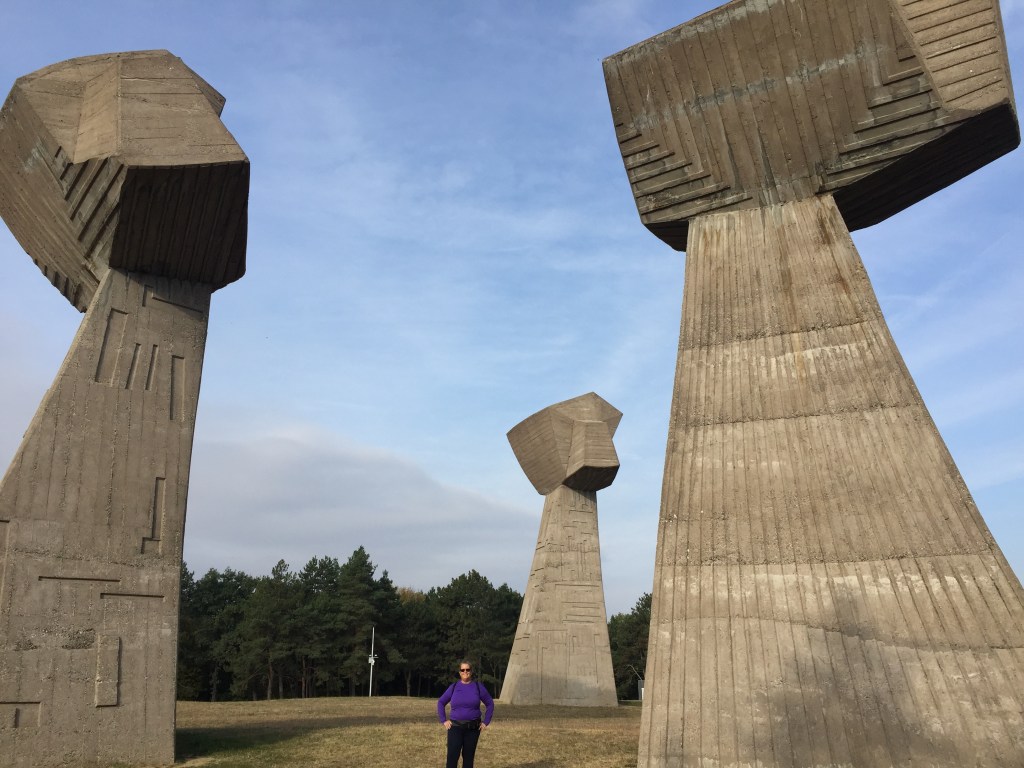
On the way out of Niš, we stop at Bubanj Hill, site of the aforementioned retaliatory slaughter of thousands of Yugoslavs by the Nazis. Here, you can now visit Bubanj Memorial Park, with its three huge defiant fist sculptures sitting on the hillside.
- Trip taken: October 2018
- Updated: October 2025
I hope you found the above information useful. For guides to more destinations in the 50+ countries we have visited, check out my full list of Independent Travel Itineraries here.
 Jane's Midlife Journey
Leave a comment