
We spent a week in Brazil as part of our South American adventure, split between two locations; starting in the buzzing beachside capital, Rio de Janeiro before flying to the spectacular Foz do Iguaçu waterfall. Four days in Rio gave us enough time to see the two key attractions of Christ the Redeemer and Sugarloaf Mountain, with a day spent hanging out at the beach and a day exploring some of the city’s other top sights.. There’s so much to see and do in Rio, that it was a struggle trying to narrow it down to just ten. After some deliberation, here is my pick of the Top 10 Things to do in Rio.

How to get to Rio de Janeiro
We flew from London via Spain (because it was cheaper than flying direct). The main international airport is Galeão International Airport, which is around 12 miles north of the city, or 15 miles north of the main tourist strip of Copacabana.
It is possible to reach Copacabana from the by public transport, but the bus stops frequently making it a two hour journey (compared to one hour in a taxi). We had intended to catch the shuttle bus, but it was late and we were tired, so we took a taxi instead. The journey cost R130. If purchased at the same time, you can get a discounted price for your return taxi.

Getting Around Rio de Janeiro
The key attractions in Rio are fairly spread out. We chose to base ourselves in Copacabana, close to the beach, and travel to other destinations by public transport. Rio’s Metro system is cheap, clean and efficient. We struggled a bit with the buses, mainly because we don’t speak Portuguese, which meant we weren’t always sure where to get off.
Where to stay in Rio de Janeiro
Not many tourists stay in the city itself with such incredible beaches nearby. We opted for Copacabana Beach and the Rio Design Copacabana Hotel, which was very pleasant with a large room, comfortable bed and good air conditioning. Equally cooling were the complementary welcome cocktails and the rooftop pool!
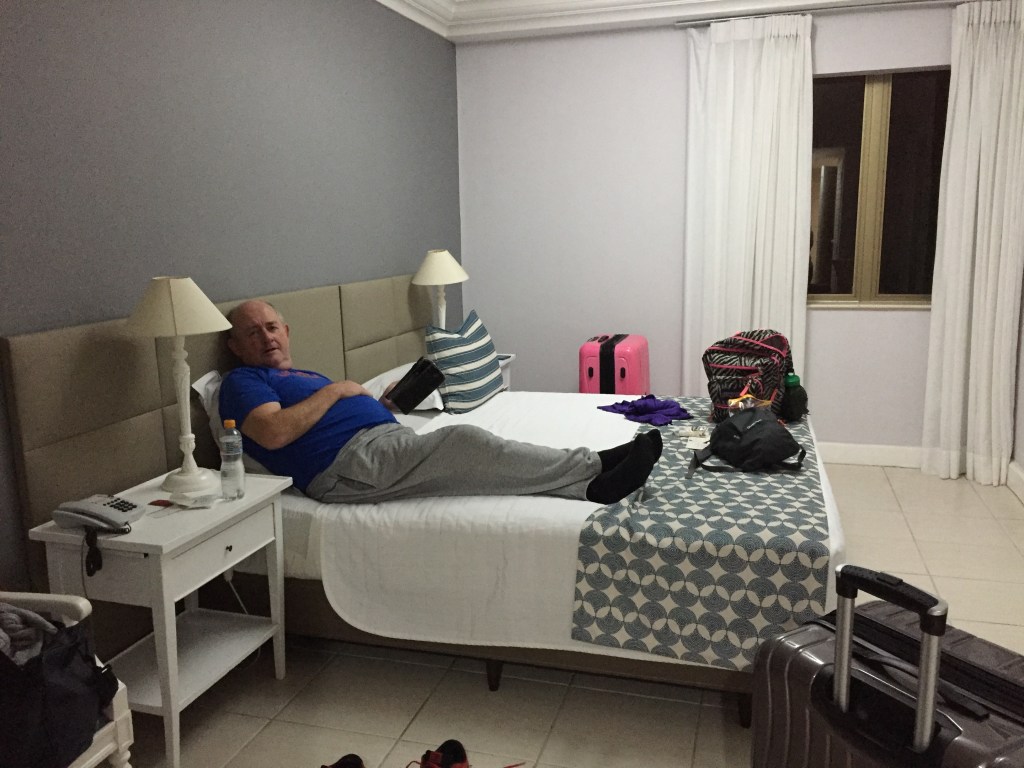
Apart from its location; just 100 metres from Copacabana Beach, it has the added bonus of a rooftop pool. Perfect for cooling down after a hot day’s sightseeing and with a great view across the bay too.

Rio de Janeiro: Top 10 Things to do
| 1 | Relax on Copacabana Beach |
| 2 | Chill on Ipanema Beach |
| 3 | Visit Christ the Redeemer, Wonder of the World |
| 4 | Wander round Rio Botanical Garden |
| 5 | Ride the Bonde Streetcar |
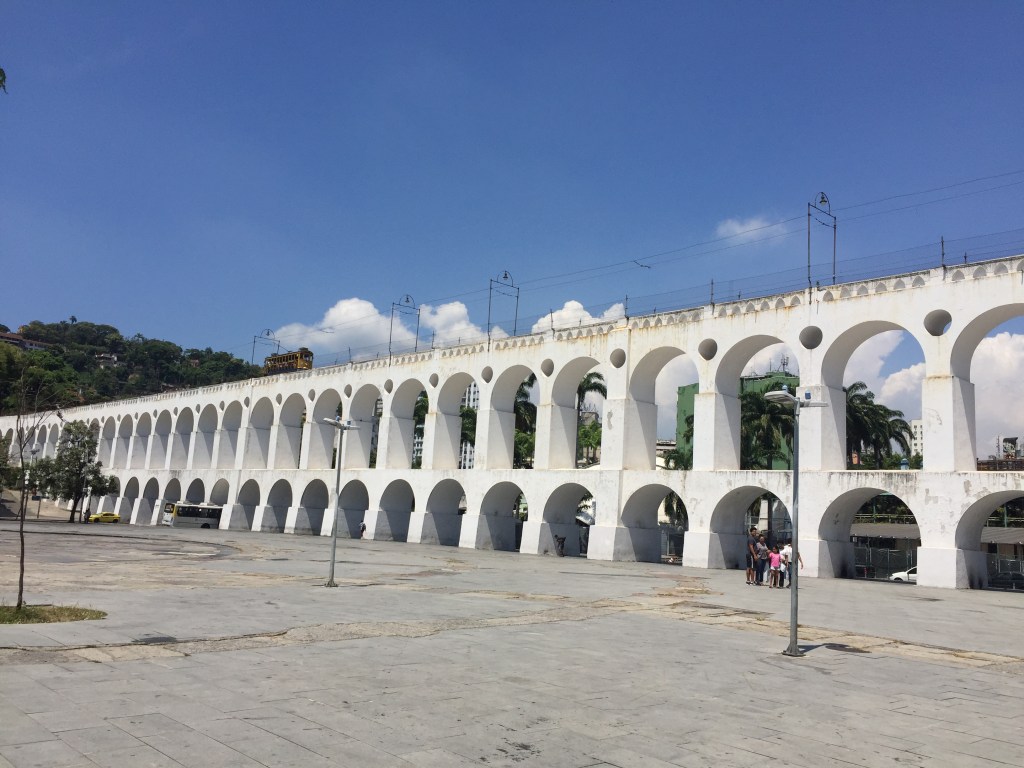
| 6 | Admire the Arcos de Lapa Viaduct |
| 7 | Climb the Escadaria Selarón |
| 8 | Take in some culture at Rio Art Museum |
| 9 | Admire the Mural das Etnias on Boulevard Olímpico |
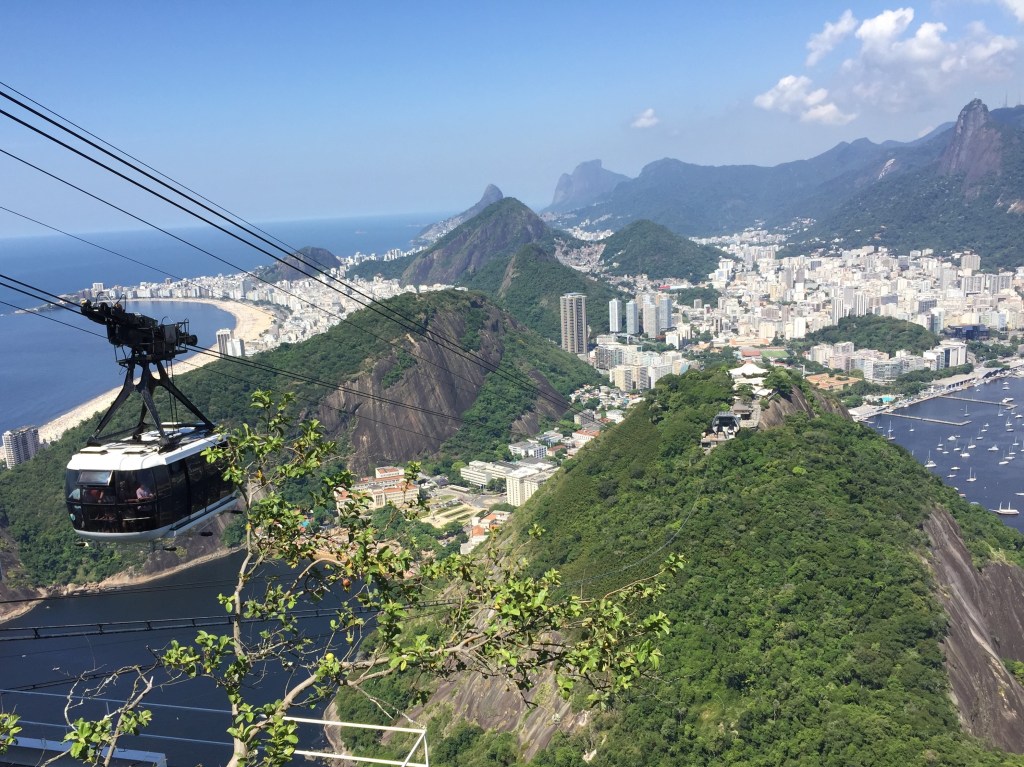
| 10 | Take the cable car up Sugarloaf Mountain |
No 1 – Relax on Copacabana Beach
We set forth along Copacabana Beach at 8.30 am and the prom was already heaving with walkers, runners and cyclists out for their morning constitutional. It was like an exotic Bournemouth; we have the Overcliff, they have Sugarloaf Mountain.
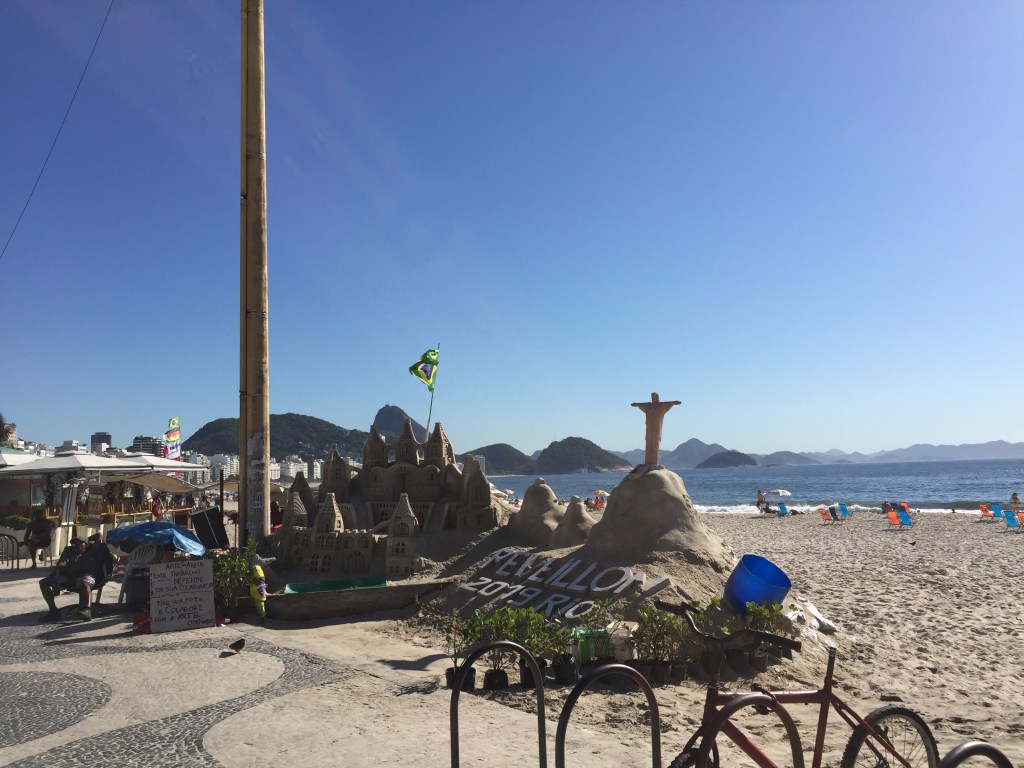
We walked the full 4 km length of the beach, and back again. By the time we reached the end, it was 36 degrees and we were rather warm and sweaty.

Once the heat gets too much for you, take a dip in the cooling water of the ocean. Obviously, I did so with somewhat less grace than this gentleman.

There are also plenty of beach bars lining the prom for drinks and snacks.
Copacabana Fort
At the end of the bay, you will find Copacabana Fort, perched on a peninsula with a stunning view across Copacabana Beach to Sugarloaf Mountain.
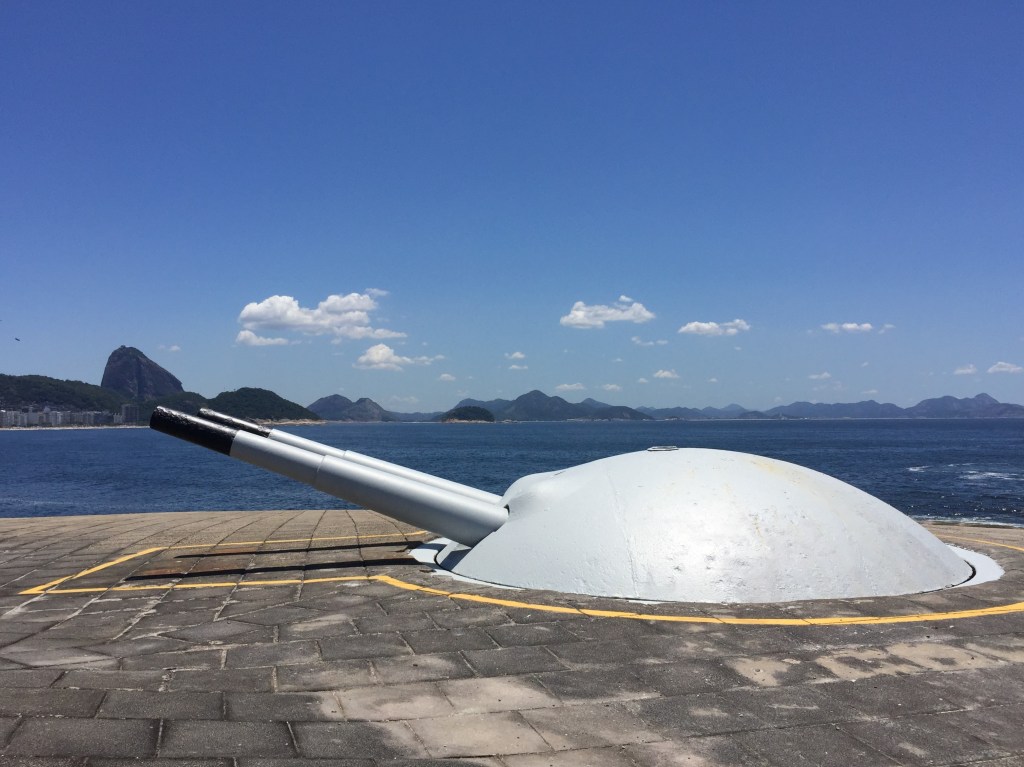
The fort also houses an Army Museum. It’s probably quite interesting (I’m not sure, it’s all in Portuguese) but it definitely has great air conditioning.

Copacaba Fort is open daily except Mondays from 10 am until 7 pm. Entry costs R6 (around £0.80)
No 2 – Chill on Ipanema Beach
Next door to Copacabana, another very popular beach is Ipanema Beach. It looked like photos I’ve seen of Benidorm in the 70s when the British discovered the package holiday.
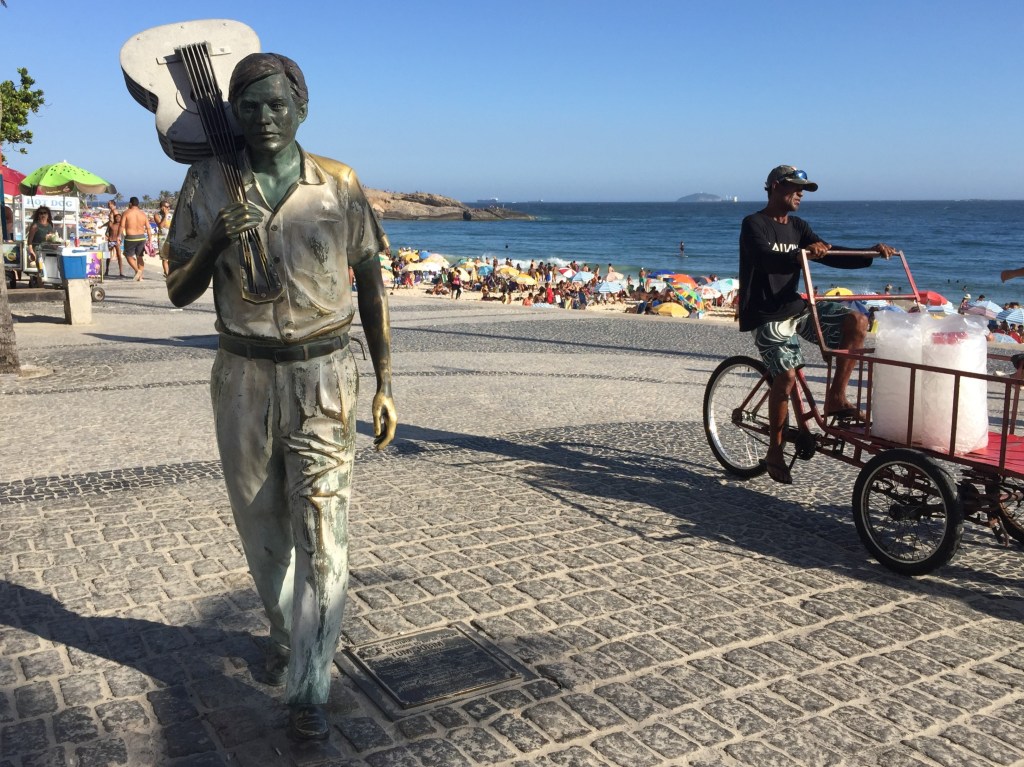
Garota de Ipanema Bar
A couple of blocks from the beach you will find the tourist trap of Garota de Ipanema; the bar where the song ‘The Girl from Ipanema’ was written. We had a beer (or two), then went in search of dinner somewhere considerably cheaper and less touristy.

No 3 – Visit Christ the Redeemer, Wonder of the World
Rio’s main attraction; Christ the Redeemer is one of the Seven Wonders of the Modern World, perched high above the city. It can get very busy, so although there is a ticket office in situ, I recommend purchasing a ticket in advance.
The ascent is made by funicular railway. Tickets are valid for a specified time. Turn up late and you lose your slot. So we left ample time for the bus journey to the station. We found the bus stop, the bus was on time and we got off at the correct place; the result being we arrived an hour before our train. It’s very busy, but very efficiently organised – which is kind of good, because I like order and kind of bad, because there’s no chance of getting an earlier train.
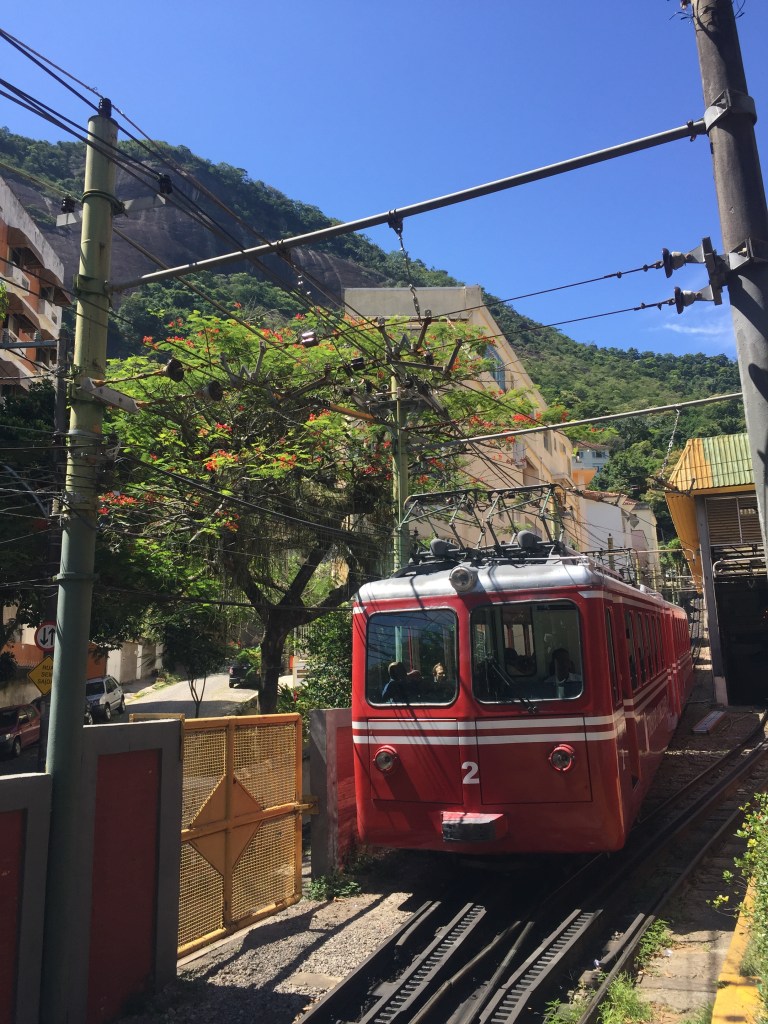
Eventually it’s our turn to board and we set off, or rather up. The train ride takes 20 minutes and ascends 700 metres. At the top, there’s a further climb of 200 steps (or an elevator/escalator combo if you prefer). And there he is. Christ the Redeemer – 38 metres tall, looking down on Rio from the top of his mountain.
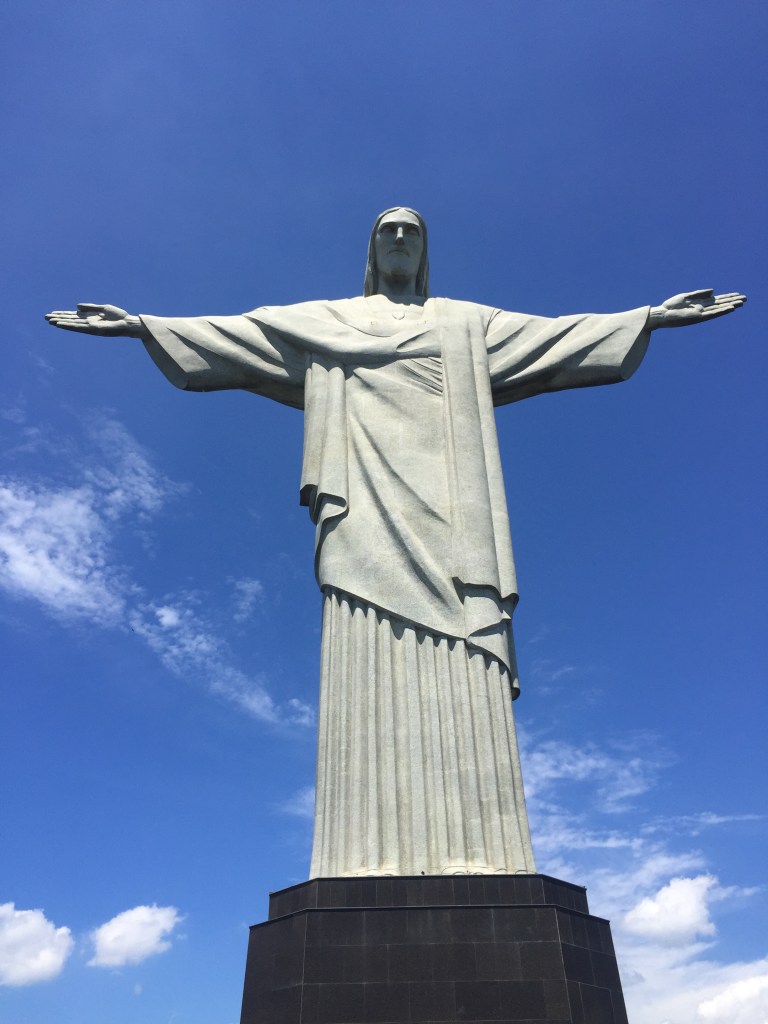
There’s not much to do; just admire/photograph the statue and admire/ photograph the stunning view across Rio and beyond, together with hundreds of other tourists. So it is a kind of spectacular anti climax.

Christ the Redeemer is open daily from 8 am until 5 pm (6 pm on weekends and holidays). The adult return fare is R128 (around £17.70).
No 4 – Wander round Rio de Janeiro Botanical Garden
After descending from Christ the Redeemer, we took a bus to the nearby Rio de Janeiro Botanical Garden.
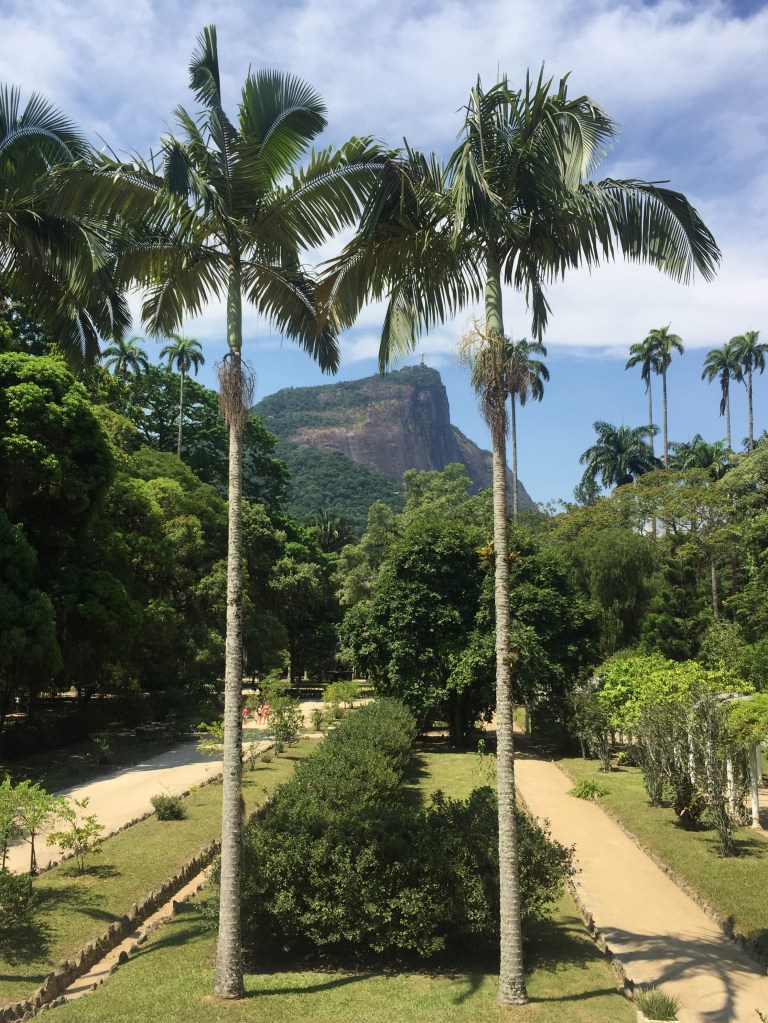
The Gardens are beautiful. It’s hard to imagine that you’re in a city amidst the palm trees and lily ponds. There is a spectacular array of plants, waterfalls, lakes and fountains, all watched over by Christ the Redeemer. My favourite bit, however was the cactus garden.
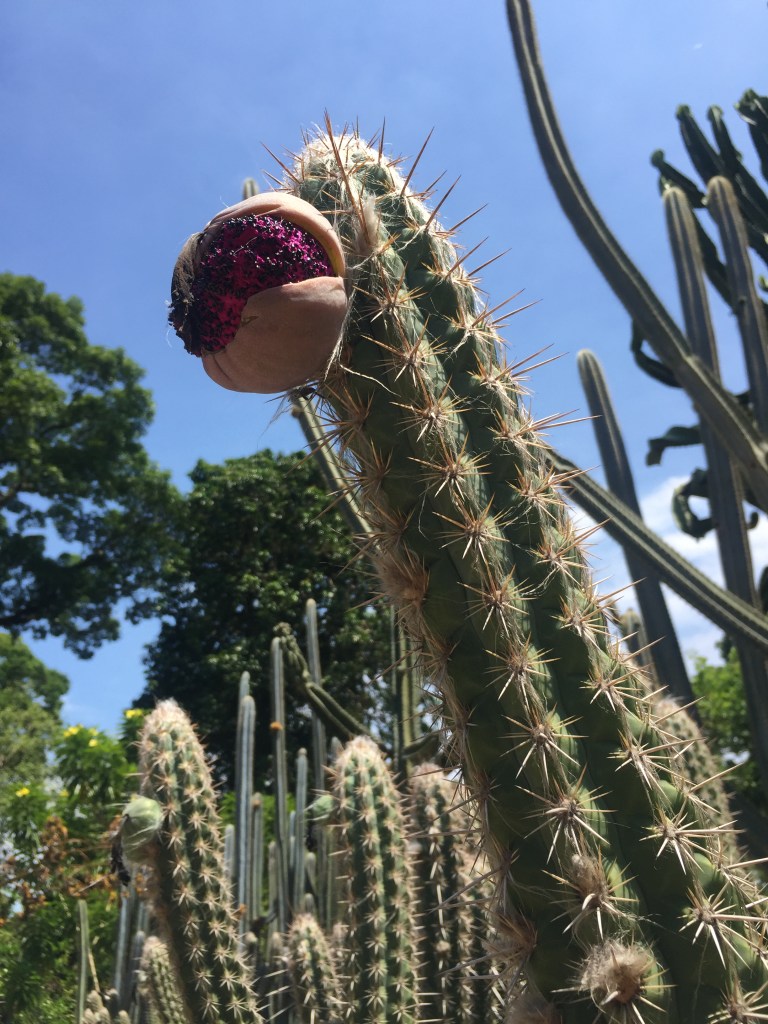
A gardener sees us admiring the amazing cacti and invites us to try some. He cuts the top off an ancient Brazilian cactus and he and the old man proceed to eat it.

Beautiful though the gardens are, the temperature has reached 36 degrees. We manage two hours, but that is my limit so we set off to catch a bus back to the hotel. The bus route is circular; you can catch it either clockwise or anti-clockwise. We have a difference of opinion over which direction is correct. I’m right (obviously), but while we’re arguing, the bus sails past without us.

The Botanical Garden is open daily from 8 am (11 am on Wednesday) until 5 pm. Entry for foreigners costs R73 (around £10.10).
No 5 – Ride the Bonde Streetcar
The Bonde is the old streetcar which clambers across the Arcos de Lapa Viaduct and up the hillside along cobbled lanes decorated with murals.

We were taking the Bonde just for the sake of it, so bought a return ticket, worrying that we would look a bit strange when we stayed on at the final destination. In fact, when we reached the last station, there was little sign of movement. Nobody got on or off; passengers simply flicked their seat backs over so they were facing forward for the return journey and we set off back down the hillside.

The Bonde runs approximately every 15 minutes daily from 8 am (9 am at weekends) until 5 pm. A return ticket costs R20 (around £2.80).
No 6 – Admire the Arcos de Lapa Viaduct
We walked back to the base of the 18th Century Roman style Arcos de Lapa Viaduct, which consists of 42 arches, to photograph a tram passing over it. And for the obligatory selfie with the ‘Love Rio’ sign.
No 7 – Climb the Escadaria Selarón
We moved on to the Escadaria Selarón; a flight of 215 steps, each decorated with brightly coloured tiles. I’d seen pictures and it looked quite spectacular; of course in reality it was swarming with so many tourists you could hardly see the steps.
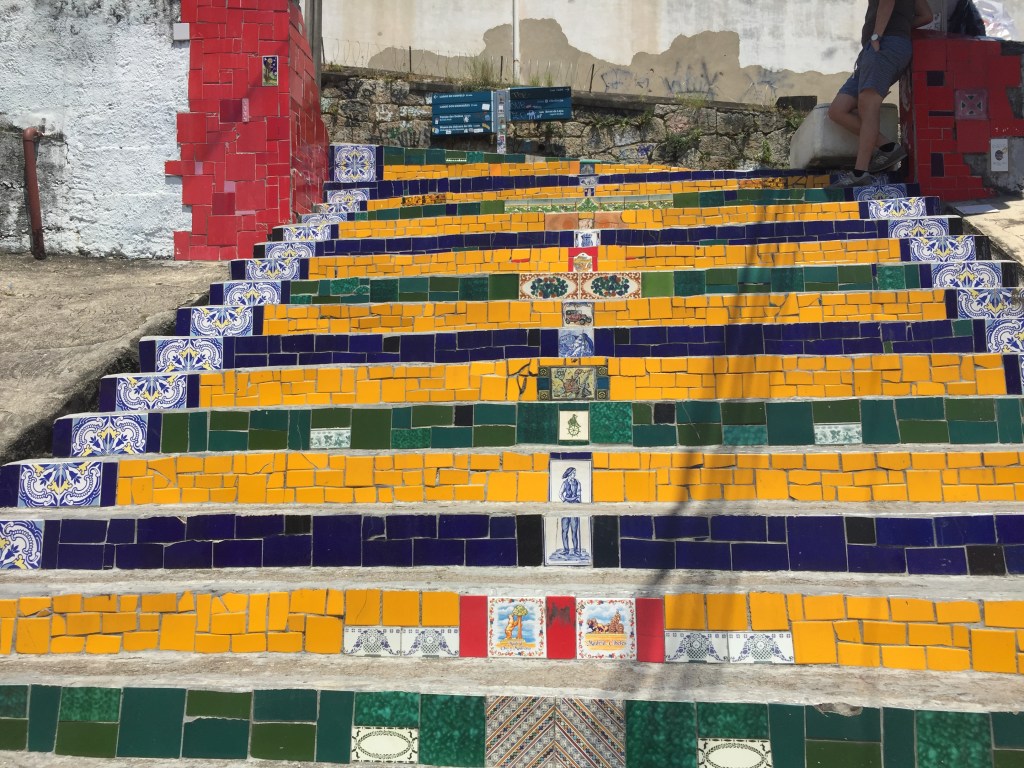
Luckily, most of these tourists seemed averse to actually climbing too many steps. Thus, as we ascended, numbers dwindle and at the top, there was just me, the old man and a water vendor who was charging 50% more than those at the bottom. We didn’t care; we’d just climbed 210 steps in 36 degree heat. I would have given him my first born for a bottle of water!

No 8 – Take in some culture at Rio Art Museum
We walk along the waterfront to the Rio Art Museum, which was somewhat of an anti climax. The main exhibition was based on Samba; its place in the history, culture and politics of Brazil. But the captions were only in Portuguese, so we had no idea what it said.

The Museum is open between Tuesday and Sunday from 11 am until 6 pm. An adult entry ticket costs R20 (around £2.80).
No 9 – Admire the Mural das Etnias on Boulevard Olímpico
We rounded our city sightseeing extravaganza off with a wander along the Boulevard Olímpico. This once derelict area near the port, was transformed for the 2016 Olympics. It is lined with street art. The most spectacular is the Mural das Etnias – inspired by the five Olympic Rings, the artist, Eduardo Kobra, created five faces to represent the continents. It is enormous and mesmerising.

On our final day in Rio we headed for the city’s other top attraction;
No 10 – Take the cable car up Sugarloaf Mountain
I saved one of Rio’s other top attractions for last because I am not a fan of cable cars. It’s not natural to hang in mid air in a glass box on a bit of wire. And Sugarloaf Mountain. requires some serious mid air hanging. First, you must take a cable car up the neighbouring Morro da Urca. Then you take a second cable car to Sugarloaf. Basically, you travel a kilometre in a glass box on a wire which hangs between two mountains. They’re not really mountains; to use the correct geographical term, they’re granite monoliths. It has to be said that these cable cars traversing thee monoliths is a spectacular sight, which can be seen across Rio. But it’s still against the laws of nature…

We set off for the bus stop, but there was some confusion as the bus Google said we should take doesn’t appear to exist. We waited 20 minutes before giving up and getting on a random bus and hoping it would get us near our destination. This non-scientific approach left us with a mile to walk, which we considered a marginal success.

Tickets for the cable car aren’t cheap; (I reckon it costs around £10 a minute) we handed over our and boarded the first cable car to Murro da Orca. The summit is quite small; just big enough for two cable car stations and a gift shop.

We took the second cable car to Sugarloaf, which is slightly larger (a gift shop and a restaurant and, rather bizarrely, as we’re up a mountain, a beach bar).

We circumnavigated the monolith to enjoy the views, take photos and generally reach a point where we felt like we’d had £50 worth of entertainment. At the rear is an area of rain forest populated by very tame marmosets.

Then we descended again and, just as we were discussing how to reach the hotel, the non-existent bus appeared round the corner. We were nowhere near a bus stop, so we just smiled and waved at the bus driver, who took pity and picked us up.
Sugarloaf Mountain is open Monday to Thursday from 9 am to 8 pm and Friday to Sunday from 8:30 am to 8:30 pm The basic cable car ticket costs R195 (around £27). A fast pass, if you don’t want to queue, will set you back R295 (around £40.90).
- Trip Taken: January 2019
- Updated: February 2025
I hope you found the above information useful. For more top picks from other destinations in the 50+ countries we have visited, check out my full Top 10 Things To Do list here.
 Jane's Midlife Journey
Leave a comment