
I’ve wanted to visit Cuba for so long. From way back in the 1980s. when I studied European Studies at university and learnt all about the Cold War and Cuba’s revolution and long term stand off with the USA, this communist Caribbean island has fascinated me.
In order to make this wish a reality, there was a lot of bureaucratic red tape. With the help of a travel agent, we arranged our itinerary, flights, accommodation and visas. It’s worth bearing in mind that if you travel to Cuba, you no longer qualify for a US ESTA visa waiver. So if you subsequently wish to visit the USA, you must apply for a visa, probably attend an interview and pay in the region of $180.
We spent 7 days exploring Cuba, starting and finishing in the capital, Havana for plenty of sightseeing. In addition, we took a side trip to Cayo Coco for some R&R by the beach. (We had intended to travel more, but a bout of food poisoning put paid to this.)
Cuba 1 Week Itinerary
| Day 1 | Flight to Havana Accommodation – Hotel Nacional de Cuba |
| Day 2 | Old Havana Hotel Nacional de Cuba Malecón Castillo de San Salvador de la Punta Castillo de la Real Fuerza Catedral de la Virgen María de la Concepción Inmaculada Plaza de la Catedral Convento de San Francisco Plaza de San Francisco de Asís Plaza Vieja Lunch at Cerveceria Plaza Vieja Capitolio Nacional Cocktails at El Floridita Dinner at Cabaret Parisien |
| Day 3 | Havana Plaza de la Revolución Monumento Jose Marti Museo de la Revolución Lunch at Sloppy Joe’s Museo del Ron Plaza Tribuna Anti Imperialista/US Embassy Dinner at La Roca |
| Day 4 | Cayo Coco Flight to Cayo Coco Accommodation – Meliá Cayo Coco Playa Mojito La Gaviota Commercial Centre Dinner at la Terrazza |
| Day 5 | Cayo Coco Jardines del Rey Hop on Hop off Bus Hemingway Bridge Cayo Guillermo Playa Pilar |
| Day 6 | Ciego de Avila Pedraplen Cayo Coco Lagune de Leche Morón Ciego de Avila |
| Day 7 | Havana Flight to Havana Accommodation – Hotel Capri Classic Car Tour Hotel Habana Libre Necrópolis Cristóbal Colón Parque Histórico Militar Christ of Havana Parque John Lennon |
Cuba Day 1
Flight to Havana
It’s a long day, with a flight to Madrid to transfer to our flight to Havana. When we land in Havana, it’s already dark, so there’s not much to see. We have booked a shuttle bus transfer from our airport to our hotel. Not the best decision, as one couple goes AWOL and we have to wait an age before we can actually depart. Then it’s a dark drive into town, peering desperately out of the window for my first glimpse of Cuba.
Accommodation – Hotel Nacional de Cuba
For our first 3 nights in Havana, we’re staying at the Nacional – or to give it’s proper title, the Hotel Nacional de Cuba. Built in 1930, it was once a popular hang out for the rich and famous. It’s now a little jaded, but still grand. The experience half like staying in a hotel, half like sleeping in a museum. Adjacent is the Cabaret Parisian, where you can enjoy an evening of Cuban music and dance. Not tonight, though, just time to check in and crash.
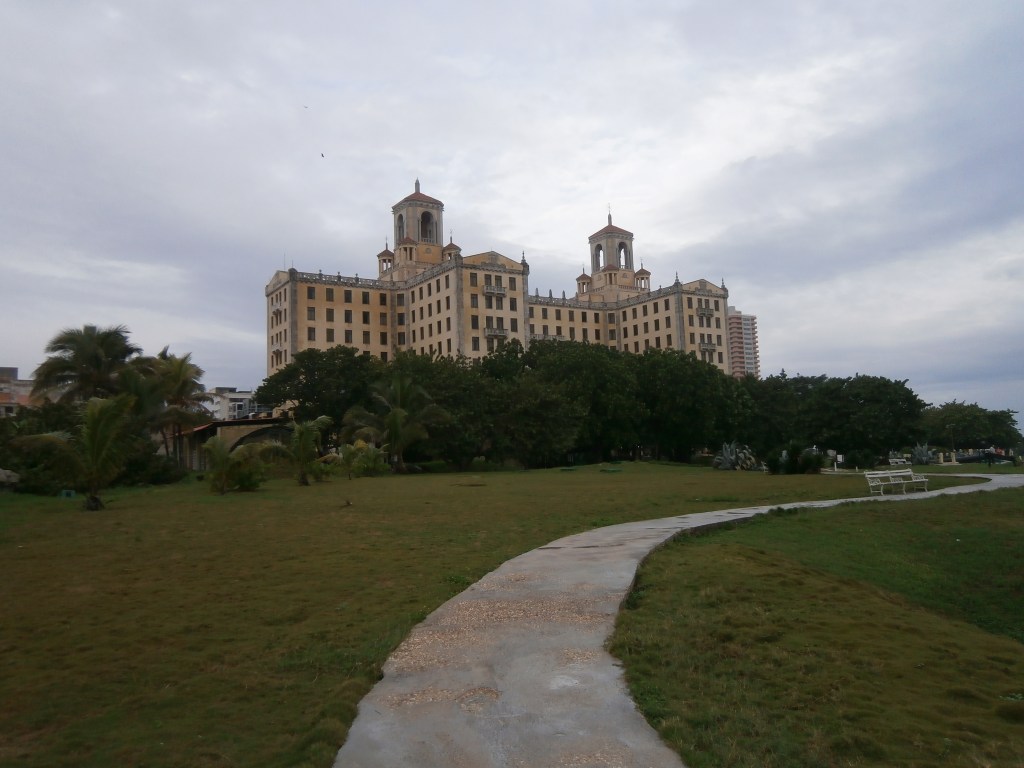
Cuba Day 2 – Old Havana
Having wanted to visit Cuba for the longest time, then arriving after dark, by morning I’m desperate to explore. I’m up ages before the old man, chomping at the bit. Initially, I have to make do with taking a few misty shots of the hotel grounds out of the window.
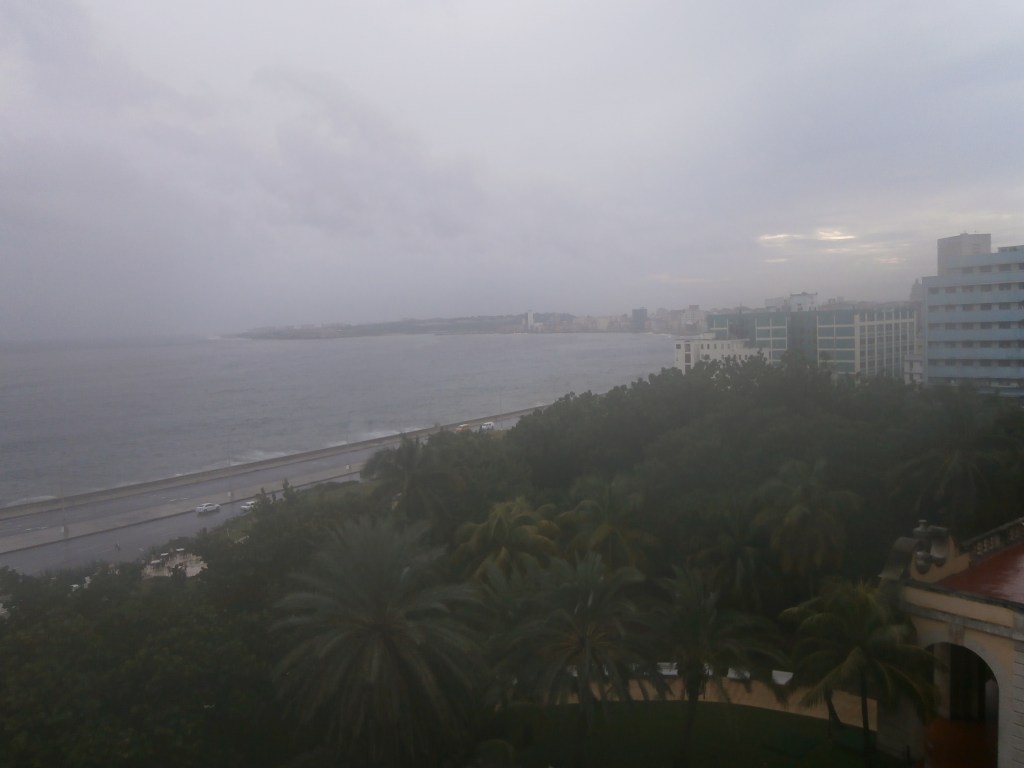
Hotel Nacional de Cuba
In the grandiose foyer, you will find a Museum telling the hotel’s history and a Hall of Fame detailing some of the celebrities who have stayed at the Nacional, such as Frank Sinatra, Marilyn Monroe and Winston Churchill. Perhaps more famously, in 1956 Nat King Cole was contracted to perform in Havana, but was not allowed to stay at the Nacional because the hotel was segregated.
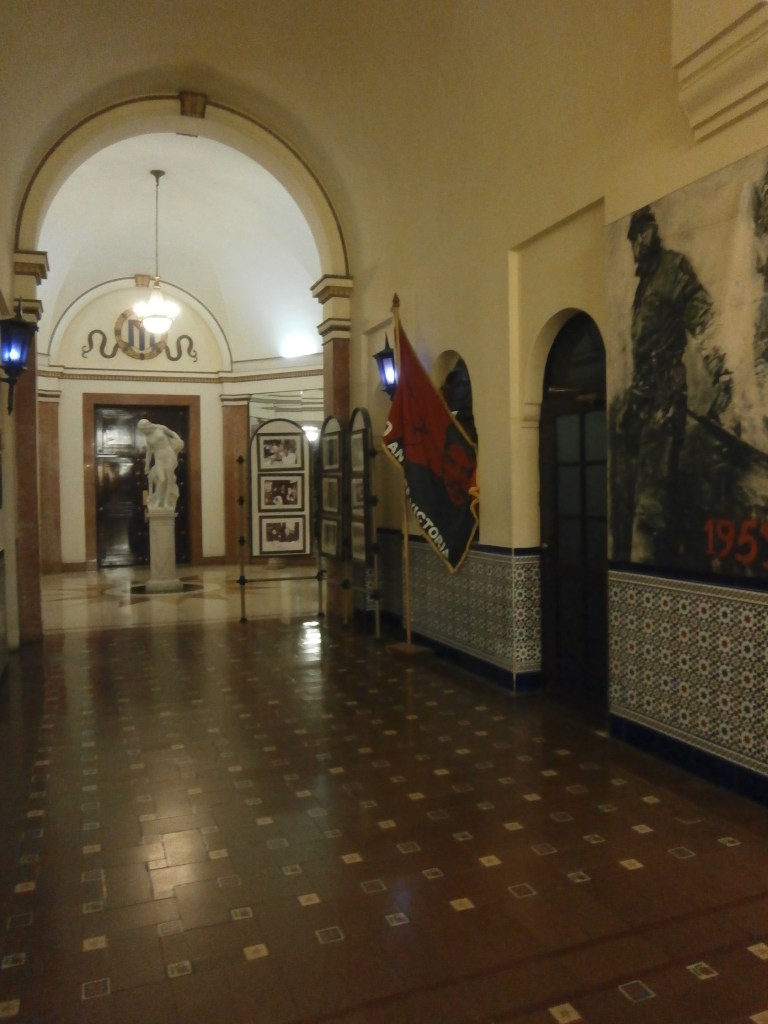
In the hotel gardens, amidst the flower beds, you can find the bunker when Fidel Castro hunkered down during the Cuban Missile Crisis, during which he made the hotel his base. I love this stuff. I’m in my element and we haven’t even left the hotel yet!

Malecón
After breakfast, we set forth for a walk along the Malecón towards Old Havana. There are plenty of taxis willing to take us into town, both modern cars and the iconic classic American cars for which the island is famous – their huge old engines spouting petrol fumes into the sea air creates a unique aroma. But we opt to walk so we can explore as we go.

The Malecón is a 7 kilometre long coastal strip, which runs along the northern edge of the city, skirting Havana Bay. From the Nacional to the Old Town is around 3 kilometres. Some of the buildings are beautifully restored, others lie decaying. Somehow the urban decay just adds to the city’s charm.
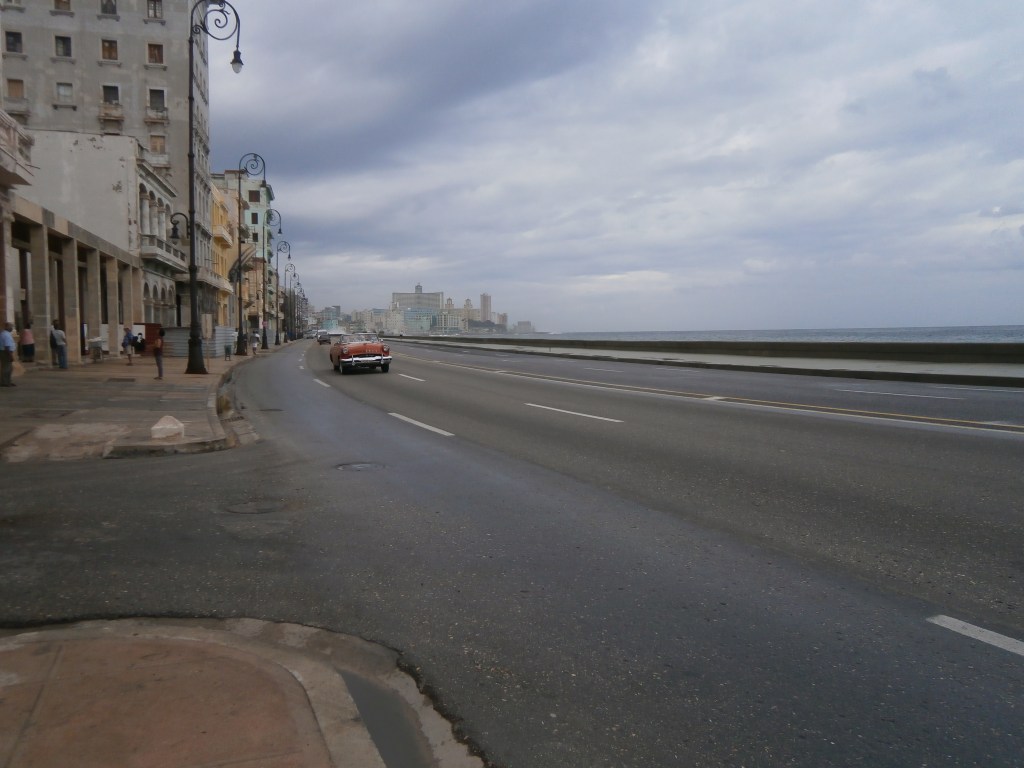
The weather isn’t great, it’s pouring down and huge waves sporadically crash over the sea wall, filling the road with even more water. But I’ve come to walk the Malecón, so that’s what I’m going to do.

Castillo de San Salvador de la Punta
First stop on the outskirts of the old town is the Castillo de San Salvador de la Punta, one of the fortresses which used to guard the entrance to Havana Port during colonial times.

Castillo de la Real Fuerza
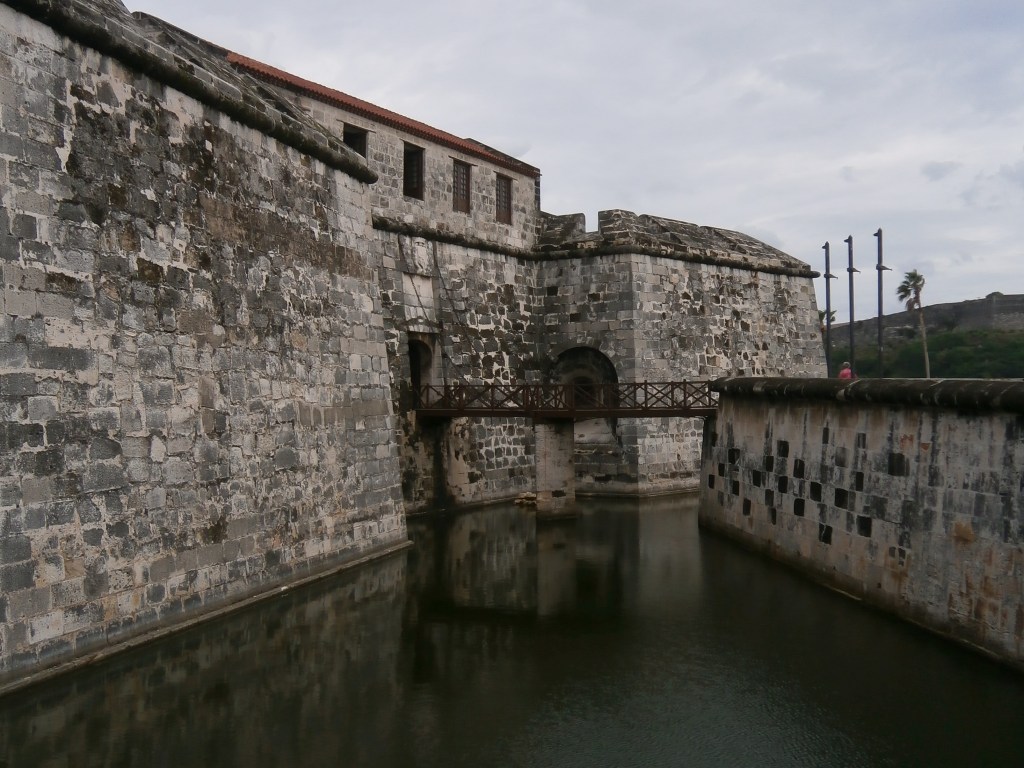
We continue along the Malecón to another colonial fort; Castillo de la Real Fuerza.

This 16th Century fortress, one of the oldest in the Americas, sits in an impressive almost star shaped moat. You can go inside to visit a navigation museum, but we have packed schedule so move swiftly on.
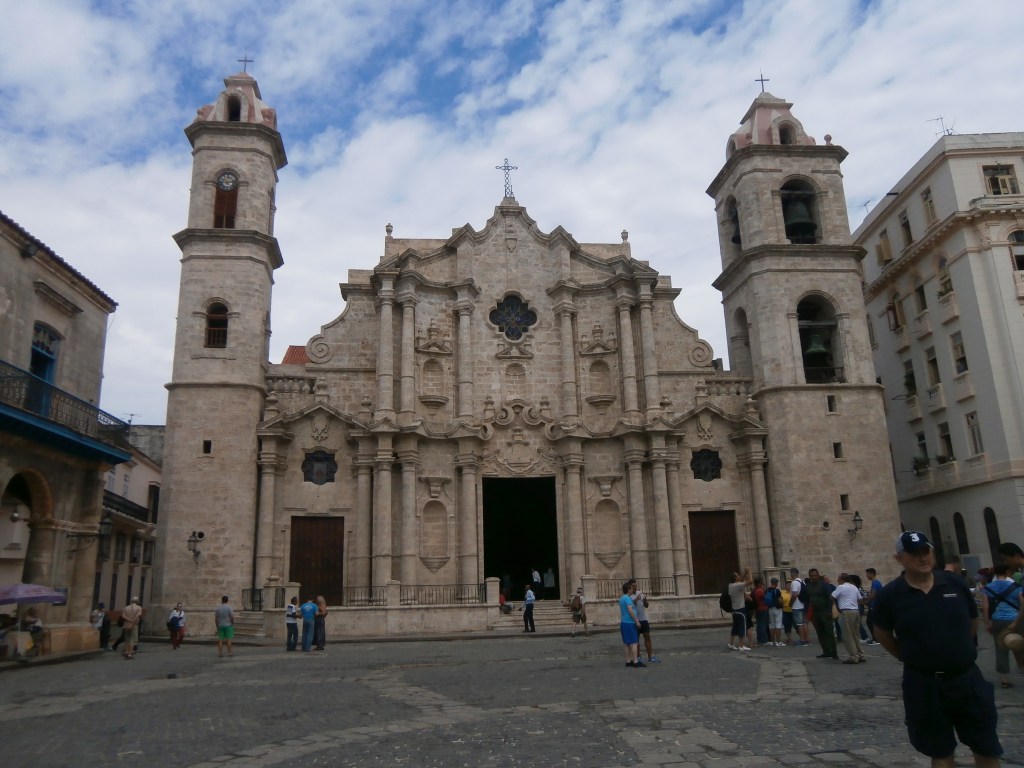
La Catedral de la Virgen María de la Concepción Inmaculada de La Habana
Fortresses done, onwards to that second bastion of colonialism; religion. First we visit the succinctly named La Catedral de la Virgen María de la Concepción Inmaculada de La Habana. The 18th century cathedral with its two unequal towers is one of the oldest churches in the Americas.

Plaza de la Catedral
The cathedral takes up one side of the Plaza de la Catedral. Constructed in the 18th Century, this is actually the youngest of the four plazas in the old town.
Convento de San Francisco
In another plaza, Plaza San Francisco, lies another formidable religious building, the Convento de San Francisco.

Plaza San Francisco
The Plaza de San Francisco dates back to the 16th Century when Spanish galleons first starting docking here. Cue construction of a church…
I love this intriguing sculpture by Etienne, entitled La Conversación.

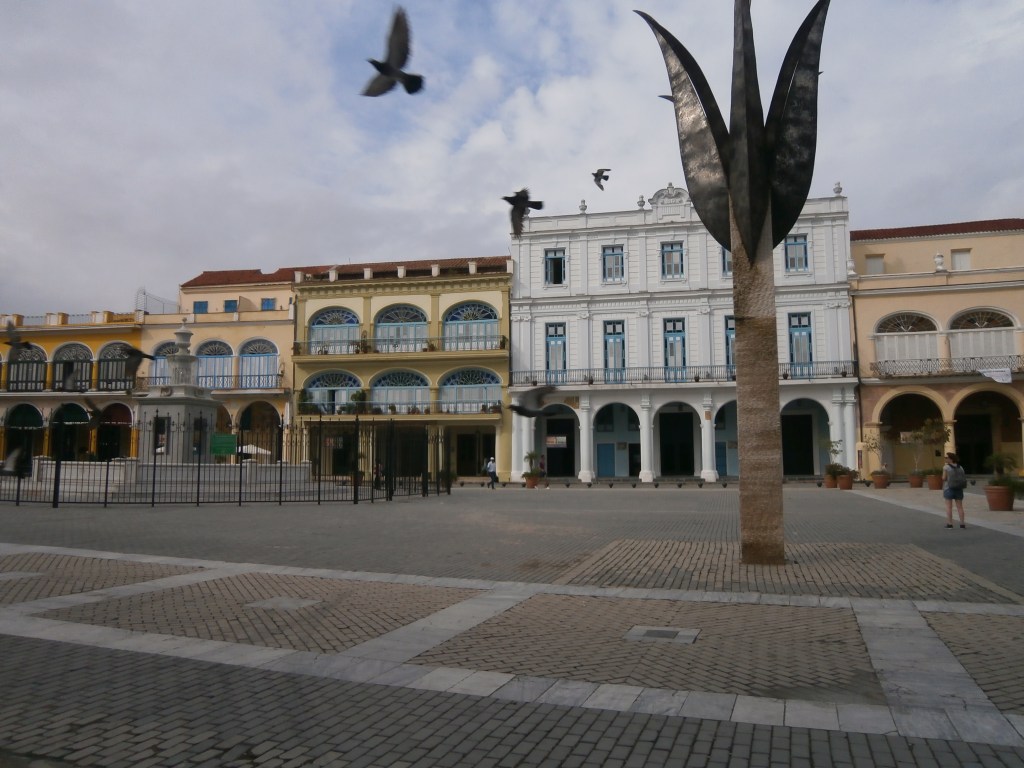
Plaza Vieja
One last plaza on this morning’s itinerary; the Plaza Vieja. This 16th Century plaza (called the Plaza Nueva when it was built) contains an eclectic mix of buildings, both in terms of age and architectural style. And in terms of state of renovation. Some buildings have been beautifully restored, while others are gently decaying whilst waiting their turn.
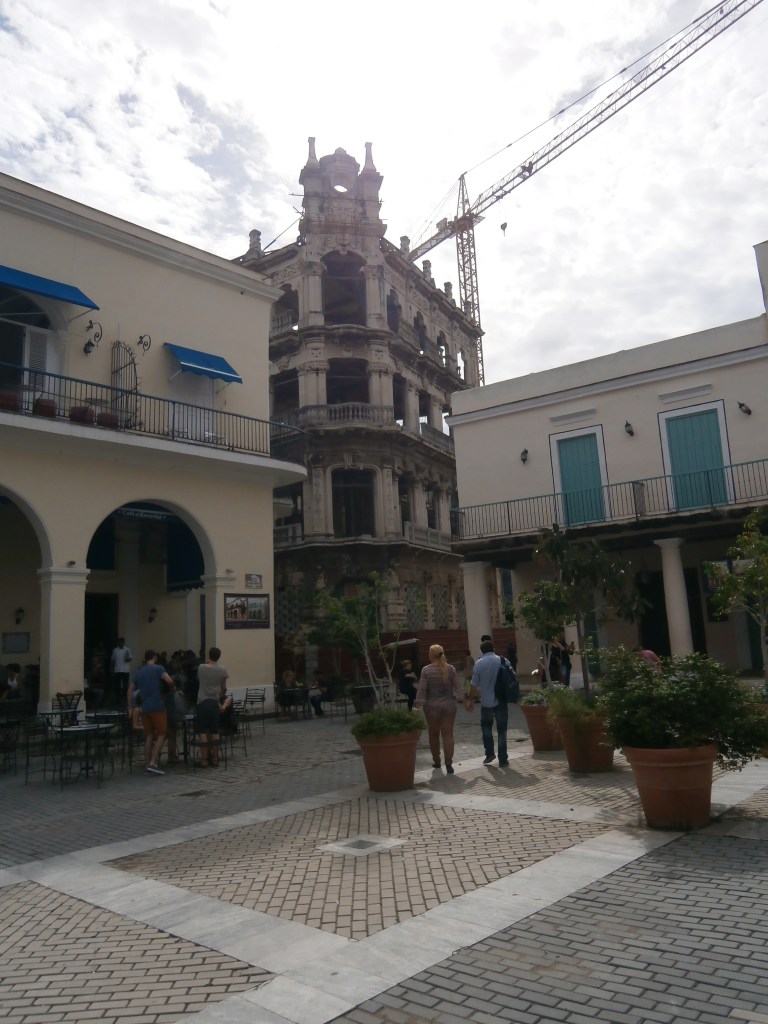
Lunch at Cerveceria Plaza Vieja
We stop for lunch at the Cerveceria Plaza Vieja. The pros; you can sit on a terrace on the Plaza Vieja, enjoy a nice cold beer from the Cerveceria’s own microbrewery and listen to the band as you eat. The con; skewers hung on a rack. A basic knowledge of science (or of hanging up laundry to dry) indicates that this is a sure fire way to make your food go cold very quickly. That and it just looks generally unpleasant, like carcasses hanging in an abattoir. But the beer is good.

Capitolio Nacional
Havana’s grandest building is the Capitolio Nacional. Built in the 1920s during Cuba’s capitalist heydays at huge expense, it was modelled on the Panthéon in Paris. The Capitolio looks similar to the Capitol in Washington DC, but is actually a metre higher, a metre wider, and a metre longer. When we visited, it was closed for renovation, so we had to make do with admiring it from the exterior.
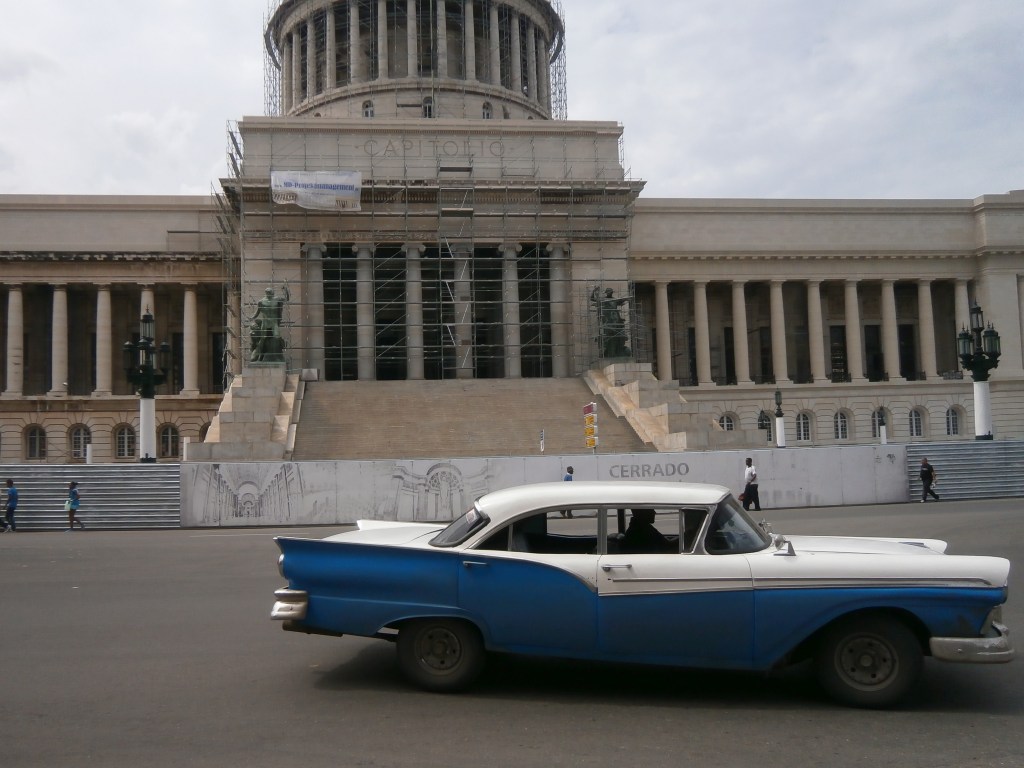
The Capitolio is open daily from 9 am until 8 pm. Entry costs 10 CUC.
Cocktails at El Floridita
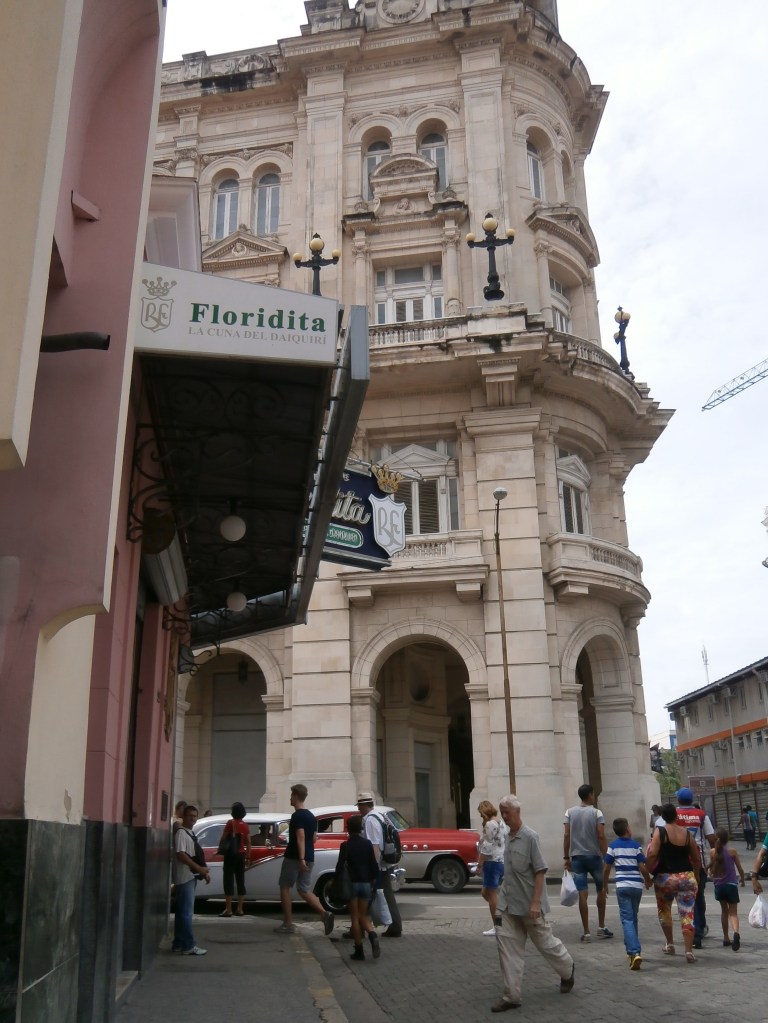
Opposite the Capitolio is El Floridita, one of Havana’s most famous bars. We take a well earned break from our epic walking tour for a sit down and a daiquiri (or two) at this iconic bar, one time favourite hang out of writer and prolific drinker Ernest Hemingway. It was at El Floridita that the daiquiri was invented in 1931. The following year, Hemingway rocked up. The rest, as they say is history…
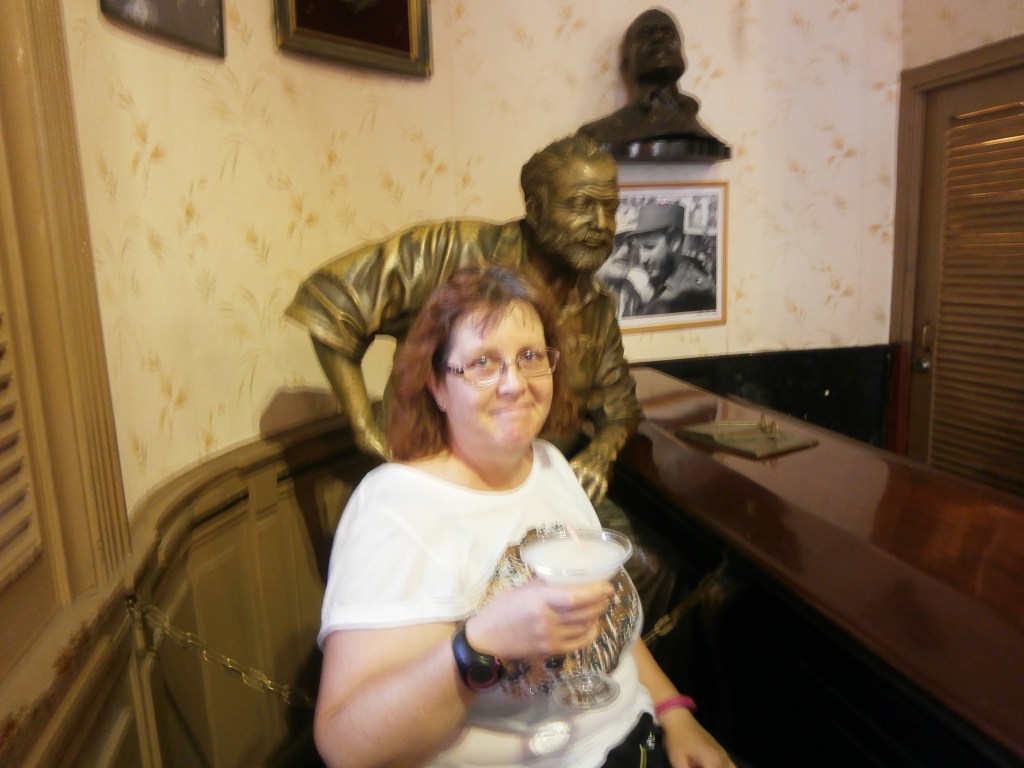
There is even a bronze statue of Hemingway propping up the bar (next to a photograph of him having a cozy chat with Fidel) for you sit and drink with. All my photos from El Floritida are blurred – I can’t think why!
And that concludes the first part of our first day in Havana. We have covered over six miles on foot, consuming beer and cocktails along the way. We head back to the hotel a little the worse for wear. Time for a little nap before dinner, and more cocktails…
Dinner at Cabaret Parisien
Another reason to stay at the Nacional is that it is home to one of Havana’s best cabaret shows; Cabaret Parisien. We have tickets for tonight’s show, which include dinner beforehand.
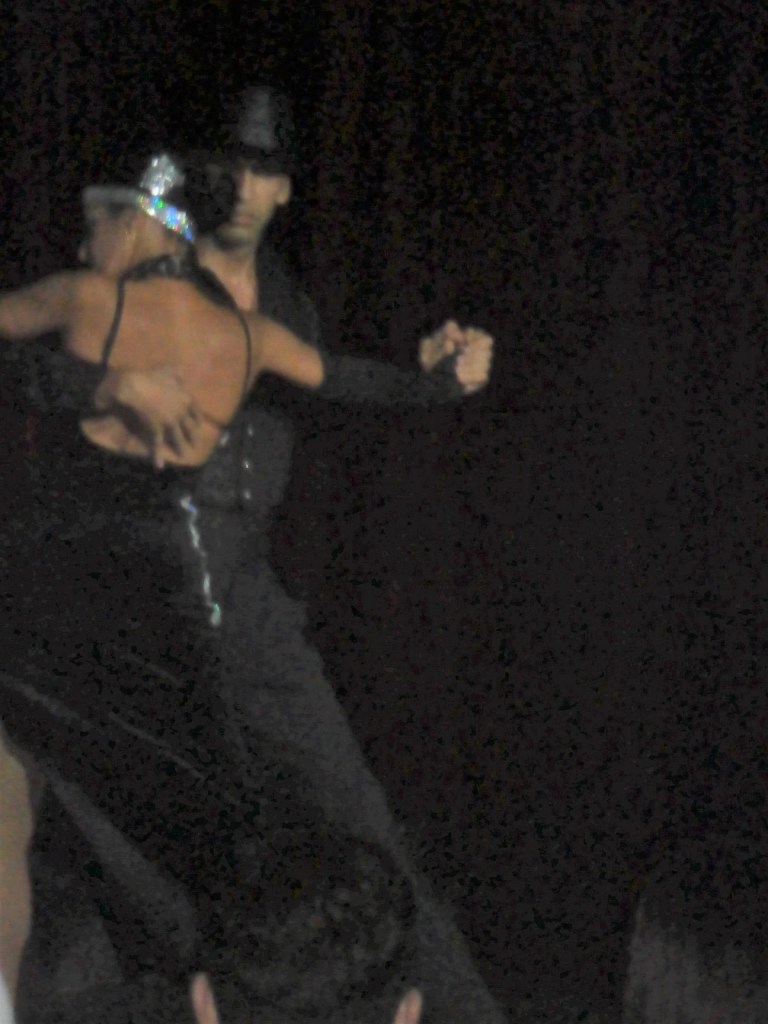
First dinner, which is very good. Then the show, which contains a mixture of music and dance, all very well choreographed and performed. In all, an enjoyable evening. And we only have a few metres to crawl afterwards to bed.

Tickets to the show, including a welcome drink and 3 course dinner cost $75.
Cuba Day 3 – Havana
Today, another day of Havana sightseeing. We start with a 2 kilometre walk south through the city to the suburb of Vedado.
Plaza de la Revolución
Here, you will find the Plaza de la Revolución, where two government office blocks are adorned with iconic murals. The Ministerio del Interior has a silhouette of Che Guevara with the words Hasta la victoria siempre (Always until victory) underneath.

On the adjacent telecommunications building is his comrade Camilo Cienfuegos with the words: Vas bien Fidel (You’re going well Fidel).

Memorial a José Martí
Across the enormous plaza in the Memorial a José Martí, a towering monument donated by the USSR. At 138.5 metres tall, the monument is Havana’s tallest structure. You can take a lift to a lookout near the top of the monument. At the base is a small museum dedicated to Martí.
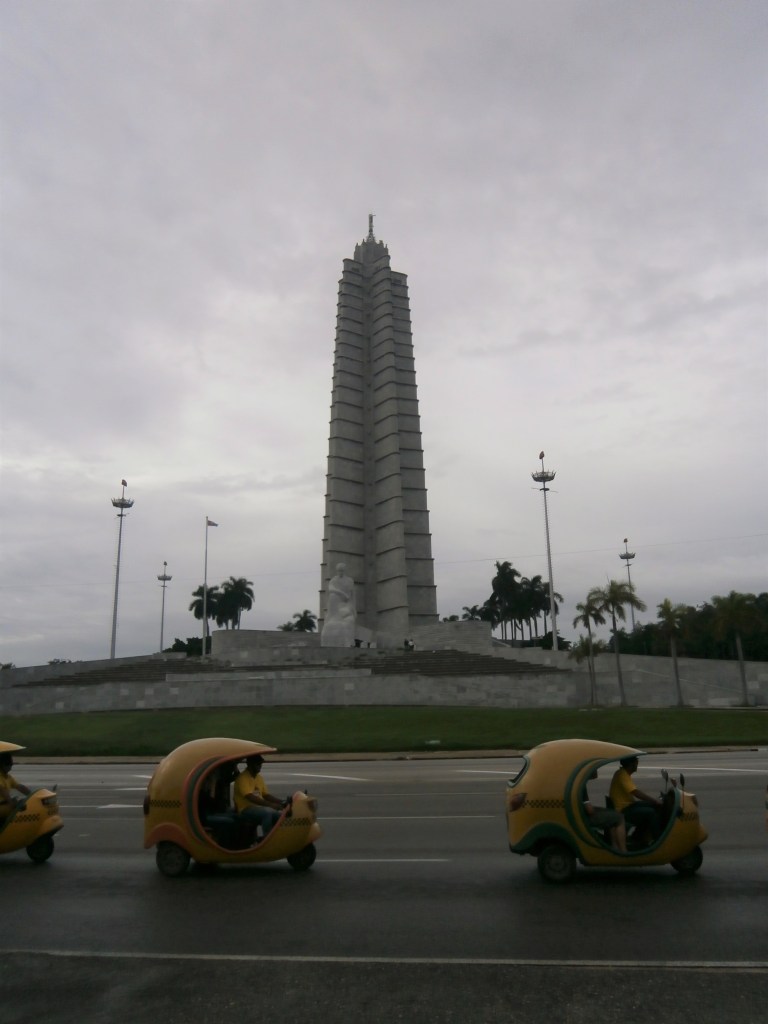
The monument is open daily except Sunday from 9.30 am until 5 pm. Entry costs 3 CUC. There is an additional 2 CUC charge for the lift to the lookout.
Museo de la Revolución
From here, we take a tuk tuk ride back to the old town to pick up where we left off yesterday. The fascinating Museo de la Revolución is in two parts. The main building is housed in what was the Presidential Palace prior to the revolution. You enter via a grand marble staircase, where you can spot the bullet holes from an unsuccessful revolution in the 1950s.

The museum tells the story of Cuba’s infamous revolution with plenty of contemporaneous artifacts, which sit incongruously in plain glass boxes set in front of the original ornate decor designed by Tiffany’s of New York.

The building has been altered from its original colonial design to a more revolutionary style by, for example, giving the cherubs on the ornate ceiling frescoes communist flags.

Just behind the main museum is another building; the Pavillón Granma, which houses the remains of the Granma; the boat which carried Fidel Castro back to Cuba to join the revolution.
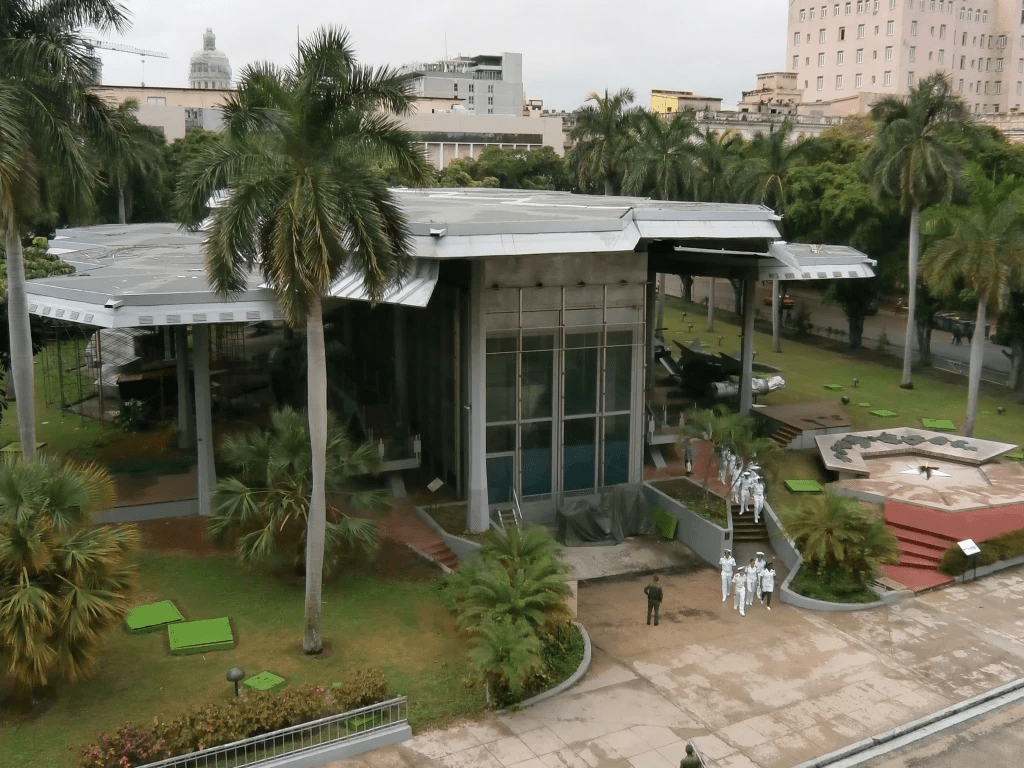
The pavilion is surrounded by other vehicles associated with the revolution.

Lunch at Sloppy Joe’s
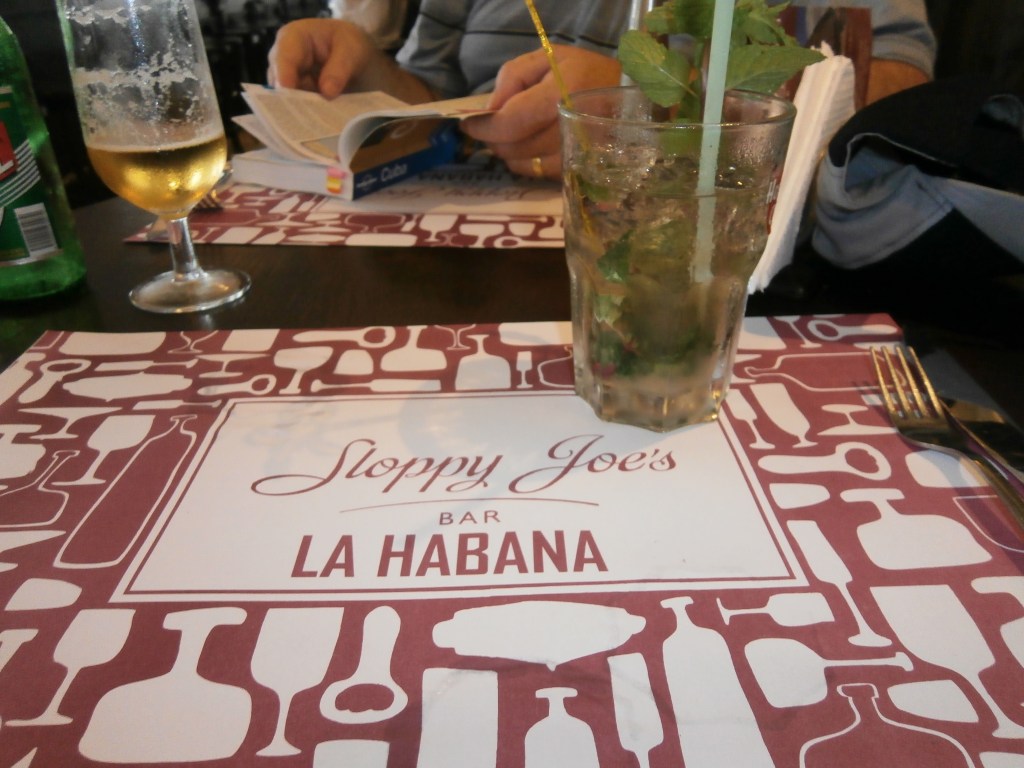
We round a sweaty morning of sightseeing off with lunch at another of Havana’s most famous bars; Sloppy Joe’s.
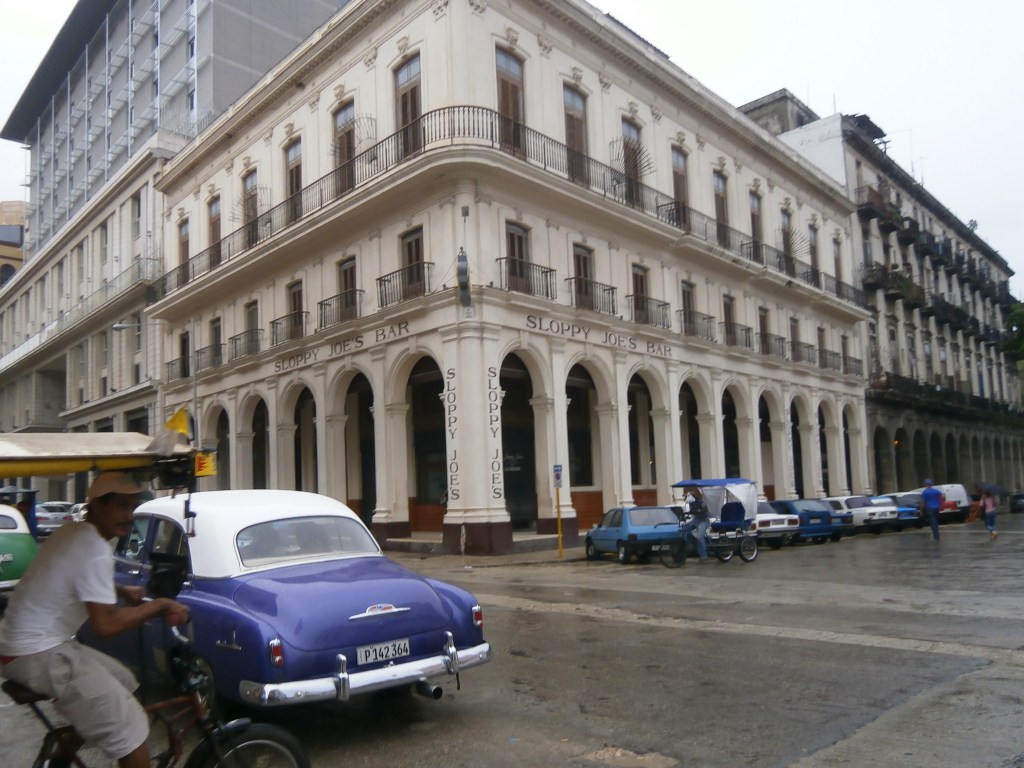
Here, in another popular haunt of Ernest Hemingway, the famous sandwich bearing the bar owner’s name is said to have been invented.
Museo del Ron
After lunch we take a tour of the Museo del Ron at the old Havana Club rum distillery. Here, you can visit the historic distillery, learn about the rum manufacturing process and, of course, sample some rum.
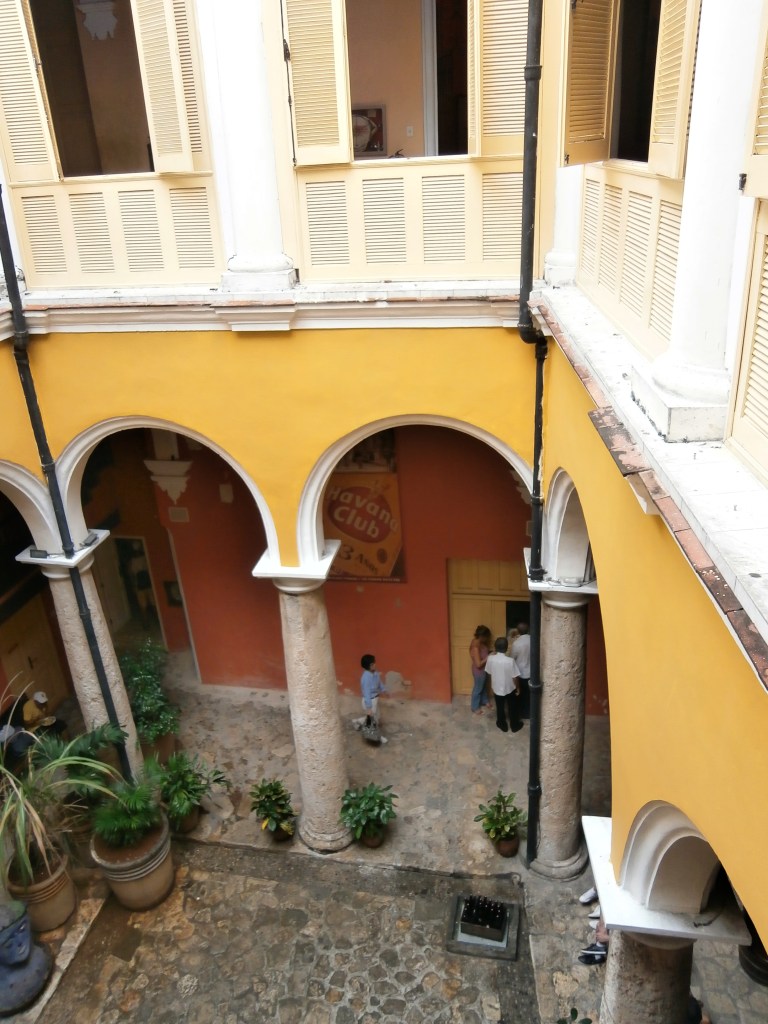
The guided tour of the factory, takes you through the history and production of Cuban rum and finishes in the bar, where you get to taste the product.
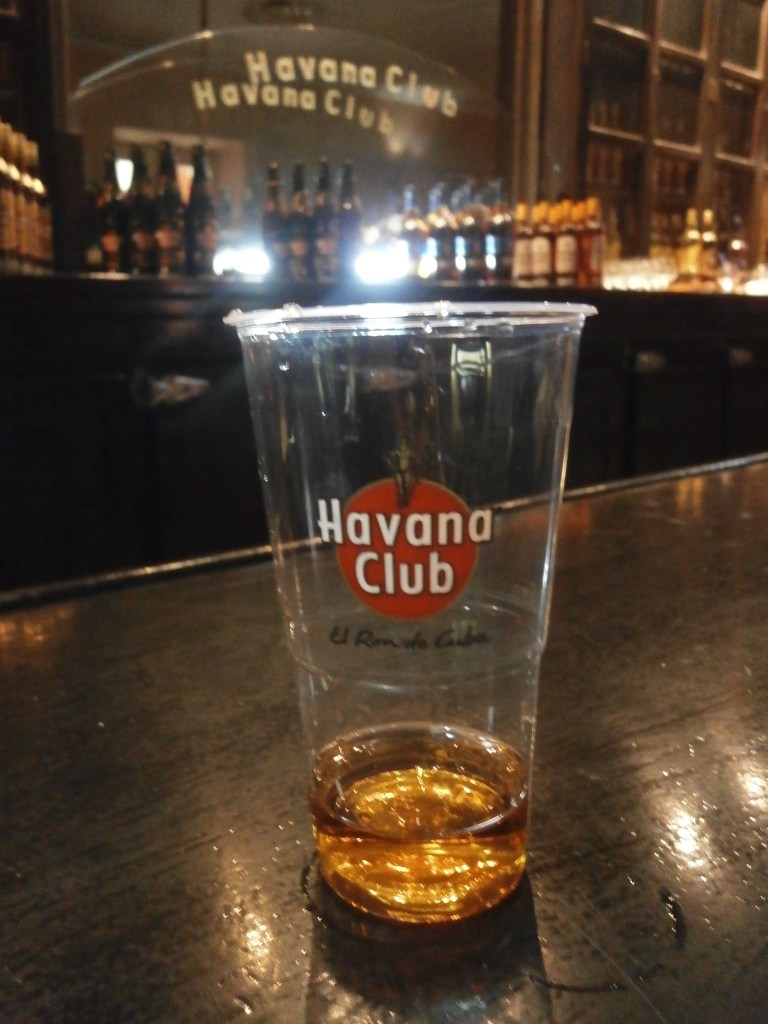
The museum is open daily from 9 am until 5 pm (10 am to 4 pm at weekends). There are a number of tour packages available. The basic 45 minute tour including a glass of rum costs 7 CUC.
Plaza Tribuna Anti Imperialista/US Embassy
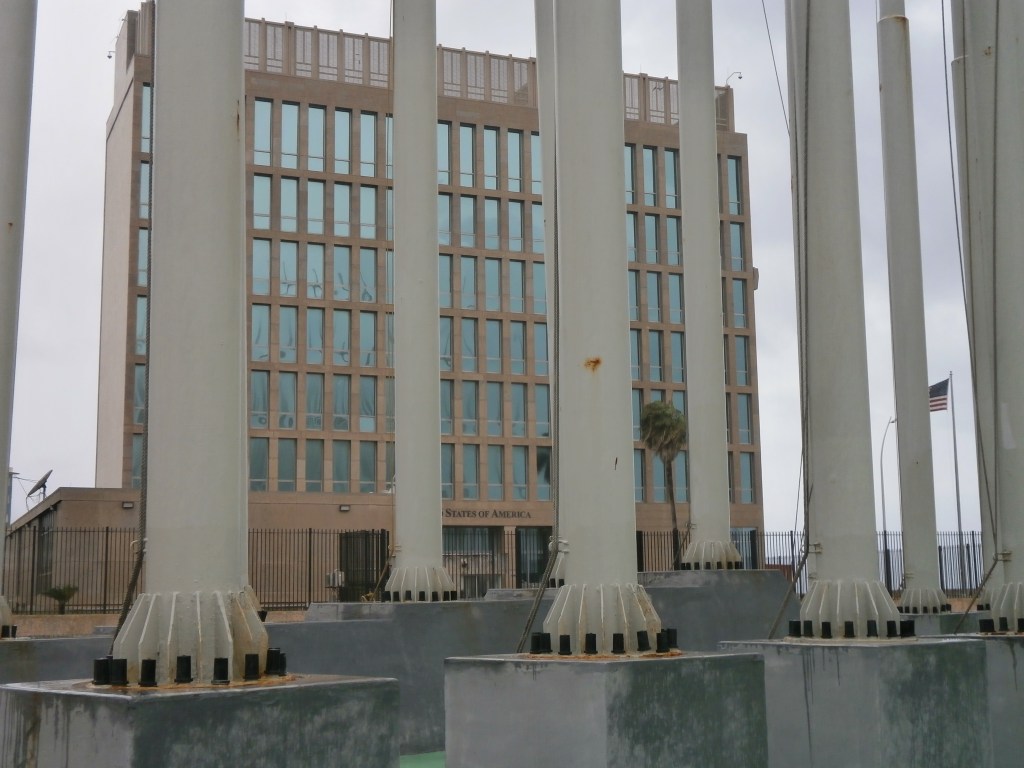
It’s been a long day, so we take a taxi back to the hotel, diverting slightly to visit the Plaza Tribuna Anti Imperialista which lies in front of the US Embassy.

In a war of propaganda, the US flashed electronic messages from the top of the 7 storey embassy building. So the Cubans attempted to block the view of the embassy with some enormous flag poles.
Dinner at La Roca
For dinner, we head for a popular local eatery, La Roca, where we order a Surf & Turf Sharing Platter. The actual tray of food which is delivered is enough to give anyone meat sweats!

Cuba Day 4 – Cayo Coco
This morning, we are flying 300 miles east to Cayo Coco. Internal flights in Cuba are unlike what we’re used to. You basically submit a booking for where and when you want to go. Then they provide planes according to demand. This means we’re not sure when we are flying until the night before, when a note with our flight details is slipped under our hotel room door.
Flight to Cayo Coco
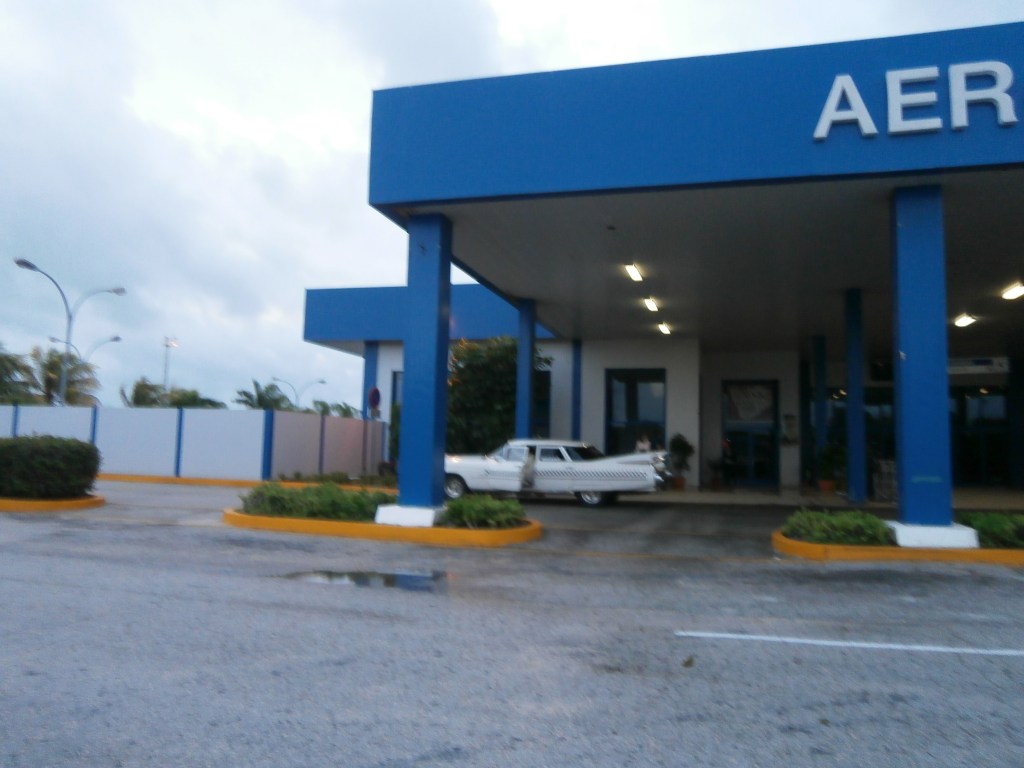
It turns out to be a very early start. A shuttle bus picks us up and takes us to the domestic airport. When we arrive, it’s not even open yet and we have to stand outside and wait for the staff to appear and unlock the airport.

The flight ends up not being direct and we stop to drop off/pick up passengers in Santa Clara. We eventually land at Jardines del Rey International Airport and another shuttle bus collects us and takes up 7 miles up the coast to the Meliá Cayo Coco.
Accommodation – Meliá Cayo Coco
The Jardines del Rey is an archipelago off the north coast of Cuba which consists of 5 islands. By far the largest is Cayo Coco – a key off the main island of Cuba, connected by a bridge. It is primarily a place for foreign tourists. There are plenty of hotels along the coast, but not so much in the way of infrastructure. Hence, all inclusive is pretty much your only option.
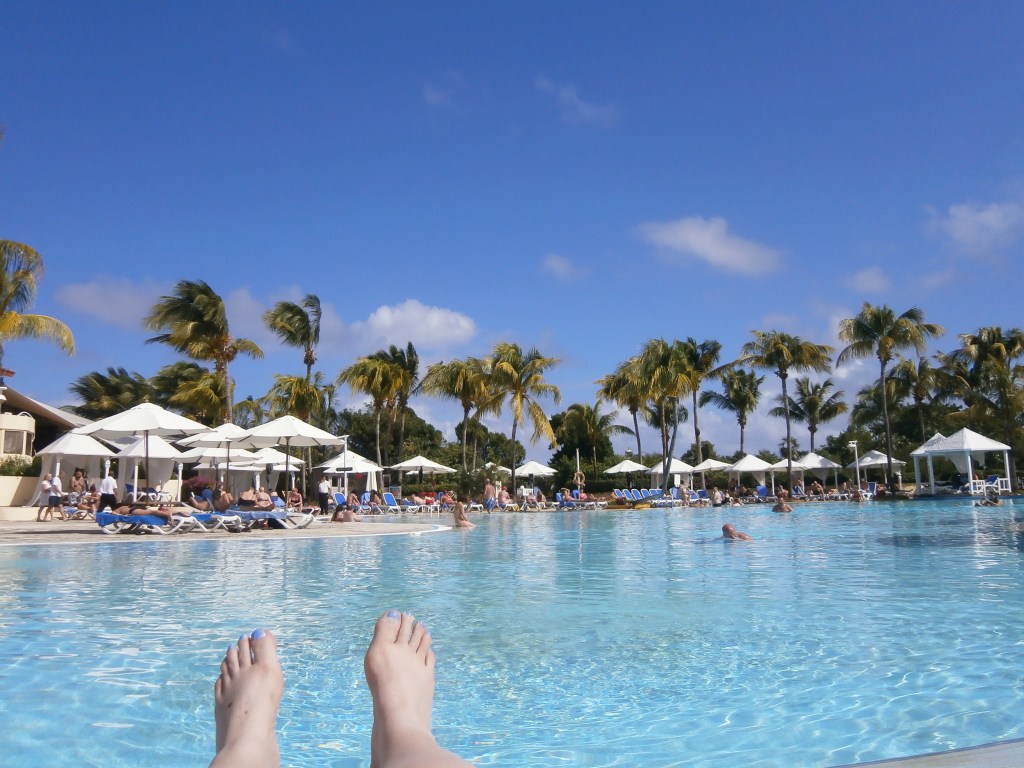
We are staying at the Meliá Cayo Coco; a 5 star, adult only all inclusive hotel. As well as food and drink, this includes the entertainment programme with daytime activities, water sports and excellent evening shows. There is a selection of accommodation options from bungalows on the lagoon to more traditional hotel rooms in blocks in a beautifully landscaped garden.

Playa Mojito
We split our morning between the pool and the beach; the palm lined Playa Mojito. At the other end of the beach is another hotel in the same group; Hotel Tryp Cayo Coco. Our all inclusive wristband includes food and drink at any hotel in the Meliá chain, so we stop for a refreshing drink by the pool, before returning to our own pool. It’s a hard life…

La Gaviota Commercial Centre
In the afternoon, we venture forth in the heat for some souvenir shopping at La Gaviota Commercial Centre. Once we have purchased some essential items; cigar keyrings and a diamante studded Che Guevara t-shirt, we walk back for a cool down and dinner.
Dinner at la Terrazza
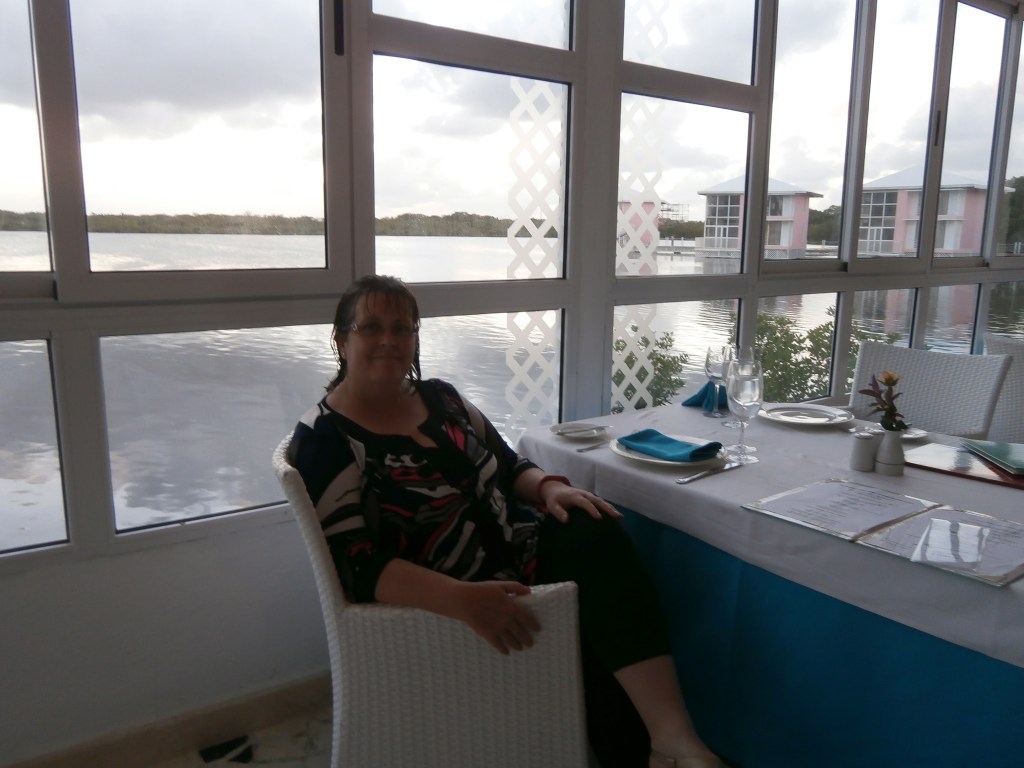
As well as buffet style dining, the hotel offers a la carte restaurants which have to be reserved in advance. Tonight, we have a booking at la Terrazza and enjoy an excellent three course dinner sitting overlooking the sea.
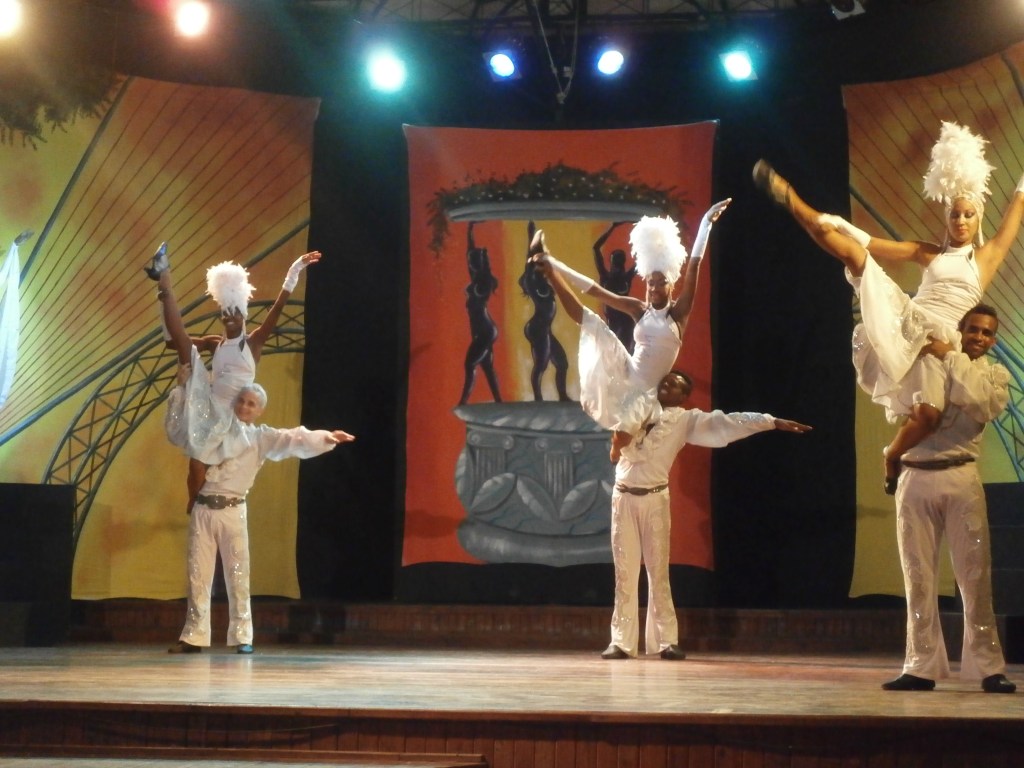
We round the evening off with a show. The entertainment here is first class.
Cuba Day 5 – Cayo Coco
Today, we are taking the Jardines del Rey Hop on Hop off Bus.
Jardines del Rey Hop on Hop off Bus
This roughly hourly service drives in a circuit round the key stopping at hotels, commercial centres and tourist attractions on Cayo Coco and the smaller Cayo Guillermo.

Tickets cost 5 CUC per day – you can buy your ticket on the bus.
Hemingway Bridge
To reach Cayo Guillermo, you must cross over Hemingway Bridge. This causeway is lined with statues of the famous writer who once lived here. On either side of the causeway, are flamingos grazing in the shallow waters.
Cayo Guillermo
Cayo Guillermo is much smaller than Cayo Coco. The island provides the setting for the climax of Hemingway’s last novel Islands in the Stream. It has a few hotels lining its beautiful beaches. At the far western end, you will find one of the country’s best beaches.

Playa Pilar
In fact not only one of Cuba’s best beaches – Playa Pilar regularly features in polls of the best beach in the world and with good reason. The vast expanse of pale yellow sand reached, reached via a sand dune, is almost blinding in its intensity. The beach is named after Ernest Hemingway’s yacht.
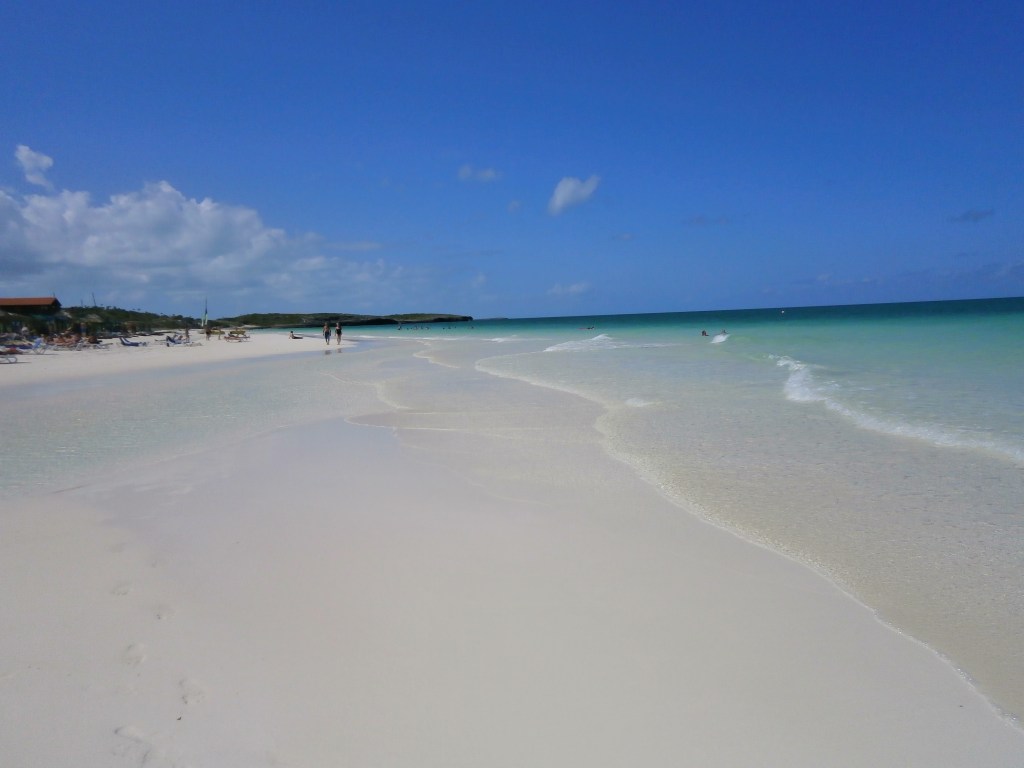
From Playa Pilar, we catch the shuttle back towards Cayo Coco, stopping en route at another hotel in the Melia chain for drinks and lunch by the pool.
Cuba Day 6 -Ciego de Avila
Today, we are leaving our fellow Brits by the pool and going on an organised tour. We are literally the only British amongst a slightly cosmopolitan, mainly Canadian group. Our bus sets off, departing the Cay for our first desination; Laguna de Leche.
Pedraplen Cayo Coco
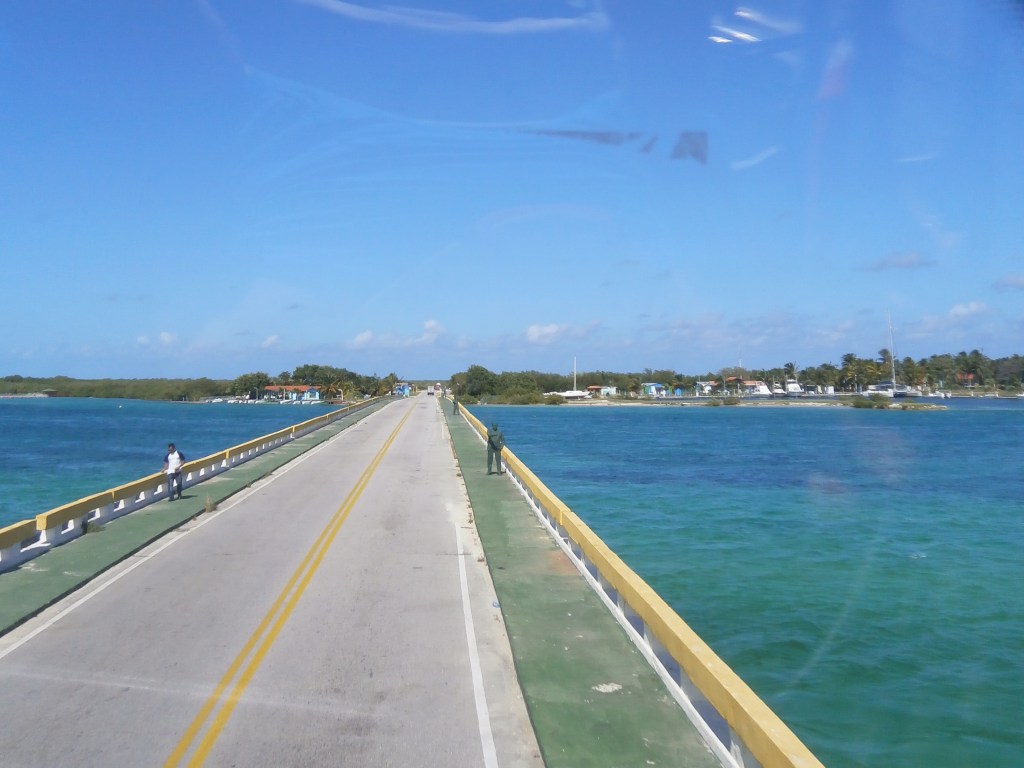
To reach the mainland of Cuba, you cross the Pedraplen; a 17 kilometre causeway across the Caribbean. Quite a feat of engineering. It’s a strange feeling, driving on water with no land in sight except the road stretching before us, surrounded by water and flamingos.
Laguna de Leche
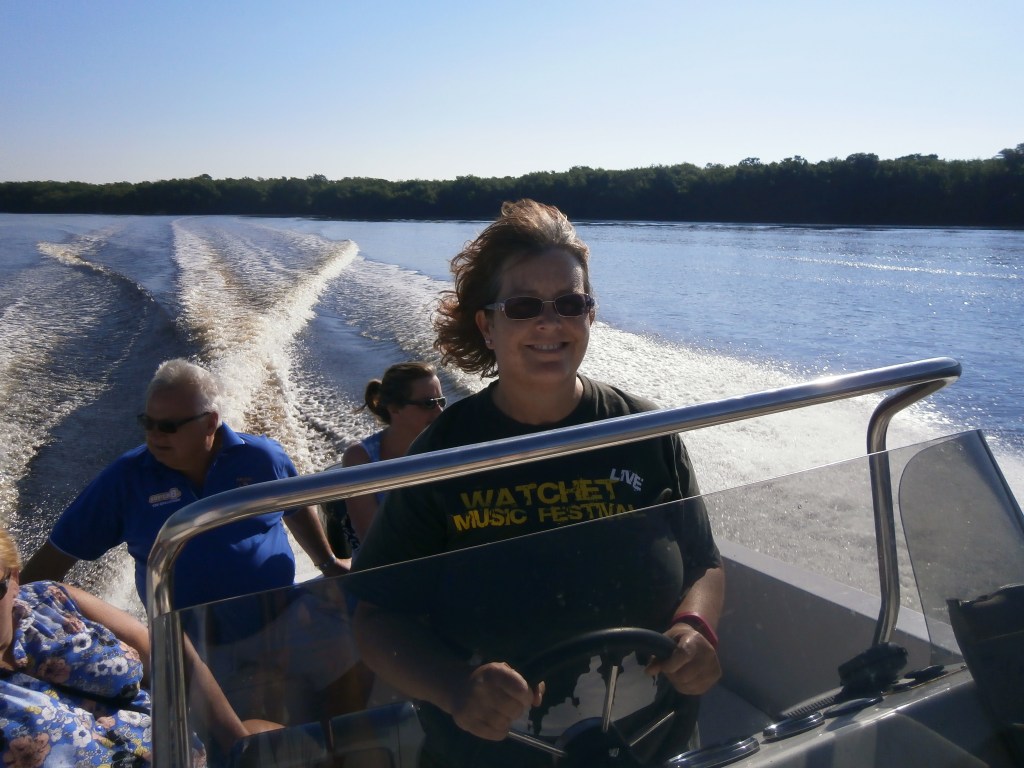
The Laguna de Leche (Milk Lagoon) gets its name from the rather eery whiteness of the water. The colour is caused by the lake’s limestone bed. Natural movements of the sea level cause disturbances in the water table, which releases lime particles into the water. We take a boat trip across the lagoon and surrounding mangrove swamps. We even get a chance to skipper the boat.
Morón
After our boat trip, we set continue to Morón.
Morón Railway Terminal
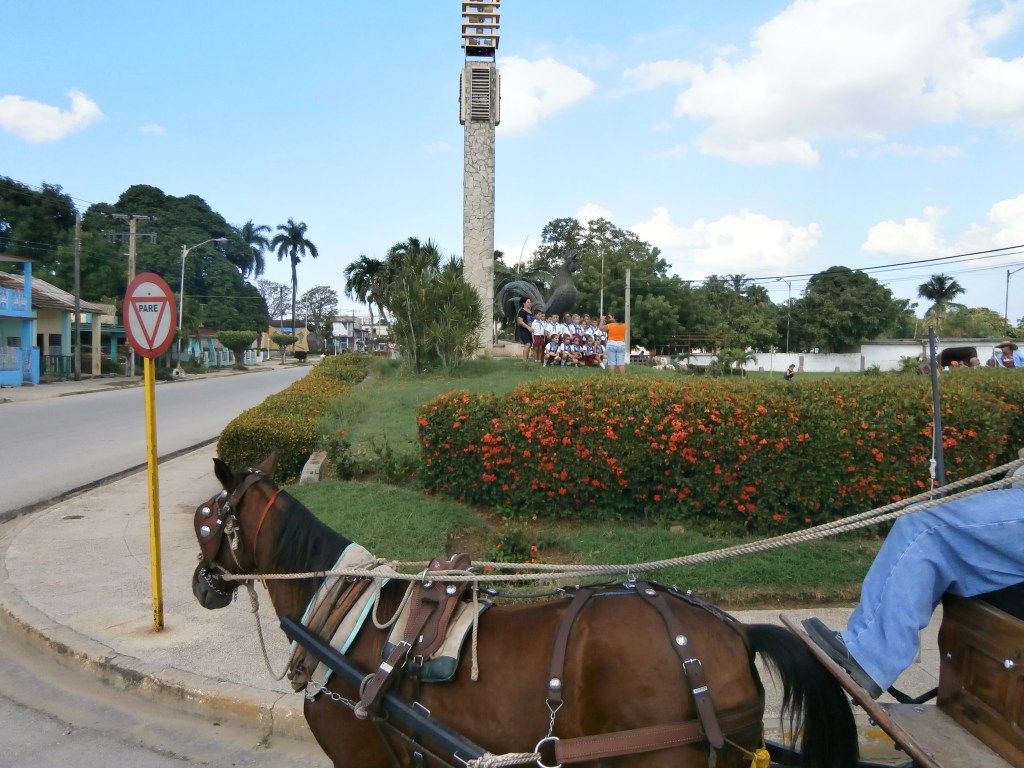
The day starts with a horse drawn carriage ride round the town. Not something I would usually choose to do, but nonetheless an interesting way to familiarise ourselves with the town’s layout, starting at Morón Railway Terminal. This art deco style station dates back to 1923.
Rooster
As you enter Morón, you can’t miss the town’s mascot, a large rooster sitting on a roundabout.
Ciego de Avila
Our ultimate destintion is Ciego de Avila, a town which was founded in the 17th Century. We have some free time to explore the historic old town, which is set out in a typical Spanish colonial format round a main plaza with formidable cathedral. In Cuba, with private internet limited, many squares have public wifi, so are popular with locals not only for the general ambience.

We round our trip off with lunch and a salsa lesson before driving back to our hotel on Cayo Coco.

Cuba Day 7 – Havana
Today we return to Havana. Again the rather elusive travel arrangements. I feel like an extra from ‘Allo ‘Allo when the envelope containing our flight details is posted under the hotel door.
Flight to Havana
We are picked up and taken back to the airport for our flight to Havana.
Accommodation – Hotel Capri
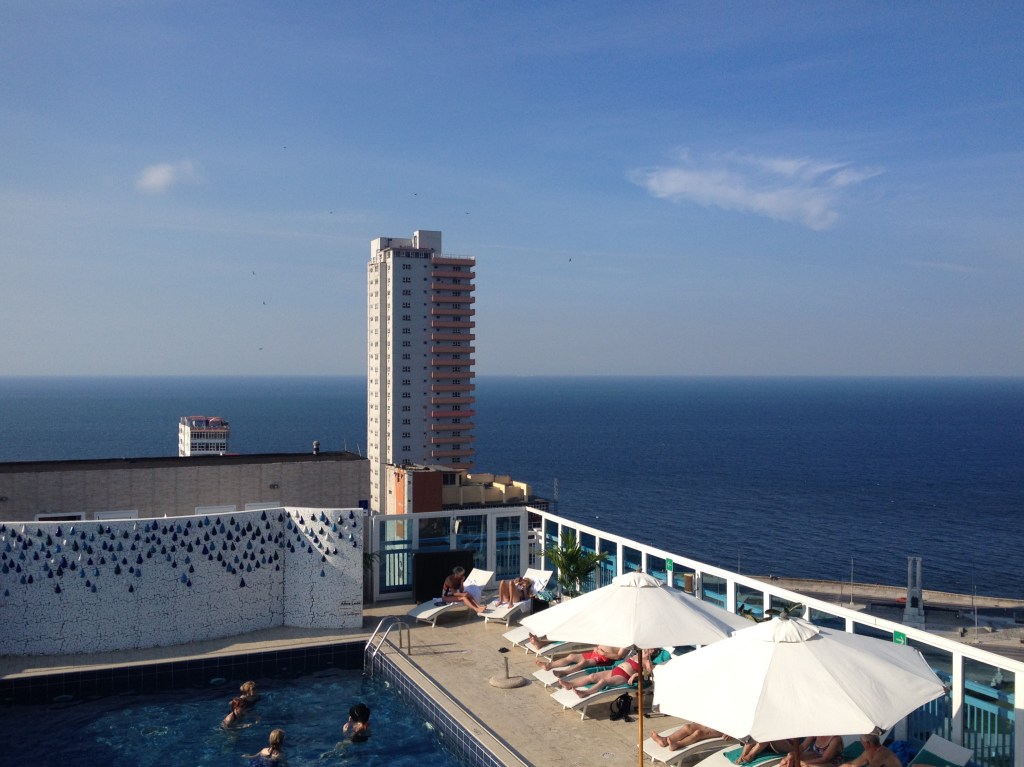
For our final night in Havana, we are staying in the former Mafia hotel, the NH Capri Hotel, which was originally built in the 1950s. A more recent efurbishment has maintained a 1950s vibe.
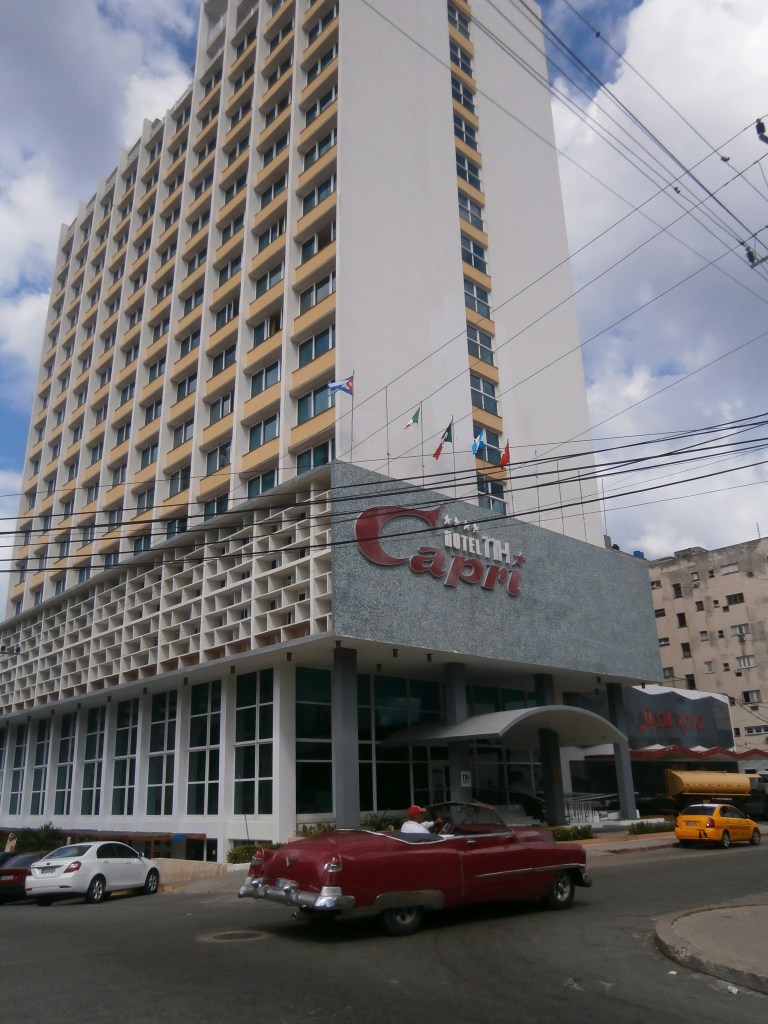
I love everything about the place, particularly the roof top pool with spectacular views across the bay in one direction and the city in the other.
Classic Car Tour
We have saved the best till last. Today, we are taking a Classic Car Tour in a bright red convertible. The tour takes in some of Cuba’s top attractions, with stops for you to visit and take photos of the attractions, and of course for plenty of classic car selfies. Prices vary depending on the length of the tour and type of car. Expect to pay around $90 for a 3 hour tour in a convertible.

The tour includes some attractions we were already familiar with, such as the Plaza de la Revolución and the Capitolio, plus some new ones, including driving through the tunnel under the mouth to Havana port to the north side of the city.
Hotel Habana Libre
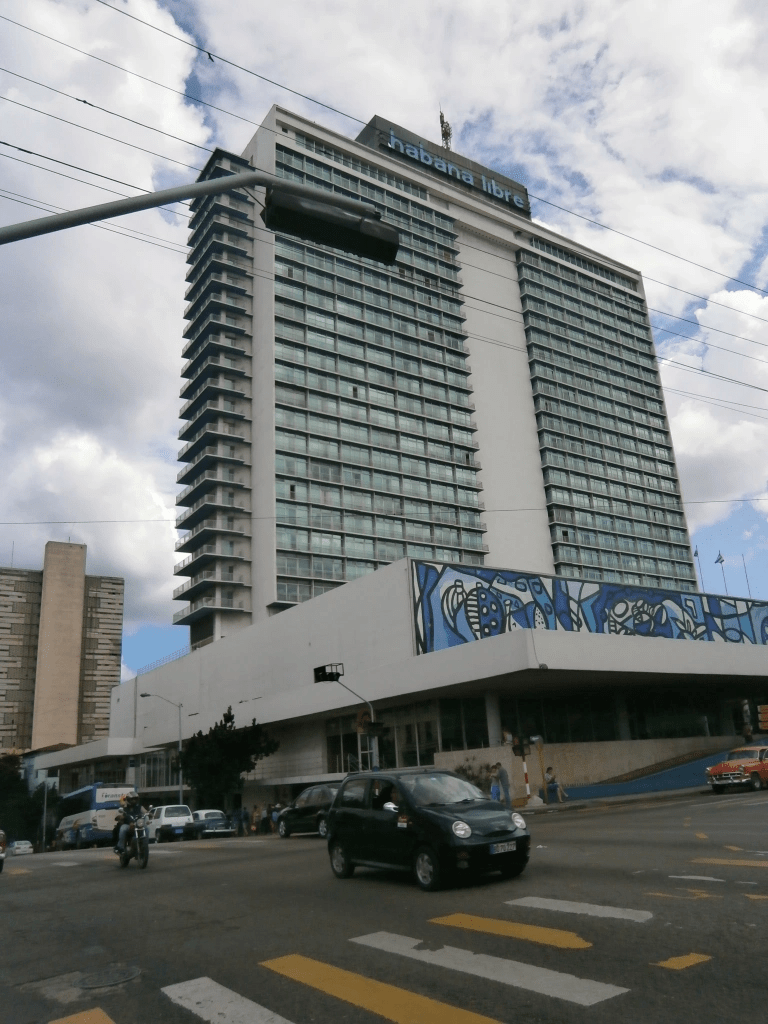
First up, the former Havana Hilton, which was commandeered by Fidel Castro’s revolutionaries in 1959, just nine months after it opened and renamed the Hotel Habana Libre. During the first few months of the revolution, Castro ruled the country from a suite on the 24th floor of the hotel.
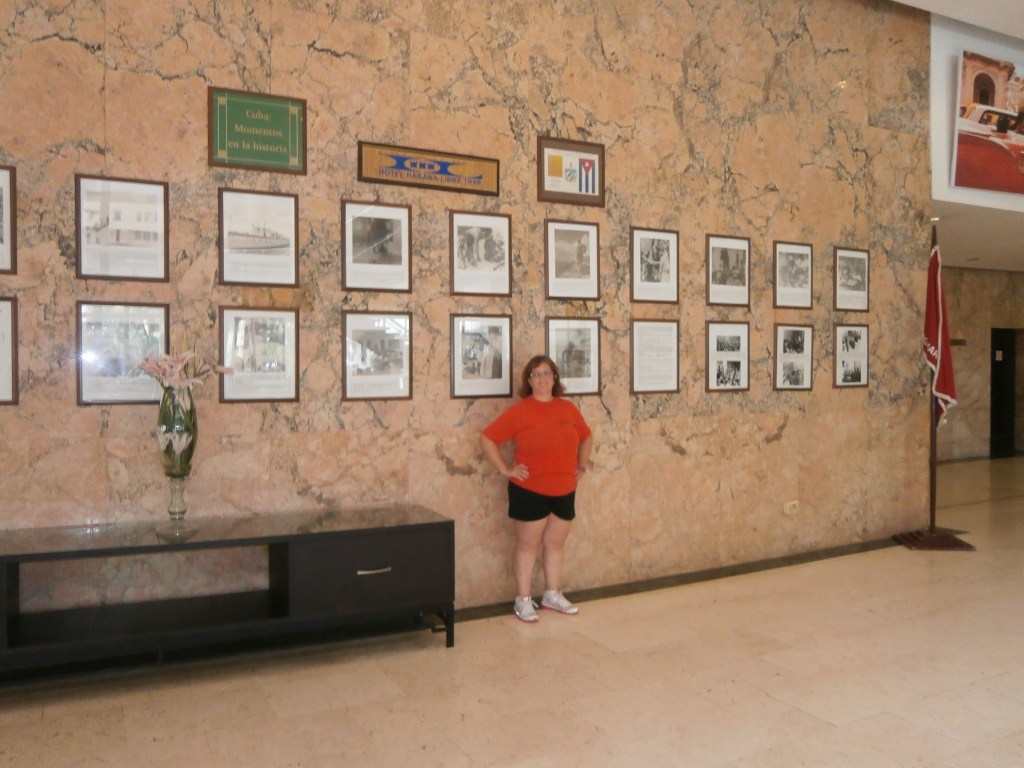
There is a gallery of photographs documenting the hotel’s role in the revolution on the wall in the foyer.
Necrópolis Cristóbal Colón
We take a brief stop at Havana’s huge cemetery, Necrópolis Cristóbal Colón, resting place of many great historical figures (including the famous explorer Christopher Columbus, until the Spanish demanded him back and he had to be dug up). Columbus may no longer be resting here, but the cemetery still bears his name.
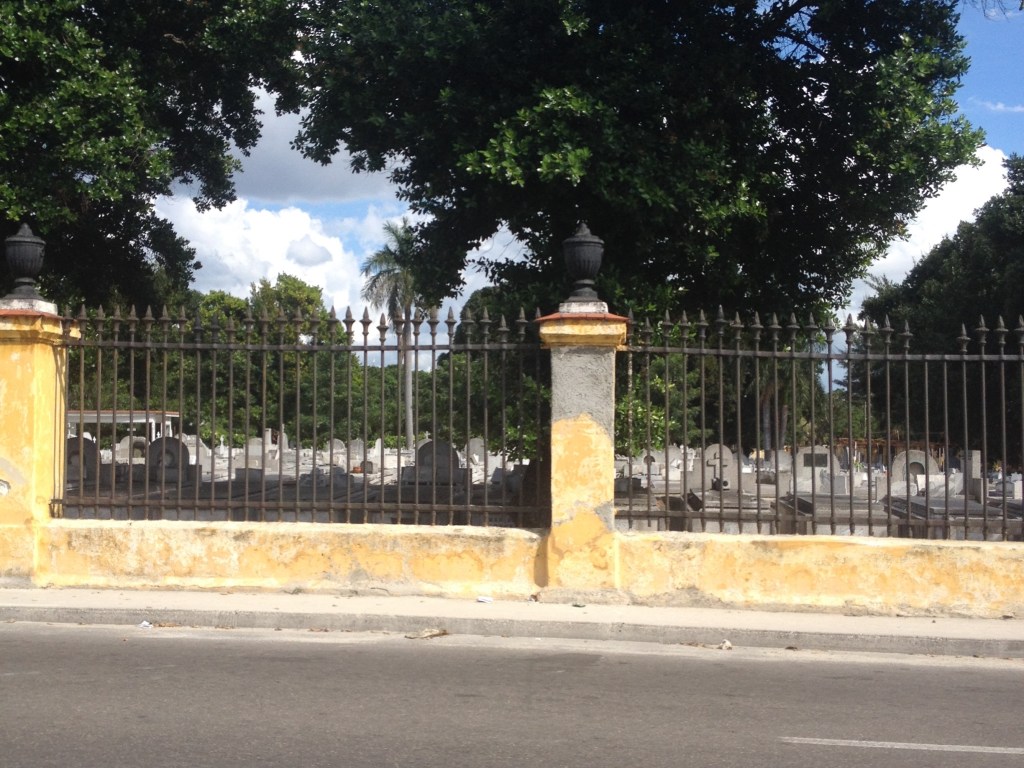
We just took a peek over the wall, but if you want a more in depth visit, the cemetery is open daily from 8 am until 5 pm and costs 5 CUC.
Parque Histórico Militar
Then we drive through the Tunnel de La Habana, emerging on the north side of Havana Port and head for the Parque Histórico Militar; an open air museum which consists of various weapons utilised by the Cubans to protect themselves from the US.

Christ of Havana
Not quite the size of its Brazilian counterpart, Havana has its own Christ Statue overlooking the city. The Estatua de Cristo, or Christ of Havana was built in 1958 as a present for President Batista from his wife, reaching completion just before they fled the country.

From here, there is a great view looking down over the city of Havana.

Parque John Lennon
We return to Havana with one last stop at the Parque John Lennon, where a statue of the famous Beatle sits on the end of a bench. There is a man on hand to ‘lend’ a pair of Lennon’s iconic glasses, if taking a vaguely matching glasses selfie rocks your boat.
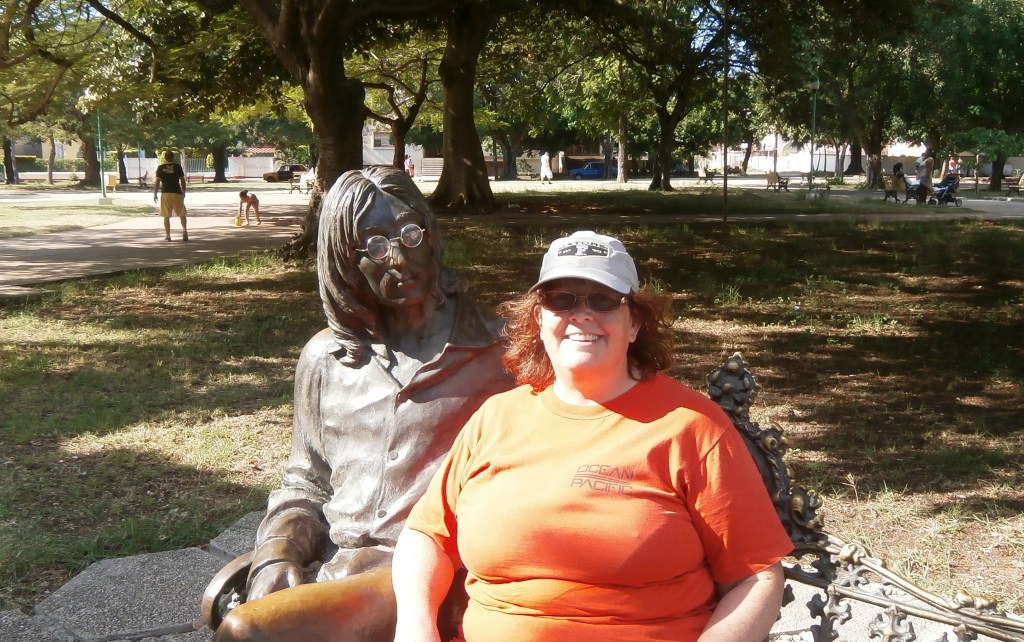
And that concludes our visit to Cuba. I have thoroughly enjoyed all of it, particularly the classic car tour (and the rum). Havana is a city like no other, fascinating and friendly and it is one of my favourite places. Just time for a quick souvenir shop before it’s time to bid a fond farewell and head for the airport.
- Trip taken: October 2015
- Updated: May 2025
I hope you found the above information useful. For guides to more destinations in the 50+ countries we have visited, check out my full list of Independent Travel Itineraries here.
 Jane's Midlife Journey
Leave a comment