
We spent a week exploring Eastern Germany on our European road trip, focusing on two of the region’s biggest cities; Berlin and Dresden. Way back in 1988, I spent a semester at university in what was then the German Democratic Republic. I’ve only been back once since unification and it’s rather a weird feeling – how much a place, particularly one with such a turbulent history, has changed.
Eastern Germany 1 Week Road Trip Itinerary
| Day 1 | Berlin Flight to Berlin Accommodation – Erlanger Hof Tempelhofer Feld Neukölln Arcaden |
| Day 2 | Berlin (City Tour) Alexanderplatz Fernsehturm Brandenburg Gate Bundestag Memorial to Murdered Jews Lunch at Ritter Sport’s Bunte Schokowelt Checkpoint Charlie Topography of Terror East Side Gallery Dinner – Currywurst |
| Day 3 | Berlin (Museum Island) Pergamonmuseum Altes Museum Neues Museum Berlin Cathedral |
| Day 4 | Olympiastadion and Potsdam Olympiastadion Swimming in the Olympic Pool Potsdam Potsdam Boat Tour |
| Day 5 | Sachsenhausen Sachsenhausen Concentration Camp |
| Day 6 | Dresden (City Tour) Drive to Dresden Accommodation – Leonardo Hotel Dresden Altstadt Yenidze Semperoper Dresdner Zwinger Residenzschloss Kulturpalast Altmarkt Frauenkirche Dinner – Zum Schießhaus |
| Day 7 | Dresden Gläserne Manufaktur Großer Garten Dinner from Hamid Kebap Haus |
Eastern Germany Day 1 – Berlin
Berlin is a city shaped by its history. In 1945, the main WW2 Allies defeated and occupied Germany. They divided the bulk of the country into four zones. They did the same with the capital, Berlin, although the city was actually way inside the Soviet zone.
In 1949, the three western zones merged and two separate German states came into being. East Berlin became the capital of East Germany (the DDR), while West Berlin became a part of West Germany (the BRD) some 100 miles away, only accessible by land from West Germany by plane or narrow rail and highway corridors. Meanwhile, Bonn became the new capital city.
In 1961, the infamous Berlin Wall was built, totally dividing the two sides of the city, with just a few checkpoints where it was possible for those with the correct paperwork to pass between the two.
The Berlin Wall fell some 28 years later in 1989, sparking the reunification of the city and the nation. A decade on, Berlin once again became the country’s capital.
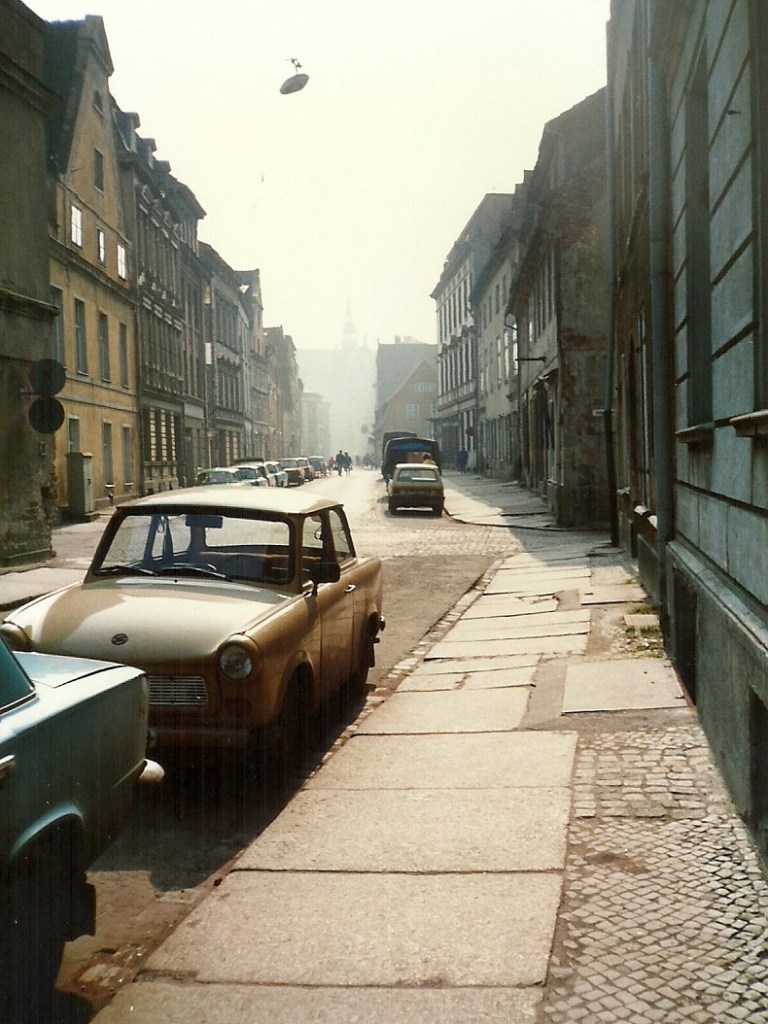
Back in the 80s, I was a regular visitor to East Berlin. It’s strange returning now. Particularly strange is how you can walk along a road which is so familiar, then reach a place you have never visited before because there used to be a wall in the middle.
Flight to Berlin
We fly into Berlin Brandenburg Airport ahead of schedule (an EasyJet first). Then pass through immigration. I get stopped by immigration – so much for freedom of movement. We pick up our hire car and get charged an additional €53 because we are taking the car across the border into Poland (which is actually another EU country and part of Schengen, so technically not a border?) Another freedom of movement fail.
Accommodation – Erlanger Hof
We check into our hotel; Erlanger Hof which is a pleasant, sprawling hotel with large rooms and lots of interesting nooks and crannies. We picked the Erlanger Hof, which is located 3 miles south of the city centre, on this occasion because we had a car and it offers free parking. Yet it is near the Rathaus Neukölln U Bahn station (Line U7), so convenient for getting into town.
Accommodation – Carolinenhof
Previously, when just visiting Berlin, we stayed at Hotel Carolinenhof. This clean, comfortable hotel is situated 4 miles west of the city centre, close to the Tiergarten. It is close to the Berliner Strasse Underground station, so equally convenient for getting into town.
Tempelhofer Feld
Berlin’s former Tempelhof Airport is now a large public park, Tempelhfofer Feld. Berlin’s largest open space includes a history and tree trails, sports pitches, a cycle/jogging trail, playgrounds, food concessions and a picnic/BBQ area. When we visited, the weather was terrible, so we headed indoors instead.
Neukölln Arcaden
Neukölln Arcaden is an indoor shopping centre with around 50 shops, plus leisure activities, including the Klunkerkranich art and culture roof garden, Neukölln City Library, a cinema and gym. In the basement, you will find a large Kaufland Supermarket for all your grocery needs.
Eastern Germany Day 2 – Berlin (City Tour)
Today, we are taking a walking tour of some of Berlin’s top attractions. The city’s main attractions are reasonably close together and there are plenty of parks and interesting things to see along the way. My city tour itinerary covers a total distance of around 6 miles (4 miles if you omit the East Side Gallery, which is close to Warschauer Straße station). The city has an extensive subway (U Bahn) system if walking becomes too much.
Alexanderplatz
We take a tube to Alexanderplatz. With both a U-Bahn (underground) and S-Bahn (train) station, as well as bus and tram stops, Alexanderplatz is well connected transport wise and the perfect place to start a tour of Berlin.
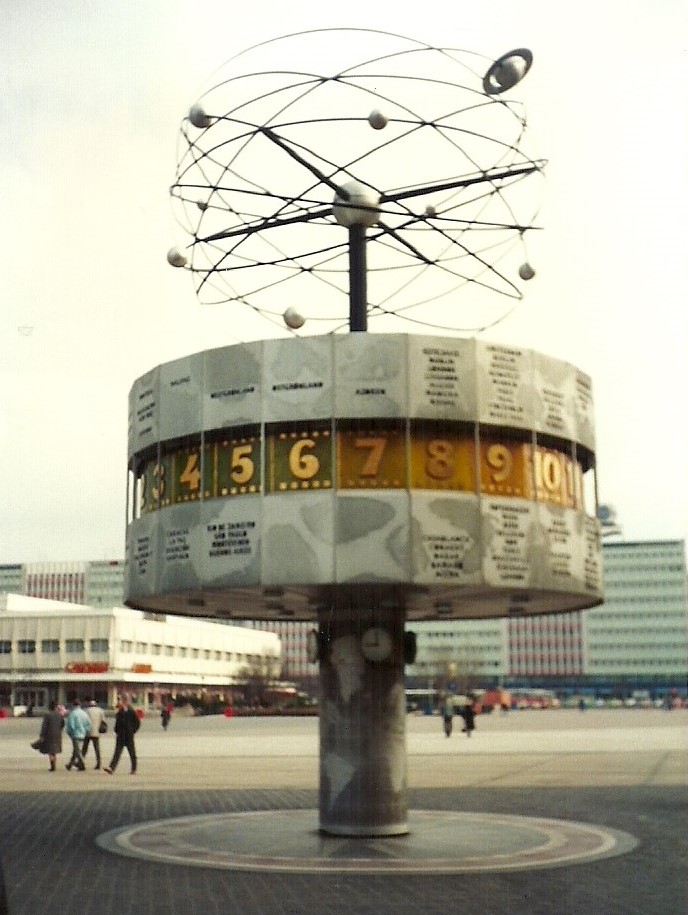
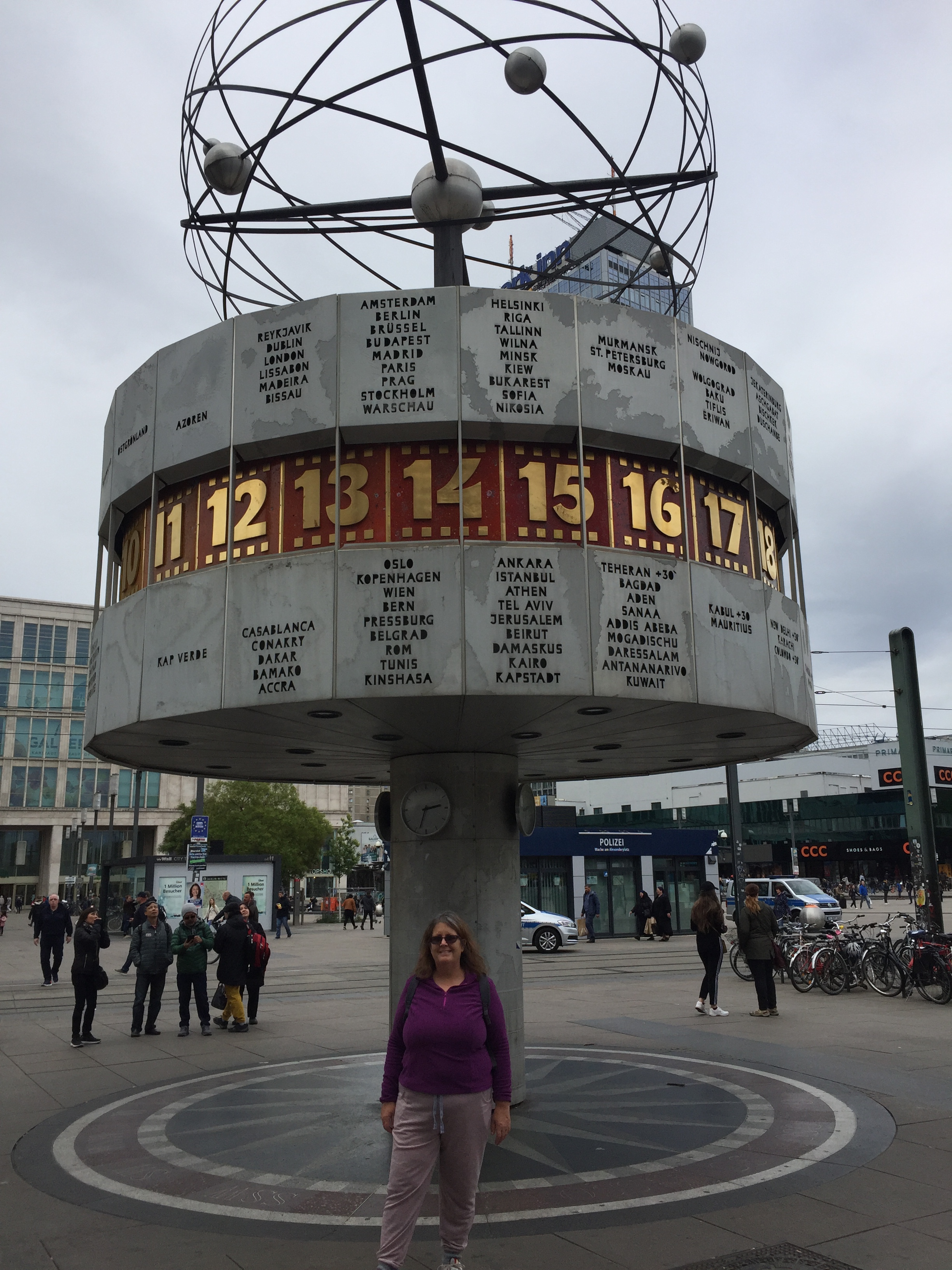
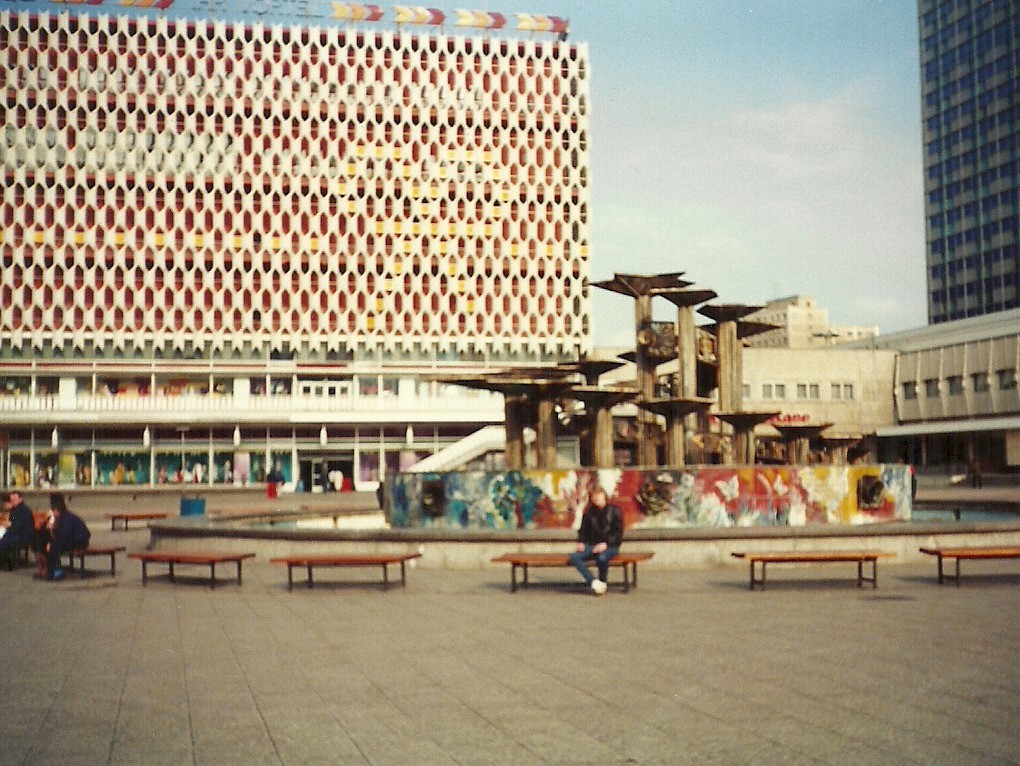
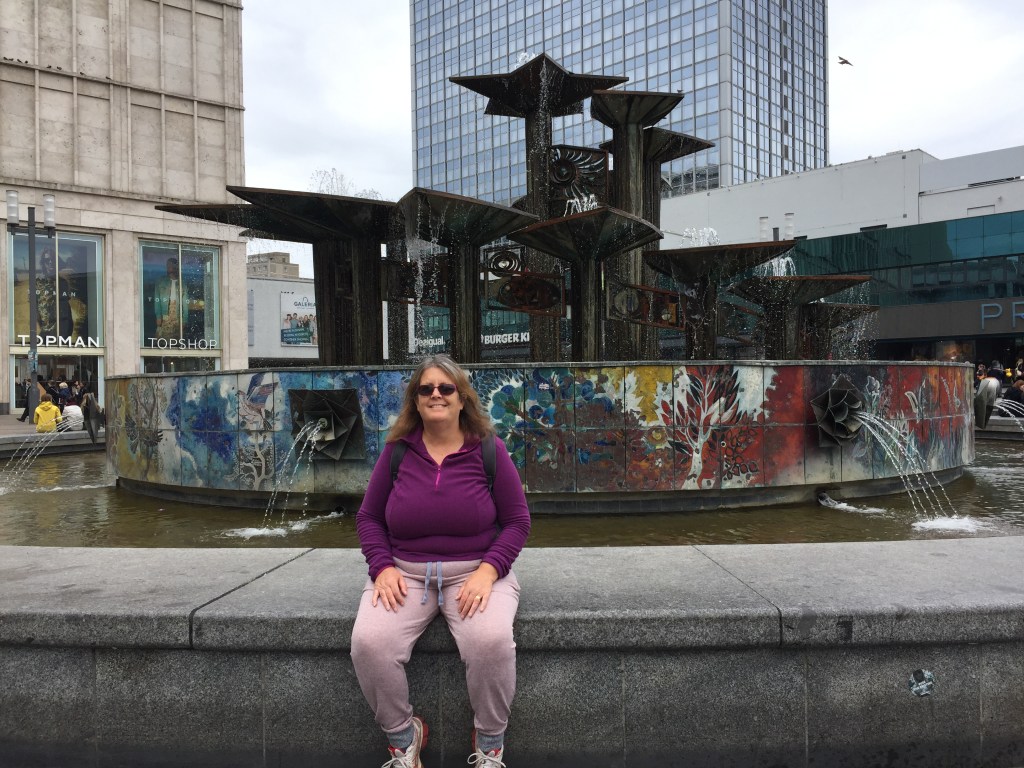
I used to love visiting the Alexanderplatz in the 1980s. It had an epic restaurant; the Alexgrill, which is sadly no more. This square, with its iconic World Time Clock, was once the focal point of East Berlin. It is still one of the most visited spots in the city, although it’s very different now; the fountain is surrounded by winos and the restaurants on offer – McDonalds and Burger King do not offer the best steak and chips ever.
Fernsehturm
Next to the Alexanderplatz is another of my favourite haunts, the Fernsehturm. This 368 metre high TV Tower was constructed in the 1960s by the East German government.

At the top of what is technically Europe’s 4th tallest building, is an observation deck with a 360 degree view of the city and beyond. There is also a revolving restaurant (Sphere) which rotates once in 30 minutes.


The Observation Deck is open from 9 am until 10 pm (11 pm in summer). The price for a basic ticket for the observation deck varies according to the day/time, costing up to a rather lofty €31.50. If you want to visit the restaurant, you’ll have to fork out a similar amount before you even order food and drink.
Brandenburg Gate
Next up, an obligatory photo op at the Brandenburg Gate. This iconic city gate, once situated in a nomansland in a divided city, has now been been restored and sits in a pedestrian area surrounded by hoards of tourists.

Bundestag
The Bundestag is the home of the German Parliament. The original Reichstag building was constructed in the 19th Century and was home to the German parliament until it was destroyed by fire in 1933, shortly after Hitler came to power. Following reunification, the building was reconstructed and the German parliament returned here in 1999. To the rear is a modern glass and steel dome which offers 360 degree views of the city.

You can visit the dome and adjoining roof garden. Entry is free, but you must pre-register online. Slots fill up quickly, so it’s advisable to book well in advance. And don’t forget to take your passport – we booked tickets but weren’t able to use them as we had no ID. It is also possible to book guided tours of the Reichstag building when parliament is not in session.
Memorial to Murdered Jews
On to Berlin’s Holocaust Memorial; The Memorial to Murdered Jews. The memorial consists of a collection of 2711 concrete rectangles of different heights. Apparently these ‘produce an uneasy, confusing atmosphere, and the whole sculpture aims to represent a supposedly ordered system that has lost touch with human reason’.

Lunch at Ritter Sport’s Bunte Schokowelt
Next stop is a lunch break at Ritter Sport’s Colourful World of Chocolate. At this mecca to the famous chocolate brand, not only is there a shop where you can buy Ritter Sport chocolate, there is also a museum of chocolate and a build-your-own chocolate bar workshop. Upstairs is a bistro with a chocolate themed menu. We opted for the chocolate fondue, which was amazing.

Checkpoint Charlie
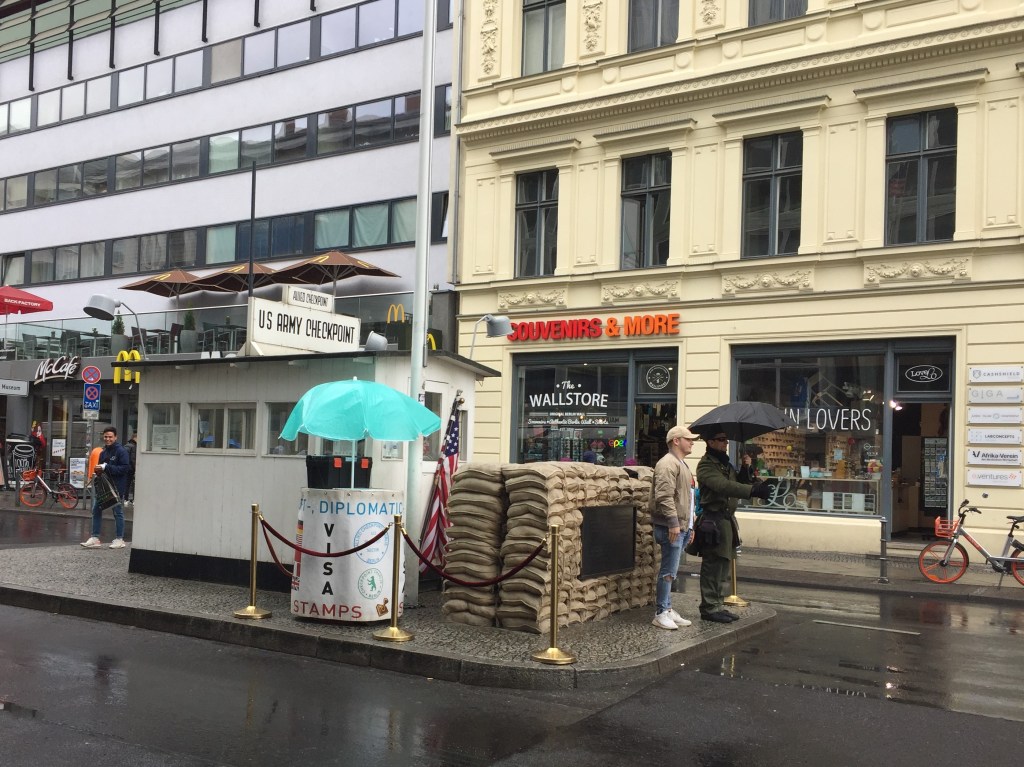
We continue our walk past the ever so tacky Checkpoint Charlie. During the Cold War, this was one of the crossing points between East and West Berlin. Nowadays, you will find a fake military post where you can pay to have your photo taken with fake soldiers. Back in the day, I only crossed here a couple of times, preferring the underground crossing at Friedrichstraße.
East Side Gallery
On a stretch of the Berlin Wall which runs along the banks of the River Spree, is the East Side Gallery; a collection of murals painted on a remnant of the Wall. Immediately after the Wall came down, 118 artists from 21 countries began painting on it and the gallery officially opened in 1990. This 1.3 km stretch of murals is officially the longest open air gallery in the world.

Amongst the gallery’s most well known works are Dmitri Vrubel’s Fraternal Kiss featuring a snogging Honecker and Brezhnev and Birgit Kinders’ Trabant breaking through the wall.

Dinner – Currywurst
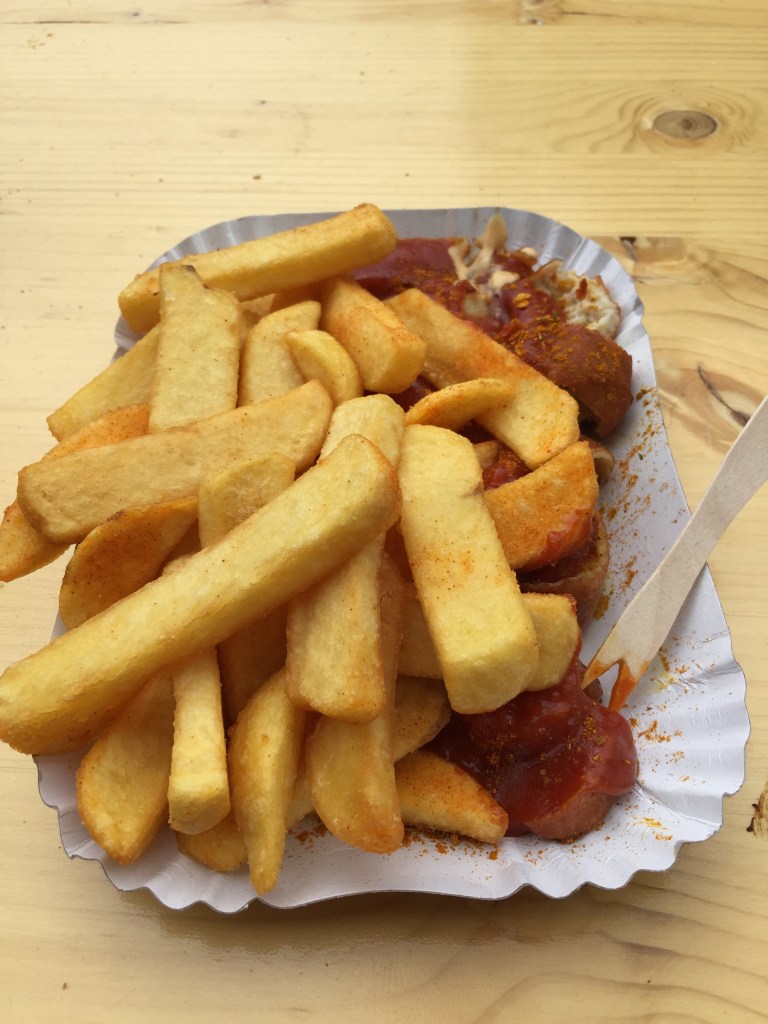
You can’t go to Berlin and not have a Currywurst. We bought ours with chips in a little café on the river overlooking the cathedral.
Eastern Germany Day 3 – Museum Island
Museum Island is, as the name suggests, an island with museums on; five, to be precise. You could easily spend a full day here – we did. You can purchase entry to an individual museum or a day pass which covers every thing and costs €24. Note: It’s a popular place – be prepared to queue.
Pergamonmuseum
The Pergamon Museum houses the Antikensammlung including its most famous exhibit the Pergamon Altar; a 113 metre long Greek relic from the 2nd century BC.

Note: The Pergamonmuseum is closed for renovations until 2027. In the meantime, a temporary exhibition; Pergamonmuseum: The Panorama is available. This consists of a 360 degree reconstruction of Pergamon, plus important works from the Pergamon collection. It is open daily except Mondays from 10 am until 6 pm. Entry costs €14 (or included in the day pass).
Altes Museum
The impressive collanaded Altes Museum is home to the Antikensammlung; a collection showcasing items from ancient Greece and Rome.
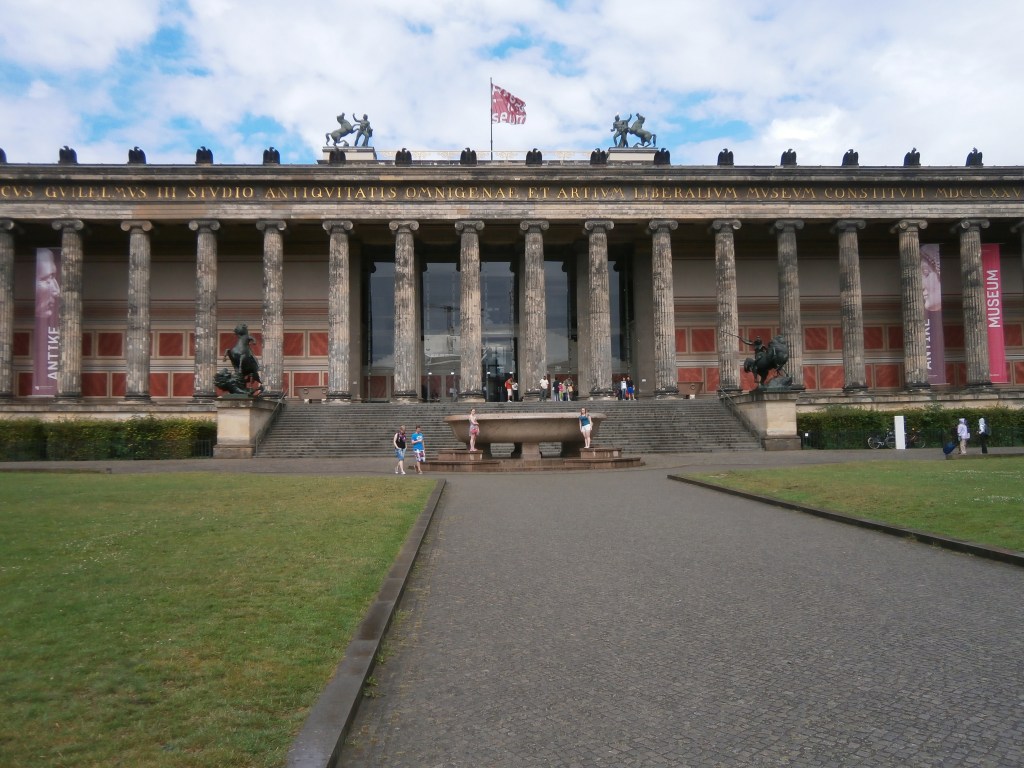
The museum is open daily except Monday from 10 am until 5 pm (6 pm at weekends). Entry costs €14 (or included in the day pass).
Neues Museum
The Neues Museum houses the Egyptian Museum (its most notable exhibit being a bust of Queen Nefertiti) and the Museum of Pre-and Early History (home to the Xantener Knabe; a Roman bronze statue).

The museum is open daily except Monday from 10 am until 6 pm. Entry costs €14.
Other museums, if you have the time and energy, are the Alte Nationalgalerie (art gallery) and the Bode-Museum (sculpture collection and the Museum of Byzantine Art).
Berlin Cathedral
Also on Museum Island is the domed Berlin Cathedral dating from 1905.
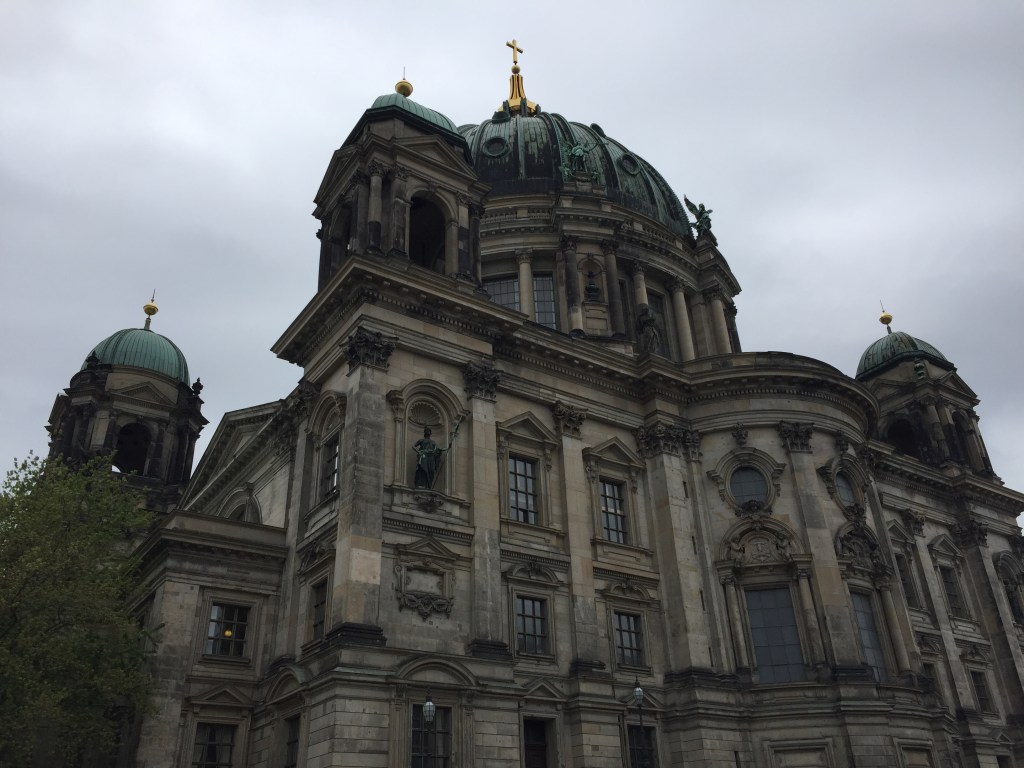
Inside there is plenty of gold, a lavish marble and onyx altar and a 7269 pipe organ.
Eastern Germany Day 4 – Olympiastadion and Potsdam
Olympiastadion
The Olympiastadion has hosted many top sporting events. Most notably the 1936 Olympic Games. Presided over by Hitler, who hoped to use the event to showcase Nazi propaganda and his idea of Aryan racial supremacy. The Games’ most infamous moment came when the decidedly non Aryan Jesse Owens dominated the athletics, becoming the first person to win four gold medals in a single Olympics.

If there is no event in progress, it is possible to tour the stadium and its environs. Tickets cost $11. Guided tours are also available.

Swimming in the Olympic Pool
It’s seen better days, but we couldn’t resist the opportunity to swim in the Olympic Pool.

There’s also a children’s pool with a slide, which we also couldn’t resist.
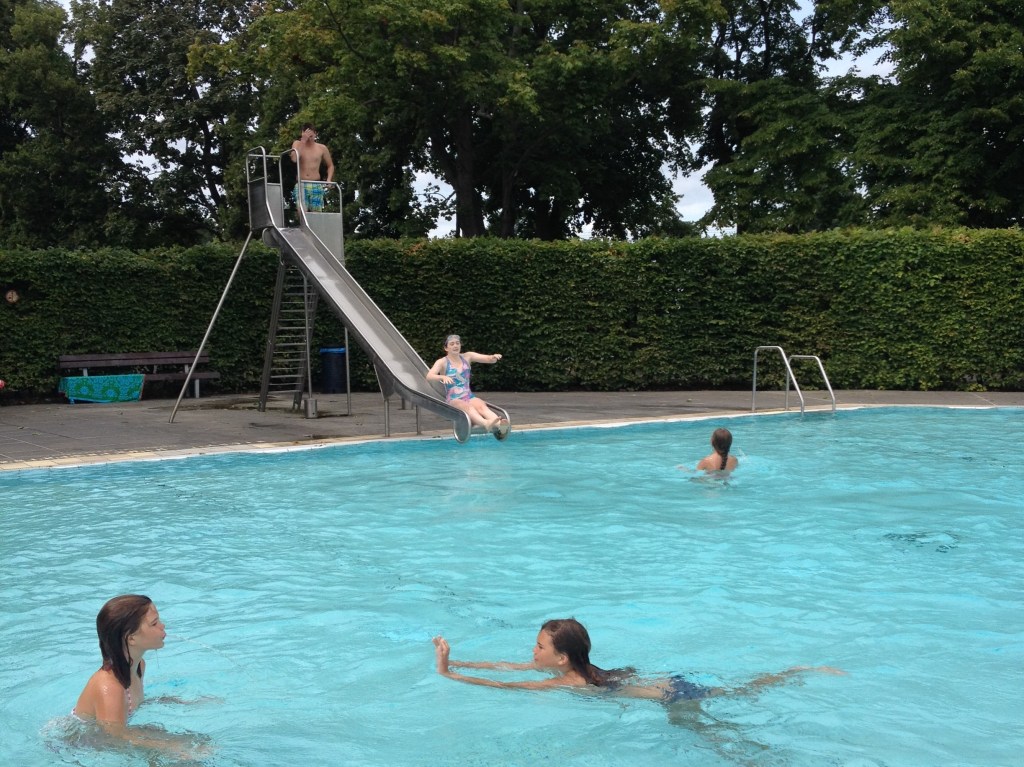
This open air swimming pool is open to the public during the summer (May to September). Tickets cost €6.50.
Potsdam
Just 18 miles south west of Berlin, is the city of Potsdam. Once the home of Prussian kings, the city has plenty of palaces and parks and a picturesque old town.
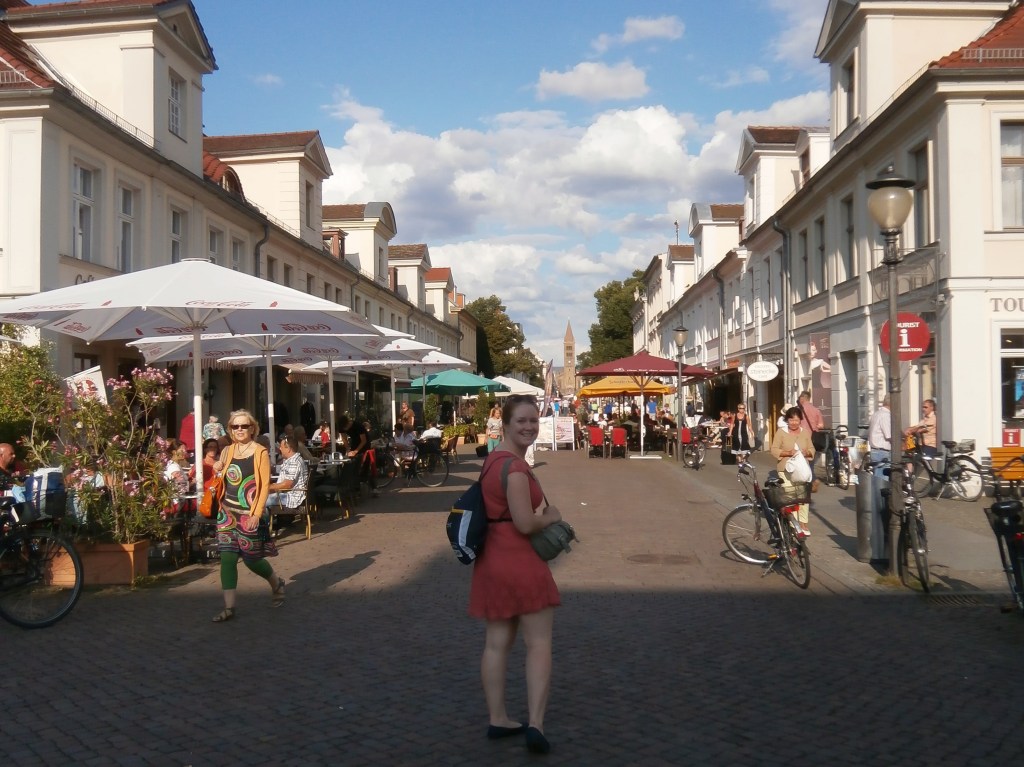
Potsdam Boat Tour
You could easily spend a day or more exploring Potsdam. However, as we were short of time, we opted for a boat tour. The 90 minute Castle Tour sails past some of the city’s top attractions, including Babelsberg Park with its palace, Peacock Island and Cecilienhof Palace. As well as Glienicke Bridge, nicknamed the Bridge of Spies during the Cold War, as it was the location of several exchanges of captured spies. Tickets cost from €23.

Potsdam is an hour drive away along the A115. Alternatively, take the S7 train from Alexanderplatz to Potsdam Central Station.

Eastern Germany Day 5 – Sachsenhausen
20 miles north of Berlin is Sachsenhausen. During WWII, the area became notorious for the nearby site of a Nazi concentration camp with the same name.
Sachsenhausen Concentration Camp
The former Sachsenhausen Concentration Camp is now a memorial and museum. Although Sachsenhausen didn’t see the large scale slaughter practiced in camps further east, conditions here were no less horrific. The camp was used for a range of trials, from medical experiments to practicing the most efficient and effective execution methods for use in the death camps.
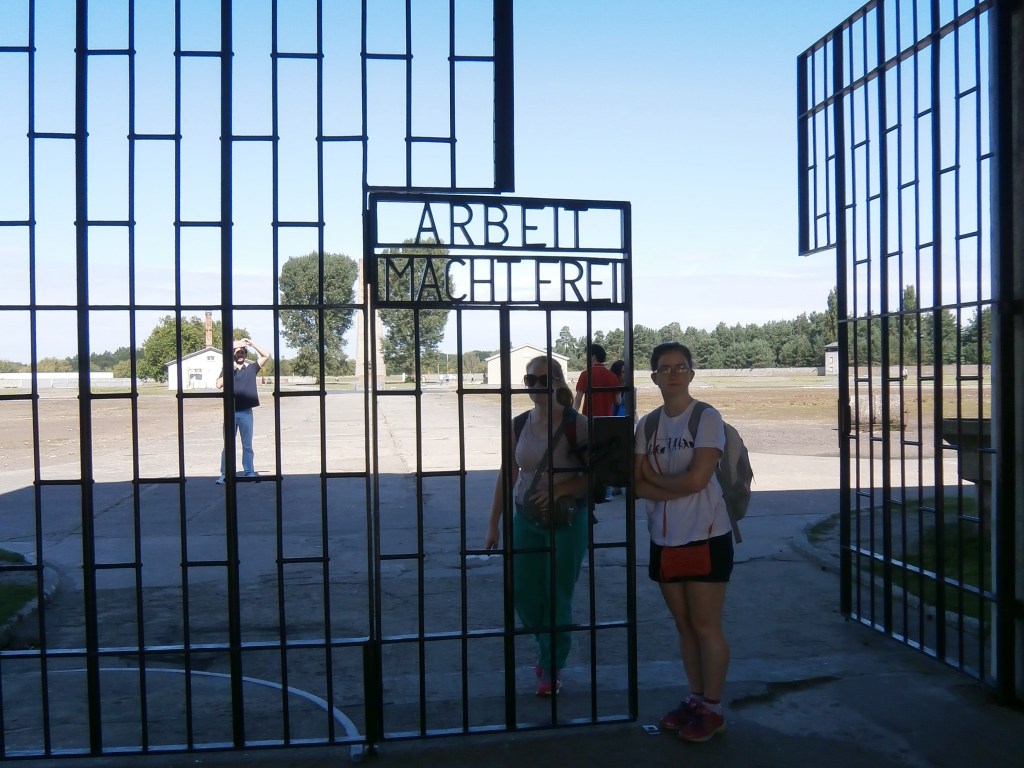
To reach Sachsenhausen from Berlin is a 60 minute drive up the A10. Alternatively, you can take public transport, but this involves a change or two and some walking. We took the RB12 train from Lichtenberg to Sachsenhausen and walked the final mile to the camp.

The museum is open daily from 8.30 am. Entry is free. You can pay €3.50 for an audio guide. Guided tours are also available.
Eastern Germany Day 6 – Dresden (City Tour)
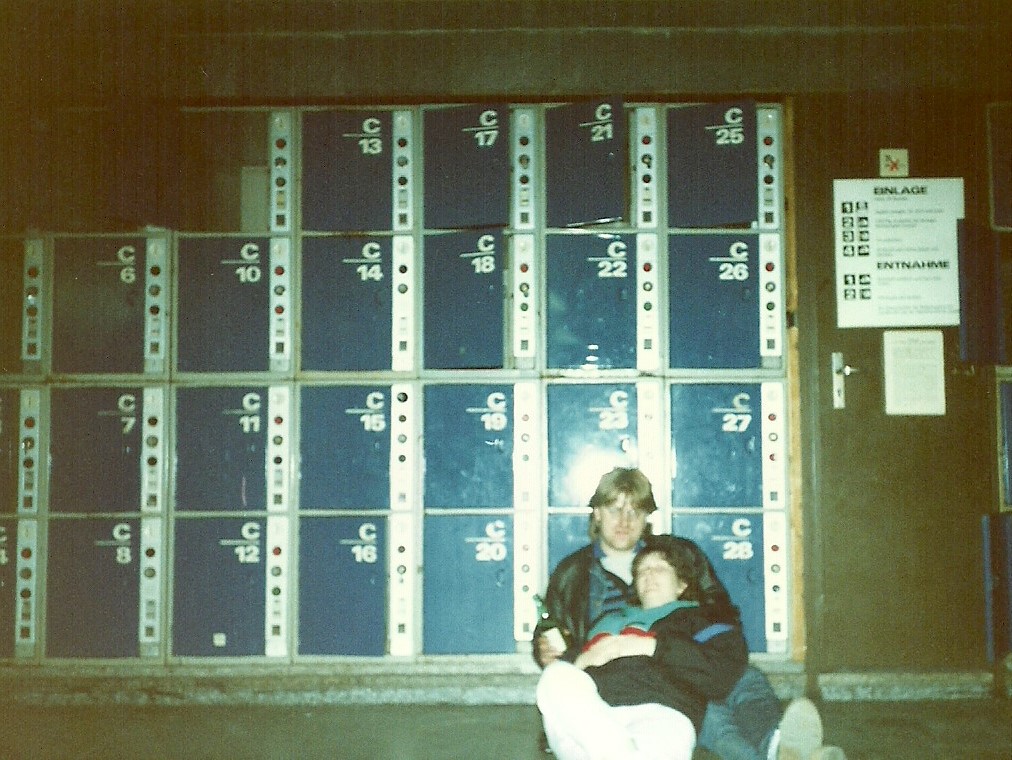
This morning, we check out and set off towards Dresden. I have visited Dresden once before, in 1988 to attend a football match. It was the day I introduced my German boyfriend to English cider, thus the memories are somewhat hazy. This time, I shall attempt more sightseeing and (marginally) less drinking.
Drive to Dresden
It’s a straightforward drive from Berlin to Dresden, with a 115 mile blat south down the A13 Autobahn. Although it does involve weaving our way through hundreds of Polish lorries which appear to be engaged in a huge game of Dodgems.
Accommodation – Leonardo Hotel Dresden Altstadt
We arrive in Dresden at lunchtime and check into our hotel: Leonardo Hotel Dresden Altstadt, which is a modern hotel, conveniently located for the old town and also offering free parking.
Yenidze
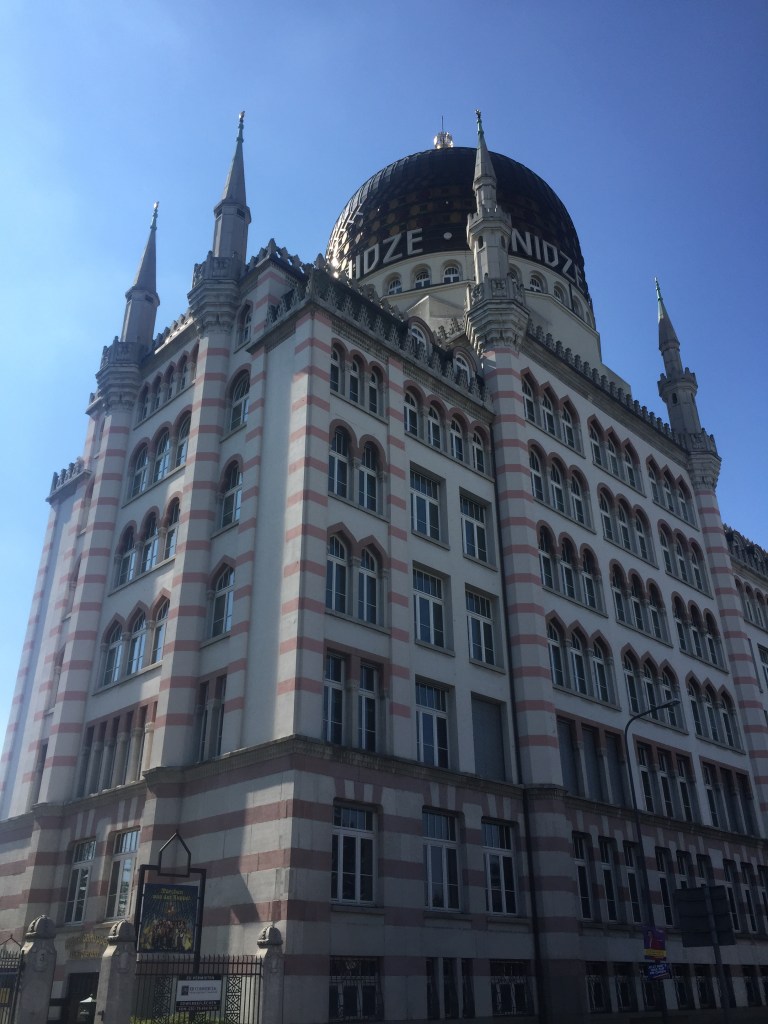
Then we head for the Yenidze; a tobacco factory built in 1907 in an oriental style with chimneys resembling minarets. It is topped with a golden cupola surrounded with stained glass. It allegedly contains a rooftop beer garden with spectacular views over the city which is allegedly open. However, when we reach the sixth floor beer garden, there is a handwritten sign directing us to a horribly overpriced restaurant upstairs instead. We descend and buy some pizza rolls in a nearby café.
Semperoper
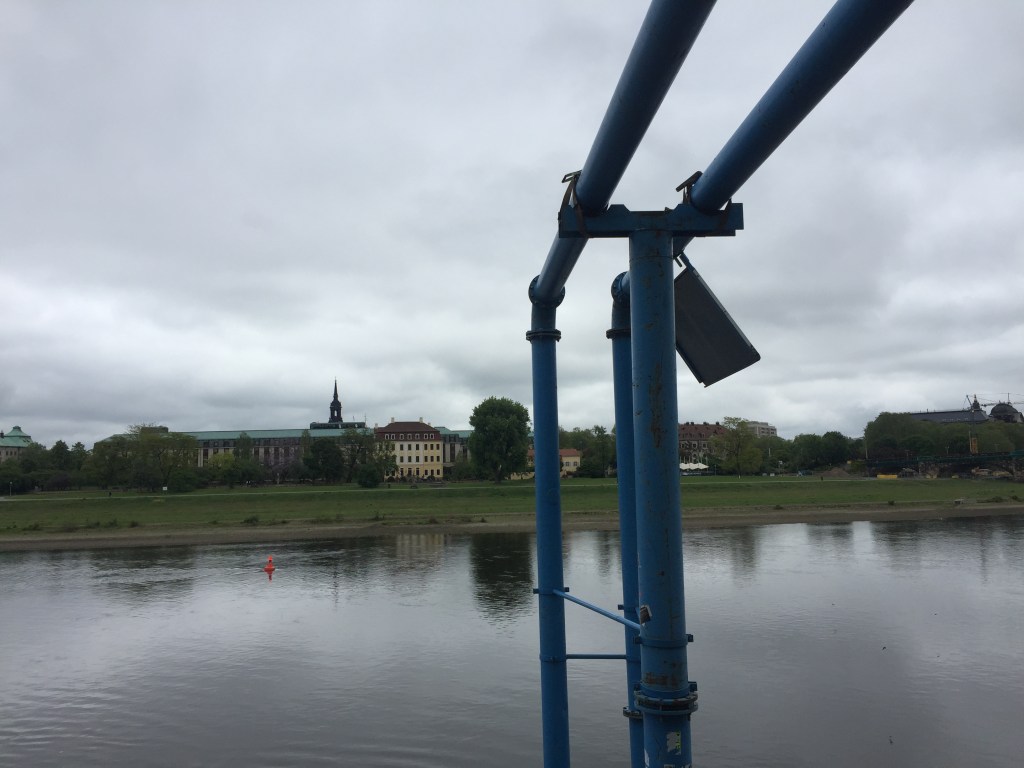
After our picnic lunch, we head for the south bank of the River Elbe to the Old Town, an area which was devastated by British bombing and a subsequent firestorm in 1945. Many of the buildings have now been restored to their former glory. For example, the grand 19th Century Semperoper opera house.

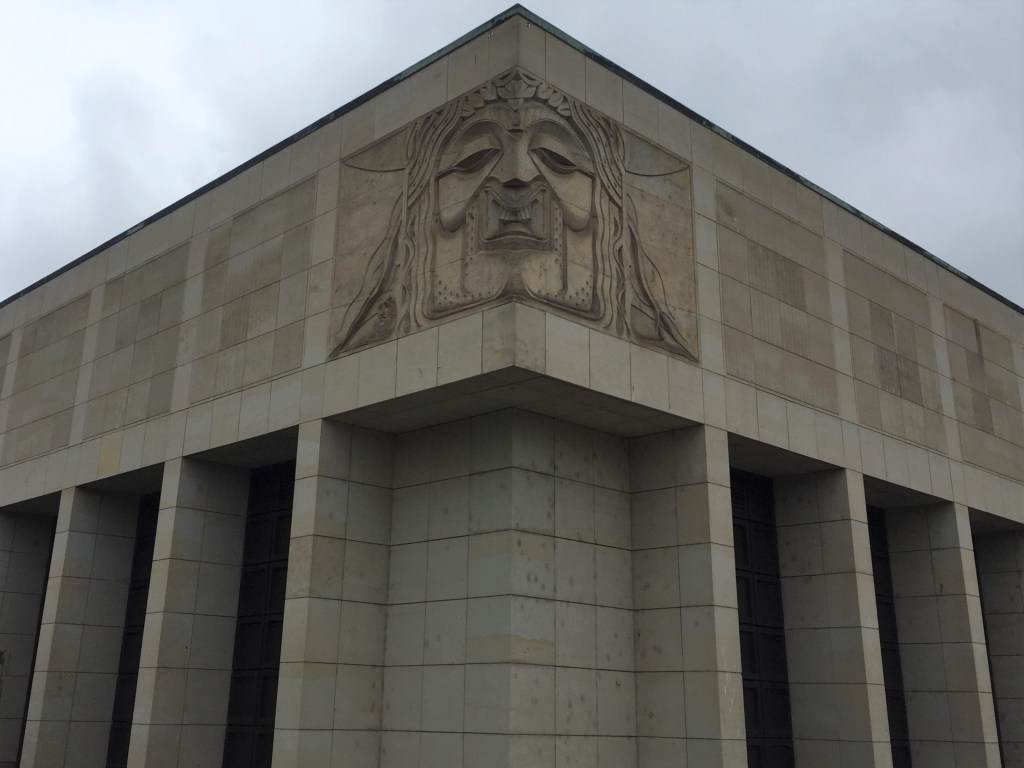
Next door is its funky modern offspring Semperoper Zwei with weird faces carved onto the corners of the building.
Dresdner Zwinger
Next to these is the Dresdner Zwinger, a baroque palace built in the 18th Century for Augustus the Strong after he returned from Versailles with palace envy.
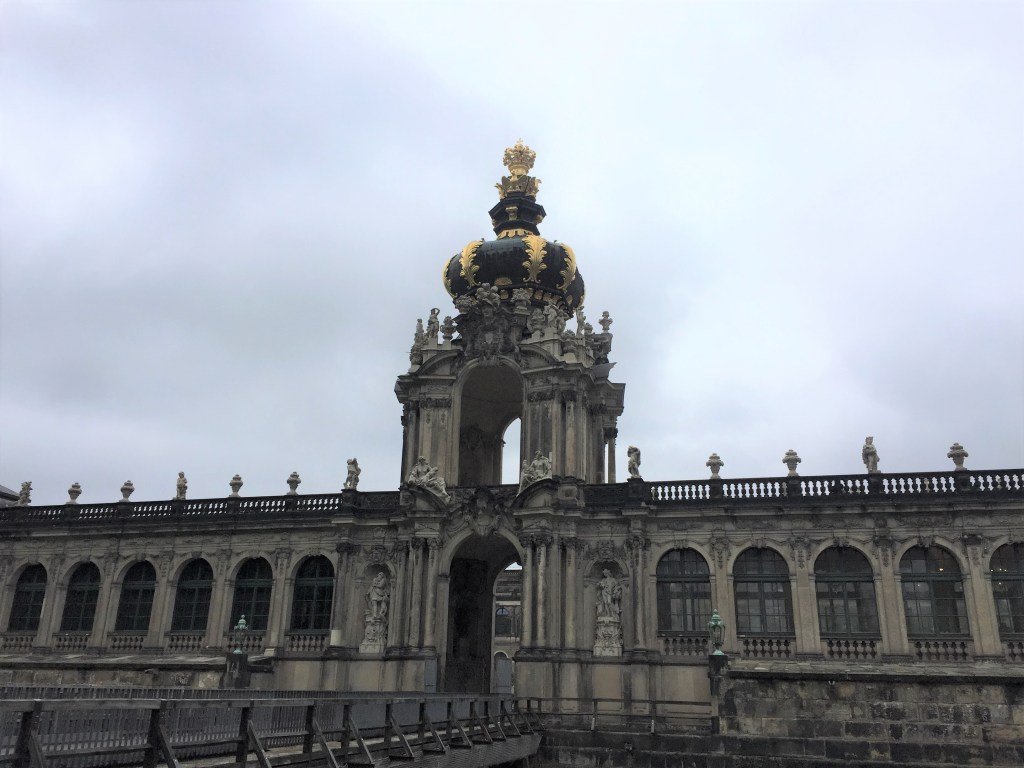
The palace houses three museums; the Old Masters Gallery, Porcelain Collection and Maths-Physics Salon. As we are limited by time and budget, we just take a wander around the grounds and admire the architecture.

- The grounds are free and between June and October are open daily from 6 am until 9 pm.
- The museums are open daily except Monday from 10 am until 6 pm. A ticket covering entry to all three museums costs €16.
- A new addition is the Zwinger Xperience; a VR journey through the palace’s history. This costs a further €12.
Residenzschloss
Onwards to another palace, the 15th Century Residenzschloss, former home of Saxon kings. Almost completely rebuilt having been practically destroyed during WW2, it now contains a large collection of treasures, split into two; The Historic Green Vault and the New Green Vault. There are also two smaller collections; The Coin Cabinet and Print Cabinet.

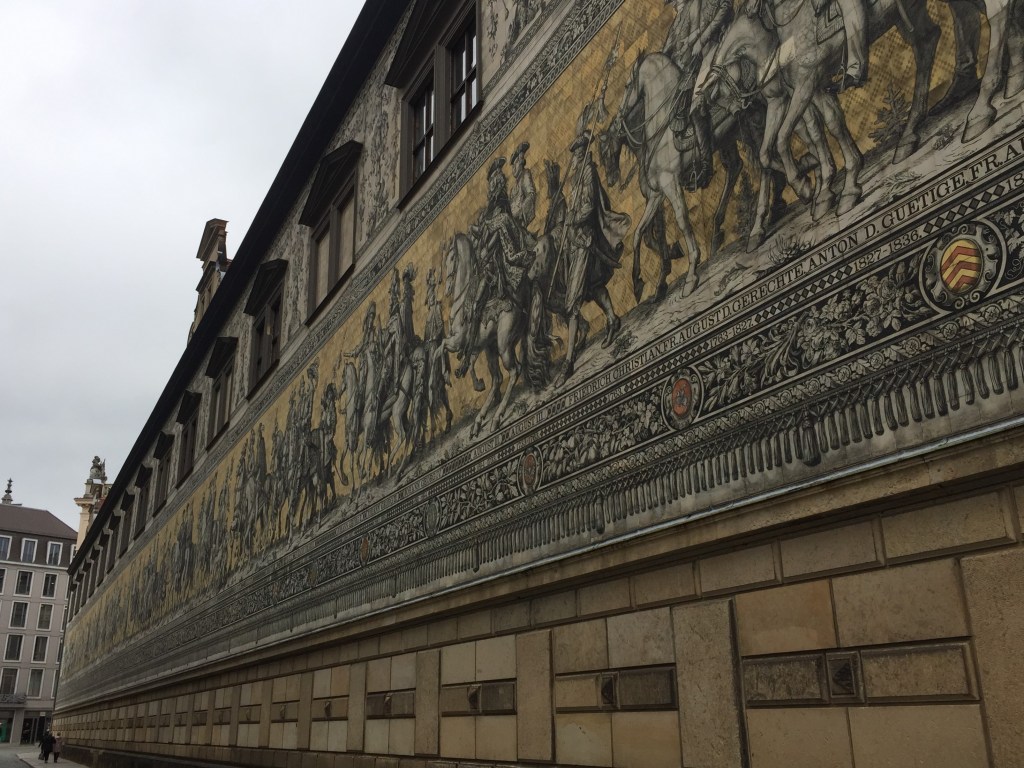
The Procession of the Princes
The rear of the palace is covered with a 102 metre long mural of The Procession of the Princes, which is spectacular, but very difficult to photograph.
The Residenzschloss is open daily except Tuesday from 10 am until 5 pm. To enter the State Apartments of August the Strong plus all the other museums costs €16. A ticket for The Historic Green Vault costs a further €16.
Kulturpalast
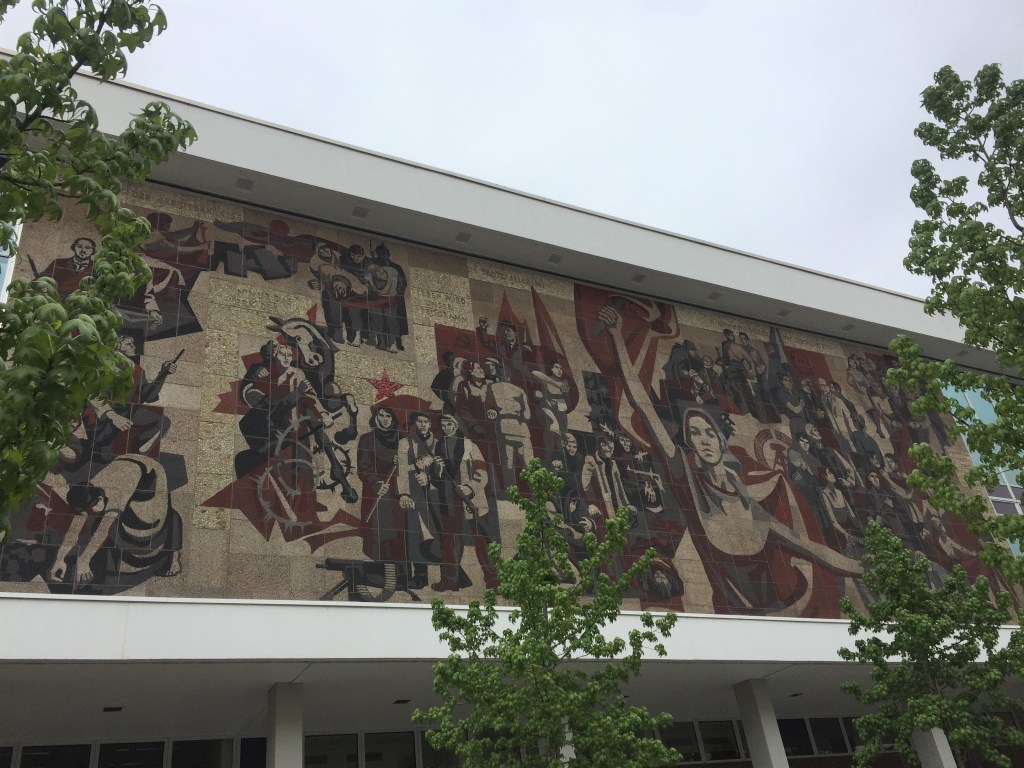
Instead, we continue to the Kulturpalast. Built in 1969 as the House of Socialist Culture, here too the walls are adorned with murals. This time, they depict The Path of the Red Flag.
Altmarkt
Across the road is the Altmarkt, Dresden’s historic market. When we visited, the Spring Market was in full swing, but the market hosts a series of festivities throughout the year. Most famous is the Striezelmarkt Christmas market, which has been held in the city since 1434.

After a wander around the stalls, we take a break and have a beer while we watch the world go by.
Frauenkirche
We round off today’s sightseeing at the Frauenkirche. This church was literally reconstructed after the war. The altar alone consists of 2,000 separate pieces, all painstakingly stuck back together like an enormous 3-D jigsaw.

Outside, the building is more striking due to the combination of burned black original stone and pale yellow modern pieces, which join together to form an almost replica of the original building. The contrasting pieces act as a reminder of the devastation which took place here.

Dinner at Zum Schießhaus
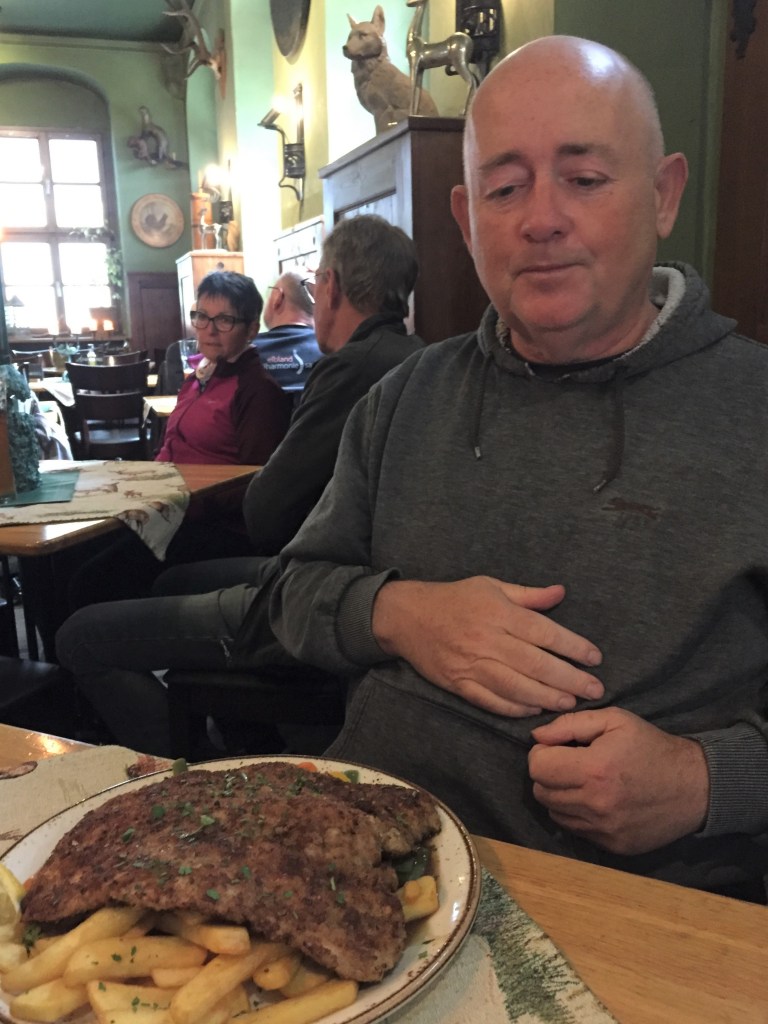
We finish the day with dinner at the rather dubiously named Zum Schießhaus – don’t get those vowels round the wrong way! I have Chicken in Cheese and Horseradish, which is delicious. While the old man opts for the Large Pork Escalope; basically a flattened pig.
Eastern Germany Day 7 – Dresden
It’s my last day of visiting old haunts. I have enjoyed my trip down memory lane. There is still a distinct difference between east and west Germany; here, it’s more laid back and the people are friendlier. Other ways they remain linked to the past; the Wifi is rubbish, there’s still a Woolworths and a C&A, even the odd Trabant.
Gläserne Manufaktur
We start the day with a different car; a tour of the Gläserne Manufaktur (Transparent Factory) where they manufacture the VW E-Golf. The building, made almost entirely of glass, sitting in the corner of a park, is quite a sight. We opt to walk the two miles to the factory because we have been told it is difficult to park there! Trams 1, 2 and 4 follow the same route if you don’t want to walk.
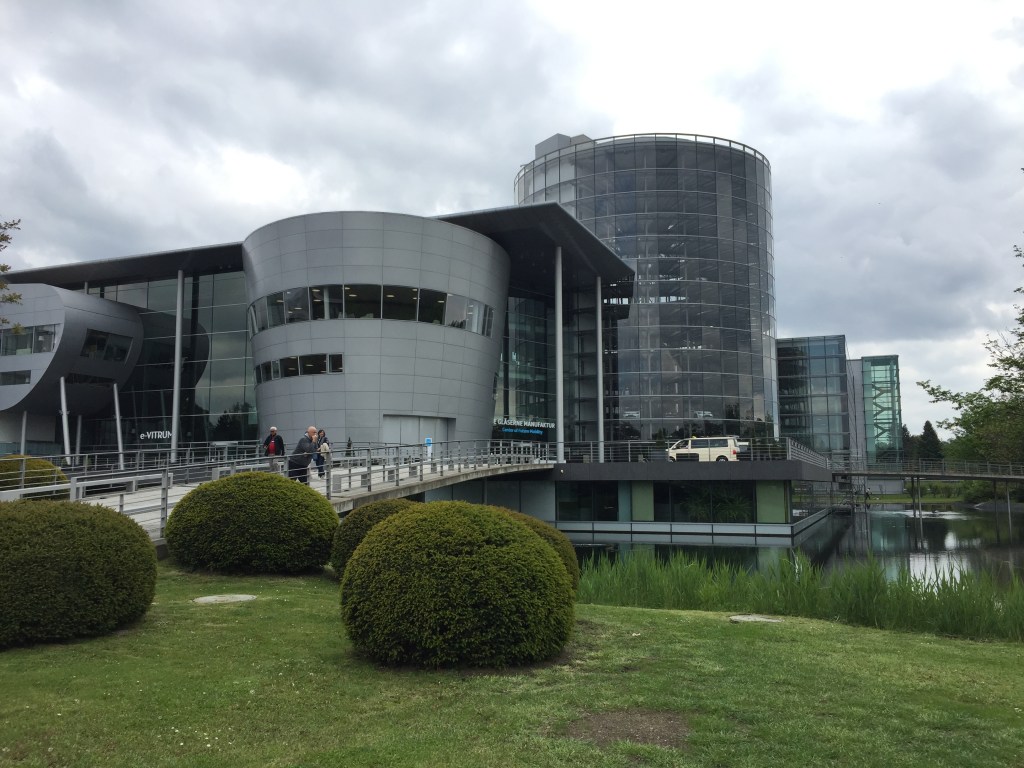
To be honest, the factory is little more than a PR stunt. In this high tech, state of the art facility, they make 70 cars a day. Cars are assembled (all the parts are manufactured elsewhere and brought to the factory by tram) by a combination of robots and men in pristine white dungarees.
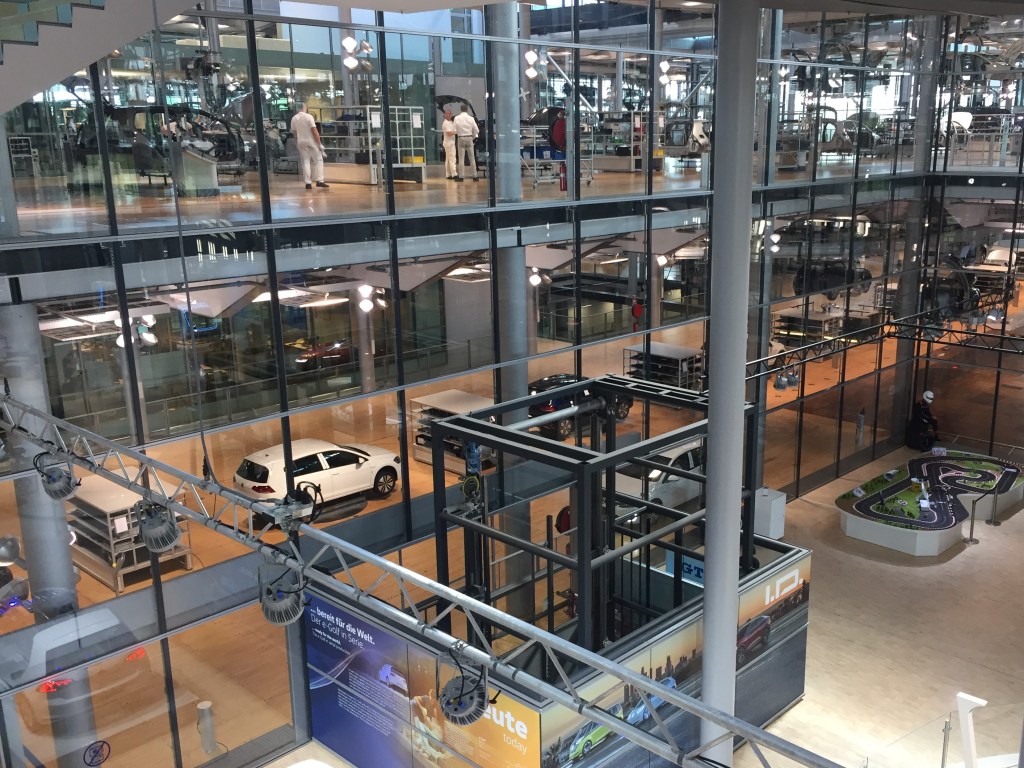
There are up to 70 factory tours a day, where you can follow a car through the assembly process. Apparently, the robots could function seven times more quickly, but the line runs slowly because the workers feel the pressure of performing in front of so many people. Once complete, the cars are mostly exported to Scandinavia – the Germans are yet to embrace the idea of electric vehicles. The tour is actually really interesting, although is it wrong to admit that my favourite bit was seeing a badly behaved child fall into an ornamental pond?

Tours operate from Monday to Saturday between 9 am and 5 pm (English tours take place at 1.15 pm and 3.15 pm). Tours cost €9 and need to be reserved in advance.
Note: Although tours take place throughout the day, I would recommend selecting a tour when production is actually taking place. Production times normally alternate weekly between mornings (7.30 am to 3 pm) and afternoons (11.30 am to 7.15 pm) and are published on the website.
Großer Garten
After our tour, we head for the Grosser Garten. As the name suggests, the garden is so large that it has its own railway to transport visitors round its main attractions. Unfortunately, the old man is too tight to pay the €6 ticket price, so we make do with just visiting the Botanical Garden.

It’s not the best garden we’ve visited; part of the reason may be the enormous hare we watch scoffing its way through the exhibits.

The garden railway runs between Wednesday and Sunday from 1 pm (10 am at weekends) until 6 pm. A ticket costs €8.
Dinner from Hamid Kebap Haus
We round off our final evening in Germany with an obligatory kebab. I don’t want to walk far so we go to a tiny shop round the corner called Hamid Kebap Haus, where the kebabs turn out to be stonkingly good.
- Trip Taken: May 2019
- Updated: June 2025
I hope you found the above information useful. For guides to more destinations in the 50+ countries we have visited, check out my full list of Independent Travel Itineraries here.
 Jane's Midlife Journey
Leave a comment