
We spent 4 days driving round Lithuania on our Baltic Road Trip. We started by driving down the Baltic coast to visit the Curonian Spit. Then, we headed east, via Žemaitija National Park, where you can visit a Cold War nuclear missile bunker, to the iconic Hill of Crosses near Šiauliai. Next, south for a brief stop in Kaunas. Finally, further east to the spectacular Trakai Island Castle and the capital, Vilnius. One last stop on the way back north in Birzai brings the total distance to around 500 miles.
Lithuania 4 Day Road Trip Itinerary
| Day 1 | Curonian Spit Ferry to Smiltyne Nida Sand Dune Accommodation – Nidos Kempingas |
| Day 2 | Žemaitija National Park Cold War Exposition Šiauliai Hill of Crosses Accommodation – Hotel Grafaitė Šiauliai |
| Day 3 | Kaunas Kaunas Castle Trakai Island Castle Accommodation – Vilnius Palace |
| Day 4 | Vilnius Walking tour of Vilnius Birzai Accommodation – Butenas Hotel Tyla |
Lithuania Day 1
Curonian Spit
We cross the border from Latvia into Lithuania and head for the Curonian Spit, which is a 60 mile long sand spit, partly in Lithuania and partly in the Russian territory of Kaliningrad. Each part is designated a National Park. The spit is connected to the mainland in Kaliningrad, so the main way to access it from Lithuania is by ferry.
We drive to the port city of Klaipėda for the very short ferry crossing to the spit.
Ferry to Smiltyne
There are two ferries to Smiltyne on the northern tip of the Curonian Spit; the Old Ferry and the New Ferry. The Old Ferry is for foot passengers/cyclists only, whilst the New Ferry takes vehicles. If you are travelling on foot, the Old Ferry departs from central Klaipėda and connects with the bus service to Nida, so is the better option. If you are driving, then the New Ferry, which departs from the south of the city, is the only option.
Nida
We are staying about half way down the spit, close to the Russian border, near the resorty village of Nida, Our first stop is in Nida, to pick up supplies from a local supermarket. The town is overrun with tourists in summer.
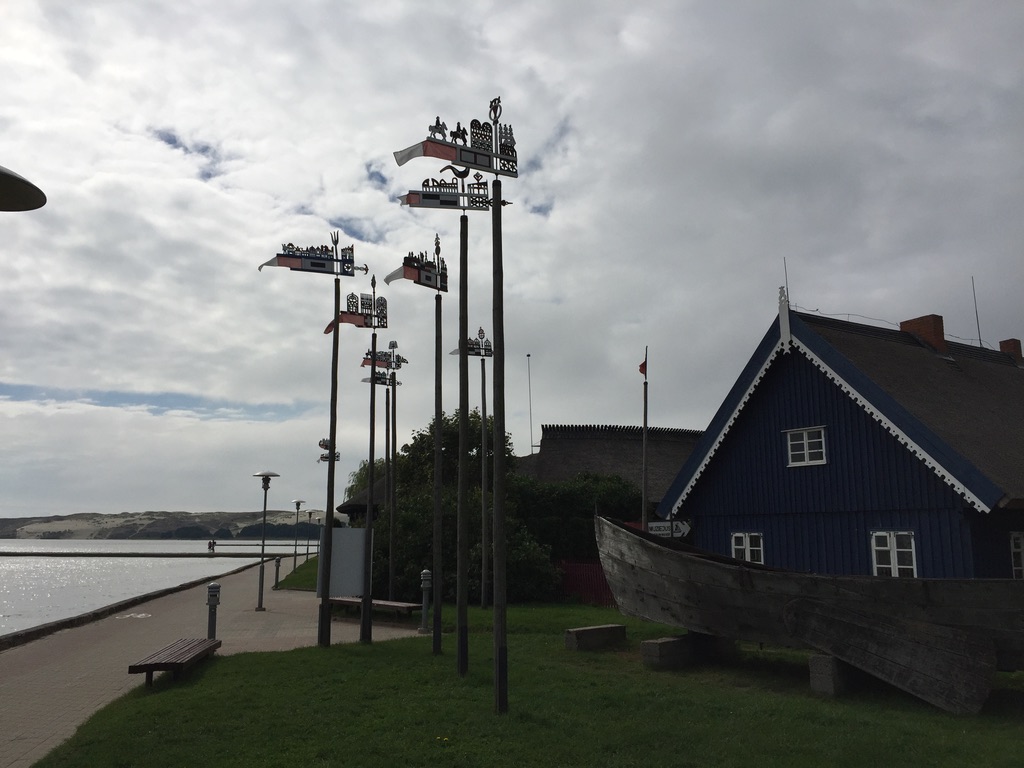
Weathervanes exposition
Along the shore line in Nida, the Weathervanes Exposition consists of almost 100 weathervanes. The tradition dates back to the 19th Century, when the weathervanes were used to identify fishing vessels.

Parnidis Dune
Just to the south of Nida, the Parnidis Dune is a 52 metres high sand dune.
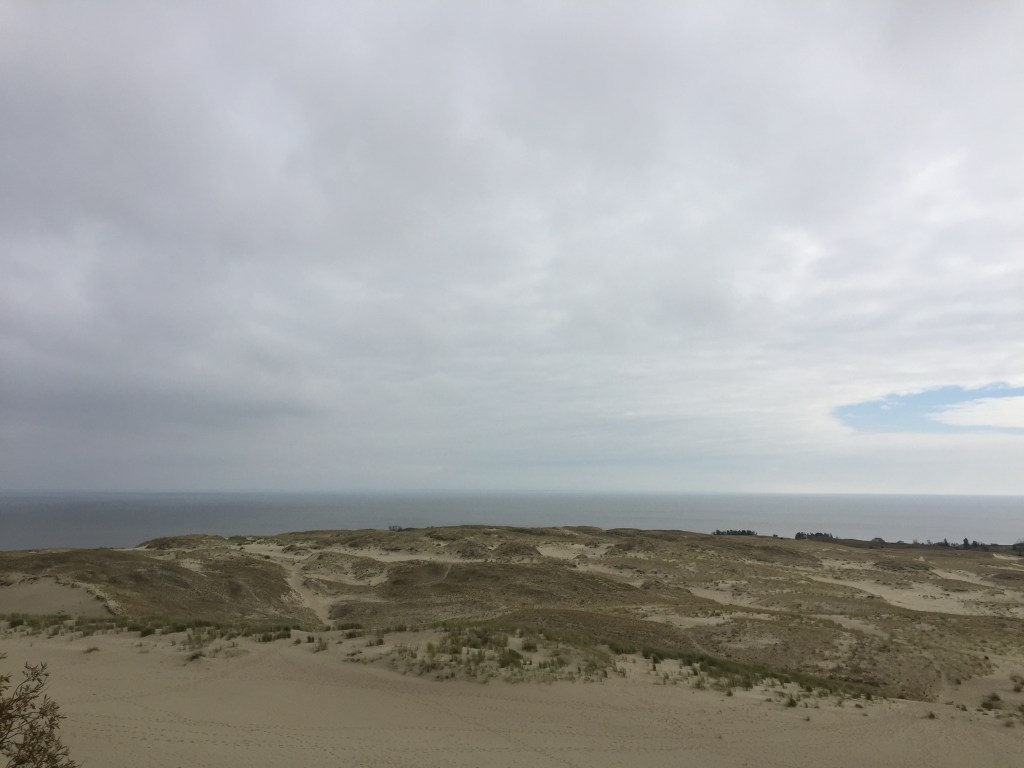
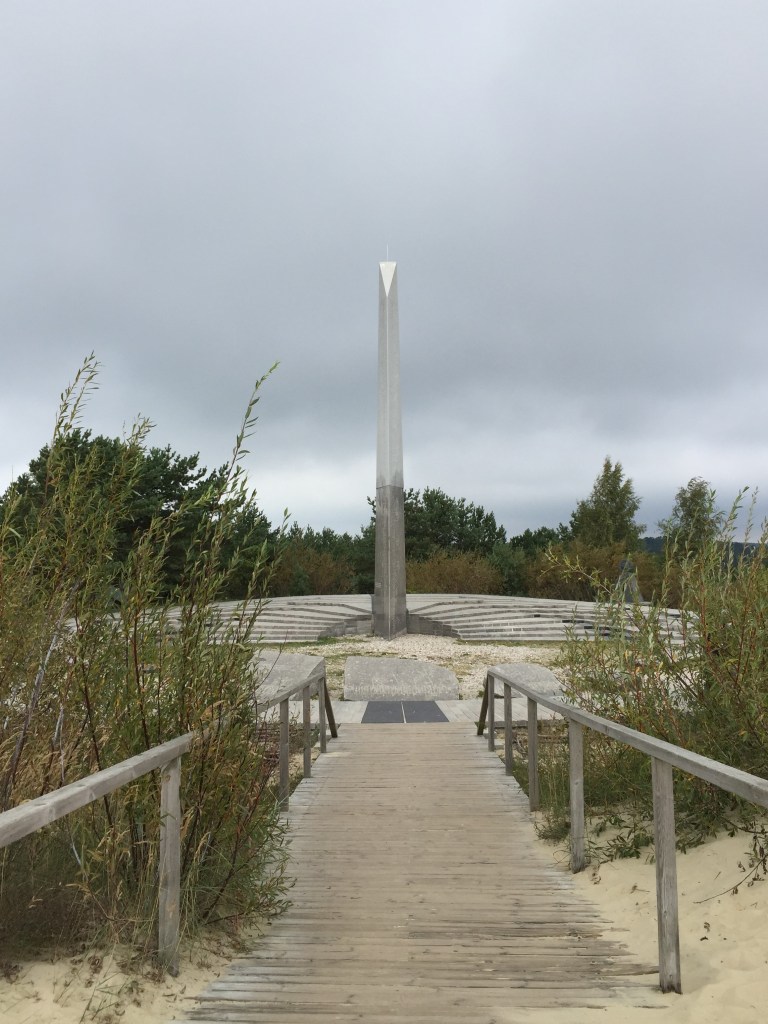
You can follow a mile long boardwalk along the dune, which brings you to a sundial.
Accommodation – Nidos Kempingas
Today’s accommodation, is in an apartment on a camp site; Nidos Kempingas. The apartments and the campsite are very nice. It’s useful to have self contained accommodation in this rather remote area. During the summer, there is also a restaurant on site. However, I was disappointed that we were unable to use the pool and spa facilities. The minimum rental charge was €60 per hour. Granted, this is for up to 5 people, but if you’re not travelling in a group, it makes it rather expensive.
Lithuania Day 2
Today we are feeding my fascination with all things Cold War related with a trip to a museum in a former Soviet nuclear bunker. The bunker is secreted somewhere in the forest of Žemaitija National Park.
Žemaitija National Park
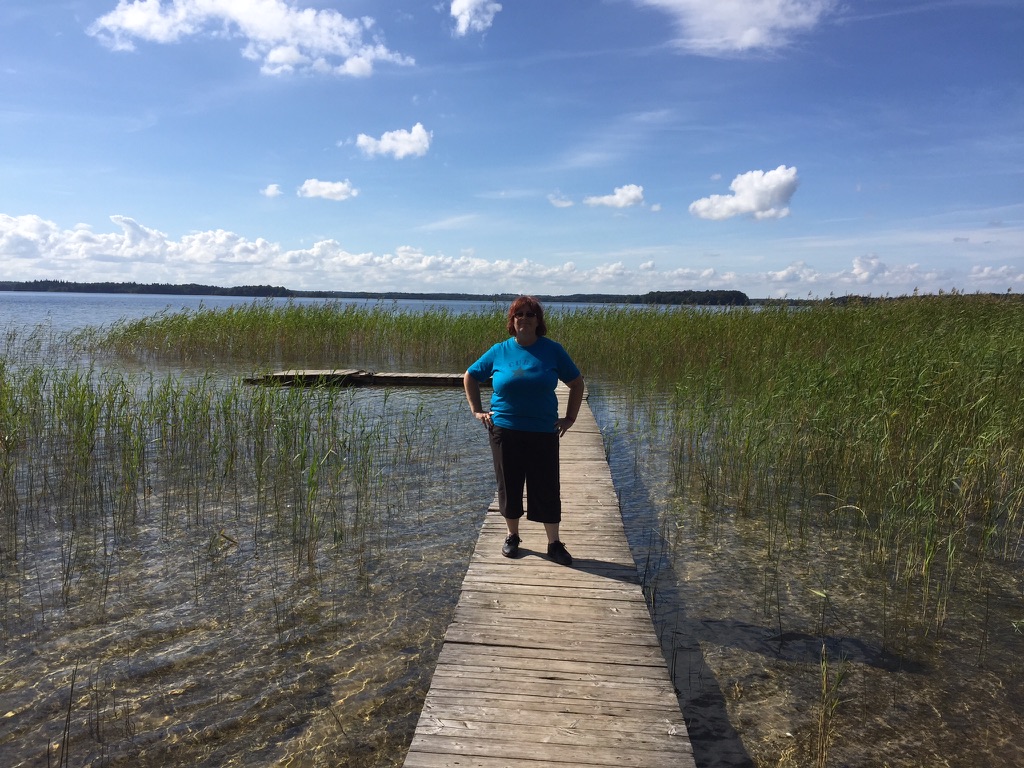
Žemaitija National Park consists of a huge area (200 square km) of forest surrounding Lake Plateliai. You could spend a while here hiking or cycling the forest trails, boating on and even swimming and diving in the lake.
Cold War Exposition
The Cold War Exposition is not the easiest place to find, and we end up going fairly comprehensively off road, along what appears to be a dry river bed. Shh – don’t tell Hertz! But just when we are thinking we’ll never find it, we reach a clearing and there it is.
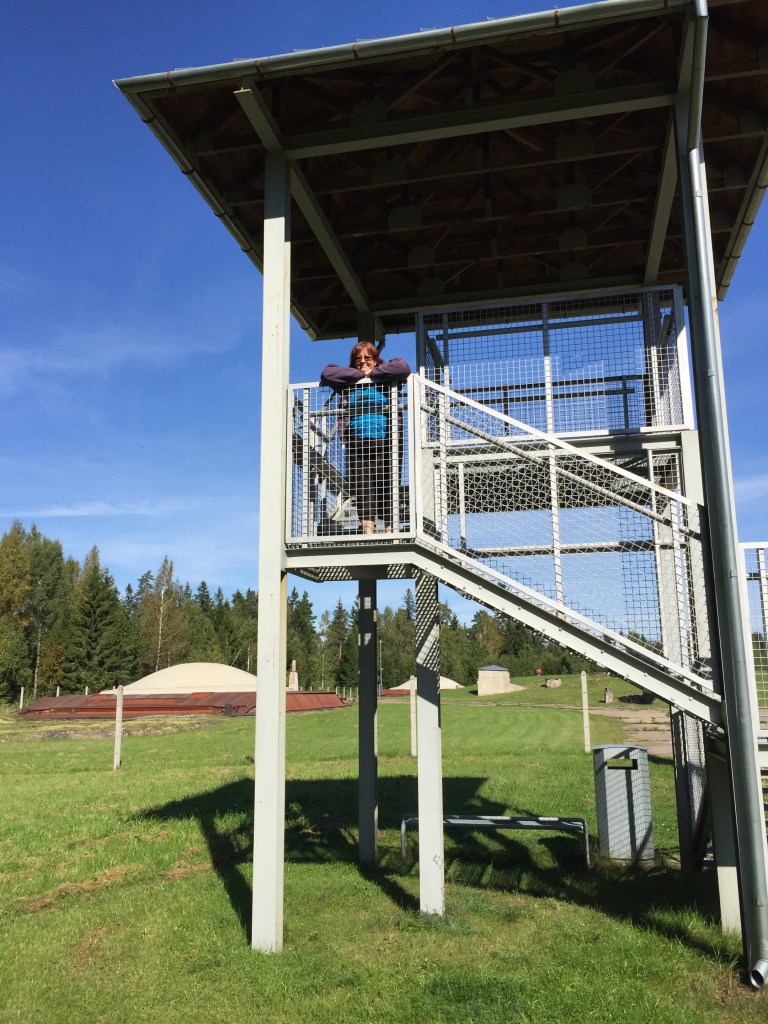
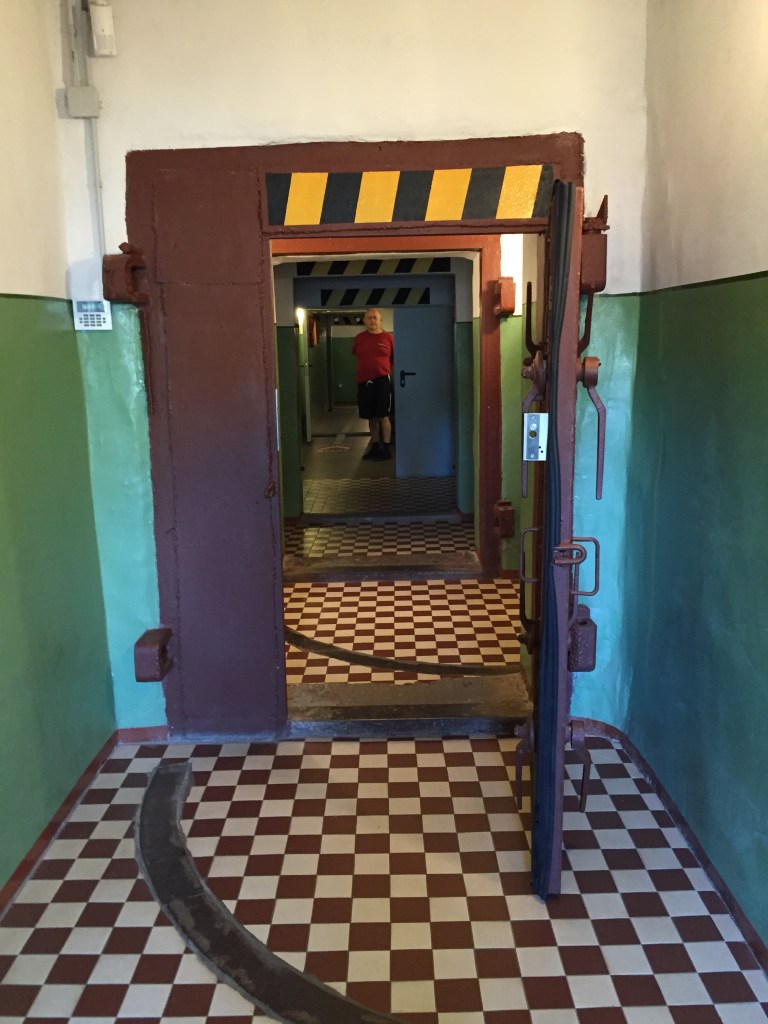
Once we’ve paid our entry fee and climbed a watch tower for an overview of the site, we head into the bunker. You have to enter via the thickest door I’ve ever seen, then descend into the bunker-come-museum.
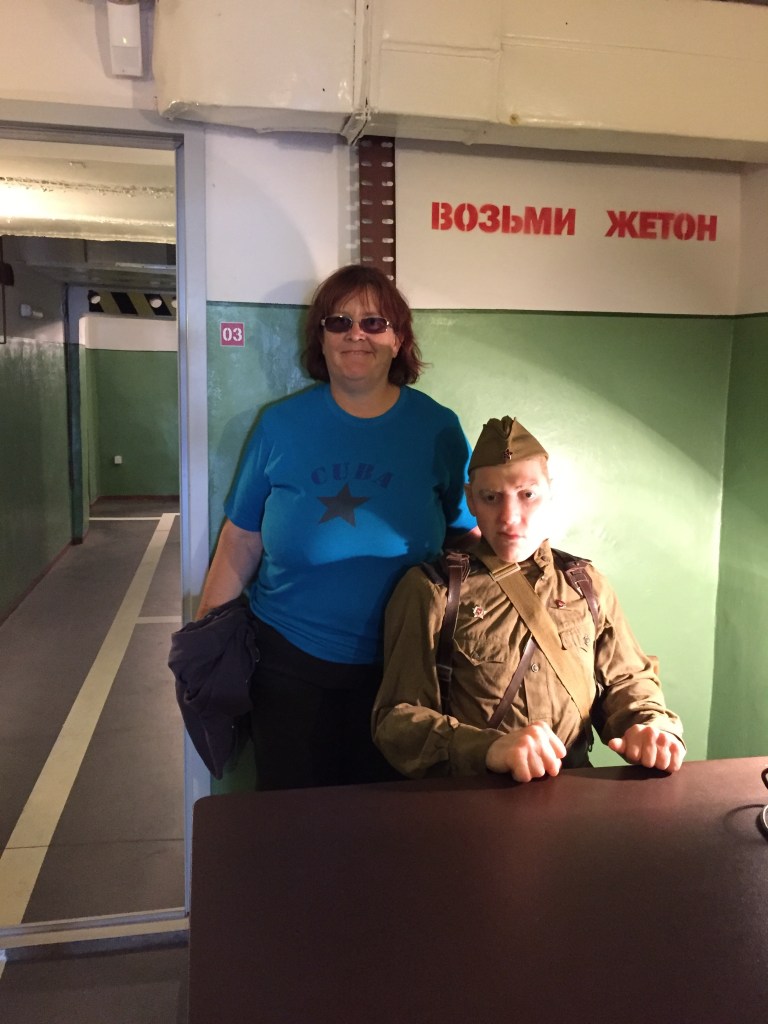
The highlight of my visit – you get to press the red button! Then you can watch a video of a nuclear explosion.
The exposition is open daily from 10 am until 5 pm (7 pm in summer). Adult entry costs €10 (€12 in summer).
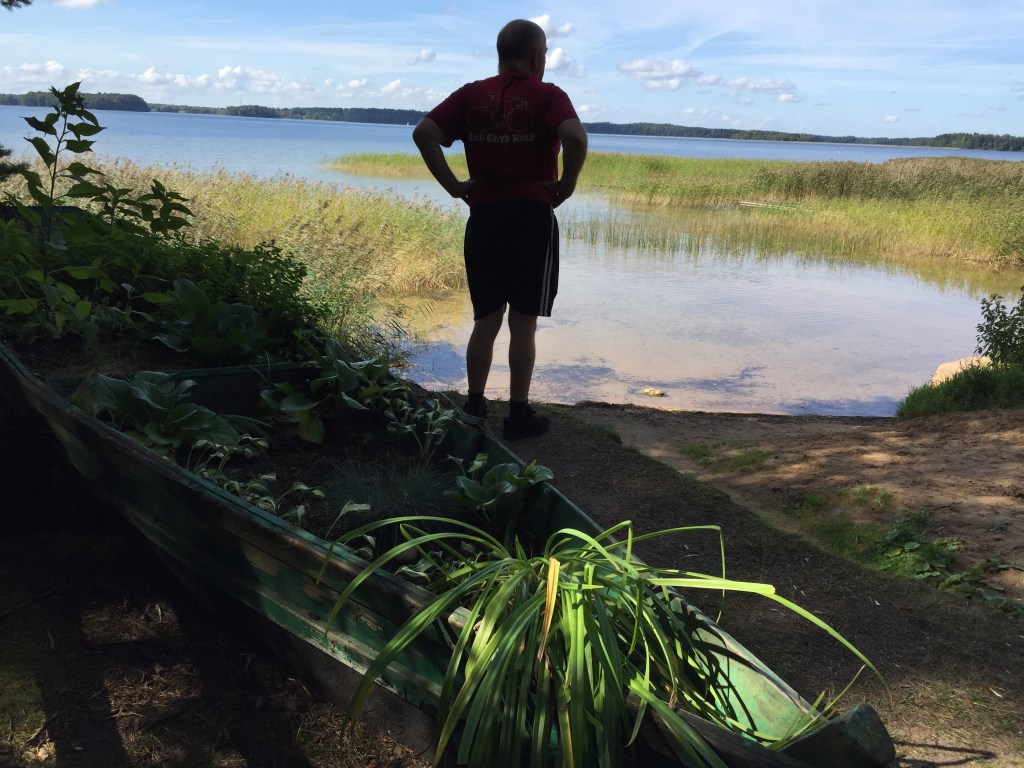
We are on a tight schedule, so after a picnic by the lake, it’s time to move…
Šiauliai
Today’s ultimate destination is the city of Šiauliai; main claim to fame, a hill 7 miles to the north of the city centre.
Hill of Crosses
We head first for this hill on the outskirts of the city – more of a mound really. The Hill of Crosses is adorned with thousands upon thousands of crosses of all manner and size.
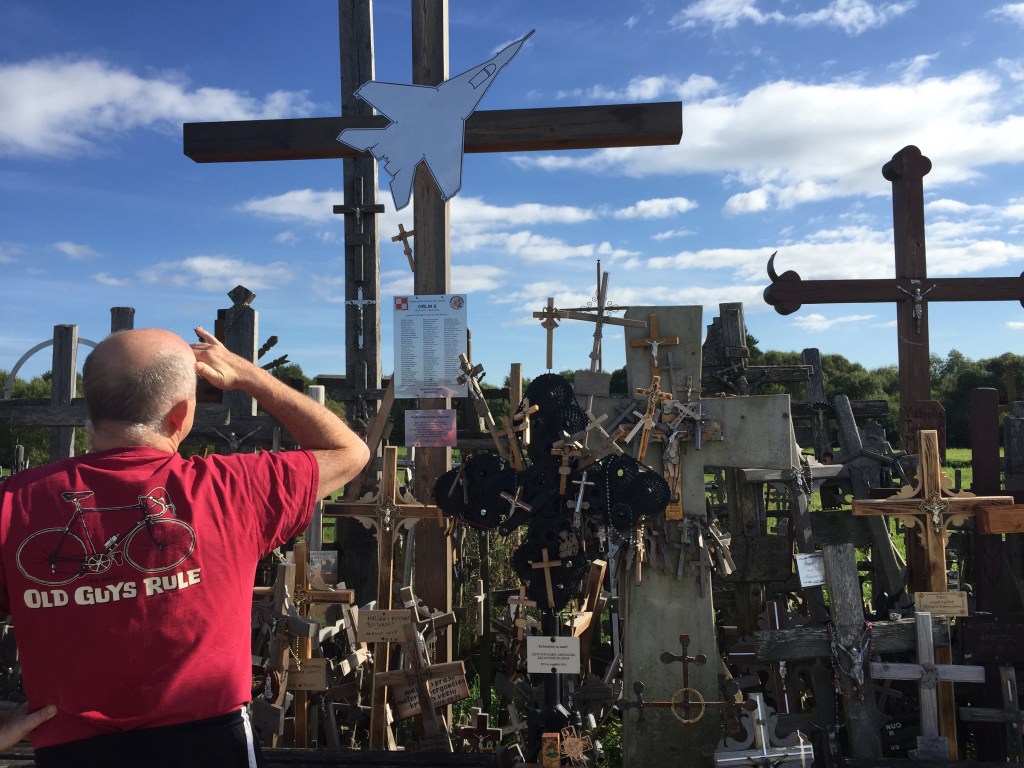
It started back in the 1830s, as a protest against Russian rule. And escalated during the Soviet era, when religion was censored. Brave souls would sneak out in the night and stick crosses on the hill as a symbol of resistance. The crosses were promptly removed by the authorities. So the local people did it again. And again… And so it snowballed. Today, it is estimated that the hill contains over 100,000 crosses.
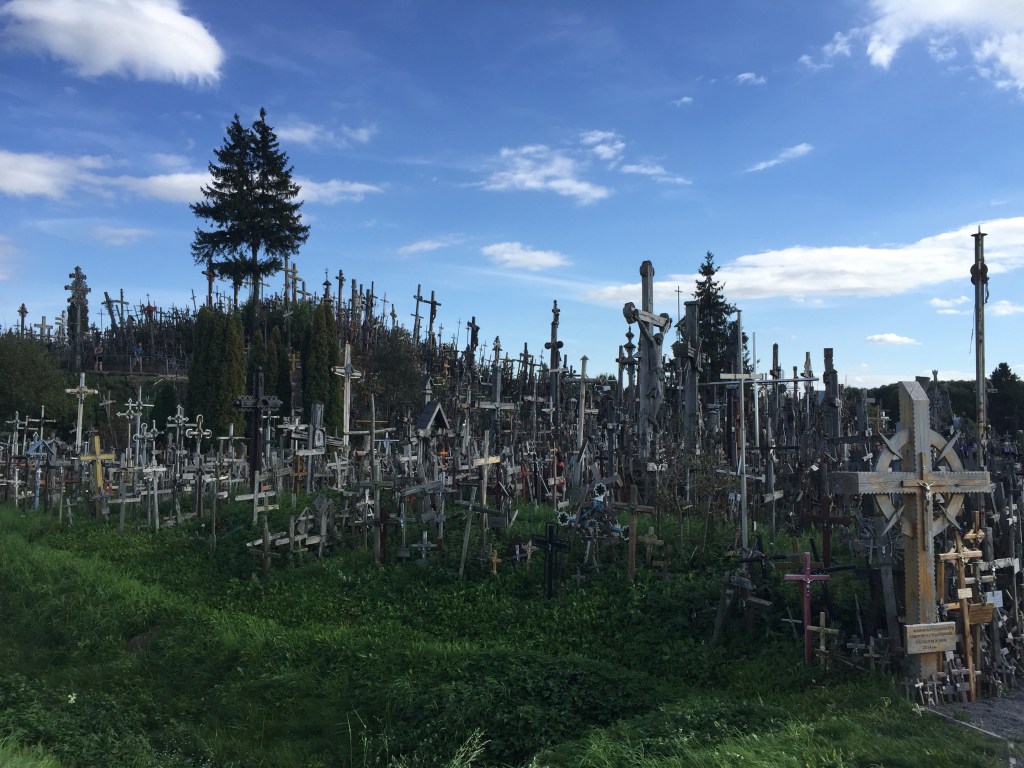
It’s quite a sight to wander among the multitude of crosses reading some of the messages and prayers. It is permitted to leave crosses on the hill. If you don’t have one, there are plenty of vendors around ready to sell you one.
Accommodation – Hotel Grafaitė
We drive on to the town of Šiauliai and check in to our hotel. We struggled to find accommodation in central Šiauliai, so are staying 3 miles outside the city at the Hotel Grafaitė; a family run hotel/bar/restaurant.
From here, you can easily drive into Šiauliai. We opt to walk. Not the quickest way, along the A12 (a busy main road), but along the shores of Lake Talkša. This is partially successful – we reach our destination. And partially unsuccessful – we get rather lost en route.
Šiauliai
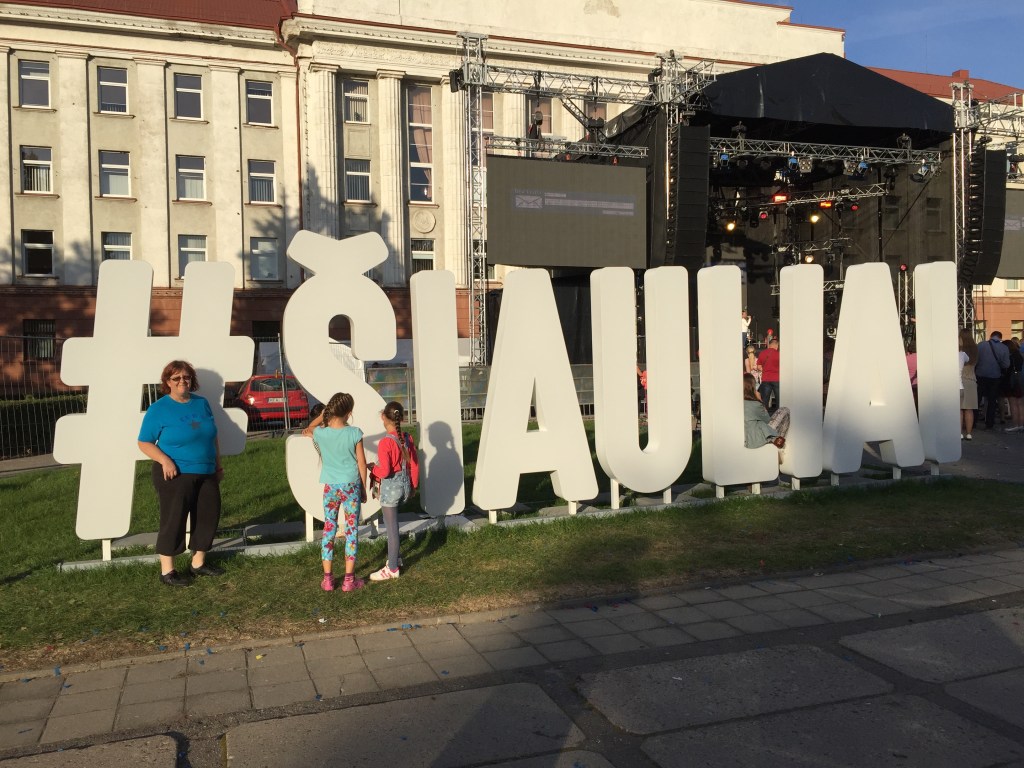
In downtown Šiauliai, there’s a festival going on, with entertainment in the square and lots of people dressed in traditional costume. I’ve no idea what’s going on, but it looks like fun.
iron fox
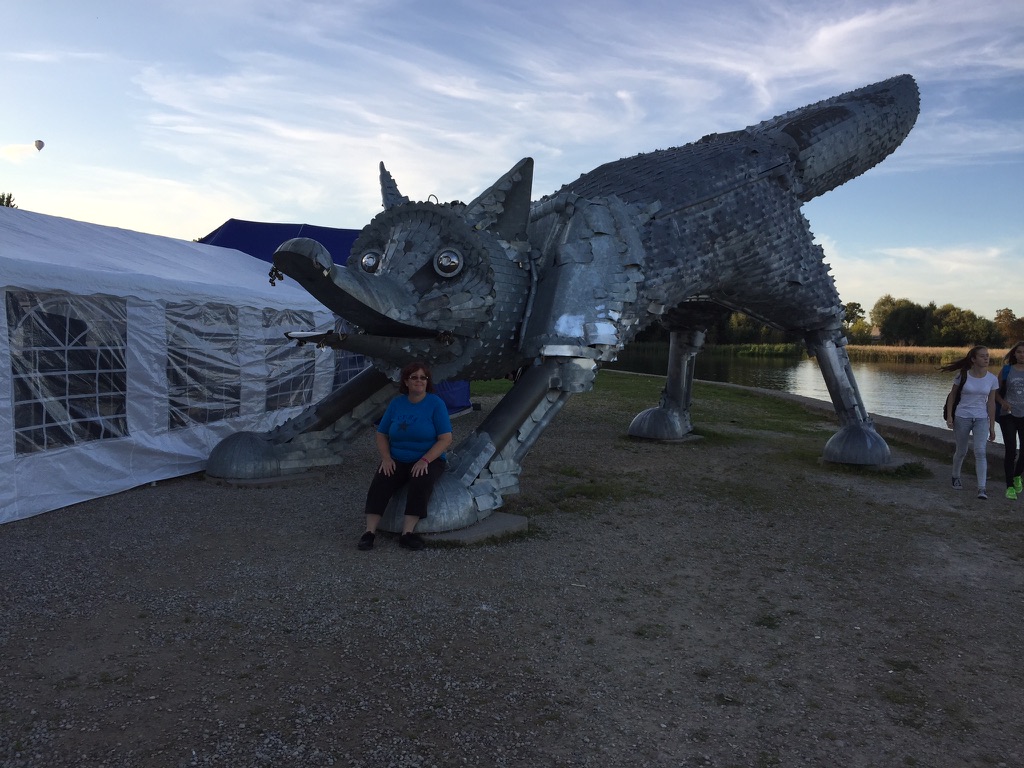
We take a wander round the town centre and back along the lake past one of the city’s landmarks, an enormous iron fox sculpture.
Lithuania Day 3
Kaunas
Our first stop today is Kaunas, Lithuania’s second largest city. Kaunas is situated on the fork of the confluence of Neris and Nemunas Rivers and has plenty of parks and gardens. We park near the city’s main attraction, its castle.
Kaunas Castle
We take a tour of Kaunas Castle and learn more about its history. The castle, first built in the 14th Century, has had a tumultuous past due to wars and flooding. Its most recent reconstruction was undertaken in 2010.
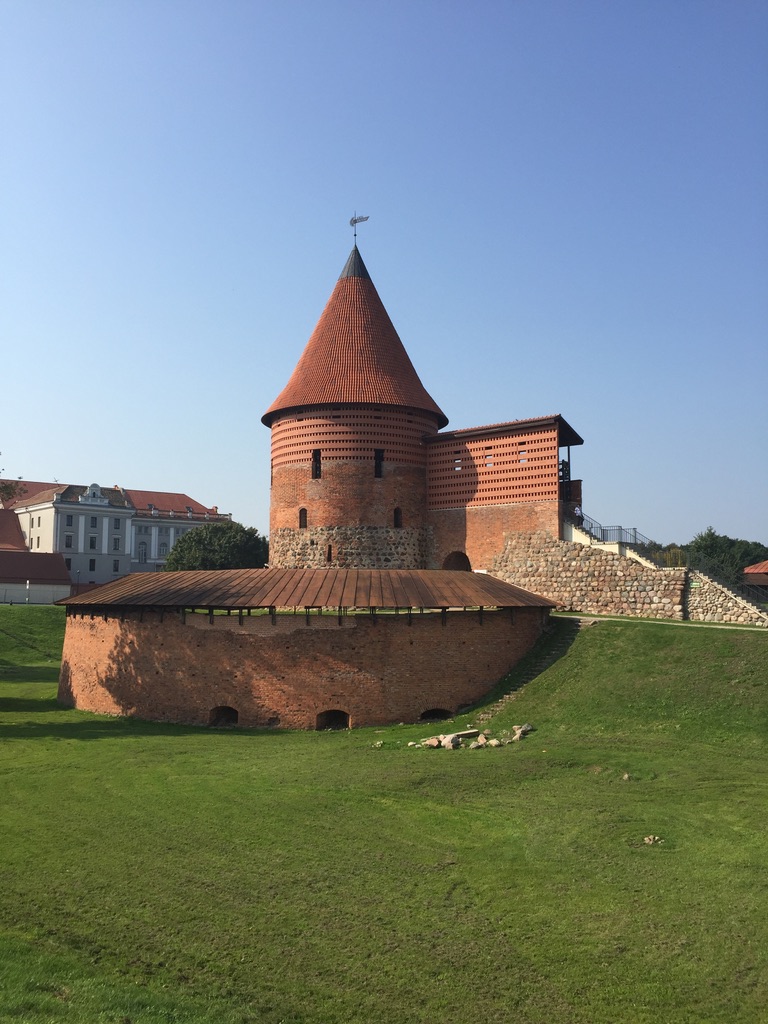
The castle now houses the City Museum.
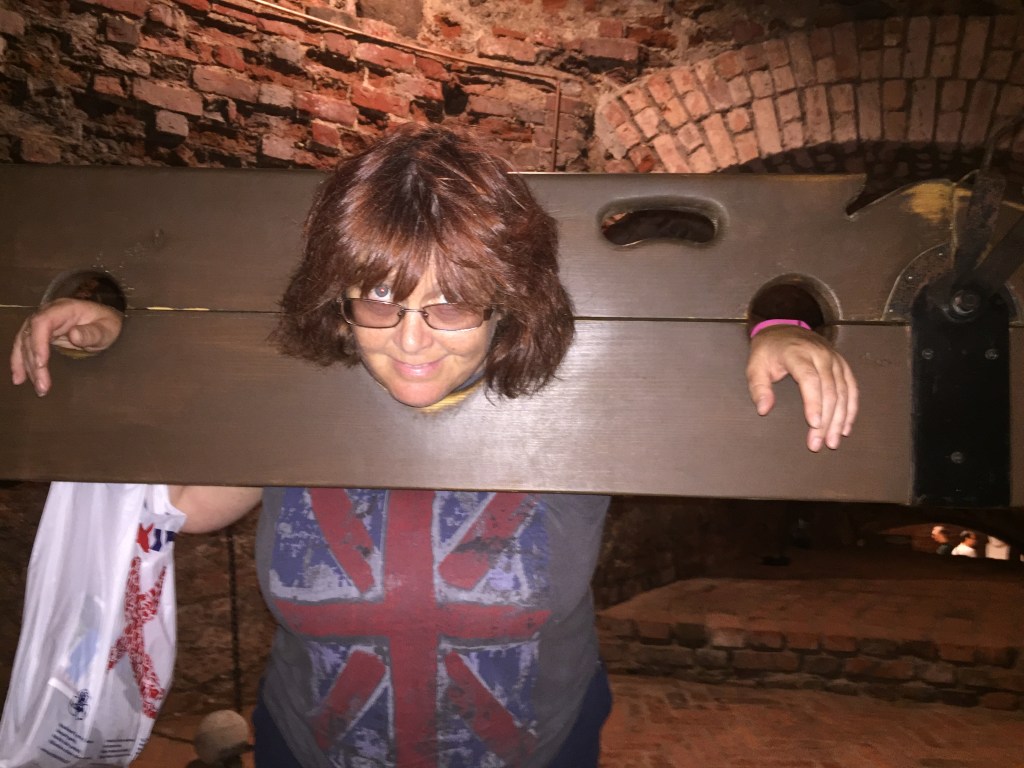
The castle is open daily from Tuesday to Saturday from 10 am until 6 pm (5 pm on Saturday). During the summer, it also opens on Sundays. Adult entry costs €4.
Žaliakalnis Funicular Railway
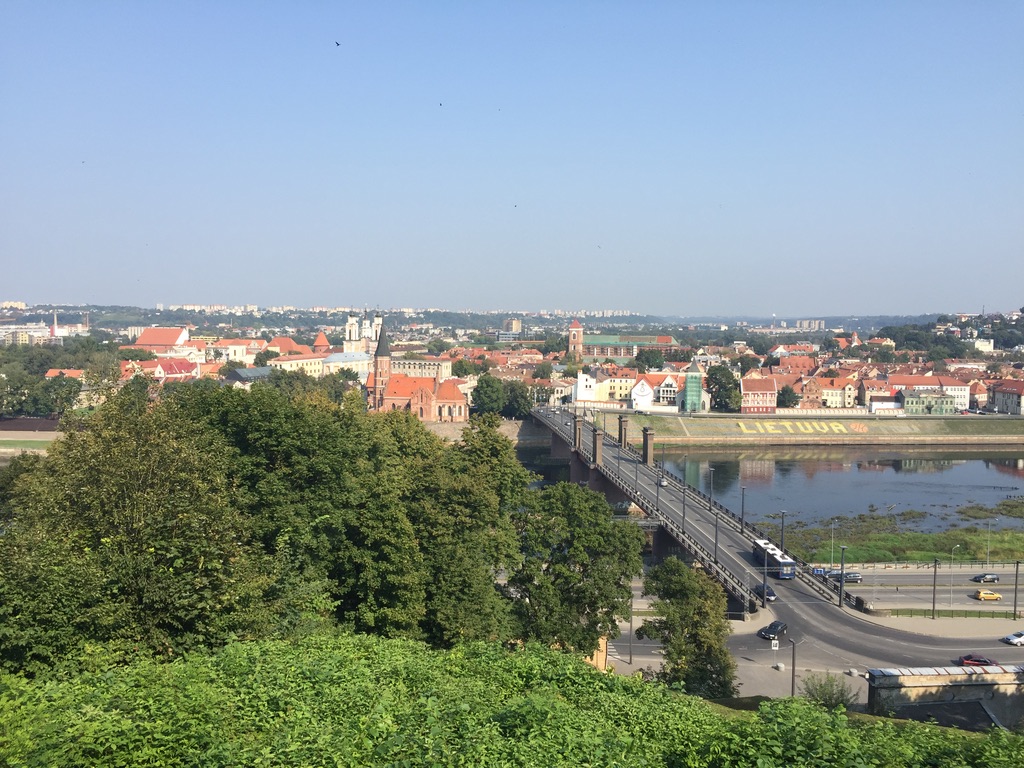
Afterwards, we walk into town and take the Žaliakalnis Funicular Railway, which was constructed in 1931, to admire a panoramic view of the city.
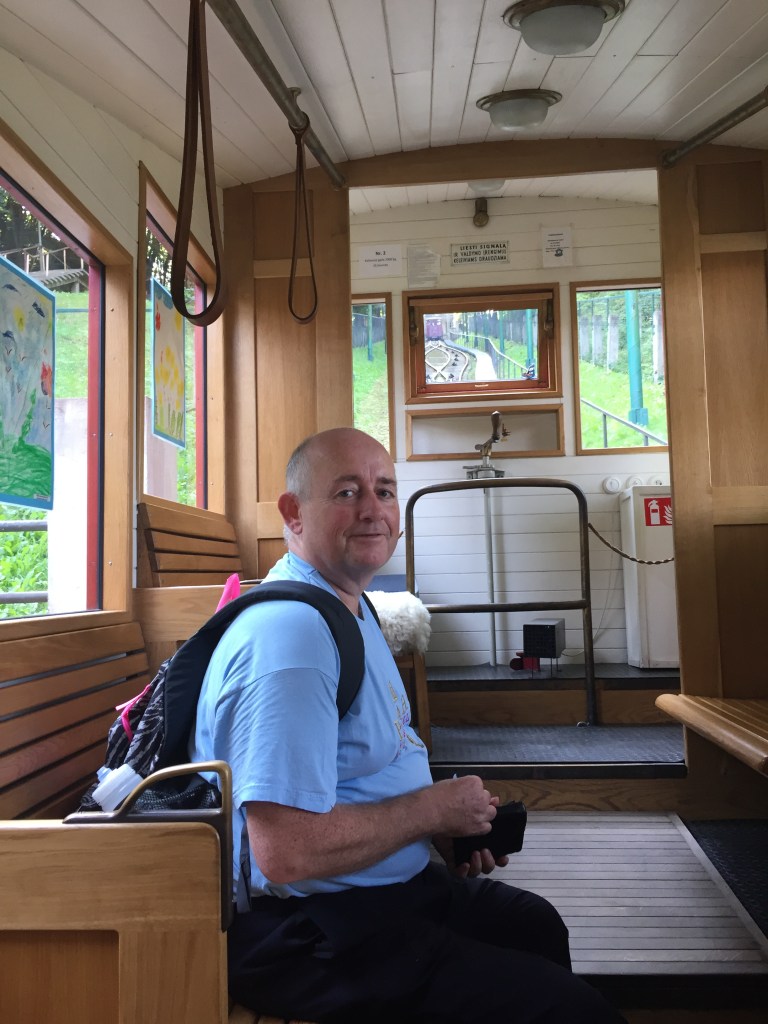
An adult one way ticket costs €1.
Trakai Island Castle
This afternoon, it’s on to one of Lithuania’s top attractions; Trakai Island Castle. This spectacular castle is set on an island in the middle of Lake Galvė. Construction of the castle began in the 14th Century, with later expansions and reconstruction.
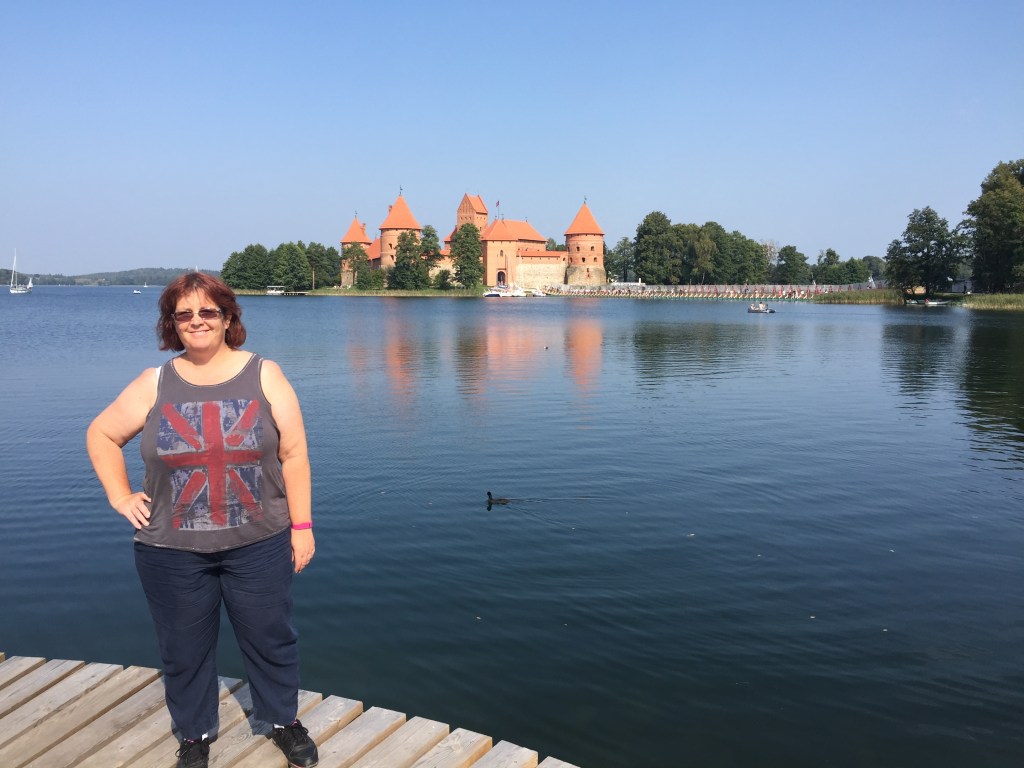
You can access the castle via a couple of bridges and take a tour of its exterior and interior.
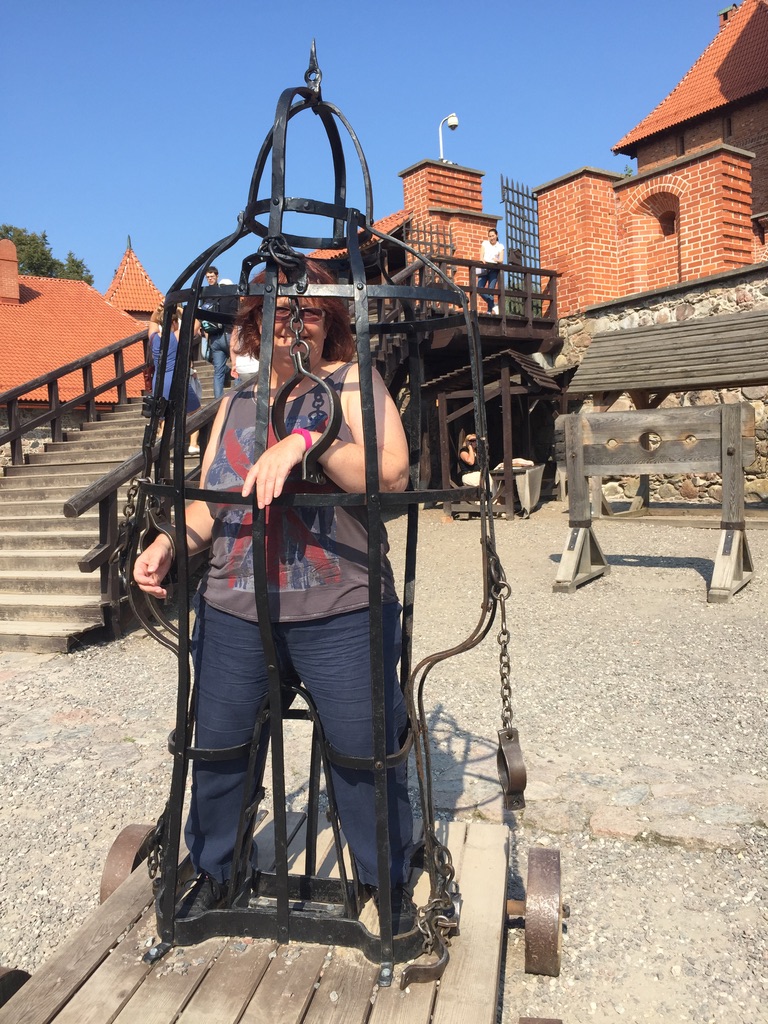
The castle opening times are seasonal. During summer, it is open daily from 10 am until 7 pm . An adult ticket costs €10-€12.
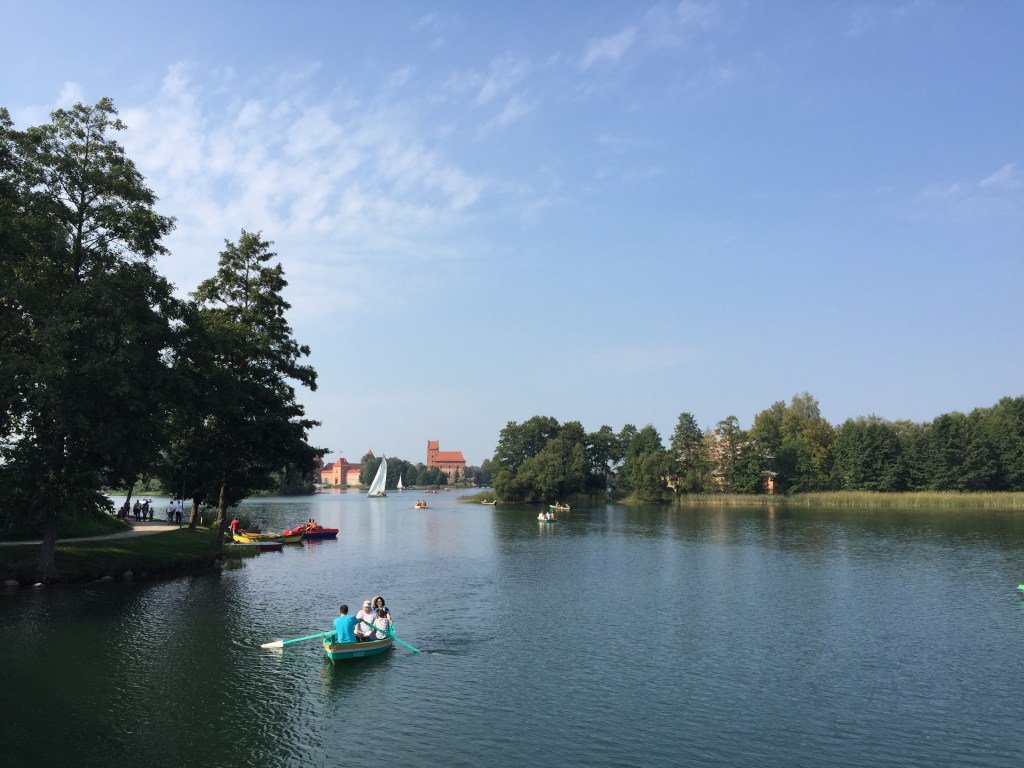
After a cooling ice cream at one of the many cafes that line the lake shores, we set off towards the Lithuanian capital, Vilnius.
Accommodation – Vilnius Palace
We drive the 20 miles to the outskirts of Vilnius; an easy journey, primarily along the A1. Hotels in Vilnius were really expensive, so we’re spending the night some way out of town at a rather strange hotel with a castle theme going on. Note: Since our stay, its reinvented itself as a palace – Vilnius Palace, to be precise.

The grounds are quite pleasant but the bed is probably the most uncomfortable thing I’ve ever slept on. It looks a bit like my bed at home would like if you removed the mattress. It’s also Saturday night and there’s a wedding taking place featuring very loud Lithuanian folk music well into the night (next morning). In all, not a great night’s sleep.

Lithuania Day 4 – Vilnius
In the morning, we check out and drive into central Vilnius. We manage to arrive in the midst of the Vilnius Marathon, which takes place around the centre on closed roads. Trying to reach our destination is like being stuck in a bad dream. Whichever way we turn, we hit a road block. Eventually, after multiple attempts, we give up, abandon the car and walk the rest of the way to Vilnius.
Vilnius Cathedral
We start at Vilnius Cathedral, or the Cathedral Basilica of St Stanislaus and St Ladislaus to give it its full title. The current building dates from the 18th Century. However, there has been a place of worship on the site since the 13th Century. As a result, there are many prominent Lithuanians buried within the cathedral, dating back as far as this time. We can’t go inside, as is it Sunday and a service is taking place, but the grand interior contains many paintings and frescoes.

The cathedral is open daily from 7 am until 6 pm (7 pm on Sunday), unless there is a mass taking place. Entry is free.
Cathedral Bell Tower
Next to the cathedral is the freestanding 57 metre tall Cathedral Bell Tower, which houses the country’s oldest clock. You can climb the tower for a panoramic view of the city. We don’t, as it’s closed on Sundays, plus there is an equally panoramic view from nearby Gediminas Hill.
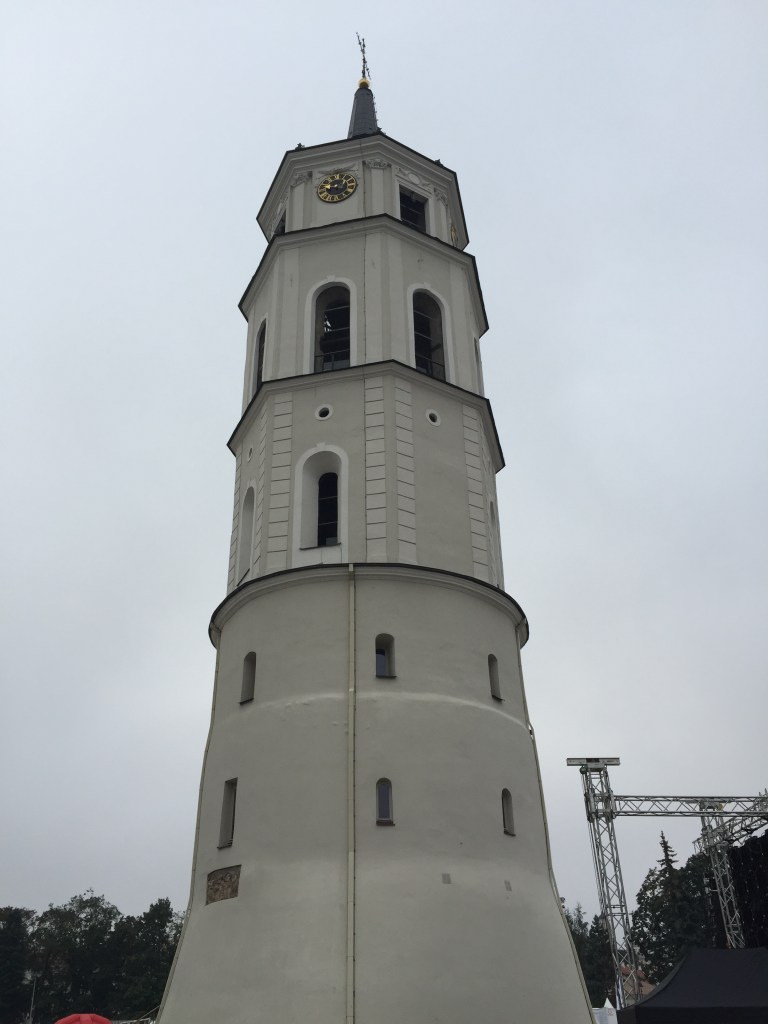
The bell tower is open daily except Sunday from 10 am until 6 pm (7pm in summer). Adult entry costs €6.
Gediminas Castle Tower
Next, Gediminas Castle. Set atop Gediminas Hill, overlooking the city, with spectacular views across Vilnius and beyond, you can reach the castle either by funicular or on foot. We opt to take the funicular up because (a) it’s all part of the experience and (b) we’re lazy.

The 15th Century tower houses a museum telling the history of the castle and the city.
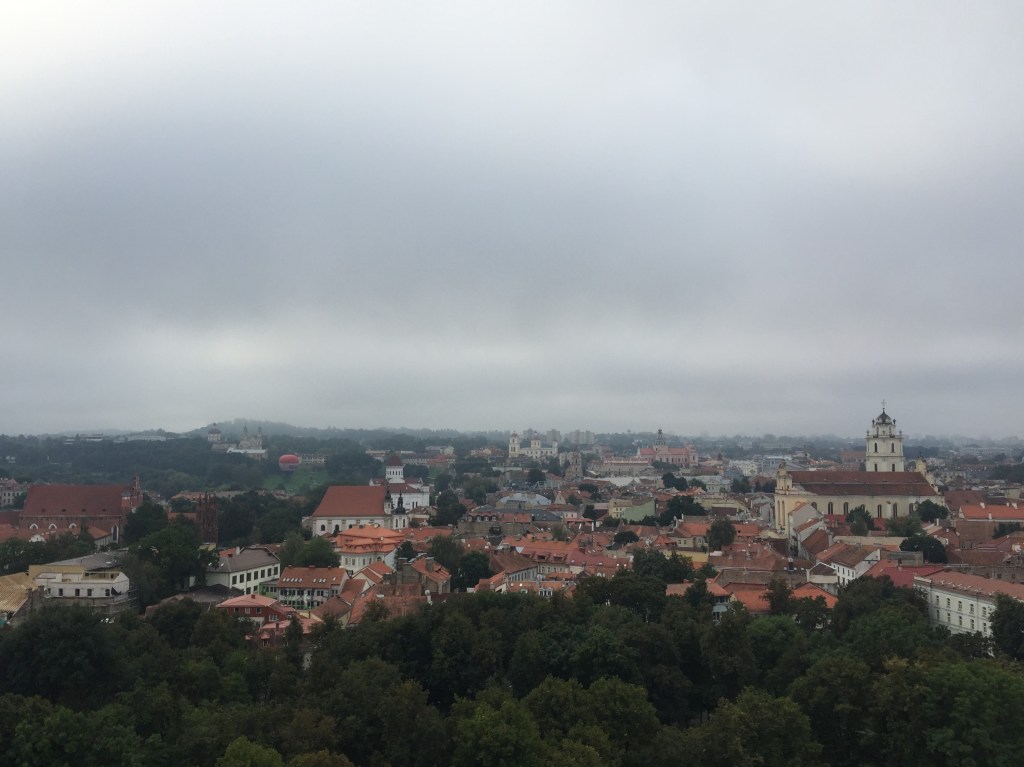
The castle and funicular are open daily from 10 am until 8 pm. Adult entry to the castle costs €8. Funicular tickets are €2 one way (€3 return).
Saint Nicholas Orthodox Church
The pretty, pink Saint Nicholas Orthodox Church was rebuilt in Byzantine style in the 19th Century. It was one of the few churches to remain open during Soviet occupation.

Town Hall
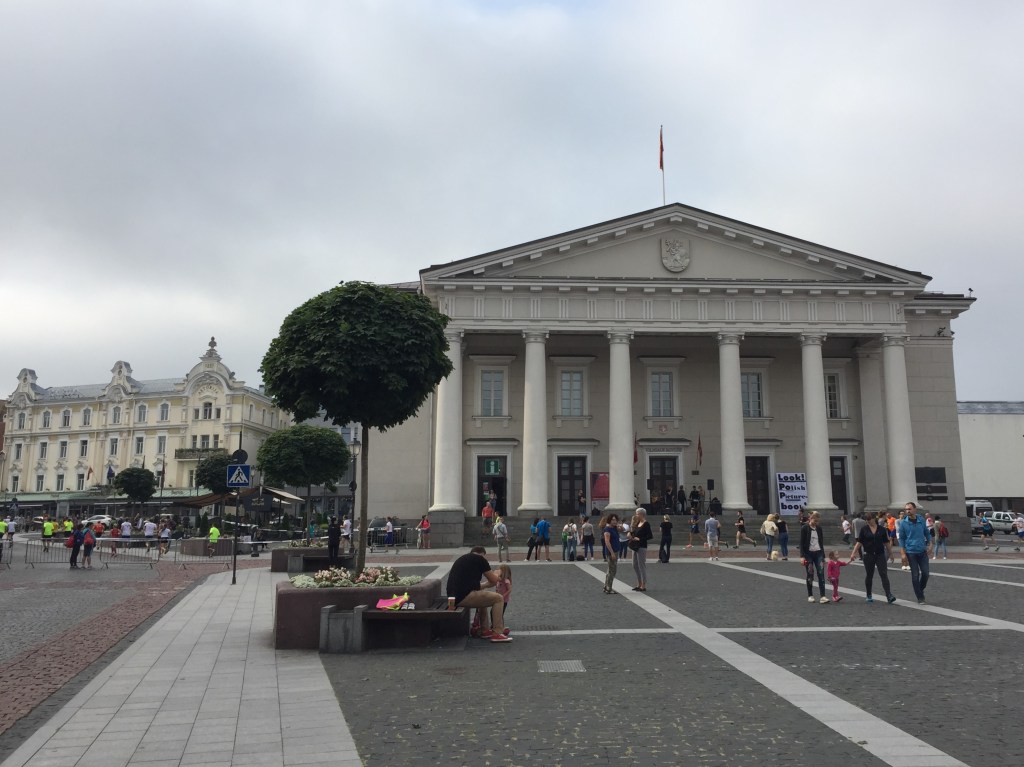
The 18th Century neoclassical Town Hall is the focal point of the old town. Out front, the large Town Hall Square hosts events, and concerts and serves as a general gathering point.
Church of St Casimir
The striking pink Baroque Church of St Casimir was built by the Jesuits in the 17th Century. During Soviet occupation, the church became a wine warehouse. It has subsequently been restored and reconsecrated.

Church of the Holy Trinity
The 16th Century Church of the Holy Trinity, with its mixture of architectural styles adorned in yellow, looks like it has fallen off the top of a wedding cake.

Gates of Dawn
The Gates of Dawn are the last remaining city gates built into the old town walls. The gate also houses the Gate of Dawn Chapel of Mary the Mother of Mercy; tongue twister and site of an allegedly miraculous painting of the Virgin Mary.

Vilnius University
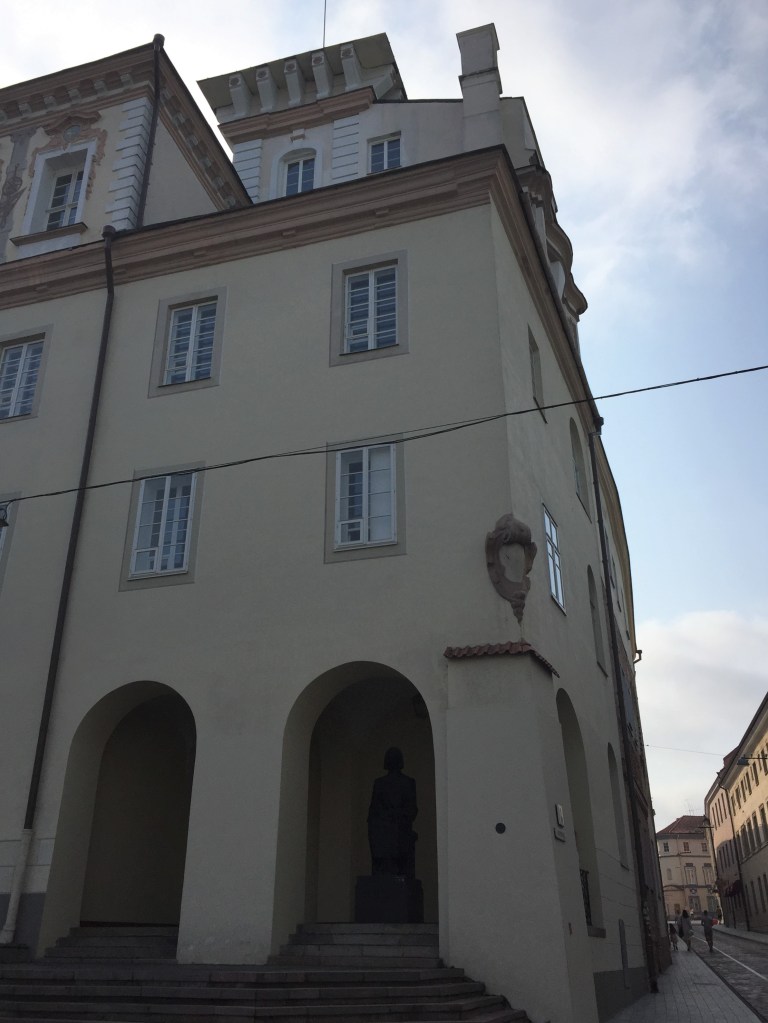
Vilnius University was founded in the 16th Century, making it one of the oldest universities in the world. The Architectural Ensemble consists of 13 patios, arcades and galleries. Highlights include a 64 metre high bell tower, Baroque church, courtyard and fresco-laden hall.
Presidential Palace
The Presidential Palace, the residence of the Lithuanian President, is in the 16th Century former Bishops of Vilnius’ Palace. A Flag Replacement Ceremony takes place at midday on Sundays featuring soldiers in modern full dress uniform and a Guard of Honour clad in medieval armour.

Free tours of the Presidential Palace take place on Saturdays and Sundays (in Lithuanian and English) between 10 am and 3 pm. Bookings must be made in advance, at least 3 days prior to your visit. Further details here.
Three Muses
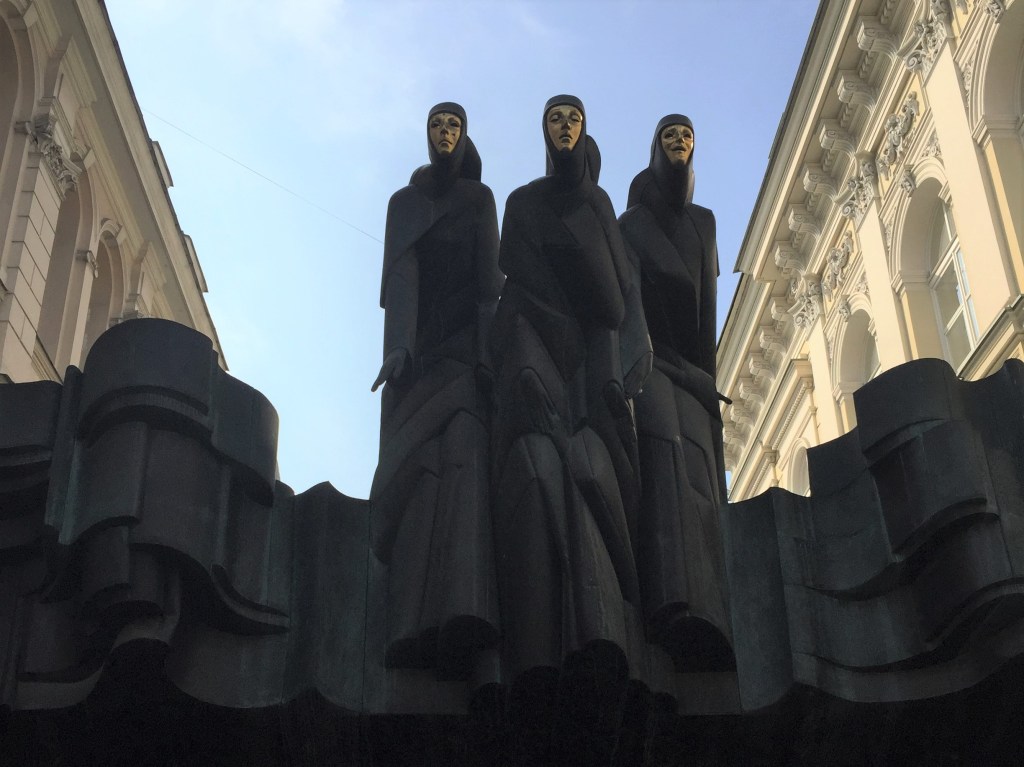
The Three Muses sit atop the Lithuanian National Drama Theatre. The black robed, gold masked figures are meant to represent drama, comedy and tragedy.
Museum of Occupations and Freedom Struggles
To satisfy my curiosity about the Communist era, we round our tour off at the former KGB building, which is now the Museum of Occupations and Freedom Struggles. The museum tells the stories of some of the thousands of Lithuanians who were imprisoned, deported and murdered by the authorities during Soviet occupation.
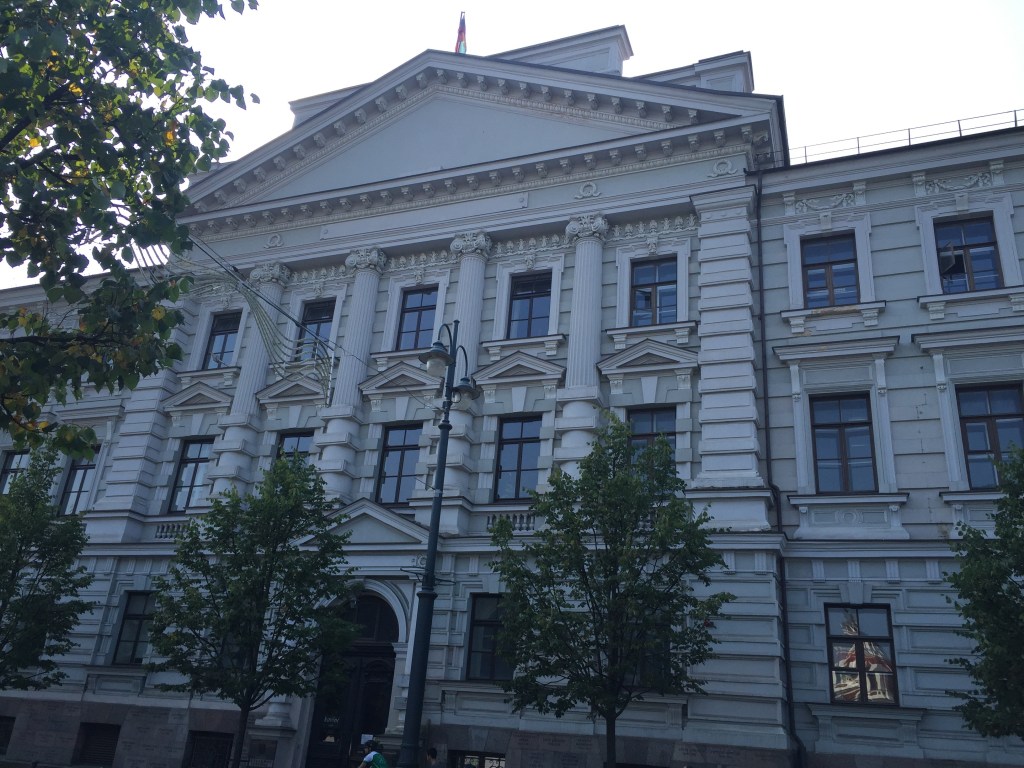
The museum is open from Wednesday to Sunday between 10 am and 6 pm (5 pm on Sunday). Adult entry costs €6.
Tauras Hill
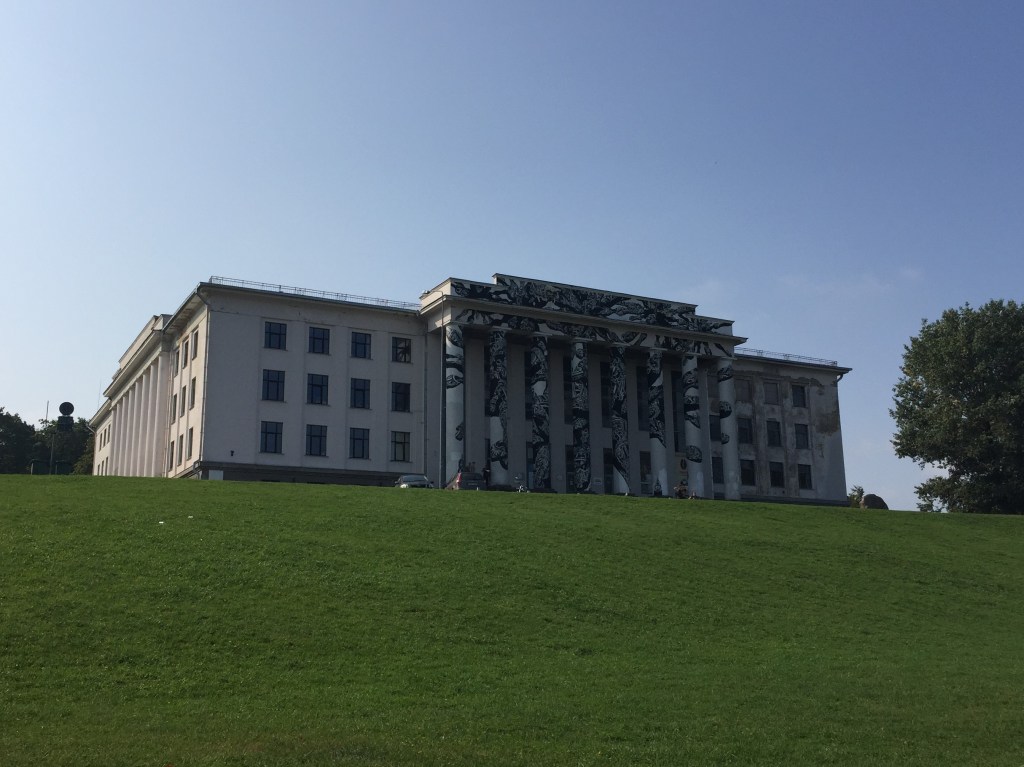
We finish our busy day in Vilnius off with a picnic on nearby Tauras Hill, where you can sit on the grassy bank overlooking the city.
Biržai
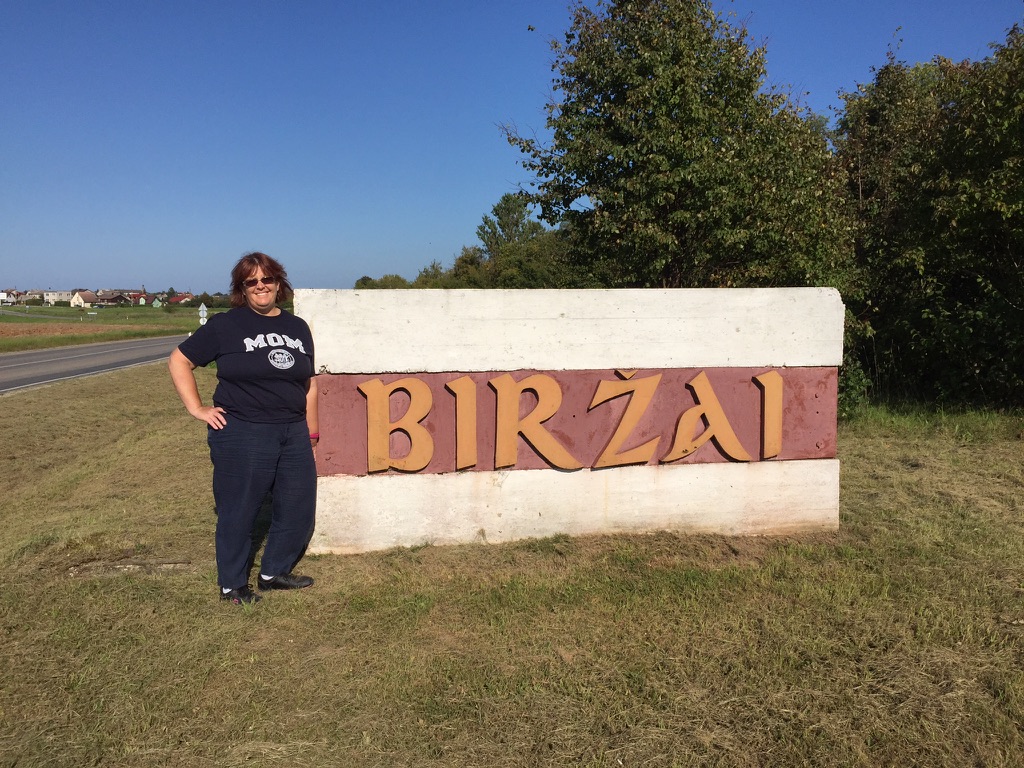
That almost concludes our visit to Lithuania. We depart Vilnius, heading north towards Latvia, stopping for the night near the border in the city of Biržai.
Accommodation – Butenas Hotel Tyla
The Butenas Hotel Tyla is a very nice hotel, situated on the edge of a lake. Inside are pleasant rooms, a restaurant, bar and pool. Outside, there is seating and a gazebo where you can enjoy the lakeside view.
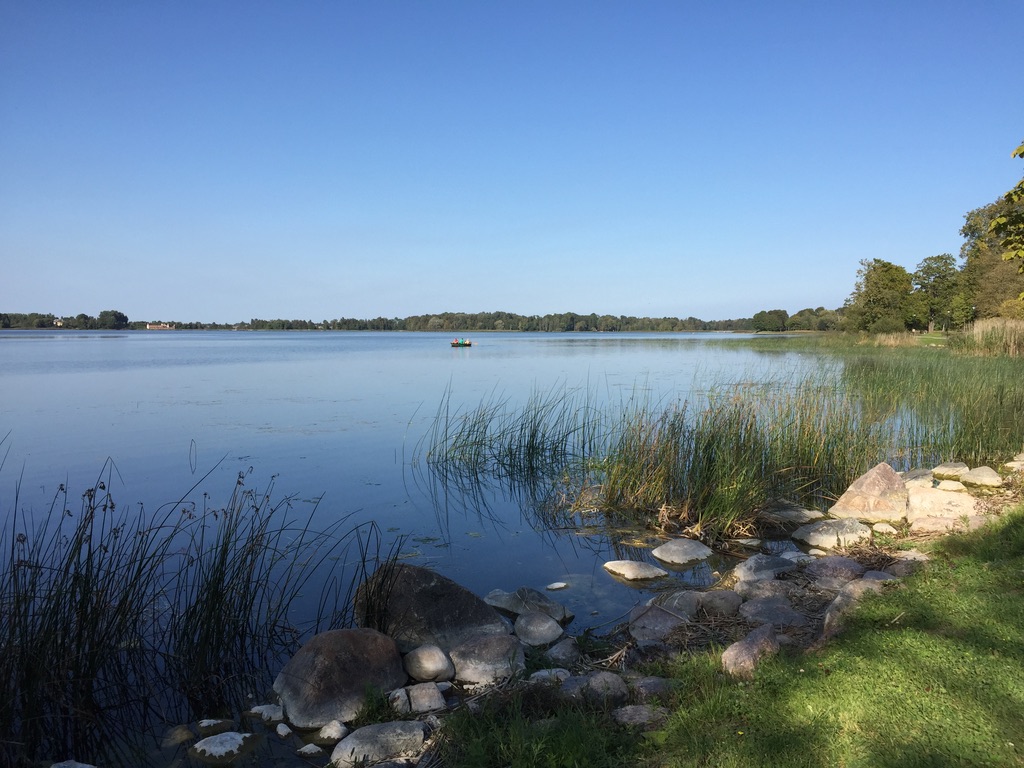
After a relaxing beer by the lake, we take a wander into Biržai.
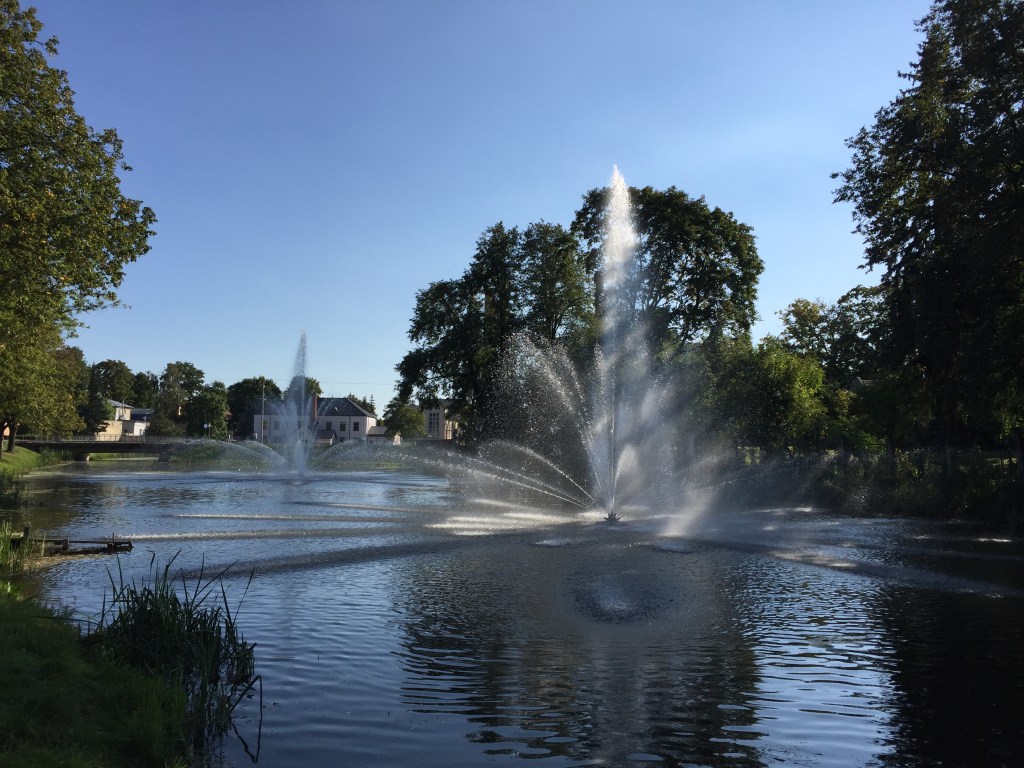
Biržai Castle
The city is dominated by Biržai Castle. Built in the 16th Century, the Italian-style fortress consisted of a manor house, church, arsenal, food storehouses and barracks. The recently restored castle now houses a museum, library and restaurant.
Church of St John the Baptist
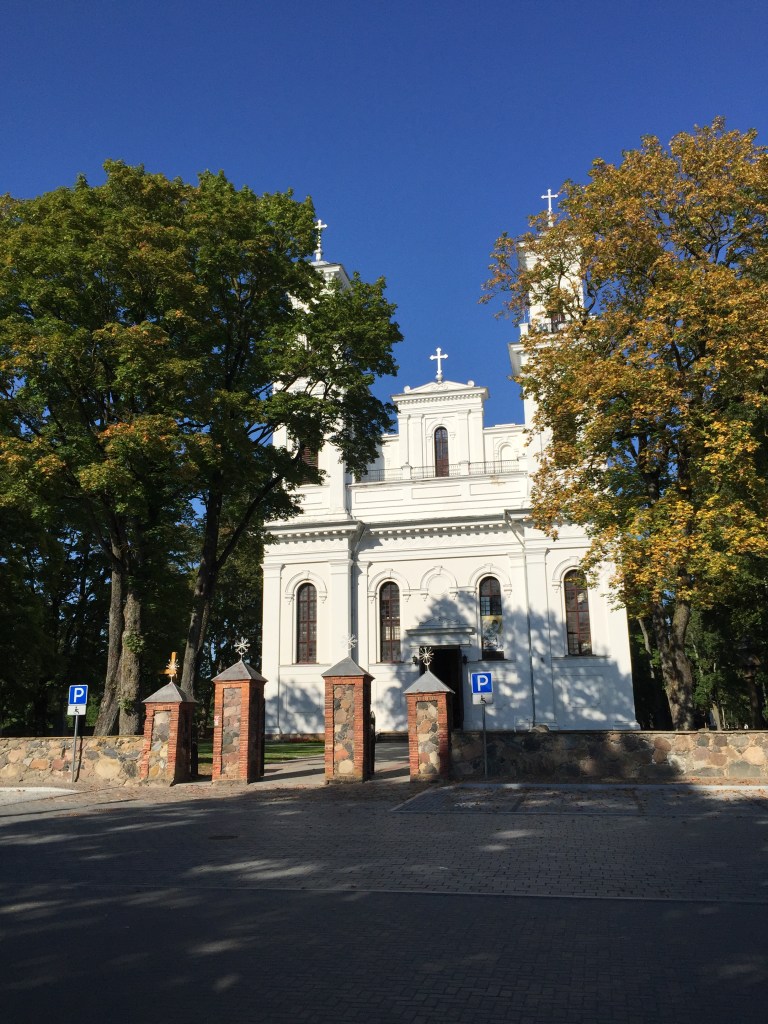
Next to the castle is the white walled Church of St John the Baptist. Built in neo-classical and Baroque styles, it dates back to the 19th Century.
- Trip taken: September 2016
- Updated: July 2025
I hope you found the above information useful. For guides to more destinations in the 50+ countries we have visited, check out my full list of Independent Travel Itineraries here.
 Jane's Midlife Journey
Leave a comment