
We spent 24 hours exploring the Baltic port city of Gdańsk during our Polish road trip, Here is my pick of the Top 10 Things to do on a visit to Gdańsk.
Gdańsk holds a pivotal place in European history. As the German city of Danzig, it was a major port and shipbuilder. After WWI, it became part of Poland. In 1939, when Hitler invaded Poland, Gdańsk was at the top of his ‘to do’ list. In fact, the first shots of WWII were fired here in Westerplatte, a peninsula jutting out into the Baltic some 6 miles north of the old town coast.
Then, in the 1980s, Lech Wałęsa’s Solidarność Movement emerged in the Gdańsk shipyards and became the catalyst to the ending of Communism in Eastern Europe. All of these influences are visible on a visit to the picturesque city of Gdańsk.

How to get to Gdańsk
We drove to Gdańsk from Warsaw as part of a Polish Road Trip, a straightforward 200 mile drive up the E77. If you opt to fly, Gdańsk Lech Wałęsa Airport is 9 miles west of the city. From here, there is a direct bus service (No 210), which will get you into the old town in around 40 minutes.
Getting around Gdańsk
The Old Town of Gdańsk is best explored on foot. The European Solidarity Centre and Museum of the Second World War are fairly close together, around a mile north of the Old Town. There is a direct bus (No 106) to Westerplatte.
Where to stay in Gdańsk
We stayed at Hotel Number One by Grano Gdańsk; a chic, modern hotel in a waterfront building on the edge of the Old Town. It is located on an island in the river, which consists mainly of derelict warehouses, just starting to be regenerated. It has nice rooms with balconies, secure car parking and a wellness centre with swimming pool.
Gdańsk: Top 10 Things to do
| 1 | Learn about Polish History at the European Solidarity Centre |
| 2 | See the ancient Żuraw Crane |
| 3 | Stroll along the Motława River Waterfront |
| 4 | Wander along Mariacka Street |
| 5 | Visit the enormous St Mary’s Basilica |
| 6 | Shop for Souvenirs in Długi Targ |
| 7 | Take a break by Neptune’s Fountain |
| 8 | Admire the grand Main Town Hall |
| 9 | Learn more about Polish History at the Museum of the Second World War |
| 10 | Visit Westerplatte, where the first shots of WWII were fired |
No 1- Learn about Polish History at the European Solidarity Centre
First up, the European Solidarity Centre; a museum charting the history of the Polish Solidarity Movement, Solidarność, which was so pivotal in the overthrow of Communism in Eastern Europe and hence the shaping of today’s political landscape. Having studied East European Studies at University, a visit to the European Solidarity Centre was a bucket list destination for me.

There’s plenty of memorabilia on display; Lech Wałęsa’s Solidarity Membership Card, the crane he stood on to speak to workers, the shipyard gates crushed by the militia, the popemobile Pope John Paul used on his visit etc.
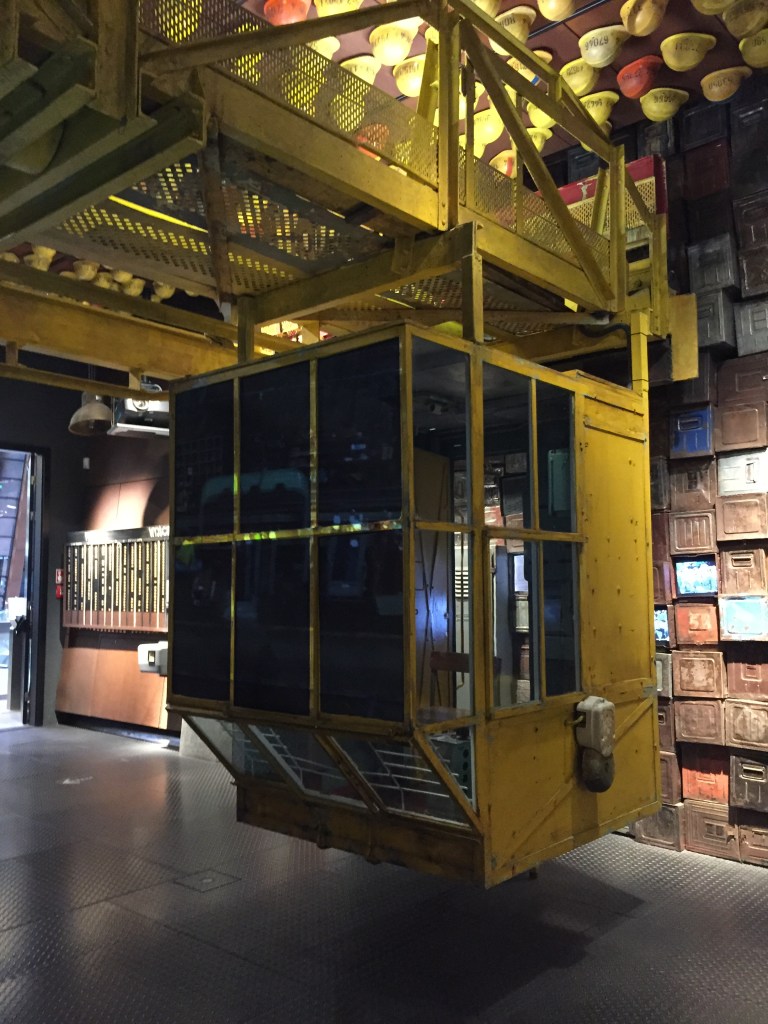
If, like me, you’re fascinated by history, you can spend hours wandering around, taking it all in.

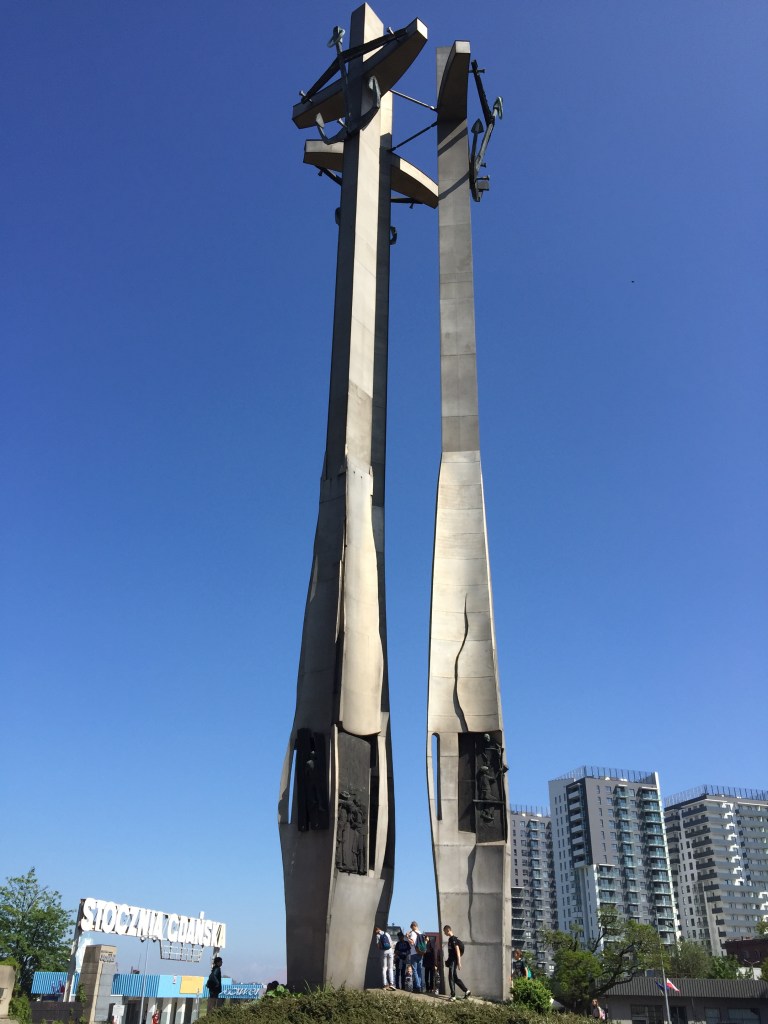
Outside, is the Monument to the Fallen Shipyard Workers of 1970. This pays tribute to the workers who died when unrest at the dock was violently suppressed.
The European Solidarity Centre is open daily (except Tuesdays between October and April). Opening hours are seasonal. Further details can be found on the website. Admission costs 35 PLN (around £7.10). The price includes a two hour guided audio tour through the exhibition.
Old Town
The next 7 items on the list are in the Old Town, which lines the waterfront with a combination of original Hanseatic merchant buildings and modern conversions, which adds to the city’s charm.

No 2 – See the ancient Żuraw Crane
Dominating the Gdańsk waterfront is the Żuraw; a 15th Century crane, once the largest crane in medieval Europe. The crane could lift four tons of cargo, powered by groups of men, who would walk round two large wooden wheels, rather like giant hamster wheels.
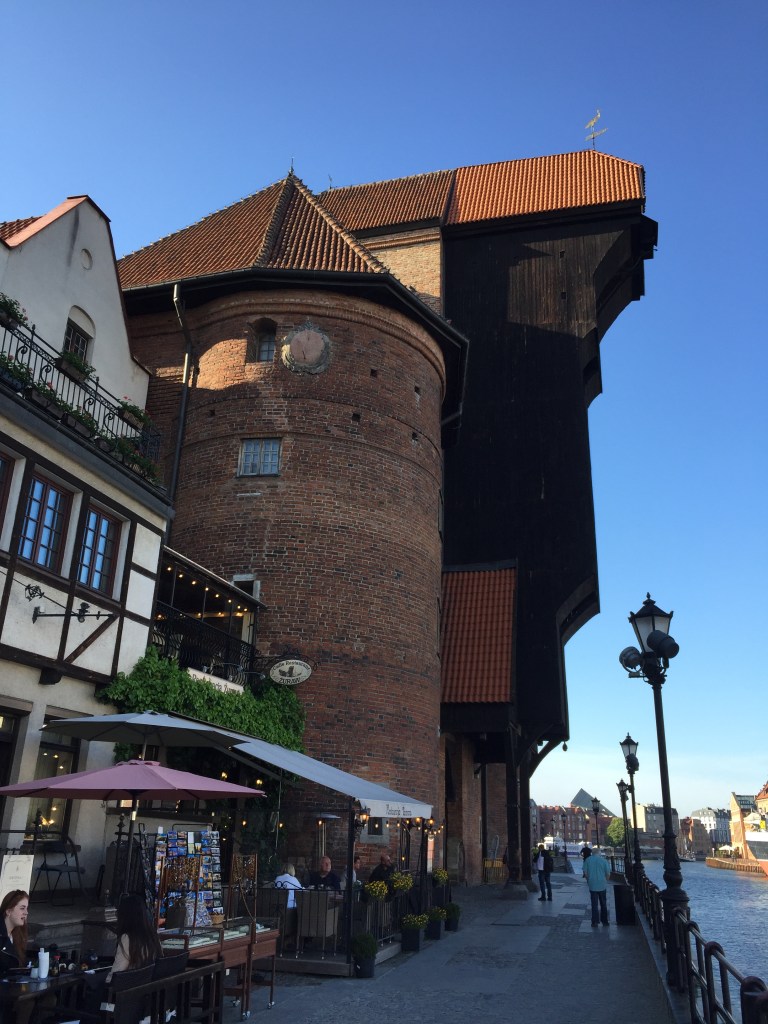
The Żuraw is part of the National Maritime Museum, which you can visit if you have sufficient time (which we didn’t). The museum is across the river from the crane and can usually be reached by ferry (although the ferry isn’t currently running).
No 3 – Stroll along the Motława River Waterfront
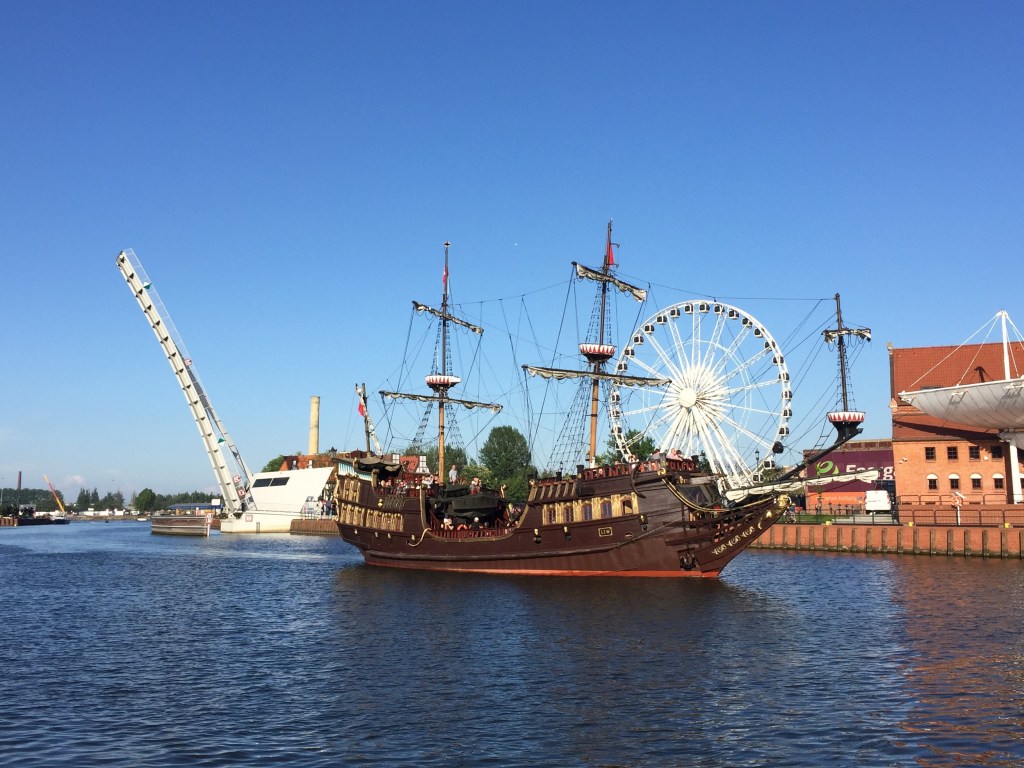
Follow the path along the Motława River Waterfront as far as the pedestrian swing bridge across the river to the other shore, where there is a park, big wheel and neon Gdańsk sign for that all important photo op.
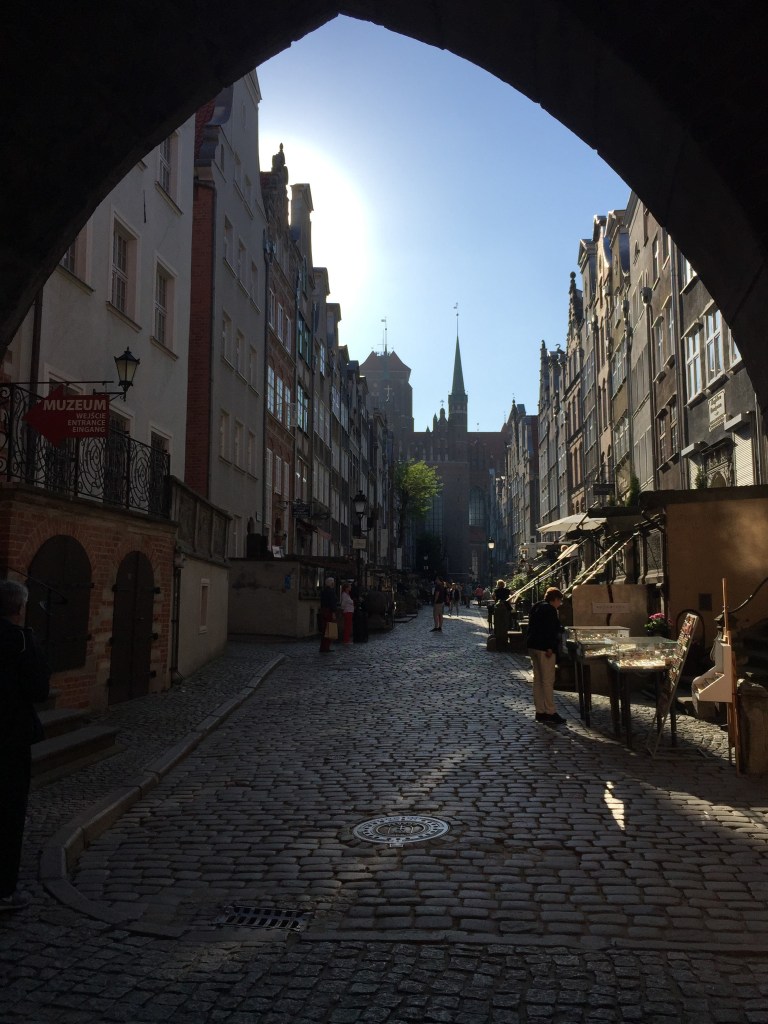
No 4 – Wander along Mariacka Street
Back on the southern bank, pass through St Mary’s Gate and you are in photogenic Mariacka Street, with its cobbled streets and coloured terrace houses. This touristy street, once the domain of wealthy merchants, now lined with restaurants, runs from the waterfront to St Mary’s Basilica.
No 5 – Visit the enormous St Mary’s Basilica
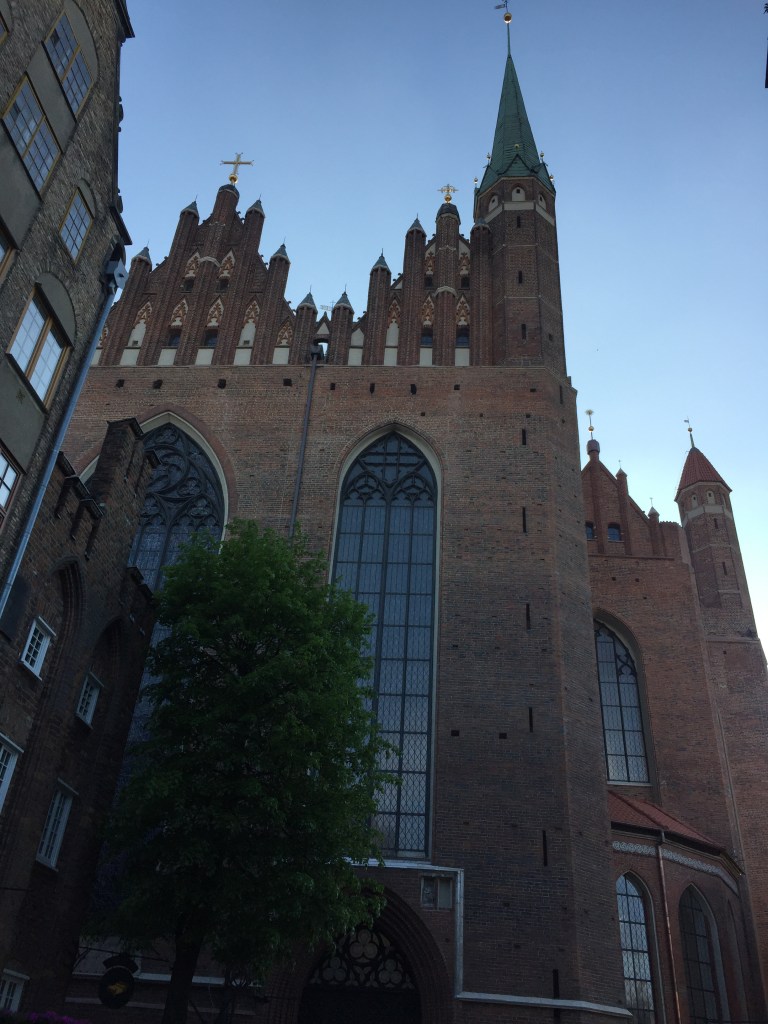
The 14th Century St Mary’s Basilica is one of the largest brick churches in the world. Its 78 metre high tower is impressive to look at, but difficult to photograph in the narrow streets.
No 6 – Shop for Souvenirs in Długi Targ
Head a couple of blocks south to the equally touristy Długi Targ (Long Market). Once the city’s main market street, it is now lined with bars, restaurants and souvenir shops.

No 7 – Take a break by Neptune’s Fountain
The bronze Neptune’s Fountain in Długi Targ dates back to the 17th Century. A fig leaf was added to protect Neptune’s modesty some 350 years later.

No 8 – Admire the grand Main Town Hall
Half way down Długi Targ, you will find the Main Town Hall with its 81 metre high tower, which you can climb in summer for a view across the city. The building now houses a museum, part of the Museum of Gdańsk.

No 9 – Learn more about Polish history at the Museum of the Second World War
Another popular museum is the Museum of the Second World War, which charts the fate of Poland during WWII. The museum is divided into 18 sections, each covering an aspect of WWII, in chronological order, starting with the causes of the war and ending with the Cold War.

The museum is open daily except Monday from 10 am until 6 pm (4 pm on Tuesdays). Standard entry costs PLN 32 (around £6.50). Admission is free on Tuesdays.
No 10 – Visit Westerplatte, where the first shots of WWII were fired
The initial conflict of WWII happened on 1 September 1939 with the German invasion of Poland. The first shots were fired at Westerplatte; a peninsula jutting out into the Baltic some 6 miles north of Gdańsk. The site is now a memorial with some ruins left from the bombardment and a huge monument. The surviving Guardhouse No 1 houses a small exhibition detailing the history of the event.

- Trip taken: May 2019
- Updated: October 2025
I hope you found the above information useful. For more top picks from other destinations in the 50+ countries we have visited, check out my full Top 10 Things To Do list here.
 Jane's Midlife Journey
Leave a comment