
Kraków is the second largest and one of the oldest cities in Poland. This historic royal city was the capital of Poland until 1596 and is now a UNESCO World Heritage Site.
I have visited Kraków twice; once for a weekend to run Kraków parkrun and once as part of a Polish Road Trip. With its compact Old Town, which is steeped in history and lined with bars and restaurants, the city makes for an excellent weekend trip, whether you decide to throw in a parkrun or not.
On our visits to Kraków, we spent one day exploring the city and a second day slightly further afield. Less than 40 miles to the west is the town of Oświęcim, known by the Germans as Auschwitz. Today, the former Concentration Camp is a museum telling the chilling story of what happened here during WWII. While just 8 miles south west of the city is the fascinating Wieliczka Salt Mine with its underground world of salt carvings.
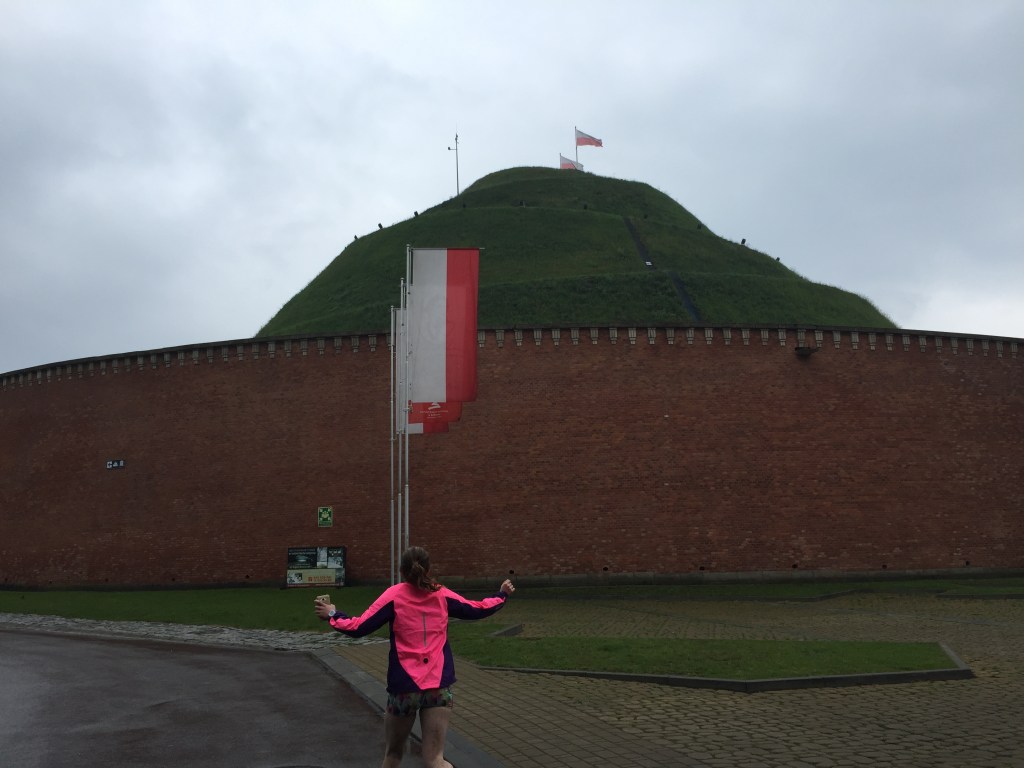
Note: This is quite a packed itinerary. If you have three days, devote a full day to Auschwitz, then spend Day 3 visiting the Salt Mine and maybe add Kościuszko Mound or Oskar Schindler’s Enamel Factory.
How to get to Kraków
Kraków is well connected by air, rail and road. John Paul II International Airport is 7 miles west of the Old Town. You can catch the train (SKA1) from just outside the airport (Kraków Lotnisko) to Kraków Main Station, which is a few minutes walk from the top end of the Old Town.

Getting around Kraków
The Old Town is mostly pedestrianised, so best explored on foot. To reach Auschwitz, you can either take a bus or a train to Oświęcim. Either option will drop you around a mile from the camp, which is well signposted. We opted to go by bus and return by train. There are also direct bus and train links from Kraków to the Salt Mine. If you don’t want to take public transport, plenty of organised tours are available to both these destinations.
Where to stay in Kraków
On our first visit to Kraków, we stayed right in the centre of the old town, which was very convenient for sightseeing. Rembrandt Aparthotel is just a block away from the Main Square. Our apartment was well equipped with a separate living/dining area and a small kitchen. Other options (private rooms and mixed dorms) are also available.
On our second visit, we drove to Kraków. If you have a car, parking near the old town can be a pain, so although there is some characterful accommodation here, it is easier to stay a little further out.
Kraków in 2 Days Itinerary
| Day 1 | Old Town Wawel Royal Castle Wawel Cathedral Rynek Główny (Main Square) Sukiennice (Cloth Hall) Rynek Underground St Mary’s Basilica Barbican Drinks at a Vodka Bar Dinner at Czarna Kaczka (The Black Duck) Accommodation: Rembrandt Aparthotel |
| Day 2 | Auschwitz Birkenau Wieliczka Salt Mine Dinner at a Milk Bar |
Kraków Day 1 – Old Town
We spend our first day in Krakow exploring the Old Town, starting at Wawel Royal Castle and working our way up through the Old Town to the Barbican at the top. In a straight line, this is a distance of just a mile, but be prepared to do a lot more walking as you wander around, taking in the sights.
Wawel Royal Castle
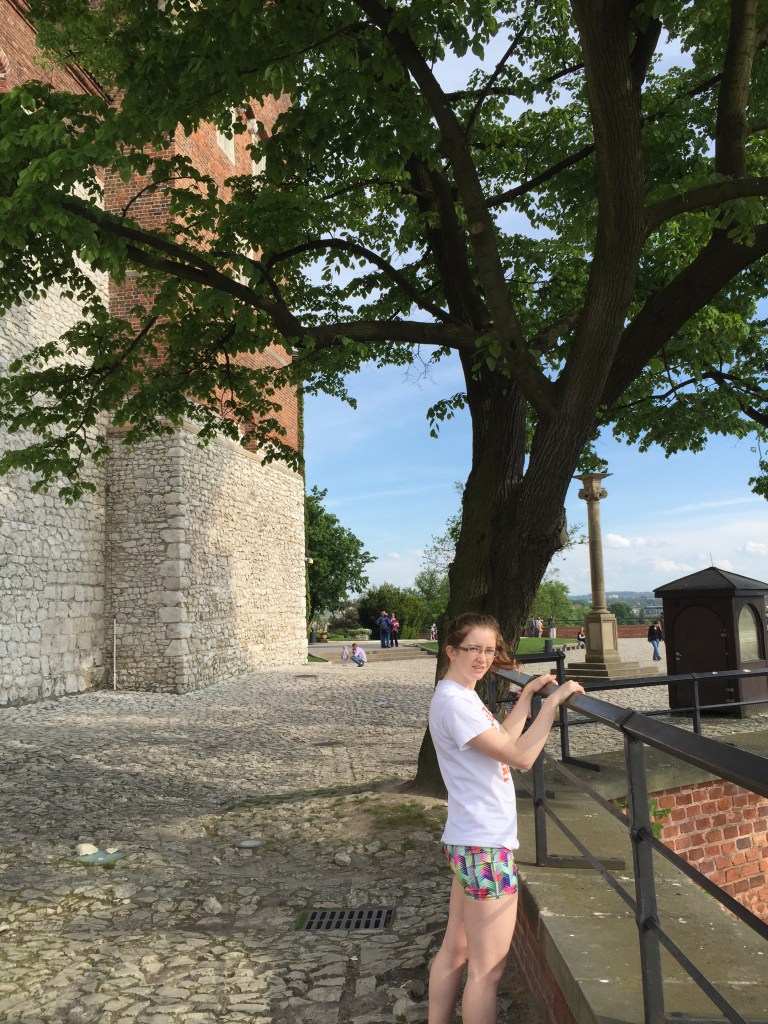
Dominating the city skyline is Wawel Royal Castle. This sprawling 16th Century castle sits on a hill overlooking the city and can be reached via a path up the hillside. The castle is now a museum containing several separate sections including the Crown Treasury, State Rooms, Royal Private Apartments, Lost Wawel and Wawel Underground. Sections require separate tickets, with a bewildering range of combinations available. Or, you can do like we did and just wander around the imposing castle grounds for free.
Wawel Dragon
Don’t miss the fire breathing Wawel Dragon, which, surrounded by giggling children, spews forth flames every few minutes.
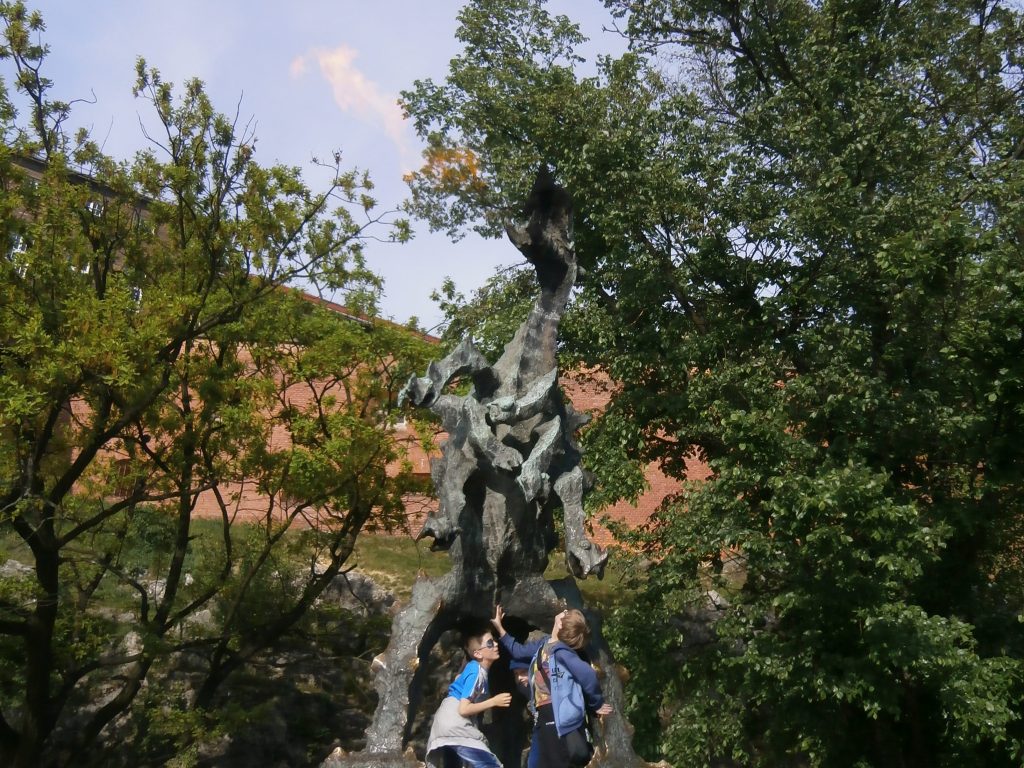
The castle museums are open daily. More details about opening times and ticketing can be found here.
Wawel Cathedral
Wawel Cathedral sits inside the castle complex. With parts of the building dating back to the 14th Century and other more recent additions, the cathedral has a unique, eclectic appearance.
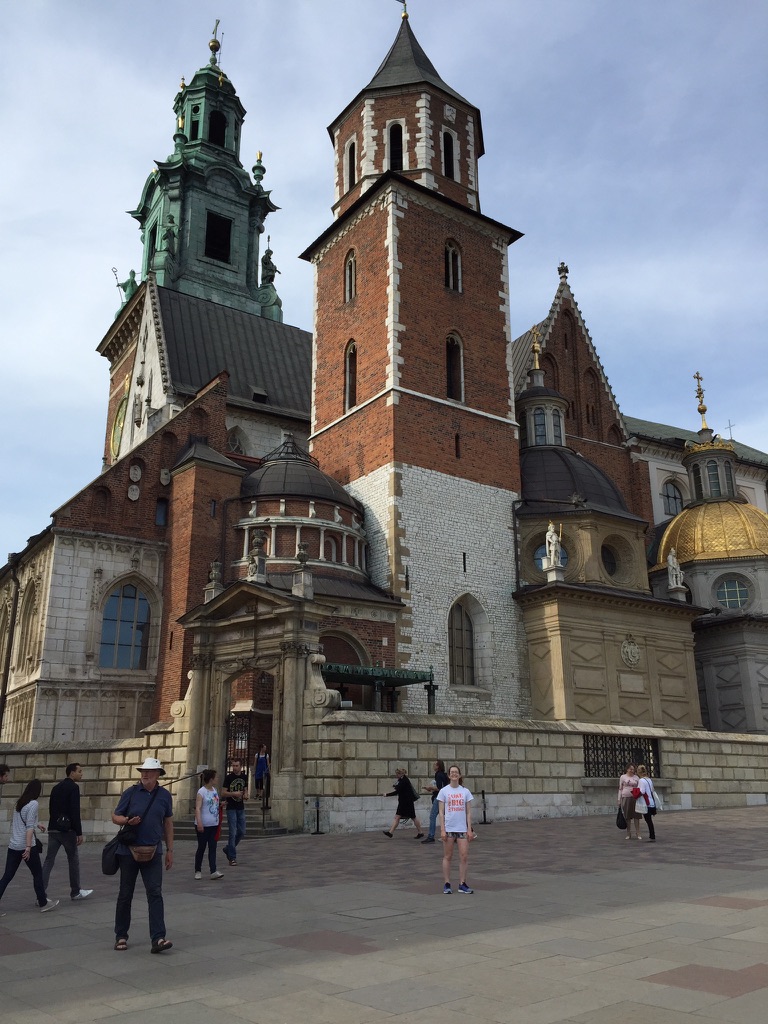
Inside, once you have passed the fabled bones of the Wawel Dragon, you can admire the Cathedral’s ornate interior. For a fee, you can also climb the tower to see Sigismund’s Bell, descend into the Royal Tombs and visit the Cathedral Museum and the Archdiocesan Museum.
The cathedral is usually open daily, with the exception of the museums, which are closed on Sunday or Monday. A standard combination ticket costs 25 PLN (around £5). More details about opening times and ticketing can be found here.
Rynek Główny (Main Square)
The vast Rynek Główny (Main Square) dates back to the 13th century and is the focal point of the Old Town. Measuring 200 metres by 200 metres (a total of 9.4 acres), it lays claim to being the largest medieval town square in Europe.
The Square is surrounded by historic townhouses (many now housing hotels, restaurants and bars, with tables spilling out into the square) and churches, as well as the Town Hall Tower. The centre of the square is dominated by the Sukiennice (Cloth Hall). The square also houses the 19th Century Adam Mickiewicz Monument (a Polish poet) plus the considerably more modern Eros Bendato.
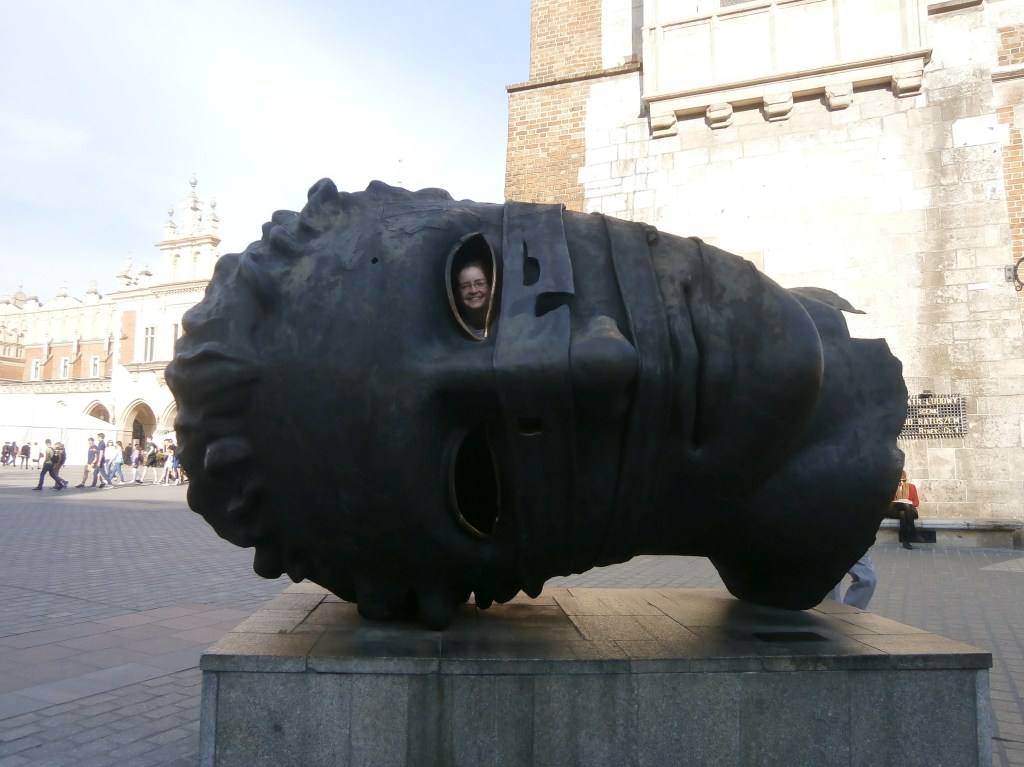
Eros Bendato
In the south west corner of the Square, Eros Bendato, known locally as ‘The Head’, is a controversial 2005 addition to the Square. The sculpture is the work of Polish artist Igor Mitoraj depicting the head of Eros, the Greek god of love, wrapped in bandages and laid horizontally. It has become a popular photo op, with children (and adults) keen to clamber inside.
Sukiennice (Cloth Hall)
In the centre of the Main Square is the medieval Sukiennice (Cloth Hall). Rebuilt in the 16th Century after it was gutted by fire, the hall was originally constructed in the 14th century as a centre for cloth trade. The building is designed in the Renaissance Style, topped by a parapet decorated with carved masks. The arcades were added in the 19th century. Today, the hall houses stalls selling handicrafts and souvenirs. Hence, the Sukiennice has been a hub for trade and commerce for several centuries.
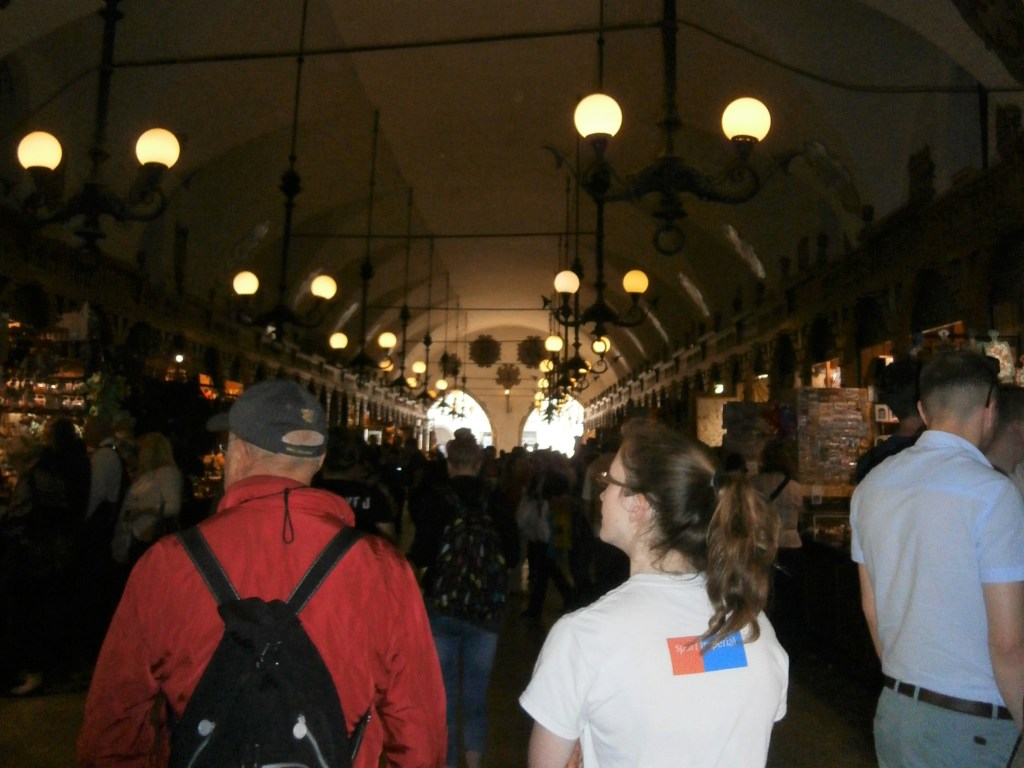
Rynek Underground
Rynek Underground is a museum telling the history of Krakow which is actually situated underneath the Main Square. Entering the tunnels near the end of the Cloth Hall, you can see a fascinating combination of ancient remains and modern audio visual displays.
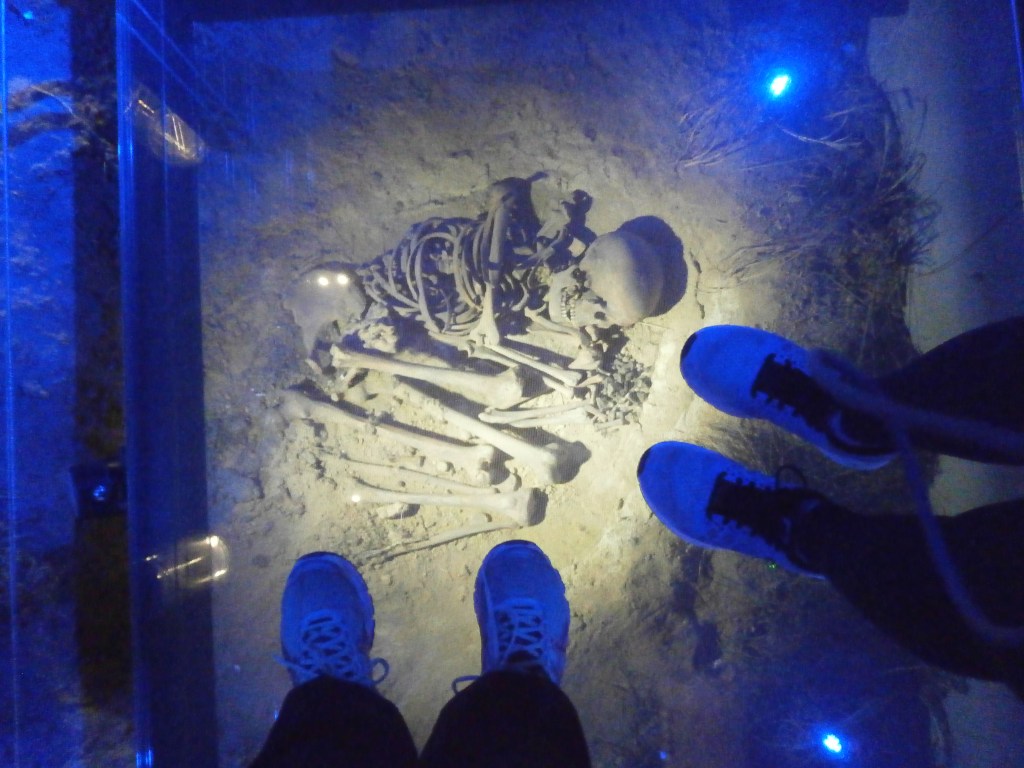
The museum is open most days from 10 am, with closing times varying. Adult entry costs 40 PLN (around £8.10). Further details about opening times and ticketing can be found here.
St Mary’s Basilica
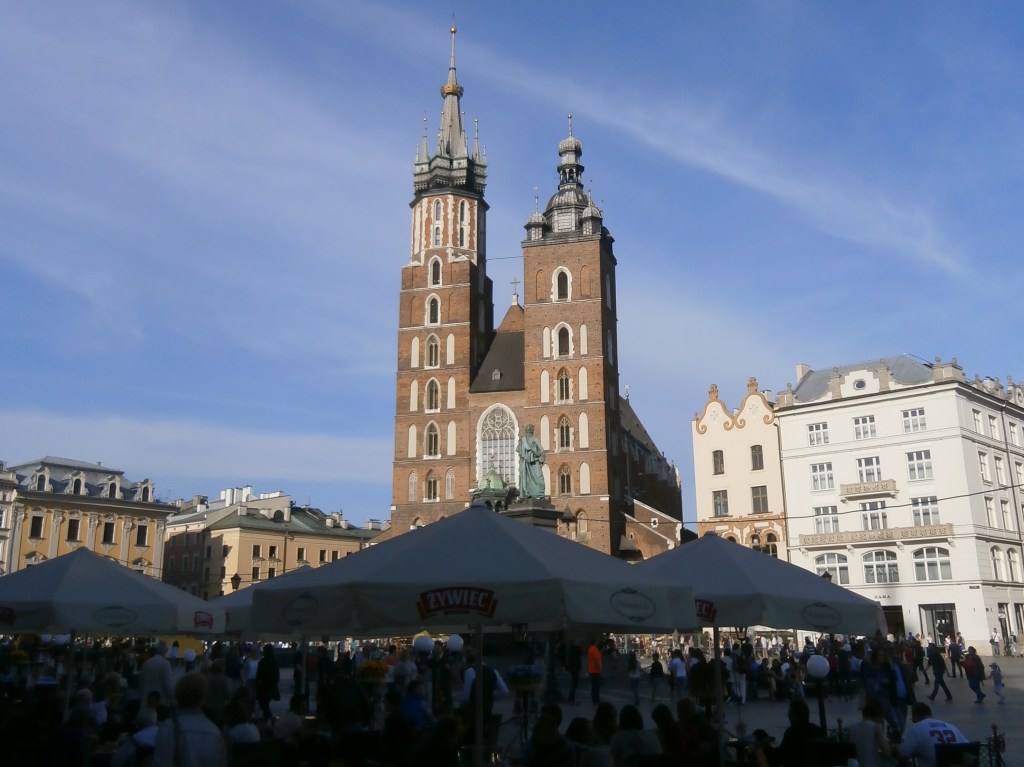
Overlooking the Main Square is St Mary’s Basilica with its distinctive uneven towers. The first church was built in here around 1220. Following its destruction during a Tatar raid around forty years later, construction of the current basilica began. The grand entrance, through an 18th Century baroque portal, is used solely by worshipers. Tourists must enter through the side door.
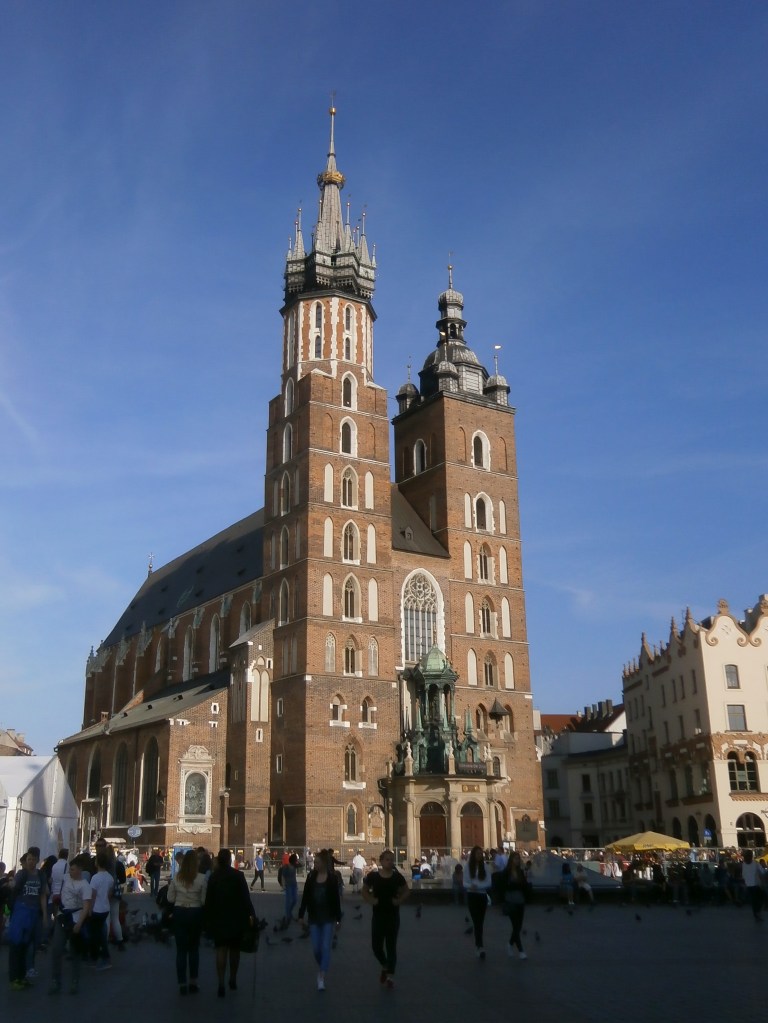
You can tour the exquisite interior with its spectacular carved wooden altar. Don’t miss the hourly hejnał (bugle call), which sounds from the taller tower.
The church is open to visitors daily from 11.30 am (2 pm on Sunday) until 6 pm. A donation of 18 PLN (around £3.70) is requested. Further details about opening times and ticketing can be found here.
Barbican
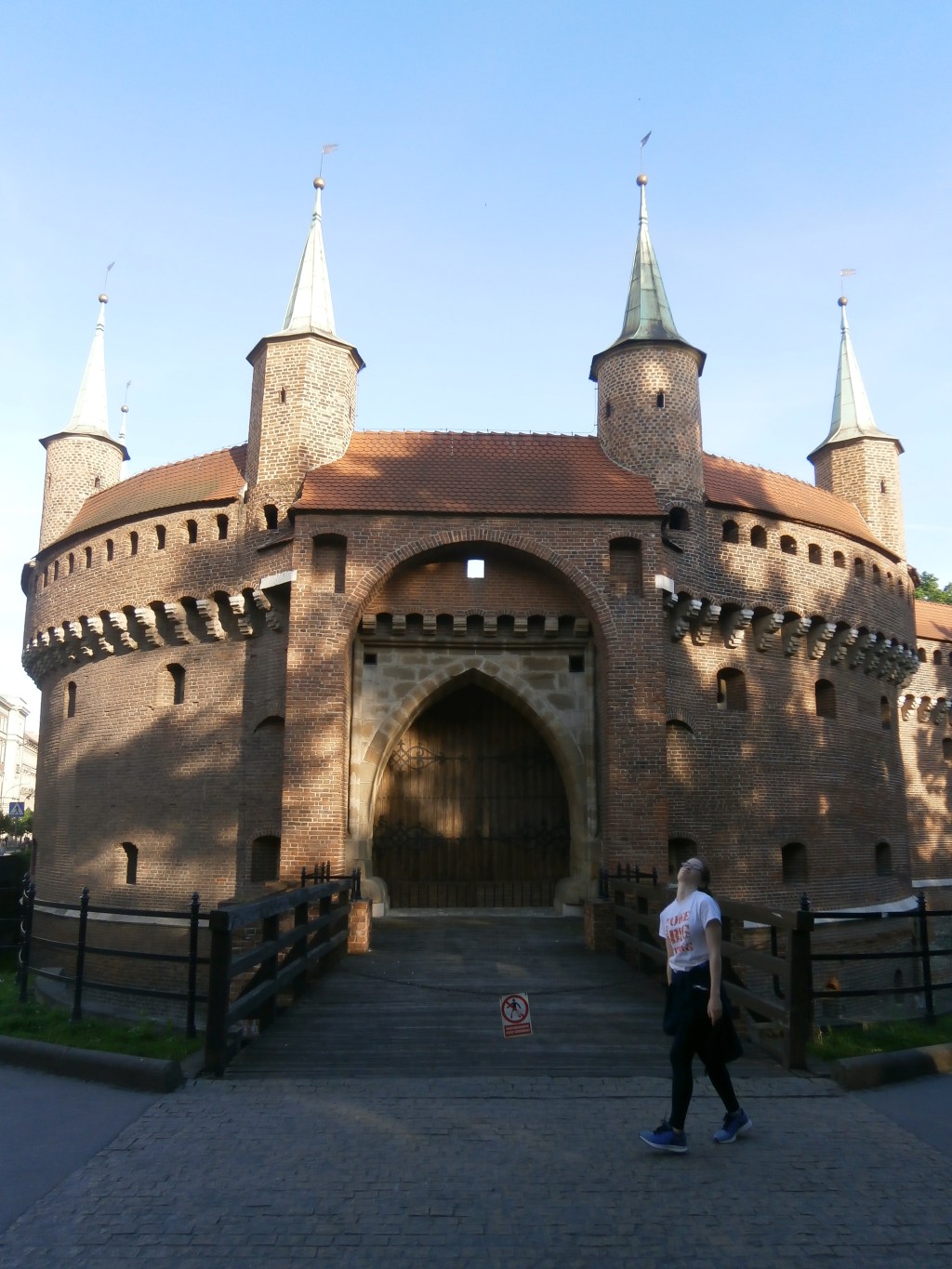
The Barbican, at the northern end of the Old Town, formed part of Kraków’s medieval fortifications. The circular bastion, topped by seven turrets, has 3 metre thick walls interspersed with 130 loopholes. The Barbican dates back to 1498, when it was built to protect the nearby Florian Gate. It now houses a small museum.

Drinks at a Vodka Bar
After a busy day’s sightseeing, start the evening off by trying some of the wide range of vodka available at the myriad of Vodka Bars around the old town. We opted for cherry vodka, which was very pleasant.

Dinner at Czarna Kaczka (The Black Duck)
For dinner, we chose the Czarna Kaczka (The Black Duck), which specialises in duck dishes. I opted for the duck breast with red wine sauce, dumplings stuffed with red cabbage and dried plum, which was delicious.

Accommodation: Rembrandt Aparthotel
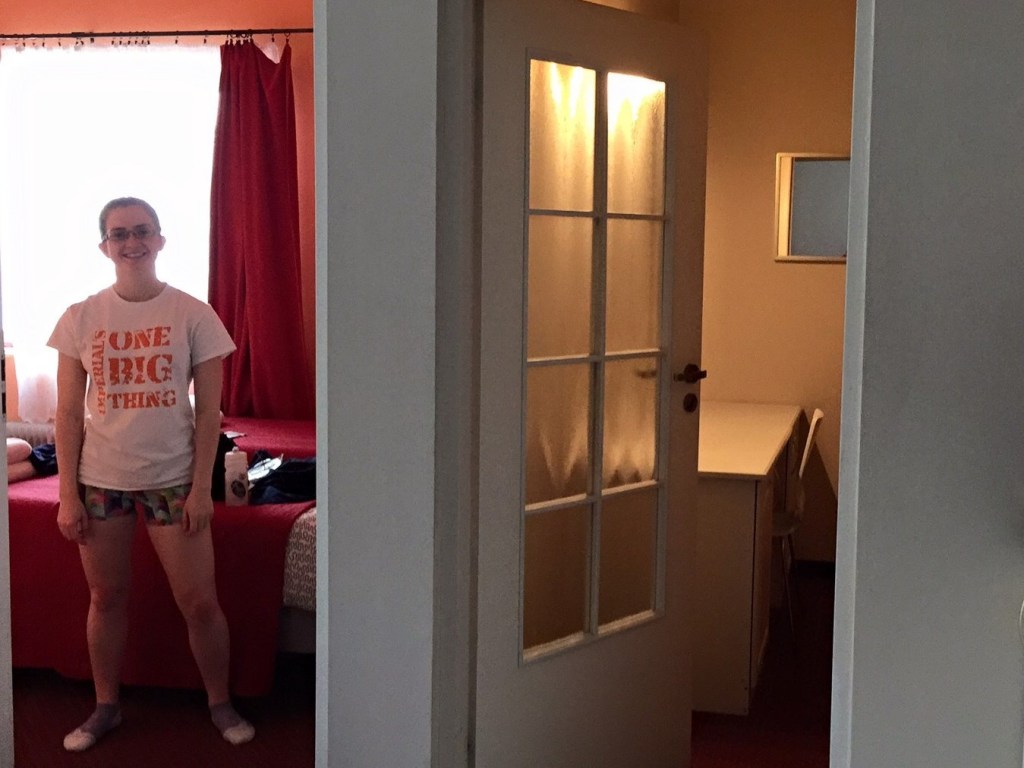
If you want to be in the heart of the Old Town, The Rembrandt Aparthotel is a great option. Centrally located in a historic building, these well equipped, clean and comfortable apartments are just a few minutes walk from Kraków’s main attractions with plenty of great bars and restaurants nearby.
Kraków Day 2
40 miles west of Krakow, you will find the infamous Nazi concentration camps of Auschwitz-Birkenau, now a museum.
Auschwitz
Ironically, these days, with around 2 million visitors a year, Auschwitz is quite difficult to get into. It is possible to visit at your own pace, however visitors are encouraged to join a guided tour. As a guideline, when we visited, individual visitors were only permitted entry before 10 am and the wait for a guided tour was 3 hours. So arriving early and/or booking in advance is recommended.
We make the 10 am cut off time for individual visitors with minutes to spare, although it has meant skipping breakfast. It feels inappropriate to complain about being hungry in a place like Auschwitz. I fail to gain entry at the first attempt as I have left my passport in the car. Then there is an issue with the spelling of my name on the ticket. Finally, on the third attempt, I am admitted and we can pass through the iconic ‘Arbeit Macht Frei‘ gate.

The camp consists of around 30 blocks, with most of the blocks now forming a museum detailing the history of Auschwitz. Some blocks cover the history of the camp in general. While others recount the plight of specific groups of prisoners; there are blocks given over to countries which represent the biggest numbers of prisoners here.

Permanent Exhibition
Blocks 4, 5, 6, 7 and 11 contain the Permanent Exhibition; this includes a series of rooms of items removed from prisoners; there are rooms full of shoes, spectacles, toys, suitcases, prosthetic limbs…

Most harrowing is the room full of hair. Upon arrival, women and girls had their heads shaved and the hair was used to stuff furniture. For some reason, to me, this room most graphically portrays the scale of the horror of the holocaust. I have been here once before and had nightmares about that hair for weeks afterwards. On the other side of the room is a chaise longue belonging to a Nazi officer’s wife, stuffed with the hair of murdered Jewish women and children.

The corridors are covered with the prisoners’ record cards. Corridor after corridor. Thousand upon thousand of them, each representing a person who died here. When you reach the end, there’s a notice explaining that from 1943, prisoner record-keeping stopped. These are just the first few thousand of the millions who perished here.
I try to work my way through the blocks but the number and size of tour groups is immense. I keep getting stuck in buildings and panicking, because I can’t get out. I can’t imagine how terrifying it must have been to be imprisoned here but I certainly wouldn’t have lasted long!
National Exhibitions
I move on to the National Exhibitions, which are less crowded. Block 14, the Russian Exhibition, is particularly interesting. The camp began in 1941 as a Prisoner of War camp detaining mainly Russian soldiers. In 1945, it was the Red Army who liberated the remaining prisoners. This exhibition charts both the plight of the Russian PoWs and the camp’s ultimate liberation.

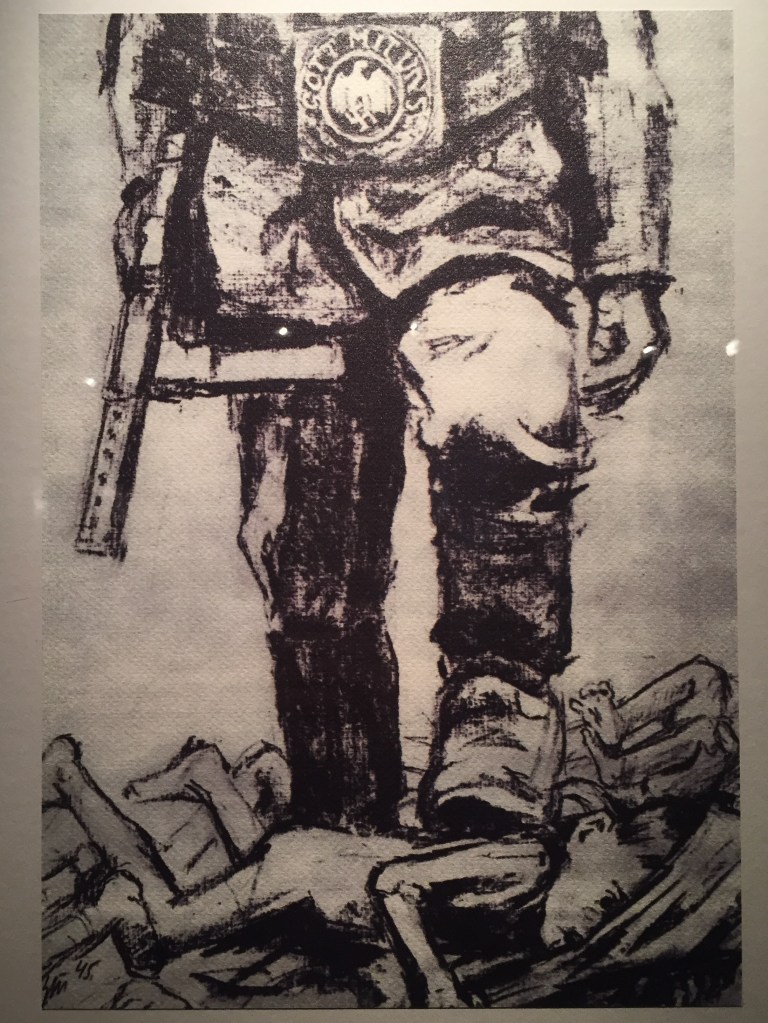
Particularly mesmerising is the art work of a Ukrainian soldier who was among the liberating troops. He drew sketches of the horrors they discovered upon entering the camp. When he ran out of paper, he took some from the Commandant’s office. Instead of turning it over and using the blank side, he opted to incorporate the Nazi letterheads and logos into his drawings.
Birkenau
Auschwitz is actually quite small. Once the camp could no longer deal with the numbers being sent, a second, much bigger camp; Birkenau was built. Prisoners were also held here, but its main function was as an Extermination Camp.
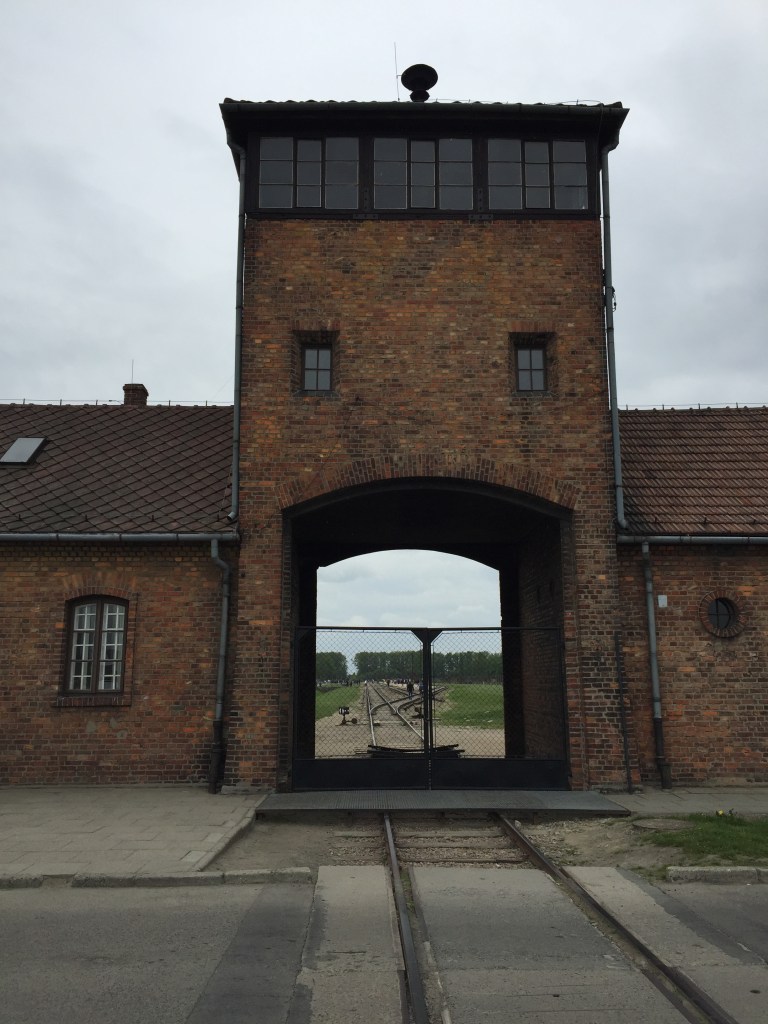
At Birkenau, the railway line runs right through the main entrance to the rear of the camp, stopping at a platform next to the gas chambers. Many of the prisoners sent here were marched straight from the train to the gas chambers, relieved of their possessions/clothes/hair and slaughtered. Their bodies were then cremated. Initially, the ash was used to fertilise the camp gardens, but later it was just shovelled into the nearby lake. The lake is still pitch black with the ash of those murdered here.

Auschwitz and Birkenau are about 1.5 miles apart. There is a shuttle bus taking visitors between the two camps. Most of Birkenau was destroyed, but a visit to the remains can help to understand the scale of what happened here.

The camp opens to visitors daily at 7.30 am, with closing times varying according to the season. Entry is free, but you have to pay to park, for a guide and to use the toilet. Further details can be found here.
Wieliczka Salt Mine
Just 8 miles from Kraków, you can find the Wieliczka Salt Mine, which is one of Poland’s most popular attractions. It consists of an underground labyrinth of tunnels and chambers spanning over a hundred miles and spread across nine levels, a small part of which is open to the public via guided tours.
There is a regular train service from Kraków to the succinctly named Dworzec PKP Wieliczka-Rynek-Kopalnia Station, which takes around 23 minutes. The salt mine is a few minutes walk from the station along a street lined with souvenirs stores and cafes. As I’m not a fan of being underground, I settled down at a cafe with a book, which my daughter went on a guided tour of the mine.
The salt-hewn formations include chapels, statues and monuments. The highlight of the tour is the vast chamber housing the ornamented Chapel of St Kinga. Everything in this bizarre underground church is made of salt and took three men over 30 years to complete. Other highlights are the Salt Lake with water is denser than the Dead Sea and the 36 metre high Stanisław Staszic Chamber.
Visitors must join a guided tour, which takes about two hours. You walk over a mile through the mine, so wear comfortable shoes.
The mine is open daily from 8 am to 6 pm, with English Language tours taking place every 30 minutes. Be prepared for a long wait. Alternatively, opt for a tour in another language. Regular entry costs 143 PLN (around £29.20). Further details can be found here.

Dinner at a Milk Bar
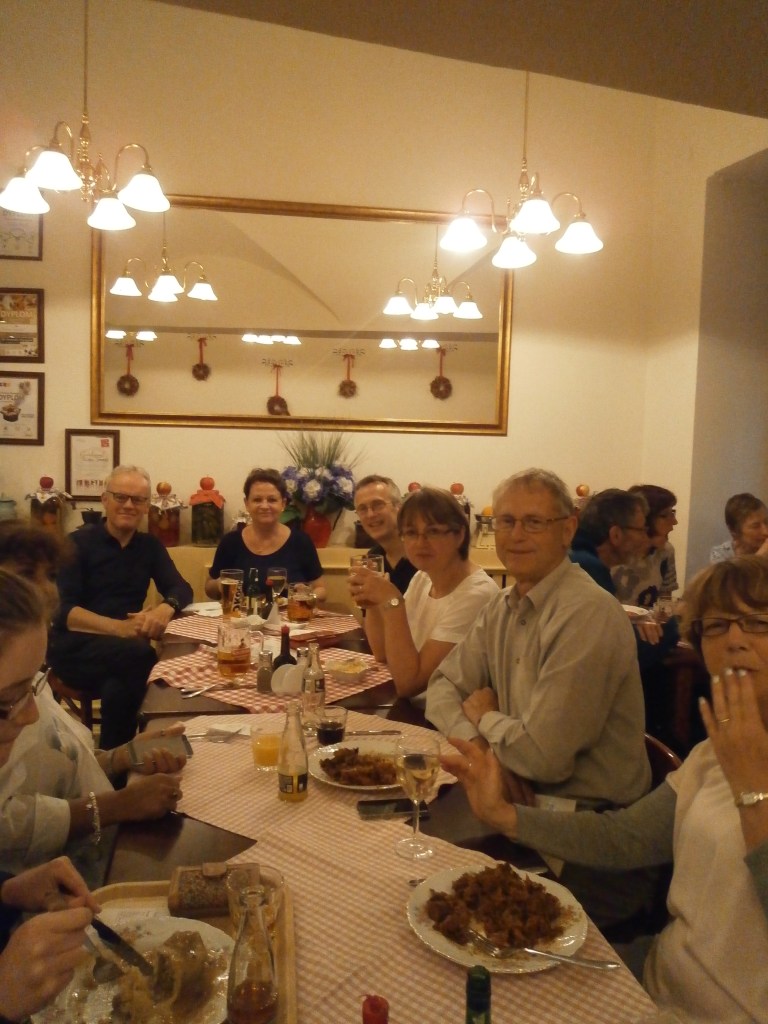
In my opinion, you can’t come to Kraków without dining at a Milk Bar. Originating at the turn of the 19th Century and initially only serving milk, hence the name, these cafeteria-style restaurants serve traditional Polish food at the lowest prices possible. These humble eateries soared in popularity under the Communist regime, when they were subsidised to ensure that workers could get a proper hot meal every day. For a Brit, it’s a bit like going back to school; queuing with your tray to pick and point at what you want for dinner. But some Milk Bars also sell alcohol, so not quit like school dinners…
- Trips taken: May 2016 and May 2019
- Updated: October 2025
I hope you found the above information useful. For guides to more destinations in the 50+ countries we have visited, check out my full list of Independent Travel Itineraries here.
 Jane's Midlife Journey
Leave a comment