
We spent a week on a road trip round Cyprus. This eastern Mediterranean island is divided into two by a United Nations Buffer Zone. To the south, the predominantly Greek Republic of Cyprus and to the north, the Turkish Republic of Northern Cyprus. The capital of both is Nicosia, which is also divided into two. We drove round the south of the island, with a brief foray into the north. Most car hire companies don’t allow their vehicles to be taken across the border. If you wish to visit the north, it is best to cross on foot and arrange further transport from there. It may be possible to take a guided tour, but these are seasonal. If you travel off peak, like we did, you can walk across the border in Nicosia and catch a bus the other side. Below is our itinerary for a week in Cyprus, including accommodation and dining options.
Note: Day 4 is quite light as my husband opted, as mentioned above, to cross into Northern Cyprus and take a bus to Kyrenia. While I chose to remain in Nicosia shopping and perusing the museum.
Cyprus 1 Week Road Trip Itinerary
| Day 1 | Flight to Larnaca Accommodation – Rise Urban Art Hotel Drinks at Rise Urban Art Hotel |
| Day 2 | Larnaca Morning Walking Tour: Church of Saint Lazarus Turkish Quarter Djami Kebir Mosque Larnaca Castle Finikoudes Beach Afternoon Road Trip: Larnaca Salt Lake Hala Sultan Tekke Mackenzie Beach Kamares Aqueduct Dinner at Eu Kouzin |
| Day 3 | Nicosia Drive to Nicosia Accommodation – Altius Boutique Hotel Green Line Ledra Street/Lokmaci Crossing Point Atatürk Myd Büyük Han Bedesten Selimiye Mosque Municipal Market Dinner at F Kelebek Papillion Venetian Walls Famagusta Gate Liberty Monument |
| Day 4 | Nicosia Ledra Street Shacolas Tower Leventis Municipal Museum Eleftheria Square Dinner at the Syrian Club |
| Day 5 | Limassol Drive to Limassol Accommodation – Harmony Bay Hotel Ancient Kourion Kolossi Castle |
| Day 6 | Paphos Paphos Promenade Archaeological Site of Nea Paphos Paphos Castle Coastal Path The Tombs of the Kings Paphos Old Town Aphrodite’s Rock |
| Day 7 | Limassol Molos Seaside Park Limassol Old Port Limassol Castle Ayia Napa Cathedral Municipal Art Gallery Municipal Gardens |
Cyprus Day 1
Flight to Larnaca
We flew from London to Larnaca Airport. The Airport is just 5 miles south of the city centre, so it’s a quick drive into town by shuttle bus, taxi or car. The flight to Larnaca was uneventful. Very uneventful. The 4 hour British Airways flight consisted of no in- flight entertainment, no meal service (unless you want to pay a fiver for a pot noodle) and saddest of all, no moving map. So it was back to a good old fashioned book and hoping I didn’t need the loo as there were two fat men between me and the exit.
We rented a car via AERCAR Rentals, which offers some cheap deals. They are based off airport. It isn’t particularly clear from the airport signage, but to reach the off airport rental shuttles, you need to go upstairs to departures. Bear in mind that if you opt for AERCAR’s cheapest deal, the cars are quite old – ours had 180,000 km on the clock. As the driving in Cyprus is fairly manic, this isn’t necessarily a bad thing. Our car was damaged when someone reversed into it in a car park and the rental company didn’t care. It’s worth noting, however, that the car was too old to have a USB charger and required an adaptor which plugs into the cigarette lighter.
Once we were acquainted our ancient hire car, we could drive to Larnaca and tonight’s hotel.
Accommodation – Rise Urban Art Hotel
A quick drive up the B4 brings us to Larnaca and our accommodation; the quirky Rise Urban Art Hotel. The hotel is covered inside and out with street art. It’s dark when we arrive, so we don’t get to see the building in its full glory.
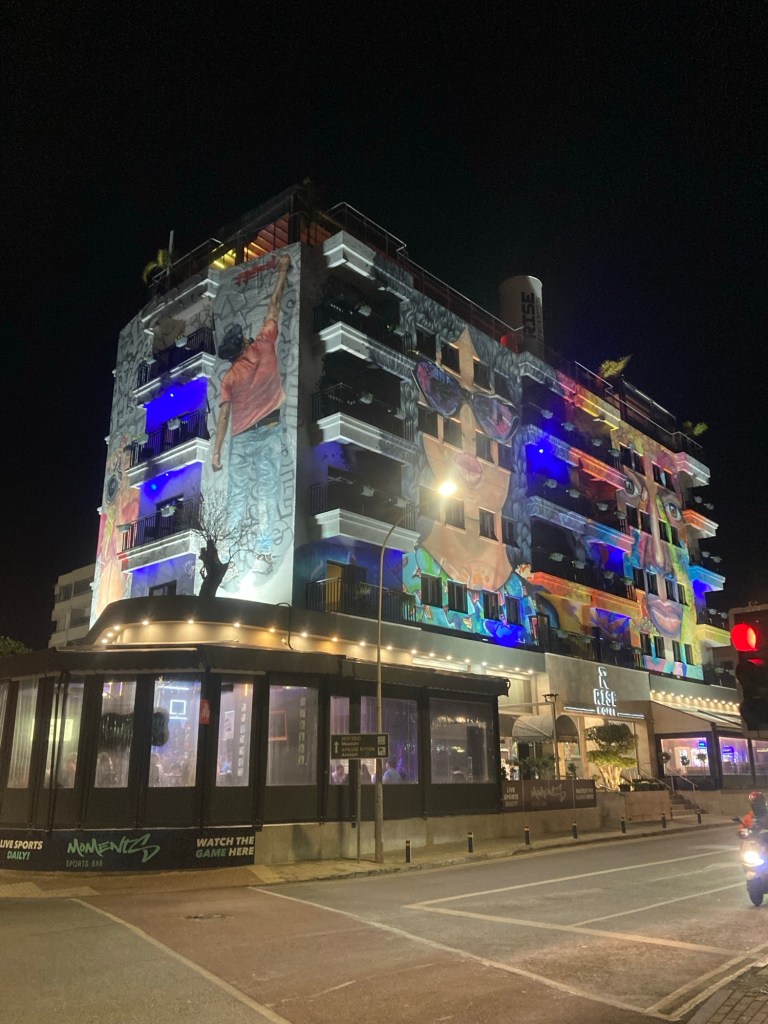
The hotel claims secure off road parking, but there are only 4 spaces and already 5 cars parked there. So we have to make do with taking a photo of the car park, complete with hitchhiking spaceman, before parking on a vacant building plot a couple of blocks away.

We check into our room. Each bedroom has its own theme. I’ve seen photos and lots of the rooms look really cool. Ours is rather creepy with an aboriginal child sucking a dummy.
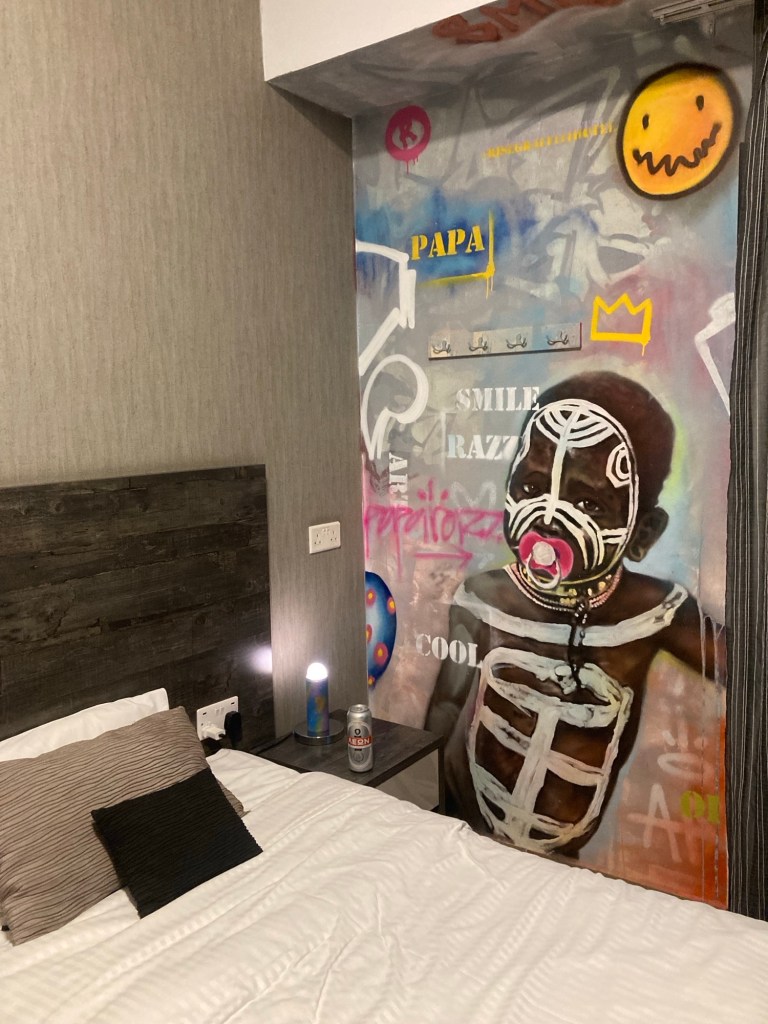
The hotel offers free parking (but you have to be quick, as there are only 4 spaces), Wifi and breakfast.
Drinks at Rise Urban Art Hotel
Our hotel reservation includes a free drink token for the rooftop bar, which is adorned with art and overlooking the city. So we head upstairs for a drink. Even if you don’t stay here, it’s worth a visit to admire the decor.

Cyprus Day 2 – Larnaca
Today, we split our day into two; in the morning, a walking tour of the old town and the prom lining Finikoudes Beach. Then in the afternoon, a drive to the nearby salt lake and Mackenzie Beach.
Morning Walking Tour
We start the morning with a walk round the Old Town of Larnaca, visiting a church, a mosque, a castle and a beach. Total distance – 2.5 miles.
Church of Saint Lazarus
The Church of Saint Lazarus is a 9th Century church. It is allegedly the second burial place of Lazarus, who was resurrected by Jesus first time round.
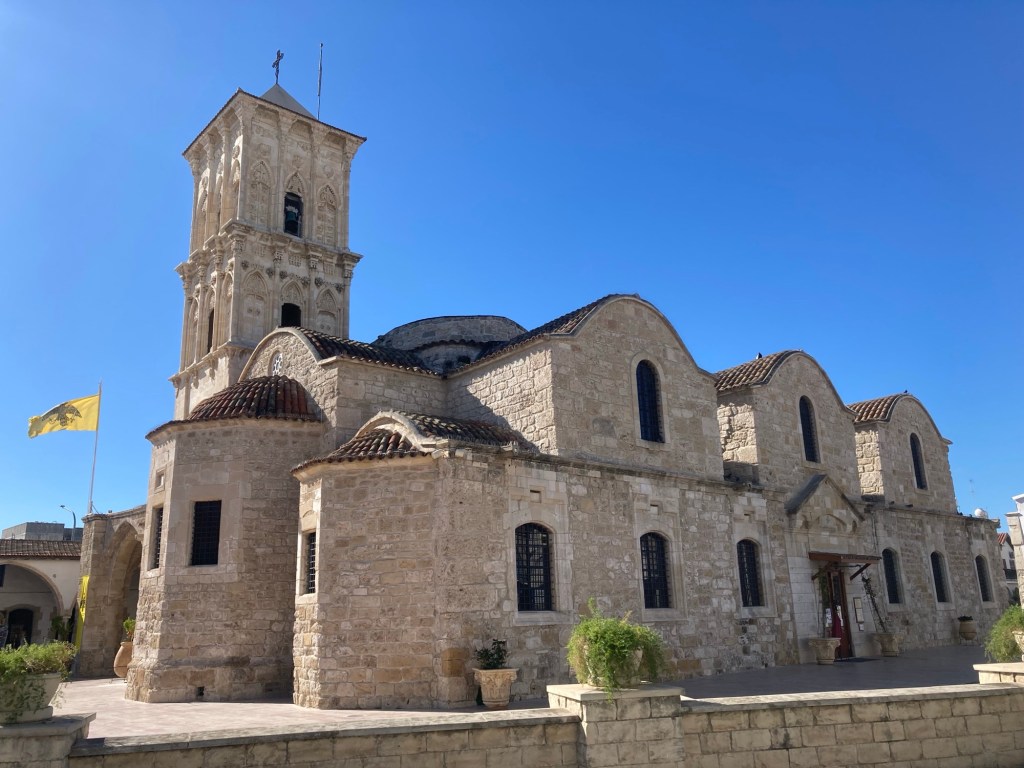
The church was refurbished in the 17th Century and the impressive interior is brimming with gold and intricately carved wood. There is a small Byzantine Museum in the courtyard.

Turkish Quarter
The narrow streets of the Turkish Quarter of Skala are packed with souvenir shops and food stalls. You can pick up a local souvenir from one of the ceramics workshops.

Djami Kebir Mosque
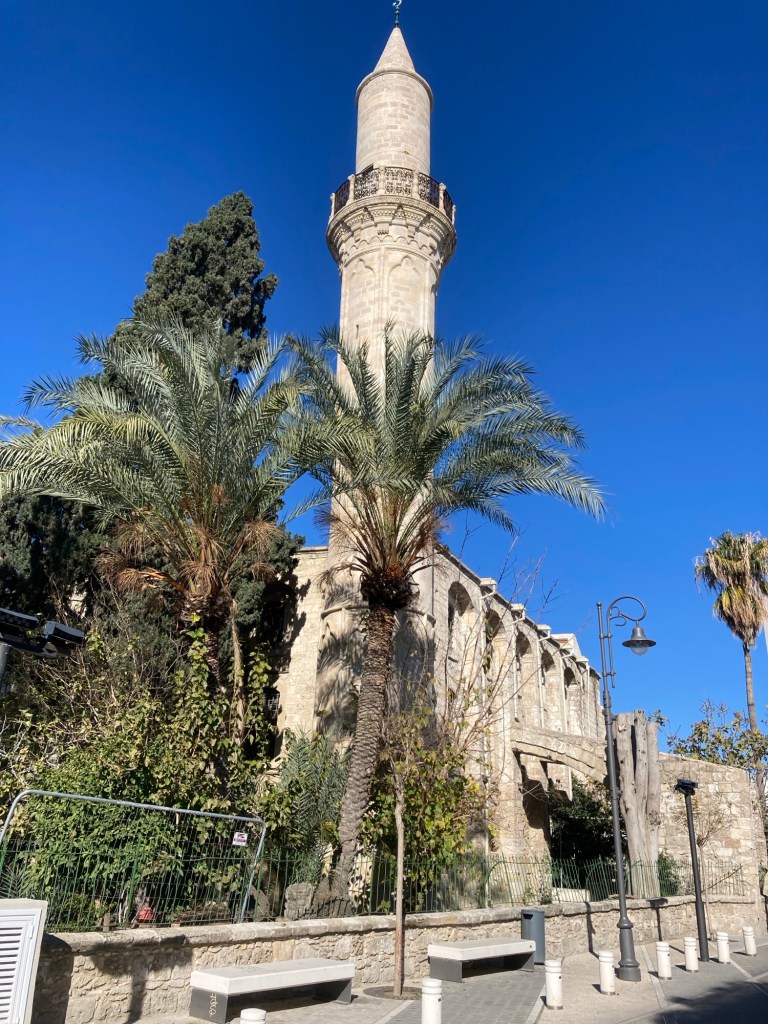
The Djami Kebir Mosque was a church when first constructed in the 16th Century. It was converted to a mosque by the Ottomans a century later, but you can still spot some old Christian graves in the courtyard.
Larnaca Castle
The seaside fortress of Larnaca Castle was built in the 12th century. It too was remodelled by the Ottomans, then subsequently used as a prison during British rule. It now houses a small museum.

Finikoudes Beach
Larnaca’s popular Finikoudes Beach has a sandy beach backed by a tree lined promenade and plenty of bars and restaurants. It’s a great place for a leisurely morning stroll. The promenade runs north from the castle to the marina.
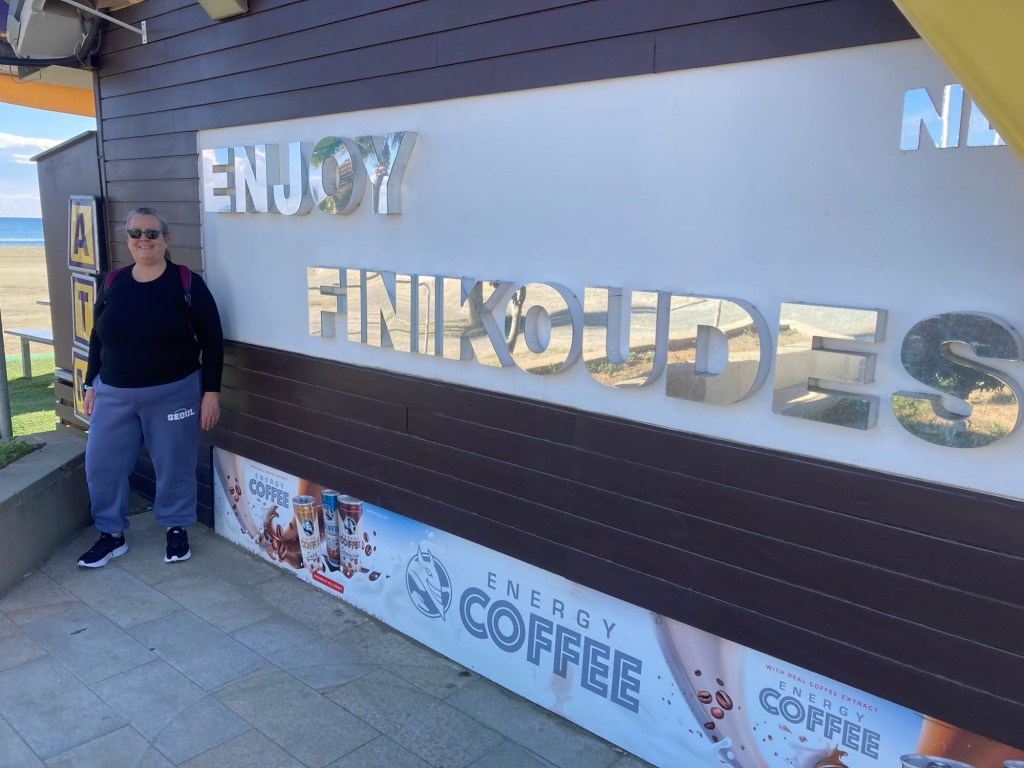
There is public art a various points along the prom, but each piece is in front of a children’s play area, which gives me the impression that the instigator was some sort of pervert…

Afternoon Road Trip
In the afternoon, we drive a little further afield to Larnaca Salt Lake and its surroundings. Total distance; 14 miles.
Larnaca Salt Lake
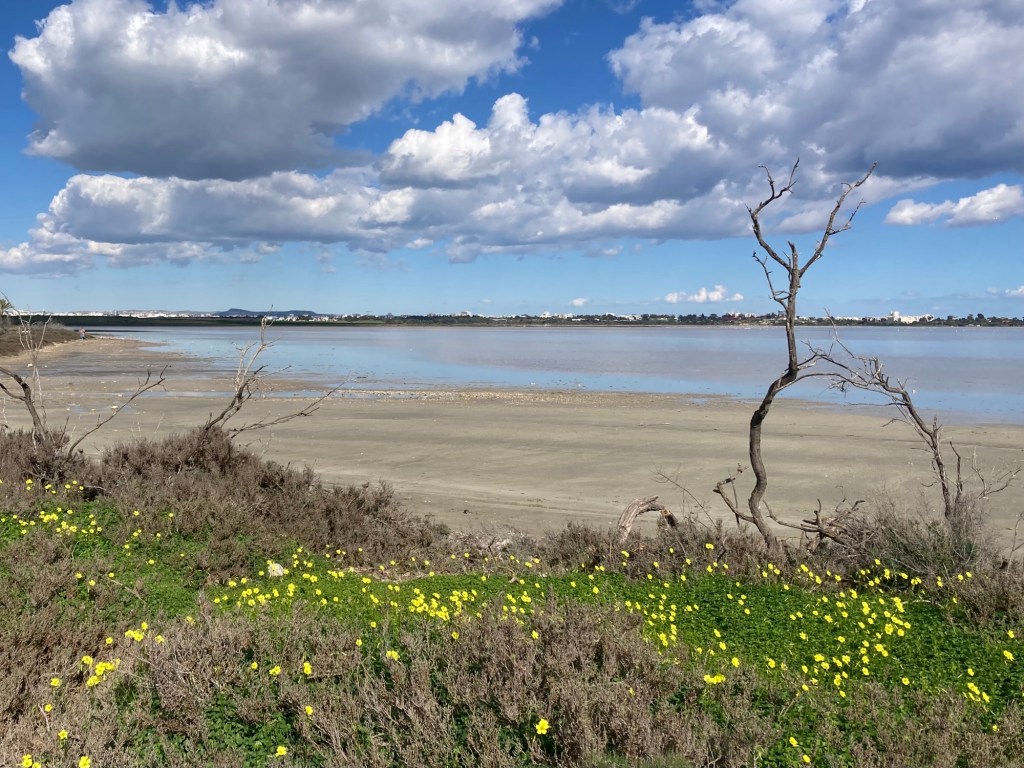
Larnaca Salt Lake is just to the west of the city. The area is a nature reserve. There is a walking trail round the edge, from where you can enjoy views of the lake, unless you visit in summer, when the lake dries up completely, leaving just salt behind. In spring, flamingos can be spotted in the lake. When we visited, they were all a long way from the shore, so just tiny pink spots in the distance.
Hala Sultan Tekke
The picturesque Hala Sultan Tekke mosque is built on the shore of the lake. It is said to be constructed on the spot where Mohammed’s wet nurse died when she fell off her donkey.

Mackenzie Beach
From the mosque, we head back to the coast to Mackenzie Beach; Larnaca’s most popular beach. We park up to take a wander along the prom.

The promenade is lined with bars and restaurants, all of which runs out abruptly when you reach the flight path to the airport.

After our second prom stroll of the day, we return to our hire car to find that someone has pranged it while we were away and left a dent in the bumper. It’s just below an old dent, which been repaired with filler, so hopefully the hire company won’t be too bothered…
Kamares Aqueduct
Our last stop of the day is further round the salt lake. A couple of miles west of the city, the remains of the Kamares Aqueduct can be found in a field. The aqueduct was built in the 18th century and delivered water to the city. It remained in use until the 1930s.. Nowadays, just 33 arches of this engineering marvel remain.

Dinner at Eu Kouzin
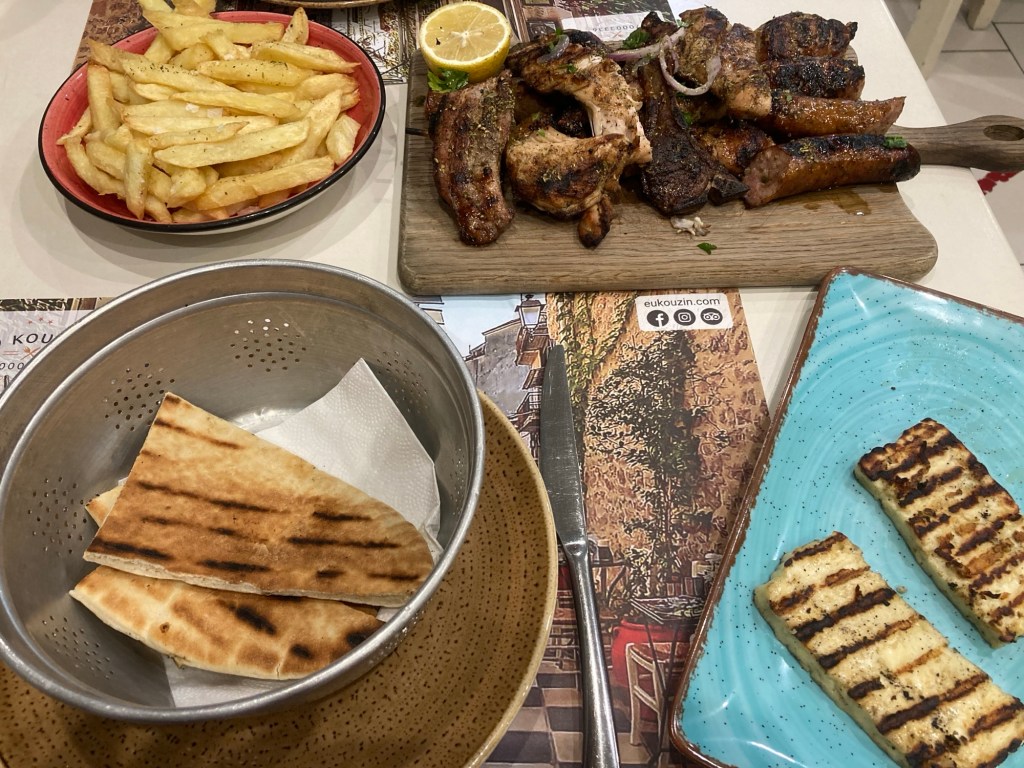
In the evening, we venture out to sample the local cuisine at Eu Kouzin. As I want to try the sheftalies (Cypriot sausages) and the old man loves meat, we opt to share a mixed grill. Verdict: Cypriot cuisine does not rank among my favourites, but they make excellent wine!
Cyprus Day 3 – Nicosia
Today, we head for Nicosia, the island’s divided capital city.
Drive to Nicosia
The drive from Larnaca to Nicosia takes less than an hour. Once you’ve reached the outskirts of town, it’s a quick blast up the A1; a motorway where the central reservation is filled with flowering shrubs.
Accommodation – Altius Boutique Hotel
The Altius Boutique Hotel is about a mile from the old town. It’s pretty basic, but clean and comfortable and has its own car park – this was as close as we could get to the old town with free parking.
After checking in, we take a walk round Nicosia Old Town, following the Green Line and city walls, before crossing into Northern Cyprus for more exploring, then back into the southern sector to complete our loop. Total distance; 3 miles.
Green Line
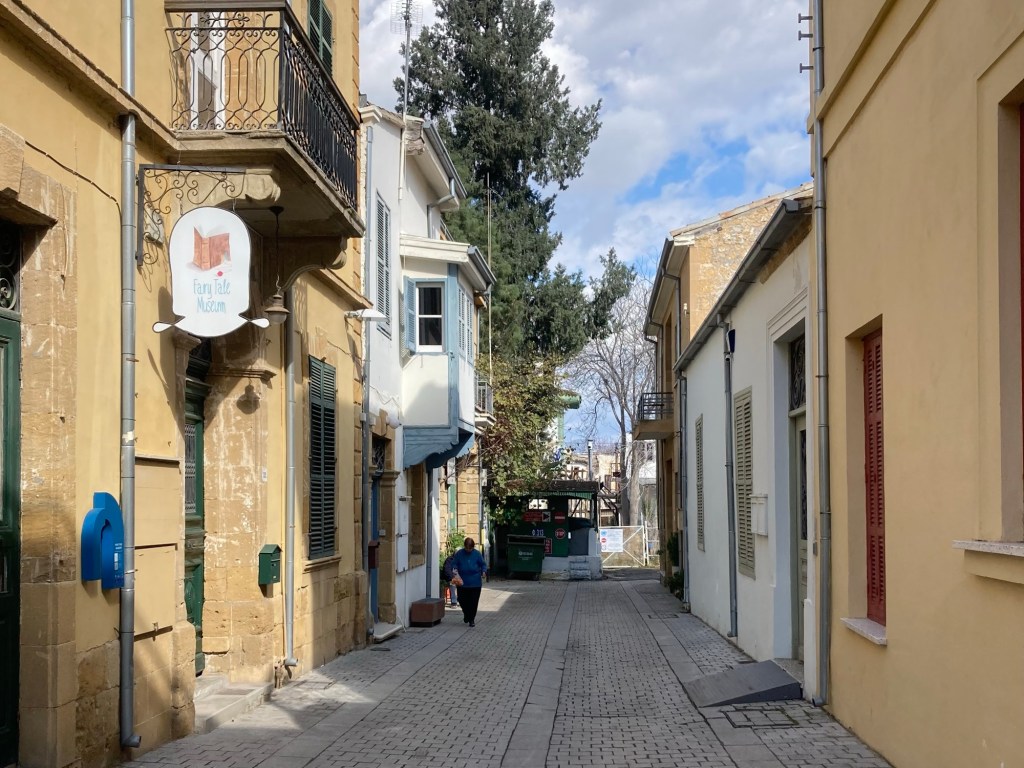
The Green Line is the exclusion zone between the two regions of Cyprus, which is controlled by the United Nations. It runs for a total of 186 miles, including right through the centre of Nicosia. You can walk along the edge of this line to see the various checkpoints, barricades and bunkers. As well as streets which are truncated by the border fortifications.
Ledra Street/Lokmaci Crossing Point
Sitting incongruously in the middle of the main shopping street, is the Ledra Street/Lokmaci Crossing Point; a pedestrian crossing point between the southern and northern sectors of the city. The crossing only takes a few minutes. You will need your passport (or ID card), but they don’t stamp it.

Crossing the border is a traumatic affair. The actual official part is easy. Hand your passport over at two different checkpoints for someone to look at and pass back. But the first buildings the other the side are a row of Turkish sweet shops. Outside are gangs of snipers attempting to take out unsuspecting nut allergy sufferers by thrusting trays of baklava and Turkish delight in their faces.
Atatürk Myd
The landmark Atatürk Myd is a square with a Venetian column and a fountain from the Ottoman period. On a Sunday morning, it’s packed with people drinking coffee and chatting. Opposite the square is the Supreme Court, housed in the former British Colonial court building.

Büyük Han
Büyük Han (The Old Inn) is a market in the old Caravanserai building. It is constructed around a courtyard which contains a mosque and a fountain. During British rule, Büyük Han became the city’s first prison. Today, it houses craftsmen, galleries, restaurants and cafes.

Bedesten
Bedesten is a cultural centre in the renovated former 14th Century St Nicholas Church.

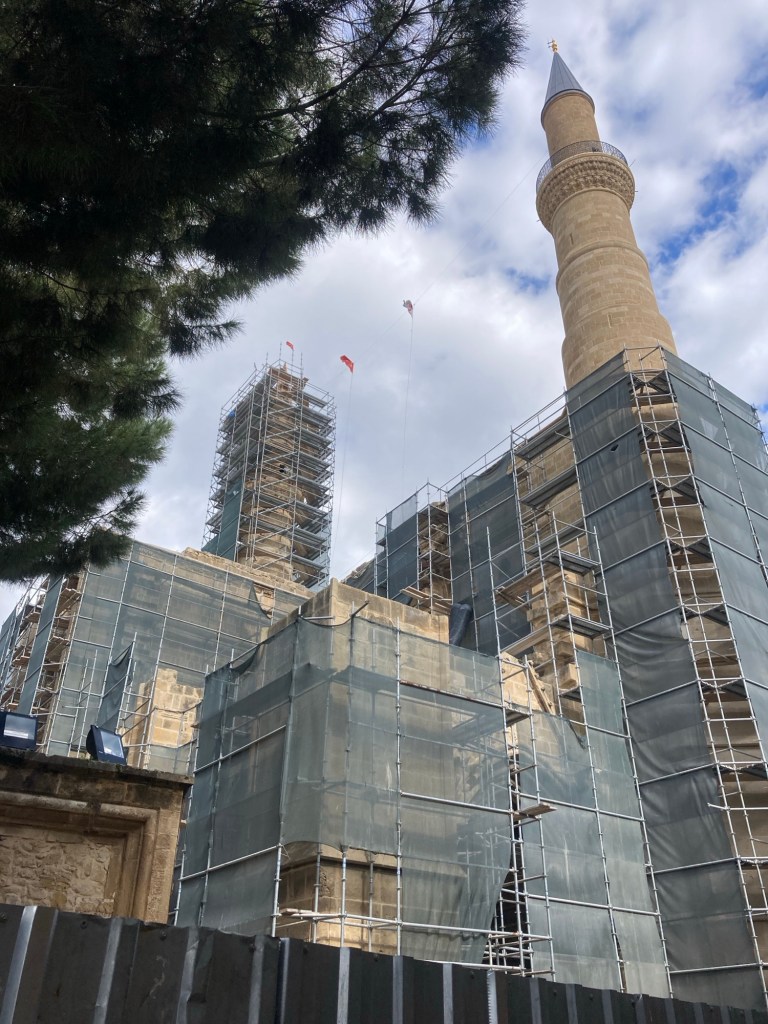
Selimiye Mosque
The large Selimiye Mosque started off as a Gothic church, built very slowly by the French between 1209 and 1326. Some 200 years later, the Ottomans arrived, added a couple of minarets and converted it into a mosque.
Municipal Market
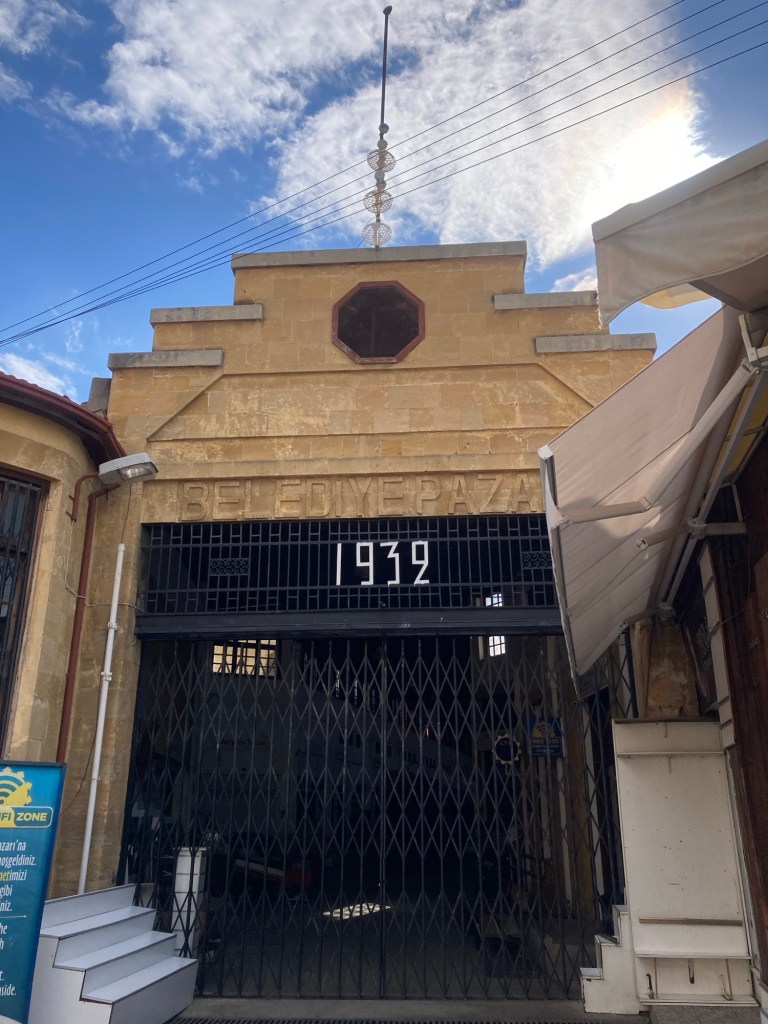
The Municipal Market is housed in an art deco building dating back to 1932. It used to be the region’s largest market. Nowadays, it mainly caters to tourists and sells souvenirs etc. The market is closed on Sundays.
Drinks at F Kelebek Papillion
Surprisingly for a Muslim country, lots of things are shut on a Sunday, so we have to make do with a wander round, looking at some of the more interesting buildings, then settle at a table outside a touristy restaurant for glass of draft Efes beer and some dinner as we watch the world go by. There are many cafes lining the road near the crossing point. We opted for F Kelebek Papillon.

Note: The official currency in Northern Cyprus is the Turkish Lira, but shops and restaurants close the border will accept Euros.
Venetian Walls
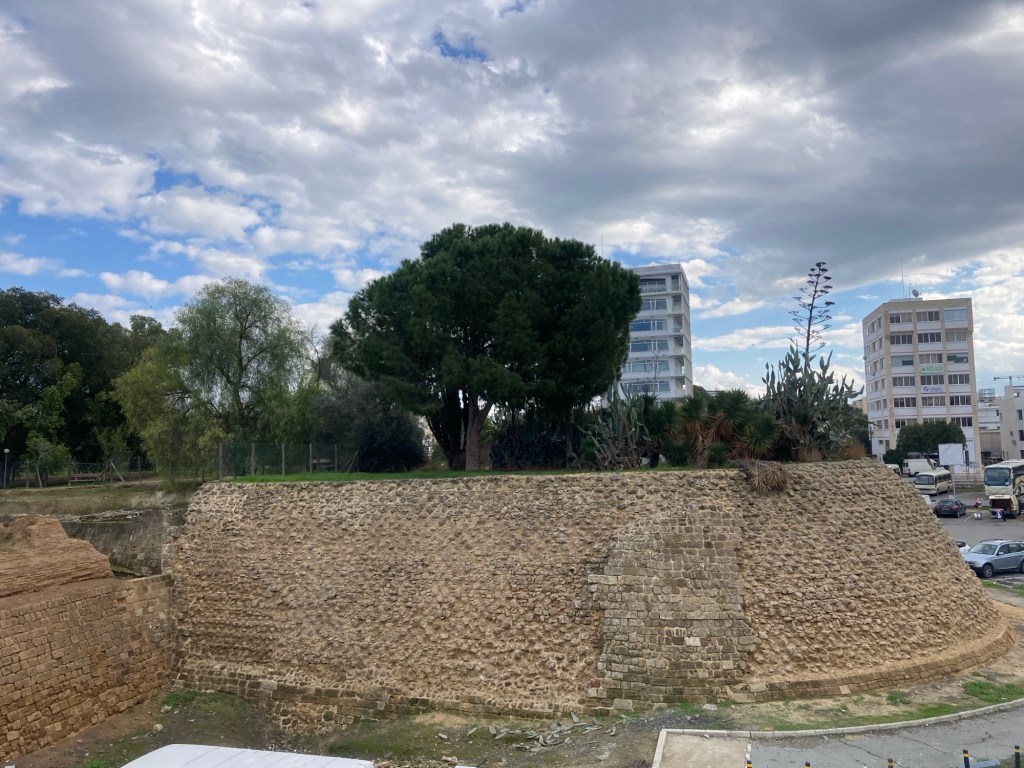
Dating from 1567, the Venetian Walls are a circular defence system of walls, surrounded by a moat, erected by the Venetians to ward off Ottoman invaders.
Famagusta Gate
One of the three gates in the city walls is Famagusta Gate. It has a wooden door opening out to a tunnel that leads through the rampart wall.

Next to the Gate is an aqueduct built in the 18th century as part of the water supply system of Nicosia which brought water from the mountains north of the city. A stone built arched construction, it ran from Kyrenia Gate in the north to Famagusta Gate in the east. During the demolition of a private building, eleven arches of the old aqueduct were discovered.

Liberty Monument
The Liberty Monument celebrates the island’s liberation from the British. It depicts the figures of 14 freedom fighters being released from prison in 1959 alongside peasants and priests, which represent the various strata of Greek Cypriot society.

Unlike Larnaca, where it’s pretty much business as usual on a Sunday, a lot of things are closed in Nicosia on Sundays. This appears to include public toilets. Not an ideal situation for someone who just drank a pint and a half of beer!
Cyprus Day 4 – Nicosia
Today, I spend a day in southern Nicosia, with some shopping, culture and a leisurely meal at the excellent Syrian Club. Meanwhile, the old man walks across the border and catches a bus to the coastal city of Kyrenia.
Ledra Street
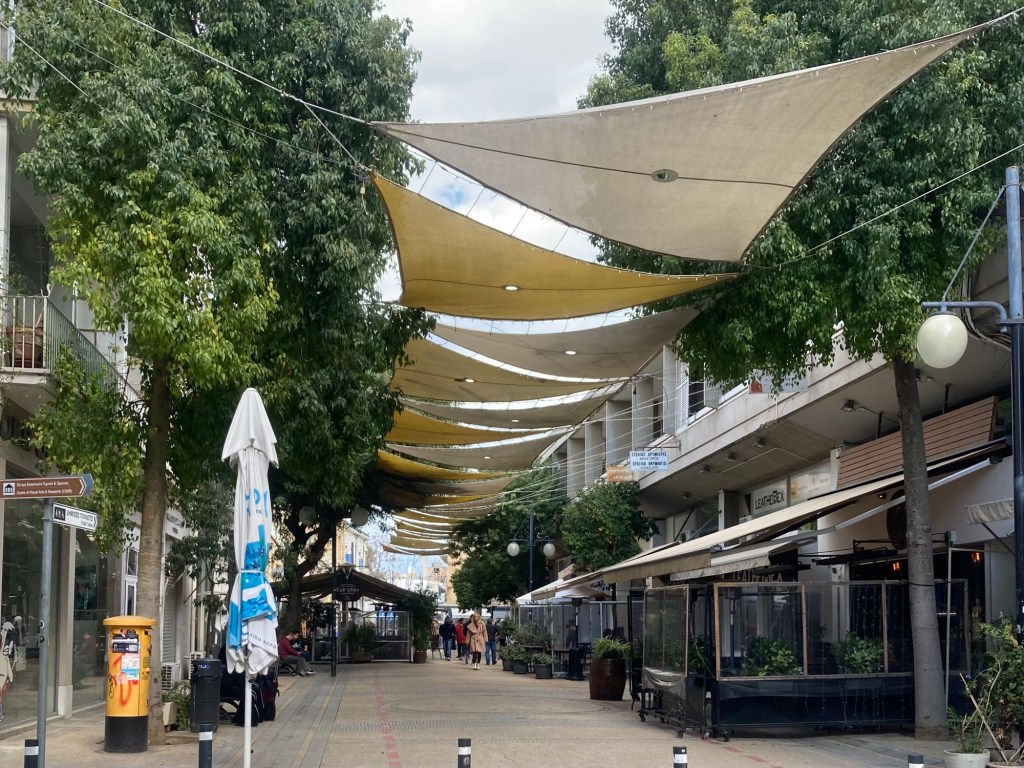
As well as being the main crossing point between the north and south of the city, Ledra Street is also the main pedestrian shopping street. Nothing opens very early in Nicosia, so I end up sitting on a bench while a tramp tries to peer into my handbag and a strange man paces up and down the metre gap between my bench and the wall. Eventually, the shops open and I can purchase some gifts and souvenirs.
Shacolas Tower
Shacolas Tower was Nicosia’s tallest building when it was constructed in 1959. You can take the lift to the 11th floor where, if you’re lucky enough to find it open, you can visit an observatory and small museum. It was closed when I visited, so I just poked my camera out of the window by the lift and went on my way.

Leventis Municipal Museum
There are a couple of options for museums in Nicosia; the Cyprus Museum, the island’s main and largest archaeological museum, which is located just to the west of the city. And the Leventis Municipal Museum. I opt for the latter, which is more centrally located and charts the history of Nicosia.

Eleftheria Square
Plateia Eleftherias (Liberty Square) was remodelled in 2021 by architect Zaha Hadid, nicknamed Queen of the Curve for her enchanting curved designs.
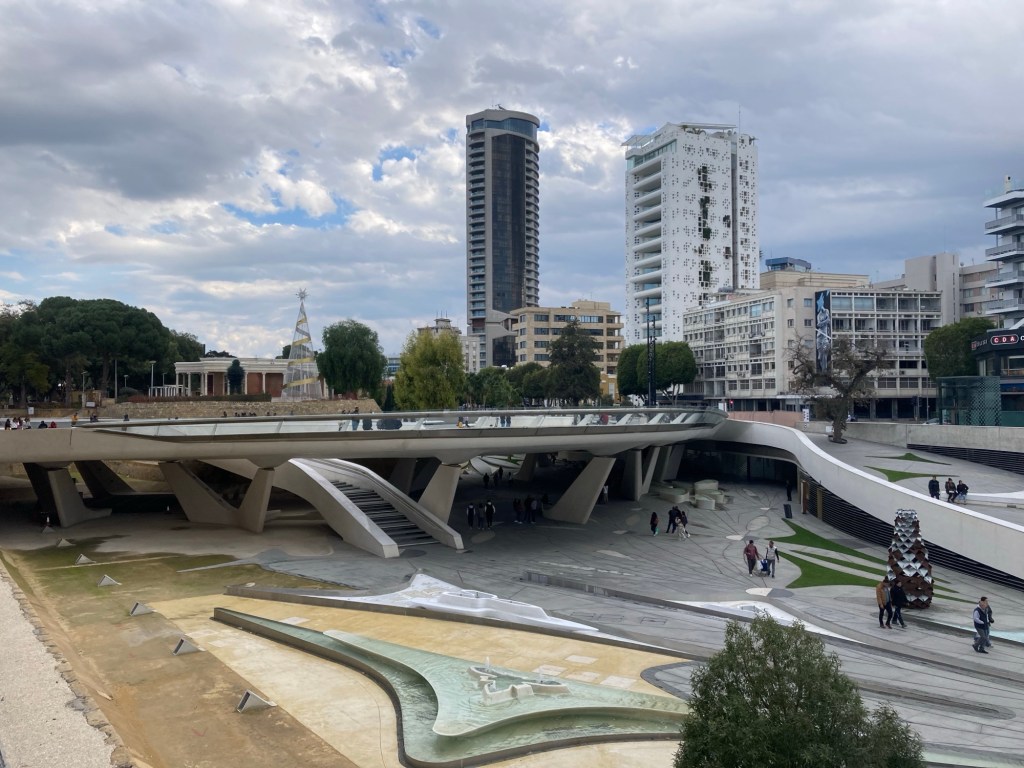
A curved viewpoint wraps around the edge of the old city walls and overlooks a park consisting of curved paths, benches and water features.

Dinner at the Syrian Club
For dinner, I go to the Syrian Club, which is just round the corner from our hotel. You enter via a tunnel of lights into a restaurant in a fake garden surrounded by fountains.
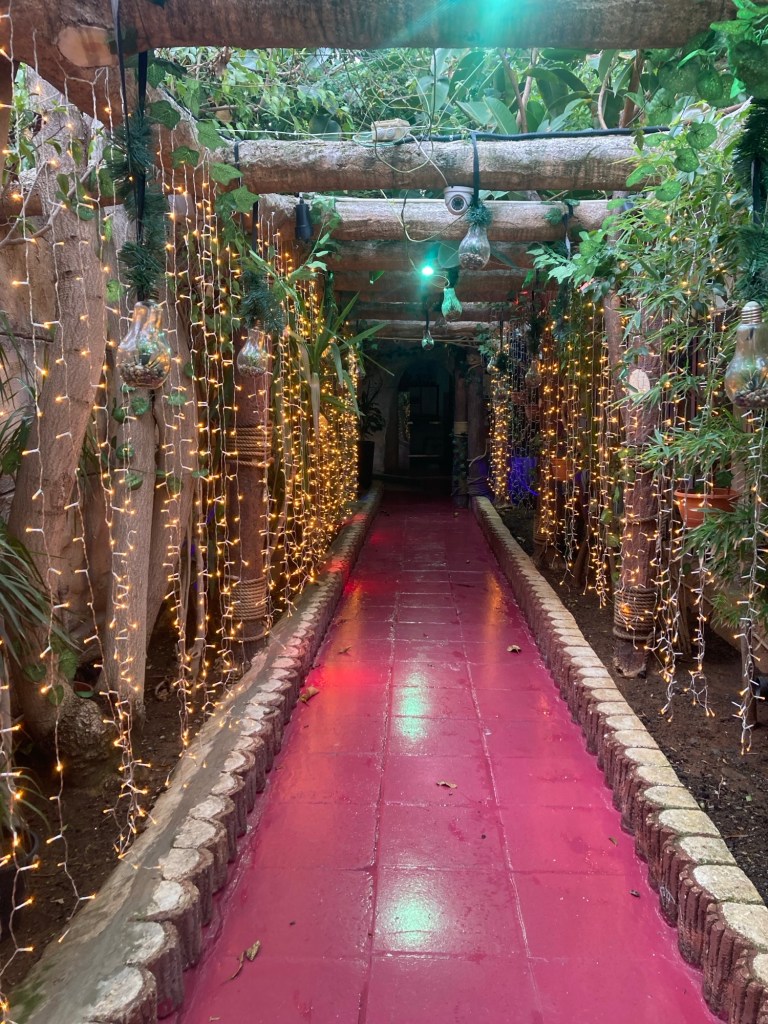
Most people opt for the mezze. It’s very good – the fried aubergine in pomegranate sauce is one of the best dishes I have ever tasted. There is also belly dancing. An excellent way to round off our visit to Nicosia.

Cyprus Day 5 – Limassol
Today, we head for the south coast and the port city of Limassol. The second largest city in Cyprus sprawls along the coast, which is lined with hotels to cater for the many holidaymakers who come here.
Drive to Limassol
The drive from Nicosia to Limassol takes just over an hour down the A1. We had planned to take the scenic route through the Troodos Mountains. However, it snowed overnight, so there are road closures in place. So, it’s back to Plan B and the motorway.
Accommodation – Harmony Bay Hotel
The coast either side of Limassol is lined with hotels. We opted to base ourselves 3 mile to the east of the city at the Harmony Bay Hotel. This almost beachfront hotel has clean, comfortable rooms with balconies offering a glimpse of the sea. The hotel provides free parking, Wifi and breakfast. The hotel has a pool and beach access. Unfortunately, when we visited it was cold and wet, so we weren’t able to make use of these facilities.

Ancient Kourion
10 miles west of Limassol, on a hill overlooking the sea, is the archaeological site of Ancient Kourion. The city of Kourion dates back as far as the 13th Century BC. Remains include the House of Eustolius, the House of the Gladiators and the House of Achilles with their intricate mosaic floors.
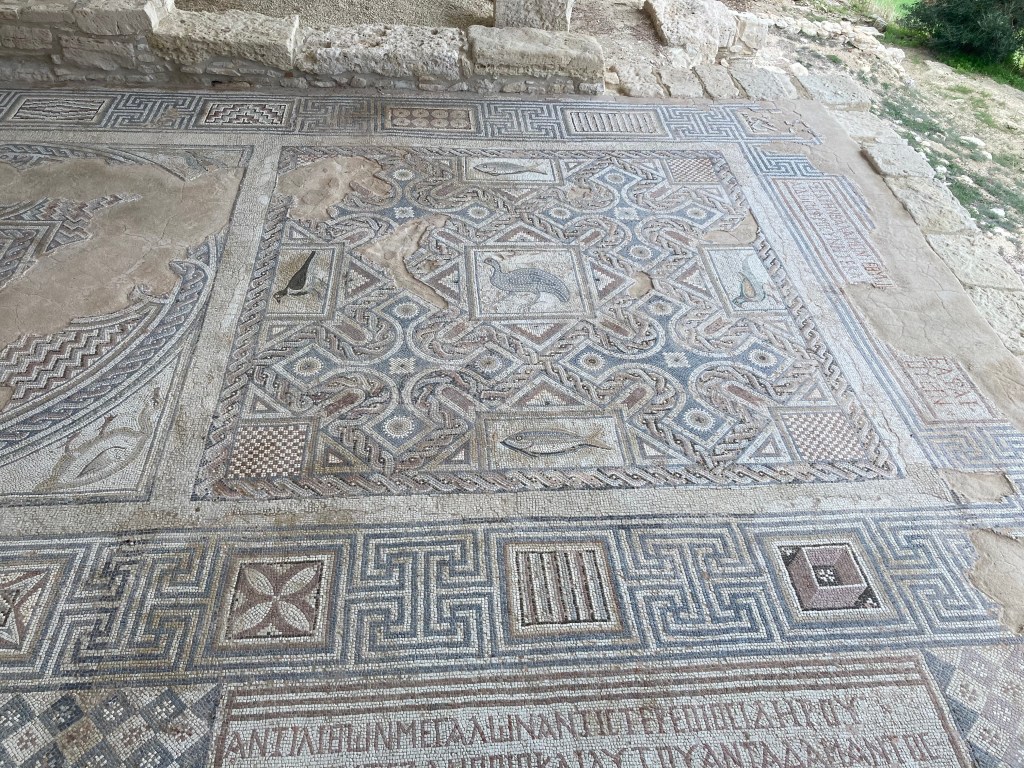
The Roman Baths contained cold, warm and hot rooms.

A Roman Theatre overlooks the sea.

Entry costs €4.50 for adults – we got in free because the cashier decided we looked like pensioners!
Kolossi Castle
On the way back to Limassol, we stop at Kolossi Castle. This inland castle was built in the 15th Century to protect the region’s precious sugar crops. There’s not much to see inside, but you can climb to the ramparts to admire the view.
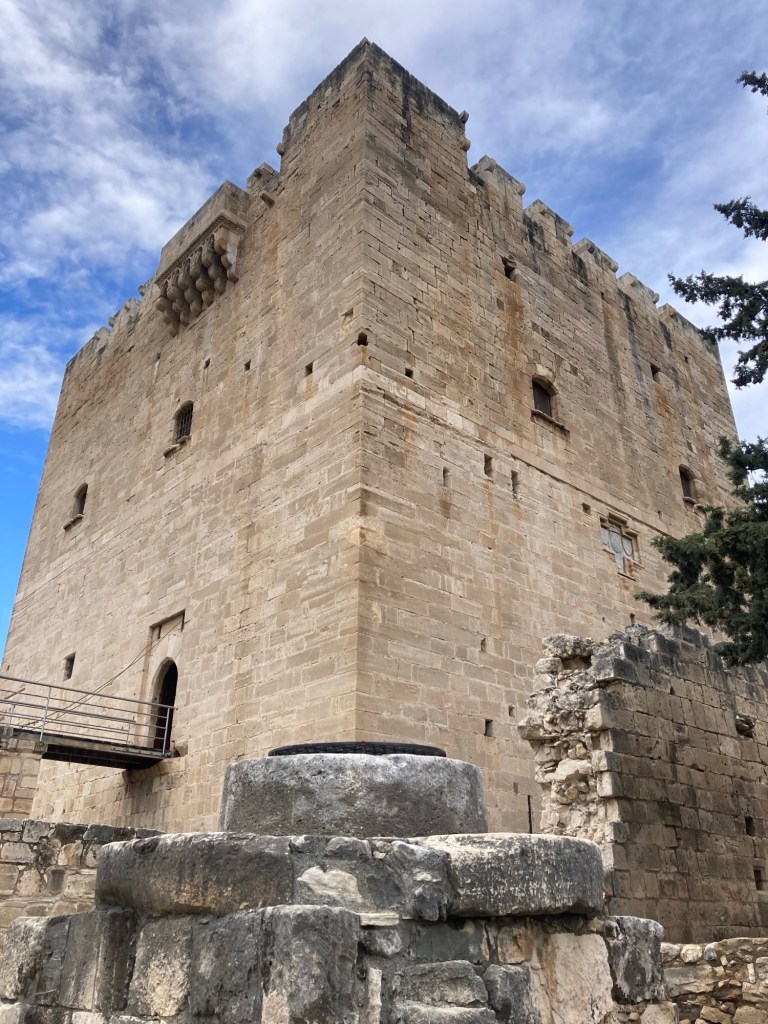
The remains of the Sugar Storage Building can be seen next to the castle.

Cyprus Day 6 – Paphos
We spent a day exploring Paphos. This popular holiday destination has plenty of beaches, bars and restaurants. But there is more to Paphos than just sun, sea and sand. Although, to be honest, when we visited, sun was in very short supply! From Limassol, Paphos is an hour’s drive along the A6/B6.
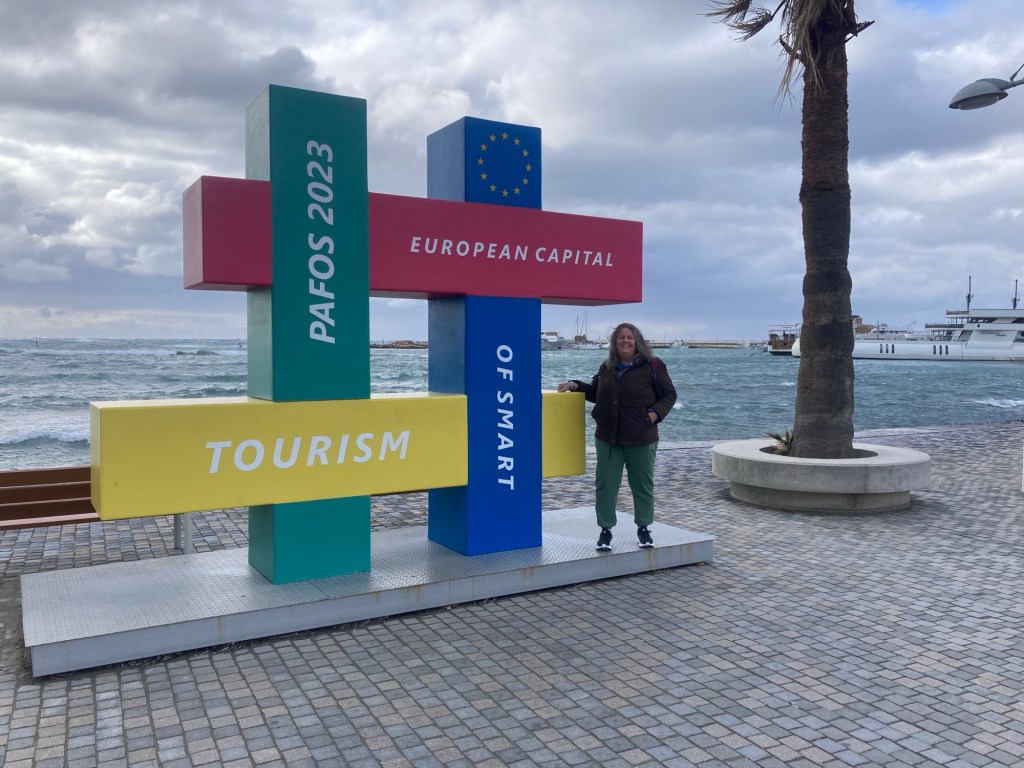
Paphos Promenade
Running along the bay towards the harbour is Paphos Promenade, which is lined with shops and restaurants. It’s a pleasant place for a stroll.
Archaeological Site of Nea Paphos
The highlight of a visit to Paphos is undoubtedly the huge Archeological Site of Nea Paphos. The ancient city of Paphos was built in the 4th Century BC, with the Romans gaining control in 58 BC. The site of this original city includes the ruins of many buildings, most notably of four Roman villas exquisitely decorated with mosaics (the Houses of Dionysus, Theseus, Aion and Orpheus).

The House of Dionysus
The House of Dionysus (named because of the number of mosaics featuring Dionysus, the god of wine) is the largest and best known of the mosaic houses. A building has been erected over the top, so and you can admire this beautifully preserved marvel from raised walkways.

Saranta Kolones Fortress
At Saranta Kolones Fortress, you can see the remains of the what was once a grand building containing 40 columns. The columns were felled during an earthquake, but one persistent arch remains amid the fortress ruins.

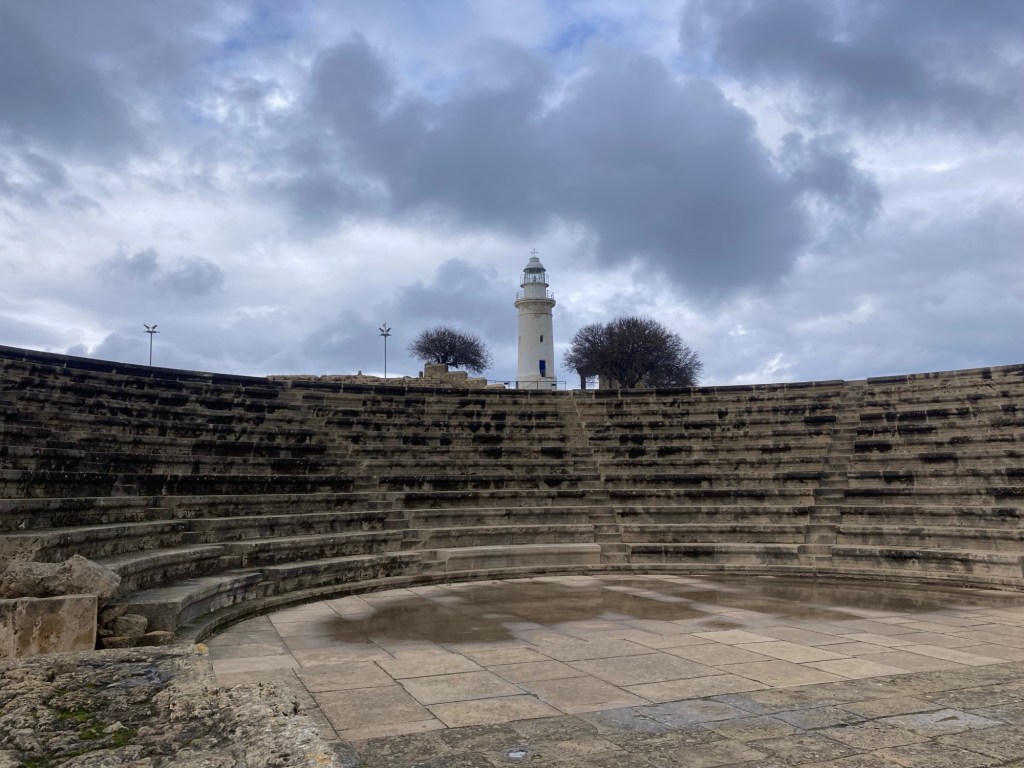
Other sights include the Asklepieion (healing temple), the Odeon (theatre) and the Agora (market place). Also within the archaeological site is the 19th Century Paphos Lighthouse.
Paphos Castle
Paphos Castle is all that remains of a Lusignan fort built in 1391; the rest of it was destroyed by the Venetians less than a hundred years later. It sits above the harbour entrance and is entered via a stone bridge over a moat.

There isn’t much to see inside, but visitors can climb to the castle ramparts and enjoy the sweeping harbour views. When we visited, it was very windy!

Coastal Path
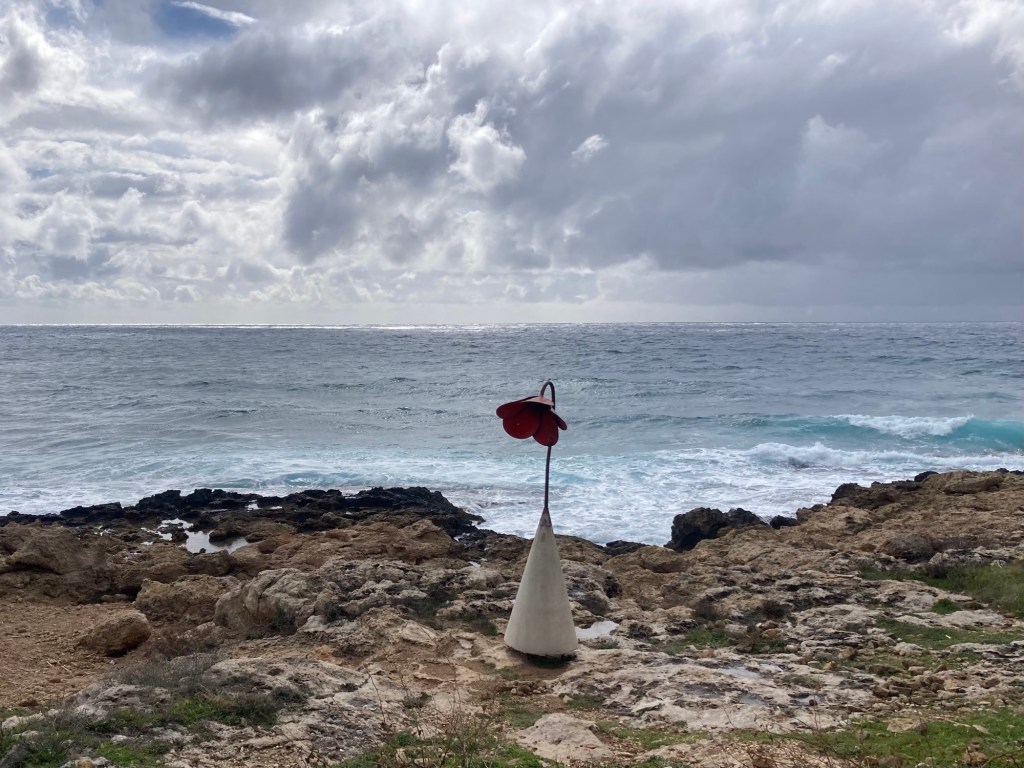
The Coastal Path runs north from the castle. If you walk along it, you will be rewarded with stunning sea views and 12 works of art. The first of which is located near the castle. We only made it a short distance before being driven back by the weather.
The Tombs of the Kings
At the northern end of the Paphos Archaeological site, linked by the coastal path, you will find the Tombs of the Kings; a former burial site for the city’s dignitaries. Here, you can see the underground tombs and chambers with Mediterranean views to die for.

Paphos Old Town
The old town has old buildings and street art. When we visited, the weather was terrible and we couldn’t find anywhere to park, so we gave up and went back to our hotel to get dry/warm. Note: If you are lucky enough to find a parking space in Paphos, you will need to pay for it on the Paphos Smart Parking App.
Aphrodite’s Rock
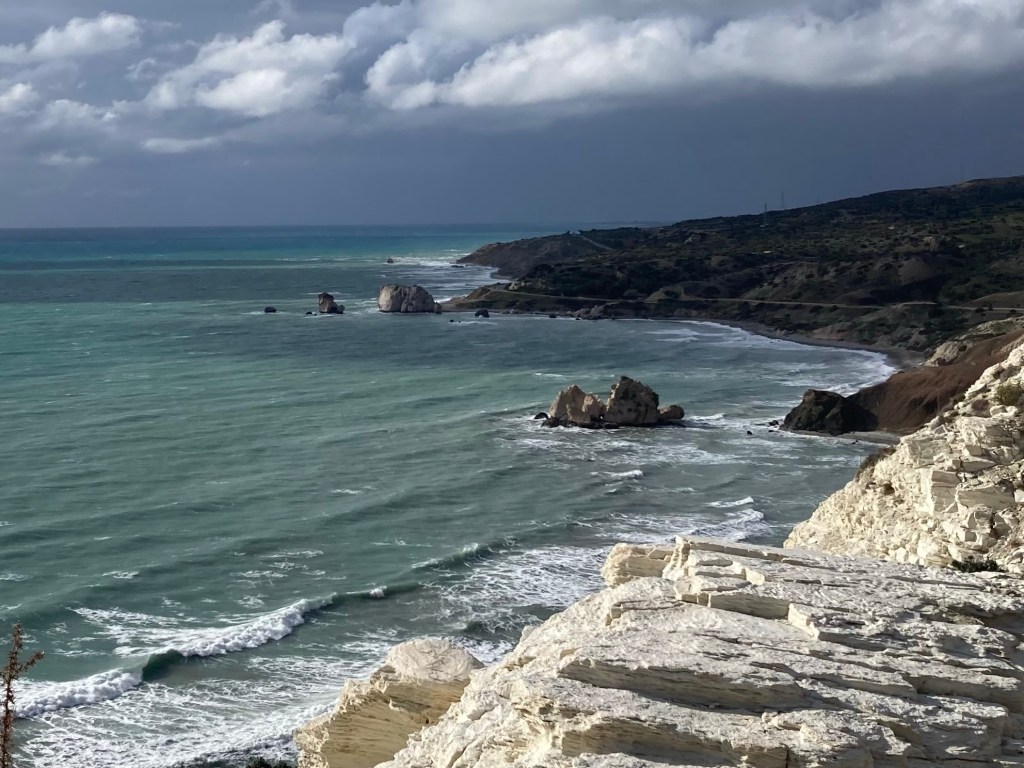
We return to Limassol via Aphrodite’s Beach, which is 16 miles east of Paphos. Here, you will find Aphrodite’s Rock (Petra tou Romiou) – one of two rocks sitting just off the shore. The rock got its name from the legend that the goddess Aphrodite emerged from the sea here. Another legend says that anyone who swims round the rock three times will be blessed with eternal youth and beauty. We visited in January, so didn’t put this to the test!

There is a car park opposite; Petra tou Romiou Pavilion, from where the beach can be accessed via a tunnel, which brings you out near the rock. Alternatively, there is another car park a mile further to the east for a panoramic view.
Day 7 – Limassol
On our second day in Limassol, we wander along the Promenade as far as the Old Port, then return through the charming Old Town with its ancient buildings, street art and souvenir shops.
Molos Seaside Park
Molos Seaside Park stretches for miles along the coast east of the old town, with a promenade and a series of curved jetties. It’s a great place for a stroll.

Sculpture Park
Running alongside Molos Park is a Sculpture Park with some fun interactive pieces.

Limassol Old Port
The Old Port is lined with yachts on one side and shops and restaurants on the other.

Limassol Castle
The 14th Century Limassol Castle is allegedly where Richard the Lionheart married. You can climb the ramparts for a view of Limassol and beyond. The castle also houses a Medieval Museum.

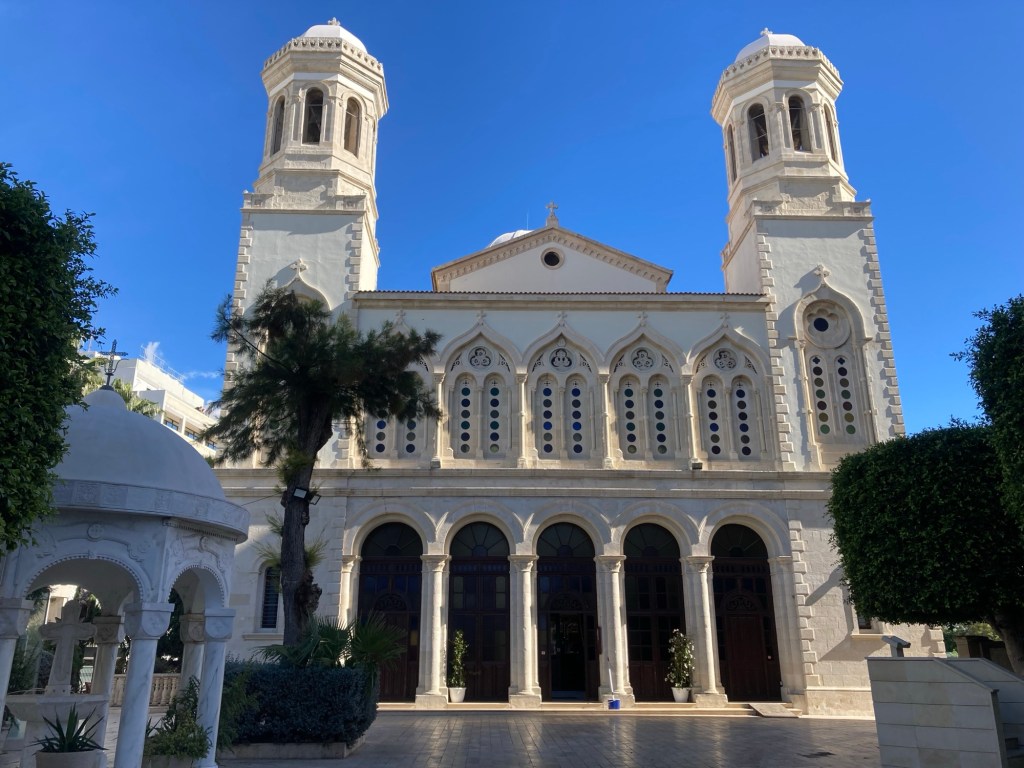
Ayia Napa Cathedral
The white, century old Ayia Napa Cathedral sits right in the middle of the Old Town.
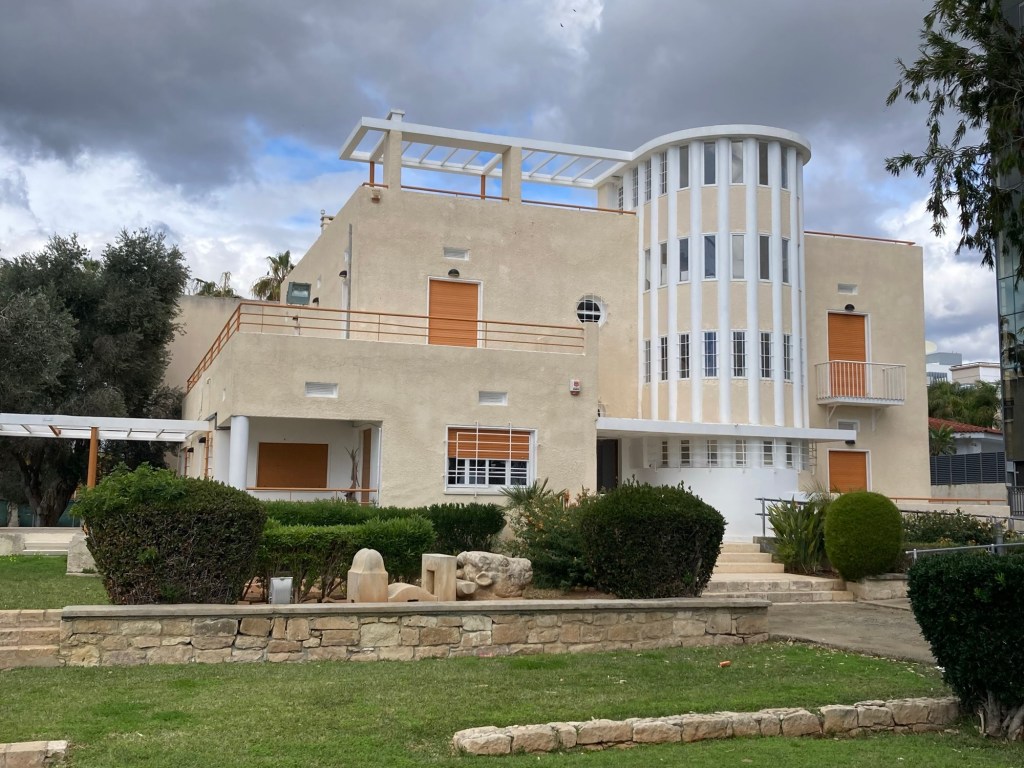
Municipal Art Gallery
The Municipal Art Gallery houses one of the largest collections of Cypriot modern art with over 600 paintings and sculptures, primarily by Cypriot artists, exhibited across an old building and a more modern extension. The old building dates from the 1930s and was gifted by the house’s previous owners. We were not permitted to visit the gallery without a guide, who accompanied us and talked a lot about ridding the island of the British, which appears to be the theme of many of the paintings.
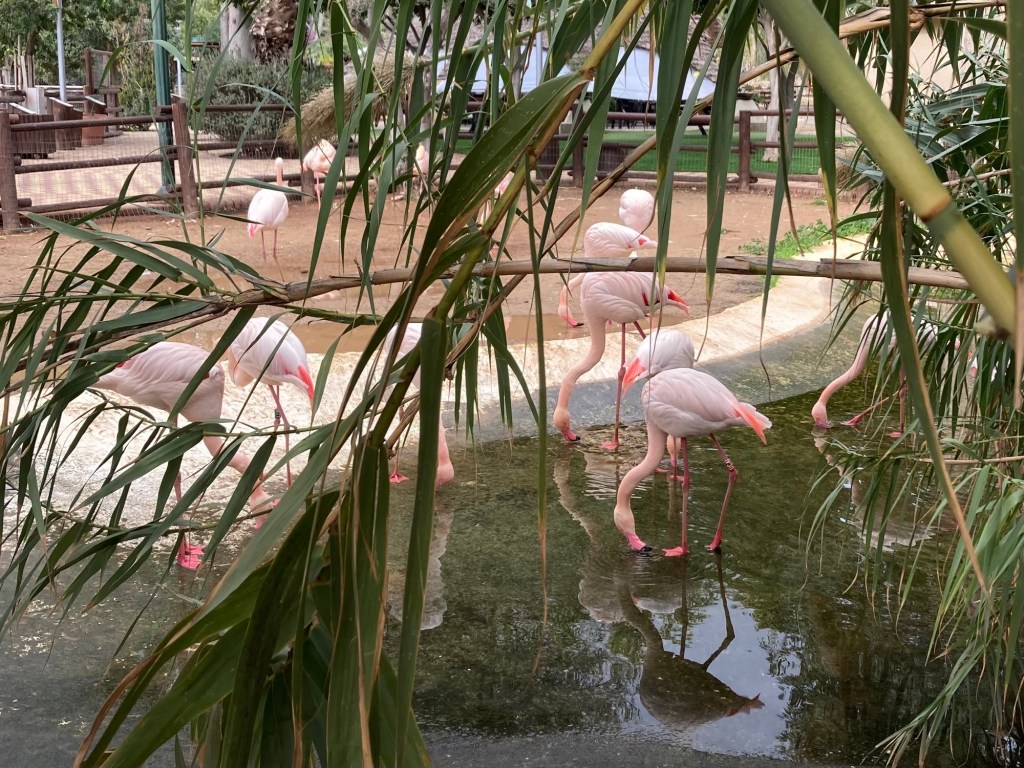
Municipal Gardens
Just across from the gallery, you will find the Municipal Gardens. There is also a small zoo.
That concludes our week exploring Cyprus. It is time to return our old but trusty hire car. The rental company are happy with the state of it, despite the new bumps and scratches. Then we are dropped off at the airport for our flight home.
- Trip taken: January 2024
- Updated: April 2025
I hope you found the above information useful. For guides to more destinations in the 50+ countries we have visited, check out my full list of Independent Travel Itineraries here.
 Jane's Midlife Journey
Leave a comment