
Ecuador was the final country in our three month South American adventure. We spent a total of ten days there. This was split between the capital, Quito and a trip to Cuyabeno Reserve, situated deep in the Amazon Rainforest and only accessible via canoe. We loved visiting this vibrant country which spans the equator and possesses so much natural beauty with its volcanoes and rainforest. Below is our itinerary including activities, accommodation and dining options.
Note: A trip to the Amazon isn’t cheap. Nor is Ecuador’s other tourist draw, the Galapagos. We decided we could only afford one of these and opted for the Amazon.
Ecuador 10 Day Itinerary
| Day 1 | Flight to Quito Accommodation – Hotel Casa Montero La Ronda Dinner at Casa los Geranios |
| Day 2 | Quito Basílica del Voto NacionaL Iglesia de San Francisco Iglesia de Santo Domingo |
| Day 3 | Cuyabeno Reserve Flight to Lago Agrio Travel to Cuyabeno Reserve Accommodation – Cuyabeno Lodge Sunset Canoe Trip |
| Day 4 | Cuyabeno Reserve Amazonian Village Visit |
| Day 5 | Cuyabeno Reserve Birdwatching Canoe Trip |
| Day 6 | Travel to Quito Cuyabeno Bridge |
| Day 7 | Quito Plaza Grande Palacio de Gobierno Museo de la Ciudad Parque la Alameda National Assembly Museo Nacional del Ecuador Dinner at Bandido Brewing Accommodation – Kinde House |
| Day 8 | Quito Tren de los Volcanes Tambillo El Boliche Machachi Dinner at Cafe San Blas |
| Day 9 | Quito Museo Intiñan Mitad del Mundo TelefériQo Dinner at El Pollo Forastero |
| Day 10 | Quito Hop on Hop off Bus El Panecillo La Carolina Park Botanical Garden Dinner at El Terruño |
Ecuador Day 1 – Quito
Flight to Quito
In the morning, we head for the airport for our flight to Quito; the world’s second highest capital, which concludes with a spectacular descent over Cotopaxi Volcano. It’s our 9th LATAM flight and for the 9th time, it lands bang on time. Someone from LATAM needs to come to the UK and give the likes of British Airways and EasyJet a few lessons. Once through the airport, we are picked up by a taxi organised by our hotel for the drive into central Quito.

Accommodation – Hotel Casa Montero
For the first couple of nights, we are staying in the heart of Quito at the Hotel Casa Montero; an old colonial style building with lots of charm. The hotel itself is nice. However, the surrounding area is a bit rough. It’s on the edge of Plaza de Santo Domingo. The area in general and the hotel steps in particular appear to be a meeting place for winos. On the plus side, it is very centrally located and therefore convenient for sightseeing. In addition, the hotel restaurant has a great view across the city to El Panecillo (which I’ve managed to obliterate in this photo).

La Ronda
In the evening, we take a walk along La Ronda; a cobbled street lined with colourful 17th century houses, and find somewhere to have dinner.
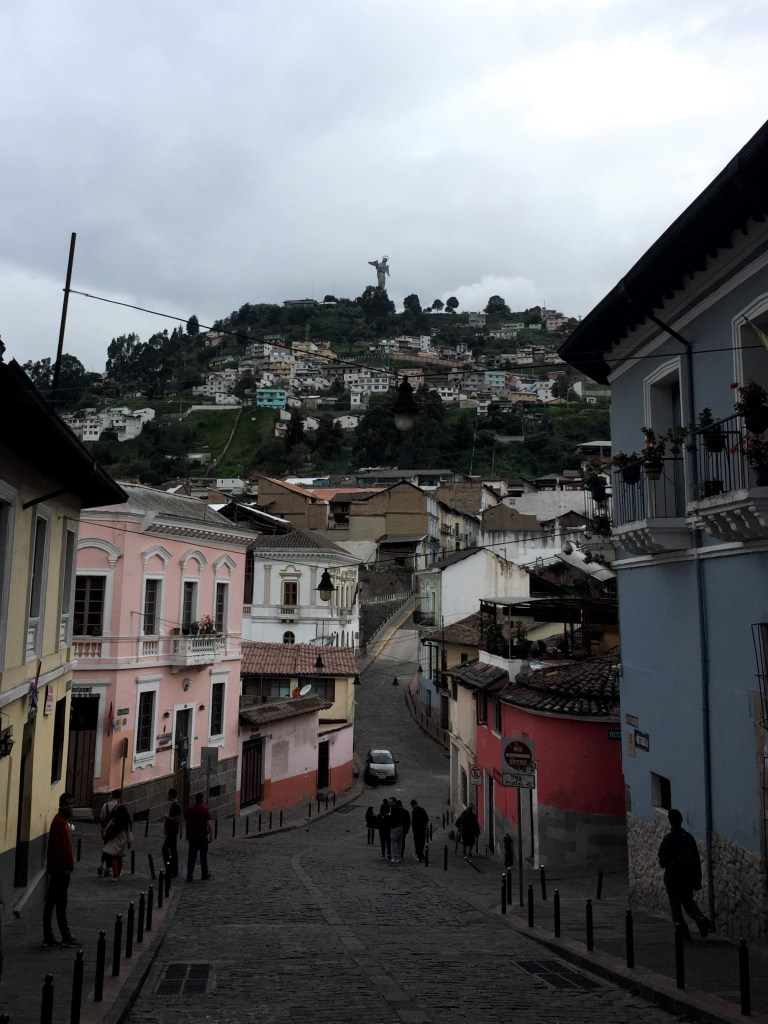
Dinner at Casa los Geranios
We stumble upon Casa los Geranios; a quaint little restaurant which is, as the name suggests, adorned with geraniums outside and artfully decorated inside.

The food is excellent, if a bit pretentious. I have chicken in orange and teriyaki sauce with a chocolate glaze (with chips of course). The old man has steak followed by a flambeed ice cream dessert which looks like it will burn for ever.

Today, we’re going sightseeing in Quito – primarily churches as most other tourist attractions are shut on Mondays.
Then we return to our hotel and lock ourselves in for the night.
Ecuador Day 2 – Quito
Basílica del Voto Nacional
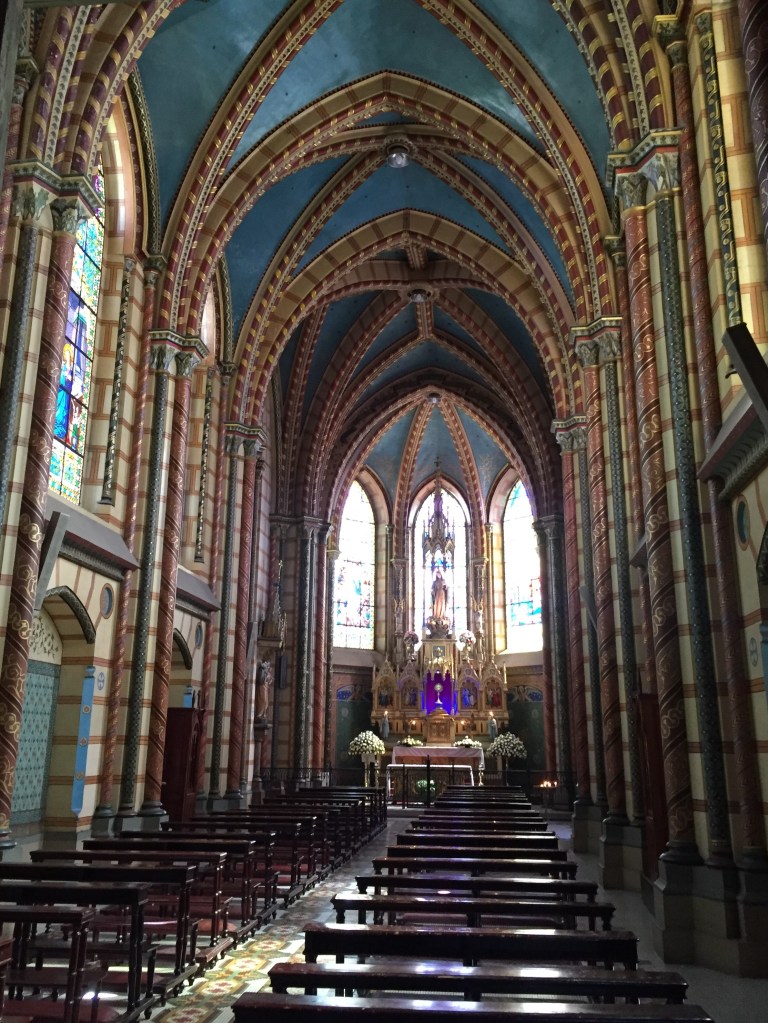
After breakfast, we set off for the enormous Basílica del Voto Nacional. This 19th century church is, in fact the largest in Quito. Construction took place between 1892 and 1909, although technically, the building remains unfinished. This is because legend says that when the Basílica is completed, the world will end. The exterior is carved with animals such as turtles and iguanas and the interior has some stunning stained glass windows.

The old man decides to climb the tower, which apparently involves a rather rickety staircase. It also requires crossing a wooden plank inside the main roof and climbing a combination of stairs and ladders to the top. I opt to sit in the café with a Diet Coke.
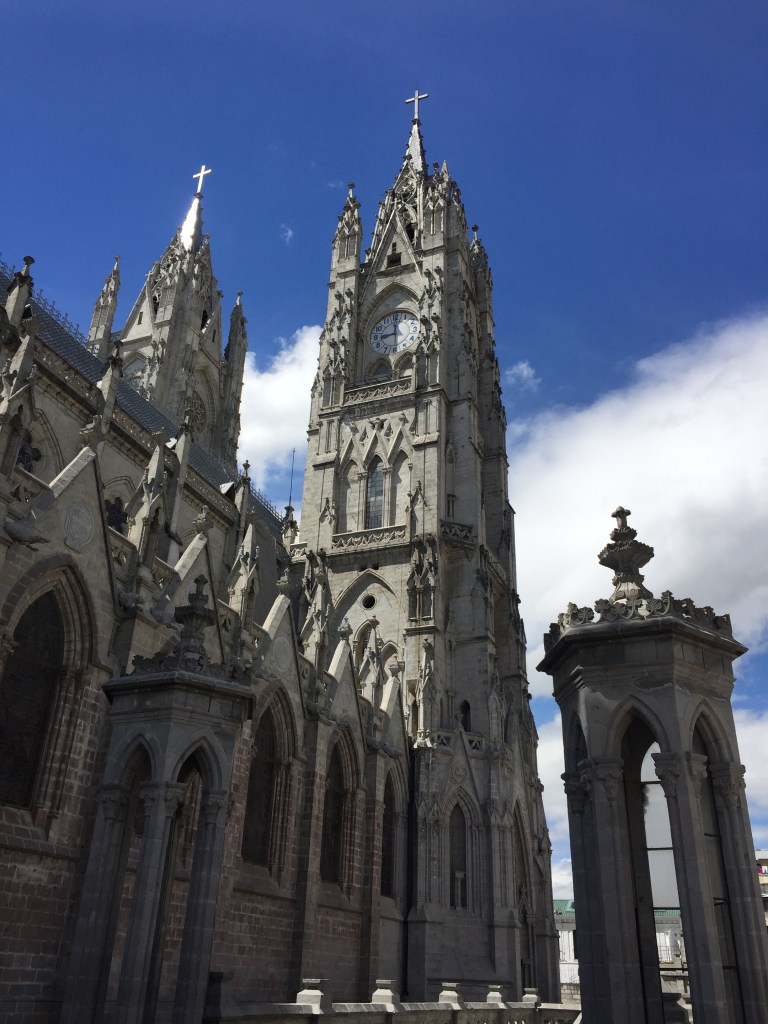
Suitably refreshed, I visit the interior of the Basílica. Some of the stained glass is being renovated, so the statues in the nave have been wrapped in a dark fabric. It looks like the church has been overrun by Dementors…
Iglesia de San Francisco
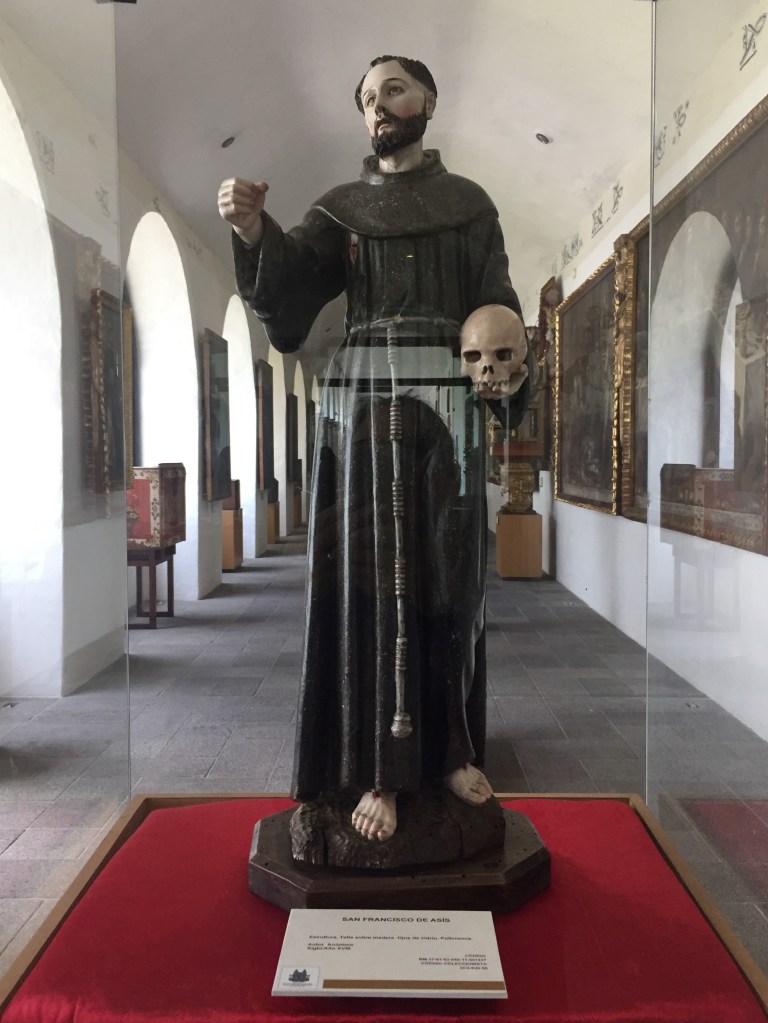
Next, we go to the Iglesia de San Francisco. Construction of the church began in 1535, making it the oldest religious site in Ecuador.

The interior of the church is an exercise in how much gold can be squeezed into one building. It’s apparently the biggest church in South America. (The Ecuadorians have a creative way of measuring things to ensure their stuff is bigger and better. For example, Cotopaxi is higher than Everest if you measure from the centre of the earth, rather than sea level.)

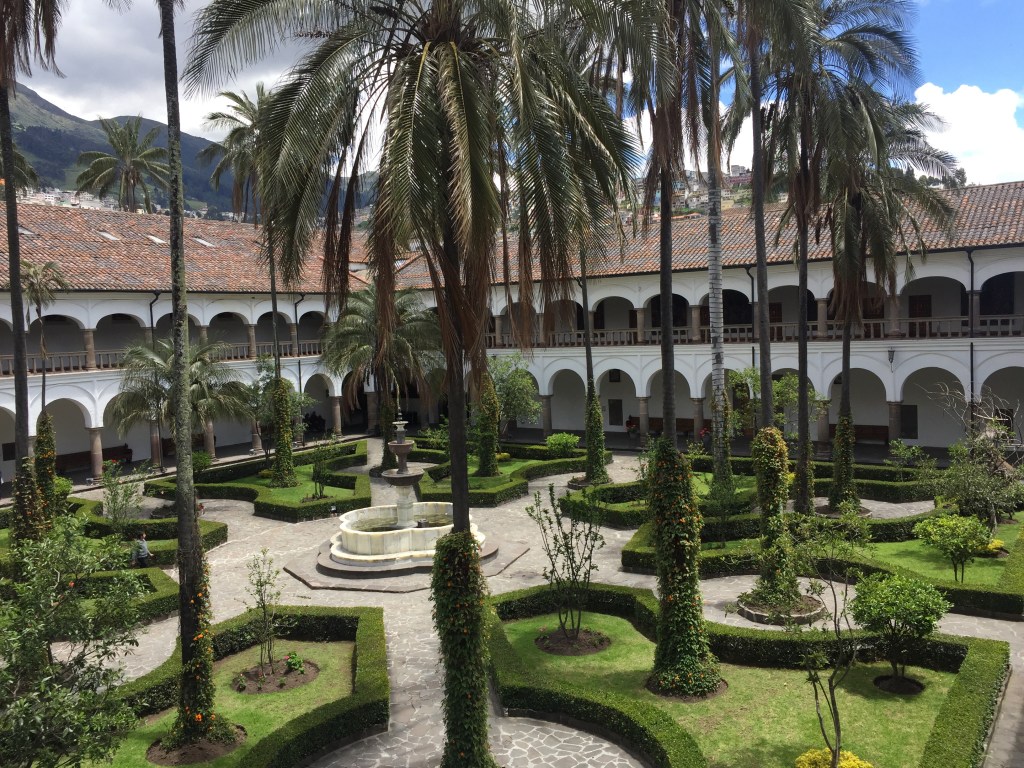
The church also has a beautiful courtyard and an excellent museum full of religious art.
Museo de San Francisco
We enjoy wandering around the excellent Museo de San Francisco, admiring the weird and wonderful religious art, then I try to buy some post cards. They have run out, so offer me enormous posters for the same price of $0.25 each. It sounds like a bargain, but I’m not sure what I’m going to do with these posters – answers on a postcard (obviously not a postcard of San Francisco Church).
Iglesia de Santo Domingo
We round the day off in the Iglesia de Santo Domingo; highlight – a colour changing virgin. It’s safe to say we are all churched out, so we return to our hotel to pack for tomorrow’s trip to the Amazon.

In the evening, we go from one culinary extreme to the other. After yesterday’s fancy meal, we go to a tiny three table shack, where a lovely lady whips up a Mexican feast for $20 for the two of us, including four beers.
Ecuador Day 3 – Cuyabeno Reserve
Today, we are going to Cuyabeno Reserve deep in the Amazon Rainforest. Due to my nut allergy, I have a phobia of travelling remote places. So the old man has booked accommodation at a place so remote that it is only accessible by canoe!
Flight to Lago Agrio
We start with a flight to Lago Agrio (also known as Nueva Loja), around 170 miles east of Quito. We check in and I purchase my last Diet Coke for four days – I’m about to go cold turkey. At $4 a bottle, it’s probably just as well. One last login to the airport Wifi – more cold turkey.
Our flight involves another of my phobias; flying in a propellor plane. I’m a firm believer that one shouldn’t fly in anything that doesn’t have jet engines (preferably manufactured by Rolls Royce). The old man man is worried it will be the last straw and I will refuse to board, but the flight is only 35 minutes, so I manage to hold it together.

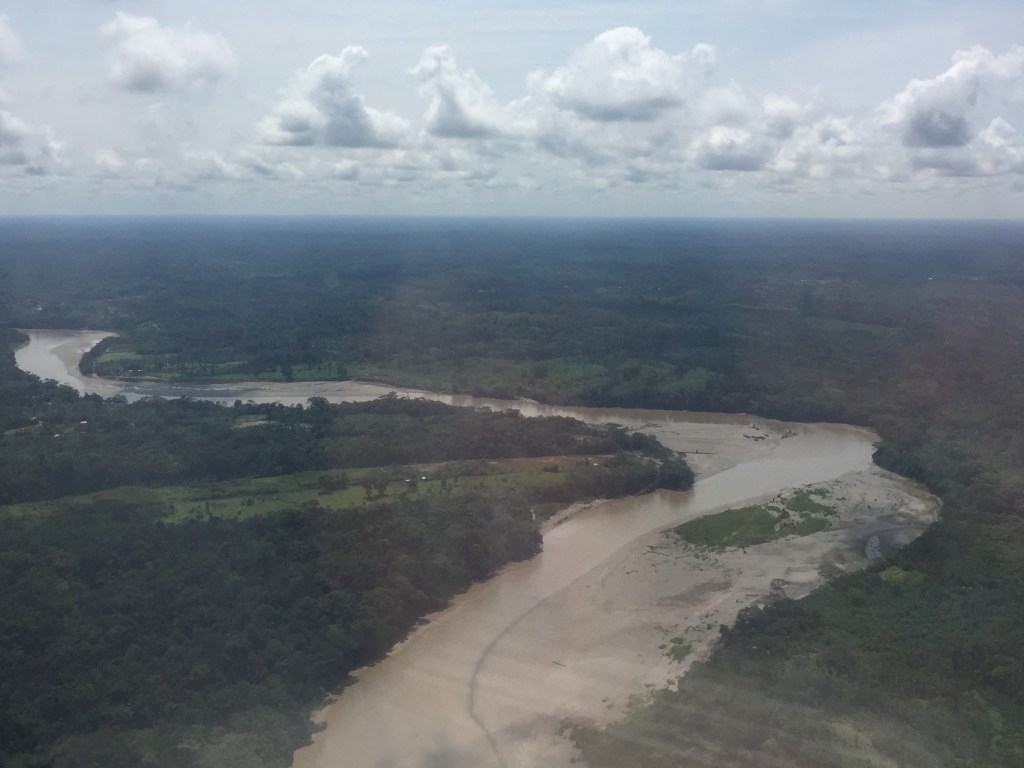
It is a most spectacular flight; passing over Cotopaxi Volcano and the Amazon Delta.
Travel to Cuyabeno Reserve
From the airport, we must take a two hour bus trip to Cuyabeno Bridge. The bus journey is less scenic than I’d expected. We’re in an oil producing area and the pipeline runs alongside the road. After two hours, we reach Cuyabeno Bridge – literally the end of the road. We are met by our guide and have lunch at a local restaurant.
From here, it is a two hour canoe ride to our ‘hotel’. I say hotel. In my world, a hotel has electricity. And Wifi. And walls. All things I’m going to have do without for the next four days. We set off in our motorised canoe. It takes longer than the advertised two hours. Partly because we do a few 360 degree turns along way to spot wildlife.
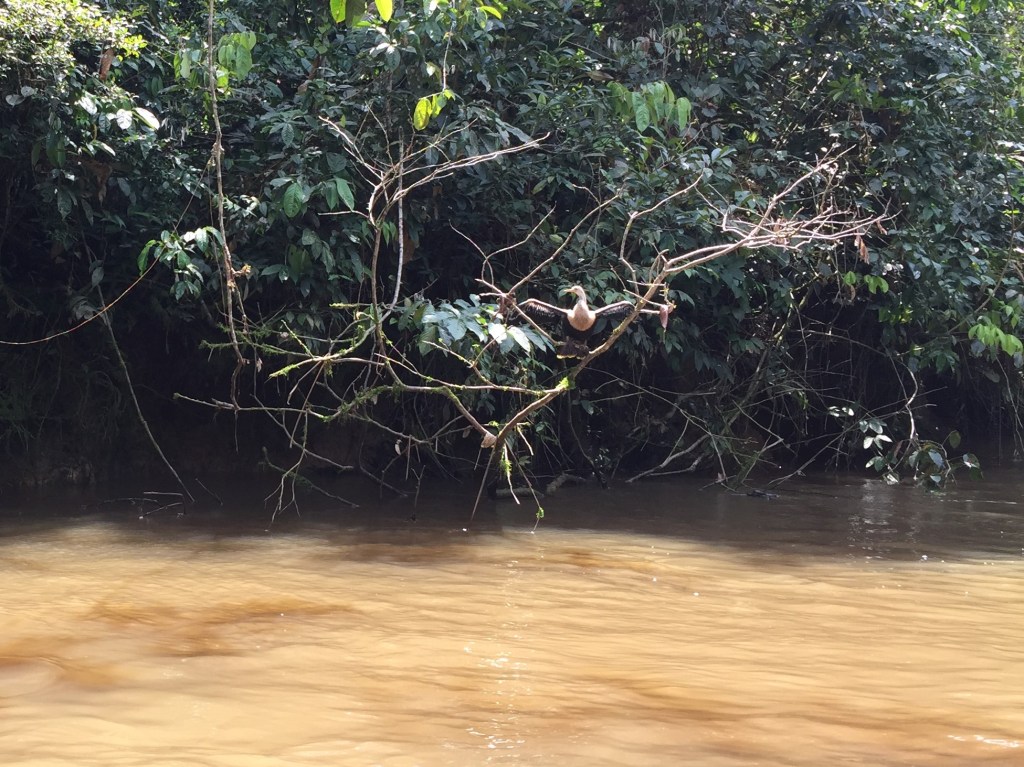
En route, we see howler monkeys, squirrel monkeys, sloths, an anaconda, anhingas, kingfishers, macaws, weaver birds, flycatchers and loads of butterflies.

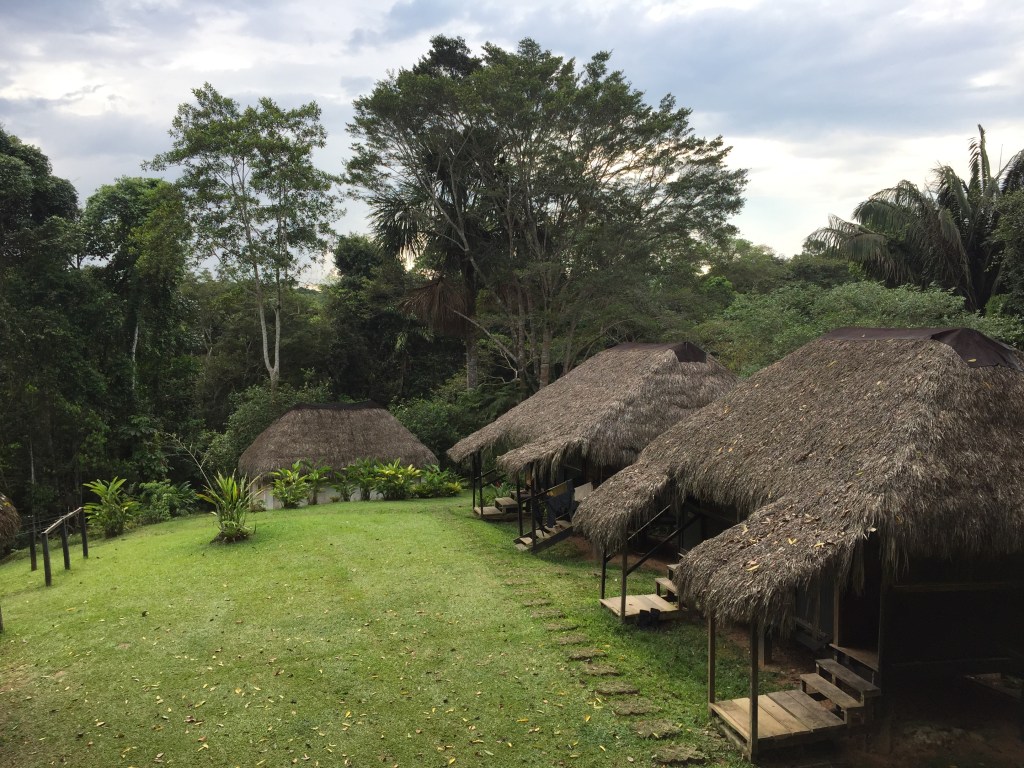
Accommodation – Cuyabeno Lodge
We reach our home for the next three nights; Cuyabeno Lodge, and are shown our room. Usually, the old man panics if he’s made to sleep with the window open and reaches for the A/C control at the first sight of a mosquito. So it’s going to be an interesting few nights. He seems upset that the door has no lock, despite the fact that room has no wall on one side and windows with no glass on two more sides.
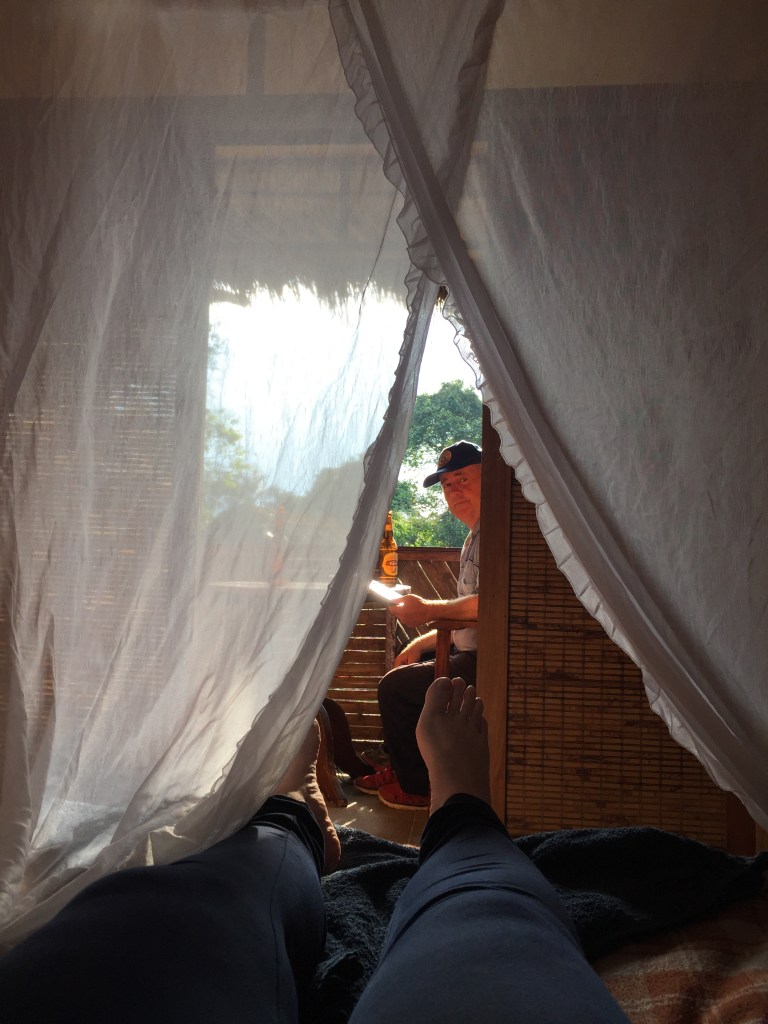
On a more positive note, the guide has brought a case of beer from town and it’s $4 a bottle, which should make things a bit more manageable.
Sunset Canoe Trip
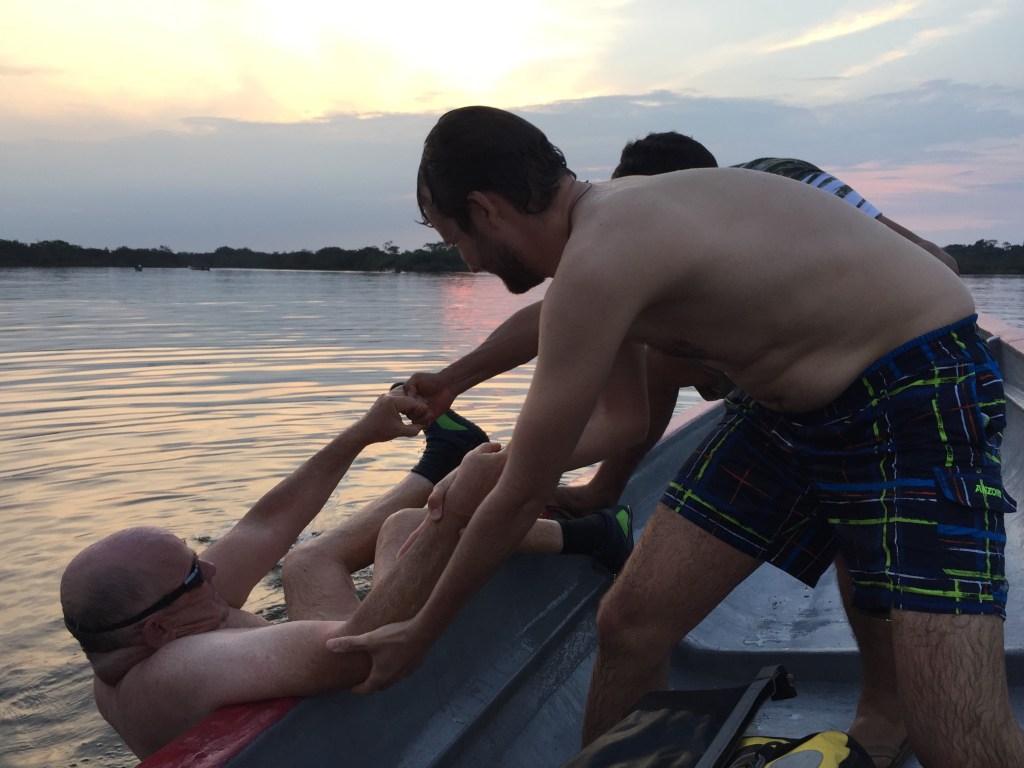
After an hour to settle in, we go out for a Sunset Canoe Trip. This time we see giant guinea pigs (capybara) and pink river dolphin – except they’re babies so they’re grey, not pink. Then we are given an opportunity to swim. In water we have already ascertained contains snakes, caiman and piranha. The old man decides to go in. Getting him out again is another matter and requires rather a lot of assistance. Needless to say I’m on hand – with my camera.
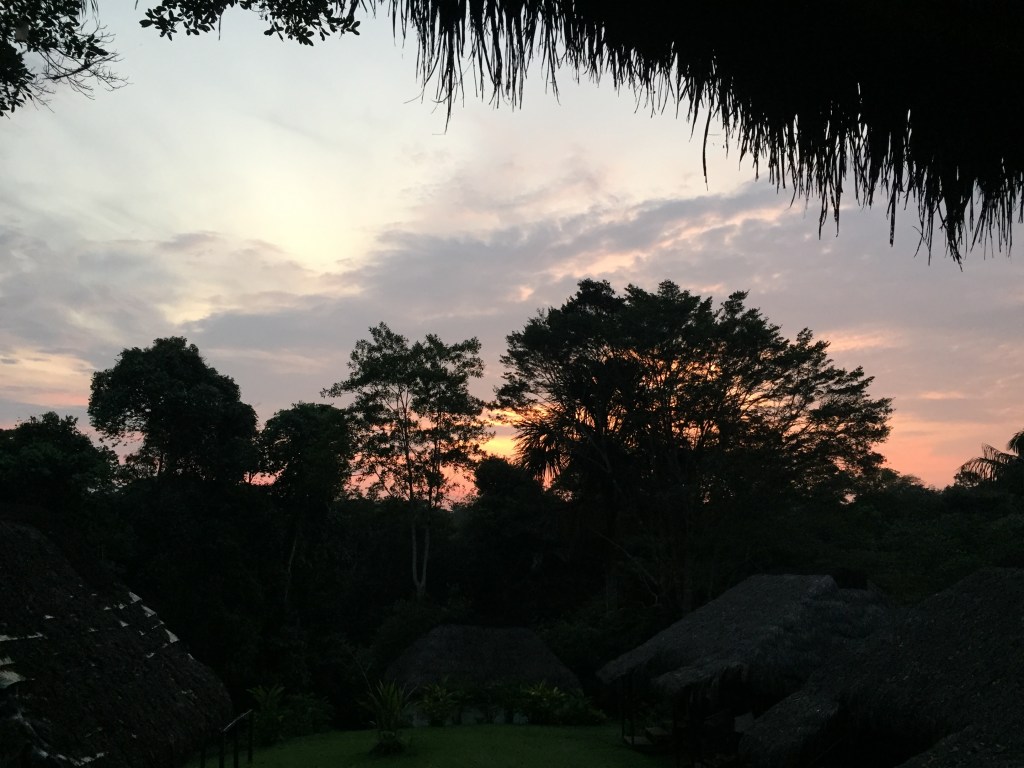
The evening is rounded off watching the most spectacular sunset.

Back at the lodge, we have dinner, then retire to bed and try to sleep through the cacophony of crickets, birds and frogs (and the occasional scream of a Canadian schoolchild that’s spotted a bug). I lie under my mosquito net thinking about my lovely house in Bournemouth with its mod cons and wonder how I got coerced into spending four days in a damp shack in the jungle?
Ecuador Day 4 – Cuyabeno Reserve
We have survived our first night in the jungle!

Today, we are going to a local village where we will pay an indigenous family to show us how they live. Inflation in the village is obviously rife, as the price has gone up 25% since we booked.

Amazonian Village Visit
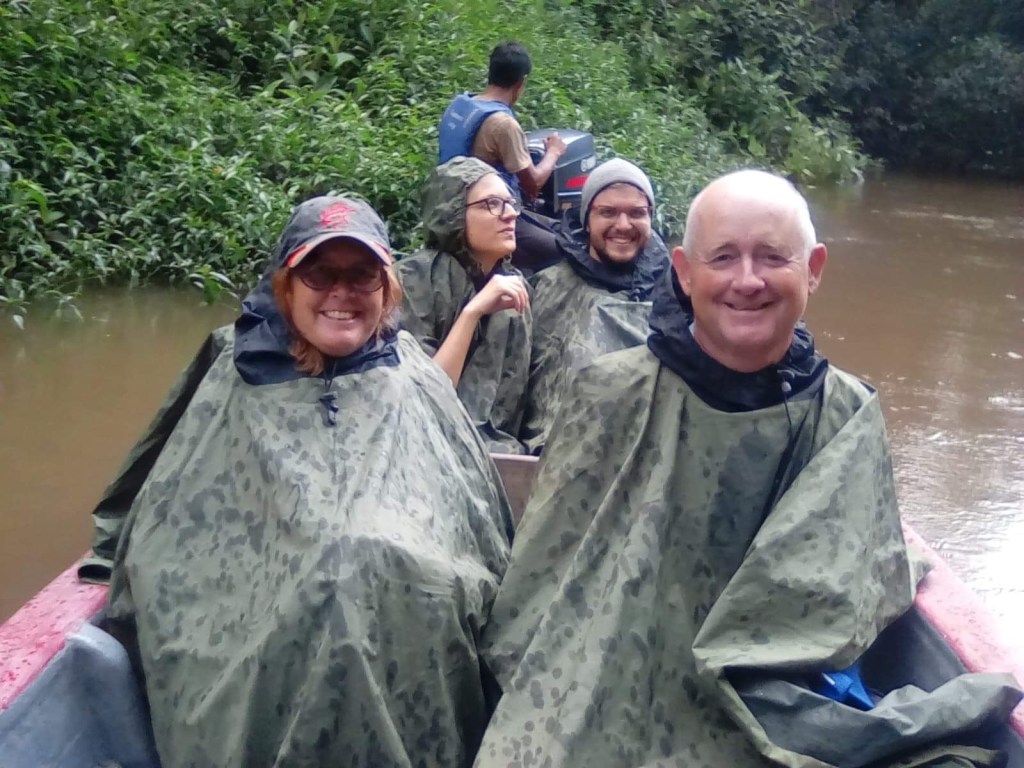
After breakfast and a cold shower, we set off in our canoe once more for an Amazonian Village Visit. It takes two hours to reach the village. On the way, we see dolphins, sloths, four species of monkeys, bats, parrots, toucan, hawks and hummingbirds.
Once in the village, we are taught to make yucca bread. First, we must go into the jungle to dig up the tubers, then we grate them in a mini canoe, dry, sieve and cook the resulting ‘flour’ like a pancake. Our guide has brought a tuna salad to eat it with. There’s also fried yucca, plantain and a selection of fruits I’ve never seen before.

Then it’s back to the lodge in our canoe. On the way, we see stinky turkeys, vultures and falcons. I say we – the old man has consumed his body weight in yucca bread and sleeps for much of the journey.

After lunch, another canoe ride is scheduled. I decide seven hours in two days is my canoe quota and opt out, spending the afternoon with a book on the balcony instead. After sunset, I try to read on my bed. The room has two small lamps, so is quite dark. I have the cunning idea of rotating the lamps so they both face my bed. This has an advantage (I can read) and a disadvantage (they attract dozens of insects and soon my mosquito net has filled with flying ants).
The groups return, we have dinner and go to bed. It takes a while to settle due to a drama downstairs; a Canadian has a cockroach in his room which causes a major meltdown. We have to listen to the drama in the dark – a second disadvantage of reading by lamplight is that it’s emptied the solar powered battery.
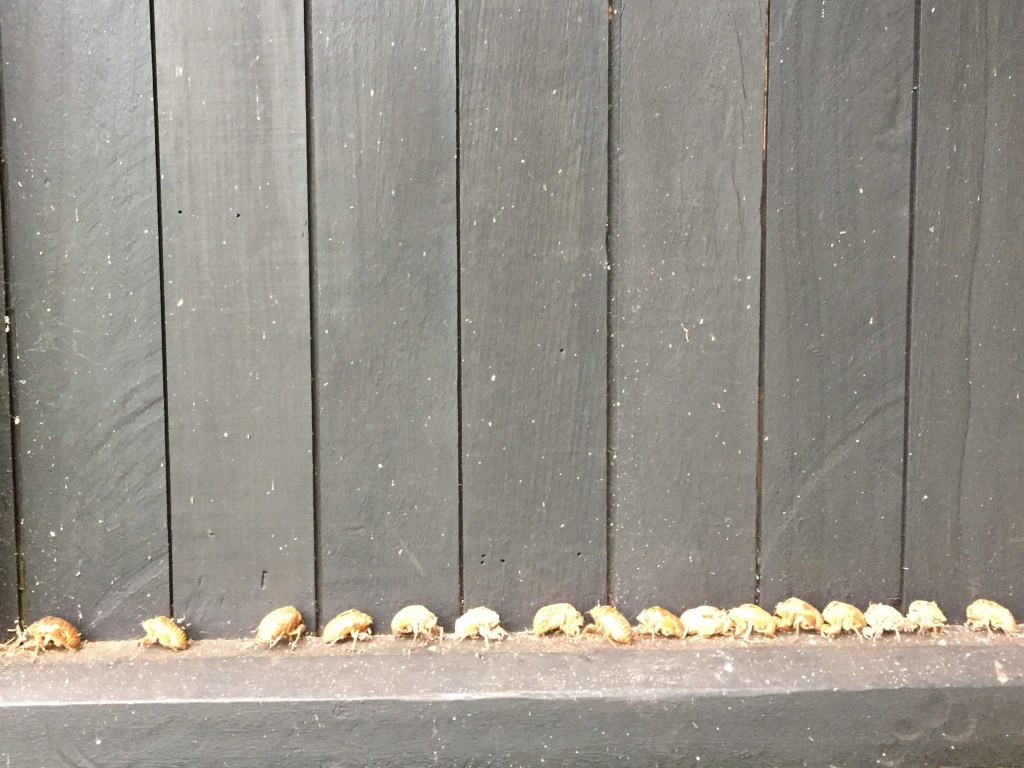
Ecuador Day 5 – Cuyabeno Reserve
Today’s schedule consists of a 6.30 am birdwatching session on the observation tower (basically our bedroom roof), a jungle walk and a canoe trip which combines swimming and caiman spotting. Why anyone would want to do any of these things is beyond me. It’s going to be a long day…
Birdwatching
We head for the roof at 6.30 am, as scheduled, for a morning of Birdwatching. In 90 minutes we spot 7 vultures, 6 parrots and 5 toucans. Meanwhile, the old man plays bridge on his tablet then goes off in search of coffee.

After breakfast, it’s time for the jungle walk. I decide it’s not for me and spend the morning with my book on the balcony again. I’ve definitely made the right call; 40 minutes after the group leave, the heavens open and give an excellent demonstration of why it’s called the rainforest.
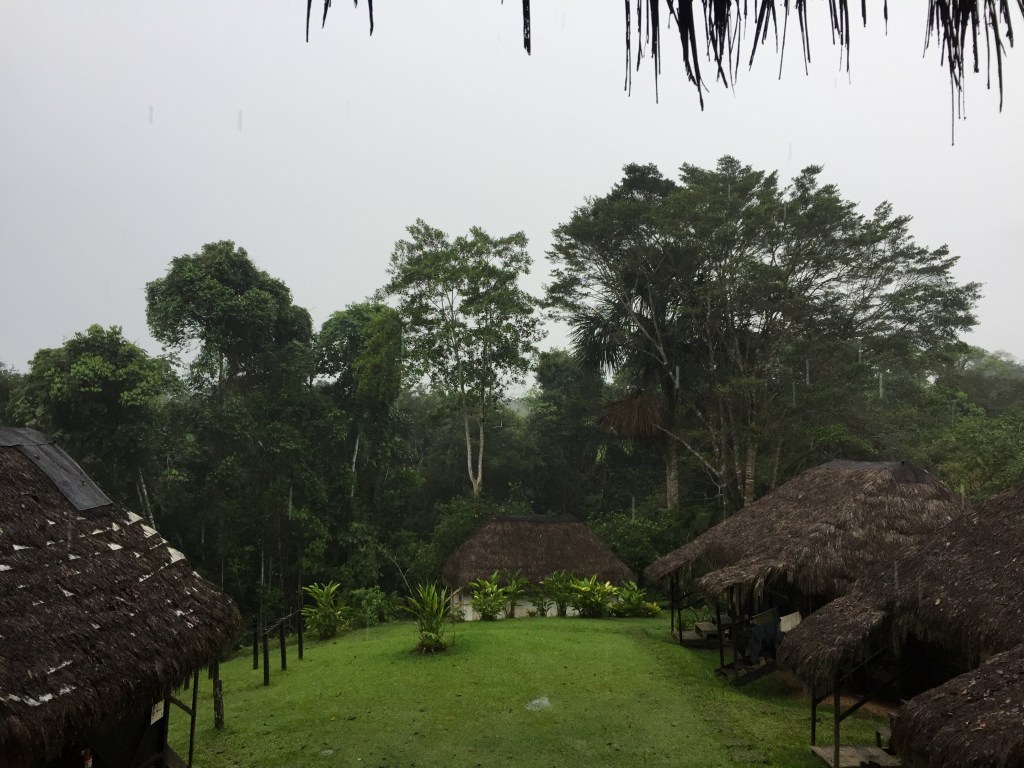
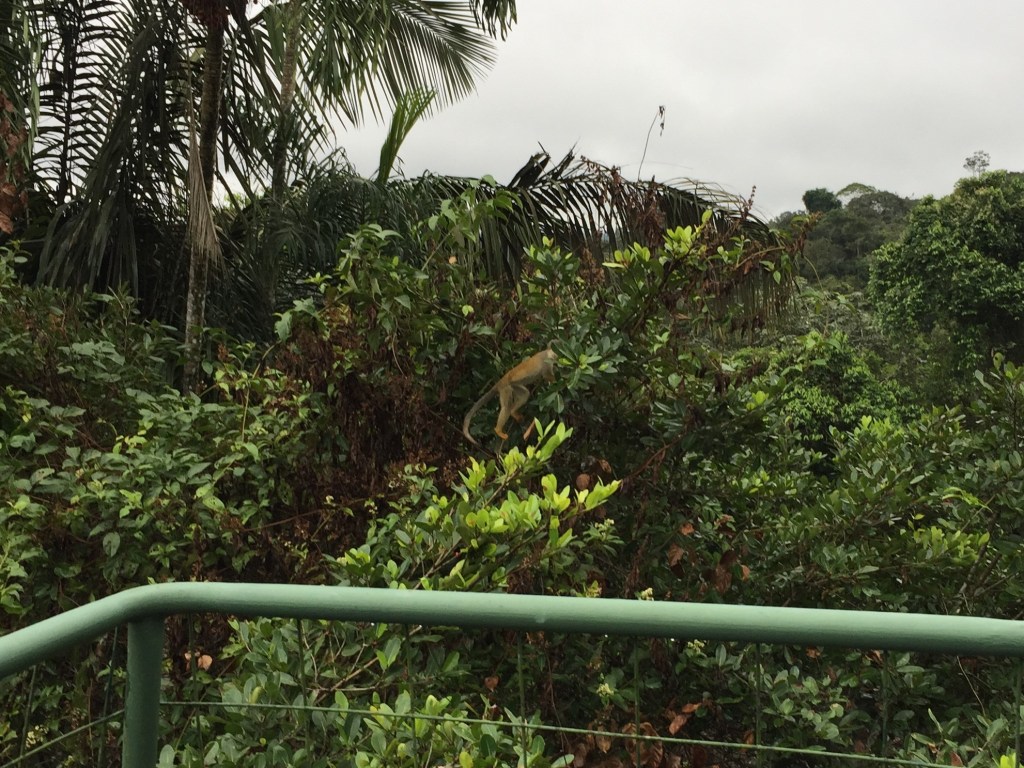
A man (Herman) comes to clean the room. He’s from one of the local villages. All the staff (lodge staff, tour guides, canoe drivers) come from the villages on a rotational basis, staying between 5 and 22 days, then go home to their families and a replacement comes. After their days off, they return to work at one of the 12 lodges. It sounds like a very fair way to distribute the income generated through tourism. A few minutes later, Herman calls me to go to the observation tower. A huge group of squirrel monkeys are passing by, so close I can almost touch them. They are followed by black tamarins, capuchin and finally titi monkeys.
As if four species of monkeys isn’t enough excitement (all without leaving my bedroom), then the army turn up to perform a search. We’re right on the border with Colombia in prime drug smuggling territory. The rest of the group return. During my exciting morning, they have walked through a swamp in the rain looking at native plants.

Canoe Trip
The afternoon’s activity, following two hours of torrential rain, is another canoe trip, finishing after dark so we can look for caiman. They are much easier to spot at night when their eyes reflect in torch light. A few metres from the lodge, we spot a three metre long caiman.
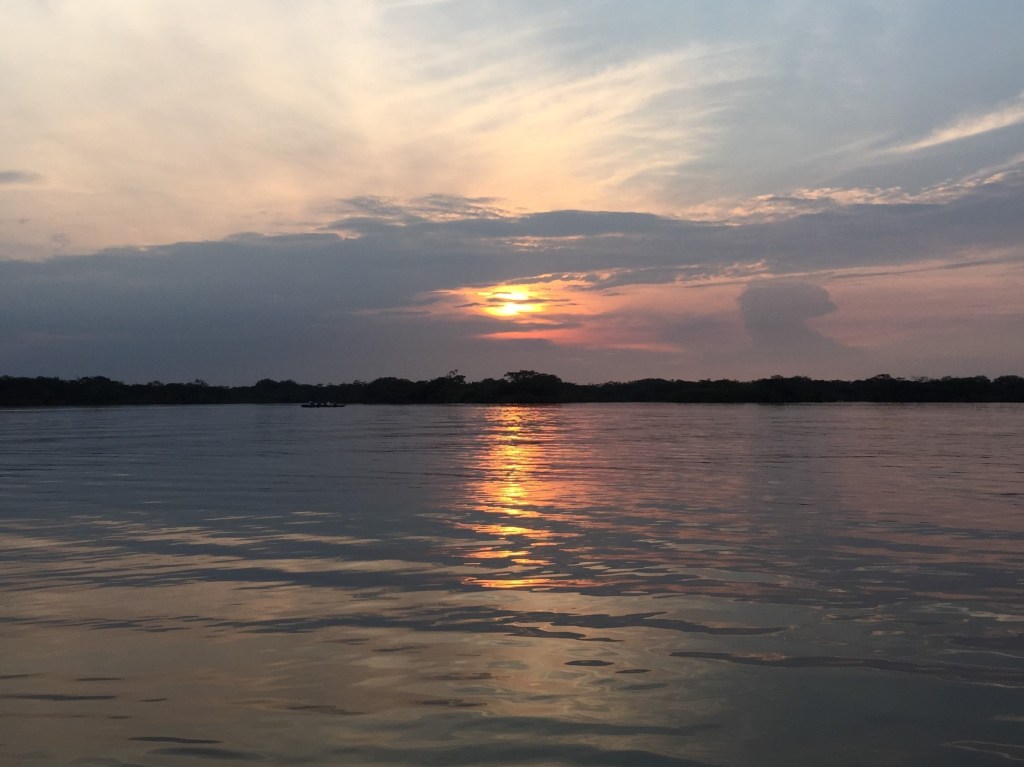
At dusk, we return to the lake where we saw the caiman and are offered an opportunity to swim. Funnily enough, no one takes up the offer. We watch the sunset, then skirt the lake looking for caiman. Our torches attract hundreds of insects, which in turn attract dozens of bats, swarming around the boat feasting on the insects.
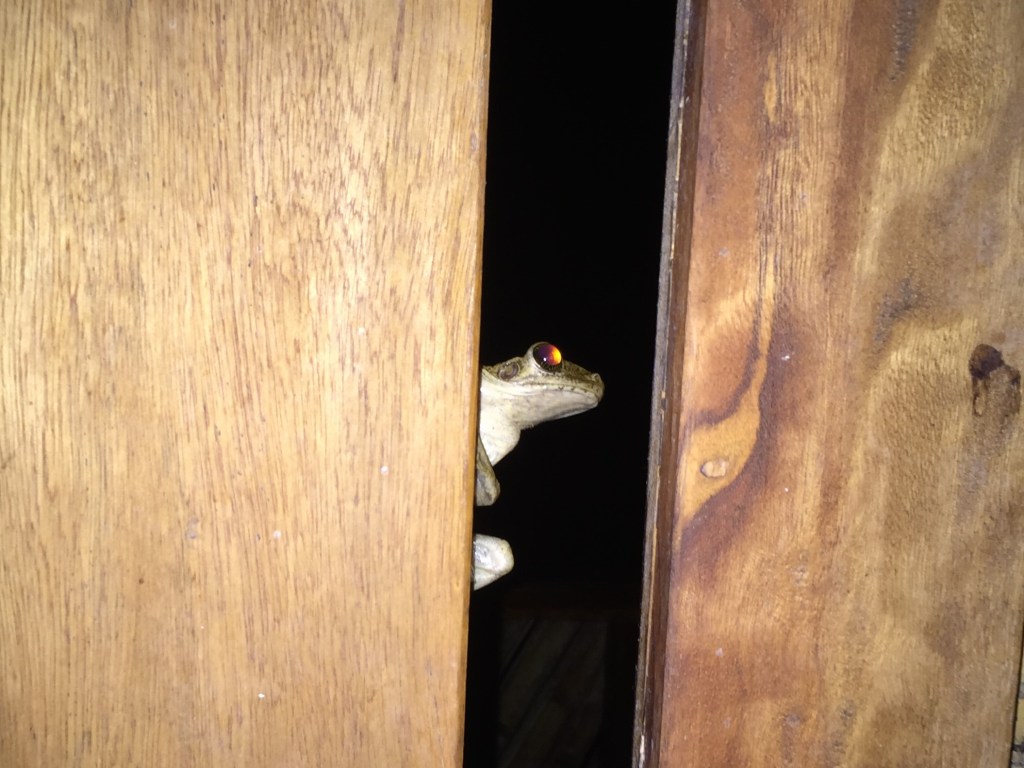
After dark, we spot more caiman; each represented by two red spots glowing in the undergrowth. When we pull over, we can see piranhas swimming in the shallows round the canoe. Two white lights glowing in a tree overhead indicate a tree boa observing with interest. Then we return to the lodge for our final night in the Amazon, where we are joined in our bedroom by an inquisitive frog.
Ecuador Day 6 – Travel to Quito
Today, we are returning to civilisation. But first we have to endure:
- 2 hour canoe ride
- 2 hour bus ride
- 4 hour wait at airport
- 1 hour flight
- 1 hour taxi ride
Things I’m looking forward to this evening:
- Phone coverage to speak to my family
- Wifi to find out what’s been happening in the outside world
- Electric lights
- TV
- Power sockets
- Hot shower
- Dry towels
- Proximity to shops
- Clean running water
- Being allowed to use shampoo/conditioner
- Being able to eat/drink what and when I want
- Clean sheets
- Far fewer insects
- Not stinking of insect repellent
- No animals in the bedroom
- Much less rain
To add to an already long day, we have a 6.30 am start for an additional canoe ride. In four days in the jungle, I have spent 13 hours in a canoe (having skipped two canoe trips). At 6 am it’s raining, as it has been all night, which makes the idea of getting up and going on a canoe even less inviting. This time the whole group opts out.
Travel to Quito
After breakfast, we set off on the journey back to Quito. The canoe takes a while to pack. It’s the lodge’s only link with civilisation, so is loaded with dirty laundry plus empty cool boxes and beer crates to replenish supplies.
One last thing; our packed lunch. The staff have found the old man highly amusing. Even though we have been given three x three course meals a day, he was constantly going to the kitchen to ask for more. Every time he enters the dining room, they greet him with ‘Mas pan?’ Herman hands out packed lunches, then gives the old man two, which causes all the staff to crack up. It’s a joke, the second lunch is actually mine. The old man looks terribly disappointed when he realises he doesn’t really have two packed lunches.
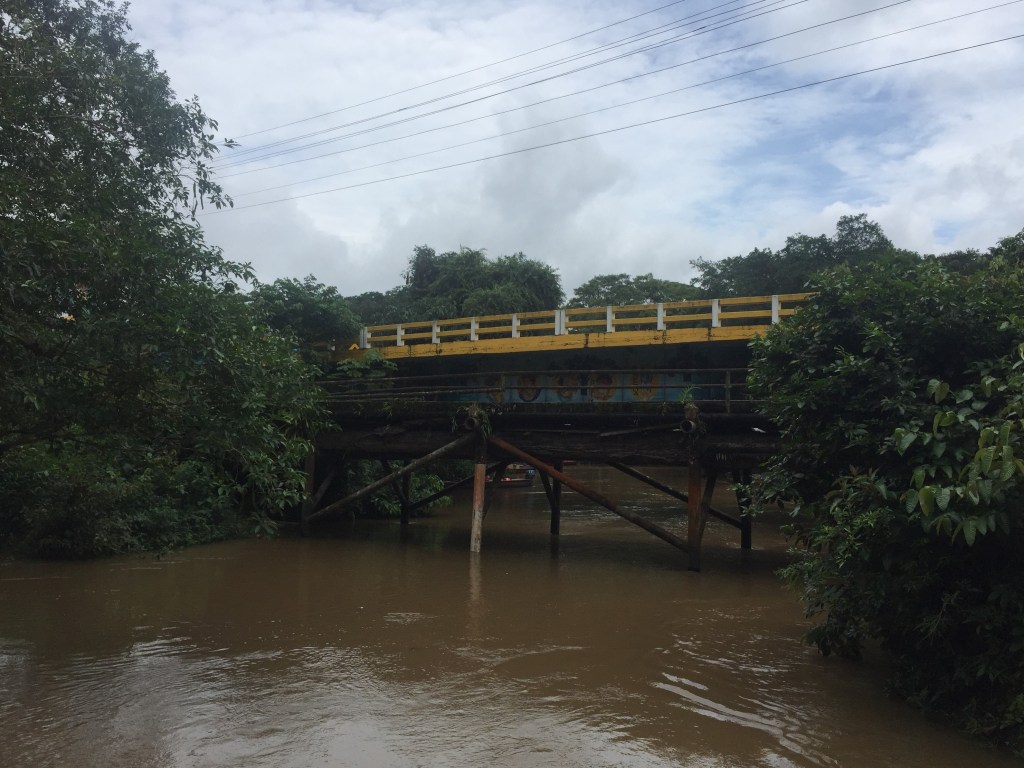
Thankfully, it’s finally stopped raining. The driver puts the hammer down and we speed our way to Cuyabeno Bridge, stopping only once to observe a large group of monkeys crossing the river, swinging across branches directly overhead.

Cuyabeno Bridge
At Cuyabeno Bridge, the big changeover takes place. Off the canoes come old passengers and empty bottles and boxes. From the buses emerge new passengers and supplies.

We take our bus to Lago Agrio, arriving with four hours to spare. We could go for an explore of the town of Lago Agrio but Lonely Planet cautions against this, saying it’s not a place to visit unless you’re an oil worker/prostitute/drug runner. So we spend the afternoon at the airport. I don’t care as they have Coke, crisps and Wifi, so that’s all my cravings dealt with (apart from decent cheese, which doesn’t appear to exist in South America).

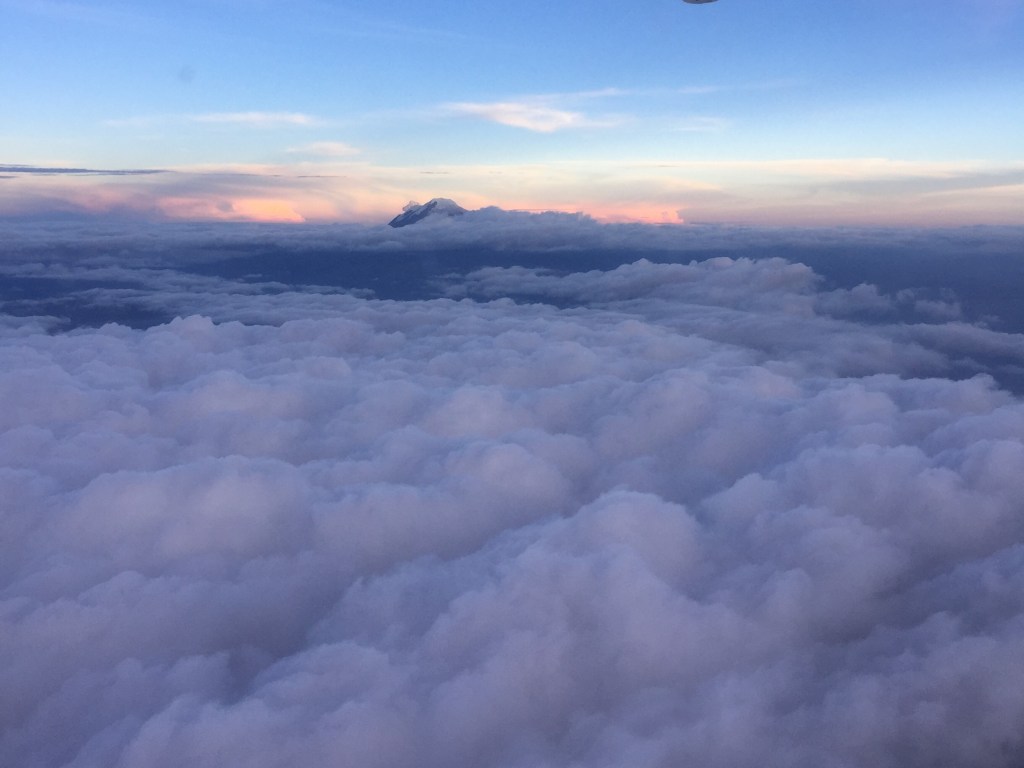
The flight to Quito is quite spectacular as we skirt Cotopaxi Volcano as the sun begins to set.
Then, a taxi into Quito, where we will spend the final few nights of our ten week South American adventure.
Ecuador Day 7 – Quito
Today, another day of sightseeing on foot in Quito. Plus, we and swapping hotels. There is an important reason for this change, but the old man can’t remember what it is. Our new hotel is 1 km away. He is too tight to pay for a taxi ($1.25), but worried it isn’t walkable with luggage, so we are to do a trial run.
Plaza Grande
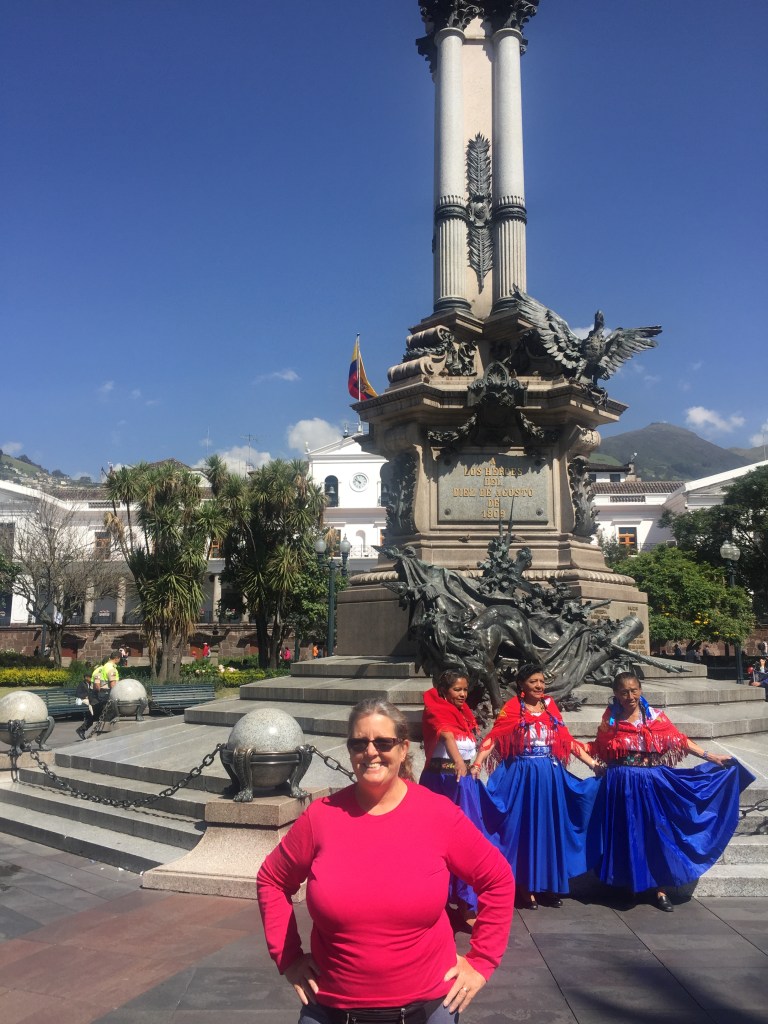
After staking out our new hotel, we head first for the Plaza Grande, the central square, with its large independence monument. The square is a popular selfie spot – some put more effort into their outfit than others!
Palacio de Gobierno
We have booked a tour of the Palacio de Gobierno; seat of government and official residence of the President. The tour is free, but needs to be reserved by email (in Spanish), so I’m quite proud of my achievement. We head for the security post. Our names are on the list – a triumph!

We get a guided tour of the museum, which focuses on the political history of Ecuador, but also houses a collection of presidential gifts.

Then past some rather cool murals by Guayasamin depicting the first European navigation of the Amazon.

The tour concludes with visits to the enormous Banquet Room with its own chapel and the Yellow Room, which houses portraits of past presidents.
We really enjoyed the guided tour of the Palacio de Gobierno. Tours haven’t run since 2020. The official website confirms that the palace is a top tourist attraction, but gives no indication if/when tours will resume. However, the Changing of the Guard Ceremony has recently recommenced, so hopefully, tours will soon follow suit. Changing of the Guard takes place on Mondays at 11 am.
Museo de la Ciudad
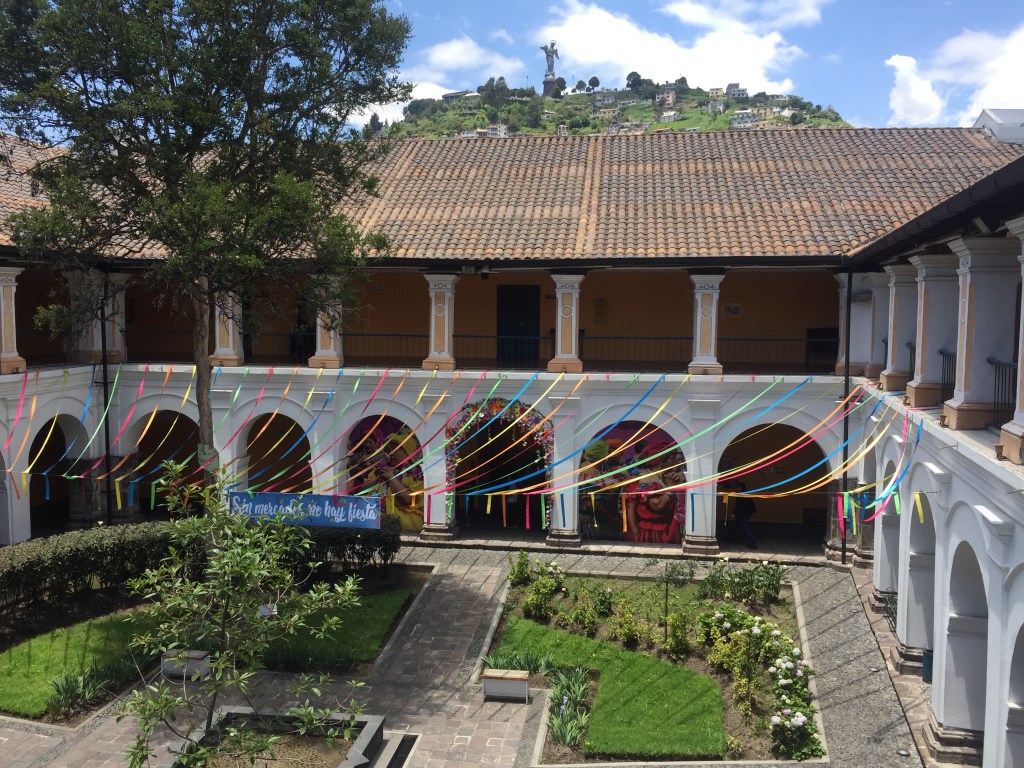
Next, we visit the Museo de la Ciudad. This is housed in a 17th century hospital and gives (theoretically) a chronological history of Quito. The old man gets impatient and bypasses a group of school kids, so we end up going backwards through history, witnessing the fight for independence prior to colonisation, which is all rather confusing.
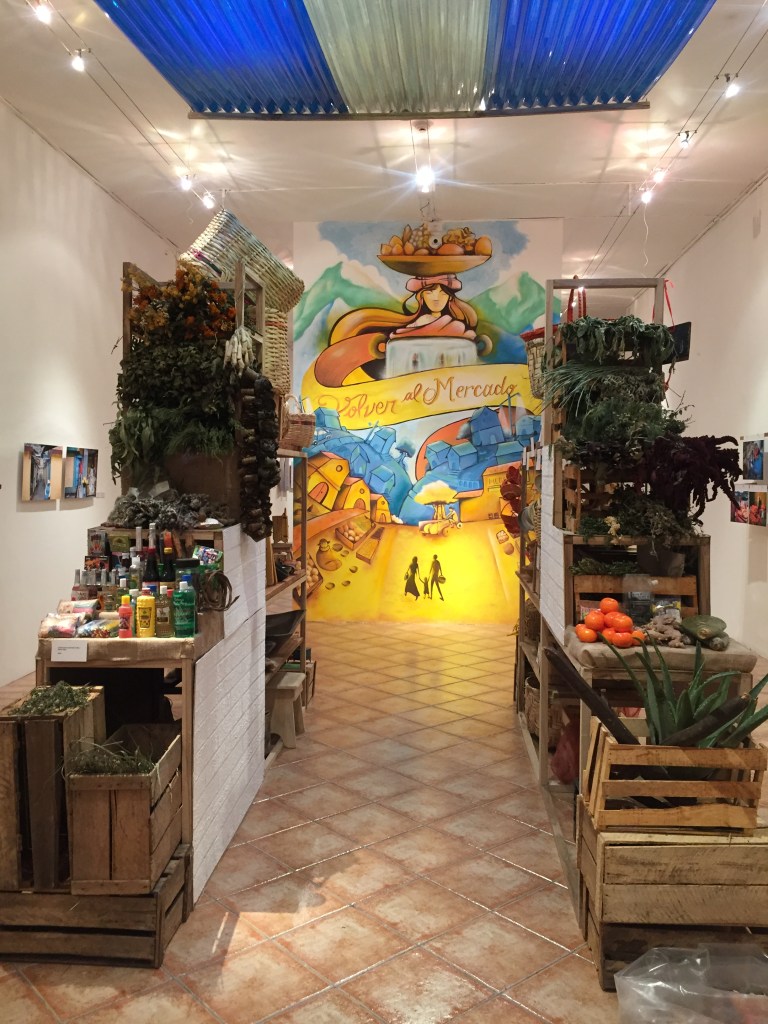
In the final gallery is a temporary exhibition. There’s no indication of what this exhibition might be until we arrive. When we visited, it turned out to be the history of Quito’s markets, so rather an anti climax.
Parque la Alameda
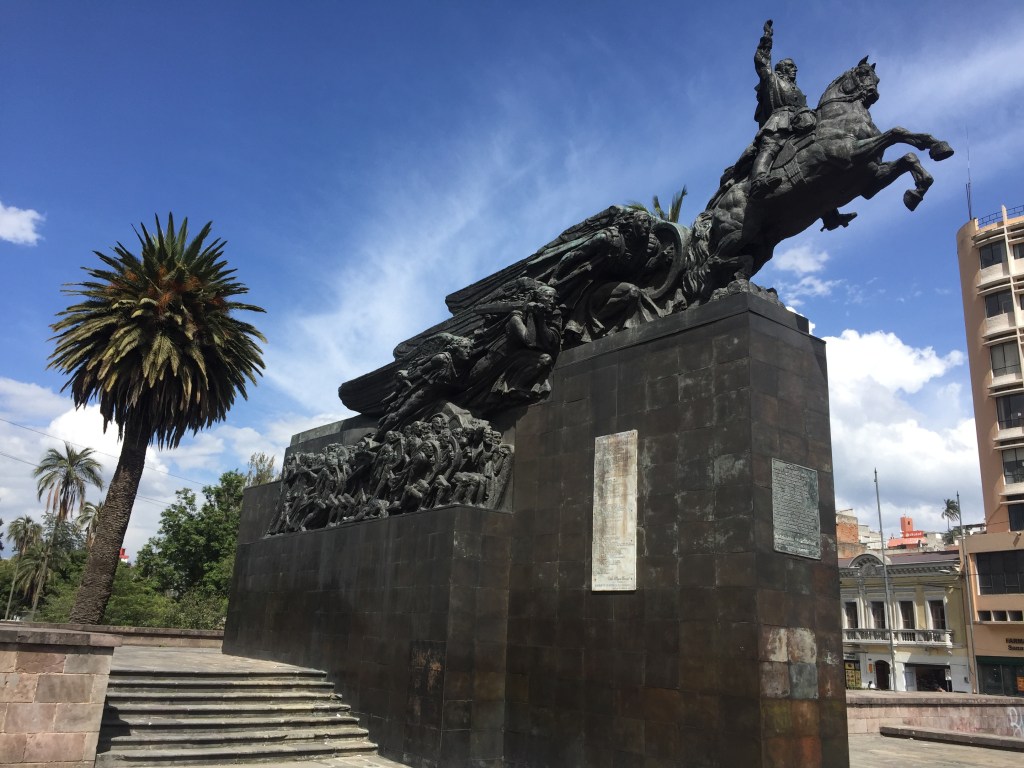
From here, we walk north east, through the Parque la Alameda with its rather marvellous sculpture depicting Simon Bolivar, who led the revolution against Spanish rule, riding into battle. The park also has a lake and an observatory.
National Assembly
On past the National Assembly, which has a colourful collection of hummingbird sculptures along the front.

Quito National Assembly
Museo Nacional del Ecuador (MuNa)
We reach our ultimate destination; the Casa de la Cultura. This huge, round glass building houses the Museo Nacional del Ecuador (MuNa), which takes you through the history of Ecuadorean art. There’s some great stuff here, including lots of gold.

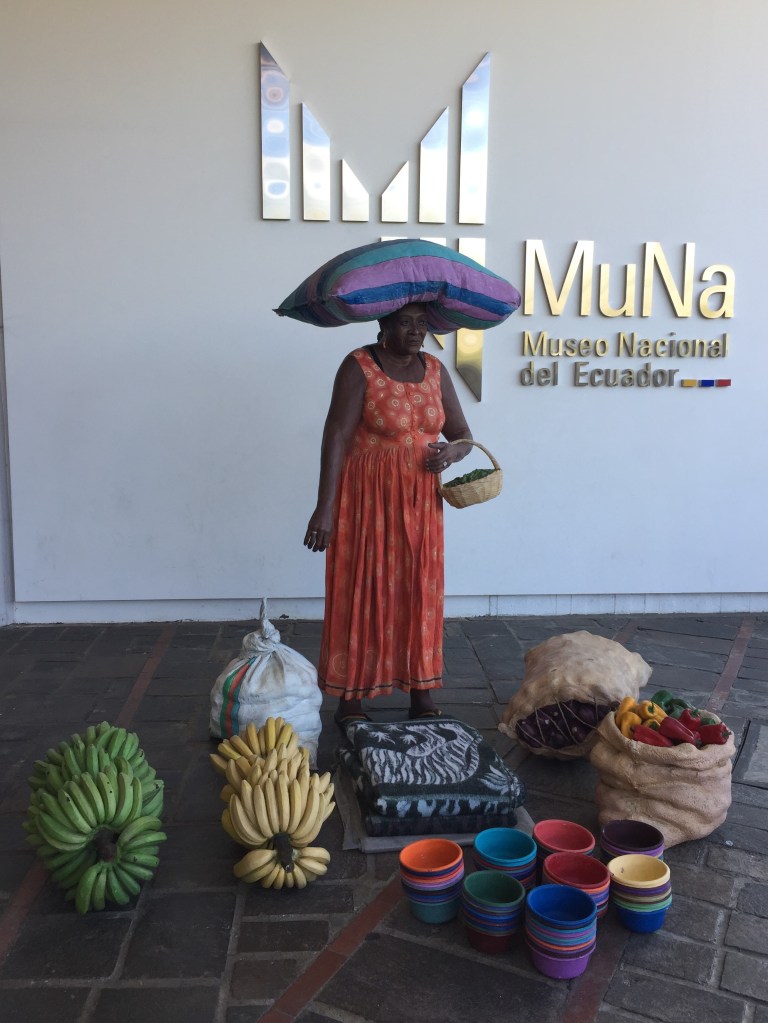
There’s also a fun play area, where you can interact with the art and even climb inside a painting.
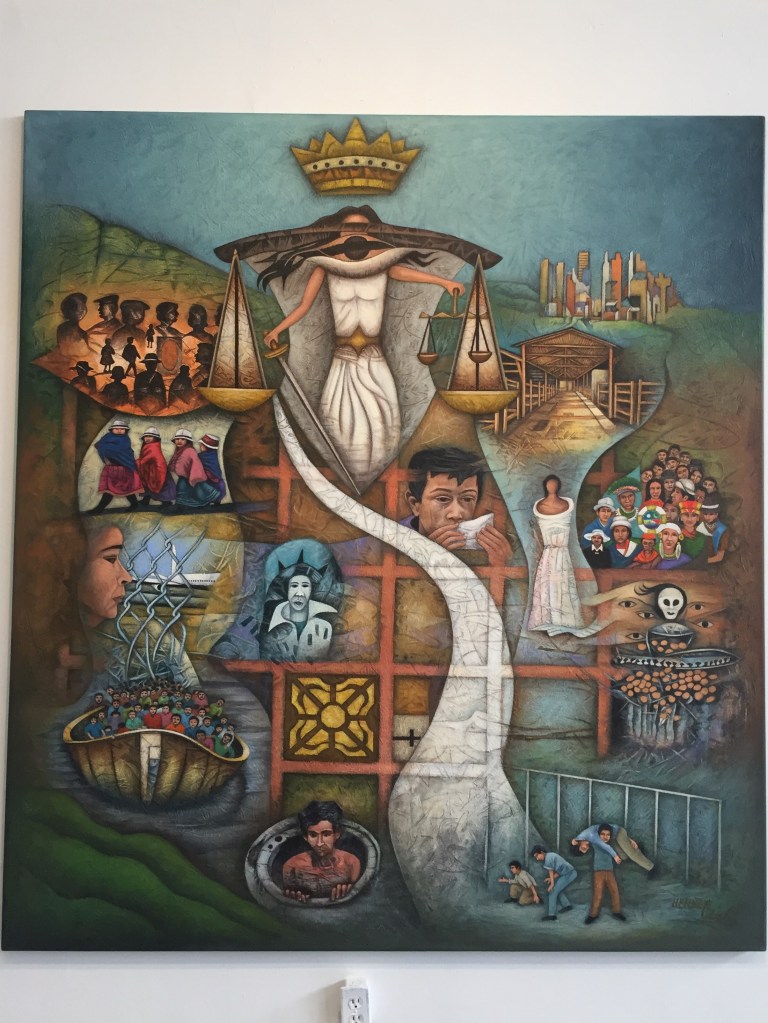
The MuNa has a separate building which houses a temporary exhibition. When we visited, it was the the work of artist Hernán Illescas, which was for sale. The old man determines to win the lottery, come back and buy La Migración sueño en la Memoria, a snip at $20,000.
Dinner at Bandido Brewing
The three of us walk the two miles back to our new hotel (we appear to have adopted a dog), stopping for dinner at a trendy microbrewery called Bandido Brewing. We are the oldest in there by a good 30 years. We are served by a girl with green hair and multiple piercings. The food and beer are very good, but we feel terribly out of place.
Accommodation – Kinde House
Tonight’s accommodation is Kinde House; a very pleasant B&B on a hill overlooking central Quito. The pro – it’s offers a great view of the city from the rooftop terrace. The con – you have to walk up a steep hill to reach it.

Ecuador Day 8 – Quito
Breakfast is included at Kinde House. This morning, it is a tasty but weirdly disjointed mix of scrambled egg, a cheese toastie, an empanada, onion chutney, butter and jam. What are we supposed to do with the butter and jam? Dip the empanada in it? Spread it on the cheese toastie? Or maybe mix it with the scrambled egg?
Tren de los Volcanes
Today, we are going on the Tren de los Volcanes. This tourist train follows a 50 mile route to El Boliche and, it claims, gives you the opportunity to see 15 volcanoes along the way.
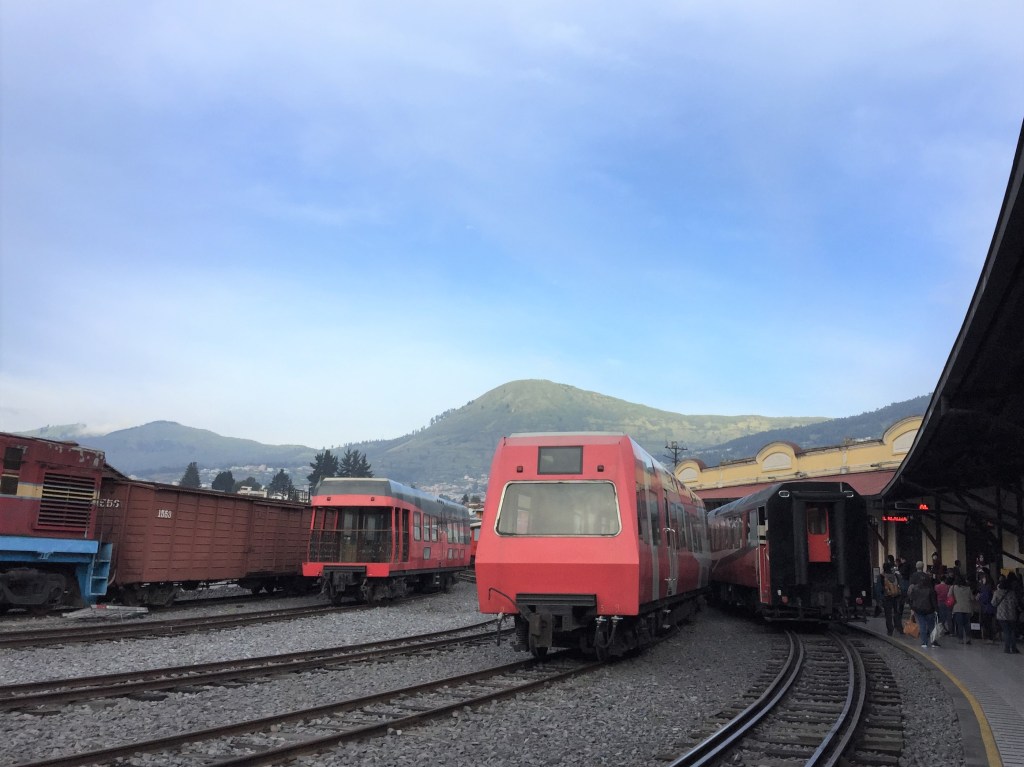
There aren’t any passenger trains in Ecuador; the taxi driver doesn’t even know where the station is, and tries to drop us at the headquarters of Tren Ecuador. Luckily, a passing motor cyclist explains his error, we get back in the taxi and follow the motorcyclist to Chimbacalle Station.

We board our train and set off, flanked by a team of motor cycle outriders to keep the tracks clear. We have only been able to book two aisle seats; an Ecuadorean family has booked all the window seats (a family of six have booked six window seats). However, once the train is underway, the family move to sit together and a pair of seats frees up.
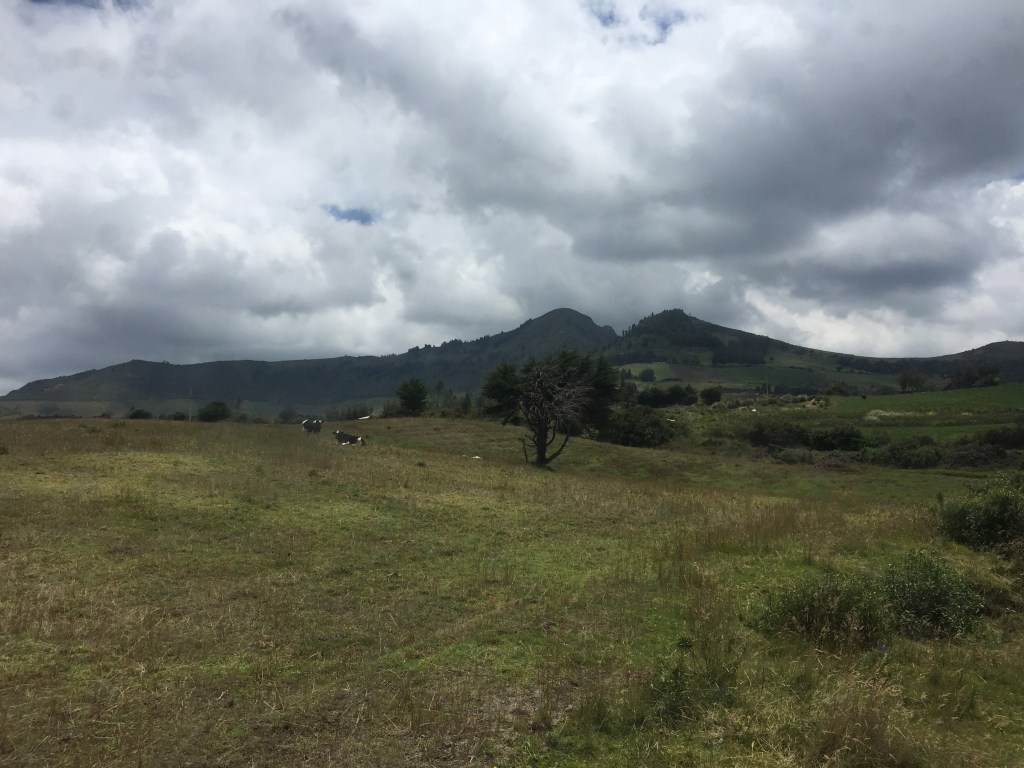
After 45 minutes, we reach the outskirts of Quito and pass our first volcano, the active volcano of Atacazo. Next, through a eucalyptus forest before passing Pasochoa; a horseshoe shaped volcano which has erupted sideways.
Tambillo
We stop for 30 minutes in the village of Tambillo for no discernible reason other than to bring tourism to the area. I show willing by buying some snacks and a train shaped fridge magnet.
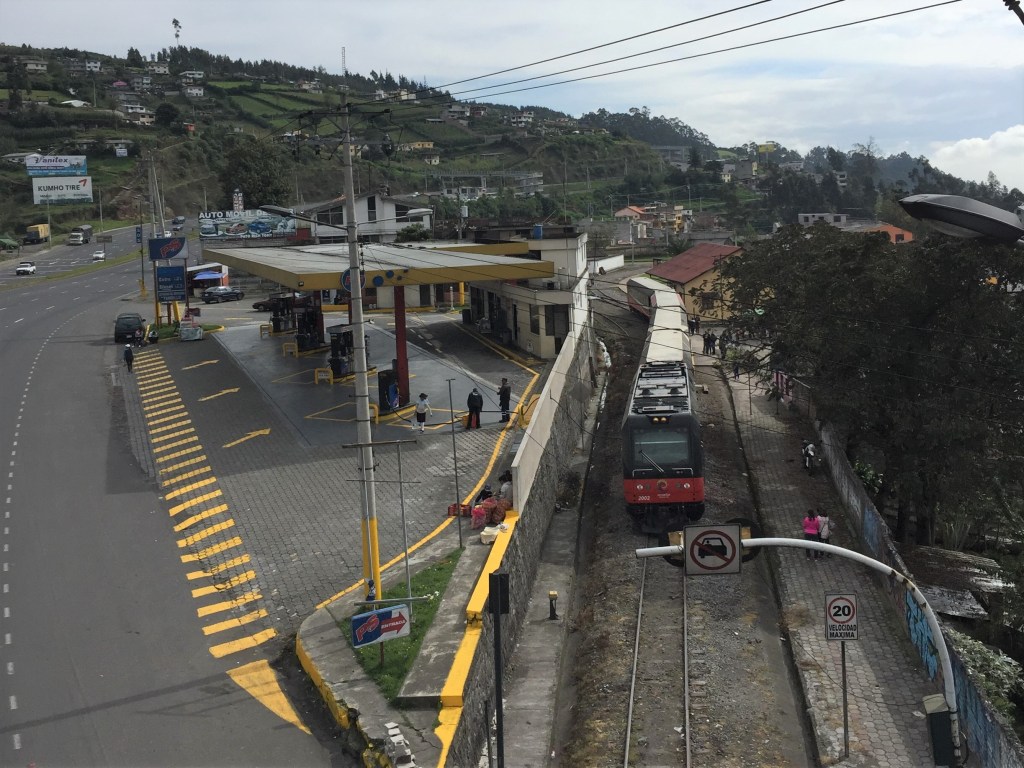
El Boliche
After three hours, we reach our destination, El Boliche, where we have two hours of ‘activities’. We are taken on a guided tour by an eco warrior who loves the sound of his own voice. It takes over an hour to follow a 320 metre trail. I zone out of what he’s saying, but basically he loves nettles and hates cow poo. He stings himself a few times to prove the point. Once we reach the end of the trail; a sacred tree, it’s a case of ‘exit through the gift shop’. For an hour.

We are disappointed to discover that on the ‘Volcano Train’, which advertises itself with pictures of Cotopaxi and takes you to the foot of Cotopaxi, you don’t actually see Cotopaxi. However, unlike PeruRail, Tren Ecuador haven’t cloned our credit card (yet)!

On the return journey, it rains and cloud descends so visibility is minimal. Now our ‘volcano experience’ is reduced to sitting on a retired Spanish commuter train crawling towards Quito with nothing to do except write my blog and watch the outriders struggle on the wet cobbles.
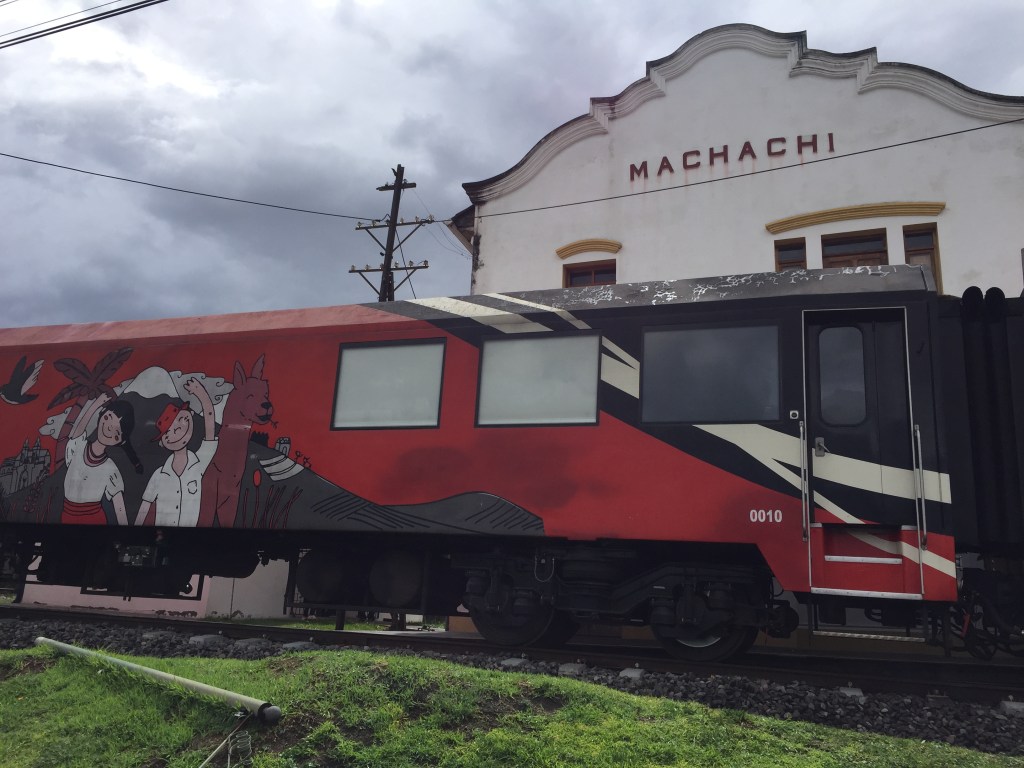
Machachi
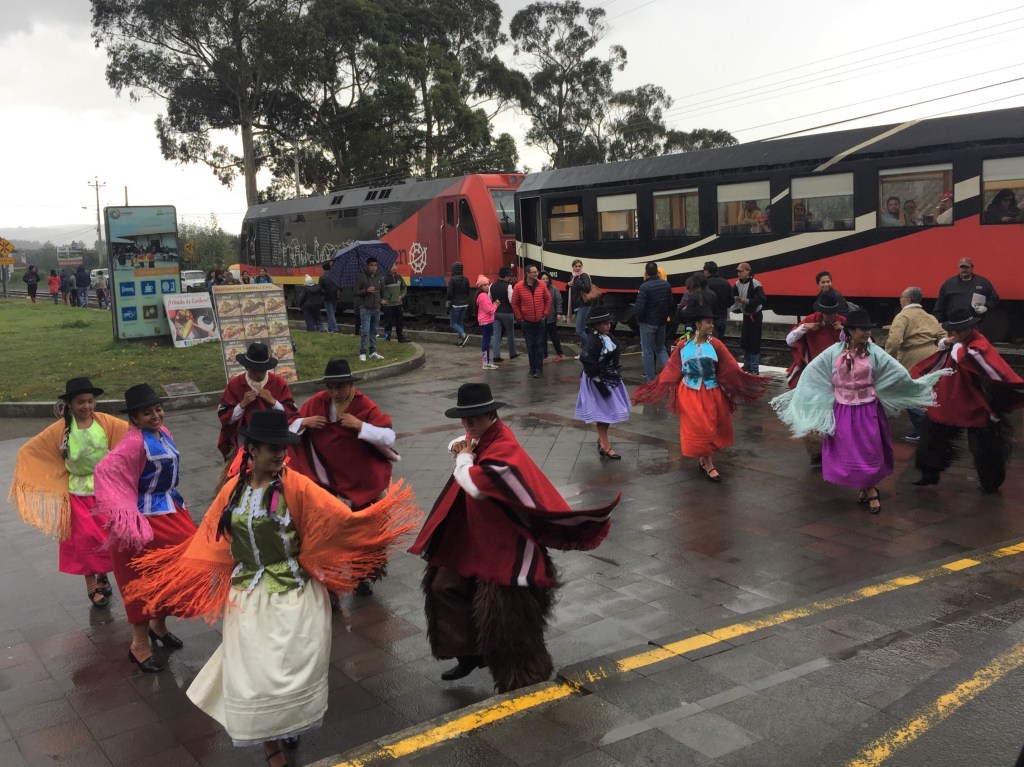
We stop for two hours at Machachi Station in the middle of nowhere. There’s the station, a café and a fancy ranch. It’s pouring with rain, soaking the poor dancers who are there to greet us. We have some lunch at the station, which leaves over an hour to kill aimlessly wandering round by the train, which finally departs 20 minutes behind schedule.
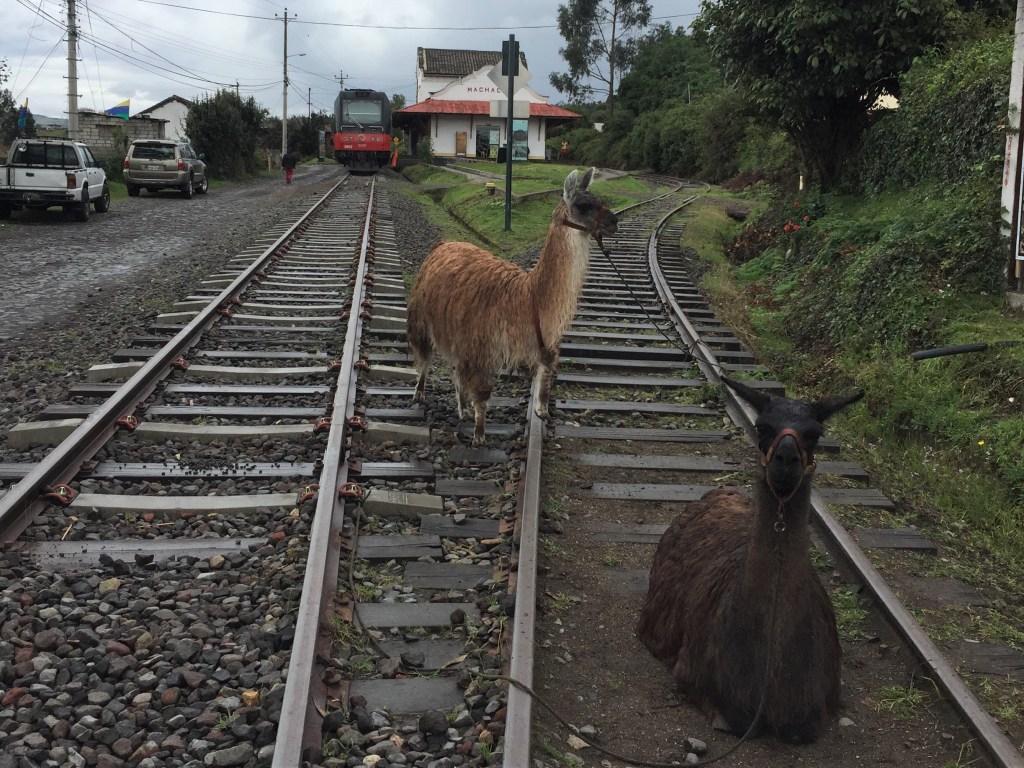
Someone has helpfully tied some alpaca to the train tracks for a touristy photo op. Once the alpaca have bee removed from the lines, we return to Quito station and hail a taxi. I show the driver the address of the hotel and he nods and drives into town. It becomes apparent he has no idea where he’s going when he starts randomly pointing and asking aquí? every few hundred metres. The old man loses patience and we get out of the taxi and walk the final mile.
Note: All trains routes in Ecuador are currently temporarily closed, but hopefully it will soon be possible to enjoy this journey again.
Dinner at Cafe San Blas
We stop for dinner at Cafe san Blas; a small restaurant, specialising in pizza. It takes a while to get served, but we enjoy a beer (or two) as we watch the world pass by in the interim.
Ecuador Day 9 – Quito
Today, we are going to the equator and a couple of equator themed attractions. It’s fiddly to reach these on public transport, so we have booked a tour. On the way there, it rains so heavily it’s difficult to tell if we’re driving down a road or a river. Rubbish floats past the windows when we stop at traffic lights. Luckily, it eases off before we arrive.
Museo Intiñan
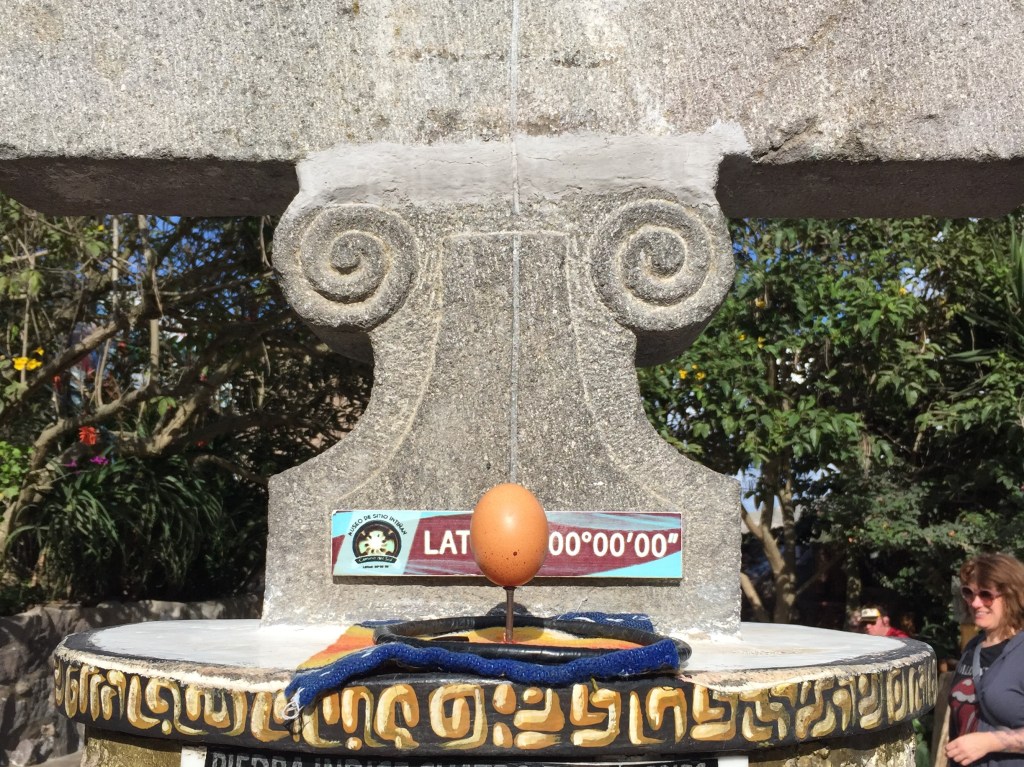
First stop is the Museo Intiñan, which claims to be on the GPS equator. Here, we are given a guided tour which includes such activities as balancing an egg on a nail and trying to walk along the equator in a straight line.

This is followed by a very lengthy chocolate making demonstration, for no particular reason other than to try and flog chocolate. I get frustrated, time is passing, and we still haven’t reached the Mitad del Mundo, which is what we really came to see.
Mitad del Mundo
Finally, we continue to the Mitad del Mundo, which claims to be on the geographical equator. We only have 28 minutes here and in addition to a plethora of equator based photo ops, there are also more painted hummingbird sculptures. So we devise a strategic photography plan, split up, and run round our allocated segments as fast as possible. This is why I rarely opt for organised tours.

We get back to the bus a mere two minutes behind schedule. There was supposed to be a third stop at the cable car, but we have run out of time. The driver offers to drop us there, but we will have to make our own way back to town (which was kind of the point of booking a tour). As we can’t see the mountain for cloud, we decline and return to Quito.
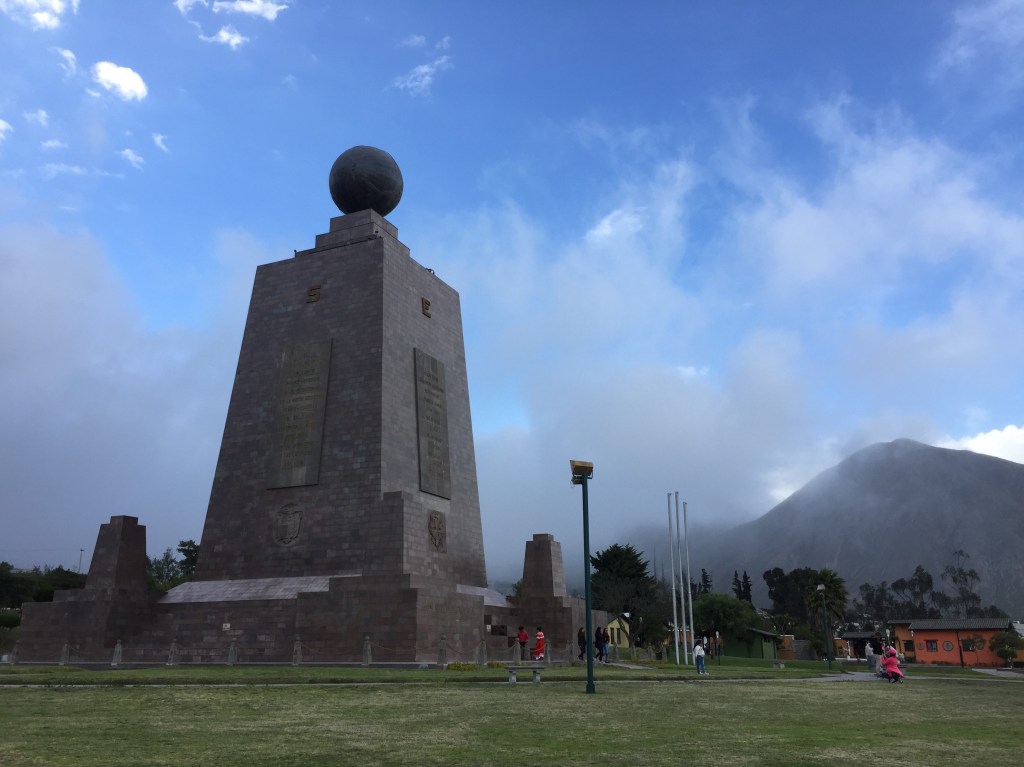
It is possible to reach here by public transport, but it requires taking two buses (change at Ofelia station). Alternatively, there are a whole host of travel agents offering day trips. We went with Go4Shuttle who charge $14.

TelefériQo
As mentioned above, we didn’t visit the TelefériQo due to poor timekeeping and poor visibility. Cloud cover permitting, this gondola ride is one of the world’s highest aerial lifts. It takes passengers on a 10 minute, 2.5 km ride up the side of Pichincha Volcano for spectacular views over Quito. Once at the top (4100 m above sea level), it might be possible to hike to the volcano summit (a 4 km, 5 hour round-trip). Check the safety situation before attempting the climb.
Dinner at El Pollo Forastero
For dinner, we go to El Pollo Forastero. It’s a rather basic looking chicken shop, but busy with locals, which we figure is a good thing. We order pollo y papas (chicken and potatoes) and get served chicken and boiled potato. The chicken is good, but the boiled potato is a disappointment – who even heard of serving chicken without chips?
Ecuador Day 10 – Quito
Hop on Hop off Bus
Today, we are doing something we rarely do; taking the Hop on Hop off Quito Tour Bus. This open top double decker bus follows a route round the city’s major attractions, stopping at 6 locations. It runs at hourly intervals, with the first bus departing UN Boulevard at 9 am and the last at 4 pm. A one day adult bus ticket costs $15.
We board the bus at San Francisco, which we visited earlier in the week.
El Panecillo
The bus then heads up El Panecillo; a small hill with an aluminium statue of the Virgin Mary on top. It’s an interesting journey in a double decker bus, navigating the narrow, winding streets with their low hanging electric cables.

The Virgen de el Panecillo, which is taller than Rio’s Christ the Redeemer, sits atop a dragon on a globe. You can climb to a viewing platform, which runs around the globe, for a 360 degree view across the city and beyond.
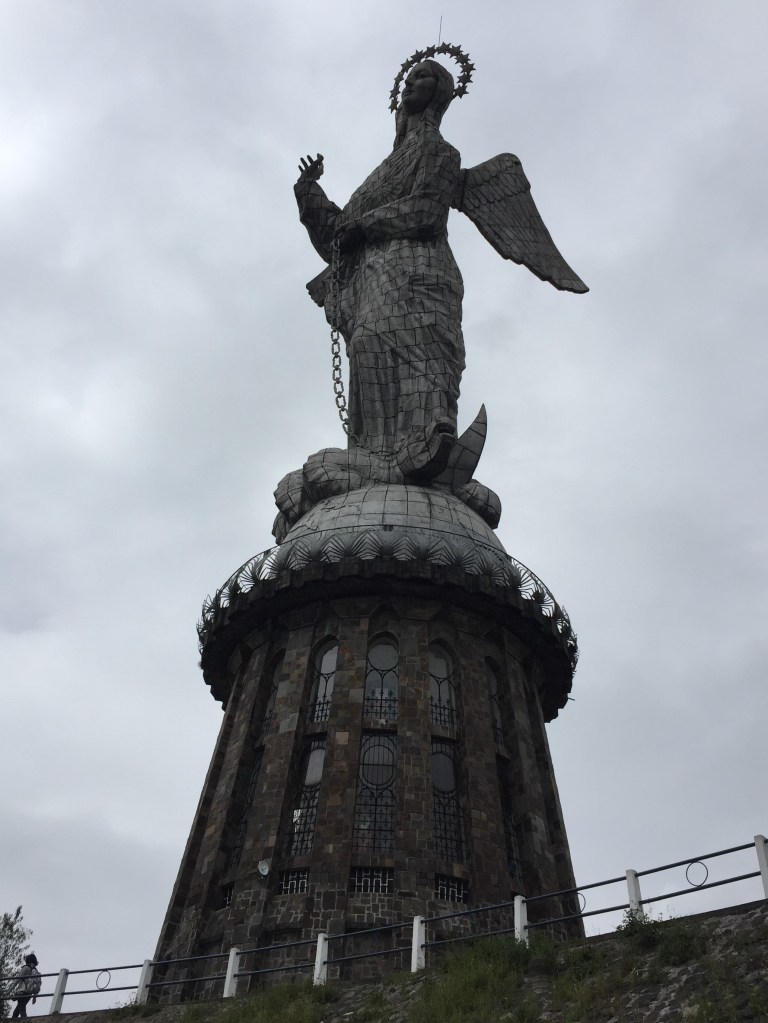
Note: At most stops, the bus just drops off/picks up passengers. However, at El Panecillo, the stop is 30 minutes in duration, which gives you sufficient time to scale the monument and continue on the same bus.
La Carolina Park
We reboard our bus and travel through the old city to the United Nations Boulevard stop. From here, we walk to La Carolina Park; a large park with sports pitches, a running track, a lake and the Botanical Garden.
Botanical Garden
Inside the park is the Botanical Garden. The garden has several zones, with native habitats including cloud forest, wetlands, an orchid greenhouse, an Amazonian greenhouse and a Japanese garden. There’s even a greenhouse full of carnivorous plants.

We spend a long time in the Botanical Garden; my favourite parts are the Carnivore Collection and the Japanese Garden, which contains a collection of over 100 Bonsai trees.

As we have walked the length of the park, we opt to reboard the bus at La Mariscal. We had intended to get off at again at the Artisan Market for some souvenir shopping, but it starts raining and we’re weary. The last stop in the circuit is Basilica, which we also visited earlier in the week.
Dinner at El Terruño
We return to our starting point and have dinner at El Terruño; a restaurant in a colonial courtyard in the old city. I order a salchipan (sausage sandwich) and the old man goes, as always, for the biggest thing on the menu.
Then it’s back to the hotel to pack one last time. South America, it’s been a blast, but it’s time to go home…
- Trip taken: March 2019
- Updated: April 2025
I hope you found the above information useful. For guides to more destinations in the 50+ countries we have visited, check out my full list of Independent Travel Itineraries here.
 Jane's Midlife Journey
Leave a comment