
The ancient city of Winchester, historic capital of England, is a fascinating place to visit. Winchester can trace its history back to Roman times. But it was during the reign of King Alfred the Great that the city had its heyday. Alfred made Winchester the capital of the Kingdom of Wessex, and then a unified England in 927. For over a century, it was the country’s seat of power. Following the Norman invasion of 1066, the capital was moved to London.
There is plenty to see on a day trip to Winchester. The city boasts a spectacular 11th Century cathedral. Plus the remains of a castle built around the same time and containing a legendary round table. There is also a plethora of museums, galleries and shops, literary connections and beautiful riverside walks.
How to get to Winchester
Winchester, the county seat of Hampshire, is just off the M3 motorway, which runs between London and Southampton.
By train:
Winchester has excellent public transport links. There are direct trains from London Waterloo, Oxford and Bournemouth. Each of these takes about an hour.
By bus:
There are local buses to Winchester from Southampton, just 12 miles to the south. National Express offers a service to Bournemouth and London.
I opted to travel with Highcliffe Coaches, who run day trips to Winchester offering pick ups across Bournemouth, Christchurch and Poole.
Parking
If you decide to drive, there are several car parks dotted around the town, plus four Park & Ride car parks. Further details can be found here.
Getting around Winchester
The old town is best explored on foot. My itinerary, which runs mostly along the High Street, covers a distance of 1.5 miles.
Winchester in 1 Day Itinerary
| 1 | Winchester Cathedral |
| 2 | Winchester City Museum |
| 3 | The Square |
| 4 | The Great Hall |
| 5 | Westgate Museum |
| 6 | Guildhall |
| 7 | King Alfred the Great Statue |
| 8 | Abbey Gardens |
| 9 | Winchester City Mill |
| 10 | The Weirs |
Winchester Cathedral
The enormous Winchester Cathedral, measuring almost 170 metres in length, is the longest medieval cathedral in the world. The current building dates back to 1079. There was another church on the site prior to this, but it fell victim to flooding.
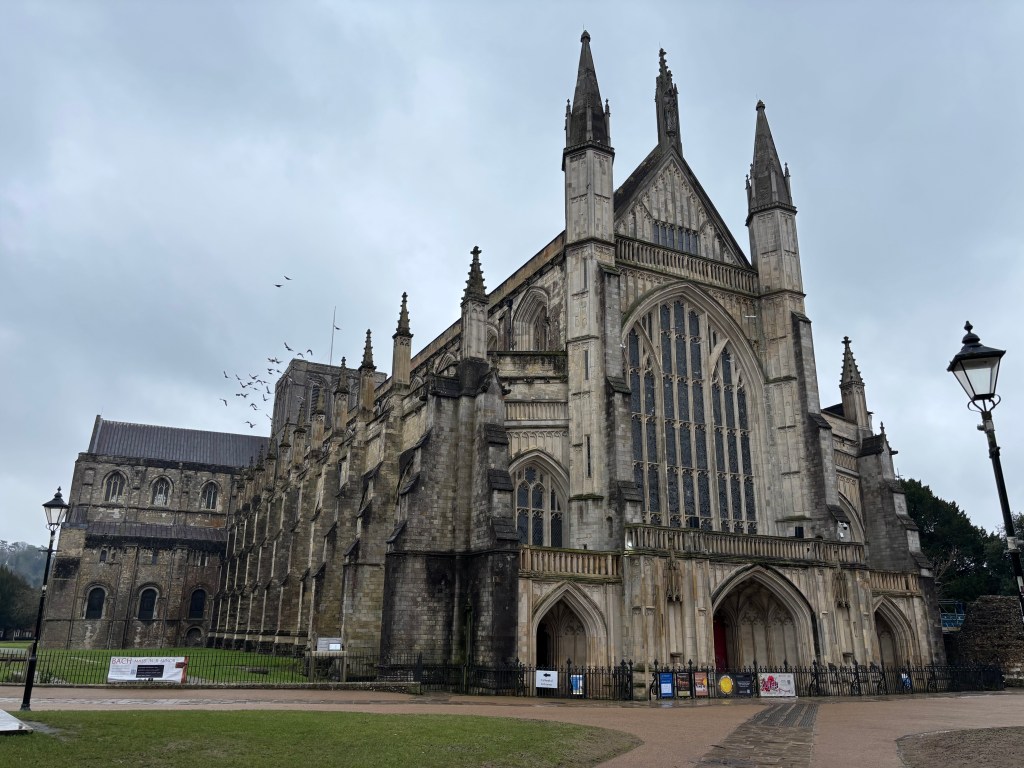
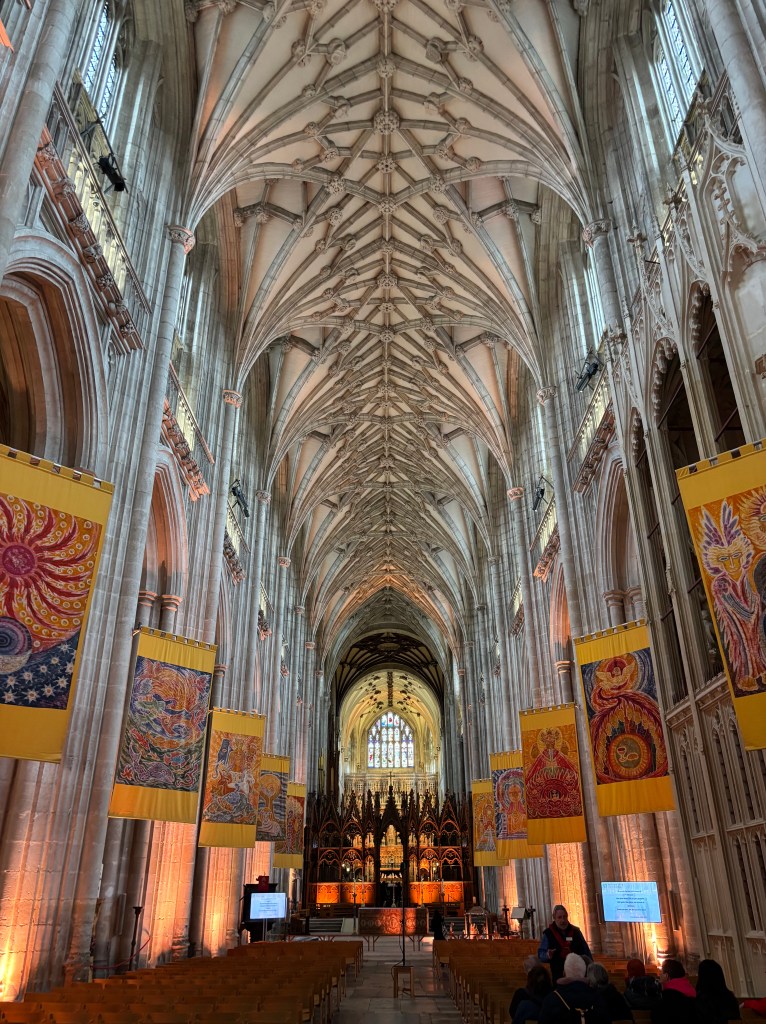
The church’s interior features a spectacular vaulted ceiling, beautiful stained glass windows and the graves of many of the ancient Kings of England.
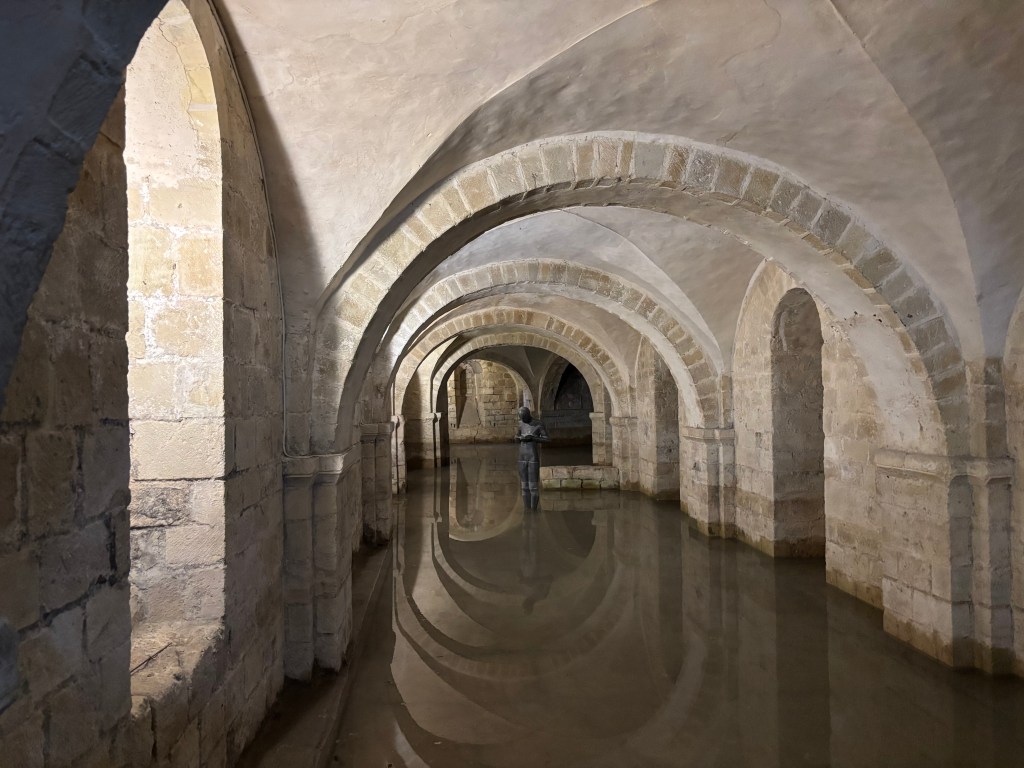
The Crypt
The cathedral is built on land which is liable to flooding. It is sometimes possible to tour the Crypt, if it isn’t flooded. In the middle of the Crypt is a sculpture (Sound II) by Anthony Gormley. During wet weather, the lone man stands semi submerged, looking down at the water. There is a viewing platform overlooking the Crypt.
Jane Austen’s Grave
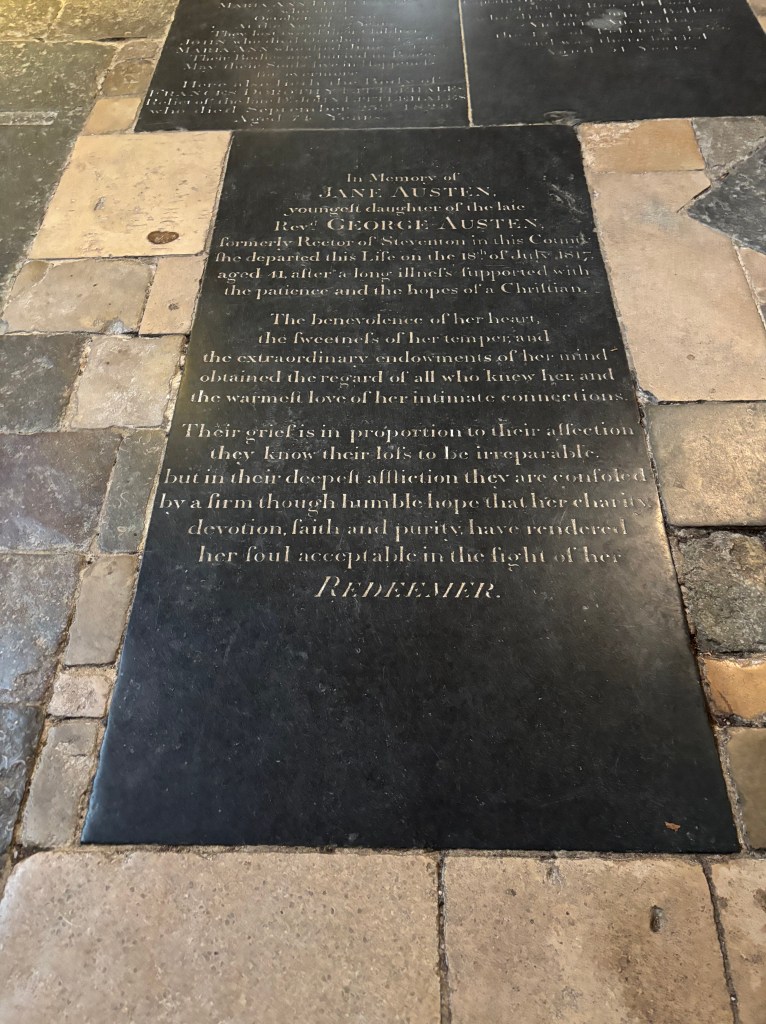
Novelist Jane Austen died in Winchester in 1817 and was buried in the cathedral. Bizarrely, her gravestone makes no mention of the fact she was a writer! A plaque on a nearby wall rectifies this omission.
The cathedral is open daily from 9 am until 5 pm (12.30 pm until 3 pm on Sundays). An adult annual pass costs £14 (£13 online). Complimentary guided tours are included in the ticket price.
Winchester City Museum
Winchester City Museum is a local history museum. The purpose built Edwardian museum tells the city’s history; from its origins as an Iron Age trading centre to Anglo‑Saxon glory as England’s ancient capital, the seat of Alfred the Great, to the final days of Jane Austen.
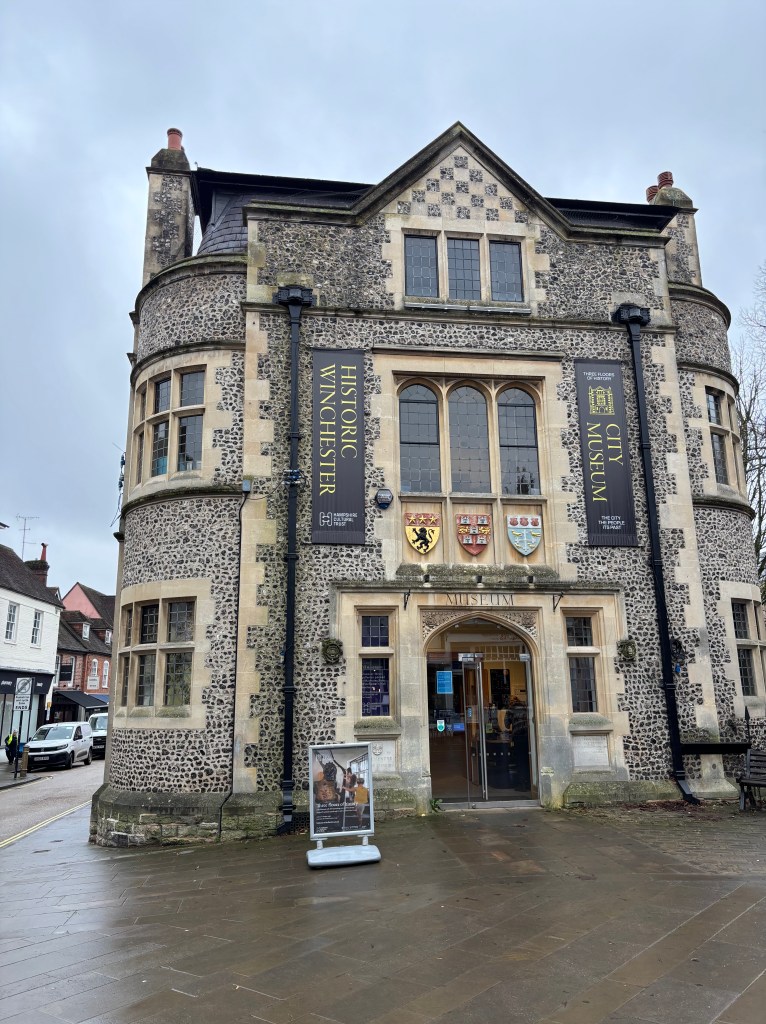
The museum is open daily from 10 am until 5 pm. There is no day ticket option – adult entry costs £8 per annum. I though this was a bit steep for a day trip, so made do with admiring the museum’s architecture.
The Square
The Square in front of the museum is lined with shops and cafes.
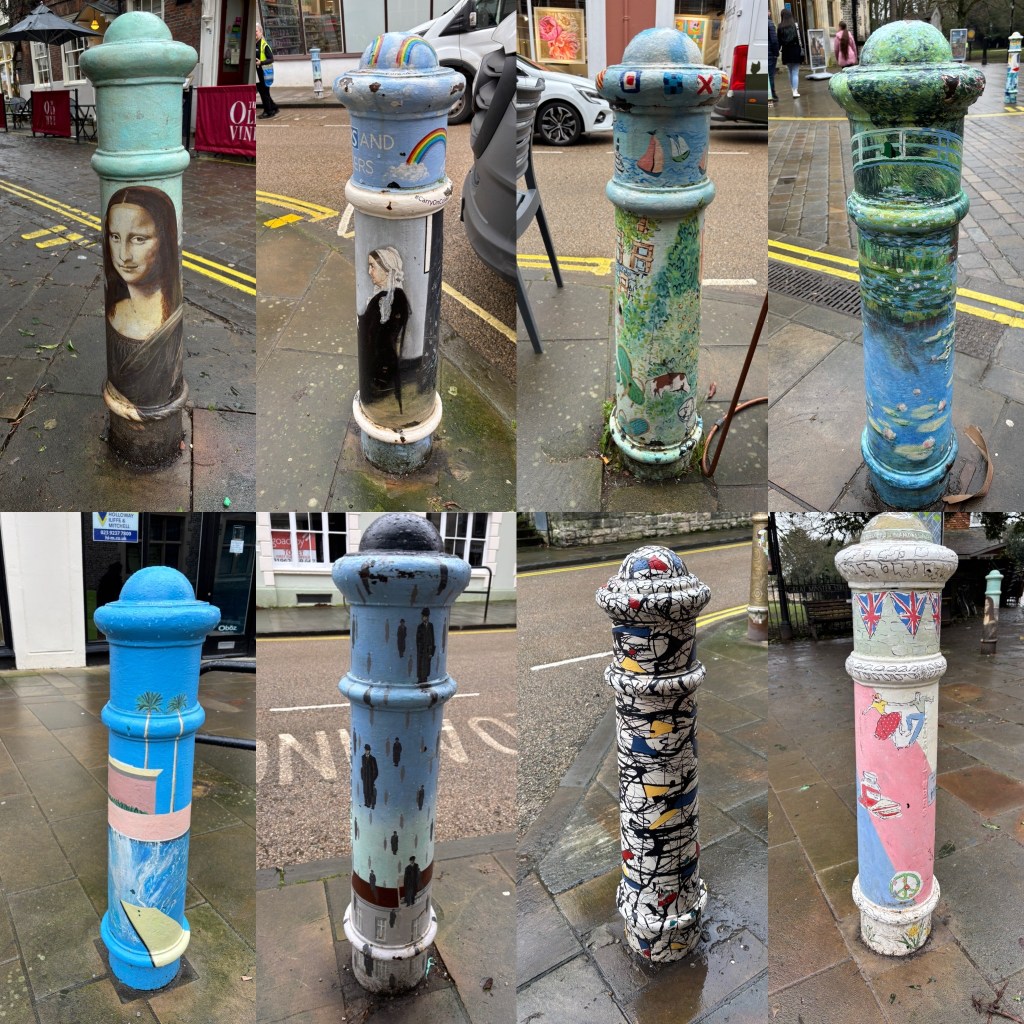
Artist Bollards
Bollards around the Square have been painted in the style of famous artists. Featured among them are works by artists including Da Vinci, Monet and Hockney.
The Great Hall
Winchester Castle was founded by William the Conqueror in 1067 following the Norman invasion of England the previous year. Most of the castle is in ruins, but the Great Hall remains intact.
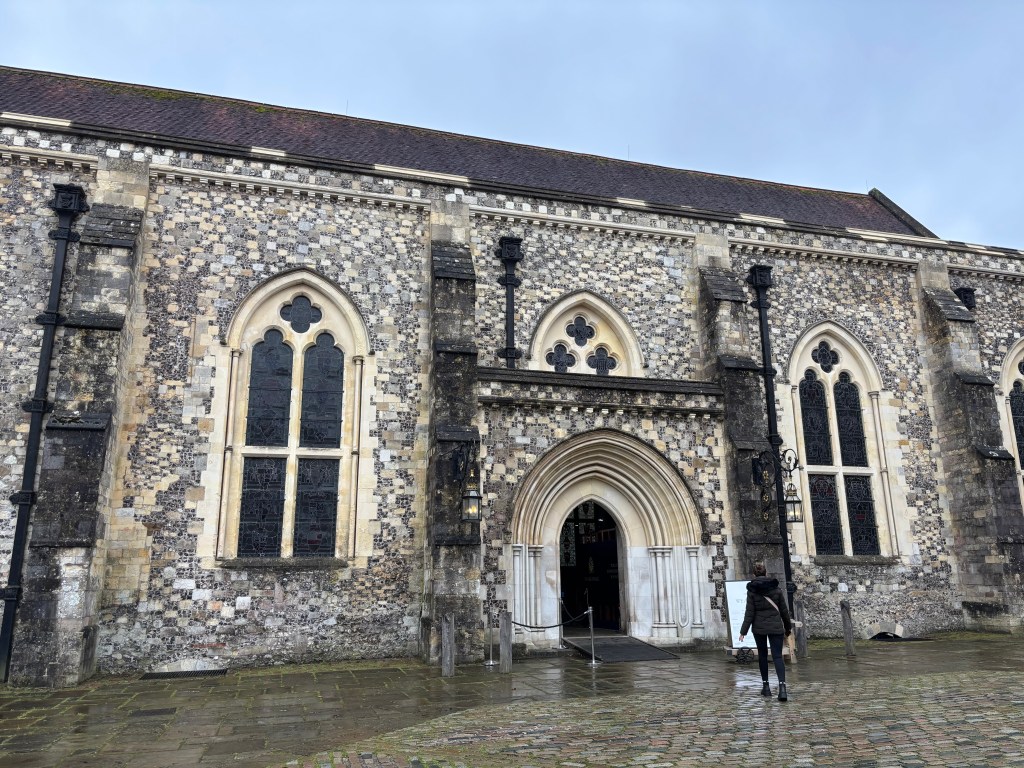
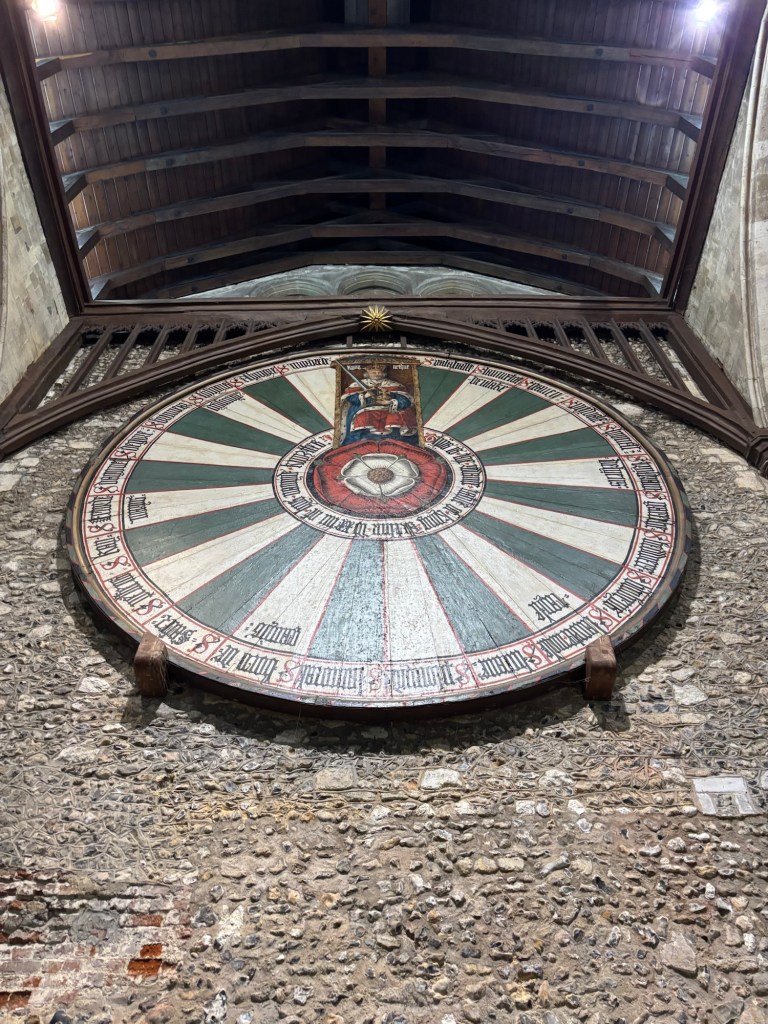
The building houses the Round Table famously linked to the legend of King Arthur. Believed for many years to be King Arthur’s original round table, carbon dating estimates that the table actually dates from the 13th Century. It is believed that table was made in 1290 for a tournament for King Edward I. Henry VIII later had the table painted with the Tudor Rose, depicting himself as King Arthur.
Westgate Museum
The castle’s West Gate, which once served as part of the castle’s primary defence, is now a museum. Climb a steep staircase to visit the Westgate Museum above and learn about the castle’s history.
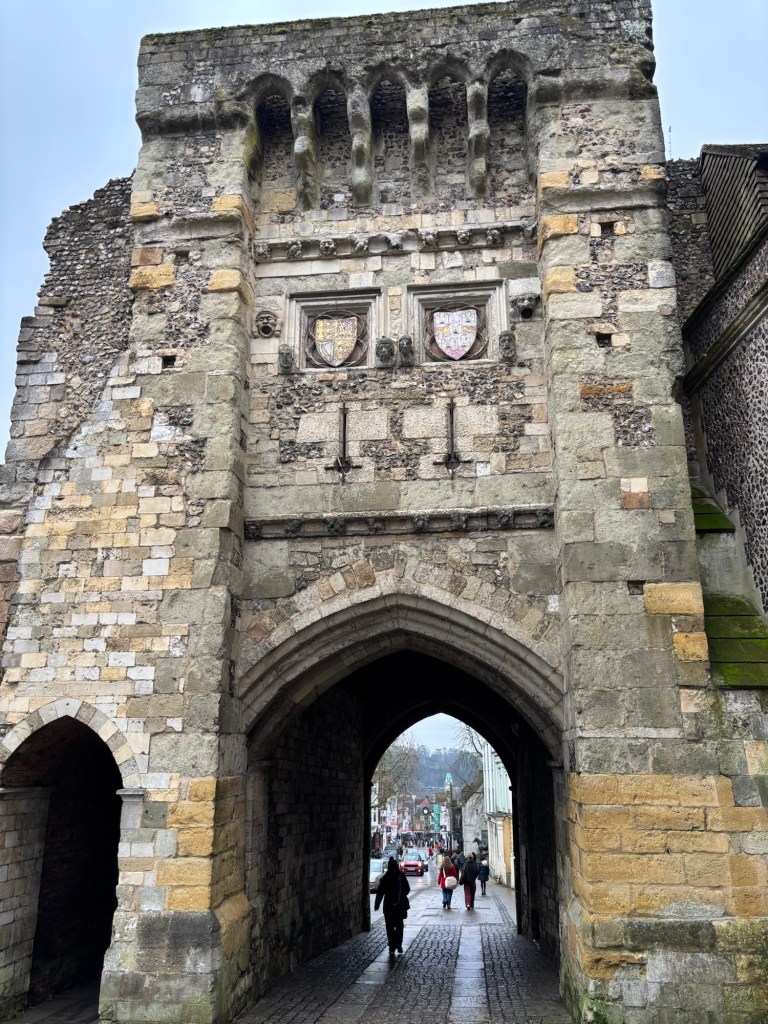
Another flight of stairs brings you to a viewpoint on the roof. From here, you have a great vantage point looking down the High Street – billed as Britain’s oldest High Street.
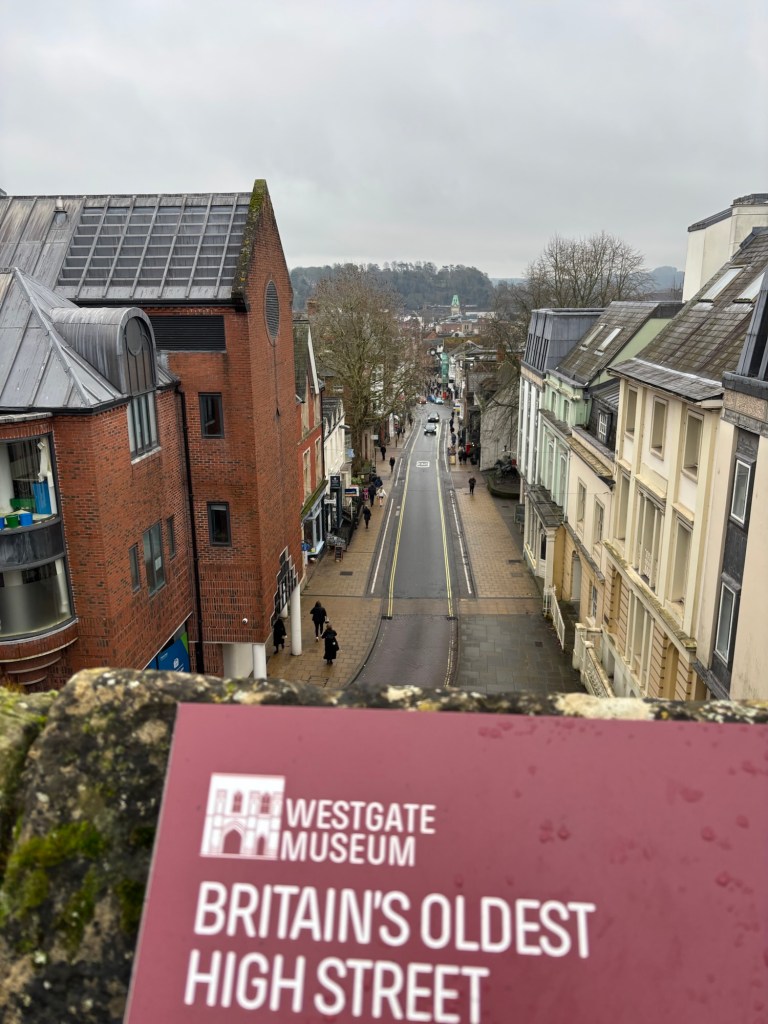
The museum is open daily from 10 am until 5 pm. An adult annual pass covering both the Great Hall and the Westgate Museum costs £9. (Or pay £13.50 to include Winchester City Museum).
Guildhall
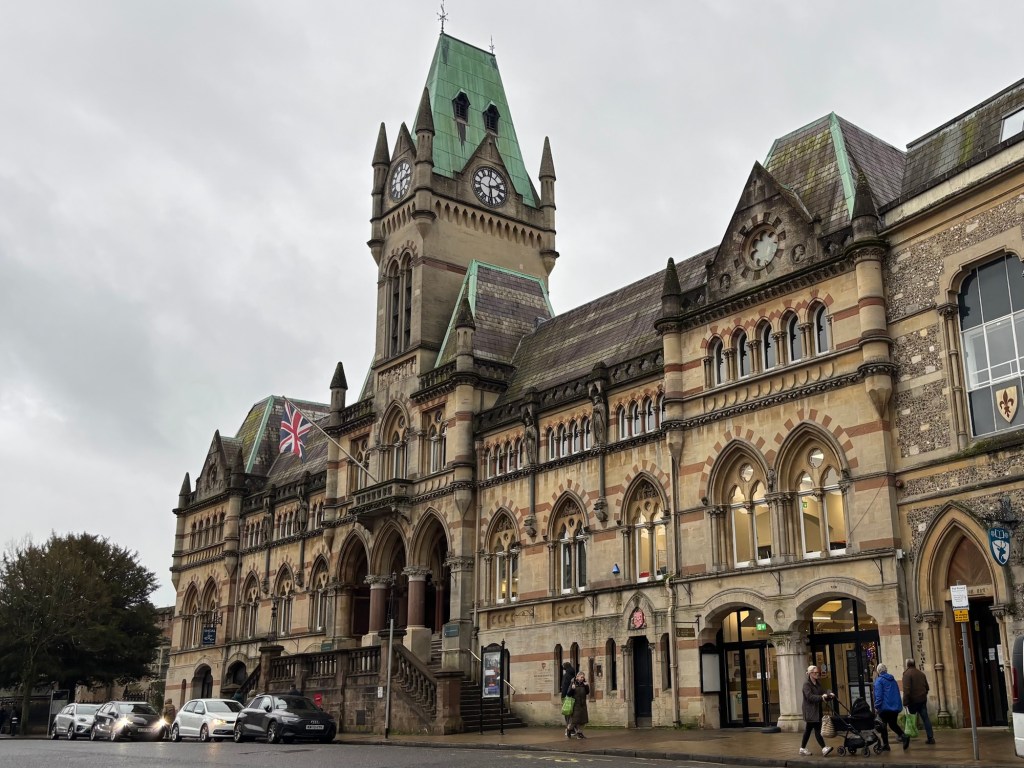
The Guildhall dates from 1873. As well as government offices, the building houses the city’s Visitor Information Centre.
King Alfred the Great Statue
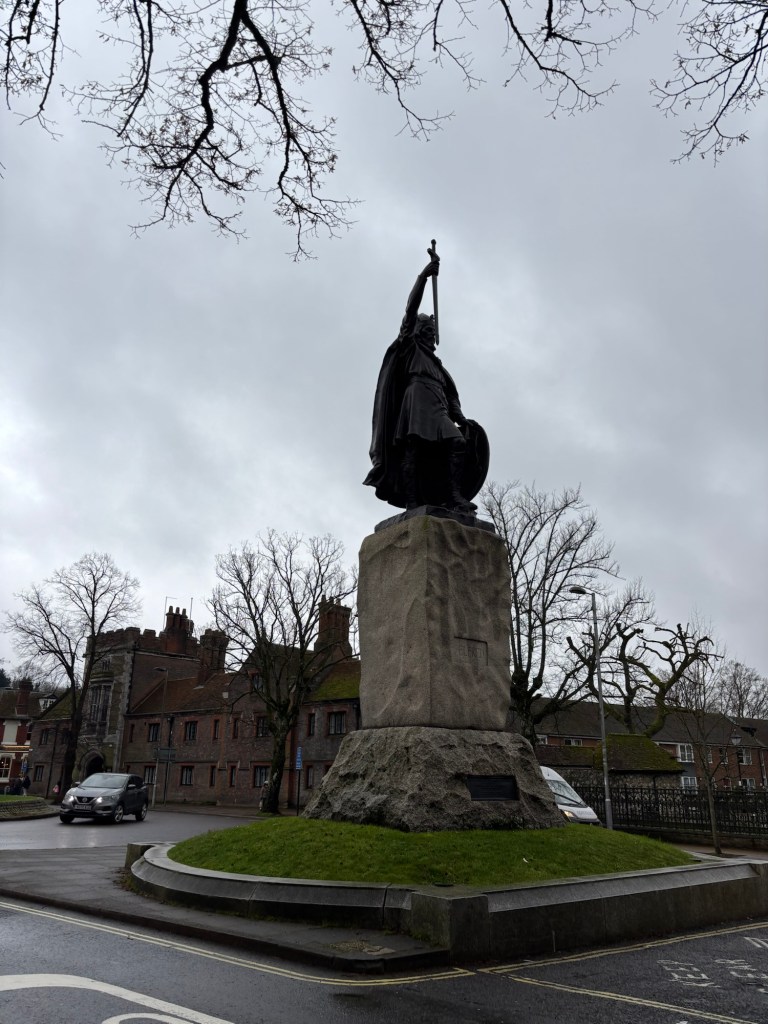
Sitting on an island in the middle of the Broadway (a continuation of the High Street), the King Alfred the Great Statue is an imposing memorial to the famous Anglo-Saxon king. The statue was commissioned in 1899 to mark a millennium since the King’s death.
Abbey Gardens
Abbey Gardens are pretty little gardens sandwiched between the city and the River Itchen. A nice place to sit and relax after a busy day’s sightseeing.
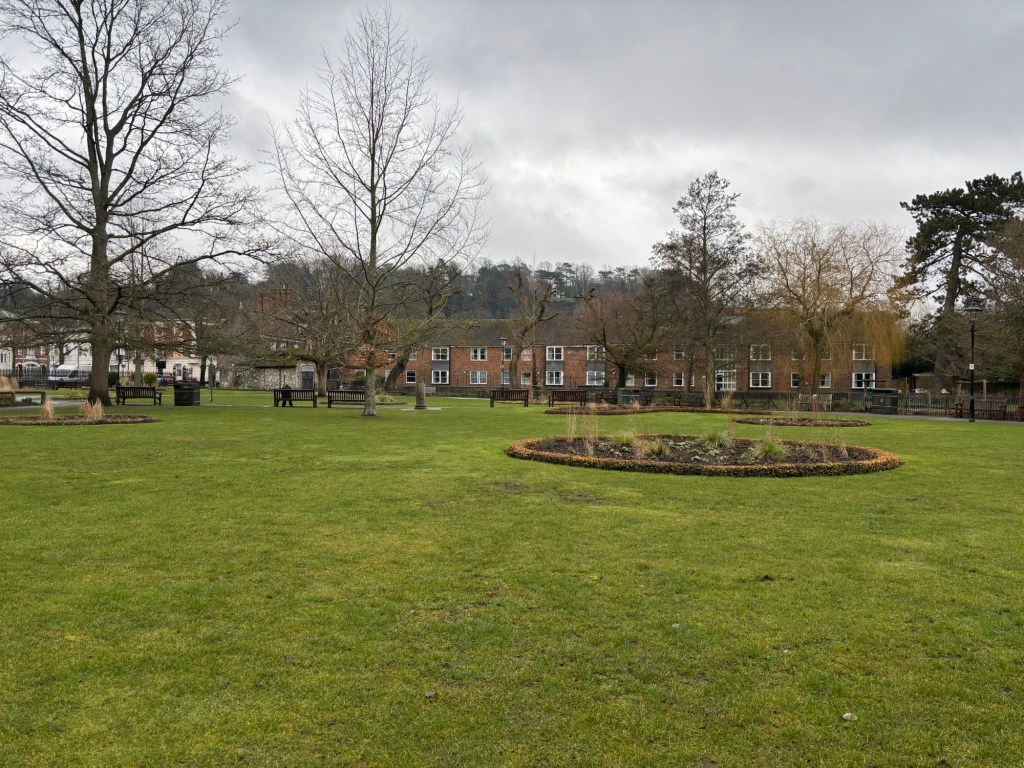
Winchester City Mill
Winchester City Mill is a working mill. Run by the National Trust, the building offers a glimpse into the city’s milling history.
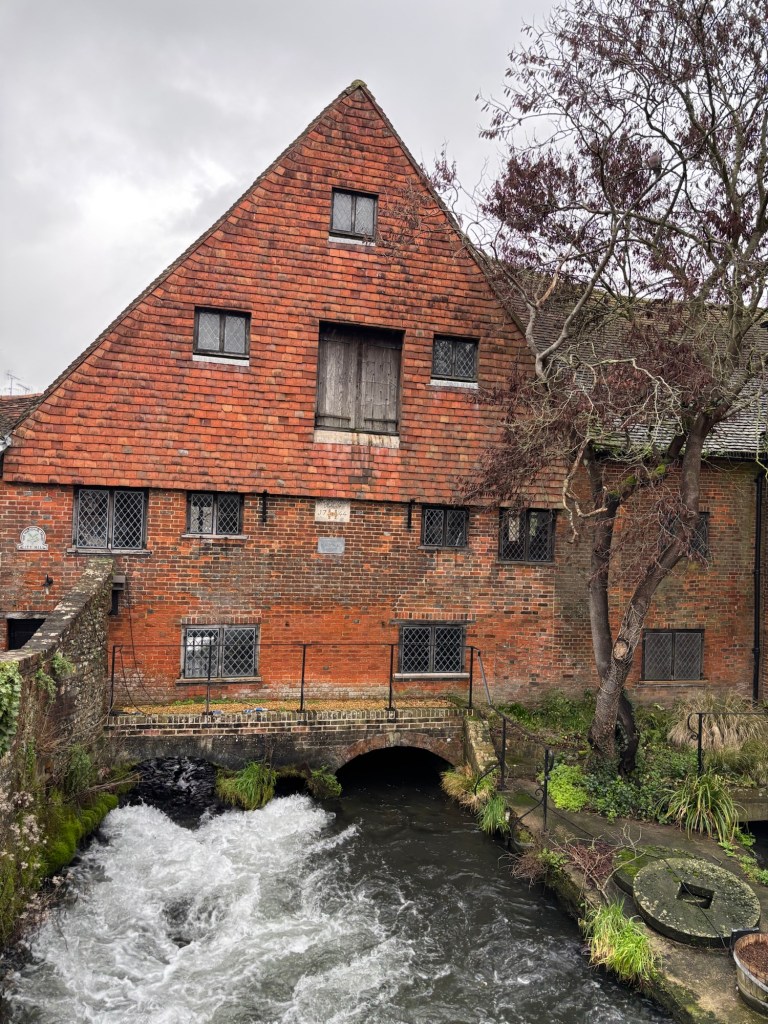
The mill is open Thursday to Sunday from 10 am until 4 pm. It closes during the winter months, reopening on 22 January. Entry is free.
The Weirs
The Weirs is the name of a scenic riverside path which runs alongside the River Itchen from the mill to Wolvesey Castle.
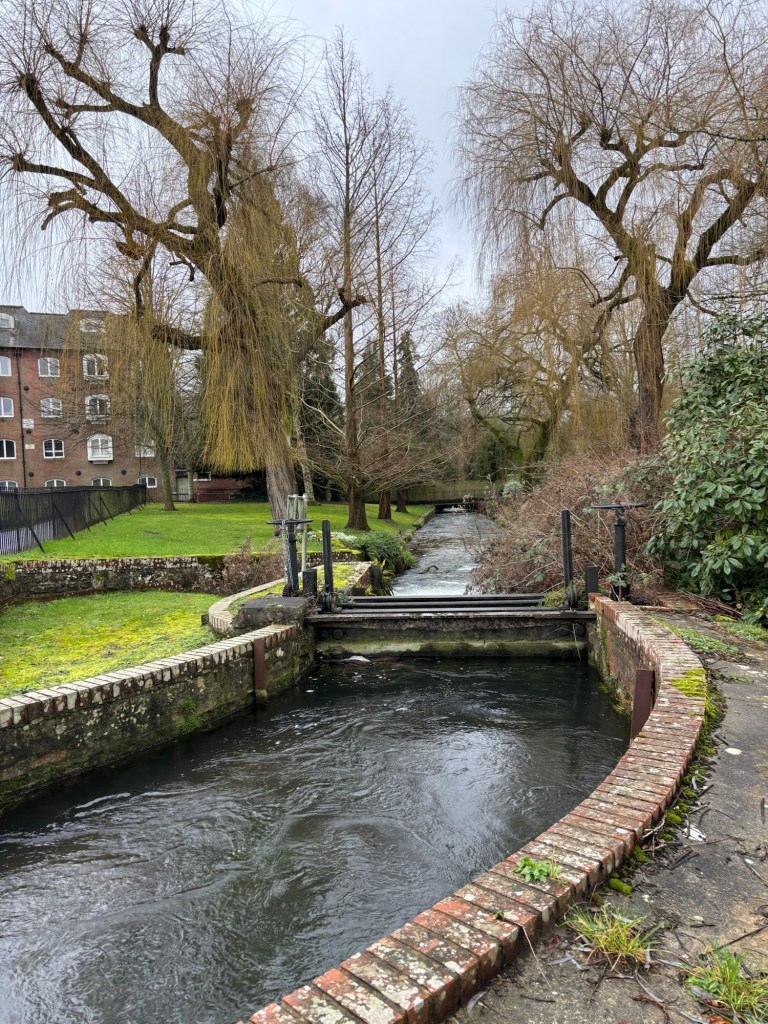
From here, you can either return to your starting point. Or if you have time, continue to Wolvesey Castle, the ruins of the former Bishop’s Palace.
- Updated: January 2026
 Jane's Midlife Journey
Leave a comment