
We spent a day in the Japanese city of Nagasaki, on the island of Kyushu. This historic port city has played a prominent role in foreign trade for many centuries. However, on 9 August 1945, it became famous for another thing as Nagasaki suffered being the second Japanese city to be destroyed by an American atomic bomb. The city has since been rebuilt. There is a museum and a peace park where you can learn about and reflect on the horrors of the atomic bombing.

Nagasaki in 1 Day Itinerary
| Day 1 | Accommodation – Hotel Concerto Nagasaki Nagasaki Atomic Bomb Museum National Peace Memorial Hall for the Atomic Bomb Victims Atomic Bomb Hypocentre Park Nagasaki Peace Park |
Accommodation – Hotel Concerto Nagasaki
For our visit to Nagasaki, we are staying at the Hotel Concerto Nagasaki. It’s somewhat more up-market than our past few hotels and conveniently located for the Peace Park.

My favourite thing is the jacuzzi bathtub with TV. I’m not sure why I’m so excited about this – it’s not like I can understand Japanese TV. The bathroom also has a clock – so you can do a time and motion study on your motions? I think a soak in the jacuzzi will be the ideal antidote to a stressful day, but forget rule No 1 of jacuzzi baths. I throw in the bath gel provided by the hotel and have soon created a foam mountain range in the bathroom.

Once we have settled into our hotel, we set off to explore Nagasaki. Unfortunately, the combination of the bad weather and the fact that getting stuck in the snow meant we arrived much later than anticipated, result in having to curtail our plans somewhat. But we manage to visit some of the city’s key sites.
Nagasaki Atomic Bomb Museum
We head first to the Nagasaki Atomic Bomb Museum, which tells the story of the atomic bomb attack and its aftermath.

The museum is not as easy to locate as you might imagine. It’s located inside a large, multipurpose building, which also houses the town hall and the library.

The museum is divided into four sections; Section A, entitled August 9 1945, shows the city prior to the bombing, images of the bomb dropping and of the immediate damage it caused. At the entrance is a clock discovered 800 metres from the hypocentre, which stopped at 11.02, the time of the blast.

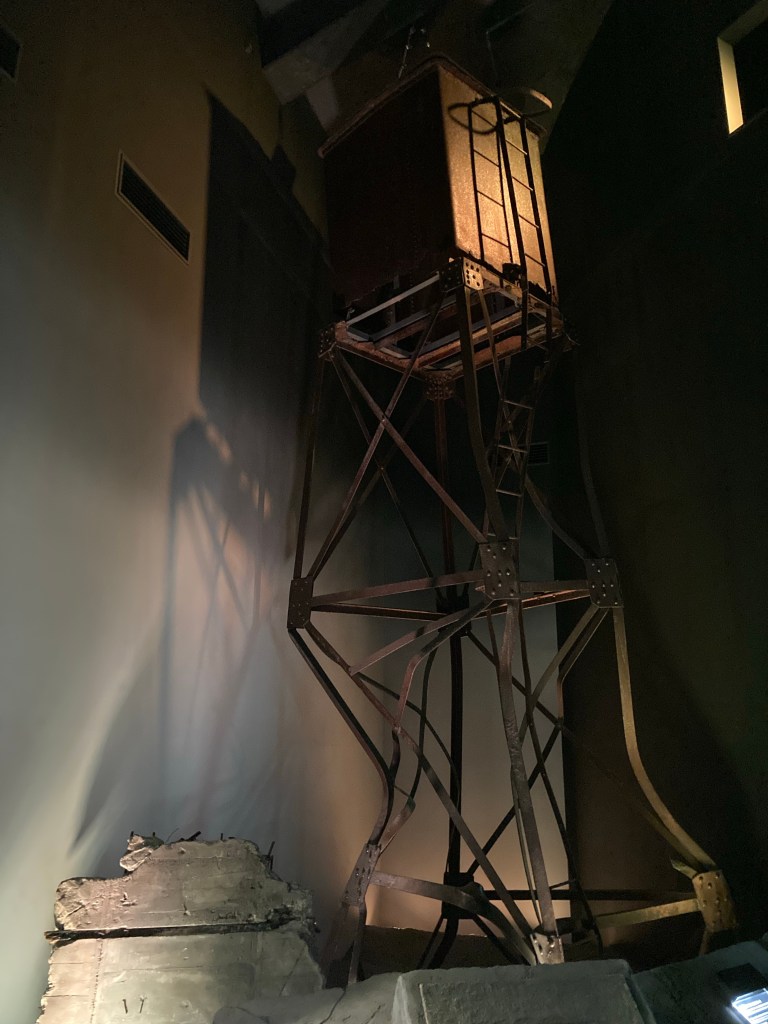
Section B, Damage caused by the Atomic Bomb, displays artefacts destroyed by the blast; for example rosary beads which melted and fused, plus the warped water tower from a school.

August 9th was a Thursday, so the school would have been full of children.
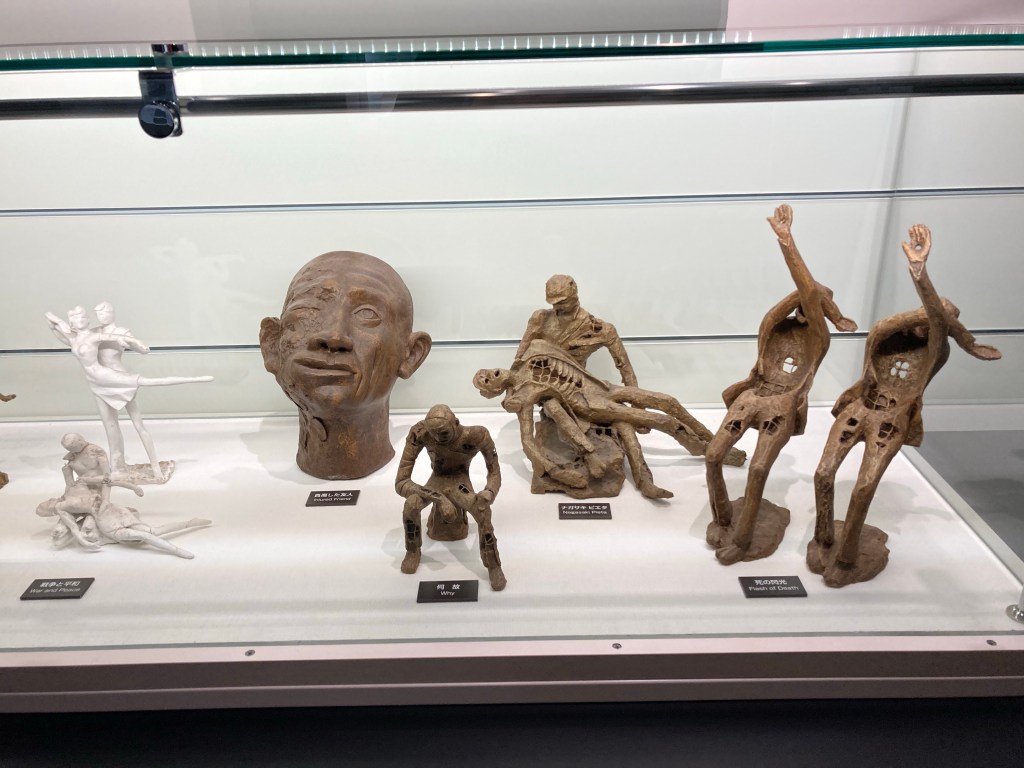
My favourite items are these sculptures made by a Dutch PoW, who was working 1500 metres from the hypocentre when the bomb hit, interpreting what he witnessed of the blast.
Section C, A World without Nuclear Weapons, documents the world’s current nuclear arsenal and what has been done to encourage countries to disarm.
Finally, Section D consists of Video Rooms, where you can watch videos related to the bombing. Although the museum makes for sombre viewing, it is less macabre than its counterpart in Hiroshima. There are photos of corpses and horrifically mutilated people, but they’re mainly on TV screens as part of montages, so you aren’t confronted by the same image for long. Unlike in Hiroshima, I came out feeling more educated than nauseated. I’m not sure if that’s a good thing or a bad thing…
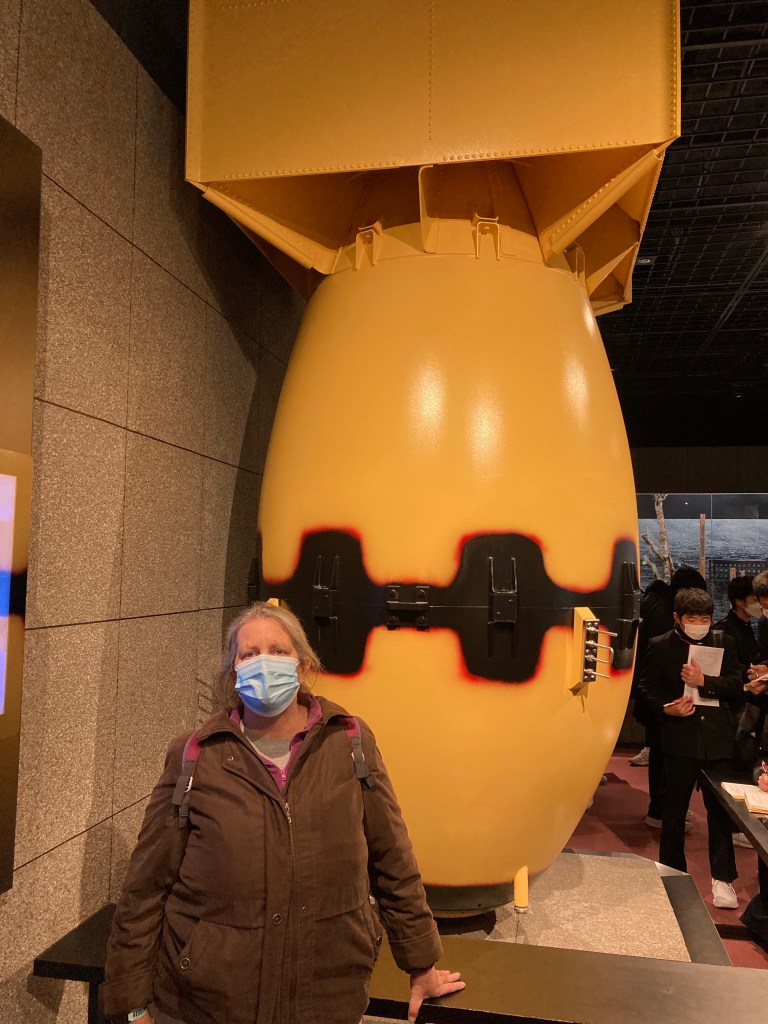
The museum is open daily from 8.30 am until at least 5.30 pm (later in summer). Adult entry costs Y200 (around £1).
National Peace Memorial Hall for the Atomic Bomb Victims
Adjacent to the museum is the National Peace Memorial Hall for the Atomic Bomb Victims, where a water basin symbolises people crying for water as they died. Twelve Pillars of Light hold the names of the victims. You can listen to survivors’ messages and leave your own message for peace. We don’t stay long, as an enormous school group descends.
Atomic Bomb Hypocentre Park
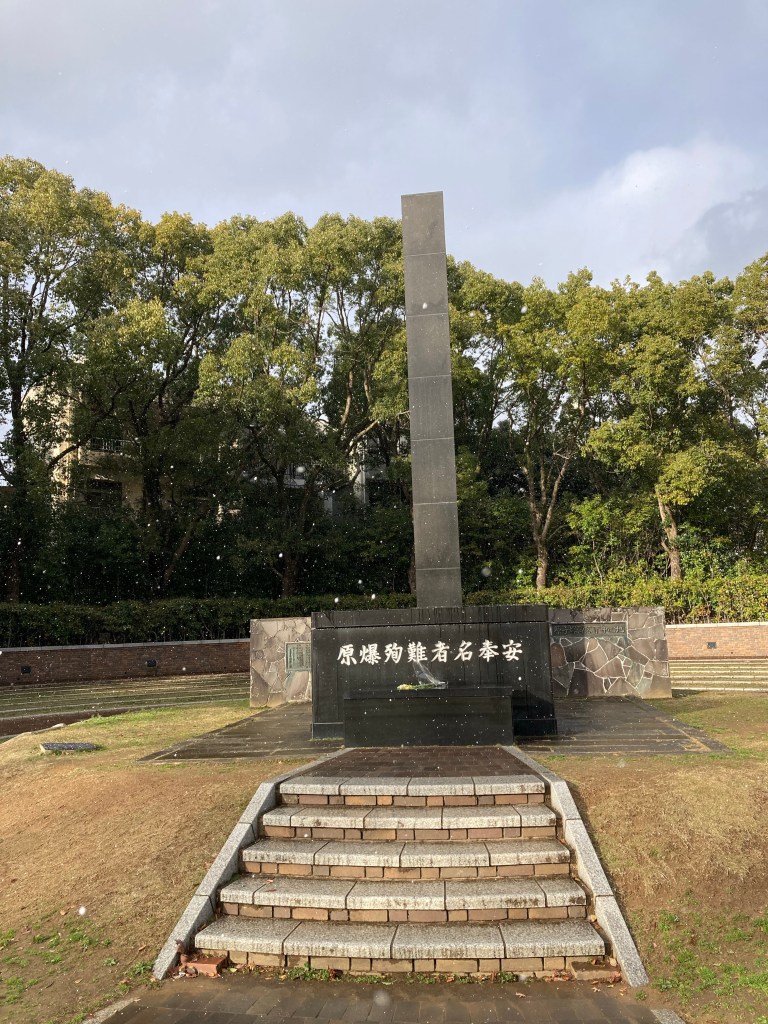
We cross the road to the Atomic Bomb Hypocentre Park. This small, paved park contains some statues and a stone column that marks the hypocentre above which the bomb exploded.
Nearby, is a section of the wall of the Urakami Cathedral, which was almost completely destroyed in the attack.
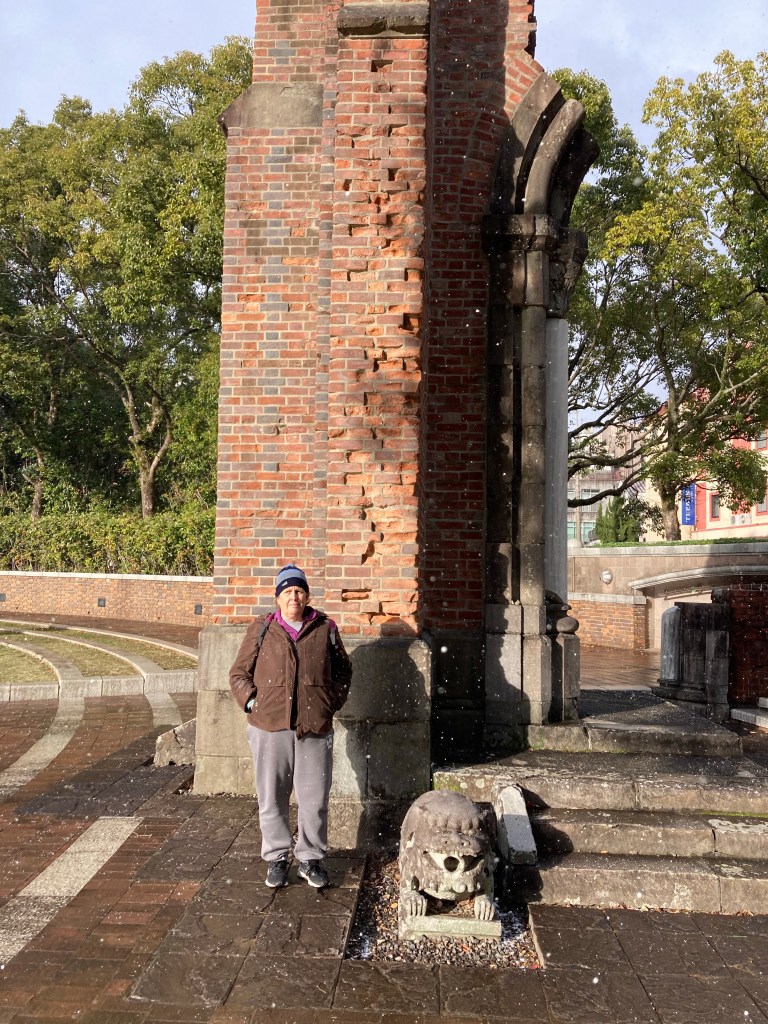
Nagasaki Peace Park
A short walk/slide along the icy pavements brings us to the Nagasaki Peace Park.
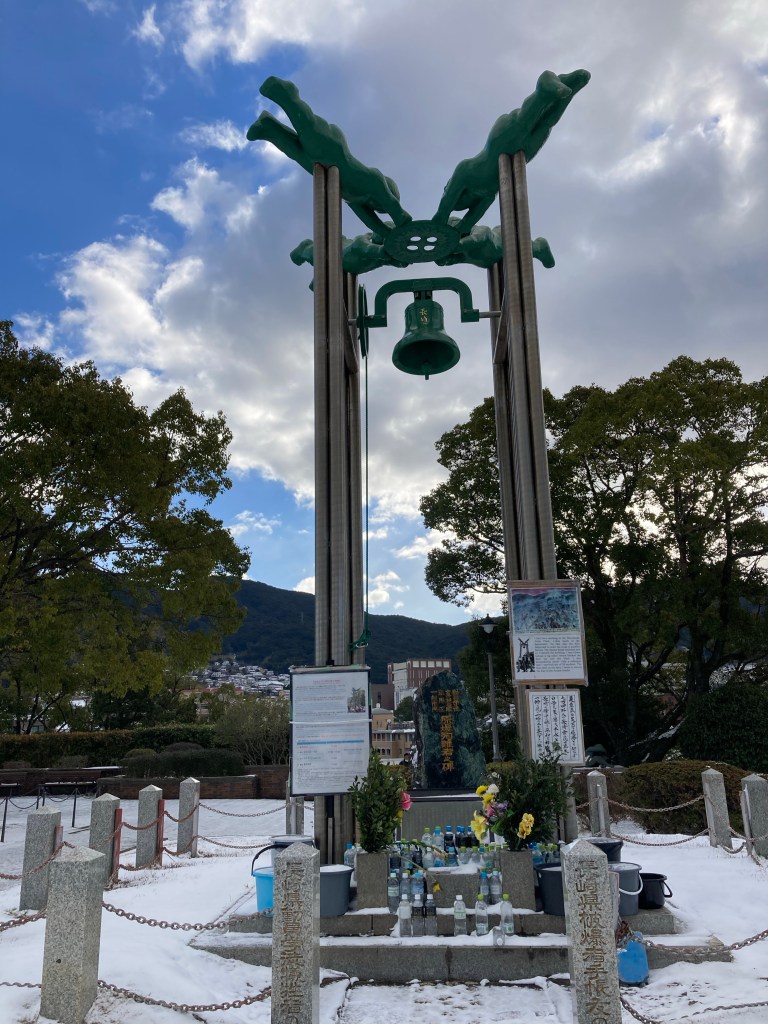
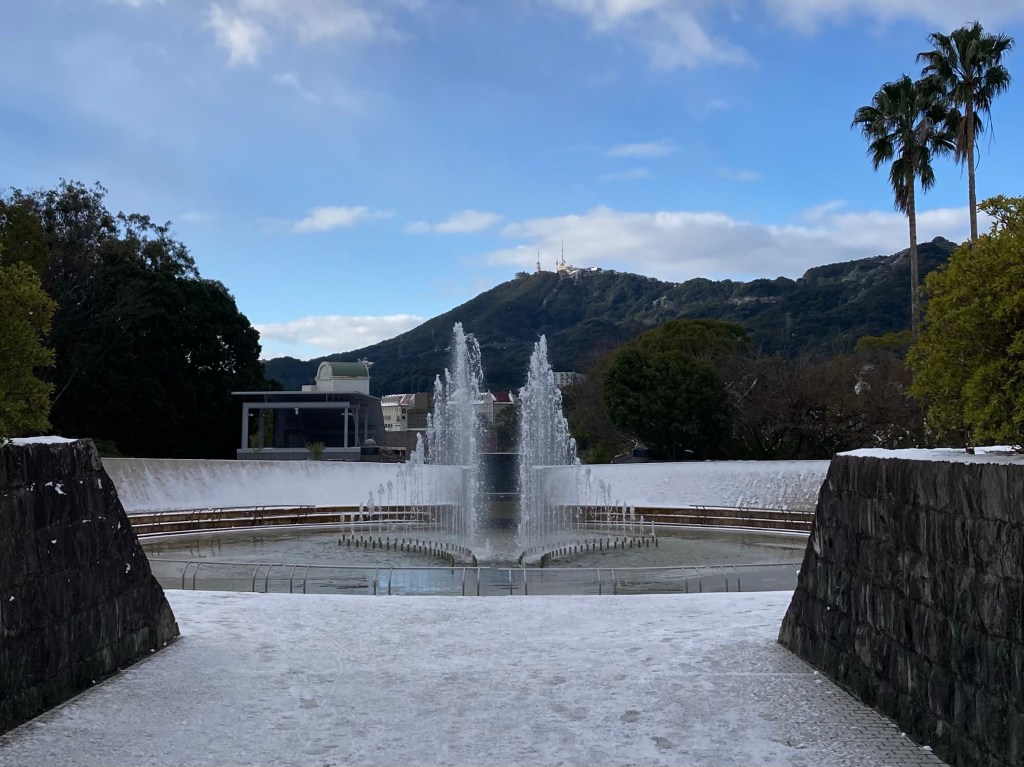
The Peace Park sits on a hillside overlooking the city. If you don’t want to walk, there are escalators to whisk you to the top of the hill. From here, you can walk along a pathway to the Peace Fountain.
Lining the path are statues gifted by other countries as gestures of peace.
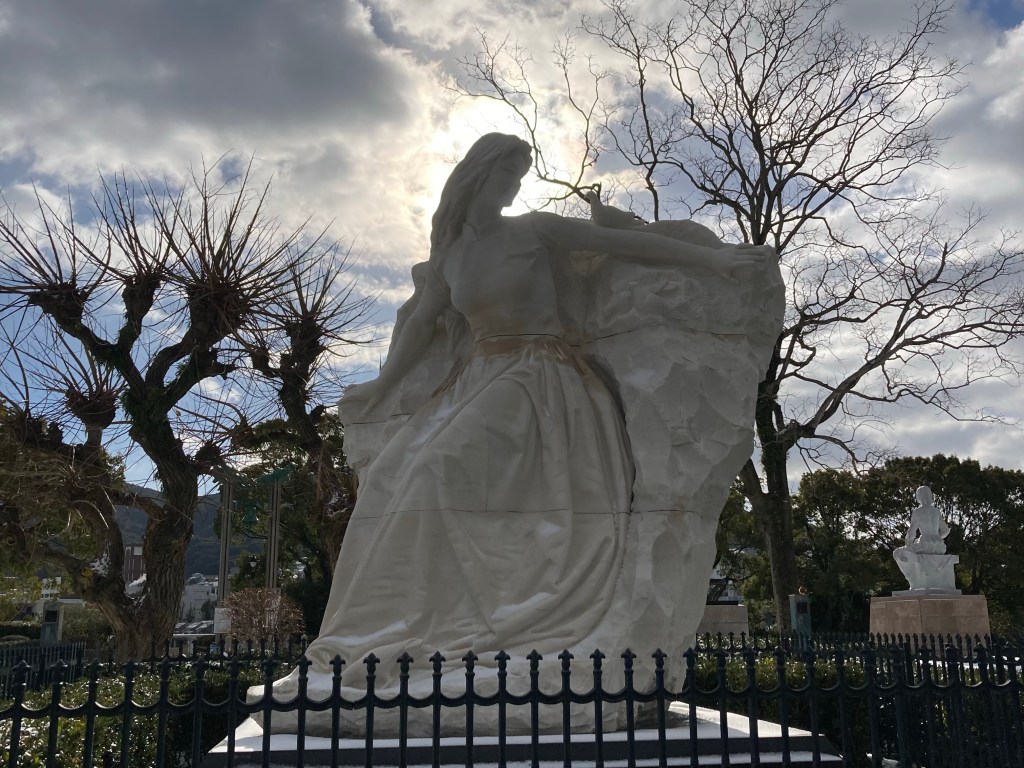
At the far end, is the 10 tonne Peace Statue. This enormous, 10 metre high sculpture features a figure with one hand pointing to the sky to signify the threat of atomic weapons, while the other arm is raised horizontally to represent the wish for peace. His eyes are closed in prayer for the souls of the atomic bomb victims.

By the time we leave the Peace Park, it’s 4 pm and we haven’t eaten since breakfast. None of the nearby restaurants are open, so we head for a shopping mall. In a fitting ending to what has been a trying day, we seem to manage to find the only mall in Japan with no food court. So we buy some bits from the supermarket and return to our room for an indoor picnic whilst watching the snow fall outside.

- Trip taken: January 2023
- Updated: May 2026
I hope you found the above information useful. For guides to more destinations in the 50+ countries we have visited, check out my full list of Independent Travel Itineraries here.
More Blogs about Japan
- Japan 3 Week Itinerary
- Tokyo in 3 Days
- Tokyo: Top 10 Things to do
- Nikko in 1 Day
- Hakone in 1 Day
- Kyoto in 3 Days
- Kyoto: Top 10 Things to do
- Nara in 1 Day
- Osaka in 1 Day
- Osaka: Top 10 Things to do
- Okayama in 1 Day
- Takamatsu in Day
- Matsuyama in 1 Day
- Hiroshima in 2 Days
- Fukuoka in 1 Day
- Beppu in 2 Days
- Dazaifu in 1 Day
- Hikarigaokakoen parkrun
- Horinouchi Park parkrun


Leave a Reply