
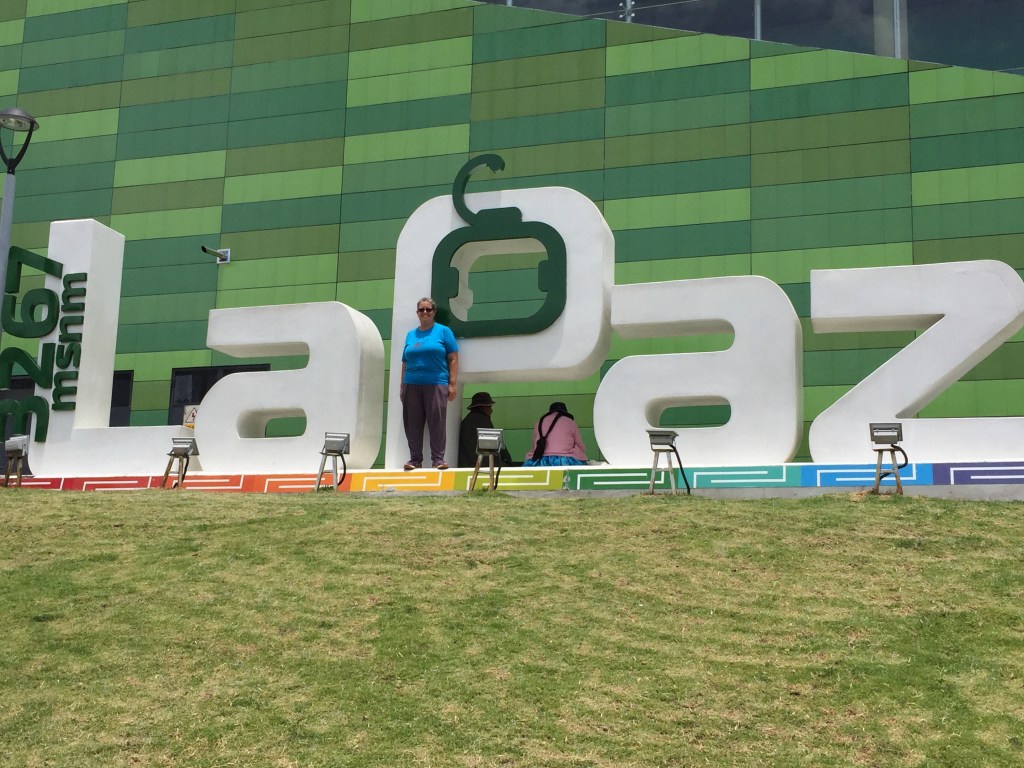
We spent 3 days in the Bolivian capital La Paz. There is plenty to see and do in this high altitude city. But for me, that didn’t really matter. La Paz has my favourite public transport system in the whole world. I could quite happily spend days just travelling the city’s cable cars for the ride and the awesome views.
How to get to La Paz
We arrived by plane and departed by bus. The airport, El Alto, is 8 kilometres west of, and 500 metres above the city. From here, you descend into La Paz through spectacular scenery and a lot of traffic.

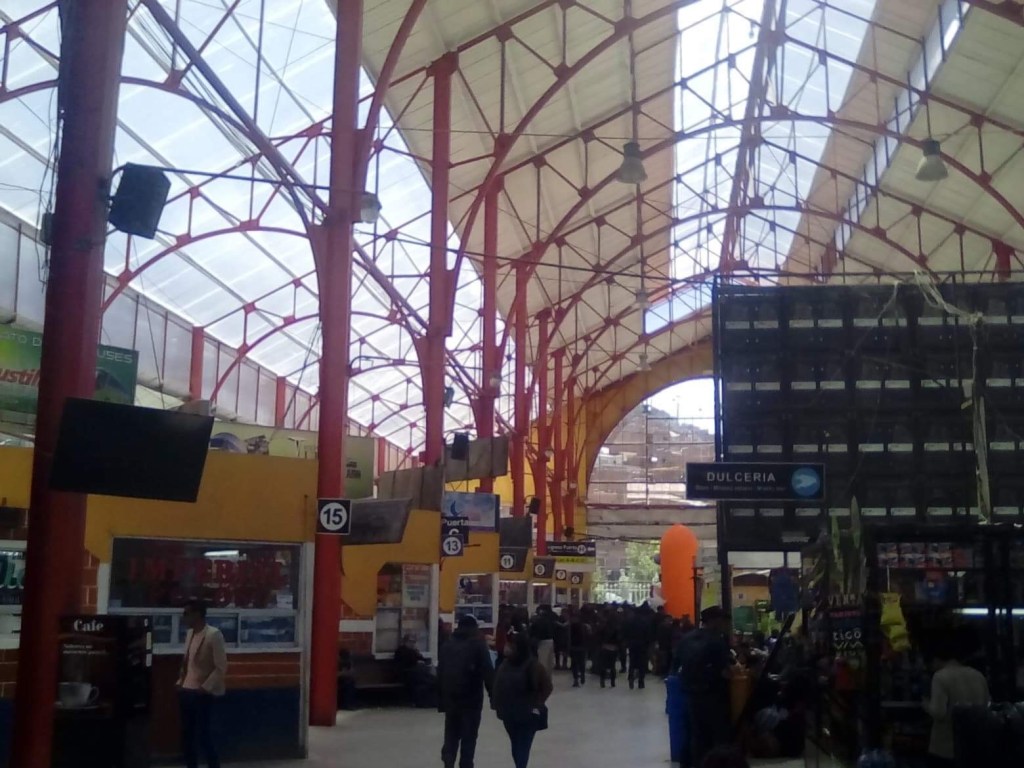
There are a number of bus companies running services to and from La Paz. The hundred year old Bus Terminal was designed by Gustave Eiffel, who also designed the famous tower bearing his name in Paris. Each company has its own ticket booth. We hadn’t planned to depart by bus (we had plane tickets, but the airline ceased operating), so it was rather bewildering wandering round the booths checking what operator offered what destinations. However, we ended up on a very nice bus with fully reclining seat for our unexpected overnight drive to Cuzco.
Getting Around La Paz
Getting around La Paz is such fun! Where other major cities have a network of underground trains, La Paz has a network of cable cars; Mi Teleférico. They are clean, comfortable, cheap and offer spectacular views. I have travelled a lot and riding the cable cars of La Paz is one of my all time top travel experiences. You can buy a pass, but we arrived at the weekend and couldn’t find anywhere open to sell us one, so we purchased individual tickets for each ride. This works out more expensive, but at 3 bolivianos (35 p) a ride, not a huge expense. Plus I got to keep the tickets (a different colour for each line) for my scrapbook.
Where to stay in La Paz
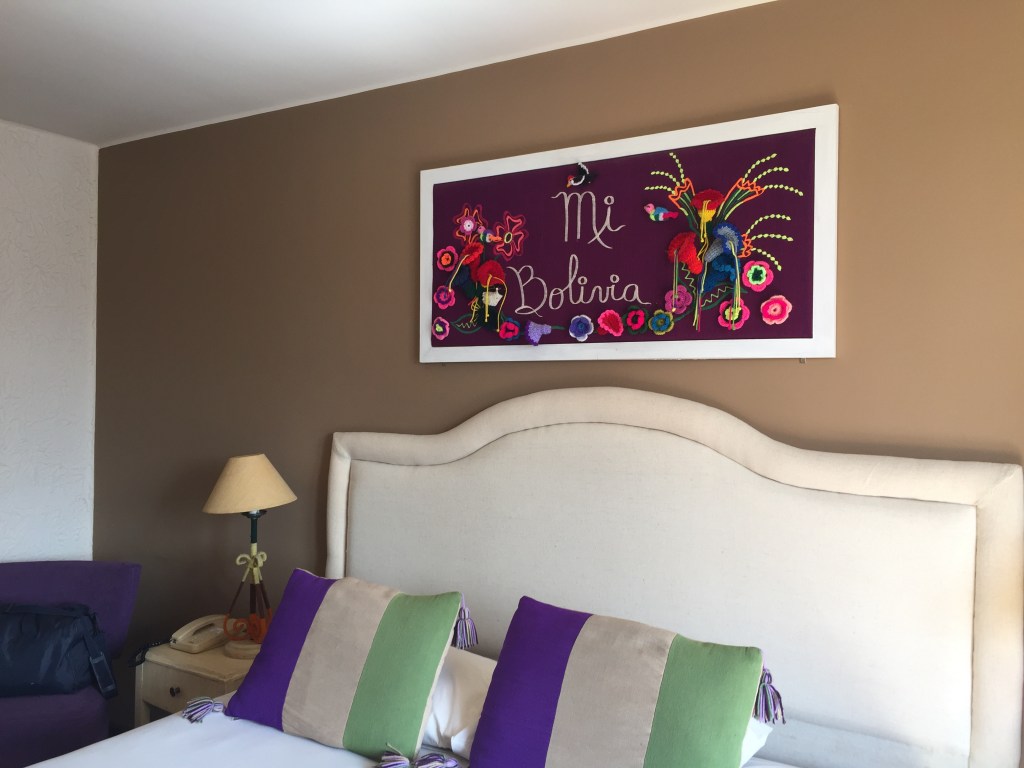
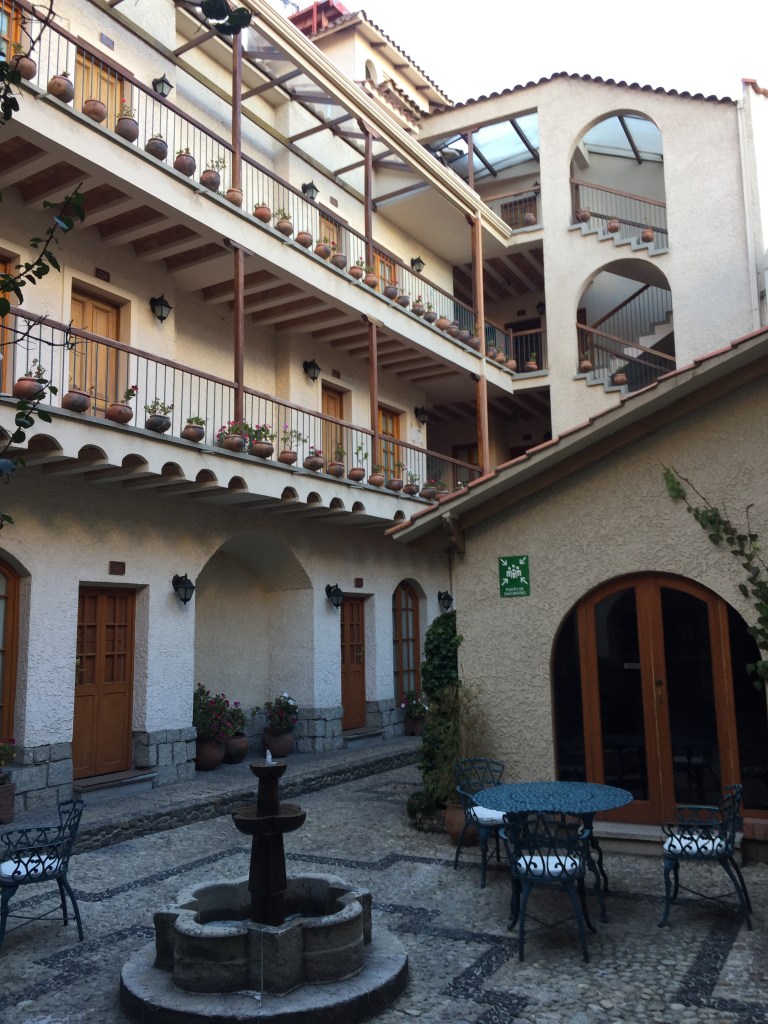
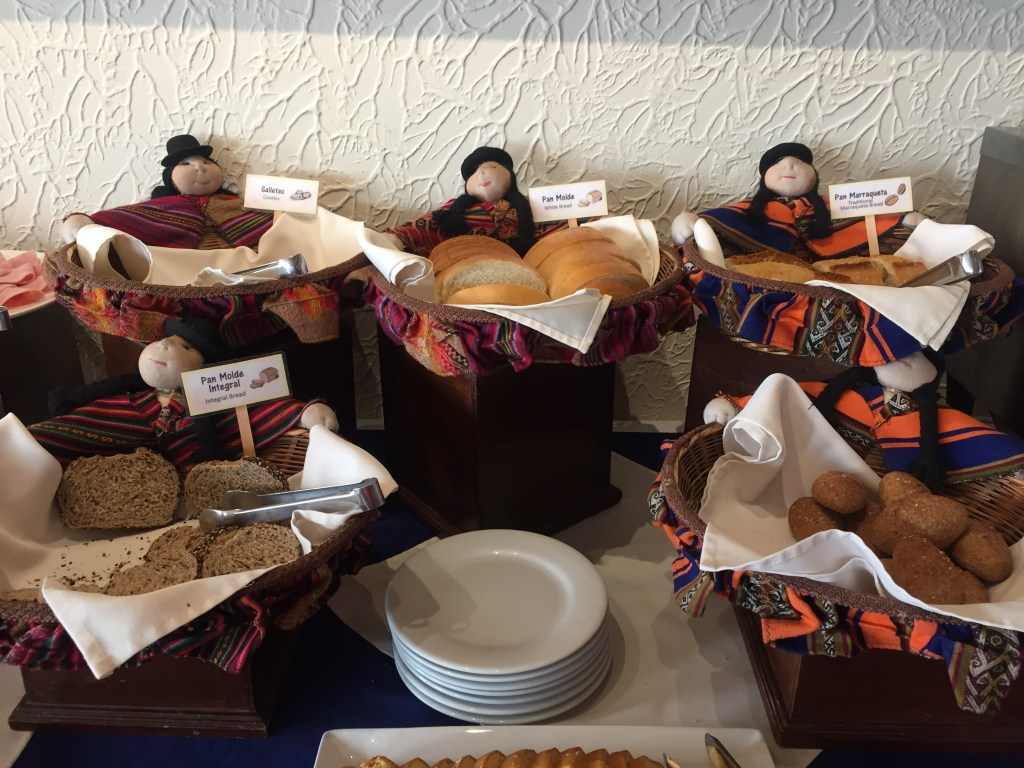
We stayed at the Hotel Rosario La Paz. The hotel is clean and comfortable and in a convenient location – a haven of tranquility in a hot, dusty city. I loved that the decor incorporates plenty of Bolivian handiwork. The price includes an excellent buffet breakfast. The hotel also organises tours.
Altitude Sickness in La Paz
At over two miles above sea level, La Paz is very high up, so be prepared for an element of altitude sickness. I had read a lot about altitude sickness in this crazy city perched half way up the Andes. I did have a headache and get a bit out of breath at times, and certainly wouldn’t have entertained the idea of going for a run! But we didn’t really have any problems, as long as we walked at a sedate pace. Our hotel, like many in the city, did have oxygen for those that needed it.
There was lots of talk of coca leaves (and other products) helping with altitude sickness. I didn’t find this helped, plus they didn’t taste great. But trying them is all part of the La Paz experience.
One added bonus of the altitude in La Paz; we continued from here to Cuzco in Peru, which is at a slightly lower altitude. So, whilst Cuzco and Machu Picchu were full of people complaining about altitude sickness, we were already well acclimatised.
La Paz in 3 Days Itinerary
| Flight to La Paz Accommodation – Hotel Rosario La Paz Dinner at The Carrot Tree | |
| Day 1 | Basilica de San Francisco Museo Nacional de Arte Plaza Murillo Mi Teleférico Mirador El Alto Dinner at Cafe del Mundo |
| Day 2 | Calle Jaen Museums: * Museo Costumbrista * Museo de Metales Preciosos * Casa de Murillo Mi Teleférico (again) Botanical Garden Dinner at Tambo |
| Day 3 | Museo de la Coca Metropolitan Cathedral Urban Park Shopping at Mercado de las Brujas |
Flight to La Paz
Today, the high altitude portion of our trip begins. I’m not really looking forward to it – I’m not sure I’m designed for altitude. We are flying to La Paz. The airport is 4080 metres – that’s 2.5 miles – above sea level! I wouldn’t want to live 4080 metres from the sea horizontally, let alone vertically. My idea of an extreme deviation from sea level is the path leading from the beach to my house.

We land at the aptly named El Alto Airport and get a taxi into town, which is mainly down, 500 metres down, past thousands of houses clinging to the hillside. The traffic is crazy; it reminds me of Lagos, where we used to live and do constant battle with the traffic, only colder.

Accommodation – Hotel Rosario La Paz
We reach our hotel; Hotel Rosario La Paz, which is on a street so crowded with traders that the taxi can hardly squeeze through. It may be on a busy urban street, but inside the hotel is like another world; calm and quiet.
It’s only 10 am, but we are able to check in. While we’re waiting, we have breakfast and I manage to consume my body weight in water melon juice. Then we access our room, which is very nice inside, with the added bonus of a view of the city.
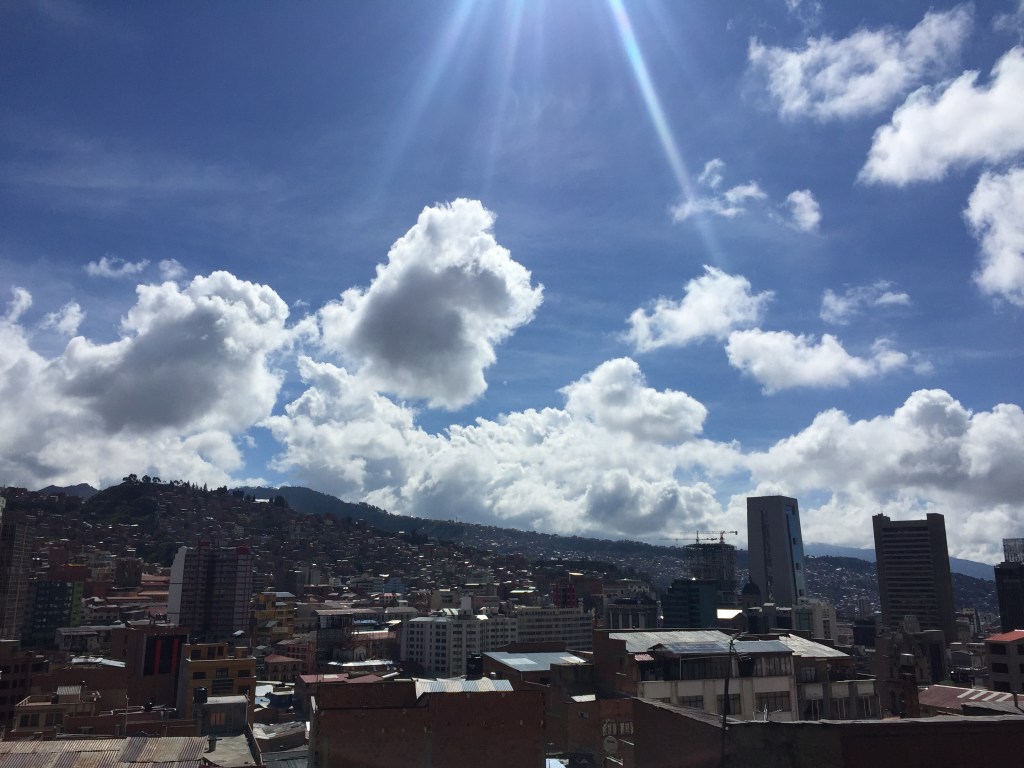
I go back to bed for a while to counter the 3 am start, the altitude and the lurgy I picked up on Easter Island.
Dinner at The Carrot Tree
In the evening, we have arranged to meet my neighbour’s mother’s Bolivian cousin. We go for dinner at The Carrot Tree. The food, on the whole is very good, although do I order a Cajun salad so spicy it blisters my lips. The old man enjoys working his way through the comprehensive fruit juice menu. Then it’s back to the hotel for an early night.

La Paz Day 1
I didn’t sleep well and wake up with a pounding headache. When we arrived in La Paz, some of my toiletries had leaked and the rest inflated to almost bursting point. That’s pretty much how my head feels.
We head for the breakfast buffet. It is large and beautifully laid out. You do need to time it right, however, and avoid the Chinese tour groups, who come armed with flasks and Tupperware and pick the entire area bare. The staff do restock immediately after the tour group departs.
Basilica de San Francisco
After breakfast, we set off to see La Paz. The secret is to do everything slowly, which incidentally I’m rather good at. We start at the 18th century Basilica de San Francisco, where we take a guided tour.
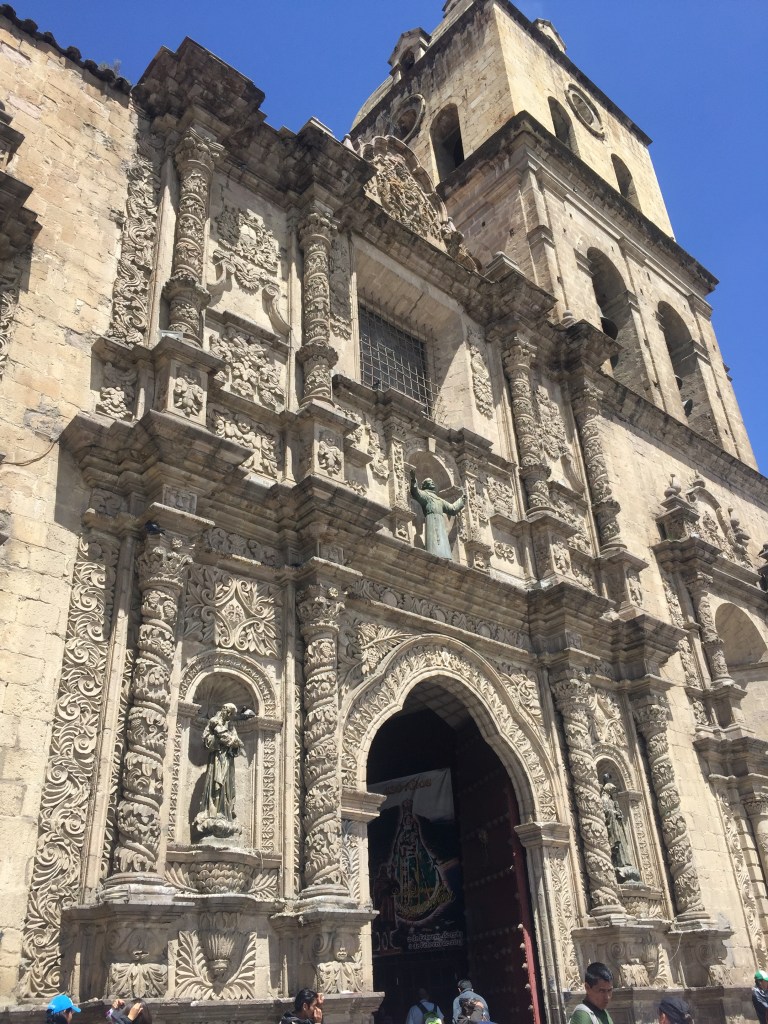
You can just look round the church by yourself, but the tour is well worth doing. This costs 20 bolivianos (around £2.30) and includes the cloisters, the church, then up a tiny, dark staircase onto the roof.

Just as I poke my head through the door to the roof, someone throws themselves off the tower block opposite. It takes a while for my eyes to adjust to the light. Then I spot the rope. It was a bungee jump – phew!

Once I have calmed down and caught my breath from climbing onto a church roof at altitude, we can enjoy the wonderful views and see how each roof tile is unique, because men made them by shaping clay round their thighs.
Museo Nacional de Arte
On to the Museo Nacional de Arte, another 18th century building, this time, bright red. It’s quite dark inside with only the paintings illuminated. Even so, the old man is the only person not to successfully negotiating himself round the room. He trips over a bench and sends it and himself flying.
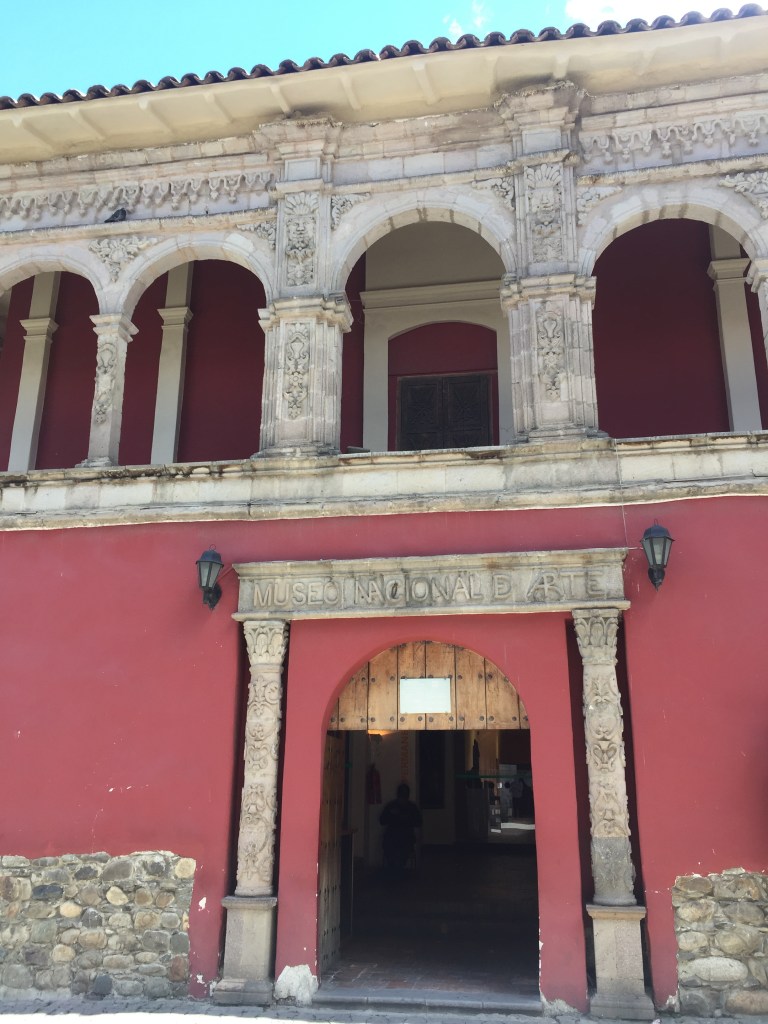
The art is mostly religious, and sometimes weird, or even both.
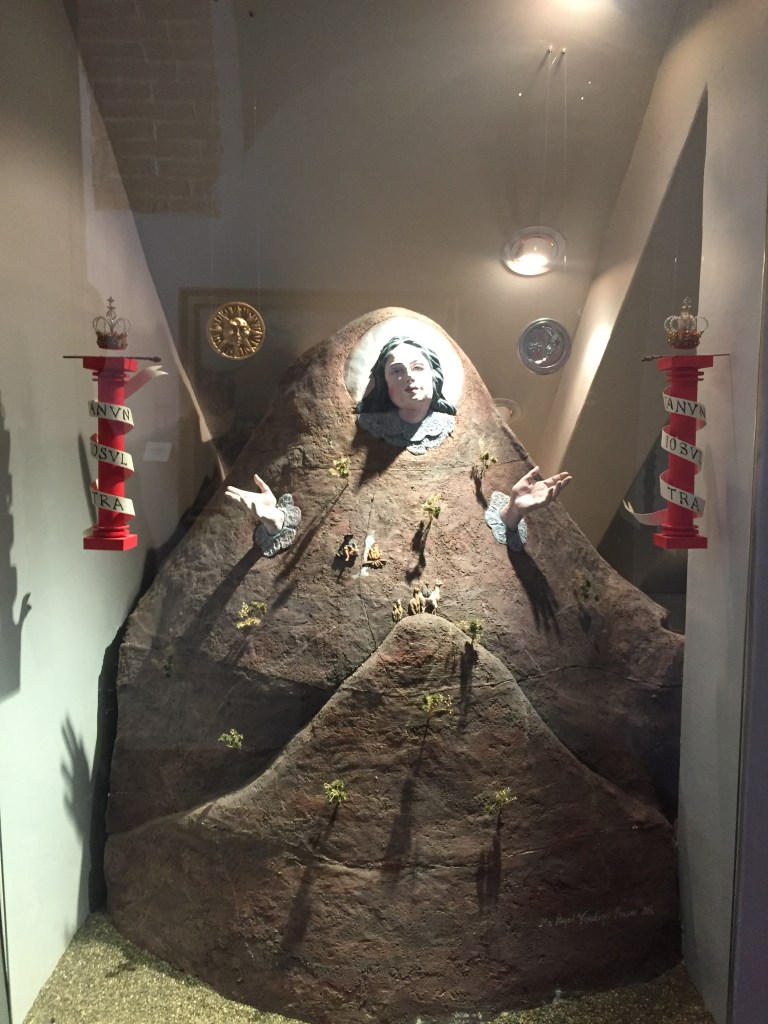
In the basement, you can enter a large confetti filled room and create your own confetti moments.

The museum is open daily. Entry costs 20 bolivianos (around £2.30).
Plaza Murillo
We Continue to the Plaza Murillo, which is surrounded by important buildings; the cathedral, the Palacio de Gobierno and the Palacio Legislativo. It is also surrounded by pigeons – kamikaze pigeons.
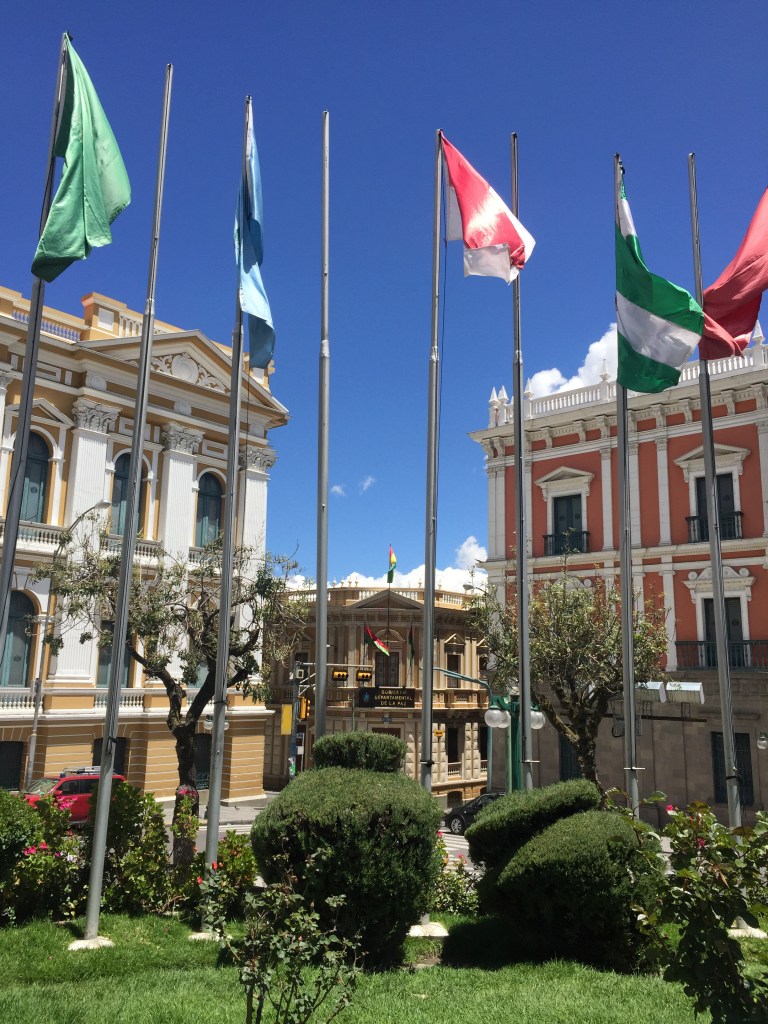
Pigeons aside, it’s a nice place to sit and relax a while and catch our breath before moving on.
Mi Teleférico
Now for my first ride in what is to become a cable car (Mi Teleférico) extravaganza. There are 10 lines, each a different colour (silver opened after our visit and and gold is currently under construction). Covering a total of 30 km, they criss-cross the city. The cable cars are clean, efficient and cheap (around 30p a ride). Honestly, I could have happily spent several days in La Paz just riding cable cars.

First we get on the Celeste line in the old town and head south east before changing to Blanca, which runs for miles hanging above the street.

We get off briefly at Plaza Villarroel for great views across the suburbs in the hills with the higher snow capped mountains behind. Then onto the Naranja line heading west again.
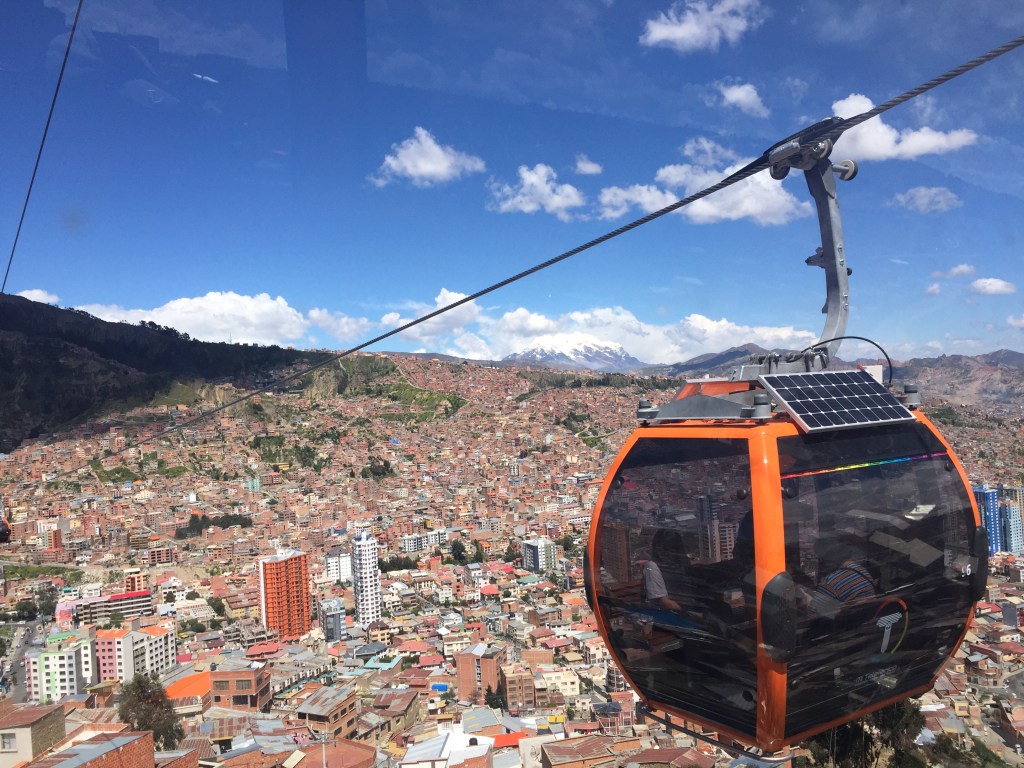
Finally, the Roja line, which starts dangling above the cemetery, then climbs 500 metres up to Mirador El Alto.
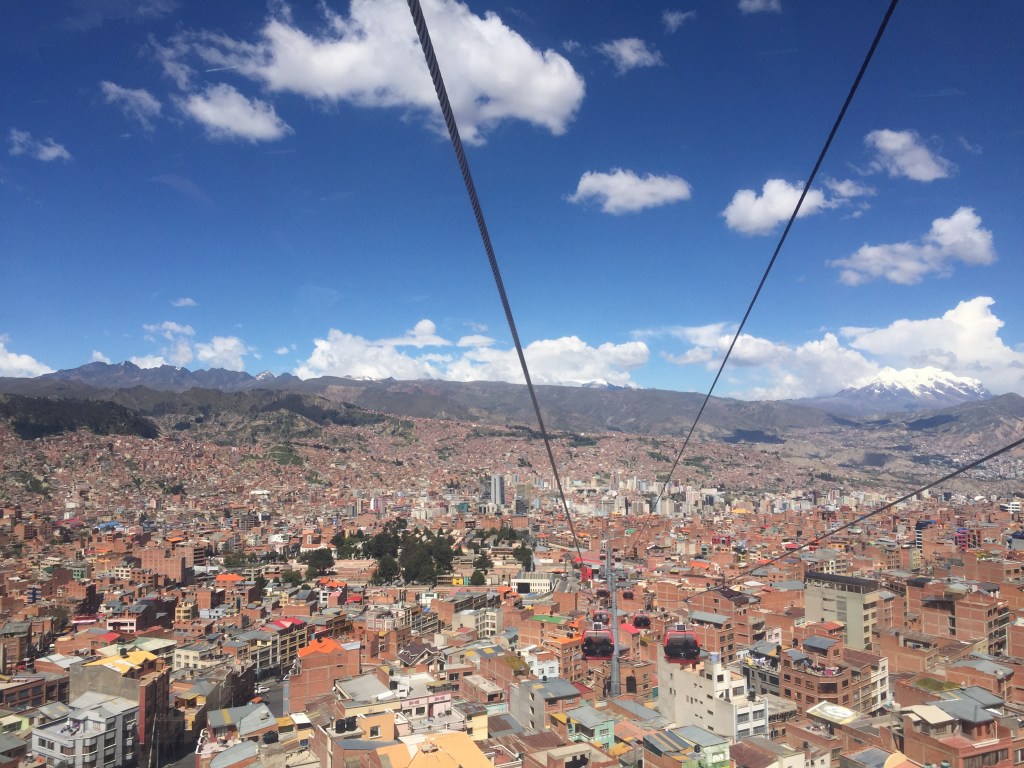
Mirador El Alto
Mirador El Alto provides spectacular views of the city and the Andes. Although, to be honest, there’s an equally great view from the cablecar on the journey up. The temperature difference at the top is substantial. And the air is noticeably thinner.
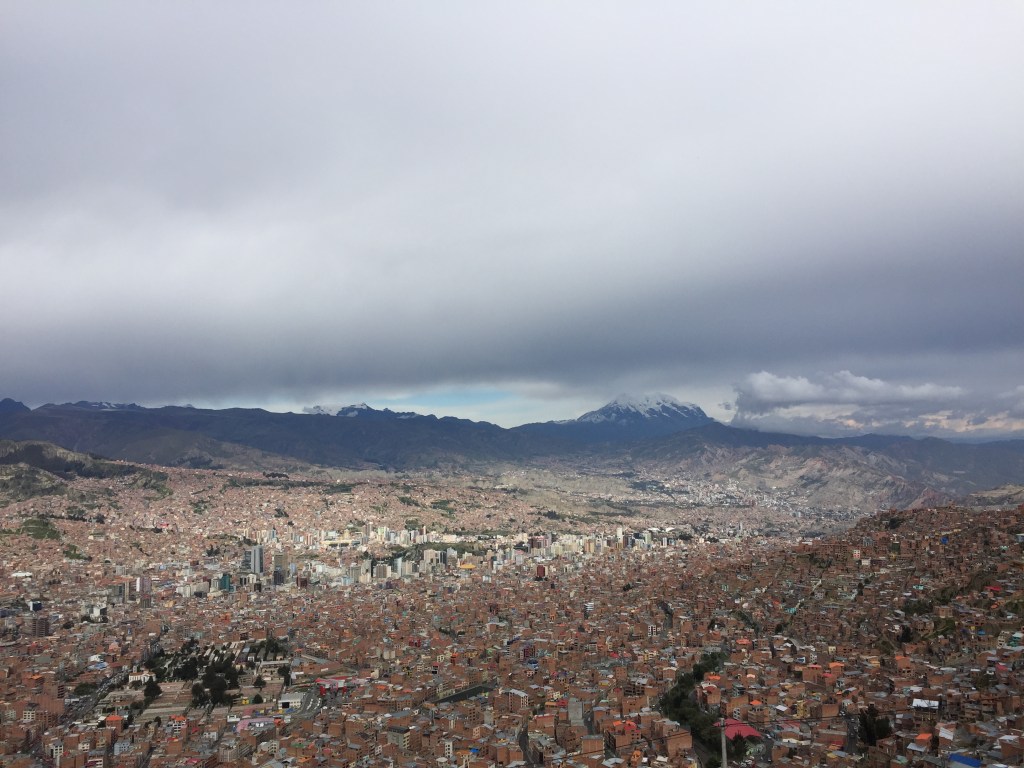
It is a relief to descend on the cable car and walk back through the market to the hotel.
Dinner at Cafe del Mundo
In the evening we go for dinner at Cafe del Mundo, which has taken the travel theme for its decor and run with it. The old man orders a coca beer and seems genuinely surprised when he announces that it tastes like leaves!
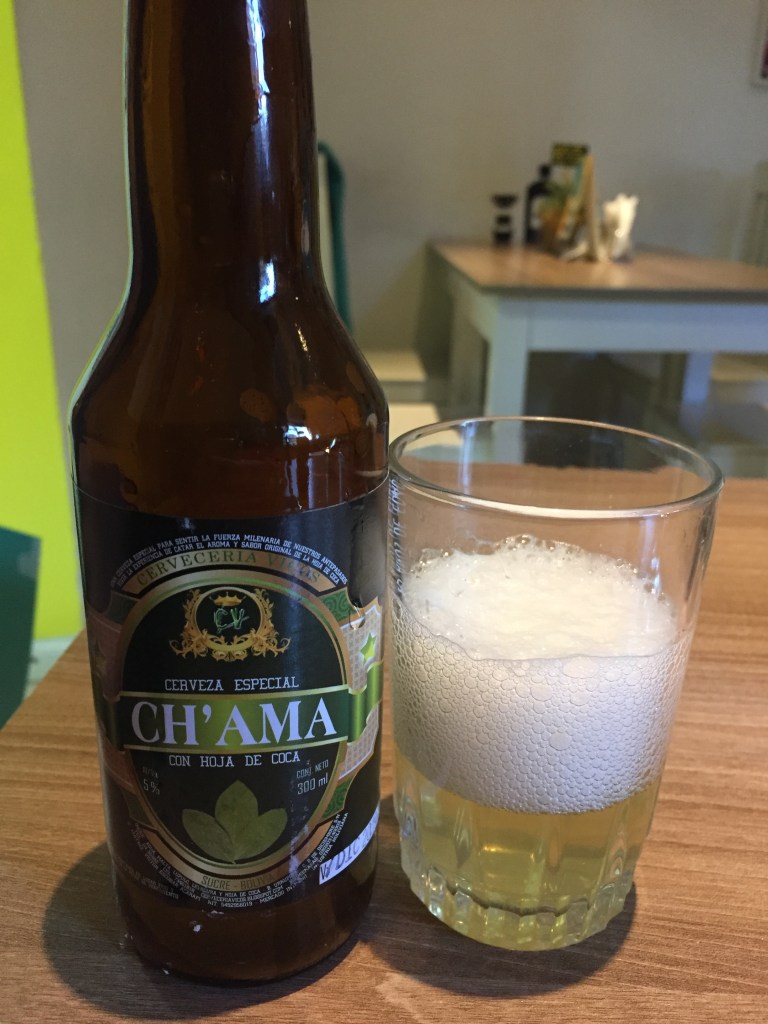
Then back to the hotel to plan another onslaught on the cable car system tomorrow.
La Paz Day 2
Today, we start with some culture; the Calle Jaen museums. On this old colonial street, you can visit three separate museums. (Technically four, but the Museo Litoral Boliviano was closed when we visited.)
Calle Jaen Museums
Google Maps says that the Calle Jaen Museums are an 11 minute ‘mostly flat’ walk from the hotel. Google Maps doesn’t mention the large flights of stairs. I’d challenge anyone from Google to walk 800 metres, including 100 stairs, at 3600 metres altitude in 11 minutes.

Somewhat more than 11 lung-bursting minutes later, we reach our first museum and the receptionist asks for ID. Someone is going to have to walk back to the hotel and get our passports! I’m not sure who. Neither of us can breathe. With a little bit of pleading, we convince the receptionist to accept a photo of our passports, which is a great relief! We purchase our tickets, which cost 20 bolivianos (around £2.30) and includes entry to all the museums.
Museo Costumbrista
We start with the Museo Costumbrista, which tells the history of La Paz in costumes and dioramas. It’s actually really interesting, although only in Spanish, so even getting a basic understanding involves plenty of referring to my handy dictionary App. Photography isn’t allowed inside, so here is one of the entrance…
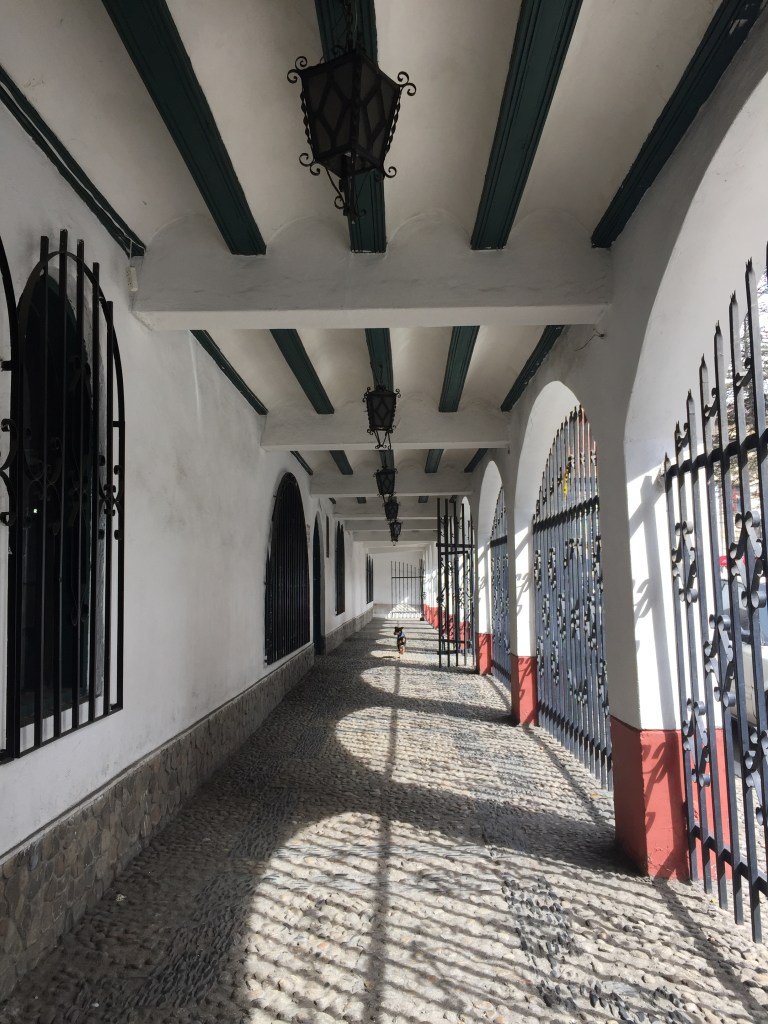
Museo de Metales Preciosos
Next comes the Museo de Metales Preciosos. This contains many gold and other items from Bolivia’s past. Inside it is very dark; black from floor to ceiling and has plenty of steps. That we both make it round without incident is an achievement.

Casa de Murillo
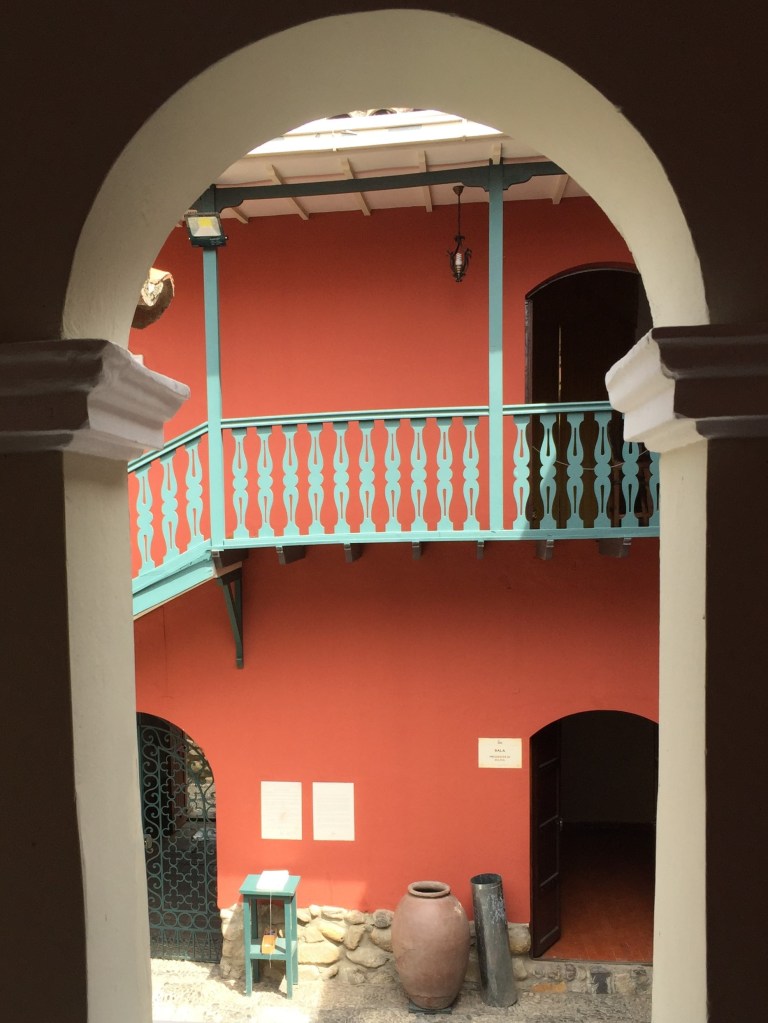
Lastly, the Casa de Murillo. Pedro Murillo is a local hero, who led an uprising against Spanish rule. His former home is filled with interesting artifacts from his life. We accidentally stray into a room that isn’t open to the public and are thrown out of the museum by a guard. It’s a long time since I got removed by security from anywhere.
Mi Teleférico (Again)
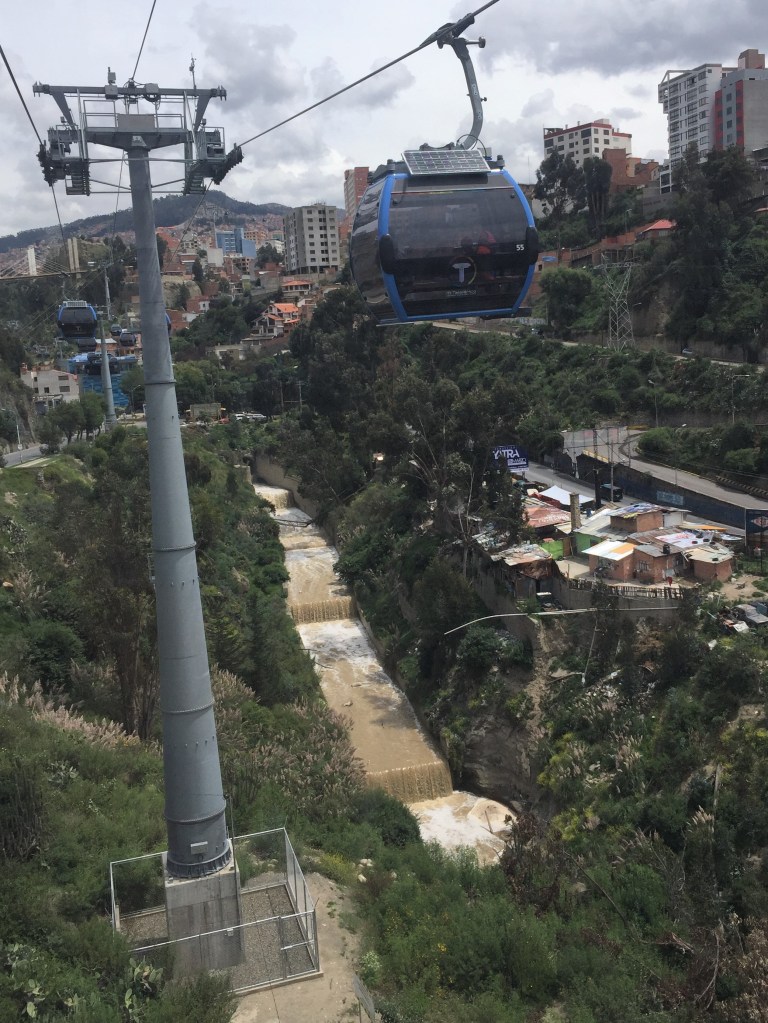
We decide that’s enough culture for one day, depart Calle Jaen and make for the Mi Teleférico again. Today, we start on the Naranja line, which heads west from the centre of town, then on to Blanca, which dangles above the high street, then Celeste, which follows the river.
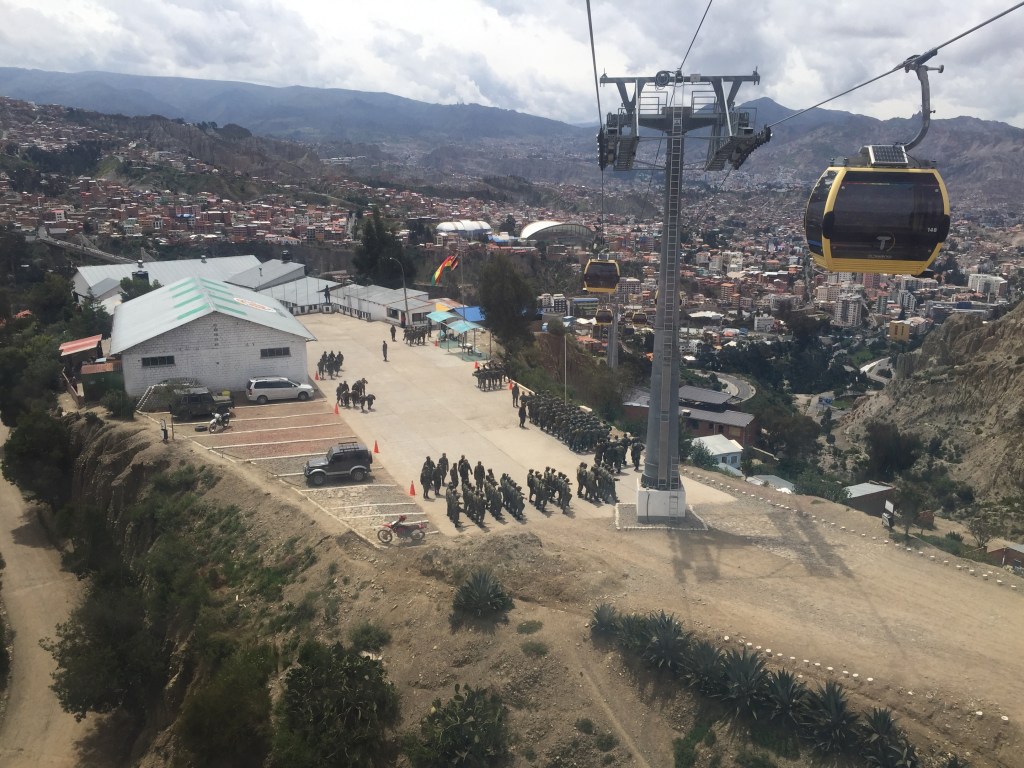
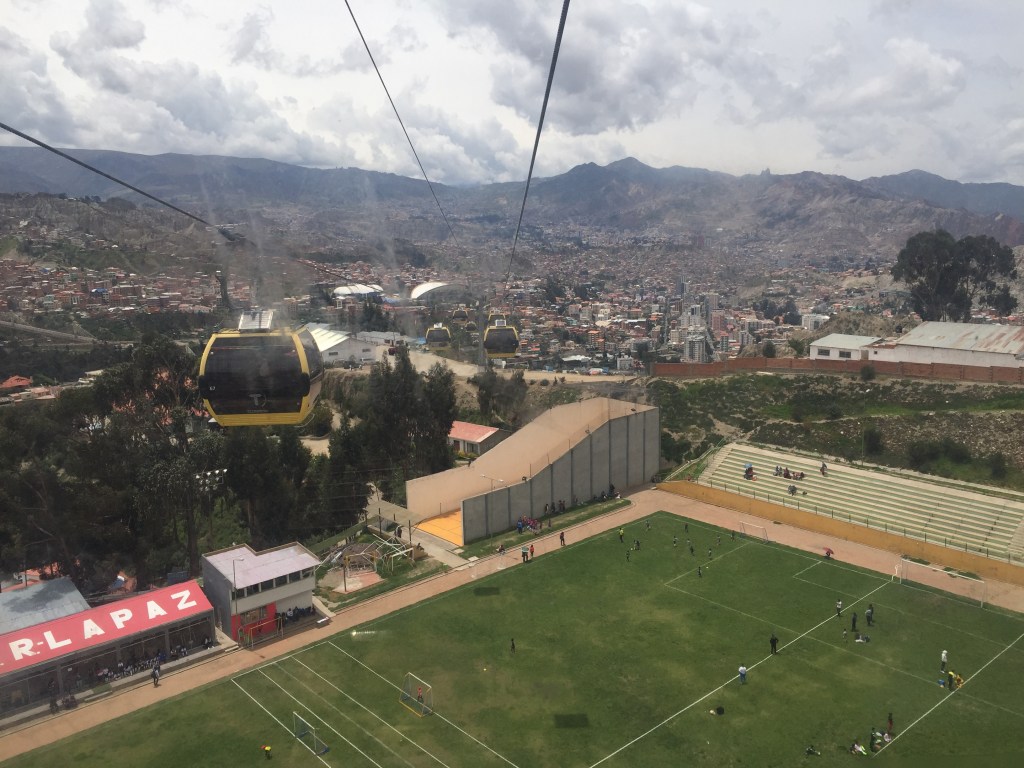
Then Amarilla, to the end of the line high up in the hills at a station called Parque Mirador. It’s a disappointment as we can find neither a park nor a viewpoint. But it’s an interesting journey, hovering first above a Military Academy with recruits doing drills, then over a football stadium mid match.
Back along Amarilla, and up Verde, which passes over very fancy houses to the suburb of Irpavi. We had hoped to visit the Military Museum, but it’s shut for 2½ hours for lunch.
Botanical Garden
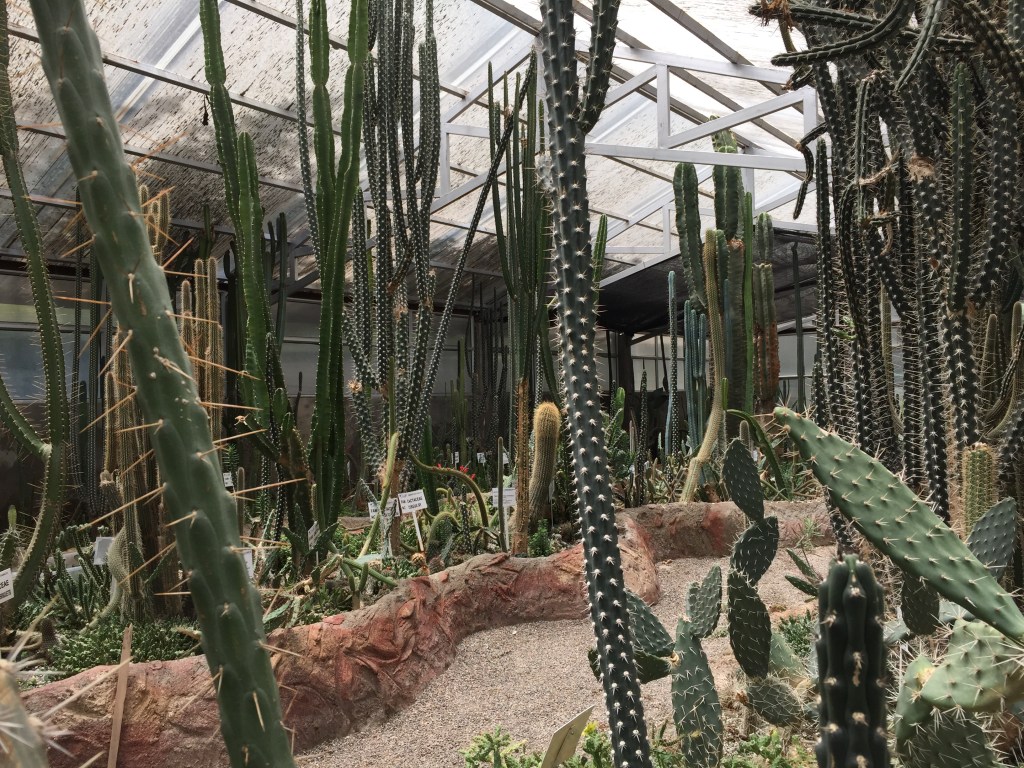
Then back along Verde, Celeste and Blanca to visit the Botanical Garden. It costs 1 boliviano (12p) each to get in. I’m not sure it was worth the price.
So, it’s back onto the cable cars; Blanca (my favourite, which hangs above the street) back into town, then Naranja to the hotel.

Dinner at Tambo
We have a quiet evening with dinner at the hotel restaurant; Tambo. The food is very good. I’d recommend eating there even if you don’t stay. But I’d also recommend staying there.

La Paz Day 3
One last day in La Paz. We planned to have a lie-in, but the police put paid to that idea when they arrive at our door at 8 am to check our passports.

Museo de la Coca
We start at the Coca Museum, which charts the history of the coca leaf, its role in Bolivian culture and uses as a drug, both legal and illegal.

The museum is more interesting that I’d anticipated. They also have a café where you can buy coca cocktails and original recipe Coca Cola.

The museum is open daily except Sundays from 10 am until 7 pm. Entry costs 15 bolivianos (around £1.75).
Metropolitan Cathedral
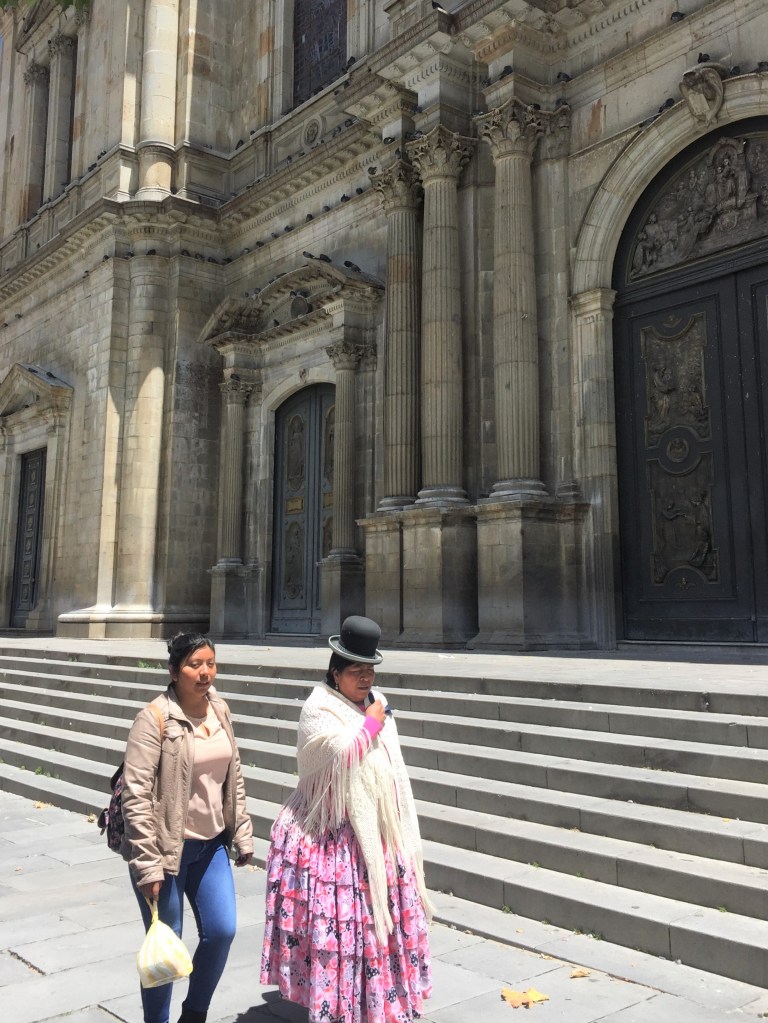
We continue to the Metropolitan Cathedral. This 19th Century cathedral is less ornate than San Francisco Basilica, but it does boast Jesus on a neon cross.

Like most buildings in La Paz, it’s built on a hillside. Hence, the rear of the cathedral is at ground level, while the entrance is 12 metres up and accessed by a flight of stone steps.
Urban Park
Next, we attempt to visit the Urban Park but we can’t find the entrance. After walking around the edge past locked gates for some considerable time, we give up and make do with admiring the park from the bridges around the edges, then catch a cable car back to the hotel.

Shopping at Mercado de las Brujas
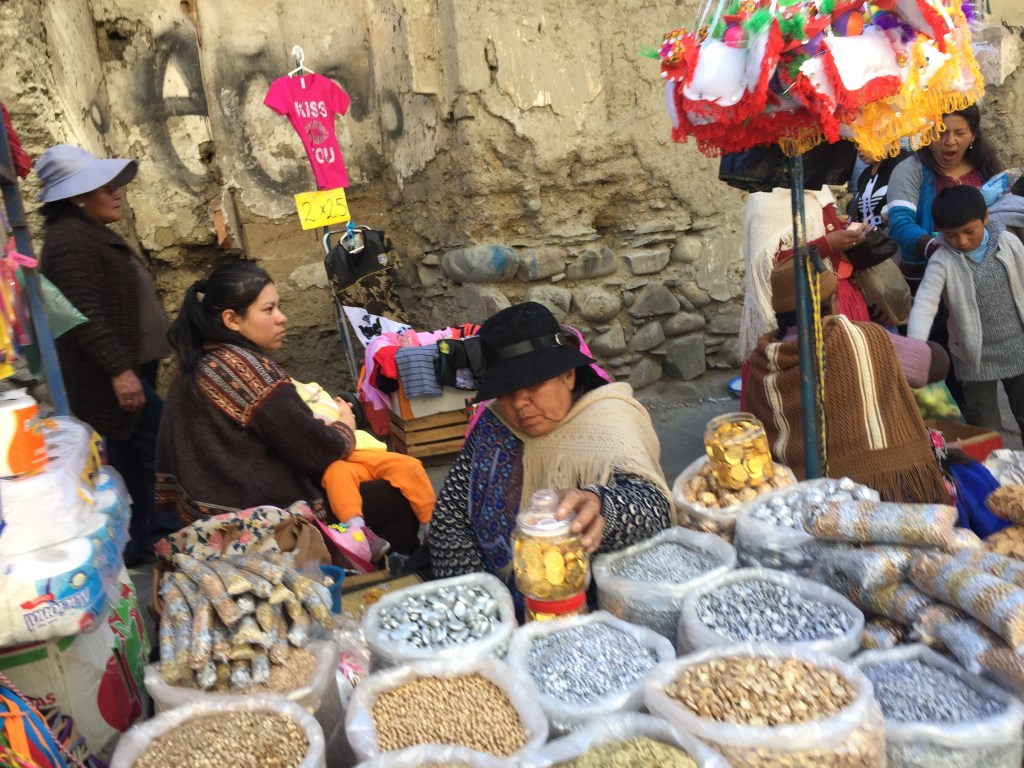
In the evening, one last outing to get dinner and souvenirs, including a wander along the famous Mercado de la Brujas (Witches’ Market) where they sell all manner of weird stuff to tourists. The street is crazy busy – it’s nearly carnival and there’s a never ending row of ladies in petticoats and bowler hats flogging steamers, fancy dress outfits and an array of gaudy plastic tat. And that completes our time in Bolivia.
- Trip taken: February 2019
- Updated: February 2025
I hope you found the above information useful. For guides to more destinations in the 50+ countries we have visited, check out my full list of Independent Travel Itineraries here.
 Jane's Midlife Journey
Leave a comment