
Copacabana is a small town on the Bolivian side of Lake Titicaca. This picturesque little town perched above the lake has some interesting attractions of its own. It is also the departure point for ferries to the nearby islands of Isla del Sol and Isla de la Luna. We spent three days on our trip to Copacabana, including travelling there and back. Below, is my itinerary for our Copacabana adventure.

How to get to Copacabana
Although only 96 miles from La Paz, the journey includes taking a ferry across Lake Titicaca (in addition to fighting your way out of La Paz through the crazy traffic), thus takes around 4 hours.
There are a variety of buses and tour options to Copacabana. We went on a shuttle organised by our hotel. The cost was $19 each way and included hotel pick up and stops en route. We also travelled with Vicuña Travel, which departs from La Paz Bus Terminal at 7.30 am. Buses terminate at Plaza Sucre at 11.30 am. This costs $5.11 each way and doesn’t do the touristy stops en route. The Vicuña Travel bus returns to La Paz daily at 1.30 pm.
Copacabana is very close to the Peruvian border. So, another option is to continue to Cuzco. We went with Transzela. The bus departs La Paz at 6 pm, arriving in Cuzco at 5.30 am (12.5 hours, including a stop at Puno) and costs $26.

Getting Around Copacabana
Copacabana is small enough to rely on walking everywhere. The elevation is 3800 metres, so (certainly in my case) walking needs to be at a sedate pace.
Where to Stay in Copacabana
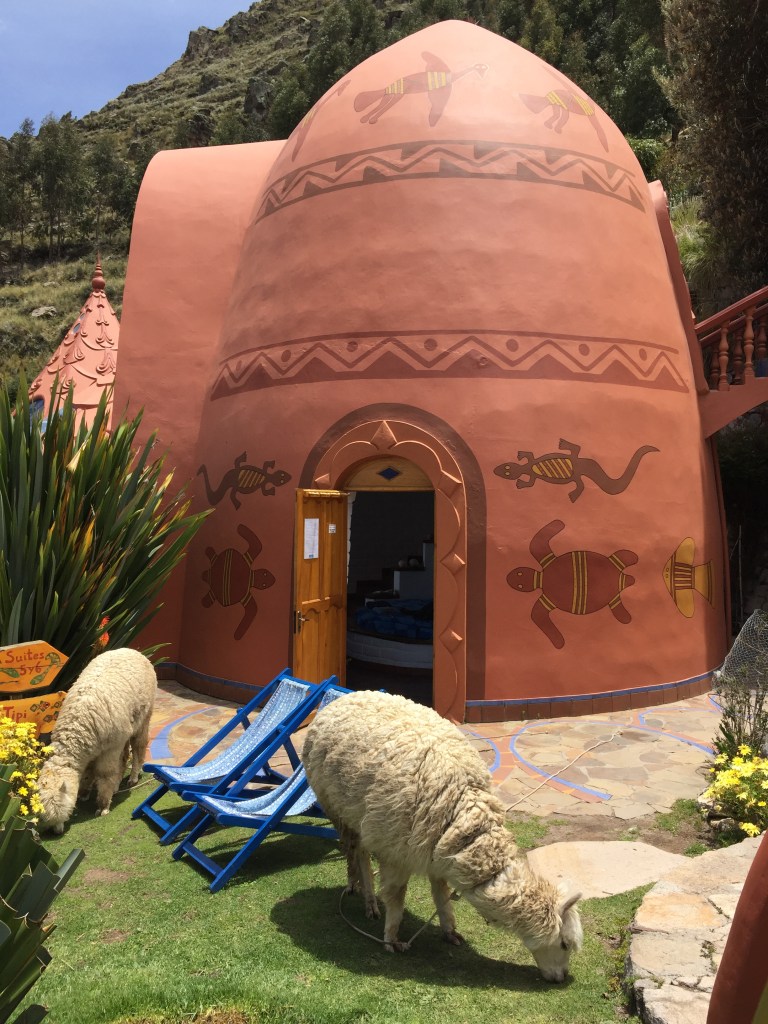
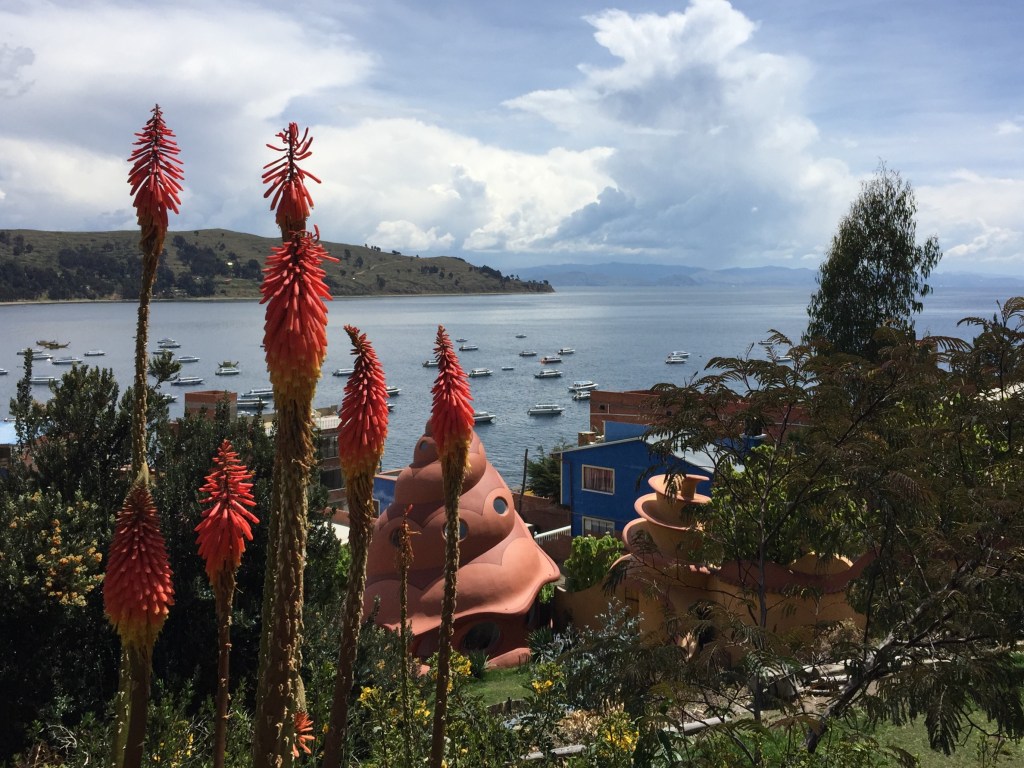
We stayed at the Hostal las Olas. I have travelled to 80 countries – that’s a lot of hotels. Hostal las Olas rates as one of my all time favourites, with a whopping 9.7 rating on Booking.com. It’s quirky and unique. The rooms are lovely, the gardens are beautiful and the view is spectacular. And there are alpacas wandering around!
Itinerary
| Day 1 | Bus to Copacabana Huatajata Ferry across Lake Titicaca Mirador de Usijata Accommodation – Hostal las Olas Lake Titicaca Basilica Virgen de Copacabana Plaza 2 de Febrero Dinner at La Cupula |
| Day 2 | Isla del Sol Escalera del Inca |
| Day 3 | Horca del Inca Capilla del Señor de la Cruz de Colquepata Cerro Calvario Bus to La Paz (Cuzco) |
Copacabana Day 1
Bus to Copacabana
Today, we are taking a minibus to Copacabana on the shores of Lake Titicaca. It’s less than 100 miles away, but scheduled to take four hours. Because it involves crossing lake Tititicaca. And because it takes forever to fight our way out of La Paz through the traffic.
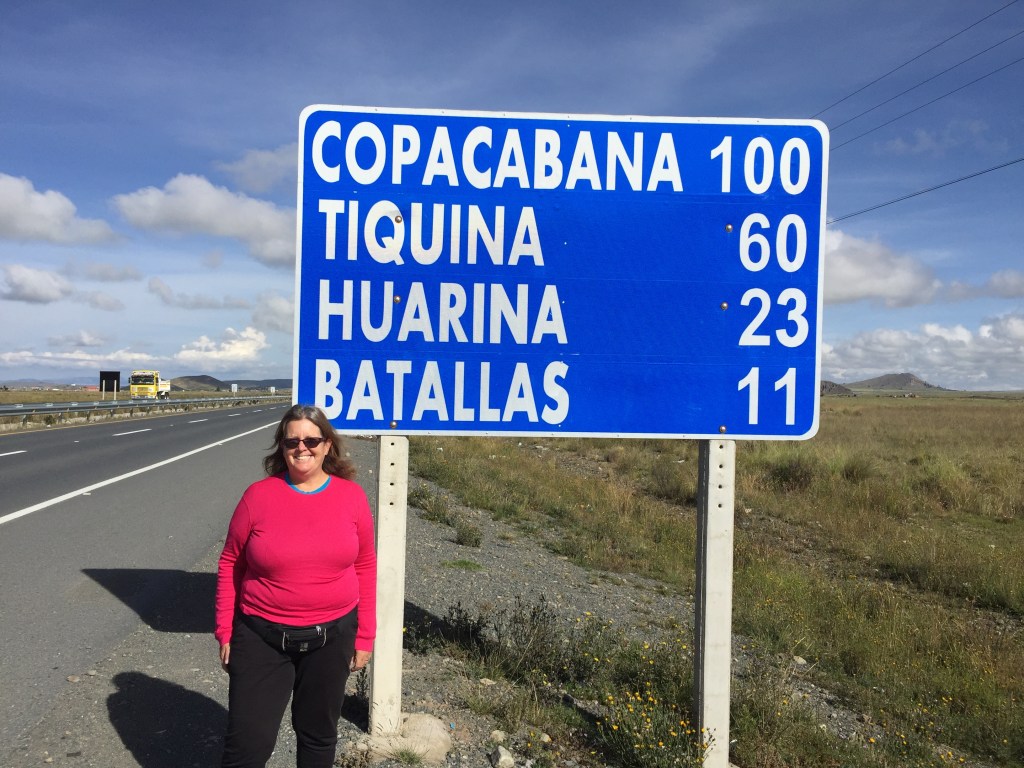
We are picked up by our bus and fight our way out of La Paz. Once we have left the city, the driver seriously puts his foot down and our white knuckle ride begins. Soon, the highway runs out and we continue on what look like abandoned road works.

Huatajata
Eventually, the quinoa covered plains give way to water and we have reached Lake Titicaca. We stop at Huatajata. It was here that the papyrus ship used by Thor Heyerdal on his Kon-Tiki expedition was built. You can see similar boats moored on the lake and even buy a replica, if that sort of thing floats your boat, as it were.

Ferry Across Lake Titicaca
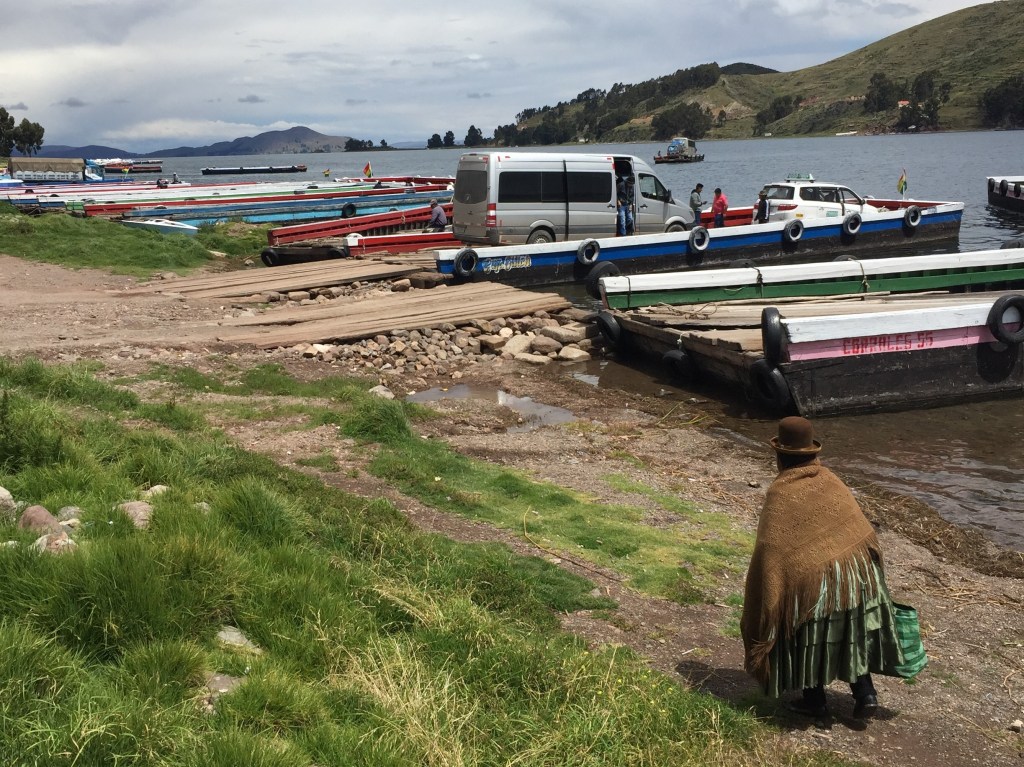
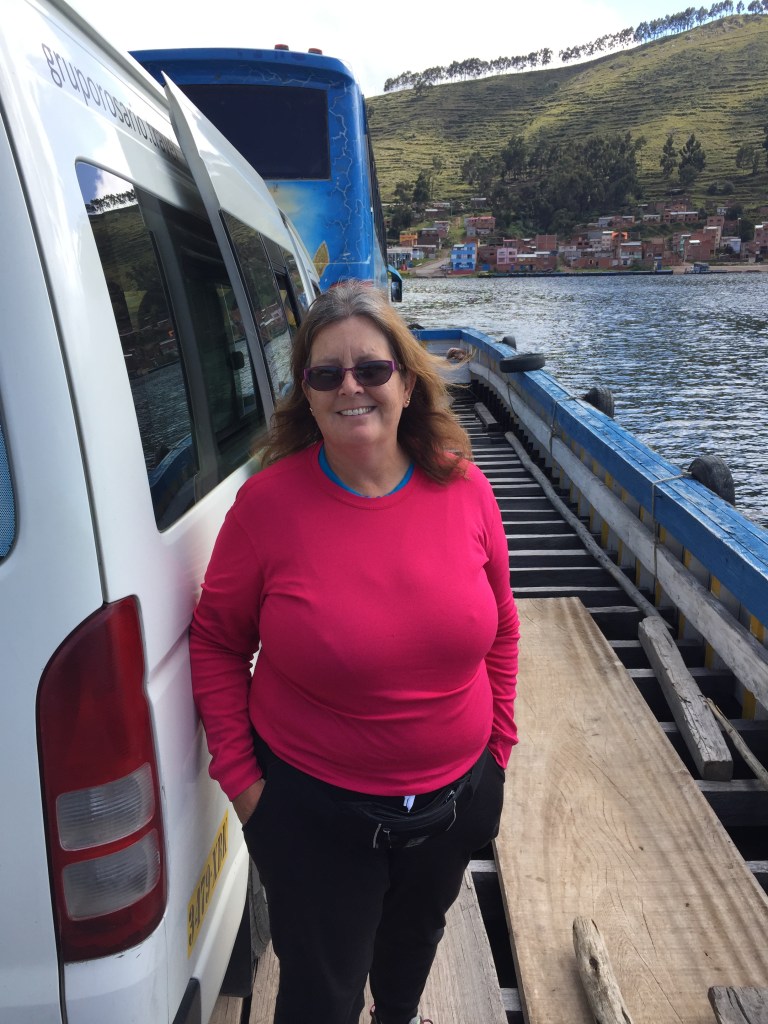
We drive on to Tiquina to catch a ferry across the lake. It’s not how I imagine a ferry – basically it’s a raft. Loaded with two buses. It’s a bit of a Top Gear moment.

On the other side, we have 40 more kilometres to drive through the winding hillside high above the lake. All driven on the racing line. The view (when I can brave opening my eyes) is amazing.
Mirador de Usijata
We stop at Mirador de Usijata for our first glimpse of Copacabana nestled by the side of the lake.
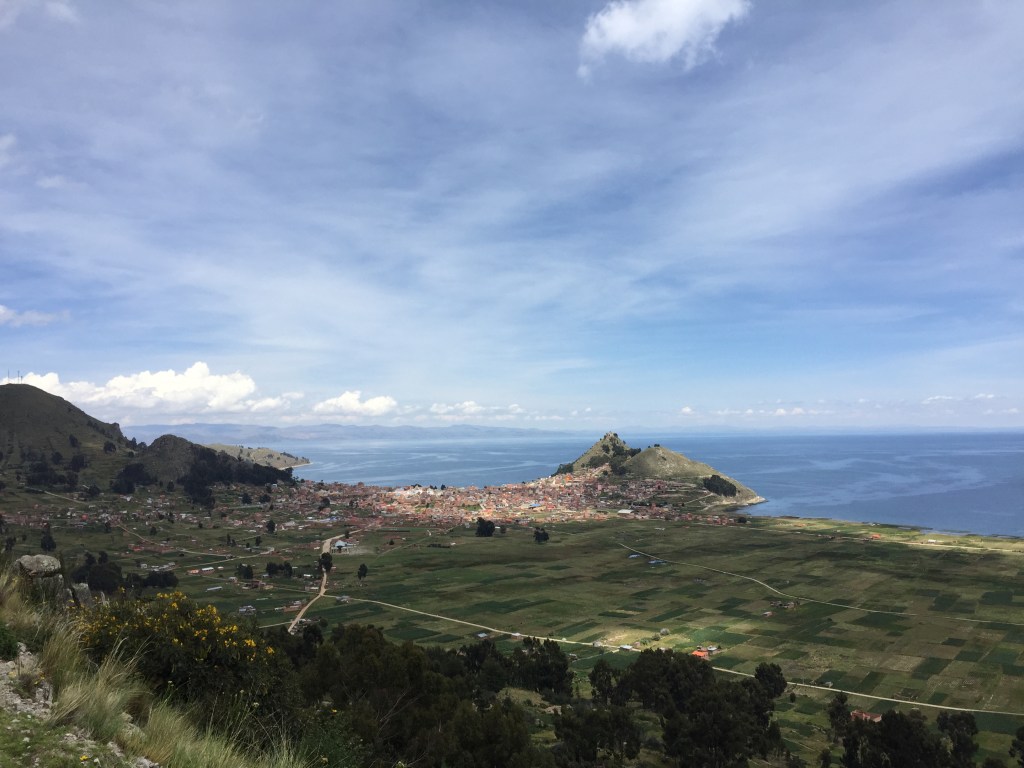
Accommodation – Hostal Las Olas
Luckily, we survive the journey and check into our accommodation; Hostal Las Olas. Each ‘room’ is separate and unique, in a beautifully landscaped garden on a hill overlooking the lake and town. We have La Tortuga; a turtle shape apartment complete with round bed and a second floor with hammocks and view of the lake.

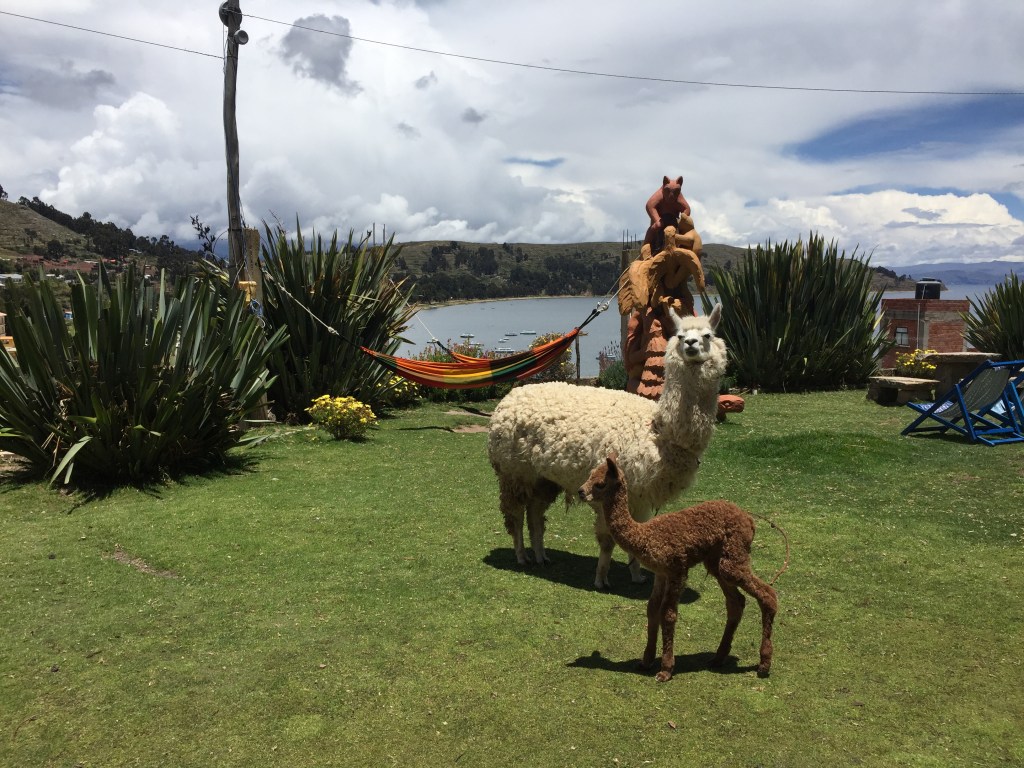
There are llamas roaming free in the gardens. I think this is cool until I try and take a selfie and get spat at. It takes ages to remove the regurgitated grass from my cleavage!

Lake Titicaca
After we’ve finished admiring our accommodation, we take a walk into town, along the shores of Lake Titicaca.
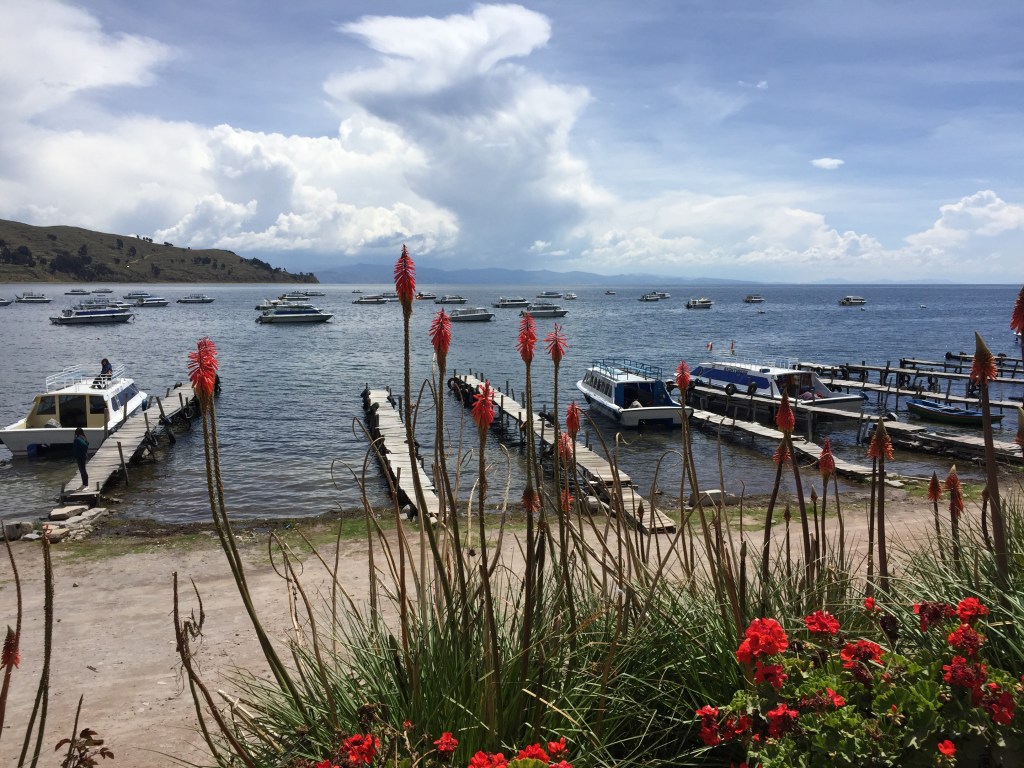
There is a walkway (Costañera) which runs along the lake shore for great views and that all important photo op.

Basilica Virgen de Copacabana
Then we walk into town to the cathedral; Basilica Virgen de Copacabana. It’s a beautiful 17th century building with white walls decorated with blue tiles topped with domed bronze roofs.

Plaza 2 de Febrero
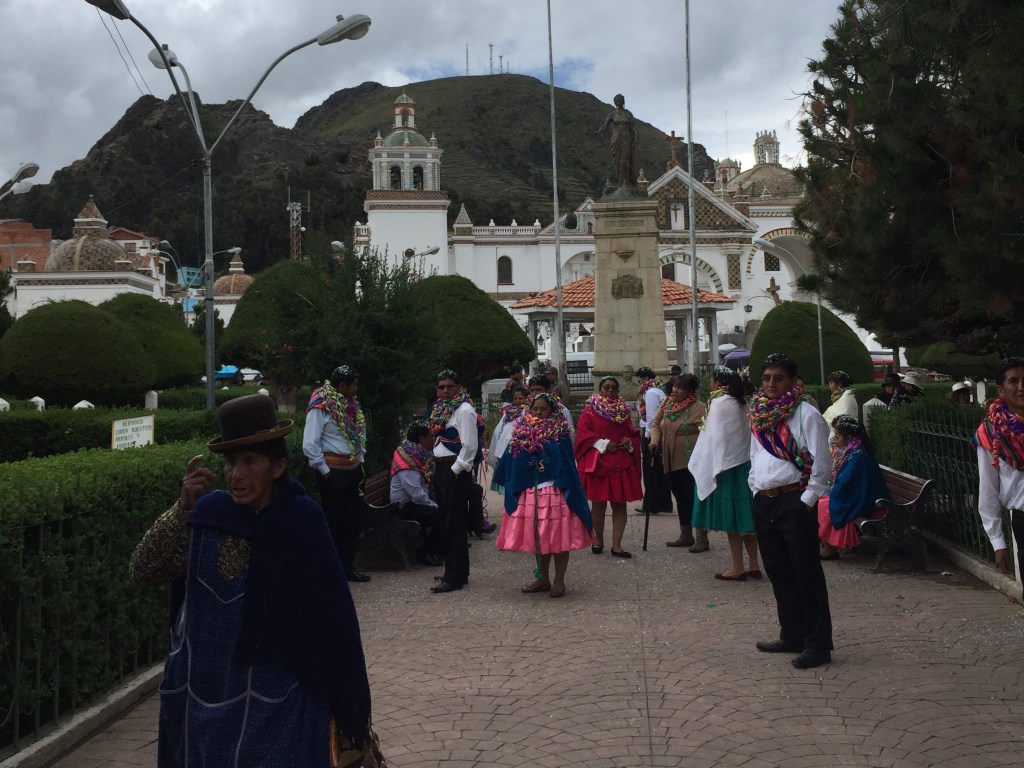
The main square, Plaza 2 de Febrero, is bustling with traders and revellers in traditional clothes – there is a party in progress.

After purchasing some souvenirs and watching the celebrations, we go in search of dinner.
Dinner at La Cupula
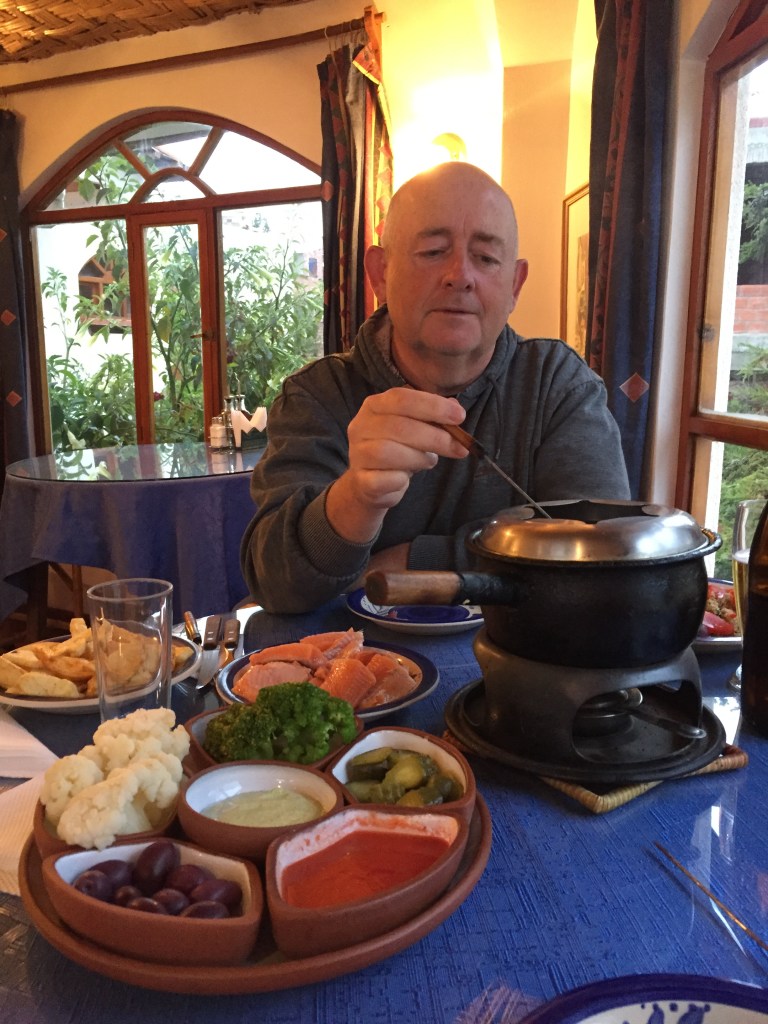
We dine at the restaurant next to the hostel; La Cupula and have a trout fondue with quinoa salad. It requires frying our own food over a pan of boiling oil at the table. It tastes great and we manage not to set anything on fire!
We return to our room and the old man decides to light the log burner. Again he manages not to set anything on fire – particularly not the logs.
Copacabana Day 2
All the travelling, a bout of food poisoning and a cold have taken their toll, so today I’m taking a ‘duvet day’. While the old man sets off on a boat ride to Isla del Sol, I take a stroll along the lake, then return via reception, borrow a book from the hotel library and settle in my deckchair overlooking the lake.
Isla del Sol
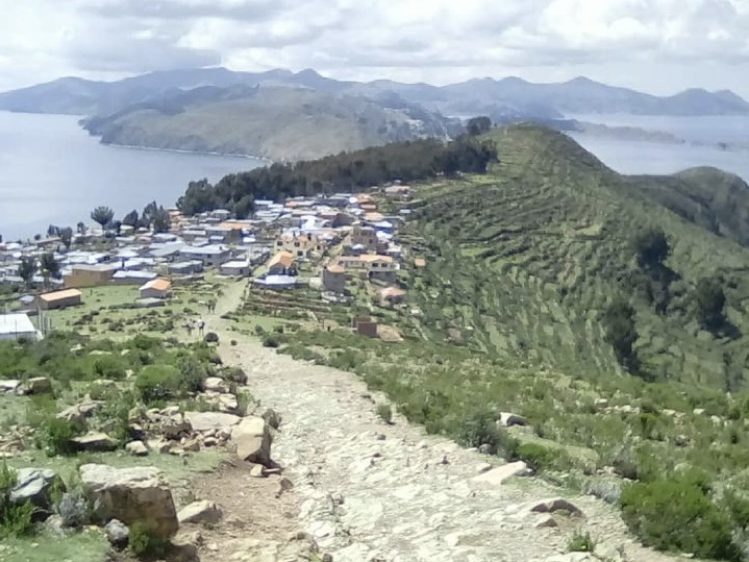
Meanwhile, the old man takes a ferry to Yumani on the Isla del sol, an island on Lake Titicaca. The ferry, run by the Asociación Unión Marinos, departs from Copacabana at 8.30 am and 1.30 pm daily. (Returning at 10.30 am and 4 pm). The 90 minute journey costs 40 bolivianos (around £4.70) return. It costs a further 10 bolivianos to land on the island.

Escalera del Inca
Once on the island, he climbs the Escalera del Inca (Inca Staircase); a kilometre long stretch of steps lined with touristy stuff. Access to the Escalera costs 10 bolivianos.
In the evening, we purchase supplies and have dinner in our room watching a storm brewing over Lake Titicaca – a spectacular sight!
Copacabana Day 3
We have a bus back to La Paz this afternoon. We try to check out, but reception is empty. We soon discover why; spitty llama is giving birth in the garden. It’s an exciting and unexpected start to the morning.
Horca del Inca
Llama excitement over, we walk to Horca del Inca, which is an ancient astronomical site on a hill just outside town. It is described by Google Maps as a 14 minute ‘mostly flat’ walk. 45 minutes and 389 steep stone steps later, we finally reach our destination. Quite a tough ascent at 3800 m altitude.

Not much remains of the ancient observatory, but the climb is worth it for the view across the lake (I think). Entry to the site costs 10 bolivianos.

Capilla del Señor de la Cruz de Colquepata
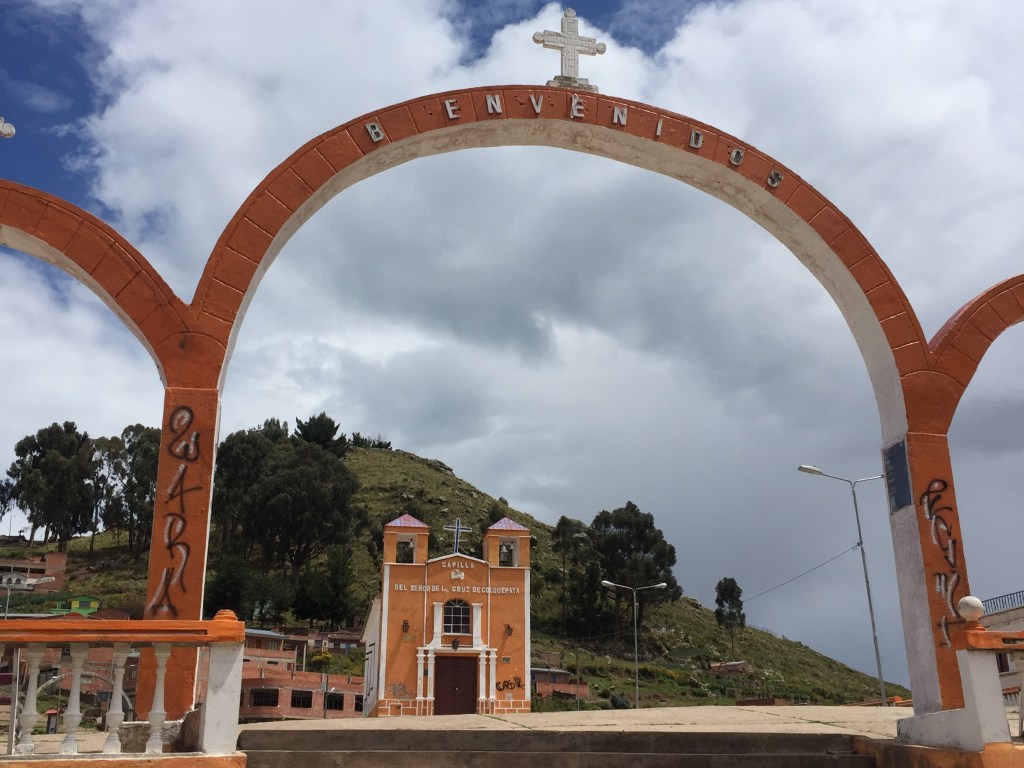
We return to the hotel via the quaint, orange coloured Capilla del Señor de la Cruz de Colquepata; a name which just rolls off the tongue!
Cerro Calvario
The chapel marks the entry to the Cerro Calvario (Calvary Hill), a trail which runs, via the 14 Stations of the Cross, to a hilltop viewpoint. It takes about 30 minutes to walk to the summit.

Bus to La Paz
We have just enough time to get some brunch and see the baby llama one more time, then it’s time to retrace our steps to La Paz – different driver, same white knuckle ride. It takes two hours to reach the outskirts of La Paz and a further two hours to fight our way through the city traffic. This is where having a bonkers driver comes in handy. He fights his way through gaps that aren’t there and we finally reach the hotel having only hit one pedestrian. If I’d been driving, the same journey would have taken about a week!
- Trip taken: February 2019
- Updated: February 2025
I hope you found the above information useful. For guides to more destinations in the 50+ countries we have visited, check out my full list of Independent Travel Itineraries here.
 Jane's Midlife Journey
Leave a comment