
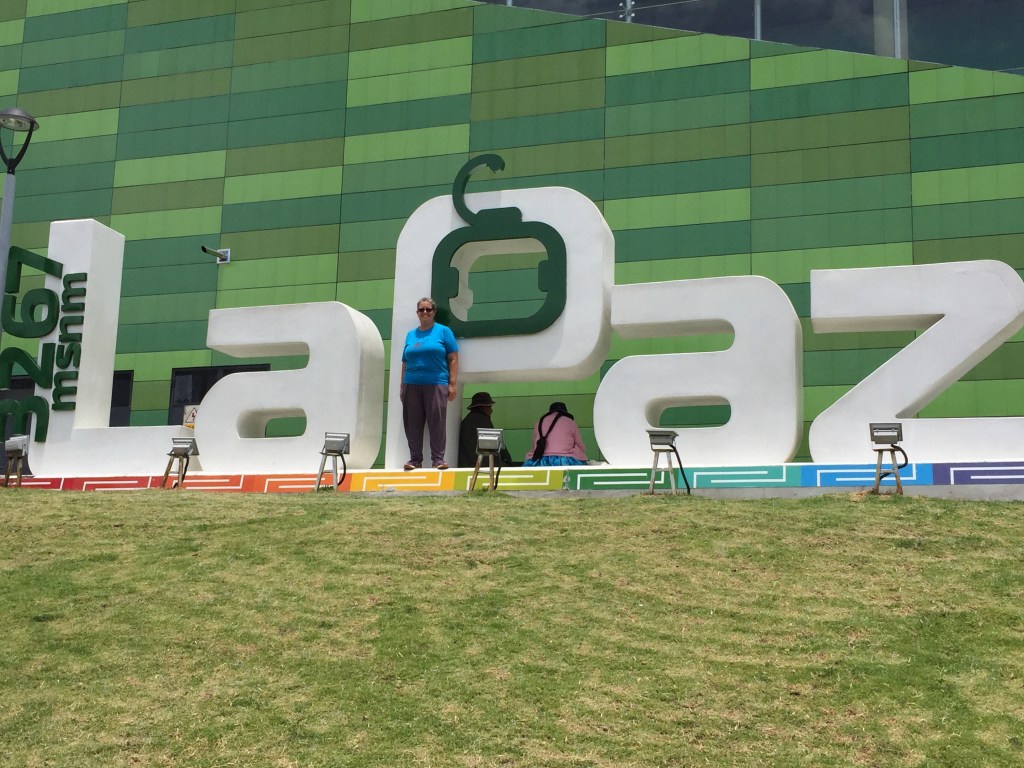
We spent 3 days in the Bolivian capital La Paz. There is plenty to see and do in this high altitude city. But for me, that didn’t really matter. La Paz has my favourite public transport system in the whole world. I could quite happily spend days just travelling the city’s cable cars for the ride and the awesome views. In compiling my Top 10 Things to do in La Paz, I had to overcome the urge just to list the 10 Mi Teleférico Lines!
How to get to La Paz
We arrived by plane and departed by bus. The airport, El Alto, is 8 kilometres west of, and 500 metres above the city. From here, you descend into La Paz through spectacular scenery and a lot of traffic.

There are a number of bus companies running services to and from La Paz. The hundred year old Bus Terminal was designed by Gustave Eiffel, who also designed the famous tower bearing his name in Paris. Each company has its own ticket booth. We hadn’t planned to depart by bus (we had plane tickets, but the airline ceased operating), so it was rather bewildering wandering round the booths checking what operator offered what destinations. However, we ended up on a very nice bus with fully reclining seat for our unexpected overnight drive to Cuzco.

Getting Around La Paz
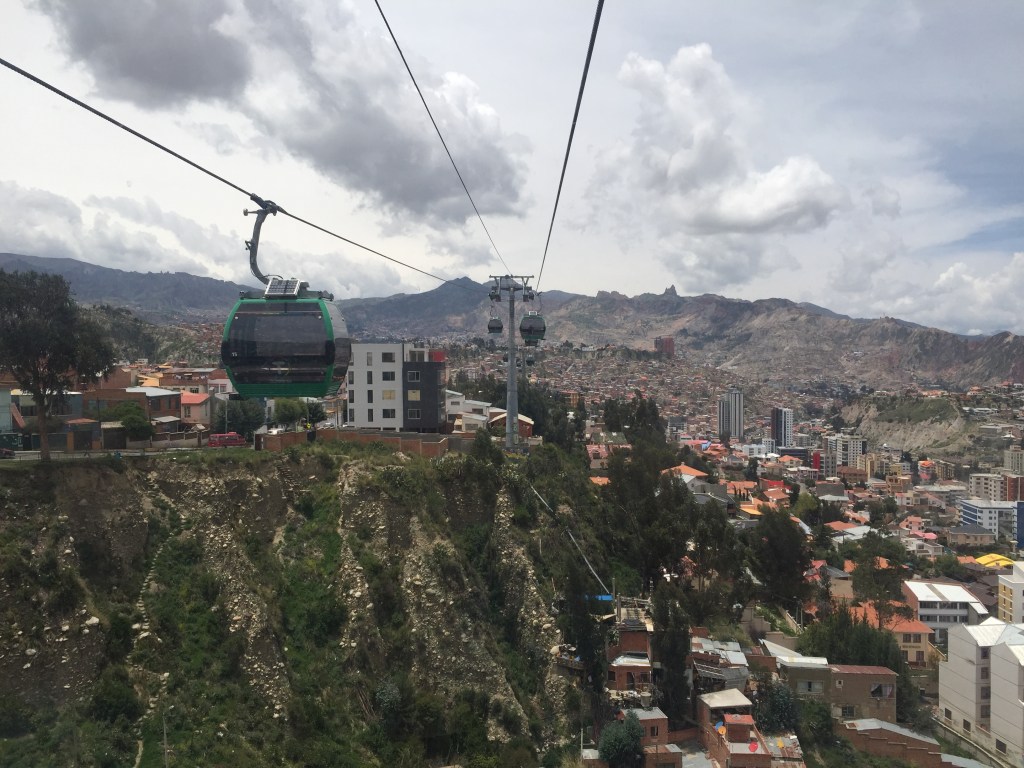
Getting around La Paz is such fun! Where other major cities have a network of underground trains, La Paz has a network of cable cars; Mi Teleférico. They are clean, comfortable, cheap and offer spectacular views. I have travelled a lot and riding the cable cars of La Paz is one of my all time top travel experiences. You can buy a pass, but we arrived at the weekend and couldn’t find anywhere open to sell us one, so we purchased individual tickets for each ride. This works out more expensive, but at 3 bolivianos (35 p) a ride, not a huge expense. Plus I got to keep the tickets (a different colour for each line) for my scrapbook.
Where to Stay in La Paz
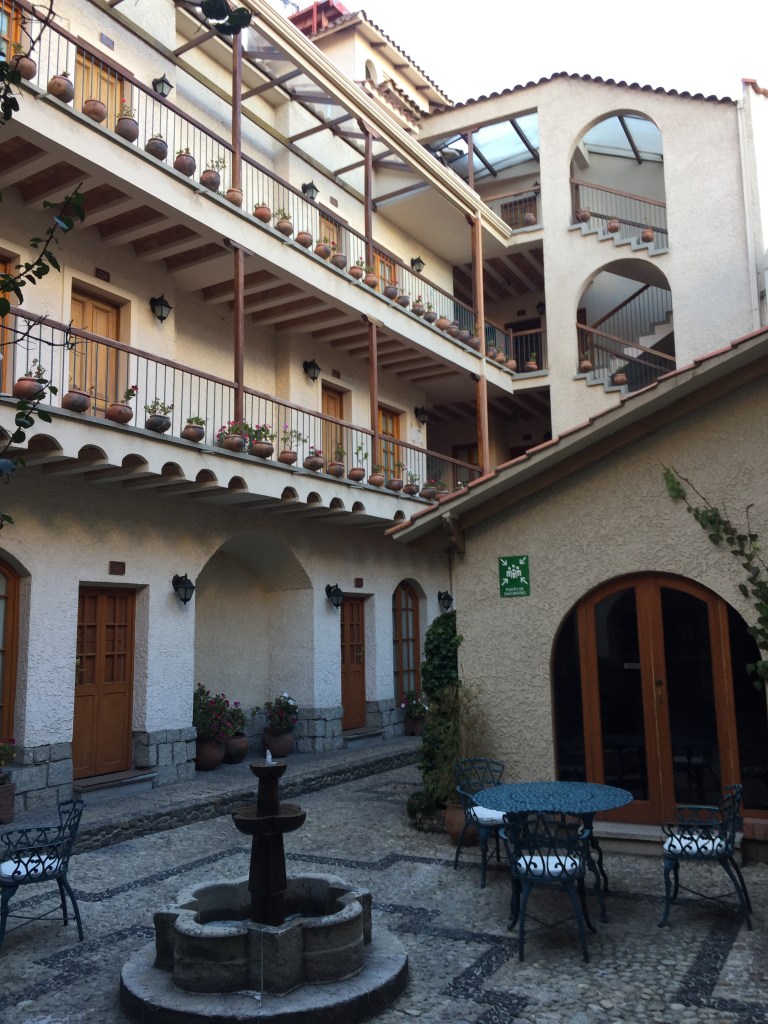
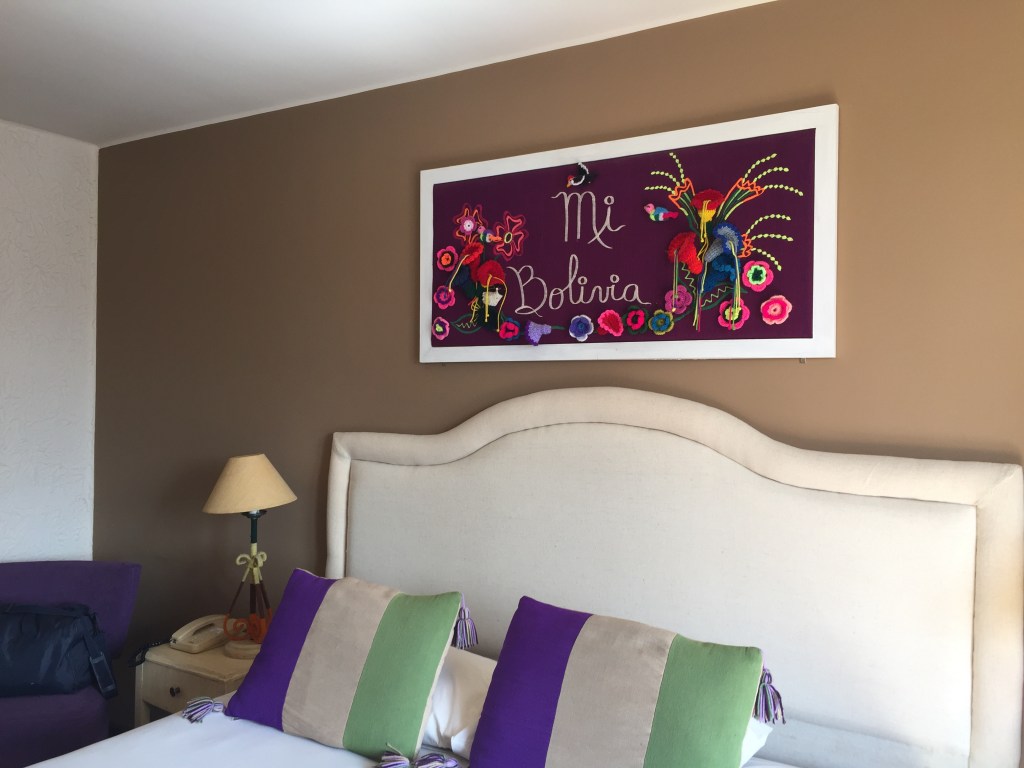
We stayed at the Hotel Rosario La Paz. The hotel is clean and comfortable and in a convenient location – a haven of tranquility in a hot, dusty city. I loved that the decor incorporates plenty of Bolivian handiwork. The price includes an excellent buffet breakfast. The hotel also organises tours.
Altitude Sickness in La Paz
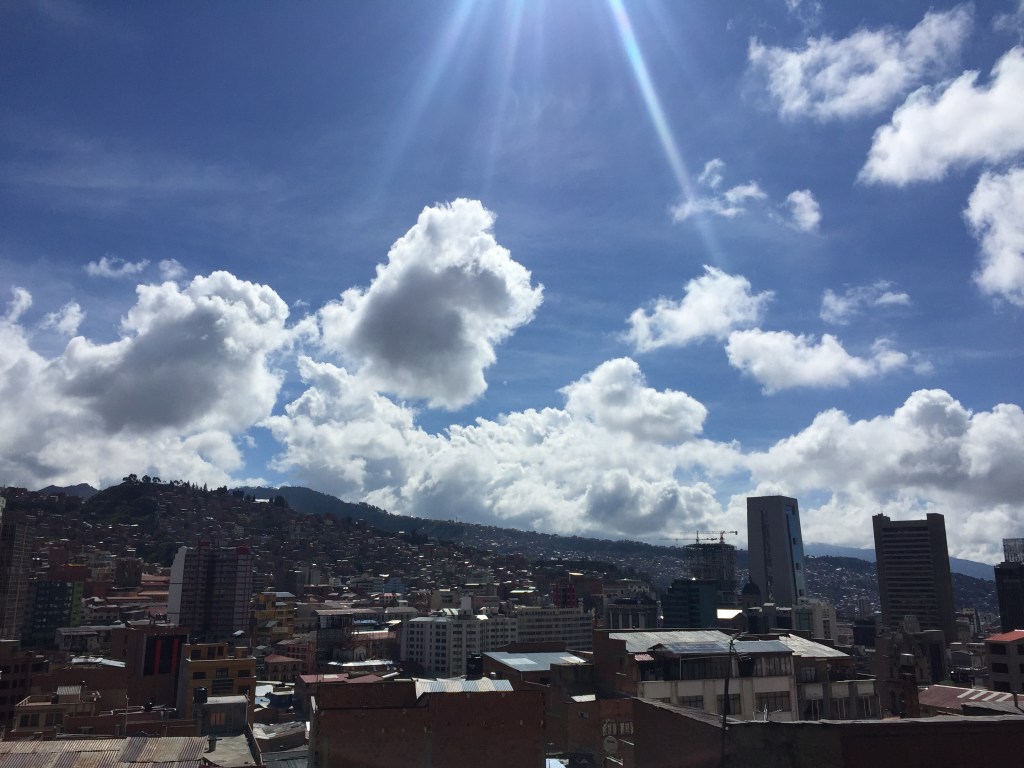
At over two miles above sea level, La Paz is very high up, so be prepared for an element of altitude sickness. I had read a lot about altitude sickness in this crazy city perched half way up the Andes. I did have a headache and get a bit out of breath at times, and certainly wouldn’t have entertained the idea of going for a run! But we didn’t really have any problems, as long as we walked at a sedate pace. Our hotel, like many in the city, did have oxygen for those that needed it.
There was lots of talk of coca leaves (and other products) helping with altitude sickness. I didn’t find this helped, plus they didn’t taste great. But trying them is all part of the La Paz experience.
La Paz: Top Things to do
| 1 | Ride Mi Teleférico |
| 2 | Admire the view from Mirador El Alto |
| 3 | Climb onto the roof of the Basilica de San Francisco |
| 4 | Admire the art at the Museo Nacional de Arte |
| 5 | Visit the Calle Jaen Museums |
| 6 | Learn about coca at the Museo de la Coca |
| 7 | Relax in the Plaza Murillo |
| 8 | Visit the Metropolitan Cathedral |
| 9 | Go shopping at the Mercado de las Brujas |
| 10 | Wander round the Botanical Garden |
No 1 – Ride Mi Teleférico
By far my favourite thing about La Paz was riding on Mi Teleférico. There are 10 lines, each a different colour, (with gold under construction). Covering a total of 30 km, they criss-cross the city. The cable cars are clean, efficient and cheap (around 30p a ride). Honestly, I could have happily spent several days in La Paz just riding cable cars.
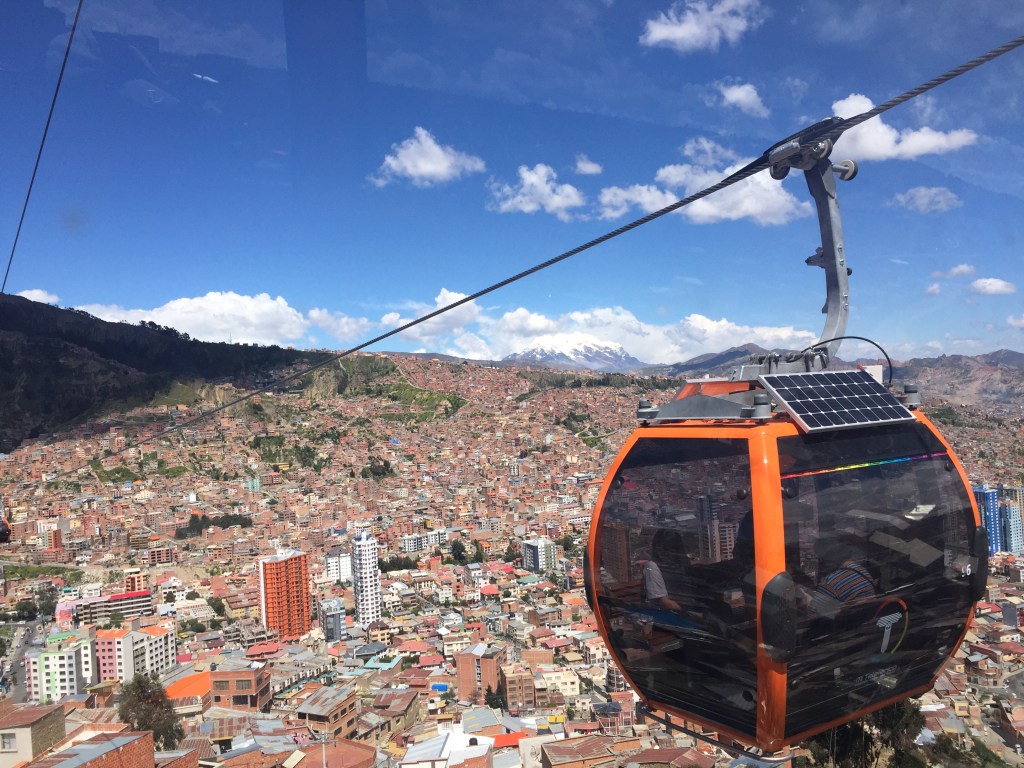
Naranja (Orange)
The Naranja Line starts in downtown La Paz at Estación Central, the former Railway Station. It heads east to Héroes de la Revolución, where it links with the Blanca Line. Just outside the station is Plaza Gualberto Villarroel, from where there are great views across the suburbs to the snow capped mountains behind.
Blanca (White)
The Blanca Line runs for 2 miles, hanging high above Avenida Busch. Blanca terminates at Del Libertador, where it links with Verde and Amarilla. Mid way along, it also connects with Celeste.

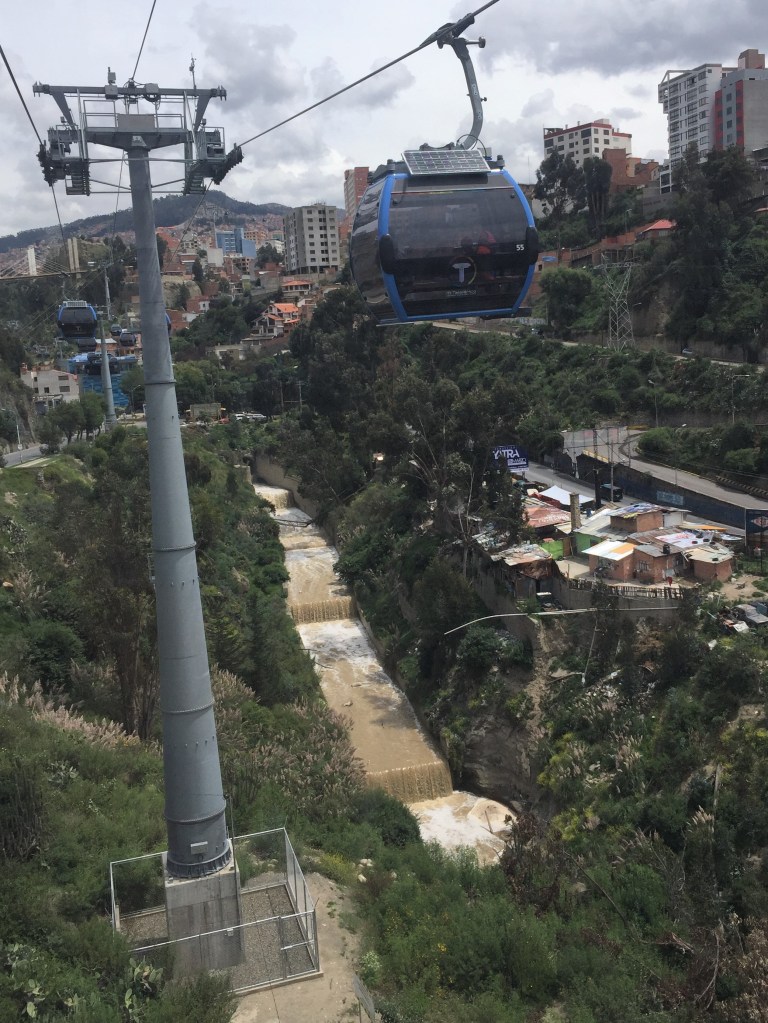
Celeste (Sky Blue)
The Celeste line also runs from Del Libertador. From here, you can head into the old town travelling high above the river.
Roja (Red)
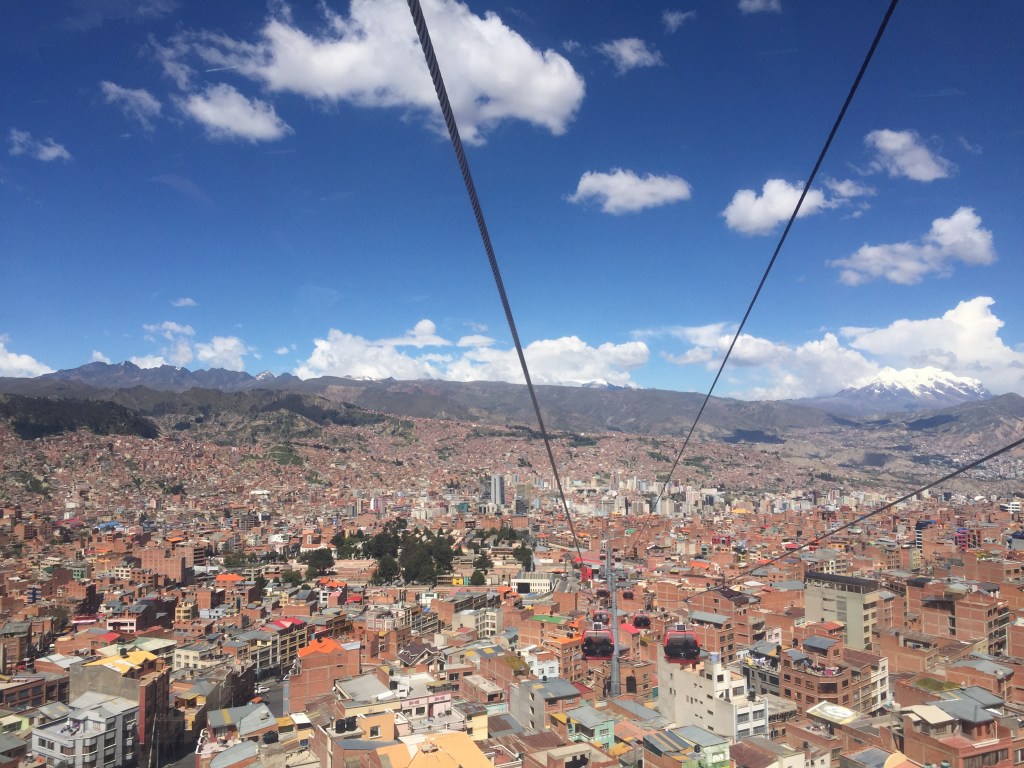
The Roja Line starts in La Paz at Estación Centra and takes you dangling above the cemetery, before climbing 500 metres up to Mirador El Alto.
Amarilla (Yellow)
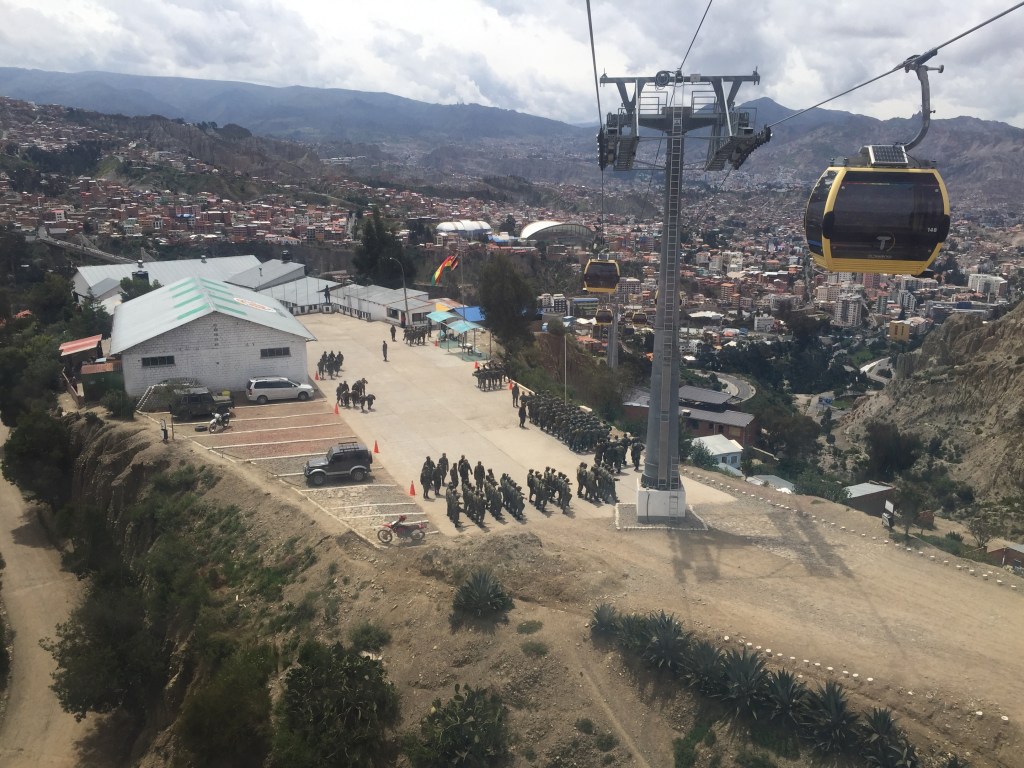
The Amarilla Line runs east to west across the southern end of the city. To the west, the line ends high up in the hills at Mirador. It carries you hovering over a Military Academy, where you can watch recruits doing drills and then over a football stadium for a birds eye view of the match.
Verde (Green)
To the east, Amarilla connects with Verde, which passes over some very fancy houses to the suburb of Irpavi.
Other Lines
- Azul (Blue) – links La Paz with neighbouring El Alto.
- Morada (Purple) – runs south west from Edificio Correos, terminating near the airport.
- Café (Brown) – this short line connects Blanca with the suburb of Las Villas.
- Plateada (Silver) – connects the Red, Purple and Yellow Lines.
- Dorada (Gold) – currently under construction. It will start where the Green Line ends, running further east.
No 2 – Admire the view from Mirador El Alto
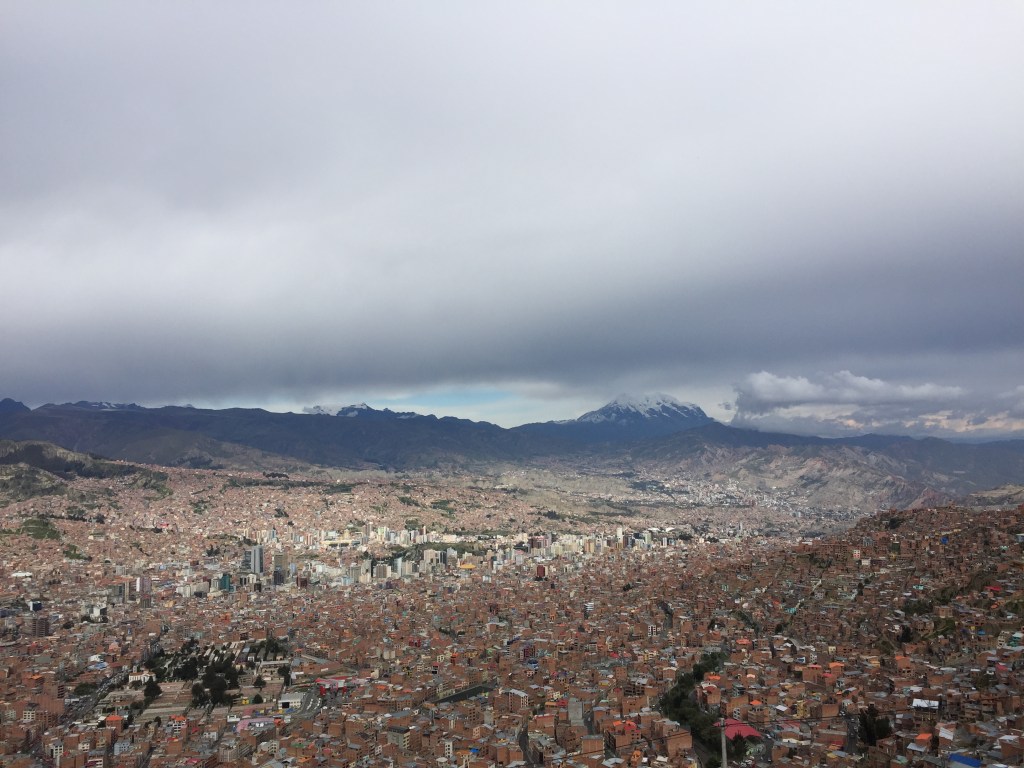
The Mirador El Alto provides spectacular views of the city and the Andes. Although, to be honest, there’s an equally great view from the cable car on the journey up. The temperature difference at the top is substantial. And the air is noticeably thinner. After enjoying the view for a while, it’s a relief the descend into La Paz.
No 3 – Climb onto the roof of the Basilica de San Francisco
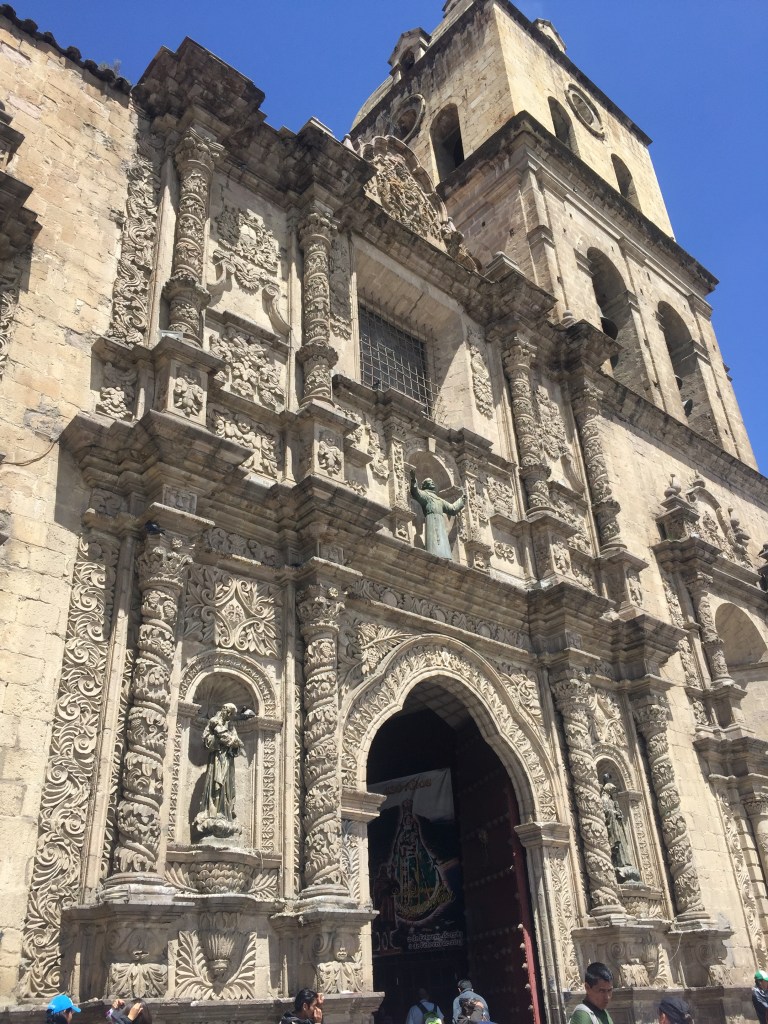
You can just visit the 18th century Basilica de San Francisco, but I recommend the guided tour. This costs 20 bolivianos (around £2.40) and includes the cloisters, the church, then up a tiny, dark staircase to climb onto the roof.
Just as I poked my head through the door onto the roof, someone threw themselves off the tower block opposite. It took a while for my eyes to adjust to the light. Then I spotted the rope. It was a bungee jump – phew!

Once I had calmed down and caught my breath from climbing onto a church roof at altitude, we could enjoy the wonderful views (including bungee jumpers) and see how each roof tile is unique, because men made them by shaping clay round their thighs.

No 4 – Admire the art at the Museo Nacional de Arte
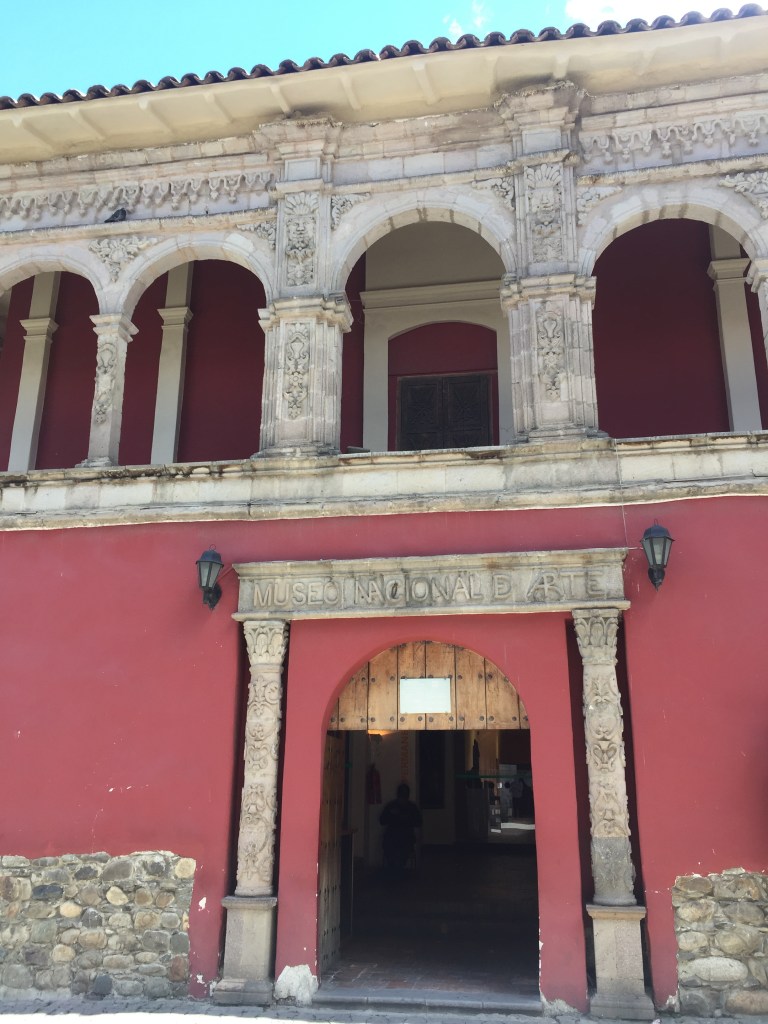
The Museo Nacional de Arte is another 18th century building, this time, bright red. It’s quite dark inside with only the paintings illuminated which is atmospheric, if a little difficult to negotiate.
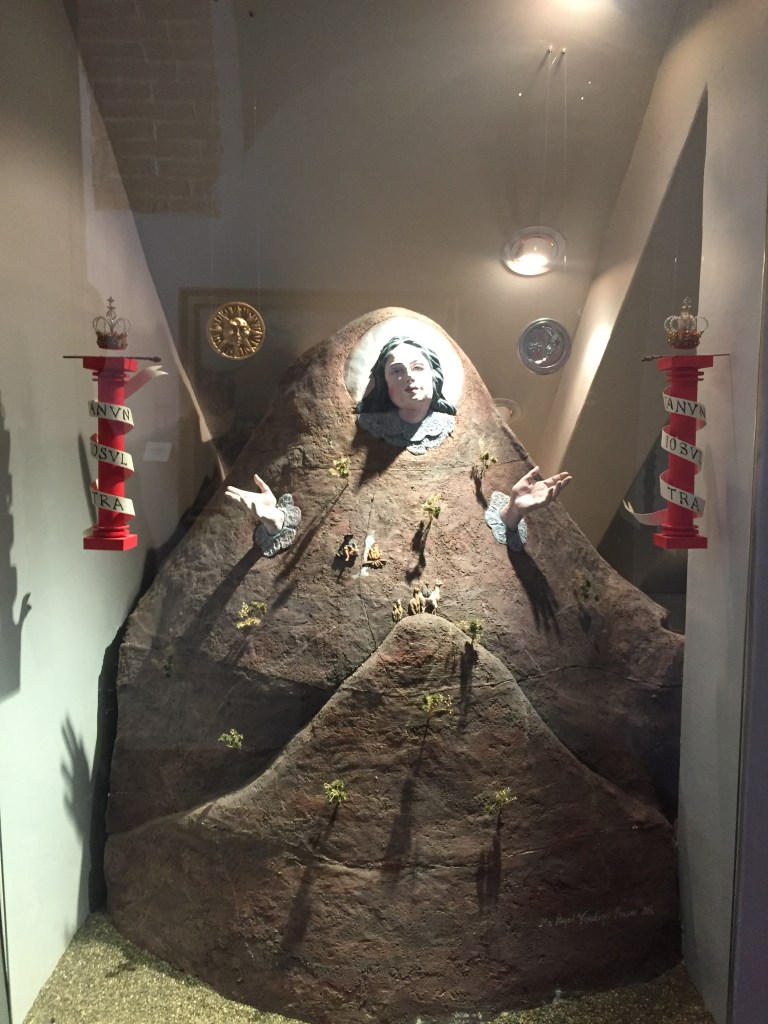
The art is mostly religious, and sometimes weird, or even both, like this mountain Madonna.
In the basement, you can enter a large confetti filled room and create your own confetti moments.

The museum is open daily. Entry costs 20 bolivianos (around £2.30).
No 5 – Visit the Calle Jaen Museums
Calle Jaen is an old colonial street. Here, you can visit three separate museums. (Technically four, but the Museo Litoral Boliviano was closed when we visited.) A ticket costs 20 bolivianos and includes entry to all the museums. Note: You need ID to purchase a ticket.

Museo Costumbrista
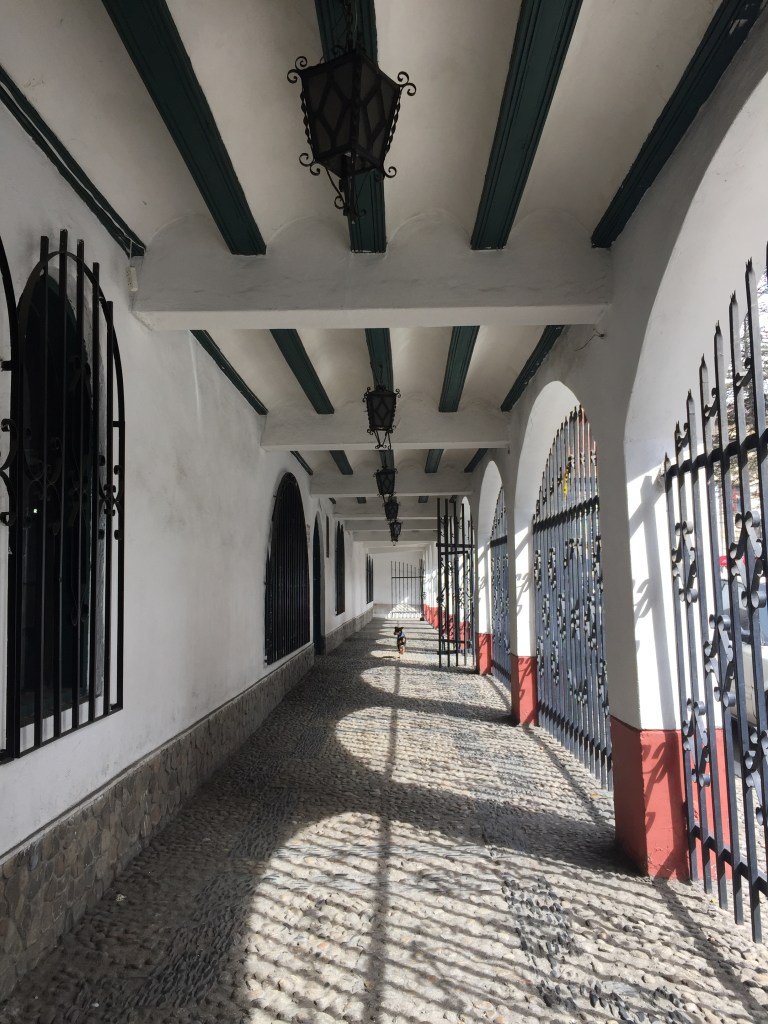
The Museo Costumbrista (Costume Museum) tells the history of La Paz in costumes and dioramas. It was actually really interesting although only in Spanish, so even getting a basic understanding involved plenty of referring to my handy dictionary App. Photography isn’t allowed inside, so here is one of the entrance…
Museo de Metales Preciosos
The Museo de Metales Preciosos (Museum of Precious Metals, sometimes referred to as the Gold Museum) contains many gold and other items from Bolivia’s past. Inside it is very dark; black from floor to ceiling and has plenty of steps. That we both made it round without incident is an achievement.

Casa de Murillo
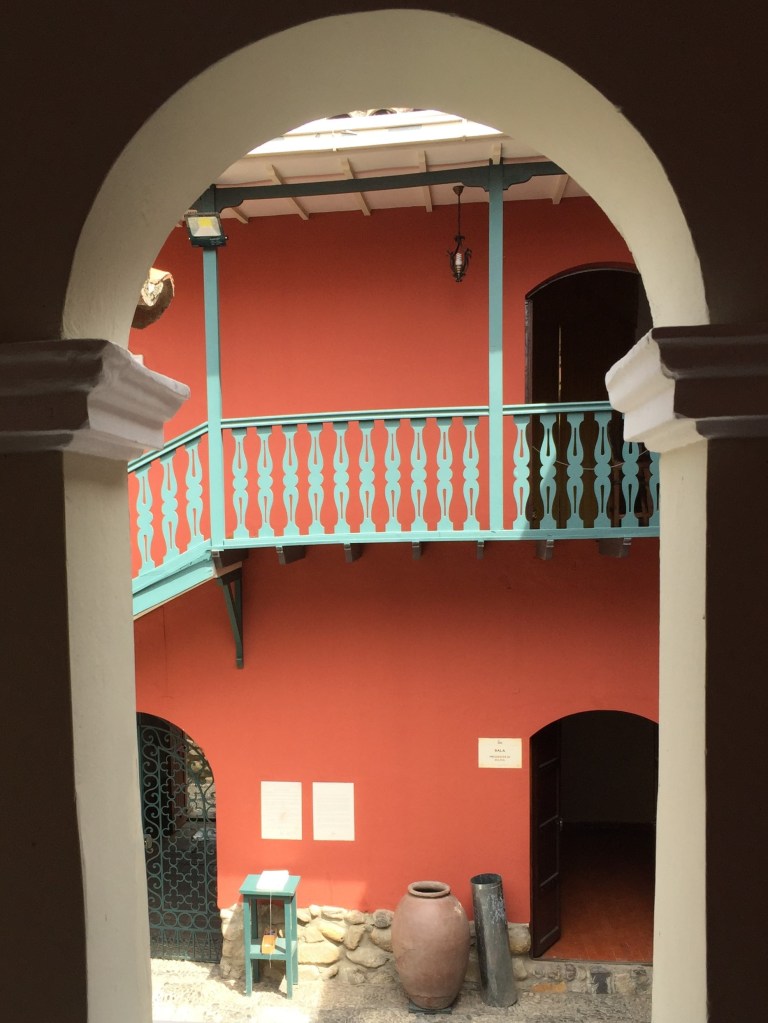
The Casa de Murillo is the former home of Pedro Murillo, a local hero, who led an uprising against Spanish rule. The house is filled with interesting artifacts from Murillo’s life.
No 6 – Learn about coca at the Museo de la Coca
The Coca Museum charts the history of the coca leaf, its role in Bolivian culture and uses as a drug, both legal and illegal.

The museum was more interesting that I’d anticipated. They also have a café where you can buy coca food, cocktails and original recipe Coca Cola.

The museum is open from 10 am until 7 pm daily except Sundays. Entry costs 15 bolivianos.
No 7 – Relax in the Plaza Murillo
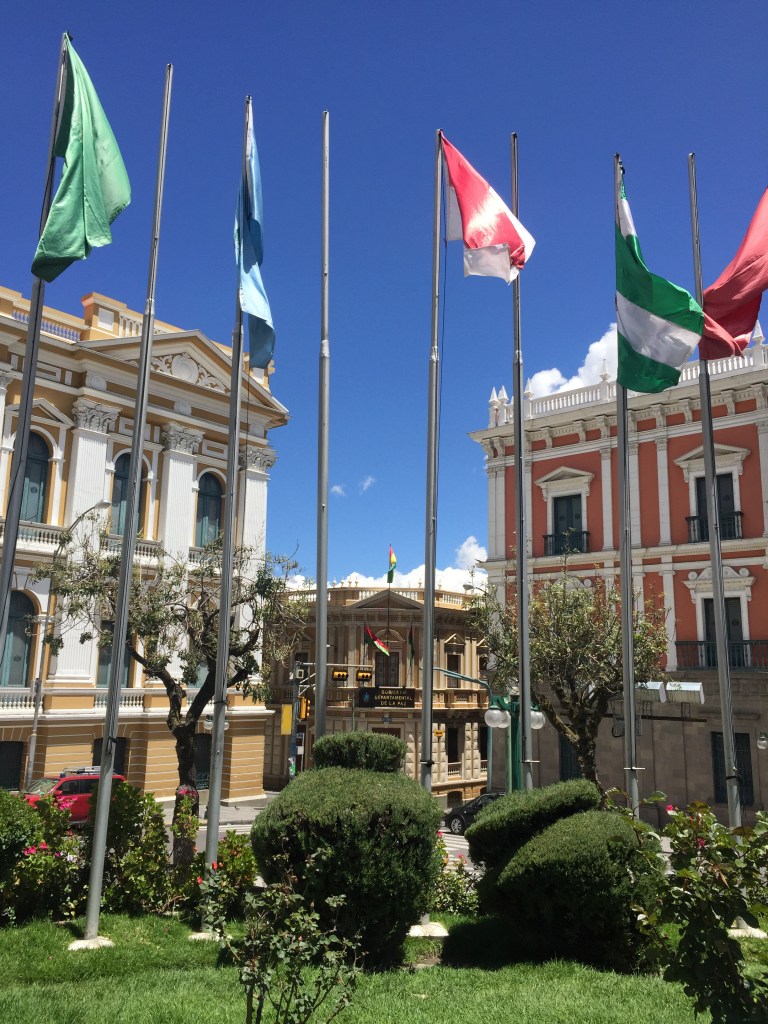
The Plaza Murillo is a square which is surrounded by important buildings; the cathedral, the Palacio de Gobierno and the Palacio Legislativo. It is also surrounded by pigeons – kamikaze pigeons! Pigeons aside, it’s a nice place to sit, relax and catch your breath before moving on.
No 8 – Visit the Metropolitan Cathedral
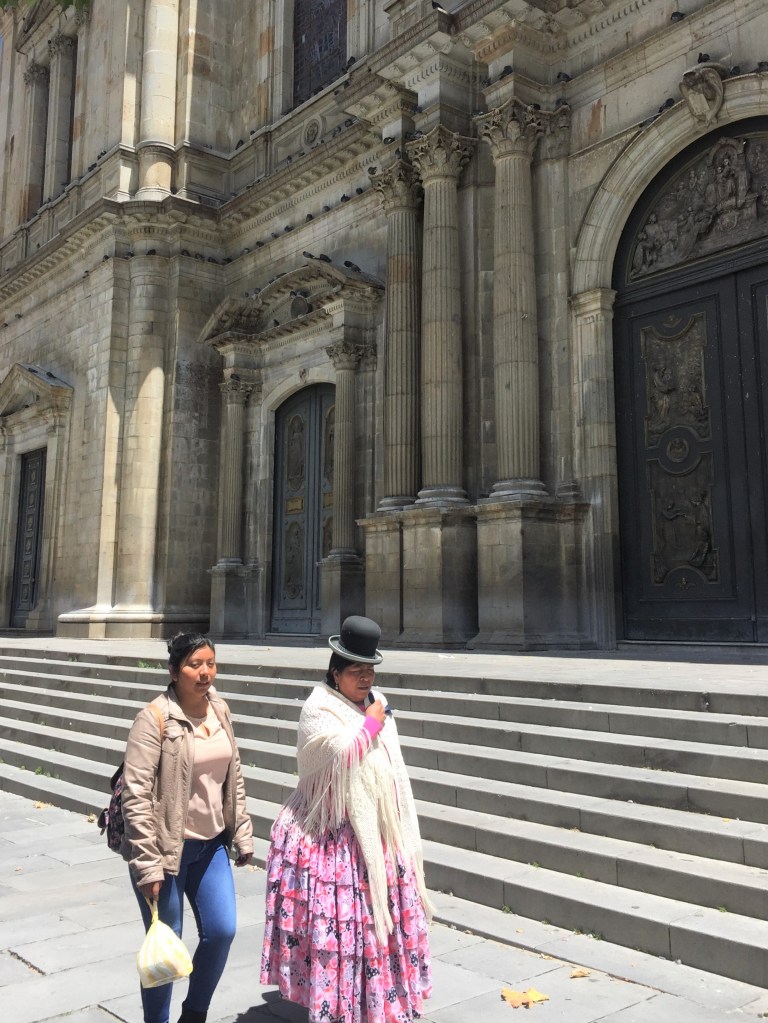
The 19th Century Metropolitan Cathedral is less ornate than the San Francisco Basilica, but it does boast Jesus on a neon cross.

Like most buildings in La Paz, it’s built on a hillside. Hence, the rear of the cathedral is at ground level, while the entrance is 12 metres up and accessed by a flight of stone steps.
No 9 – Go shopping at the Mercado de las Brujas
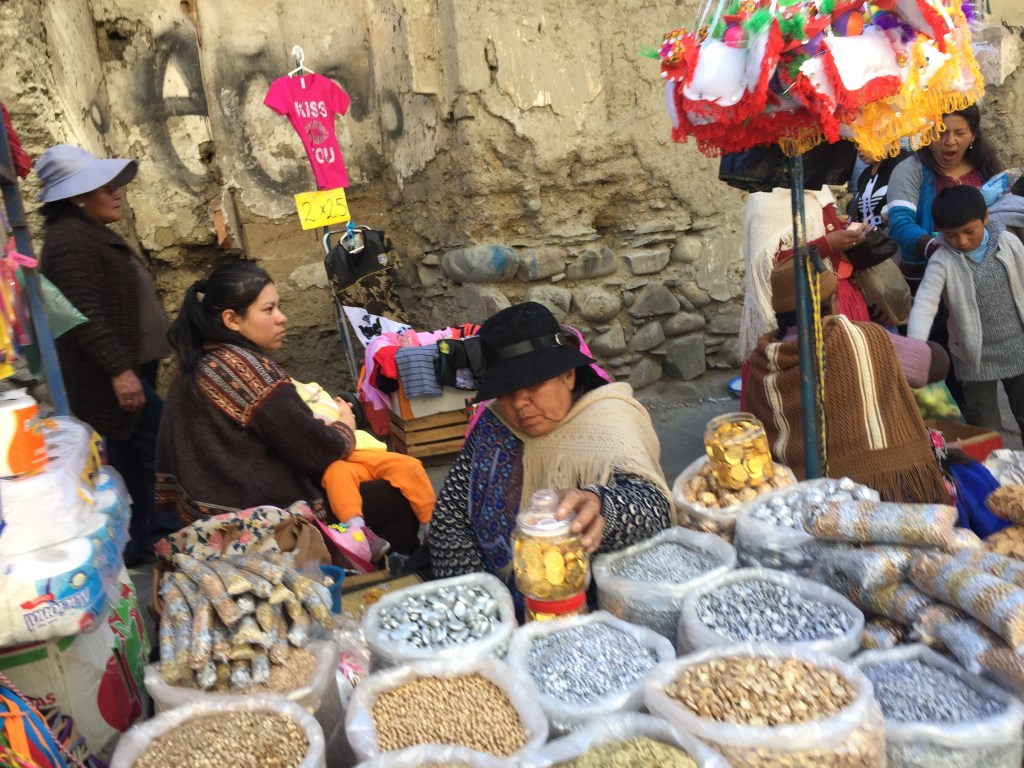
The famous Mercado de la Brujas (Witches’ Market) is where they sell all manner of weird stuff to tourists. The street was crazy busy – we visited just before carnival and there was a never ending row of ladies in petticoats and bowler hats flogging steamers, fancy dress outfits and an array of gaudy plastic tat.
No 10 – Wander round the Botanical Garden
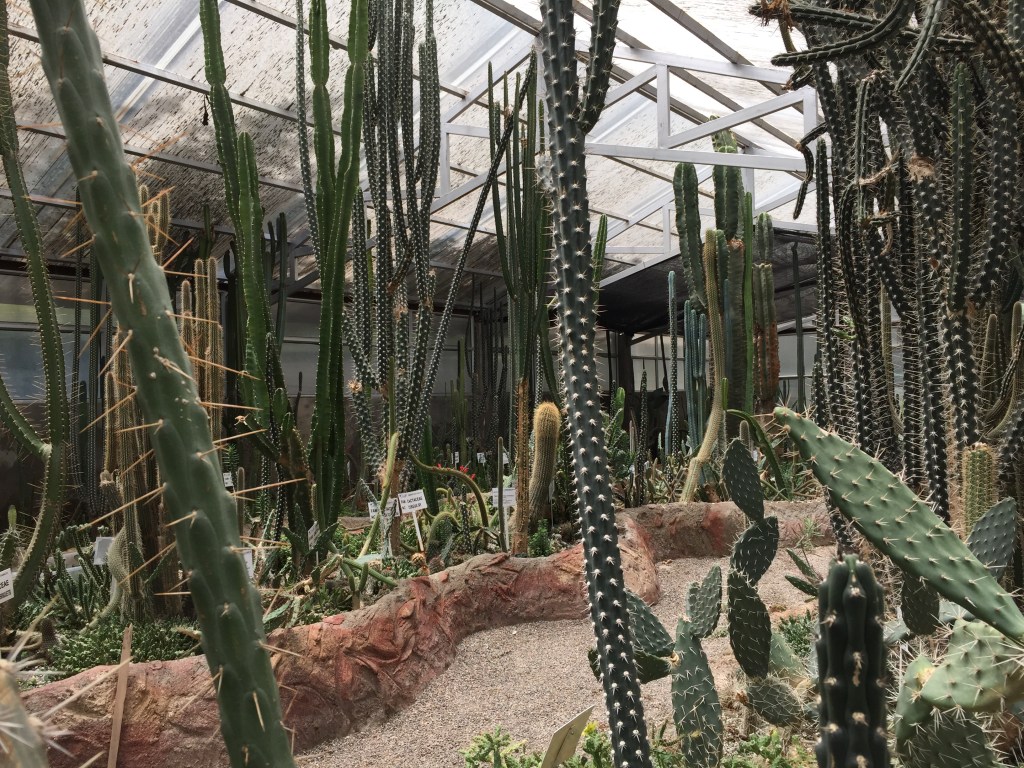
The small Botanical Garden is not the world’s greatest botanical garden, but it has many native species and is a haven of calm in this crazy city. And with tickets costing just 1 boliviano (12p) each, you can hardly complain about the price!
- Trip taken: February 2019
- Updated: February 2025
I hope you found the above information useful. For more top picks from other destinations in the 50+ countries we have visited, check out my full Top 10 Things To Do list here.
 Jane's Midlife Journey
Leave a comment