
Highcliffe Castle, perched on the cliff top on the outskirts of Highcliffe, isn’t quite as old as the name ‘Castle’ might suggest. The original Highcliffe Mansion was built (too close to the cliff edge) in 1775. Once this house was lost to coastal erosion, the current Highcliffe Castle was built, slightly further inland, in the 1830s.

How to get to Highcliffe Castle
Highcliffe Castle is 8 miles east of Bournemouth, it can be reached by car along the A338/A35/A337. If you’re feeling energetic and fancy walking or cycling, it is possible to follow the seafront for most of the journey, with a ferry crossing at Mudeford. Alternatively, the X1/X2 Buses stop at The Lord Bute, a 6 minute walk from the castle.
Parking
The castle has its own Pay & Display Car Park (good luck finding a space in summer). Parking fees are seasonal, ranging from £1 for 4 hours in winter (November to March) and £2 for an hour during the rest of the year. Further details can be found here. There is also free roadside parking in front of the castle between October and March.
Opening Times
The Castle is open from Sunday to Thursday between 10 am and 4 pm. On Fridays and Saturdays, the building is a popular wedding venue, so is closed to the public. However, the shop remains open from 10 am until 4 pm.
The castle is not open all year, usually closing for a couple of months over the winter (Christmas until February).
The Tea Rooms are open daily from 9 am until 4 pm.
The Grounds are open all year round from 7 am until around dusk. Further details can be found here.
Price
Admission costs £9 for adults. Full details of concessions and family tickets can be found here.
Highcliffe Castle History
The first house at Highcliffe was built in 1775 for John Stuart, the 3rd Earl of Bute, who came to Highcliffe after being ousted as Prime Minister. Stuart was one of Britain’s shortest serving Prime Ministers, not least because he introduced a tax on cider!
Upon his death in 1792 (he fell over the cliff collecting plants), the house passed to his son Charles Stuart. Charles couldn’t afford the house’s upkeep and it was sold, ending up in the possession of Dr James Penleaze, a surgeon from London. It is alleged that the good doctor found a hat case stuffed full of cash, which he used to purchase Highcliffe. Ultimately, it was too close to the cliff and had to be demolished.
The land then found its way back into the possession of the Stuart family and the current castle, a Grade I Listed Building, was built in 1831 for John Stuart’s grandson, Lord Stuart de Rothesay. This former ambassador to France imported stone and stained glass from derelict French churches to be incorporated into the castle’s construction.
Later, from 1916-1922, the house was rented by Harry Gordon Selfridge, founder of the Selfridges Department Store in London. Mr Selfridge loved Highcliffe and hosted lavish parties there. During the war, a convalescent camp for American soldiers was set up in the castle grounds.

After functioning as a children’s home and a religious seminary, the building was partially destroyed by fire. A period of neglect followed, before the building was compulsorily purchased by the local council in 1977. The partially renovated castle is now owned by BCP Council.

Castle Interior
The interior is still in need of restoration, but it is worth taking a tour nevertheless. There is plenty of information about the history of the castle and its residents on display, along with some interactive activities to keep you entertained.

The Jesse Window
The focal point of the castle entrance is the 200 year old Jesse Window. It measures 9 x 4 metres incorporating a central panel from a derelict 16th Century French church.

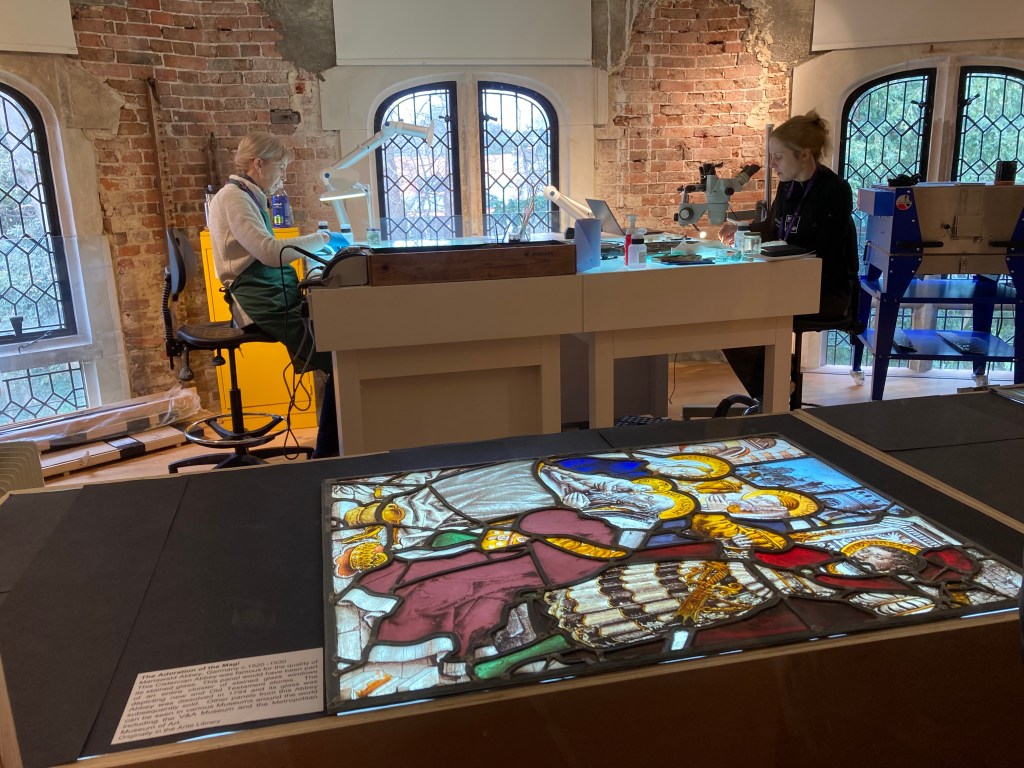
The castle even boasts its own stained glass studio where you can observe crafts(wo)men at work.
Castle Grounds
The castles grounds were designed in 1775 by famous landscape architect Capability Brown, who planted trees to stabilise the cliff top as well as introducing more formal gardens and a beach hut. To the rear of the castle is the formal Parterre. From here, woodland walks extend along the coast.

The Castle Pantry
The Castle Pantry is located to the rear of the castle. Here, you can buy breakfast, light bites and afternoon tea.

Steamer Point
Steamer Point is so-called because, in 1829, the castle’s owner decided to have a steamer lodged into a gap in the cliff top because – well, she liked paddle steamers.

A nice ‘circular’ walk to take is to follow the path west along the cliff top to Steamer Point, then descend and return along the beach.
Steamer Point Lodge
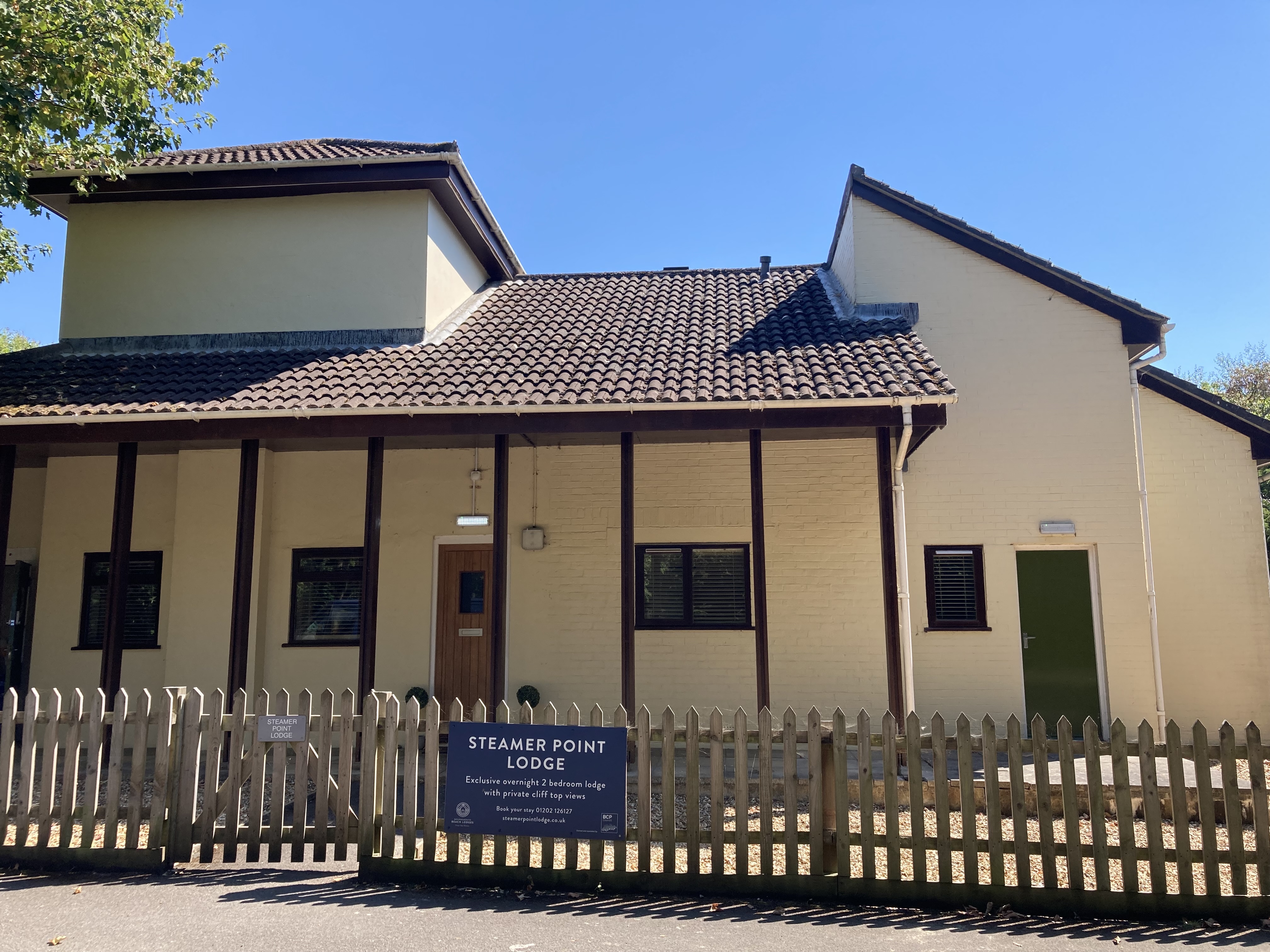
The steamer is long gone but there is a house built above where it used to lie called Steamer Point Lodge. This two bedroom former warden’s lodge is now a cliff top holiday rental with stunning views and beach access.
Steamer Point Nature Reserve
The surrounding area forms Steamer Point Nature Reserve, which consists of a wooded area running alongside a lake.

Steamer Point Woodland Information Centre
Steamer Point Woodland Information Centre is a small building where you can learn more about the nature of the surrounding area with interactive displays for children.

Highcliffe Castle Beach
Highcliffe Castle overlooks a beautiful stretch of beach. The beach can be reached from the castle via a gently sloping accessible zigzag (no steps) or by a path with 118 steps (yes I counted).

There is a trail along the beach heading east to the Blue Flag beach at Highcliffe.

Events
The Castle hosts a number of events throughout the year, from plays to music performances to art exhibitions. Further details are available on the Website.
New for 2025, is a series of Pop Up Sundays, which include a range of music, cars, local creatives and a Barbecue.
October 2024 saw the inaugural Dorset Wine Festival take place in the castle and grounds with over 150 wines to sample.

In December, the castle will hold a Christmas Tree Festival with decorated trees and and a new art exhibition entitled ‘The Wonder of Winter’. There will also be Christmas storytelling and a festive trail for children.
Highcliffe Castle for Children
There are plenty of activities for children as you walk round the castle, such as designing a stained glass window and dressing up as a servant to serve dinner to the King.

There are also regular activities (mainly in the school holidays) such as crafting, trails and story telling. And it’s only a few minutes walk to the beach, so makes for a perfect family outing.
Dogs
Dogs are permitted in the castle grounds, but must be kept on a lead in the area around the castle.
I hope you found this information useful. For more inspiration on things to do in and around Bournemouth, check out my 101 Things to do in Bournemouth here.
- Updated: October 2024

 Jane's Midlife Journey
Leave a comment