
We spent four days in Mexico City during our trip to Mexico; three days exploring the city itself and a fourth day on a trip to the ancient pyramids of Teotihuacán, some 30 miles away. Note that many of the city’s attractions are closed on Mondays. From my itinerary, Day 2 and Day 4 will not work on a Monday.
How to get to Mexico City
Benito Juárez International Airport is well served with national and international flights. The airport is located around 4 miles to the west of the city centre. There are two terminals, with most international flights using Terminal 1. There is a Metro Station (Terminal Aérea) serviced by Metro Line 5. However, getting into the centre would require a change of trains.
We opted to take the Metrobús. Metrobús Line 4 stops at both terminals (Entrance 7 at Terminal 1 and Entrance 2 at Terminal 2) and offers a regular circular (rectangular?) route round the edge of the city centre. We alighted at Republica de Chile, which is a few blocks north of the Zócalo. Tickets cost M$30, which must be loaded onto
From London, we found that the cheapest way to fly to Mexico was to buy a package holiday to Cancun. After a few days chilling by the pool at our resort hotel, we took an internal flight to Mexico City for a long weekend. Then, we returned to our original hotel to complete our package holiday.
Getting around Mexico City
The easiest way to get around Mexico City is to use the Metro, which is clean, efficient and cheap. You will need to purchase a Metro Card (M$15), which can be recharged at ticket offices or recharging machines. An individual journey costs M$5. The Metro Card can also be used on Metrobuses, with a journey costing M$6.
Where to stay in Mexico City
We stayed at the NH Collection Mexico City Centro Histórico. This chain hotel is very conveniently located right in the centre of the old town, just a 3 minute walk from the Zócalo. Not the cheapest hotel, but we thought it was worth it for the location. We kept costs down by not dining at the hotel – there is an excellent bakery across the road, Pastelería Ideal, for breakfast/lunch and plenty of nearby options for dinner.
Mexico City in 4 Days Itinerary
| Day 1 | Travel to Mexico City Accommodation – NH Collection Mexico City Centro Histórico Templo Mayor Metropolitan Cathedral Zócalo Torre Latino Alameda Central Monumento a la Revolución Dinner at Salón Corona Bolívar |
| Day 2 | Museo del Templo Mayor Palacio de Bellas Artes Angel of Independence Castillo de Chapultepec Dinner at Terraza at Gran Hotel Ciudad de México |
| Day 3 | Day Trip to Teotihuacán: Plaza de las Tres Culturas Teotihuacán Basílica de Guadalupe Dinner at La Parroquai de Veracruz |
| Day 4 | Museo Trotsky Museo Frida Kahlo Palacio Nacional |
Mexico City Day 1
Travel to Mexico City
After a few days of R&R in our resort hotel by the beach near Cancun, we take an internal flight to Benito Juárez International Airport in Mexico City. From the airport, there is a quick and easy bus service into the centre. (So quick, I only just have time to take a selfie with the Mexico sign before boarding!)

Accommodation – NH Collection Mexico City Centro Histórico
We check into our hotel; the NH Collection Mexico City Centro Histórico. You could stay in Mexico City for less, but we decide it’s worth paying extra for the location. Plus we have stayed in NH hotels before, so are confident that the hotel will be a clean and comfortable base for our visit. Amidst the heat and bustle of the city, the hotel is a welcome oasis of cool and calm.
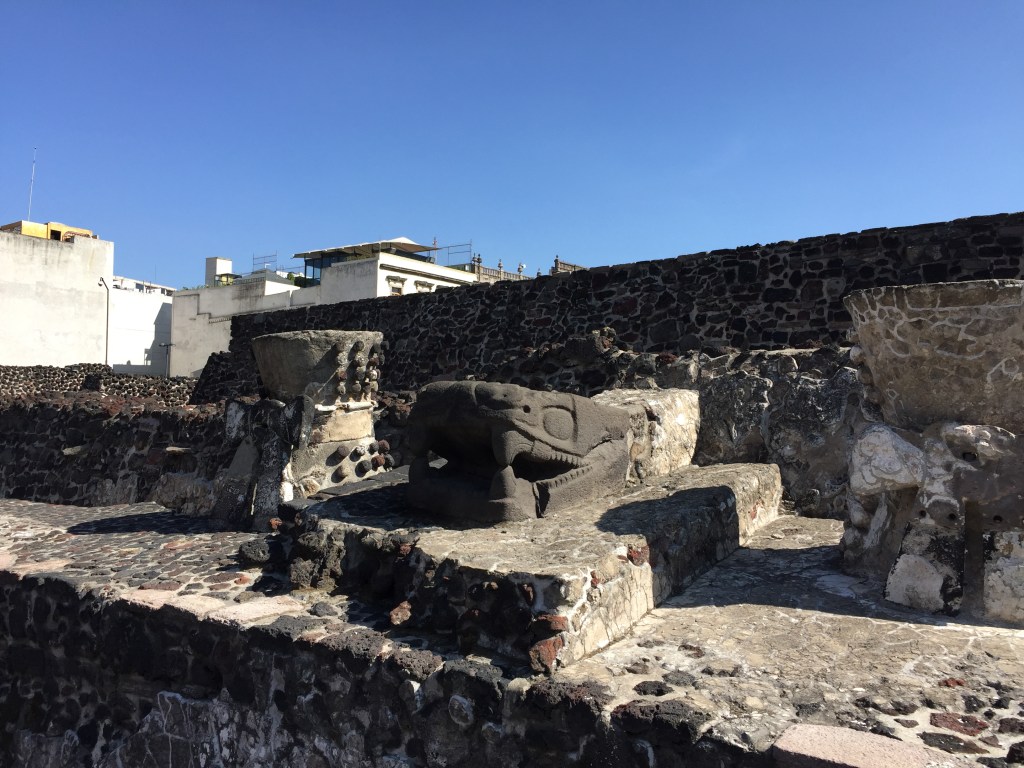
Templo Mayor
Once we have checked in, we set forth the explore the Centro Histórico. Our first stop is the Templo Mayor. This ancient Aztec temple site, believed by the Aztecs to be the centre of the Universe, was partially destroyed by the Spanish conquistadors in order to build their cathedral nearby. In 1978, municipal workers came across an Aztec carving and the colonial buildings were subsequently demolished in order to excavate the site of the temple.
Metropolitan Cathedral
The enormous 109 metre long Metropolitan Cathedral was constructed in the 16th Century by the Spanish conquistadors, using stone plundered from the Templo Mayor.
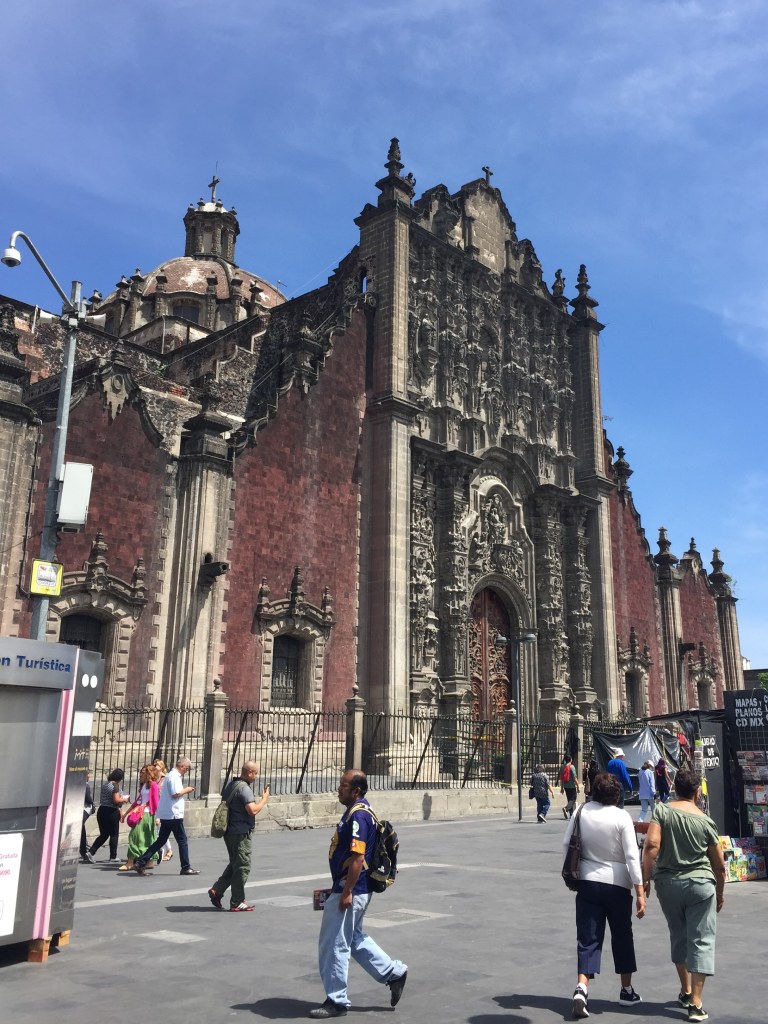
It is possible to visit the cathedral’s ornate interior if no service is taking place.
Zócalo
The Zócalo is the name of the enormous plaza (officially called the Plaza de la Constitución) which is lined by the Cathedral, the Palacio Nacional, various government building and high end hotels. In the middle is a huge Mexican flag, which is ceremonially raised and lowered daily and 8 am and 6 pm respectively. The plaza also has a Metro Station and some photo-op CDMX letters.

Torre Latino
From here, we walk along the Avenida Madero to the Torre Latino. This is a great place to start a visit to Mexico City, as you can enjoy a stunning city view and find your bearings at the same time.
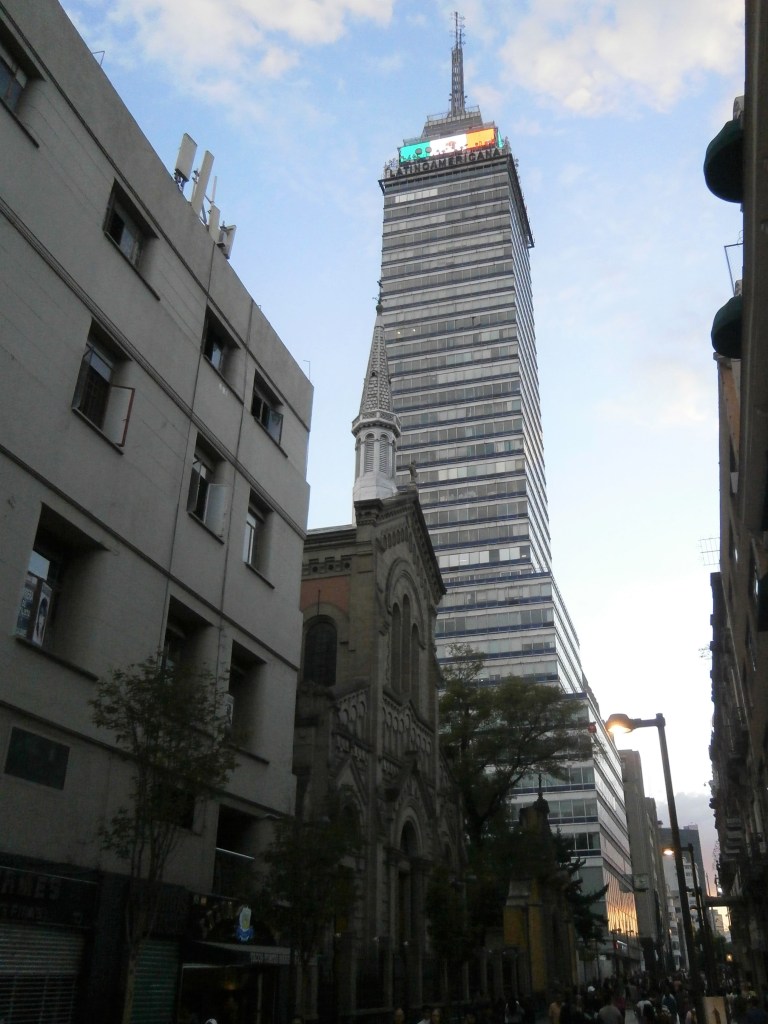
Standing 181 metres high, the tower was Latin America’s tallest building when it was built in 1956. There are observation decks on the 42nd to 44th floors and an interesting museum about the tower and the city on the 38th floor. There is also a café, bar and restaurant between floors 37 and 41.
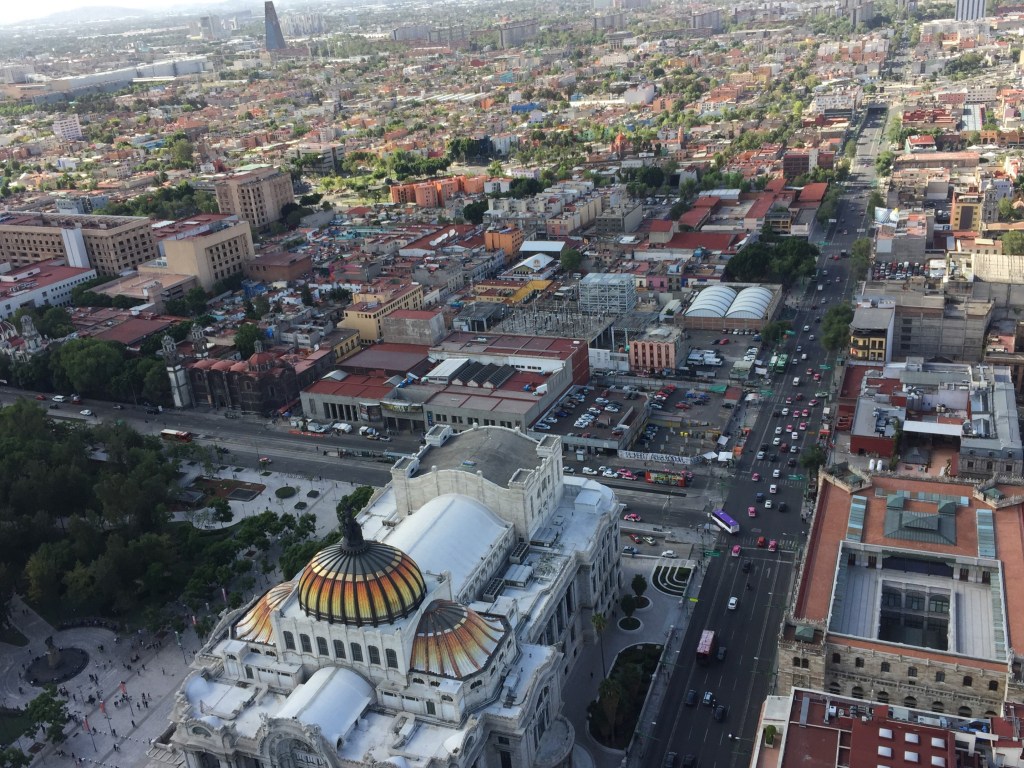
The tower is open daily from 9 am until 10 pm. There is a range of ticketing options, but basic entry costs M$220.
Alameda Central
The Alameda Central is a park next to the Palacio de Bellas Artes. The park is laid out in colonial style with plenty of trees, statues and fountains. It also has free WiFi. It’s a great place for a stroll or to rest on a shady bench a while.

Monumento a la Revolución
Our final stop of the day, further along the road (Avenida de la República) past the Alameda Central is the Plaza de la República. This large plaza is dominated by the Monumento a la Revolución, which contains the tombs of some of Mexico’s revolutionary heroes. A glass elevator Willy Wonka would be proud of takes visitors to an observation deck in the domed roof.

The Observation Deck is open daily from midday (10 am on Sunday) until 8 pm (10 pm on Friday and Saturday). Adult entry costs M$150.
Dinner at Salón Corona Bolívar
For dinner, we choose Salón Corona Bolívar, one of the many bars lining the streets of the old town. We order the cheesiest cheesefest imaginable, washed down (almost) with a few beers. I think it’s lovely sitting outside in the evening sun, watching the world go by as we eat. If it bothers you regularly being approached by traders and beggars, best to sit inside. Eventually, we are defeated by the cheese, give the leftovers to a passing beggar and waddle back to our hotel.

Mexico City Day 2
Today is a day of culture, focusing on visits to a museum and art gallery. There was initially another museum on our itinerary, but we ran out of time/steam.
Museo del Templo Mayor
We start at the Museo del Templo Mayor. Much of the site of the Templo Mayor can be viewed without entering the complex. However, it is worth a visit to the on-site museum to learn more about the history of the temple and see some of the artifacts discovered during excavations.
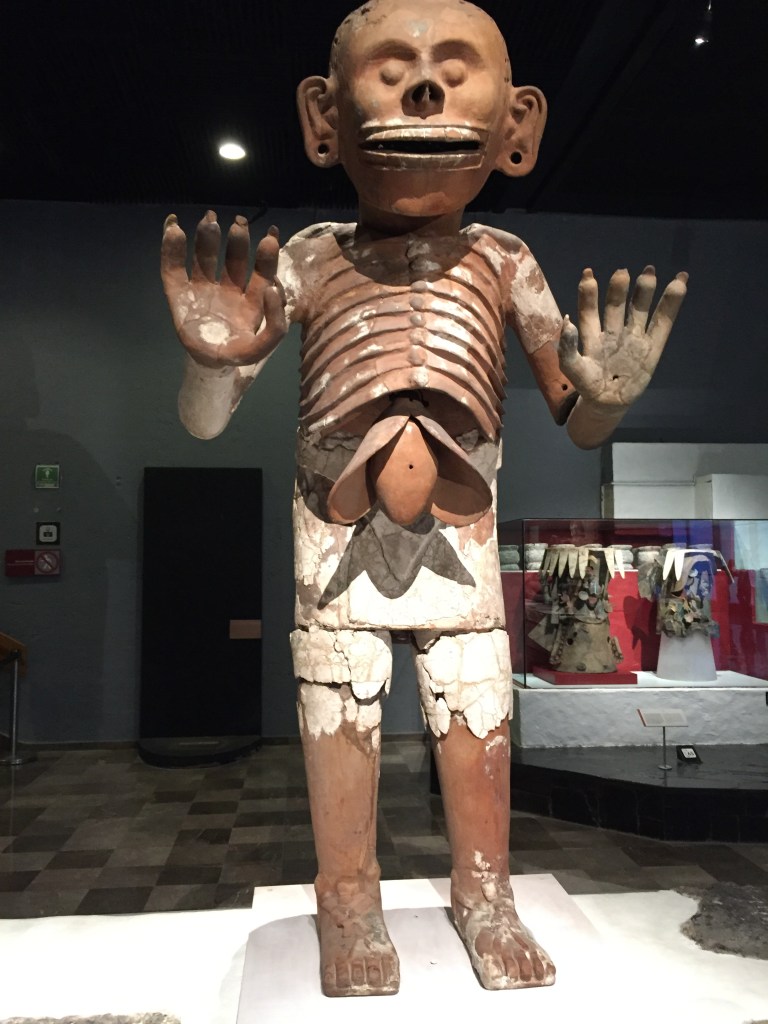
The museum is open daily excluding Monday from 9 am until 5 pm. Adult entry costs M$100.
Palacio de Bellas Artes
One of the highlights of our trip is a visit to the Palacio de Bellas Artes. Built at the beginning of the 20th century, this spectacular marble Art Nouveau building contains a collection of equally spectacular art.
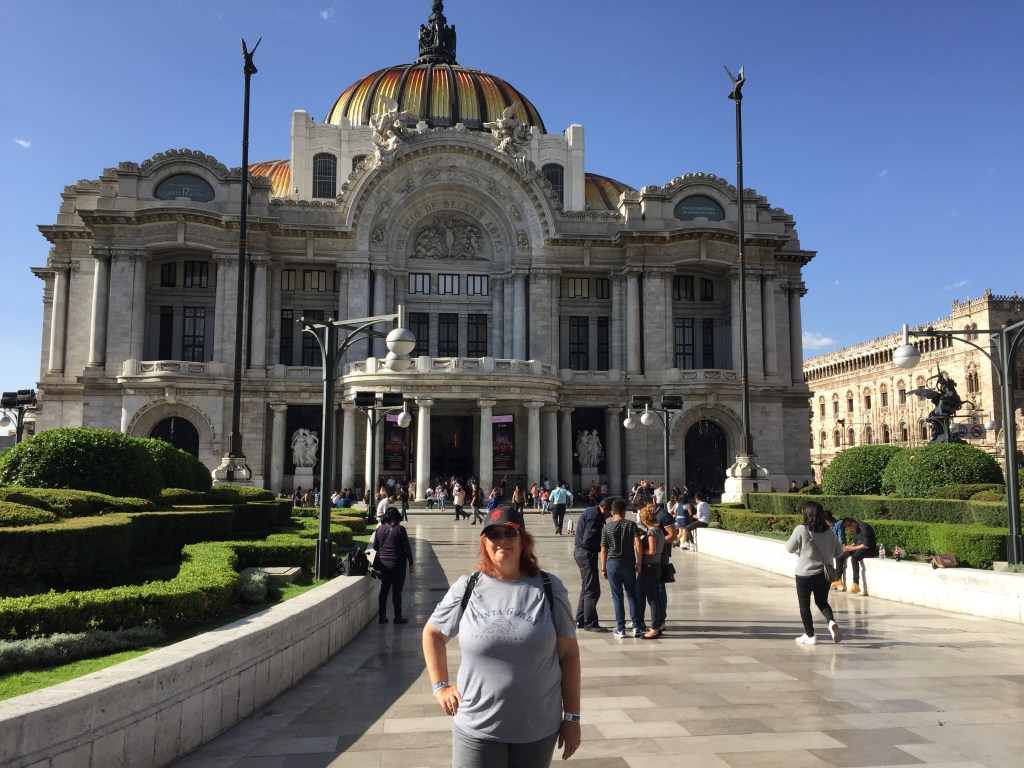
The highlight of the highlight is two floors of murals by prominent Mexican artists, including the enormous El Hombre en el Cruce de Caminos by Diego Rivera.
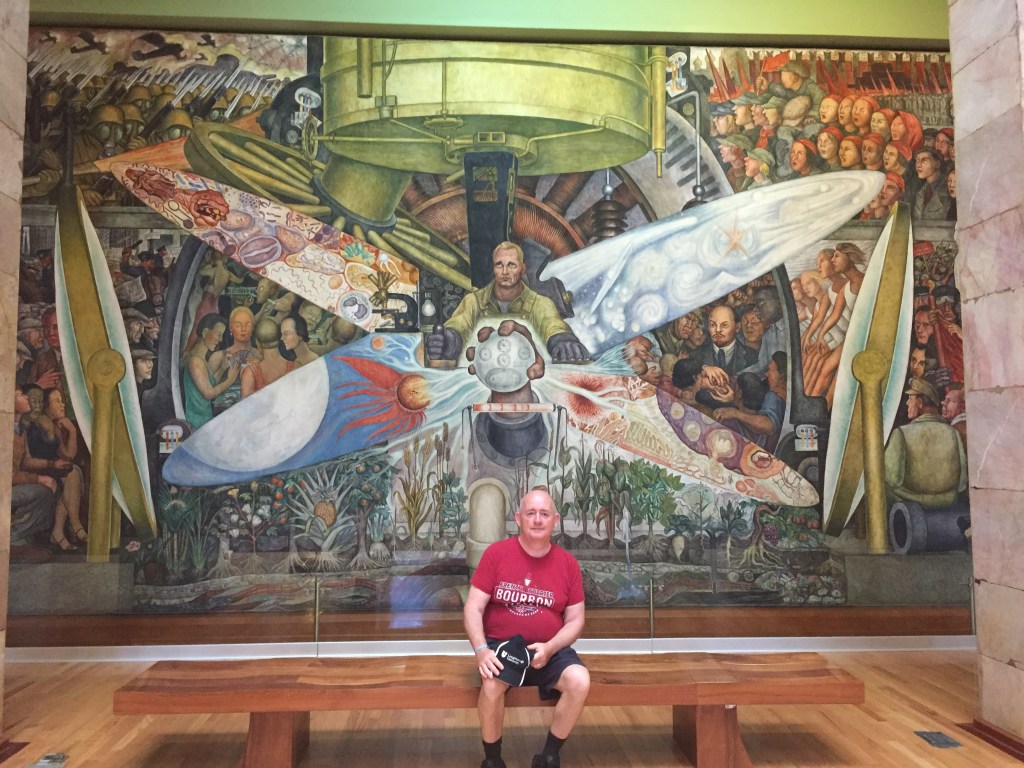
The gallery is open daily except Monday from 10 am until 6 pm. Adult entry costs M$95.
Angel of Independence
In the afternoon, we set off to visit the Castillo de Chapultepec. This is a straight walk down the Avenida Paseo de la Reforma with lots of interesting things to see along the way. However, it is about 3 miles. If you prefer not to walk so far, there is a Metro Station (Chapultepec) in front of the Castillo.
Half way along the avenue is the Angel of Independence. El Ángel is a winged angel sitting atop a 45 metre high pillar. It was erected in 1910 to commemorate a centenary of Mexican independence and contains tombs of some of Mexico’s revolutionary heroes.

Castillo de Chapultepec
The Castillo de Chapultepec sits on the top of a hill in a park known as Bosque de Chapultepec. As well as a castle, this huge park contains 9 museums, play areas, gardens, lakes, a zoo and over a hundred statues and fountains. The castle was built in the 18th Century for the Viceroy and is now home to the National History Museum.
We figure that one museum is enough for the day, so settle for a wander round the park before catching the Metro back to Zócalo.

If you can squeeze in one more museum, the National History Museum is open daily except Monday from 9 am until 5 pm. Adult entry costs M$100.
Dinner at Terraza at Gran Hotel Ciudad de México
Another highlight of our trip is dinner at Terraza – a restaurant on the fifth floor of the Gran Hotel Ciudad de México. Upon arrival, take some time admiring the hotel’s opulent interior before ascending to the restaurant on a balcony overlooking the Zócalo.
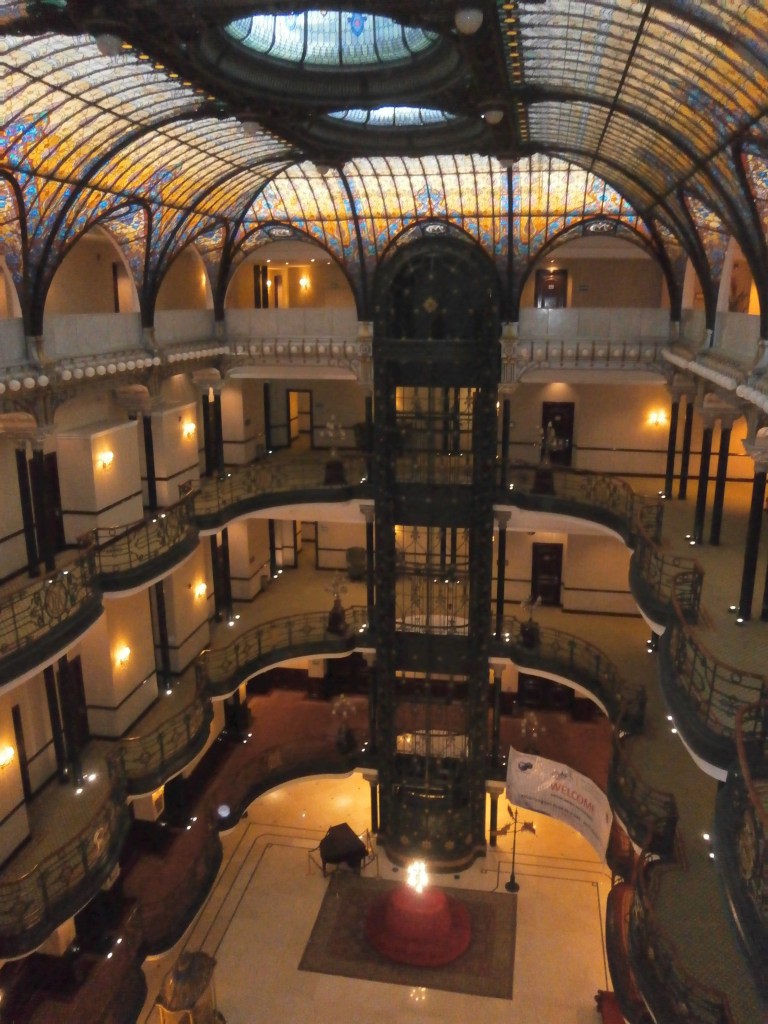
The food and the view over the city as the sun sets are equally spectacular.

Mexico City Day 3 – Day Trip to Teotihuacán
Today, we are taking an organised trip to Teotihuacán, which is situated around 30 miles north east of the city. It is possible to reach Teotihuacán by public transport (metro to Terminal Norte followed by a bus), but we decide it’s too much hassle and book a tour. The pros; door-to-door transport and a guide. The cons; it’s more expensive and a lot of time is spent at various stops devised to encourage shopping, rather than actual sites of interest.
There are several companies offering day trips to Teotichuacán. We went with Viajes Roldan. The package includes the three major stops listed below (Plaza de la Tres Culturas, Teotihuacán and the Basílica de Guadalupe) plus a few other shopping stops I won’t bother mentioning. It costs US$50 including a buffet lunch (US$35 without lunch).
Note: There isn’t much near to the restaurant where lunch is offered, so if you opt not to pay for the buffet, it’s probably best to bring a packed lunch to sit and eat outside the restaurant. The restaurant is not open on Mondays.
Plaza de las Tres Culturas
Our first non-shopping stop is the Plaza de las Tres Culturas; so called because buildings from three different cultures converge here; the Aztec pyramids of Tlatelolco, the 17th-century Spanish colonial Church of Santiago Tlatelolco and the modern Mexican Tlatelolco University Cultural Centre.

It is possible to visit the ruins of the pyramids. The Archaeological Site at Tlatelolco is open daily from 8 am until 6 pm. Entry is free.
Teotihuacán
After yet another shopping stop, we finally reach our actual intended destination of Teotihuacan. If you want to spend ages exploring the site at your leisure, a tour probably isn’t the best option, because the amount of time actually spent here is quite short. Our time here is divided between the two pyramids; the Pyramid of the Sun and Pyramid of the Moon.
Pyramid of the Moon
We start at the Pyramid of the Moon. This is the smaller of two pyramids, although as the ground between them is on a slope, they are technically the same height. In the past 1700 years, many millions of people have climbed the Pyramid of the Moon, most of them more gracefully than me!

Note: Since our visit, to preserve the site (and old ladies’ dignity?) it is no longer possible to climb the pyramids.
Pyramid of the Sun
The advantage of a tour is that the bus drives us between the two pyramids, (via a restaurant) which offers a welcome respite from the heat. Suitably refreshed and refuelled, we are dropped near the Pyramid of the Sun. This awe inspiring structure, measuring 71 metres high and containing 248 steps is the third largest pyramid in the world.
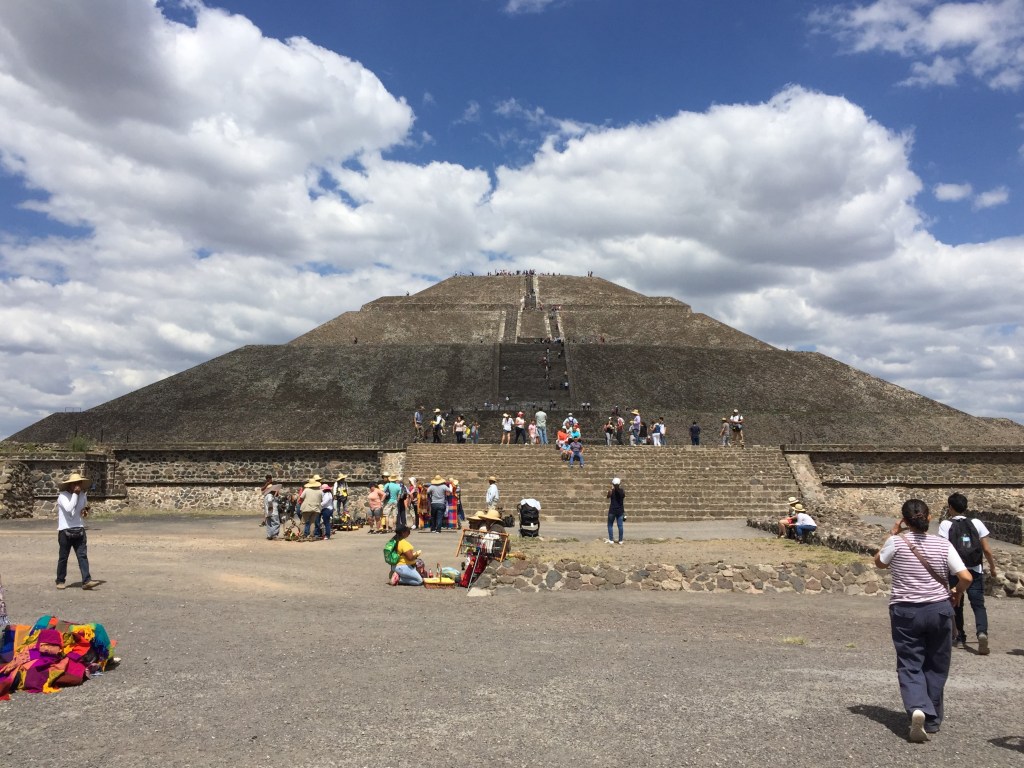
Teotihuacán is open daily from 8 am until 5 pm. Tickets cost M$100. If you’re part of a tour group, your ticket will be included and you won’t need to queue.
Basílica de Guadalupe
On the return into Mexico City, we stop at the Basílica de Guadalupe. According to legend, in 1531, a man claimed that the Virgin Mary appeared before him at the top of nearby Tepeyac Hill. Further alleged sightings and miracles led to an influx of pilgrims. In around 1700, a church was built on the site; the Basílica de Guadalupe.

As the building was unable to cope with burgeoning numbers, in the 1970s a new building was erected; the Basílica de Nuestra Señora de Guadalupe. Here, thousands of pilgrims are whisked past a picture of the Virgin Mary on a moving walkway and masses are held hourly.
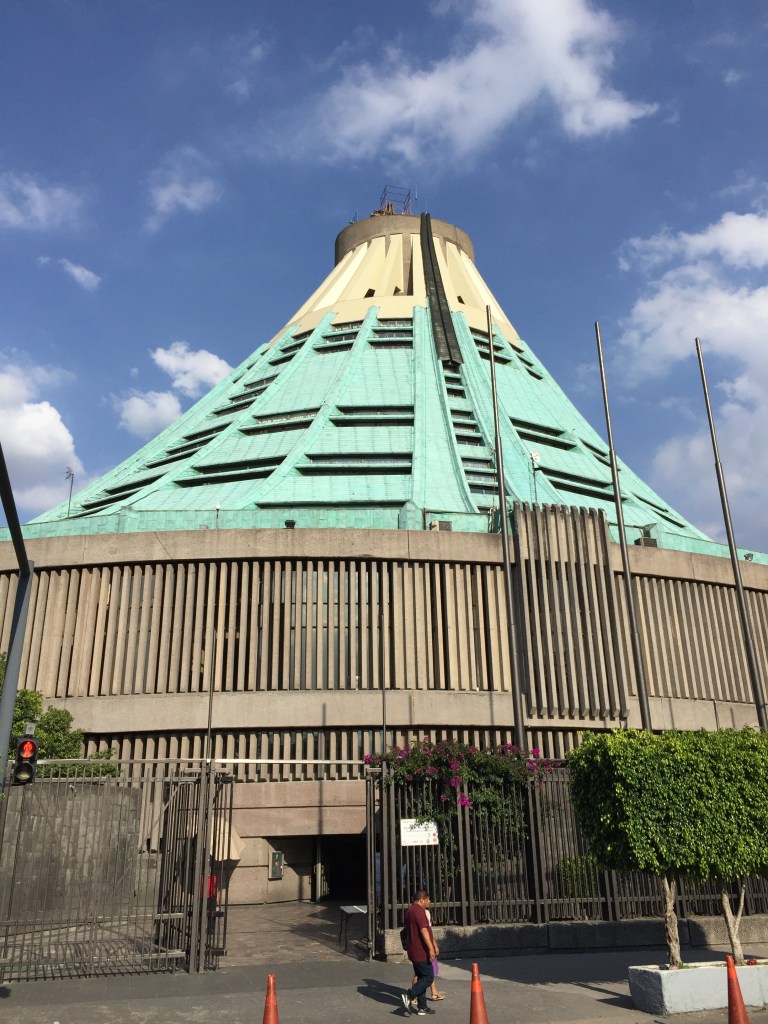
If you are travelling to the Basilica independently, it is located 4 miles north of the city centre. Metro Station La Villa/Basílica is nearby, serviced by Metro Line 6.
Dinner at La Parroquai de Veracruz
It’s been a long day, so dinner tonight is a quick stop at the café next door to our hotel; La Parroquai de Veracruz for beer and enchiladas.

Mexico City Day 4
Our final day in Mexico City is spent in Coyoacán visiting the former homes of some of the city’s most renowned residents. The suburb of Coyoacán is around 7 miles south of the city centre. Coyoacán Station is serviced by Metro Line 3.
Museo Trotsky
First, Museo Trotsky; the former home of communist revolutionary Leon Trotsky, who lived here after fleeing from Stalinist Russia. Trotsky came to Mexico in 1937. After a brief time as the guests of Frida Kahlo and Diego Rivera, the Trotsky family moved into their own house nearby.
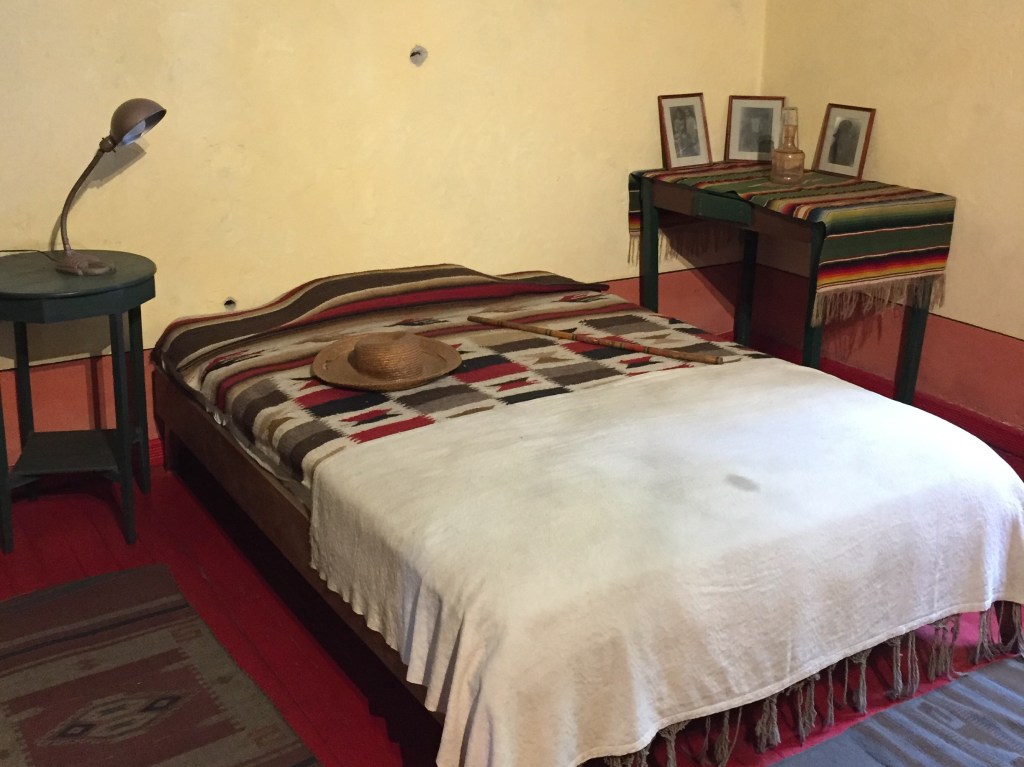
The house has been preserved as it would have been during this time and you can visit the rooms and see how the family lived. A failed assassination attempt left Trotsky’s room and his son’s adjoining bedroom riddled with bullets. Trotsky finally met his end when a Stalinist agent smashed in his head with an ice pick. There is a memorial containing Trotsky’s ashes in the garden.
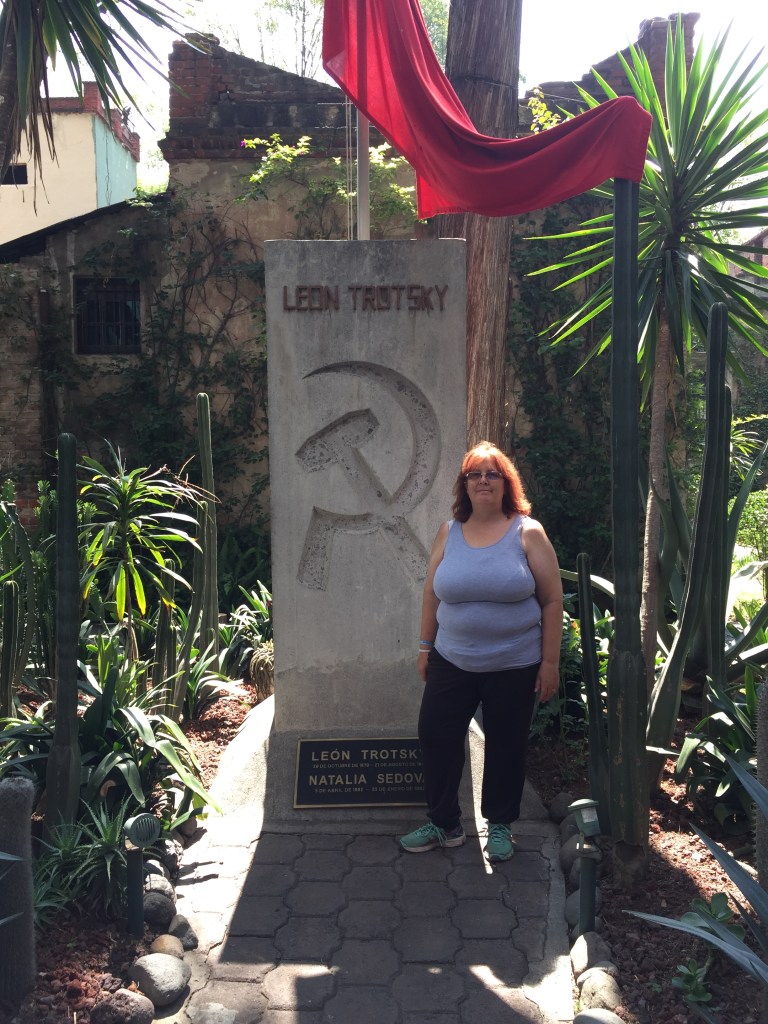
The museum is open daily except Monday from 10 am until 5 pm. Tickets cost M$40 for foreign adults.
Museo Frida Kahlo
The Museo Frida Kahlo is located in the Casa Azul, the former home of artist Frida Kahlo and her artist husband Diego Rivera. The house was built by Frida’s father and she was born, lived, worked and died here. You can visit the house, learn about Kahlo’s troubled life and see some of her work.

The museum is open daily except Monday from 10 am (11 am on Wednesday) until 6 pm. Tickets for adult foreigners cost M$320.
Palacio Nacional
One last stop before we depart for the airport; the Palacio Nacional. The 16th Century palace is the seat of government and the residence of the President of Mexico. However, it is probably most renowned for the stunning murals of Diego Rivera depicting the history of Mexico. Painted over a period of more than 20 years, the murals cover the entire first floor courtyard and tell the country’s history dating back to the Aztecs.

We were able to visit the palace at our leisure, however, private visitors are no longer allowed. Free guided tours are available daily except Monday between 10.30 am and 5 pm. Numbers are severely restricted, however it may to be possible to book a tour by emailing visitas_guiadas@hacienda.gob.mx.
- Trip taken: June 2017
- Updated: September 2025
I hope you found the above information useful. For guides to more destinations in the 50+ countries we have visited, check out my full list of Independent Travel Itineraries here.

 Jane's Midlife Journey
Leave a reply to Playa del Carmen in 5 Days – Jane's Midlife Journey Cancel reply