
We spent 8 days in Peru as part of our South American adventure, beginning with a trip to Cusco, starting point to visit the iconic Machu Picchu, one of the Seven Wonders of the Modern World. Followed by a few days on the coast on the outskirts of the capital, Lima.
Peru 1 Week Itinerary
| Bus to Cusco | |
| Day 1 | Cusco Accommodation – Tierra Viva Cusco Centro Centro Histórico Cusco Cathedral Iglesia de La Compañía de Jesús Plaza de Armas Plaza Regocijo Plaza San Francisco Dinner at Hanz Craft Beer & Restaurant Plaza de Armas by Night |
| Day 2 | Cusco – Circuit No 1 Sacsayhuamán Q’enqo Puka Pukara Tambomachay Santo Domingo Dinner at Los Toldos Chicken |
| Day 3 | Machu Picchu Pueblo Train to Machu Picchu Pueblo Accommodation – Tierra Viva Machu Picchu Machu Picchu Pueblo Dinner at Mapacho |
| Day 4 | Machu Picchu Bus to Machu Picchu Machu Picchu at Dawn Inca Bridge Temple of the Three Doorways Temple of the Condor Lunch at Chef House Train to Cusco |
| Day 5 | Lima Flight to Lima Accommodation – Tierra Viva Miraflores Mendiburu |
| Day 6 | Lima Museo de Arte de Lima Basilica la Merced Plaza Mayor Lima Cathedral Archbishop’s Palace Government Palace Basilica de Santo Domingo Convento de San Francisco Dinner at Rasson |
| Day 7 | Lima (Miraflores) Malecón Lunch at Buenavista Café Parque del Amor Larcomar Parque Kennedy Dinner at Bao? |
| Day 8 | Lima (San Isidro) Lugar de la Memoria, la Tolerancia y la Inclusión Social Parque Bicentenario Municipal Market Dinner at Todo Meyor |
Bus to Cusco
It’s early start as we head to El Alto Airport for our 10 am flight to Cusco. At almost 3 miles above sea level, I’m not looking forward to spending time here. It turns out I don’t have to. Our flight on Peruvian Airlines has been cancelled. I say cancelled – the airline ceased operating following a crash. The only other flight to Cusco today is fully booked. We can come back tomorrow, but it will cost $828. We contact our travel agent, who suggests we purchase overnight bus tickets. I’m not happy (understatement). But there isn’t really an option, so we get a taxi back to La Paz Bus Station which, incidentally, was designed by Gustave Eiffel.
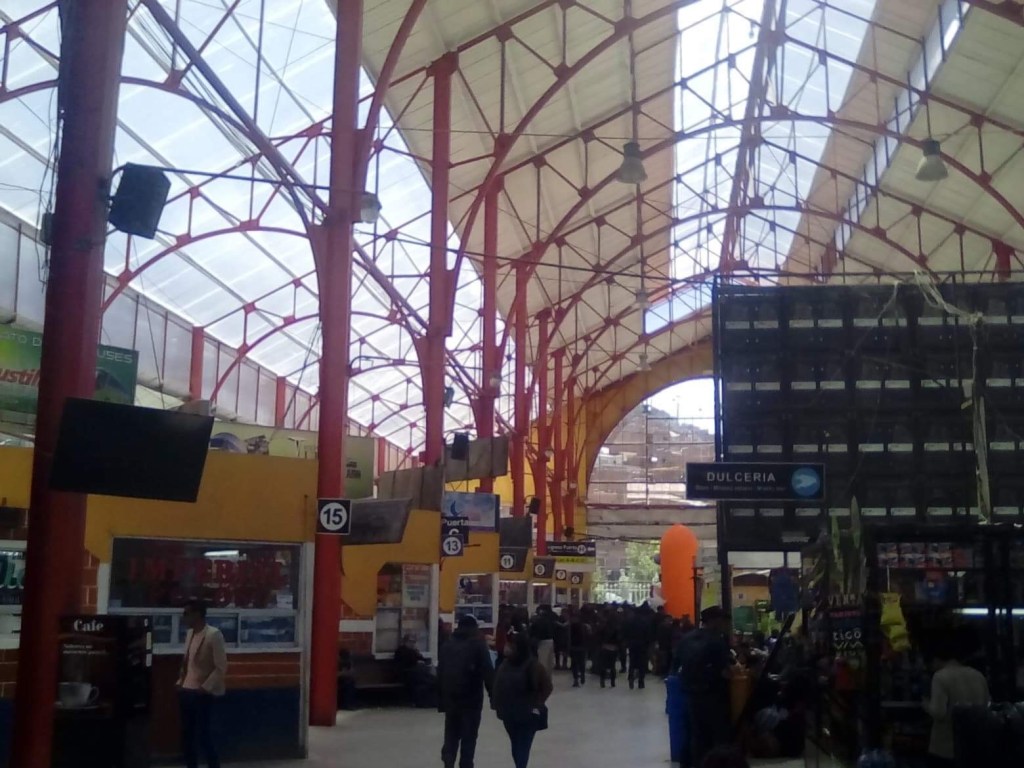
There’s no central reservation system, just lots of little kiosks selling tickets for their own particularly companies. I wander around trying to find something suitable, amongst a lot of Bolivian police dressed in dog costumes – yes really! There are no direct services available, but we are able to catch a local bus to Copacabana and then an overnight bus from there.
At 1.30 pm we crawl out of La Paz (again) in a huge cloud of diesel smoke, luggage bouncing precariously on the roof. And by 1.45 pm we have stopped by the roadside for repairs. We set off again for Copacabana (which we visited earlier in the week); highway over the plain, ferry across the lake, winding road through the mountains. The lake is much choppier than before. There are a few nervous moments, when I can see the raft containing the bus, containing my suitcase, containing all my belongings taking on water and I fear I’m going to have to wear the same pants for the next 19 days. At least I’m not on the raft – then I’d need new pants straight away!

We arrive in Copacabana at 5 pm, which gives us just enough to complete the requisite paperwork, buy some empanadas and board the second bus for a 6 pm departure.

After the rickety wreck that brought us thus far, we are pleasantly surprised to find that our second bus is actually really nice with comfortable reclining seats, heating, blankets etc. It only takes 30 minutes to reach the Peruvian border, then another 30 minutes for everyone to clear immigration.

After a quick photo op, we reboard our bus and lay back and relax (as much as is possible on bouncy mountain roads) for the final 11 hours of our journey.

Peru Day 1 – Cusco
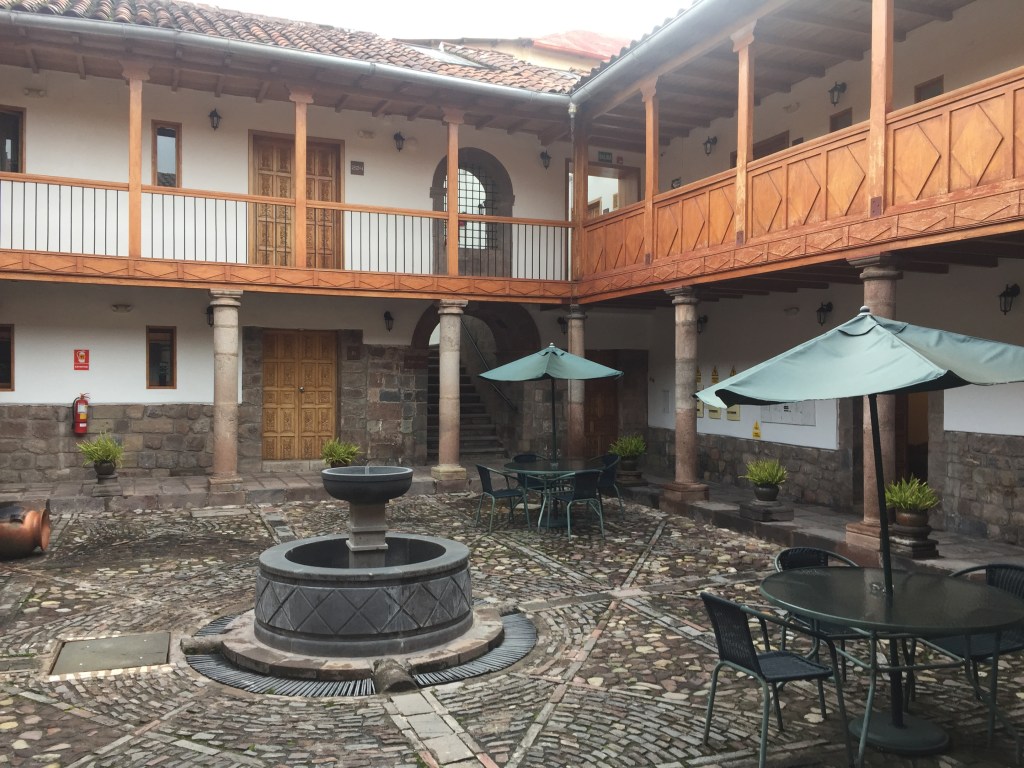
Accommodation – Tierra Viva Cusco Centro
We finally reach Cusco just before 6 am. It has taken 24 hours, 3 taxis, 2 buses and a ferry. We are tired, hungry, thirsty and smelly, so it’s a relief to check in to our hotel; Tierra Viva Cusco Centro in time for breakfast and a much needed shower.
Centro Histórico
After we have regrouped, we go for a wander round Cusco’s Centro Histórico. It’s very pretty with cobbled streets, plazas and plenty of old churches and other buildings, although it’s hard work dodging the hundreds of tourists and touts and vendors. Especially as my back has not coped well with the 17 hour bus journey.
Cusco Cathedral
Right in the centre is the imposing Cusco Cathedral. Its origins date back to the 16th Century, although construction took almost a century to complete. Building materials include blocks taken from a local Inca site.
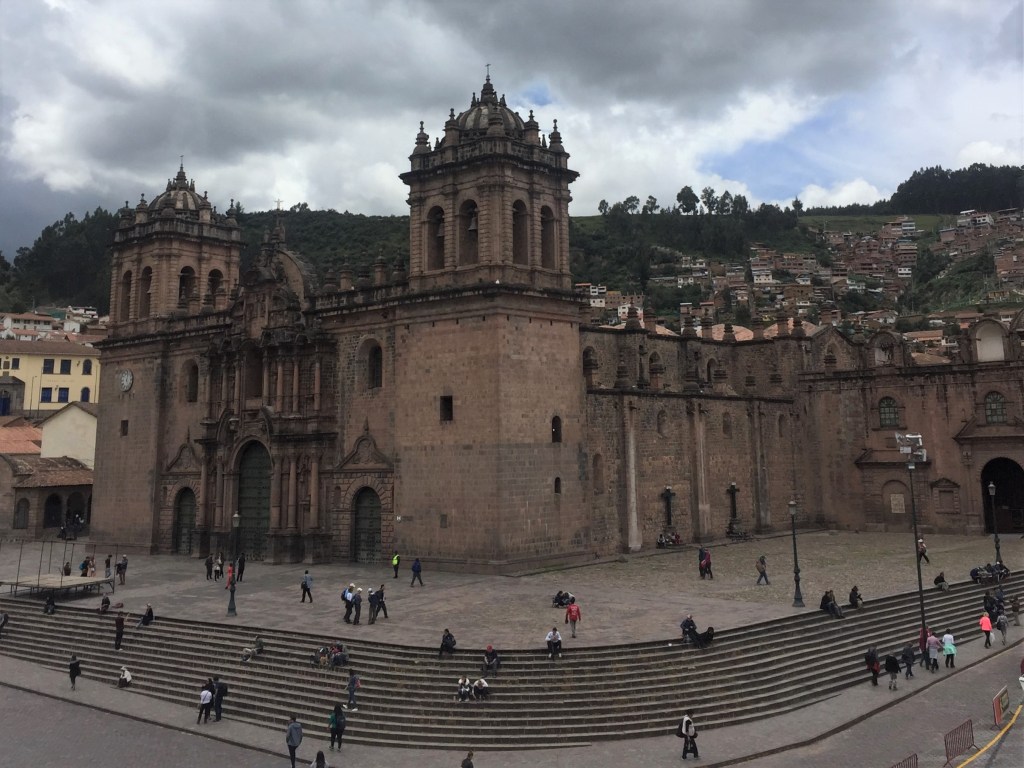
The cathedral is open daily from 10 am until 6 pm. Entry costs 25 soles (around £5.40).
Iglesia de La Compañía de Jesús
Across the square is the equally grand Iglesia de La Compañía de Jesús, also dating from the 16th Century. You can climb a flight a steps for a spectacular view across the Plaza de Armas to Cusco and beyond.
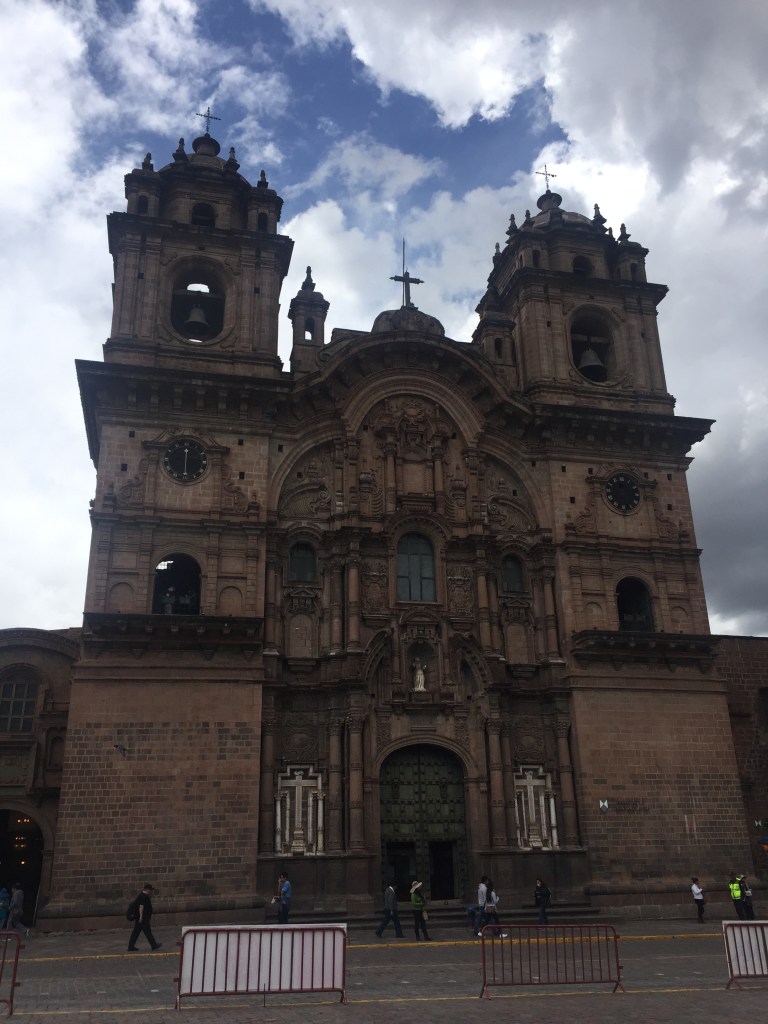
The church is open daily from 9 am until 11.45 am. From Monday to Friday it opens again in the afternoon from 1 pm until 5.45 pm. Entry costs 20 soles (around £4.30).
Plaza de Armas
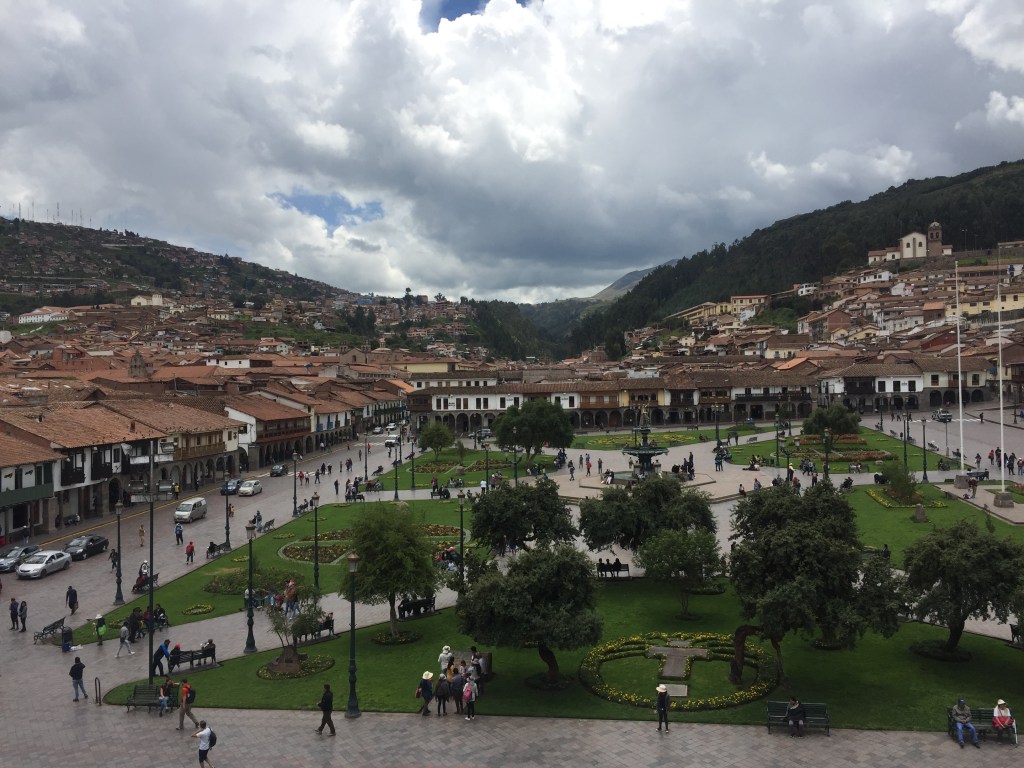
The main square, the Plaza de Armas is a pretty square with trees, flowers and benches surrounding a fountain.
Plaza Regocijo
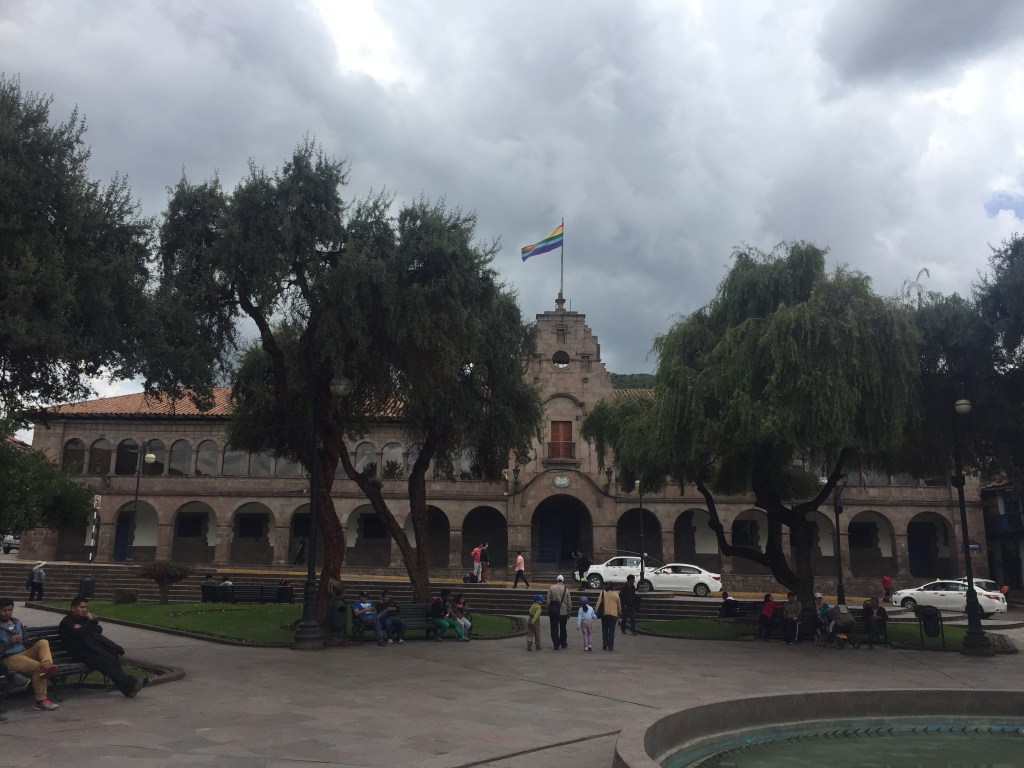
To the west of the Plaza de Armas is another pretty square; the Plaza Regocijo. Here, you will find the museum and the contemporary art museum.
Plaza San Francisco
To the west, another square, Plaza San Francisco is overlooked by the imposing Iglesia San Francisco.

Dinner at Hanz Craft Beer & Restaurant
We round the day off with dinner at Hanz Craft Beer & Restaurant, which scores very highly on TripAdvisor. It has good food and excellent beer, but the prices are more than I’d pay in the UK – 32 soles for a beer! What’s that all about?
Plaza de Armas by Night
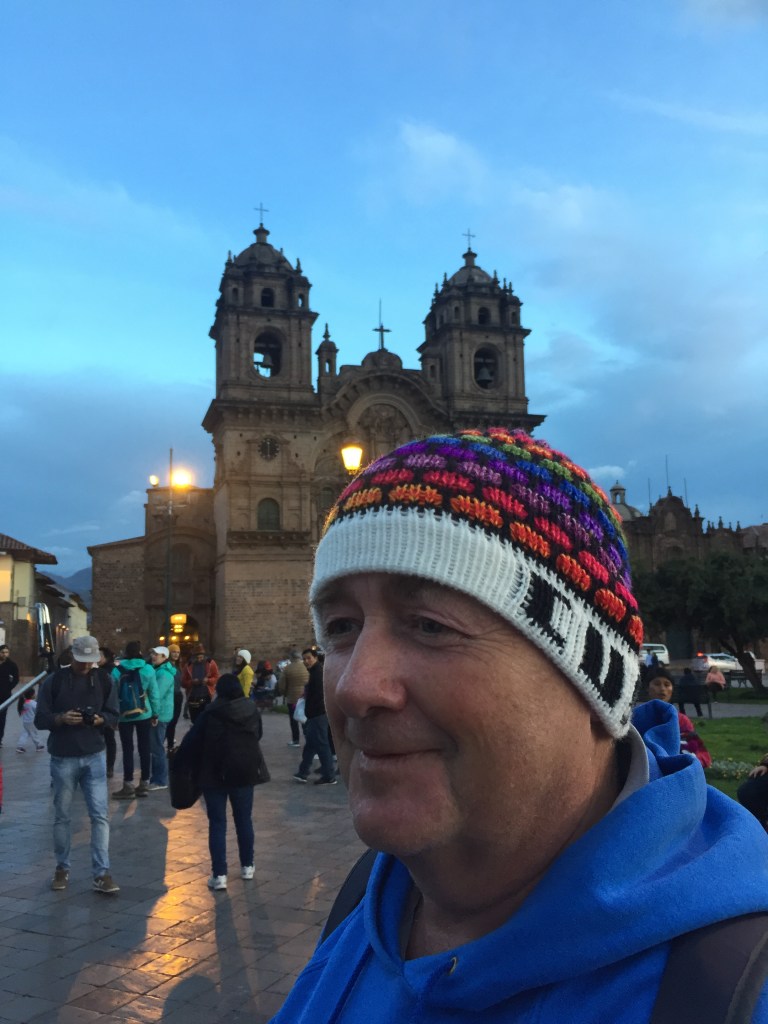
We walk back through the Plaza de Armas. At night, the atmosphere is buzzing. A succession of folk dance groups perform with hordes or tourists stopping to watch, whilst dozen of vendors try to sell their wares.

The old man can’t resist buying a woolly Cusco hat. We return to the hotel with me pretending not to know him.
Peru Day 2 – Cusco (Circuit No 1)
Today, we are going on an organised tour of archaeological sites on the outskirts of Cusco. Entry tickets are sold in packages, so you can’t pay to visit just one site. Instead, you must purchase a Tourist Ticket, which gives you access to all attractions. Or choose between Circuits 1, 2 and 3. A Tourist Ticket costs 130 soles (around £28) or a ticket for Circuit 1, 2 or 3 costs 70 soles (around £15).
We opted for Circuit No 1, which gives access to four archaeological sites located within the Sacsayhuamán Archaeological Park. (Circuit No 2 covers sites in the Southern Valley, while Circuit 3 covers the Sacred Valley of the Incas).
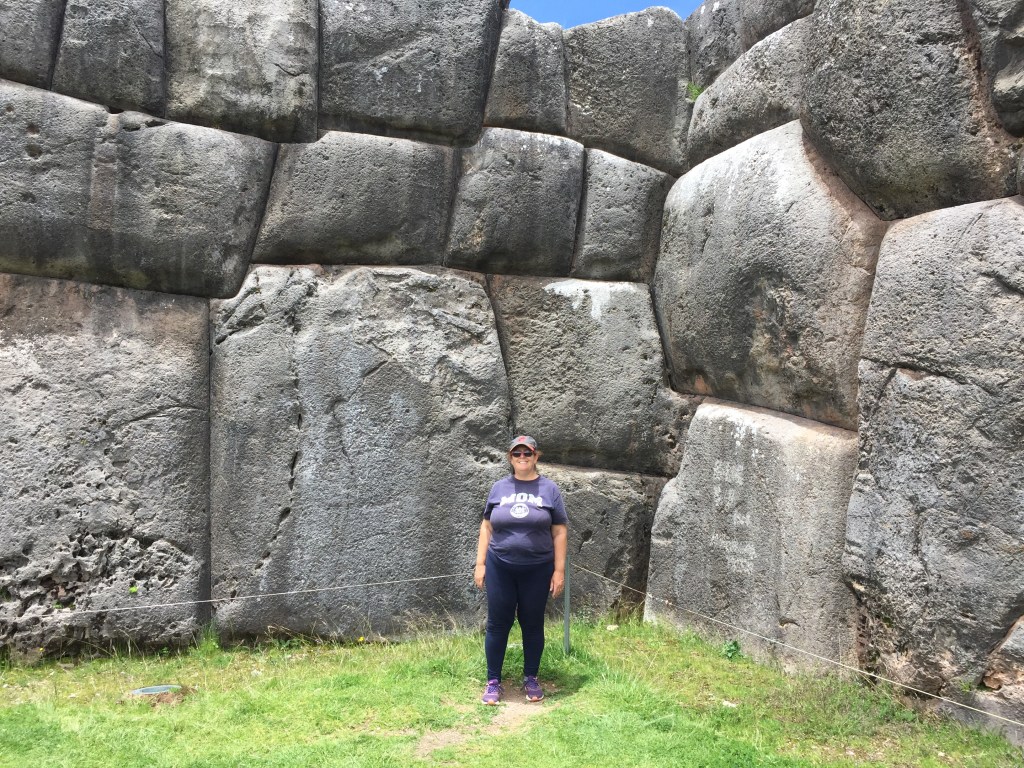
Sacsayhuamán
Our circuit starts with Sacsayhuamán.
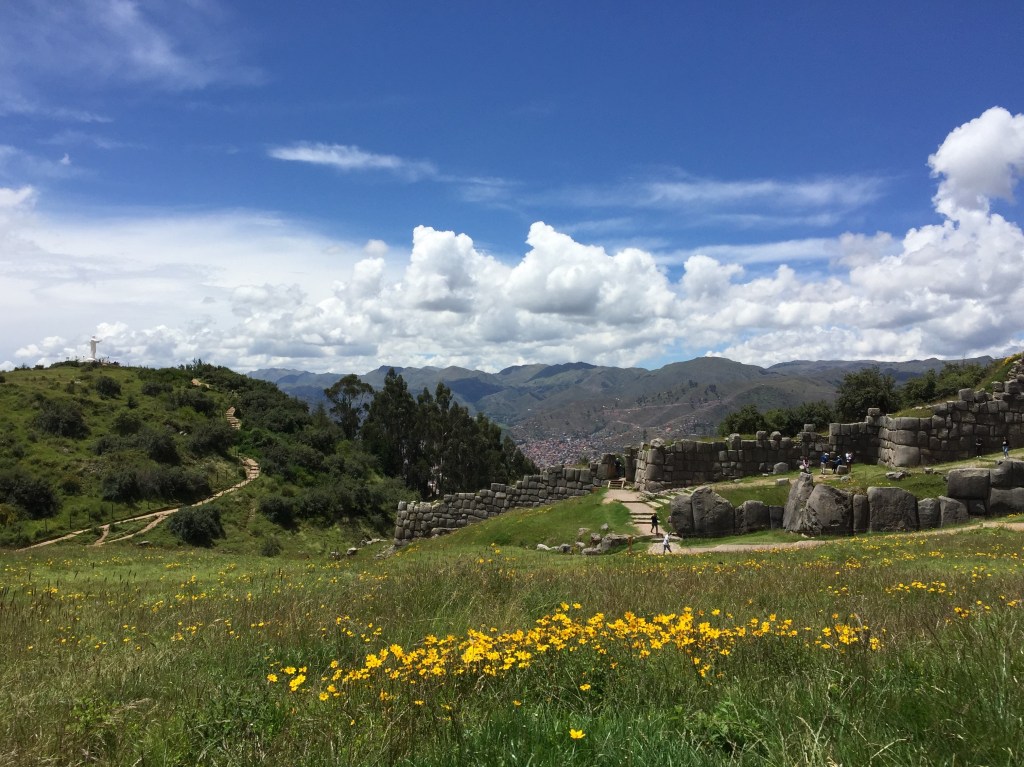
This is the bottom part of an Incan fort – the Spanish removed the top part to build their cathedral.
Q’enqo
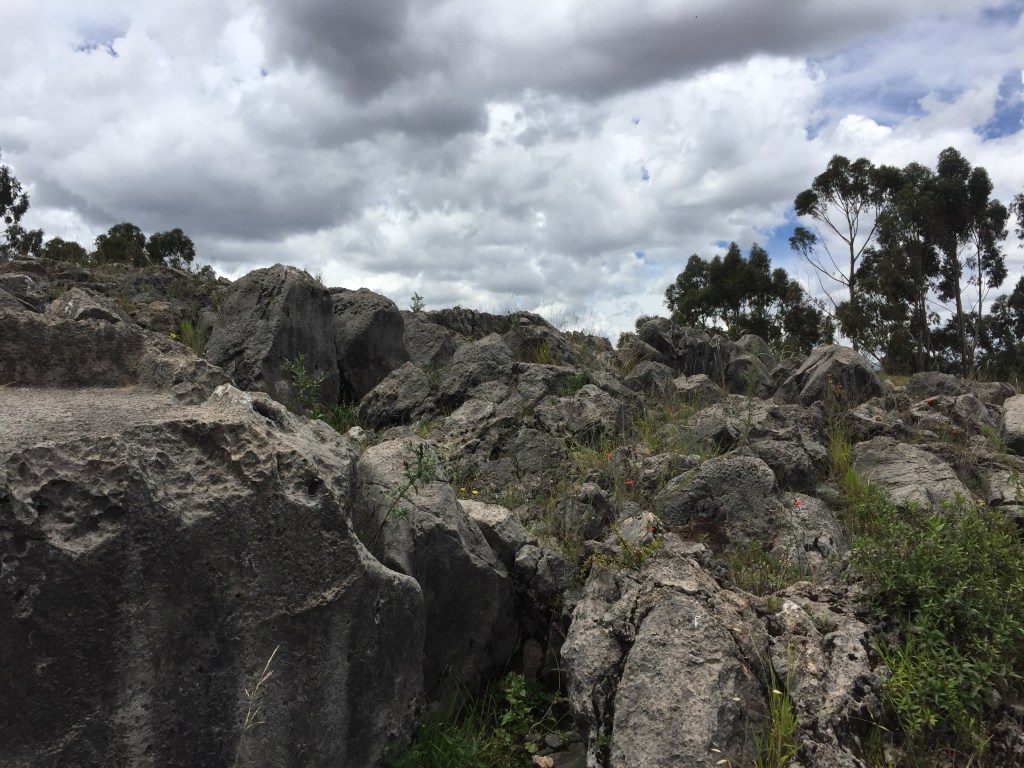
Next stop, Q’enqo – an ancient temple fashioned in a rock formation.
Puka Pukara
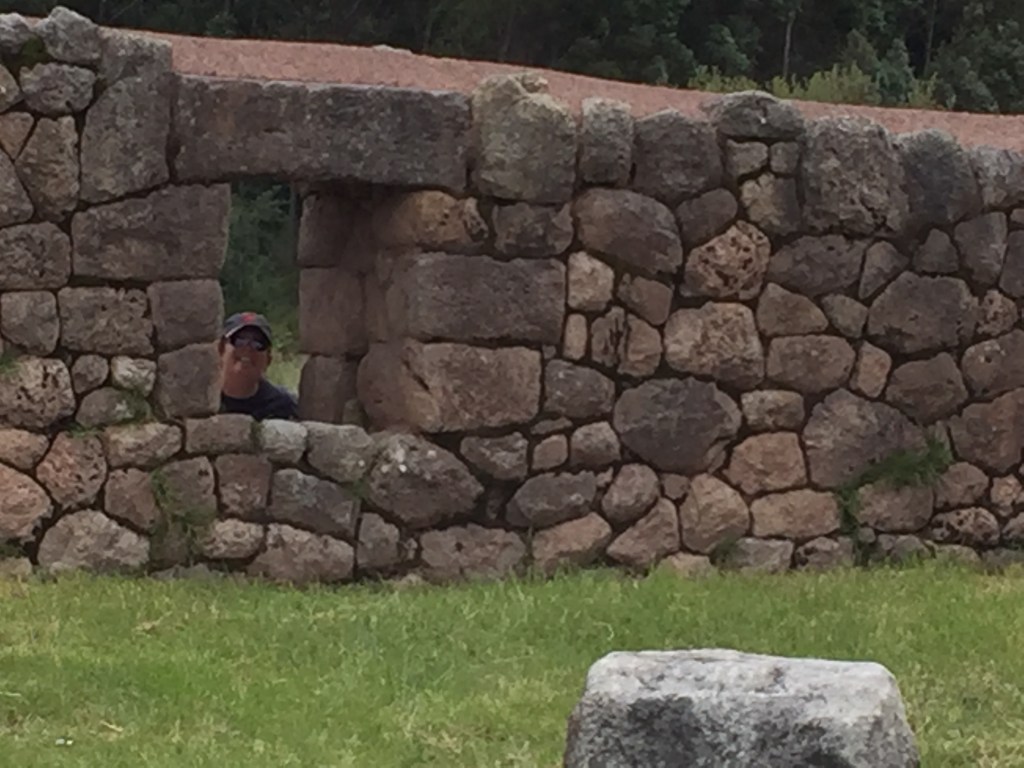
On to Puka Pukara, the ruins of an Incan military site.
Tambomachay
Finally, Tambomachay, an Incan baths complete with aqueducts and waterfalls.

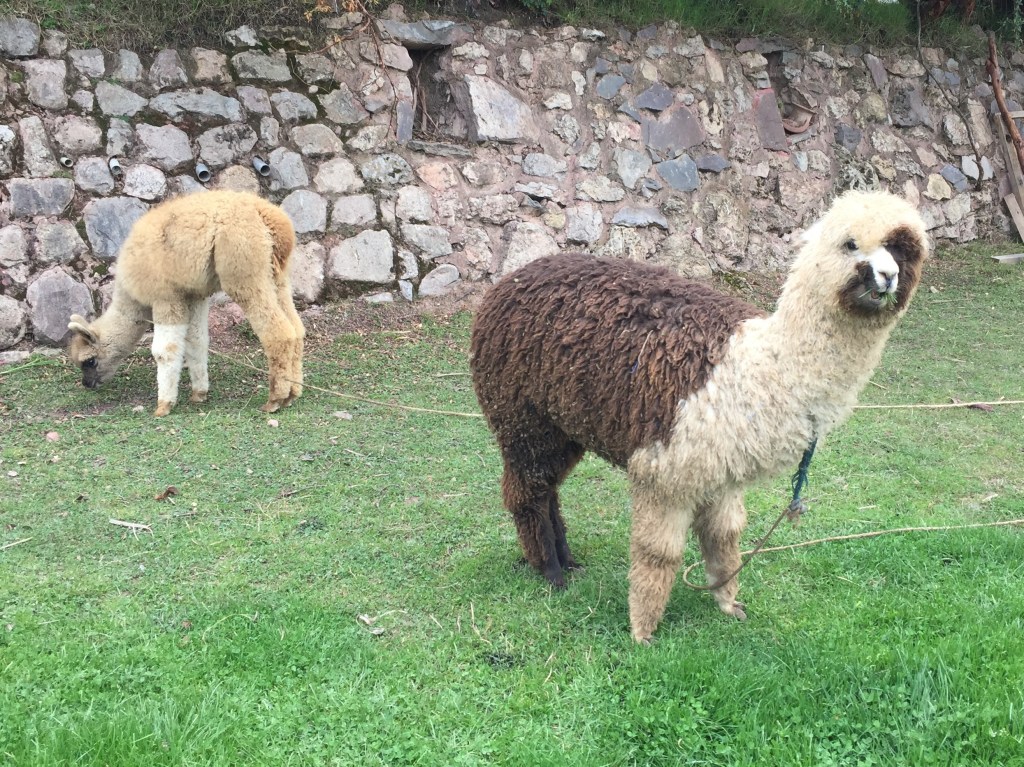
And, of course, the obligatory stop at a gift shop which specialises in llama wool products.
At the end of the tour, we are dropped off at the edge of town and have to walk back to the main square. It’s carnage. It’s carnival – this basically means that everyone has either a can of foam or a water pistol and we have run this gauntlet to get back to our hotel; pedestrians, people hanging out of car windows, people on balconies all attack as we walk by.
Santo Domingo
We pass by the church and convent of Santo Domingo, which were built in the 16th Century over the Incan site of Qorikancha.

Dinner at Los Toldos Chicken
In the evening, we brave the carnage once more in search of food. We avoid the main square and go to a chicken restaurant nearby; Los Toldos Chicken. In addition to chicken and chips, there is a salad bar. I’m excited. When travelling, it can be difficult to eat healthily. I take plenty of salad. It is laced with masses of chilli. I’m almost floored by a salad. The rest of the food is very good, though.
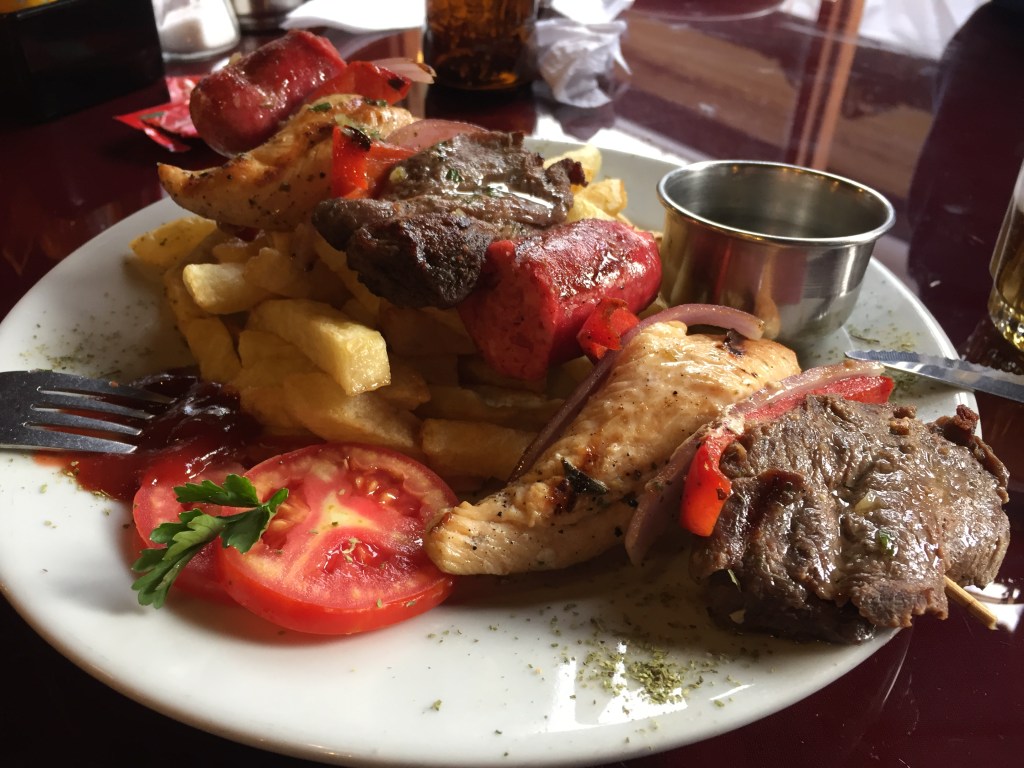
We eat our dinner whilst watching gangs of youths hunt each other down in foam warfare. Eventually, we have to leave the restaurant and brave a return up the hill to the hotel, stopping briefly to listen to a band which has set up on the pavement nearby.
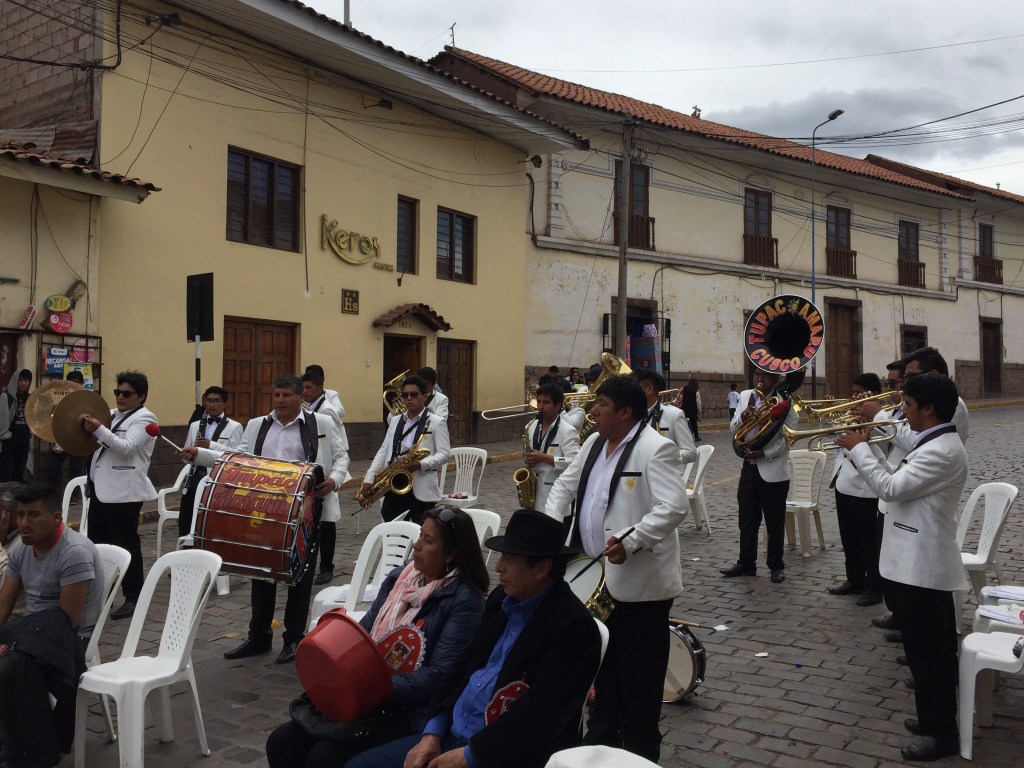
Then it’s an early night as we have to be at the station by 6 am for our train to Machu Picchu – although it’s not easy to sleep with a brass band outside the window!
Peru Day 3 – Machu Picchu Pueblo
Train to Machu Picchu Pueblo
Today, we are taking the train to Machu Picchu Pueblo. I’m looking forward to this for two reasons; (1) it’s the start of our visit to Machu Picchu, one of the Seven Wonders of the Modern World and (2) it’s only 2000 metres above sea level, that’s a mile lower than anywhere we’ve been in the past ten days.
Train tickets aren’t cheap – we’ve paid almost £300 – yet a big chunk of the journey consists of a bus replacement service due to mudslides making the track impassable. We leave at 6.15 am, taking a bus to Ollantaytambo 50 miles away. I’m surprised how much of the bus journey involves climbing (most of the first hour, in fact). After an hour, we stop for a comfort break at a viewpoint amidst the snow capped mountains.

Then we reboard the bus and begin to descend. An hour later we arrive at Ollantaytambo Station to board our train. It’s chaos; a group of elderly American cruise passengers are wandering up and down the tracks while the train is trying to pull in.

Eventually, the elderly are sufficiently restrained for boarding to commence. It’s a nice train (ought to be for that price) with panoramic windows to the side and in the roof.

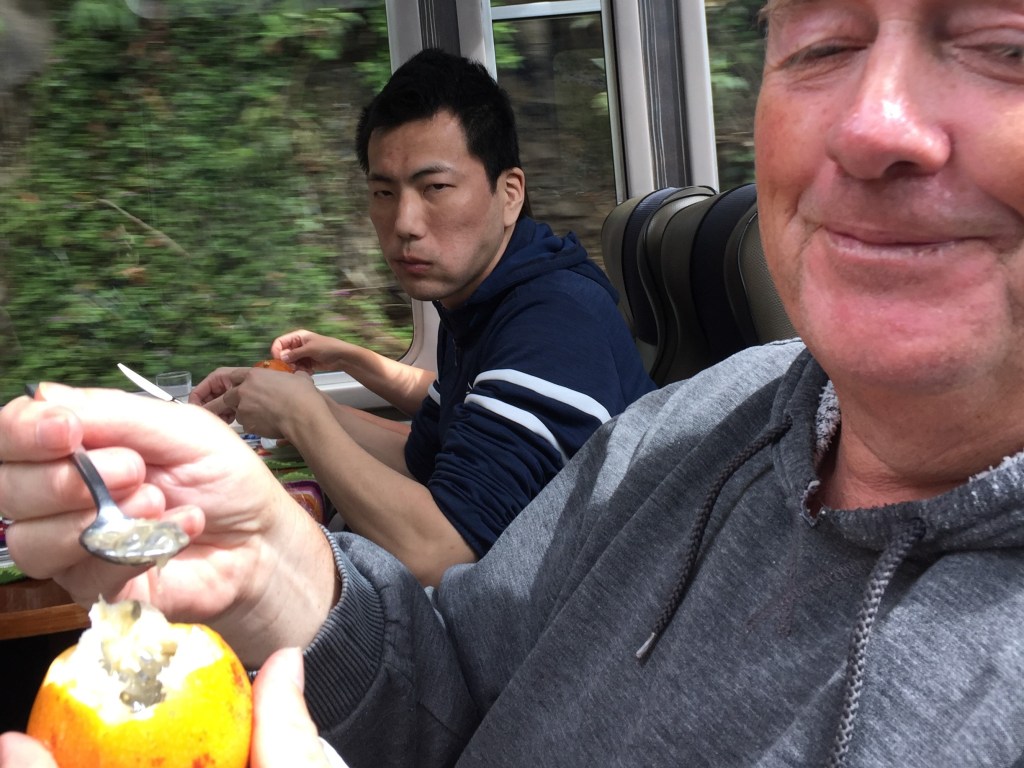
Th train makes its way down through the Sacred Valley alongside the raging Urubamba River to Machu Picchu Pueblo. We hug the riverbank with mountains rising steeply on either side. The scenery is amazing. On the far bank, we can see hikers following the Inca Trail. We are served a sandwich and a weird fruit whilst listening to Andean pipe music. The old man’s attempt to gain entry to his fruit becomes a spectator sport for surrounding passengers.
Accommodation – Tierra Viva Machu Picchu
We reach our destination and walk along the river to our hotel; Tierra Viva Machu Picchu. The river dominates everything – the noise is deafening. Luckily, the hotel is well insulated.
Machu Picchu Pueblo
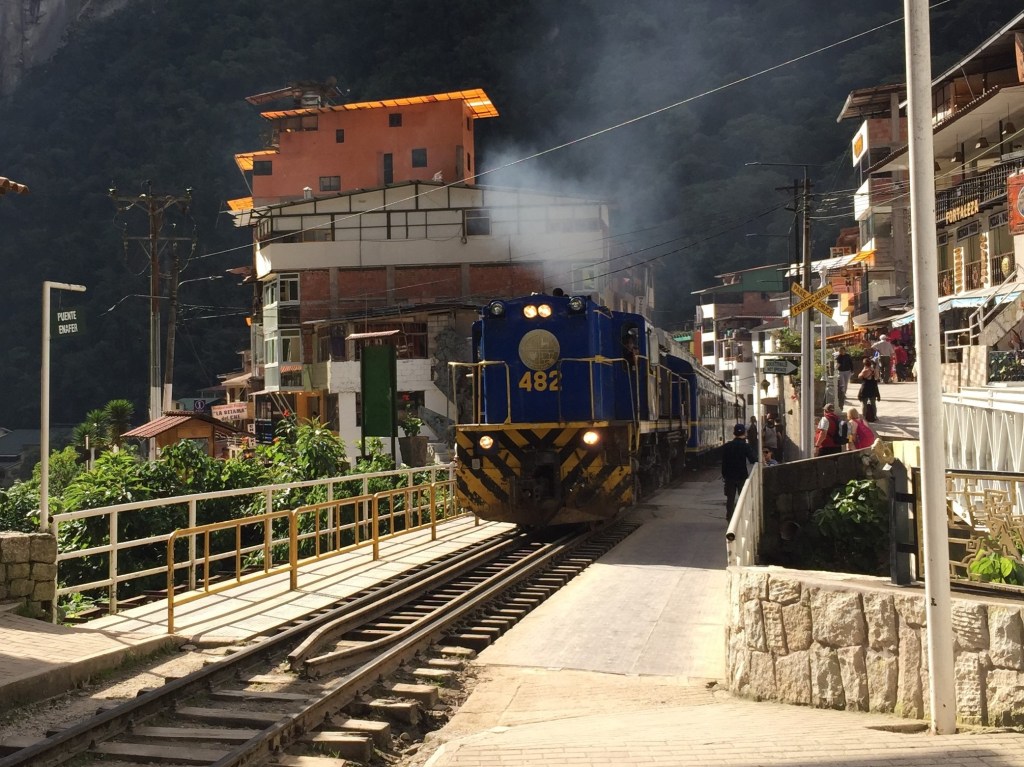
After checking in, we take a walk round Machu Picchu Pueblo. It’s not very big, just a few rows of restaurants and an artisanal market to service tourists passing through to the main attraction.
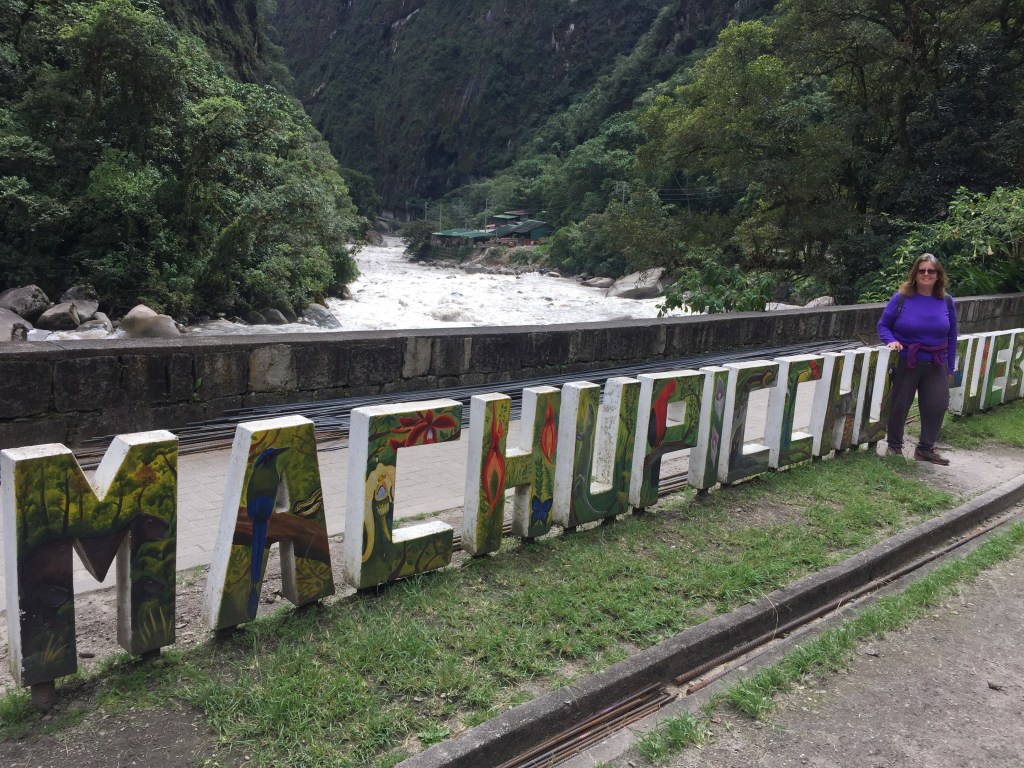
Oh, and a railway line, which runs right down the middle of the main road. We purchase the three essentials of any trip; beer, postcards and a fridge magnet before going in search of dinner.
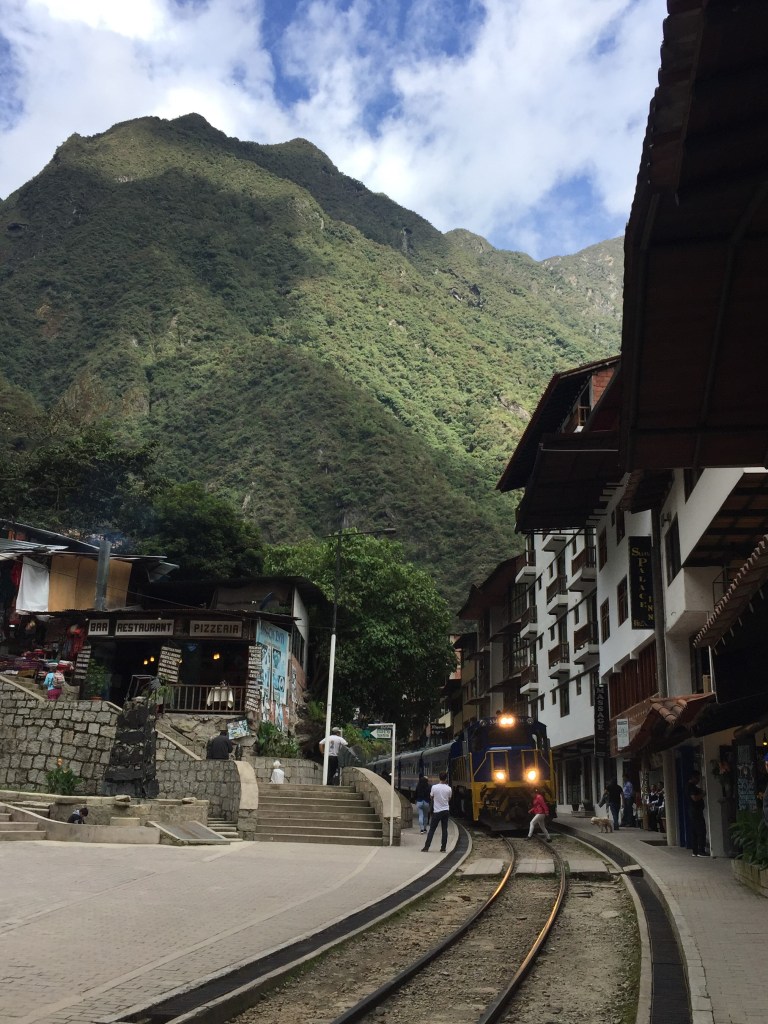
Dinner at Mapacho
We find a riverside restaurant for dinner; Mapacho. The building actually vibrates with the power of the water rushing past. Every now and then, the noise and vibrations multiply as another train rattles by. But the view is spectacular and the food is amazing; the ají de gallina (chicken in a yellow chilli sauce) is to die for.

Then it’s back to the hotel for another early night. We have Machu Picchu tickets for 6 am tomorrow.
Day 4 – Machu Picchu
Today we are going to Machu Picchu. We have to get up at 5 am. I would be flagging, apart from the fact that the drop in altitude has rejuvenated me.
Visiting Machu Picchu isn’t cheap, we paid; train £268, hotel £73, entry £86 and bus to the entrance £37. That’s £453 for a 4 hour visit. And that doesn’t take into account the the cost of getting to Peru, or the cloning of our credit card whilst purchasing the tickets!
Bus to Machu Picchu
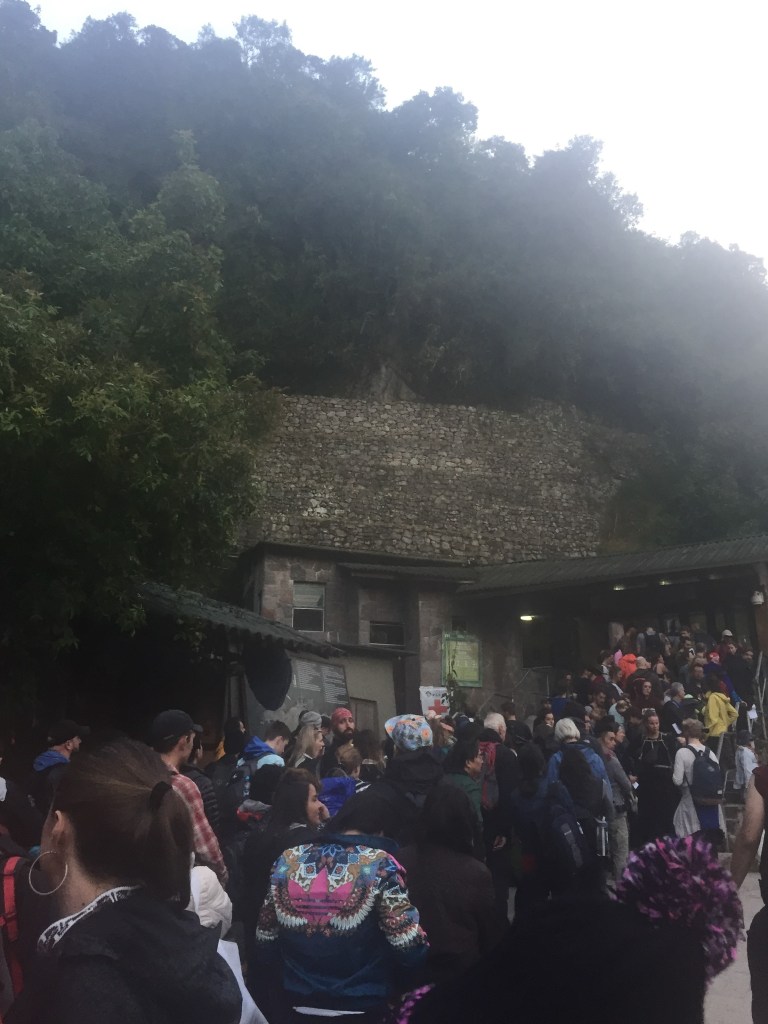
We arrive at the bus queue by 5.30 am. It’s very busy but well organised with a constant stream of buses. So we are on our way within 10 minutes, driving the 5 mile uphill zigzag to the entrance, trying to avoid pedestrians not prepared to pay $24 to be driven up a hill.
Machu Picchu at Dawn
We reach the site just before it opens at 6 am. It is similarly busy but well organised, so we are inside Machu Picchu 10 minutes after sunrise. It’s beautiful; the clouds are half way up the valley with the citadel poking its head above them.
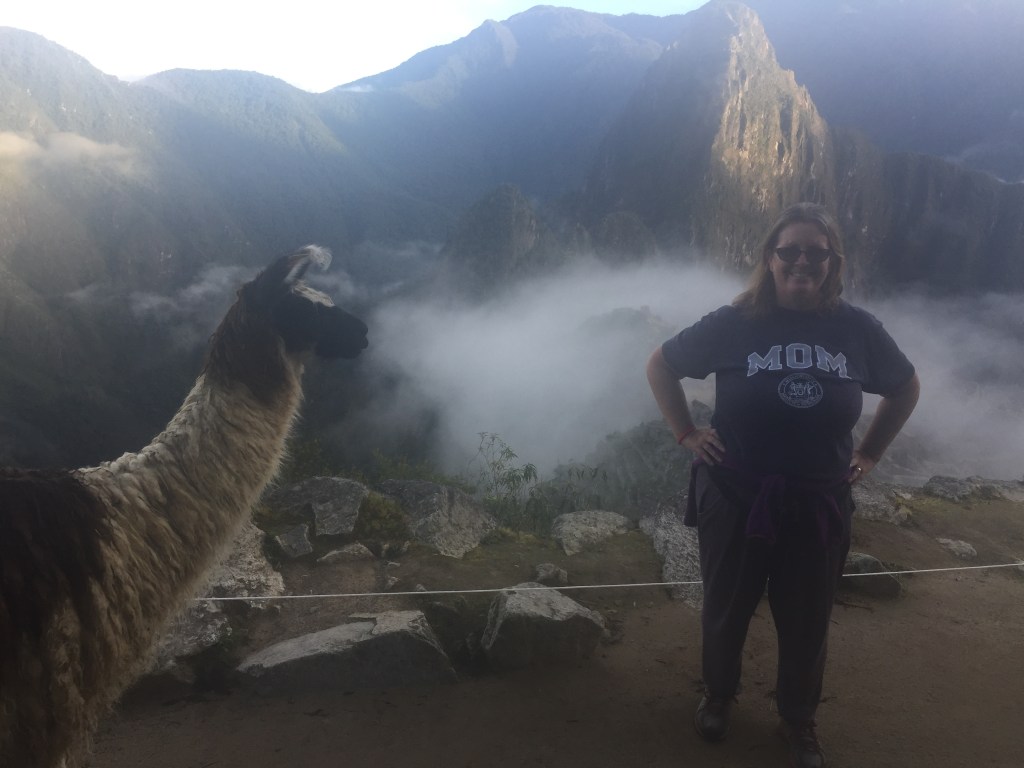
A fact about Machu Picchu; it’s an excellent workout. We were there for four hours, almost all of which involved climbing up or down steep stone steps.
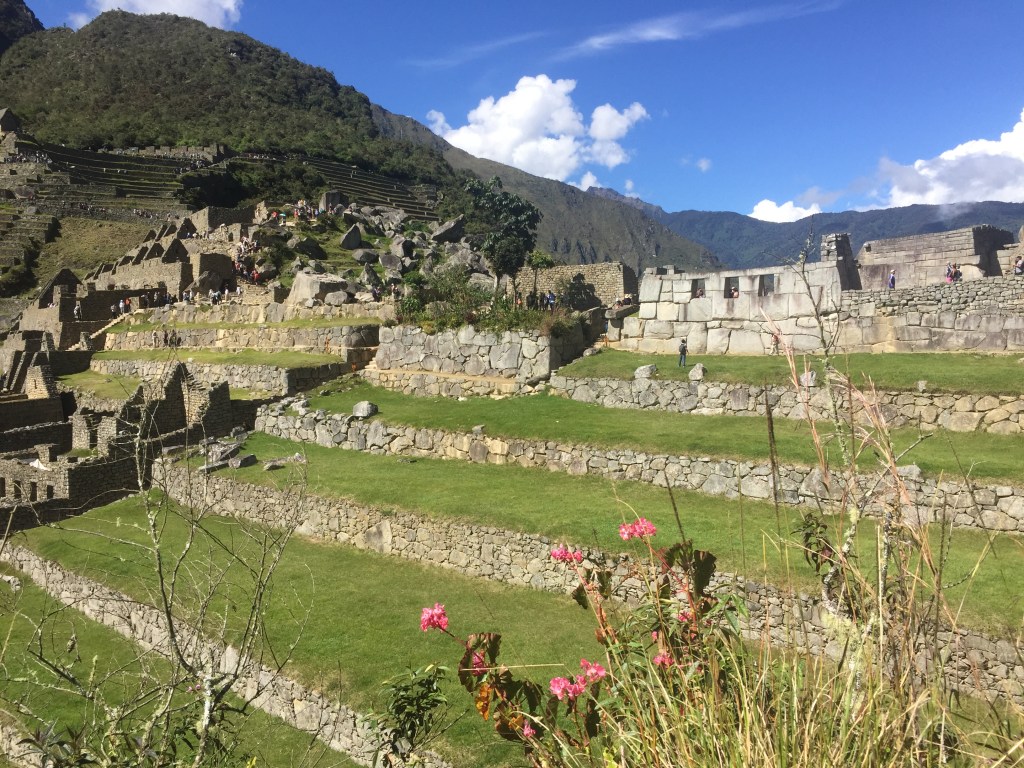
We start by climbing to the top for a spectacular overview. It’s not too crowded; just us, the first few busloads of tourists and several alpacas.

Inca Bridge
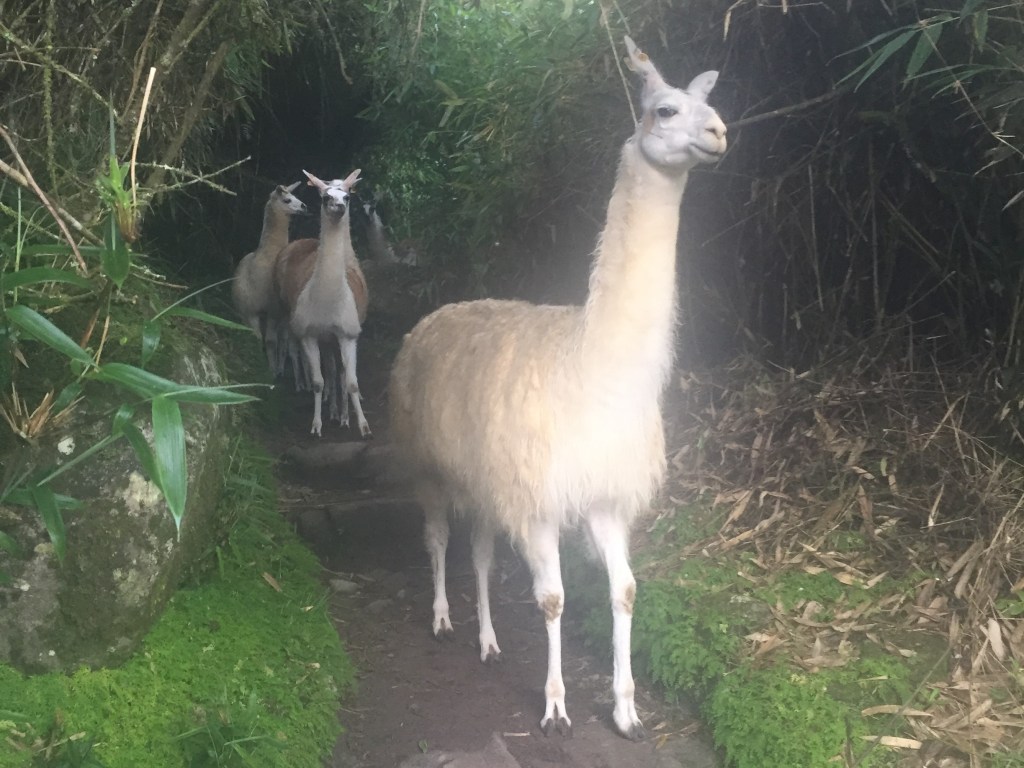
After taking some panoramic photos (and catching our breath) we decide to follow the Inca Bridge; a trail cut into the cliff face. It’s steep and has no railings. The only safety features are a sign saying ‘beware narrow path’ and a man with a broom who chases the alpacas away so they don’t push people over the edge.

The alpacas are unhappy at being kept away and the entrance to the bridge is packed with a dozen attempting to break in. Passing them to reach the trailhead is a mission.
Next, the old man sets off up another trail. I point out that the main site is filling up at the rate of one bus load every four minutes, so we should visit there first, before it is too heaving. He is not persuaded, so we split up and I descend to the citadel. The clouds have lifted and the sun is out, so it’s a lovely day for wandering around the ancient site marvelling in its construction and the beauty of the surroundings. And taking literally hundreds of photos.

Temple of the Three Doorways
Eventually the old man reappears and we visit the last few sites together; the Ceremonial Baths, the Temple of the Three Doorways, the Sacred Plaza and the Temple of the Condor.

Temple of the Condor
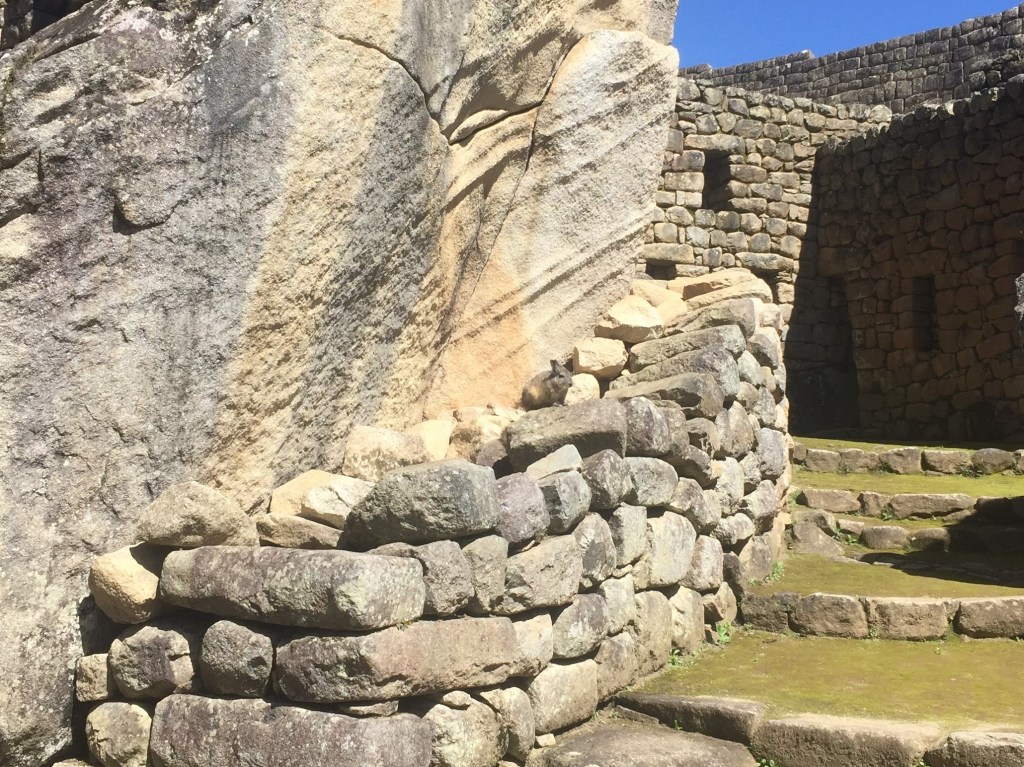
There are no condors in the Temple of the Condor, only a viscacha – imagine a cut and shut between a rabbit and a squirrel.
We reach the exit of the well-policed one way system – no chance of sneaking back round for another peek. It has taken exactly four hours; our official time allocation.
Lunch at Chef House
After our four hours are up, we take the bus back to town and choose another restaurant overlooking the river for lunch; Chef House.

There are no trains during the day, so even with seriously dragging out brunch, we still have four hours to wait to return to Cusco. We have already checked out or our room, so we set up camp in the hotel foyer where we can keep dry and use the Wifi. Plenty have the same idea, so it looks more like a refugee camp than a fancy hotel.

We were so lucky with the weather, we had a gorgeous morning at Machu Picchu but it rains incessantly all afternoon. The noise of the rain clattering on the roof joins the sound of the river roaring past.
Train to Cusco
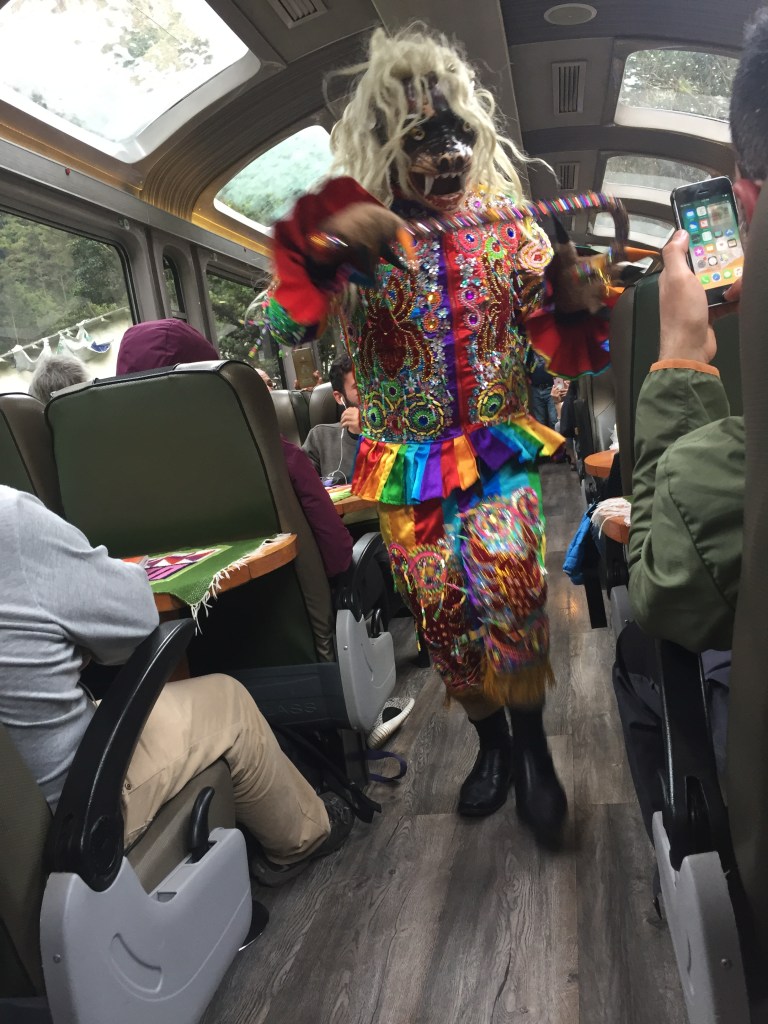
Finally, it’s time to board our train for the 90 minute journey back to Ollantaytambo. It’s much noisier than the outward journey as the engine strains to pull us uphill. After dinner, we pull into a siding and the three crew allocated to our carriage put on a show; one dresses as an evil spirit and performs a traditional dance, while the others model alpaca wool jumpers and scarves. I wonder if they drew straws for this division of labour?
We reach Ollantaytambo station and transfer to buses for the final two hours of the journey. We depart in convoy, meeting traffic coming the other way in the the narrow cobbled village. Total gridlock ensues. A policeman, who looks about 12, tries to resolve the situation but nobody is listening. It takes an age before we finally resume our drive towards Cusco, reaching our hotel at 9 pm to conclude our 16 hour day. Time for some sleep before tomorrow’s flight to Lima.
Peru Day 5 – Lima
Flight to Lima
Today we are flying to Lima. I’m really looking forward to returning to sea level – very sea level as our hotel is only 400 metres from the ocean.
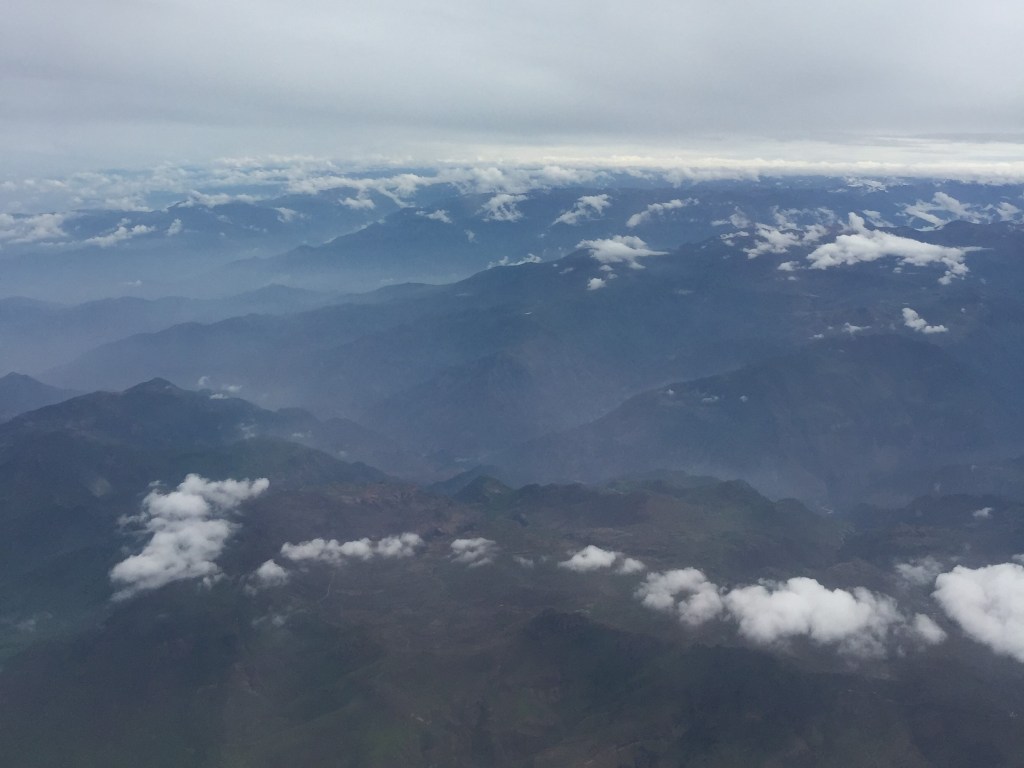
Accommodation – Tierra Viva Miraflores Mendiburu
We are staying in Miraflores, an upmarket suburb by the Pacific. The hotel; Tierra Viva Miraflores Mendiburu is nice, but backs onto a scrap metal yard, so is rather noisy during the day. But if you peer over the car wrecks, you can just glimpse the ocean.
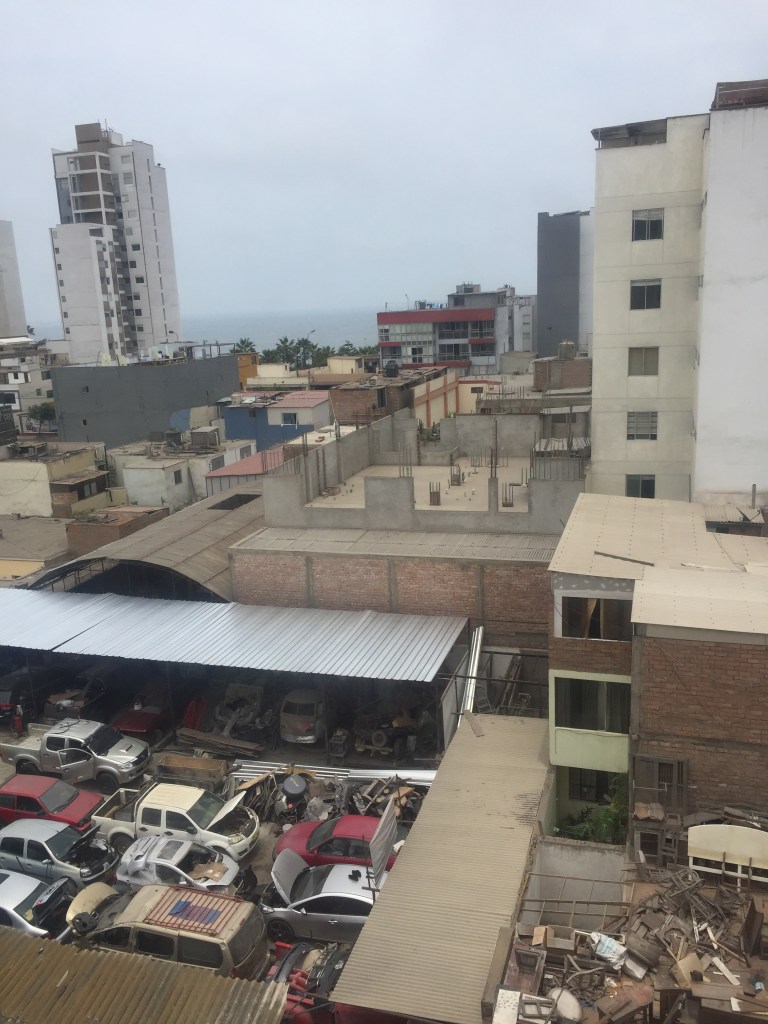
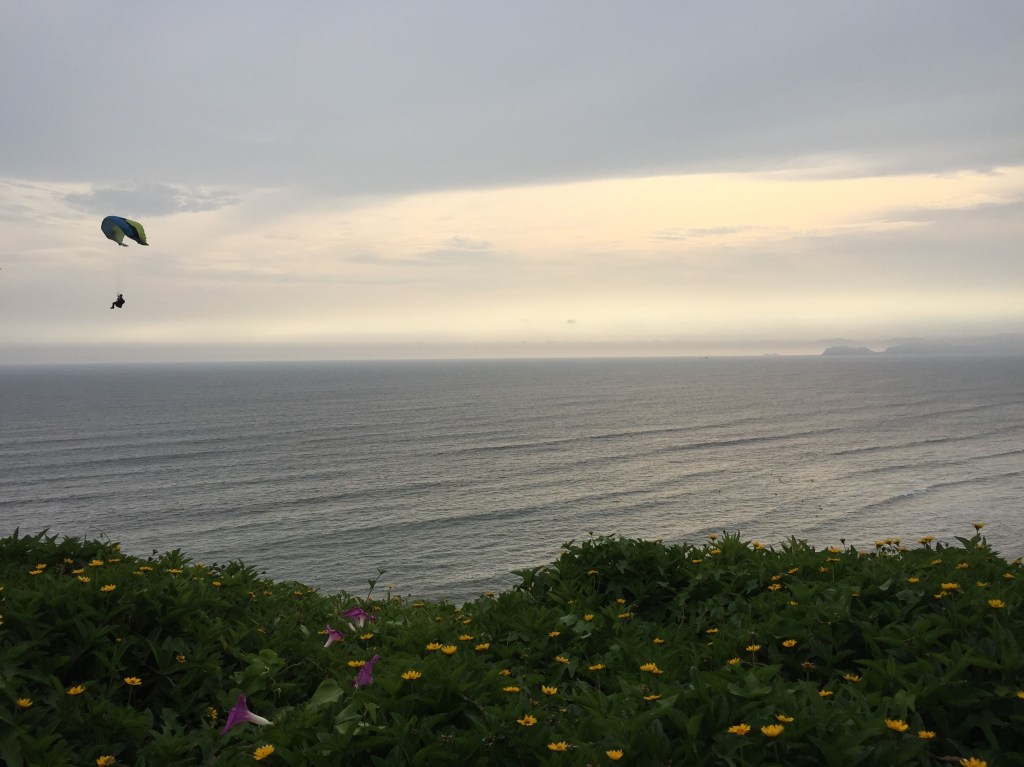
After dinner in the neighbouring chicken shop, we go for a walk to explore Miraflores. We stroll along the promenade (Malecón) which runs along the cliff top, interspersed with parks and gardens, overlooking the ocean.
Then we return to the hotel via a store. I want a six-pack of beer so ask for six cans; ‘seis latas’. The assistant looks bemused, I have to point at what I want. He corrects me, and says I want ‘un six-pack’. I ask why it’s not ‘un seis-pack’? He looks at me like I’m completely bonkers, but I think I have a valid point…
Peru Day 6 – Lima
Today, we are going sightseeing in Lima. The old man wimps out of using public transport, so we take a taxi into town.
Museo de Arte de Lima
We start at the Museo de Arte de Lima (MALI), which takes us on a brief chronological tour of 3000 years of Peruvian art.

The Spanish colonial art is fun; indigenous artists weren’t allowed to sign their work, some got round this rule by painting their faces into the picture. It’s like playing a religious game of Where’s Wally?
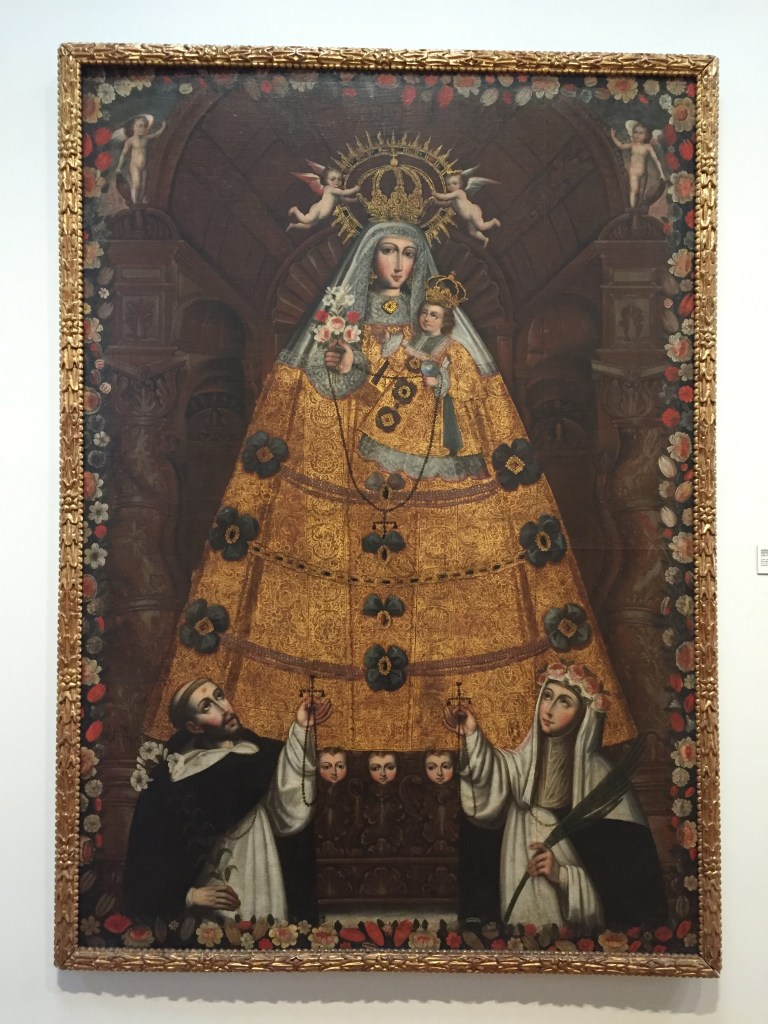
The gallery is situated in extensive grounds with a plethora of sculptures, monuments and fountains.

MALI is open daily except Monday between 10 am and 6 pm (5 pm on Saturdays). Entry for foreigners costs 40 soles (around £8.50).
Basilica la Merced
From MALI, we walk the length of the old city, through the Plaza San Martín, to the ornately decorated Basilica la Merced. The 18th Century church has an impressive carved granite exterior.

Plaza Major
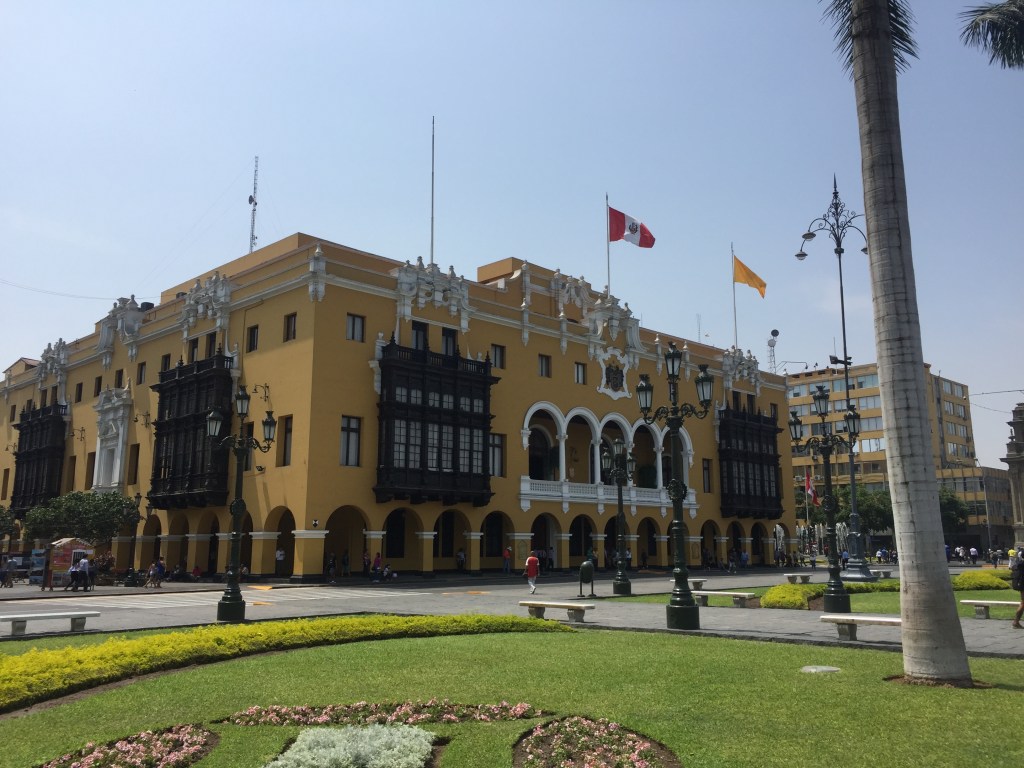
On to the Plaza Mayor (Main Square). The plaza with its flower beds and shady benches has at its centre a bronze fountain erected in 1650. It is surrounded by significant buildings. We stop to visit the Cathedral and adjoining Archbishop’s Palace.
Lima Cathedral
Lima Cathedral mixes macabre with gaudy. On entering, you encounter the Chapel of Francisco Pizarro (the Spanish conquistador who conquered Peru). Here, his bones are laid out on display together with a description of his various injuries – he was stabbed multiple times by the son of someone he’d had executed.

We pass several chapels decorated on the theory of more is more; brightly coloured, festooned with statues, balloons and flowers etc. Then, we descend into the crypt, with more bones and mummified corpses on display.

Archbishop’s Palace
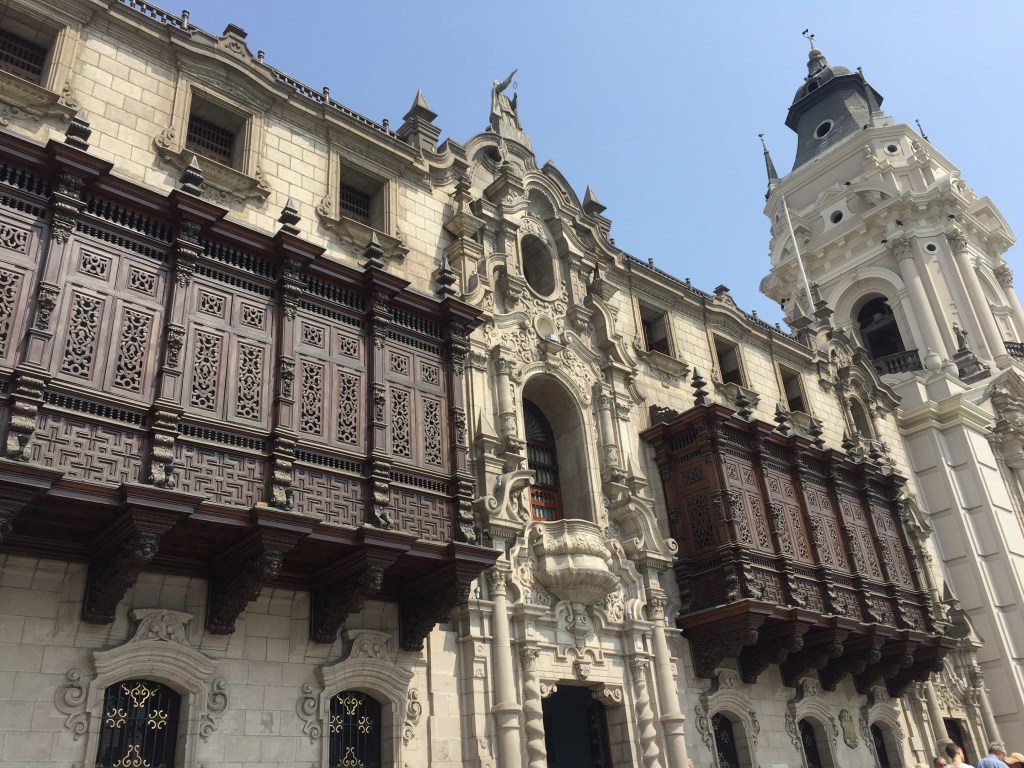
Next to the cathedral is the Archbishop’s Palace with its intricately carved wooden facade. The palace is the residence of the Archbishop of Lima, so it is not possible to go inside.
Government Palace
Back in the plaza, we pass the Government Palace, where I upset a man with a large gun by taking a photo through the railings, and move swiftly on…

If you are here at midday, you can enjoy watching the ceremonial changing of the guard. It may also be possible, if a little complicated, to visit the interior of the palace. It involves registering with a formal letter via the Tourist Office at least a week in advance…
Basilica de Santo Domingo
We round our day off with two more churches. The pink Basilica de Santo Domingo and adjoining convent date back to the 16th Century. It has the kind of ornate golden interior you’d expect from a Spanish colonial church.

Convento de San Francisco
The Convento de San Francisco also dates back to colonial times. Here, you can descend into the bone lined catacombs for a taste of the macabre, with over 70,000 bones on display.

Guided tours of the catacombs take place at regular intervals every day between 9.30 am and 5.30 pm. Entry for foreigners costs 20 soles (around £4.20).
We are done for the day, five hours sightseeing in the heat is ample. Add on another hour for a taxi ride through Lima’s nightmare traffic back to Miraflores.
Dinner at Rasson
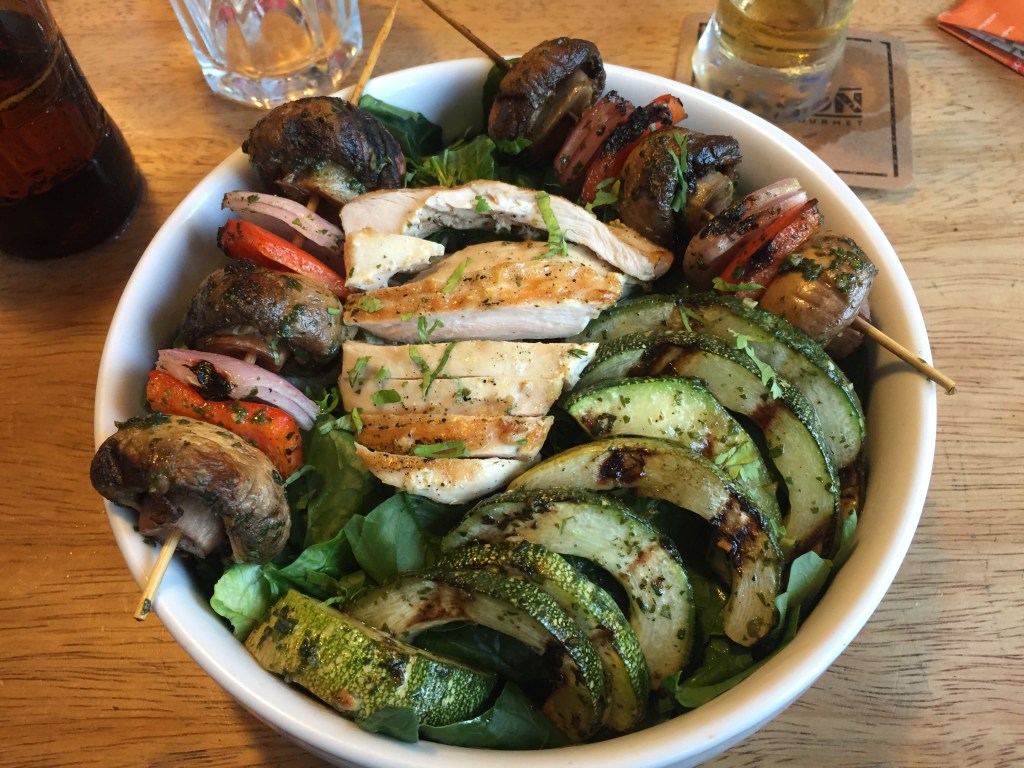
We are back in time for dinner; some tasty chicken and veggies from Rasson, which specialises in Peruvian Barbecue.
Peru Day 7 – Lima (Miraflores)
Today, we are exploring the suburb of Miraflores. We start with a walk along the Malecón.
Malecón
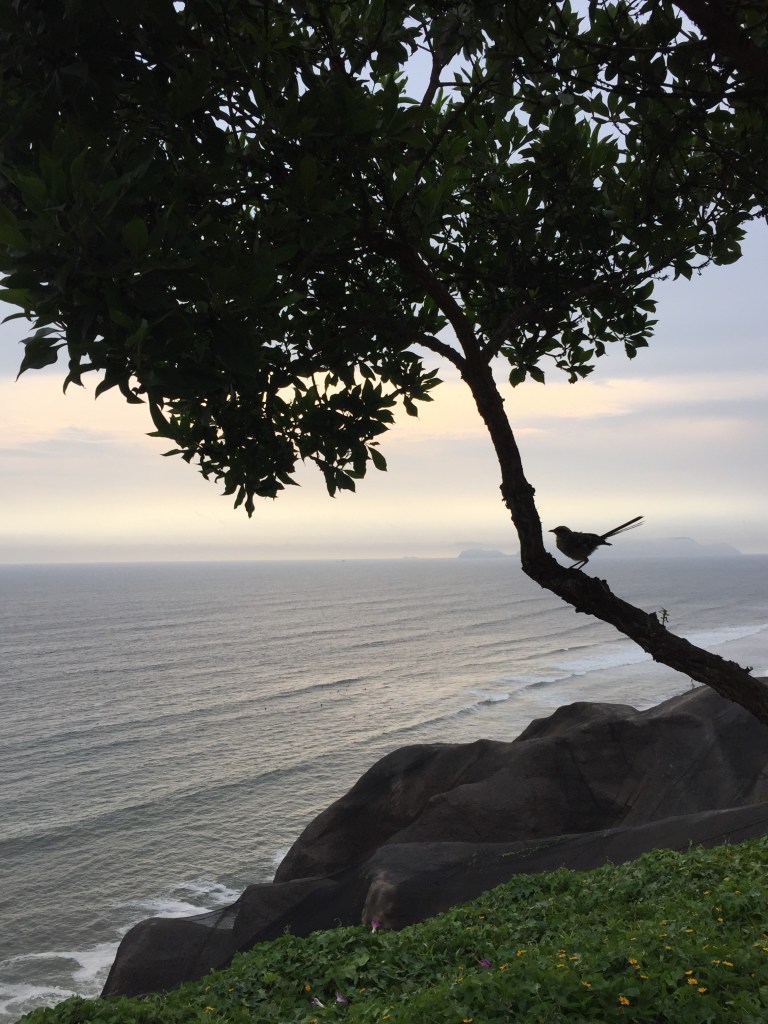
The Malecón is a coastal pathway, which runs for almost six miles along the cliff top. It is actually made up of three sections; running south from Miraflores are the Malecón Cisneros and Malecón de la Reserva. Running north towards San Isidro is the Malecón de la Marina. These pathways offer a pleasant stroll through several gardens overlooking the ocean. The ocean itself is accessible, but this involves descending the cliff top and crossing a motorway. And to be honest, there’s a whiff of sewage on the ocean breeze, so we settle for admiring the ocean view from above amidst the flowers.

Lunch at Buenavista Café
We stop at the Buenavista Café for a drink and a microwaved empanada. Not the best lunch, but the café is on the clifftop overlooking the ocean, so at least it’s not kidding about the view being beautiful.
Parque del Amor
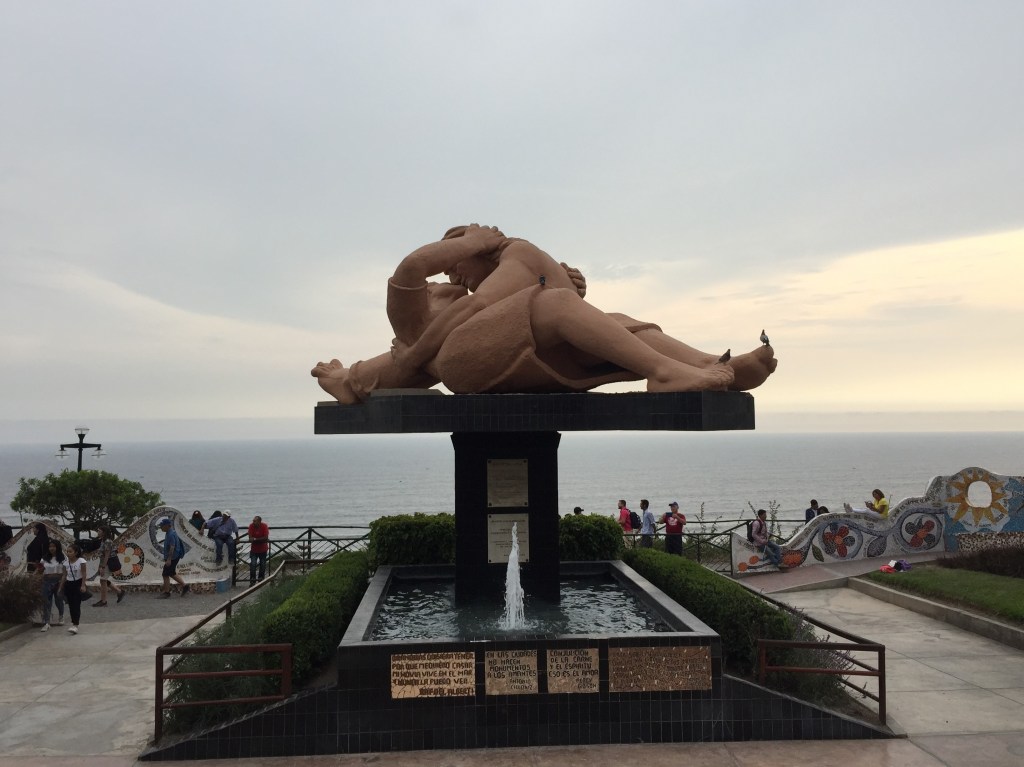
Separating the Malecón Cisneros and the Malecón de la Reserva is the Parque del Amor, a park lined by a mosaic wave wall. The park is dominated by a giant orange sculpture of a couple kissing; El Beso (The Kiss) by Peruvian artist Victor Delfín. This sculpture gives the park its name – Park of Love.
Larcomar
We continue along the Malecón, through the line of parks, until we reach Larcomar; a shopping mall built into the cliff side. Here, you will find shops, restaurants, two food courts, a cinema and theatre.

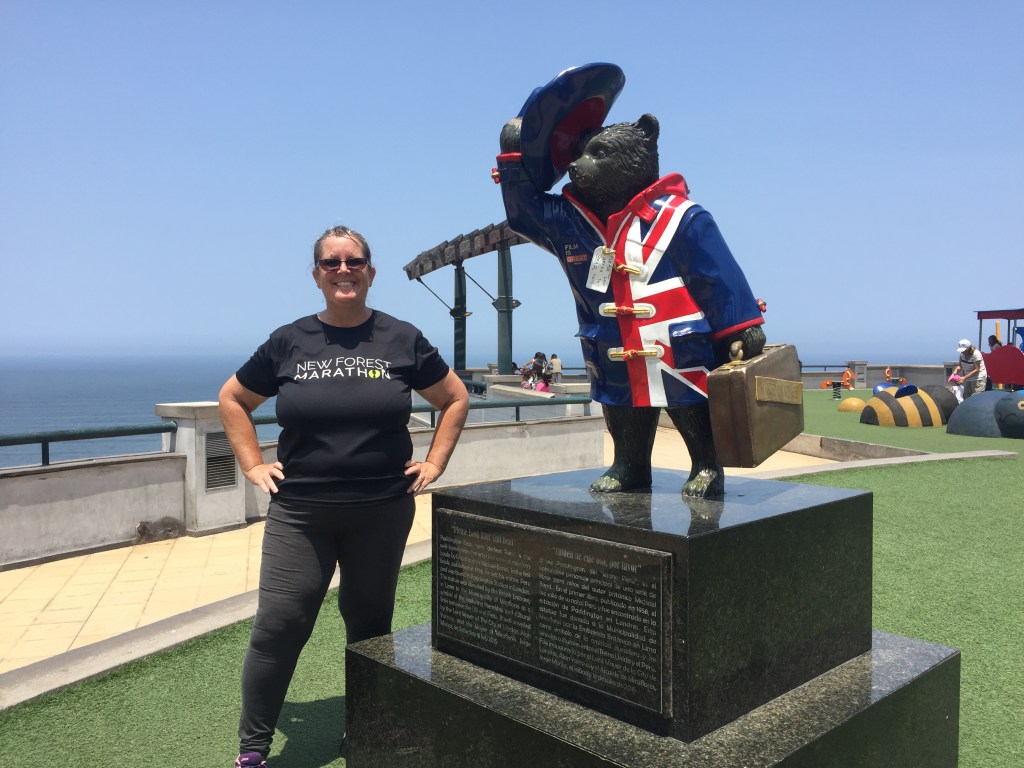
On the way, we spot Paddington Bear – who knew he’d made it back to Peru?
Parque Kennedy
Then, we walk back through Miraflores via the central park, which is either called Parque Kennedy or Parque 7 de Junio. Here, dozens of very well fed stray cats live amongst the flower beds.

Dinner at Bao?
After an afternoon chill in our room, we go out for dinner. The old man chooses Bao? which is probably best described as pretentious Asian street food. There are limited descriptions on the menu which, as an allergy sufferer, makes me particularly nervous. The food is interesting but very salty.
Peru Day 8 – Lima (San Isidro)
It’s our last day in Peru and the old man is going on a boat trip to a nearby island. I have opted to stay closer to ‘home’ for a dose of culture. After breakfast, I set off along the Malecón in the opposite direction to yesterday, towards the suburb of San Isidro.

Lugar de la Memoria, la Tolerancia y la Inclusión Social
The main goal of my walk is to visit the Lugar de la Memoria, la Tolerancia y la Inclusión Social (Place of Memory, Tolerance and Social Inclusion) or LUM for short; a museum dedicated to the victims of state violence in Peru during the 1980s and ’90s.
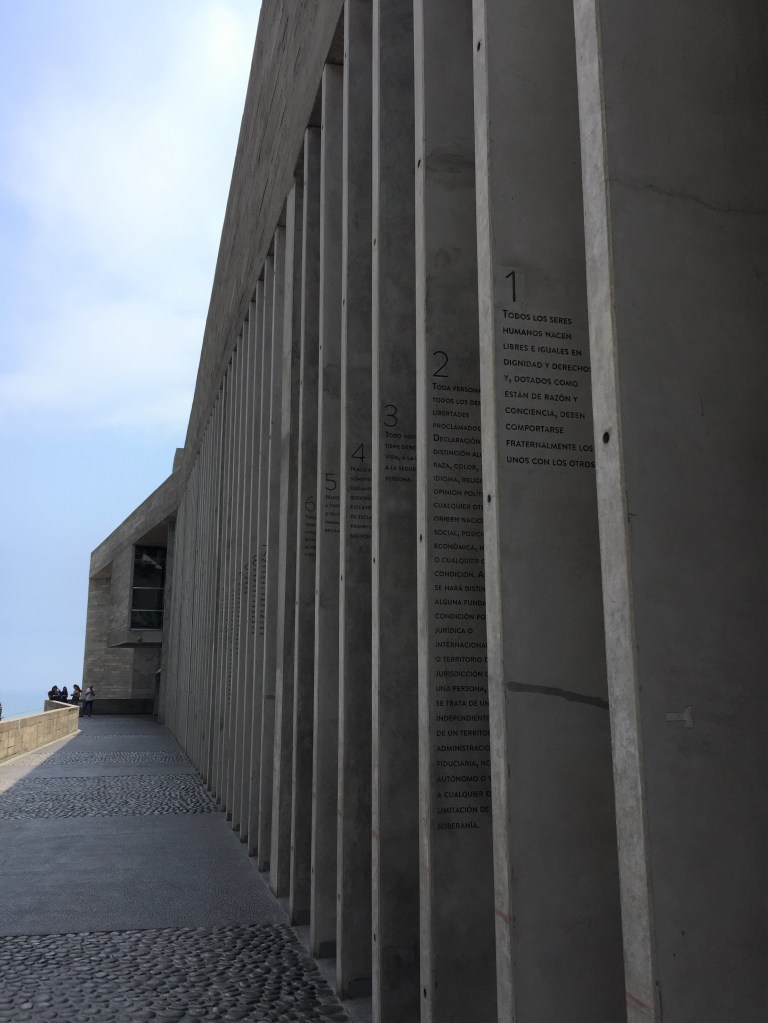
It is interesting. But the displays are only in Spanish and the language is very political. Somewhat beyond someone who has only had 20 Spanish lessons.

LUM is open daily except Monday from 10 am until 6 pm. Admission is free.
Parque Bicentenario
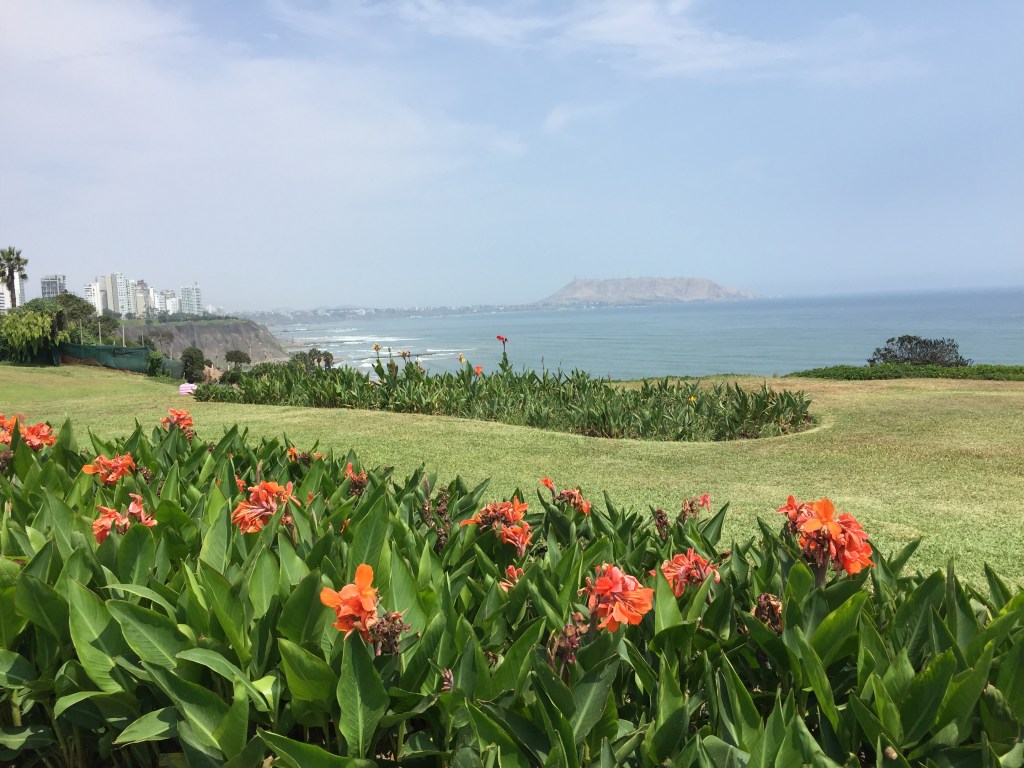
I walk on through the pleasant suburb of San Isidro with its beautifully manicured gardens until I reach the end of the Malecón. Across the road is the Parque Bicentenario, a beautifully landscaped park with a viewpoint offering a great view back along the coast.
Mercado Municipal
Adjacent is the Municipal Market; a food market where you can buy a whole range of local produce. As well as vendors selling fish, meat, fruit & veg, there are various places you can eat and drink on site.
Dinner at Todo Mejor
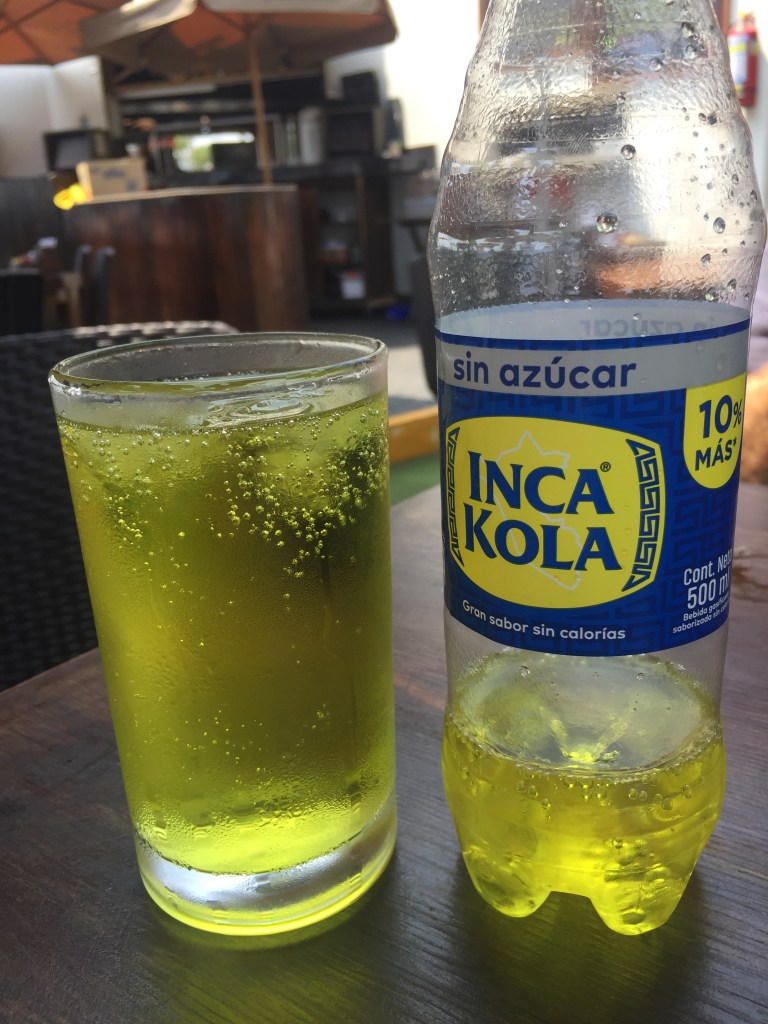
Just past the market is Todo Mejor; a bakery/café which makes great empanadas. Washed down with some rather startlingly fluorescent yellow Inca Kola.
- Trip taken: March 2019
- Updated: October 2024
I hope you found the above information useful. For guides to more destinations in the 50+ countries we have visited, check out my full list of Independent Travel Itineraries here.


 Jane's Midlife Journey
Leave a reply to divetammy Cancel reply