

We spent two days exploring the Serbian capital, Belgrade during our Balkan Road Trip. Things I knew about Belgrade before we visited; (1) it was the capital of Yugoslavia, (2) former President Tito is buried here – you can visit his mausoleum and (3) you can visit Nikola Tesla’s remains in a golden casket in the Tesla Museum.
Note: If you visit Belgrade on a Monday, several attractions, including many museums are closed.
How to get to Belgrade
We drove to Belgrade as part of a our road trip across Serbia. Belgrade is well connected by road, rail and plane. If you opt to fly, Belgrade Nikola Tesla Airport is located 10 miles west of the city. The Shuttle Bus (A1) will get you into central Belgrade in around 30 minutes.
Getting around Belgrade
The main attractions in Belgrade are quite spaced out. We explored on foot (with the exception of the Museum of Yugoslavia, which we stopped at on the way into town) but this involved covering quite a few miles. If you prefer to walk less, Belgrade has an extensive public transport system and you can hop on and off a tram to get between many of the attractions listed.
Where to stay in Belgrade
We stayed at the Life Design Hotel. This boutique hotel is centrally located and also benefits from underground parking. I described it at the time as a ’boutique hotel that someone lost interest in half way through construction’. However, it has now had a refurb and reopened as the Nobel Design Hotel.
Belgrade in 2 Days Itinerary
| Day 1 | Drive to Belgrade Museum of Yugoslavia Belgrade Fortress Kalemegdan Park Accommodation – Nobel Design Hotel Knez Mihailova |
| Day 2 | St Mark’s Church Nikola Tesla Museum Sveti Sava Cathedral Central Station Museum of Contemporary Art Riverside Walk Dinner at To Je To! |
Belgrade Day 1
Museum of Yugoslavia
Our first stop is the Museum of Yugoslavia. The museum is actually split across several buildings.
- The main building, the May 25 Museum, houses a collection of over 200,000 artifacts depicting the history of Yugoslavia.
- The House of Flowers houses Tito’s Mausoleum.
- The Old Museum is pretty much a storage area full of random tat gifted to Tito.
It seems very quiet when we arrive. That’s because the main museum is shut. They’re happy, however, to charge the full entrance fee to visit the House of Flowers and Old Museum.
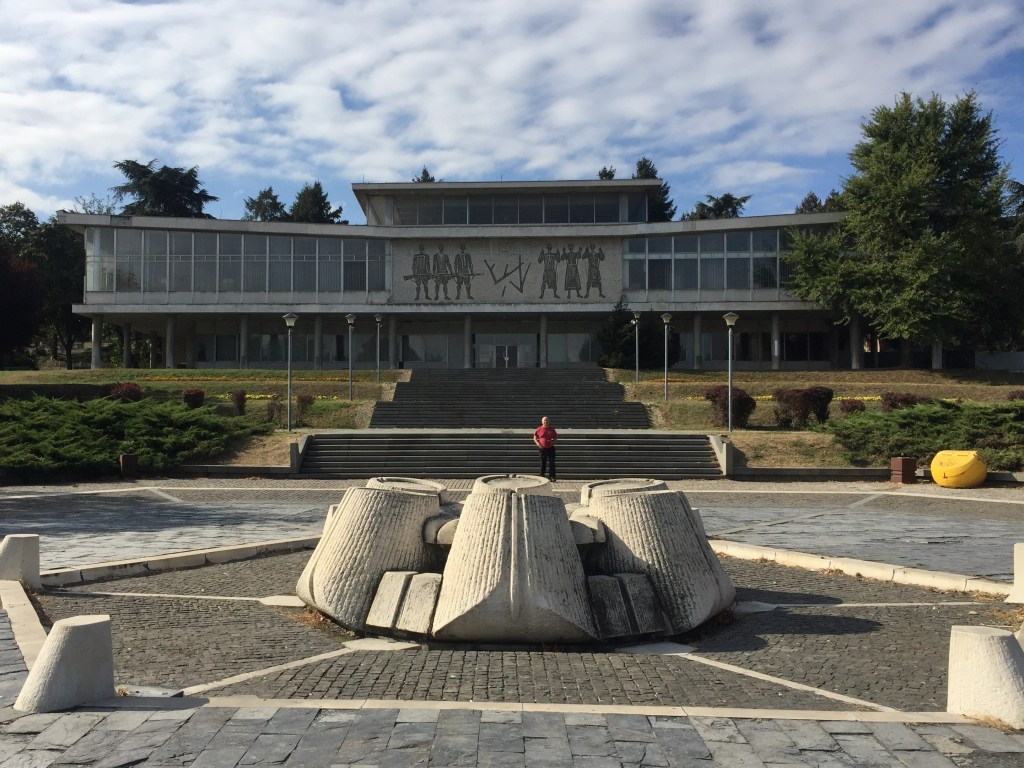
House of Flowers
The House of Flowers contains Tito’s Mausoleum, plus a who’s who guide to his funeral attendees (Prince Phillip sat next to Margaret Thatcher), a model of Tito’s Blue Train, plus batons from his birthday celebration relays.
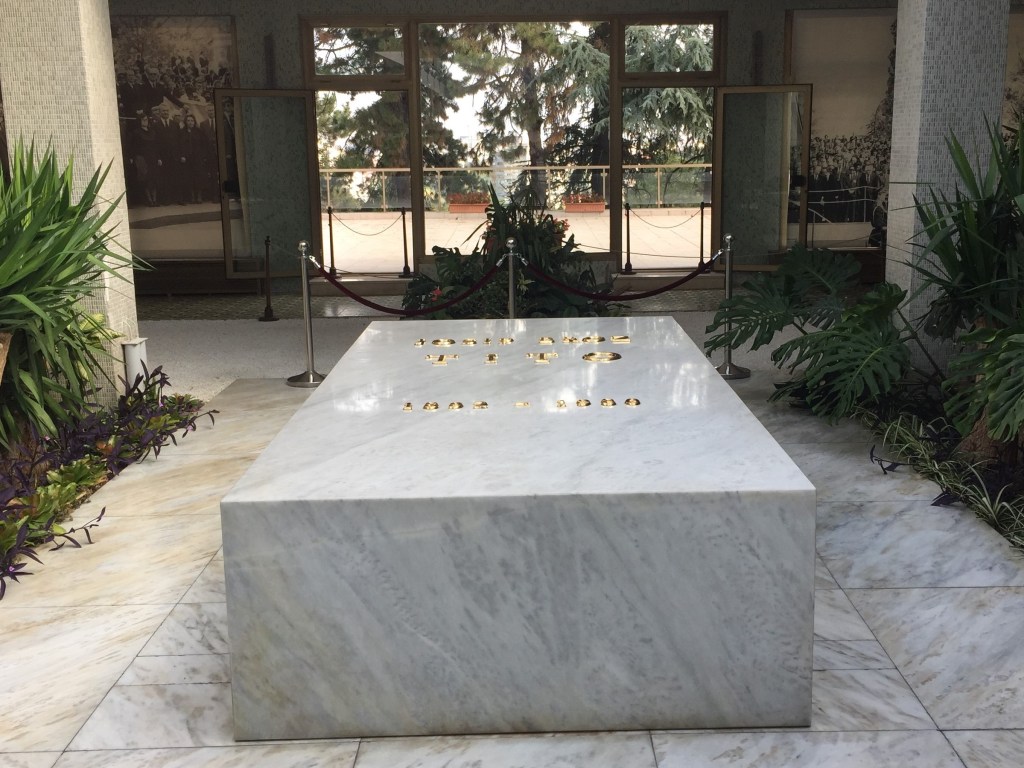
Old Museum
The Old Museum contains all sorts of stuff in no chronological or any other obvious order; mementos from Tito’s life, gifts given to Tito, more relay batons….

The museum is open daily except Monday from 10 am until 6 pm. Adult entry costs 600 dinar (around £4.40).
Belgrade Fortress
Belgrade Fortress consists of the old Citadel and Kalemegdan Park. The Citadel is an imposing building perched on a hillside overlooking the city and the Danube.
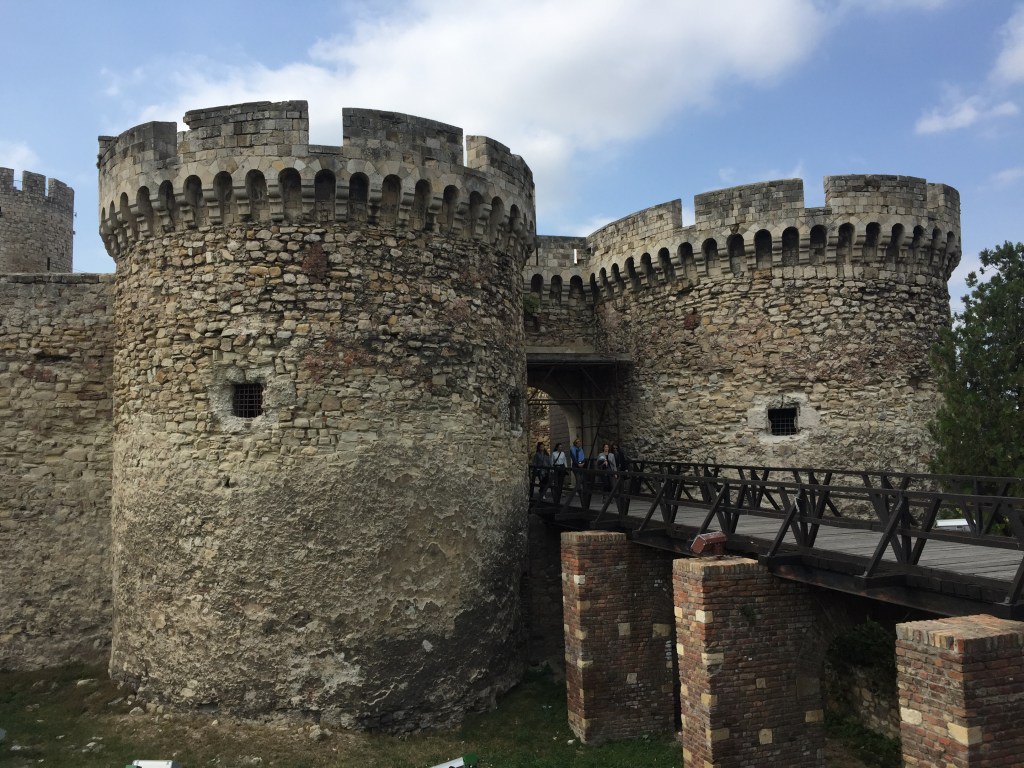
It has an impressive array of weaponry from across the ages.

Kalemegdan Park
Spanning out from the fortress is Kalemegdan Park. It’s a pleasant place for a stroll amidst the gardens and sculptures. My favourite is this striking Monument of Gratitude to France.

Accommodation – Nobel Design Hotel
We chose the Nobel Design Hotel because it was centrally located plus had on site parking. Reaching the hotel was tricky due to a complicated one way system. If you are driving, note that the car park entrance is in a different road to the main hotel entrance.
Knez Mihailova
Extending diagonally from the fortress to Republic Square, Knez Mihailova is a pedestrian shopping street lined with shops, restaurant and bars. There are plenty of places to stop here for dinner – as it was a lovely day, we opted to buy sandwiches from a supermarket and picnic in the park.

Belgrade Day 2
Today, a full day of sightseeing in Belgrade. The itinerary involves quite a lot of walking (around 6 miles). If that’s too much, skip the art museum, which brings it down to 3 miles, or take a tram across the river (No 7 or 9 to Blok 21).
St Mark’s Church
St Mark’s Church is an imposing five domed Orthodox church. The current building was completed in 1940. There is a small Russian church next door, erected by refugees of the October Revolution.
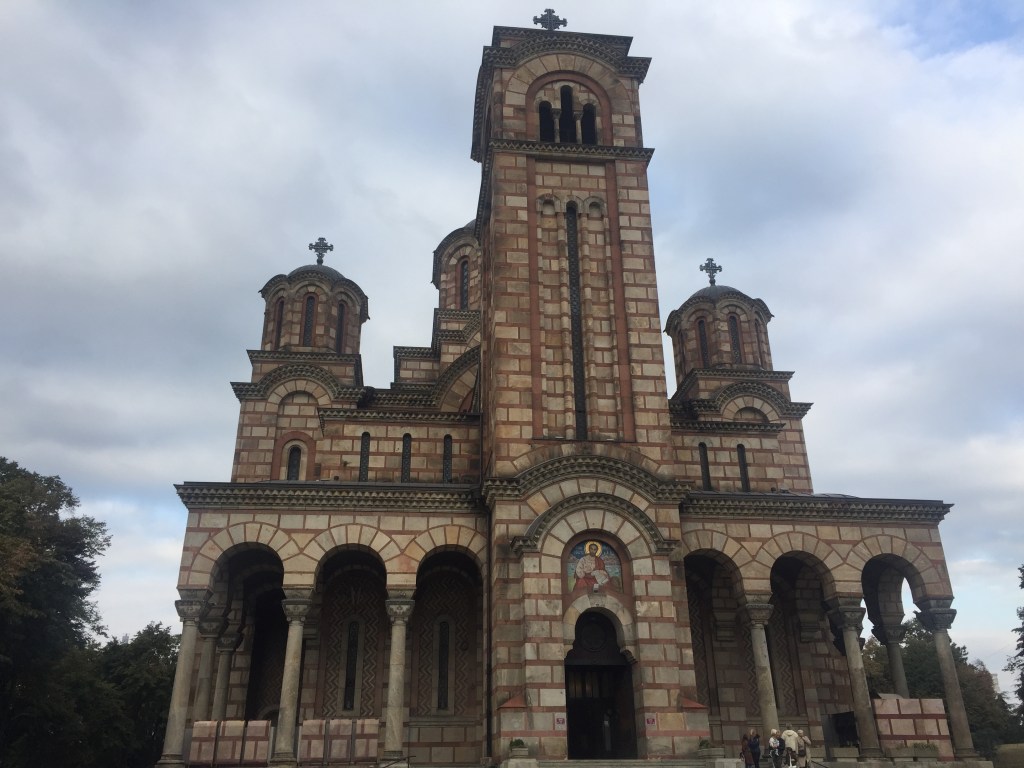
Nikola Tesla Museum
The Nikola Tesla Museum documents the life of the renowned scientist. It was shut when we visited, so we just took a photo of his statue and moved on.

The museum is open daily from 10 am until 8 pm (6 pm on Monday). Entry costs 800 dinar (around £6) including a tour in English. Tours in Serbian are also available (and half the price).
Sveti Sava Cathedral
Next, we head for Sveti Sava Cathedral – this enormous edifice is the second biggest Orthodox Church in the world. We arrive to find it’s surrounded by scaffolding and is, in fact, shut for renovations.

After walking right round the building, we finally find an entrance. They have kept the gift shop open, and the Crypt. The crypt is spectacular; the walls and ceilings are covered with gold and brightly coloured paintings.

Main Station
We continue to the former Main Station in an attempt to visit Tito’s infamous Blue Train. This is available for hire, but allegedly open to the public otherwise. We go to the Main Station where tickets are allegedly purchased. It has closed down. We try tourist information – it’s shut. We find another tourist information office. She directs us back to the first office. We say it’s shut. She says it’s news to her. After making some phone enquiries, she explains that there is a new station and the blue train will eventually be housed here. But it’s not ready yet.

The Main Station, built in 1884, is no longer operating. For now, this grandiose building, once frequented by the Orient Express, stands derelict and decaying while politicians argue about its future (plans are to turn it into a museum).
Museum of Contemporary Art
The Museum of Contemporary Art is across the Sava River, housed in a 1960s modernist concrete and glass building, surrounded by a sculpture park.

The museum spans five floors (when we visited, only two were open) with a large collection of 20th Century Yugoslav art.

The museum is open daily except Tuesday from 11 am until 7 pm (12 pm – 8 pm on Thursday and Saturday). Entry costs 600 dinar (around £4.40).
Riverside Walk
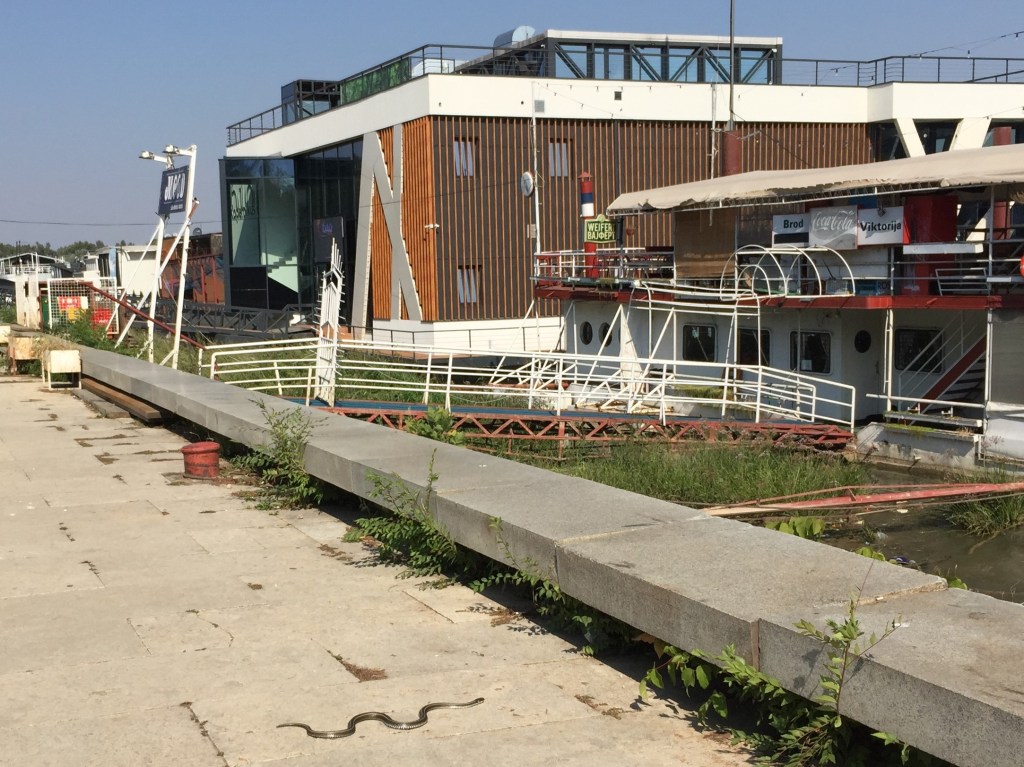
It is a short walk from the museum to a viewpoint where the River Sava and River Danube converge. There’s a submarine moored there and two men with guns enforcing a very strict no photography policy. We walk back along the river, which is lined with floating bars and restaurants, with the occasional snake…
We return across the bridge to the pedestrian centre of town, stopping to watch the sun setting over the Danube.

Dinner at To Je To!
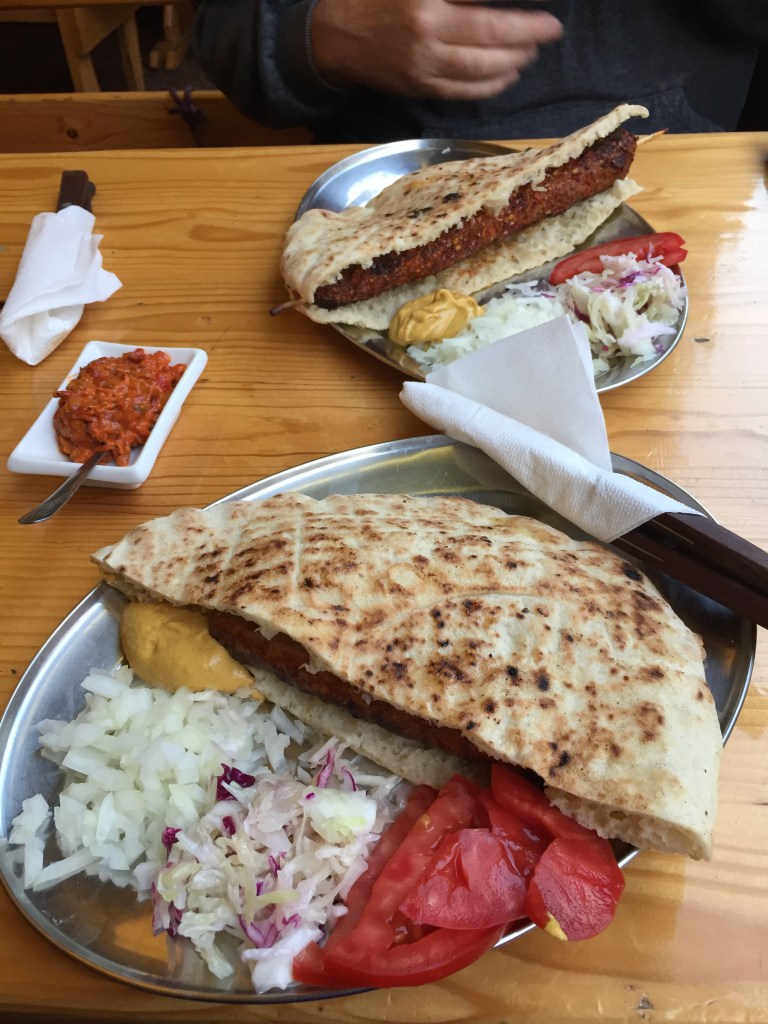
Then dinner; traditional Serbian Cevapcici – sausages served in a flat bread served with onion, cabbage, sour cream, mustard and chilli sauce from a little diner called To Je To!
On the way home, we stop for supplies in my favourite place in Belgrade (partly because it’s always open); Idea London. It’s a London themed supermarket, complete with red phone box, tube maps and a shelf stacker dressed like a dragoon guard.
I hope you found the above information useful. For guides to more destinations in the 50+ countries we have visited, check out my full list of Independent Travel Itineraries here.
- Trip taken: October 2018
- Updated: October 2025


 Jane's Midlife Journey
Leave a reply to Jane’s Midlife Journey Cancel reply