
We spent 3 days exploring Bosnia & Herzegovina on our Balkan Road Trip, stopping first at Mostar, famous for its old bridge, before continuing to the capital, Sarajevo. Below is my itinerary for our journey with attractions, accommodation and dining recommendations.
Bosnia & Herzegovina 3 Day Road Trip Itinerary
| Day 1 | Mostar Drive to Mostar Accommodation – Villa Fortuna Old Bridge Old Bazar Dinner at Urban Taste of Orient Neretva River Karadoz Beg Mosque Spanski Trg Franciscan Church of Saint Peter & Paul Crooked Bridge |
| Day 2 | Drive to Sarajevo Jablanica Sarajevo Tunnel of Hope Accommodation – Hotel Lula Baščaršija (Pigeon Square) Sacred Heart Cathedral Dinner at Bosanska Kuca |
| Day 3 | Sarajevo Yellow Bastion Kovaci Cemetery Sarajevo City Hall Latin Bridge Sarajevo 1878-1918 Museum Walk along Miljacka River Eternal Flame Dinner at Cevabdzinica Hodzic |
Bosnia & Herzegovina Day 1 – Mostar
Drive to Mostar
After a breakfast of cherry and sour cream croissants, we set forth for the Bosnian border and Mostar. I know three things about Mostar; (1) it has a famous old bridge, (2) the front line in the Bosnian War ran through Mostar and (3) the original Old Bridge was destroyed during the war, so the current Old Bridge isn’t old at all.
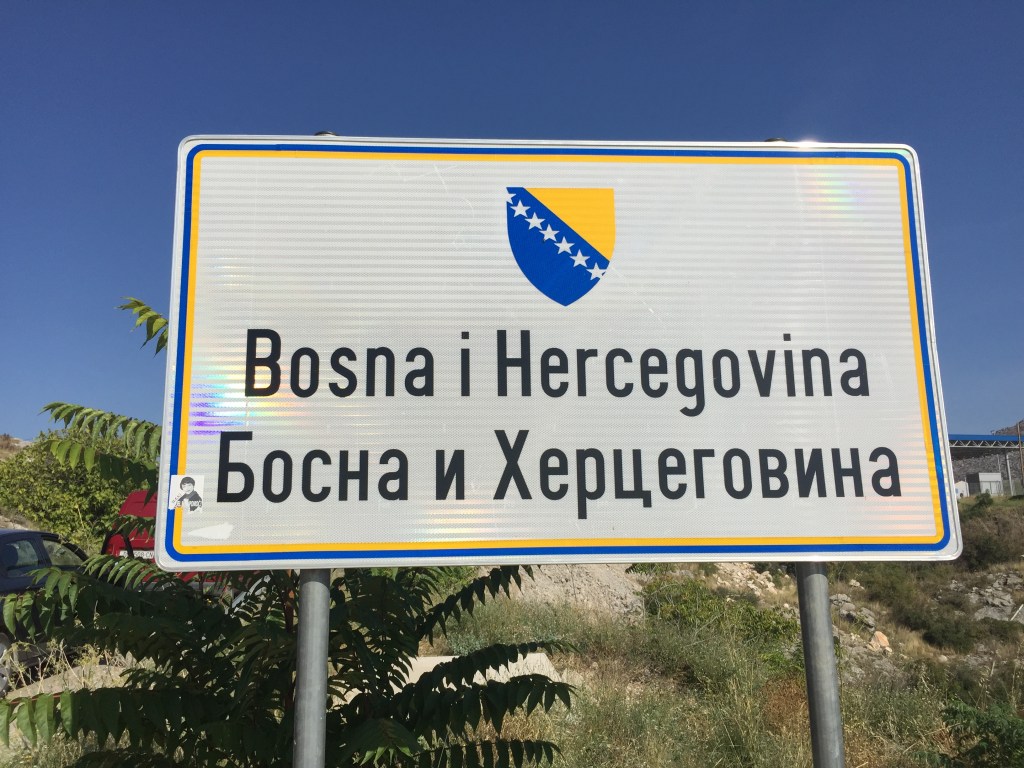
The border crossing is in the hills on the outskirts of Dubrovnik. Once through, we are in a remote mountainous area. If we had realised quite how remote it was, we would have filled up with petrol beforehand. We start to get a bit worried. Then suddenly, like a mirage, a pristine petrol station in the middle of nowhere.

Shortly after the petrol mirage, Google maps takes us 3.6 miles along what looks like a goat track. Not surprisingly, it is totally deserted. The old man is unimpressed and starts to mutter about land mines. Eventually, we re-join the road and continue our drive through an area which consists of mountains, trees, bombed out buildings and cemeteries. With 37 miles to go, we get a warning light on the dashboard. We decide to carry on. There isn’t much choice; in 50 miles the only signs of civilisation we have seen are a dead wolf and an old man throwing stones at a cow that is stuck in a hedge.
Accommodation – Villa Fortuna
We reach the outskirts of Mostar and our hotel; Villa Fortuna, which is a relief. After a short break, sitting on our balcony to de-stress and Google warning lights, we take a wander round Mostar.

Old Bridge
We cross the Old Bridge with its gorgeous view of the river and beyond. The famous stone bridge was originally constructed in the 16th Century. It was destroyed during the Bosnian War, but subsequently rebuild using 16th Century building techniques and stone from the original quarry.

The bridge is frequented by boys in budgie smugglers who will dive into to the river if you pay them enough. There wasn’t anyone around when we visited who was willing to part with any cash for this particularly act of bravery.
Old Bazar
The Old Bridge leads to the Old Bazar with its historic stone buildings, many of which now house souvenir shops.

Dinner at Urban Taste of Orient
So we find a restaurant; Urban Taste of Orient, which has a terrace overlooking the bridge, a perfect spot for dinner and a beer. Mostar is such a beautiful place, with the turquoise river running through the stone buildings of the ancient town. It’s sad to think that such a lovely, tranquil place was once, not so long ago, the front line in a brutal war.

Neretva River
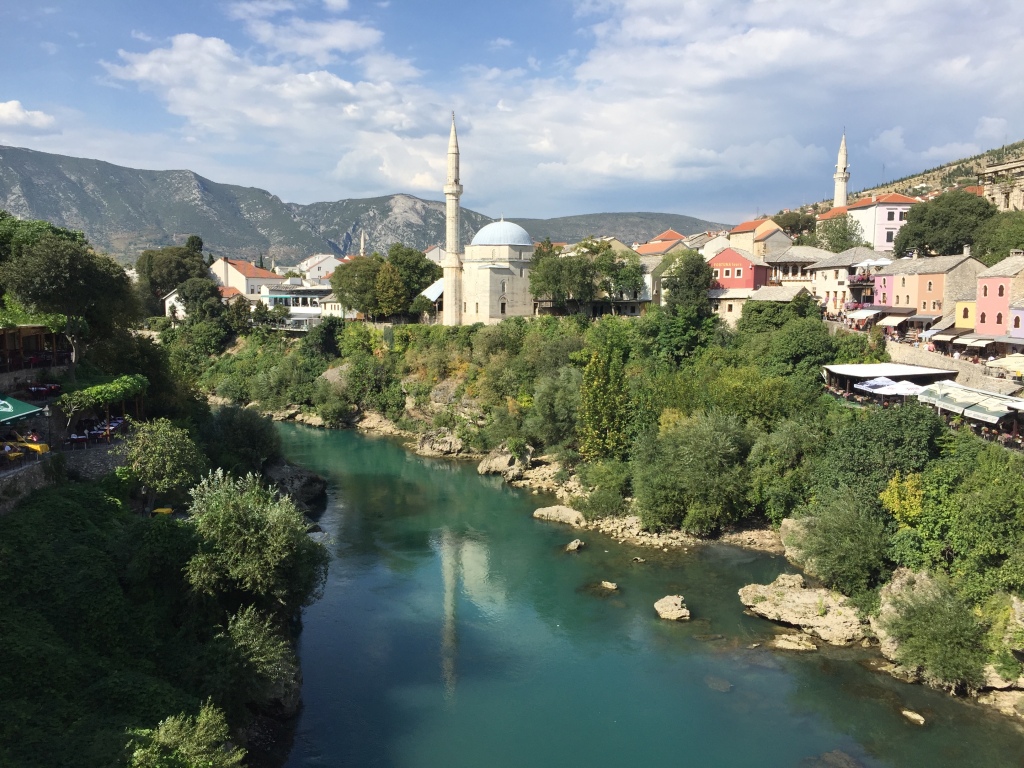
After lunch, we walk along the banks of the beautiful Neretva River with stunning views across to Mostar and the mountains beyond.
Karadoz Beg Mosque
We pass the 16th Century Karadoz Beg Mosque, badly damaged during the war, but now renovated.

In the neighbouring graveyard, there is a mausoleum and lots of gravestones. It has the sort of uniformity only found in war cemeteries when so many graves are dug in a short space of time. A huge number of the gravestones date from 1993.

Spanski Trg
Onwards to Spanski Trg (Spanish Square). The road which runs through this area once formed the front line in the Bosnian war. Several ruined buildings remain with their walls sprayed with bullet holes. Most notably, the Ljubljanska Banka building. This strategically placed former bank was nicknamed Sniper Tower for reasons which are obvious.

Amidst the devastation, you can find plenty of street art.

Franciscan Church of Saint Peter & Paul
We round the day off at the Franciscan Church of Saint Peter & Paul. Badly damaged during the war, rebuilding work on this huge church with its enormous bell tower has been undertaken.

Mostar Peace Bell Tower
Adjacent to the church is the Mostar Peace Bell Tower, which boasts a total height of 107 metres. You can climb 370 steps (helpfully numbered) to a viewing platform for a stunning view over Mostar and the surrounding mountains. It might be possible to take a lift half way up. Who knows? It’s a bit random. When we visited, the lift was closed, but I think that was because the operator had gone for a cigarette…

Crooked Bridge
The diminutive Crooked Bridge may be smaller than the Old Bridge, but it is in fact older – build 8 years beforehand to test out the design. Or rather, it is the same age, because it too was rebuilt after the war. The bridge is a pretty sight, spanning the Radobolja River and surrounded by old mills.

Bosnia & Herzegovina Day 2 – Sarajevo
Drive to Sarajevo
This morning, we will be driving the 77 miles to Sarajevo. Three things I know about Sarajevo; (1) Franz Ferdinand was assassinated here, the event which sparked World War I, (2) during the Bosnian War, the city was under siege for several years and (3) it hosted the 1984 Winter Olympics.
Jablanica
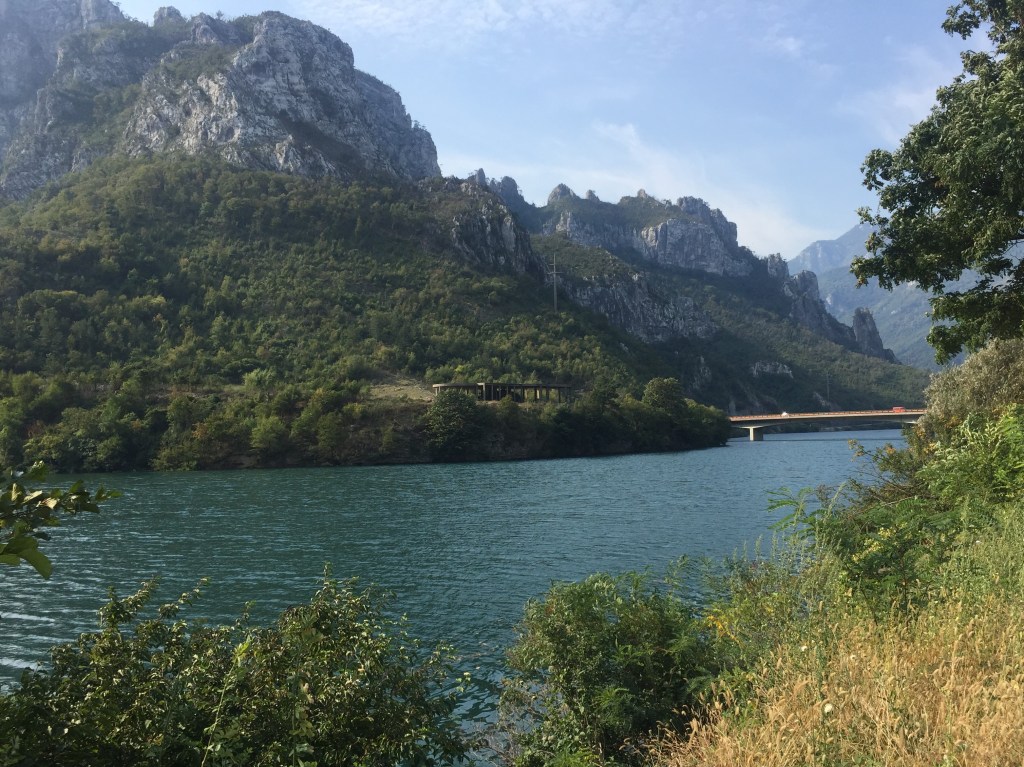
The route entails a scenic mountain drive, much of it along the valley of the beautiful blue-green Neretva River. We stop around 50 miles south west of Sarajevo in Jablanica, site of a World War 2 battle, where Tito’s Partisan forces took out a railway bridge to thwart the advancing Germans. The bridge still lies upended in the river as a monument to those who fought. There’s a train perched perilously near the edge of the bridge and a small museum.
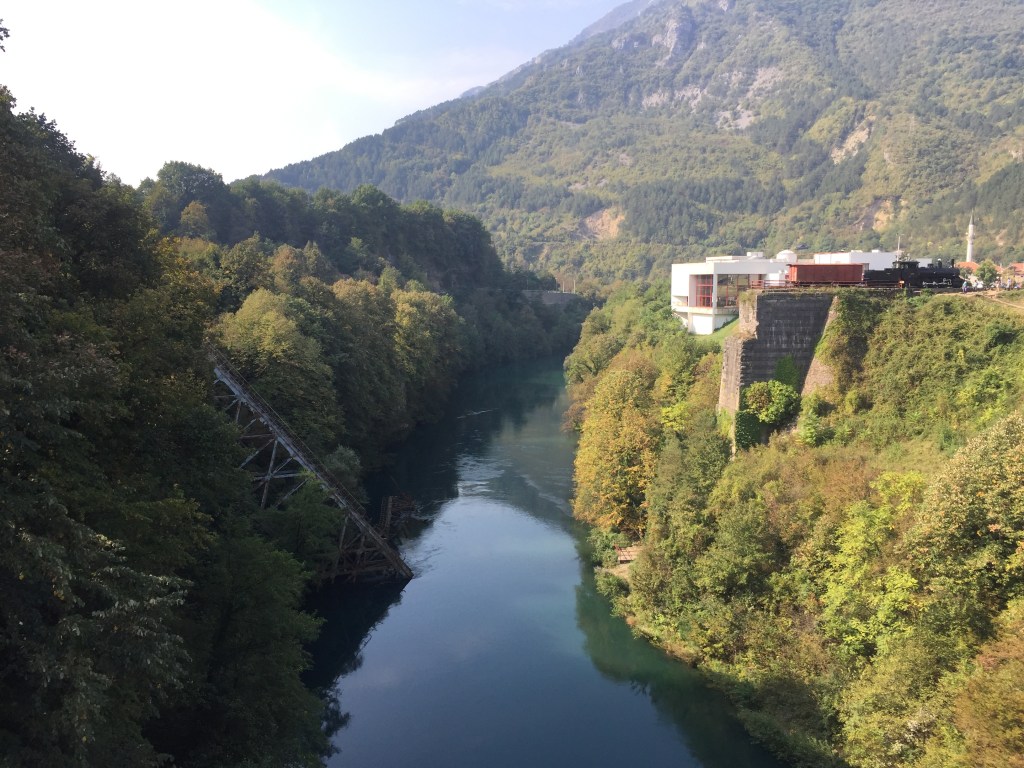
Jablanica Museum
Jablanica Museum is open daily from 8 am (10 am on weekends) until 6 pm between April and October. And from 8 am until 4 pm Monday to Friday during winter. Entry costs 4 KM (around £1.70). If you’re passing, it makes an interesting stop. If not, it’s probably not worth a detour.
Tunnel of Hope
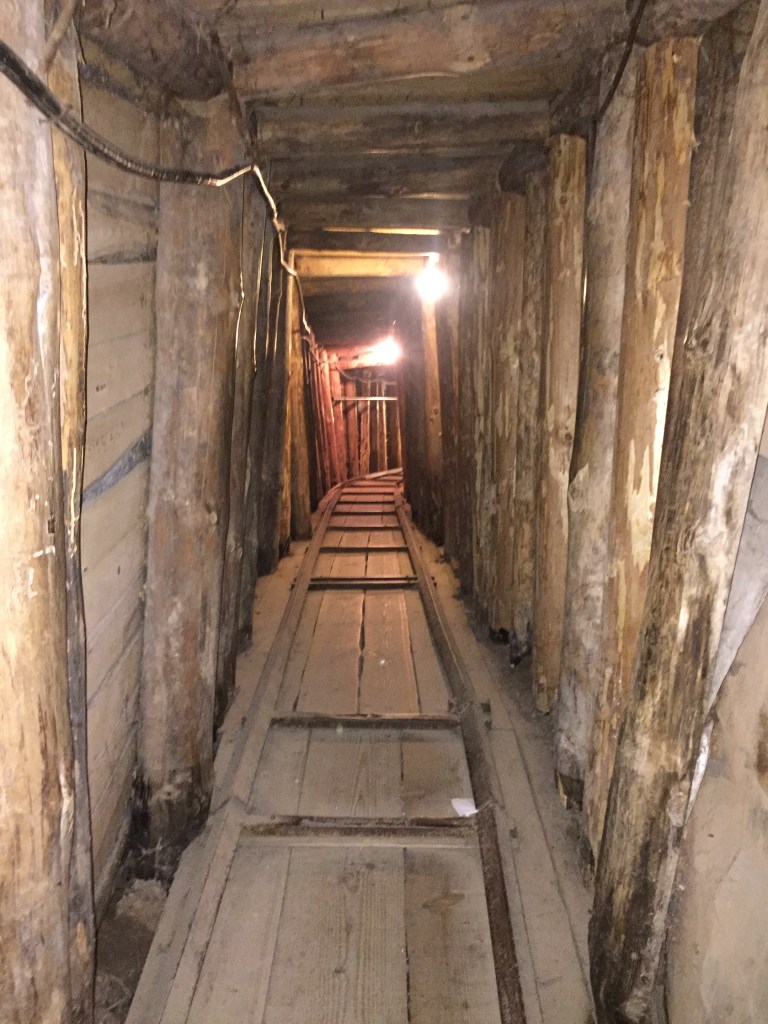
On the outskirts of Sarajevo is the Tunnel of Hope. During the Siege of Sarajevo, when the city was cut off from the rest of Bosnia for a total of 1425 days, a tunnel was built under the airport to smuggle supplies in and the wounded out of the city.
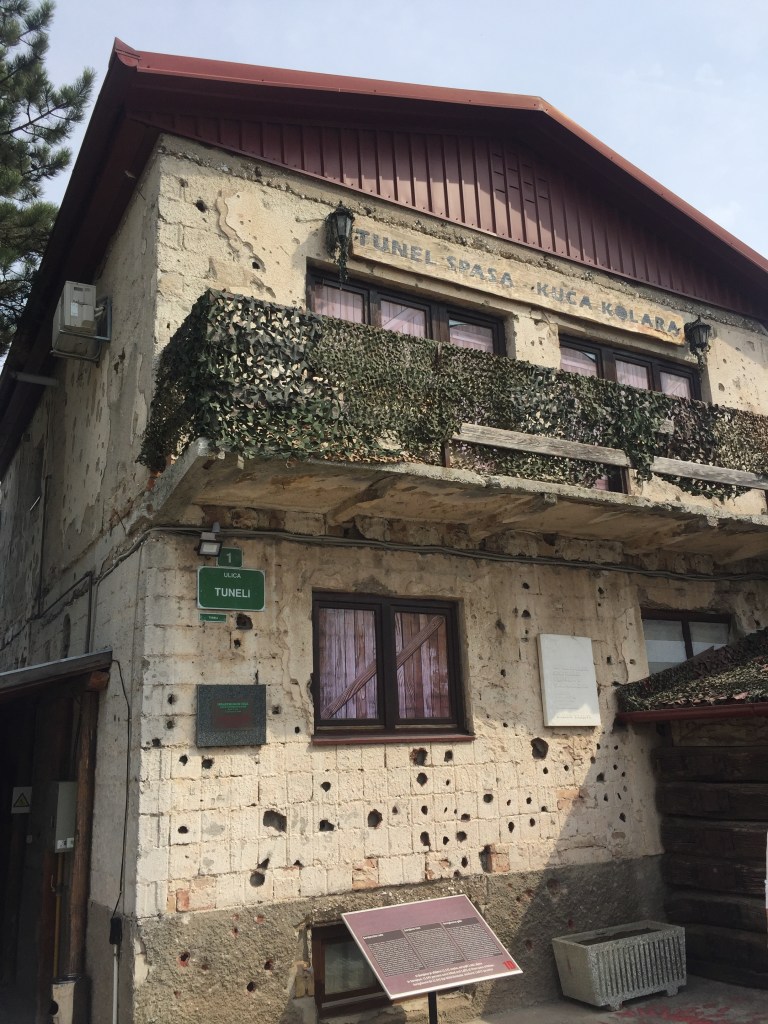
Now, the Tunnel of Hope is a tourist attraction and offers visitors a fascinating insight into the horrors of the war and the resilience of the people of Sarejevo. You can go down into the tunnel to see how it operated. Rails were laid through the tunnel and then trollies, wheelchairs, stretchers etc were adapted to fit the rails.
Accomodation – Hotel Lula
We continue into the city of Sarajevo and check into our hotel; Hotel Lula, which is both unique and conveniently located, right in the centre of the old town.

Baščaršija (Pigeon Square)
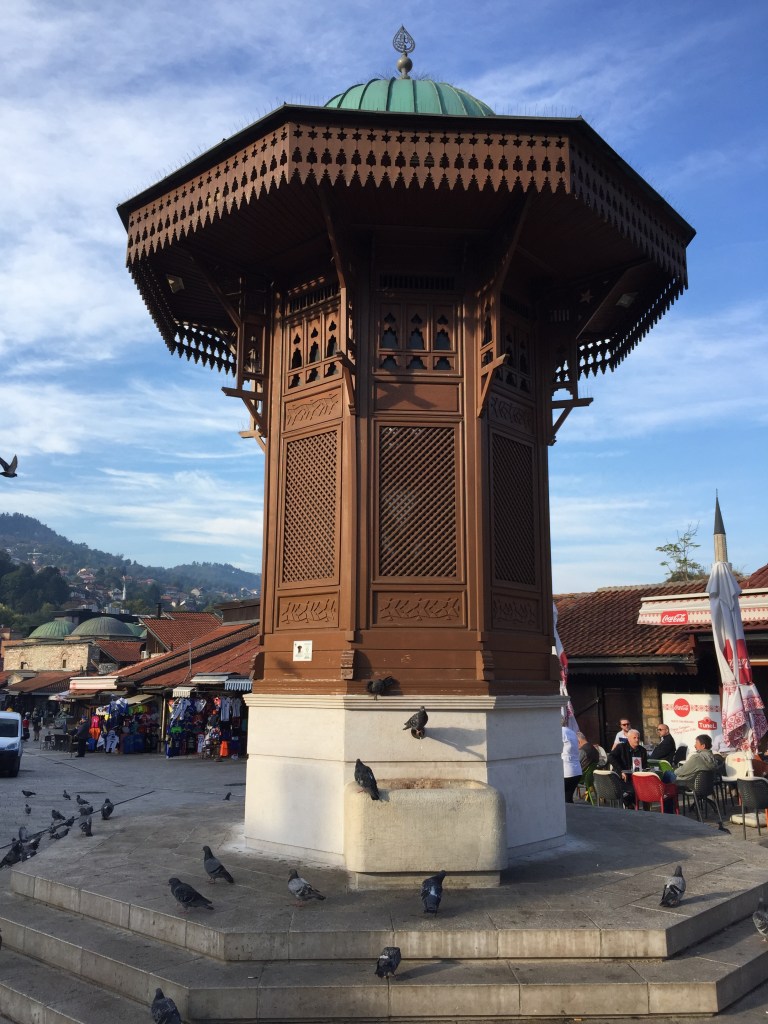
Once we have checked in, we take a wander round the old town, walking through the Baščaršija, nicknamed Pigeon Square. This cobbled pedestrian area in the heart of the old town, lined with restaurants and souvenir shops. And of course, pigeons.
Sacred Heart Cathedral
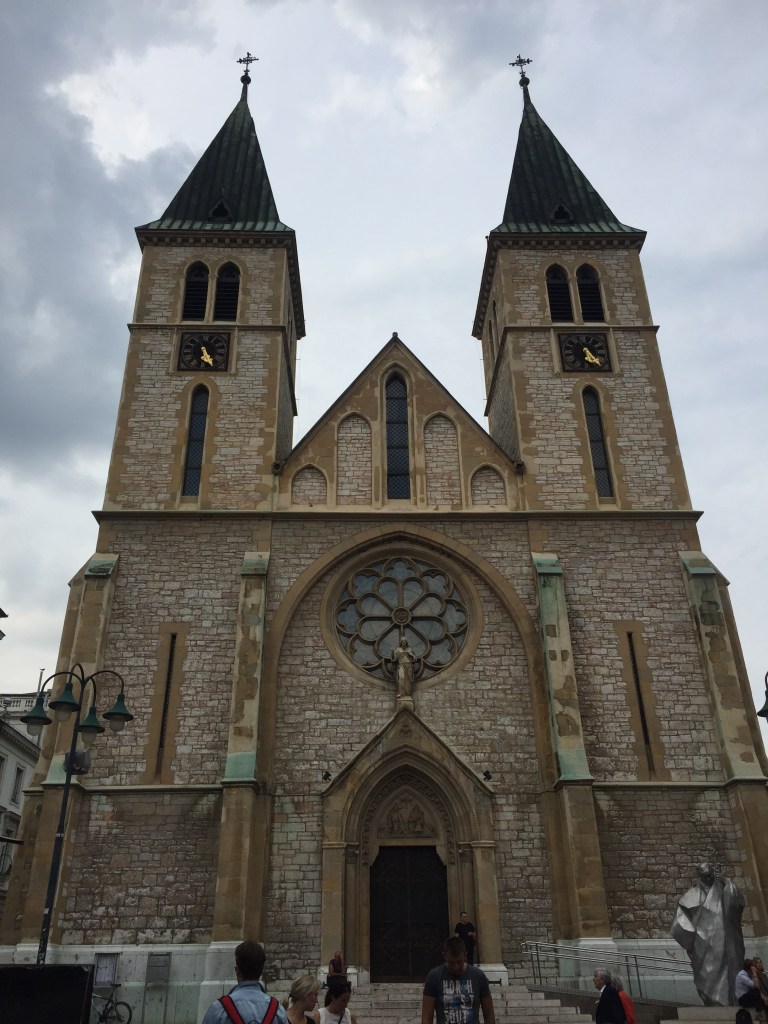
We return to our hotel via the Sacred Heart Cathedral. The Neo-Gothic style cathedral dates from the 19th Century. It was damaged during the war, but has since been restored to its former glory.
Dinner at Bosanska Kuca
We round the evening off with beer and kebabs at Bosanska Kuca, sitting outside to enable us to watch the world go by the Baščaršija as we dine. Then retire pending a full tourist onslaught on Sarajevo in the morning.
Bosnia & Herzegovina Day 3 – Sarajevo
We get up and go for breakfast. Hotel Lula is a unique place. I can’t quite decide if the décor is shabby chic or just shabby. The stains on the carpet have almost sold me on shabby, when we descend into the basement dining area. Along one wall is the breakfast buffet. The other 3 walls consist of a fake cottage, a fake woodpile and a fake forest. Running right through the middle; a fake tree.
Yellow Bastion
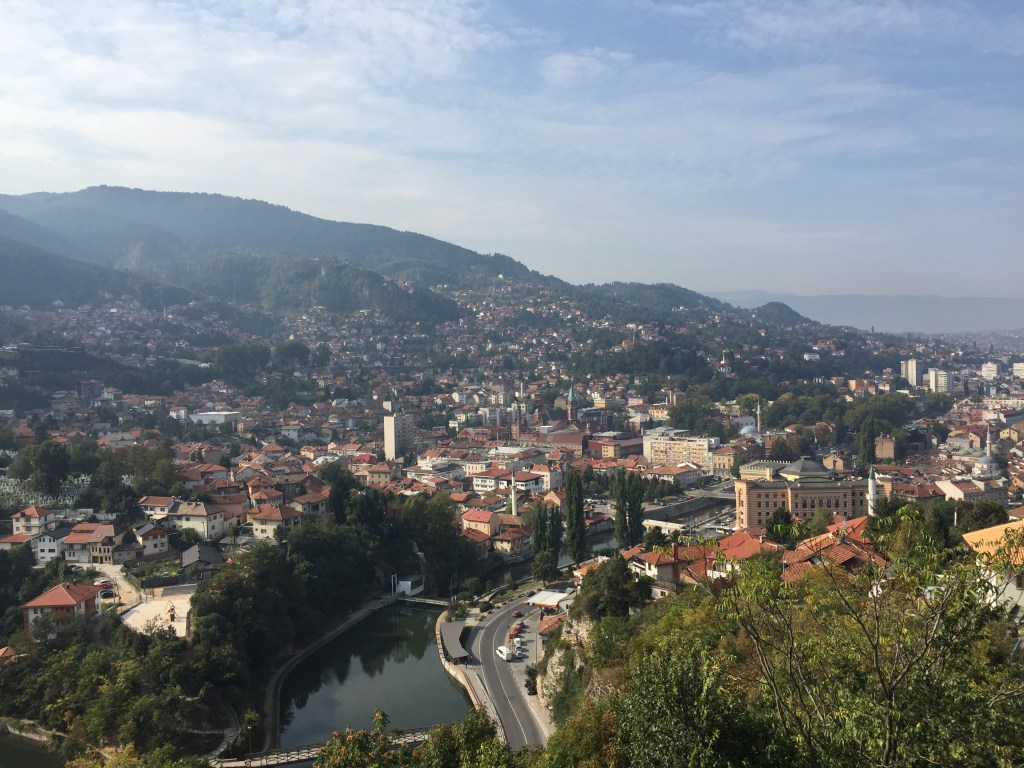
After breakfast, we set off to explore Sarajevo. We head for the Yellow Bastion, which overlooks the city and offers a great view of the city (i.e. involves a long uphill walk). It may be uphill, but it’s not far, only 700 metres from the old town.
Kovaci Cemetery
The hill leading to the Yellow Bastion is mostly covered by the Kovaci Cemetery, which is filled with line upon line of war graves. It’s a very visual reminder of the loss this city has suffered. The cemetery is also the final resting place of Bosnia’s first president, Alija Izetbegović.

Sarajevo City Hall
Next we visit the beautifully restored neo-Moorish Sarajevo City Hall with its ornate interior and stained glass ceiling.

The basement contains a museum with interesting displays covering the key events of the city’s history. Most famously, Franz Ferdinand was departing a function here when he was assassinated in 1914.

Latin Bridge
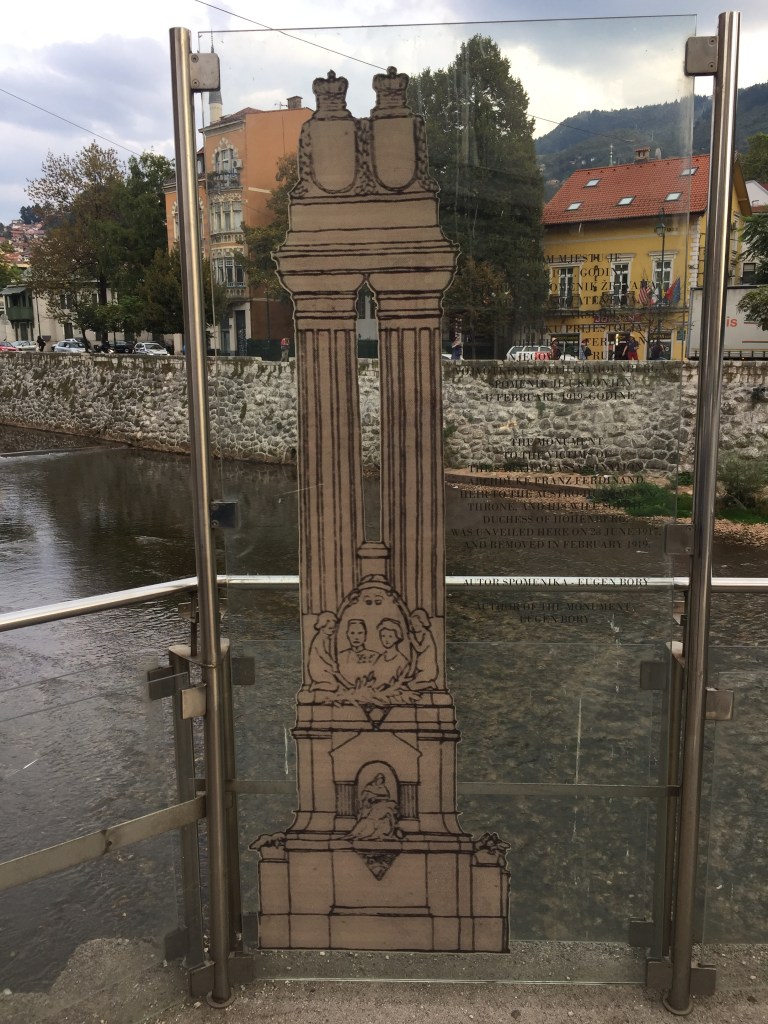
We continue along the river to the corner of the Latin Bridge. This is assassination spot of Franz Ferdinand. Here, somewhat bizarrely, you can find a plaque and an illustration of the monument which once marked the spot. The original was removed by German troops during WW2 and presented to Hitler as a birthday present.
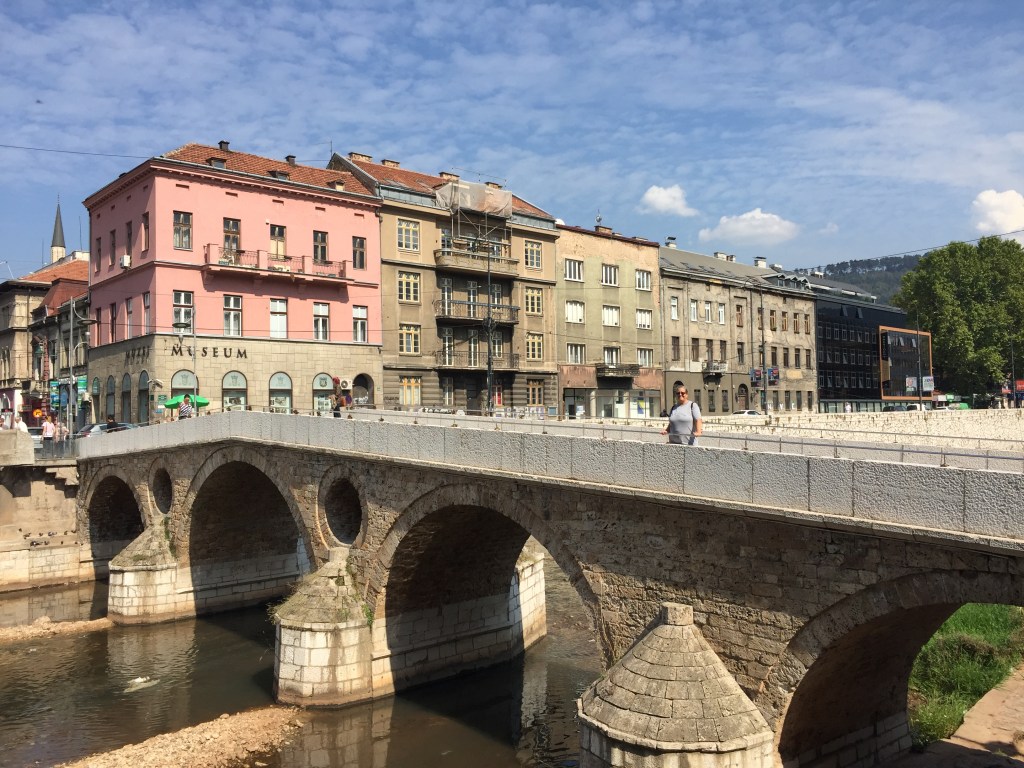
I studied European History at University. So, standing on the spot where the act which triggered the start of World War I took place, which ultimately shaped the world we live in today, is strangely exciting.
Sarajevo 1878-1918 Museum
Across the road is a (very small) museum which tells the story of the assassination its aftermath in more detail. The Sarajevo 1878-1918 Museum includes wax figures of the archduke and his wife, who you can join for a bizarre photo op.

Walk along the Miljacka River
We continue along the banks of the Miljacka River towards the 1984 Olympic Stadium. The river is lined by grand buildings, many still bearing bullet holes, and criss-crossed with bridges. My favourite is the Festina Lente Bridge, which has a loop in the middle.
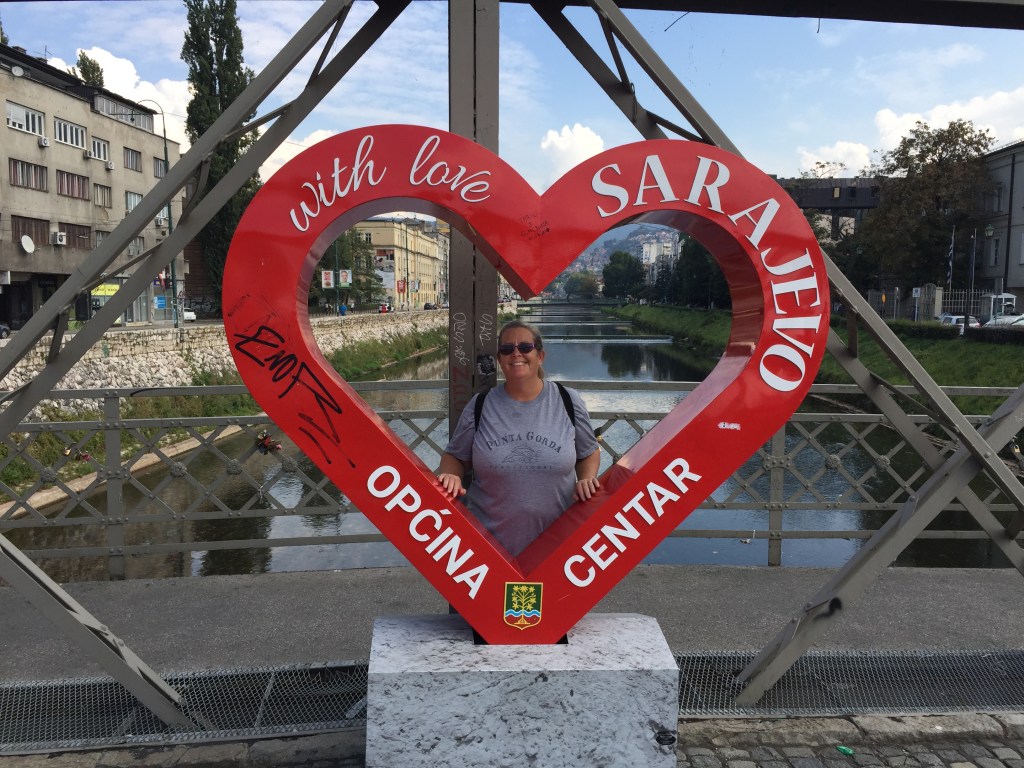
1984 Winter Olympic Stadium
For a British person of a certain age, the Sarajevo Olympics is synonymous with scenes of Torvill and Dean’s gold winning ice dance Bolero. The Winter Olympic Stadium is a bit forlorn nowadays and not much to see, but it was a nice walk!
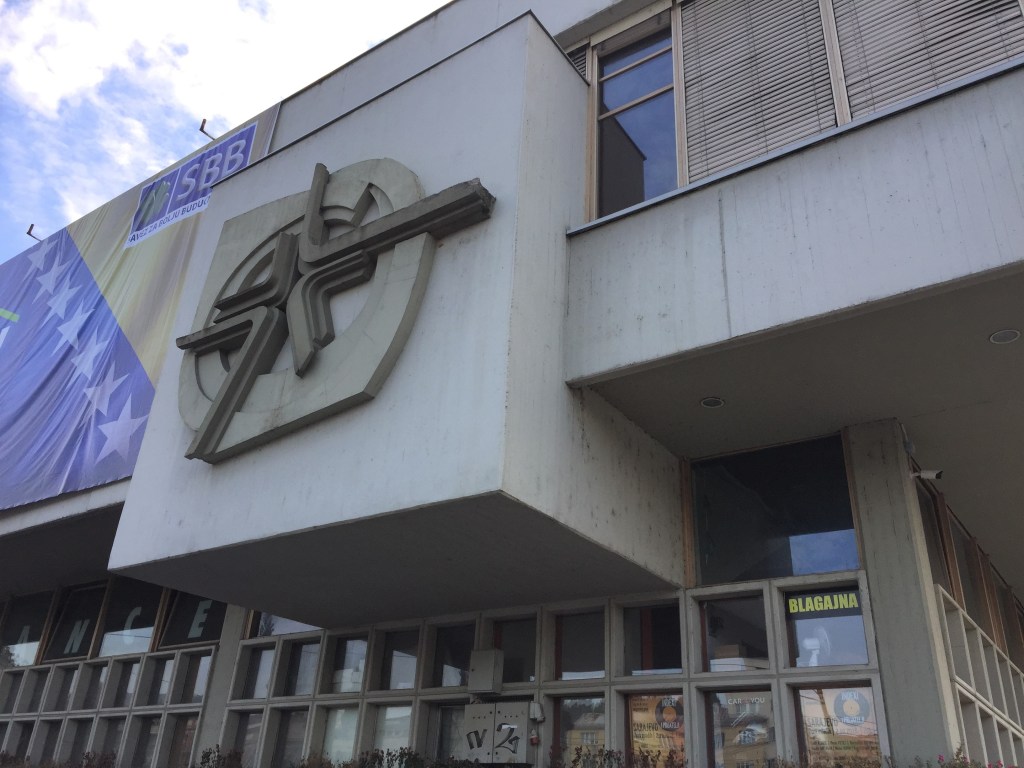
Eternal Flame
We walk back towards the old town along the river, past the Eternal Flame (a memorial to those who fought in WW2) and stop for a beer in a bar where a surly waiter seems quite angry that people are ruining his afternoon of drinking and smoking by wanting stuff.

Dinner at Cevabdzinica Hodzic
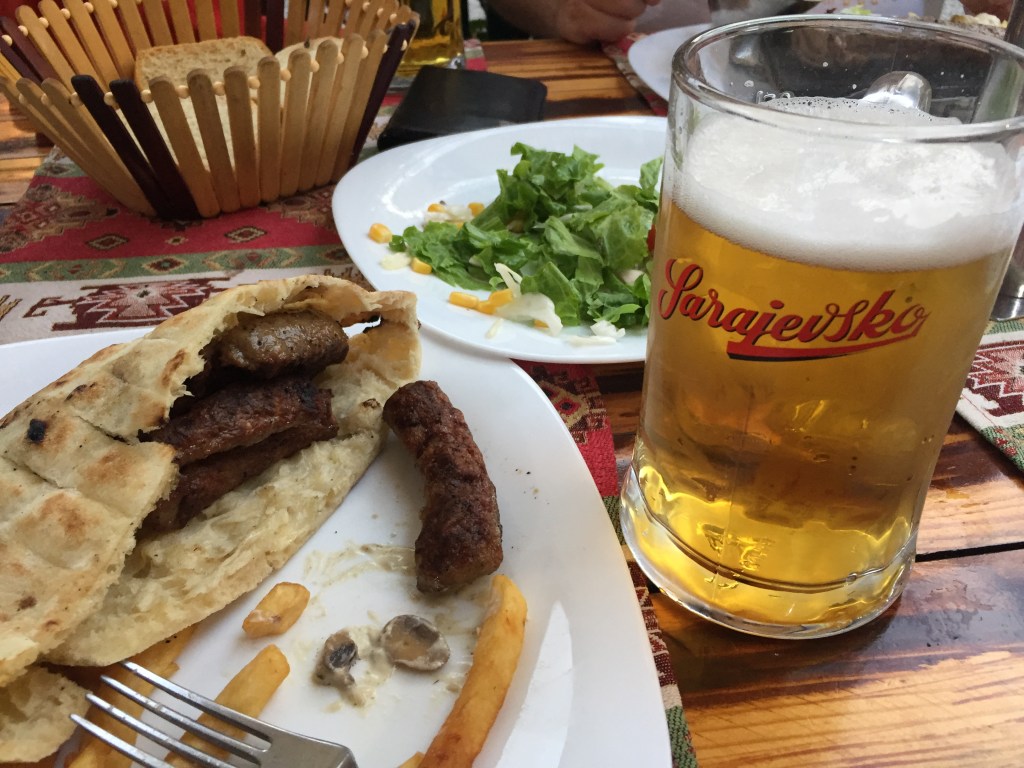
We round the day off with dinner; the local favourite; Cevapcici (mini kebabs in a flatbread with onions) at Cevabdzinica Hodzic. Then go shopping for souvenirs amongst the myriad of stalls.

After blowing our last few Marks on beer, it’s time to walk back to the hotel to pack ready for tomorrow’s long drive to Split.
- Trip Taken: September 2019
- Updated: February 2025
I hope you found the above information useful. For guides to more destinations in the 50+ countries we have visited, check out my full list of Independent Travel Itineraries here.
 Jane's Midlife Journey
Leave a comment