
I have set myself the challenge of walking the South West Coast Path. Initially, this was something my brother was trying to achieve. But after he died, I decided to pick up the mantle.
The South West Coast Path stretches for 630 miles, running along the coast from Somerset, through Devon and Cornwall to Dorset. Starting in Minehead in Somerset, the path runs along the north coast of the peninsula as far as Lands End, before turning and running along the south coast to South Haven Point near Poole.
My guide book divides the trail into 70 sections. As I live near what is traditionally considered to be the end of the trail, I plan to tackle the route in reverse, starting with Section 70.
Section 69 of the South West Coast Path starts in Swanage and continues along the coast to, well, the middle of nowhere really. 630 miles is a long way. But what I hadn’t really considered is that, unless you’re walking the route in the style of a fugitive couple who claim to have lost everything and camping along the way, there are plenty of additional miles required. If, like my brother and I, you’re tackling the route in chunks squeezed into everyday life, section 69, a strenuous 4 hour walk, which then entails a further hour of walking to reach civilisation and a bus stop.
So, I decide once again to split the section into two, starting with a short circuit between Swanage and Durlston County Park and back. Then the second half from Durlston to the village of Worth Matravers, around a mile north of the Coast Path, stopping for a pasty and a pint before continuing to the bus stop a mile further north.
South West Coast Path Section 69 at a Glance
| Starting Point | Swanage |
| Finishing Point | Winspit Quarry (Worth Matravers) |
| Distance | 10.5 km |
| Ascent | 200 metres |
| Timing | 4 hours |
| Grading | Moderate then severe |
| Settlements | Swanage Worth Matravers (off path) |
| Points of Interest | Swanage Peveril Point Durlston Country Park Anvil Point Dancing Ledge Allan-Williams Turret Winspit Quarry Worth Matravers |
| Stamping Points | NCI Swanage, Peveril Point Durlston Country Park |
| Parkrun | Durlston Country Park |
| Take a Break | Seventh Wave, Durlston Country Park Square & Compass, Worth Matravers |
Starting Point
Today’s starting point is where I finished last time, on Swanage seafront.
Getting to the Start
Public Transport
I opted to take the 50 Breezer Bus, which runs along the coast from Bournemouth to Swanage via the Sandbanks Ferry. Alight at Banjo Pier or Swanage Station.
I set off once more on the bus to Swanage. One thing I was nervous about as a novice hiker was layering – ensuring that I have sufficient clothing to keep warm and dry. But not carrying any more than absolutely necessary. Nowhere is this more relevant than on the bus. Riding an open top bus along the coast in March is a chilly business. And I’m glad I brought my fleece – even if it is discarded within minutes of this morning’s walk.
Swanage
Then it’s time to set off from Swanage; along the quayside, past the Victorian pier and Wellington Clock Tower (which used to stand in a London street) to Peveril Point. You can read more about my visits to Swanage here.
Swanage Museum & Heritage Centre
The miniscule Swanage Museum & Heritage Centre tells the town’s history from Jurassic coast to the burgeoning stone trade to the holiday resort of today.
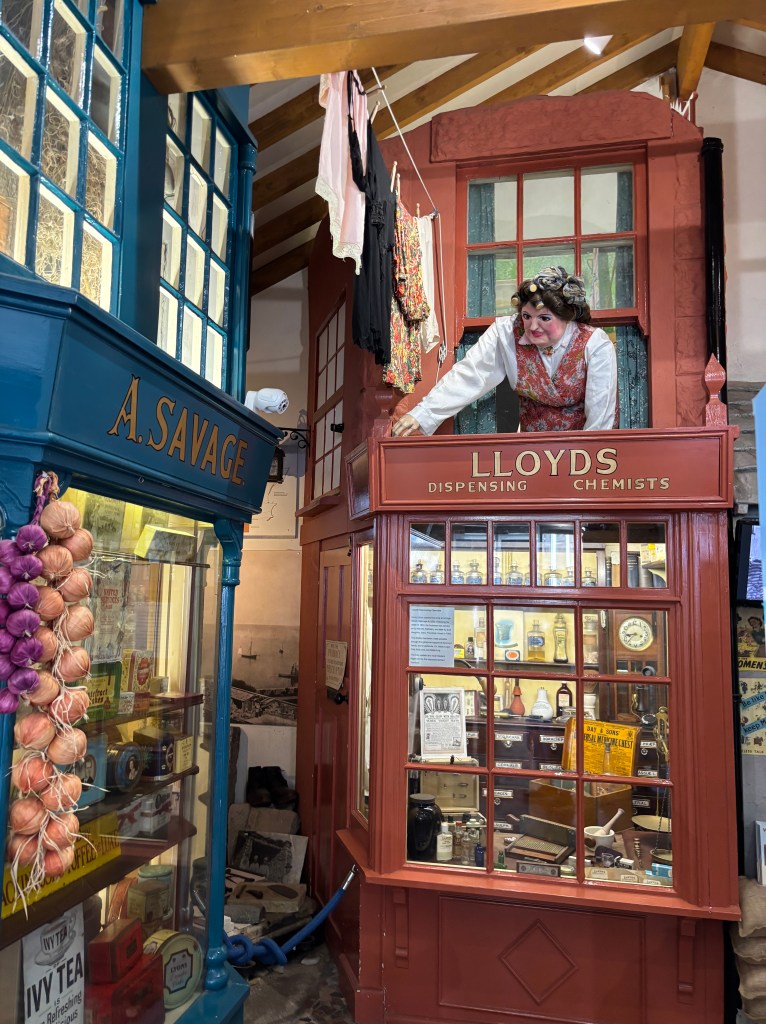
The museum is open daily except Wednesdays between April and October. Opening times are from 10 am to 4 pm (11 am to 3 pm on Sundays).
Entry is free.
Swanage Pier
At end of the quay, you will find the Victorian Swanage Pier. The current pier was built in 1895, constructed of 170 timber piles. The wooden section of the pier is 196 metres long. It is one of only 14 wooden piers in the country.
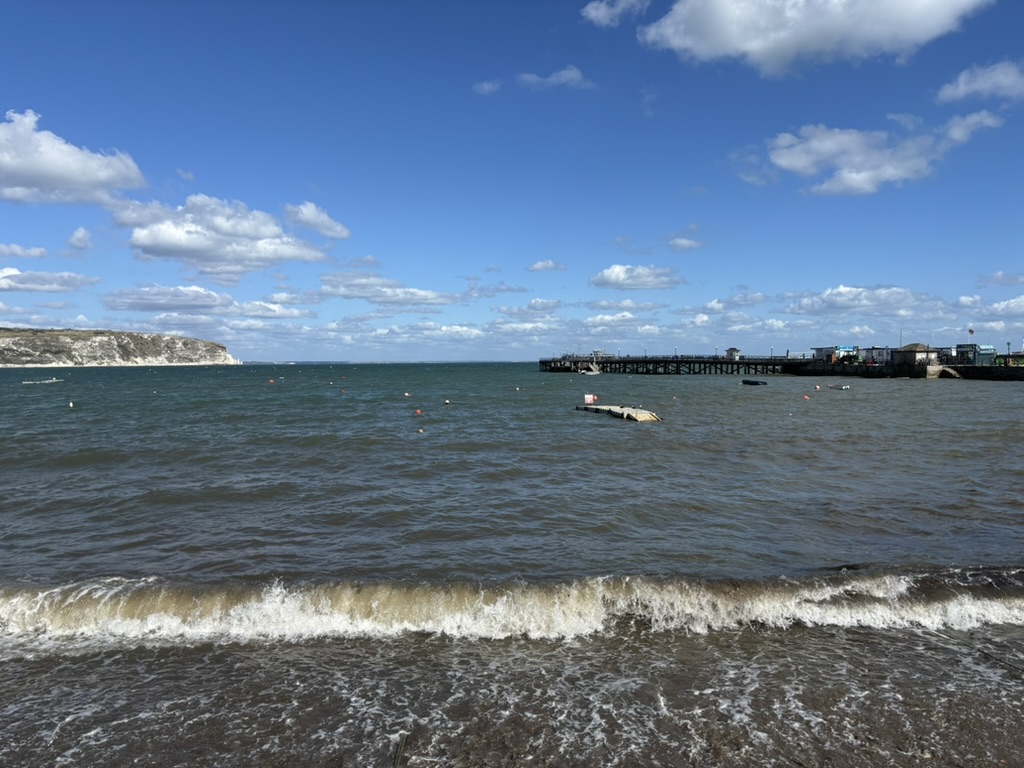
The pier is open daily, with opening times varying according to the season. You can stroll along the pier for £2.20.
Wellington Clock Tower
A little further along the coast, you can find the Wellington Clock Tower. Built of local Purbeck stone, the tower was initially erected at the end of London Bridge in 1854. Vibrations from passing traffic made the clock unreliable. Plus it was soon overshadowed by other buildings. The tower was ultimately declared an obstruction to traffic and disassembled in 1867. It was saved by Swanage based contractor George Burt and shipped back to his hometown as ballast in barges returning from delivering Portland stone to London. He gifted it to a fellow contractor, who erected it in his garden at Peveril Point.
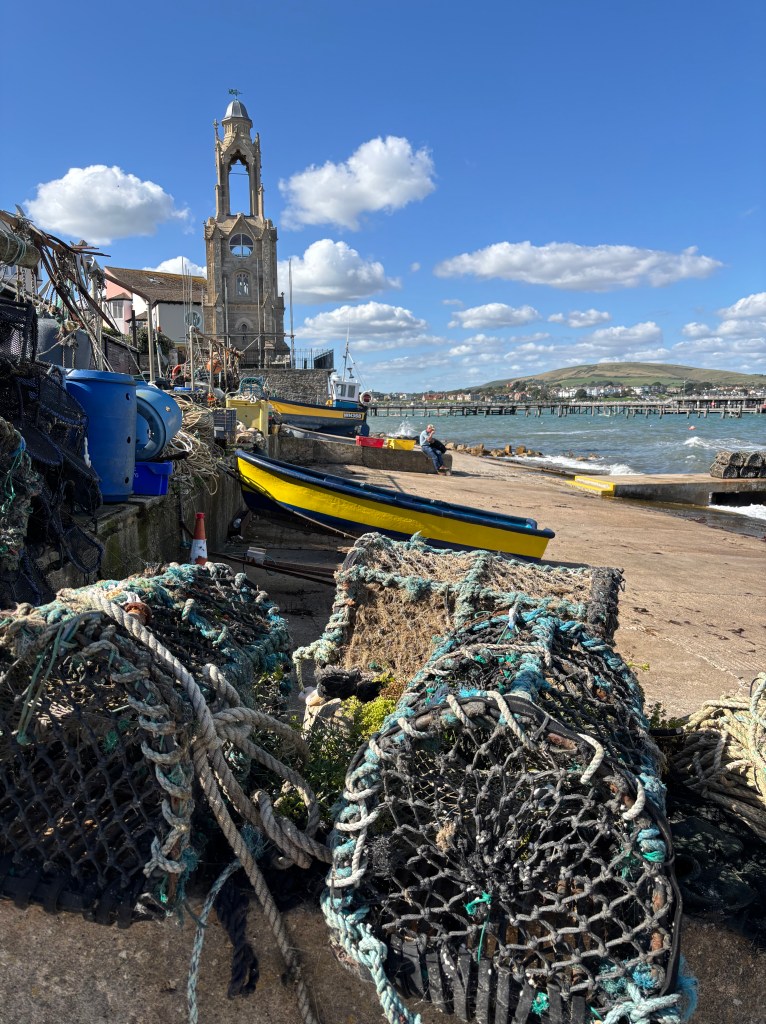
Peveril Point
Swanage Bay ends at Peveril Point. From this rocky outcrop, you can see north across the bay to Ballard Down and Old Harry Rocks. To the south, you can look across Durlston Bay to Durlston Country Park. A great visual reminder of where I’ve come from and where I’m going.
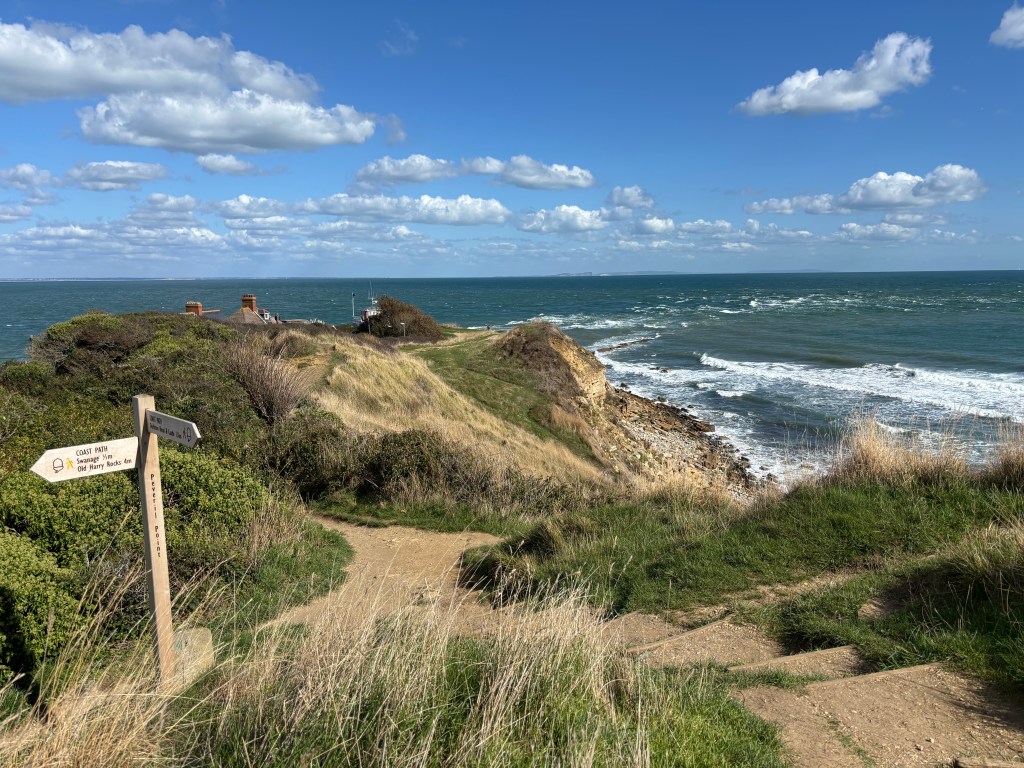
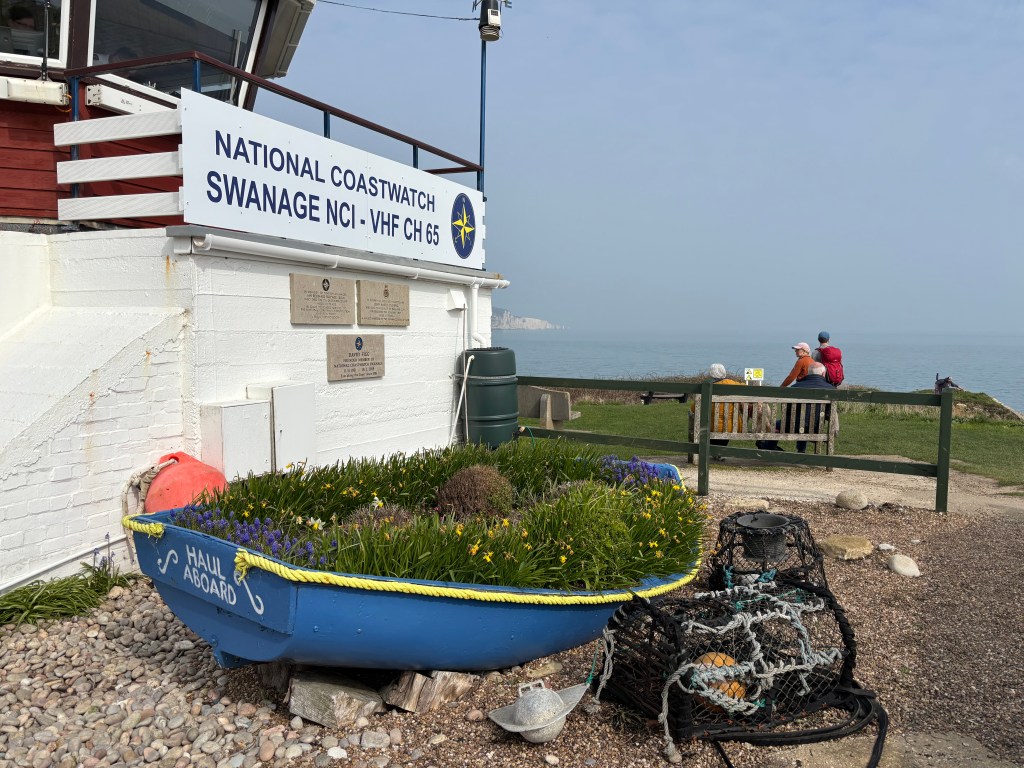
Stamping Point NCI Swanage
At the end of the point is the Coastguard Station. This is another passport stamping point. I climb to the lookout to ask for my stamp. Disappointingly, it’s the same stamp as before. But at least I got the best view.
Durlston Country Park
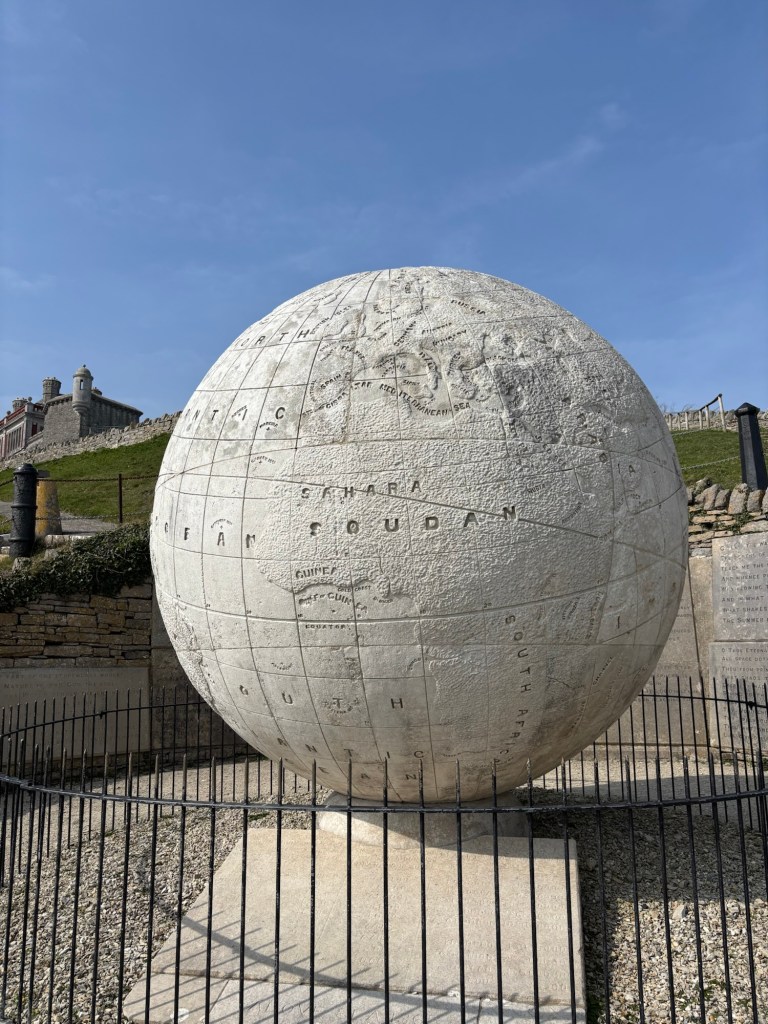
From here, it’s a short climb up a grassy hill into the grounds of Durlston Country Park; a nature reserve in the grounds of a castle. Once inside the park, the path hugs the cliff top with spectacular views interspersed with art works. Most notably, the Great Globe, a 40 tonne globe carved from Portland stone in 1887.
Durlston Castle
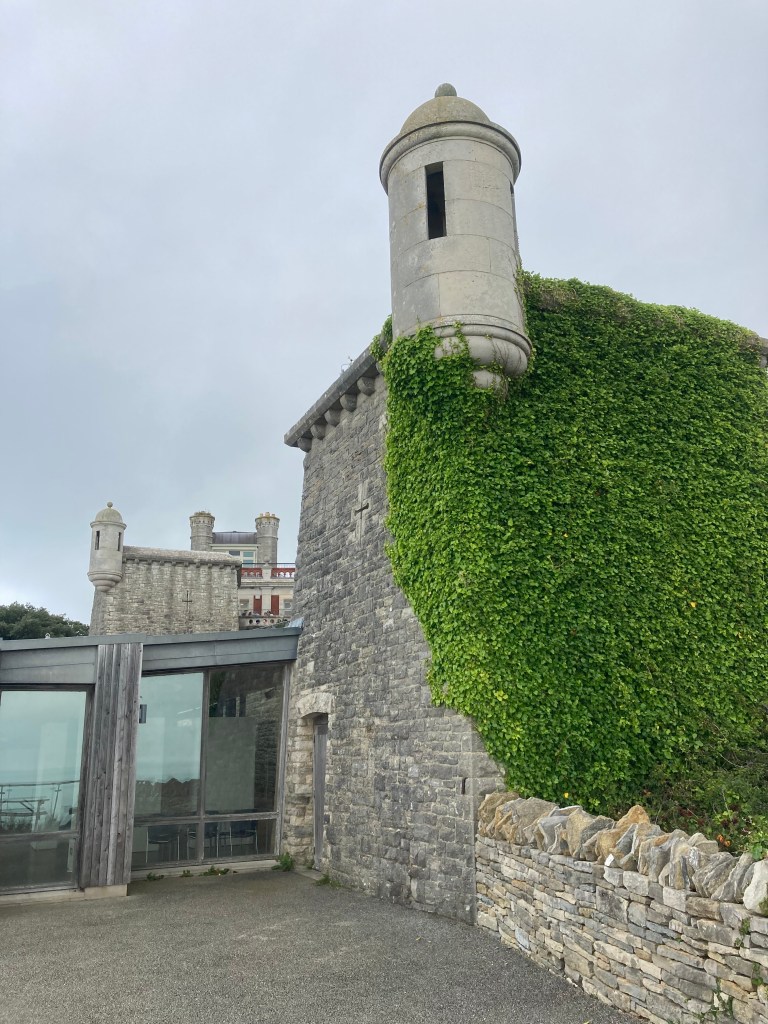
Durlston Castle sits perched on the cliff top overlooking Durlston Bay with stunning coastal views all around. The ‘castle’ was built in 1886 for aforementioned local quarry owner George Burt. Nowadays, it contains a visitor centre, gift shop, restaurant and art gallery. You can read more about my visits to Durlston Country Park here.
Durlston Country Park parkrun
Following the South West Coast Path brings the opportunity to participate in numerous parkruns. The first of these is Durlston Country Park parkrun. Much of the route is along the coast path itself. The stunning views (almost) make up the gradients, which make this event the third toughest parkrun in the UK.

Anvil Point
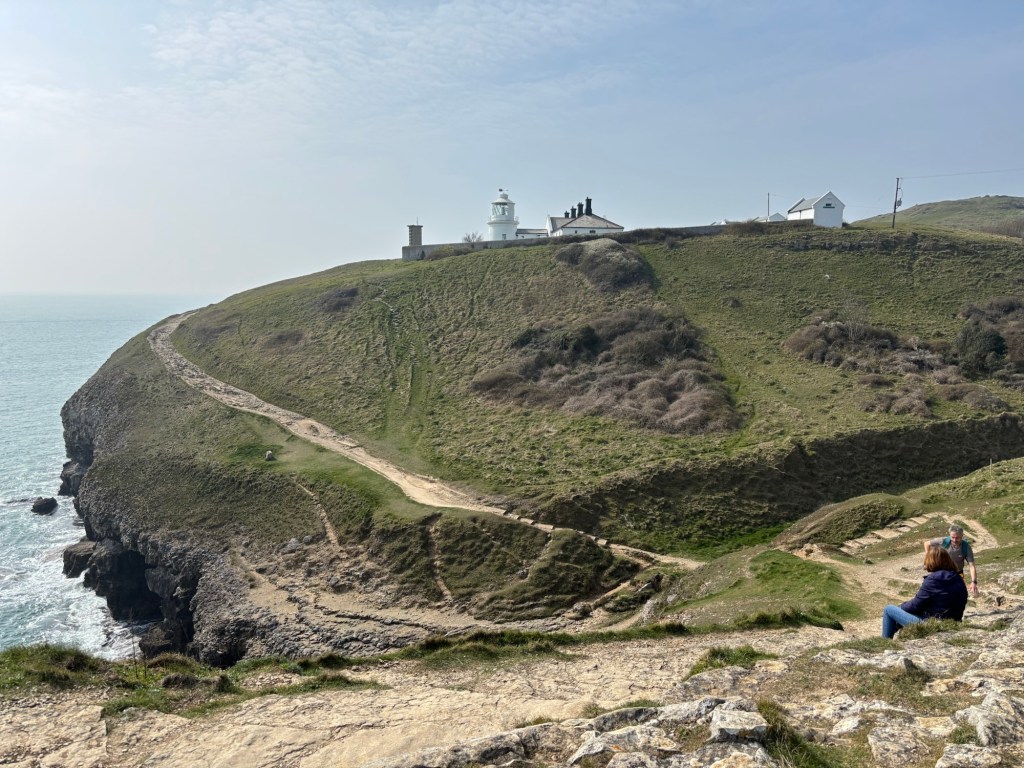
Anvil Point is home to a 19th century lighthouse. I pass a sign which says ‘Lighthouse 1/4 mile’. Anvil Point is the end of my first sector of this walk. I’ve nearly made it – haven’t I? Apparently not. Those few hundred metres consist of a sharp descent with no path – just a steep scramble down a rocky cliff. Followed by an equally steep ascent.
I turn round and head back to Swanage for chips and the bus home.
Picking up where I left off last time, with the walk along the Coast Path from Durlston Country Park to Winspit Quarry, before turning inland to Worth Matravers for lunch and to catch a bus back to Swanage.
Dancing Ledge
The Dancing Ledge is a natural shelf of flat rock which juts out from the base of the cliffs. In the early 1900s, quarry men blasted a hole in the ledge to create a pool for local school children to swim in. This tidal pool is still accessible if you don’t mind clambering down the steep cliff. I decided the steep cliff scramble wasn’t for someone of my age/size.
Allan-Williams Turret
For the uninitiated, an Allan-Williams Turret is a metal dome, which can house two men and rotates through 360 degrees, so that those men can fire a machine gun in any direction whilst remaining protected. Think top half of a dalek… The turret, which dates back to the Second World War, was one of ony 199 made, and is one of only 33 remaining. It remains in situ where it was placed to help protect the south coast almost 90 years ago.
Winspit Quarry
Winspit Quarry in one of several quarries in this area from where stone was quarried to build many of the buildings of London and elsewhere. It ceased production in 1940. Since this time, the quarry has mainly remained derelict, except when being used as a film set for programmes including Doctor Who and Blake’s 7. The quarry’s caves are no longer accessible as bats nest in them.
Worth Matravers
A mile north of the quarry is the little village of Worth Matravers. This pretty village, consisting of limestone cottages built around a pond, has a population of less than 700. Notable buildings are the 12 Century St Nicholas Church and the Worth Matravers Tea & Coffee Shop, which opens at weekends.
Square & Compass
In the village of Worth Matravers, you will find the Square and Compass – a pub which has been in operation since 1793. As well as local beers and ciders, the pub specialises in home made pie and pasties. And it has its own fossil museum.
When my brother was walking the SWCP, he had a spreadsheet dedicated pasties. Obviously, he stopped here. Although he was rather underwhelmed by his pasty, which he concluded needed more seasoning. Andy washed his pasty down with a pint of Carlsberg. We had many things in common. His love of Carlsberg wasn’t one of them.
Woodhenge
In a field behind the pub, you find Woodhenge; a mini replica of Stonehenge built from old tree trunks, erected by the pub landlord in 2015.
Getting Back to the Start
As mentioned above, this chunk of the South West Coast Path is not blessed with public transport connections. The nearest bus stop in Worth Lane is over 2 miles from the Coast Path. To reach this bus stop, you must walk a mile to the village of Worth Matravers and a further mile to the bus stop on West Street. Here, you can pick up the Purbeck Breezer 40, which runs between Swanage and Poole roughly every hour, back to the start of today’s walk. Further details can be found here.


 Jane's Midlife Journey
Leave a reply to Jane’s Midlife Journey Cancel reply